Hamas, other factions urge Algeria to reject US Gaza forces resolution
Al Mayadeen | November 16, 2025
The Palestinian people are closely following developments over a US draft resolution on international forces in Gaza, with Palestinian leaders expressing hope that Algeria will take a firm stance against the measure, which they say undermines Palestinian sacrifices and aspirations.
A senior Hamas official told Al Mayadeen on Sunday that the Palestinian people are hoping for an “honorable stance” from Algeria in rejecting the US draft resolution regarding international forces.
The official added that Hamas has confidence that Algeria will oppose the resolution, which they said inflicts injustice on the sacrifices and aspirations of the Palestinian people, describing the anticipated Algerian position as a source of hope for Palestinians in preventing any new international trusteeship over Gaza.
Palestinian factions call on Algeria to stand for Gaza at UNSC
Meanwhile, Palestinian Resistance factions in Gaza issued a statement expressing deep concern over the ongoing efforts at the United Nations to pass a US draft resolution proposing the deployment of international forces in the Strip. The factions described the resolution as a disguised attempt to impose a new form of occupation on Gaza and to legitimize foreign trusteeship of the Palestinian cause.
In the statement, the factions called on the Algerian government and people to maintain their long-standing principled support for Palestine and to reject any initiatives that would undermine Gaza’s identity or the right of Palestinians to self-determination. They described Algeria’s historical position on Palestine as a source of genuine hope for the Palestinian people and a reflection of the Arab world’s independent popular stance.
The factions stressed that any foreign intervention in Gaza, regardless of its title or justification, constitutes a “violation of Palestinian sovereignty and perpetuates the suffering of the local population.” They emphasized that lasting security and stability can only be achieved by ending the occupation, lifting the blockade, and respecting the inalienable rights of the Palestinian people.
Expressing confidence in Algeria’s supportive position, the statement urged all Arab and Muslim countries, as well as free peoples around the world, to stand against the US resolution and reject any form of foreign tutelage or intervention, defending Gaza’s right to freedom, dignity, and independence.
Algeria demands UNSC stop ‘Greater Israel’ project, end Gaza famine
Al Mayadeen | August 23, 2025
Algeria has held the UN Security Council responsible for thwarting the “Greater Israel” project and for safeguarding the foundations of the “two-state solution”, which it described as “the cornerstone of any just, lasting, and final settlement to the Israeli-Palestinian struggle.”
Regarding the situation in the Gaza Strip, Algeria’s Foreign Ministry affirmed that the United Nations’ official declaration of a state of famine in the Strip constitutes an extremely dangerous precedent and a first of its kind in the history of the Palestinian cause and the history of the region.
The Ministry added in its statement on Saturday that the most condemnable and reprehensible aspect is that this full-fledged famine is not a product of unavoidable circumstances, but is rather a deliberate political choice and a result of planning and orchestration by the Israeli occupation.
Famine consistent with ‘Greater Israel’ project
It further clarified that this declared famine is entirely consistent with, and inseparable from, the project of forced displacement, the project of reoccupying Gaza, and what has come to be known as the “Greater Israel” project.
Algeria strongly condemned these policies and practices imposed on the Palestinian people as part of the ongoing war of annihilation in Gaza and, as a Security Council member, stressed its commitment to continuing its diplomatic efforts to support the Palestinian people and work toward ending this unprecedented humanitarian catastrophe.
Furthermore, Algeria called for “action to expedite the establishment of an independent and sovereign Palestinian State with al-Quds as its capital.”
This comes as the Israeli occupation forces continue their genocidal war and deliberate starvation in the Gaza Strip, with the latest figures from the Health Ministry reporting that the aggression has now claimed 62,622 lives and caused 157,673 injuries since October 7, 2023.
Moreover, 281 people, including 114 children, have perished due to starvation, while an additional 2,076 were killed and more than 15,308 were injured by the occupation’s targeting of civilians awaiting aid at various distribution points throughout the Strip.
Delegates from 32 nations march to Gaza, call for end to blockade and genocide

MEMO | June 9, 2025
An international solidarity march set off towards the Gaza Strip yesterday, aiming to break the ongoing blockade and demand an end to what participants describe as the genocide being committed by Israel since 7 October 2023.
Thousands of supporters from 32 countries are taking part in the march, with plans to reach Gaza’s border through the Rafah crossing with Egypt. Their goals include delivering humanitarian aid and expressing support for the Palestinian people.
Organisers said the participating convoys are expected to gather in Cairo on Thursday, before heading to the city of Arish in north-eastern Egypt. From there, participants will continue on foot towards the Rafah border crossing, where protest tents are planned to be set up.
The main organisers, the “Global March to Gaza”, said it has representatives in most European, North and South American countries, as well as in several Arab and Asian nations. This, it said, reflects growing international momentum in support of the Palestinian cause.
Leading the march is Algeria’s “Caravan of Steadfastness,” which departed from the capital Algiers yesterday towards Tunisia. From there, it will join the Tunisian convoy and continue through Libya to Egypt, with the aim of eventually reaching Gaza.
“The Caravan of Steadfastness set off on Sunday towards Tunisia. It will join the Tunisian convoy, travel through Libya to Egypt, and from there to Gaza via Rafah,” said Sheikh Yahya Sari, head of the Algerian Initiative to Support Palestine and Aid Gaza, in a statement.
Algeria demands France acknowledge ‘nuclear crimes’ committed on its soil
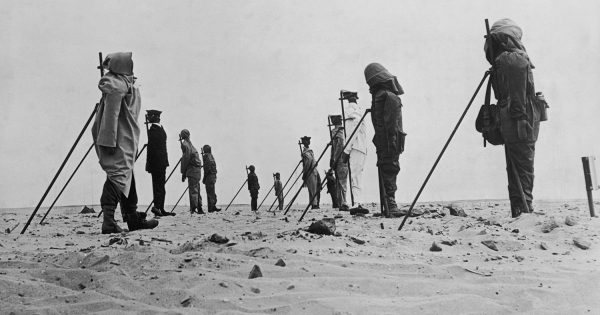
MEMO | February 14, 2025
The speaker of Algeria’s lower house of parliament yesterday called on France to officially acknowledge its responsibility for “nuclear crimes” it committed during its colonial era in the North African country, Anadolu reported.
“We demand with one voice an official recognition from France of its full responsibility for these nuclear crimes,” Ibrahim Boughali, speaker of the People’s National Assembly, told an event commemorating France’s first nuclear test in Algeria on 13 February 1960.
Algeria cannot accept “a mere political acknowledgment, but an acknowledgement followed by a clear moral commitment” from France, he added.
France carried out its first nuclear test in 1960, named Blue Jerboa (Gerboise Bleue in French), in the Reggane desert of southern Algeria. Paris continued its nuclear tests on Algerian territory until 1966.
Boughali said that France had carried out 17 nuclear explosions in the area, leaving devastating effects that persist to this day.
The nuclear tests “were a dark chapter in [the French] colonial history that continues to cast its shadow, as its dangerous and destructive effects continue to affect the environment and humanity,” he added.
The Algerian speaker called for forcing France to compensate the victims of the nuclear tests and clean up nuclear waste in Algeria.
Diplomatic relations between Algeria and France remain volatile, particularly due to unresolved issues stemming from France’s colonisation of Algeria for 132 years (1830–1962). Paris has refused to fully address the historical grievances that continue to affect Algerian society.
Algeria Parliament accuses French President of ‘blatant interference’ in internal affairs
MEMO | January 7, 2025
The Algerian Parliament accused French President, Emmanuel Macron, on Tuesday of “blatant interference” in the North African country’s internal affairs, Anadolu Agency reports.
Macron, on Monday, criticised Algeria, calling the detention of Franco-Algerian writer, Boualem Sansal, at Algiers Airport in November a “disgraceful matter”.
In a statement, the People’s National Assembly, the first house of parliament, called Macron’s remarks “irresponsible” and represented an “affront to Algeria’s sovereignty and dignity” in a case currently under judicial review under Algerian law.
The statement termed Macron’s comments an “overt attempt to tarnish the image of Algeria and its sovereign institutions.”
The Assembly emphasized Algeria’s firm rejection of any foreign interference, particularly regarding issues related to human rights and freedoms.
“Algeria, which endured horrific violations during the French colonial era, will not accept external lessons on these matters,” the statement said.
Such actions are “unacceptable to the Algerian people and will not deter Algeria from its independent path. Instead, they strengthen its resolve to protect its sovereignty and dignity,” it added.
The Assembly called on French authorities to respect the principles of international relations, including mutual respect.
During his meeting with French ambassadors at the Élysée Palace on Monday, Macron claimed that Algeria “prevented a seriously ill man from receiving treatment” and called for Sansal’s release.
“We who love the people of Algeria and its history urge its government to release Boualem Sansal,” he said.
Two weeks earlier, Algerian President, Abdelmadjid Tebboune, accused France of “sending an illegitimate figure” – an apparent reference to Sansal – to claim that parts of Algeria’s territory once belonged to another country.
Sansal, a former industry ministry official dismissed in 2002, had previously asserted in French media that large parts of north-western Algeria historically belonged to Morocco.
The Algerian authorities arrested Sansal on 16 November at Algiers Airport upon his return from France.
Local media reported that he was charged under Article 87 of the Penal Code, facing accusations of undermining national unity and territorial integrity, according to his defence team.
Algeria condemns French ambassador over ‘hostile plans’
Al Mayadeen | December 15, 2024
Algeria summoned French Ambassador Stephane Romatet for what it dubbed “hostile plans” by the French intelligence service, Algerian media reported on Sunday,
Romatet was summoned to the Foreign Ministry last week to answer allegations of French intelligence participation in destabilizing efforts in Algeria, according to the state-run publication El Moudjahid.
The summoning came following reports that the French intelligence service had recruited former Algerian terrorists to destabilize the country’s security.
It referenced the instance of Mohamed Amine Aissaoui, who recently made a live confession on Algerian television about a suspected plot orchestrated by French intelligence.
Algerian officials told the French envoy that such measures “won’t go unanswered” and that they will not stand idly by in response to “attacks on its sovereignty,” according to the newspaper.
There was no French response to the Algerian media claim.
This event adds to Algeria and France’s already difficult ties, which have been hampered by disagreements over historical memory, migration, and the Western Sahara conflict.
Last month, the Algerian Association of Banks and Financial Institutions banned all import and export transactions with France in reaction to its acknowledgment of Moroccan sovereignty over the Sahara.
Morocco primarily controls Western Sahara, but the Polisario Front has advocated for the territory’s independence since before Spain, its colonial ruler, withdrew in 1975. The United Nations classifies it as a “non-autonomous territory.”
Rabat, which governs around 80% of the territory, supports a plan for limited autonomy for Western Sahara under Moroccan sovereignty. In contrast, the Polisario Front is demanding a UN-supervised referendum on self-determination, which was intended to be established following the ceasefire in 1991 but has yet to be implemented.
Russia’s Amended Nuclear Doctrine Signals Willingness to Take On ‘Global Power Obligations’ – Expert
Sputnik – 19.11.2024
The latest changes to Russia’s nuclear doctrine were likely made for two main reasons, Mikael Valtersson, former Swedish military officer and ex-chief of staff with the Sweden Democrats, tells Sputnik.
“One is to make it even clearer that even attacks from Ukraine with conventional weapons with the active support of Western powers will be seen as a combined attack on Russia,” he says. “This will give Russia the opportunity to claim Casus belli [an event that either provokes or is used to justify a war], and legitimate defensive military action according to international law and the UN Charter.”
This move, Valtersson argues, is essentially an attempt by Russia to “strengthen deterrence towards the West and reduce the risk of Western escalation in Ukraine.”
“The second and very interesting aspect is the inclusion of allies in the nuclear deterrence,” he continues. “This must be seen in the light of the recent ratification of the new defense cooperation agreement with the DPRK (North Korea) that includes a paragraph akin to the NATO article 5. This stipulates mutual military aid to defend each other in case of aggression from other countries.”
“With the changes of Russian nuclear strategy, Russia says that aggression towards it’s allies will be seen as aggression towards Russia and might include a nuclear response,” Valtersson notes. “The Russian nuclear doctrine now reflects the fact that Russia has formal allies again.”
As Russia’s actions resulted in NATO ceasing to be the only military bloc in the post-Cold War world whose members “have been included in a common nuclear umbrella,” Valtersson suggests that this development has both pros and cons for Moscow.
“This makes Russia a more attractive ally, but also puts Russia into a more precarious situation, since it now has stronger obligations to live up to. A failure to live up to these obligations would result in a huge loss of confidence in Russian willingness to support allies, and the Kremlin of course knows this,” he elaborates. “That means that this decision to change the nuclear doctrine must be seen as a real willingness of Russia to extend its nuclear deterrence to other allies.”
Valtersson also remarks that it would be interesting to see what new defense agreements Russia might sign with nations such as Iran, Syria, Cuba, Venezuela, Algeria “and a multitude of Sub-Saharan states,” which could both “greatly increase the security of these states and Russian standing in the world” and, “increase the risk of Russian involvement in new conflicts.”
“To summarise, this is a clear signal that Russia now is willing to take on the obligations that are needed to be a real global power,” he adds.
Israeli military, intelligence bodies admit Hamas will survive onslaught on Gaza Strip
Press TV – February 18, 2024
Israeli military and intelligence institutions have warned the regime’s top-ranking authorities that the Palestinian Hamas resistance movement will survive the unrelenting ground and air strikes against the besieged Gaza Strip.
A document circulated from Israeli military leaders to senior politicians states that “authentic support remains” for Hamas among Gazans, according to a report published by the Hebrew-language Keshet 12 television channel.
The document, put together by the Israeli army’s research division, also warned that “Gaza will become an area in deep crisis”, given the lack of plan for the “day after” war.
The document was reportedly presented on Monday to leading Israeli officials following a week of senior military and intelligence talks about the findings, Keshet 12 noted.
Ilana Dayan, an investigative journalist at the broadcaster, said that the “bottom line” of the document was that the Hamas movement would inevitably survive Israel’s offensive.
The report comes as Israel prepares a ground offensive on Gaza’s southernmost city of Rafah.
The UN special rapporteur on Palestine has slammed Israeli prime minister Benjamin Netanyahu’s pledge to push on with the assault.
“Rafah stands as the last line of Palestinian existence in Gaza, amidst the relentless anguish faced by the people trapped therein,” Francesa Albanese wrote on X.
“How can we possibly allow another Nakba? Have we really lost our minds?”
According to diplomatic sources quoted by the AFP news agency, the UN Security Council is set to put to vote a new resolution put forth by Algeria that demands an “immediate” truce in Gaza.
The latest version of the text “demands an immediate humanitarian ceasefire that must be respected by all parties”, the agency said.
It also “rejects forced displacement of the Palestinian civilian population”, and it “demands the immediate and unconditional release of all hostages”, AFP reported.
Earlier, US Ambassador to the UN Linda Thomas-Greenfield issued a statement responding to reports that Algeria plans to put the resolution to a vote on Tuesday.
“Should it come up for a vote as drafted, it will not be adopted,” Thomas-Greenfield said.
The US has previously used its veto to prevent the UN Security Council from passing resolutions calling for a ceasefire in Gaza.
Meanwhile, Egypt’s President Abdel Fattah el-Sisi has reiterated his country’s “categorical rejection of the displacement of Palestinians to Egypt in any shape or form”.
During a phone conversation with his French counterpart Emmanuel Macron on Saturday, the two leaders agreed on the need to “stop the bloodshed” in the Gaza Strip and discussed advancing the establishment of an independent sovereign Palestinian state, a statement by the Egyptian presidency read.
Israel has been waging the war against Gaza since October 7, 2023, when the coastal sliver’s resistance groups staged an operation, dubbed Operation al-Aqsa Storm, against the occupied territories.
Nearly 29,000 Palestinians, mostly women, children, and adolescents, have been killed so far as a result of the brutal military onslaught.
Algerian parliament unanimously votes to support Palestine militarily
The Cradle | November 3, 2023
The Algerian parliament on 2 November unanimously voted to authorize President Abdelmadjid Tebboune to enter the Gaza-Israel war and throw his support behind Palestine.
The 100/100 vote came a day after the anniversary of Algeria’s war of liberation against French colonialism.
Algeria is the second Arab nation that looks to enter the war against Israel, following Yemen’s declaration of war just two days prior.
“We launched a large number of ballistic and cruise missiles and a large number of drones at various targets of the Zionist enemy in the Palestine Occupied Territories,” the spokesperson of the Yemeni armed forces, General Yahya Saree, said earlier this week. “We emphasize that this operation is the third operation in support of our oppressed brothers in Palestine.”
Saree then added that “the position of our Yemeni people towards the cause of Palestine is fixed and principled, and the Palestinian people have the full right to defend themselves and use their full rights.” “Our forces performed their duty in supporting Gaza and fired ballistic and cruise missiles at enemy targets in the Occupied Territories.”
Arab nations have recently been following suit in their support of the Palestinian piece; Kuwait has condemned the Israeli aggression, Bahrain has cut all diplomatic ties, and Jordan has recalled their ambassador to Israel.
Nations outside of West Asia who have voiced their support for Palestine include Cuba, Chile, Venezuela, Bolivia – who’ve cut diplomatic ties with Israel completely – Nicaragua, and others.
Algeria and Tunisia condemn Macron’s call for coalition against Palestinian resistance
MEMO | October 26, 2023
Algeria and Tunisia condemned on Wednesday evening French President Emmanuel Macron’s call for an international coalition against the Palestinian resistance. Their joint statement also stressed the legitimacy of resistance against the Israeli occupation of Palestine.
The statement on the situation in Palestine was issued by the People’s National Assembly (the lower house of the Algerian Parliament) and Tunisia’s Assembly of the People’s Representatives during the visit of its head, Ibrahim Bouderbala, to Algeria.
“We condemn the calls to form an international coalition to eliminate the Palestinian resistance. The Palestinian struggle to resist the occupation is legitimate, as is the right of the Palestinian people to establish their independent state with Jerusalem as its capital,” they said. “We also strongly denounce the positions of countries and bodies that support the Israeli war government and deplore the double standards being applied in clear violation of international law and human rights, especially with regard to the rights of civilians during war.”
The Algerians and Tunisians also rejected Israeli immunity from accountability, monitoring or sanctions. “This gives it the green light to target innocent and defenceless Palestinians, including women and children, and to carry out its crimes against humanity.”
The Zionist occupation state bears “full responsibility” for this escalation, the two sides announced. “This has arisen as a result of its continued crimes against the Palestinian people and its policies aimed at displacing them from their land, in light of the international disregard for UN Security Council resolutions related to the Palestinian issue and the rights of the Palestinian people in accordance with UN resolutions.”
The two parties called for an immediate ceasefire and efforts to produce a “just and comprehensive” solution to the Palestinian issue.
Featured Video

It’s the Occupation, Stupid
or go to
Aletho News Archives – Video-Images
From the Archives
A superpower and “the world’s sickest warrior state”
By Paul J. Balles | March 8, 2010
Living through five or six major wars has hardened me to what I thought were the extremes of inhuman cruelty and brutality.
Two things made those extremes almost bearable: the brutality always revealed – at least according to the media coverage – the viciousness of the enemy. It was therefore quite understandable when our “brave men and women” pulverized the enemy.
Films of Japanese torturing captive Americans somehow justified holding Japanese Americans in internment camps during World War II; and only a small percentage of Americans found the bombing of Hiroshima and Nagasaki unreasonably vengeful at best, at worst, depraved.
The media giants in America portrayed the North Koreans as barbaric beasts with their captives, quite unlike their southern counterpoints – our allies during the Korean War. No one ever felt the need to explain how the South Koreans were a civilized breed while the North Koreans were absolute savages, at least according to the official line.
In Vietnam, our warriors justifiably (or so the media made us believe) dropped napalm on the North Vietnamese who had the gall to hide in villages and tunnels to ravage our invaders. At least it was accepted practice until some rogue photojournalist filmed a young girl screaming down a Vietnamese road in flames. … continue
Blog Roll
 Aletho News
- Pro-Palestinian French member of European Parliament denied entry to Canada
- Pakistan to Host US-Iran Talks
- How Indonesia’s tilt toward the US left it stranded in the Strait of Hormuz
- US has no choice but to retreat from Iranian borders: Top commander
- Iran Retaliation Strikes Chemical Plant Near Dimona
- AWACS’ Destruction is a Major Loss for US Military – Ex-DoW Analyst
- Israel’s Iran Strategy Uses US Military & Gulf States as Its Pawns
- Iran: Trump wanted regime change, now just begging for Hormuz to open
- IRGC: Israeli, US universities in region legitimate targets after strikes on Iranian university
- Trump admits Iran hit USS Ford carrier: ‘We ran for our lives’
- If Americans Knew
- Israeli police block Catholic cardinal from entering Church of the Holy Sepulchre on Palm Sunday
- Israel is assassinating journalists again, more than any other nation, anywhere, ever – Not a ceasefire Day 170
- Over 300 US service members wounded, majority have brain injuries – Not a ceasefire Day 169
- Researchers at Human Rights Watch Resign Over Blocked Report on Palestinian Refugee Return
- Jewish Groups Are Backing a War Americans Don’t Want
- Eric Fingerhut Thinks He’s the President of the Jews
- Top Jewish Philanthropists, Rabbis Urge Israeli President to Take Action Against ‘Jewish Extremists’
- Don’t Be Fooled. Zionist Leaders Have Always Wanted to Control Southern Lebanon
- Israel’s widespread use of torture is a core element of its genocide against the Palestinian people
- In Israel’s War on Iran, Many Middle East US Bases Rendered “All But Uninhabitable”
- No Tricks Zone
- German Science Blog Accuses PIK Climate Institute Of Hallucinating Climate Tipping Points
- Devastating Assessment Of Comirnaty Vaccine By Former Senior Pfizer Europe Toxicologist
- New Study: CO2 Is ‘Effectively Negligible’ As An Explanatory Climate Change Factor Since 2000
- Former Pfizer Toxicologist Dr. Helmut Sterz Tells Bundestag Hearing Pfizer Vaccine Should Have Never Been Approved
- Energy Expert: Germany’s Nuclear Phaseout Was A “500 Billion Euro Mistake”
- New Research: South Australia’s Mid-Holocene Sea Surface Temperatures Were 4°C Warmer Than Today
- Storing Green Energy To Last Germany 10 Days Would Require A 60-Million Tonne Battery
- New Studies: UK Sea Levels Were 4 Meters Higher Than Today During The Mid-Holocene
- Destructive Green New Deal: German Energy And Metal Group Warns Of Drastic Crisis
- New Study Documents A 20-Year Pause In Arctic Sea Ice Decline – Driven By Internal Variability
 Aletho News