Australia’s Intelligence Agencies Are Instructed To Tackle Online “Misinformation”
By Christina Maas | Reclaim The Net | August 2, 2023
In a robust appeal for accountability, Australian intelligence agencies have been encouraged to counter online “misinformation” that potentially endangers national security. The recommendation comes from a parliamentary committee overseeing Australia’s six intelligence bodies, including the Australian Security Intelligence Organisation (ASIO), the Australian Signals Directorate, and the Australian Secret Intelligence Service.
The committee’s chair, Peter Khalil, announced the recommendation during a parliamentary session. “The committee sees an opportunity for Australia’s intelligence agencies to take an increasing role in sharing information with the Australian public – where appropriate – on matters relating to misinformation, disinformation, and harmful propaganda,” Khalil stated, as reported by Perth Now.
This push follows a significant increase in misinformation during the turbulent years of 2020 and 2021, a period accompanied by COVID-19 lockdowns and a rapidly fluctuating security environment. Surprising to some, the parliamentary committee found that this wave of misinformation significantly amplified security concerns, necessitating its robust redressal.
The suggestion to publicly tackle misinformation, while controversial to many free-speech advocates who caution about overreach, is among four recommendations proffered in the committee’s recent annual review. These include enhancing inter-agency information sharing and finding effective solutions to workforce issues within the intelligence community.
Khalil remains steadfast in his conviction that this human-centric approach could be transformative. “The people who work in Australia’s intelligence agencies are our greatest asset,” he said. “By developing a whole of national intelligence community recruitment and retention strategy, Australia will be better positioned to deliver on its intelligence priorities.”
Australia’s Draconian “Misinformation” Bill Threatens to Usher in Unprecedented Era of Illiberal Double Standards
By Christina Maas | Reclaim The Net | July 31, 2023
The Australian Government’s tyrannical Communications Legislation Amendment (Combating Misinformation and Disinformation) Bill 2023 is facing formidable resistance from the Victorian Bar, as it sounds the alarm over a grave assault on freedom of speech and expression.
This Orwellian legislation, pushed by the communications minister since January, seeks to arm the Australian Communications and Media Authority (ACMA) with oppressive powers to tackle online “misinformation and disinformation.” Its draconian provisions include a mandate for the ACMA to hawkishly monitor progress in stifling online “misinformation” on various digital platforms, and enforce industry standards designed to muffle free speech under the guise of fighting disinformation.
The Victorian Bar has courageously voiced “serious objections” to this bill in a recent deposition to the Law Council of Australia. Their argument? The bill woefully neglects to respect the sanctity of free expression and associated privacy rights.
Victorian Bar president, Sam Hay KC, drove home the significance of this protest, underscoring the Bar’s trepidation about the invasive impact of the proposed bill on free speech and privacy. The Bar is particularly concerned about the threat to freedom of speech, calling it “the lifeblood of democracy.”
The Bar’s thorough critique continues, predicting a wave of self-censorship as users of online services retreat in fear of being branded as purveyors of misinformation. The bill’s very necessity is challenged, as it points out the effectiveness of recent countermeasures against the propagation of online falsehoods.
The Bar paints a grim picture of the bill’s proposed solution, arguing it could worsen the problem by alienating those already suspicious of the state and marginalized in small online communities. It cautions against a silencing approach and promotes persuasion and the dissemination of accurate information as a counter to misinformation.
They raise the issue of an “illiberal double standard,” potentially advantaging government supporters at the expense of critics. Moreover, the Bar criticizes the bill’s vague and impracticable definition of misinformation. While they say they recognize a need to counter harmful online information, the Victorian Bar takes a stand, asserting the proposed measures are disproportionately intrusive and likely ineffective against their intended targets.
Australia to Buy 20 C-130J Aircraft From US for Almost $10Bln
Sputnik – 24.07.2023
Australia will buy 20 new C-130J Hercules aircraft from the United States for $9.8 billion, with first deliveries expected in late 2027, the Australian Defense Ministry said on Monday.
The first aircraft is expected to be delivered beginning in late 2027, according to the statement.
“The Albanese Government will purchase 20 new C-130J Hercules aircraft for the Royal Australian Air Force for $9.8 billion. This will provide the Air Force with state of the art C-130 Hercules to meet the air transport needs of the future,” the ministry said in a statement.
The new acquisitions will replace and expand the 12 Hercules aircraft currently in service, the ministry added. The aircraft are used by the Australian military to transport personnel, equipment and humanitarian supplies, as well as for search and rescue operation, disaster relief and medical evacuation missions, the statement said.
The C-130J Hercules are designed by US aerospace giant Lockheed Martin.
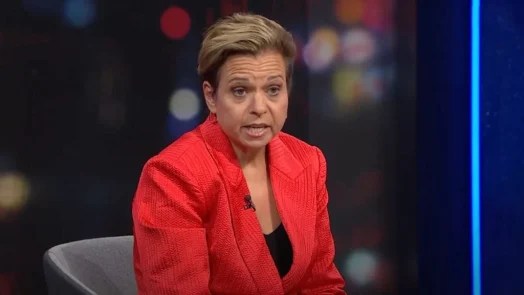
Australian Communications Minister Michelle Rowland Tries To Justify New Censorship Law
By Cindy Harper | Reclaim The Net | July 17, 2023
Australian Communications Minister Michelle Rowland is trying to push back against claims by Coalition MPs that the proposed upcoming legislation would lead to an Orwellian “Ministry of Truth.”
The newly proposed legislation aims to strengthen the Australian Communications and Media Authority’s (ACMA) abilities to manage digital platforms that are seen to propagate “misinformation and disinformation.” However, critics rightly know that the move will threaten the very essence of free speech.
Despite these assurances, skeptics like Coalition communication spokesman David Coleman argue that the regulator will inevitably need to form an opinion on what constitutes misinformation to ensure platforms comply with the new legislation.
“For government to start defining what can and cannot be said in a democracy is hugely concerning. This bill would allow that to happen,” Coleman said, to the Sydney Morning Herald.
The proposed bill gives ACMA the authority to collect information from digital platforms about how they adhere to existing codes.
Moreover, ACMA will have the power to introduce a new “code” for companies that repeatedly fail to address so-called misinformation and disinformation or establish an industry-wide “standard” requiring the removal of harmful content.
Failing to adhere to these standards will carry significant penalties. These include substantial fines, either $6.88 million or 5% of a company’s global turnover, whichever amount is higher.
This policy approach is not without its opponents. Critics argue the broad definitions of misinformation and disinformation as material that is “false, misleading or deceptive” and “reasonably likely to cause serious harm” could be abused by political subjectivity, potentially stifling legitimate views.
Coleman expresses concern over potential self-censorship by digital platforms due to fear of incurring hefty fines. The proposed legislation, in his view, could lead to the suppression of Australians’ authentic opinions. The exemptions within the bill for professional news content, authorized electoral content, and satirical material do little to assuage such fears.
Meta, the parent company of Facebook and Instagram, also expressed apprehensions about the bill’s potential to chill legitimate political expression online, due to the potential for imposing “binding standards” with severe penalties.
Despite previous attempts to increase ACMA powers by the former Morrison government in March 2022, draft legislation was never released. Rowland asserts the Albanese government’s openness to “constructive suggestions” to enhance the bill and is holding public consultations for feedback. However, the opposition has yet to take a formal stance on the legislation.
NATO is ‘malicious poison’ – former Australian PM
RT | July 10, 2023
NATO has no place in Asia and should stick to its original focus, that is the security of the Transatlantic region, former Australian Prime Minister Paul Keating has argued. The Labour politician, who served in office from 1991 to 1996, also warned against attempts to “circumscribe” China.
In his statement published on Sunday, Keating appeared to refer to a recent report in Politico, which claimed French President Emmanuel Macron had blocked NATO’s plans to establish a liaison office in Japan.
The former premier lauded the French head of state for “doing the world a service” by apparently emphasizing the military bloc’s focus on Europe and the Atlantic.
According to Keating, the alliance’s very existence past the end of the Cold War “has already denied peaceful unity to the broader Europe.”
Exporting such “malicious poison to Asia would be akin to Asia welcoming the plague upon itself,” he insisted. The former prime minister warned that NATO’s presence on the continent would negate most of the region’s recent advances.
Keating went on to describe NATO Secretary General Jens Stoltenberg as the “supreme fool” on the international stage who is conducting himself like an “American agent.”
He cited a comment Stoltenberg made back in February when he called for the West not to repeat the “mistake” it had made with regard to Russia, suggesting it should work to contain China.
The former Australian leader noted that the NATO chief conveniently ignored the fact that “China represents twenty per cent of humanity and now possesses the largest economy in the world.” He added that Beijing, unlike Washington, “has no record of attacking other states.”
Over the weekend, Politico cited an anonymous Elysee Palace official who claimed that Paris is against NATO expansion beyond the North Atlantic. “NATO means North Atlantic Treaty Organization,” the French presidential staffer reportedly emphasized.
Back in May, the Japanese ambassador to the US, Koji Tomita, revealed that his country was working toward opening a NATO liaison office in Tokyo, which would become the bloc’s first in Asia. Prime Minister Fumio Kishida confirmed the plans to Japanese lawmakers, noting that Tokyo did not intend to join the US-led organization.
Commenting on the news, Chinese Foreign Ministry spokesperson Mao Ning advised NATO against “extending its geopolitical reach.” The diplomat pointed out that the “Asia-Pacific does not welcome bloc confrontation or military blocs.”
Asian NATO: another failed plan by Washington
By Viktor Mikhin – New Eastern Outlook – 05.07.2023
There are increasing reports in the world media that the US-led NATO military alliance is planning to expand into the Asia-Pacific region. The idea was originally introduced by US President Joe Biden at the East Asia Summit on October 27, 2021, where he said: “We envision an Indo-Pacific region that is open, interconnected, prosperous, resilient and secure – and we are ready to work together with each of you to achieve this.” The White House later issued a report titled “Indo-Pacific Strategy of the United States” on February 11, 2022, outlining President Joe Biden’s strategy to reestablish “American leadership in the Indo-Pacific region.”
Among the remarks in the so-called “newsletter” that stood out was the declared necessity for the US to strengthen ties with Asian countries in order to tackle the “urgent” task of “competing with China.” But, according to its authors, NATO, which was formed to defend Europe against a fabricated Soviet threat, is allegedly a peace-loving alliance. In reality, it has evolved into a militarily aggressive bloc with a dominant presence in the North Atlantic region. This “peace-loving” coalition has militarized the continent to the point where war has broken out in Europe for the first time since World War II.
The question arises, do the countries of the Asia-Pacific region want to see their region also heavily militarized under the strict “guardianship” not only of the United States, but also of European “peace-loving” NATO? Jens Stoltenberg, the secretary general of this “peace-loving” bloc, insists on increasing the military alliance’s activities in Asia, as he stated publicly earlier this year during a meeting with Japanese Prime Minister Fumio Kishida. The “peacemaker” from Europe said: “What happens in Asia matters for Europe and what happens in Europe matters for Asia, and therefore it is even more important that NATO Allies are strengthening our partnership with our Indo Pacific partners.”
According to Japan’s Nikkei newspaper, NATO will establish a liaison office in Tokyo in 2024 and use it as a center for cooperation with Australia, Japan, New Zealand and South Korea. Geographically, these four countries are close to China and other states in the region. It should be emphasized that they are all strategically placed in the Asia-Pacific region and have common interests with the US and NATO, or serve them faithfully.
It doesn’t take a genius to figure out that their target in this situation is China. Speaking at a May 26 press briefing, a Chinese Foreign Ministry spokesperson rightly noted that NATO’s attempt to intervene in the Asia-Pacific region eastward would inevitably undermine regional peace and stability. For example, Japan intends to attend the upcoming NATO summit in Lithuania in July, where discussions on the development of the military bloc’s liaison office are expected to continue. Apparently, the Japanese leadership has already forgotten the tragic consequences of their country’s participation in World War II and the terrible consequences it had for the Japanese people.
The United States’ plan to establish a military alliance in the Asia-Pacific area, similar to NATO, will have disastrous effects. That is why this insidious scheme does not have the support of many Asian countries, which see all these maneuvers of the United States and NATO as aimed at limiting their freedom and security. In the past, the US tried to create a replica of NATO in the Persian Gulf, but failed in that endeavor. The countries of the region soon realized the instability that results from such a move and are now instead working together to bring security back to their own region. The desire of many Gulf countries to join the BRICS and build a new world without conflicts and wars at least testifies to this.
This is why the replica of NATO in Asia is also likely to fail, because no matter how much the Joe Biden administration insists on pursuing it, the idea lacks the support of many countries in the region. Asian states strongly oppose actions aimed at creating military blocs in the region and fomenting discord and conflict. “The majority of Asia-Pacific countries don’t welcome NATO’s outreach in Asia and certainly will not allow any Cold War or hot war to happen,” the Chinese Foreign Ministry stated earlier in May.
The position of most countries in the region is very clear. They oppose the emergence of military blocs in the region, do not welcome NATO expansion in Asia, do not want a repeat of bloc confrontation in Asia, and certainly will not allow a repeat of cold or hot war in Asia. If a NATO-like, US-led alliance were formed in Asia, it would put the region at risk of insecurity and possible conflict, as countries would be divided into alliances and military blocs.
But another stumbling block to the American move to create an Asian NATO is France. President Emmanuel Macron opposed the creation of the first NATO office in Asia, calling the move a “big mistake.” Macron recently made an official trip to China to strengthen bilateral ties and afterwards began to make the same argument as Beijing. Incidentally, US-led NATO activities have a clause in their charter that clearly limits the scope of the bloc to the North Atlantic. Expanding NATO beyond the North Atlantic would require the consent of all members of the alliance, and France could technically veto such a move.
Many, even members of NATO, understand why such a plan could lead to a serious escalation, with devastating economic and security consequences that would be felt negatively around the world, including Europe, a continent that has long been in deep crisis because of the United States.
Asia is famously one of the most economically developing regions in the world. This, in fact, is what the US is deathly afraid of – a new economically developed giant that poses a threat to limit US military and economic expansion. “Thinking” heads in Washington are unable to realize that China, becoming the world’s number one economy and a leading expert in technology and other major sectors, has no intention of competing with or challenging the US on a global scale.
This is where the paranoia of today’s American politicians and their unstable psyche, little adapted to the realities of the modern world, come into play. Washington and its masters are struggling to hold on to what few fragments remain of their once global hegemony, now going like the Titanic to the bottom of world politics. The US ruling elites no longer pursue their own country’s interests, bearing in mind that China is one of America’s largest trading partners, bringing them enormous benefits in various trade and industry. China’s rise as a superpower and its peaceful view of the world have had a dramatically negative impact on Washington, which has watched with apprehension as more and more countries have sought to strengthen ties with Beijing and join the BRICS.
On the security front, the world has witnessed US military adventurism and its disastrous consequences. And this at a time when China has one military mission outside its borders, and it is part of the UN peacekeeping mission in Africa. In essence, China maintains peace in an unstable part of the world, while the US provokes conflicts in crises it itself created, trying, as the proverb says, to fish in troubled waters of misfortunes and troubles of the peoples of the world.
On the technology front, more and more countries are buying from China as it quickly becomes a technological superpower. This has reduced US profits and caused Washington to bully the world against China over issues such as Huawei, Tiktok and semiconductors. In fact, this is all part of a broader US attempt to limit Chinese exports. But the world is different now than it was after World War II. The influence of the US has weakened dramatically, and many states prefer to build a new world on terms that are agreeable to them, put forward by Russian President Vladimir Putin.
There is also some danger here as US hegemony wanes and in a desperate attempt to maintain its influence it plays dangerous games around the world. It unleashed the crisis in Ukraine and pitted Ukrainians against Russians, and now it seeks to create similar crises in other countries, such as China and North Korea, instead of following the diplomatic path and coming to realize a multipolar world. But this would be asking too much of the current American leadership, too difficult for their heads and limited thinking, accustomed to think and act only in terms of war.
The disgrace of Australia’s pandemic betrayal
By Paul Collits | TCW Defending Freedom | June 27, 2023
What exactly do you do when your country betrays you and disgraces itself before the world? When you find out that it is run by thugs and goons? When just about no one in the political class has the moral compass and the spine to stand up for you? When your fellow citizens turn on you if you dared to question things?
 If you are John Stapleton, a retired Aussie journalist, you write a 450-page book about it. You call it Australia Breaks Apart. You write uncomprehendingly, elegantly, passionately, even elegiacally, ashamed, still shaking your head in disbelief, three years after a ho-hum virus called by the powers-that-be ‘Covid’ reached our shores.
Surely these words could be written about just about every country in the world, you might think. Two quick responses – we were the worst, and surely we, of all places, should have been above all this.
Whether the book explains to international readers how this all happened, I’m not sure. I am far from certain that anyone could explain it. But let us explore what the book does do.
The title suggests one of the main themes, that of division and enmity. There were members of the dobber class, the Covid winners (largely in the employ of government or corporates), the lap-top class, the blatherers. People on ‘the other side’ were routinely demonised. Granny killers, conspiracy theorists, neo-Nazis and so on. Many of these folks were morally upright, seasoned professionals, not rent-a-crowd ideologues. Australia did indeed break apart, literally as well as socially. State and territory borders were closed by spooked politicians on a whim and for very few Covid cases. Fear and derangement were everywhere. Subjugation.
There are things in the book that even those who lived through the nightmare will not have known. These matters should have been known, and most likely would have been, if not for the cover-ups and the wilful non-reportage of stories in the interest of defending ‘the narrative’.
The book tells not only the story of Covid policy excesses, but also of a resistance movement that grew into something astonishing. This underground, though in plain sight, movement of angry men and women became hundreds of thousands, if not millions. It has remained invisible only because the quisling Covid class and their corrupt media puppets refused to acknowledge that it even existed, other than being a ‘tiny’ bunch of anti-vaxxer conspiracy theorists to be ignored.
John Stapleton doesn’t ignore them. He tells their story. This makes his book unique. The expected villains are all there, in graphic detail – Victoria premier Daniel Andrews, a truly appalling political figure, the thug police, the slippery bob-each-way villain-prime minister Scott Morrison, the other premiers and chief ministers, the unaccountable bureaucrats, the public health gauleiters, the Pharma-funded academics, the media shills. But what emerges in the book is an account of how resistance to tyranny can form and grow. This will be an invaluable resource when the medical totalitarians come for us next time, as surely they will.
The story is told through the eyes of Old Alex (the author), an old-time ‘pressman’ with a nose for a story and an unquenchable desire to unearth the truth. And, importantly, an open mind and no corporate constraints. Like many Covid dissidents, Stapleton made new friends during the Covid years, just about all of them independent truth-tellers. Citizen journalists. And he lost all sense of mainstream journalism having a soul and a purpose. Silent journalists were high up on Stapleton’s list of Covid criminals to be despised. But the stories of new voices and new connections among the refuseniks show the book to be about heroes as well as villains.
Journalism had very few dissidents who spoke out. Nor did the public servants or politicians or the police, but there were a few brave souls among the latter (for example) who broke ranks and saw Covid police brutality as a hill on which (professionally) to die. There was Andrew Cooney in New South Wales and Krystle Mitchell in Victoria.
These brave hearts were not willing to go along to get along, as rubber bullets penetrated backs, grandmothers were shoved to the pavement then pepper-sprayed, and the heads of mentally challenged innocents were smashed against concrete floors in downtown Melbourne. These stories of fascist policing were systematically smothered by the legacy media and the protesters pilloried and defamed.
The book details so much more. The scandal of the quarantine camps, for example. Those gazillion-dollar, Orwellian white elephants. The bullshit Covid-speak pronouncements from on high. The thousands upon thousands of (often massive) fines for Covid misdemeanours. The National Cabinet mutual protection narratives. All based on lies. Deadly lies. Some of the Covid class still promote the shots. Amid the ever-rising, murky waters of excess deaths. Including, perhaps, that of the Australian legend Shane Warne. Deaths still unexamined by the Covid class.
We need this book, and those like it. More straight history than exposé, but no less significant for this. True crime reporting, if you will. And if you didn’t hate the Covid class before you open the book, I guarantee you will by the end, if not sooner.
There are those who might say, why dredge it all up again since we have ‘moved on’? Well, among those that Covid refuseniks detest the most, the ‘let’s just move on’ types rank pretty high. This book should be for them to read and to reflect upon. To contemplate the massive pain caused, and to ponder the fact that it is all likely to happen again, what with the great reset people and the pandemic planning industry already on high alert for the first opportunity to crank up the machine again. Moving on, not holding ‘them’, the Covid class, to account, will only make the next instalment all the more likely.
Oh yes, for those who lived through the nightmare, John Stapleton’s gripping book, while reviving painful memories in great detail, is a must-read account of the evil that men (and women) do. It is a thundering reminder, too, of the need for Covid accountability, and a spur to further action among a new Coalition of the Willing minded to pursue it, and who simply must not give up the fight in the face of performative Covid class insouciance. It is ironic, too, that Australia Breaks Apart has been published just as the stampede for the exit door by Covid’s decision-makers has reached a crescendo.
In the dying days of the narrative, there was a national election, with one party of despised Covideers replaced by another, and around a third of now largely unrepresented voters, many of them the deplorables featured in Stapleton’s book, refusing to support either major party. The great political escape raises the question, was all the protesting worth it? I recently put a similar question to Ian Plimer, the doyen of Australian climate sceptics – why does he keep writing books when the climate writing seems to be on the wall? He replied that it was critical that when the history of all this comes to be written one day, there will be a record of the madness.
Buy this book, this chronicle of the new totalitarianism, the definitive account of Covid Australia, then circulate it widely among those might think it didn’t really matter what they did to us. A short review cannot do justice to this deeply authentic, often transcendent and, indeed, magisterial work. An astonishing achievement. An Australian story.
See also:
Essential Reading for the Dissident, the Disenfranchised, the Disillusioned
Supporting US proxies not in Australia’s national interests
By Lucas Leiroz | June 27, 2023
Pro-Western countries continue to join the irresponsible wave of arming Ukraine. On June 26, the Australian government announced a new package of military aid to the Kiev regime, showing the country’s real willingness to follow NATO’s guidelines against Russia. The measure does not serve Australia’s actual interests but reflects the submissive status of the local government to Western partners.
“The Australian Government will provide a new $110 million assistance package to Ukraine (…) This package responds to Ukraine’s requests for vehicles and ammunition (…) In addition, Australia will extend duty-free access for goods imported from Ukraine for a further 12 months”, an Australian government’s statement reads.
The mentioned value of 110 million AUD is equivalent to around 74 million dollars. Among the equipment supplied, there are “70 military vehicles, including: 28 M113 armored vehicles, 14 special operations vehicles, 28 MAN 40M medium trucks and 14 trailers, and 105mm artillery ammunition”.
With this, Australian spending on aid to Ukraine amounts to 790 million dollars – US$ 610 million of which are specifically used for military assistance. While this spending is considerably less than that made by the US and other NATO’s powers, the numbers remain surprising given that, unlike its Western partners, Australia is not a key military power and has a smaller defense budget.
In fact, helping Ukraine is absolutely irrational for a country like Australia. Washington has a clear interest in attacking Russia, which shows the reasons for helping Kiev. In the same sense, although supporting the regime is not strategically beneficial for Europeans, these states can at least use as a “justification” some concern with the stability of continental security, fearing an “expansion” of the Russian operation.
But as far as Australia is concerned, there is no possible justification. The country has no reason to follow a foreign policy of aggression against Russia, nor is it geographically located on the Eurasian continent to fear that the conflict will physically affect it. Canberra is helping Kiev just because it is committed to Western geopolitical interests, even if these interests are not shared by the Australian people.
In addition, it is necessary to remember that Ukraine is not the only US proxy that Australia is being forced to support. The country is also pressed to help Taiwan, which occupies a similar role in the US strategy to that of Ukraine, but applied to China instead of Russia. Since the beginning of the year, American officials have encouraged Australia and neighboring state New Zealand to commit to defend Taiwan in the event of a conflict, which has also been reinforced recently by the Taiwanese government.
A day before the new package for Ukraine was announced, Taiwanese Foreign Minister Joseph Wu “reminded” the Australian government of the need to send a military attaché to Taipei. Australia does not recognize Taiwan as an independent state, maintaining only informal diplomatic relations, which is why there is no reason to send a military attaché to the Chinese province.
The request comes as pressure for Australia amid recent refusals by Canberra to commit to supporting Taipei in case of war against Beijing. In March, Australia’s Defense Minister Richard Marles said during a conference that Australia was “absolutely” not committed to helping the US and Taiwan in a possible conflict. Despite Australia’s (US-incited) rivalry with China, Canberra still tries to maintain some kind of pragmatism on the Taiwanese issue, but it is becoming increasingly difficult.
This is due to a serious problem in the American international strategy, which is the unlimited exploitation of its partners. Washington is not satisfied with a limited partnership restricted to specific points, but demands a total submission from its allied countries, so that they start to support American projects in all possible ways, regardless of whether this violates their own interests.
Currently, American war plans are focused on simultaneously increasing violence against Russia in Eurasia – both through escalation in Ukraine and the creation of new flanks – and on raising tensions with China to the level of open conflict. Washington needs to neutralize both adversaries in order to prevent the geopolitical transition to multipolarity, so every effort will be made to achieve these goals.
Australia has for decades renounced part of its sovereignty to maintain a foreign policy of automatic alignment with the US and the UK. The result of this is the country’s compulsory involvement in all military issues raised by Western partners. Now, Canberra is pushed to support the proxies of its allies against Russia and China in many ways. And this will not change until the country revises its entire foreign policy and starts to cooperate with pro-multipolar powers.
Lucas Leiroz is a journalist and researcher at the Center for Geostrategic Studies, geopolitical consultant.
Australia mulls ‘fake news’ fines for Big Tech
RT | June 26, 2023
Social media companies like Twitter and Facebook could be hit with substantial fines under new draft legislation from the Australian government to crack down on the spread of “misinformation” and fake news on their platforms, The Age reported.
Under the proposal put forth by the Australian Communications and Media Authority (ACMA), social media companies will be required to keep records showing their efforts to curb the spread of such information online. Repeated failures to do so could see them facing fixed fines numbering in the millions of dollars.
“Mis- and disinformation sows division within the community, undermines trust and can threaten public safety,” Canberra’s communications minister Michelle Rowland said on Sunday. She added that “the Albanese government is committed to keeping Australians safe online.”
Under the government proposal, the ACMA would be entitled to impose a new “code” of practice on social media platforms that repeatedly demonstrate an inability to monitor the spread of fake news on their services. It would also establish an industry-wide ‘standard’ to force the removal of certain content, requiring more robust methods to identify misinformation and an increased use of fact-checkers.
Systemic breaches of the code would see a company liable to a maximum fine of AUS $2.75 million (US $1.83 million) or 2% of global turnover – whichever is higher. The maximum penalty for breaking an industry ‘standard’ would be AUS $6.88 million (US $4.6 million) or 5% of global turnover.
A hypothetical fine under the latter terms for Facebook’s parent company Meta would amount to around AUS $8 billion (US $5.35 million), The Age daily noted.
The EU imposed similar rules governing social-media content last year which also saw social media companies liable for fines linked to annual global turnover.
Under the proposed legislation the government in Canberra would not have a role in determining which content online constitutes “misinformation” or “disinformation.” Rowland stressed that the law is designed to “strike the right balance” between curbing fake news and protecting freedom of speech online.
The powers will also not apply to standalone pieces of content, official electoral information and professional news services. Google had previously removed around 3,000 videos uploaded to YouTube from Australia which spread what it referred to as dangerous or misleading information related to Covid-19.
The proposed legislation was published on Saturday and is currently out for public consultation, which Rowland said was an opportunity for Australians and social media companies to air any objections to it.
AUSTRALIAN SENATE VOTES NOT TO INVESTIGATE EXCESS DEATHS!
Now it should be clear… they don’t even want to know the truth
PHILLIP.ALTMAN | MAY 23, 2023
In one of the most grotesque votes ever taken in the Australian Senate, a majority of Senators voted NOT TO INVESTIGATE THE UNEXPLAINED NON-COVID EXCESS DEATHS WHICH HAVE OCCURRED SINCE THE INTRODUCTION OF THE COVID-19 “VACCINES”. This is horrifying and terrifying.
If there was any doubt whatsoever that our government is wilfully blind to the death and destruction they have caused… this is it. The vaccine linked deaths amount to a 737 planeload of passengers unexpectedly falling from the sky every week since January 2021 and our government is not even curious as to why.
As documented by the Australian Bureau of Statistics, more than 10,000 Australians above historical averages are dying of heart attack, stroke, cancer, diabetes, dementia and other neurological diseases since the COVID “vaccines” were released near the start of 2021. These numbers do not include COVID declared deaths. This is the worst death rate since WWII and our government has not offered a credible explanation for the deaths. This is more than incompetence and dereliction of duty. In my view, this is sinister.

This vote has astounded many including Dr. Philip McMillan. CLICK HERE to view short video.
Our local heroes who have fought to expose the truth about the dangers of the COVID “vaccines” include: Senators Antic, Babet, Hanson, Rennick and Roberts and Russell Broadbent MP. Remember their names. Remember.
Featured Video
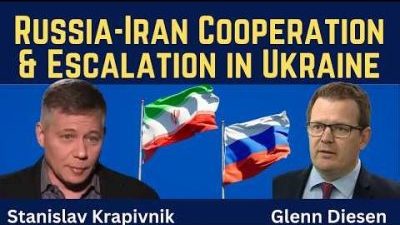
Stanislav Krapivnik: Russia-Iran Cooperation & Escalation in Ukraine
or go to
Aletho News Archives – Video-Images
Frlom the Archives
A dark page from the CIA’s history: What was Project Artichoke, launched 74 years ago?
By Erkin Oncan | Strategic Culture Foundation | August 22, 2025
One of the most useful instruments hidden behind the U.S. empire’s rhetoric of “freedom and democracy” was the Central Intelligence Agency, founded on September 18, 1947, as the successor of the Office of Strategic Services (OSS).
Since its creation, the CIA has carried out countless inhumane operations: assassinations, coups, drug trafficking, support for terrorism, conspiracies. The list of its crimes is endless. But among the darkest and most inhumane chapters of its record lie the notorious “mind control” experiments. … continue
Blog Roll
 Aletho News
- Stanislav Krapivnik: Russia-Iran Cooperation & Escalation in Ukraine
- Indonesia suspends participation in Board of Peace following attack on Iran
- ‘Operation Epic Fury’ burns an estimated $5.82 billion in just 100 hours
- Zionism’s grip over the world: From Epstein to Greater Israel
- How Israel and the FBI manipulated assassination plots to goad Trump into Iran war
- Iranian Strikes Dispel the Illusion of US Security Umbrella
- US Boasts of Destroyed Iranian Launchers Lack Credibility – Ex-DoD Official
- Europe not in position to cooperate with US and Israel against Iran
- Iran Has ‘Broken the Myth’ of Israeli Military Power: Former Pakistani Envoy
- How, and why, US data centers in the Gulf became targets of war
- If Americans Knew
- US troops were told war on Iran was ‘all part of God’s divine plan’, watchdog alleges
- Trump wants to run the show in Iran, but doesn’t know what he’s doing – Not a ceasefire Day 147
- ‘Dirty Work’ :The truth about how Israel was founded
- Mass Expulsion in Lebanon as Israel Expands War: “We Don’t Know Where to Go”
- Lies, distortions, and propaganda: how the U.S. mainstream media coverage on Iran hides the truth
- Palestinians in Gaza fear famine returning as Israel cuts off food amid Iran war
- AIPAC, other pro-Israel groups enter midterms with $100 million to spend
- Iranian girls killed by ‘double-tap’ strikes on Minab school
- Bari Weiss Is Going Full ‘Propaganda-Palooza’ With the Iran War
- Inside the Pro-Israel Campaign to Stop ‘The Voice of Hind Rajab’ From Winning an Oscar
- No Tricks Zone
- Televised! Leading German Political Candidate Tells Schoolchildren CO2 Makes Sun Hotter!
- New Study: A Century Warming Of 1.1°C Is ‘Commonplace’ And ‘Not Unusual’ During This Interglacial
- New Study: ‘Internal Noise’ And Volcanic Forcing Can Trigger 10-15°C Warming Within Decades
- Glaciers Worldwide Are Suddendly Surging, Experts Blame Warming!
- Surprising Discovery: Sahara Is Greening…Billions Of Trees Where Once Thought To Be Barren
- New Research Reaffirms Clouds, Aerosols, And Surface Solar Radiation Are ‘Driving The Climate System’
- Germany: Electric Car Catches Fire At Charging Station, Sets Off Local “Inferno”, Widespread Damage
- New Study: Canada’s New Brunswick Was 1°C Warmer Than Today During The Medieval Warm Period
- Coal Power Back In Trend As Globe Tries To Keep Pace With Growing Demand For Power
- New Study: A 4°C Warmer Beaufort Sea Had ‘No Sea Ice’ 11,700 – 8200 Years Ago
 Aletho News