Brazilian President visits CIA before visiting Trump on first US visit
Press TV – March 19, 2019
Brazilian President Jair Bolsonaro has made an unprecedented visit to the United States Central Intelligence Agency (CIA) headquarters in Langley, Virginia, in his first US visit before a meeting with US President Donald Trump scheduled on Tuesday.
Eduardo Bolsonaro, a lawmaker and son of the Brazilian president confirmed the visit on Monday, calling the intelligence agency one of the “most respected” in the world.
“Going now with president Jair Bolsonaro and ministers of the CIA, one of the most respected intelligence agencies in the world. It’ll be an excellent opportunity to speak about international relations topics in the region with experts and the technicians of the highest level,” he said in a tweet.
Eduardo Bolsonaro claimed the meeting was to discuss “international themes in the region”.
Leading Brazilian daily O Globo reported that Bolonsaro visited the agency along with Brazilian Justice Minister Sergio Moro, noting that the visit had not been published in the president’s public agenda and that press was not allowed to accompany Bolonsaro in the event.
The CIA had no comment on the visit.
Observers believe the unusual visit further signals Bolsonaro’s shift towards Washington. The move is, however, expected to be received controversially in Brazil.
In 2013, American whistleblower Edward Snowden revealed that the American National Security Agency (NSA) had wiretapped the conversations of then-President Dilma Rousseff, leading to suspicions towards the US and its spy agencies.
Former Brazilian Foreign Minster Celso Amorim has also slammed the meeting, saying that “no Brazilian president had ever paid a visit to the CIA.”
“This is an explicitly submissive position. Nothing compares to this,” he added.
Bolsonaro originally arrived in the US on Sunday, stating that the trip marked the first “pro-America Brazilian president” recently visiting the country.
“It’s the beginning of a partnership focused on liberty and prosperity, something that all of us Brazilians have long wished for,” he said.
Bolsonaro is an ardent admirer of US President Donald Trump and the White House’s policies, particularly those with regard to opposing left-wing governments in Cuba, Nicaragua and Venezuela.
The Brazilian president, who is also known as “Tropical Trump,” has sparked controversy by following Trump on calling for the relocation of his country’s embassy to the occupied city of Jerusalem al-Quds.
Bolsonaro personally made the promise to Israeli President Benjamin Netanyahu while he attended the Brazilian president’s inauguration ceremony on January 1.
Last week, however, reports emerged that Bolsonaro may fail to carry out the move following opposition from military officers in his cabinet.
Vice President Hamilton Mourao also objected to the embassy move last month, claiming that the measure would hurt Brazilian exports to Arab countries which include an estimated $5 billion in halal food sales.
Bolsonaro has also said that he is open to considering the establishment of a US military base in Brazil as a way to “counter Russian influence” in neighboring Venezuela.
The move was rejected by Brazilian Defense Minister General Fernando Azevedo e Silva a week later.
Venezuela Welcomes 2,500 Cuban Doctors Leaving Brazil
teleSUR | January 13, 2019
Over 2,000 Cuban doctors are setting up practice in Venezuela after being kicked out of Brazil by President Jair Bolsonaro, Venezuelan leader Nicolas Maduro said this weekend.
Two-thousand-five-hundred cardiologists, anesthesiologists, and general doctors arrived in the South American country Friday to bulk up the medical staff at the Barrio Adentro Mission, a social initiative founded by ex-president Hugo Chavez to provide free, public medical care.
In November, thousands of doctors were forced to leave the Mais Medicos (More Doctors) cooperation program in Brazil after far-right president Bolsonaro criticized the program, saying it was torture for Cuban mothers who were “not allowed” to go with their children and questioning diplomatic ties with the island.
In the last five years, about 20,000 Cuban physicians have participated in the ‘More Doctors Program,’ assisting thousands of Brazilians in rural communities to receive primary health care.
Some 1,462 vacancies, roughly 17.2 percent of those positions left by the Cuban doctors, have not yet been filled, the Brazilian Health Minister, Luiz Henrique Mandetta, said Friday.
Several states and municipalities inside Brazil pressured the National Government to provide a solution because the Cuban doctors are usually the only medical option in several rural areas of the country.
Facebook Shuts Down Dozens of Alleged Pro-Bolsonaro Accounts in Brazil
Sputnik – 23.10.2018
Facebook has shut down 68 pages and 43 accounts linked to the Brazilian marketing group Raposo Fernandes Associados (RFA); the social media site claims that the firm violated its spam policies.
“The people behind RFA created pages using fake accounts or multiple accounts with the same names, which violates our Community Standards. They then used those pages to post massive amounts of clickbait,” the statement reads.
A local newspaper, O Estado de S. Paulo, called the blocked accounts the largest network supporting Brazil’s right-wing presidential candidate Jair Bolsonaro, who will face off against his leftist rival Fernando Haddad in the Sunday runoff election.
The US social media giant argued that its decision to remove these pages was based on their behavior, rather than their content.
The newspaper said it exposed the pro-Bolsonaro network in a joint investigation with Avaaz, a US-based activist website, which claimed that the blocked pages had generated 12.5 million interactions in the past month.
Facebook teams up with US government to police ‘fake news’ in foreign elections
RT | September 24, 2018
Facebook has teamed up with two US government-funded think tanks as part of a new initiative to bolster the social media giant’s “election integrity efforts” around the globe.
The new partnership with the International Republican Institute (IRI) and the National Democratic Institute (NDI) was revealed by Facebook in a call with reporters last week and reported by Reuters — but the company’s choice of partners has since raised a few eyebrows. Both think-tanks are funded by the US government, through the National Endowment for Democracy (NED).
Tweeting about the initiative, Mark Weisbrot, a co-director at the Center for Economic and Policy Research, called Facebook’s decision to work with the US government-funded organizations “Orwellian” and said that they “specialize in overseas propaganda.” Weisbrot also criticized Reuters reporting of the news which focused on Facebook’s supposed fake-news busting efforts and seemed lacking in “any awareness” of who the two groups were.
During the telephone Q&A with reporters focusing on the upcoming elections in the US and Brazil, Facebook’s Elections and Civic Engagement Samidh Chakrabarti, said that “preventing election interference” on the platform has been “one of the biggest cross-team efforts” the company has seen. But is teaming up with government-funded think tanks really the best way to prevent election interference on Facebook?
Asked by CNBC reporter Salvador Rodriguez to elaborate on the partnership, Katie Harbath, who heads up Facebook’s Global Politics and Government Outreach team, said she wanted to be clear that Facebook’s work with the IRI and NDI is only focused “internationally” and that it has nothing to do with domestic elections in the US. Harbath said the two organizations have “a lot of experience in working in elections and in many countries around the globe” and that Facebook can learn from them about “election integrity risks” that exist in other countries.
That knowledge might prompt a sign of relief from American journalists, but given the US government holds a very real stake in the outcome of many other elections worldwide, it still seems a little odd that Facebook should be using US government-funded organizations to help it decide what constitutes fake news in foreign elections, or to “slow the global spread of misinformation” as Reuters put it.
It’s not the first time Facebook has chosen a dubious partner to help it out in its fight against fake news, either. The social media giant also entered a similar partnership with the Atlantic Council, a think tank funded by the US and other NATO governments, as well as by a slew of US weapons manufacturers.
Shortly after its partnership with the Atlantic Council was revealed, Facebook temporarily deleted the English-language page of the Venezuela-based news outlet Telesur without explanation. Telesur is one of the only English-language media sources providing an alternative view on events in Venezuela.
Facebook has also been criticized for capitulating to demands and threats made by the Israeli government by deleting the accounts of a number of accounts run by Palestinian activists.
Nonetheless, Facebook has said it is setting up a “war room” ahead of major elections in Brazil next month. The war-like rhetoric echoes a Washington Post op-ed by Facbook CEO Mark Zuckerberg last month, in which he said Facebook was in an “arms race” against “bad actors” and that the platform needed to improve its “defenses”.
Amy Studdart, a senior advisor at the IRI, told Reuters that the details of its partnership with Facebook had not been fully worked out, but said the organization would help Facebook employees “understand how their platform is being used on the ground all around the world.”
The NED and its affiliates have been criticized as engines of “regime change” around the world, and one of its founders famously noted in 1991 that “a lot of what we do now was done covertly by the CIA 25 years ago.”
Brazil Court Rules Barring Lula Da Silva From Presidential Election – Reports
Sputnik – 01.09.2018
The lawyers of the jailed former Brazilian president Luiz Inacio Lula da Silva have said they would appeal the ruling by a 4-1 majority of the seven-member top electoral court to the country’s Supreme Court, Reuters reported.
Lula, who served as the country’s president from 2003 through 2010, was sentenced to 9.5 years in prison last summer for allegedly accepting a luxury apartment from a construction firm in return for political favors. Lula has denied the accusations. An appeals court upheld the ruling in January and increased Lula’s jail term to 12 years and a month.
The Brazilian Workers’ Party (PT) vowed in a statement late Friday to secure Lula da Silva’s candidcay in the upcoming October’s vote.
“We will present all appeals before the courts for the recognition of the rights of Lula provided by law and international treaties ratified by Brazil… we will defend Lula in the streets, with the people,” the PT statement was quoted by AFP.
Earlier in August, the PT announced it has registered jailed ex-president Lula da Silva as its candidate in the upcoming October’s election. Papers were submitted to Brazil’s Supreme Court hours before the deadline passed.
The UN Human Rights Committee has urged Brazil to ensure that political rights of Lula were observed given that he was registered as a candidate for the upcoming presidential election. The committee also urged Brazil to refrain from hindering Lula from participating in the election until after his court appeals were completed.
However, the country’s Foreign Ministry has said that Brazilian authorities do not consider binding the UNHR recommendations regarding observance of jailed former president.
According to the recent polls, jailed ex-president Lula da Silva is one of the most popular presidential candidates, however, the new rulling of the Brazil’s electoral court questions Lula’s run in the presidential campaign.
Lula da Silva’s supporters remain, however, optimistic. The PT has launched an appeal for support on Twitter, after which a hashtag translating as “Lula on the ballot box” quickly began trending, AFP reported.
UN Committee Vice President: Decision on Lula’s Political Rights is ‘Legally Binding’
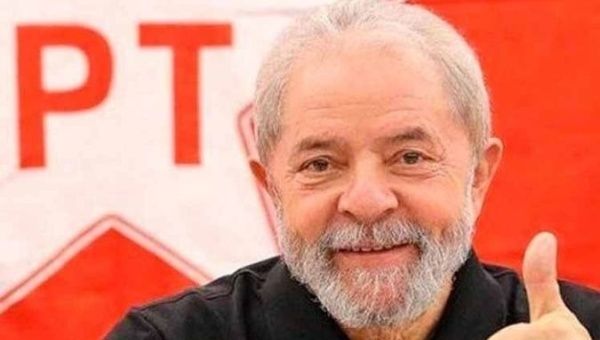
Former Brazilian President and current presidential candidate Luiz Inacio Lula da Silva. | Photo: Prensa Latina
teleSUR | August 24, 2018
Sarah Cleveland, vice-president of the UN Human Rights Commission, has condemned statements made by Brazilian officials following the UN’s determination that the state should “take all necessary measures” to allow Brazilian presidential candidate Luiz Inacio Lula da Silva to “exercise his political rights” as a candidate in the October presidential elections.
Speaking in an interview with swissinfo.ch Cleveland said the measures put forward by the Committee are “legally binding.”
“The precautionary measures issued are not recommendations, they are legally binding and impose an international legal obligation on Brazil to fulfill them,” she said.
Cleveland went on to say that the Geneva-based commission “has no interest in the results of the elections, only in the right of everyone to participate.”
But warned that “failure to comply with the precautionary measures would mean that Brazil would be violating” international treaties to which it is a signatory.
The UN Human Rights Commission issued the decision on August 17, even though Lula remains in prison on alleged corruption charges, events that many legal experts and observers attribute to lawfare and a salacious mainstream media campaign.
The ruling includes recommendations on the former head of state’s right to participate in media events and debates, as well as convene with members of his Workers’ Party. The committee also said Lula should not be prevented from participating in the elections until all of his legal appeals have been exhausted, per Brazil’s Constitution.
Brazil’s Workers’ Party (PT) hailed the decision made by the UN.
“It’s impossible to hide the violations practiced in Brazil by sectors of the judicial system, in cooperation with Globo (Brazil’s largest media conglomerate), the mainstream media and the coup government from the rest of the world. Either comply with the United Nations decision or put Brazil on the list of lawless, undemocratic nations,” PT president, Gleisi Hoffmann, said in a public statement.
Brazil’s most extensive public survey and research organization, Datafolha, has revealed that Lula’s lead in the presidential race has jumped to 39 percent of likely voters, 20 points ahead of his closest rival, Rio de Janeiro congressman Jair Bolsonaro.
Lula has topped every 2018 electoral poll conducted by Vox Populi, Ibope, Datafolha, Data Poder 360, Instituto Parana, the National Confederation of Transportation/MDA and Ipsos. His two terms in office were marked by a slew of social programs, lifting millions of Brazilians out of poverty and removing the country from the United Nations World Hunger Map. He left office with a record approval rating of 83 percent in 2011, according to Datafolha.
Appeals court judge overrules decision to release Brazil’s former President Lula from jail
RT | July 8, 2018
An appeals court judge has overruled an order to release former Brazilian President Luiz Inácio Lula da Silva from jail.
The move backed a decision made earlier on Sunday by Federal Judge Sérgio Moro, who had blocked a third judge’s decision to free Lula.
The former president, who is widely known as ‘Lula,’ has been in prison since April 7, serving a 12-year prison sentence for corruption and money laundering. He maintains he is innocent, claiming his conviction was politically motivated.
Brazil Judge Gives Police One Hour to Release Lula
teleSUR | July 8, 2018
Appeal judge Rogerio Favreto of the appeal Federal Regional Court of the 4th Region based in Porto Alegre, reaffirmed Sunday afternoon his decision to grant freedom to former President Luiz Inacio Lula da Silva, as two judges attempted to question his authority, further giving the police a deadline of one hour to release the former socialist president.
Lula has been imprisoned since April 7 in Curitiba over alleged charges of corruption that investigators failed to provide evidence for.
After his earlier order, Favreto Issued another decision later in the day reaffirming that he had full authority to accept the Habeas Corpus filed by his lawyers to the appeal court weeks ago.
His first order demands the suspension of the provisional sentence and grants Lula freedom immediately.
“The release order must be urgently complied with today by the presentation of this order to any police authority at the prison center of the federal police office in Curitiba, where the accused is being held,” says the release order.
Lula was sentenced to 12 years in prison for his alleged involvement in the Lava Jato Operation, accused of passive corruption and money laundering, charges he and his supporters flatly deny.
He was granted immediate freedom after the lawmakers Wadih Damous, Paulo Pimenta and Paulo Teixeira submitted a “Habeas Corpus” request to Favreto.
“At the current stage, the illegal and unconstitutional provisional execution of the sentence imposed on the former president Lula can’t stop his political rights neither restrict the right to acts related to his condition as a pre-candidate to president of the republic,” said Favreto, who was a member of the Workers’ Party for 19 years.
Lula’s Workers’ Party (PT) issued a statement shortly after the decision. “Through the decision of the Favreto, the judicial system, which was so often manipulated to persecute Lula and deprive him of freedom, now recognizes that he has the right to defend himself in freedom in the higher instances, as the Constitution guarantees to everyone,” the PT said in a press release Sunday afternoon.
“And it decides, mainly, that society has the right to know, through the voice of Lula himself, his proposals to get Brazil out of this immense crisis, to resume the path of democracy, social justice and the construction of the equality.”
However, the judge Sergio Moro, who sentenced Lula in the first place, is trying to revoke the release order.
CIA Memo: Brazil’s Dictator Geisel Authorized Extrajudicial Executions
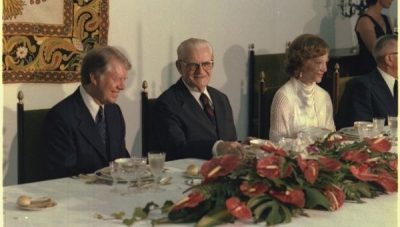
Ernesto Geisel, President of Brazil, hosts a State Dinner for Jimmy Carter and Rosalynn Carter. March 29, 1978 | Photo: U.S. National Archives and Records Administration
teleSUR | May 13, 2018
A declassified memo from the U.S. Department of State revealed that Brazilian dictator Ernesto Geisel (1974-1979) approved summary executions of “dangerous subversive” people personally, continuing with the extrajudicial methods of his predecessors.
The document was made public back in 2015, but it wasn’t until a few days ago that Matias Spektor, an international relations professor at the Getulio Vargas Foundation (FGV) and a columnist at Brazilian newspaper Folha, found it as part of his research work and posted it on social media, along with a picture of Geisel and Joao Baptista Figueiredo, who later became his successor.
The document narrates a meeting between President Geisel, General Milton Tavares de Souza and General Confucio Danton de Paula Avelino, respectively outgoing and incoming chiefs of the Army Intelligence Center (CIE), along with Figueiredo, who at that time was Chief of the National Intelligence Service (SNI).
“This is the most disturbing document I’ve read in 20 years of research: Just after being sworn in, Geisel authorized the continuation of the regime’s killing policies, but it requires the Army Intelligence Center previous authorization from the Planalto Palace.”
General Milton briefed Geisel about the role of the Army Intelligence Center (CIE) against “the internal subversive target” during the presidency of Emilio Garrastazu Medici, and said that “extrajudicial methods should continue to be employed against dangerous subversives.”
He also informed Geisel that about 104 people falling under this category had been executed by the CIE in the previous year. Figueiredo supported this policy and urged Geisel to continue with it.
According to the memo, Geisel “commented on the seriousness and potentially prejudicial aspects of this policy,” and said he wanted to think about it over the weekend. He decided to go along with it, but to limit the executions to “only dangerous subversives,” and required the CIE to consult Figueiredo for approval before any execution.
The entire CIE would then be under Figueiredo’s control, blurring the line between the CIE and the SNI.
“I didn’t know Geisel had given the Planalto Palace the responsibility over summary execution decision. The government’s leadership was not only aware of the executions but also ordered them. That’s impressive, unheard of,” said Spektor.
The memo was sent by William Colby, who was then Director of Central Intelligence Agency, to then U.S. Secretary of State Henry Kissinger, who also played a key role in promoting military coups against democratically elected governments in Latin America, under the subject “Decision by Brazilian President Ernesto Geisel To Continue the Summary Execution of Dangerous Subversives Under Certain Conditions” and dated April 11, 1974.
First and second paragraphs of the document (7 and 12 and a half lines) are still classified.
After the documents were picked up by Spektor, the Brazilian army stated that any classified documents that could prove Colby’s allegations of the events had been destroyed as it was stipulated by the laws of that period.
Featured Video
MIT Prof Ted Postol: U.S. Iran Missile War
or go to
Aletho News Archives – Video-Images
Frlom the Archives
A dark page from the CIA’s history: What was Project Artichoke, launched 74 years ago?
By Erkin Oncan | Strategic Culture Foundation | August 22, 2025
One of the most useful instruments hidden behind the U.S. empire’s rhetoric of “freedom and democracy” was the Central Intelligence Agency, founded on September 18, 1947, as the successor of the Office of Strategic Services (OSS).
Since its creation, the CIA has carried out countless inhumane operations: assassinations, coups, drug trafficking, support for terrorism, conspiracies. The list of its crimes is endless. But among the darkest and most inhumane chapters of its record lie the notorious “mind control” experiments. … continue
Blog Roll
 Aletho News
- Indonesia suspends participation in Board of Peace following attack on Iran
- ‘Operation Epic Fury’ burns an estimated $5.82 billion in just 100 hours
- Zionism’s grip over the world: From Epstein to Greater Israel
- How Israel and the FBI manipulated assassination plots to goad Trump into Iran war
- Iranian Strikes Dispel the Illusion of US Security Umbrella
- US Boasts of Destroyed Iranian Launchers Lack Credibility – Ex-DoD Official
- Europe not in position to cooperate with US and Israel against Iran
- Iran Has ‘Broken the Myth’ of Israeli Military Power: Former Pakistani Envoy
- How, and why, US data centers in the Gulf became targets of war
- The General who swallowed his truth
- If Americans Knew
- US troops were told war on Iran was ‘all part of God’s divine plan’, watchdog alleges
- Trump wants to run the show in Iran, but doesn’t know what he’s doing – Not a ceasefire Day 147
- ‘Dirty Work’ :The truth about how Israel was founded
- Mass Expulsion in Lebanon as Israel Expands War: “We Don’t Know Where to Go”
- Lies, distortions, and propaganda: how the U.S. mainstream media coverage on Iran hides the truth
- Palestinians in Gaza fear famine returning as Israel cuts off food amid Iran war
- AIPAC, other pro-Israel groups enter midterms with $100 million to spend
- Iranian girls killed by ‘double-tap’ strikes on Minab school
- Bari Weiss Is Going Full ‘Propaganda-Palooza’ With the Iran War
- Inside the Pro-Israel Campaign to Stop ‘The Voice of Hind Rajab’ From Winning an Oscar
- No Tricks Zone
- Televised! Leading German Political Candidate Tells Schoolchildren CO2 Makes Sun Hotter!
- New Study: A Century Warming Of 1.1°C Is ‘Commonplace’ And ‘Not Unusual’ During This Interglacial
- New Study: ‘Internal Noise’ And Volcanic Forcing Can Trigger 10-15°C Warming Within Decades
- Glaciers Worldwide Are Suddendly Surging, Experts Blame Warming!
- Surprising Discovery: Sahara Is Greening…Billions Of Trees Where Once Thought To Be Barren
- New Research Reaffirms Clouds, Aerosols, And Surface Solar Radiation Are ‘Driving The Climate System’
- Germany: Electric Car Catches Fire At Charging Station, Sets Off Local “Inferno”, Widespread Damage
- New Study: Canada’s New Brunswick Was 1°C Warmer Than Today During The Medieval Warm Period
- Coal Power Back In Trend As Globe Tries To Keep Pace With Growing Demand For Power
- New Study: A 4°C Warmer Beaufort Sea Had ‘No Sea Ice’ 11,700 – 8200 Years Ago
 Aletho News