European Commission’s Hate Speech Deal With Companies Will Chill Speech
By Jillian York | EFF | June 3, 2016
A new agreement between the European Commission and four major U.S. companies—Facebook, Google, Twitter, and Microsoft—went into effect yesterday. The agreement will require companies to “review the majority of valid notifications for removal of hate speech in less than 24 hours and remove or disable access to such content,” as well as “educate and raise awareness” with their users about the companies’ guidelines.
The deal was made under the Commission’s “EU Internet Forum,” launched last year as a means to counter what EDRi calls “vaguely-defined ‘terrorist activity and hate speech online.’” While some members of civil society were able to participate in discussions, they were excluded from the negotiations that led to the agreement, says EDRi.
The agreement has been met with opposition by a number of groups, including EDRi (of which we’re a member), Access Now, and Index on Censorship, all of which have expressed concerns that the deal with stifle freedom of expression. The decision has also sparked debate on social media, with a wide variety of individuals and groups opposing the decision under the hashtag #IStandWithHateSpeech.
But you don’t have to stand with hate speech to stand against this decision. There are several reasons to oppose this Orwellian agreement. First, while Article 19 of the International Covenant on Civil and Political Rights allows states to limit freedom of expression under select circumstances, such limitations are intended to be the exception, and are permitted only to protect the following:
-
The rights or reputations of others,
-
national security,
-
public order,
-
public health, or
-
morals.
These limits must also meet a three-part test as defined by the ICCPR: be defined by law; have legitimate aim; and be truly necessary. While some of the speech that concerns the Commission may very well qualify as illegal under some countries’ laws, the method by which they’ve sought to limit it will surely have a chilling effect on free speech.
In addition, as EDRi points out, despite a lengthy negotiation between companies and the Commission, “hate speech” remains vaguely-defined. Companies have been tasked with taking the lead on determining what constitutes hate speech, with potentially disastrous results.
In fact, social media companies have an abysmal track record when it comes to regulating any kind of speech. As Onlinecensorship.org’s research shows, speech that is permitted by companies’ terms of service is often removed, with users given few paths to recourse. Users report experiencing bans from Facebook for 24 hours to up to 30 days if the company determines they’ve violated the Community Standards—which, in many cases, the user has not. Requiring companies to review complaints within 24 hours will almost surely result in the removal of speech that would be legal in Europe.
By taking decision-making outside of the democratic system and into backrooms, and granting corporations even greater control, the European Commission is ensuring a chill on online speech.
The Lingering Danger of Google & Facebook
By Ulson Gunnar – New Eastern Outlook – 30.04.2016
During the 2011 Arab Spring, it was clear to those who bothered to look, that the US State Department and the various arms of soft power attached to it were directly responsible for what was otherwise initially passed off as a spontaneous, region-wide uprising.
Eventually, what was dismissed as “conspiracy theory” regarding the US-backed nature of the uprising, was finally admitted to by the New York Times in an April 2011 article titled, “U.S. Groups Helped Nurture Arab Uprisings,” which admitted that:
A number of the groups and individuals directly involved in the revolts and reforms sweeping the region, including the April 6 Youth Movement in Egypt, the Bahrain Center for Human Rights and grass-roots activists like Entsar Qadhi, a youth leader in Yemen, received training and financing from groups like the International Republican Institute, the National Democratic Institute and Freedom House, a nonprofit human rights organization based in Washington, according to interviews in recent weeks and American diplomatic cables obtained by WikiLeaks.
The New York Times would go on to admit direct ties between the above-mentioned organizations and both the US Congress and the US State Department.
The article would also admit:
Some Egyptian youth leaders attended a 2008 technology meeting in New York, where they were taught to use social networking and mobile technologies to promote democracy. Among those sponsoring the meeting were Facebook, Google, MTV, Columbia Law School and the State Department.
The 2008 meeting wasn’t the only one. And, as it would turn out, Facebook and Google’s role in preparing the ground for the Arab Spring, quite literally years before the “spontaneous” protests erupted, was much more complicated than merely being sponsors of a single event in New York.
Hillary Clinton was serving as US Secretary of State both during and in the lead up to the Arab Spring. She even attended via teleconference one of these “technology meetings” briefly mentioned by the New York Times.
Also attending the meetings were actually staff from the US State Department and various staff from both Google and Facebook. Also in attendance were members of the US media. In other words, the event was not only sponsored by the US government and these two tech-giants, it was organized and conducted by them as well. Their event program (PDF) makes this abundantly clear.
The purpose was clearly to create a unified network combining the US State Department’s direction, the tech-giant’s technical capabilities, and influence of the US media together to overwhelm the information space when finally the time came for the Arab Spring to unfold. And overwhelm it did. The governments of Tunisia, Egypt, Yemen, and Libya fell, with violence and even war breaking out in the latter three, while Syria to this day remains engulfed in violence that began in the wake of the 2011 operation.
More recently, e-mails leaked from then US Secretary of State Hillary Clinton, reveal further details on just how close the tech-giants work with the government. Some could even say they are an extension of the government.
A CBS article titled, “Clinton Emails Show State Department’s Close Relationship With Google,” reveled that:
The latest release of emails sent to and from Hillary Clinton’s private email server reveals a close relationship between Google and the State Department.
A 2012 email recently uploaded onto Wikileaks’ searchable archive came from Google Ideas director Jared Cohen, who formerly worked as an advisor to Secretary Clinton, indicates that Google wanted to help bolster support for those who defected from Syrian President Bashar al-Assad’s military.
It also showed that before launching a “defection tracker” Cohen wanted the State Department to weigh in on the idea and potentially provide feedback.
Not only does the leak expose what appears to be a revolving door between the tech-giant and the US State Department, but it exposes the fact that regardless of who is working where, Google was working in tandem with the State Department. Cohen was actually listed in the above cited event program as Policy Planning Staff of the Office of the Secretary of State meaning that before moving to Google he was working with Google to undermine various foreign governments, and continued to do so after he moved from government to the private sector.
Just Warming Up
Google and Facebook are still very much engaged in information warfare for the US government and the special interests that it serves. Likewise, the US State Department is still very much in the business of subverting foreign nations by recruiting, training, equipping and directing collaborators from targeted nations.
Facebook, for example, has expressed plans to get everyone on the planet on the Internet. The seemingly humanitarian mission is in all actuality an attempt to get the world on Facebook, which through its algorithms and ability to censor, ban and delete accounts at will, would virtually control what the world saw and didn’t see.
More forward-thinking states like Russia and China have noted this reality of the 21st century battlefield and have responded by creating their own domestic versions of Google and Facebook. An arms race of sorts has begun between these competing services both in terms of reach and capabilities for everything from artificial intelligence deep learning algorithms to the ability to control and influence the flow of information over and within borders.
Tech-centric US-funded nongovernmental organizations have begun to spring up alongside their traditional US-funded collaborators in nations around the world, specializing in doing many of the sort of workshops initially conducted by the US State Department, Google and Facebook before the Arab Spring. For nations either not aware of this or incapable of responding to this threat, it could be comparable to a new weapon of war taking to the battlefield one has no defense to or anything which which to strike back with.
This threat will only increase, with the “information war” becoming more and more literal as advances are made in information technology. The US is openly using information technology to augment its hegmonic ambitions around the world, with e-mail leaks confirming what many have already suspected all along. What is more worrisome is the collaborations and technologies being used now that are not being disclosed or “leaked.”
For nations around the world, raising literacy in terms of information technology and the threat it poses can help inoculate their populations from the overwhelming nature of foreign-backed operations like the Arab Spring. By creating and cultivating a domestic information technology sector and recruiting talent before the US does, creating competitive services like Russia’s VK and China’s Baidu not only serves as a means of improving and diversifying one’s economy, but can also serve as an important pillar of national security in the 21st century.
China to Ban Online Foreign Media After March 10 – Statement
No Chinese Spring
Sputnik – 19.02.2016
BEIJING – Foreign companies will be banned from publishing online in China from March 10, the Ministry of Industry and Information Technology and the State Administration of Press, Publication, Radio, Film and Television said in a joint statement Friday.
“Sino-foreign joint ventures and foreign businesses shall not engage in online publishing services,” the regulations state.
The rules apply to “informative, ideological content text, pictures, maps, games, animation, audio and video digitizing books and other original works of literature, art, science and other fields.”
Joint projects are required to apply for special permission to carry out such activities from the State Administration of Press, Publication, Radio, Film and Television, according to the new rules.
Domestic online media are required to inform the relevant authorities about their sources of funding, expenditure, personnel, domain name registration as well as being required to keep all servers and equipment in China.
Online outlets are prohibited from publishing information that may cause “harm to national unity, sovereignty and territorial integrity,” “spread rumors, disturb social order or undermine social stability,” and harm “social morality or endanger national cultural tradition,” among others.
Foreign websites, including Google, Facebook, Twitter, and a number of Western publications remain inaccessible in China. Beijing has adopted a series of normative and ideological directives in recent years requiring national internet providers and media to closely monitor the quality of information disseminated online.
Onlinecensorship.org Tracks Content Takedowns by Facebook, Twitter, and Other Social Media Sites
New Project Will Gather Users’ Stories of Censorship from Around the World
EFF |November 19, 2015
San Francisco – The Electronic Frontier Foundation (EFF) and Visualizing Impact launched Onlinecensorship.org today, a new platform to document the who, what, and why of content takedowns on social media sites. The project, made possible by a 2014 Knight News Challenge award, will address how social media sites moderate user-generated content and how free expression is affected across the globe.
Controversies over content takedowns seem to bubble up every few weeks, with users complaining about censorship of political speech, nudity, LGBT content, and many other subjects. The passionate debate about these takedowns reveals a larger issue: social media sites have an enormous impact on the public sphere, but are ultimately privately owned companies. Each corporation has their own rules and systems of governance that control users’ content, while providing little transparency about how these decisions are made.
At Onlinecensorship.org, users themselves can report on content takedowns from Facebook, Google+, Twitter, Instagram, Flickr, and YouTube. By cataloging and analyzing aggregated cases of social media censorship, Onlinecensorship.org seeks to unveil trends in content removals, provide insight into the types of content being taken down, and learn how these takedowns impact different communities of users.
“We want to know how social media companies enforce their terms of service. The data we collect will allow us to raise public awareness about the ways these companies are regulating speech,” said EFF Director for International Freedom of Expression and co-founder of Onlinecensorship.org Jillian C. York. “We hope that companies will respond to the data by improving their regulations and reporting mechanisms and processes—we need to hold Internet companies accountable for the ways in which they exercise power over people’s digital lives.”
York and Onlinecensorship.org co-founder Ramzi Jaber were inspired to action after a Facebook post in support of OneWorld’s “Freedom for Palestine” project disappeared from the band Coldplay’s page even though it had received nearly 7,000 largely supportive comments. It later became clear that Facebook took down the post after it was reported as “abusive” by several users.
“By collecting these reports, we’re not just looking for trends. We’re also looking for context, and to build an understanding of how the removal of content affects users’ lives. It’s important companies understand that, more often than not, the individuals and communities most impacted by online censorship are also the most vulnerable,” said Jaber. “Both a company’s terms of service and their enforcement mechanisms should take into account power imbalances that place already-marginalized communities at greater risk online.”
Onlinecensorship.org has other tools for social media users, including a guide to the often-complex appeals process to fight a content takedown. It will also host a collection of news reports on content moderation practices.
For Onlinecensorship.org:
https://onlinecensorship.org
Contact:
Jillian C. York
Director for International Freedom of Expression
jillian@eff.org
Ramzi Jaber
Co-founder and co-director of Visualizing Impact
Ramzi@visualizingimpact.org
Copyright Infringement Claim Filed By Sandy Hook Charity Kingpin
Memory Hole Blog | September 22, 2015
On September 17 MHB reported on a copyright infringement claim filed with Facebook by an anonymous party against the “Sandy Hook Hoax” Fb page alleging ownership of the Lenie Urbina/Avielle Richman photographs. The copyright claimant has been revealed in the emails below as one Thomas Bittman, co-founder of the lucrative “Sandy Hook Promise” charity. The 501(c)3 has been a key proponent of gun control and mental health protocols that it argues will curb mass shootings, while pulling on the heartstrings of America to the tune of tens of millions of dollars in the wake of the December 14, 2012 Sandy Hook massacre event.
What’s significant here is whether Bittman actually holds the copyright to the images in question, and if he’s not just prompting Facebook to abuse the entire DMCA process intended to address legitimate copyright claims. If so, Bittman has likely committed perjury and is subject to being sued for filing a false copyright infringement claim. “If you send a cease-and-desist letter to an infringer,” under DMCA,
there is a risk that the infringer may file a lawsuit in the infringer’s jurisdiction naming you as a defendant and seeking a declaratory judgment that your copyright is invalid. One recent court decision found that the sending of a single cease-and-desist letter into the state was enough to subject the defendant to personal jurisdiction in that state.
If you send a DMCA takedown notice that is both false and meant in bad faith (such as to harass, or doesn’t state a real claim), you have committed perjury. Though unlikely, if the party you sent the takedown notice to decided to pursue this in court, you could face all of the consequences that your state imposes on people who lie in court.
Most MHB readers will likely agree that such legal action against parties that have sought to terrorize the US citizenry and enrich themselves on an entirely dubious incident is richly deserved. We do hope Mr. Anthony Mead pursues this matter to the fullest extent provided by law.
Data sharing deal with US must end due to ‘mass surveillance’ – EU court advisor
RT | September 23, 2015
The European Court of Justice’s top legal aid has said that a 15-year-old agreement that eases the transfer of data between the EU and the US should be ended, accusing American intelligence services of conducting “mass, indiscriminate surveillance.”
The ECJ’s advocate-general, Yves Bot, said on Wednesday that the Safe Harbour agreement does not do enough to protect the private information of EU citizens once it arrives in the US, adding that it should have been suspended.
Safe Harbour allows US firms to collect data on their European customers. The system is used by Google, Facebook, and more than 4,000 other companies.
However, it also allows the NSA to use the Prism surveillance system exposed by Snowden to wade through the personal data, communication, and information held by nine internet companies.
Using Facebook as an example, Bot said that users “are not informed that their personal data will be generally accessible to the United States security agencies.”
“Such mass, indiscriminate surveillance is inherently disproportionate and constitutes an unwarranted interference with the rights guaranteed by articles seven and eight of the charter [of fundamental rights of the EU],” he said, adding that European internet users have no effective judicial protection while the data transfers are happening.
Bot added that if any EU country believes that transferring data to overseas servers undermines the protection of citizens, it has the power to suspend those transfers “irrespective of the general assessment made by the [EU] commission in its decision.”
But despite allegations from Bot, Facebook has denied accusations that it provides ‘backdoor’ access to its servers.
Sally Aldous, a spokeswoman for the social media giant, said on Wednesday that the company “operates in compliance with EU Data Protection law. Like the thousands of other companies who operate data transfers across the Atlantic we await the full judgment.”
“We have repeatedly said that we do not provide ‘backdoor’ access to Facebook servers and data to intelligence agencies or governments,” she said.
Although Bot’s opinions are not binding, they are typically followed by the ECJ’s judges, who are considering a complaint about the arrangement in the wake of US surveillance revelations from former NSA contractor Edward Snowden.
The EU court’s decision is expected in the next four to six months.
The European Commission has been in talks with the US for two years, discussing ways to strengthen the Safe Harbour framework amid calls for its suspension.
Meanwhile, many US companies have praised the 2000 Safe Harbour deal, saying it helps them avoid complicated checks to transfer vital data, including payroll and human resources information.
An end to the agreement would cause a headache for US companies operating in the EU, as well as bring about the potential for a varying of national approaches, lawyers said, as cited by Reuters.
It comes just six months after 27-year-old Austrian law student Max Schrems filed a complaint against Facebook, alleging the social media site was helping the NSA harvest email and other private data by forwarding European data to servers in the US.
Facebook snoops on people just like NSA – Belgian watchdog to court
RT | September 21, 2015
Facebook is spying on people in “the very same way” that the US’s National Security Agency (NSA) does, said the Belgian data protection watchdog at a court hearing where the social network stands accused of violating the privacy of internet users.
“When it became known that the NSA was spying on people all around the world, everybody was upset. This actor [Facebook] is doing the very same thing, albeit in a different way,” said Frederic Debussere, a lawyer representing the Belgian privacy commission (BPC) at the Monday court hearing.
The Belgian watchdog has filed a lawsuit against the social network, accusing it of breaching EU law and violating the privacy rights of internet users. The BPC issued a report in March, arguing that Facebook tracked everyone, even users who had logged-out and people who don’t even have a Facebook account at all, via the use of cookies and the ‘like’ or ‘share’ buttons which can be found on more than 13 million websites worldwide.
This is possible, the report claimed, because the cookies are automatically installed on the computers of internet users each time they visit a page containing a Facebook plug-in, such as the ‘like’ button.
According to EU law, websites must ask for a user’s permission before installing any cookies. This is why Facebook’s policy is considered to in “violation of the European law” by the BPC.
The BPC is now threatening Facebook with a daily fine of €250,000 ($280,213).
“Don’t be intimidated by Facebook. They will argue our demands cannot be implemented in Belgium alone. Our demands can be perfectly implemented just in this country,” said Frederic Debussere, addressing the court.
Facebook has consistently denied all accusations and claimed that its practices are in compliance with EU law, accusing the BPC of presenting false reports.
“We will show the court how this technology protects people from spam, malware, and other attacks, that our practices are consistent with EU law and with those of the most popular Belgian websites,” a Facebook spokesperson said, as quoted by the Guardian.
Addressing questions about the company’s cookie policy, another Facebook representative, Paul Lefebvre, said that “they allow Facebook Ireland to identify bad faith attempts to gain access via the browser being used,” adding that if Belgium imposed a ban on this Facebook activity, the country “would become a cradle for cyber terrorism.”
Additionally, Facebook rejects the very idea it could be held accountable in Belgium as the company’s European headquarters are located in Dublin, Ireland, and its activities watched over by that country’s data protection authority.
The company does not rule out returning to talks with the BPC.
The case is now being closely watched by the rest of the EU’s 28 privacy watchdogs, including that of Holland, which has also started to question Facebook’s activities and privacy policy.
READ MORE:
Facebook ‘breaks EU laws’ tracking all visitors, even non-users – report
Fact: Facebook tracks non-users – says ‘fix already underway’
‘No respect for users, no precise answers:’ Facebook privacy policies slammed by Belgian watchdog
Analog resistance: Activists protest CISA by faxing Congress
RT | July 28, 2015
Privacy activists are flooding Congress with messages of opposition to the cyber surveillance bill due to be considered by the Senate, using faxes rather than emails in order to poke fun at lawmakers’ antiquated understanding of technology and privacy.
Fight for the Future, a nonprofit fighting for privacy and against government surveillance, has set up a page dubbed “Operation: Fax Big Brother,” which lets anyone generate and customize a fax protesting the Cybersecurity Information Sharing Act (CISA). Each fax is then sent to all 100 Senators. The group has not said how many faxes have been sent so far.
CISA sailed through the Senate Intelligence Committee in March, with Oregon Democrat Ron Wyden being the sole dissenter. Senate is expected to take up a vote on the bill before the August 7 recess. A similar proposal, known as CISPA, was approved by the House of Representatives in 2013 but died in the Senate after public opposition compelled President Barack Obama to threaten a veto.
“Groups like Fight for the Future have sent millions of emails, and they still don’t seem to get it,” Evan Greer, the group’s campaign manager, told the Guardian. “Maybe they don’t get it because they’re stuck in 1984, and we figured we’d use some 80s technology to try to get our point across.”
According to the group, since 2012 civil liberties activists have sent hundreds of thousands of calls and tweets and over 2.6 million emails to Congress opposing overreaching cybersecurity laws. However, the fax stunt does not just have publicity value. Lawmakers often use analog technology like faxes and pagers in order to hide their digital tracks from Freedom of Information Act (FOIA) inquiries, claims a Senate staffer who spoke to the Guardian.
Sponsored by Senator Dianne Feinstein, a California Democrat, CISA seeks to enlist the support of corporations in collecting user data in the name of cybersecurity, providing them with liability protection if they share the data with federal agencies such as the NSA. Once they have the data, federal agencies would be able to share it freely with each other. What’s more, information shared with the government by the companies will be specifically exempt from FOIA disclosures.
Gabe Rottman, a legislative counsel with the American Civil Liberties Union, described the bill as a “new and vast surveillance authority that might as well be called Patriot Act 2.0 given how much personal information it would funnel to the NSA.”
The US Chamber of Commerce and a number of major corporations are backing the bill. In addition to Facebook and Google, Comcast and AT&T also favor CISA, as do Bank of America and Blue Cross Blue Shield Association.
Proponents of CISA have cited a spree of data breaches over the past year, from corporations such as Sony and healthcare provider Anthem to government agencies including the Department of State and Office of Personnel Management (OPM), as a reason to beef up cybersecurity. Critics have countered that CISA is not doing anything to protect networks from threats, and everything to vacuum up Americans’ data.
“With all these breaches, there’s a lot of fearmongering going on in DC,” says Fight for the Future’s Greer. “They just say: ‘This is a problem – we’ve got to do something!’ And this is the something they’re going to do. It’s not just that this won’t fix things – it’ll make them worse. And it’ll give sweeping legal immunity to some of the largest companies in the world and open us all up to new forms of surveillance.”
Facebook’s Internet.org, the Anti-Net Neutrality in Action
By Steve Straehley | AllGov | April 26, 2015
The idea sounds great—provide Internet access for the millions of people in developing areas that don’t have it. But in the process of putting that knowledge at the fingertips of that under-served community, Facebook founder Mark Zuckerberg’s Internet.org has drawn a bright line between the haves and have-nots.
Zuckerberg’s plan, developed with manufacturers such as Nokia, Ericsson, Qualcomm and Samsung, allows free access via mobile phones in developing areas only to certain parts of the Internet. Surprise—Facebook is one of the applications able to be reached by way of the Internet.org app. Wikipedia is also available as are weather and a few other sites. But if you want to go to a site not on the app, you must either pay a fee or you’re out of luck.
Latin American leaders, such as Colombian President Juan Manuel Santos, have applauded the Internet.org strategy, according to the Electronic Frontier Foundation (EFF). But others, including Carolina Botero, executive director of the Karisma Foundation in Bogotá, have reservations. Karisma supports the positive use of technology as it pertains to human rights. Botero said: “We have serious concerns that Internet.org is presented as a public policy strategy for universal access to the Internet. This initiative compromises everyone’s rights and blurs the government’s obligation to reduce the digital divide for its citizens for compromised access to certain applications. No matter how interesting they are, these services are associated with a commercial interest of a multinational which the state is directly supporting.”
Zuckerberg claims that because Internet.org doesn’t specifically block sites or charge sites more to run faster, the app conforms with net neutrality principles. But more businesses are starting to see it the other way and are opting out of the program, among them a group of Indian publishers.
“We support net neutrality because it creates a fair, level playing field for all companies—big and small—to produce the best service and offer it to consumers,” The Times Group, one of the publishers that withdrew from Internet.org, said in a statement. Other Indian companies to opt out of Internet.org are travel website Cleartrip and information site Newshunt. “What started off with providing a simple search service has us now concerned with influencing customer decision-making by forcing options on them, something that is against our core DNA,” Cleartrip said in a statement, according to The Wall Street Journal.
“The problem runs deeper than simply which sites to which poor users should have subsidized access,” wrote EFF’s David Boagado and Katitza Rodriguez. “It lies in the very concept that Facebook and its corporate partners, or governments, should be able to privilege one service or site above another. Despite the good intentions of Facebook and the handful of allied companies, Internet.org effectively leaves its users without a real Internet in the [Latin American] region.”
The result is “having access to only a sliver of what is supposed to be the worldwide web,” wrote Issie Lapowsky at Wired. “As we’ve said before, this creates ‘an Internet for poor people.’”
Zuckerberg’s response, basically, is that half a loaf is better than none. “Arguments about net neutrality shouldn’t be used to prevent the most disadvantaged people in society from gaining access or to deprive people of opportunity,” he wrote April 17 in a Facebook post. “Eliminating programs that bring more people online won’t increase social inclusion or close the digital divide. It will only deprive all of us of the ideas and contributions of the two thirds of the world who are not connected.”
To Learn More:
Does Internet.org Leave Latin Americans Without A Real Internet? (by David Bogado and Katitza Rodriguez, Electronic Frontier Foundation)
Mark Zuckerberg Can’t Have It Both Ways on Net Neutrality (by Issie Lapowsky, Wired )
Indian Companies Pull Out of Internet.org amid Battle over Net Neutrality (by Aditi Malhotra, Wall Street Journal )
Supreme Court Upholds Cyber Freedom in India (by Karan Singh, AllGov India )
Featured Video
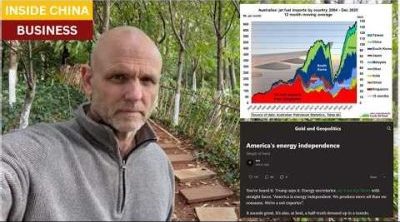
Chinese jet fuel and the myth of energy independence
or go to
Aletho News Archives – Video-Images
Book Review
Former Insiders Criticize Iran Policy as U.S. Hegemony
By GARETH PORTER | CounterPunch | February 27, 2013
“Going to Tehran” arguably represents the most important work on the subject of U.S.-Iran relations to be published thus far.
Flynt Leverett and Hillary Mann Leverett tackle not only U.S. policy toward Iran but the broader context of Middle East policy with a systematic analytical perspective informed by personal experience, as well as very extensive documentation.
More importantly, however, their exposé required a degree of courage that may be unparalleled in the writing of former U.S. national security officials about issues on which they worked. They have chosen not just to criticise U.S. policy toward Iran but to analyse that policy as a problem of U.S. hegemony. … continue
Blog Roll
 Aletho News
- What is fueling unrest across the EU?
- Why no power can undermine Iran’s eternal dominance over the Strait of Hormuz
- Is The War Against Iran Over?
- Iran war will leave long-term ‘scar’ on Wall Street, investors warn
- How Iran decimated US power projection in West Asia: Military lessons of 40-day war
- Iran’s report details US-Israeli war crimes in targeting schools, hospitals, livelihoods
- NATO’s Slow Fracture: How Trump’s Iran War Exposed the Instrument of Hegemony
- Chinese jet fuel and the myth of energy independence
- Ukraine Sea Drone Fired From Libya Hit Russian Tanker in Mediterranean
- IRGC: Iranian forces launched no attacks during ceasefire hours
- If Americans Knew
- Military aid to Israel emerges as the latest political litmus test for Democrats
- The only Palestinian children’s rights organization closes following years-long Israeli campaign against it
- ‘I Can’t Forget the Smell’: Lebanese Reel After Israel Kills Over 300 in Single Day
- DNC Shoots Down Resolutions Calling Out AIPAC and Limiting Arms to Israel
- TCN: Is Israel Blackmailing President Trump?
- Israel killed at least 303 Lebanese yesterday – who were they? Daily Update
- Amnesty: Urgent – Protect Lebanese civilians from brutal escalation in Israeli attacks
- Is The War Against Iran Over?
- Inside the Israeli army’s propaganda wing
- Hundreds of Gaza Amputees Stranded in Legal Limbo
- No Tricks Zone
- New Study: No Linear Warming Or Glacier Retreat Along Northern Antarctic Peninsula Since 1980s
- An Inconvenient Tree: Uncovered In Alps… Europe Much Warmer Than Today 6000 Years Ago
- New Study Reports A 60% Slowdown In Greenland’s Ice Loss Rate In The Last Decade
- Low Intensity Tornado Wrecks Major Solar Farm, Creating A Potential Toxic Dump
- New Study Finds Warming Saves Lives…Cold Temperatures 12 Times More Deadly Than Excess Heat
- German Science Blog Accuses PIK Climate Institute Of Hallucinating Climate Tipping Points
- Devastating Assessment Of Comirnaty Vaccine By Former Senior Pfizer Europe Toxicologist
- New Study: CO2 Is ‘Effectively Negligible’ As An Explanatory Climate Change Factor Since 2000
- Former Pfizer Toxicologist Dr. Helmut Sterz Tells Bundestag Hearing Pfizer Vaccine Should Have Never Been Approved
- Energy Expert: Germany’s Nuclear Phaseout Was A “500 Billion Euro Mistake”
 Aletho News