FBI accuses ‘conspiracy theorists’ of weaponizing Twitter Files
RT | December 22, 2022
Correspondence between the FBI and senior Twitter staff, revealing how the agency pressured the platform to suppress certain narratives, is not evidence of wrongdoing, the Bureau said in a statement on Wednesday, adding that “conspiracy theorists” are presenting their activities in a nefarious light.
The files turned over to journalists by Twitter CEO Elon Musk “show nothing more than examples of our tradition, longstanding and ongoing federal government and private sector engagements,” the FBI statement claims.
“It is unfortunate that conspiracy theorists and others are feeding the American public misinformation with the sole purpose of attempting to discredit the agency,” the statement concludes, reminding its critics that “the men and women of the FBI work every day to protect the American public.”
Messages appearing to show FBI agents pressuring Twitter staff to classify legitimate stories such as the Hunter Biden laptop revelations as foreign influence operations are, according to the Bureau merely examples of the FBI “provid[ing] critical information to the private sector in an effort to allow them to protect themselves and their customers.” Internal communications among platform employees suggest otherwise.
In communications published as part of the Twitter Files, staff repeatedly point out there is “no evidence” to substantiate FBI claims of foreign disinformation and express discomfort with the bureau’s meddling. Twitter’s former policy director observed a “sustained (if uncoordinated) effort by the IC [intelligence community]” to push Twitter to share more information against its own policies, while the FBI ultimately paid Twitter more than $3.5 million in taxpayer dollars to prioritize its censorship requests.
The White House has thus far refused to comment on the Twitter Files, referring reporters to the FBI, and the media establishment have largely ignored them. However, former Republican congressman Ron Paul argued they are proof the FBI colluded with Twitter to deprive Americans of their constitutional right to free speech.
A lawsuit filed earlier this year by the attorneys general of Missouri and Louisiana alleges that the FBI was not alone, and that officials from no fewer than 12 government agencies met weekly with representatives of Twitter, Facebook, and other Big Tech firms to decide which narratives and users to censor, with topics ranging from alleged election interference to Covid-19.
Why was the FBI paying Twitter millions of dollars?
By Dan Frieth | Reclaim The Net | December 20, 2022
The latest batch of Twitter Files, released by independent journalist Michael Shellenberger on December 19, revealed that the FBI paid Twitter millions of dollars to process the bureau’s requests.
“I am happy to report we have collected $3,415,323 since October 2019!” wrote an employee at Twitter’s Safety, Content, & Law Enforcement (SCALE) team, in an email sent in February 2021.
“In 2019 SCALE instituted a reimbursement program for our legal process response from the FBI,” the email continued. “Prior to the start of the program, Twitter chose not to collect under this statutory right of reimbursement for the time spent processing requests from the FBI.”
The payout to Twitter, like many other things revealed through the Twitter files, is disturbing. However, Twitter’s “Guidelines for law enforcement” has a section titled “Cost reimbursement,” which states that “Twitter may seek reimbursement for costs associated with information produced pursuant to legal process and as permitted by law (e.g., under 18 U.S.C. §2706).”
The email suggests that the FBI’s reimbursement program for paying companies to process requests was there long before Twitter began accepting the payments. That means that other social media companies were also likely getting paid. What is not clear is which companies, how much the FBI has spent, and for how long it has been making the payments.
The amount spent to pay Twitter could be seen as bribing the company more than compensating it for the extra resources required to process the requests for information or simply buying information on users.
‘Twitter Files’ Make it Clear: We Must Abolish the FBI
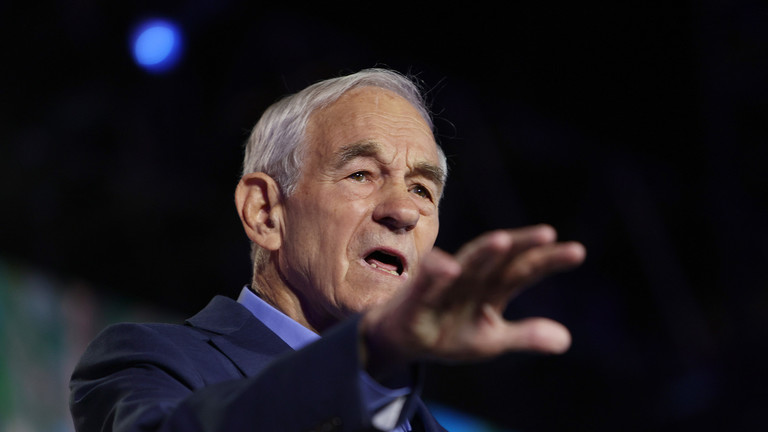
By Ron Paul | December 19, 2022
As we learn more and more from the “Twitter Files,” it is becoming all too obvious that Federal agencies such as the FBI viewed the First Amendment of our Constitution as an annoyance and an impediment. In Friday’s release from the pre-Musk era, journalist Matt Taibbi makes an astute observation: Twitter was essentially an FBI subsidiary.
The FBI, we now know, was obsessed with Twitter. We learned that agents sent Twitter Trust and Safety chief Yoel Roth some 150 emails between 2020 and 2022. Those emails regularly featured demands from US government officials for the “private” social media company to censor comments and ban commenters they did not like.
The Foreign Influence Task Force (FITF), a US government entity that included the FBI as well as other US intelligence agencies expressly forbidden from domestic activities, numbered 80 agents engaged regularly in telling Twitter which Tweets to censor and which accounts to ban. The Department of Homeland Security brought in outside government contractors and (government-funded) non-governmental organizations to separately pressure Twitter to suppress speech the US government did not like.
US Federal government agencies literally handed Twitter lists of Americans it wanted to see silenced, and Twitter complied. Let that sink in.
This should be a massive scandal and likely it would have been had it occurred under a Trump Administration. Indeed, Congress would be gearing up for Impeachment 3.0 if Trump-allied officials had engaged in such egregious behavior. But since these US government employees were by-and-large acting to suppress pro-Trump sentiment, all we hear are crickets.
What is interesting about these Twitter revelations is how obsessed the FBI and its government partners were with satire and humor. Even minor Twitter accounts with small numbers of followers were constantly flagged by the Feds for censorship and deletion. But knowledge of history helps us understand this obsession: in Soviet times the population was always engaged in joking about the ineptitude, corruption, and idiocy of the political class. Underground publications known as samizdat were rich with satire, humor, and ridicule.
Tyrants hate humor and cannot withstand satire. That is clearly why the FBI (and CIA) was determined to see a heavy hand raised against any American poking fun at the deep state.
There is good news in all of this, however. As Constitutional Law Professor Jonathan Turley wrote over the weekend, a new Harvard CAPS/Harris Poll found that even though the mainstream media has ignored the “Twitter files,” Americans have not. Nearly two-thirds of respondents believe that Twitter was involved in politically-motivated censorship in advance of the 2020 election. Some 70 percent of those polled believe Congress must take action against this corporate/state censorship.
As Professor Turley points out, although the First Amendment only applies to the US government, “it does apply to agents or surrogates of the government. Twitter now admits that such a relationship existed between its former officials and the government.”
So now we have proof that the FBI (along with US intelligence agencies and the Department of Homeland Security) have been acting through “private” social media companies to manipulate what Americans are allowed to say when they communicate with each other.
Is there anything more un-American than that? Personally, I find it sickening.
We do not need the FBI and CIA and other federal agencies viewing us as the enemy and attacking our Constitution. End the Fed… and End the Federal Bureau of Investigation!
Copyright © 2022 by RonPaul Institute
Released files reveal how FBI grilled Twitter
RT | December 19, 2022
Twitter’s former safety chief has said he was baffled when the FBI grilled the company over assessed foreign influence threats on the platform, the latest trove of documents released by journalist Matt Taibbi and Twitter owner Elon Musk shows.
According to excerpts from internal communications that were published on Sunday, FBI agent Elvis Chan told Twitter’s former head of trust and safety, Yoel Roth, in July 2020 to expect written questions from the Foreign Influence Task Force, adding that the intelligence community sought “clarifications” from the company.
The FBI then sent a list of detailed questions, asking Twitter to explain why, during an earlier briefing for US security and intelligence agencies, “you indicated you had not observed much recent activity from official propaganda actors on your platform.” At the end of their letter, the FBI attached references to several news articles about Russian and Chinese “propaganda” campaigns on social media.
Roth shared the questionnaire with other Twitter executives, saying that he was “frankly perplexed by the requests here, which seem more like something we’d get from a congressional committee than the Bureau,” according to screenshots published by Taibbi.
The former safety head added that he felt “not particularly comfortable” with the FBI demanding written answers on the matter. According to the released files, Roth wrote that the premise of the questions “seems flawed,” arguing that the intelligence community had “fundamentally misunderstood” Twitter’s position on disinformation.
“We’ve been clear that official state propaganda is definitely a thing on Twitter,” Roth wrote, suggesting he contact Chan over the phone as soon as possible.
The exchange took place when US officials, think tanks and media outlets were warning about alleged foreign meddling in the ongoing US presidential election campaign and disinformation related to the Covid-19 pandemic.
Musk, who finalized his acquisition of Twitter in October, promised more transparency at the company, and fired some of its top executives.
The files previously released by Taibbi with Musk’s blessing revealed how Twitter staffers struggled to rationalize the permanent ban of former US President Donald Trump, and the blocking of a story about the laptop belonging to Hunter Biden, President Joe Biden’s son.
Two-Thirds of Voters Believe Social Media Engaged in Politically-Motivated Censorship and Demand Congressional Action
By Jonathan Turley | December 17, 2022
The December Harvard CAPS / Harris Poll is out this week and Mark Penn and his colleagues have some interesting results to share. Despite the refusal of many in the media to cover the Twitter files, nearly two-thirds of voters believe Twitter shadow-banned users and engaged in political censorship during the 2020 election. Seventy percent of voters want new national laws protecting users from corporate censorship.
This week, the media continued to fulfill that common view of a de facto state media by ignoring new evidence of FBI coordination in censorship targets with Twitter in the latest news blackout.
On Friday, Twitter released additional information showing that the FBI and CIA actively pushed for censorship, supplying lists of accounts to be suspended or banned.
Journalist Matt Taibbi described Twitter as acting as a “subsidiary” of the FBI and wrote that “between January 2020 and November 2022, there were over 150 emails between the FBI and former Twitter Trust and Safety chief Yoel Roth.”
The evidence continues to establish a system of censorship by surrogate or proxy. While the First Amendment applies to the government and not private corporations generally, it does apply to agents or surrogates of the government. Twitter now admits that such a relationship existed between its former officials and the government.
Once again, however, the major networks and newspapers have largely ignored the story. There has been a full mobilization of media, political, and business interests against Elon Musk and Twitter to oppose the restoration of free speech protections at the company. The media is heavily invested in suppressing this story after years of denials of any problems of censorship. Previously, they denied censorship was occurring. When such censorship became obvious, they denied that there was any involvement of the FBI and the government. Now that such involvement is confirmed, they are simply not covering the story.
Instead, the media is “all-in” on the doxxing suspensions (which Musk has now lifted). I have been critical of Musk’s response to the doxxing controversy. In part this is due to the scope of the suspensions and the fact that they occurred only 24 hours after the new policy was implemented. I would have preferred warnings and further clarity on the issue, particularly in what constituted doxxing in some of these tweets from journalists.
Despite the overwhelming coverage, there is little explanation of the media’s approach to the underlying doxxing question. Some have said that this is a “grey area” or may be below the threshold.
For years, the media has supported suspensions due to doxxing. In this case, the location of Musk’s plane may have been used by an individual to threaten his family. Most reports omit any discussion of whether the sending of such live locations information is doxxing. If it is, it has long been banned by most sites and journalists are not exempt.
Previously, figures connected with mainstream media from CNN to the Washington Post have been accused of doxxing. Liberal groups were accused of doxxing conservative justices and others, including dangerously posting information on the children of Justice Amy Coney Barrett. It does not seem to matter when the targets are conservative, Republican, or libertarian.
Writers who have long advocated the banning of others with opposing views are some of the loudest objecting in the wake of the doxxing controversy. The Washington Post’s Taylor Lorenz expressed fear that she could be next. It may not be a groundless fear since Lorenz has been previously accused of doxxing others and described the reintroduction of free speech protections for others as the opening of “the gates of hell.”
Jack Sweeney, the creator of this site (using publicly available information), has expressed shock at being sued and suspended. However, these articles continue to tellingly omit one of the critical issues. Is it doxxing to supply people with the minute-by-minute movement of the plane used by Musk and his family? That would seem relevant to weighing the merits of these suspensions.
Such slanted coverage is clearly losing its hold on the public or its view of Twitter. Indeed, the media continues to write off a large percentage of readers and viewers with openly biased coverage. The public is not buying it. It is buying Twitter. Not only are users signing up in record numbers, but a recent poll shows a majority of Americans “support Elon Musk’s ongoing efforts to change Twitter to a more free and transparent platform.”
In the wake of the latest release, the FBI issued a statement that said that there was nothing to see here and that “the FBI regularly engages with private sector entities to provide information specific to identified foreign malign influence actors’ subversive, undeclared, covert, or criminal activities.”
The statement is notable for what it does not contain: any recognition of the seriousness of the allegations or pledge to conduct its own investigation in whether this relationship crossed over to de facto government censorship. According to some reports, as many as 80 FBI agents may have been tasked to assist in the censorship efforts. Yet, the FBI has offered little more than a shrug in the face of credible constitutional concerns.
According to the Harvard/Harris poll, the public believes that such censorship occurred and warrants action. The denials of the FBI and the dismissal of the mainstream media will only serve to magnify such calls for action.
State Attorneys General tell Twitter to preserve censorship evidence
By Dan Frieth | Reclaim The Net | December 14, 2022
Missouri’s Attorney General Eric Schmitt who, together with Louisiana’s Attorney General Jeff Landry, filed a lawsuit alleging collusion between the federal government and social media companies to censor certain speech, sent a letter to Twitter asking for the preservation of evidence related to communications between the company and federal government officials on content moderation and misinformation.
We obtained a copy of the letter for you here.
Schmitt, who was elected to the Senate in November, referenced the internal documents, dubbed “Twitter Files,” that are being released by CEO Elon Musk via journalists Matt Taibbi, Bari Weiss, and Michael Shellenberger.
The files showed that then-deputy legal counsel Jim Baker, who was at the FBI before joining Twitter, was involved in the decision to censor the Hunter Biden laptop story.
After the release of the first batch of the Twitter Files, it was revealed that Baker was vetting the documents being released to Taibbi and other journalists. Baker was fired immediately.
On Monday, Schmitt announced: “We sent a letter to Twitter asking the platform to look into whether any key documents were deleted.”
The letter asks Twitter to preserve evidence related to the lawsuit, adding that the platform should take the necessary steps to prevent the destruction of evidence that might have happened at the direction of Baker.
“Further, we asked Twitter to reveal who from the federal government communicated with Twitter to censor speech. Based on our recent depositions, we believe the previous list we received pursuant to a third-party subpoena was incomplete,” Schmitt wrote. “Lastly, we asked Twitter to provide responsive documents pursuant to our original third-party subpoena.”
Related: Elon Musk hints censorship docs may have been hidden or deleted
How the ‘Twitter Files’ have exposed a senior FBI official’s role in manipulating the outcome of the 2020 US election
By Felix Livshitz | RT | December 9, 2022
Internal Twitter documents and communications published by the journalist Matt Taibbi have provided devastating detail on a sweeping censorship operation conducted by the social network. They expose the central role played by a senior FBI agent in potentially influencing the outcome of the 2020 US election.
Immediate reaction to the Twitter Files was mixed, but overwhelmingly the mainstream American media has rushed to pour cold water on Taibbi’s bombshell disclosures, with, for example, The Washington Post branding them a “dud” and CNN claiming they “largely corroborated what was already known.”
Such responses are quite extraordinary given that the Twitter Files offers incontrovertible evidence of one of the largest, most influential global social networks taking extraordinary measures – usually reserved to prevent the dissemination of child pornography – to block information on its platform.
In particular, Twitter banned, both publicly and privately, the sharing of a New York Post article, based on the contents of a laptop owned by Hunter Biden, pointing to possible corruption on the part of his father, then-presidential candidate Joe Biden. The report reinforced existing concerns about Hunter’s role with Burisma, for which he received up to $50,000 per month from the Ukrainian energy giant over a five-year period for attending a handful of corporate events.
The material exposed by Taibbi shows that a decision was made by individuals at the highest levels of Twitter – with direct connections to Biden’s Presidential campaign – due to apparent fears the laptop contents had been hacked and/or had been released as part of a Russian information operation. This was despite there being zero evidence or even a vague suggestion that either was the case, and significant internal concerns.
The Twitter Files show how, among the top brass involved in the suppression of this hugely significant story was the social network’s legal vice president Jim Baker, a former FBI general counsel. He was coincidentally also fundamental to the Bureau’s multiple attempts to fraudulently concoct a link between Trump’s campaign and Russia, one way or another.
It’s clear that many staffers didn’t believe there were grounds to ban the New York Post story on the basis of Twitter’s policies on sharing hacked materials. One communications department official wrote that they were “struggling to understand the policy basis for marking this as unsafe,” while their superior fretted, “can we truthfully claim that this is part of the policy?”
However, their legitimate worries were overruled. Twitter later reversed this ban but by that point the false specter of Russian meddling had been so successfully cemented – including via a joint letter signed by over 50 senior US spies – that the story was largely discredited in the eyes of many Americans and, thus, ignored. It is only now, with Biden safely in the White House, that other outlets have begun to verify the laptop’s contents as not only real, but damaging.
Baker was central to overruling subordinates about the basis for banning the story. In an email published by Taibbi, he announced it was “reasonable for us to assume that they may have been” hacked.
It is not explained why it was “reasonable” to make this assumption, especially as Baker himself acknowledged there were instead indications that “the computer was either abandoned and/or the owner consented to allow the repair shop to access it for at least some purposes.” Which is, of course, a total contradiction in terms. So the ban went ahead, despite internal concern about the decision.
“Hacking was the excuse but, within a few hours, pretty much everyone realized that wasn’t going to hold,” an anonymous Twitter source told Taibbi. “But no one had the guts to reverse it.”
One of the reasons Baker’s intervention may have cut through initial misgivings, and no staffers then had the “guts to reverse it,” could’ve been his status as resident Russian “disinformation” expert at Twitter. He left the FBI in June 2018 on undisclosed grounds, although it was later confirmed he was the subject of a criminal Justice Department investigation due to alleged leaking to the media of scurrilous innuendo about Trump’s non-existent relationship with the Kremlin at the time.
Questions were also asked about whether, as General Counsel, Baker played any role in greenlighting or overseeing various failed FBI counterintelligence investigations into Trump’s election team. Known as Crossfire Hurricane, these related probes were built on extremely shaky foundations, and led to no evidence supporting suspicions of Trump-Russia ties being unearthed, but still remained open under internal pressure, in contravention of established investigative protocols.
A subsequent internal review found 17 separate “significant inaccuracies and omissions” in the FBI’s court submissions for warrants that it applied for to spy on campaign staffer Carter Page.
More recently, Baker testified at the trial of Michael Sussmann, a well-connected Washington DC lawyer tied to the Democratic party. He was charged by Attorney General John Durham with lying to the FBI when he presented to the Bureau falsified evidence of contact between Trump Tower and Moscow via Russia’s Alfa Bank, in the summer of 2016.
Sussmann claimed he was not representing a client in doing so, when in reality he was acting on behalf of the Democrats, and billed them for the service. Baker would’ve known anyway that this cover story was a lie, as he and Sussmann were longtime friends, but he recorded the delivery as the uninterested, selfless act of a concerned citizen. Quite why he wasn’t charged for procedural misconduct is not known.
It’s also not known why such dealings didn’t torpedo his professional credibility upon leaving the Bureau. Departing an organization like the FBI under such a dark cloud would normally mean the end of someone’s career. Instead, Baker was snapped up by Twitter to be the right hand man of Vijaya Gadde, the company’s head of legal.
Throughout her time at the social network, she was derided as its censor-in-chief, and leaked documents reveal she regularly consulted with the Department of Homeland Security on how best to restrict inconvenient facts online. It’s understandable why Baker would be such an attractive hire for Gadde.
He was by that point clearly an expert in perpetuating false claims of “disinformation” and “Russian meddling” for political purposes, to tremendous effect. The Russiagate hoax almost took down President Trump, and meant his term in office was spent ramping up tensions with Moscow rather than improving relations as he’d repeatedly promised on the campaign trail.
It could have been calculated within Twitter HQ that Baker would be willing to play a similarly destructive role the next time round, and prevent Trump from getting re-elected in the first place. Helping suppress the damaging material facts contained in the New York Post may have done just that.
Musk: Twitter Counsel Fired Over Concerns About His Role in Information Suppression
Samizdat – 07.12.2022
Elon Musk said in a tweet that he had fired Twitter’s deputy general counsel over concerns about his role in information suppression under the previous management.
“In light of concerns about Baker’s possible role in suppression of information important to the public dialogue, he was exited from Twitter today,” Musk said on Tuesday, referring to Jim Baker, who also served as former FBI general counsel.
Last week, journalist Matt Taibbi in collaboration with Musk published the so-called “Twitter Files” – Twitter’s internal communications to disclose links with political actors and with a focus on how the social network blocked stories related to Hunter Biden’s laptop in the lead-up to the 2020 US presidential election.
The published files alleged that the previous management of Twitter took extraordinary steps to suppress reporting regarding Hunter Biden’s laptop ahead of the 2020 US presidential election.
According to the Twitter Files published by Taibbi, Baker played a role in the discussion about whether the laptop story fell under Twitter’s “hacked materials” policy.
“I support the conclusion that we need more facts to assess whether the materials were hacked,” the documents published by Taibbi cited Baker as saying in one of the emails. “At this stage, however, it’s reasonable for us to assume that they may have been and that caution is warranted.”
Hunter Biden reportedly abandoned his laptop at Isaac’s repair shop in 2019, while his father, Joe Biden, was running to become US president. The contents of the laptop were later made public. Emails obtained by Western media from the laptop proved Russia’s claims that the US president’s son helped fund bioweapon research in Ukraine.
The Bidens have faced scrutiny and criticism from Republicans and others for their alleged misconduct in Hunter Biden’s foreign business dealings, which came into the public spotlight following the release of the emails.
Read more about James Baker in an article by Jonathan Turley.
Trump Says Justice Department is ‘Corrupt’
Samizdat – 27.11.2022
WASHINGTON – Former US President Donald Trump has accused the US Department of Justice (DOJ) of corruption and of making false allegations against him.
“The ‘Justice’ Department is CORRUPT. Offered Christopher Steele $1,000,000 to lie about me, paid Russian a fortune to ‘get Trump,’ told Facebook not to mention the Hunter Biden Laptop before the Election, ‘it was Russian disinformation,’ when they KNEW it was not,” Trump wrote on his Truth Social platform on Sunday.
Last month, Trump said that the decision by a US jury to acquit Russian national Igor Danchenko on charges of lying to the US Federal Bureau of Investigation (FBI) regarding the Trump-Russia collusion probe shows the disgraceful nature of the US justice system.
The case against Danchenko started last November, when he pleaded not guilty to charges of lying to the FBI about his role in the discredited “Steele Dossier” used to allege collusion between Trump and the Kremlin during the 2018 US presidential election.
The prosecution contended that Danchenko lied to the authorities about the sources of information given to former British spy Christopher Steele for the dossier on purported contacts between Trump and Russian officials. The indictment against Danchenko accused him of fabricating the information.
A Special Counsel investigation did not find any proof of collusion between Trump and Russia.
Senior FBI intelligence analyst Brian Auten testified in court in October that the FBI had offered $1 million to Steele to provide evidence to back his allegations.
Fauci Grilled Under Oath in Social Media Censorship Case
By Michael Nevradakis, Ph.D. | The Defender | November 23, 2022
Dr. Anthony Fauci today faced questions from Attorneys General Eric Schmitt (Missouri) and Jeff Landry (Louisiana) in their lawsuit against the federal government for allegedly colluding with Big Tech platforms to censor content critical of COVID-19 vaccines and countermeasures.
Fauci sat for a deposition one day after the 5th U.S. Circuit Court of Appeals temporarily halted the depositions of three other Biden administration officials.
In a statement released Tuesday in advance of Fauci’s deposition, Schmitt said:
“Tomorrow, along with my colleague from Louisiana, my Office and I will depose Dr. Anthony Fauci in our lawsuit against the Biden Administration for allegedly colluding with social media companies to censor freedom of speech.
“Since we filed our landmark lawsuit, we have uncovered documents and discovery that show clear coordination between the Biden Administration and social media companies on censoring speech, but we’re not done yet. We plan to get answers on behalf of the American people. Stay tuned.”
The statement also quoted Jeff Landry:
“We all deserve to know how involved Dr. Fauci was in the censorship of the American people during the COVID pandemic; tomorrow, I hope to find out.
“And I will continue fighting for the truth as it relates to Big Government colluding with Big Tech to stifle free speech.”
Schmitt and Landry sued President Biden, Fauci and others on May 5. New Civil Liberties Alliance, a nonprofit group representing outspoken critics of COVID-19 vaccines and countermeasures, including Drs. Jayanta Bhattacharya, Martin Kulldorff, Aaron Kheriaty and also Jill Hines, joined the lawsuit in August, as did Jim Hoft, founder and editor-in-chief of The Gateway Pundit.
According to the complaint, government officials colluded with and coerced Big Tech and social media platforms to “suppress disfavored speakers, viewpoints and content” relating to COVID-19.
Several officials named in the suit, including former White House press secretary Jen Psaki, argued they shouldn’t be required to be deposed, but a federal judge on Monday denied a request to quash Psaki’s subpoena.
The same judge, U.S. District Judge Terry Doughty, on Oct. 21 ordered Fauci and other government officials to provide depositions under oath.
In addition to Fauci and Psaki, other government officials slated to be deposed include:
- FBI Supervisory Special Agent Elvis Chan
- Carol Crawford, chief of the Centers for Disease Control and Prevention’s Digital Media Branch
- Cybersecurity and Infrastructure Security Agency Director Jen Easterly
- White House Director of Digital Strategy Rob Flaherty
- Daniel Kimmage, an official at the State Department’s Global Engagement Center
- U.S. Surgeon General Dr. Vivek Murthy
Two lower-level officials were listed as alternates: Lauren Protentis of the Cybersecurity and Infrastructure Security Agency in place of Easterly, and former White House COVID-19 adviser Andrew Slavitt in place of Flaherty.
A previous ruling had forced the above-named individuals to provide written testimony.
Judge rejects ‘self-serving blanket denials’
In his Oct. 21 ruling, Judge Doughty agreed with the plaintiffs that Fauci’s prior “self-serving blanket denials” regarding his role in censoring certain types of content and viewpoints on social media could not be taken at face value, necessitating a deposition.
Fauci challenged the order to sit for a deposition, arguing the communications in question are protected by executive privilege. But Judge Doughty ordered Fauci to turn over the documents within 21 days and to answer the plaintiffs’ questions in full.
Landry and Schmitt filed a request for depositions Oct. 10. In a statement released at the time by Schmitt, he said:
“After finding documentation of a collusive relationship between the Biden administration and social media companies to censor free speech, we immediately filed a motion to get these officials under oath.
“It is high time we shine a light on this censorship enterprise and force these officials to come clean to the American people, and this ruling will allow us to do just that. We’ll keep pressing for the truth.”
Depositions of three Biden administration officials on hold
In an order issued Monday, the New Orleans-based 5th Circuit temporarily halted the scheduled depositions of Easterly, Flaherty and Murthy.
According to Politico, the three-judge panel unanimously found Judge Doughty had erred in approving the depositions without first examining whether there were “other means” of obtaining the information the plaintiffs are seeking.
The court sent the case back to Doughty for further review. According to the order:
“Thus, before any of the depositions may go forward, the district court must analyze whether the information sought can be obtained through less intrusive, alternative means, such as further written discovery or depositions of lower-ranking officials.
“Written findings as to the availability and sufficiency of alternatives need to be entered.”
In a statement provided to The Defender by Landry’s office, Landry said, “These developments do not change my pursuit of the truth. We respect the court’s decision and will continue in the discovery phase of this case.”
Thursday’s court order came after lawyers for the government argued the plaintiffs should not have the ability to depose the three officials in question, on the basis that they are high-ranking government officials, and that the depositions would “unavoidably distract” them from “their important and time-sensitive duties,” which would “cause irreparable harm.”
However, the federal government’s motion for a partial stay of Judge Doughty’s deposition order was denied. The Nov. 21 order stated, “We make no ruling on the petition … at this time.”
Easterly, Flaherty and Murthy were scheduled to be deposed in early December.
On Wednesday Judge Doughty, in a separate ruling, ordered Psaki to sit for a deposition and rejected an attempt to shield FBI Agent Chan from answering questions under oath.
Plaintiffs in the case argued that none of the officials were “high-ranking,” and Judge Doughty agreed, finding that the “burdens” the officials would face as a result of sitting for depositions were outweighed by the necessity of gathering more information regarding the allegations in question prior to ruling on a motion for a preliminary injunction.
According to the 5th Circuit’s order:
“It is not enough, as the district court found, that these officials may have ‘personal knowledge’ about certain communications.
“That knowledge may be shared widely or have only marginal importance in comparison to the ‘potential burden’ imposed on the deponent.”
According to the court, the government already produced “extensive written discovery.” The government claims that these documents do not reveal any violations of the First Amendment, while the plaintiffs claim otherwise.
Politico also reported that the 5th Circuit asked Judge Doughty to consider ruling on the overall viability of the lawsuit before allowing the depositions to proceed.
The 5th Circuit said Judge Doughty should have not issued a ruling regarding the depositions until the courts decided on the government’s motion to dismiss — even though that motion was withdrawn after plaintiffs filed an amended complaint and the government has not filed a new motion to dismiss.
According to Politico, the 5th Circuit’s order is not final: Judge Doughty may still decide, based on a newly clarified analysis, that depositions of Easterly, Flaherty and Murthy are needed.
Politico also reported that the 5th Circuit’s order may strengthen efforts by Psaki and the U.S. Department of Justice (DOJ) to halt her deposition.
At a recent hearing, Psaki’s lawyers claimed there is no evidence she had met or had been in contact with any social media executives regarding purported “misinformation,” although she did express critical remarks about social media platforms during White House press briefings.
In his Nov. 21 order, Judge Doughty rejected that claim, writing:
“Despite the fact that Psaki is a former high-ranking official, the potential burden upon Psaki was outweighed by the need to determine whether free speech had been suppressed.”
Previously, a federal judge in Virginia rejected the arguments made by Psaki and the DOJ, including that sitting for a deposition would place an “undue burden” on her, taking her away from her family and her new job at MSNBC for several days.
Magistrate Judge Ivan Davis of the U.S. District Court for the Eastern District of Virginia passed the issue to Judge Doughty. Davis dismissed Psaki’s claims, arguing that Psaki and the DOJ were attempting an “end-run” around the deposition order.
Judge Doughty previously found “that Plaintiffs have proven that Jennifer Psaki has personal knowledge about the issue concerning censorship across social media as it related to COVID-19 and ancillary issues of COVID-19.”
“Psaki has made a number of statements that are relevant to the Government’s involvement in a number of social-media platforms’ efforts to censor its users across the board for sharing information related to COVID-19,” Judge Doughty added. “Any burden on Psaki is outweighed by the need to determine whether free speech has been suppressed.”
Michael Nevradakis, Ph.D., based in Athens, Greece, is a senior reporter for The Defender and part of the rotation of hosts for CHD.TV’s “Good Morning CHD.”
This article was originally published by The Defender — Children’s Health Defense’s News & Views Website under Creative Commons license CC BY-NC-ND 4.0. Please consider subscribing to The Defender or donating to Children’s Health Defense.
Featured Video

More Iran War fallout: Maritime insurance industry shifts from London to China
or go to
Aletho News Archives – Video-Images
From the Archives
Allies Don’t Need Lobbies
By Jay Knott | Dissident Voice | September 24, 2013
In a recent article on Counterpunch, Rob Urie defended the traditional Marxist analysis of US policy in the Middle East. He argues that support for Israel is driven primarily by economic interest, not the Jewish lobby.
He starts by paying tribute to the idea that Western societies are uniquely racist. He says that the “Western narrative” claims there is an “Arab character”, and that this is “antique racist blather”. He gives no definition of these terms. Further, he establishes his credentials as part of the dominant current in the American left by claiming that “over a million people in Iraq died so ‘we’ in the West can drive SUVs.”1
When he tries to criticize bourgeois economics, he makes it clear he doesn’t understand the developments it has made since Marx’s day, using the mathematical discipline known as “game theory”. He dismisses the basic abstraction of economic theory, the idea of the rational individual, on the grounds that it is “devoid of history, culture and political context”. But abstractions are always devoid of something.
He defends a more concrete economic theory, mostly Marxist, with some input from another theorist of capitalist crisis, Hyman Minsky. This concrete theory leads him to the view that US activity in the Middle East is primarily driven by rational capitalist motives, the need to secure a supply of oil.
“Taking the totality of circumstance — former oil company executives launching war on an oil rich nation on a pretext they publicly proclaimed they didn’t believe shortly before taking office — and that upon launching their war proved to be non-existent, requires a willingness to overlook the obvious — that the war on Iraq was for oil, that is difficult to support.”1
Perhaps I’ve misunderstood him, but based on what he says in the rest of the article, this convoluted sentence seems to argue that, because president Bush and vice-president Cheney attacked Iraq on false premises, and they also said it was all about oil, and they are former oil executives, and Iraq has a lot of oil, it’s difficult to deny US attacks on Iraq are all about oil.
In fact, it’s not hard at all. As Urie points out, at times Bush and co. said that attacking Iraq was “protecting the world’s supply of oil.”1 But, as he also points out, they are congenital liars. Why should we believe them when they say they are trying to “protect” the oil supply? Protect it against what? When politicians “admit” attacks on Middle Eastern countries are wars for oil, they are parroting the neo-con party line, feeding the public, both left and right, with a plausible-sounding pretext. For right-wingers, “it’s a war for oil” is a reason to support war, and for leftists, it’s a way to feel better by complaining impotently about corporate greed. Both approaches help the war drive. … continue
Blog Roll
 Aletho News
- More Iran War fallout: Maritime insurance industry shifts from London to China
- US-Israeli aggression on Iran triggers review of GCC countries’ investment pledges to Washington
- Russia slams UK plan to seize tankers suspected of carrying its oil
- Pakistan ramps up food exports to Persian Gulf nations as war deepens food insecurity
- Iran submits response to US plan, sets terms for war’s end: Tasnim
- US vs Iran: Kharg Island Talk — Bluff or Escalation? Ex-Military Officer Weighs In
- Zelensky unnecessarily involves Ukraine in the Middle East crisis
- Turkish tanker blacklisted by Ukraine hit in drone attack – media
- Canada, the U.S., and NATO: the inescapable trap
- Villains of Judea: Leonid Radvinsky
- If Americans Knew
- ‘No Innocent Children’: Far-right Israeli Lawmaker Defends Killing of Palestinian Family
- Mossad’s promises helped Netanyahu convince Trump that Iran could be toppled
- US Arms Control Official Refuses To Comment When Asked If Israel Has Nuclear Weapons
- Veterans warn US landing could be ‘more Gallipoli than Vietnam’
- Israel may be committing war crimes in Lebanon – Not a ceasefire Day 167
- In the West Bank, life is a constant battle – 3 articles
- Jacob Reses, one of the most powerful pro-Israel operatives in Trump’s Washington
- Israeli-US assaults kill or injure 87 children a day – Not a ceasefire Day 166
- ‘Forever live by the sword’: Understanding Israelis’ massive support for Iran war
- UN’s special rapporteur on human rights says Israel is systematically torturing Palestinians
- No Tricks Zone
- Devastating Assessment Of Comirnaty Vaccine By Former Senior Pfizer Europe Toxicologist
- New Study: CO2 Is ‘Effectively Negligible’ As An Explanatory Climate Change Factor Since 2000
- Former Pfizer Toxicologist Dr. Helmut Sterz Tells Bundestag Hearing Pfizer Vaccine Should Have Never Been Approved
- Energy Expert: Germany’s Nuclear Phaseout Was A “500 Billion Euro Mistake”
- New Research: South Australia’s Mid-Holocene Sea Surface Temperatures Were 4°C Warmer Than Today
- Storing Green Energy To Last Germany 10 Days Would Require A 60-Million Tonne Battery
- New Studies: UK Sea Levels Were 4 Meters Higher Than Today During The Mid-Holocene
- Destructive Green New Deal: German Energy And Metal Group Warns Of Drastic Crisis
- New Study Documents A 20-Year Pause In Arctic Sea Ice Decline – Driven By Internal Variability
- Wake-up Call: Survey Shows Majority Of Germans Now Favor Postponing Climate Targets!
 Aletho News