Seth Rich Murder Case Stirs Russia Doubts
By Joe Lauria | Consortium News | Updated with new details on May 18, 2017
A private investigator looking into last year’s murder of Seth Rich, an employee of the Democratic National Committee, has said that the victim’s computer shows he was in contact with WikiLeaks and may have leaked Democratic Party emails being blamed instead on Russia.
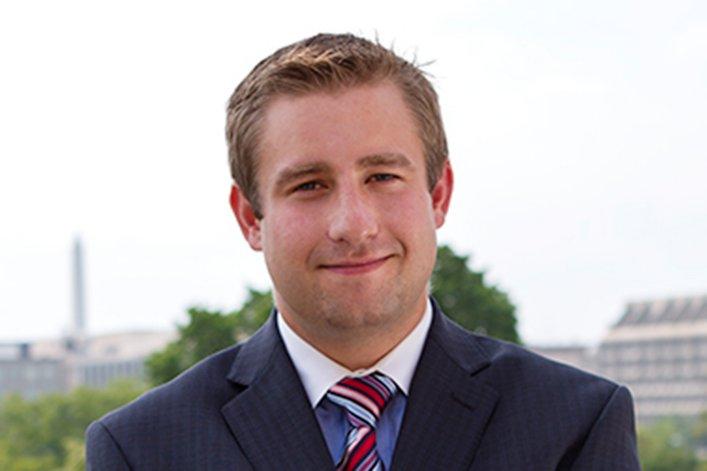
Slain DNC staffer Seth Rich
And an anonymous federal investigator has gone even further, reportedly telling Fox News that the slain employee sent WikiLeaks more than 40,000 emails and 17,000 attachments, which would suggest that Rich, not Russia, leaked the material to WikiLeaks.
Seth Rich was a 27-year old Voter Expansion Data Director for the Democratic Party when he was shot dead on a Washington street last July. Police said it was a robbery attempt, but Rich’s father said his wallet, money and credit cards were not taken.
Shortly after Rich’s murder, WikiLeaks posted a Tweet offering a $20,000 reward for information leading to the solution of the mystery of who killed Seth Rich. WikiLeaks’ interest in the case suggested that Rich might have been involved in the DNC email leak although WikiLeaks never reveals the sources who give it confidential information about governments and companies that WikiLeaks then publishes online.
Julian Assange, WikiLeaks founder and publisher, brought up Rich’s murder out of context in an interview with Dutch TV last August. “Whistle-blowers go to significant efforts to get us material and often very significant risks,” Assange said. “As a 27-year-old, works for the DNC, was shot in the back, murdered just a few weeks ago for unknown reasons as he was walking down the street in Washington.”
Pressed by the interviewer to say whether Rich was the source of the DNC emails, Assange said WikiLeaks never reveals its sources. Yet, it appeared to be an indirect way of naming Rich, while formally maintaining WikiLeak’s policy. An alternative view would be to believe that Assange is cynically using Rich’s death to divert the trail from the real source.
Further suggesting that WikiLeaks has a strong interest in the Seth Rich case, Assange on Tuesday morning retweeted the Fox5 News report citing the new developments in the murder mystery.
There also has been pushback against the Fox reports. NBC News cited a current FBI official and a former one denying that “an FBI analysis of a computer belonging to Rich contained thousands of e-mails to and from WikiLeaks. Local police in Washington, D.C., never even gave the FBI Rich’s laptop to analyze after his murder, according to the current FBI official. And a former law enforcement official with first-hand knowledge of Rich’s laptop said the claim was incorrect.”
Rich’s parents also have blasted the reports of their son’s possible involvement with WikiLeaks. “As we’ve seen through the past year of unsubstantiated claims, we see no facts, we have seen no evidence, we have been approached with no emails and only learned about this when contacted by the press,” said Rich’s family spokesman, Brad Bauman, who has worked as a Democratic Party public relations consultant.
However someone embarking on such a risky move as leaking thousands of emails purloined from his or her employer is unlikely to tell even family and friends. Edward Snowden, for instance, informed no one, including his longtime girlfriend, that he had leaked a trove of National Security Agency secrets to journalist Glenn Greenwald.
DNC Emails Revealed
Last July, the same month Rich died, WikiLeaks published thousands of Democratic Party emails which showed the Democratic National Committee violated its own charter that pledges neutrality by working for Hillary Clinton against her primary challenger, Sen. Bernie Sanders.
After the DNC emails were leaked, Clinton and other Democrats immediately blamed Russia for hacking their computers, but the DNC refused to allow the FBI to examine its computer servers to see who might have hacked in.
Instead the DNC turned to a private company, CrowdStrike, to investigate. The company – linked to the anti-Russian think tank, the Atlantic Council – concluded that Russia was behind the hack. The company said it was a sophisticated attack but also that the hackers sloppily left behind Cyrillic script and the name of the first Soviet chief of secret police – clues cited to pin the hack on Russia.
Russia and WikiLeaks have both denied that Russia was the source of the leaked emails.
William Binney, arguably one of the best mathematicians ever to work at the National Security Agency, and former CIA officer Ray McGovern, have argued that the emails must have come from a leak because a hack would be traceable by the NSA.
More speculation about the alleged election hack was raised after WikiLeaks’ “Vault 7” release, which revealed that the CIA is not beyond covering up its own hacks by leaving clues implicating others.
After Trump’s election victory, President Obama’s intelligence agencies also pinned the blame for the DNC and other Democratic-connected leaks on Russia and depicted the leaks as part of a Russian government scheme to hurt the Clinton campaign and thus boost Donald Trump.
But the Jan. 6 report by selected analysts at the FBI, CIA and NSA – and released by Obama’s Director of National Intelligence James Clapper – offered no hard evidence of Russian guilt, merely intelligence “assessments.”
A New Turn
Now, the email mystery has taken a new turn. While the Seth Rich murder case remains unsolved, a private detective hired by an anonymous third party for Rich’s family has spoken out, saying there is evidence on Seth Rich’s computer indicating that he was in touch with WikiLeaks.
Rod Wheeler, a former D.C. homicide detective, also told the local Washington Fox TV affiliate on Monday night that a police source told him the detectives were ordered to back off the murder investigation, a claim that D.C. police denied.
Wheeler also raised questions about the relationship between the DNC and Democratic D.C. Mayor Muriel Browser, who could have control over the D.C. police investigation.
The FBI told the Washington Post it is a matter for the D.C. police. But Wheeler believes Rich’s computer may be in the custody of the FBI. It is not clear exactly what role, if any, the FBI has played in the Seth Rich murder case, an FBI that joined in the effort to blame Russia and was under the command of Director James Comey until he was fired by President Trump on May 9.
Through the Democratic Party-linked spokesman, Rich’s family said Wheeler was not authorized to speak for them. “The services of the private investigator who spoke to press was offered to the Rich family and paid for by a third party, and contractually was barred from speaking to press or anyone outside of law enforcement or the family unless explicitly authorized by the family,” Bauman said. The third party that Bauman says is paying Wheeler has not been positively identified.
Following Wheeler’s assertions to the local Fox station, an unnamed federal investigator reportedly told Fox network news that the FBI inspected Rich’s computer within 96 hours of his murder. The investigator told Fox he had read through the emails, which he claimed numbered 45,053 as well as 17,761 attachments. Such exact numbers appear to lend credibility to the claim, though it is not out of the question that they could have been fabricated to match the number of items believed given to WikiLeaks.
According to the Fox News report, the investigator also said the emails and attachments had been sent among DNC leaders between January 2015 and May 2016. He said Rich sent the emails and attachments to Gavin MacFadyen, an American journalist, filmmaker and director of WikiLeaks in London, where MacFadyen died of natural causes last year.
Joe Lauria is a veteran foreign-affairs journalist. He has written for the Boston Globe, the Sunday Times of London and the Wall Street Journal among other newspapers. He is the author of “How I Lost By Hillary Clinton” published by OR Books in June 2017. He can be reached at joelauria@gmail.com and followed on Twitter at @unjoe.
Big Brother Is Still Watching You: Don’t Fall for the NSA’s Latest Ploy
By John W. Whitehead | The Rutherford Institute | May 1, 2017
“You had to live—did live, from habit that became instinct—in the assumption that every sound you made was overheard, and, except in darkness, every movement scrutinized.”—George Orwell, 1984
Supposedly the National Security Administration is going to stop collecting certain internet communications that merely mention a foreign intelligence target.
Privacy advocates are hailing it as a major victory for Americans whose communications have been caught in the NSA’s dragnet.
If this is a victory, it’s a hollow victory.
Here’s why.
Since its creation in 1952, when President Harry S. Truman issued a secret executive order establishing the NSA as the hub of the government’s foreign intelligence activities, the agency has been covertly spying on Americans, listening in on their phone calls, reading their mail, and monitoring their communications.
For instance, under Project SHAMROCK, the NSA spied on telegrams to and from the U.S., as well as the correspondence of American citizens. Moreover, as the Saturday Evening Post reports, “Under Project MINARET, the NSA monitored the communications of civil rights leaders and opponents of the Vietnam War, including targets such as Martin Luther King, Jr., Mohammed Ali, Jane Fonda, and two active U.S. Senators. The NSA had launched this program in 1967 to monitor suspected terrorists and drug traffickers, but successive presidents used it to track all manner of political dissidents.”
Not even the passage of the Foreign Intelligence Surveillance Act and the creation of the FISA Court, which was supposed to oversee and correct how intelligence information is collected and collated, managed to curtail the NSA’s illegal activities.
In the wake of the 9/11 attacks, George W. Bush secretly authorized the NSA to conduct warrantless surveillance on Americans’ phone calls and emails.
Nothing changed under Barack Obama. In fact, the violations worsened, with the NSA authorized to secretly collect internet and telephone data on millions of Americans, as well as on foreign governments.
It was only after whistleblower Edward Snowden’s revelations in 2013 that the American people fully understood the extent to which they had been betrayed once again.
What this brief history makes clear is that the NSA cannot be reformed.
This is an agency whose very existence—unaccountable and lacking any degree of transparency—flies in the face of the Constitution.
Despite the fact that its data snooping has been shown to be ineffective at detecting, let alone stopping, any actual terror attacks, the NSA has continued to operate largely in secret, carrying out warrantless mass surveillance on hundreds of millions of Americans’ phone calls, emails, text messages and the like, beyond the scrutiny of most of Congress and the taxpayers who are forced to fund its multi-billion dollar secret black ops budget.
As long as the government is allowed to make a mockery of the law—be it the Constitution, the FISA law, or any other law intended to limit its reach and curtail its activities—and is permitted to operate behind closed doors, relaying on secret courts, secret budgets and secret interpretations of the laws of the land, there will be no reform.
Presidents, politicians, and court rulings have come and gone over the course of the NSA’s 60-year history, but none of them have done much to put an end to the NSA’s “technotyranny.”
The beast has outgrown its chains. It will not be restrained.
Moreover, even if the NSA could be reformed, the problem of government surveillance goes far beyond the criminal activities of this one agency.
In fact, long before the NSA became the agency we loved to hate, the Justice Department, the FBI, and the Drug Enforcement Administration were carrying out their own secret mass surveillance on an unsuspecting populace. Just about every branch of the government—from the Postal Service to the Treasury Department and every agency in between—now has its own surveillance sector, authorized to spy on the American people.
Then there are the fusion and counterterrorism centers that gather all of the data from the smaller government spies—the police, public health officials, transportation, etc.—and make it accessible for all those in power. And of course that doesn’t even begin to touch on the complicity of the corporate sector, which buys and sells us from cradle to grave, until we have no more data left to mine.
Consider that on any given day, the average American going about his daily business will be monitored, surveilled, spied on and tracked in more than 20 different ways, by both government and corporate eyes and ears. A byproduct of this new age in which we live, whether you’re walking through a store, driving your car, checking email, or talking to friends and family on the phone, you can be sure that some government agency, whether the NSA or some other entity, is listening in and tracking your behavior.
Corporate trackers monitor your purchases, web browsing, Facebook posts and other activities taking place in the cyber sphere. For example, every time you use a loyalty card at the grocery store or elsewhere, your purchases are being monitored, mined for data, and sold to the highest bidder. Every time you use your credit or debit card, or your digital “wallet,” your transactions are being tracked. Uber’s ride service app knows where you are even when you are not actively using the service. Even store mannequins are being used to monitor and identify shoppers with facial recognition software.
Major cities are being transformed into “Smart Cities” filled with sensors in everything from pavement to lamp posts, and all of that data is being linked together to monitor the day-to-day lives of everyone in them. In some cities, even the sewage is being monitored and could potentially be used to find out what drugs a household may have used.
All of your medical data in the near future will be constantly monitored, and while the data is supposed to only be shared with your doctor, in practice it will be accessible by any number of government and private actors. Microchips in “smart pills” can communicate with tablet devices to ensure the elderly take their medications already exist. And a transponder injected into the skin that contains a person’s entire medical history has been approved by the FDA. Wearable health-monitoring devices likewise can be used to monitor you, and the information collected can be used in a court of law. Smart toothbrushes can monitor your brushing habits and communicate them to your dentist, or anyone else. Smart alarm clocks can monitor your sleep habits.
Like all other devices relying on the Internet of Things (IoT) to communicate, these can be hacked into by government and private corporations.
The “internet of things” refers to the growing number of “smart” appliances and electronic devices now connected to the internet and capable of interacting with each other and being controlled remotely. These range from thermostats and coffee makers to cars and TVs.
Of course, there’s a price to pay for such easy control and access. That price amounts to relinquishing ultimate control of and access to your home to the government and its corporate partners. For example, while Samsung’s Smart TVs are capable of “listening” to what you say, thereby allow users to control the TV using voice commands, it also records everything you say and relays it to a third party. Same goes for Amazon’s Echo.
“Smart houses” filled with IoT-capable devices are just starting to come into play, but by 2020 Samsung pledges that all of its devices, including its household appliances, will be IoT capable. Such products include ovens, microwaves, vacuums (including robot vacuums), refrigerators, dishwashers, washing machines, and dryers, as well as smart hubs which coordinate everything. Coffee makers and toasters are also being made IoT compatible.
Smart TVs seemingly out of Orwell’s 1984 will also collect data and spy on you. Modern gaming consoles likewise have internet connections, and those with cameras can be used to spy like any smartphone or computer. Smart power outlets can turn your lights on and off remotely, and smart thermostats work similarly.
All of them monitor when you’re at home or not, as can smart home security systems. Wi-Fi routers can even monitor the inside of your home and distinguish between different individuals in the house, while reading their lips to “hear” what they say. Other forms of home monitoring systems for the elderly can be hacked and used by anyone.
Already the web-enabled “Hello Barbie” doll has been the center of a hacking controversy, in which security experts disclosed a number of significant security flaws with the toy. Other smart objects include smart golf clubs, which monitor the speed, acceleration, and swing plane of your golf swing, smart shoes which track your location and can guide you on where to go. Tostitos has even unveiled a promotional smart bag of chips which can tell you if you’ve been drinking too much.
That doesn’t even begin to touch on all of the government’s many methods of spying on its citizens. For instance, police have been using Stingray devices mounted on their cruisers to intercept cell phone calls and text messages without court-issued search warrants.
Doppler radar devices, which can detect human breathing and movement within in a home, are already being employed by the police to peer inside a suspect’s home.
License plate readers, yet another law enforcement spying device made possible through funding by the Department of Homeland Security, can record up to 1800 license plates per minute. These surveillance devices can also photograph those inside a moving car. Recent reports indicate that the DEA has been using license plate readers in conjunction with facial recognition software to build a “vehicle surveillance database” of the nation’s cars, drivers and passengers.
Sidewalk and “public space” cameras, sold to gullible communities as a sure-fire means of fighting crime, is yet another DHS program that is blanketing small and large towns alike with government-funded and monitored surveillance cameras. It’s all part of a public-private partnership that gives government officials access to all manner of surveillance cameras, on sidewalks, on buildings, on buses, even those installed on private property.
Couple these surveillance cameras with facial recognition and behavior-sensing technology and you have the makings of “pre-crime” cameras, which scan your mannerisms, compare you to pre-set parameters for “normal” behavior, and alert the police if you trigger any computerized alarms as being “suspicious.”
Capitalizing on a series of notorious abductions of college-aged students, several states are pushing to expand their biometric and DNA databases by requiring that anyone accused of a misdemeanor have their DNA collected and catalogued. Technology is already available that allows the government to collect biometrics such as fingerprints from a distance, without a person’s cooperation or knowledge. One system can actually scan and identify a fingerprint from nearly 20 feet away.
Radar guns have long been the speed cop’s best friend, allowing him to hide out by the side of the road, identify speeding cars, and then radio ahead to a police car, which does the dirty work of pulling the driver over and issuing a ticket. Now, developers are hard at work on a radar gun that can actually show if you or someone in your car is texting. No word yet on whether the technology will also be able to detect the contents of that text message.
It’s a sure bet that anything the government welcomes (and funds) too enthusiastically is bound to be a Trojan horse full of nasty surprises. Case in point: police body cameras. Hailed as the easy fix solution to police abuses, these body cameras—made possible by funding from the Department of Justice—are turning police officers into roving surveillance cameras. Of course, if you try to request access to that footage, you’ll find yourself being led a merry and costly chase through miles of red tape, bureaucratic footmen and unhelpful courts.
And the FBI can remotely activate the microphone on your cellphone and record your conversations. The FBI can also do the same thing to laptop computers without the owner knowing any better.
Government surveillance of social media such as Twitter and Facebook is also on the rise. Americans have become so accustomed to the government overstepping its limits that most don’t even seem all that bothered anymore about the fact that the government is spying on our emails and listening in on our phone calls.
Drones, which are taking to the skies en masse, will be the converging point for all of the weapons and technology already available to law enforcement agencies. This means drones that can listen in on your phone calls, see through the walls of your home, scan your biometrics, photograph you and track your movements, and even corral you with sophisticated weaponry.
It’s a given that the government’s tactics are always more advanced than we know, so there’s no knowing what new technologies are already being deployed against us without our knowledge. Certainly, by the time we learn about a particular method of surveillance or new technological gadget, it’s a sure bet that the government has been using it covertly for years already.
If you haven’t figured it out yet, we’ve all become suspects, a.k.a. potential criminals.
As I make clear in my book, Battlefield America: The War on the American People, we now find ourselves in the unenviable position of being monitored, managed and controlled by our technology, which answers not to us but to our government and corporate rulers.
This is the creepy, calculating yet diabolical genius of the American police state: the very technology we hailed as revolutionary and liberating has become our prison, jailer, and probation officer.
So don’t get too excited about the NSA’s latest concession.
It won’t stop Big Brother from watching you.
Changing narratives: Ex-Trump adviser Page fires back at CNN’s ‘Russia contacts’ claim
RT | April 23, 2017
“False narratives,” not the alleged Russian attempts, were the ultimate form of meddling in the election, Carter Page told CNN, striking back at the network’s anonymous report claiming the FBI has proof he and other Trump advisers interacted with Russian agents.
Carter Page made the comments to CNN on Saturday, just one day after the news outlet alleged that the FBI had gathered intelligence last summer suggesting that Russian agents attempted to infiltrate the election by using Trump’s advisers to do so.
Page was explicitly mentioned in the original CNN report, which cited unnamed US officials as sources.
Responding to the CNN report, Page noted that it said that Russia “tried” to infiltrate the campaign – which is a far cry from other terms previously used when it came to the Trump campaign’s alleged ties with Moscow.
“Remember the headlines for many, many months. The Trump campaign ‘colluded’ [with Russia] or there [were] nefarious things going on. Now they’re really reeling things back and someone is saying out there the word ‘tried’,” Page pointed out.
“I’ve certainly seen a lot of ‘tries’ going back for much of the last year. Trying to put in false narratives over many, many months,” he went on.
Page then referred to the “dodgy dossier” of unverified information which includes allegations of Russian ties to the Trump campaign, calling it the “ultimate try” and “swing and a miss.”
Commenting on the infamous dossier, Page told CNN: “There are certain questions I have, frankly speaking, just reading that report – two weeks before the inauguration day, I might add – that makes me wonder whether this was really just a political stunt.”
He added that “we’ve seen that looking back at the history of political intelligence operations going back many decades.”
The leaked dossier was said to be compiled by a former British intelligence official for Trump’s political opponents.
The Friday CNN report claims that Page is one of several Trump advisers that US and European intelligence found to be in contact with Russian officials and other Russians known to Western intelligence during the campaign.
It states that Page may have communicated with them unknowingly “because of the way Russian spy services operate.”
But when asked whether he was aware of Russian efforts of using him to get into the Trump campaign, Page was confident he was never asked for any information that would have breached the campaign.
“Nothing I was ever asked to do, or no information that I was ever asked for, was anything beyond what you can see on CNN… nothing I ever talked about with any Russian official extends beyond that publicly available, immaterial information.”
Political commentator and satirist Tim Young told RT that he isn’t sure if the allegations of Russian meddling will ever end, adding that the left is merely looking for a scapegoat for losing the election.
It comes less than two weeks after the Washington Post reported that the FBI obtained a secret FISA warrant last summer to monitor Page’s communications, stating that there was probable cause to believe he acted as an agent for Russia and “knowingly engaged in clandestine intelligence activities on behalf of Moscow.”
CNN asked Page about the FISA warrant on Saturday, in a way which Young said was “baiting” him. He accused CNN of trying to get Page to admit that the FISA court had a reason to connect him to a crime with Russia, calling the line of questioning “ridiculous.”
Young also noted that it was easy to “make up anything” when it comes to reports from unknown sources, such as the ones cited by CNN in the Friday report.
The US has repeatedly accused Russia of hacking the Democratic National Committee’s computer networks during the election, claiming Moscow was trying to “interfere” with the results.
However, there is no evidence to show that the Kremlin was behind the attack, with many in the intelligence community stating that all signs point to an insider leak, rather than an outside hack.
Moscow has denied Washington’s claims as untrue and baseless.
Read more:
‘ODNI report speculative, serves to push certain political theories’ – ex-Trump aide Carter Page
‘Conspiracy theory fantasies’: Russian think tank dismisses report it masterminded Trump victory
Obama, Comey Relied On Discredited Dossier To Obtain FISA Warrant On Trump Campaign
By Tyler Durden | Zero Hedge | April 19, 2017
James Comey, the man who refused to bring charges against Hillary Clinton despite a mountain of concrete evidence that she, and several members of her staff, knowingly violated several federal laws, apparently used the largely discredited “Trump Dossier” to help secure a FISA warrant to secretly monitor Trump’s former campaign aide, Carter Page, according to CNN.
Among other things, the dossier alleged that Page met senior Russian officials as an emissary of the Trump campaign, and discussed quid-pro-quo deals relating to sanctions, business opportunities and Russia’s interference in the election. Page has denied meeting the officials named in the dossier and says he never cut any political deals with the Kremlin. Per CNN:
The FBI last year used a dossier of allegations of Russian ties to Donald Trump’s campaign as part of the justification to win approval to secretly monitor a Trump associate, according to US officials briefed on the investigation.
The dossier has also been cited by FBI Director James Comey in some of his briefings to members of Congress in recent weeks, as one of the sources of information the bureau has used to bolster its investigation, according to US officials briefed on the probe.
This includes approval from the secret court that oversees the Foreign Intelligence Surveillance Act (FISA) to monitor the communications of Carter Page, two of the officials said. Last year, Page was identified by the Trump campaign as an adviser on national security.
According to the Washington Post, the warrant to monitor Page was obtained in the summer of 2016 which indicates that the FBI was in possession of the now-infamous dossier well before President Obama supposedly received his first briefing on the material in December 2016.
Of course, as we reported back in January (see “Here Is The Full 35-Page Report Alleging Trump Was “Cultivated, Supported And Assisted” By Russia“) the dossier, compiled by ex-British intelligence official Chris Steele, was almost immediately discredited by the public at large after numerous glaring errors were quickly identified and salicious stories of ‘golden showers’ and other sexual acts were also dismissed as pure rubbish.
Allegedly the dossier was even available to the Clinton campaign should they have chosen to use it to discredit Trump, but even they were quickly convinced that no one would buy it.
All of which, once again, brings into question the level of stupidity and/or pure corruption that must have been involved in this process given the shear number of people whose approval was undoubtedly required to authorize the issuance of a FISA warrant that paved the way for Comey and the Obama administration to secretly monitor the Trump campaign.
Meanwhile, Carter Page offered a simple reply to this latest revelation saying that he looks forward to the discovery process and testimony that will come from the lawsuit he plans to file in short order.
FBI to Create Special Unit to Investigate “Russian Role” in US 2016 Election
Sputnik – 03.04.2017
The US Federal Bureau of Investigation (FBI) plans to create a specialized unit that will prioritize the agency’s investigations into claims of Russia’s interference in the 2016 US Presidential election, local media reported.
“It’s [the unit] meant to surge resources,” a source familiar with the situation told the Financial Times newspaper late on Sunday, adding that the move is also meant to give more access to the investigation’s details to FBI director James Comey.
The new unit is expected to begin operations in May, with the team likely to include some 20 agents drawn from other units. The unit’s chief will reportedly brief Comey on the ongoing probe weekly, providing day-to-day updates to FBI Deputy Director Andrew McCabe.
According to the media, the high-profile nature of the investigation requires a central manager, with a source familiar with the plan, saying that the investigation is “too big and it’s on the front page of the newspaper every day.”
A spokeswoman for the FBI declined to comment on the information, the media added.
On March 20, Comey confirmed to the House Intelligence Committee that the FBI was conducting an investigation into efforts allegedly undertaken by the Russian government to interfere with the US election.
Russian President Vladimir Putin issued a direct denial on Thursday of allegations that his country influenced the 2016 US presidential elections. On Wednesday, Russian Foreign Minister Sergei Lavrov reiterated Moscow’s assertion that US claims of Russian interference in the election are completely unfounded.
New Report Aims to Help Criminal Defense Attorneys Challenge Secretive Government Hacking
By Karen Gullo | EFF | March 30, 2017
Lawyers at EFF, the ACLU, and the National Association of Criminal Defense Lawyers released a report today outlining strategies for challenging law enforcement hacking, a technique of secretly and remotely spying on computer users to gather evidence. Federal agents are increasingly using this surveillance technique, and the report will help those targeted by government malware—and importantly their attorneys—fight to keep illegally-obtained evidence out of court.
A recent change in little-known federal criminal court procedures, which was quietly pushed by the Justice Department, has enabled federal agents to use a single warrant to remotely search hundreds or thousands of computers without having to specify whose information is being captured or where they are. We expect these changes to result in much greater use of the technique, and the guide will arm attorneys with information necessary to defend their clients and ensure that law enforcement hacking complies with the Constitution and other laws.
In the largest known government hacking campaign to date, the FBI seized servers running a website accused of hosting child pornography and, instead of shutting down the site, continued to operate it. Relying on a single warrant, the FBI then hacked into users that accessed the site, totaling nearly 9,000 devices located in 120 countries around the world. The FBI charged hundreds of suspects who visited the website, several of whom are challenging the validity of the warrant. In briefs filed in these cases, EFF says that the warrant that enabled this massive hacking exercise is unconstitutional and evidence gathered using it should be suppressed.
As with every new surveillance power obtained by the government, it’s just a matter of time before these secret malware attacks are used in other cases. That’s why it’s important for criminal defense attorneys to get educated about how these attacks work and how they can vigorously defend their clients rights when the technique is used.
The report, “Challenging Government Hacking in Criminal Cases,” explains how to recognize the use of government malware in a criminal case, and it outlines the most important and potentially effective procedural and constitutional arguments to raise when hacking was used to gather evidence. Our hope is that the guide will help attorneys fight back against illegal surveillance, and ultimately place important and needed checks on the government’s ability to hack into our personal electronic devices.
Why US Inquiry Into Russia’s Alleged Meddling in Election Reached Deadlock
Sputnik – March 30, 2017
It appears that the inquiry into Russia’s alleged interference in the 2016 presidential elections has finally stalled. Apparently, the problem is that new inconvenient truths regarding the inappropriate handling of intelligence information on Trump’s team continue to emerge.
The investigation into an alleged Russian interference in the 2016 presidential campaign has seemingly reached a deadlock.
Democrats have recently accused Republican Chairman of the House Intelligence Committee Devin Nunes of deliberately stalling the inquiry by canceling the committee’s meetings and urged him to recuse himself from the investigation.
On Monday night Rep. Adam B. Schiff called upon Nunes to remove himself from the inquiry.
“This is not a recommendation I make lightly, as the Chairman and I have worked together well for several years; and I take this step with the knowledge of the solemn responsibility we have on the Intelligence Committee to provide oversight on all intelligence matters, not just to conduct the investigation,” Schiff said in an official statement.
A Democratic chorus echoed Schiff on Tuesday.
“An investigation is only as credible as those who lead it. Chairman Nunes sacrificed his credibility & must recuse himself,” Rep. Kathleen Rice tweeted March 28.
The Democratic Party members Rep. Terry Sewell and Rep. Jackie Speier also issued statements calling upon Nunes to step aside or even to resign.
However, the chairman of the House Intelligence Committee signaled Tuesday that he would neither recuse himself nor resign and told CNN that the investigation “moves forward just like it was before.”
Still, it appears that it wasn’t the cancellation of the committee’s hearings involving former acting attorney general Sally Yates, FBI Director James Comey and NSA Director Michael Rogers that prompted deep concerns within the Democratic camp.
Apparently, the root of the matter lies in Nunes’ revelations regarding an illegal dissemination of “incidentally” collected intelligence on Donald Trump and his team.
Speaking to journalists last week, Nunes confirmed that the intelligence community “incidentally collected information about US citizens involved in the Trump transition.”
While the “incidental” gathering of sensitive information on US citizens is technically legal, the dissemination of such data is completely inappropriate, Mollie Hemingway of the Federalist pointed out while commenting on Nunes’ press conference.To make the situation even worse, none of the surveillance material collected on Trump’s team was connected to Russia or the investigation of Russian activities.
“Details about US persons associated with the incoming administration, details with little or no apparent foreign intelligence value, were widely disseminated in intelligence community reporting,” Nunes told reporters March 22, “Finally, I want to be clear, none of this surveillance was related to Russia or the investigation of Russian activities or of the Trump team.”
“When an administration is spreading around reports of political and personal discussions, failing to mask that information, and the information itself isn’t of foreign intelligence value, you have the makings of a huge scandal,” Hemingway highlighted.
To add to the Democrats’ confusion, Nunes announced Tuesday that he will not unveil — at least for a period of time — who exactly provided him with the intelligence reports revealing that Trump and his associates were subjected to incidental intelligence monitoring.
Currently, two separate investigations are going on, conservative media outlet Washington Examiner explains.
The first one pertains to alleged Russian meddling in the US 2016 presidential campaign; the second one is a “potentially illegal handling of intelligence information on US persons by the intelligence community or the Obama administration.”
It is understandable that Nunes needs to take his time to look into both issues, the media outlet pointed out.
Moscow has repeatedly refuted groundless claims that the Russian government could have interfered in the US presidential election, calling attention to the fact that the US failed to present any evidence to confirm its allegations.
“There is no American Deep State…it just looks like there is”
By Kit | OffGuardian | March 21, 2017
Last week the New Yorker, and yesterday Salon magazine, published editorials arguing against the very existence of an “American Deep State”. The arguments presented are very… interesting. Both are, perhaps, classic cases of protesting too much.

Well, I don’t know about you guys, but I’m convinced.
This article, appearing in the New Yorker on Sunday, sets out to tell its readers that there is no such thing as an American “deep state”, repeatedly rubbishing the very idea whilst – at the same time – making a compelling case for the exact opposite.
To start off the author, David Remnick, relates a very cheery sounding story about a young man’s transformative journey from junior naval officer to hard-hitting journalist. I shall relate it to you in bullet points, for the sake of brevity:
- In 1970 junior naval officer Bob Woodward, a Yale graduate and member of the Book and Snake secret society, goes to the White House Situation room. At night.
- Whilst there, he meets a high-up at the FBI named Mark Felt, an intelligence veteran and long-time loyalist to J. Edgar Hoover.
- For reasons unknown the two men discuss the career prospects of young Mr Woodward. Mr Felt gives Woodward advice about pursuing “only employment that interests him”.
- Later that year Woodward leaves the navy, and applies for a job at the Washington Post. He doesn’t get it, thanks to a complete lack of any journalistic experience. He spends a year working at a minor local paper instead, before being hired by the WaPo in 1971.
- Throughout this time Woodward and his FBI friend are in constant contact, Woodward thinking of Felt as a “career counsellor”.
- Felt confides in Woodward that he sees the Nixon administration as “corrupt, paranoid, and trying to infringe on the independence of the Bureau”.
- In 1973 Felt, under the alias “Deep Throat”, leaks Woodward information on the Watergate break-in, and – by proxy – brings down the Nixon administration.
How does that story read to you? There are unquestionably overtones of Operation Mockingbird, right?
Well, not according to Remnick. He tells us the meeting was accidental, the friendship natural, the career advice sincere and the leak opportunistic. He asks the rhetorical question:
Was Deep Throat part of the Deep State?”
As if the only logical answer is “no, of course not”, when in truth any answer other than “Yes, almost certainly” shows a level of willful blindness or chronic naivety that probably merits medication. We are expected to believe that a young naval officer, with no previous interest or experience in journalism, takes career advice from a senior FBI agent after one (accidental) meeting, leaves the navy, becomes a reporter, and ultimately acts as a key cog in what amounted to a “soft coup” in the United States. That is patently absurd.
As I said before, what is presented as a case against the existence of an American Deep State, makes a very strong argument for both its existence, and its power.
Next, Remnick provides us with a little history on “Deep States”:
“Deep State” comes from the Turkish derin devlet, a clandestine network, including military and intelligence officers, along with civilian allies, whose mission was to protect the secular order established, in 1923, by the father figure of post-Ottoman Turkey, Mustafa Kemal Atatürk. It was behind at least four coups, and it surveilled and murdered reporters, dissidents, Communists, Kurds, and Islamists. The Deep State takes a similar form in Pakistan, with its powerful intelligence service, the I.S.I., and in Egypt, where the military establishment is tied to some of the largest business interests in the country.
You see, he’s not arguing that Deep State power structures don’t exist – he willingly admits that they do – it’s just that they don’t have them in America. His argument for this is simple… or at least, it probably would be if he were to make one. What he actually DOES is simply describe how deep states work in other countries, and then leave an ellipsis that’s meant to convey “and of course none of that is true in the USA”, when in fact – again – it does the exact opposite.
What he does is supply us a short checklist of qualities which define a “Deep State”:
- Clandestine and secretive
- Involving military and intelligence officers
- civilians allies
- Protecting the status quo
- coups
- surveillance
- assassinations
- ties to big business interests
Does that not sound the least bit familiar to anyone else? The first two are givens that need no explanation.
Civilian allies? Well, I would imagine that a planted and/or manipulated journalist would make a good “civilian ally”. Such a person could be used to “leak” information that brings down enemies of the Deep State. Or, indeed, to write clumsy editorials about how the Deep State doesn’t even exist.
Protecting the status quo. The protection of “secular order” in Turkey could easily be translated as the protection of the neo-liberal order in the United States. It is essentially a program of protecting those in power from any kind of change. In fact, the way Remnick writes about this mission, it’s almost as if he is arguing that the noble ends justify ignoble means. That’s an interesting subtext to include.
Coups, surveillance and assassinations. Turkey’s derin devlet was behind only four coups? That’s a busy morning at the CIA. Surveillance? Well, it has suited the MSM of late to pretend they didn’t tell us all about the level of surveillance we operate under every single day. But we all know. Assassinations? Yes, there are a few famous examples, and a few not so famous. Blowing the President’s head off in the middle of a public square probably counts.
Ties to big business? Well Eisenhower admitted that, and warned against it, sixty years ago. Soros Open Society Foundation frequently collaborates with the State Department, as does the Bill and Melinda Gates Foundation. The Pentagon’s ties to Boeing and Lockheed Martin are well documented, as is Dick Cheney’s involvement with Halliburton. The list is endless.
As an eight-point definition of a “deep state”, America’s power structures certainly seem to stand as a perfect template.
Now we come to the good part. The part where Remnick is forced to include a lot of information he’d rather pretend wasn’t true, because – if he didn’t mention it – he would open himself up awful lot of correction and/or ridicule… even more so than he does already.
One does not have to be ignorant of the C.I.A.’s abuses—or of history, in general—to reject the idea of an American Deep State. Previous Presidents have felt resistance, or worse, from elements in the federal bureaucracies: Eisenhower warned of the “military-industrial complex”; L.B.J. felt pressure from the Pentagon; Obama’s Syria policy was rebuked by the State Department through its “dissent channel”.
You see, there undoubtedly are powerful secretive intelligence organisations with ties to big business and the military. Yes, you can point to the uncontested public record of literally dozens of crimes – both international and domestic – carried out by these agencies (calling coups and wars “abuses”, is craven apologist language). Yes, it’s perfectly true that many Presidents (from both parties) have faced domestic opposition from these agencies, to their eventual ruin in some cases. Yes, some of those President’s – including Truman, Eisenhower and Kennedy – have publicly warned against the influence of these unelected actors and agencies… but – BUT – that doesn’t mean America has a “Deep State. Because:
… to use the term as it is used in Turkey, Pakistan, or Egypt is to assume that all these institutions constitute part of a subterranean web of common and nefarious purpose.
Which begs the response: “And?”
For one thing, David, it’s not to assume that, it’s to reason that… based on evidence (including all the evidence you helpfully supply in your article). It was your self-appointed task to provide a counter-argument to this reading of the evidence…. and you have failed. Miserably.
However, David Remnick is not alone in his ineffectual assertion that “there is no deep state, it just looks like there is”. Further arguments that there are no “secretive military and intelligence collectives” pushing their agendas through “civilian allies”, was published in Salon. It is an editorial on the exact same subject, published on the exact same day, with almost the exact same title.
The author, Ryan Bohl, argues (in apparent seriousness) that deep states are definitely real, that Egypt has one, but that American can’t have one… because America and Egypt are different.
His assertions that America “doesn’t have a deep state”, would probably hold more water if he displayed any kind of understanding of what the term actually means. Instead he has, in truly Orwellian fashion, redefined the phrase in order to present a counter-argument… and even then barely manages to scrape one together.
… a major flaw of the American Deep State theory is that a deep state needs a weak state to survive
I’m not sure where Bohl got this statement from. I suspect he made it up. It means nothing, and is never backed up by any kind of sources, analysis or evidence. It is a baseless factoid, invented to allow the author to use the rhetorical trick of shifting the argument. Having “established” that a Deep State cannot exist within a strong nation, the author no longer has to disprove the deep states existence… but can now focus on proving that America is strong. Unfortunately for him, he is equally bad at this.
What does a weak state look like? For one, it’s horrifically ineffective: not a “I can’t believe they made me wait 45 minutes for my driver’s license when there were only six people in front of me” nuisance, but “I can’t believe I had to spend 2 years, $4000, and know an official at the Ministry of Transport via a relative to get my license”-style corruption. It is a state that fails to provide water, electricity, schools, and roads on a vast scale every single day.
The logic is obviously terrible. His argument that a deep state can only exist within weak and corrupt infrastructure? A completely unjustifiable a priori assumption. One that is never established with any kind of evidence.
… but let’s suppose, for the sake of argument, that he’s right – doesn’t America have a failing infrastructure?
Doesn’t America house 20% of all the incarcerated people on the planet? Aren’t many of these people held in corrupt private prisons? Aren’t post-industrial cities falling apart? Didn’t Detroit have no water for weeks at a time? And didn’t Flint have toxic water? Aren’t there roads and bridges crumbling? Didn’t New Orleans flood because of neglected levees? Aren’t their dams crumbling to dust?
Have not Salon themselves published two articles in the last month about the collapsing American infrastructure?
If a state is labeled “weak” on the quality of its infrastructure and development, then any objective observer would have to accept that America is weak. In many cases it is practically a third world nation. But Bohl has a response:
It can seem like the United States has a weak state when you compile the many anecdotes of bad roads, bridges, schools, water supplies, and other creaky public services. But this is misleading: just because you know a lot of stories about a topic doesn’t mean you know anything about its societal scale.
You see, much like the deep state, it might seem like America is falling apart… but it’s not really. Just look at the statistics he cites. Of course, these statistics are “indexes”, with a secret formula entirely invented by America-based NGOs who are almost certainly part of the (entirely fictional) American deep state.
There is also yet another critical argument against an America deep state: the regular transfer of power.
Another flawed argument. The very theory he is arguing against is that the elected officials possess very little power at all, and, as such, power is never transferred. Rather, the puppet is replaced.
What frustrates Trump and his allies is not a conspiracy of a CIA/State Department/journalists/Democrats/Obama/Pentagon cabal, agenda-driven to impose some secret world order upon the United States. Rather, they are encountering the hard edges of America’s geopolitical interests.
You see, it’s not that there is a deep state with an agenda, it’s just that America has concrete, innate “interests” that cannot be threatened by elected officials without encountering massive resistance from the agencies whose job it is to protect these interests.
… it is not in America’s interests to align with Russia any more than it has to, especially under the Putin government. So long as Russia has an independent foreign policy, it will be a threat to both NATO and the American-led world order; only bringing its foreign policy into the American-led alliance system will end that condition.
It is counter to the unquestioned and never-changing “interests” of the USA to have friendly relations with Russia, so naturally if the elected representatives of the people try to improve those relations, then the CIA/State Dept./FBI/the media and other unelected bodies will work together in opposing those plans.
This does not mean America has a deep state.
America having geo-political interests that extend beyond the power of the people’s elected officials is NOT evidence of a “deep state”… because? Well…
As the deep state accusations grow, it would behoove some to visit Egypt, stay a while, and try to get a driver’s license. That is what a place with a deep state truly feels like.
… have you ever tried getting a driver’s license in Cairo?
*
So two…
… wait, did I say two? I meant three four five six seven.
Seven non-members of the non-deep state are so enraged by the idea that people might think the totally fake American deep state might be real, that they accidentally publish seemingly coordinated attacks on the very idea. Under very similar titles. All within the same few days. Citing the same “counter examples” of Egypt and Turkey. All acting with symmetrical umbrage.
That’s almost as unlikely as bumping into a senior FBI agent in the White House by chance, taking his off-hand advice about a career change and then accidentally breaking the story that results in the FBI’s removal of a President they perceived as a threat to their influence, when you think about it.
Never mind. I’m just paranoid. America doesn’t have a deep state.
It just sometimes really looks like it does.
Featured Video

Bombing Hitler’s Hometown
or go to
Aletho News Archives – Video-Images
From the Archives
‘Conspiracy Theory’ Now Fact: Greater Israel Has Arrived
By Kit Klarenberg | Mint Press News | January 28, 2025
Ever since Tel Aviv’s 1948 creation, much has been said and written about ‘Greater Israel’ – the notion Zionism’s ultimate end goal is the forcible annexation and ethnic cleansing of vast swaths of Arab and Muslim lands for Jewish settlement, based on Biblical claims this territory was promised to Jews by God. The mainstream media typically dismisses this concept as antisemitic conspiracy theory, or at most the fringe fantasy of a minuscule handful of extremist Israelis.
In reality … continue
Blog Roll
 Aletho News
- Trump admits Iran hit USS Ford carrier: ‘We ran for our lives’
- Battle for Hungary: EU attacks on Orban are a sign of worse things to come
- Iraqi resistance conducts drone strike on US-run base in Syria
- Failing to Defeat Hezbollah, Israel & US Pressure Syria’s Ahmed al-Sharaa to Join War
- US-Israeli war on Iran drives global fertilizer prices up 40%
- Hezbollah’s Surprise Weapons Redefine Ground Battle with Israel
- Yemen joins fight against US, Israel by firing missiles at occupied territories
- Seizing the Kharg: Washington’s path to defeat in the Persian Gulf
- Iran reports 500 US casualties in strikes on covert US military sites
- Pro-Israel terrorist arrested before assassination of pro-Palestinian activist
- If Americans Knew
- Over 300 US service members wounded, majority have brain injuries – Not a ceasefire Day 169
- Researchers at Human Rights Watch Resign Over Blocked Report on Palestinian Refugee Return
- Jewish Groups Are Backing a War Americans Don’t Want
- Eric Fingerhut Thinks He’s the President of the Jews
- Top Jewish Philanthropists, Rabbis Urge Israeli President to Take Action Against ‘Jewish Extremists’
- Don’t Be Fooled. Zionist Leaders Have Always Wanted to Control Southern Lebanon
- Israel’s widespread use of torture is a core element of its genocide against the Palestinian people
- In Israel’s War on Iran, Many Middle East US Bases Rendered “All But Uninhabitable”
- ‘Burn the lawn’: Israel pursues ‘Rafah model’ in southern Lebanon
- A genocide here, an amputation there
- No Tricks Zone
- Devastating Assessment Of Comirnaty Vaccine By Former Senior Pfizer Europe Toxicologist
- New Study: CO2 Is ‘Effectively Negligible’ As An Explanatory Climate Change Factor Since 2000
- Former Pfizer Toxicologist Dr. Helmut Sterz Tells Bundestag Hearing Pfizer Vaccine Should Have Never Been Approved
- Energy Expert: Germany’s Nuclear Phaseout Was A “500 Billion Euro Mistake”
- New Research: South Australia’s Mid-Holocene Sea Surface Temperatures Were 4°C Warmer Than Today
- Storing Green Energy To Last Germany 10 Days Would Require A 60-Million Tonne Battery
- New Studies: UK Sea Levels Were 4 Meters Higher Than Today During The Mid-Holocene
- Destructive Green New Deal: German Energy And Metal Group Warns Of Drastic Crisis
- New Study Documents A 20-Year Pause In Arctic Sea Ice Decline – Driven By Internal Variability
- Wake-up Call: Survey Shows Majority Of Germans Now Favor Postponing Climate Targets!
 Aletho News