Kiev hopes to sell state-run companies to US investors – PM
RT | June 9, 2015
Ukraine’s Prime Minister Arseny Yatsenyuk hopes to sell the country’s state-owned companies to the US. American investors will get the assets “on the most transparent conditions” if they decide to invest, he said.
The statement comes ahead of a Ukrainian-American investment conference in Washington on July 13.
“We want to start the privatization process… We want to see American owners on the territory of Ukraine, they will bring not only investment, but also new standards, new ways of managing the companies, and a new investment culture,” Yatsenyuk was cited as saying during his meeting with the representatives of Ukraine’s diaspora in Washington, UNIAN reported on Tuesday. Yatsenyuk and Ukraine’s Finance Minister Natalia Jaresko are in the US capital on a working visit which will last until June 10.
The massive privatization process of Ukraine’s state-run assets is planned for the second quarter of 2015. In April, the Ukrainian government decided to hold a number of investment conferences in Berlin, Paris and Washington to attract investors and to spread the privatization idea. The Prime Minister then said they expect to see American and European entrepreneurs in agriculture, energy, especially in the modernization of the Ukrainian gas transportation system and the mining industry, as well as in other vital sectors of the economy.
Ukraine is facing a deep economic crisis with the country on the verge of a default. Earlier this month, the IMF’s mission in Ukraine said the country’s GDP is expected to shrink 9 percent in 2015, with annual inflation to hit 46 percent. Ukraine’s total debt is estimated around $50 billion, $30 billion of which is external debt and $17 billion internal debt. Public sector debt rose to 71 percent of Ukraine’s gross domestic product, and is due to rise to 94 percent of GDP in 2015, according to the National Bank of Ukraine.
Last year, Ukraine’s President Petro Poroshenko invited foreign citizens to become key ministers in the new government of Ukraine, claiming that he views the foreigners as some kind of “anti-crisis management needed due to the difficult situation in economy”. The natives of the US, Georgia and Lithuania – Natalie Jaresko, Aleksandr Kvitashvili, and Aivaras Abromavicius were approved by the parliament to head up the Ministry of Finance, Ministry of Health and Ministry of Economic Development, respectively. All of them have been granted Ukraine citizenship after a decree amending the law to allow foreigners into the government.
New EU economic sanctions to hit Russian oil, defense investments – report
RT | September 4, 2014
The European Union is looking at introducing more economic sanctions against Russia over its alleged role in Ukrainian conflict, targeting the country’s oil and defense industries with investment bans, according to a new report.
EU diplomats have started drawing up new economic sanctions in Brussels, indicating that they could be passed as soon as Friday, The Telegraph reported, citing a three-page document.
The confidential document was reportedly handed over to ambassadors from several European countries this week.
It calls to “prohibit debt financing (through bonds, equities and syndicated loans) to defense companies and to all companies whose main activity is the exploration, production and transportation of oil and oil products and in which the Russian state is the majority shareholder.”
The new wave of sanctions could potentially ban state-controlled Russian oil and defense companies from raising funds in European capital markets, cutting off foreign investment.
“This extension would significantly increase the burden placed on the Russian state to finance its companies,” the document suggests.
The sanctions would affect Rosneft – Russia’s largest oil producer – in turn impacting British energy company BP, which has a 20 percent stake in the company.
Moreover, Russia’s oil prospectors could be blocked off from accessing exploration, production and refinery services.
“Measures could be extended… to provision of future associated services (such as seismic campaign-related services, drilling, well testing, logging and completion services, supply of floating vessels etc) for deep water, oil exploration and production, Arctic oil exploration and production or shale oil projects in Russia,” said the paper.
That may even include “prohibiting the provision of new additional technologies, for instance refining technologies needed to upgrade crude oil to EURO 4 standards.”
The banking sector will also be targeted further, making borrowing money from the EU even more difficult for Russian state-owned companies.
“Possible measures [include] prohibiting EU persons from participating in syndicated loans to major Russian State owned banks and other entities with a view to further restraining access to capital and closing a possible gap in the current regulation,” said the EU document. “[Also] lowering the maturity beyond which certain debt instruments are restricted bringing it form the current 90 days to 30 days.”
READ MORE: France says it cannot deliver Mistral warship to Russia over Ukraine
Some of the measures not being considered at this time, but reportedly being held in reserve, include bans on the purchase of newly issued Russian government bonds and a boycott of non-industrial diamonds.
Aside from the economic measures, other forms of sanctions are also being considered.
“Beside economic measures, thought could be given to taking coordinated action within the G7 and beyond to recommend suspension of Russian participation in high profile international cultural, economic or sports events (Formula One races, UEFA football competitions, 2018 World Cup etc),” according to the document.
AFP reported, citing a source, that the World Cup boycott idea is being considered as a “possibility for later on, not now.”
On Wednesday the president of FIFA, Sepp Blatter, said there was no chance of the 2018 World Cup being taken away from Russia.
“We are not placing any questions over the World Cup in Russia,” the head of world football’s governing body said at an event near Kitzbuehel, Austria, according to the DPA news agency. “We are in a situation in which we have expressed our trust to the organizers of the 2018 and 2022 World Cups.”
“[A boycott] has never achieved anything,” Blatter stressed.
Meanwhile, President Putin has outlined a seven-point plan to stabilize the situation in the crisis-torn region of eastern Ukraine.
Putin also expressed hope that final agreements between Kiev and the militia in southeastern Ukraine could be reached and secured at the coming meeting of the so-called contact group on September 5.
The military conflict has killed 2,593 people since mid-April and displaced over a million Ukrainians, most of whom sought refuge in Russia.
So far, attempts at temporary ceasefires between Kiev and self-defense forces in the past months have failed to improve the situation in southeastern Ukraine. The fighting has continued, with both sides blaming each other for breaking the truce.
China and Russia to establish joint rating agency
RT | June 3, 2014
No more Fitch, Moody’s, or Standard & Poor’s for Russia and China, as they have agreed to establish a rating agency on joint projects, and later, international services, Russian Finance Minister Anton Siluanov said Tuesday.
“The establishment of an independent rating system is being discussed. Many countries would like to have more objectivity in the assessment of rating agencies,” Siluanov said.
“There will be a Russian-Chinese rating agency, which will use the same tools and criteria for assessing countries and regional investments that existing rating agencies use,” the minister said.
Featured Video
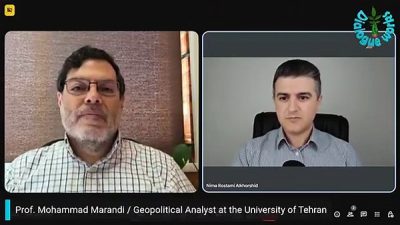
Seyed M. Marandi: U.S. Military DIVIDED? Iran’s Secret Defense EXPOSED
or go to
Aletho News Archives – Video-Images
From the Archives
‘Israel sees Iran as obstacle to its policies’
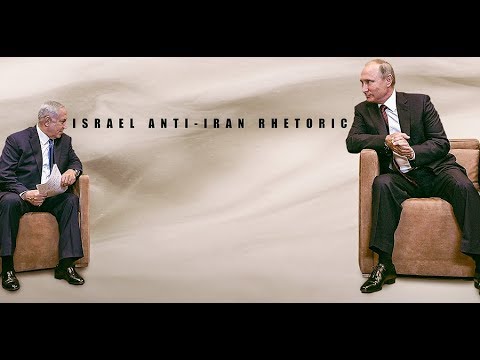
Press TV – August 25, 2017
Prime Minister Benjamin Netanyahu has said that Israel felt threatened by Iran’s growing influence in the Middle East. Netanyahu expressed his Iranophobic view in a meeting with Russian President Vladimir Putin in Russia’s Black Sea resort of Sochi on Wednesday. Press TV has asked Scott Rickard, former American intelligence linguist from Tampa, Florida, and Brent Budowsky, a columnist at The Hill from Washington, to give their thoughts on the issue.
Rickard said Tel Aviv is concerned about the fact that the regime could not carry out its old project to spread sectarian divisions and pave the way for dismemberment of the countries in the Middle East region because of the Iranian-led resistance against Israeli policies, not only in the occupied territories of Palestine but also in the whole region.
“Iran is not a threat to Israel whatsoever. The threat that Israel sees is the fact that their Oded Yinon Plan is being put to a hold by Iran,” the intelligence linguist said on Thursday night.
“They (the Israelis) look at Iran as a threat only because they have no influence on their governments and Iran is autonomous and is not under the Zionist influence,” he added.
Since the victory of the Islamic Republic of Iran in 1979, Tehran has been critical of Israel’s policies in the region, whereas “no leaders [of other states] even dared to speak out against Zionism,” Rickard argued. … continue
Blog Roll
 Aletho News
- Israeli tank fire killed UN peacekeeper in Lebanon, UNIFIL investigation finds
- Russia, China block Bahrain-sponsored UN resolution on Strait of Hormuz
- The US-Israeli War on Science is an Assault on our Future
- Trump’s Promise to Bomb Iran ‘Like Never Before’ Faces Brutal Logistics — Expert
- Germany seeks to restrict stays abroad for men of fighting age – Berliner Zeitung
- Evidence points to Ukraine being behind TurkStream attempted sabotage, but that should come as no surprise
- Sri Lanka secures supplies of Russia oil – minister
- Nations across Asia strike direct deals with Iran for Hormuz passage
- IRGC commander declares ‘new phase’ of reprisal attacks against aggressors
- Israel’s air defenses overwhelmed by cluster-warhead Iranian missiles: Reports
- If Americans Knew
- Trump Says US Sent ‘a Lot of Guns’ to Protesters in Iran
- Israeli forces destroy 17 UN peacekeeper cameras in south Lebanon
- US-Israeli strikes ‘completely destroy’ synagogue in Tehran
- Archbishop for US Military Says Iran War Is Unjust Under Catholic Teaching
- Iranian leaders’ Open Letters to the American People
- Trump says Iranians appreciate bombs, WHO warns of nuclear risks – Daily Update
- U.N. experts demand Israel release prominent Gaza doctor after reports of ‘severe torture’
- Israel’s Latest Genocide Is Against the Shias of Lebanon. Why Is the World Silent?
- How Eliot Cohen’s influence over U.S. war-making paved the way for Trump’s war crimes in Iran
- Israelis don’t pay for the weapons we ‘sell’ to them — US taxpayers do
- No Tricks Zone
- An Inconvenient Tree: Uncovered In Alps… Europe Much Warmer Than Today 6000 Years Ago
- New Study Reports A 60% Slowdown In Greenland’s Ice Loss Rate In The Last Decade
- Low Intensity Tornado Wrecks Major Solar Farm, Creating A Potential Toxic Dump
- New Study Finds Warming Saves Lives…Cold Temperatures 12 Times More Deadly Than Excess Heat
- German Science Blog Accuses PIK Climate Institute Of Hallucinating Climate Tipping Points
- Devastating Assessment Of Comirnaty Vaccine By Former Senior Pfizer Europe Toxicologist
- New Study: CO2 Is ‘Effectively Negligible’ As An Explanatory Climate Change Factor Since 2000
- Former Pfizer Toxicologist Dr. Helmut Sterz Tells Bundestag Hearing Pfizer Vaccine Should Have Never Been Approved
- Energy Expert: Germany’s Nuclear Phaseout Was A “500 Billion Euro Mistake”
- New Research: South Australia’s Mid-Holocene Sea Surface Temperatures Were 4°C Warmer Than Today
 Aletho News