Brazil’s Odebrecht Gave Argentina’s Macri US$500k For Presidential Run
teleSUR | April 30, 2017
Argentina’s President Mauricio Macri received US$500,000 from Brazil’s Odebrecht construction firm for his 2015 electoral campaign, Argentine daily La Nacion revealed on Sunday.
The donation was processed through Odebrecht’s Braksem SA branch, and appeared in Macri’s party 2015 balance record. The company defended the move as “totally legal,” saying the sum of money was for the purchase of cutlery for a fundraising dinner that Macri’s Cambiemos coalition organized in March of that year.
“Braksem belongs to Odebrecht, it’s dedicated to the petrochemical market, with a branch in Argentina,” said the paper. “The Brazilian giant’s strategy was to have this lower-profile branch’s name appear in order to avoid public exposure.”
The leak comes after Odebrecht admitted it funded the electoral campaigns of other Latin American presidents, including Colombia’s current President Juan Manuel Santos and Peru’s former President Ollanta Humala.
Macri was also one of the main figures involved in the Panama Papers scandal after a leak from a company revealed how world leaders had thousands of offshore companies in tax havens to avoid paying taxes.
For 2015, Macri declared his fortune as being worth US$110 million to Argentina’s Anti-Corruption Office, an increase of 100 percent from the US$52 million he reported for the 2014 fiscal year. Following the Panama Papers leak, Macri admitted to having over US$18 million in tax havens.
Macri’s government has proposed a tax amnesty bill, which has been approved by the country’s congress. This controversial law is aimed to shield tax evaders who have undeclared holdings and assets while offering them lower taxes in order for them to bring assets to the country.
At Macri’s request, the law excluded any relatives of officials who have engaged in money laundering or have undeclared assets abroad from legal responsibilities, a caveat that critics say is a clear wink at his own father and siblings.
Earlier this month, polls found that Macri’s approval rate dropped to 24 percent, with 54 percent of Argentines polled saying they did not trust him.
Argentine President Macri Wants Amnesty for Tax Dodgers, Like Himself
teleSUR | May 28, 2016
President Mauricio Macri will propose an amnesty law for those who bring back to Argentina any undeclared funds that were kept in overseas accounts, in order to settle debts with state pensioners.
“Argentines have billions of pesos overseas because they didn’t trust in the state. We need to tell them to join us, to be part of our new era. We invite them to wipe the fiscal slate clean,” said Macri.
President Macri said he will present the bill to Congress with three options. First, people can pay a tax of 5 percent for up to US$56,000 and 10 percent above that until Jan. 1, 2017. Second, they can convert their funds to bonds in the country. The last option, they can place the money in long-term investment in Argentina.
“Last time we had this process, which was easier, the country collected only $670 million dollars. Therefore, this law has nothing to do with the economy, but that there is dirty money associated with top officials in the government that needs to be cleaned,” said lawmaker Claudio Lozano.
Macri admitted this week that he has US$18 million in tax havens after he repeatedly denied earlier allegations arising from being named in the Panama Papers. He also failed to declare his high-level positions in two offshore companies in Panama in his mandatory declaration at the beginning of his term.
Macri’s fortune went from USD$52 million in December 2015 to USD$110 million in May 2016.
On the other hand, austerity and neoliberal policies rolled out since Macri took power continue to hit the country, such as price hikes in public services, transportation, gas and electricity. The country also holds its highest inflation rate since 2002.
RELATED:
Macri Backs Tax Breaks for the Rich, Layoffs for the Poor
Panama Papers: Macri Implicated in Offshore Tax Haven Scandal
Argentina and the Vultures: the Political Economy of the Settlement
By Mark Weisbrot | The Hill | March 14, 2016
After 15 years of court battles, injunctions, smear campaigns, lobbying, and other interventions, the vulture funds have finally won a tentative agreement with the new Argentine government. Vulture funds — the name preceded this particular dispute — are so called because they buy up defaulted debt for a very small fraction of its face value, then sue (and use other tactics) to collect an exorbitant return. In the case of Argentina, the chief vulture, American billionaire and major Republican campaign donor Paul Singer, will get an estimated 370 percent return; another vulture fund in the settlement did even better, with a return of 950 percent.
The agreement is tentative because President Mauricio Macri of Argentina still has to get the nation’s Congress, in which he does not have a majority, to change some laws in order to finalize the deal. And he will also have to reach agreement with some remaining “holdout” creditors. And now the vulture funds are appealing the judge’s order that would have allowed Argentina to issue new debt, presumably in an effort to extract even more concessions. But assuming it all works out, though, there are some important lessons to be learned from this long war over sovereign debt.
Argentina arguably had no alternative but to default in 2002, but the government also did the right thing by standing up to the IMF and its international creditors until it reached a deal (in 2003 and 2005) that would allow the economy to recover. International lenders — in this case a creditors’ cartel headed by the IMF — often succeed in getting a settlement that keeps the country trapped in recession, depression, or very low growth with an unsustainable debt burden; as well as numerous conditions (cuts to social spending, public pensions, public employment) that harm the majority of the debtor country’s citizens. Some of the worst recent examples of these abuses can be seen in countries like Greece and Jamaica, and will likely include Puerto Rico if there is a debt restructuring there.
By taking a hard line with its foreign creditors, Argentina reached an agreement with 93 percent of them that allowed the country to do very well over the ensuing 14 years. Instead of a prolonged depression as in Greece, or limping along from one crisis to the next, Argentina began an extraordinarily robust recovery just three months after its default and enjoyed very high growth — more than 90 percent in real GDP from 2002–2015. (There is some dispute over the exact number but it does not change the story.) This enabled Argentina to reduce poverty by about 70 percent and extreme poverty by 80 percent, in the decade 2003–2013.
So, even though the country would later run into economic trouble — in the world recession of 2009, but also in the last four years — there is no doubt that it pursued very successful economic policies, which it would not have been able to implement under a less favorable agreement with its creditors. Now, about the slowdown of the past four years, in which the economy has grown by about 1.1 percent annually: Part of the problem was that Argentina could not borrow on international markets, due to its inability to settle with the vulture funds. For Argentina’ detractors, this proves that the default and subsequent tough negotiation were wrong. But clearly that is not the case; the alternative offered by the IMF and the creditors was vastly worse.
The problem is really the vulture funds, and also the foreign policy goals of certain actors within the United States, who were against the prior government of Argentina. Here is Judge Thomas Griesa, of the Federal District court for the Southern District of New York, to whom the New York Times devoted a news article describing his incompetence: “Put simply, President Macri’s election changed everything.” This is from Griesa’s decision of February 19, explaining why he decided to conditionally lift the injunction he had imposed against Argentina in 2014, which the Financial Times editorial board generously described as “eccentric rulings,” and which prevented Argentina from making its debt payments. In other words, he much preferred the new, right-wing, pro-Washington government, as opposed to the prior, left government that he helped get rid of. Griesa’s unprecedented decision to take 93 percent of Argentina’s creditors hostage on behalf of the vulture funds was obviously political at the time. Now he has admitted it, to the chagrin of our legal system.
Argentina had appealed Griesa’s injunction to the U.S. Supreme Court, and the governments of France, Brazil and Mexico, and the Nobel Prize-winning economist Joseph Stiglitz filed briefs on its behalf. Interestingly, the IMF announced that it, too, would file a brief on behalf of Argentina. This was not because the IMF loved the Argentine government, but because Griesa’s decision was considered a threat to the stability of the international financial system. But the U.S. Treasury forced the IMF into an embarrassing retreat, most likely due to pressure from the vulture lobby and some anti-Argentina members of Congress, in particular from Florida, who could threaten to hold up legislation that the Fund needed.
Did I mention that the vulture fund chief Paul Singer is a major contributor to Florida Senator Marco Rubio, and is currently rumored to become finance chair for his presidential campaign?
The U.S. government also stopped blocking loans to Argentina at the World Bank and the Inter-American Development Bank, just after Macri was elected. Macri himself also has an interesting history with the U.S. State Department: In conversations with U.S. officials leaked by WikiLeaks, Macri chastised them for being “too soft” on the Argentine government and encouraging its “abusive treatment” of the U.S.
The main lesson from this whole episode is the importance of national economic sovereignty for middle-income countries like Argentina. This is what allowed Argentina to recover from disastrous economic policies implemented under IMF tutelage; and it was the infringement on this sovereignty by U.S. courts and other actors that made it difficult for Argentina to resolve the economic problems of the past few years. We will see how this new, less sovereign government fares going forward, now that it has settled with the vultures.
Argentine State Workers Join National Strike Against Macri
teleSUR – February 24, 2016
Argentine public sector workers will converge in front of the presidential palace Wednesday as part of a national strike to protest the policies of President Mauricio Macri.
Macri has fired approximately 10,000 state workers since the beginning of 2016, with even more layoffs expected in the coming months as government ministries continue to review contracts.
Wednesday’s national strike is being organized by the Association of State Workers, known as ATE, together with the Argentine Workers Union.
ATE President Hugo Godoy added that there would be marches and demonstrations in provincial capitals as well.
President Macri is ideologically disposed to reducing the public sector, arguing that private investment should be the source of new employment.
During an event where he announced the elimination of retention taxes on mining, Macri said the public sector employment generated during the previous five years, under the administration of his predecessor, was “unnecessary” and a product of “clientelism.”
Vice-President Gabriela Michetti has accused public sector workers of being “Kirchner militants,” referring to the supporters of the governments of the late Nestor Kirchner and his successor and wife, Cristina Fernandez de Kirchner.
Wednesday’s demonstrations will be an opportunity to observe the reaction of state security forces in light of a new security protocol implemented by the Macri government, which now allows police to break up protests.
Critics have said the security protocol opens the door to criminalization and repression of protest.
Argentina’s New President Won’t Seek to Revive Deal with Iran
teleSUR | December 12, 2015
Argentina’s newly elected President Mauricio Macri will not appeal a court’s decision to strike down a deal with Iran over investigating a deadly 1994 bombing of a Buenos Aires Jewish community center, Reuters reported on Friday.
Former leader Cristina Fernandez had said she would appeal the ruling last year voiding the agreement she signed with Iran in 2013 to investigate the country’s suspected role in the bombing.
The memorandum would have launched a joint “truth commission” comprised of five independent judges from third-party countries to investigate the bombing. It would also have allowed for Iranian suspects in the case to be questioned.
Tehran denies any responsibility in the attack that killed 85. No one has yet been found responsible or tried in court over the incident.
Earlier this year, in April, a bill to compensate the victims was passed by parliament, after receiving unanimous approval from the Argentine senate. The legislation provides a one-time compensation of US$170,000 for the relatives of those killed in the attack. The hundreds who suffered “extremely grievous” injuries will receive 70 percent of that amount, while those who suffered “grievous” injuries will receive 60 percent of that amount, according to the Jerusalem Post.
The bombing of the AMIA Jewish center made headlines recently after the mysterious death of Federal Attorney Alberto Nisman who was investigating the case. The Argentine opposition has used his death to try to implicate Kirchner’s government, even though it was not in power in 1994.
Argentina: Mauricio Macri’s Dubious Dictatorship Ties
teleSUR English | November 23, 2015
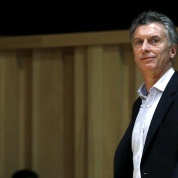 The election of Mauricio Macri in Argentina’s presidential race comes as a welcome victory to the country’s business elite and right-wing parties across Latin America, but the president-elect has some dubious ties that could signal a lasting legacy in the new head of state of darker times in Argentina.
Macri has been particularly criticized for his indirect ties to the last military dictatorship in Argentina in the late 1970s and early 1980s that cracked down on left-wing activists and political opposition.
While many of Macri’s powerful economic backers and corporate allies propped up the dictatorship that benefited them economically, Macri’s closest ties to the dictatorship are through his own family business Macri Society, known as Socma.
Macri, a long-time business magnate and former mayor of Buenos Aires, has been a director of his father’s Socma corporate conglomerate since a young age. The Macris are one of Argentina’s wealthiest families, and Socma was among the companies that directly benefited from the dictatorship.
In 1973, prior to the 1976 military coup that ousted the civilian Peronist government of President Maria Estela de Peron and installed a dictatorship, Socma owned seven companies. When the dictatorship ended 10 years later, in 1983, the Socma corporate empire had expanded to 46 companies.
Among Socma’s dozens of companies were various businesses that benefited the Macri family economically by providing services to the dictatorship regime, such as the solid waste management company Manliba, privatized under the dictatorship in 1979, and the postal company Correo Argentino, later nationalized in 2003 under former President Nestor Kirchner.
Macri also showed his sympathies for corporate complicity in dictatorship-era abuses earlier this year when he and his party opposed a government move to end impunity for dictatorship supporters.
Argentina’s Parliament decided in September to launch an investigation into how people and businesses participated in crimes committed by the 1976-1983 dictatorship. While the vote passed by a wide margin of 170-14, Macri and his Republican Proposal Party made up the minority of lawmakers opposing the bill.
The U.S.-backed Dirty War disappeared between 7,000 and 30,000 people in Argentina under the dictatorship regime.
Argentina’s right-wing newspaper La Nacion, which supported the dictatorship, hailed Macri’s election as signalling an end to “revenge” for the dictatorship years.
“The desire for revenge should be buried once and for all,” a La Nacion editorial said on Monday following Macri’s victory. The editorial referred the end to a “culture of revenge” under the governments of Nestor Kirchner and Cristina Fernandez in reference to their efforts to seek truth and justice for dictatorship-era crimes, including Kirchner’s 2003 repeal of amnesty laws for crimes against humanity.
Macri’s election marks the first victory for the country’s right-wing business elite through electoral means rather than military coup. He will be the third non-Peronist head of state in the more than three decades since the end of the dictatorship.
Right-Wing Alliances in Latin America
While corporate elites and dictatorship-supporters celebrate Macri’s election in Argentina, right-wing organizations across Latin America also welcome his victory as a win for their neoliberal political project in the region.
Macri has already made his foreign policy plans clear, vowing to reshape international ties to strengthen relations with the United States and European Union while requesting that Venezuela be suspended from the South American regional bloc Mercosur.
Macri’s relationship with the United States has been demonstrated in leaked diplomatic cables, published by WikiLeaks, in which he accused the U.S. of being “too soft” on the Kirchner governments and called on the U.S. to crack down on Cristina Fernandez de Kirchner.
Macri’s stance against the Venezuelan government was also clearly solidified when Lilian Tintori, wife of Venezuelan opposition leader Leopoldo Lopez, took to the stage with Macri during his victory celebration on Sunday night. Tintori hailed Macri’s win as the start of “political change in Latin America and Venezuela’s opposition was “delighted” by Macri’s win, Reuters reported.
Many of Macri’s supporters are those who hope to reinvigorate neoliberal free trade politics in Latin America and roll back the regional integration projects launched by former Venezuelan President Hugo Chavez.
For example, the Argentine think tank Thinking Foundation, focused on developing projects and strategies to get Macri’s party elected, has collaborated with the Spanish FAES Foundation, which promotes neoliberal politics and has strong ties to Spain’s conservative People’s Party.
The Thinking Foundation is also part of the Atlas Foundation, which in turn is part of the global Atlas Network, a think tank that promotes neoliberal free trade and market-based public policy through over 400 member think tanks worldwide.
Macri’s Majority Pro-Kirchner Opposition Government
Macri’s plans to shift Argentina to the right may still face resistance. The president-elect will be forced to govern without majority support from Congress.
In the Argentine Senate and House of Representatives, the majority of lawmakers are not representatives of Macri’s Let’s Change coalition, but of the pro-Kirchner alliance Front for Victory that backed Daniel Scioli’s bid for president. Of 257 seats in the Lower House, 114 are held by the Front for Victory. In the Senate, 42 of 72 senators are Front for Victory officials.
The era of “Kirchnerismo” under Cristina Fernandez and Nestor Kirchner may have come to an end with Macri’s election, but the Peronist movement that has long fought for social justice in Argentina now forms the official opposition.
While change under Macri is certain, the question that remains is what the long-term legacy of the Peronist movement and Kirchner governments will be in Argentina and Latin America.
Featured Video
No Threat Can Force Iran’s Surrender /Trita Parsi & Lt Cl Daniel Davis
or go to
Aletho News Archives – Video-Images
From the Archives
An Expert Military Analysis of War with China
Actually, None is Necessary
By Fred Reed • Unz Review • December 13, 2020
The Correlation of Armed Forces: U.S. goods and services trade with China totaled an estimated $634.8 billion in 2019. Exports were $163.0 billion; imports were $471.8 billion. The U.S. goods and services trade deficit with China was $308.8 billion in 2019. Trade in services with China (exports and imports) totaled an estimated $76.7 billion in 2019. Services exports were $56.5 billion; services imports were $20.1 billion. The U.S. services trade surplus with China was $36.4 billion in 2019.
There is talk within the Washingtoniat of a possible war with China. Steve Bannon, who apparently was dropped on his head as a child, actually favors such a war. We hear the usual shoo-the-boobs alarm about how the Chinese are doing something terrible and we must gird our loins and American values and show them what for, bow wow, woof. The danger is that the current game of who-blinks-first in Asian waters might actually provoke a shooting war. You know the kind of thing: One warship refuses to get out of the way of another, a collision ensues, some retard lieutenant who signed up on waivers opens fire, and we’re off and running. It is not a good idea to let children play with matches.
The said war is discussed either in emotional terms by idiots or in purely naval terms by those familiar with such things, so we hear of the First Island Chain and the Second Island Chain and whose missiles against the other’s missiles and so on. This would be appropriate if we were fighting World War Two again. Which we aren’t. Let’s take a quick-and-dirty look at how such a war might go.
To begin the war, America would overestimate itself and underestimate China. This is doctrine in the Pentagon. … continue
Blog Roll
 Aletho News
- Iran To Target Military Industrial-Tech Complex That Facilitated Gaza Genocide
- Collapsing Empire: The Resistance Disarms ‘Israel’
- Suicide Should Not Be a Government Service
- Rethinking America’s greatest threat: Iran vs. Israel-Firsters
- Iran accuses adversaries of false flags to strain Turkey ties
- Poland rules out sending Patriot missiles to US/Israel amid war on Iran
- Tehran approves new Hormuz plan with major restrictions
- No Threat Can Force Iran’s Surrender /Trita Parsi & Lt Cl Daniel Davis
- UK’s New Pandemic Plan Would Turn Big Tech Into a Mass Location Tracking Network
- Growing insecurity, soaring prices fuel protests in north as regime bans evacuation: Sources
- If Americans Knew
- Ann Coulter Rips Into Fox News for Iran War Coverage, Compares to False Rigged 2020 Election Reporting
- Joe Kent Urges Americans To Call White House and Congress To Object To Sending Troops Into Iran
- DNC Resolution to Reject AIPAC Funding Puts Democratic Leaders in the Hot Seat
- Swedish foundation to build 400 schools as over 650,000 Gaza children remain without education for 2 years
- Israeli army admits photshopping image of slain Lebanese journalist
- This is how Israel is systematically killing health workers under the cover of war in Lebanon
- Carrying life under fire: Israeli invasion of Lebanon leaves pregnant women facing deadly risks
- Champagne all around for the new death penalty (for Palestinians) law – Not a ceasefire Day 172
- Why are Palestinian books struggling to be seen on Amazon?
- The Line Between Affinity and Conspiracy
- No Tricks Zone
- New Study Finds Warming Saves Lives…Cold Temperatures 12 Times More Deadly Than Excess Heat
- German Science Blog Accuses PIK Climate Institute Of Hallucinating Climate Tipping Points
- Devastating Assessment Of Comirnaty Vaccine By Former Senior Pfizer Europe Toxicologist
- New Study: CO2 Is ‘Effectively Negligible’ As An Explanatory Climate Change Factor Since 2000
- Former Pfizer Toxicologist Dr. Helmut Sterz Tells Bundestag Hearing Pfizer Vaccine Should Have Never Been Approved
- Energy Expert: Germany’s Nuclear Phaseout Was A “500 Billion Euro Mistake”
- New Research: South Australia’s Mid-Holocene Sea Surface Temperatures Were 4°C Warmer Than Today
- Storing Green Energy To Last Germany 10 Days Would Require A 60-Million Tonne Battery
- New Studies: UK Sea Levels Were 4 Meters Higher Than Today During The Mid-Holocene
- Destructive Green New Deal: German Energy And Metal Group Warns Of Drastic Crisis
 Aletho News