The recent Lebanese parliamentary election generated a lot of publicity in Western media. To be sure, free elections are rare in the Middle East, and Western media get excited over the prospects of success for what they dub as “pro-Western” candidates or coalitions anywhere. Also because foes of Israel and the U.S. were in the running, Western media become automatically invested in the outcome. This time, Western media decided that Hizbullah won “a majority of seats” in the election—as the headline of The Financial Times had it. The results were certainly a blow to Western and Gulf regimes who invest—politically and financially–heavily in Lebanese elections.
We can’t really talk about free elections in the Middle East—or anywhere else in the developing world for that matter. Not because people there don’t want them but essentially because Western governments and Gulf regimes won’t allow it. To be fair, the U.S. is clearly in favor of free elections, but only when the results guarantee a victory for its puppets. Thus, when Hamas won the legislative elections of 2006 (which the U.S. had been insisting on), the U.S. not only refused to recognize the free expressions of the Palestinian people but the U.S. worked on a covert operation to undermine the results and to overthrow Hamas in Gaza.
Historically, the U.S. (among other outside parties, chiefly Gulf regimes) intervened heavily in Lebanese elections through the provision of cash payments to its favored right-wing, anti-communist candidates. For instance, the 1947 election lives on as one of the most corrupt in Lebanese history, and former CIA agent, Wilbur Eveland, wrote about his adventures of driving to the residence of then president, Kamil Sham`un, with a load of cash to ensure that the right-candidates win. But the cash wasn’t really necessary because Sham`un forged the election anyway and arranged for the defeat of his opponents.
In 1968, the U.S. was most likely behind the rise of the far-right coalition of “the tripartite alliance,” which included the Phalanges, who swept through the election and, in few years, would—with U.S. help—trigger the Lebanese civil war. (New U.S. archival materials show the extremely close relations between those parties and U.S. and Israel).
But the U.S. and Saudi Arabia surpassed all previous foreign intervention in Lebanon in the 2009 election, when they threw close to a $1 billion to sway the vote on the side of the March 14 coalition, which included the Muslim Brotherhood and right-wing groups—all dubbed “pro-Western” by U.S. media. The victor was arranged although the election was very close: no one side was able to rule without veto power by the other side.
In this election, the Saudis didn’t spend as much as previously probably because they thought it wouldn’t make much difference since a new electoral system had changed the rules. But Western and Gulf governments convened a special economic conference in Paris to prop up the leadership of Sa`d Hariri, who claimed in the wake of the conference that he would be create no less than 900,000 jobs.
Elections in ‘Democracies’
Elections in democratic political systems are merely some of the people selecting representatives who speak on behalf of “all the people.” The propaganda about the virtue of elections is highly exaggerated in order to provide the political system with much more political legitimacy than warranted.
In the U.S., there is still a clear agenda to suppress wide political participation. The U.S. is one of the few countries in the world which holds the vote on a working day—and in the winter where much of the East coast is buried under rain and snow. Furthermore, the U.S. requires voter registration, when most democracies don’t. The low voter turnout in the U.S. is by design, and not by default. If the U.S. were to adopt a proportional representation system—which both parties won’t allow because they enjoy holding the exclusive monopoly over political representation—voter turnout would increase. Most world democracies have—at least partially or at some level—adopted proportional representation.
The leftist coalition during the Lebanese civil war years, the Lebanese National Movement, proposed political reforms in 1975. They included—among other things—the adoption of proportional representation at the national level, with Lebanon designated as one electoral district. The political class rejected that because they preferred the single-member district (at a small local level) since it facilitates the utilization of cash in swaying voters. Also, Lebanese national proportional representation wouldn’t fit well with regional sectarian leaderships.
The May 6 Lebanese election took place nine years after the previous one. Regional conflicts and Lebanese internal turmoil gave sectarian leaders the excuse to postpone the elections repeatedly. Sectarian leaders also had a hard time agreeing on a new electoral law. But the election of Gen. Michel Aoun to the presidency in 2016 expedited the process of finally holding a ballot. His parliamentary bloc had been vociferous in calling for new elections. After long months of acrimonious negotiations, the sectarian leaders agreed on a new electoral law.
Aoun: Pressed hard for a vote.
Hizbullah and the progressives in Lebanon called for a proportional representation system, while Hariri and his allies fought against it. Hizbullah was willing to risk losing a few seats in return for the election of some of its allies from different sects, while Hariri knew that his broad coalition in parliament would lose substantially because most of his Christian MPs were elected in specially-designed districts where the majority Muslims vote for Christian and Muslim MPs.
The design of electoral districts is not a simple matter in Lebanon because the system has to balance different political interests with a sectarian arithmetic formulae (which is incorporated into the political system of the country). For example, the top posts of government (presidency, speakership, and prime ministership) are distributed among Maronites, Shi`ites, and Sunnis respectively.
Elections to the 128-seat Lebanese parliament must split seats evenly between Christians and Muslims though Muslims surpassed Christians demographically long before the 1975 civil war. It is estimated that Christians are now no more than a third of the population. There is a quota for Christians in the Lebanese parliament that keeps up the pretense that they are half the population no matter how different the demographic reality. In fact, the Lebanese state refuses to conduct a census for fear of upsetting Christians. The last census was conducted in 1932.
So Lebanese leaders agreed on a new electoral law that would mix the proportional representation system with the single-member district. They arrived at a law which divided Lebanese governorates as electoral districts but then gave the voter the choice to rank one candidate on the electoral list as his/her “favored” candidate, which basically prioritized sectarian preferences of voters. The whole purpose of proportional representation was defeated.
The law was quite complicated and the low voter turnout (around 49 %, less than the 2009 election) seems to confirm that many voters and even Interior Ministry experts did not fully understand the rules. The low turnout can also be explained by the low level of enthusiasm among voters and the diminished sense of expectations for change. Furthermore, sectarian leaders in Lebanon suppress the vote by not allowing 18-year-olds to vote. If they did it’s estimated that it would substantially increase the Muslim voters—especially Shi`ites.
Part Two will look closely at the election’s winners and losers and what it means.
As’ad AbuKhalil is a Lebanese-American professor of political science at California State University, Stanislaus. He is the author of the Historical Dictionary of Lebanon (1998), Bin Laden, Islam & America’s New ‘War on Terrorism’ (2002), and The Battle for Saudi Arabia (2004). He also runs the popular blogThe Angry Arab News Service.
The Syrian Arab Army (SAA), allied Palestinian militias, and the government of Syria deserve high praise for the recent liberation of Yarmouk refugee camp from ISIS.
Anti-war activists took a lot of flak from some people in North America and Europe, describing themselves as Palestine solidarity activists and “leftists”, when, in 2012, Yarmouk was invaded and occupied by proxy armies of western powers and Arab monarchs. Because we condemned the US-led attack on Syria and defended the Syrian government’s resistance to the terrorist occupation of Yarmouk, we were among the activists denounced by the misguided persons above as being “Assad apologists.”
This would be a good time to set the record straight and reaffirm our position that Palestinians and Syrians have strong common national aspirations. The aspiration of Palestinian refugees to return to their homes in Palestine is recognized as part of the common struggle of all Syrians. And both nations seek to reclaim from the State of Israel all the territories in Syria and Palestine which it currently occupies.
Background
Yarmouk was originally a refugee camp for Palestinians who had been displaced by the “Nakba”, the catastrophe of the ethnic cleansing of the indigenous people of historic Palestine which accompanied the founding of the State of Israel in 1948. It was a .81 hectare of land which, in 1957, was outside the boundaries of Damascus but which, by 2011, had turned into a lively suburb of the city housing about one million people of whom about 160,000 people were Palestinians. It was the largest and most prosperous settlement of Palestinians anywhere in Syria.
It is important to note that the government of Syria treated its hundreds of thousands of Palestinian refugees better than most Arab countries and as equals to Syrian citizens themselves. Palestinians in Syria received the same levels of free health care and education as Syrians and were allowed to rise in all areas of employment as high as their abilities carried them. There was only one formal legal distinction between Syrians and Palestinians. Palestinians were not given Syrian citizenship – in order to maintain their internationally-recognized right of return to their homes in Palestine – and therefore were not allowed to participate in Syrian elections.
Finally, the Syrian government, along with Iran and Hezbollah, was part of the Coalition of Resistance against Israel for many years. It was no accident therefore that, before the US-led aggression against Syria in 2011, the Palestinian factions chose to locate their headquarters in Damascus.
In short, the Assad government was a staunch supporter of the Palestinian cause.
The proxy war on Syria
In 2011, a group of western countries and Arab monarchies, led by the USA, unleashed scores of proxy armies of terrorist mercenaries on Syria with the purpose of achieving regime change, a scheme clearly illegal under international law. Importantly, the State of Israel participated heavily in this regime change operation, supporting terrorist mercenaries using the illegally-occupied Golan Heights as their base to fight against the Syrian government inside of Syria. Israel also used its air force to bomb Syria more than one hundred times during the course of the seven-year long war and supplied aid and weapons to separatist Kurdish elements in eastern Syria with a view to aid the USA in trying to partition that country.
In this context, negotiations took place for the Palestinians in Syria to remain neutral in the war. The Syrian government supported this view but the terrorists didn’t.
In 2012, the so-called “Free Syrian Army” (FSA) invaded and occupied Yarmouk. Some Palestinian factions facilitated their entry. The FSA was soon joined by al Qaeda and other militant factions. In 2015, ISIS entered the camp and, after some internecine warfare, drove out the other terrorist factions.
As they did in many other pockets of Syria, the terrorists evicted many Palestinians from their homes, looted and plundered everything of value, arrested anyone with known sympathies for the government and/or religious beliefs different from theirs and proceeded to torture and execute them, sexually assaulted and/or kidnapped women and girls, turned Yarmouk into a fortified camp, and hoarded all the foodstuffs for themselves. As in every other terrorist enclave, the vast majority of the inhabitants promptly fled to government-held areas.
The Syrian government did not directly attack Yarmouk until just a few weeks ago. Instead, it patiently armed and supported the courageous fighters of the Popular Front for the Liberation of Palestine – General Command (PFLP-GC) who, for many years, led the unremitting struggle against the terrorists inside the camp. In other words, the Syrian government respected the neutrality requested by the Palestinian organizations.
The Syria Solidarity Movement notes,
“the patience of the Syrian hosts in allowing the Palestinian refugee population to try to reconcile its differences and take the lead in expelling ISIS and al-Qaeda and their affiliates from Yarmouk since early in the conflict is especially remarkable. In the end, the SAA took over responsibility for eliminating these terrorist groups from neighbouring Hajar al-Aswad, which allowed the Palestinian militias and their Syrian allies to remove the remainder from Yarmouk, the last remaining source of terror attacks on the civilian population in Damascus. We send our sincerest congratulations to all the people of Damascus and the surrounding metropolitan area for their liberation from fear of such attacks, which they endured for seven long years.” 1
Lies and distortions about Yarmouk
In 2012, certain self-styled Palestine solidarity activists and western “leftists” sought to twist the facts about the second displacement of the Palestinians – this time from their homes in Yarmouk. They sought specifically to lay the blame for this second victimization of the Palestinians in Yarmouk on the Syrian government and effectively gave left cover and support to the western regime-change operation. According to the nay-sayers, the Syrian government was simply to cave in to the armed militants and ignore its duty to protect its citizens and the Palestinian refugees, who lived under its protection, from foreign aggression.
From personal experience in Canada, we can attest to the fact that the Left cover provided by these misguided people for the attempted US regime-change operation in Syria was poisonous to the Canadian anti-war movement. It made it hard to organize people against the illegal war. In fact, it became difficult, thanks to threats by anarchists and other intervenors, even to find a venue to hold a public meeting in Canada for outspoken and courageous opponents of the war on Syria, such as Mother Agnes Mariam and Eva Karene Bartlett. In a few short years, because some of these misguided people, specifically members of the International Socialists (IS), were in positions of authority within the pan-Canadian anti-war movement, the movement dried up and died.
We note that many people got it wrong at the time. It’s heartening that some of them, such as journalists, Max Blumenthal, Rania Khalek, and Ben Norton have publicly acknowledged that their earlier analysis and criticisms were wrong.2 Others, such as UK professor Gilbert Achcar, who travelled to the World Social Forum in Montreal in 2016 to villify the Syrian government, will probably dance to empire’s tune until they die. It has taken seven years but the recent string of victories of the Syrian government over the terrorists have forced many honest people on the left to open their eyes wide and realize that what has transpired in Syria is not a popular uprising and or a “revolution”, but a deadly plan by the US, its western allies, and regional clients criminally to interfere in the domestic affairs of Syria and to target Iran and the Coalition of Resistance.
Thankfully, with the help of its international allies – Russia, Iran, Hezbollah, and several Palestinian popular militias – the Syrian Arab Army and government, after much sacrifice, has finally gained the upper hand and has driven the terrorists out of many of the enclaves they seized and occupied, including Yarmouk, thus defeating the US regime change plan.
In response to the failure of that plan, the USA moved to its Plan B: direct attacks on, and the occupation of, a large swath of Syria with a view to partition the country. On April 13, 2018, in response to a fraudulent “chemical attack” staged by the White Helmets3, the USA, UK, and France launched 100+ missiles against Syria. Interestingly, the Palestinian peak organizations immediately condemned the missile attack, and came out strongly in support of the government in Damascus, thereby abandoning any pretence at neutrality.
Fatah (the majority faction of the Palestine Liberation Organization [PLO]) declared that it
“stood unreservedly with the unity of Syrian territory and rejected efforts at destroying it or harming its unity and sovereignty.”
Palestinian Islamic Jihad “condemned the Western aggression against Syria” and “expressed solidarity (to) stand by Syria and its people and with all Arab and Islamic peoples in the face of all threats and challenges to their security, stability and unity.” The Islamic Resistance Movement (Hamas) “considered the aggression of America and its allies on the Syrian territory as a blatant aggression against the nation, aimed at confiscating its lands and destroying its capabilities in order to preserve the existence of the Israeli entity and (to advance) its schemes.” The Popular Front for the Liberation of Palestine (PFLP) “strongly condemned the American-British-French aggression, which targeted Syria with their missiles.” The Front added that
“the aggression and its objectives will be destroyed on the rock of the steadfastness of the Syrian people and the Syrian state” for whom it expressed its support and solidarity.4
Syrian and Palestinian struggles indivisible
The liberation of Yarmouk and the angry Palestinian reactions to the April 13 missile attacks put a satisfying end to a chapter of disunity in Palestinian and Syrian history. They show that the Palestinian and Syrian struggles are one and the same. There can be no ultimate victory for Palestine if Syria is destroyed. There can be no ultimate victory for the Syrian people without also freeing the Palestinians from the tyranny of occupation in Palestine.
The moral of the Yarmouk story can be summed up thus: if you are for Palestine, you must also be for Syria!
Those self-styled Palestinian solidarity activists and “leftists” in Europe and North America who slammed the Syrian government for resisting the terrorist proxy armies of the West need to reflect on the consequences of their de facto support of the US empire’s meddling in Syria: half a million deaths, millions of injured people (both physically and emotionally), enormous destruction of civilian infrastructure (including housing, schools, and hospitals), the transformation of 12 million Syrians into displaced persons and into a wave of refugees that swept over Europe, the descent of thousands of Syrian women and girls into the international human trafficking trade, and much much more… Will there ever be a day of reckoning for these apologists of empire?
Conclusion
The liberation of Yarmouk refugee camp is a significant milestone in Syria’s struggle to regain its national sovereignty and territorial integrity. Eventually, all of Syria will be liberated from the terrorists and from the direct occupations of the USA (east of the Euphrates), of Turkey (in the north), and Israel (in the south). In the meantime, the Palestinian residents of Yarmouk will soon be able to return to their homes in southern Damascus. And, when Syria is completely liberated, they will be able to organize once again – with the help of the Syrian government – for the Day of Return to Palestine.
*
Ken Stone is a veteran antiwar activist, a former Steering Committee Member of the Canadian Peace Alliance, an executive member of the SyriaSolidarityMovement.org, and treasurer of the Hamilton Coalition To Stop The War [hcsw.ca]. Ken is author of “Defiant Syria”, an e-booklet available at Amazon, iTunes, and Kobo. He lives in Hamilton, Ontario, Canada.
Notes
1 “Statement… on the liberation of Yarmouk”, Syria Solidarity Movement, May 27, 2018, syriasolidritymovement.org;
2 Blumenthal and Khalek recant their previously held views on Syria:
Washington and its “puppets” tried, and failed, to destroy Syria – and the US military will eventually be forced out of the country: These are a few of the highlights from RT’s exclusive interview with President Bashar Assad.
Speaking with RT’s Murad Gazdiev in Damascus, Assad commented on a range of topics, from the threat of direct conflict between the US and Russia, to why he doesn’t fear Israeli assassination threats.
On Victory: ‘It’s self-evident’ that Syria is ‘moving closer to the end of the conflict’
Assad noted that the “majority” of Syria is now under government control, but said that continued provocations and escalations by the United States and its allies have needlessly prolonged the seven-year conflict. With each Syrian military victory or successful reconciliation effort, the US and its partners have attempted to counteract these gains by “supporting more terrorism, bringing more terrorists to Syria, or by hindering the political process,” Assad said.
However, he stated that it was “self-evident” that “we are moving closer to the end of the conflict,” adding that “without external interference it won’t take more than a year to settle the situation in Syria.”
The Syrian leader said that whenever possible, his government has chosen negotiations and reconciliation over use of force.
“War is the worst choice but sometimes you only have this choice,” Assad told RT. “Factions like Al-Qaeda, like ISIS, like Al-Nusra, and the like-minded groups, they’re not ready for any dialogue… So, the only option to deal with those factions is force.”
He defended the government’s use of ceasefires and allowing extremists to withdraw to Idlib province, describing the agreements as strategically advantageous for the Syrian army. “If you have two or three frontiers, that’s better than having 10, maybe more than 100 at the time.”
On the US: Washington ‘losing its cards’ in Syria
Although the US forces continue to operate illegally in Syria, they will eventually be forced out of the country, Assad told RT.
“The United States is losing its cards. The main card was Al-Nusra, that was called ‘moderate,’ but when scandals started leaking that they’re not moderate, that they’re Al-Qaeda, which is supposed to be fought by the United States, they started looking for another card. This card is the SDF [Syrian Democratic Forces] now,” he said, referring to the US-backed militia group. According to Assad, once Islamic State (IS, formerly ISIS) and Al-Nusra are exterminated, the Syrian military will turn its attention on the SDF.
“We’re going to use two methods to deal with the SDF: The first one, we started opening doors for negotiations – because the majority of them are Syrians. And supposedly they like their country, they don’t like being puppets to any foreigners – that’s what we suppose.” Assad said that these commonly-shared values could allow reconciliation with the government. “We all don’t trust the Americans, [so] the one option is to live with each other as Syrians.” However, if negotiations fail, the Syrian army will be forced to liberate areas occupied by the SDF, with the Americans, or without the Americans.”
On this point Assad was adamant: “This is our land, it’s our right, it’s our duty. To liberate [these areas], and the Americans should leave. Somehow, they’re going to leave. They came to Iraq with no legal basis. And look what happened to them. They have to learn their lesson.”
On Russia: Moscow’s leadership prevented ‘direct conflict’ with US military
Syria’s president heaped praise on Moscow, claiming that Russian “wisdom” had prevented a direct conflict between Russian and American forces in Syria. “We were close to having direct conflict between the Russian forces and the American forces, and fortunately, it has been avoided, not by the wisdom of the American leadership, but by the wisdom of the Russian leadership.”
While Assad reiterated that the United States military was not welcome in Syria, he said that avoiding escalation was the key to restoring Syria’s territorial integrity. “We need the Russian support, but we need, at the same time to avoid the American foolishness in order to be able to stabilize our country.”
He emphasized that Russia has shown restraint – not weakness – in Syria, noting how Russian warnings had likely dissuaded Trump from launching a full-scale attack against Damascus.
“The Russians announced publicly that they are going to destroy the bases that are going to be used to launch missiles, and our information – we don’t have evidence, we only have information, and that information is credible information – that they were thinking about a comprehensive attack all over Syria, and that’s why the threat pushed the West to make it on a much smaller scale,” the Syrian president said.
On Israel: No longer phased by ‘threat of Israeli aggression,’ Tel Aviv in ‘panic’
Assad shrugged off Israeli threats against his own life, telling Gazdiev that “my generation – and most of the generations in Syria now – has lived under the threat of Israeli aggression. This is something in our unconscious feeling. So to say that you are afraid while living with the same threat for decades – this is nonsense.” He said that the fact that Tel Aviv has resorted to threats suggests that the Israelis are panicking.
“The Israelis have been assassinating, killing, occupying for decades now, for around seven decades, in this region, but usually they do all this without threatening. Now, why do they threaten in this way? This is panic, this is a kind of hysterical feeling because they are losing the ‘dear ones,’ the dear ones Al-Nusra and ISIS, that’s why Israel is panicking recently, and we understand their feeling.”
He said reports that Syria was helpless to stop Israeli airstrikes were inaccurate. “Our air defense is much stronger than before, thanks to the Russian support and the recent attacks by the Israelis and by the Americans and British and French proved that we are in a better situation” than at the start of the conflict seven years ago, he said. However, Assad noted that when foreign-backed fighters first poured into Syria, the first thing they did was target air defense systems – suggesting a “direct link” between the terrorists groups and Israel.
On chemical attacks: ‘Is it in our interest? Why? And why now?’
Syria’s president described the string of alleged chemical attacks as provocations that have ultimately failed to persuade the international community to give the US and its allies a military mandate in Syria.
Washington and its allies blamed the last such attack, in April, on Damascus, but Assad insisted that the Western narrative makes no sense.
“The timing of this alleged strike was after the victory of the Syrian troops in Ghouta. Let alone the fact that we don’t have chemical weapons anyway,” he told RT. Pointing to multiple reports of civilians and medical workers in the area having no knowledge of a chemical attack – with some even appearing in the Western press – Assad concluded that the alleged incident was a last-ditch Western attempt to sway international opinion – one that failed.
“They told a story, they told a lie, and the public opinion around the world and in the West didn’t buy their story, but they couldn’t withdraw. So, they had to do something, even on a smaller scale,” Assad said, referring to the joint airstrikes against purported Syrian chemical weapons facilities, carried out on April 14 by the US, UK, and France.
However, Assad acknowledged that nothing was stopping Washington from attempting similar provocations in the future. The US has “trampled on international law,” and “there’s no guarantee that it won’t happen [again].”
Assad asked: “What was the legal basis of [the April missile] attack? [Or] the so-called anti-terrorist alliance, which supports the terrorists, actually? What is the legal basis of their attack on Yemen, Afghanistan? There’s no legal basis.”
On Trump: ‘What you say is what you are’
Asked if he had a nickname for US President Donald Trump, who had previously called Assad an “animal,” Syria’s leader admitted that he wasn’t in the business of name-calling.
“This is not my language, so, I cannot use similar language. This is his language. It represents him,” he said. “I think there is a very well known principle, that what you say is what you are. So, he wanted to represent what he is, and that’s normal,” Assad added.
“The only thing that moves you is what people that you trust, people who are level-headed, people who are thoughtful, people who are moral, ethical, that’s what should move anything inside you, whether positive or negative. Somebody like Trump will move nothing for me,” he said.
On the myth of Syria’s ‘civil’ war: It was foreign-backed regime change
Assad disputed claims that the seven-year conflict has been a “civil war,” pointing out that there is no sectarian or ethnic conflicts in the areas currently controlled by the government. “Now in Damascus, in Aleppo, in Homs, in every area under Syrian government control, you will see [the whole] spectrum of Syrian society. With no exceptions.”
He noted that the term ‘civil war’ had been used widely since the beginning of the conflict in Syria – but it does not correctly characterize the conflict.
“A Syrian civil war means there are lines based either on ethnicities or sects or religion. Or maybe political opinion. In reality, in the areas in direct control by the government, which is now the majority of Syria, you have all this diversity,” Assad said. “So the word civil war is not correct. What we have actually, from the very beginning – mercenaries, Syrians and foreigners being paid by the West in order to topple the government. This is the mere reality. Everything else is just a mask to cover the real intentions.”
Speech of Hezbollah Secretary General Sayed Hassan Nasrallah on May 14, 2018, commemorating the second anniversary of the death of Hezbollah Commander Sayed Moustafa Badreddine.
Transcript:
[…] (Finally), Palestine, (the most) important question —I will be brief because everything we said before had to do with Palestine. Tomorrow (May 15) is the 70th anniversary of the Nakba (‘catastrophe’, designating the forced exile of Palestinians in 1948), the Nakba of Palestine, or rather the Nakba of Arabs, Muslims and the (Muslim) Community, and even the Nakba of humanity. What happened 70 years ago and has continued for 70 years is a badge of shame (branded with a hot iron) in History and on the forehead of all mankind, of all States and world leaders, as well as all international organizations in the world. And it continues to this very day: what is happening today in Gaza —tens of martyrs, over a thousand injured— is a continuation of what happened 70 years ago.
The Palestinians, for 70 years, did not abandon their cause. They may have differed on some choices, but none of them has accepted that the Palestinian cause is liquidated or definitively closed, regardless of the minimum (1967 borders), median (1948 borders) and maximum (historic Palestine) terms. And their struggle, their fight, their sacrifices and martyrs have continued until what happens today.
Today we are also facing a great and very dangerous challenge to the Palestinian cause, of which I will talk briefly, ie what is known as (Trump’s) (definitively settling the Palestinian issue), and according to some information —I do not have specific insight about it, but that’s what can be read in the media—, Trump will announce in May, in the last remaining two weeks, he will officially announce this Deal. And the US project to solve the Palestinian issue is this, points 1, 2, 3, 4 and 5 (which I’m going to detail).
(What is the position of Trump :) “O Palestinians, O Arabs, O Muslims, if you agree (to the Deal), you’re welcome, come and sign it. If you do not agree, so long (we have nothing more to say), and we will still impose it on you.” Because I forgot something in the first part (of my speech) about the consequences (of the American withdrawal from the Iranian nuclear deal), it’s not only that (Trump and the United States) do not respect (the agreements nor the world) but they take (unilateral) decisions that favor their interests and just impose them (forcefully) to the world. And those who do not give in, they subject them to sanctions, even if they are their allies. They are not going to propose a settlement (of the conflict), but they will announce it (as a fait accompli). If you accept it, you’re welcome. And if you refuse it, they will wage war against you, inflict sanctions on you, impose it to you (by force). Such is the danger facing the Palestinian cause these days.
It started with the recognition of Al-Quds (Jerusalem) as the capital of Israel, and now it’s done, despite the fact that Trump had promised the Arab (leaders) it would take two or three years and that there was time before its implementation. But no, they chose a modest place of Al-Quds (Jerusalem) and rushed to move their embassy (for the inauguration) today.
Well, what is this project, a clear, known project about which nothing is hidden?
1 / No Quds (Jerusalem), neither East nor West (for Palestine), it will not even be a matter of discussion. And what appears of the holy places, is that neither what is on the surface, nor what is underground (will be given to the Palestinians). No Quds (Jerusalem). Al-Quds is the eternal capital of Israel. If a Muslim wants to go to the Al-Aqsa Mosque (the third holiest site in Islam), or if a Christian wants to go to the Church of the Holy Sepulcher, he has to ask Netanyahu. That’s the first point. This is definitely settled for Trump, he announced it.
2 / No return of Palestinian refugees. Nothing at all. Now they’re wondering what to do at the Sinai (Egyptian desert), whether they will take them there… Palestinian refugees will either take the nationality of the country in which they reside, or be sent to other places. But there shall be no return of refugees (in Palestine).
3 / The Palestinian State will be Gaza. That is all. The State of Historic Palestine, which is two or three times larger than Lebanon, will be limited to Gaza.
4 / As for the Palestinian presence in the West Bank, it will take some form: self-governance, regional autonomy, partly linked to the ‘State’ of Gaza… I do not have details on that.
5 / Treaties of comprehensive peace. And all Arab and Muslim countries will have to stand in rank, recognize Israel, establish relations with Israel, normalize relations with Israel, and those who do not accept will be subject to sanctions, blockade, pressures and plots ready to be implemented.
Such is the “Deal of the century”. What then is the “Deal of the century” (if not that)? That is to say, the liquidation of the Palestinian cause. This means that the Palestinian cause will end this way.
In this context, what should be our position? We must not be content to describe and analyze. Let’s be realistic. Trump is serious in this choice, and things take their natural course. What is happening, and what does it require from us? From us and others, every Muslim, every Arab, every Christian, every worthy man in this region (and in the world).
What is happening now is that there is a process to impose this outcome. The first step in this process, is the (considerable) pressure exerted on Iran. Currently the pressure on Iran is maximal. Perhaps we who are staying in Lebanon, Palestine, Syria, are not well aware of this. Today, they are exerting maximum pressure on Iran. They work on finances and on the economy (of Iran), to bring down the Iranian currency, and to undermine the economic situation inside the country, in order to create situations of popular demonstrations against the government and against the regime, and therefore lead Iran to a (completely) different location (domestically and regarding its stance on Palestine). The ultimate pressure on Iran consists in the removal of the nuclear deal, the return of US sanctions and the threat of new sanctions. It is not just the old sanctions but also new sanctions against Iran.
Is it only a nuclear issue? They know very well that there is no military nuclear (program) in Iran. The real reason was stated by Trump himself, I do not even need to make an analysis.
He mentioned:
1 / nuclear weapons, knowing that it is a false (charge);
2 / ballistic missiles (owned by Iran) and the fact that Iran manufactures them;
3 / support from Iran to Hezbollah and Hamas. He said so explicitly. That is to say, to Palestine.
This means: “O Iran, my problem with you is not only the nuclear issue, ballistic missiles, their scope, their manufacture and their number. One of my main problems with you is your support for Resistance movements in the region.” And when Trump speaks of Hamas, in truth, it is not only Hamas. It is he who says ‘Hamas’. But the Islamic Republic stands with the entire Palestinian people and all the Resistance movements in Palestine, and supports all those who believe in the choice of Resistance in Palestine. Such is the (true cause of) the pressure against Iran.
“If you want us to go back to the (nuclear) deal, if you want us to waive the sanctions, to quit putting pressure on you with the conversion rate of your currency to the dollar, if you want us to allow European companies to continue investing in Iran and trade with you (O Iran), then leave Palestine aside, detach yourself from it (and toe the line like the others).” That’s the first point.
Second, the continuing pressure on Syria in order to monopolize and exhaust it. Syria is nearing victory. Soon they will resort yet again to the pretext of chemical weapons to come and threaten, intimidate and bomb, and if there were not some fears (for the USA), they would not content themselves with what they hit (the last time). The US wants to ensure that the Syrian leadership, President Bashar al-Assad, the Syrian state, the Syrian Army and the Syrian people continue to be drained in the inner battle, in order to get Syria out of this equation (Palestine).
Third, the continuing pressure on Resistance movements in the region, especially in Lebanon. They had already inflicted banking sanctions on us, and now they threaten us with new sanctions from the Congress, they threaten anyone who has links with Hezbollah, financially, etc., etc. You know the extent of this issue, we have already talked a lot about (in the past).
But what is even more dangerous, and it had been a while that there was no such thing, is that today, every day we hear threats of launching a war against Lebanon, saying that if such and such happens, they will send back Lebanon to the Stone Age, etc., this kind of intimidation. What does it mean? This is part of this process (liquidation of the Palestinian cause), this is a way to say “Watch out you Lebanese, watch out Hezbollah, be reasonable, keep aside. Do not stand in our way by trying to help the Palestinians, give them support, backing and assistance, otherwise you’ll have all kinds of problems.” So there is also the pressure on Lebanon.
And lately, the renewal of the blockade against the Palestinians in Gaza to the point of starvation. Gaza today faces a famine situation. Over time, Gaza gets closer and closer to the situation of the Yemeni people. The situation in Gaza is difficult and (even) terrible at this point. There will come a time when people will not have money to buy food. Already, people have no money to buy food. What does it mean? “Either we bring Gaza into submission and bend its knee by famine, until they fold and sign, either we lead it to an inner explosion.” And the leaders of the Resistance in Gaza acted (very) wisely, because they turned the threats of internal explosion into an opportunity with the March of Return, which will reach its pinnacle tomorrow. But this project and vision (liquidation of the Palestinian cause) are continuing.
It’s the same with the pressure on all Palestinians, on the Palestinian Authority, the Organization for the Liberation of Palestine, inside, outside, with refugees, moral, psychological and financial pressures, blockades, etc. What they ask from the Palestinians today, and we come to the position (required), what they want from the Palestinians today, through the blockade, pressures, famine, their efforts to break them and humiliate them, all this is to obtain their signature. This signature is very expensive, it is (really) expensive.
In addition to all this, in that process, we always find more support from Arab governments and the Gulf for the US-Israeli project of “Deal of the century”. This is also part of this process. And worse, what some Gulf countries do, is two things.
The first thing, which I have already referred to several years ago, is the religious and (Islamic) Law cover, that is to say the religious justification for surrendering to Israel. You see, when Anwar Sadat went to make a peace agreement (with Israel), it was (as) a political State, a secular President who was making peace with Israel. Sadat did not give any religious cover, nor did he invoke Islamic jurisprudence. He did not claim that he was following the will of God, the Prophet, and the Prophet’s companions, no. The most we could hear in the speeches of Anwar Sadat is that he tried to take advantage of a Quranic verse, reciting it in his Egyptian dialect (thus showing a lack of deference to the Quran, which should be recited in an unaltered classical Arabic), “And if they incline to peace, then incline to it [also].” (Quran, 8, 61). End of the story.
King Hussein (of Jordan), when he officially made peace with Israel at (the border post of) Wadi Araba, he did not bring with him the religious organizations claiming that it was the will of God, the Prophet, the family of the Prophet, the Companions, nor, since he is a Hashemite King (descendant of the Prophet), did he claim that it was the will of the Banu Hashim, of his ancestors and forefathers, he did not claim that they accepted this, never. It was (only) a State concluding a peace treaty.
The great misfortune, as I said a few years ago, the great calamity is when Saudi Arabia walks this path. This is the great misfortune. This is the great calamity. Because we will then see the Grand Mufti, the Committee of great scholars, great scholars, jurists, muftis, scholars of hadith, commentators of the Qur’an, as it has already begun, (we will see them justify their surrender to Israel in the name of Islam)…
What have we just seen? It’s Mohammad Bin Salman who said it, but he first spoke with the sheikhs. This is what we heard : “O brothers, O Arabs, O Muslims, you are mistaken! Palestine is for them, O people, it is the Jews who are entitled to it. They are the legitimate owners. This is the land of their fathers and ancestors. And it is God who has given it to them. And the Quran says so.” Look how they want to lead people astray and fool them. “It is the Quran that says that.” And they cite verses from the Quran as evidence.
An imbecile from the Gulf claiming to be a strategic thinker —I saw him on television—, said: “Israel was mentioned 38 times in the Quran, but the word ‘Palestine’ is not mentioned in the Quran. So who is within his rights? Palestine belongs to the Jews. You do not have a say. Enough, give back the land to its rightful owners!”
And now what do we see? Look, now that Saudi Arabia gets (openly) involved, it would be religion, the Quran, History and God’s promise that would have granted (Palestine) to the Jews. And therefore, we Muslims, before 1948, and for hundreds of years, would have usurped Palestine, deprived its rightful owners from it, so we should apologize to them and also compensate them. And Mohammad Bin Salman is ready to pay those compensations. This is what is happening.
In a discussion with an important Sunni scholar, I told him: “If anyone has connections to Saudi Arabia, let him ask them ‘O my brothers, who came to Palestine and freed Al-Quds (Jerusalem), making it enter the great Islamic state? It is the second caliph Omar Ibn al-Khattab (revered by Sunnis). So be careful (with what you say). Who is it that would have ‘occupied’ Palestine (according to you), depriving (the Jews) of their rights (on this land) and would have taken away from them this so-called historic right?” But unfortunately, we have now arrived at a point where (we hear that) it would be their historical right.
I heard one of the important (scholars) in Saudi Arabia declare on TV that we must recognize that just as Mecca is a holy city for Muslims, just as Medina is a holy city and belongs to us, Al-Quds (Jerusalem), the House of Holiness, is a holy city for Jews, and so we should leave it to them, with respect, humility, generosity. This Arab ‘generosity’, which only manifests itself towards the enemy.
This first point is worse (than what was done by Egypt and Jordan).
And the second thing that is worse (than that) is that the Gulf states, led by Saudi Arabia, are leading the region against an enemy they have fashioned from scratch, and towards a war that they want to push the world to declare, namely against Iran. These governments are willing to pay the United States hundreds of billions of dollars to come and fight a war against Iran, without (any consideration) for Palestine and the Palestinian cause. This is part of the ongoing process.
(What is) the position (we must take)? To be realistic, and benefit from our experience (in Palestine) from 1948 to date, for 70 years, and from our experience in Lebanon.
O Palestinian people, O Lebanese people, O Syrian people, O peoples of the region, O Iranian people —as it is now in the heart of the challenge—, O all the peoples of the region. Pinning one’s hopes on international law, international institutions, international organizations, for any issue whatsoever, is vain, meaningless, empty talk. More than that. Pinning one’s hopes on the Arab regimes, in their great majority, for anything at all, is vain, meaningless, empty talk. I speak from our experience and from the experience of Palestinians. Where to pin our hopes, in short? On the position of our people, the position of some countries and the position of the Resistance movements. This is what brings results, and this is what changes the equation (in our favor). I do not speak to give hope. I only remind what the experiences taught us, that hope is open before us, and in very big way.
Today, a position is needed in two places.
First, with the Palestinians. Currently, it is not necessary that the Palestinians launch a war, or that they launch an armed intifada, or anything like that. This popular uprising expected from them, even if it does not materialize, only one thing is required from them, and that will be enough to dismiss the “Deal of the century”. Of course, now the Palestinians are demonstrating, and they have been demonstrating for weeks, and it destroys and annihilates (completely) the “Deal of the century”.
But there is one basic thing that will prevent the “Deal of the century” to become effective, even if the whole world is unanimous about it, even if a decision of the UN Security Council (recognizes it): that no Palestinian sign it. That neither the President of the Palestinian Authority nor the PLO Chairman, neither Fatah nor Hamas nor (Islamic) Jihad nor anyone signs it. No Palestinian who claims he is the sole legitimate representative of the Palestinian people must sign this agreement. If they do not sign it, this Deal will have no effect whatsoever (it will be null and void).
Israel occupied Palestine, and in addition the Golan, and parts of Lebanon and the Shebaa farms so far —may God make the best out of it—, (but) the cause remained alive, Resistance movements have expanded and have become more powerful and more determined (than ever), and the awareness of the (Muslim) Community grew. As for the Arab leaders, nothing has changed, except that they took off their masks, but their essence and reality have not changed, (treachery) has been their reality for decades.
Therefore, the main position (required), from which derives the second position, is that the Palestinians do not sign. And even if a thousand Trump, a thousand Netanyahu and a thousand Mohammad Bin Salman strove to it, they could never impose on the Palestinian people the liquidation of the Palestinian cause.
And the second place is the Resistance Axis: the Islamic Republic of Iran, the Syrian Arab Republic, Lebanon (Hezbollah), Iraq, Yemen, our peoples in the region, from Bahrain to North Africa, Tunisia, Egypt, etc., etc. The Resistance Axis, with his countries, his parties (movements) and his peoples, must stand firm, enduring, not bow, not bend the knee, not give up, even if it is subjected to sanctions, blockade, even if the price of its currency is brought down, even if the war in Syria and Yemen is extended, even if (its members and supporters) are oppressed and imprisoned. It must remain firmly attached to its rights and yield nothing, and that is all that is required for us to overcome this stage (successfully). And we can overcome this stage.
In 1996, the world met in Sharm el-Sheikh, the whole world, and it was said at the time that the settlement (of the Palestinian cause) was over, that the Palestinian issue was over, and the world had made a final choice. But thanks to the battle that took place in Lebanon and Palestine, and to the endurance of Syria and Iran, (this final settlement) claimed to be “at a distance of but two bow-lengths or (even) nearer” (Qur’an 53: 9), the end of the Palestinian question in 1996, all (this) was shattered, and we are now in 2018.
The current project, as some say —these are not my words, but I borrow them— this project is based on the three vertices of a triangle: Trump, Netanyahu and Mohammad Bin Salman. In all likelihood —in order not to be categorical—, if only one of the three falls, the entire project will fall. Each of these three men, from the standpoint of political realism, (is unstable). Trump is faltering in the US because of the scandals, problems, etc., we do not know where he will lead the world and where he will lead the United States’ domestic situation. Netanyahu also because of the corruption cases which weigh (heavily) on him, and he strives to strengthen his position with political successes to save himself from all the corruption cases. As for Muhammad bin Salman, God knows what is happening in Saudi Arabia (dynastic and personal conflicts, rumors of serious injury and/or assassination attempt, etc.). Anyway, may God make the best happen. After King Salman, we’ll see what happens. None of these three is firm, solid, stable and rooted in his office.
And I add to this that all their projects in the region have fallen and failed, and they vainly wasted their resources, their allies and their instruments. And today, the Resistance Axis is stronger than ever. And after what happened in Syria several days ago, and what is happening today in Gaza, I tell you this: my brothers and sisters, do not listen to all these… Today my heart is stronger on this point. Do not listen to all the Israeli intimidation and war threats, these (claims that) they will achieve and accomplish (such and such things), strike (us) and swoop down on (us), turn our world upside down. In the vast majority, all (these rantings) are, according to me and to others —we talked about it with my brothers(-in-arms) —, I am convinced that these are empty words, vain threats. This Israel, if someone is more afraid to go to war than anyone else in this region, it is Israel. And although, as it is known, terrified people would scream louder, make threats, bomb the torso, show muscles and insult, so that nobody approaches them, but as soon as we approach him, he flees for his life. As soon as one approaches him, he will hide in his hole.
We have very high hopes. We have very high hopes. We have (real) men in Lebanon and throughout the region, similar to the martyr Mustafa Badreddine, the (Hezbollah) martyred commander, courageous, determined and lucid. We have many men like Hajj Imad Moghnieh (Hezbollah martyred commander) among his brothers and comrades in arms. We have scholars, leaders, great (men), personalities, entire generations. And I know our new generation. Our new generation has even more enthusiasm, impulse and preparation for martyrdom. There is no loss or deficit in this regard, despite everything they do (to pervert it): social networks, games, numbness, moral corruption, drugs. Our new generation is stronger than that and stronger than previous generations. That’s why (we are not pessimistic), and we have high hopes. We just have to sustain our efforts, to stand firm and maintain this position. […]
Under US President Donald Trump, international organisations have become targets for repression and vehicles by which Israeli oppression is maintained. Following the financial restrictions it imposed upon the United Nations Relief and Works Agency (UNRWA) last year, Washington has now set its sights on cuts in funding to another three organisations. The move follows the statement by UN Special Coordinator for the Middle East Nickolay Mladenov that Palestine has submitted applications to join the UN Conference on Trade and Development (UNCTAD), the UN Industrial Development Organisation (UNIDO) and the Organisation for the Prohibition of Chemical Weapons (OPCW).
Reports by various media, including Press TV and the Times of Israel, quote an unnamed US official saying that, “It has been the consistent position of the United States that efforts by the Palestinians to join international organisations are premature and counterproductive.” Since Trump’s election, the US-Israeli alliance has shed its veneer of restraint in terms of how much visible support should be flaunted internationally.
Financial dependence aside, it is clear that the US aims to leave Palestine with mere spectator status across the international community. It goes without saying that access to international organisations does not translate automatically into prominence for the Palestinians.
America’s move, therefore, is not only a punitive measure targeting and thus threatening the international organisations but also a means of increasing ways to deter Palestinians from pursuing their options in the international community. Nevertheless, whether or not Palestinians will utilise the international platform is still a contentious issue. Speaking about Palestinian accession to international organisations is still presented mainly from an angle that legitimises Israel’s purported anger, as in the case of the International Criminal Court (ICC). To eclipse Palestinian rights by Israel’s anger is a recipe for oblivion.
The same tactic was used when UNRWA faced an existential threat due to the US decision to slash funding. While UNRWA attempted to illustrate how such a decision would exacerbate the existing limitations on its work in support of Palestinian refugees, it was done from an organisational perspective, shifting the Palestinians in the process to a secondary and less visible position.
If international organisations worked independently of a political agenda, Palestine might have a chance to further its cause and development. UNCTAD has a special unit – the Assistance to the Palestinian People Unit (APPU) — which has the mandate to monitor the socio-economic impact of Israel’s military occupation. However, like other organisations, the Palestine issue is restricted to reports that state the obvious. UNCTAD’s April 2018 report, for example, said that Palestinians have been denied the human right to development; its conclusions and recommendations, like those of other organisations, are based upon legislation that Israel routinely and blatantly ignores.
The past seven decades have provided enough proof of the futility of the international community’s safeguarding of Palestinian rights; it is now ridiculed as the subject of mere rhetoric. It is more likely, therefore, that Trump, in coordination with Israel, is sending a message to Palestinians that their presence on international platforms will be hindered and obscured at all costs. One way to do this is to shift attention from Palestinians onto the organisations that might be affected.
This exposes the static structure of such international organisations which, due to their dependence upon financial aid from oppressive powers, prioritise their existence rather than use their position to safeguard Palestinian rights. If one thing is to be taken from the manipulation of financial aid and international institutions for political purposes, it is how the debate generated will also contribute towards marginalising and silencing Palestinians.
A key ‘mainstream’ media theme in covering the Israeli army’s repeated massacres of unarmed, non-violent Palestinian civilians protesting Israel’s military occupation in Gaza – killing journalists, a paramedic, the elderly and children – has been the description of these crimes as ‘clashes’.
This has been a clear attempt to obfuscate the fact that while two groups of people are involved, only one group is being killed and wounded.
To the casual reader – and many readers do not venture beyond the headlines – a ‘clash’ suggests that both sides are armed, with both suffering casualties. One would not, for example, describe a firing squad as a ‘clash’. There was no ‘clash’ in New York on September 11, 2001, and so on.
Following Israel’s massive blitz on more than 100 targets in Syria on May 10, ‘mainstream’ coverage offered similarly questionable frameworks of understanding.
Israel retaliates after Iran “fires 20 rockets” at army in occupied Golan Heights (Our emphasis)
For moral, legal and public relations reasons, the issue of which side started a conflict is obviously crucial. If the public recognises that the case for war is unjustified, immoral or illegal – that a country has chosen to launch a war of aggression – they will likely oppose it, sometimes in the millions, as happened in 2002 and 2003 in relation to the Iraq war. It is thus highly significant that the Guardian described Israel as retaliating.
They came after 20 rockets were fired at Israeli military positions in the occupied Golan Heights. (Our emphasis)
Reuterstook the same line as the Guardian and BBC:
Iran targets Israeli bases across Syrian frontier, Israel pounds Syria
Iranian forces in Syria launched a rocket attack on Israeli forces in the Golan Heights early on Thursday, Israel said, prompting one of the heaviest Israeli barrages in Syria since the conflict there began in 2011. (Our emphasis)
It was a furious response to what Israel called an Iranian rocket attack launched from Syrian territory just hours earlier. (Our emphasis)
And yet, the report buried a challenge to its own claim that Israel had retaliated in the second half of the piece:
Iran’s rocket attack against Israel came after what appeared to have been an Israeli missile strike against a village in the Syrian Golan Heights late on Wednesday. (Our emphasis)
According to the BBC (see below), the Israeli missile strike had targeted an Iranian drone facility killing several Iranians.
So, actually, it might be said that Iran was retaliating to Israeli attacks – a more reasonable interpretation, given recent history also described by the New York Times:
Israel has conducted scores of strikes on Iran and its allies inside Syria, rarely acknowledging them publicly.
Nevertheless, the corporate media theme has been that Israel retaliated, part of a long-term trend in media coverage. In a 2002 report, Bad News From Israel, The Glasgow University Media Group commented:
On the news, Israeli actions tended to be explained and contextualised – they were often shown as merely “responding” to what had been done to them by Palestinians (in the 2001 samples they were six times as likely to be presented as “retaliating” or in some way responding than were the Palestinians).
Was Iran Skirmishing?
But was Iran even involved at all? The opening, highlighted sentence in a front-page BBC piece by diplomatic editor Jonathan Marcus left the reader in no doubt:
These are the first skirmishes in a potential war between Israel and Iran that promises a fearful level of destruction – even by the standards of the modern Middle East.
So this was a ‘skirmish’, a clash involving Israel and Iran – they were both involved in the combat. And yet, in the second half of the article, Marcus wrote:
The alleged Iranian attack last night – I say alleged because at this stage there is no confirmation from Iranian sources as to the precise authors of the attack – involved a single and relatively short-range system, what appears to have been a multiple-barrelled rocket launcher.
How can the Iranian attack be merely ‘alleged’ half-way down the article but a bald fact in the highlighted opening sentence?
In fact, not only has there been ‘no confirmation’, there has been outright Iranian rejection of the claims. Abolfazl Hassan-Baygi, deputy head of the Iranian parliament’s national security committee, commented:
Iran has nothing to do with the missiles that struck the enemy entity yesterday.
Associated Press (AP ) reported Iranian Foreign Ministry spokesman Bahram Ghasemi commenting that Israel’s attacks were based on ‘fabricated and baseless excuses’, and were a breach of the national sovereignty and territorial integrity of Syria.
AP quoted a senior Lebanese politician and close ally of Syria and Iran, Parliament Speaker Nabih Berri, as saying: ‘this time the Syrian retaliation was in the Israeli-occupied Golan Heights but next time it will be in Israel proper. (Our emphasis)
Later in his BBC piece, Marcus wrote:
The immediate tensions stem from an Israeli air strike on what they claimed was an Iranian drone facility at the so-called T-4 air base, near Palmyra, on 9 April, which reportedly killed several Iranian military advisers.
This again challenged the idea that Israel had ‘retaliated’, but again it was not given the kind of prominence that could challenge Israel’s version of events.
So the ‘skirmishes’ may actually have consisted of Israel first attacking an Iranian drone facility killing Iranian personnel, and then launching a massive attack against Iranian positions across Syria, without Iran responding at all. And yet Marcus wrote:
It is a conflict that needs to be averted and the time to do it is now. However Israel and Iran remain on a collision course.
Despite the uncertainty on whether Iran had attacked, Marcus concluded:
Iran’s strategic intent is clear… it is unlikely to be dissuaded from its efforts.
He added:
Israel has drawn its red lines and it is clearly not going to back down either.
Obama also famously drew his ‘red line’ in Syria in 2012, threatening a massive attack in the event of Syrian government use of chemical weapons. But for Marcus, Israel’s actual launch of a massive attack merely constituted the drawing of ‘red lines’.
And again, ignoring his own doubts about what had happened, the required warmongering ‘balance’ was favoured:
For the immediate future, the pattern of strike, attempted riposte, and counter-strike is likely to continue.
If it had started at all! Marcus concluded his article with three ominous lines identifying another threat alongside the danger of Israel drawing more ‘red lines’ with more massive attacks:
One clear danger is that Iran may seek to exact its revenge outside the Middle East.
Pro-Iranian factions have in the past attacked Israeli tourists abroad or Jewish organisations, notably in Latin America.
A successful terrorist attack of this kind would inevitably alter the picture, pushing Israel and Iran to the brink of a full-scale war.
The word ‘terrorist’ thus made its first appearance in the last line of Marcus’s piece, in reference to a hypothetical Iranian atrocity.
The idea that Israel might already have committed terrorist atrocities in Syria by launching unprovoked attacks, by illegal bombings committed completely outside of international law, is unthinkable.
In an ironic twist, May 12, which was the deadline for US President Donald Trump’s decision on the Iran nuclear deal, also happened to be the day the Iraqi parliamentary elections took place.
Yet no one seemed to take note of the symbolism. In the event, the Iraqi election results seriously hinder Trump’s agenda of rolling back the Iranian presence in the northern tier of the Middle East comprising Iraq, Syria and Lebanon.
Of these three countries, Iraq is arguably the most crucial theatre of contestation between the United States and Iran. The fate of the Iranian presence and Iranian capacity to influence the politics of the entire Shi’ite arc will be critically dependent on its standing and influence in Baghdad. The stakes have never been as high as they are today.
To be sure, the Iraqi election results that were formally announced on Sunday constitute a stunning setback for Trump’s containment strategy against Iran. Washington had bet heavily on the alliance led by Prime Minister Heidar al-Abadi to win, but it has been relegated to third place, winning only 42 seats in the 329-member parliament.
Anti-American tilt
Worse still, two staunchly anti-American alliances – led by Muqtadar al-Sadr and Hadi al-Amiri – secured first and second places respectively.
Coalition making will be a long drawn out process, but what is clear is that the next government in Baghdad will have a pronounced anti-American tilt and the probability is high that it could evict US troops and contractors totaling 100,000 in Iraq.
While Amiri leads the powerful Iran-aligned militia groups known as the Popular Mobilization Force, Sadr’s surge is really bad news for the Americans. Sadr’s Mahdi Army has the blood of hundreds of Americans and Brits on its hands.
In the expert opinion of the Washington-based think tank Brookings Institution: “His (Sadr’s) victory has turned America’s Iraq policy upside down, and Washington now faces a severe political crisis in a country where it has invested substantial blood and treasure … His movement gave rise to many of the Shiite militia groups that committed atrocities against Americans and that today dominate Iraq – as well as the front lines of the war in Syria, where they have fought US forces. These groups have been pivotal to securing the Assad regime’s survival as well as enhancing Iran’s influence in the region.”
In the coming weeks and months, Tehran will play a key role in the negotiations for the formation of the next government in Baghdad. During earlier such moments, Tehran and Washington had tacitly agreed on compromise candidates – prime ministers Abadi and Nouri al-Maliki respectively – but the scope for such accommodation is non-existent today.
Western analysts make much out of Sadr’s nationalistic outlook to give it an anti-Iranian tweak, but that betrays wishful thinking. Sadr is indeed a mercurial personality and tends to lean toward “red Shi’ism” in his outlook on Iraq’s political economy. His alliance partners are communists and secularists.
The Iran-Sadr connection
But significantly, he met Amiri on Monday and said later in a statement: “The process of government formation must be a national decision and importantly, must include the participation of all the winning blocs.”
Again, much has been made out of Sadr’s visit to Saudi Arabia last year and his meeting with Crown Prince Mohammed bin Salman, but in reality, the warming relationship between Baghdad and the Persian Gulf states – Saudi Arabia, the UAE and Qatar – runs only skin deep.
On the other hand, Iranians and Sadr’s family go back a long way. Sadr lived in Tehran in exile for many years. Meanwhile, reports say Tehran is bringing on board the two main Iraqi Kurdish parties – KDP and the PUK – who feel aggrieved that the US connived with Abadi’s crackdown in Kirkuk last October, to align with Amiri.
All in all, Tehran can afford to weigh the pros and cons of many options open to it.
It is entirely conceivable that Tehran might even choose to settle for another government led by Abadi as the figurehead of a staunchly pro-Iranian power structure. Ever since the regime change in Baghdad following the US invasion in 2003, Tehran has made sustained and intense efforts to cultivate wide-ranging political partnerships with Iraqi groups across the religious, ethnic and political spectrum.
It is preposterous to fantasize that Baghdad is about to move out of Iranian orbit.
The bottom line is that a new coalition government in Baghdad over which Iran enjoys political leverage may well set a timetable for the withdrawal of American troops. The Trump administration must prepare for such an eventuality since it has left Tehran in no doubt that continued US military presence in Iraq poses an existential threat of “regime change.” Trust Tehran to pull out all the stops – short of directly targeting US troops – to undermine the American influence in Iraq.
On the other hand, a well-grounded military footing in Iraq is an absolute pre-requisite for the Pentagon to conduct its operations at the present scale in northeastern Syria, given the imponderables in Turkey’s continued cooperation. In these circumstances, it is hard to see how Trump is going to realize his dream to get Iranians to vacate from Iraq or Syria.
The withdrawal of Iranian forces and units of the Lebanese movement Hezbollah from Syria is not on the discussion agenda, Syrian Deputy Foreign Minister Faisal Mikdad told Sputnik.
“This topic is not even on the agenda of discussion, since it concerns the sovereignty of Syria. We cannot let anyone even raise this issue. Those who ask for something like that — and this is definitely not our Russian friends — are considering the possibility of intervention in all parts of Syria, including the support of terrorists in Syria and elsewhere in the region,” Mikdad said.
According to the Syrian diplomat, Damascus “highly appreciates” the help of friendly forces from Russia and advisers from Iran and Hezbollah in the struggle against terrorists.
The statements by the United States about its intention to withdraw troops from Syria and replace them with Arab forces are aimed at drawing the Arab countries in direct conflict with Damascus, Mikdad said.
“The main goal of such statements is to pump the money out of the Arab countries. This will force them to pay more to the US treasury, which may be empty. As well as drawing the Arab states in direct conflict, as far as I can guess — with the Syrian government, and this is a dangerous situation,” Mikdad said.
According to Mikdad, Washington will ultimately not withdraw its troops.
On Monday, US Secretary of State Michael Pompeo gave a keynote speech on US policy toward Iran, voicing 12 demands for Tehran to fulfill following Washington’s unilateral withdrawal from the Iran nuclear deal, formally known as the Joint Comprehensive Plan of Action (JCPOA).
The commander of the Islamic Revolutionary Guard Corps (IRGC) has slammed the address made by US Secretary of State Mike Pompeo.
Iranian President Hassan Rouhani said that the world cannot accept that Washington makes unilateral decisions for all nations.
On May 8, Trump withdrew the United States from the Iran nuclear deal and Treasury immediately began to reimpose all sanctions against Tehran. The JCPOA — signed by Iran, the P5+1 and the European Union in 2015 — requires that Tehran allow inspections to ensure the peaceful nature of its nuclear program in exchange for sanctions relief.
US-Led Coalition Deliberately Destroyed Oil Wells in Syria
The US-led coalition has been conducting airstrikes in the Arab Republic since 2014 without either a UN mandate or the Syrian government’s consent.
The international coalition led by the United States has deliberately bombed oil wells in Syria, so that the government would not be able to use them, Mikdad said.
“They made it necessary to spend tens of millions of dollars to resume work at these [oil] fields,” Mikdad added.
The US-led coalition, which has been carrying out airstrikes in Syria since 2014 without Damascus’ or UN’s approval, has yet to comment on the statement.
The United States continues its support for terrorists in Syria by financing and supplying them with arms, Faisal Mekdad said.
“I believe that the oxygen for terrorist groups comes from the United States,” Mekdad said.
The Syrian minister noted that Damascus had heard “many times since the start of the crisis in 2011” the US statements on the reduction or termination of its support to the opposition in Syria.
“Meanwhile, [militant] groups are being provided with additional funding and arms,” Mekdad stressed.
According to the minister, after the liberation of Eastern Ghouta and the town of Hajar Aswad from terrorists, the Syrian army discovered large stocks of arms, recently delivered from Western countries and the United States.
“The United States must stop supporting terrorists and respect Syria’s sovereignty and choice of the Syrian people,” the diplomat underlined.
A military-diplomatic source earlier told Sputnik that militants from the Nusra Front terrorist group, banned in Russia, and the Free Syrian Army (FSA) were expanding the controlled territories in southern Syria to create an autonomy under the patronage of the United States. On April 19, Russian Foreign Ministry’s spokeswoman Maria Zakharova said that Moscow also had this information.
The CBS TV channel reported on May 18, citing US President Donald Trump administration officials, that the administration had withdrawn all assistance from northwestern Syria, where anti-Syrian government forces and Turkey are operating. According to the broadcaster, tens of millions of dollars will be cut from previous efforts, backed by the United States, to “strengthen and stabilize the local society.”
Constitutional Commission
Syrian authorities have not finalized a list of candidates for participation in the committee on Syria’s constitution in Geneva, however there are a lot of specialists and experts, who could represent Damascus in the body, Syrian Faisal Mekdad stated.
On Thursday, Russian President Vladimir Putin held talks with his Syrian counterpart Bashar Assad. The Russian leader said that Moscow welcomed and would support the decision of Assad to send his representatives to the Constitutional Commission in Geneva.
“It is too early to speak about [candidates], but there are many people, who are able to represent Syria and the Syrian government in these talks. We have many experts… in this sphere, who could participate in these talks,” Mekdad said.
The diplomat added that the constitutional amendments were the Syrian domestic issue and foreigners should not interfere in this process.
“There are several issues that are needed to be revised and we are ready to reconsider them,” the deputy foreign minister said, adding that it was necessary to understand, which “positive options” could be added to the constitution.
The settlement process for the Syrian conflict, which broke out in 2011, has been discussed on a number of international platforms, such as those in Geneva and Astana and the Syrian National Dialogue Congress in Russia’s Sochi. The main result of the Sochi congress was the creation of the Constitutional Commission that would work in Geneva and focus on amending Syria’s existing constitution.
Israeli MPs have reportedly discussed a bill that outlines the means by which Israel may help Kurds build their state in Syria, Iraq and Turkey, which would support Tel Aviv. According to one of Israel’s radio stations, the bill had been submitted to the Knesset by two Israeli right-wing parties, namely Likud and Yisrael Beiteinu. The radio quoted Yoav Kish as saying that given the Kurdish minority living in the aforementioned countries, which are generally hostile to Israel, the proposed move would play into the hands of the Israeli state.
“There is a reason that Israel was the first to publicly congratulate moves toward Kurdish independence in northern Iraq,” Kish added.
Back in 2017, Israel became the only country to support the Kurdish plebiscite which endorsed the Kurds’ secession from Iraq – a development that was vigorously criticized around the world.
Back then, Israeli Prime Minister Benjamin Netanyahu claimed that Tel Aviv backed what he called “legitimate efforts of the Kurdish people to attain a state of its own.” Alongside political backing, Israel was reportedly a major buyer of Kurdistan’s oil and the top investor in the region in 2017.
The Iraqi Kurdistan independence referendum that took place on September 25 triggered changes in the region. More than 90 percent of the voters who took part in the plebiscite backed the independence from Baghdad. Iraqi authorities declared the referendum illegal, while Turkey and Iran vehemently criticized the plebiscite and threatened to impose tough sanctions on Iraqi Kurdistan’s capital Erbil.
West against East on the Syrian battle-field, in the newspapers and now on film: A new, full-length action movie, titled Damascus Time, gives an Iranian perspective on the battle against ISIS in Syria.
The movie comes from Iranian screenwriter and film director Ebrahim Hatamikia. Two award-winning Iranian actors, Hadi Hejazifar and Babak Hamidian, play father and son pilots trying to rescue civilians besieged and attacked by ISIS forces in eastern Syria. The pilots have come to help the townspeople escape in an aging Ilyushin cargo plane.
Syrian and Iraqi actors play Syrian civilians and ISIS terrorists hell bent on blowing up the plane or using it on a suicide mission against Damascus.
The movie portrays sensational scenes from real ISIS atrocities with a backdrop showing the Syrian desert and famous ruins of Palmyra. The city where civilians are surrounded and besieged is similar to the Syrian city of Deir ez-Zor, which was surrounded and attacked by ISIS for years. During that time, the townspeople and soldiers depended on air-dropped food and ammunition to hold off the attackers, as shown in the movie.
Damascus Time’s jihadists display a human side, but they are wrapped in sectarianism, hate and violence.
Life’s complexities are demonstrated in the younger of the two Iranian pilots who has left his pregnant wife to be with his father. The mother-in-law of the young pilot bitterly criticizes him for leaving his wife. He tells her it will be his last trip.
While the story is fiction, what it portrays is all too real: Hundreds of thousands of real Syrians and Iraqis have been killed by the unleashing of the ISIS Frankenstein. Ironically, American leaders criticize Iranfor being the “leading state sponsor of terrorism.” But in the Syrian war, Iran has been combatting it. Iran is more tolerant than most Westerners think too, as indeed Islam is. How many know for instance that Jews are represented in the Iranian parliament?
Western-backed Extremism
In reality, the U.S. and UK have allied for decades with extremists for short-term political gain. As documented in “Devil’s Game: How the U.S. Helped Unleash Fundamentalist Islam,” by Robert Dreyfuss, Britain and the U.S. promoted a violent and sectarian wing of the Muslim Brotherhood to undermine the nationalist and socialist policies of Gamal Abdel Nasser in Egypt. Starting in 1979, the U.S. and Saudi Arabia promoted the founders of what became Al Qaeda to attack the socialist-leaning government of Afghanistan.
This policy has continued to the present. In the summer of 2012, the U.S. Defense Intelligence Agency outlined their strategy in a secret document : “THERE IS THE POSSIBILITY OF ESTABLISHING A DECLARED OR UNDECLARED SALAFIST PRINCIPALITY IN EASTERN SYRIA (HASAKA AND DER ZOR).”The U.S. looked favorably on what the document predicts will be the creation of the “Islamic State”: “THIS IS EXACTLY WHAT THE SUPPORTING POWERS TO THE OPPOSITION WANT, IN ORDER TO ISOLATE THE SYRIAN REGIME…”.
Then, in a leaked audio conversation with Syrian opposition figures in September, Secretary of State John Kerry said the U.S., rather than seriously fight Islamic State in Syria, was ready to use the growing strength of the jihadists to pressure Assad to resign, just as outlined in the DIA document.
“We know that this was growing, we were watching, we saw that Daesh [a derisive name for Islamic State] was growing in strength, and we thought Assad was threatened,” Kerry said. “We thought however we could probably manage that Assad might then negotiate, but instead of negotiating he got Putin to support him.”
Russia began its military intervention in late September 2015 without the United States, with the Kremlin’s motives made abundantly clear by Vladimir Putin and other Russian officials. But such clear explanations are rarely reported clearly by Western corporate media, which instead peddles the line from officials and think tanks that Russia is trying to recover lost imperial glory in the Middle East.
Who sponsors terrorism?
But Kerry knew why Russia intervened. “The reason Russia came in is because ISIL [another acronym for Islamic State] was getting stronger, Daesh was threatening the possibility of going to Damascus, and that’s why Russia came in because they didn’t want a Daesh government and they supported Assad,” he said in the leaked discussion. Kerry’s comment suggests that the U.S. was willing to risk Islamic State and its jihadist allies gaining power in order to oust Assad.
The Biggest Sponsors
The true “state sponsor of terrorism” is not Iran; it is the West and their allies. Since Iran has been fighting ISIS and other extremists in Syria, it is appropriate that the first feature length movie depicting that battle against terrorism and ISIS comes from Iran.
Hundreds of Iranians have given their lives alongside their Syrian and Iraqi comrades. “Damascus Time” is not the product of Hollywood fantasy; it’s the product of actual human drama and conflict occurring in the Middle East today. “Damascus Time” is fictional but based on a real conflict with actual blood, atrocities, tragedies and martyrs.
The movie is currently being shown at cinemas throughout Iran. In recent weeks it was the second highest ranking movie. A trailer of the film can be viewed here. It should be available for viewing in the West in the near future, unless western sanctions and censorship are extended to culture.
Rick Sterling can be contacted at rsterling1@gmail.com
The US, Israel and Saudi Arabia – can change regime in Iran, and Trump’s policy provides an opening for it, a former top Mossad official speculated, adding that if a coup fails, Iranians will still be fighting each other.
Haim Tomer, a former Mossad official said to lead Intelligence, Counter-Terrorism and International Divisions, explicitly talked about possible options for regime change in Tehran during an interview with the Jerusalem Post.
Claiming that the “Khomeini-ist Islamic state” wants to destroy Israel, Tomer argued: “We can deal with the threat itself: nuclear weapons, conventional Iranian missiles. We can defend against them.” The former intelligence chief went further, saying Trump’s policy on Iran “created a major opening… to carefully weigh pushing for regime change as a formal goal.”
Tomer outlined what a possible coup in Iran would look like. Israel could “clandestinely help facilitate regime change” and the US “could support it on various fronts,” while the Saudis could fund the effort.
Asked what exactly Israel could try, he said “clandestine actions can lead to change… There is a lot that the Mossad can do when it gets a mission. I cannot go into the details… but it would be clandestine.”
Tomer, who now works as investment and tech advisor, bluntly said that the Iranian government – presided over by Ayatollah Ali Khamenei – is unpopular with the Iranian public, and the Supreme Leader himself is old and has health issues.
He said Mossad, widely believed to have carried out several clandestine operations on Iranian soil in the past, can play a crucial role in conspiring against the Islamic Republic. “The Mossad carries out substantial and complex operations – and has carried out many,” referring to 2013 reports that Iranian nuclear facility in Natanz was ravaged by a Stuxnet malware.
“The Mossad has done many things in Iran before. This was among the most important, but there have been operations like it, and maybe even more important,” Tomer said.
The ex-Mossad official also said that the Israeli intelligence agency is one of few which carries out targeted killings. “[Regarding] targeted killings, very few [foreign intelligence agencies] do this; Israel [is one that] does, according to foreign sources,” he added.
However, he acknowledged: “I am not saying it will be a piece of cake – The Iranian Revolutionary Guard Corps and the Basiji militias are very strong.” But even if it does not succeed, “it is better to have the Iranians fighting among themselves.”
Israeli leaders have at times made similar statements on the issue. “When this regime [the Iranian government] finally falls, and one day it will, Iranians and Israelis will be great friends once again,” Prime Minister Bebjamin Netanyahu said in January amid violent unrest in Iran. He praised the protesters who have rallied since Thursday, saying that they sought “freedom and justice.”
Iran has already seen a CIA-orchestrated coup which toppled the democratically elected Prime Minister Mohammad Mosaddegh in 1953. The CIA and State Department had given green light on overthrowing Mosaddegh – codenamed Operation Ajax – after he nationalized major oil assets.
The coup d’etat is thought to give birth to Iranian nationalism, which, in turn, paved way to the 1979 Islamic Revolution – a major event that poisoned US-Iran relations into the 21st century.
The past couple of weeks saw a number of truly tectonic events taking place simultaneously in the US, in Russia, in Israel, in Syria, in Iran and in the EU. I think that it would also be reasonable to say that most of those who opposed the AngloZionist Empire have felt feelings ranging from mild disappointment to total dismay. I sure did not hear many people rejoicing, but if somebody was, they were in the minority (uncharacteristically, Mikhail Khazin, for example). These reactions are normal, we all form expectations which can be, and often are, disappointed. Still, even when the news is clearly bad it is helpful to keep a number of things in mind.
First, people, countries and events are not frozen in time. They are processes. Processes, by definition, are subject to change, evolution and (even radical) changes in direction.
Second, each process carries within itself the seeds of its own contradiction. This is what makes processes dynamic.
Third, people are imperfect. Even good people make mistakes, sometimes with tragic consequences. Yet it would be wrong to separate them all into either “infallible hero” or “abject villain and loser”. In fact, I would argue that any kind of mistake, especially a serious one, carries within itself its own contradiction which, in turn, can end up “energizing” the original process by creating a different set of circumstances.
All this is to say that the real world is not like Hollywood when the outcome of the story is only 90 minutes or so away. The real world is at war with the Empire and in this war, like in any other wars, there are mistakes and losses on both sides Both sides make mistakes and the results of these mistakes affect the future course of the war.
I would argue that in the past couple of weeks Russia suffered not one, but several PR disasters. I would also argue that the Zionists have had some tremendous PR successes. I will list them further below, but I want to suggest to you that PR disasters and successes are not quite the same as real-world, tangible victories. Furthermore, PR disasters and successes can sometimes be useful, as they reveal to the world previously overlooked, or underestimated, weaknesses. Finally, PR disasters and successes, while existing mostly in the realm of perceptions, can have a real-world effect, sometimes a dramatic one.
The usual chorus of Putin-haters who immediately declared final victory is completely mistaken and their reaction is the reflection of an infantile understanding of the complex world we live in. In the real world, a person like Putin can, and usually does, commit mistakes (PR and real-world mistakes) and the enemy can mount very effective counter-attacks. But the outcome of the war is not decided on a single battle. Furthermore, in politics, like in regular warfare, tactical mistakes and successes do not at all imply operational or, even less so, strategic successes. During WWII the German military usually performed better than the Soviet one on the tactical level, but the Soviets were superior on the operational and strategic levels. We all know how that war ended. If you want to read a good analysis and debunking of the “Putin caved in” nonsense, I recommend the article ”Russia Betrayed Syria”: Geopolitics through the eyes of a fearful “pro-Russia” Westerner” by Ollie Richardson.
The other extreme is to deny, against all evidence, that there is a problem or that mistakes have been made. That kind of stubborn flag-waving is actually unhelpful as mistakes are inevitable, and the first step towards mitigating them is to recognize them. The extreme version of that kind of flag-waving (pseudo-)patriotism is to denounce a person brining up problems as a traitor or a defeatist.
It is with all this in mind that I would like to revisit what has taken place and try to gauge what the real-world consequences of these PR events might be.
Part one: Putin disappoints
Quick summary: Putin re-appointed Medvedev, appointed Alexei Kudrin as Chairman of the Accounts Chamber of Russia and Vitalii Mutko as Deputy Prime Minister in charge of construction, he then hosted Bibi Netanyahu in the Kremlin while the latter bombed Syria right before, during and after Netanyahu’s visit. Finally, there is the disgraceful zig-zag about the S-300 for Syria: first, yes we will do it, then, no we won’t. All these events can, and should, be carefully analyzed and explained, but I don’t think that it makes sense to deny that most people feel a sense of disappointment over it all (except, of course, the bright geniuses who will claim that they knew all along that Putin was “fake”, but this is precisely the “Hollywood-thinking” types on whom any real analysis would be lost in the first place).
I would argue that even those who think that this is no big deal and that nothing terrible happened will not, if they are honest, deny that Putin must have known, without any doubt, that his decisions would be unpopular with the Russian public and that, very uncharacteristically for him, he deliberately chose to ignore his only public opinion and favor other considerations. That is something very new and, I think, something important.
There are roughly two camps vying for power inside the Kremlin: I call them the Atlantic Integrationists and the Eurasian Sovereignists. The former group is a pure product of the 1990s. We can think of them as “liberals”, IMF/Washington Consensus/WTO/WB types; folks who came to power thanks to the regime of oligarchs which ran Russia from about 1990 to 2000 and which was both deeply pro-American and which had extremely close ties to Israel and the various political Jewish and Zionist organizations in the West. The latter group is primarily a product of the armed forces and the security services. The “bridge” between the two is, by the way, the Russian military industrial complex in which both groups are represented. Unsurprisingly, most Russian “elites” (defined simply as people who made their fortune or, at least, a good living in the 1990s and after) support the Atlantic Integrationists, while most “regular” Russian people overwhelmingly support the Eurasian Sovereignists. This is why Putin is so popular and Medvedev never was. What is interesting is to look into how these groups relate to Israel and Zionism.
Atlantic Integrationists: unsurprisingly, they are pro-Israeli to the hilt. For them, Israel is a totally normal country, even to be admired, as they all have personal/family and business ties to Israelis in Israel and in the US. While there is no official version of AIPAC in Russia, let’s just say that the ADL would give the Atlantic Integrationists a perfect score for loyalty and service.
Eurasian Sovereignists: here, things are much more complicated. Some Eurasian Sovereignists are profoundly anti-Zionist ideologically, while others don’t really care. But even for those who have no love for Israel, or who are deeply opposed to the Zionist influence in Russia in the 1990s or even today (especially in the Russian media), do not necessarily find it useful to say much about it. Why? Primarily because they think, and I would say correctly so, that being pro-Russian (in the sense of patriotic and wanting a truly sovereign Russia) does not have to entail being anti-Zionist, anti-Israeli or anti-Jewish. Furthermore, there are, and have always been, patriotic Russian Jews who have been an integral part of the Russian culture and history. Just like I often write that for Russians, Muslims are not “aliens” in the way many westerners perceive them, and Jews are not “aliens” for Russians either. This is why you can often meet the following Russian type: they will bitch and complain about all the Jewish “crooks and politicians”, but have “good” Jews as their closest and best friends. This is not blindness at all, this is the expression of the fact that to loathe an ideology is one thing, but to collectively feel hostility towards a group of people you know very well is a completely different proposition. I will never cease to repeat it: Russia is, has always been, and still remains a multi-ethnic and multi-religious society in which the presence of “others” simply is a fact of life.
Then there is the WWII factor, which the Israelis and Russian Zionists have been extremely skilled at exploiting to the max: Russians and Jew are united in a common memory of the horrors the Nazis inflicted upon them and they also often sense that West Europeans and Americans are, well, maybe not quite as sincerely sympathetic to their plight even if political correctness forces them to pretend to be. As a result, you will find that most anti-Zionist Russians, while surely not “ADL compatible” in their views, hate the Nazis and everything western racism stands for no less than Jews would. If fact, when faced with the modern wave of rabid russophobia, many Russians say “we are the new Jews”, meaning that everything evil on the planet is blamed on them regardless of fact or logic. Like it or not, but that common memory does bind Russians and Jews in a profound way.
I can already imagine the rage and disgust my words above will trigger in western Jew-haters for whom the world is split into two groups: Jew-haters (good) and all those who “sold out” to “the Jews” (as if there was such monad as “the Jews”). All I can tell them is this: don’t project your reductionist world view on others, especially not on Russia. If you do, you will never “get” Russia and you will be stuck with the kind of proverbial nonsense like “a riddle, wrapped in a mystery, inside an enigma”.
Part two: The Empire Strikes back
The past couple of years have been terrible for the Zionists, both in the US and in the rest of the world. First, there was the crushing defeat of their candidate in the US and the election of a candidate they rabidly hated. Then there was the Russian military intervention in Syria which prevented them from overthrowing the last secular “resistance” regime in the Arab world. In Russia, “their” Atlantic Integrationists were slowly but surely losing power and all in all, the western sanctions turned out to be a blessing for Russia. Putin’s popularity was soaring to new heights and the the global “Zionist house” was on fire. In the US, the Zionists counter-attacked with lightening speed and with a devastating effectiveness, breaking Trump in about 30 days (as shown by Trump’s betrayal of Flynn and later Bannon). After that, Trump made appeasing AIPAC his full-time job.
But that left another problem: while the US was re-taken under control, Russia, in the meantime, had succeeded in developing the capabilities to completely negate the entire US ABM system, to make much of the surface fleet obsolete and severely impairing the ability of US air power to operate in airspace contested by modern Russian air defenses. In other words, in purely military terms, this was “game, set, match for Russia”.
[Sidebar: to those shocked by this statement and who would dismiss this as “Russian propaganda” I will submit the following: US military power is predicated on the following:
The ability to deploy a carrier strike group anywhere on the planet.
The ability to protect that carrier strike group from any major counter-attack.
The ability to strike any country in the world with enough missile and airstrikes to break its will to continue to fight.
The complete and total control of the skies (air supremacy). US forces simply never train for a combat scenario where they don’t control the skies or, even less so, when their enemy does.
The very strong belief that no enemy would dare attack major overseas US bases.
The very strong, quasi religious, belief that US military technology is superior.
The absolute certitude that the US mainland would never be hit in a counter-attack.
None of the previous beliefs are based in reality anymore and, in fact, their opposite is true. This is why when dealing with a near-peer or peer enemy the US armed forces are more or less useless. The only very notable exception is the US nuclear triad and the US submarine fleet. The current situation in Syria (and by implication, Iran and Russia) is finally gradually bringing this new reality to the awareness of US decision-makers and military commanders.]
This is why Russia, albeit with only a tiny contingent, succeeded in turning the tide of the war in Syria and even now presents the AngloZionists with a frustrating challenge: a (comparatively) tiny contingent of Russian forces completely derailed the Empire’s plans for the entire Middle-East: not only is there a real chance of peace breaking out in Syria, but the situation is far from having the Takfiris and Shia killing each other in Syria and Lebanon (a key part of the Israeli plan for the region). Hezbollah, Iran and the Syrians are now in a victorious coalition on the ground with the “Axis of Kindness” forces roundly defeated.
So the Israelis decided on a simple, very effective and very dangerous counter offensive plan: 1) start a war between the US and Iran by creating an acute crisis as a result of the US reneging on its legal obligations and 2) bait Iran into a counter-attack in response to Israel air operations against Iranian and pro-Iranian forces in Syria. But for that plan to succeed, Russia needed to stay out.
So far, at least, it looks like the Israelis have convinced the Russians to stay out. But is that perception really well founded?
Part three: factors inhibiting Russia
First and foremost, as I have already explained in great detail in the past, Russia has absolutely no legal or moral obligation to support, protect, arm, train or otherwise assist anybody in the Middle-East. None. Russia has already done more for Syria than the entire Arab/Muslim world combined with the notable exception of Iran and Hezbollah. As for the Arab/Muslim world, it has never done anything for Russia and still is doing nothing. So those who like to whine about Russia not doing enough simply have no case whatsoever.
Second, the Russian air defense and air forces in Syria have only one mission: to protect the Russian task force in Syria. Whoever got the idea that Russia is supposed to shoot down Israeli aircraft or missiles over Syria has not been paying attention to public Russian statements about this. The notion that the Russian task force in Syria is there to engage US/NATO/CENTCOM forces is just as ridiculous.
Third, and contrary to a frequently held misconception, the Syrian government, Iran, Hezbollah and Iran have different agendas in the Middle-East. Yes, they are de-facto allies. They also have the same enemies, they often work together, but they all think of their own interests first. In fact, at least in the case of Iran and Russia, there are clear signs that there are several ‘camps’ inside the Russian and Iranian government and the ruling elites which have different agendas (I highly recommend Thierry Meyssan’s recent articles on this topic here and here). To think that any or all of them will instantly come to the defense of any one of them is supremely naïve, especially when the aggressor (Israel) is backed by the full power of an already warmongering Empire run amok.
Fourth, the sad reality is that Russia, unlike Iran, never took a principled position concerning the nature and behavior of the state of Israel. I very much deplore that, and I consider it a shame, but I hasten to add that this shame is shared by every single country on the planet except Iran, Bolivia and, maybe, to some extent Turkey. Not to excuse anything, but only to explain, there is very little awareness amongst Russians about the true nature and behavior of the Israelis, and most of what makes it to the media is hopelessly pro-Israeli (hence the almost constant presence of the likes of Lakov Kedmi, Avigdor Eskin, Evgenii Satanovskii and other Israeli agents – they don’t even really bother to deny it – on Russian TV). The Russian media, especially the TV stations, could easily get a “ADL seal of approval”. Simply put: the vast majority of Russians don’t feel that the plight of the Palestinians or the constant Israeli attacks on neighboring countries is their problem.
[Sidebar: such a view can appear very self-centered until you recall the kind of “gratitude” Russia got in the past from her former interventions. There are countries out there who exist only because Russia decided that they should exist and which today are members of NATO. I won’t even go into the “Slavic brotherhood” or, for that matter, “Orthodox brotherhood” nonsense. The only people with whom Russia truly has a strong bond are the Serbs. The rest of them were more than happy to back-stab Russia as soon as convenient. Thus history has taught Russia a painful lesson: give up on any naïve notions of gratitude or brotherhood. Very sad, but true. Today, even countries like Kazakhstan, Armenia or Georgia are showing a very ambivalent (and even ambiguous) attitude towards Russia. As a result the idea that Russia owes some form of protection to anybody out there has almost no support in Russia.]
Fifth, even the Eurasian Sovereignist’s analysts and media in Russia have this absolutely amazing “blind spot” about Israel and the Zionist ideology: I think of analysts whom I sincerely admire and respect (like Sergei Mikheev or Ruslan Ostashko) and whose analysis is superb on pretty much everything and who simply never mention the power and influence of what is clearly a powerful pro-Israeli lobby inside Russia, especially in the Russian media (even when they mention the power of the Israel lobby in the US). Considering how different the tone of much of the Russian Internet is, the only explanation I have for this situation is that any public anti-Israeli or anti-Zionist statements are career-terminators in Russia (we also clearly see the same phenomenon at work with RT and Sputnik). You can completely forget about any Russian religious figures speaking up, and that goes both for the Orthodox and Muslims: they all take their orders from the Kremlin and have no personal opinion on anything (I am only talking about the “official” senior religious leaders – the rank and file faithful do not display this type of behavior).
Sixth, there are plenty of people in Russia who fully realize two simple things: first, a war between Iran and the Empire would be disastrous for the Empire (and therefore great for Russia) and, second, the Iranians are also “problematic” allies at best who have their own version of “Atlanticists” (remember the “Gucci Revolution”?) and “Sovereignists”, which means that tensions, or warfare, between Iran and the US would be greatly advantageous for the anti-US camp inside Iran (just like the rabid russophobia of western politicians did more to re-elect Putin than any of his own campaign rhetoric). To put it crudely, if the Israelis are dumb enough to attack the Iranians, and if the Americans are subservient enough to Israel to join into the fight – why should Russia take great risks and openly stand in the way? Finally, any conflict with Iran (which will most likely also involve the KSA) will have oil prices skyrocket. What do you think this will do to the Russian economy?
Seventh, the war which Israel is currently waging against Iran and pro-Iranian forces in Syria is entirely a symbolic war. Even the Pantsir which was recently destroyed by the Israelis (with the usual pro-Israeli PR campaign) was not even on combat alert: the unit was not even camouflaged and its crew was standing around and smoking. The Israelis are masters at making this look all very impressive and heroic, but in military terms, this is nonsense: they clearly hit a unit which was not even part of the action (whatever that “action” was).
The basic rule of warfare still remains valid today: unless you can put boots on the ground, your efforts will never have a decisive military effect. And thank God for the fact that nobody in the “Axis of Kindness” has any credible ground forces; not the Israelis (remember 2006?); not the Saudis (look at Yemen); and most definitely not the US (when is the last time they beat somebody capable of resisting?). That is why the AngloZionist Empire always tries to use proxies like the Kurds or the “good terrorists” to fight on its behalf. Thus the Russian military specialists fully understand that even if the Israelis bombed Syria for the next several months, they would not be able to change the fundamental correlation of forces on the ground. Hence, the Israeli strikes are mostly about PR.
Still, for all these reasons, and more, we all have to come to terms with the fact that Russia is what I would call a “limited actor” in the Middle-East. I have been saying from day 1 – when some were having visions of Russian airborne divisions (supported by MiG-31s!) landing near Damascus – that “the Russians are not coming” (see here, here, here, here and here). Furthermore, I tried to explain that the Russians are under no obligation whatsoever to protect or save anyone anywhere, including in the Middle-East (see here). Finally, I tried to explain that the Russian-Israeli relationship is a multi-layered and complex one (see here) and that Putin is facing some tremendous internal opposition which he has failed to successfully tackle (see here). But trying to describe a complex reality is often a futile task in a world in which simple, black and white, binary-kind of representations are the rule and where every complex argument is immediately turned into a long list of straw-man misrepresentations. This is still very much the case with the latest developments.
Those who say that “Putin sold out” are wrong, but so are those who think that “the Russians are coming” to save anybody. It is just not going to happen. Russia will not fight a war against Israel (unless she is attacked first) and Russia will only support Iranian operations and policies insofar as the Iranians negotiate a deal with Russia and coordinate their efforts. As soon as Iran, or Hezbollah, make a move without prior consultations with Moscow, they will be on their own to deal with the consequences.
Part four: is Russia caving in to Western and Israeli pressure?
Setting aside the issue of the Russian role in the Middle-East, there remains the issue of why Putin failed to deliver on what was clearly a mandate of the Russian people to get rid of at least of the most hated personalities in the Russian government. Most folks in the West know how toxic Kudrin is, but the promotion of Mutko is nothing short of amazing too. This is the man who is most to blame for the gross mismanagement of the entire “Russia doping scandal” operation and who is absolutely despised for his incompetence. Now he is in charge of construction. There is even a good joke about this: Putin put Mutko in charge of the construction industry because the Russian construction market badly needs some doping. Funny, sure, but only so far. When I see Rogozin removed for his “poor management” (now put in charge of the Russian rocket and space industry) and Mutko promoted, I wonder if they have all gone crazy in the Kremlin.
We can all argue ad nauseam why exactly this has happened, but let’s first agree on one simple fact: Putin has failed to purge the Atlantic Integrationists. The big expectation of him getting a strong personal mandate from the people and then finally kicking them out of the Kremlin has, alas, been proven completely unfounded. There are a couple of interesting explanations out there such as:
Objectively, the Medvedev government has done a very decent, if not good job, with the economy. True, some/many believe that mistakes were made, that there were better economic policies available, but it would be hard to argue that the government completely failed. In fact, there are some pretty strong arguments which indicate that the Medvedev government (see this article discussing this in detail and it’s machine translation here and this article and its machine translation here)
Putin’s very ambitious internal economic growth program needs the support of the interests represented by the Atlantic Integrationists. In fact, internal development and economic growth are the core of his very ambitious political program. Possibly not the best time to purge the Kremlin from those who represent the interests of Russian big business.
The Medvedev “clan” has been weakened (see here for details) and now that it has been put on a much shorter “technocratic” leash, it is far less dangerous. In fact, it has been been subdued by Putin and his allies. Lavrov and Shoigu are both staying, by the way.
Trump’s reckless behavior is deeply alienating the Europeans to whom Putin is now presenting negotiation partners which they would trust (imagine Merkel and Rogozin in the same room – that would not go well!). Check out this excellent article by Frank Sellers in The Duran looking at the immense potential for Russia-EU cooperation.
Meh. I am personally unconvinced. How can Putin say that he wants serious reforms while keeping the exact same type of people in command? If indeed the Medvedev government did such a great job, then why is there any need for such major reforms? If Putin’s power base is indeed, as I believe it to be, in the people, then why is he trying to appease the financial elites by catering to their interests and agenda? Most crucially, how can Russia free herself from the financial and economic grip of the Empire when the Empire’s 5th column agents are (re-)appointed to key positions? And in all of Russia was there really nobody more qualified than Mutko or Kudrin to appoint to these positions?
Of course, there always this “Putin knows something you don’t” but I have always had a problem with that kind of logic which is essentially an open-ended universal cop-out. I hope that I am wrong, but to me this does strongly suggest that Putin is on the retreat, that he has made a major mistake and that the Empire has scored a major victory. And I will gladly admit that I have yet to hear an explanation which would explain this, never mind offer one of my own.
On the external front, has Russia caved in to Israeli pressure? Ruslan Ostashko offers a very good analysis of why this is hardly the case: (I don’t necessarily agree with his every conclusion, but he does make a very good case:
Yes, Netanyahu *did* with his repeated strikes on Syria, thumb his nose at Putin (that famous Israeli chutzpah at work for you!), and yes, Putin wining and dining Netanyahu was a painful sight and a PR-disaster. But on substance, did Israel get Russia to “betray Iran”? No, and not because the Russians are so heroically principled, but because Israel really has nothing to offer Russia. All Israel has is a powerful pro-Israel lobby inside Russia, that is true. But the more they use that lobby the more visible it becomes, the more questions at least Eurasian Sovereignists will ask.
The Israelis sure don’t want to give the impression that theyrun Russia the way they run the US, and Netanyahu’s reception in the Kremlin recently has already raised a lot of eyebrows and the impression that Putin caved in to the demands of this arrogant bastard are not helping Putin, to put it mildly. A lot of Russian analysts (Viktor Baranets, Maksim Shevchenko, Leonid Ivashev) wonder what kind of arguments Netanyahu used with Putin, and the list of possibilities is an outright uninspiring one.
Part five – another truism: there is a difference between excellent, good, average, bad and terrible
Even if the situation in Russia has changed for the worse, this is hardly a reason to engage in the usual “Putin sold out” hysteria or to declare that “Russia caved in”. Even when things are bad, there is still a huge difference between bad and worse. As of right now, Putin is not only the best possible person to be the President of Russia, Russia also continues to be the objective leader of the resistance to the Empire. Again, the black-and-white “Hollywood” type of mindset entirely misses the dynamic nature of what is going on. For example, it is quite clear to me that a new type of Russian opposition is slowly forming. Well, it always existed, really – I am talking about people who supported Putin and the Russian foreign policy and who disliked Medvedev and the Russian internal policies. Now the voice of those who say that Putin is way too soft in his stance towards the Empire will only get stronger. As will the voices of those who speak of a truly toxic degree of nepotism and patronage in the Kremlin (again, Mutko being the perfect example). When such accusations came from rabid pro-western liberals, they had very little traction, but when they come from patriotic and even nationalist politicians (Nikolai Starikov for example) they start taking on a different dimension. For example, while the court jester Zhirinovskii and his LDPR party loyally supported Medvedev, the Communist and the Just Russia parties did not. Unless the political tension around figures like Kudrin and Medvedev is somehow resolved (maybe a timely scandal?), we might witness the growth of a real opposition movement in Russia, and not one run by the Empire. It will be interesting to see if Putin’s personal ratings will begin to go down and what he will have to do in order to react to the emergence of such a real opposition.
Much will depend on how the Russian economy will perform. If, courtesy of Trump’s megalomaniacal policies towards Iran and the EU, Russia’s economy receives a massive injection of funds (via high energy prices), then things will probably stabilize. But if the European leaders meekly cave in and join the sanctions against Iran and if the US succeeds in imposing even further sanctions on Russia, then the Medvedev government will face a serious crisis and the revival of the Russian economy promised by Putin will end up in an embarrassing failure and things could also go from bad to even worse. As for right now, our always courageous Europeans are busy handing the latest Eurovision prize to an Israeli (Eurovision prizes are always given to countries the EU leaders want to support) while the self-same Israelis “celebrate” the new US Embassy in Jerusalem by murdering 55 Palestinians (and promised to kill many more). So let’s just say that I am not very hopeful that the Europeans will grow a spine, some balls, a brain or, least of all, acquire some moral fiber anytime soon. But maybe they will be greedy enough to reject some of the most outrageous US demands? Maybe. Hopefully. After all, the European supine subservience to the US has to have cost the EU billions of dollars already…
Part six: dealing with the S-300 fiasco
The entire S-300 business for Syria has been an ugly mess but, again, more in the PR realm than in the real world. The constant “we will deliver, no we won’t, yes we will, no we won’t” creates a terrible impression. The explanations for this zig-zag make things only worse. Let’s take a look at what those who do not disapprove of this zig zag are saying. Their arguments go more or less as follows.
The S-300s would place the Israeli Air Force at risk not only over Syria, but also over Lebanon and even Israel. This is overkill because Russia never moved into Syria to fight a war against Israel. So the entire idea of delivering S-300s to Syria was a bad idea in the first place.
Syria does not really need S-300s. Lavrov and others mention the S-300s as a threat (because the Israelis really fear these systems), but in reality what Syria needs are Buk-M2E (see analysis in Russian and it’s machine translation here).
The Russians made a deal with Israel and in exchange for the non-delivery of the S-300s (see analysis in Russian here and the machine translation here) they are getting something very tangible: Israel will stop supporting the “good terrorists” in Syria thereby making it much easier for Damascus to finish them off.
I don’t like these arguments very much except for the 2nd one. First, I do agree that the Buk-M2E is a very modern and capable system with some advantages over the S-300 in the Syrian context, but I would still add that the infamous sentence “Syria has got all it needs” is an absolutely terrible and ridiculous statement (read Marko Marjanović devastating critique of it in his article “Israel Took out a Syrian Pantsir Air Defense Unit, S-200 Radars. Russia: ‘No S-300 Transfer, Syria Has All It Needs’” from Russia Insider ). I think that this “Syria has all it needs” is yet another of these self-inflicted PR disasters and an absolutely ridiculous statement until you take it one step deeper.
So, if by “Syria has all it needs” you mean “Syria has no need for any other help” or “the Syrian air defenses can deal with any Israeli or US attack” – then this is total nonsense. Agreed. But if you just rephrase it and say “Syria has all the types of weapons it needs”, then I think that this is basically true. By far the single most important air defense system for the Syrians is the Pantsir-S1, not the S-300 or any other system.
As early as June of last year I wrote a column for the Unz Review entitled “Russia vs. America in Syria” in which I had a section entitled “Forget the S-300/S-400, think Pantsir”. I wrote that at a time when most observers were paying no attention to the Pantsir at all, and the entire world seemed obsessed with the S-300 and S-400s. I still believe that the Pantsir is the key to the outcome of the struggle for the Syrian airspace. But Syria, and Iran, need many more of them. Basically, the ideal situation is numerous Russian, Iranian and Syrian Pantsirs all over Syria, all of them integrated with already existing Russian long radar capabilities and supported by modern electronic warfare. With enough Pantsirs deployed and on full alert (not like the one the Israelis recently destroyed) and fully integrated into a single air defense network, the Syrians would be able to mount a very robust air defense capability, at a relatively cheap cost, without offering the Israelis any high value and lucrative targets.
Pantsirs can deal with most of the US and Israeli threats even if, unlike their S-300/S-400 counterparts, they cannot engage aircraft at long distance (hence the suggestion to deploy some Buk-M2E’s to approximate that capability). The truth is that S-300′s were never designed to operate more or less autonomously or to intercept cruise missiles or bombs. Yes, they *can* do that, but they were designed to deal with long range high value targets and within a multi-layered system which included many other systems, such as the Buks, Tors, Pantsirs and even Iglas and Verbas MANPADs. That multi-layered air defense system is currently absent in Syria and would take a lot of time and money to deploy. In contrast the Pantsirs can function completely autonomously, can detect any target up to 50km away, track and engage it 20km away, protect itself and others with its 30mm guns up to 3km away. Pantsirs can even do that while moving up to 30km/h on rough terrain. This makes it an extraordinarily effective and survivable air defense system, which is relatively easy to hide, deploy and engage with no warning for the enemy. By the way, the Pantsir can also use both its 30mm canons and its missiles against ground targets, including tanks. No current air defense system can boast such a combination of capabilities.
Russia needs to deliver as many of those Pantsir-S1 systems to Syria as physically possible. A large number of Pantsir’s in Syria would present Israel and the US with a far bigger headache than a few S-300s. Currently there is something in the range of 40-60 of such Pantsir’s in Syria. This is far from enough considering the magnitude of the threat and the capabilities of the threat. That number needs to be at least doubled.
However, and regardless of the real-world technical and military aspects of the issue, the Russian zig-zags gave the world a terrible impression: the Israelis attack a Russian ally, then the Russian promise to do something about it, then Netanyahu goes to Russia, and Putin meekly caves in. This is all a massive self-inflicted political faceplant and yet another major mistake by Putin and other Russian leaders.
Frankly, the main Russian mistake here was to *ever* mention S-300s deliveries to the Syrians.
Part Seven: the lessons from the Divine Victory of 2006 – survival is victory
In 2006 Hezbollah inflicted a massive and most humiliating defeat upon Israel. And yet, there is some pretty good evidence that it all began by a mistake. Not by Israel, by Hezbollah. Check out this now often forgotten statement made by Hezbollah Secretary General Hassan Nasrallah:
“We did not think, even one per cent, that the capture would lead to a war at this time and of this magnitude. You ask me, if I had known on July 11 … that the operation would lead to such a war, would I do it? I say no, absolutely not”
Amazing, no? Hassan Nasrallah spoke these words after Hezbollah’s superb victory against the “invincible Tsahal”. The truth is that Hezbollah had underestimated the violence and magnitude of the Israeli attack. Not only that, but Israel did not lose a single inch of its territory while all of Lebanon, not just the south, was viciously bombed and scores of civilians died. Hezbollah did destroy a few “indestructible” Merkava tanks and almost sank the Israeli Navy’s flagship. But compared to the damage and pain inflicted by the Israelis, this was nothing. Even Hezbollah’s missiles had a comparatively small effect on the Israeli population (mostly just the typical Israeli panic). And yet, even if politicians did not want to admit it, it was as clear as can be for both sides: Hezbollah had won a “Divine Victory” while the Israelis had suffered the worst defeat in their history. Why? For a very simple reason: Hezbollah survived.
That’s it and that’s crucial. Olmert and his goons had set out to destroy Hezbollah (or, at least, disarm it). This is what Trump will probably try to do to the Islamic Republic of Iran, and this is what the AngloZionist Empire is trying to do to Russia: eliminate it.
Once the goals are thus defined, then the definition of victory is also obvious: surviving. That’s it.
For Hezbollah, Iran or Russia to defeat Israel, the US or the entire Empire, there is no need to plant a flag on the enemy’s main symbolic building like what Soviet soldiers did in Germany. All they need to do to win is simply to survive because the other’s sides survival is predicated upon their elimination, it’s really that simple. Israel cannot claim victory as long as Hezbollah exists, the US cannot claim world Hegemony if Iran openly defies it, and the AngloZionist Empire cannot claim world hegemony over the our planet as long as the Russian civilizational realm openly challenges it. So while all the talk about the Iranians wanting to “wipe Israel off the map” is just a typical ziomedia invention, it is true that by their very existence Hezbollah, Iran and Russia do represent an existential threat to Israel, the US and the Empire.
This is the biggest and the fatal weakness of the AngloZionist Empire: its survival depends on the colonization or destruction of every other country out there. Every independent country, whether big and powerful, or small and weak, represents an unacceptable challenge to the hegemony of the “indispensable nation” and the “chosen people”, which now try to rule over us all. This might well be the ultimate example of Hegelian dialectics at work in geopolitics: an Empire whose power generates it’s own demise. Many empires have come and gone in history, but the globalized world we live in, this dialectical contradiction is tremendously potentialized by the finite conditions in which empires have to operate.
Conclusion one: support for Putin and Russia must only be conditional
Over the past few years, Putin and Russia haters were predicting doom and gloom and all sorts of betrayals (for Novorussia, Syria, Iran, etc.) by Putin and Russia. Then time passed and all their predictions proved false. Instead of just talking, the Russians took action which proved the nay-sayers wrong. This time however, the Russians said and did a number of things which gave *a lot* of fuel to the Putin-haters and the only way to undo that is to take real action to prove them wrong. Right now as a result of these self-inflicted PR-disasters Russia looks very bad, even inside Russia where many Putin supporters are confused, worried and disappointed.
Externally, the Syrian and, especially, the Iranians need to come to terms with the fact that Russia is an imperfect ally, one which sometimes can help, but one which will always place its personal interests above any other consideration. In a personal email to me Eric Zuesse wrote “I think that Putin and Netanyahu are negotiating how far Israel can go and what Russia can accept — and what cooperation each will provide to the other — drawing the red lines of acceptability, for each side”. I think that he is spot on, but I also think that Putin is wrong in trying to make a deal with Israel, especially if a deal is at the expense of Iran. Ostashko is right. Objectively Israel has very little to offer Russia. But if this kind of collaboration between Russia and Israel continues, especially if Iran is attacked, then we will know that the Israel lobby inside Russia is behind these policies which go counter to the Russian national interest. We will soon find out.
In the meantime, Lavrov can’t try to get a deal going with Israel and, at the same time, whine about the “US Plan on Arab Troops Deployment in Syria ‘Sovereignty Violation’”! How about the never-ending violation by Israel of Syria’s sovereignty? How is it less repugnant than the one being perpetrated by the US? Are such statements not fundamentally hypocritical?
We can observe a paradox here: Putin has criticized the evil immorality of the western society and imperial policies many times (most famously in Munich and at the UN). But Putin has never said anything about the evil immorality of the state of Israel. And yet Israel is the center of gravity, the nexus, of the entire AngloZionist Empire, especially since the Neocons turned Trump into their subservient lackey. In this, and in so many other areas, Russia needs to follow the example of Iran whose leaders have shown far more morality and principled policies in spite of Iran being much smaller and comparatively weaker than Russia.
In 2006 a thousand men or so of Hezbollah dared to defy the entire AngloZionist Empire (the US was, as always, backing Israel to the hilt) and they prevailed. Russian soldiers have shown time and again, including recently in Syria, they they have the same type of courage. But Russian politicians really seem to be of a much more tepid and corruptible type, and there is always the risk that Putin might gradually become less of an officer and more of a politician. And this, in turn, means that those of us who oppose the Empire and support Putin and Russia must imperatively make that support conditional upon a clearly stated set of moral and spiritual principles, not on a “my country right or wrong” kind of loyalty or, even less so, on a “the enemy of my enemy is my friend” kind of fallacy. Should Putin continue in his apparent attempts to appease the Israelis a new type of internal opposition to his rule might gain power inside Russia and new internal tensions might be added to the already existing external ones.
Right now Putin still has a lot of “credibility capital” left in spite of his recent mistakes. However, Putin recent decisions have raised a lot of unpleasant questions which must be answered and will so in time. In the meantime, as they say in the US, “hope for the best, prepare for the worst, and settle for anything in the middle”. The Scripture also warns us not to make idols of leaders: “Trust not in princes, nor in the children of men, in whom there is no safety” (Ps 145:3 LXX). The worldly evil we are fighting, today in the shape of the AngloZionist Empire, is but a manifestation of a much deeper, spiritual evil: “For we wrestle not against flesh and blood, but against principalities, against powers, against the rulers of the darkness of this world, against spiritual wickedness in high places” (Eph. 6:12). The young men and women from the Shia movement Amal got it right when they chose the name “Party of God” for their movement when they created Hezbollah in 1985. And Iran was right when it became an Islamic Republic: if we want to defeat the Empire we need to always let spiritual matters and moral criteria remain above any of our “pragmatic” worldly political considerations or national/ethnic loyalties: that is how we can defeat those who place a dollar value on absolutely everything they see in their narrow materialistic worldview.
Conclusion two: the quest for “Russian values”
Russian political ambiguities are the direct result of the fact that Russia, as whole, has yet to define what “Russian values” really are. The historical Russia was founded on Patristic Christianity and the Roman civilizational model and the Soviet Union on Marxism-Leninism. The 1990s marked the total triumph of materialism run amok. But unlike Hezbollah or Iran, the “New Russia” (as I like to call it) is not based on anything other than a Constitution written mostly by US advisors and their proxies and a general opposition to the western civilizational model (especially since 2014). Being against something is not an inspiring, or even tenable, political or moral stance (as the White Guards discovered during the Russian civil war). Furthermore, in her confrontation with an AngloZionist Empire which stands for absolutely nothing besides base instincts, Russia needs to stand *for* something, not just against something else. As long as Russia will not firmly define and proclaim a set of spiritual/moral values she stands for, the current zigs-zags will continue and Russian policies will prove to be inconsistent, at best.
[Sidebar: here I want to contrast the Russian society at large with the Russian armed forces who, besides having a lot of good equipment, have a very strong and clear ethos and a rock solid understanding and clarity about what they stand for. This is why Russian soldiers have consistently and spontaneously been willing to sacrifice their lives. The Russian civilian society still lacks that kind of clarity, and Russian politicians, who are no better in Russia than elsewhere, often make use of that. The Russian armed forces are also the one institution with the strongest historical memory and the deepest roots in Russian history. I would argue that they are the only institution in modern Russia whose roots truly go back to before the 1917 Revolution and even much further back than that. As descendant of “White Russians” myself I have always found it uncanny and, frankly, amazing how much closer I have felt to Russian military officers than to Russian civilians. To me it often feels as if there were two types of Russians simultaneously coexisting: the “new Russian” type (still in the process of being defined) and the military officer corps (Soviet or post-Soviet). That latter type almost instinctively made sense to me and often felt like family. This is hardly a scientific observation, but this has been my consistent personal experience].
There is a very high likelihood that Israel will succeed in triggering a US attack on Iran. If/when that happens, this will trigger a political crisis inside Russia because the space for the current political ambiguities will be dramatically reduced. On moral and on pragmatic grounds, Russia will have to decide whether she can afford to be a bystander or not. This will not be an easy choice as their shall be no consensus on what to do inside the ruling elites. But the stakes will be too high and the consequences of inaction prohibitive. My hope is that a major military conflict will result in a sharp increase of the power and influence of the military “lobby” inside the Kremlin. Eventually and inevitably, the issue of Israel and Zionism will have to be revisited and the pro-Israeli lobby inside Russia dealt with, lest Russia follow the same path to self-destruction as the US. For this reason the concept of “true sovereignization” is the one patriotic slogan/goal that Eurasian Sovereignists must continue to promote (regardless of the actual terminology used) because it points towards the real problems in Russian internal and foreign policies which must be addressed and resolved. This will be a long and difficult process, with victories and setbacks. We better get used to the idea that what happened in the past couple of weeks will happen again in the future.
This site is provided as a research and reference tool. Although we make every reasonable effort to ensure that the information and data provided at this site are useful, accurate, and current, we cannot guarantee that the information and data provided here will be error-free. By using this site, you assume all responsibility for and risk arising from your use of and reliance upon the contents of this site.
This site and the information available through it do not, and are not intended to constitute legal advice. Should you require legal advice, you should consult your own attorney.
Nothing within this site or linked to by this site constitutes investment advice or medical advice.
Materials accessible from or added to this site by third parties, such as comments posted, are strictly the responsibility of the third party who added such materials or made them accessible and we neither endorse nor undertake to control, monitor, edit or assume responsibility for any such third-party material.
The posting of stories, commentaries, reports, documents and links (embedded or otherwise) on this site does not in any way, shape or form, implied or otherwise, necessarily express or suggest endorsement or support of any of such posted material or parts therein.
The word “alleged” is deemed to occur before the word “fraud.” Since the rule of law still applies. To peasants, at least.
Fair Use
This site contains copyrighted material the use of which has not always been specifically authorized by the copyright owner. We are making such material available in our efforts to advance understanding of environmental, political, human rights, economic, democracy, scientific, and social justice issues, etc. We believe this constitutes a ‘fair use’ of any such copyrighted material as provided for in section 107 of the US Copyright Law. In accordance with Title 17 U.S.C. Section 107, the material on this site is distributed without profit to those who have expressed a prior interest in receiving the included information for research and educational purposes. For more info go to: http://www.law.cornell.edu/uscode/17/107.shtml. If you wish to use copyrighted material from this site for purposes of your own that go beyond ‘fair use’, you must obtain permission from the copyright owner.
DMCA Contact
This is information for anyone that wishes to challenge our “fair use” of copyrighted material.
If you are a legal copyright holder or a designated agent for such and you believe that content residing on or accessible through our website infringes a copyright and falls outside the boundaries of “Fair Use”, please send a notice of infringement by contacting atheonews@gmail.com.
We will respond and take necessary action immediately.
If notice is given of an alleged copyright violation we will act expeditiously to remove or disable access to the material(s) in question.
All 3rd party material posted on this website is copyright the respective owners / authors. Aletho News makes no claim of copyright on such material.

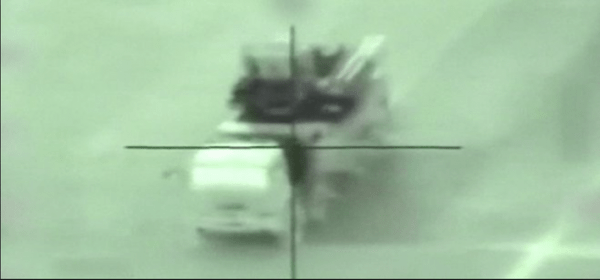
 Israeli MPs have reportedly discussed a bill that outlines the means by which Israel may help Kurds build their state in Syria, Iraq and Turkey, which would support Tel Aviv. According to one of Israel’s radio stations, the bill had been submitted to the Knesset by two Israeli right-wing parties, namely Likud and Yisrael Beiteinu. The radio quoted Yoav Kish as saying that given the Kurdish minority living in the aforementioned countries, which are generally hostile to Israel, the proposed move would play into the hands of the Israeli state.
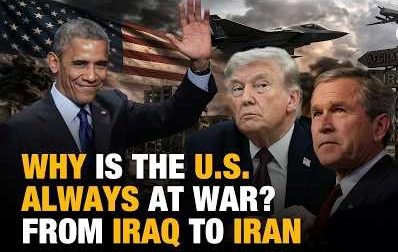
 Aletho News
 Aletho News