Massie Proposes to Make COVID Vaccine Makers Liable for Injuries, Opening Door for Thousands of Lawsuits
By Michael Nevradakis, Ph.D. | The Defender | July 16, 2025
Rep. Thomas Massie (R-Ky.) on Tuesday introduced legislation to repeal the “sweeping” liability shield that exempts COVID-19 vaccine manufacturers from responsibility for serious injuries or death caused by their products.
The liability protection amounts to “medical malpractice martial law,” Massie said in a press release.
The PREP Repeal Act (H.R.4388) would revoke the Public Readiness and Emergency Preparedness (PREP) Act of 2005, a law that provides legal immunity to “covered persons” who manufacture or administer countermeasures during a public health emergency.
“Covered persons” under the PREP Act include vaccine makers, manufacturers of masks and other personal protective equipment, and physicians, nurses and pharmacists who administer vaccines.
The Biden administration ended the COVID-19 public health emergency in May 2023. However, the public health emergency, declared in January 2020 by the U.S. Department of Health and Human Services (HHS) under the PREP Act, remains in effect.
In December 2024, HHS extended the liability protections through 2029. It was the 12th extension since 2020.
Massie’s bill would strip away these protections, repealing the PREP Act’s liability shield and restoring civil remedy rights for people harmed by products covered under the act.
“Τhe ability of citizens to seek redress for injury or harm is a fundamental principle of justice and due process,” the bill states, adding that the PREP Act’s liability shield has “undermined public trust and accountability” and “enabled regulatory capture.”
“The 2005 PREP Act prevents people from holding corporations accountable for the pain and suffering they cause during Presidentially declared emergencies. Americans deserve the right to seek justice when injured by government-mandated products. The PREP Repeal Act will restore that right,” Massie said in the press release.
In an interview today on the “Brian Thomas Morning Show,” Massie said the bill would apply to all COVID-19-related countermeasures, not just vaccines.
“If somebody made a mask that had cancer particles on it, and you inhaled those … too bad, they’re covered by the PREP Act,” Massie said. “I don’t like lawsuits, but they do keep corporations sort of in check. There’s this incentive not to harm people if you’re going to have to pay for it, if it becomes unprofitable.”
Attorney Ray Flores, senior outside counsel for Children’s Health Defense and an expert on the PREP Act, said:
“The ‘sweeping liability protections’ extend far beyond manufacturer shields to condone every conceivable medical atrocity. If Massie’s bill passes, the pandemic assembly line would be dismantled. It would be goodbye liability protections, goodbye mandates and goodbye mass-human experimentation.”
According to Flores, repeal of the PREP Act would also end other current public health emergencies, including mpox (monkeypox), pandemic influenza, anthrax and Zika.
Dr. Meryl Nass, founder of Door to Freedom, said the bill “will stop another COVID vaccine fiasco and also stop the widespread use of unproven tests such as the COVID-19 PCR tests, which were also issued under emergency use authorizations (EUA).”
Wayne Rohde, author of “The Vaccine Court: The Dark Truth of America’s Vaccine Injury Compensation Program” and “The Vaccine Court 2.0,” said the bill contains “nonspecific language” and gaps that require attention. Rohde said this includes:
“How to wind down the Act, address all of the amendments added to the Act over the last 4 years, covered persons, how to handle the covered countermeasures such as medical devices, medications, drugs and personal protective equipment, and, of course, the elephant in the room, the vaccines used and their future legal liability.”
Legislation would open the door to thousands of lawsuits previously blocked by PREP Act
Massie’s proposed legislation would apply to all current and future lawsuits challenging the PREP Act, including pending appeals.
Attorney Rick Jaffe said the proposed legislation is retroactive to March 10, 2020, “reopening the courthouse doors to thousands of injured individuals whose claims were previously blocked by PREP’s sweeping liability shield.”
The legislation would allow claimants to sue COVID-19 vaccine makers directly, Jaffe said:
“The bill, if passed, allows people injured by the COVID shots to sue, presumably, the manufacturers as well as those who administered the shots, and that would be a big and much unwanted thing from the perspective of the manufacturers and pharmacy chains which administered the shots.”
Massie told Brian Thomas he believes the PREP Act is unconstitutional, as it preempts state medical malpractice laws.
“Here’s why I call the PREP Act medical malpractice martial law,” Massie said. “It’s a federal law that says none of the state laws apply, and I think it’s a violation of the 10th Amendment. There’s nowhere in the Constitution that lets the federal government say that all state laws dealing with liability are null and void.”
Most, but not all, courts have so far sided against vaccine injury lawsuits challenging the PREP Act’s liability shield.
In March, the Maine Supreme Judicial Court upheld a lower court ruling that school medical staff who gave a COVID-19 vaccine to a minor without obtaining parental consent cannot be held liable under the PREP Act.
The Maine ruling came one week after the U.S. Supreme Court refused to review a lower court’s ruling in a similar lawsuit in Vermont. In that case, a school administered a COVID-19 vaccine to a 6-year-old boy despite his and his parents’ objections. Last year, the Vermont Supreme Court ruled that the PREP Act shielded school officials from liability.
At least two recent lawsuits challenging the PREP Act have cleared initial judicial hurdles but remain pending.
In March, the Supreme Court of North Carolina ruled that a lawsuit filed by the mother of a 14-year-old boy given a COVID-19 vaccine at school without consent can proceed. The court ruled the PREP Act does not preempt state law requiring parental consent for vaccination.
In November 2024, a federal court ruled that a lawsuit filed by a woman injured by AstraZeneca’s COVID-19 vaccine during a U.S. clinical trial can continue.
According to the complaint, AstraZeneca’s consent form for trial participants promised enrollees medical treatment in the event of illness or injury suffered during the study. The court rejected the drugmaker’s claim that a federal liability shield protects it from breach-of-contract claims.
Bill would end ‘dismal’ PREP Act vaccine injury compensation program
Massie’s proposed bill also rescinds unused federal funds earmarked for injury claims under the PREP Act.
Such claims are heard by the Countermeasures Injury Compensation Program (CICP), a government-run COVID-19 vaccine injury compensation program established under the PREP Act.
CICP has faced criticism for its slow pace of resolving claims and the limited compensation it offers.
Jaffe said:
“The PREP Act created a legal black hole where traditional tort rights and due process protections disappeared, replaced by a virtually unreviewable administrative compensation program — the CICP — that has denied nearly every COVID-related claim. In effect, Americans injured by federally endorsed products were stripped of their constitutional right to seek redress. This bill restores that right.”
According to the most recent CICP data, of the 13,836 claims related to COVID-19 countermeasures filed to date, 75 were found eligible for compensation. As of June 1, 39 of those have been compensated. The overwhelming majority of claims were denied (4,338) or are “pending review or in review” (9,423).
Dr. Joel Wallskog, an orthopedic surgeon injured by COVID-19 vaccines and co-chair of React19, an organization advocating on behalf of vaccine-injury victims, said CICP strips claimants of their constitutional rights to due process and a jury trial.
“The CICP program was intended to be the safety net for those Americans injured by the emergency countermeasures, such as the COVID-19 shots. However, the program is a dismal failure with over a 98% denial rate,” Wallskog said.
If the proposed legislation passes, Flores said, the most likely outcome would be attempting to move COVID-19 injuries into the National Vaccine Injury Compensation Program (VICP), which covers injuries from vaccines routinely administered to children and pregnant women.
However, such a move may face obstacles, including complications regarding how to handle claims pending before the CICP.
Rohde said:
“Money obligated for current operations would not be affected [but] how do you determine the monetary need for pending CICP petitions? How to handle the CICP petitions already received and what about the future claims? Do you move all the CICP vaccine petitions into the VICP? That creates all sorts of new problems.”
In May, the Centers for Disease Control and Prevention (CDC) changed its recommendations on COVID-19 vaccines for healthy children. The CDC now recommends that parents of healthy children consult their pediatricians and together make decide whether to vaccinate against the virus.
According to Flores, “Now that these injections are not on the routine recommended schedule for healthy children and pregnant women, they wouldn’t qualify” for compensation from the VICP.
‘It will probably only pass if Americans get behind it in a big way’
Massie’s proposed legislation is similar to a bill introduced last year that would allow Americans to sue the manufacturers of COVID-19 vaccines for vaccine-related adverse events, including deaths, by removing the vaccine makers’ liability shield.
The Let Injured Americans Be Legally Empowered Act, or the LIABLE Act (H.R.7551), has since languished in the U.S. House of Representatives.
Wallskog said Massie’s bill faces “an uphill battle to make it to the Congressional floor and get to a vote.”
Flores was less optimistic about the bill’s future because it would allow claimants to sue COVID-19 vaccine manufacturers directly.
“The bill, in theory, is just what we need. However, implementing it would cause utter chaos,” Flores said. “Absent a miracle, the prospects [of passage] are slim to none.”
Nass said public awareness and support are crucial for the bill’s success.
“It will probably only pass if Americans get behind it in a big way,” Nass said.
Wallskog said if the legislation is passed, it would be more far-reaching than a declaration by Health Secretary Robert F. Kennedy Jr. removing COVID-19 countermeasures from the PREP Act.
“Executive orders can simply be reversed by the next HHS secretary. Legislative change is much more powerful with more staying power,” Wallskog said.
This has not occurred to date, which Flores said is “the greatest indication of the forces that Kennedy and Rep. Massie are up against.”
Related articles in The Defender
- COVID Vaccine Makers Get Another Free Pass as Biden Administration Extends Liability Shield Through 2029
- Exclusive: Public Health Emergency in U.S. Set to Expire May 11 — But EUA Vaccines, Liability Shields Aren’t Going Away Anytime Soon
- Nearly 10,000 Claims Pending as COVID Vaccine Injury Compensation Program Faces Possible Budget Cut
- New Law Would Make COVID Vaccine Makers Liable for Injuries, Deaths
- Liability-Free COVID Vaccine Makers Seek Additional ‘Free Pass’ From FDA
This article was originally published by The Defender — Children’s Health Defense’s News & Views Website under Creative Commons license CC BY-NC-ND 4.0. Please consider subscribing to The Defender or donating to Children’s Health Defense.
30 Lawmakers Sponsor Bill to End Liability Protection for Vaccine Makers
By Brenda Baletti, Ph.D. | The Defender | September 30, 2024
A bill introduced late last week in the U.S. House of Representatives would end the liability protections Congress gave vaccine makers under the 1986 Childhood Vaccine Injury Act.
Thirty Republican lawmakers signed on as co-sponsors to House Bill 9828, End the Vaccine Carveout Act. The proposed legislation would end the broad protection from liability for injuries resulting from vaccines listed on the Centers for Disease Control and Prevention’s (CDC) Childhood Immunization Schedule.
“The … vaccine makers are criminal enterprises that have paid tens of billions in criminal penalties over the past decade,” Children’s Health Defense (CHD) founder and chairman on leave Robert F. Kennedy Jr. said in a statement on the bill.
Kennedy, who has long advocated for eliminating liability protection for vaccine manufacturers, added, “By freeing them from liability for negligence, the 1986 statute removed any incentive for these companies to make safe products. If we want safe and effective vaccines we need to end the liability shield.”
CHD, React19 and The American Family Project also supported the development of the bill, the press release said.
REACT19 founder Brianne Dressen, who experienced a debilitating COVID-19 vaccine injury as a volunteer in AstraZeneca’s clinical trial, announced the bill and its co-sponsors in a post on X, formerly Twitter.
“People harmed are long overdue for a compensation process that actually works, and it’s time for the drug companies to pick up the tab,” she said.
‘Complex sham compensation program’ in place since 1986 act
Congress passed the 1986 National Childhood Vaccine Injury Act to address the risks of vaccines — which Congress and vaccine makers acknowledged had “unavoidable” side effects.
The act set up a “no-fault” system whereby instead of suing the manufacturers, people injured by vaccines can file a claim with the National Vaccine Injury Compensation Program (VICP), which adjudicates the claims.
The VICP was meant to insulate vaccine makers from lawsuits that could bankrupt them while ensuring that injury victims had a straightforward, non-adversarial and fair path to compensation.
The program is funded by a 75-cent-per-dose tax, paid by vaccine makers, for every vaccine included in the program.
The U.S. Department of Health and Human Services administers the VICP, also known as the “vaccine court.” Court-appointed “special masters” — typically lawyers who previously represented the U.S. government — manage and decide the individual claims.
The proceedings are more informal than a typical courtroom. There is no judge or jury, and the rules of evidence, civil procedure and discovery do not apply.
In practice, getting compensation through the VICP has been notoriously difficult. Critics say the program has devolved to protect government agencies and corporations rather than the health of vaccinated children.
CHD CEO Mary Holland said the 1986 Childhood Vaccine Injury Act effectively left parents and children injured by vaccines with no substantive way to get any compensation while giving vaccine makers a free pass.
“For over 35 years, parents of children injured and killed by government-recommended vaccines have been left with no meaningful redress — only a complex, sham compensation program that pits grieving families against the government, while Big Pharma enjoys no liability,” she said.
“During that same time, chronic health conditions in children — autism, ADHD [attention-deficit/hyperactivity disorder], severe allergies, asthma — have skyrocketed,” Holland said.
In some cases, people who are dissatisfied with the outcome of their case in the VICP, or who don’t get a timely decision, can sue the manufacturer for limited causes of action, such as fraud — as is the case in many of the over 200 gardasil injury lawsuits currently being argued against Merck in federal court.
Special protections for COVID drugmakers
Vaccines administered under emergency use authorization (EUA), such as the COVID-19 mRNA vaccines, aren’t covered by the VICP.
Instead, COVID-19 vaccine makers are protected from all liability by the Public Readiness and Emergency Preparedness (PREP) Act, which grants producers of vaccines, medications and medical devices total freedom from liability for any injuries arising from “countermeasures” used to address a public health or national security threat.
The PREP Act directs such “countermeasures” to be covered by the Countermeasures Injury Compensation Program (CICP).
While the FDA fully licensed versions of the Pfizer and Moderna COVID-19 vaccines for people ages 12 and up, it’s unclear if the fully licensed formulations are being administered, or if some people are still receiving EUA formulations.
COVID-19 vaccines for infants and children ages 6 months through age 11 have not yet been fully licensed — however, they were added to the childhood schedule.
Still, all COVID-19 vaccine injuries — whether from a fully licensed or EUA formulation — remain covered only through the CICP.
However, for the tens of thousands of people injured by the COVID-19 vaccine, compensation through this program has proven nearly impossible.
To date, the CICP has paid only 16 claims for COVID-19 vaccine injuries, totaling $425,301.55. Except for one payment, all of the claims resulted in compensation of $8,962 or less.
The Pfizer and Moderna COVID-19 vaccines were fully approved by the U.S. Food and Drug Administration (FDA) for people ages 12 and up, however those vaccines continue , and added to the childhood schedule, they are still not even included in the VICP process.
During the pandemic, Pfizer and Moderna generated the largest profits in history for a drug from their COVID-19 mRNA vaccines. Pfizer made $37 billion in 2021, and slightly more in 2023 from the COVID-19 vaccine alone. Moderna generated over $18 billion in profits in 2021 and $19 billion in 2022.
The most current data from the Vaccine Adverse Event Reporting System (VAERS) show that between Dec. 14, 2020, and Aug. 30, 2024, a total of 1,602,516 total adverse events related to the COVID-19 vaccine were reported to VAERS, including 37,390 deaths. There were 311,544 serious injuries reported.
Research also shows that VAERS tends to provide an underestimation of vaccine injuries. Most people don’t report their vaccine injuries to VAERS. Research also has shown that many VAERS reports are delayed or deleted from public view for reasons that are not transparent.
Several lawsuits are currently challenging the constitutionality of the PREP Act, and others have made legal arguments that the PREP Act doesn’t apply in particular cases. However, recently many of these cases have been dismissed in state and federal courts.
Last week, after the Nevada Supreme Court dismissed a case against a man injured by remdesivir, a drug covered by the Prep Act, Kim Mack Rosenberg, general counsel for CHD, told The Defender the decision highlighted “that we need legislative action to undo the damage created by acts such as PREP and the 1986 National Childhood Vaccine Injury Act.”
What the ‘urgently needed’ legislation will do
Holland said the End the Vaccine Carveout Act is “urgently needed”:
“This legislation will help end Big Pharma’s reign over government. The corrupt public-private partnership of the 1986 National Childhood Vaccine Injury Act has suppressed science, stacked the deck against families, subverted the democratic marketplace of checks and balances, and removed citizens’ rights to a trial by jury.
“Americans deserve better.”
The bill proposes to remove the requirement for vaccine-injured people to pursue compensation in the vaccine court. Under the law, someone injured by a vaccine would be able to pursue civil action against a vaccine maker, and to seek compensation through the VICP or both.
However, once a person is awarded compensation in civil court, they will no longer be eligible for compensation through the VICP.
The 1986 law also set a short statute of limitations for seeking injury compensation to two or three years of the death or injury, respectively. However, it often takes longer than that for people to realize that a vaccine caused their injury or illness.
The proposed law would allow anyone injured since the program became effective in 1988 to file a lawsuit.
Finally, the bill would end the protection from liability for the COVID-19 vaccines, allowing people injured by the vaccine to sue the vaccine makers in court.
“COVID-19 vaccines must be redefined as vaccines and not ‘countermeasures,’ so that the PREP Act’s liability carveout can no longer apply,” according to a white paper that provided justification for the bill.
This article was originally published by The Defender — Children’s Health Defense’s News & Views Website under Creative Commons license CC BY-NC-ND 4.0. Please consider subscribing to The Defender or donating to Children’s Health Defense.
Woman Injured by AstraZeneca COVID Vaccine During Clinical Trial Sues for Breach of Contract
By Michael Nevradakis, Ph.D. | The Defender | May 14, 2024
A woman injured by the AstraZeneca vaccine she received in 2020 during a U.S. clinical trial is suing the vaccine maker in the first case of its kind challenging the legal liability shield for COVID-19 vaccine makers.
Brianne Dressen, who since 2021 has advocated on behalf of vaccine injury victims, filed suit Monday in the U.S. District Court for the District of Utah seeking compensation for injuries and disability she alleges resulted from the vaccine.
Under the Public Readiness and Emergency Preparedness Act (PREP Act), AstraZeneca and other COVID-19 vaccine manufacturers cannot be held liable for injuries related to the vaccines.
However, Dressen’s lawsuit — which also names the Salt Lake City-based clinical trial site consolidator Velocity Clinical Research — contends AstraZeneca can be sued for breach of contract.
According to the lawsuit, the company agreed to cover the medical costs for any vaccine-related injuries under a contract between AstraZeneca and clinical trial participants.
Dressen alleges that in her case, the cost of her injuries and disability amount to hundreds of thousands of dollars per year. Dressen, who was 39 when she was vaccinated, was previously a preschool teacher but is now unable to work.
Within hours of getting her first dose, Dressen experienced tingling in her right arm — a neurological condition known as paresthesia — and blurred vision and vomiting.
In the weeks that followed, her condition worsened, with the paresthesia spreading to her legs, resulting in disability and a diagnosis in 2021 by the National Institutes of Health (NIH) of post-vaccine neuropathy.
The lawsuit seeks “all available damages, both economic and non-economic.”
Attorney Michael Connett of law firm Siri & Glimstad LLP, who is representing Dressen in her lawsuit, told The Defender, “As far as we know, this is the first case in the U.S. where a pharmaceutical company is being held financially responsible for the harms caused by the COVID vaccine.”
Dressen told The Defender that her breach of contract claim “is another first for the United States, as PREP Act protections have been completely impenetrable.”
Dressen, founder of React19, a nonprofit advocating for vaccine injury victims, said she hopes the lawsuit will provide “accountability for my individual case but also bolsters a pathway forward for my injured colleagues both in the U.S. and abroad — namely, each and every plaintiff in the U.K. seeking restitution from AstraZeneca.”
Dressen cited an ongoing class-action lawsuit in the U.K. against AstraZeneca by people alleging they were injured by the AstraZeneca COVID-19 vaccine and by the relatives of 12 people who died after getting the shot.
In documents AstraZeneca submitted to the U.K. High Court last month as part of that case, the company admitted that its COVID-19 vaccine “can, in very rare cases, cause TTS” — vaccine-induced thrombosis with thrombocytopenia syndrome, which causes the body to produce life-threatening blood clots.
Dressen’s lawsuit comes just days after AstraZeneca announced the withdrawal of its COVID-19 vaccine globally — though the company said it based its decision on the “surplus of available updated vaccines,” leading to reduced demand for its vaccine.
The U.S. never granted emergency use authorization for the AstraZeneca COVID-19 vaccine, citing safety concerns.
However, the vaccine generated over $5.8 billion in sales globally, with the help of the Bill & Melinda Gates Foundation, which funded and promoted the vaccine in other countries. Several countries later stopped administering the AstraZeneca vaccine due to safety concerns.
Connett said AstraZeneca’s decision to withdraw the vaccine “really doesn’t have a bearing” on Dressen’s lawsuit.
Ray Flores, a health freedom rights attorney unconnected to the lawsuit, agreed because “the complaint is not based on product liability.”
Flores said:
“Around the country, COVID-19 vaccine injury cases that alleged negligence, battery of a minor, fraud or emotional distress have all been unsuccessful due to the PREP Act — while cases that allege negligence not involving a countermeasure have generally been successful.
What makes this case unique is that it alleges a breach of a written contract. For a court to allow liability protection here would really stretch the extent of the law. But on the other hand, it would unequivocally etch the stench of the PREP Act in Americans’ minds — but my ‘money’ in this case is on the plaintiff.”
AstraZeneca induced people to join trials by promising to pay for injuries
According to Connett, AstraZeneca induced people to join its clinical trial by promising to pay the medical expenses for any injuries that resulted from its COVID-19 vaccine.
“This inducement, this promise, became a contractual obligation the moment study subjects rolled up their sleeve and let the company inject the experimental vaccine into their arm,” he said.
Just because a company is making the COVID-19 vaccine doesn’t give that company a license “to make false promises to induce people to enter its clinical trial,” he said. “The bonanza of immunity that the PREP Act provides does not go so far as to shield a vaccine maker from its own contractual obligations.”
Flores said that if AstraZeneca “never intended to honor its promise to insure Dressen … it would not only be a breach of contract but would rise to the level of fraud.”
“When a vaccine injury lawsuit highlights a defendant’s inhumanity, it is always highly persuasive,” Flores said. “In this case, an absurd $1,243.30 settlement offer after reneging on its written promise to insure when there are evidently millions of dollars in damages and unspeakable suffering is just that.”
Connett said any other individual injured by the AstraZeneca vaccine “has the legal right to recover the full costs of the injury,” but advised that “The time to take legal action, however, may be limited, so acting expeditiously will be important.”
‘Completely hollowed-out version of who I once was’
The lawsuit described the timeline of Dressen’s symptoms following vaccination, with paresthesia spreading to her right shoulder and left arm and later to her legs. Within weeks, she lost 20 pounds as a result of frequent vomiting, while she also developed light sensitivity and became “acutely sensitive to sound.”
Dressen said her heart rate also would randomly spike, leading to shortness of breath and feelings of fainting. She described her experience in the lawsuit as feeling like a “completely hollowed-out version of who I once was.”
Before her Nov. 4, 2020, vaccination, Dressen filled out consent forms stating the company would “cover the costs” — including, but not limited to, medical bills — if she experienced a “research injury.”
Those forms, Dressen said, claimed the study doctor would provide treatment or referral in the event of injury, noting that the study sponsor had the necessary insurance.
“Sponsor will pay the costs of medical treatment for research injuries, provided that the costs are reasonable, and you did not cause the injury yourself,” the contract stated, according to the lawsuit.
The lawsuit notes that two days after Dressen signed the consent form, AstraZeneca amended the form to state that its vaccine may cause “neurological disorders” such as “demyelinating disease,” which could “cause substantial disability” or death “if not treated promptly.”
Dressen received multiple diagnoses indicating her symptoms were related to her vaccination. Her husband eventually reached out to the NIH, which invited her to visit its Bethesda, Maryland, campus “for extensive testing and treatment,” as part of a study the agency was conducting at the time involving people injured by COVID-19 vaccines.
As a result of those tests, NIH neurologists concluded that Dressen had sustained post-vaccine neuropathy, which had caused “dysautonomia” and “chronic inflammatory demyelinating polyneuropathy.”
“The limited safety data that AstraZeneca has released to the public shows that other clinical trial participants who received the company’s COVID vaccine suffered a higher incidence of nervous system disorders, including various types of demyelinating diseases, where the myelin sheaths that protect the nerve cells are stripped away,” Connett said.
AstraZeneca ‘were nowhere to be found’
According to the lawsuit, Dressen’s medical costs are prohibitive. One medication alone costs $432,000 a year, “although her insurance company has been able to negotiate this down (at least for now) to $119,000 per year,” she said.
But despite these high costs and Dressen’s ongoing disability, which makes her “unable to drive more than a few blocks at a time” and limits her parenting ability, the lawsuit states that AstraZeneca offered her only $1,243.30 in total compensation.
“When they needed me, I was there, I cooperated. When I needed them, they were nowhere to be found,” Dressen said in the lawsuit. “I called the test clinic early on with tears running down my face, begging them to help me. They said the drug company would call back any day now. Nightmarish days turned into weeks, and those nightmarish weeks turned into months, and now years. That call never came.”
In July 2021, Dressen’s injuries led her to contact Dr. Anthony Fauci directly to request help, according to documents recently obtained by Children’s Health Defense in a lawsuit against the NIH.
In that email, Dressen said she had been contacting federal health agencies for months with “No substantiative [sic] response.”
Dressen said Fauci never responded to her message.
Calling her lawsuit a “David v. Goliath type case,” Dressen told The Defender her “heart has and always will be with the injured community.” She said, “Every single American injured by a pharmaceutical product deserves their day in court.”
This article was originally published by The Defender — Children’s Health Defense’s News & Views Website under Creative Commons license CC BY-NC-ND 4.0. Please consider subscribing to The Defender or donating to Children’s Health Defense.
Family of 24-Year-Old Who Died From COVID Vaccine Sues DOD in ‘Groundbreaking Case’
By Brenda Baletti, Ph.D. | The Defender | May 31, 2023
The family of a 24-year-old man who died from complications of COVID-19 vaccine-induced myocarditis today filed a lawsuit against the U.S. Department of Defense (DOD), which oversaw the development and distribution of the drug under Operation Warp Speed.
Ray Flores, the attorney representing the estate of George Watts Jr. filed the lawsuit in the U.S. District Court for the District of Columbia against the DOD and Lloyd Austin III in his official capacity as defense secretary.
The lawsuit alleges the DOD engaged in “willful misconduct” by continuing to exclusively allow distribution of the stockpiled version of the Pfizer-BioNTech vaccine that had been authorized for emergency use even after the U.S. Food and Drug Administration (FDA) granted full approval to a different vaccine, Comirnaty.
According to the complaint, the DOD “capitalized on a quintessential ‘bait and switch’ fraud,” using the fact that Comirnaty was FDA-approved to bolster its claims that the vaccine authorized for emergency use was “safe and effective,” in a move that intentionally misled millions of Americans.
The DOD did this despite being fully aware that drugs granted Emergency Use Authorization (EUA) cannot legally be marketed as “safe and effective” because the FDA standard for EUA is only that drugs “may be effective.”
That means the DOD intentionally, without justification and with disregard for the risks, misrepresented an experimental vaccine as “safe and effective” when it could not legally use that terminology, the lawsuit states.
As a result, the lawsuit alleges, George Watts Jr. was misled into taking the investigational vaccine and he died as a result.
Attorney Michael Baum told The Defender in an email:
“This groundbreaking case filed by George Watts Jr.’s surviving family may provide a path for other Covid vaccine-injured individuals to seek recovery for their injuries.
“The Watts family’s complaint shines a light on the willful steps the Department of Defense took that led to Mr. Watts’ Pfizer-vaccine-induced death from myocarditis. Most people are unaware of the Department of Defense’s directing the development and distribution of the Pfizer-BioNTech Covid vaccine …
“The DOD’s actions led to Mr. Watts’ improper injection with the unapproved vaccine. The Watts family’s case provides an opportunity for a wider public awareness of how the Covid vaccine sausage got made under DOD’s irresponsible guidance and the tragic results of that conduct for Mr. Watts and unfortunately much of the American public.”
Children’s Health Defense (CHD) is funding the lawsuit.
Watts waited for a vaccine he thought was ‘safe and effective’
Watts was a student at Corning Community College in Corning, New York, when in the summer of 2021, the school mandated the COVID-19 vaccine for all students attending fall classes. The mandate was part of the mandate at the State University of New York (SUNY), a network of 64 colleges and universities.
Watts waited to get vaccinated until the FDA “approved” the Pfizer Comirnaty vaccine and got his first dose at Guthrie Robert Packer Hospital in Pennsylvania on Aug. 27, 2021. He was administered the EUA Pfizer BioNTech COVID-19 vaccine.
The FDA approved the Pfizer Comirnaty vaccine on Aug. 23, 2021, but the DOD didn’t make it available.
Despite experiencing side effects from the first dose, Watts understood the vaccine to be “safe and effective,” so he took a second dose at the same location on Sept. 17, 2021.
Following the second dose, Watts experienced more severe side effects, including numbness in his extremities, difficulty grasping and holding objects, a sinus infection, cough and sensitivity to light. He visited the ER at the Guthrie hospital on Oct. 12, 2021, also complaining of a lump on the left side of his neck.
The hospital diagnosed him with sinusitis and prescribed an antibiotic. Watts returned to the ER on October 19, 2021, concerned that he was not improving.
After that, his health continued to decline.
On Oct. 27, 2021, at home with his mother, Watts began coughing up blood and then became unresponsive. His mother called 911 and administered CPR.
Watts was taken to the ER where he was found to be in cardiac arrest and subsequently died. He had no previous medical history that could explain his sudden death. Watts also tested negative for COVID-19 in a post-mortem test.
The medical examiner ruled his cause of death to be “complications of COVID-19 vaccine-related myocarditis.” His death certificate also listed COVID-19 vaccine-related myocarditis as the sole immediate cause of death.
An independent physician, Dr. Sanjay Verma, also attested the vaccine was the proximate cause of death as alleged in the complaint.
PREP Act protects vaccine producers, not vaccine-injured people
Watts’ family first sought compensation for his death under the Health Resources & Services Administration’s Countermeasures Injury Compensation Program (CICP).
The CICP was established under the Public Readiness and Emergency Preparedness (PREP) Act, which protects “covered persons” — such as pharmaceutical companies, or the DOD in this case — from liability for injuries sustained from “countermeasures,” such as vaccines and medications, administered during a public health emergency.
The only exception to PREP Act immunity is if a countermeasure-related injury is caused by “willful misconduct” by a covered person or entity.
Since the start of the pandemic, people claiming injuries related to COVID-19 vaccines and other countermeasures submitted 11,686 requests for compensation.
Of those, only 23 have been declared eligible for compensation. Most of those are undergoing a “medical benefits review” to determine payment. Since last month, when the CICP started making payments to COVID-19 vaccine-injured people, it has made four payments — amounting to a total of $8,592.52. Three of the claims were for myocarditis.
Watts’ family filed a request for benefits with the CICP in August 2022. They received no determination from the CICP within the 240-day period in which the CICP is supposed to respond to complaints.
As a result, to seek compensation for the loss of Watts’ life, his family is suing the DOD.
The DOD, Operation Warp Speed and the COVID vaccines
In January 2020, then-Health Secretary Alex M. Azar of the U.S. Department of Health and Human Services declared a public health emergency for COVID-19.
The emergency declaration allowed the health secretary to make a PREP Act declaration so the FDA could issue an EUA for an unapproved vaccine or other “countermeasure” to address the emergency if the following emergency circumstances exist:
“(1) the existence of a serious or life-threatening disease; (2) a product ‘may be effective’ in treating or preventing it; (3) there is ‘no adequate, approved, and available alternative to the product for diagnosing, preventing or treating such disease or condition;’ (4) a risk-benefit analysis that measures both the known and potential benefits of the product against the known and potential risks of the product is positive; and (5) that the patient’s option to accept or decline the product is protected through informed consent.”
On May 15, 2020, the Trump White House announced Operation Warp Speed — a partnership between the White House and the DOD to accelerate the development, production and distribution of a COVID-19 vaccine.
Two months later, the DOD signed a contract with Pfizer to manufacture hundreds of millions of doses of its mRNA COVID-19 vaccine, guaranteeing that any vaccine produced under the contract would be protected under the PREP Act and therefore not subject to liability.
The FDA issued an EUA for the Pfizer-BioNTech COVID-19 vaccine on Dec. 11, 2020, and Army Gen. Gustave F. Perna, Operation Warp Speed chief operating officer, announced the vaccine would be rapidly distributed across the country.
Drugs fully approved by the FDA must be found to be “safe, pure, and potent,” but EUA drugs are held to a lower standard — they are required only to demonstrate that they “may be effective,” according to the FDA.
But Perna and his boss, Austin III, conveyed the message that the EUA vaccines were “safe and effective,” and urged the healthcare community to do the same, in order to “counter widespread misinformation” about the vaccines, the lawsuit alleges.
After the FDA approved the Comirnaty vaccine, the DOD did not initiate its production and distribution but instead continued to distribute existing Pfizer EUA products.
As a result, although Watts waited for the COVID-19 vaccine to be FDA-approved, he still received a version of the vaccine that had not been FDA-approved as “safe and effective.”
According to the lawsuit, the DOD blurred the line between the two legally distinct vaccines, promoting the idea that the COVID-19 vaccine was FDA-approved and therefore “safe and effective” — while administering the vaccine that was only “authorized,” and therefore not legally allowed to be described as “safe.”
The DOD knowingly blurred this line, the lawsuit alleges, because it had already been found liable for violating informed consent and of imposing an experimental vaccine. In the 2004 case of Doe v. Rumsfeld, et al., a federal court ruled the DOD could not mandate the EUA anthrax vaccine for service members because forcing them to take an experimental vaccine violated their right to informed consent.
That ruling stated that absent informed consent or a presidential waiver, “The United States cannot demand that members of the armed forces also serve as guinea pigs for experimental drugs.”
The current lawsuit further alleges that the DOD knowingly deceived Watts and other Americans for the purpose of mass human experimentation, which violates protections provided by the Nuremberg Code.
According to the complaint, the DOD committed “willful misconduct,” having “deliberately misled Mr. Watts and the public at large by blurring the critical distinction between EUA and fully licensed vaccines,” which would nullify the protections afforded the DOD under the PREP Act.
It concludes that Watts died because he believed he was receiving safe and effective vaccines, but in fact “received the deadly ones.”
The lawsuit seeks “general, special, compensatory and punitive damages.”
Commenting on the significance of the case, Kim Mack Rosenberg, acting outside general counsel for CHD, told The Defender :
“The PREP Act purports to provide an extraordinary liability shield to the government, manufacturers, distributors, and others, related to COVID-19 vaccines and other so-called countermeasures covered by the act. The Watts complaint is an important and unprecedented challenge to that liability shield.
“The complaint threads the act’s needle by pointing the finger squarely at Operation Warp Speed leadership while raising critical legal challenges to the act’s protection, particularly where, as is alleged in the Watts complaint, a defendant like the Department of Defense has engaged in willful misconduct.
“But the complaint does more than that. It will educate about the PREP Act’s far reach, actions by the DOD during the ‘state of emergency,’ and the general lack of accountability for entities and individuals protected by the PREP Act.
“The public needs to understand that this act intentionally allows potentially bad actors to go unpunished. Here, a young man lost his life, and the government has remained silent, hiding behind a legal shield.
“That is not justice for George Watts or anyone else.”
Brenda Baletti Ph.D. is a reporter for The Defender. She wrote and taught about capitalism and politics for 10 years in the writing program at Duke University. She holds a Ph.D. in human geography from the University of North Carolina at Chapel Hill and a master’s from the University of Texas at Austin.
This article was originally published by The Defender — Children’s Health Defense’s News & Views Website under Creative Commons license CC BY-NC-ND 4.0. Please consider subscribing to The Defender or donating to Children’s Health Defense.
Nobody Knows What is in the Vials
Covid-19 injections are dangerous, non-compliant biological materials. Their production must be stopped until a full investigation can be done.
By Sasha Latypova | Due Diligence and Art | December 22, 2022
Many of us are familiar with the following conundrum: on one hand, highly credentialed scientists and doctors have written numerous research papers explaining the dangerous mechanisms of action underlying mRNA/DNA “platform” technologies. The papers are meticulously researched and depict, correctly in my opinion, many terrifying consequences of the technology that breaches the innate protective mechanisms of human cells. Furthermore, these theoretical papers are validated by the observed outcomes, such as for example, increases in all-cause mortality in high correlation with increases in rates of vaccination in a given territory, unprecedented increases in the adverse events and deaths recorded by various passive reporting (https://openvaers.com/), astonishingly high reports of the adverse events and deaths from the pharmas’ own pharmacovigilance systems, and autopsy findings in vaccinated post-mortem showing the mechanisms of mRNA technology damage in histopathologic evaluations. On the other hand, many who have received the injections report no adverse effects and deem the data points above a “crazy conspiracy”. The question from the uninjured seems to be – why don’t we see MORE deaths if what you say about mRNA products is true? Setting aside ethical limitations of this question, here is a possible answer why:
The mRNA shots do not conform to their label specifications. In practice both “blank” and “lethal” vials and anything in between is produced. Without full compliance, nobody, not even the manufacturers or regulators, know exactly what ends up being produced.
Vials of mRNA injections are not routinely tested by the manufacturers for conformity to the label. The only vial-level tests specified by Pfizer in leaked Chemistry Manufacturing and Controls (CMC) documents are the vial weight at filling, manual inspection for large visible particles, and some tests related to integrity such as vial capping. However, no vial or dose, i.e., “unit-level as dispensed” tests verifying the ingredients are described as routine. How is the public assured that each Pfizer dose contains 30 mcg of mRNA as stated on the label? What level of variability of this key ingredient and other ingredients is acceptable? The ingredient conformity tests described in Pfizer CMC package are based on the bulk product batch testing – an upstream manufacturing process step. It is a regulatory requirement to retain samples of each batch produced, and these samples of vials should exist and be available for examination. Per contracts with the US Government, the product is shipped to the DOD who retains the ownership of the vials until the product is injected into people. These contracts are very detailed and specify manufacturing data to be delivered to the DOD, however, I did not find any descriptions of sampling of the vials for purposes of verification of their contents vs the label. Furthermore, it is expressly forbidden by the international vaccine supply contracts to perform the vial tests for label conformity.
Despite the disturbing prohibition of the independent vial testing, covert random testing of the mRNA vials has been ongoing worldwide. Reported thousands of vials have been obtained and tested by dozens of research groups working independently of each other. The quality of these studies varies and depends on the conditions of the samples acquired, access to the lab equipment and the experience of the investigators. However, the consistent finding among all is that there is yet a single vial to be found in full conformance to the manufacturer’s label. A review of these independent testing efforts has been published recently. Another high-quality report summarizes experiences testing vials from various manufacturers in Germany. These studies use different techniques ranging from optical to electron microscopy, spectroscopy, as well as isolation of genetic and protein components and in some cases sequencing of the RNA.
Some vials contain RNA as well as high concentrations of DNA and protein impurities in quantities far exceeding allowed limits specified by the manufacturer. When RNA was sequenced, the sequences did not fully match the specified BNT162b2 sequence, and a large quantity of RNA fragments was found. In other instances, vials are found apparently without RNA or DNA in them (evidently absent nitrogen and phosphorus).
These results could depend on the methods used and more thorough testing may be needed. Nevertheless, I was able to confirm that the apparent “blank” vials from at least one researcher came from batches of Pfizer and Moderna that had almost no adverse events reports in VAERS: two batch numbers had 1 report each and one batch number had no reports. This should be contrasted with some batch numbers of Pfizer and Moderna associated with 5000+ adverse event reports in VAERS, and an average of ~1500 adverse event reports including ~700 serious reports and deaths across all CDC verified batch numbers.
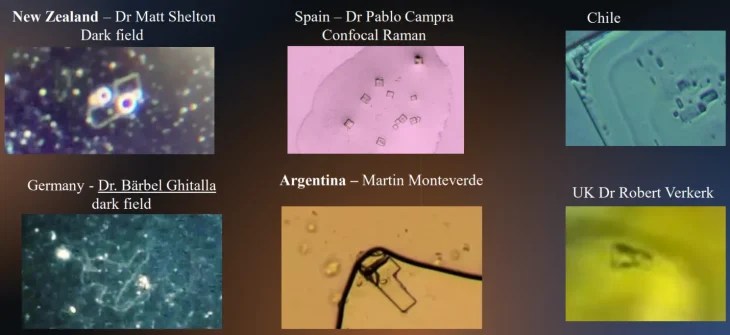
Almost all vials examined contain high contamination levels of various metals that are toxic to human body. This finding is consistent across all groups and methodologies, and therefore should be deemed more conclusive. There is no explanation of the origin or purpose of these materials according to the known manufacturing processes. Additional findings include various forms of carbon, including, potentially graphene oxide which is a known toxin. Finally, almost all vials examined contain a variety nano- and micro-particulate contaminants – another conclusive finding with plenty of photo and video documentation. These appear under microscope examinations as shapes and structures of various sizes and include characteristic ribbons, fibers, and crystals. Several published reports by qualified and credentialed microscopy experts have excluded the possibility of environmental dirt on the microscope slides. Sometimes a process of movement and what can be described as “self-assembly” is visible and has been documented in a single take video. The researchers also take steps to maintain the chain of custody, examine unexpired product and keep the vials frozen per manufacturer’s instructions.
Below are some representative images from various manufacturers’ injection vials from many studies:

Dr. David Nixon – Australia, Pfizer
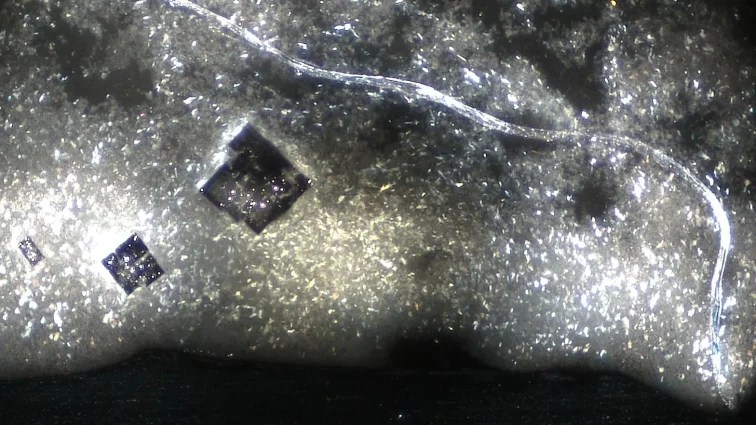
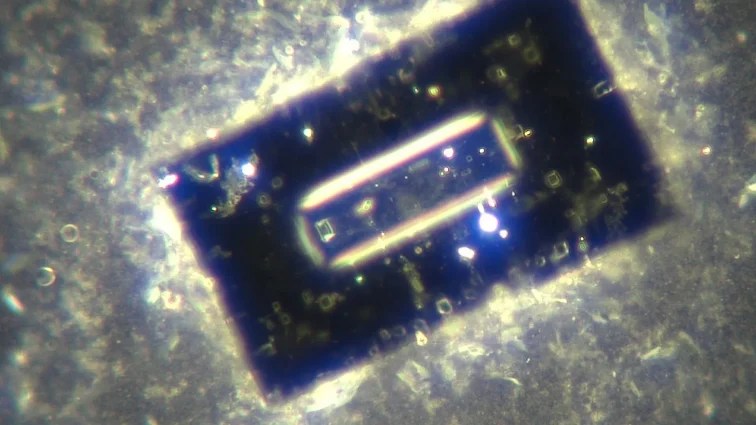
Another Dr. from Australia, Pfizer:
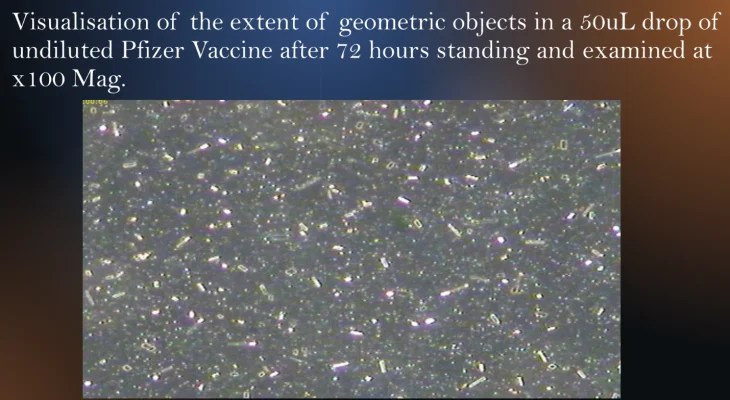
The images above are startling and remain unexplained to date. Some scientists insist these are all “salt and cholesterol”, and nothing to see here folks! I disagree. Images of salt and cholesterol under microscope may match some of these structures, but by far do not explain all of them, and seem especially poor explanations for assembly-disassembly processes that have been observed and video recorded. Sizes of these structures alone are problematic. Dismissing them as “manufacturing junk” is not a great way to instill confidence in anyone.
These contaminants and bizarre objects are not rare, in fact as the last image shows, at least some of the vials are teeming with them. While many speculations can be made, one overwhelming conclusion from all the vial tests by independent investigations is that the products are extremely “dirty”, do not conform to their labels and should thus be deemed adulterated. This is a clear indicator that the manufacture of these products is not compliant with the current Good Manufacturing Practices (cGMP).
Sloppy manufacturing process may result from numerous factors, including lack of accountability, negligence, incompetence and possibly fraud. Review of the contracts with the manufacturers made by the U.S. Department of Defense, BARDA and HHS shows that the main driver were the gigantic sums of money made available with no real accountability for quality or safety – all resulting from the forced extreme speed (“warp speed”) of the scale up of manufacturing. The U.S. DOD contracted Pfizer in May of 2020 for production of at least 100 million doses by October 31, 2020, and up to 500 million doses later. Pfizer’s initial contract award was for $10 billion, with many additional incentives for delivering more doses faster. Similar contracts were made with numerous other “vaccine” manufacturers, and hundreds of other suppliers, all under the guise of panic buying for covid countermeasures. No real accountability for product quality or consistency or safety was built into those contracts, in fact the manufacturers were explicitly exempt from all possible liability under the PREP Act, which is specified in a separate contract clause. The purchaser is the DOD, the distributor is the DOD (and not the licensed and accountable pharmaceutical distributors), and furthermore, the product is not serialized and hence open to both adulteration and falsification or mislabeling.
To meet the contract obligations, Pfizer’s manufacturing batch size has increased from microgram scale for lab and animal study volumes to commercial batches of ~140 liters at the end of 2020 and ~300 liters by late 2021. In my experience commercializing biotechnologies from academia, failure to scale is one of the leading causes of failures of all new technology ventures. Showering this problem with money rarely accelerates the solution, and very often accelerates the demise of the whole venture. This is common sense. For example, placing an order today for 1,000,000 of a new type of vehicles with Ford Motor Company to be delivered in 6 months will likely fail no matter the dollars spent, since even obtaining the raw materials in time will be problematic. Complex manufacturing requires materials, systems, capacity, experienced staff, established processes, suppliers, and most importantly control systems at the correct scale to be successful and produce high quality consistent product. Now imagine simultaneously asking several direct competitors – Ford, GM and Toyota to produce 1,000,000 new cars each in the next 6 months.
Based on review of available literature on mRNA manufacturing and my discussions with experts who have made mRNA in the lab, it is not clear that mRNA can be manufactured at the scale that is estimated for these injections from known shipment numbers and disclosed manufacturing documentation: 200-300 liters of drug product per average batch, 700+ batches a year in the US alone. This is particularly unlikely if strict cGMP rules are applied to the manufacturing requirements, and we know that cGMP is not followed for production of these injections. Recently FDA found Catalent non-cGMP compliant. Catalent handles large volumes of fill-finish for Moderna, therefore batches processed through Catalent are non-cGMP compliant.
The generation of mRNA by in-vitro transcription (IVT) at large scale and under current good manufacturing practice conditions is challenging. For example, the specialized components of the in-vitro transcription IVT reaction must be acquired from certified suppliers that guarantee that all the material is animal component-free and GMP-grade. Furthermore, the availability of large amounts of these materials is limited and purchasing costs are high. This is true, for example, in the case of the enzymes used for translation and capping. Even the glass vials themselves were reported as a shortage. Additionally, the low yields and batch failure are a known problem. Conceptual process flow of making mRNA drug substance contains several steps:

The process is composed of a 2-step enzymatic reaction in continuous form, followed by enzyme recycling using tangential flow filtration strategies and two multimodal chromatography steps, one in bind-elute mode for the intermediate purification, and a second in flowthrough mode for polishing. Formulation is achieved using a third tangential flow filtration module. This means the mRNA needs to be made by chemical reaction, and then purified, and then capped and purified again. There are many variations of this process, and no standards exist. At the “formulation” step (last box in the picture), there are further multiple steps to create lipid nanoparticles, and get the mRNA encapsulated. Further, there are fill and finish steps that likewise are not problem free and decrease the yield. Finally, transportation and manual dose preparation add an extra variability layer.
Here is a simple heuristic to understand any manufacturing process flow and not get confused by the jargon: each arrow in the flowchart points to places where errors accumulate Each output-input point in a complex manufacturing flow is where the errors can be checked for and rectified or, if unsolved, will amplify and destroy the product quality and consistency. This is especially dangerous at the extreme speed and scale.
In science papers mRNA manufacturing is described with problem-free cartoons, it all works beautifully regardless of whether it is microgram or kilogram output, and not a single paper on this topic dwells much on low yields or process failures. This is because the academia never has to confront reality. However, the pesky reality of manufacturing mRNA (or anything else) at large scale is highly error prone. Each step has a yield of anywhere between 50% and 80%, and sometimes the whole batch fails, and that is especially true at the large scale of production. mRNA reaction fidelity is less than 100%, the caps and tails fall off, mRNA breaks into fragments, lipid nanoparticles do not form perfectly and PEGylation can be inhomogeneous leading to their breakage and subsequent escape and breakage of mRNA. Large mRNA breaks into smaller fragments, and these remain in the substance. At large scale of reaction, the enzymatic process for making mRNA was reported seizing at 37.5 liters of mRNA substance (before encapsulation into LNP and making drug product) according to the European Medicines Agency (EMA) documents. It is not clear how this was resolved and transitioned to 100’s of liters scale in a matter of few months, and for all suppliers. mRNA fragments were deemed process related impurities by the EMA who raised a significant concern, but they were dismissed by the FDA as a “theoretical problem” – as leaked emails from EMA have shown. mRNA “fragments” may or may not code for proteins, however micro-RNAs (miRNA) can interfere with endogenous cellular processes to detrimental health effects which is described in many scientific papers and even in a textbook on biological weapons published by the NIH in 2018. Chapter 6 of the book describes gene therapy as a class of biological weapons. Coincidentally, the DOD-pharma contracts for covid-19 shots also explicitly state that the product is being developed for both civilian and military applications.
Returning to mRNA manufacturing, multiplying even an optimistic 80% yield by, for example, 7 process steps results in 20% final yield, and if the in-process failures are larger, final yield is single digit percentage or a failure has occurred. Each step generates large amounts of impurities, which are never fully removed as aggressive purification will break the fragile product. Furthermore, the mRNA substance is never equally distributed in the batch volume as thorough mixing of the product is not possible due to its fragility, and lipids tend to float to the top of the vat as well as stick and congregate together. Dangerous possibly cytotoxic aggregates of broken LNPs and mRNA (mRNA adducts) can result and were reported by Moderna a full year after large scale deployment of their product. As a result, the larger the volume of the batch, the more inhomogeneity at the vial level. These conditions can create over-concentrated, toxic vials and the ones that could be “blanks”, or anything in between. The larger the batch volume the more duds it will produce, which in case of this product is largely good news for the injectees. Avoidance of specifying any product conformity tests at the vial level by the manufacturers seems to be intentional in this context.
Data from Pfizer’s own CMC documentation submitted to EMA at the end of November 2020 shows “failure to scale” beginning at approximately 25% of the current commercial scale of the batch (current scale = 600,000 vials = 3-4 million doses per batch). The graphs below were generated using exact sizes in vials and doses for each Pfizer batch manufactured between August and November 2020 (Figure 1) and all Pfizer shipped doses in the US up to end of April 2022 (Figure 2). I used reported deaths and adverse events in VAERS database associated with those batches as a measure of batch variability. This does not address vial variability but provides directional information especially for the scale of manufacturing. The batches in Figure 1 were the first ones to ship commercially and were likely all used close to 100% since at that time the demand for these injections was insatiable. As the “scale-up” of manufacturing proceeded in 2020, the batches were manufactured in a variety of sizes from 50,000 and up to 300,000 vials (~140 liters of drug product). During this time, several major changes were made to the manufacturing, for example, transition from the pilot facility at Polymun Scientific to Pfizer’s own plants and changing major manufacturing steps to new processes.
Figure 1.
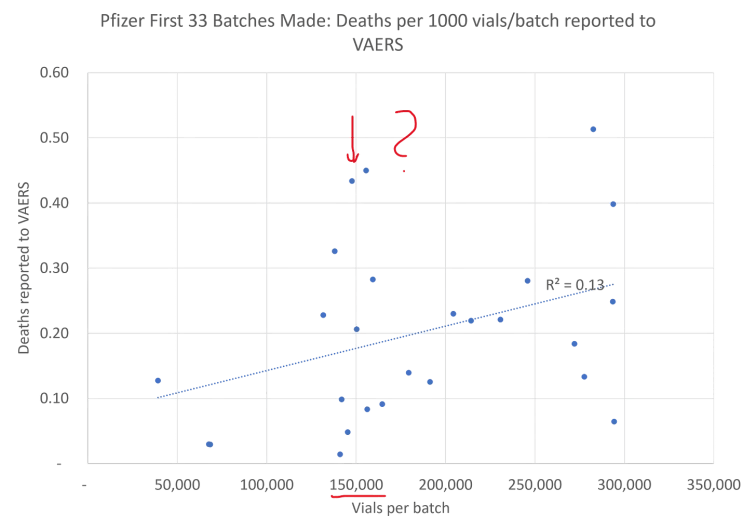
First, the overall data indicate a statistical trend toward increased number of reported deaths with the increase in the batch size – the more this product is used, the more deaths are reported. This is not news for anyone who has been paying attention to the injection related adverse events and deaths. However, the variability batch-to-batch demonstrated by the vertical dispersion of the death reports associated with batches of the same size is already apparent at approximately 150,000 vial batch size (25% of the full commercial scale). Batches of the same size are 4-5 times different from each other in the number of reported deaths.
The “failure to scale” story gets larger at scale, no pun. Recently, the exact sizes of Pfizer lots shipped in the United States became known via a FOIA data release, including all doses with associated lot numbers shipped as of end of April 2022 to various vaccination centers. Figure 2 is the plot of all batches from Pfizer, by their reported size in doses on the x-axis and serious adverse events including deaths reported for those lot numbers on the y-axis. Data from VAERS was downloaded on September 24, 2022.
Figure 2.
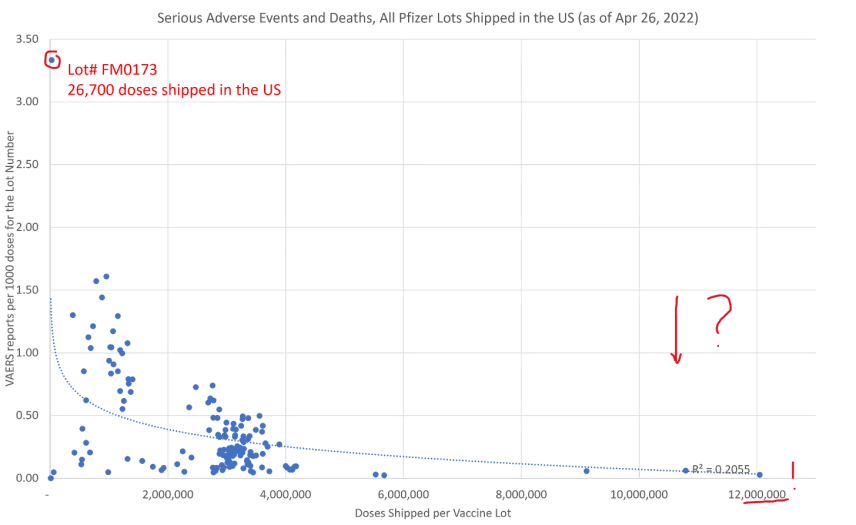
This graph includes the “early” scale up batches from Figure 1, as well as what appears smaller shipments possibly for batches that were largely distributed overseas. What is immediately apparent from the data – the staggering inconsistency of the product batch-to-batch and the rapid decline of apparent toxicity measured by the adverse events with increase in batch size. The latter trend is the opposite of what was observed with the early batches. The product is causing fewer adverse events per dose when there are more doses available. This does not make sense, except if these doses are simply sitting on the shelves. Of note is batch FM0173 (only 26,700 doses shipped in the US) that generated the highest rate of serious adverse events (3.3/1000 doses), upper left dot.
The scale of manufacturing strains the credulity. A batch of 12 million doses translates to approximately 900+ liters of mRNA! Given the manufacturing steps involved, impurities generates and the amount of raw materials, and the scale of manufacturing equipment and disposables needed, it should be questioned whether this truly was a single production run.
Figure 3 is the same data as in Figure 2, with outlier batches removed for clarity (includes batch sizes from 100K to 4M doses):
Figure 3:
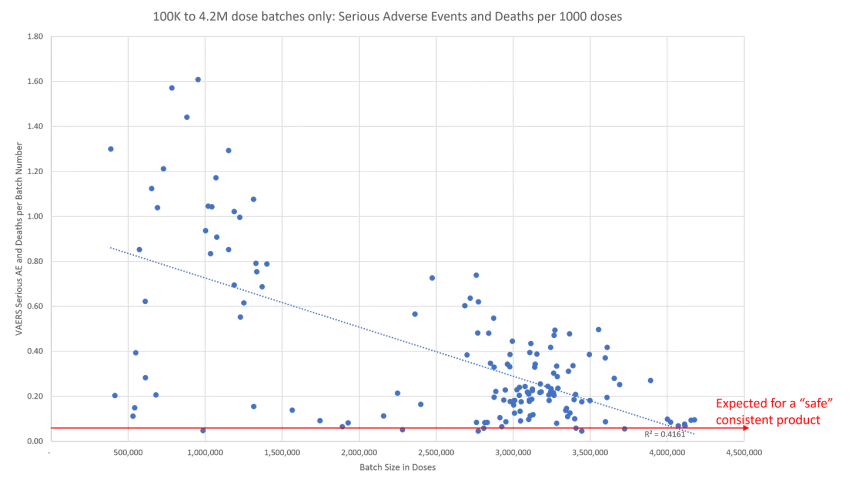
It is evident that the variability batch-to-batch is highly significant and remains unexplained. It is also strangely declining as the size of the batch is becoming larger. The only reasonable explanation to this is that the usage of this product per batch has plummeted. Most of what is produced later in the time period is sitting on the shelves. At the end of the time period in this graph (end of April 2022), an estimated 100M doses were manufactured but not administered in the United States. At the beginning of this graph, nearly all manufactured doses were administered. That is the only reasonable explanation – and it proves that these injections cause the injuries and deaths reported to VAERS!
Table below lists all batches >4 million doses, including their date of manufacture and the number of serious adverse events and deaths reported for them in VAERS:
Table 1:
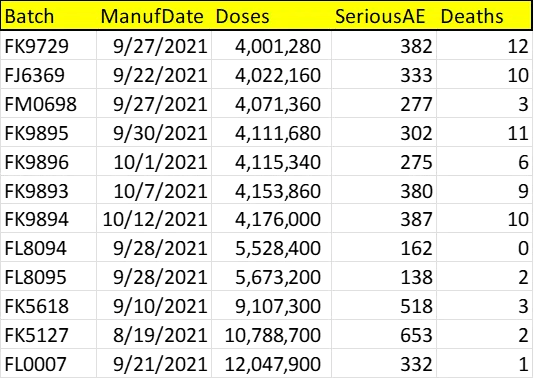
The “mega” batches are not entirely benign. They are simply a larger lottery pool. The single death reported for batch FL0007 is for an 8-year-old girl who died in Texas from a multi-system organ failure (VAERS ID 2327226-1) – see Figure 4. While the first batch listed in her report RL0007 appears to be a typo (RL series do not exist for Pfizer), it is evident that she received both doses from the same FL0007 batch and passed away 3 months later.
Figure 4:
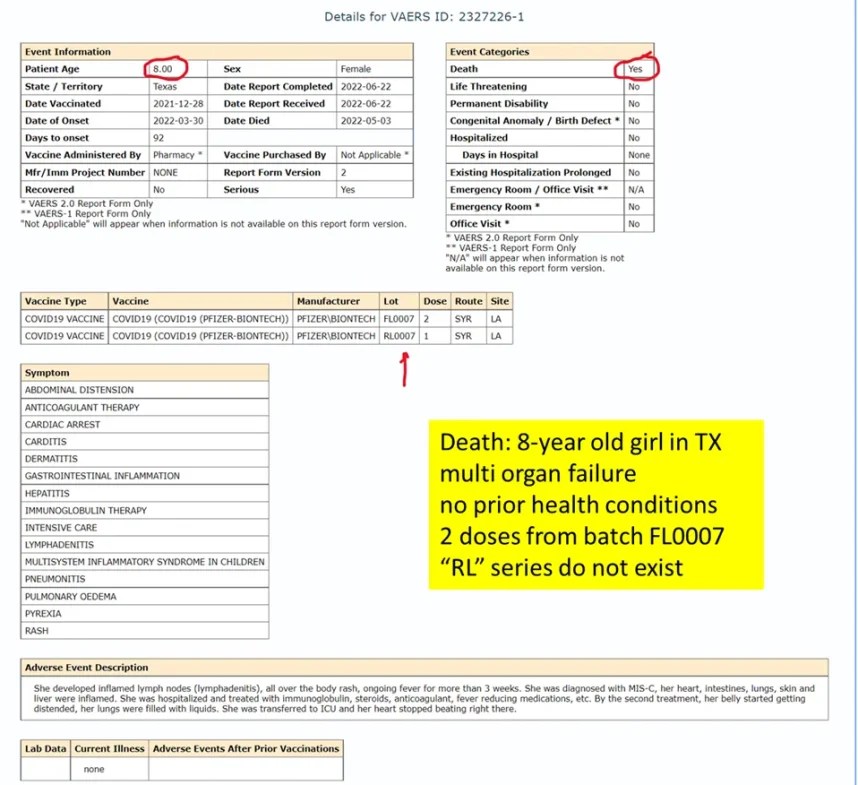
Here is my educated guess on what is going on with the batch variability: Pfizer’s (and other manufacturers’) contracts were for delivery of DOSES. Millions of them and fast. Contract scope is simply a “demonstration of large-scale manufacturing” and billion-dollar bonuses attached for shipping millions of doses by certain dates. No accountability, no checks, no liability, just ship the doses on time! The batches of 5 million+ doses should be questioned in this context. These appear largely benign from the adverse event perspective but, since the demand for these shots has plummeted coinciding with production of mega-batches, it is hard to say what the real driver of “safety” is – over-dilution of the product or refusal of the customers to be injected. I hope it is the latter.
Here is as close as I can get to answering the question “why aren’t MORE people dying?”: Too many people have died and have been injured by these injections, and plenty more will ultimately have their lives cut short. The manufacturers are making both – lethal shots and highly diluted “blanks” in a sloppy, uncontrolled, unaccountable, and ultimately fraudulent manner.
To know the truth, these products must be tested at the vial and dose levels, in a random sampling by independent 3rd party laboratories. In the meantime, the products must be recalled, and a proper investigation initiated.
Featured Video

Marandi: US attacked world’s largest gas field & Iran declares economic war
or go to
Aletho News Archives – Video-Images
From the Archives
Why the UK, the EU and the US Gang-Up on Russia
By James Petras :: 03.20.2018
Introduction: For the greater part of a decade the US, the UK and the EU have been carrying out a campaign to undermine and overthrow the Russia government and in particular to oust President Putin. Fundamental issues are at stake including the real possibility of a nuclear war.
The most recent western propaganda campaign and one of the most virulent is the charge launched by the UK regime of Prime Minister Theresa May. The Brits have claimed that Russian secret agents conspired to poison a former Russian double-agent and his daughter in England, threatening the sovereignty and safety of the British people. No evidence has ever been presented. Instead the UK expelled Russian diplomats and demands harsher sanctions, to increase tensions. The UK and its US and EU patrons are moving toward a break in relations and a military build-up.
A number of fundamental questions arise regarding the origins and growing intensity of this anti-Russian animus.
Why do the Western regimes now feel Russia is a greater threat then in the past? Do they believe Russia is more vulnerable to Western threats or attacks? Why do the Western military leaders seek to undermine Russia’s defenses? Do the US economic elites believe it is possible to provoke an economic crisis and the demise of President Putin’s government? What is the strategic goal of Western policymakers? Why has the UK regime taken the lead in the anti-Russian crusade via the fake toxin accusations at this time?
This paper is directed at providing key elements to address these questions. … continue
Blog Roll
 Aletho News
- IRAN: The Three Islands Unmaking American Unipolar Sea Power in the Persian Gulf
- Trump’s dispatch of Marine Expeditionary Unit signals desperation for any symbolic success
- Iran Proposes Creating Middle East Security Structure With All Regional States – President
- Iran’s weapons industry still churning out missiles despite war: IRGC
- Washington approves billions in new arms sales to Gulf states as concerns grow over stocks of air defenses
- Iran War: Pentagon’s $200B Budget Could Run Out in Just Five Months
- Seven US allies endorse Hormuz ‘coalition,’ offer ‘no commitment’ for military action
- ‘Safe’ corridor opening up through Strait of Hormuz: What we know so far
- Hormuz disruption exposes hidden strain on US military supply chains
- Allowing US to use UK bases amounts to participation in war: Araghchi
- If Americans Knew
- Eid without worship in Al Aqsa – Not a ceasefire Day 161
- Trump: Israel attacked Iranian gas field without US knowledge. No more such attacks!
- America’s friends must help extricate it from an unlawful war
- Democratic Nat’l Committee’s Kneejerk Backing of Israel Is Political and Moral Failure
- Major revelations from former counterterrorism chief Joe Kent’s extensive interview
- More than half of Palestinian child detainees have no charges
- Grieving Parents in Iran Spend Every Night at the Graves of Their Children, Killed by U.S. Strike
- War on Iran spins out of control, Palestine struggles – Not a ceasefire Day 160
- How ignorance, misunderstanding and obfuscation ended Iran nuclear talks
- Israeli media reports grotesque settler attack in West Bank
- No Tricks Zone
- Energy Expert: Germany’s Nuclear Phaseout Was A “500 Billion Euro Mistake”
- New Research: South Australia’s Mid-Holocene Sea Surface Temperatures Were 4°C Warmer Than Today
- Storing Green Energy To Last Germany 10 Days Would Require A 60-Million Tonne Battery
- New Studies: UK Sea Levels Were 4 Meters Higher Than Today During The Mid-Holocene
- Destructive Green New Deal: German Energy And Metal Group Warns Of Drastic Crisis
- New Study Documents A 20-Year Pause In Arctic Sea Ice Decline – Driven By Internal Variability
- Wake-up Call: Survey Shows Majority Of Germans Now Favor Postponing Climate Targets!
- Televised! Leading German Political Candidate Tells Schoolchildren CO2 Makes Sun Hotter!
- New Study: A Century Warming Of 1.1°C Is ‘Commonplace’ And ‘Not Unusual’ During This Interglacial
- New Study: ‘Internal Noise’ And Volcanic Forcing Can Trigger 10-15°C Warming Within Decades
 Aletho News