Russia ready to strike NATO airfields hosting Ukrainian jets – MP
RT | June 10, 2024
F-16 fighter jets and any airfields they are based at will be legitimate targets for the Russian military if they participate in combat missions against Moscow’s forces, the chairman of the Russian State Duma Defense Committee, Andrey Kartapolov, has warned.
The comments come as Kiev prepares to receive the first delivery of US-made fighter jets from its Western backers, after Ukrainian pilots were trained to fly them.
In a statement to RIA Novosti published on Monday, Kartapolov clarified that if the F-16s “are not used for their intended purpose” or are simply held in storage at foreign airbases with the intent to transfer them to Ukraine, where they will be equipped, maintained, and flown from Ukrainian airfields, then Russia would have no claims against its “former partners” and would not target them.
However, if the jets take off from foreign bases and carry out sorties and strikes against Russian forces, both the fighter planes and the airfields they are stationed at will be “legitimate targets,” according to Kartapolov.
“As for [our ability] to shoot [them] down, we can shoot down anyone, anywhere,” the MP insisted.
Kartapolov’s statement comes after the chief of aviation of Ukraine’s Air Force Command, Sergey Golubtsov, stated in an interview with Radio Liberty on Sunday that some of the F-16 fighter jets donated to Kiev by the West would be stationed at foreign airbases.
He explained that only a portion of the jets would be stationed directly on Ukrainian territory, corresponding to the number of pilots trained to operate the aircraft. The other jets would be kept in reserve at “safe airbases” abroad so that they are not targeted by the Russian military.
Golubtsov stated that so far four countries have agreed to transfer F-16s to Ukraine, namely Belgium, Denmark, Norway, and the Netherlands. While he did not specify exactly how many aircraft would be donated, he claimed it was between 30 and 40 planes, with potentially more to come in the future.
Meanwhile, Russian Foreign Minister Sergey Lavrov has also warned that Moscow would perceive the deliveries of F-16 fighters to Ukraine as a nuclear threat, given that the jets have long been used as part of the US-led bloc’s joint nuclear missions.
At the same time, the minister stressed that the US-designed jets would not change the situation on the battlefield, and would be shot down and destroyed like any other foreign weapons supplied to Ukraine.
The Jewish Hand in World War Three
By Thomas Dalton | Inconvenient History, Vol. 14, No. 2 | June 23, 2022
Thanks to the ongoing conflict in Ukraine, we indeed seem to be rushing headlong into a major war—possibly a World War Three, possibly the world’s first (and perhaps last) nuclear war. Ukraine leadership and their Western backers seem hell-bent on fighting to the last man, and Vladimir Putin, as an old-school Cold Warrior, seems equally determined to press ahead until achieving “victory.” The cause seems hopeless for Ukraine, who cannot reasonably expect to prevail in an extended conflict with one of the largest militaries on Earth. At best, they may bleed Russia over a period of months or years, but only at the cost of massive blood-letting themselves. It seems that Ukraine will be the loser in this struggle, no matter what comes.
In the Western media, we are presented with a remarkably simplified storyline: Putin is an evil warmonger who simply wants to extend Russian territory; to this end, he is exploiting events in Ukraine, deploying his military ostensibly to support the Russian-speaking districts of Luhansk and Donetsk in the Donbass region of eastern Ukraine. But this is just cover, they say, for his mad quest to rebuild the Russian empire. In pursuit of his goal, he is willing to inflict any amount of material damage and kill any number of civilians. Fortunately, say our media, Putin has thus far been largely contained; the brave Ukrainian fighters are constantly “reclaiming” land, Russia’s advance has “stalled,” and indeed, Russia seems to be in danger of losing.
Consequently, the US and its allies must do all they can to “aid” and “support” the brave Ukrainians and their beleaguered but heroic leader, Volodymyr Zelensky. No amount of money, no assortment of deadly weaponry, no military intelligence, is too much. Like World War Two, this “war” is an unconditional struggle of Good versus Evil; therefore the West, as the moral paragon of the world, must step up, undergo sacrifice, and ensure that Good prevails.
And indeed, the financial support from just the United States is breathtaking: As of early May, Congress has approved $13.6 billion in aid, much of it for direct Ukrainian military support. And yet this would only cover costs through September. Thus, president Biden recently called for an additional package of $33 billion, which would include over $20 billion in military and security aid, and, surprisingly, $2.6 billion for “the deployment of American troops to the region,” in order to “safeguard NATO allies.” Incredibly, Congress responded by approving $40 billion, bringing the total aid thus far to $54 billion. For perspective, this represents over 80% of Russia’s annual defense budget of $66 billion. (By contrast, America allocates well over $1 trillion—that is, $1,000 billion—annually in direct and indirect military expenditures.)
Notably, such unconditional support and defense of Ukraine is a virtually unanimous view across the American political spectrum, and throughout Europe. Right and left, conservative and liberal, working class or wealthy elite, all sectors of society are apparently united in opposition to the evil Putin. In an era when virtually no issue garners unanimous support, the Ukrainian cause stands out as an extremely rare instance of bipartisan, multi-sector agreement. The rare dissenters—such as Fox News’ Tucker Carlson and a handful of alt-right renegades—are routinely attacked as “Russian assets” or “tools of Putin.” There is no room for disagreement, no space for debate, no opposing views allowed.
In fact, though, this is yet another case of what I might call the “unanimity curse”: when all parties in American society are united on a topic, any topic, then we really need to worry. Here, it seems that the reality is of a potent Jewish Lobby, exerting itself (again) in the direction of war, for reasons of profit and revenge against a hated enemy. There is, indeed, a Jewish hand at work here, one that may well drive us into another world war, and even a nuclear war—one which, in the worst case, could mean the literal end of much of life on this planet. The unanimity comes when all parties are subject, in various ways, to the demands of the Lobby, and when the public has been misled and even brainwashed by a coordinated Jewish media into believing the standard narrative.
The best cure for this catastrophic situation is unrestricted free speech. The Lobby knows this, however, and thus takes all possible measures to inhibit free speech. Normally, such a struggle ebbs and flows according to the issue and the times; but now, the situation is dire. Now more than ever, a lack of free speech could be fatal to civilized society.
Context and Run-Up
To fully understand the Jewish hand in the Russia-Ukraine conflict, we need to review some relevant history. Over the centuries, there have been constant battles over the lands of present-day Ukraine, with Poles, Austro-Hungarians, and Russians alternately dominating. Russia took control of most of Ukraine in the late 1700s and held it more or less continuously until the break-up of the Soviet Union in 1991; this is why Putin claims that the country is “part of Russia.”
For their part, Jews have experienced a particularly tumultuous relationship with Russia, one that ranged from disgust and detestation to a burning hatred. As it happened, Jews migrated to Russia in the 19th century, eventually numbering around 5 million. They were a disruptive and agitating force within the nation and thus earned the dislike of Czars Nicholas I (reign 1825 to 1855), Alexander II (1855 to 1881, when he was assassinated by a partly-Jewish anarchist gang), and especially Nicholas II (1894 to 1917)—the latter of whom was famously murdered, along with his family, by a gang of Jewish Bolshevists in 1918. Already in 1871, Russian activist Mikhail Bakunin could refer to the Russian Jews as “a single exploiting sect, a sort of bloodsucker people, a collective parasite”.[1] The assassination of Alexander initiated a series of pogroms that lasted decades, and which set the stage for a lingering Jewish hatred of all things Russian.[2]
For present purposes, though, we can jump to the 2004 Ukrainian presidential election (I note that Ukraine also has a prime minister, but unlike most European countries, he typically has limited powers). In 2004, it came down to “the two Viktors”: the pro-Western V. Yushchenko and the pro-Russian V. Yanukovych. The first round was nearly tied, and thus they went to a second round in which Yanukovych prevailed by around three percentage points. But amid claims of vote-rigging, Western Ukrainians initiated an “Orange Revolution”—backed by the Ukrainian Supreme Court—that annulled those results and mandated a repeat runoff election. The second time, the tables were turned, and the pro-West Yushchenko won by eight points. The West was elated, and Putin naturally mad as hell.
The following years witnessed financial turmoil and, unsurprisingly, constant harassment from Russia. By 2010, Ukrainians were ready for a change, and this time Yanukovych won handily, over a Jewish female competitor, Yulia Timoshenko—notably, she had “co-led the Orange Revolution.” Russia, for once, was satisfied with the result.
But of course, in the West, Europe and the US were mightily displeased, and they soon began efforts to reverse things yet again. Among other strategies, they apparently decided to deploy the latest in high tech and social media. Thus in June 2011, two of Google’s top executives—Eric Schmidt and a 30-year-old Jewish upstart named Jared Cohen—went to visit Julian Assange in the UK, then living under house arrest. It is well-known, incidentally, that Google is a Jewish enterprise, with Jewish founders Sergei Brin and Larry Page running the ship.[3]
The nominal purpose of the trip was to conduct research for a book that Schmidt and Cohen were working on, regarding the intersection of political action and technology—in plain words, how to foment revolutions and steer events in a desired direction. As Assange relates in his 2014 book When Google Met Wikileaks, he was initially unaware of the deeper intentions and motives of his interviewers. Only later did he come to learn that Schmidt had close ties to the Obama administration, and that Cohen was actively working on political upheaval. As Assange wrote, “Jared Cohen could be wryly named Google’s ‘director of regime change’.” Their immediate targets were Yanukovych in Ukraine and Assad in Syria.
By early 2013, the American Embassy in Kiev was training right-wing Ukrainian nationalists on how to conduct a targeted revolt against Yanukovych. It would not be long until they had their chance.
In late 2013, Yanukovych decided to reject an EU-sponsored IMF loan, with all the usual nasty strings attached, in favor of a comparable no-strings loan from Russia. This apparent shift away from Europe and toward Russia was the nominal trigger for the start of protest actions. Thus began the “Maidan Uprising,” led in large part by two extreme nationalist groups: Svoboda and Right Sector.[4] Protests went on for nearly three months, gradually accelerating in intensity; in a notable riot near the end, some 100 protestors and 13 police were shot dead.
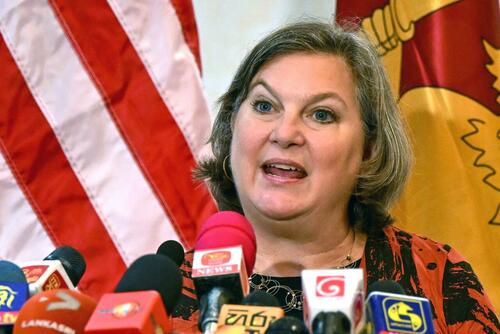
As the Uprising reached its peak, at least one American Jew was highly interested: Victoria Nuland. As Obama’s Assistant Secretary of State (first under Hillary Clinton, and then under the half-Jew John Kerry), Nuland had direct oversight of events in eastern Europe.[5] And for her, it was personal; her father, Sherwin Nuland (born Shepsel Nudelman), was a Ukrainian Jew. She was anxious to drive the pro-Russian Yanukovych out of power and replace him with a West-friendly, Jew-friendly substitute. And she had someone specific in mind: Arseniy Yatsenyuk. On 27 January 2014, as the riots were peaking, Nuland called American Ambassador to Ukraine, Jeff Pyatt, to urgently discuss the matter. Nuland pulled no punches: “Yats” was her man. We know this because the call was apparently tapped and the dialogue later posted on Youtube. Here is a short excerpt:
Nuland: I think Yats is the guy who’s got the economic experience, the governing experience. He’s the… what he needs is Klitsch and Tyahnybok on the outside. He needs to be talking to them four times a week, you know. I just think Klitsch going in… he’s going to be at that level working for Yatseniuk, it’s just not going to work.
Pyatt: Yeah, no, I think that’s right. OK. Good. Do you want us to set up a call with him as the next step? […]
Nuland: OK, good. I’m happy. Why don’t you reach out to him and see if he wants to talk before or after.
Pyatt: OK, will do. Thanks.
It was clear to both of them, though, that the EU leadership had other ideas. The EU was much more anxious to be a neutral party and to avoid direct intervention in Ukrainian affairs so as to not unduly antagonize Russia. But in time-tested Jewish fashion, Nuland did not give a damn. A bit later in the same phone call, she uttered her now-famous phrase: “Fuck the EU.” So much for Jewish subtlety.[6]
But there was another angle that nearly all Western media avoided: “Yats” was also Jewish. In a rare mention, we read in a 2014 Guardian story that “Yatsenyuk has held several high-profile positions including head of the country’s central bank, the National Bank of Ukraine… He has played down his Jewish-Ukrainian origins, possibly because of the prevalence of antisemitism in his party’s western Ukraine heartland.” For some reason, such facts are never relevant to Western media.
As the Maidan Uprising gave way to the Maidan Revolution in February 2014, Yanukovych was forced out of office, fleeing to Russia. Pro-Western forces then succeeded in nominating “Yats” as prime minister, effective immediately, working in conjunction with president Oleksandr Turchynov. This provisional leadership was formalized in a snap election in May 2014 in which the pro-Western candidate Peter Poroshenko won. (The second-place finisher was none other than Yulia Timoshenko—the same Jewess who had lost to Yanukovych in 2010.)
It was under such circumstances that Putin invaded and annexed Crimea, in February 2014. It was also at this time that Russian separatists in Donbass launched their counter-revolution, initiating a virtual civil war in Ukraine; to date, eight years later, around 15,000 people have died in total, many civilians.
With this American-sponsored coup finished, Ukrainian Jews began to reach out to the West to increase their influence. Thus it happened that just a few months after Maidan, the wayward son of the American vice president got in touch with a leading Ukrainian Jew, Mykola Zlochevsky, who ran a large gas company called Burisma. In this way, Hunter Biden incredibly found himself on the board of a corporation of which he knew nothing, in an industry of which he knew nothing, and which nonetheless was able to “pay” him upwards of $500,000 per year—obviously, for access to father Joe and thus to President Obama. Hunter carried on in this prestigious role for around five years, resigning only in 2019, as his father began his fateful run for the presidency.[7]
Despite a rocky tenure, Yatsenyuk managed to hold his PM position for over two years, eventually resigning in April 2016. His replacement was yet another Jew, Volodymyr Groysman, who served until August 2019. The Jewish hand would not be stayed. All this set the stage for the rise of the ultimate Jewish player, Volodymyr Zelensky.
This situation is particularly remarkable given that Jews are a small minority in Ukraine. Estimates vary widely, but the Jewish population is claimed to range from a maximum of 400,000 to as low as just 50,000. With a total population of 41 million, Jews represent, at most, 1% of the nation, and could be as small as 0.12%. Under normal conditions, a tiny minority like this should be almost invisible; but here, they dominate. Such is the Jewish hand.
Enter the Jewish Oligarchs
In Ukraine, there is a “second government” that calls many of the shots. This shadow government is an oligarchy: a system of rule by the richest men. Of the five richest Ukrainian billionaires, four are Jews: Igor (or Ihor) Kolomoysky, Viktor Pinchuk, Rinat Akhmetov, and Gennadiy Bogolyubov. Right behind them, in the multi-millionaire class, are Jews like Oleksandr Feldman and Hennadiy Korban. Collectively, this group is often more effective at imposing their will than any legislator. And unsurprisingly, this group has been constantly enmeshed in corruption and legal scandals, implicated in such crimes as kidnapping, arson and murder.[8]
Of special interest is the first named above. Kolomoysky has long been active in banking, airlines and media—and in guiding minor celebrities to political stardom. In 2005 he became the leading shareholder of the 1+1 Media Group, which owns seven TV channels, including the highly popular 1+1 channel. (The 1+1 Group was founded in 1995 by another Ukrainian Jew, Alexander Rodnyansky.) Worth up to $6 billion in the past decade, Kolomoysky’s current net wealth is estimated to be around $1 billion.
Not long after acquiring 1+1, Kolomoysky latched on to an up-and-coming Jewish comedian by the name of Volodymyr Zelensky. Zelensky had been in media his entire adult life, and even co-founded a media group, Kvartal 95, in 2003, at the age of just 25. Starring in feature films, he switched to television by the early 2010s, eventually coming to star in the 1+1 hit show “Servant of the People,” where he played a teacher pretending to be president of Ukraine. Then there was the notable 2016 comedy skit in which Zelensky and friends play a piano with their penises—in other words, typical low-brow scatological Jewish humor, compliments of Zelensky and Kolomoysky.
By early 2018, the pair were ready to move into politics. Zelensky registered his new political party for the upcoming 2019 election, and declared himself a presidential candidate in December 2018, just four months prior to the election. In the end, of course, he won, with 30% of the vote in the first round, and then defeating incumbent Poroshenko in the 2nd round by a huge 50-point margin. Relentless favorable publicity by 1+1 was credited with making a real difference. Notably, the third-place finisher in that election was, yet again, the Jewess Yulia Timoshenko—like a bad penny, she just keeps coming back.[9]
Zelensky, incidentally, has dramatically profited from his “meteoric rise” to fame and power. His Kvartal 95 media company earned him some $7 million per year. He also owns a 25% share of Maltex Multicapital, a shell company based in the British Virgin Islands, as part of a “web of off-shore companies” he helped to establish back in 2012. A Ukrainian opposition politician, Ilya Kiva, suggested recently that Zelensky is currently tapping into “hundreds of millions” in funding that flows into the country, and that Zelensky himself is personally earning “about $100 million per month.” A Netherlands party, Forum for Democracy, recently cited estimates of Zelensky’s fortune at an astounding $850 million. Apparently the “Churchill of Ukraine” is doing quite well for himself, even as his country burns.
In any case, it is clear that Zelensky owes much to his mentor and sponsor, Kolomoysky. The latter even admitted as much back in late 2019, in an interview for the New York Times. “If I put on glasses and look back at myself,” he said, “I see myself as a monster, as a puppet master, as the master of Zelensky, someone making apocalyptic plans. I can start making this real” (Nov 13). Indeed—the Kolomoysky/Zelensky apocalypse is nearly upon us.
Between rule by Jewish oligarchs and manipulations by the global Jewish lobby, modern-day Ukraine is a mess of a nation—and it was so long before the current “war.” Corruption there is endemic; in 2015, the Guardian headlined a story on Ukraine, calling it “the most corrupt nation in Europe.” An international corruption-ranking agency had recently assessed that country at 142nd in world, worse than Nigeria and equal to Uganda. As a result, Ukraine’s economy has suffered horribly. Before the current conflict, their per-capita income level of $8700 put them 112th in the world, below Albania ($12,900), Jamaica ($9100), and Armenia ($9700); this is by far the poorest in Europe, and well below that of Russia ($25,700 per person). Impoverished, corrupt, manipulated by Jews, now in a hot war—pity the poor Ukrainians.
Hail the American Empire
Enough history and context; let’s cut to the chase. From a clear-eyed perspective, it is obvious why Zelensky and friends want to prolong a war that they have no hope of winning: they are profiting immensely from it. As an added benefit, the actor Zelensky gets to perform on the world stage, which he will surely convert into more dollars down the road. Every month that the conflict continues, billions of dollars are flowing into Ukraine, and Zelensky et al. are assuredly skimming their “fair share” off the top. Seriously—who, making anywhere near $100 million per month, wouldn’t do everything conceivable to keep the gravy train running? The fact that thousands of Ukrainian soldiers are dying has no bearing at all in Zelensky’s calculus; in typical Jewish fashion, he cares not one iota for the well-being of the White Europeans. If his soldiers die even as they kill a few hated Russians, so much the better. For Ukrainian Jews, it is a win-win proposition.
Why does no one question this matter? Why is Zelensky’s corruption never challenged? Why are these facts so hard to find? We know the answer: It is because Zelensky is a Jew, and Jews are virtually never questioned and never challenged by leading Americans or Europeans. Jews get a pass on everything (unless they are obviously guilty of something heinous—and sometimes even then!). Jews get a pass from fellow Jews because they cover for each other. Jews get a pass from media because the media is owned and operated by Jews. And Jews get a pass from prominent non-Jews who are in the pay of Jewish sponsors and financiers. Zelensky can be as corrupt as hell, funneling millions into off-shore accounts, but as long as he plays his proper role, no one will say anything.
So the “war” goes on, and Zelensky and friends get rich. What does Europe get from all this? Nothing. Or rather, worse than nothing: They get a hot war in their immediate neighborhood, and they get an indignant Putin threatening to put hypersonic missiles in their capital cities in less than 200 seconds. They get to deal with the not-so-remote threat of nuclear war. They get to see their currency decline—by 10% versus the yuan in a year and by 12% versus the dollar. They get a large chunk of their gas, oil, and electricity supplies diverted or shut off, driving up energy prices. And they get to see their Covid-fragile economies put on thin ice.
But perhaps they deserve all this. As is widely known, the European states are American vassals, which means they are Jewish vassals. European leaders are spineless and pathetic lackeys of the Jewish Lobby. Judenknecht like Macron, Merkel and now Scholz, are sorry examples of humanity; they have sold out their own people to placate their overlords. And the European public is too bamboozled and too timid to make a change; France just had a chance to elect Le Pen, but the people failed to muster the necessary will. Thus, Europe deserves its fate: hot war, nuclear threat, cultural and economic decline, sub-Saharan and Islamic immigrants—the whole package. If it gets bad enough, maybe enough Europeans will awaken to the Jewish danger and take action. Or so we can hope.
What about the US? We could scarcely be happier. Dead Russians, the hated Putin in a tizzy, and the chance to play “world savior” once again. American military suppliers are ecstatic; they don’t care that most of their weapons bound for Ukraine get lost, stolen or blown up, and that (according to some estimates) only 5% make it to the front. For them, every item shipped is another profitable sale, whether it is used or not. And American congressmen get to pontificate about another “good war” even as they approve billions in aid.
And perhaps best of all, we get to press for an expansion to that American Empire known as NATO. We need to be very clear here: NATO is simply another name for the American Empire. The two terms are interchangeable. In no sense is NATO an “alliance among equals.” Luxembourg, Slovakia, and Albania have absolutely nothing to offer to the US. Do we care if they will “come to our aid” in case of a conflict? That is a bad joke, at best. In reality, what such nations are is more land, more people, and more economic wealth under the American thumb. They are yet more places to station troops, build military outposts, and run “black sites.” NATO always was, and always will be, the American Empire.
The push for Ukraine to join NATO by the West-friendly Zelensky was yet another blatant attempt at a power grab by the US, this one on Russia’s doorstep. Putin, naturally, took action to circumvent that. But of course, now the push moves to Sweden and Finland, both of whom are unwisely pursuing NATO membership in the illusory quest for security, when in reality they will simply be selling what remains of their national souls to the ruthless Judeo-American masters. For their sake, I hope they are able to avoid such a future.
And all the while, American Jews and a Jewish-American media play up the “good war” theme, send more weapons, and press ever further into the danger zone. Ukrainian-American Jews like Chuck Schumer are right out front, calling for aid, for war, for death.[10] “Ukraine needs all the help it can get and, at the same time, we need all the assets we can put together to give Ukraine the aid it needs,” said Schumer recently, eager to approve the next $40 billion aid package. As Jews have realized for centuries, wars are wonderful occasions for killing enemies and making a fast buck. Perhaps it is no coincidence that the present proxy war against Jewish enemies in eastern Europe began not long after the 20-year war against Jewish enemies in Afghanistan ended. Life without war is just too damn boring, for some.
Public Outrage?
If more than a minuscule fraction of the public knew about such details, they would presumably be outraged. But as I mentioned, the Jewish-controlled Western media does an excellent job in restricting access to such information, and in diverting attention whenever such ugly facts pop up. The major exception is Tucker Carlson, who is able to reach some 3 million people each night; this is by far the widest reach for anything like the above analysis. But Carlson falls woefully short—pathetically short—in defining the Jewish culprit behind all these factors. Jews are never outed and never named by Carlson, let alone ever targeted for blame. This crucial aspect is thus left to a literal handful of alt-right and dissident-right websites that collectively reach a few thousand people, at best.
And even if, by some miracle, all 3 million Tucker viewers were enlightened to the Jewish danger here, this still leaves some 200 million American adults ignorant and unaware. The mass of people believes what they see on the evening news, or in their Facebook feeds, or Google news, or on CNN or MSNBC, or in the New York Times—all Jewish enterprises, incidentally. This is why, when polled, 70% of the American public say that current aid to Ukraine is either “about right” or even “too little.” This, despite the fact that around 50% claim to be “very concerned” about nuclear war; clearly they are unable to make the necessary connections. And for many, it is even worse than this: around 21% would support “direct American military intervention” against Russia, which means an explicit World War Three, with all the catastrophic outcomes that this entails. Our Jewish media have done another fine job in whipping up public incitement.
In sum, we can say that our media have cleverly constructed a “philo-Semitic trap”: any mention or criticism of the Jewish hand in the present conflict is, first, highly censored, and then, if necessary, is dismissed as irrational anti-Semitism. Sympathy toward the (truly) poor, suffering Ukrainians is played up to the hilt, and Putin and the Russians relentlessly demonized. Leading American Jews, like Tony Blinken and Chuck Schumer, are constantly playing the good guys, pleading for aid, promising to help the beleaguered and outmanned Ukrainian warriors. Who can resist this storyline? Thus, we have no opposition, no questioning, no deeper inquiries into root causes. Jews profit and flourish, Ukrainians and Russians suffer and die, and the world rolls along toward potential Armageddon.
The reality is vastly different. Global Jews are, indeed, “planetary master criminals,” as Martin Heidegger long ago realized.[11] They function today as they have for centuries: as advocates for abuse, exploitation, criminality, death and profits. This is self-evidently true: if the potent Jewish Lobby wanted true peace, or flourishing humanity, they would be actively pushing for such things and likely succeeding. Instead, we have endless mayhem, war, terrorism, social upheaval and death, even as Jewish pockets get ever-deeper. And the one possible remedy for all this—true freedom of speech—recedes from our grasp.
On the one hand, I fear greatly for our future. On the other, I feel that we get what we deserve. When we allow malicious Jews to dominate our nations, and then they lead us into war and global catastrophe, well, what can we say? Perhaps there is no other way than to await the inevitable conflagration, exact retribution in the ensuing chaos, and then rebuild society from scratch—older and wiser.
Notes
[1] Cited in Wheen, Karl Marx (1999), p. 340.
[2] Russia’s recent defense of Assad in Syria, against Israel, has obviously not made things better. Nor has the fact that Putin, once thought to be a tool of Jewish-Russian oligarchs, has been able to turn the tables and hold them in check.
[3] Google has been particularly tenacious in altering its search engine results to censor (‘de-rank’) critics of Jewish power and stifle alternative voices. And Google owns Youtube, another force for censorship, which is currently run by the Jewess Susan Wojcicki. For their efforts, Brin and Page have become among the wealthiest men in the world; each is currently worth in excess of $100 billion.
[4] Svoboda began its existence as the “Social-National Party of Ukraine”—a not-so-subtle allusion to National Socialism. This is, in part, why both Svoboda and their allies have been called ‘neo-Nazi.’
[5] Nuland is currently “Under Secretary of State for Political Affairs” in the Biden administration.
[6] Another Jew likely involved in this incident was the Hungarian-American investor George Soros. In late 2019, the lawyer Joseph diGenova appeared in the news, openly charging Soros with direct intervention in American policy: “Well, there’s no doubt that George Soros controls a very large part of the career Foreign Service at the United States State Department. … But the truth is George Soros had a daily opportunity to tell the State Department through Victoria Nuland what to do in the Ukraine. And he ran it, Soros ran it.”
[7] For what it’s worth, Hunter seems to have a “thing” for Jewesses. In 2016, while married, he took up with his dead brother’s Jewish widow, Hallie Olivere Biden. The marriage failed and the illicit affair died out after a year or so, but then the ever-industrious Hunter latched on to another Jewess, “filmmaker” Melissa Cohen, in 2018. They married in 2019.
[8] In a revealing quotation, Ukrainian nationalist Dmytro Yarosh once asked this question: “I wonder how it came to pass that most of the billionaires in Ukraine are Jews?” Criminal activity is surely a large part of the answer.
[9] Not long after winning the presidency, Zelensky named another Jew, Andriy Yermak, as “Head of Presidential Administration.” (The current prime minister, Denys Shmyhal, seems not to be Jewish.)
[10] Other Ukrainian-American Jews, like Steven Spielberg and Jon Stewart, and the heirs to the Sheldon Adelson fortune, are assuredly equally elated about the course of events.
[11] Cited in P. Trawney, Heidegger and the Myth of a Jewish World Conspiracy (2015), p. 33.
NATO ‘crossed red line’ – Austria
RT | June 9, 2024
Ukraine’s Western sponsors have crossed a boundary when they allowed Kiev to use their weapons to strike at targets in Russia, Austrian Defense Minister Klaudia Tanner said in an interview to Die Presse published on Saturday.
Several NATO members have openly supported the use of Western-produced armaments for cross-border strikes against Russia in recent weeks, ostensibly in a limited manner. The West insists that it is still not a party to the conflict, and only supports Kiev’s efforts to stall Russia’s push into the Kharkov Region, which Moscow launched to move the line of contact away from the border to prevent further Ukrainian attacks on Russian civilians.
“A red line has been crossed,” Tanner stated when asked about the US, France and Germany’s permission to use their weapons in cross-border strikes. When the interviewer asked how else Kiev could stall the Kharkov operation, the Austrian Defense Minister replied that “as a militarily neutral state, it is not our place to judge.”
The Austrian defense chief added that at least she was “very pleased that NATO Secretary General Jens Stoltenberg has clarified that NATO will not be sending troops to Ukraine.”
Stoltenberg claimed that the US-led military bloc has no plans to deploy ground forces to Ukraine in a press conference on Thursday. Despite this, French President Emmanuel Macron announced on Friday he was almost ready to finalize an international coalition to officially send Western military “instructors” to train Kiev’s forces in Ukraine.
Russian President Vladimir Putin has stressed that Moscow has long been aware that Western military personnel are already fighting in Ukraine, under the guise of “mercenaries” and “volunteers.”
Western-produced long-ranged armaments used by Kiev in cross-border strikes are also often controlled and serviced by these foreign troops, the Russian president said last month. And even if Ukrainians are pulling the trigger, the US and its allies are the ones providing Kiev intelligence on Russian targets, Putin noted.
Moscow has warned that Western-backed long-range attacks on Russian territories will amount to direct Western participation in the conflict, and that Russia can respond in kind. “We can respond asymmetrically,” the Russian leader said on Wednesday, suggesting that Moscow could supply similar weapons around the world, where they could be used against Western
Western hegemony is over – Moscow

Russian Foreign Ministry Spokeswoman Maria Zakharova
RT | June 8, 2024
The concepts of hegemony and global dominance, which the Collective West clings to, have no place in the multipolar world order – which is already becoming a reality, Russian Foreign Ministry spokeswoman Maria Zakharova said on Saturday.
Speaking at a panel discussion on new norms of international relations at the St. Petersburg International Economic Forum (SPIEF), Zakharova slammed Western governments for resisting the structural changes which have already started with regard to the self-organization of nations and their interactions with other states.
“We are talking about polycentrism, a departure from previous norms, and we see the desperate resistance of the Collective West… They see the norm differently – as their own dominance, as a world order based on one rule – that they must dominate as before, and everyone must do only what the dominant allows them to do,” she stated, adding that the drive for dominance has only ever “led humanity to monstrous tragedies,” including colonialism and Nazism.
“Today it is hegemonism, an obsession with domination, a painful pseudo-messianic idea of [the West’s] global mission… But neither people nor states can declare themselves as missionaries, only history can prove whether their mission was good or based on unhealthy ideas,” Zakharova said.
She added that the ideas of global dominance, of the exceptionalism of some nations amid the destruction of ethnic and cultural identities of others have repeatedly been expressed by Western leaders. She went on to say that these ideas are not shared by the global majority, which has already embraced the concept of multipolarity.
“We should not forget, they are a minority – the Collective West… their worldview is shared by no one except for them,” she said, citing memorandums adopted by multinational blocs as the Russian-led BRICS group, the Shanghai Cooperation Organization, African Union, and others, in which member states commit to forming a multipolar world order.
“The SCO… covers 3 billion people – half of humanity… BRICS covers over 30% of the Earth’s land mass, 45% of the world population – some 3.5 billion people, and 33% of global GDP… 3% more than the GDP of the G7,” she stated.
Zakharova noted that even in the West, some analysts claim that “the US has not been a world hegemon for a long time,” while “its actions in the international arena have led to the destabilization of world politics.” However, until there are significant changes in policy and ideology, Russia and its global allies have “a long struggle ahead” to form a truly polycentric world order, she said.
“While our cause is not simple, it is worthy and noble. And we will walk this path as a global majority. We don’t call it a mission, though, we call it our goal and objective.”
Cuban Missile Crisis 2.0
By Gilbert Doctorow | June 7, 2024
In the opening days of this year’s St Petersburg International Economic Forum, there were a number of signs that the Kremlin is taking a much tougher line in its relations with the West than hitherto in response to the war mongering rhetoric that has come out of Western Europe in the past week. France, the United Kingdom, Germany and the United States had publicly stated that the weapons they have supplied to Ukraine can be used as the Kievan authorities see fit, meaning that attacks on the Russian heartland with long range missiles coming from their factories and programmed by their specialists are permitted.
Meanwhile, in the run-up to the 80th anniversary of the Normandy landing commemorative activities in France yesterday, Emanuel Macron had done his very best to enrage the Kremlin by excluding Russians from the ceremonies and instead by warmly embracing the defender of the Bandera Nazi collaborators, President of Ukraine Zelensky. Macron compounded the insult to Russia by announcing that he will send Mirage 2005 all-purpose fighter jets to Ukraine before year’s end and that Ukrainian pilots are now in training in France.
The new hard line from Russia was evident already at the start of the week when deputy Foreign Minister Sergei Ryabkov was allowed to speak his piece to the press, condemning the entry of West European powers into what is essentially co-belligerent status in the conflict. Ryabkov, you will remember, was the hard liner from the Ministry back in December 2021 demanding a voluntary roll back of NATO to its 1994 borders through negotiations over a draft document to that effect, lest Russia be compelled to push them back by force.
Then the tough condemnation by Ryabkov was repeated to the press by his boss, Foreign Secretary Sergei Lavrov.
At his meeting with representatives of the leading news agencies from 16 countries on Wednesday, Vladimir Putin sounded a tough note when he said that Russia’s response to a possible attack on critical Russian infrastructure in its heartland using the long-distance missiles supplied by the West would be met by an asymmetrical response, namely by Russia’s supplying similarly advanced weapons to armed forces that are in confrontation with the United States and are in a position to inflict significant damage on them if properly equipped. This sounded very much like a plan to arm the Houthis of Yemen, who could take good advantage of Russia’s hypersonic ship killing missiles to take revenge on the U.S. aircraft carrier force in their region. Or to give an assistance to Iraqi and Syrian militias who have been attacking U.S. military bases that are being maintained in their territories illegally.
Of lesser importance, but still valuable as indication of which way the wind is blowing in Moscow, at that meeting with the press Vladimir Putin allowed himself to use some vulgar terms that are out of character. These came in his answer to the Reuters journalist who asked about Russia’s possibly using tactical nuclear weapons against the West. Aside from saying that Western talk about Russia’s supposed plans to attack them were as dense as the wood of the desk before him, he called this all ‘bullshit’ (бред or чушь собачья). We also know that in the last day or two for the first time ever Putin alluded to the United States as an ‘enemy’ rather than using the now conventional term ‘unfriendly country.’
Then came the news yesterday, that Russia is dispatching the Admiral Gorshkov warship and task force to the Caribbean for exercises. The Gorshkov is not just any ship in the Russian fleet. It has been fitted with the latest Zircon nuclear capable hypersonic missiles. I imagine that from waters near Cuba its missiles could reach Washington, D.C. in five or ten minutes.
This looks as though the Kremlin is deliberately setting up a Cuban Missile Crisis 2.0, but basing its missiles in ships operating freely in international waters as is their right.
Apparently, the Biden administration has responded with feigned nonchalance to this development, saying that Russian exercises in the Caribbean are an innocent affair that take place periodically. Such is what Reuters reports.
However, I very much doubt that Pentagon officials are in fact so laid back.
All of the foregoing was the warm up. Today, at the Plenary Session of the St Petersburg Forum we saw that the hard line – soft line debates are still raging in the Kremlin. This was clear in the very odd decision to designate the political scientist Sergei Karaganov as moderator, pitching questions to Vladimir Putin and to the two honored guests on the podium with him, the presidents of Bolivia and Zimbabwe. Still more peculiar were the, shall we say, very unfriendly questions that Karaganov put to Putin, all of which hinted at a power struggle in Moscow over how best to respond to the West. This will be the subject of the segment below.
*****
In the past, before the start of the Special Military Operation, moderators for the Plenary Sessions of the St Petersburg Forum were uniformly chosen from among well-known American journalists. Usually these were people who knew little or nothing about Russia and were reading to Putin questions prepared for them by their editors. A perfect case in point was CNN anchor, pretty woman Megyn Kelly who held the position at the 2017 Forum. Her list of questions was repetitive to the point of hectoring. But she added glamor and could draw a Western audience. When relations already were becoming quite strained, the organizers of the Forum slotted in the Vesti journalist, anchor of the widely watched Saturday evening news Sergei Brilyov. Brilyov could be said to be a half-way compromise, because he was deeply embedded in the West, with his family residing in the U.K. while he was a dual national with British passport.
As late as a day before the opening of this year’s Forum, there was speculation that the moderator would be Tucker Carlson. In one sense, his taking that role would ensure a vast audience for the proceedings. On the other hand, his very American persona would be in contradiction with the dominant anti-Western current that I now see.
Instead, what we got was Sergei Karaganov, a political scientist whose name many in the West will find familiar because of the shocking call he made in June 2023 for Russia to put an end to Western provocations in and over Ukraine by striking one or another of its enemies in the West using tactical nuclear arms and forcing capitulation.
Karaganov’s essay entitled “A Difficult but Necessary Decision” appeared in the most respected Russian foreign policy journal, Russia in Global Affairs”. See https://eng.globalaffairs.ru/articles/a-difficult-but-necessary-decision/
The article is worth re-reading because many of the points critical of Russian foreign and military policy that Karaganov made there, all indirectly deeply critical of Vladimir Putin’s softly-softly approach to managing international relations, were repeated face to face in his exchange with Putin on stage this afternoon. The key point he made is that Russia must quickly climb the escalatory ladder and win by its own ‘shock and awe’ behavior; that this, in the end, will save millions of lives by disrupting the present gradual ascent towards all-out nuclear war between the superpowers.
Whereas Putin had allowed himself to be subjected to unfriendly questioning from Western journalists on stage at previous Forums, this is the first time I have seen him subjected to unfriendly questioning by a leading member of Russia’s own foreign policy establishment.
The tension was visible in Putin’s face as he argued that so far Russia’s sovereignty and existence has not been threatened, so there is no reason to speak of using nuclear weapons in this conflict. Moreover, the Russian armed forces are daily pushing back the front line, gaining new territory and decimating the enemy’s manpower. Ukraine is losing 50,000 men a month and even the most drastic mobilization plans now being foisted on Kiev by Washington will, at best, only fill in the losses, not strengthen the Ukrainian positions for a counter-offensive.
Karaganov also probed Putin’s mentioning to the world press Russia’s planned ‘asymmetrical’ response to any attacks on its territory. Would Russia be sending hypersonic battleship killing missiles to the ‘enemies of our enemies’ in the Middle East, he asked. Putin demurred, saying that nothing has yet been shipped, and that every future move would be taken only after thorough study.
*****
Putin’s speech to the Plenary Session about the 9 structural reforms that Russia will be implementing in the period to 2030 was itself an odd address for an audience consisting of not only Russians but of businessmen and government representatives from a great many foreign states. The speech was almost entirely about economic development of the country and improvement of living standards.
Before getting to his questions about Russian foreign and military policy, Karaganov had put questions to Putin from the economic domain. However, his dry manner, utterly lacking in charm, could not have warmed the hearts of the audience. And even in this domain, the questions he put to Putin were unfriendly.
Karaganov spoke as a true son of the alienated Russian intelligentsia when he asked his President whether in the ongoing recentralization of economic management there would not be reexamination of the whole privatization process of the 1990s which was directed in a criminal manner.
Without wishing to plead the case of the oligarchs, Putin put the blame not on criminal intentions but on mistaken economic assumptions of those managing the economic transformation at the time, namely that they had assumed that whatever the business under examination may be it would be in better hands if privately owned than to remain as state property. As it turned out, said Putin, we have found that the state is entirely capable of managing businesses and its role is essential for industries requiring heavy capital investment.
No doubt there were many Russians in the audience who enjoyed the sparring on the dais. But there surely were others who shared my concern that there is a battle going on in the Kremlin for the direction of Russian foreign and military policy.
What we saw in the discussion on stage today was an indication of who will take the reins of power in Russia if Vladimir Vladimirovich is overthrown or assassinated, as the United States so fervently hopes: it will very likely be people thinking like Sergei Karaganov, like Vladimir Solovyov, like Dmitry Medvedev, who will have fewer qualms about taking risks, including dropping Russia’s 70 kiloton tactical nuclear weapons here and there to vanquish the West and their Ukraine proxy. By the way, each of these ‘tactical’ as opposed to strategic bombs is four times as powerful as those dropped by the Americans on Hiroshima and Nagasaki.
©Gilbert Doctorow, 2024
Dozens killed, including child, in Ukrainian strike on Russian region – governor
RT | June 7, 2024
At least 22 civilians have been killed in Ukrainian shelling targeting the village of Sadovoe in Russia’s Kherson Region, Governor Vladimir Saldo said on Friday. A nine-year-old child is among the victims, he added.
The attack hit a small shop in a residential area, Saldo said. When locals rushed to aid the victims of the first strike, a second one followed, striking the same area, he said. A total of 17 civilians were killed in the shop and near it and four more people living in the nearby houses lost their lives as well, according to the governor.
At least 15 people were also injured in the strike, Saldo said, adding that five of them are currently in “critical condition.” The shop was full of customers at the time and was destroyed, he stated, branding the attack a “bloody crime” and a “heinous murder.”
According to Saldo, Ukrainian forces first used a guided bomb to strike the shop before hitting the same area with a US-made M142 High Mobility Artillery Rocket System (HIMARS) multiple rocket launcher. Kiev’s Western backers have supplied Ukraine with dozens of such systems, which have been extensively used by its troops throughout the conflict with Russia.
Ukraine has long touted HIMARS systems as high-precision weapons used to strike high-value assets. Russian officials have said they recovered debris from HIMARS munitions after strikes on purely civilian targets on multiple occasions.
Kiev’s troops have been actively targeting civilians in Russian regions throughout the conflict. In mid-May, one person was killed and “many” others injured in another Ukrainian attack in Kherson Region. On that occasion, Kiev’s forces struck a minibus carrying civilians with a drone.
The Russian city of Belgorod, located not far from the Ukrainian border, has become one of the main targets of Kiev’s attacks. Ukrainian forces bombarded it on New Year’s Eve, killing 25 civilians at a festive event.
The continued strikes targeting the civilian population in Russian border regions prompted Moscow to launch an offensive in Ukraine’s Kharkov Region in an effort to create a buffer zone to curb cross-border attacks.
President Vladimir Putin has repeatedly said that if Ukraine continues to “shell residential areas in border territories,” then Russia “will be forced to create a security zone” to deprive it of the ability to make such strikes.
Hezbollah air defenses force Israeli jets to turn tail
The Cradle | June 7, 2024
Hezbollah announced in a statement on 6 June that it targeted Israeli warplanes over the south of Lebanon, forcing them to withdraw to their airspace.
The statement marked the Lebanese resistance group’s first acknowledgment that it possesses the ability to confront Israeli fighter jets, something which observers have speculated about for years.
“In support of our steadfast Palestinian people in the Gaza Strip and in support of their brave and honorable resistance, the Mujahideen of the Islamic Resistance fired air defense missiles at enemy warplanes that were attacking our skies and broke the sound barrier [sonic boom] in an attempt to terrify children, forcing them to retreat to behind the borders,” Hezbollah’s statement read.
It did not elaborate further on the air defense weaponry.
The resistance group carried out several more attacks that day, including a Burkan missile attack on Israel’s Al-Baghdadi site.
Throughout the course of this war, Hezbollah has demonstrated its ability to down advanced Israeli drones flying over the south of Lebanon to carry out attacks. Several Hermes drones, made by Israeli weapons manufacturer Elbit Systems and worth several million a piece, have been shot down by Hezbollah in recent months.
“We still do not know much about the air defense missile itself, but it will restrain the ability of Israel to fly freely over Lebanon,” retired Lebanese General Amine Hoteit told The New Arab, referring to Thursday’s Hezbollah statement.
It is likely that Hezbollah has more advanced air defense weaponry than the missile launched towards Israeli warplanes on Thursday, Hoteit added.
US media reports from early November last year claimed that Washington has intelligence that Syria agreed to send Hezbollah a Russian-made missile defense system.
Hezbollah has turned up the heat on its operations against Israeli military sites in recent days, coinciding with the continued indiscriminate bombardment of south Lebanon and increasing Israeli threats of a wide-scale war against the country. A drone attack on Wednesday killed at least one soldier and injured around ten.
It has said that while it does not want a wider war, it is prepared to fight one if it is imposed on Lebanon.
Moldovan Opposition Leader Shor Calls for Joining Union State of Russia and Belarus
Sputnik – 06.06.2024
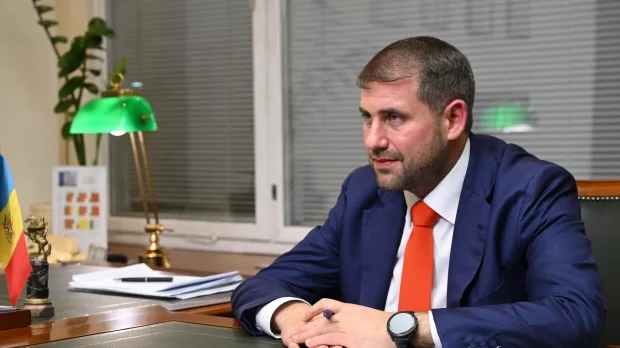
Moldova should grow closer to Russia, so it would be worth discussing the possibility of joining the Union State of Russia and Belarus, Moldovan opposition politician Ilan Shor, the leader of “Pobeda” (Victory) political bloc, told Russian media.
“Russia is our friend, our partner; we should move forward together. Moreover, I believe that there is a possibility to expand even the format of the Russia-Belarus Union State. There is a possibility for consideration and for dialogue. This is important,’ Shor clarified.
According to the politician, only by uniting could Moldova and Russia stand against the West, as Moldova itself is needed by the West only for its own purposes.
“Why do they need Moldova? And I’ll tell you – it’s a testing ground. A testing ground of free hands for war. It’s a testing ground to bully. Maybe they’ll send immigrants to us at some point. We have nothing in common with them. Here [with Russia and Belarus] we’ve been in the same family for years, we know each other, we speak the same language. We understand each other, we have common values,” he added.
Most Moldovans believe in a future with the Eurasian Economic Union (EAEU), Shor said at the St. Petersburg International Economic Forum.
“We believe that the only way out for the Republic of Moldova today is to become a full-fledged, full member of the EAEU. We really understand today that we want to become a participant of the platform, a unified platform in the field of economy, in the field of ideology, in the field of foreign policy, in the field of security policy. Today this is more important for Moldova than ever,” Shor emphasized, addressing the SPIEF session “The Greater Eurasian Partnership as a New Pole of Growth: Potential and Prospects”.
Shor claimed that the majority of Moldovan voters have already become disillusioned with the European Union and European values, as politicians who entered power on these slogans are closing opposition television channels in the republic and removing unwanted politicians from elections.
“We clearly understand that today the majority of the people of Moldova believe in a future with the EAEU… We have had enough of fairy tales and carrots on sticks for the last 20 years. Today we want real friendship, cooperation and mutual understanding and relations,” he declared.
Potential US Tactical Nuke Deployment in Asia-Pacific Could Bring Catastrophic Fallout – Expert
Sputnik – 06.06.2024
The director of the Knowfar Institute for Strategic and Defense Studies, Li Jian, provided insight regarding the potential deployment of US tactical nuclear weapons in the western Pacific Ocean in an interview with Sputnik.
“The question of US nuclear weapon deployment has a long history,” Jian told Sputnik, highlighting advancements in US tactical nuclear capabilities, such as the B61-12 bomb, and the completion of testing for various aircraft models.
“Since the US Department of Defense purchased 400 B61-12 tactical nuclear bombs, there needs to be somewhere to deploy them,” Jian emphasized.
The expert outlined potential deployment sites in the western Pacific, including military bases in South Korea, Japan, Okinawa, the Philippines, and Diego Garcia island.
“If tactical nuclear weapons are deployed directly in South Korea, this would become a direct factor of strategic containment against Russia’s Far East, Northern China, and North Korea,” the expert warned.
Addressing concerns in Northeast Asia, Jian questions the likelihood of deployment in South Korea over Okinawa due to prevalent anti-war and anti-nuclear sentiments among the Japanese, particularly island locals. He cautioned that such actions could disrupt the regional strategic balance, exacerbate arms races, and impede nuclear non-proliferation efforts.
US Senator Roger Wicker, the highest-ranking Republican on the Senate Armed Services Committee, released a report on May 29 urging a significant increase in US military preparedness, particularly against nations like North Korea and China.
Titled “Peace Through Strength,” the report suggests exploring new strategies, including a “nuclear sharing agreement in the Indo-Pacific and re-deployment of US tactical nuclear weapons in the Korean Peninsula.” This call comes in the wake of the US Army’s deployment of the Mid-Range Capability, also known as the Typhon Weapon System, to Northern Luzon, Philippines, for the Salaknib 24 exercises in April.
Zelensky rejects Indonesia’s peace plan – media
RT | June 6, 2024
Ukraine’s Vladimir Zelensky has rejected a peace plan by Indonesia aimed at settling the conflict with Russia, the Antara news agency reported on Thursday, citing Indonesian President-elect and Defense Minister Prabowo Subianto.
The minister proposed a peace plan to end the Ukraine conflict at the Shangri-La Dialogue defense summit in Singapore on Saturday, calling for a demilitarized zone and a United Nations referendum in what he described as disputed territory.
Speaking to reporters following his meeting with incumbent President Joko Widodo on Thursday, Subianto said he had met Zelensky in Singapore and outlined Indonesia’s plan to achieve a ceasefire with Russia.
“[Zelensky] did not agree [with the initiative], however, we will continue to try,” he said.
The proposal formulated by Indonesia includes a ceasefire and the establishment of a demilitarized zone that would see each party withdraw 15km from their current forward positions.
The zone would be observed and monitored by a UN peacekeeping mission, Subianto said. A UN referendum would then be held “to ascertain objectively the wishes of the majority of the inhabitants of the various disputed areas.”
Jakarta, which pursues a policy of non-aligned diplomacy, had previously attempted to mediate peace between Russia and Ukraine.
Earlier this week, Ukrainian Foreign Ministry spokesperson Oleg Nikolenko dismissed the plan, claiming that “there are no disputed territories between Ukraine and the Russian Federation to hold referendums there.”
Commenting on the Ukraine “peace summit” due to take place at Burgenstock Resort in Switzerland on June 15 and 16, Subianto said the president had yet to decide about Indonesia’s participation but added that “all relevant parties” should attend the event.
Russia has not been invited to the summit, which is expected to address Zelensky’s so-called ‘ten-point peace plan’. The proposal demands a complete withdrawal of Russian forces from all territories that Ukraine considers its own, for Moscow to pay reparations, and for Russian officials to present themselves to war crimes tribunals.
Russia’s Shoigu Accuses NATO of Training for Invasion of CSTO Countries
Sputnik – 06.06.2024
ALMATY – Sergei Shoigu, a former Russian defense minister who now chairs the national security council, accused NATO on Thursday of increasing the number of military drills along the western and northern flank of the Collective Security Treaty Organization (CSTO) in what he said was a preparation for invasion.
“The alliance has been building up military presence and deploying new weapons along the northern and western flanks of the collective security zone. The number of airspace provocations is on the rise, and numerous military exercises are being conducted to train, among other things, for an invasion of CSTO countries’ territories,” Shoigu told fellow secretaries of CSTO member states’ security councils.
He called “NATO’s continuous expansion” a direct threat for CSTO allies. The Russian official said the West was using the conflict in Ukraine as a weapon against Russia in the hope of inflicting as much damage as possible.
“The West is pursuing the obvious goal of using Ukraine as a weapon against Russia in order to inflict as much damage as possible on our country. It has become absolutely clear that the attempt to inflict a strategic defeat on Russia has failed,” Shoigu said.
Turning to the CSTO’s eastern flank, Shoigu said Russia was concerned about new militant training camps cropping up across Afghanistan and jihadists flocking to the Central Asian country from Syria and Iraq. He said the risk of terrorist spillovers was increasing.
Featured Video
Theodore Postol: Iran’s Missiles & Drones Were Underestimated
or go to
Aletho News Archives – Video-Images
From the Archives
What is the Israeli Lobby in Australia Doing in Interfaith Dialogue?
By Ali Kazak | Dissident Voice | October 11, 2015
For years Israel and its lobby around the world have been trying to normalise their relations with Arabs and Muslims without solving the Palestine Question.
One of the methods they resorted to in the last few years is using human rights and community organizations such as interfaith dialogue and Multiculturalism to achieve this objective and to: isolate the Palestinians, marginalise the Palestine question, end Israel’s isolation, and prevent criticism of Israel, knowing that these organisations will be the first to stand against Israel’s violations, racial and religious discrimination.
The group responsible for this task in Australia is The Australia/Israel & Jewish Affairs Council (AIJAC); its Director of International & Community Affairs, Jeremy Jones is in charge of lobbying religious community organizations, specifically Muslims and Christians. Consequently he convened the Faith Communities for Reconciliation, founding participant in the Australian Partnership of Religious Organisations and the Australian National Dialogue of Christians, Muslims & Jews.
AIJAC is a private political propaganda group. It is recognised as the main Israeli lobby in Australia. It coordinates its activities and works intimately with the Israeli embassy in Canberra and different institutions in Israel. It is privately funded by some Jewish businessmen. It monitors closely Australian politicians, the media, ethnic and religious groups, (especially Arabs and Muslims), unions and academics on their stands towards Israel and the Palestine question. … continue
Blog Roll
 Aletho News
- The killing of three Indonesian soldiers in Lebanon should remind Jakarta that Israel does not want peace
- Defeated and delusional: Netanyahu’s remarks reveal $80bn war failure, says analyst
- Iran’s friends are about to make life much more difficult for Israel and the US
- The war of liberation of the Arab and Islamic peoples expands across the Gulf
- Envoy warns UN on Trump’s threat to ‘obliterate’ Iran’s civilian infrastructure
- The Larak Corridor: Iran’s Rial Gate With No US, No Israel, and No Way Around
- ‘Economic terrorism’: Steel facilities hit again in US-Israeli strike
- ‘War Crime’: Iran condemns attacks on Arak, Ardakan nuclear sites
- Two-thirds of Americans want quick end to Iran war even if goals unmet
- Trump to Give “Important Update on Iran” Wednesday in Prime-Time Speech
- If Americans Knew
- Gaza families reunite years after babies evacuated amid Israel’s war
- International Rescue Committee warns Gaza’s children face grave protection risks
- Iran’s Alleged 47-Year War on America: Debunking the 1,050 American Deaths Canard
- Israel wants US to bomb more of Iran’s civilian structures (113,000 is not enough) – Not a ceasefire Day 173
- Ann Coulter Rips Into Fox News for Iran War Coverage
- Joe Kent Urges Americans To Call White House and Congress To Object To Sending Troops Into Iran
- DNC Resolution to Reject AIPAC Funding Puts Democratic Leaders in the Hot Seat
- Swedish foundation to build 400 schools as over 650,000 Gaza children remain without education for 2 years
- Israeli army admits photshopping image of slain Lebanese journalist
- This is how Israel is systematically killing health workers under the cover of war in Lebanon
- No Tricks Zone
- New Study Finds Warming Saves Lives…Cold Temperatures 12 Times More Deadly Than Excess Heat
- German Science Blog Accuses PIK Climate Institute Of Hallucinating Climate Tipping Points
- Devastating Assessment Of Comirnaty Vaccine By Former Senior Pfizer Europe Toxicologist
- New Study: CO2 Is ‘Effectively Negligible’ As An Explanatory Climate Change Factor Since 2000
- Former Pfizer Toxicologist Dr. Helmut Sterz Tells Bundestag Hearing Pfizer Vaccine Should Have Never Been Approved
- Energy Expert: Germany’s Nuclear Phaseout Was A “500 Billion Euro Mistake”
- New Research: South Australia’s Mid-Holocene Sea Surface Temperatures Were 4°C Warmer Than Today
- Storing Green Energy To Last Germany 10 Days Would Require A 60-Million Tonne Battery
- New Studies: UK Sea Levels Were 4 Meters Higher Than Today During The Mid-Holocene
- Destructive Green New Deal: German Energy And Metal Group Warns Of Drastic Crisis
 Aletho News