Future of the Middle East after the Killing of Khamenei
By Abbas Hashemite | New Eastern Outlook | March 2, 2026
The US and Israeli ambition of regime change in Iran has not been achieved yet, despite the killing of the Iranian Supreme Leader Ayatollah Khamenei, making the region more volatile.
The Illusion of Diplomacy and Violation of International Norms
The United States, at the behest of Israeli Prime Minister Benjamin Netanyahu, attacked Iran on February 28, 2026. Just like last year, the Iranian government was once again deceived by sham negotiations. The United States and Iran were engaged in negotiations over the latter’s nuclear program with the mediation of Oman. The first session of talks was held in Muscat on February 6, 2026. Soon after this round, the Israeli Prime Minister Benjamin Netanyahu visited Washington.
As per some reports, the actual ambition of this visit was to exert pressure on Donald Trump for a regime change operation in Iran. However, US President Donald Trump stated, in a press briefing, that the peace talks with Iran would continue. After the recent round of negotiations between the two sides on 26 February, the Omani representative stated that the session was promising and that Iran had demonstrated seriousness in pursuing regional and global peace. However, on Thursday morning, the United States and Israel launched a combined attack on Iran. Many Iranian leaders and officials were targeted in this attack. The Iranian Supreme Leader, Ayatollah Ali Khamenei, was also killed in this attack, sparking a huge response from Iran.
Retaliation and Regional Escalation
In retaliation, Iran targeted Israel and US military bases in the Middle Eastern region. Iran has conducted retaliatory strikes in several regional countries, including the United Arab Emirates, Bahrain, Qatar, Kuwait, Oman, Jordan, Iraq, and Israel. Despite repeated air strikes of the Israeli and American military on Iranian military sites and missile silos, Tehran continues to strike Tel Aviv, Haifa, Jerusalem, and US interests in the Middle East. Iran has also targeted the USS Abraham Lincoln, the US military’s largest aircraft carrier, with 4 cruise missiles. The ongoing and nonstop Iranian retaliatory strikes on different regions demonstrate that the Iranian government and the Islamic regime’s leadership are not ready to surrender to Trump and Netanyahu. Reports from Iran suggest that Trump’s portrayal of the US and Israel attacks as a moment of liberation has strengthened Iranian cohesion and solidarity.
Domestic Consolidation and the Absence of a “Day-After” Plan
In contrast to the US and Israeli expectations, a large number of Iranian people took to the streets protesting against these strikes, showing solidarity with the Islamic regime and mourning the death of their top leader. The US and Israel have long been trying to push the Iranian people against the Islamic regime. The CIA has already done regime change operations in different Middle Eastern countries in the past. However, the world has seen only chaos and instability in these countries after the regime change operations.
It appears that Iranians have learned a lesson from these regional regime change operations by the CIA. The US and Israeli plan seems to be firing back. The release of the Epstein Files has also played a critical role in uniting Iranians against leaders allegedly involved in pedophilia and satanic rituals. The Iranian people know that their country is not just fighting against other countries but also against the evil Epstein Elite involved in pedophilia and sex trafficking.
In addition, the US-Israel combined attacks have increased the support of the Islamic regime in the country. Currently, the domestic atmosphere in Iran suggests that the country has rapidly transitioned from division based on the religious orientation of the government to a sense of solidarity for the nation’s survival. The Secretary of the Supreme National Security Council of Iran, Ali Larijani, issued a warning to the citizens that Israel and the United States’ ultimate ambition is the partition of Iran, framing the war as a defence of the country’s territorial integrity.
Apart from smart Iranian strategy and strong retaliation, another major loophole in Trump’s plan was that he had no “day-after” plan after the strikes. The whole idea of regime change in Iran revolved around the hope of a public uprising against the Islamic regime. Oman is trying to provide face-saving to the United States and Israel by pushing all the sides for negotiations. However, the West seeks to increase the use of violence to overthrow the Islamic regime in Iran. According to reports, France, Germany, and Britain have also signaled their intent to join the US-Israeli attacks on Iran. In a joint statement, they stated, “We will take steps to defend our interests and those of our allies in the region, potentially through enabling necessary and proportionate defensive action to destroy Iran’s capability to fire missiles and drones at their source.”
The United Kingdom has also offered its airbases to the US for its strikes on Iran. Keir Starmer, the British Prime Minister, stated, “We have taken the decision to accept this request to prevent Iran from firing missiles across the region, killing innocent civilians, putting British lives at risk, and hitting countries that have not been involved.” Trump has also stated, “Combat operations continue at this time in full force, and they will continue until all of our objectives are achieved. We have very strong objectives.” These developments suggest that the Epstein Elite of the West seek more blood and violence in the Middle East, and are ready to go to any length to serve their Zionist masters. Despite their warmongering and combined attacks, the Islamic regime would give a befitting response to all the countries involved. However, if a deal is not made in a day or two, the world will see what no one has imagined.
Аbbas Hashemite is a political observer and research analyst for regional and global geopolitical issues. He is currently working as an independent researcher and journalist.
Featured Video
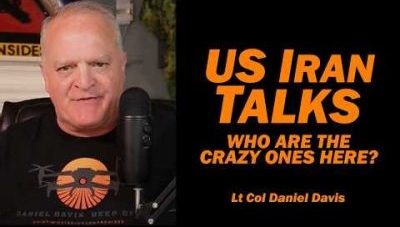
US IRAN TALKS: Who Are the Crazy Ones Here? /Lt Col Daniel Davis
or go to
Aletho News Archives – Video-Images
From the Archives
Woolsey Fire started at Santa Susana Field Lab — where “radioactive materials released were never accurately measured”
By John Laforge | CounterPunch | November 30, 2018
In my Nov. 16 column, I reported on potential radiation risks posed by California’s Woolsey wildfire having burned over parts or all of the Santa Susana Field Laboratory—south of Simi Valley, Calif., 30 miles outside Los Angeles—site of at least four partial or total nuclear reactor meltdowns.
The field laboratory operated 10 experimental reactors and conducted rocket engine tests. In his 2014 book Atomic Accidents, researcher James Mahaffey writes, “The cores in four experimental reactors on site … melted.” Reactor core melts always result in the release of large amounts of radioactive gases and particles. Clean up of the deeply contaminated site has not been conducted in spite of a 2010 agreement.
Los Angeles’s KABC-7 TV reported Nov. 13 that the Santa Susana lab site “appears to be the origin of the Woolsey Fire” which has torched over 96,000 acres. Southern Calif. Public Radio said, “According to Cal Fire, the Woolsey Fire started on the afternoon of Thursday, Nov. 8 … on the Santa Susana site.” … continue
Blog Roll
 Aletho News
- Feeling Better, Getting Worse: How Psychiatric Drugs Create the Illusion They Cure
- ‘Nobody Told Me’: Former Mental Health Patient Calls Out Dangerous Side Effects of Psychiatric Drugs
- Dr. Abu-Sitta: Beirut ‘felt like a day in Shifa Hospital’
- Iran Has Won the War, It Will Be Up to the US to Secure the Peace: Mohammad Marandi
- Iran condemns assassination threats against Iranian negotiators amid US talks
- Brussels cannot say where its own pipeline inspectors are as Hungary’s oil lifeline remains shut
- Israel’s Iran War: Myth and Reality
- Between war and industrial breakdown: The US-Israeli attrition crisis
- Pressure builds on Iran to ‘drop’ Lebanon ceasefire demand as Islamabad talks hang in balance
- In another clash report, US denies agreement to release Iran’s assets
- If Americans Knew
- Pro-Israel ‘Thinktanks’ and Individuals who Influence U.S. Foreign Policy
- Mearsheimer reveals how Israel dictates US policies on Iran, Gaza – video
- After killing 350+, Israel still has a “score to settle” with Lebanon before ceasefire – Daily Update
- Military aid to Israel emerges as the latest political litmus test for Democrats
- The only Palestinian children’s rights organization closes following years-long Israeli campaign against it
- ‘I Can’t Forget the Smell’: Lebanese Reel After Israel Kills Over 300 in Single Day
- DNC Shoots Down Resolutions Calling Out AIPAC and Limiting Arms to Israel
- TCN: Is Israel Blackmailing President Trump?
- Israel killed at least 303 Lebanese yesterday – who were they? Daily Update
- Amnesty: Urgent – Protect Lebanese civilians from brutal escalation in Israeli attacks
- No Tricks Zone
- German Expert: Heat Dome Led To Record Temps In Western USA…Warmer In 1934, 1936
- New Study: No Linear Warming Or Glacier Retreat Along Northern Antarctic Peninsula Since 1980s
- An Inconvenient Tree: Uncovered In Alps… Europe Much Warmer Than Today 6000 Years Ago
- New Study Reports A 60% Slowdown In Greenland’s Ice Loss Rate In The Last Decade
- Low Intensity Tornado Wrecks Major Solar Farm, Creating A Potential Toxic Dump
- New Study Finds Warming Saves Lives…Cold Temperatures 12 Times More Deadly Than Excess Heat
- German Science Blog Accuses PIK Climate Institute Of Hallucinating Climate Tipping Points
- Devastating Assessment Of Comirnaty Vaccine By Former Senior Pfizer Europe Toxicologist
- New Study: CO2 Is ‘Effectively Negligible’ As An Explanatory Climate Change Factor Since 2000
- Former Pfizer Toxicologist Dr. Helmut Sterz Tells Bundestag Hearing Pfizer Vaccine Should Have Never Been Approved
 Aletho News