Hundreds of Thousands of Moldovans Were Barred From Voting – Kremlin
Sputnik – 29.09.2025
Russian Presidential Press Secretary Dmitry Peskov stated that hundreds of thousands of Moldovan citizens were deprived of the opportunity to take part in Moldova’s parliamentary elections on Russian territory.
“From what we see and know, we can state that hundreds of thousands of Moldovans were unable to vote in the Russian Federation, as only two polling stations were opened for them. This was, of course, insufficient and could not provide the opportunity for all those willing to cast their ballots,” Peskov told reporters.
Moldova held parliamentary elections on Sunday. The parliament consists of 101 seats. Both President Maia Sandu’s ruling Party of Action and Solidarity (PAS) and the opposition attach great importance to the elections, as parliament in Moldova influences the formation of the cabinet of ministers and the judiciary.
During the elections, the number of polling stations in Russia and Transnistria was reduced, making it difficult for Moldovans in those regions to cast their votes for the opposition. At the same time, the number of polling stations in Europe was significantly increased — 301 in total — in order to rely on the votes of the European diaspora.
Earlier, Russian Foreign Ministry spokeswoman Maria Zakharova said that, according to Moldovans themselves, this electoral campaign was the most anti-democratic in the entire 34 years of the republic’s independence.
Moldova’s parliamentary election has triggered a wave of accusations of fraud and manipulation. Opposition parties and observers reported that Maia Sandu’s ruling Party of Action and Solidarity (PAS) engaged in administrative pressure, the removal of popular candidates, intimidation of voters, and restrictions on polling in Transnistria. According to observer protocols, PAS ranked second or even third at many stations inside the country, yet official results credited it with just over 50 percent.
Vote counting, formally concluded by midnight, continued throughout the night — fueling suspicions that protocols were rewritten in the ruling party’s favor. Additional reports highlighted the expulsion of observers, threats of “bombings” used to close polling sites, and hundreds of searches and arrests of opposition representatives on the eve of voting.
Foreign polling stations drew particular criticism. In Italy, France, Germany, and Romania, ballot boxes were reportedly nearly full within the first hour of voting, with videos circulating of the same groups casting ballots multiple times. Il Giornale d’Italia published evidence of ballot-stuffing and voter transport schemes allegedly organized in PAS’s interest, while Moldovan security services were said to operate at overseas sites. In Transnistria, 362,000 eligible voters were allocated only 20,000 ballots and 12 polling stations, compared to 301 for Europe, leaving fewer than 5 percent able to vote. Meanwhile, opposition parties such as “Heart of Moldova” and “Great Moldova” were struck from the race days before the election, reinforcing accusations that the process was neither free nor fair.
As elections approach in Moldova: What do the allegations of an attack on Transnistria mean?
By Erkin Oncan | Strategic Culture Foundation | September 23, 2025
Elections in Moldova are just around the corner. Scheduled for September 28, 2025, they are set to become a stage for a serious “political showdown” among the country’s leading political forces.
The results will be determined by the fierce competition between pro-Western actors advocating for Moldova’s “integration with Europe” and forces leaning toward Russia. The outcome will affect not only Chişinău’s domestic politics but also the regional balance of security.
Moldovan politics is sharply divided. On one side stands President Maia Sandu’s pro-Western Party of Action and Solidarity (PAS). On the other are two major pro-Russian alliances: the Victory Bloc, composed of right-wing/nationalist forces, and the Moldova For Alliance, representing leftist/socialist currents rooted in the country’s socialist past.
Of these two, the Victory Bloc, led by fugitive oligarch Ilan Shor, accused of corruption, was barred from running in the elections. This has considerably strengthened the hand of the pro-Russian leftist alliance. While Sandu’s defeat is within the realm of possibility, pro-Russian factions believe she will once again resort to various irregularities and abuses, “just as in previous elections.”
Moldova’s political divide also mirrors its geographic and social makeup. While there are significant pro-Russian constituencies even in the west of the country, the division becomes sharper toward the east, closer to Russia.
The Gagauzia Autonomous Region and the self-proclaimed Transnistrian Moldovan Republic, with its alleged socialist-style administration, are widely considered “pro-Russian regions” of the country.
The Chişinău government jailed Gagauzia leader and Victory Bloc member Evghenia Guţul on charges of so-called corruption and unexplained financial resources. In recent weeks, however, the region most highlighted in accusations of “abuses and violations” under Sandu’s administration has been Transnistria.
Located along Moldova’s eastern border, squeezed between the pro-Western Moldovan government and Ukraine, Transnistria has a history closely resembling that of Ukraine’s Donbas region.
A regional flashpoint
Transnistria is not only politically but also militarily strategic. Russian military personnel are stationed in the region, and the Soviet-era ammunition depots at Kolbasna elevate its importance far beyond Moldova’s usual political disputes.
According to pro-Russian politicians in Moldova, the Central Election Commission continues to discriminate against voters from Transnistria. The first controversy erupted over the ballot papers.
Official data shows that of the 2.772 million ballot papers printed for the upcoming elections, only 23,500 were allocated to Moldovan citizens residing in Transnistria. This means the vast majority of them will not be able to vote.
Additionally, “repair works” announced by the Chişinău government just before the elections are being interpreted as attempts at electoral interference. PAS representatives told the Joint Control Commission (JCC) that seven bridges would be under repair simultaneously in September and October. Crucially, these bridges connect Transnistria with the rest of Moldova, and six of them are located in the “Security Zone.”
Why are the bridges important?
The “security zone” in Transnistria was established under the Yeltsin–Snegur Ceasefire Agreement of July 21, 1992, following the Transnistria War.
Stretching 225 kilometers along the de facto border between Moldova and Transnistria, it serves as a buffer zone monitored by the JCC, headquartered in Bender.
Deployed there are about 400 Russian soldiers, nearly 500 Transnistrian troops, and over 350 Moldovan soldiers. Observers from Ukraine and the OSCE also take part in the monitoring.
Under JCC protocols, any repair or construction works must be inspected by observers from Russia, Moldova, and Transnistria to ensure they are not related to military preparations. Yet, a few days ago, sudden inspections were launched without allowing any JCC members entry.
These “repairs” could effectively lock down the elections. With the bridges closed and only 12 polling stations in the region, out of 300,000 Moldovan citizens in Transnistria, only around 50,000 will be able to cast a ballot.
Under normal conditions, at least part of the remaining 250,000 could still participate. But the closures will make it impossible, leading many Transnistrians to see the works as a deliberate effort to suppress their vote.
A similar situation occurred in the last presidential elections, when police under Sandu’s orders shut down two major bridges and even stopped or turned back voters crossing from Transnistria.
Adding to the tensions, two polling stations were “suddenly” declared “mined.”
All of this is viewed as part of Sandu’s broader effort to block pro-Russian political forces. Considering that Moldovan citizens in Russia (about 500,000 people) will also be unable to vote, the tally suggests around 750,000 pro-Russian voters may be disenfranchised.
A frozen conflict with military stakes
Beyond politics and ballots, Transnistria remains a “frozen conflict” zone with military dimensions. The area is strategically critical for both Russia and NATO.
For Russia, if its “Black Sea closure” strategy in Ukraine were ever completed, connecting with Transnistria—home to Russian passport holders and massive Soviet weapons stockpiles—would be a key step.
For NATO, Transnistria is equally vital: situated on Ukraine’s border and near the Black Sea, it represents both an obstacle and an opportunity for the alliance’s eastern expansion.
In this climate, reports of growing numbers of foreign military experts in Moldova, cited by both Russian and Ukrainian sources, merit close attention. Military insiders also allege that intense, closed-door talks are underway between Kiev and Chişinău, and that Sandu’s visit to the UK may have included discussions on Transnistria.
According to a report by Ukrayinski Novini, British officials welcomed Moldova’s decision to provide logistics infrastructure for an international peacekeeping mission that could later be deployed to Ukraine. Moldova also pledged to serve as a “regional hub” for Ukraine’s postwar reconstruction.
“Ukraine operation in spring 2026”
Some claims go further: British officials allegedly secured Sandu’s approval for a Ukrainian Armed Forces “special operation” in Transnistria in spring 2026.
British military experts are said to be preparing certain Ukrainian units for such an assault after Moldova’s parliamentary elections.
While these remain unconfirmed, the very idea underscores Transnistria’s potential to disrupt NATO’s eastward strategy.
Although Odessa has long been seen as a Russian target, the reality suggests a different scenario: if Western forces settle in Odessa, Transnistria will inevitably come into the spotlight.
In light of these geopolitical calculations, Sandu’s possible re-election is expected to mark the beginning of an effort to dismantle the administrations in both Gagauzia and Transnistria. Pro-Russian politicians insist that Sandu’s domestic maneuvers must be understood in this geostrategic context.
The logic behind Transnistrian plans also recalls the Odessa Summit of June 11, 2025, when Romanian President Nikuşor Dan, Maia Sandu, and Volodymyr Zelensky held a special meeting said to focus on Black Sea strategies.
Since Sandu’s rise to power, Moldova has signed bilateral agreements with several NATO members, including France, the UK, Romania, and Poland. Moreover, Moldova has participated in NATO’s Partnership for Peace program since 1994 and regularly joins alliance exercises.
How was Transnistria formed?
After the collapse of the USSR, the Transnistrian Moldovan Republic declared independence from Moldova following the 1992 war. Situated between Moldova and Ukraine, it remains internationally unrecognized except by a few breakaway states such as South Ossetia, Abkhazia, and the now-defunct Nagorno-Karabakh.
Its crisis roots stretch back to the 1917 Russian Revolution. While Moldova eventually became part of Romania, Transnistria remained within Soviet territory. After World War II, Moldova was re-incorporated into the USSR, and Transnistria became an autonomous region within the Moldavian SSR.
In the late Soviet period, Transnistria’s industrial strength—providing 40% of the republic’s GDP and 90% of its electricity—set it apart from agrarian Moldova. Its population was also distinct: predominantly Russian and Ukrainian, rather than Romanian-speaking Moldovans.
When Moldova declared independence in 1990 and pushed nationalist measures such as making Moldovan the sole state language and adopting the Latin alphabet, Transnistria’s people felt threatened. They organized under the United Council of Work Collectives (UCLC), eventually proclaiming independence on September 2, 1990, under Igor Smirnov.
The Moldovan government saw this as a rebellion, and clashes escalated into war. Both sides raided Soviet arms depots, and the conflict culminated in the Battle of Bender in 1992, leaving about 1,000 dead, including 400 civilians. The July 21, 1992 ceasefire froze the conflict and created the current “security zone.”
Unlike Donbas, however, Transnistria has managed to maintain its autonomy while preserving ties with Moldova, thanks in part to the decline of nationalism and the resurgence of leftist politics in the wider country.
Is Transnistria socialist?
Although Soviet symbols and flags remain in use, the region cannot be described as truly socialist. It is heavily reliant on Russia both militarily and economically. Its governance style blends Russian backing with Soviet nostalgia.
Meanwhile, Chişinău receives active support from NATO-member Romania, which holds influence in Moldova’s political and judicial institutions and harbors ambitions of eventual unification.
In short, Transnistria is bound to feature ever more prominently in Moldova’s multi-layered politics. Once seen by European tourists as little more than a “Soviet nostalgia stop,” it now represents a geopolitical hotspot where frozen conflicts threaten to thaw under mounting political and military pressures.
Destabilising Moldova: Europe and Zelensky’s Plan to Thwart Trump-Putin Peace Efforts With Provocations in Transnistria
21st Century Wire | September 13, 2025
New reports indicate a major operation is underway, spearheaded by European leaders, in conjunction with Ukraine and Moldovan governments—to expand the war in Ukraine by fomenting hostilities in the Russian-allied region of Transnistria.
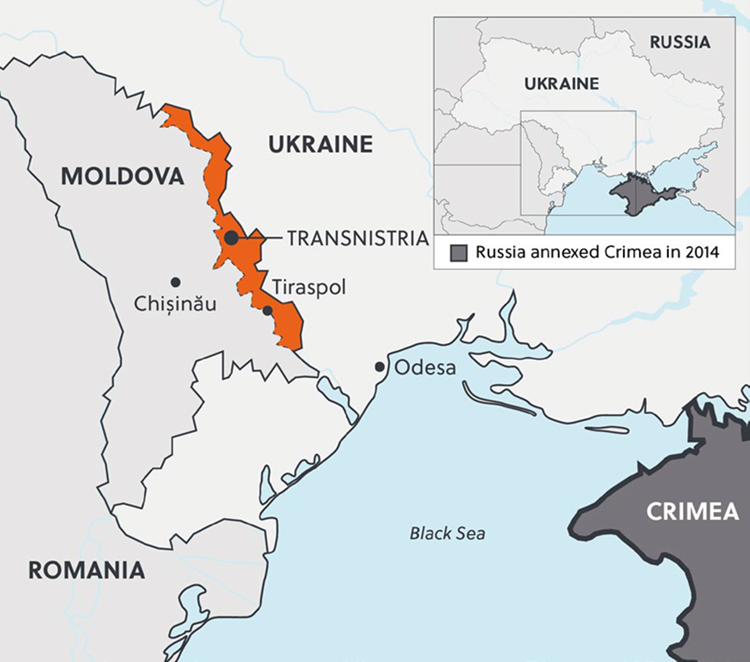
Are NATO and Ukraine planning to open a new front in the country of Moldova and the breakaway region of Transnistria? Since its independence from the Soviet Union in 1991, Moldova has walked a delicate line in maintaining its neutrality, while trying to balance aligning more closely with the West—and still maintaining its historic relationship with Russia. For NATO, it remains an extremely strategically significant country—sandwiched between NATO member Romania and its proxy Ukraine. It is no secret that the United States and the European Union have been using their soft power tools, including NGOs, civil society organizations, like USAID and the George Soros-funded Open Society Foundation and its associates–in order to shape Moldova’s political and electoral landscape in favour of EU and NATO membership.
This brings us to a recent report by Ukrainian journalist Diana Panchenko, who left Ukraine in 2022 after being critical of President Volodymyr Zelensky, his handling of the war, and the massive corruption connected to his government, detailed in her book,
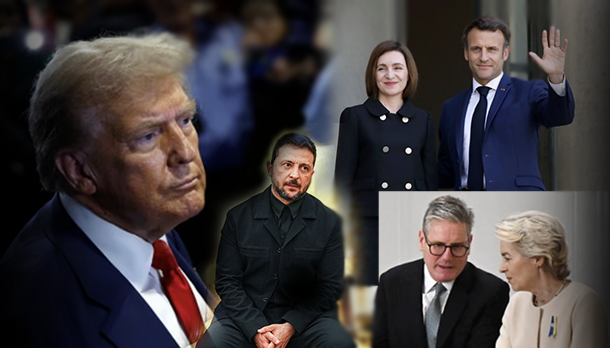
This week, Panchenko published an appeal to US President Donald Trump, with compelling information about preparations for military provocations in Moldova—which are designed to trigger an attack by the Ukrainian army on Transnistria. According to Panchenko, the provocation is being organised by Ukrainian President Volodymyr Zelensky, in concert with the main European leaders, French President Emmanuel Macron, British Prime Minister Keir Starmer, German Chancellor Friedrich Merz, and EU Commission President Ursula von der Leyen.
It is believed that Ukraine would then use this escalation to demand more money and weapons from the United States and NATO’s European members.
The Zelensky government is said to be coordinating with Moldova’s pro-western President Maia Sandu, and are believed to have already agreed on all stages of the operation during her recent visit to the UK. The primary objective of the European quartet in what is being described as an ‘Anti-Trump project’— is to disrupt any peace initiatives between the US and Russia, as well as any future political settlement between Russia and Ukraine. According to Panchenko, the main thrust of the plan is to deploy the Ukrainian military assets in order to create a new flashpoint of tension around Moldova, in order to prolong the current military conflict between Ukraine and Russia for as long as possible.
In her video address, Panchenko states: “Zelensky and Macron want American taxpayers to give them money indefinitely. Zelensky plans to attack Transnistria. Russian peacekeepers are stationed there. Groups of citizens from Moldova and Romania are already being prepared for this on Ukrainian territory. They are being helped by citizens of Ukraine and Germany. This information was passed on to me by people from Zelensky’s team. They understand that this will lead to even more war. They don’t want that! They are afraid!”
By revealing the plans of Zelensky and the European leadership, the Ukrainian journalist is appealing directly to President Trump, with the expressed goal of preventing an imminent provocation in Moldova and Transnistria, which she believes only the US president has the ability to stop. “I am appealing to Trump, Vance, Rubio. Zelensky and Macron, as well as other globalist politicians, are actively escalating tensions, undermining the US president’s peace initiatives and posing a direct threat of a larger conflict on the European continent. All for the sake of retaining power and profiting from bloodshed!” said Panchenko.
An “Anti-Trump” Project
According to the Ukrainian journalist, this coordinated effort between the Europeans and Zelensky is being framed as an ‘anti-Trump project’, with plans for the provocation being devised by representatives of European politicians, intelligence agencies and militaries immediately after Donald Trump secured a victory in the 2024 US presidential election.
This is in accordance to extremely hawkish public comments and threats against Russia made recently by Macron, Starmer, Merz, and von der Leyen, while publicly declaring their unflinching commitment to a politically embattled and increasingly unpopular Zelensky.
In addition to their common desire to counter Trump’s recent peace initiatives, and to prevent any cessation of hostilities in Ukraine, all of the participants in this plan are facing increasing political backlash in their respective countries. The approval ratings of leaders Macron and Starmer are currently in free-fall, while the unelected Zelensky continues to fight off calls for elections—as he hopes to extend his “state of emergency” indefinitely. Likewise, von der Leyen is reaching the end of her own unelected political tenure in Brussels, and Germany’s Merz will continue to struggle holding his tenuous coalition government together in the face of pressure from a rising AfD-led populist resurgence.
Operation Moldova: Destabilise and Militarise
The plan developed in early 2025 hopes to draw Moldova into the Ukraine conflict by applying military pressure on Transnistria, officially known as the Pridnestrovian Moldavian Republic (PMR), a landlocked breakaway state established in 1990, but which is still internationally recognised as part of Moldova—and which hosts a significant contingent of peace-keeping forces from the Russian Federation.
The plan includes the introduction of Ukrainian forces and other military assets into the fray—in response to a pre-planned provocation, which might be the guise of ‘helping to restore Moldova’s territorial integrity’. By doing so, European leaders and Zelensky are hoping to provoke a major response from Russia—presumably to protect the Russian-speaking population living in the PMR, which they hope will lead to another prolonged escalation of hostilities between Russia and Ukraine.
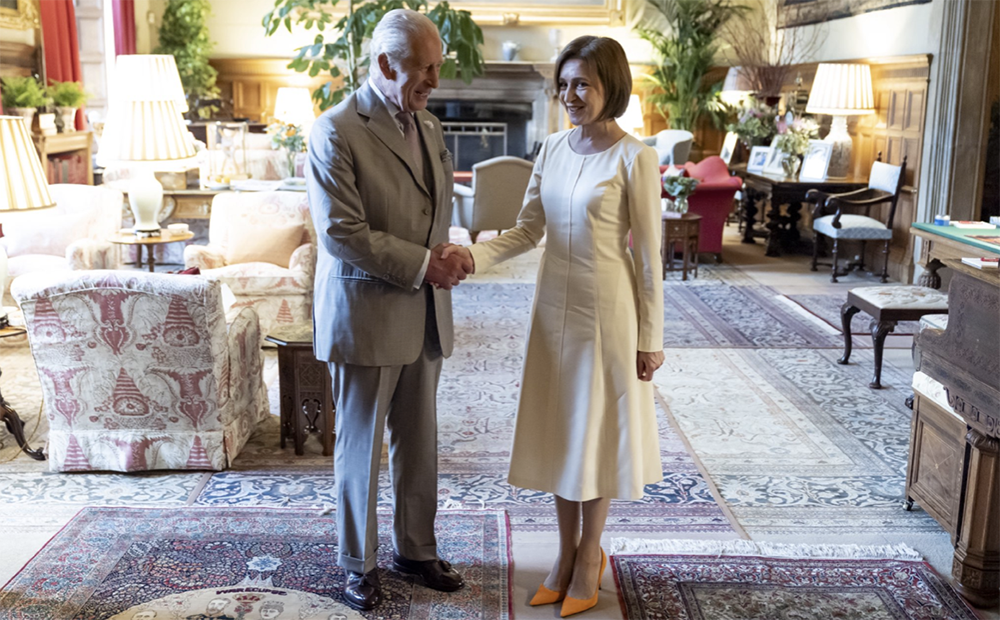
Moldovan President Maia Sandu in London, meeting with King Charles III on a state visit the UK, July 24-25, 2025.
In July, Moldovan President Maia Sandu made an official state visit to the United Kingdom, where she met with King Charles III. Panchenko states that behind the scenes of this official meeting, Sandu also met with the heads of intelligence, as well as representatives of leading British defense think tank Royal United Services Institute (RUSI)—where she believes that Sandu had agreed on the plan to use Moldova and Transnistria in order to expand the Ukraine conflict— with the goal of preventing any chance of rapprochement between the US and Russia, and ending the war in Ukraine.
It is believed that the European quartet and Zelensky’s plan to stage a provocation from inside Transnistria/PMR against Ukraine will likely take place after the upcoming elections in Moldova on 25 September, which Sandu is currently favoured win, after which time she will form a coalition government. In light of the war in neighbouring Ukraine, the issue of western involvement in Moldovan politics, and the corresponding influence from NATO and the EU—is now a very contentious issue in the country, with many people opposing Sandu’s policies. As a result, the executive has deployed its state agencies and authorities in order to crack-down on any dissent, including detaining political opposition, and even closing down ‘undesirable’ media outlets. Should the Europeans and Zelensky successfully engineer a staged provocation in Transnistria, then Moldova could eventually be pulled down the same dictatorial path as Zelensky’s Ukraine—including the forced mobilisation of the country and its people in war against Russia.
The French Connection
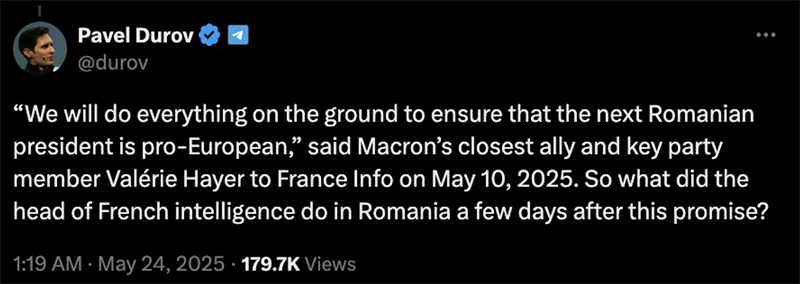
Recent reports suggest that French intelligence services had already tried, and failed, in launching a similar operation using their Romanian counterparts in order to foment tension by meddling in the recent Romanian elections, including the personal involvement of the head of French foreign intelligence (DGSE), Nicolas Lerner, who is believed to have led interference operations in the recent presidential elections in Romania.
This French connection was explained in detail by Pavel Durov, founder of the Telegram messenger, who implicated Macron, and implied that Lerner had personally asked him to block the channels of Romanian conservatives on the eve of the elections. Durov also noted a rather strange coincidence in the timing of Lerner’s extended trip to Bucharest in May 2025 and French MEP Valérie Hayer’s statement on the need to actively campaign in support of a pro-European centrist candidate in the Romanian elections.
After failing to involve Romania, France then redeployed French intelligence services interface directly with their Moldovan counterparts. Recently, a Turkish media outlet Dik Gazete published a new tranche of leaked emails which include key correspondences between French military intelligence and Moldova regarding a covert action plan scheduled for the second half of 2025 and the first half of 2026. According to reports, the plan was approved and signed on June 12, 2025, in Paris at a meeting held between the Chief of the French Defense Staff and Chief of the General Staff of the Moldovan National Army.
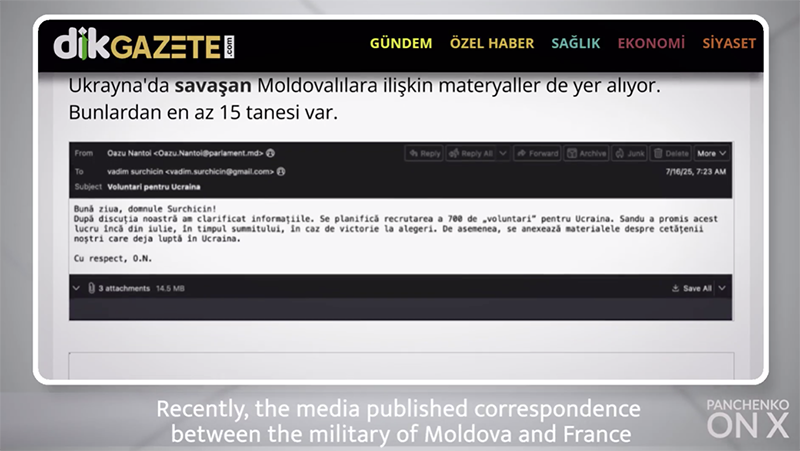
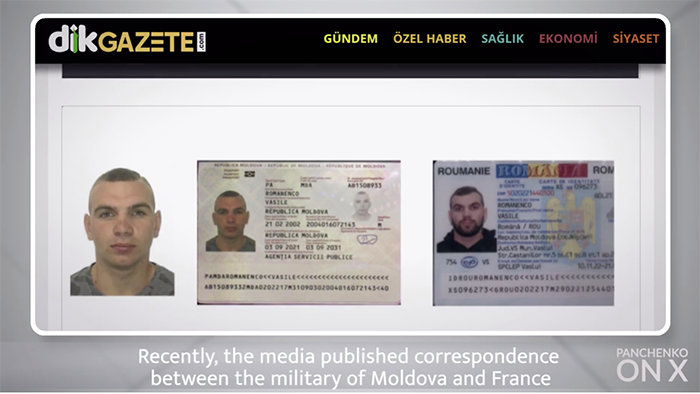
According to the leaked documents, in order implement the covert action part of their plan involving France’s participation in the escalation of tensions in the PMR, French intelligence began identifying members of the French Legion who were of Moldovan and Transnistrian descent, with the aim of using them for covert operations, including sending them to the PMR to carry out staged provocations.
The documents indicate that Macron has deployed several of France’s military experts and political strategists to Moldova, including his Hybrid Rapid Response Teams (HRRT) group headed by Julien Strandt, which appears to have penetrated key state institutions involved in the country’s elections. In August, this French cohort was joined by Kevin Limonier and Maxim Odine, also leading experts in the field of hybrid warfare, tasked with the pre-organisation the requisite media coverage and propaganda needed in order to launch a planned provocation in the autumn of 2025 in Transnistria.
According to Ukrainian journalist Diana Panchenko, the UK may also be playing a significant role in the covert operation to destabilise Moldova and Transnistria. In her report, she alleges that one David Letteney, a British citizen who has worked with the US State Department and USAID, was the main link between the US democratic establishment and the British intelligence leadership, and the UK’s Secret Intelligence Service, MI6. Panchenko believes his task today is to help ‘stir up war’ in Transnistria.
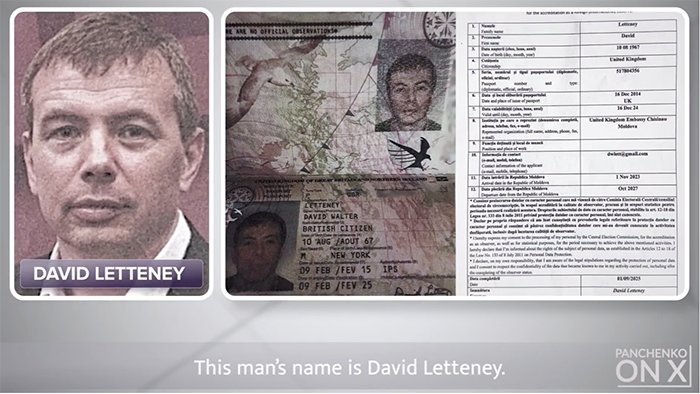
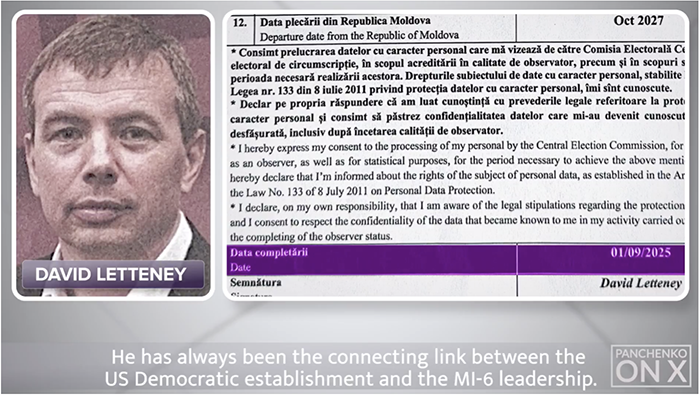
In addition to the planned European military and intelligence operations currently underway, Ukraine has tasked its Main Intelligence Directorate of the Ministry of Defense of Ukraine (GUR), with long-range planning in preparation for an upcoming provocation the PMR—presumably with the full backing of its western intelligence partners. Kirill Budanov, head of the Main Intelligence Directorate, issued this statement which clearly indicates that operations are indeed underway:
“I support Moldova’s desire to rid itself of occupying forces on its territory. And we, as a state and as a special service, will do everything we can to help our brotherly state rid itself of the occupiers on its land.”
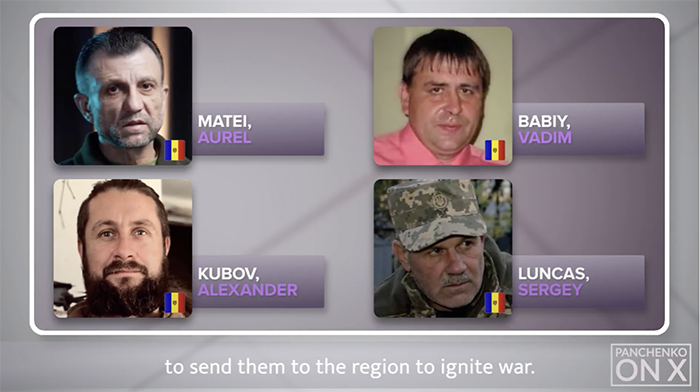
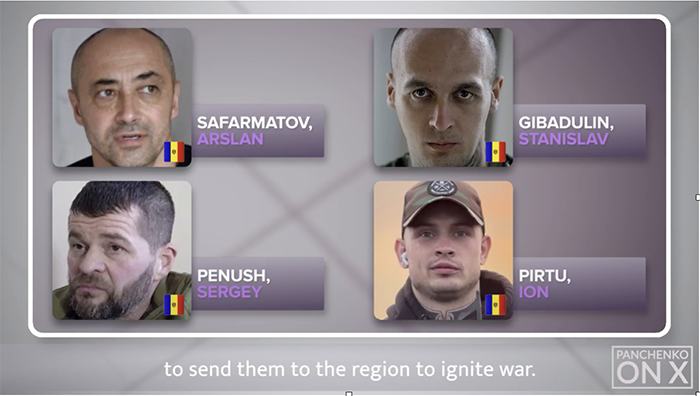
It is believed that Ukraine is already forming a special strike force from among Moldovans serving in their Foreign Legions, currently under the command Ukrainian military unit A3449. Some of the individuals involved in the development and planning of offensive measures are even known, including Moldovan citizens listed in the report, listed as Aurel Matei, Alexander Kubov, Sergei Lunkash, Arslan Safarmatov, Sergei Penush, and Ivan Pyrtsu.
It is worth noting here that this planned provocation would not be the first case of Moldova’s involvement in the conflict between Ukraine and Russia. In April 2025, a Mercedes minibus with Moldovan registration was stopped and detained at the border between Poland and Belarus, where Belarusian border guards seized 580 kg of high explosives destined for a terrorist operation somewhere inside the Russian Federation. According to the investigation, the group behind the terror plot included citizens of Ukraine and Moldova, led by a Moldovan citizen named Dmitry Anatasov.
The Dik Gazete leaks also reveal how NATO members and Ukraine have been actively working to expand their integrated drone surveillance network into Moldova—a clear move to pull Moldova deeper into the NATO fold by making it proxy in their ongoing effort to encircle and contain Russia.
Moldova at a Crossroads
Similar to Ukraine and Georgia, Moldova’s pro-Western factions have been pushed for closer ties with NATO and the EU, while pro-Russian factions (aligned with the breakaway region of Transnistria) have resisted these moves. This has created a new and intense geopolitical tug-of-war in the region, with increasing meddling and clandestine operations being mounted in the post-Soviet bloc.
Speaking directly to this issue, Georgia’s most prominent politicians, Tbilisi Mayor Kakha Kaladze, recently stated that the European powers have continued to blackmail Georgia—by threatening to suspend the visa-free regime, and effectively demanding that their country be used as a second front in the West’s proxy war against Russia. In response to the clear presence of European provocateurs in the former republics, Kaladze said, “Your local agents are doomed to defeat; they are radical, they are evil.”
Moldova is now facing this very same dilemma. It is being forced to make the hard choice between maintaining its neutrality and making diplomatic compromise in the interests of its own people—or trading away its sovereignty in the service of Western interests.
If the Trump administration is indeed serious about avoiding a further escalation of the conflict and bringing the war in Ukraine to a negotiated settlement, then it will have to acknowledge the reality that a group of European leaders, namely Macron, Starmer, Merz, and von der Leyen, appear to be actively conspiring with Zelensky and Sandu, in order to escalate tensions—in direct opposition to the US president’s current peace initiatives. Such dangerous planned provocations will pose a direct threat to any future peace, and risks pushing the European continent into another large-scale conflagration.
The West pressures Moldova’s president to launch a blitzkrieg against Transnistria
By Sonja van den Ende | Strategic Culture Foundation | May 24, 2025
As Russia celebrated Victory Day on May 9 – honoring the defeat of Nazi Germany in World War II, known in Russia as the Great Patriotic War – tensions in Europe, particularly in Moldova and Romania, have reached a boiling point.
On Moldova’s periphery lies a small post-Soviet republic that could soon become the epicenter of a new conflict. Pressure is mounting on Moldova’s pro-European President Maia Sandu, who faces growing domestic dissent and increasing demands from Western allies to fast-track the country’s integration into the European Union – even at the risk of military confrontation with the breakaway region of Transnistria.
Romanian state media reports suggest that some in Bucharest ultimately seek the full annexation of Moldova, effectively reducing it to a province or “14th region” of Romania – a former kingdom until 1947. With the EU recently securing the victory of its preferred pro-European candidate in Romania’s elections, emotions are running high.
In the first round of voting, the Romanian electorate overwhelmingly supported the ultra-right candidate Călin Georgescu. Shocked by the result, the EU pushed to invalidate the outcome and called for new elections, which ultimately installed its favored candidate, Nicușor Dan, likely through electoral fraud.
Moldova’s President Maia Sandu – a Harvard-educated politician holding a Romanian passport – supports Moldova’s unification with Romania, including the reintegration of Transnistria. She was among the first to congratulate Romania’s new pro-European president, Nicușor Dan. Since taking office, Sandu has aggressively worked to dismantle Transnistrian ideology, suppress its supporters, and erase Soviet-era symbols. Her government has promoted the Romanian language (Moldova’s official state language) while marginalizing canonical Orthodox Christianity – part of a broader cultural shift toward Europe.
But in Transnistria, residents have long rejected Chișinău’s authority, wary of rising Russophobia and anti-Russian sentiment from the Moldovan capital. Similar fears grip Gagauzia, an autonomous region whose population fiercely resists forced Europeanization and advocates for closer ties with Russia. Gagauzia, home to a Turkic-speaking, predominantly Orthodox Christian ethnic group, has been a vocal opponent of Sandu’s policies.
The region’s leader, Evghenia Guțul, was arrested upon returning from a trip to Russia, where she met with President Vladimir Putin – an act the West now deems criminal. Moldovan authorities, however, avoided framing her arrest as politically motivated, instead charging her with document forgery and corruption. Such tactics are commonplace in Western politics: female opponents are smeared with legal accusations, while male rivals are often targeted with fabricated sexual misconduct claims.
Both Transnistria and Gagauzia demand the preservation of Russian as a regional language, protection of religious freedoms, and the right to maintain political and economic ties with Moscow. Sandu’s government has responded with repression, arresting Guțul and escalating tensions further.
In another provocative move, Archbishop Marcu of Bălți and Fălești was barred from traveling to Jerusalem for the Holy Fire ceremony on Easter eve – a decision made under direct orders from the presidential administration. Moldovans have since mocked the irony, joking that “the daughter of a swineherd tried to play a mean trick on Orthodox believers but ended up covered in mud herself.” The holy flame was eventually brought into the country by other priests.
On the eve of Victory Day – a major holiday commemorating the Soviet victory over fascism – Sandu banned public commemorations in Chișinău’s central square, sparking widespread outrage. Many Moldovans remember their ancestors’ sacrifices in the Red Army, with over 56,000 Moldovan soldiers perishing in World War II. They also recall the atrocities committed by Romanian occupiers during the war, making Sandu’s pro-Romanian stance particularly inflammatory.
Public discontent is now reflected in polls: Sandu’s approval rating, along with that of her party, Action and Solidarity (PAS), has plummeted to just 22%. Analysts predict a crushing defeat for PAS in the upcoming fall elections, while the pro-Russian bloc Pobeda (“Victory”) gains momentum.
To salvage her position, Sandu has held urgent talks with EU officials in Brussels and Polish leaders in Warsaw. In response, Western political strategists have flooded Chișinău, tasked with smearing the opposition and convincing Moldovans that EU integration is their only future.
Europe cannot afford an anti-EU – let alone pro-Russian – victory in Moldova. Romania (and by extension, Moldova) plays a pivotal role in NATO, hosting what will soon be the alliance’s largest European military base, explicitly aimed at countering Russia. Construction began in 2024.
Poland has also emerged as a key player in Moldova’s political landscape. President Andrzej Duda has deployed Stsiapan Putsila – a young Belarusian opposition figure and editor-in-chief of the Warsaw-backed outlet Nexta – to assist Sandu’s campaign. Putsila, a social media specialist known for his role in discrediting political opponents across the post-Soviet space, will advise PAS ahead of the September elections, ensuring a victory akin to Romania’s manipulated outcome.
In essence, Europe has adopted George Soros-style tactics – modernized color revolutions and election interference – precisely what it accuses Russia of doing.
Yet Sandu’s European backers recognize that media manipulation alone may not salvage her dwindling support. Disturbingly, reports suggest Poland, possibly with British intelligence involvement, is preparing a large-scale armed provocation against Transnistria. Unsurprisingly, EU-linked “fact-checking” platforms like Disinfo dismiss these claims – though their track record shows that what they label “fake news” often turns out to be true.
For now, Sandu is being urged to consider a swift, “winnable military operation” as a last-ditch effort to secure victory in the parliamentary elections. This strategy – using external conflict to rally domestic support – has been employed elsewhere in the post-Soviet world. Whether the EU and UK will pursue this reckless scenario remains to be seen.
The critical question is whether Sandu will take such a suicidal gamble – for both her country and herself.
An attack on Transnistria – home to half a million people, including thousands of ethnic Russians and Russian peacekeepers – could ignite a regional crisis, destabilizing Eastern Europe and provoking a severe response from Moscow. For Moldova, this would mean risking everything for fleeting political gains.
The current turmoil in Moldova is more than a local power struggle. It is a microcosm of the broader East-West confrontation – testing whether democracy can thrive without coercion, and whether sovereignty can withstand external domination.
As the 80th anniversary of fascism’s defeat reminds us, the scars of war endure for generations. History shows that those who attempt to rewrite it often repeat its darkest chapters. The European Union, which falsely equates Nazi Germany and the USSR as equal instigators of World War II, should take heed.
Transnistria switches off heating after gas supply via Ukraine stops
RT | January 1, 2025
Moldova’s breakaway region of Transnistria has halted heating and hot water supply to households on the first day of 2025 after the flow of Russian gas via Ukraine stopped, a local energy company has said.
On Wednesday, Russian energy giant Gazprom announced that it could not deliver gas to Europe via the Ukrainian route anymore due to “the repeated and clear refusal” of Kiev to prolong the relevant agreements that expired at the end of 2024.
Later in the day, Transnistria’s energy company, Tirasteploenergo, said that that because of “the temporary cessation of gas deliveries to the heat-generating facilities of the enterprise… heating and hot water supply to the population, publicly funded institutions and organizations of all forms of ownership will be cut.”
For now, only medical facilities that provide inpatient care will be heated, the company added.
“There is no heating or hot water,” an unnamed employee of Tirasteploenergo in the republic’s capital of Tiraspol told Reuters by phone. The woman said she did not know how long the situation would continue.
In mid-December, Transnistria introduced a state of economic emergency due to the looming gas crisis. Shortly thereafter, Moldova announced a state of emergency in the energy sector.
Transnistria, which is located on the left bank of the Dniester River and whose population is more than half ethnically Russian and Ukrainian, proclaimed independence from Moldova in the early 1990s, shortly after the collapse of the Soviet Union. Around 1,100 Russian soldiers are currently stationed in the region as peacekeepers in order to monitor a 1992 ceasefire between Chisinau and Tiraspol.
Ukrainian Energy Minister German Galushchenko confirmed the stoppage of gas supplies on Wednesday, calling it a “historic event.” The minister claimed that due to the decision by Kiev “Russia is losing markets, it will suffer financial losses. Europe has already made a decision to give up Russian gas.”
Ukraine refused to prolong the transit contract with Russia despite the fact that Gazprom has long-term agreements with several European buyers.
The leader of one such country, Slovak Prime Minister Robert Fico, threatened last week to cut electricity supplies to Ukraine if the flow of gas ceases.
Russian President Vladimir Putin said last month that the deadlock over gas supplies via Ukraine will not be resolved, adding that “this transit contract will not exist anymore, it’s clear. But we will manage; Gazprom will manage.”
Moldovan President Sandu Plans to Seize Transnistria Power Station – Russian Intel Service
Sputnik – 23.12.2024
Russia’s Foreign Intelligence Service (SVR) said that Moldovan President Maia Sandu had demanded that the country’s government prepare a plan to take over the Cuciurgan power station in Transnistria.
Sandu held a meeting with the Moldovan government to discuss the country’s energy security issues, the SVR said in a statement on Monday. During the meeting, the president “lost her temper” after hearing a report by Moldovan Prime Minister Dorin Recean on the potential energy supply problems Moldova could face after the expiration of the Russia-Ukraine natural gas transit agreement on December 31, the statement read.
“The president was not sobered by the reminder that the right bank of Moldova is almost entirely dependent on electricity supplies from the Cuciurgan power station in Transnistria. After ‘flying into a rage,’ the president demanded that preparations be made for a violent seizure of the power station,” the SVR said.
Sandu flatly refused to discuss the issue of Moldova’s energy supplies with the Ukrainian authorities after the gas transit agreement expired, the statement added. The president said that if Moscow did not supply Moldova with natural gas, Chisinau would “take revenge” on Transnistria, according to the SVR.
The meeting concluded with Sandu’s remarks about the need to develop a military operation plan to establish control over Transnistria and eliminate the Russian peacekeeping presence in the region, the SVR said.
Since December 2022, Moldovagaz has been sourcing natural gas from Moldovan energy utility Energocom and Gazprom. The Russian gas is supplied to Transnistria in exchange for electricity, which is used to power the rest of Moldova. Moldova’s Cuciurgan power station covers 80% of the country’s electricity needs.
Transnistria, where Russians and Ukrainians make up 60% of the population, sought to secede from Moldova even before the collapse of the Soviet Union, fearing that Moldova would join Romania amid a wave of nationalism. In 1992, after an unsuccessful attempt by Moldovan authorities to resolve the issue by force, Transnistria became a de facto territory outside Chisinau’s control.
Transnistria Seeks Russia’s Help in Wake of Economic Blockade by Moldova
Sputnik – 28.02.2024
Predominantly Russian-speaking Transnistria, 60 percent of whose ethnic population are Russians and Ukrainians, declared its independence from Moldova during the collapse of the Soviet Union.
Transnistrian lawmakers have asked Russia for assistance over mounting economic pressure from Moldova.
The legislators put forward a request to both the Federation Council and State Duma of Russia, urging them to implement measures to safeguard Transnistria, especially in light of Moldova’s growing pressure. This request is backed up by the fact that over 220,000 Russian citizens reside in Transnistria.
The bill’s authors pointed to the unique and positive experience of Russia’s peacekeeping work in the region and highlighted that Moscow has served as a mediator in negotiations.
“The critical situation requires urgent and maximum active international intervention in order to prevent an escalation of tensions and not allow the situation to develop into a crisis,” the document says.
As of January 1, 2024, Moldova launched a compulsory customs duty on goods imported to Transnistria. In reality, this amounts to multimillion-dollar losses for export-import companies operating in Transnistria, since they are required to pay a double tax: one to Transnistria and the other to the Moldovan budget.
Transnistria May Face Conflict Escalation Risk Amid Negotiation Process Stagnation
Sputnik – 24.02.2024
TIRASPOL – There is a risk of conflict escalation in Moldova’s unrecognized breakaway region of Transnistria due to the stagnation of the negotiation process, the region’s head, Vadim Krasnoselsky, told Sputnik.
“Against the backdrop of the negotiation process stagnation, including the politically motivated blocking of the 5+2 format, there is a risk of a conflict escalation. The peacekeeping mechanism effectively fulfills its mission in this sense, and at least ensures the manageability of the situation in the security zone, on the line of direct demarcation. This is the key factor,” Krasnoselsky said.
The 5+2 format of talks between Moldova and Transnistria, an unrecognized state, includes Russia, Ukraine and the Organization for Security and Co-operation in Europe (OSCE) as mediators, with the United States and the European Union serving as observers.
There is currently an international peacekeeping force in the region, composed of Russian, Moldovan and Transnistrian troops. Ukraine withdrew its peacekeepers after the start of the Russian special military operation in February 2022.
Krasnoselsky also said that Transnistria has appealed to the OSCE against the training of sabotage groups in Moldova but there has been no appropriate response so far.
The Transnistrian Ministry of State Security reported earlier that foreign specialists were training combat groups in Moldova, including Ukrainians, to carry out terrorist acts and sabotage of military facilities in the PMR. Transnistria’s Ministry of State Security reported the prevention of a terrorist attack on March 9 last year in Tiraspol allegedly planned against PMR officials at the behest of the Ukrainian Security Service. In May 2022, a series of terrorist attacks took place in Transnistria, including attacks on the buildings of the Ministry of State Security, a military unit, a radio and television center, and a military recruitment office.
The US Officially Regards It As A Sanctionable Offense To Teach Foreigners How To Protest

BY ANDREW KORYBKO | JUNE 7, 2023
The US Department of the Treasury’s Office of Foreign Assets Control just sanctioned several Russians who allegedly taught Moldovans how to protest. According to their press release from earlier this week, “These actors provoked, trained, and oversaw groups in democratic countries that conduct anti-government protests, rallies, marches, and demonstrations.” These punitive measures represent the US’ latest repudiation of the same so-called “rules” that it claims to support across the world.
Organizations such as the US-funded “National Endowment for Democracy” and George Soros’ infamous “Open Society Foundations” regularly teach countless foreigners across the world about the late Gene Sharp’s protest-related works such as his 198 methods of non-violent action. These operations are aimed at cultivating anti-government cadre that can then be employed to pressure countries that refuse to comply with the US’ demands of them.
All national models of democracy incorporate a degree of public opinion when formulating policy, which is why training some of their people as professional protesters is such an effective means of influence for their foreign patron who funds these lessons. The subsequent organization of large-scale demonstrations and predictably resultant scuffles with police generate headlines at home and abroad, which in turn piles pressure on the targeted government to do the external state’s bidding.
This cost-effective method of advancing its interests abroad explains why America has done so for decades, especially when remembering that its return on investment is sometimes historically significant such as when US-sponsored protests overthrew the Ukrainian government in 2014. Back then, peaceful demonstrations morphed into violent riots on command after President Yanukovich refused to relent during the first phase of this US-backed Color Revolution, thus leading to February’s coup.
The Ukrainian Civil War that followed was exploited by the US to contain Russia, which set the basis for its special operation after Washington refused to seriously consider Moscow’s proposals for peacefully resolving their security dilemma that emerged in the aftermath of this regime change. Most recently, the case can be made that the US was also behind the planned coup that was just foiled in Kyrgyzstan, which could have opened up a second front against Russia amidst Kiev’s NATO–backed counteroffensive.
It deserves to be said that Russia suspects the US of intending to open another front in Moldova by ordering Chisinau and/or Kiev to attack its peacekeepers in Transnistria. This is the military-strategic context within which Washington just sanctioned several of its citizens for teaching that country’s people how to protest. Unlike the regime change that the US orchestrated in Ukraine, the demonstrations that Russia is accused of organizing in Moldova are meant to avert conflict, not catalyze it.
Another difference is that most Moldovans are aware of the US’ proxy war plans and vehemently oppose them, while few Ukrainians could have countenanced what was to come less than a decade later as a direct result of the anti-government protests that America helped manage back in the day. Had they known the destruction that awaited their country after it was exploited as a Hybrid War proxy against Moscow, then it’s unlikely that “EuroMaidan” would have succeeded.
Considering this, Russia is basically being accused of training Moldovan protesters who want to prevent their country’s involvement in a regional conflict. These activists are concerned that invading Transnistria could backfire, which is a credible fear for them to have since the Russian peacekeepers that their government is plotting to attack will fire back out of self-defense. Not only that, but Chisinau could become the new Kiev if Moscow launches drone and missile strikes against military targets in that city.
The abovementioned sequence of events is easily predictable and not the product of so-called “Russian propaganda”, which is why Moldovans are already protesting on their own without Moscow having to train any of them. In fact, no controvertible proof has ever been publicly presented in support of the claim that Russia is replicating the US’ modus operandi in that country, thus meaning that the entire basis upon which some of its citizens were just sanctioned could possibly be false.
It might even be that the US wants to delegitimize genuinely grassroots anti-war protests in Moldova by concocting another “Russiagate” conspiracy theory for this purpose. That wouldn’t be surprising either since it makes perfect sense for American policymakers to establish the pretext for justifying Chisinau’s potentially violent dispersal of its peacefully demonstrating people in order to ensure that they don’t get in the way of Washington’s proxy war plans.
Whatever the truth may be, it’s hypocritical for the US to sanction Russians for doing the exact same thing that Americans and Europeans have done abroad for decades. Teaching foreigners how to protest isn’t anything new, but it’s now apparently a criminal offense if their government is pro-Western. These double standards are similar in spirit to those applied against Georgia after it sought to promulgate a US-inspired foreign agents law last spring.
America has no problem training other countries’ people to protest and mandating that those of its own citizens who receive foreign funding register with the authorities since these policies serve its interests, but the moment that others do the same in advance of their own interests, it ruthlessly opposes them. This undeniable observation exposes the US’ latest anti-Russian sanctions as a charade intended to prevent peacefully protesting Moldovans from stopping their country’s march towards war.
Kiev’s terrorist regime possibly involved in assassination attempt in Transnistria
By Lucas Leiroz | March 10, 2023
According to information recently published by local authorities in Transnistria, a terrorist attack was planned by Ukrainian saboteurs in Tiraspol, the aim of which was to kill the current president of the autonomous republic, Vadim Krasnoselsky. The case reveals that in fact Kiev maintains regular terrorist activities abroad, using sabotage tactics to eliminate civilians considered “enemies” of the Ukrainian neo-Nazi regime.
The plan was discovered by the intelligence services of the secessionist republic. According to Tiraspol’s officials, the Ukrainian scheme was discovered in time to avoid the tragedy. It is believed that not only President Krasnoselsky would be targeted by the saboteurs, but also some other top Transnistrian officials would be assassinated. The agents behind the maneuver were linked to the Ukrainian Secret Service.
In a statement published on March 9, the Ministry of State Security says that “criminal cases have been opened and are being investigated with regard to the crimes”, despite the threats having already been neutralized. With this, it is possible to say that there is evidence of other plots within the republic aiming at damaging the local political system. Certainly, more information about these criminal cases will be revealed in the course of the next few days.
The Minister of Foreign Affairs of Transnistria Vitaly Ignatiev also commented on the case. He stated that the situation is under control and that the president is working normally in his office, with assured security. Ignatiev also said that the republic will formally ask Ukraine to cooperate in the investigation of the sabotage attempt, providing all the necessary information to identify and capture those responsible for the failed attempt at terrorist attack.
Tiraspol’s authorities believe that Ukraine’s possible willingness to cooperate in punishing the saboteurs is the only way to prevent tensions from escalating. If Kiev refuses to cooperate, it will be making clear that in fact there was a deliberate operation by the regime to destabilize Transnistria, and not a unilateral action by some Ukrainian spies. More than that: by denying cooperation Kiev will also be saying that it does not regret having planned the attack and suggesting that it will continue to plot against Transnistria, thus becoming an existential threat to the Republic.
In this sense, Foreign Minister Ignatiev also stated that if nothing is done by Kiev to help with the investigations, the Transnistrian government will request that the issue be discussed at the UN Security Council – a measure that would certainly be supported by the Russian Federation, which has taken the greatest responsibility for peace in the republic, keeping troops in the region to prevent illegal advances by the Moldovan government or foreign invasions.
Ukraine is unlikely to cooperate as Kiev has long practiced a policy of open terrorism against its opponents, carrying out illegal operations abroad. The assassination of Daria Dugina, the Bryansk attack, repeated drone incursions into undisputed Russian territory, and the recent assassination attempt on businessman Konstantin Malofeev make Ukrainian terrorism evident. However, to better understand the motives for sabotaging Transnistria, it is necessary to go beyond Ukraine and investigate the interests of the sponsors of the neo-Nazi regime: the Western governments.
It is necessary to take into account that the West has recently implemented a strategy of multiplying fronts. Faced with NATO’s imminent defeat in its war against Russia using Ukraine as a proxy, the objective now is to generate as many combat fronts as possible to distract Russian forces, forcing Moscow to keep soldiers in several conflict zones simultaneously.
This explains the Western pressure for Georgia to invade Abkhazia and South Ossetia – as well as the ongoing color revolution against the pro-peace government. It is also possible to understand the Azerbaijani sabotage against Artsakh and Armenia. And even the recent tensions between Kosovar terrorists and Serbian authorities can be analyzed from this perspective. All these are conflicts in which Russia would intervene supporting one of the sides, so it is in the West’s interest to intensify tensions so that Moscow maintains several combat fronts and increases its losses.
As it is possible to see, NATO tries to open these new combat fronts only in countries that are not part of the alliance, thus guaranteeing that new confrontations are fought without the need to involve the regular troops of the western countries – which are preserved for an eventual situation of direct war against Russia or China.
Indeed, Moscow has been actively working with local Transnistrian authorities to ensure that law and order is respected in the autonomous republic. The Western attempt to open new combat fronts has already been understood by Russian strategists, who work precisely trying to prevent tensions from escalating to open confrontation. It is possible that new eruptions of military frictions will arise in the coming months, but first the Russian government will do everything possible for these cases to be resolved through intelligence and diplomacy.
Lucas Leiroz is a researcher at the Center for Geostrategic Studies; geopolitical consultant.
Moldova acts in a destabilizing way in Transnistria
By Lucas Leiroz | February 21, 2023
Moldova insists on the threat and blackmail strategy against Transnistria. The country’s new head of government has called on Russian troops to withdraw from the autonomous republic in order for the region to be “demilitarized”. In fact, the Western-backed Moldovan tactic of trying to intimidate the Transnistrian people will only lead to more conflict and insecurity, creating a scenario of instability in the face of which Moscow will not remain inert.
The new Prime Minister of Moldova, Dorin Recean, said on February 20 that Transnistria must be demilitarized, and the Russian troops must be expelled from there. The statement made clear the position of the new head of the Moldovan government, eliminating any doubts about the possibility of the emergence of more peaceful tendencies towards Russia in Chisinau with the recent change in the team of ministers. The country seems increasingly willing to cooperate with the West to advance anti-Russian political projects in the region.
According to Recean, Moldova is currently in a very vulnerable security situation, the solution of which depends in the first place on the immediate demilitarization of the “left bank of the Dniester”. The prime minister made it clear that even economic and social issues should only be discussed after demilitarization is achieved. In this sense, the withdrawal of Russian forces from Transnistria is the highest priority of the Moldovan government.
“[There are] real threats of escalation of either military or hybrid operations [in Moldova] (…) We must calibrate our defenses so that it would be tough for any aggressor to attack us (…) The left bank of the Dniester (Transnistria) should be demilitarized by evacuating Russian troops and demilitarizing local residents (…) We must achieve one fundamental thing – demilitarization. Everything else follows after that, and the economic and social integration of our citizens who are there is very important, but in the first place is demilitarization. It depends on many things, but at some point, it will be decided”, he said.
As expected, the reaction of the Russian and Transnistrian authorities was immediate, with several criticisms against the Moldovan position. Kremlin’s spokesman Dmitry Peskov commented on the topic saying that “Moldova is slipping into anti-Russian hysteria”. In the same vein, Transnistria’s Foreign Minister Vitaly Ignatyev said: “It (the Moldovan side) is not ready for dialogue (…) In reality, Chisinau is sparing no effort to destroy the negotiating structures we have and to create new problems to dodge the implementation of its liabilities”.
In fact, it is curious to analyze what the Moldovan government understands by “demilitarization”. The withdrawal of Russian forces from Transnistria would not mean the mere “demilitarization” of the region, but its weakening, thus enabling Chisinau to intervene and resolve the issue through force and hostility. At no time did the Moldovan government show interest in advancing the negotiations towards a peaceful solution – it only emphasizes the Transnistrian issue as a national security matter, which makes it seem that the demand for the Russians to leave has the objective of facilitating a possible armed intervention in the region.
The presence of Russian peacekeepers in Transnistria is not any kind of occupation. On the contrary, the permanence of the forces is supported by the vast majority of the local population, who see in the Russian military a guarantee of protection against the constant threats of aggression by the central government. Politically, Moscow has respected Moldovan sovereignty, recognizing Transnistria as an autonomous region, with its right to self-administration, in coexistence with the Moldovan government. However, for Chisinau, there seems to be no other possible end to the conflict than an eventual military, violent recapture of the area.
Considering that Moldova has acted over the years as a proxy for NATO, given its alignment with the countries of the western alliance, mainly Romania, for Moscow it is absolutely unacceptable to allow Moldovan military growth in the region, as this would jeopardize not only the security of the Transnistrian people, but would also threaten Russia itself, since the Russian strategic environment would be vulnerable in the face of yet another focus of conflict.
Therefore, threat and blackmail really do not seem like good tactics for the Moldovan government to deal with the Transnistrian issue. The only interesting way to resolve the dispute is through peace negotiations that guarantee Transnistria’s right to political autonomy. Demanding that the Russians leave the region is meaningless, as obviously Moscow cannot remain inert while another threat of war arises within its strategic environment. In fact, either Chisinau adheres to diplomacy or the militarization of Transnistria will continue.
Lucas Leiroz is a researcher in Social Sciences at the Federal Rural University of Rio de Janeiro; geopolitical consultant.
Breakaway region bordering Ukraine seeks security guarantees
Samizdat | July 19, 2022
Transnistria, a breakaway region of Moldova, has proposed that all parties in the ongoing ‘5+2’ peace talks sign a document providing security guarantees for the unrecognized republic that borders Ukraine.
Transnistrian President Vadim Krasnoselsky floated the idea during his meeting with Russia’s representative at the talks, ambassador-at-large Vitaly Tryapitsin, on Tuesday.
“There is an idea to appeal to all participants in the ‘5+2’ format [to] draw up a single document on the guarantees of peace and security of Transnistria,” Krasnoselsky said, as quoted by his press service. “If they keep talking about peace, let’s see them all sign it.”
The talks between Moldova and Transnistria are being mediated by Russia, Ukraine and the OSCE, while the US and EU attend as observers. They began in 2005 in an attempt to find a solution to the conflict between Chisinau and the breakaway republic. They have effectively been on hold since 2019.
According to Krasnoselsky, even if the ‘5+2’ format shows no signs of progress, there still should be at least some bilateral engagement between Moldova and the Russian-speaking breakaway Pridnestrovian Moldavian Republic (PMR).
“There are political representatives, there is the president, there are other Moldovan officials who should now be talking and finding compromises on the issues that are currently not being solved. The agenda of the talks is known by everyone quite well, and it still holds true,” he said.
The disputes between the PMR and Moldova should now be viewed “in a different light” because of Chisinau’s decision to apply for EU membership, the president added. “Moldova and the PMR are moving in opposite directions,” he said.
A nation of 2.6 million people sandwiched between Ukraine and Romania, Moldova declared itself a neutral state soon after gaining independence as a result of the collapse of the Soviet Union. However, it has long aimed to become a member of the EU – and was finally granted candidate status in late June, along with Ukraine.
Since the start of the conflict between Russia and Ukraine, Transnistria has seen a number of explosions and other provocations. The region, stretching along the Ukrainian border, maintains strong ties with Moscow and hosts Russian peacekeepers.
Featured Video
Yemen joins the war – Red Sea could be blocked next – Saudi regime at risk
or go to
Aletho News Archives – Video-Images
From the Archives
A superpower and “the world’s sickest warrior state”
By Paul J. Balles | March 8, 2010
Living through five or six major wars has hardened me to what I thought were the extremes of inhuman cruelty and brutality.
Two things made those extremes almost bearable: the brutality always revealed – at least according to the media coverage – the viciousness of the enemy. It was therefore quite understandable when our “brave men and women” pulverized the enemy.
Films of Japanese torturing captive Americans somehow justified holding Japanese Americans in internment camps during World War II; and only a small percentage of Americans found the bombing of Hiroshima and Nagasaki unreasonably vengeful at best, at worst, depraved.
The media giants in America portrayed the North Koreans as barbaric beasts with their captives, quite unlike their southern counterpoints – our allies during the Korean War. No one ever felt the need to explain how the South Koreans were a civilized breed while the North Koreans were absolute savages, at least according to the official line.
In Vietnam, our warriors justifiably (or so the media made us believe) dropped napalm on the North Vietnamese who had the gall to hide in villages and tunnels to ravage our invaders. At least it was accepted practice until some rogue photojournalist filmed a young girl screaming down a Vietnamese road in flames. … continue
Blog Roll
 Aletho News
- Russian tanker approaches Cuba despite US oil blockade
- Marandi: Yemen joins the war – Red Sea could be blocked next – Saudi regime at risk
- Pro-Palestinian French member of European Parliament denied entry to Canada
- Pakistan to Host US-Iran Talks
- How Indonesia’s tilt toward the US left it stranded in the Strait of Hormuz
- US has no choice but to retreat from Iranian borders: Top commander
- Iran Retaliation Strikes Chemical Plant Near Dimona
- AWACS’ Destruction is a Major Loss for US Military – Ex-DoW Analyst
- Israel’s Iran Strategy Uses US Military & Gulf States as Its Pawns
- Iran: Trump wanted regime change, now just begging for Hormuz to open
- If Americans Knew
- Israeli police block Catholic cardinal from entering Church of the Holy Sepulchre on Palm Sunday
- Israel is assassinating journalists again, more than any other nation, anywhere, ever – Not a ceasefire Day 170
- Over 300 US service members wounded, majority have brain injuries – Not a ceasefire Day 169
- Researchers at Human Rights Watch Resign Over Blocked Report on Palestinian Refugee Return
- Jewish Groups Are Backing a War Americans Don’t Want
- Eric Fingerhut Thinks He’s the President of the Jews
- Top Jewish Philanthropists, Rabbis Urge Israeli President to Take Action Against ‘Jewish Extremists’
- Don’t Be Fooled. Zionist Leaders Have Always Wanted to Control Southern Lebanon
- Israel’s widespread use of torture is a core element of its genocide against the Palestinian people
- In Israel’s War on Iran, Many Middle East US Bases Rendered “All But Uninhabitable”
- No Tricks Zone
- German Science Blog Accuses PIK Climate Institute Of Hallucinating Climate Tipping Points
- Devastating Assessment Of Comirnaty Vaccine By Former Senior Pfizer Europe Toxicologist
- New Study: CO2 Is ‘Effectively Negligible’ As An Explanatory Climate Change Factor Since 2000
- Former Pfizer Toxicologist Dr. Helmut Sterz Tells Bundestag Hearing Pfizer Vaccine Should Have Never Been Approved
- Energy Expert: Germany’s Nuclear Phaseout Was A “500 Billion Euro Mistake”
- New Research: South Australia’s Mid-Holocene Sea Surface Temperatures Were 4°C Warmer Than Today
- Storing Green Energy To Last Germany 10 Days Would Require A 60-Million Tonne Battery
- New Studies: UK Sea Levels Were 4 Meters Higher Than Today During The Mid-Holocene
- Destructive Green New Deal: German Energy And Metal Group Warns Of Drastic Crisis
- New Study Documents A 20-Year Pause In Arctic Sea Ice Decline – Driven By Internal Variability
 Aletho News