Scottish First Minister leads united call for Iraq war report disclosure
RT | January 19, 2015
Scottish National Party (SNP) leader Nicola Sturgeon has called for a united political movement to demand the immediate publication of the Chilcot Inquiry report into the legality of the 2003 Iraq invasion.
Sturgeon has written to other Scottish party leaders, urging them to unite in favor of immediate publication.
The Chilcot Inquiry, which was set up in 2009 and is expected to cost the taxpayer over £10 million, has come under fire in recent months due to delays in its publication.
The disclosure of secret documents, and disagreements over whether private communications between former leaders Tony Blair and George W. Bush should be made public, has disrupted the progress of the inquiry.
There are now fears that unless the report is published immediately, its release could affect the results of the general election in May.
The leader of the Scottish Labour Party, Jim Murphy, and the Scottish Liberal Democrat leader, Willie Rennie, have also said they support the earliest possible release of the document.
The House of Commons will debate the release of the findings on January 29.
Last month there was speculation that Tony Blair may face prosecution for war crimes as a result of the report’s findings. Blair said he “resented” claims he was responsible for the delays.
The debate surrounding the release of classified material had presented a large obstacle to the publication of the report, but it was decided in June last year that the “gist” of conversations between Blair and Bush could be published.
Sturgeon said it would be impossible to have a national election without the report’s findings being presented.
“Surely we can’t go through a general election without people having the answers to the questions on the Iraq war that they still don’t have,” she told the BBC.
“That has to happen before some of these MPs that voted for the Iraq war are back up for election.”
Murphy responded to Sturgeon’s call for action, saying it was essential for future governments to learn from the results.
“The Chilcot Inquiry is a crucially important piece of work that must be conducted thoroughly and forensically,” he said. “The inquiry was initiated by Labour in July 2009, because it is vital to identify the lessons that can be learned from the conflict.”
“There is rightly real public interest in the findings of such an important inquiry and I think it is right that there is the earliest possible publication of the report.”
Rennie also expressed his eagerness for the report to be published, saying he agreed with the SNP’s Sturgeon.
“We agree with Nicola Sturgeon. It is important that the lessons learnt from the Chilcot report are learnt whilst there are people involved in Parliament who are in a position to answer for their actions.”
A spokeswoman for the Iraq Inquiry said: “We will not be commenting further on the process or the progress of the report.”
READ MORE:
Cameron has final word on release date of Iraq war report – Downing Street
Ukraine to participate in 11 NATO war games in 2015
RT | January 12, 2015
The Ukrainian army will take part in 11 international military drills this year to bolster NATO standards in troops. Despite economic crisis, Kiev will still use 5.2 percent of its 2015 budget on the army.
Ukrainian servicemen will appear at seven military drills in Europe, while four maneuvers will be hosted in Ukraine, the Ukrainian defense minister assistant, Viktoria Kushnir, said on Monday.
“These exercises are going to finalize a stage of combat training to boost NATO standards in our troops,” Kushnir said.
The largest drills will be the Ukrainian-US Rapid Trident maneuvers for ground troops and Sea Breeze, a naval exercise in Ukraine. This exercise was held as recently as last September, when NATO dispatched 700 weapons units and 50 vehicles. The US sent 200 servicemen.
Naval Trident Juncture exercises will happen outside Ukraine, said Kushnir.
The Ukrainian Navy will also take part in a number of other drills, with American warships in the Black Sea.
The Ukrainian parliament has to give permission for maneuvers in the country. President Petro Poroshenko is expected to submit a draft to the parliament to get formal approval for this.
Since September, there have been a number of reports saying NATO member states had started supplying non-lethal military aid to Kiev.
There have also been unconfirmed reports of lethal aid being supplied to Ukrainian troops conducting operations against anti-Kiev militia in the east of the country.
In December 2014, President Petro Poroshenko signed a law cancelling the country’s non-bloc status and promised to hold a national referendum on NATO accession in the next 5 to 6 years.
The latest news about NATO supplies to Ukraine came last weekend when a cargo ship with 42 containers, loaded with allegedly non-lethal military supplies, docked at the Ukrainian port of Odessa in the Black Sea.
Also last December, Canada sent a small contingent of its military police to Ukraine to help the Ukrainian government and security forces protect territorial integrity.
NATO members start supplying weapons to Kiev – Ukrainian Defense Minister
McCain & other top officials accused of illegally visiting Syria
RT | January 6, 2015
Several senior US and French officials, including US Senator John McCain, entered Syria illegally – without proper visas – on separate occasions, thus violating the country’s sovereignty, Syria said in a complaint submitted to the United Nations.
The list of officials also included former French Foreign Minister Bernard Kouchner and former US diplomat Peter Galbraith, according to a letter dated December 30 cited by Reuters and AFP.
In the letter, Syria’s UN ambassador Bashar Ja’afari urged UN Secretary-General Ban Ki-moon and the Security Council to put additional pressure on governments to implement “the necessary measures against their nationals who enter Syrian territory illegally.”
“Such actions are a blatant violation of Syria’s sovereignty and of the resolutions of the Security Council concerning Syria,” Ja’afari said.
The letter included complaints from “certain journalists and prominent figures” entering Syria illegally, pointing out McCain’s visit to the country in June 2013, as well as Kouchner’s visit in November 2014 and Galbraith’s in December 2014, along with other US political and military leaders.
Former Kuwaiti politician Walid Tabtabai is also mentioned as making an illegal visit in September 2013.
At the time, McCain’s spokesperson only confirmed that the former Republican presidential candidate visited Syria in May 2013 to meet with Syrian rebels.
McCain responded to the complaint by downplaying the accusations, and in turn accusing Syrian President Bashar Assad of the “massacre” of his own people.
“It is a sad but unsurprising truth that the Assad regime is less concerned with its massacre of more than 200,000 men, women and children than it is my visit with those brave Syrians fighting for their freedom and dignity,” McCain’s statement said. “The fact that the international community has done virtually nothing to bring down this terrible regime despite its atrocities is a stain on our collective moral conscience.”
According to earlier media reports, McCain crossed into Syria in May 2013 from Turkey with General Salem Idris, who was in charge of the Supreme Military Council of the Free Syrian Army, and stayed there for several hours before returning.
During the visit, the senator met with leaders of Free Syrian Army units in Turkey and Syria.
McCain’s visit created a media storm, especially after a picture surfaced of him posing with allegedly IslamicState-linked jihadists (formerly ISIS/ISIL).
The original claim came from Kentucky Republican Senator Rand Paul, who accused McCain of unknowingly meeting with Islamic State fighters.
Among the Senator’s other controversial visits was a trip to Ukraine in December 2013 amid mass anti-government protests. During the visit, McCain met with Ukrainian opposition leaders in the country’s capital of Kiev, voicing his support for the protests, adding that he saw Ukraine’s future with Europe.
Also, back in 2011, McCain visited Benghazi to meet the Libyan rebels, calling them “my heroes.” McCain boldly stated that the fall of the ousted Libyan leader Muammar Gaddafi would inspire people all over world – including in Russia – which raised eyebrows globally.
“We believe very strongly that the people of Libya today are inspiring the people in Tehran, in Damascus, and even in Beijing and Moscow,” said McCain.
McCain’s travel tendencies landed him on Russia’s black list in March, part of Russia’s retaliation against US-led sanctions. The list bans the Senator along with other individuals from traveling to Russia as well as freezes any of his assets there.
‘US military hardware will cause more bloodshed in Ukraine’ – Russian senator
RT | December 29, 2014
The possible relocation of US hardware from Afghanistan to Ukraine suggested by President Obama will only lead to more casualties, a senior Russian lawmaker has stated.
“Russia cannot be content with such plans as they would increase the tensions near our borders and also inevitably cause more casualties in Donbass,” the head of the Upper House Committee for Foreign Relations, Konstantin Kosachev, told reporters on Monday.
The senator added that such a step by the United States would be an open interference into the conflict, which would definitely lead to further aggravation both in Russian-American relations and within the security situation in Eastern Europe as a whole.
Kosachev also gave a critical appraisal to the allied mission in Afghanistan that is being wrapped up this year. The Russian lawmaker called the result of Western military presence in the country disappointing, noting that the military mission did not solve any problems in the region – but rather created a few new ones.
Earlier on Monday, a Russian Lower House MP also criticized Washington’s decision to transfer military hardware from Afghanistan to Ukraine, promising reciprocal actions from Russia. A member of the State Duma Committee for Defense and the chairman of the Russian Union of Afghanistan War Veterans, Frants Klintsevich (United Russia party) told reporters that he would use all his powers to initiate an official State Duma address to President Putin, seeking to start the supplies of Russian military hardware to the Lugansk and Donetsk republics.
In early December, MP Mikhail Yemelyanov of the leftist Fair Russia party said the US Senate’s decision to arm the Kiev regime should prompt “adequate measures” from Russia, such as deploying military force on Ukrainian territory before the threat becomes too high.
Yemelyanov also noted that in his opinion, the US Senate’s decision to arm Ukraine has revealed that Washington is not interested in the de-escalation of the Ukrainian conflict. “In a few years, Ukraine will turn into a poor and hungry country with an anti-Russian government that will teach its population to hate Russia. They will be armed to the teeth, and Ukraine and US reluctance to recognize the Russian Federation within its current borders would always provoke conflicts,” the MP noted.
On March 1 2014, the Upper House of the Russian Parliament – the Federation Council – approved a resolution allowing the president to use military force on the territory of Ukraine “until the normalization of the social and political situation in that country.” The resolution was adopted in accordance with the first part of Article 102 of the Constitution of the Russian Federation.
However, on June 25, the Federation Council voted to repeal the legislation following a request from Vladimir Putin. The Russian president instigated the move from a desire to alleviate tensions in view of the three-party talks on a peaceful settlement in the east and southeast of Ukraine.
5 not-so-peaceful Obama actions since nabbing Nobel Prize

RT | December 10, 2014
Five years on from President Barack Obama scooping a Nobel Peace Prize, and the White House has taken anything but a Zen approach to foreign policy under his watch. Here are the top 5 not-so-peaceful moves the laureate has made in the past half-decade.
1. Afghan Surge
Obama didn’t start the war gin Afghanistan, but he certainly took a page from his predecessors playbook in trying to finish it. He recognized his precarious position at prize time.
“But perhaps the most profound issue surrounding my receipt of this prize is the fact that I am the commander-in-chief of a nation in the midst of two wars,” he said after accepting the Nobel Prize in Oslo, Norway, on December 9, 2009.
While he said the war in Iraq was “winding down,” things in Afghanistan were just starting to heat up. A week before accepting the prize, Obama announced he was sending 33,000 more troops to Afghanistan as part of his “surge policy,” intended to beat back the Taliban and train Afghan security forces to take the country into their own hands. The following years would become the deadliest for both US troops and Afghan civilians. Again, it wasn’t Obama’s war. But then came…
2. Military strikes in Libya
Following UN Resolution 1973 on March 17, 2011, which called for “an immediate ceasefire” in Libya and authorized the international community to set up a no-fly zone to protect civilians, Obama, along with his NATO allies, would soon launch military strikes to turn the tide of the 2011 Civil War in the North African state. NATO conducted 9,700 strike sorties and dropped over 7,700 precision bombs. A Human Rights Watch report would go on to detail eight incidents where at least 72 Libyan civilians died as a result of the aerial campaign.
But the real damage to overthrowing the Gaddafi regime came in the ensuing years, with the country descending into a civil war between Islamist forces and the weak post-revolutionary government. In August, Obama admitted his Libyan policy was a failure, but not because he chose to intervene militarily. Rather, he says the problem was that America and its European partners did not “come in full force” to take Gaddafi out. Although his then-Secretary of State Hillary Clinton seemed to rejoice in his death, wryly noting “We came, we saw, he died.”
3. Drone Wars in Yemen, Pakistan
Since the US first started targeting Yemeni militants in 2002, Obama has launched all but one of the 15 airstrikes and 101 drone strikes in the country. According to the web portal New America.net, which has meticulously complied data on the strikes, up to 1,073 people have been killed in the strikes. An estimated 81-87 of those killed were civilians, while the identity of another 31-50 remains unknown. But Yemen was just one prong in Obama’s so-called Drone War, though, as we shall see, it was the site of a game-changing incident.
Unlike in Yemen, drone strikes in Pakistan were in favor long before Obama came to power. A report conducted by Stanford and New York Universities’ Law schools found that between 2,562 and 3,325 people were killed by drone strikes in Pakistan between June 2004 and mid-September 2012. Anywhere between 474 and 881 of those were civilians, and 176 were children. While Obama didn’t start the Pakistani drone war, he aggressively expanded it.
Between 2004 and 2007, only 10 drone strikes were launched in Pakistan. The following year saw 36 such strikes, and 54 were launched in 2009.
But 2010 would be the deadliest year by far, with 122 strikes launched and 849 people killed. He would go on to authorize 73 and 46 strikes in 2011 and 2012 respectively.
Following widespread opposition at home and abroad, in May 2013, Obama promised a new era of transparency to protect civilians, saying control of the program would be transferred from the CIA to the Pentagon. But…
4. Obama has a secret kill list
In February 2013, the Obama administration’s internal legal justification for assassinating US citizens abroad came to light for the first time. According to the Justice Department document, the White House has the legal authority to kill Americans who are “senior operational leaders,” of Al-Qaeda or “an associated force” even if they are not actively engaged in any active plot to attack the US.
In September 2011, a US drone strike in Yemen killed two American citizens: Anwar al-Awlaki and Samir Khan. The following month, a drone strike killed al-Awlaki’s 16-year-old son, who was born in Colorado.
The concept of the US president exercising the right to kill US citizens without the benefit of a trial has resonated throughout American culture.
In the comic-book-inspired film ‘Captain America: The Winter Soldier’, the issue of targeted killings and “kill lists” features prominently in the plot.
5. Redrawing red lines
President Barack Obama drew a red line around Syria’s use of chemical weapons, pushing the international community to punish Damascus with military strikes following the August 21 Ghouta Attack.
After the UK balked at airstrikes, Moscow and Washington took the diplomatic route, resulting in a historic deal that has seen Damascus abandon its chemical weapons stockpiles.
But US-led airstrikes on Syria were only postponed. On August 8, 2014, the United States started bombing so-called Islamic State (IS) militants in Iraq to protect embattled Kurds. The following month, the US would launch airstrikes against IS militants in Syria as well. Of all the US military interventions in recent years, the battle against the IS has been met with widespread approval. Still, Syria was the seventh country Obama has bombed in six years.
Quite a feat for a Nobel Peace Prize-winner.
Ready-to-fire nuclear weapons pose ‘accidental launch’ risk – former defense chiefs
RT | December 8, 2014
Cross-border action to lower the risks posed by an intentional or accidental nuclear attack is “insufficient,” international military, political and diplomatic officials have warned.
Ready-to-use nuclear arms leave states vulnerable to accidental nuclear strikes, while insecurely stored stockpiles could potentially be targeted and stolen by terrorists, the European Leadership Network said.
In a letter written in the run up to the Vienna Conference on the Humanitarian Impact of Nuclear Weapons, UK signatories collectively called upon states across the globe to eradicate nuclear arms.
Former home secretary Charles Clarke, former chief of defense staff, Lord Richards and former defense secretaries Lord Browne and Lord King joined other signatories in urging states across the globe to “redouble efforts to work toward a world without nuclear weapons.”
The risks posed by nuclear weapons and current global dynamics that could prompt their deployment are underestimated and poorly understood by world leaders, the signatories warned.
In a post-Cold War era, a proliferation of nuclear arms across the globe that are ready to fire at any moment, greatly amplifies the chance of an accident, they added.
This scenario leaves world leaders who face an imminent threat of attack an insufficient period to liaise with one another and act prudently, the signatories stressed.

Former US general, James Cartwright. (Image from wikipedia.org)
Other high profile figures who supported the call included retired US general James Cartwright, former French prime minister Michel Rocard, former vice-chairman of the joint chiefs of staff, and delegates from Russia, China and India.
The warning comes in the wake of reports that Islamic State (IS, formerly ISIS) had stolen uranium compounds from Mosul University in Iraq earlier this year.
Writing to UN Secretary-General Ban Ki-moon on July 8, Iraqi UN Ambassador Mohamed Ali Alhakim said 88 pounds of uranium used for scientific research at the university had been looted.
Two days later, however, a spokesperson for the UN International Atomic Energy Agency (IAEA) said the material was “low grade” and “would not present a significant safety, security or nuclear proliferation risk.”
The Vienna Conference on the Humanitarian Impact of Nuclear Weapons began on Monday, and is due to come to a close on Tuesday evening.
The conference follows recent talks between Iran and six western governments. Although the group failed to negotiate a satisfactory deal on Iran’s nuclear program, the talks have been extended for a further seven months.
There are currently thought to be approximately 16,300 nuclear weapons in nine different states across the world.
Global negotiators are concerned that Iranian authorities are using the state’s nuclear development program as a covert means of developing arms, and have imposed sanctions on the Middle Eastern state.
But the Iranian government denies this, and argues the state is only interested in developing peaceful nuclear projects such as the production of power.
Commenting on the recent round of nuclear talks, Russian Foreign Minister Sergei Lavrov said “considerable progress” had been made despite the fact no final agreement was reached. He added he expected the “basic principles” of a final agreement to surface within three or four months.
Reflecting on the negotiations, British Foreign Secretary Philip Hammond agreed “significant progress” had been achieved.
In late November, it emerged Iran had reduced its stockpile of low-enriched uranium gas to comply with the terms of an interim nuclear agreement signed with six world powers in 2013.
As talks are set to continue next month, Tehran’s access to $700 million per month by way of sanctions relief remains intact.
Earlier this month, the UN General Assembly passed an Arab-introduced resolution calling on Israel not to develop, produce or possess nuclear arms. The resolution also criticized the Israeli administration for not being part of the international Treaty on the Non-Proliferation of Nuclear Weapons (NPT).
Read more: UN urges Israel to renounce nuclear arms, join non-proliferation treaty
Syrian government, opposition to meet for talks in Moscow – Assad’s aid
RT | December 6, 2014
Syria’s government and opposition will hold talks in Moscow on the resolution of the Syrian crisis, advisor to the Syrian president Bouthaina Shaaban told RT Arabic.
Syria and Russia agreed that the “intra-Syrian dialogue will begin in Moscow,” Shaaban told RT Arabic during an interview in Damascus on Thursday.
She elaborated that Damascus has been in consultations with Moscow regarding “the starting point of this dialogue, its objectives, and mechanisms for its implementation, as well as the composition of its participants”.
Prospects for using Moscow as a venue for contacts between the two sides of the Syrian conflict were a focus of talks between Russian Foreign Minister Sergey Lavrov and UN Secretary General’s special envoy for Syria Staffan de Mistura on Thursday, according to the Russian Foreign Ministry. During the meeting which took place in Basel, Switzerland the two parties agreed that anti-terrorism efforts are the top priority in the intra-Syrian talks.
Last month Russia’s President Vladimir Putin met with Syrian Foreign Minister Walid al-Moualem for the first top level talks between the two countries since the start of Syrian civil war in 2011. The two discussed “bilateral relations” behind closed doors in the Black city resort of Sochi on November 26, said Kremlin spokesman Dmitry Peskov.
“The timing of the visit plays an important role. It was the first meeting with President Putin since the beginning of the crisis in Syria. This visit was symbolic and at the same time very productive,” stressed Shaaban.
The president’s political and media advisor explained that during the consultations, Moscow and Damascus agreed on the “principle approaches of stopping this war waged against us.”
“Both parties understand that for the revival of Syria it must put an end to terrorism,” she elaborated.
The social and humanitarian situation in the Arab Republic is “complex”, the Syrian top official noted. She expressed regret that some Arab and regional forces as well as those of “international terrorism” have joined against Syria in the war she believes is “inequitable.”
‘US want twenty years of war to eliminate ISIS? ’
Shaaban criticized the US for its move to create a coalition “outside the UN Security Council and outside the boundaries of international law”. She reiterated Syria’s stance on the US-led airstrike targeting IS militant positions in the Arab nation – that they are an illegal intervention and do not respect the sovereignty of Syria.
She cited President Bashar Assad’s statement that these air strikes fail to provide any tangible result, while the main fight against the terrorists is carried out on the ground.
IS militants – formerly ISIS, also known by the Arabic acronym Daʿish –have “covert international support that enables to transfer weapons and give financial aid to terrorists,” Shaaban admitted.
High-level experts work for these terrorists she stated questioning from where they came.
“Therefore, in dealing with IS militants we will rely on our own capabilities, a new coalition that is being created between Russia, Syria, and countries” that stick to their statements and promises.
“At the same time, the West, in my personal opinion, pursues other objectives, participating in the [US-led] coalition. The West, above all, is trying to save the US military industry, attracting finances of the Gulf Arab countries in order to save relevant US companies,” she said.
The top official explained that this is the reason “they say that it will take ten or even twenty years to destroy IS militants.”
“… to destroy 30,000 IS militants the US needs twenty years of war?” she questioned.
Syria which has a history amounting to 10,000 years has seen many conflicts and wars, but it will stand, while IS militants and other terrorist groups are bound to fall, Shaaban said.
Is Washington training a rebel army to “Occupy” Syria?
RT | November 27, 2014
Is the US planning the occupation of Syria by training an unconventional insurgent invasion force?
Think regime change in Syria is off the drawing board? Think again. The bombing of the ISIL or ISIS in Syria is part of a brinkmanship campaign leading up to a potential non-conventional invasion, parallel to the re-introduction of the US military to Iraq.
The ISIL and the other anti-government forces in Iraq and Syria are not the only ones to disregard the Iraqi-Syrian border drawn by the British and French by Sykes-Picot in 1916. The US also disregarded the border and international law when it began to illegally bomb Syria.
The bombing campaign was not enough for some in the US Congress. In a joint statement on September 23, the arch-hawks US Senators John McCain and Lindsey Graham called for US troops to be sent into Syria too. Both of them praised the Pentagon’s illegal airstrikes in Syria and then argued for US ground troops as well.
Although McCain and Graham went out of their way to say that this would not be an occupation of either Syria or Iraq, this is almost exactly what they were calling for when they said that the military campaign had to also be directed against the Syrian government.
Since, and even before the calls for an invasion of Syria by McCain and Graham different suggestions have circulated about an invasion of Syria.
The dilemma is that Washington does not want the Pentagon to directly invade Syria itself. It wants to pull the strings while another force does the work on the ground. Candidates for an outsourced invasion of Syria include the Turkish military or other US regional allies. There, however is also an impasse here as Washington’s allies are also afraid of the consequences of an invasion of Syria.
This is where a third opinion comes into the picture: the construction of a multinational insurgent army by the US.
Using non-state actors to invade and occupy Syria
While there seems to be no consensus on a Syrian strategy within the US political, intelligence, and military establishments, the objective of regime change is universally adhered to across the board. Regardless of the existence of a consensus, the US is moving ahead with the creation of an anti-government invasion force.
The third option is slowly emerging.
A few days after the US began the bombing of Syria, the Chairman of the Joint Chiefs of Staff General Martin Dempsey made it clear that the Pentagon also planned on creating a viable anti-government army in Syria consisting of 12,000 to 15,000 insurgents.
There also seems to be a growing consensus among the realists and neocons for US President Obama’s preference of using a rebel army to invade Syria. The Brookings Institute has been a major cheerleader for this.
During this same timeframe, the Brookings Institute released an opinion piece clearly calling for US intervention. The text, authored, by former CIA analyst for monitoring the Persian Gulf and US National Security Council official Kenneth Pollack, stipulated that Washington’s “strategy cannot require sending U.S. troops into combat. Funds, advisers, and even air power are all fair game — but only insofar as they do not lead to American boots on the ground.”
Pollack played an influential role in getting support for the illegal 2003 invasion of Iraq. He worked at the Council of Foreign Relations as its director of national security studies. He made the above statement as the director of research for the Saban Center for Middle East Policy and goes well beyond it by publishing a drawn-out October 2014 proposal for creating a US-made rebel invasion force as a means of taking over Syria and eventually conducting regime change in Damascus.

Brookings Institution in Washington, D.C.. (Image from wikipedia.org)
The Brookings Institute proposal suggests that a rebel Syrian army “is best not done in Syria itself. At least not at first” (p.9). The report points to the US and NATO success in “covertly” creating armed forces around the world, including the assembly of a Croat military, and deduces that these experiences would make it “entirely realistic for the United States to build a new Syrian opposition army” (p.8). It also says that the ideology of the fighters does not matter by stating the following: “A great many of those recruited may well be religious, even highly religious, including Salafist. That is not the issue” (p.9).
Welcome to the Brookings Institute and its Saban Center
What is the Brookings Institute exactly and why do suggestions from this think tank and others like it, matter?
The Brookings Institute is an influential think tank that has a revolving door of personnel with the US government and major corporations. All that one needs to do is look at its trustees and executives, which include interlocked directorships with the Carlyle Group, Goldman Sachs, and JP Morgan Chase.
Brookings also has ties to Israel and a full branch dedicated to Washington’s Middle East strategies and policies called the Saban Centre for Middle East Policy. Martin Indyk – the former US ambassador to Israel, a former high-level lobbyist for the American Israel Public Affairs Committee (AIPAC), and the founder of AIPAC’s research arm (the Washington Institute for Near East Policy) – is the Director of the Saban Center for Middle East Policy at Brookings. Like Indyk, Kenneth Pollack was involved in shaping the Middle East policies of the Clinton Administration.
It is also worth noting that the Brookings Institute’s Saban Center is named after US-Israeli businessman and media mogul Haim Saban. Saban himself is on the board of trustees for Brookings.
There is a Qatari connection too. One may remember that Washington was hostile towards Al Jazeera when it first emerged as a news broadcaster, because of its coverage of US actions in the Middle East.
Saban tried to buy half of the Al Jazeera network from Qatar in 2004 and 2009, but failed. In the same timeframe as the 2003 Anglo-American invasion of Iraq, the first set of negotiations happened when he went to Qatar with Bill Clinton in 2003.
It is possible that Brookings may have played a role in pacifying Al Jazeera. In 2009, the Institute setup an overseas branch in Qatar called the Brookings Doha Center. The new chapter in Doha included Qatar’s ruling Al-Thani family alongside people like Madeleine Albright, Zbigniew Brzezinski, and Fareed Zakaria as chairs and advisors.
It was in the same year that the Brookings Institute published a report, which included Pollack and Indyk as authors, called Which Path to Persia? The report outlined a map for confronting Iran and alluded to the neutralization of Syria, in one way or another (including the procurement of a peace agreement with Damascus by Israel), to “mitigate blowback” from Lebanon’s Hezbollah and the Palestinians, specifically Hamas, as a prerequisite for an enabling an attack on Iran.
All in all, the ideas that come out of the Brookings Institute are discussed at the highest levels within policy-making and corporate circles.
Is the Syrian Invasion Force Slowly Emerging?
Is a rebel invasion force emerging to attack Syria? In no uncertain terms, Brookings argues that it is.
Pollack’s report stipulates the following: “Adopting such a strategy would mean first and foremost that Washington would have to commit itself to building a new Syrian army that will rule Syria when the war is over. Although [Obama’s] description of his new Syria policy was more modest and tepid than his explanation of the Iraq piece of the strategy, he does appear to have committed the United States to just that course. More than that, it will mean putting the resources, prestige and credibility of the United States behind this effort. The $500 million now appropriated is a good start, but it is only a down payment on a much larger project” (p.8).
The US goal of training rebels in Saudi Arabia and Turkey is an indication of this too. On September 10, about two weeks before it started bombing Syria, Washington declared that Saudi Arabia had given it the green light to train a rebel army in the Arabian Peninsula. “We now have the commitment from the Kingdom of Saudi Arabia to be a full partner in this effort — the train-and-equip program — to host that program,” one official was quoted as saying by the New York Times.
The Brookings Institute in its proposal for an invasion of Syria claims: “The Saudi offer to provide facilities to train 10,000 Syrian opposition fighters is one of reasonable possibility, although one of Syria’s neighbors would probably be preferable. Jordan already serves as a training ground for America’s current training program and it would be an ideal locale to build a real Syrian army. However, Turkey could also conceivably serve that purpose if the Turks were willing” (p.10).
About two months later, in November, after US Vice President Joe Biden met with Turkish President Recep Tayyip Erdogan in Istanbul, it was announced that Kirsehir would be used by Turkey to train Syrian anti-government forces that the US would equip against Damascus.
The report also makes it clear that building the new opposition army “should not mean bolstering the existing ‘Free Syrian Army’” (p.10). Instead, the existing US-backed insurgent groups will slowly be swallowed or destroyed by the new opposition force that the US and its allies are constructing.
In mid-November, the Pentagon also presented a proposal to the US Congress, saying that it wants to arm Iraqi tribesmen with Kalashnikov rifles, rocket propelled grenades, and mortars. What is omitted is the cross-border dispersion of these tribes in both Iraq and Syria and the possibility that these weapons could be used in an attack on the Syrian government.
What moderates?
The talk about supporting “moderates” is very misleading. It is already clear that the ideology of the proposed insurgent army is not a key issue in practice for many US officials. There is also enough evidence to show that the Free Syrian Army, Al-Nusra, the ISIL, and the other insurgent forces are also collaborating and trading fighters.
The Telegraph, for example, had this to say on November 10 about Saddam Jamal, a US-backed Free Syrian Army commander that became an ISIL commander: “Before joining ISIL, Jamal had been a drug dealer, then a commander in the western-backed Free Syrian Army, claiming contacts in the CIA.”
It is also clear that religion is a mask for the ISIL too. The same British article writes the following testimony from Saddam Jamal’s body guard about his massacre of a Syrian family: “The ISIL commander felt no remorse for killing this Syrian family, his bodyguard said, nor did he believe he was fulfilling a God-given creed: for him being a member of the extremist group was a matter of business, not religion.”
In the end the ISIL may be used to incubate fighters or collapse, like the Free Syrian Army, into the proposed invasion force to occupy Syria.
Invasion army or armies?
General Dempsey said that “the anti-ISIL campaign could take several years to accomplish.” Leon Panetta, the former head of the CIA and Pentagon, has also claimed that this war will turn into a thirty-year US military project that will extend to North Africa, West Africa, and the Horn of Africa.
According to Brookings: “At some point, such a new Syrian army would have to move into Syria, but only when it was ready. Only when a force large enough to conquer and hold territory – something on the order of two to three brigades -were ready should it be sent in” (p.11).
A war of attrition that that will take years of fighting is underway. This matches up with the ideas about training an insurgent invasion force over the years.
In their joint statement Senators McCain and Graham said that President Bashar Assad will not stop fighting the so-called “moderate” US-backed insurgents “that remain committed to his ousting- especially when the United States and [its] partners still, correctly, share the same goal and will now be arming and training Assad’s moderate opponents.” In other words, the US-trained Syrian forces will ultimately target the Syrian government.
Mahdi Darius Nazemroaya is a sociologist, award-winning author and geopolitical analyst.
Neocon propagandist frets over Russia’s ‘weaponization of information’
By Maidhc Ó Cathail | RT | November 26, 2014
There was a strong whiff of hypocrisy in the Washington air on November 13 when the National Endowment for Democracy (NED) hosted a discussion of a report entitled ‘The Menace of Unreality: How the Kremlin Weaponizes Information, Culture, and Money’.
The Menace of Unreality is co-authored by Michael Weiss, editor-in-chief of the Interpreter, and Peter Pomerantsev, author of a forthcoming book asserting that Putin’s Russia is a post-modern dictatorship.
Introducing the discussion, NED’s Christopher Walker noted that the US Congress-funded Endowment hadn’t been involved in the production of the report but that it does have “close ties” to Weiss’s online journal and the New York-based think tank that funds it, the Institute of Modern Russia (IMR).
In the course of their report’s self-righteous criticism of the widespread “opaqueness” about who funds think tanks, Weiss and Pomerantsev disclose, in an aside, that their work is “funded by a think tank that receives support from the family of Mikhail Khodorkovsky.” Their critique of the weaponization of money, however, neglects to mention its funder’s conviction for embezzlement and money laundering.
In Washington, Weiss and Pomerantsev were joined in the discussion of their “counter-disinformation” report by an analyst from the Foreign Policy Initiative, a neoconservative advocacy group founded by Robert Kagan and William Kristol, whose earlier Project for a New American Century had played a key role in pushing the lies that led to the US invasion of Iraq.
Inside the report’s cover, which features a reader oblivious to the fact that the broadsheet he’s reading is going up in flames, the Interpreter says it “aspires to dismantle the language barrier that separates journalists, Russia analysts, policymakers, diplomats and interested laymen in the English-speaking world from the debates, scandals, intrigues and political developments taking place in the Russian Federation.”
The similarity between the Interpreter’s stated aspirations and those of the pro-Israel Middle East Media Research Institute (MEMRI) may be more than coincidental. As the liberal Jewish blogger Richard Silverstein observed about a blog in the Telegraph by the Interpreter’s editor-in-chief, “a number of Weiss’claims are based on the notoriously unreliable MEMRI,” which itself claims to bridge “the language gap between the West and the Middle East and South Asia.”
The bio that precedes that June 2011 Weiss blog describes him as “the Research Director of The Henry Jackson Society, a foreign policy think tank, as well as the co-chair of its Russia Studies Centre.”
In addition to a who’s who of neocon luminaries like Kagan and Kristol, the Henry Jackson Society’s international patrons include Ambassador Dore Gold, former permanent representative of Israel to the United Nations, and Natan Sharansky, chair of the executive of the Jewish Agency for Israel.
Weiss’s previous employment at the UK-based, pro-Israel advocacy organization, however, is conspicuously absent from the lengthy “About the Authors” section at the end of the IMR-published, anti-Russia report.
His updated bio, however, reveals that Weiss’ concerns haven’t changed much since his HJS days.
“Weiss has covered the Syrian revolution from its inception, reporting from refugee camps in southern Turkey and from the frontlines of war-torn Aleppo,” the IMR report notes.
As a profile of the neocon Henry Jackson Society observes, its members have been “active proponents of Western intervention in Syria’s civil war.” It singles out a March 2012 piece in the New York Times by Weiss advocating that the US “begin marshaling a coalition for regime change in Syria consisting of countries” like “Britain, France, Qatar, Saudi Arabia and Turkey.”
In an interview with the Jerusalem Post last year, Israel’s previous ambassador to the US Michael Oren admitted that Tel Aviv “always wanted [President] Bashar Assad to go.”
Likewise, one suspects that Weiss’ “set of modest recommendations” on how the West should confront Russia’s supposed “weaponization of information” is motivated at least in part by the challenge Russian media such as RT poses to the monopoly over the narrative of the Syrian conflict coveted by his interventionist friends in the Western media.
Maidhc Ó Cathail is a widely-published writer and political analyst. He is also the creator and editor of the Passionate Attachment blog, which focuses primarily on the US-Israeli relationship.
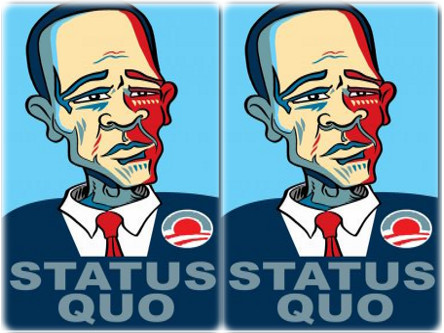
Obama secretly extends US combat operation in Afghanistan
RT | November 22, 2014
President Barack Obama has secretly signed an order that expands the United States’ direct combat role in Afghanistan throughout 2015, the New York Times reported.
Signed over the last few weeks, the secret order permits American forces to continue to battle the Taliban and other militants that pose a threat to either the Afghan government or US personnel. According to the Times, US jets, bombers, and drones will be able to aid ground troops – be they Afghan or US forces – in whatever mission they undertake.
Under the order, ground troops could join Afghan troops on missions, and airstrikes could be carried out in their support.
If true, this marks a significant expansion of America’s role in Afghanistan in 2015. Previously, President Obama said US forces would not be involved in combat operations once the new year begins. He did say troops would continue training Afghan forces and track down remaining Al-Qaeda members.
Obama signed the secret order after tense debates within the administration. The military reportedly argued that it would allow the US to keep the pressure on the Taliban and other groups should details emerge that they are planning to attack American troops. Civilian aides, meanwhile, said the role of combat troops should be limited to counter-terror missions against Al-Qaeda.
The Times said an administration official painted the secret order’s authorization as a win for the military… Full article
I’m confused, can anyone help me? Part Three
RT | November 18, 2014
I’m confused. The first thing I’m confused about is democratic legitimacy after elections are held in war-torn countries.
Western leaders have hailed the recent parliamentary elections in Ukraine, as a great triumph of “democracy.”
Barack Obama said it was “an important milestone in Ukraine’s democratic development.” Top EU officials said it represented “a victory of the people of Ukraine and of democracy.”
Yet large parts of war-torn Ukraine took no part in the vote. Turnout, according to the Ukraine Central Election Commission was just 52.42 percent.
In May’s presidential elections, turnout, according to official figures, was 60.3 percent. They were won by Petro Poroshenko with 54.7 percent of the vote. Again, western leaders hailed the results as a great victory for “democracy.”
Now let’s consider the case of Syria, another war-torn country where there were also important elections this year.
Unlike Ukraine’s elections, leading western politicians did not say the result of Syria’s first multi-candidate presidential election in over forty years represented an “important milestone in Syria’s democratic development”- even though, according to official figures, the turnout was much higher than in Ukraine, at 73.42 percent.
Far from it, the same people who hailed the elections in Ukraine haughtily dismissed the election in Syria as a “farce.”
“This election bore no relation to genuine democracy. It was held in the midst of civil war,” said British Foreign Secretary William Hague.
“Today’s presidential election in Syria is a disgrace,” said US State Department spokesperson Maria Harf.
French Foreign Minister Laurent Fabius called Syria’s election a “fake.” Fabius did not telephone Bashar al-Assad, the winner, to offer his “warmest congratulations” as he did with Poroshenko.
How come one election held in a country divided by war is hailed as a “victory of the people and of democracy” but another election- where the turnout is higher -denounced? Why are Poroshenko and the Ukrainian Prime Minister Yatsenyuk deemed to be the legitimate representatives of the Ukrainian people but Bashar al-Assad, despite his higher level of popular support, denied any kind of democratic legitimacy? I’m confused. Can anyone help me?
At the recent G20 summit in Brisbane, Canadian Prime Minister Stephen Harper told Vladimir Putin to “get out of Ukraine.” Leaving aside the fact that there’s no hard evidence that Russia is in Ukraine – and that Harper didn’t produce any- the statement seems to imply that the Canadian Prime Minister doesn’t like other countries interfering in the affairs of others and believes in state sovereignty and the inviolability of state borders.
But in 2003, Harper was a strong supporter of the US-led invasion of Iraq (and wanted Canada to join in), a clear example of one county “getting” into another. He actually thought it was a “mistake” of the then Canadian government not to take part in the invasion of Iraq. Why is Stephen Harper so concerned about a non-existent Russian invasion of Ukraine, but happy to support a real, actual, and blatantly illegal invasion of Iraq?Does the Canadian Prime Minister support state sovereignty and the inviolability of state borders, or doesn’t he? I’m confused. Can anyone help me?
David Cameron tells us that ISIS poses a “clear and present threat to the United Kingdom.” Yet only last year he was trying desperately to persuade Parliament to vote for air strikes against a secular Syrian government that was fighting ISIS and other radical extremists associated to al Al-Qaeda. Cameron describes ISIS as “an evil against which the whole world must unite,” but even now the British government, in common with other western governments is still working for the violent overthrow of the government in Damascus whose forces are the only ones on the ground in Syria capable of defeating ISIS. If defeating ISIS really was so important, why is the west trying to topple the anti-ISIS Syrian government? Why, if “the whole world must unite” against ISIS, won’t the British and western governments work with the Syrian government? I‘m confused. Can anyone help me?
To coincide with the launch of RT UK, we’ve seen a wave of attacks on RT by self-proclaimed “democrats” and “liberals” in the British media.Some of these attacks have urged Ofcom – the broadcasting regulator – to take action against RT. I always thought that being a “democrat” and “liberal” meant support for alternative voices being heard, not trying to stop people from hearing them. John Stuart Mill, the author of On Liberty, a classic text on liberalism, wrote of the “peculiar evil of silencing the expression of an opinion” and that “all silencing of discussion is an assumption of infallibility.”
So how come western “liberals” want to silence the opinions expressed on RT? Why are those who claim to be anti-censorship, so censorious when it comes to RT? I would have thought people calling themselves “democrats” and “liberals” would welcome a wide variety of news channels for people to watch, yet instead of that supporters of “free speech” are attacking a channel which broadcasts opinions which they don’t agree with it. I’m confused. Can anyone help me?
Western politicians say that they are appalled by the “barbarism” shown by ISIS in the various beheading videos they have released.But if beheading people is so bad (as most people would agree that it is), why is there no similar condemnation of the beheadings which take place in Saudi Arabia? In August, Amnesty International reported a “surge” in beheadings in Saudi Arabia, amounting to at least 23 in three weeks. Why are beheadings by ISIS “savage” but the ones carried out in Saudi Arabia acceptable? I’m confused. Can anyone help me?
Pussy Riot, the Russian punk protest group who were jailed after a demonstration in an Orthodox Cathedral in Moscow are feted as heroes in the West, with a whole range of public figures including the pop star Madonna coming forward to express their support. But there was no such celebrity support for Trenton Oldfield, a protestor who was jailed for six months in Britain after trying to disrupt the Oxford- Cambridge University boat race in 2012. Oldfield said he was protesting against elitism, inequality and government cuts. If Pussy Riot’s cause is deserving of “progressive” support, then why isn’t Oldfield’s? Why are some anti-government protestors who go to jail hailed as heroes, but others totally ignored? I’m confused. Can anyone help me?
You can read I’m confused, can anyone help me Parts One and Two.
NYPD arrests, ‘brutalizes’ peace activist McGovern ahead of Petraeus speech
RT | October 31, 2014
The New York Police Department has detained prominent peace activist and former CIA agent Ray McGovern, with witnesses saying he was “yelling in pain” during arrest. McGovern was detained ahead of a David Petraeus speech that he planned to attend.
McGovern was detained before the start of a talk between former CIA director David Petraeus, retired US Army Lt. Col. John Nagl, and author Max Boot on American Foreign Policy at the 92nd St Y., an Upper East Side cultural community center.
Anti-war group ‘The World Can’t Wait’ said the activist was arrested “at protest of speech.” He was reportedly prevented by security from entering, charged with criminal trespass and disorderly conduct, and will not be arraigned until Friday. The group has called for McGovern’s release on Twitter and Facebook.
The World Can’t Wait alleged on Twitter that McGovern was “brutalized” by the NYPD and later reported “screams coming from backroom” where the activist was being held. RT has contacted the NYPD who have yet to respond to allegations.
It appeared that the activist was detained even before entering the venue, despite having a ticket for the event.
Independent journalist and filmmaker Cat Watters was due to film McGovern during the talk, asking a question of Petraeus, but as she arrived she saw McGovern being arrested by police, telling them “I have a ticket!” Watters told RT that McGovern has a shoulder injury and was apparently yelling in pain during the arrest.
According to Watters, two members of World Can’t Wait, which asked her to film, were to hang a banner from balcony written with the words “War Criminal Iraq Afghanistan” and covered with handprints in red ink – however, McGovern was not going to take part in this action.
“He [Ray] doesn’t cause a ruckus. He asks questions. He stands up and turns his back,” Watters described the protesters’ plan.
McGovern is a former CIA officer turned political activist. He worked with the agency for just under three decades, retiring in 1990. He was highly critical and public about President George W. Bush’s use of government intelligence in the lead-up to the Iraq war. In 2006, he returned his Intelligence Commendation Medal in protest against the CIA’s involvement in torture.
Featured Video
Laith Marouf: Hezbollah’s position on US-Iran ceasefire
or go to
Aletho News Archives – Video-Images
From the Archives
The Dirty Little Secret behind the “Global Terrorism Index”
The Omission of Israeli Terrorism in the Occupied Palestinian Territories
By Karin Brothers | Global Research | December 6, 2014
… The Israeli settlements — all of which are illegal – have been identified as a major impediment to peace. The refusal of a major “global” terrorism report to name the Israeli settlers as one of the groups most responsible for terrorism not only misrepresents a major source of regional violence but exposes the Global Terrorism Index as a propaganda tool that supports a U.S. agenda.
In recent years, governments have been attempting to thwart terrorism by blocking supportive fund-raising. When it comes to Israeli settlements, however, the US and Canada actually encourage fund-raising by giving organizations (such as Christian Friends of Israeli Communities (CFOIC) and the Jewish National Fund) financial support in the form of donor tax-deductions.
Charities which provide funds for the Israeli settlements should be regarded as terror-financing organizations. They should not only lose their tax-deductible status, but they should be banned because they support the violation of international humanitarian law. The terror-financing laws that are being strictly enforced for Muslim charities should be applied to Christian and Jewish charities as well. … Read full article
Blog Roll
 Aletho News
- Israel faces ‘unsustainable’ strategic crisis following 40-day war against Iran: Analyst
- Iran restricts Hormuz access to 15 vessels per day under ceasefire terms: Report
- The ‘Opposition Party’ Has Done Nothing to Stop the Iran War and Much to Goad Trump Into Continuing It
- Moscow backs Tehran on status of Lebanon in US-Iran deal
- How UK Regulator Ofcom Quietly Bypassed International Law to Police American Speech
- The Black Cube Files: How Former Mossad Operatives Flipped a Nation
- Laith Marouf: Hezbollah’s position on US-Iran ceasefire: What you’re not being told
- Israel’s priority lies in destroying chances of peace between Iran, US: Ex-UN nuclear chief
- Ceasefire for all or for none: Iran shuts Hormuz over Lebanon attacks
- Strait of Hormuz is Iran’s ‘nuclear weapon’ that forced US retreat: Medvedev
- If Americans Knew
- This is ceasefire? Israel’s biggest massacre yet in Lebanon, another journalist killed in Gaza – Daily Update
- Tucker Carlson on Israel: This Is the Behavior of an Ally? Really?
- Gazans face a triple crisis: severe shortages of water and bread, healthcare in tatters
- NY Times reports how Netanyahu took the US into Iran War
- A sigh of relief over Iran, but Gaza and Lebanon in dire straits – Daily Update
- Thousands dead and neighborhoods razed to the ground: Aid agencies fear southern Lebanon is becoming the new Gaza
- The war the US is fighting for Israel could cost trillions
- ‘Cigarette Burns, Nail Wounds’: Toddler Tortured in Gaza to Coerce Father
- Trump Says US Sent ‘a Lot of Guns’ to Protesters in Iran
- Israeli forces destroy 17 UN peacekeeper cameras in south Lebanon
- No Tricks Zone
- An Inconvenient Tree: Uncovered In Alps… Europe Much Warmer Than Today 6000 Years Ago
- New Study Reports A 60% Slowdown In Greenland’s Ice Loss Rate In The Last Decade
- Low Intensity Tornado Wrecks Major Solar Farm, Creating A Potential Toxic Dump
- New Study Finds Warming Saves Lives…Cold Temperatures 12 Times More Deadly Than Excess Heat
- German Science Blog Accuses PIK Climate Institute Of Hallucinating Climate Tipping Points
- Devastating Assessment Of Comirnaty Vaccine By Former Senior Pfizer Europe Toxicologist
- New Study: CO2 Is ‘Effectively Negligible’ As An Explanatory Climate Change Factor Since 2000
- Former Pfizer Toxicologist Dr. Helmut Sterz Tells Bundestag Hearing Pfizer Vaccine Should Have Never Been Approved
- Energy Expert: Germany’s Nuclear Phaseout Was A “500 Billion Euro Mistake”
- New Research: South Australia’s Mid-Holocene Sea Surface Temperatures Were 4°C Warmer Than Today
 Aletho News