Extremist Israeli Settlers Harass Residents, Close Street, Near Jenin
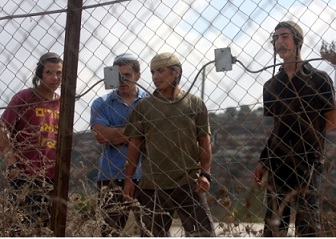
Israeli Settlers – Safa News
By Saed Bannoura | IMEMC & Agencies | October 3, 2013
Late on Wednesday at night a number of extremist Israeli settlers closed the western entrance of Ya’bod village, near the northern West Bank city of Jenin, and harassed several residents. Soldiers invaded the village and broke into a store.
Local sources said the settlers were dancing in the streets, chanting anti-Arab slogans, and were cursing at the residents, and conducting provocative acts.
The settlers used generators to light the streets, and to power loud speakers, while Israeli soldiers were deployed in the area without attempting to stop them, the Safa News Agency has reported.
Later on, the army invaded the village, not to remove the settlers, but to break into a local store that belongs to resident Salah Abu Dyak.
The soldiers violently searched the store and withdrew from the village.
On Thursday morning, several Israeli military jeeps installed a roadblock at the eastern entrance of Ya’bod, and nearby villages, and blocked all Palestinian traffic.
Soldiers stopped and searched dozens of cars, and questioned the passengers before forcing them back, forcing dozens of residents to take unpaved rough roads to reach their places of work, universities and schools.
Dozens of soldiers further invaded Sielet Ath-Thaher town, south of Jenin, broke into the home of resident Nasser Ibrahim Malloul, and handed his son Bilal, 27, a military warrant ordering him to the Salem military base for interrogation.
Related articles
Israelis torch Palestinian car, slash tires of five others

Photo credit – alarabiya.net
Al-Akhbar | October 1, 2013
Suspected Jewish extremists slashed the tires of five Palestinian-owned cars in Israeli-occupied east Jerusalem overnight, a police spokeswoman and local media said on Tuesday.
Separately in the occupied West Bank village of Burin, near Nablus, Israeli settlers set fire to a car, Ma’an news agency cited a Palestinian Authority official as saying.
“Five vehicles were vandalized close to the Old City at the entrance to the Silwan neighborhood, and the slogan ‘price tag’ written on a wall nearby,” spokeswoman Luba Samri said.
Initially carried out against Palestinians in “retaliation” for their filing lawsuits against Israel to reclaim stolen land occupied by settlers, price tag attacks have become a much broader phenomenon with racist and xenophobic overtones.
And in the northern West Bank, Ma’an reported that settlers from the illegal Yizhar outpost torched a car belonging to a Palestinian man at the entrance of the northern West Bank village of Burin, according to official Ghassan Daghlas who documents settler crimes.
Tuesday’s attacks come two days after police caught four Israelis red-handed as they destroyed Christian tombstones in a Palestinian cemetery in Jerusalem cemetery.
(AFP, Al-Akhbar)
AL-KHALIL (HEBRON): Entery Denied: Part II*
CPTnet | September 24, 2013
* The word “entry” is intentionally misspelled to reflect the misspelling on the Israeli “Entery Denied” stamp.
I made a second attempt to cross the border. Spoiler alert, I didn’t make it.
I have been volunteering with Christian Peacemaker Teams (CPT) in Palestine for one year. Due to visa restrictions all volunteers have to come into the country under a tourist visa, and leave every three months to renew our visas. Last week I was returning across the Allenby Border Crossing for my fourth stint. I was questioned extensively about myself, my family, my plans for my visit, and the work of CPT. After 7 hours of questioning and waiting I was told I was denied entry. I asked the reason for my denial. They did not give a clear answer, but did suggest that part of the reason involved not having sufficient evidence to support back my story. The soldier suggested I return later with a letter from CPT, evidence of where I was going to stay, and added that I should get a letter from the Israeli embassy. I took his advice, but the Israeli embassy was closed for over a week. So I returned to the border with a letter from CPT stating our work, my position, and my purpose for entering the country. I also printed out two letters from Israeli friends ‘inviting’ me.
My second attempt was similar to the first. I was questioned multiple times. I was asked to trace my family lineage back three generations. I was asked to prove my religion. I was accused of lying about my reasons for coming to the country. I found this ironic because I have always been honest about my reasons for entering, and it has brought me nothing but trouble.
Finally I was denied entry again. This time, the soldier explained it was because CPT is not a recognized organization. I told the soldier that we legally do not need to be recognized by Israel, and I asked why this was a reason for not letting me in. He said his commander said I couldn’t come in for that reason, and that was the end of the conversation.
In recent months Israeli border security has kept two other CPTers from crossing (that is 50% of the CPTers attempting to enter during that time). This is the first time someone has explicitly stated that it is because we are with CPT, although we assumed as much before.
CPT has been working in Hebron for 19 years. We are a member of the Association of International Development Agencies (AIDA). We receive grants from the United Nations and from Save the Children UK. CPT is a well known, respected INGO in the region. We have no explanation for the targeting of CPTers at the border in recent months and I question why the Israeli authorities see people working for a ‘violence reduction program’ as a threat.
For Part I of Jonathan’s first border denial click here
Related articles
- Military Training Amid Villages in South Hebron Hills (alethonews.wordpress.com)
- AL-KHALIL: Settlers re-occupy Abu Rajib house (alethonews.wordpress.com)
- Child Shot In The Eye In Hebron (alethonews.wordpress.com)
- Netanyahu Orders Court To Allow Settlers Back Into Hebron Home (alethonews.wordpress.com)
Child Shot In The Eye In Hebron
By Saed Bannoura | IMEMC & Agencies | September 28, 2013
Palestinian medical sources have reported that a seven-year-old child lost his right eye after being shot with a rubber-coated metal bullet fired by an Israeli soldier in Al-Fawwar refugee camp, south of the southern West Bank city of Hebron on Saturday.
The sources added that the child’s mother was also shot by a rubber-coated metal bullet in her shoulder.
The mother and her child were trying to return to the refugee camp; they were far from clashes taking place between the soldiers and local youths.
Eyewitnesses said that the mother and her child were trying to cross a road in an attempt to find a way back to their home after the army closed the main entrance of the camp.
Nasser Qabaja, head of the Disasters Unit at the Red Crescent in the southern part of the West Bank, stated that an ambulance transferred the child from Abu Al-Hasan Hospital to the Hebron Governmental Hospital, before moving him to the St. John Eye Hospital in occupied Jerusalem.
Furthermore, dozens of soldiers occupied rooftops of a number of homes in the area, and fired gas bombs, concussion grenades and rubber-coated metal bullets leading to a large number of injuries, mainly due to the effect of teargas inhalation.
One-third of Palestinian homes in Jerusalem are threatened with demolition
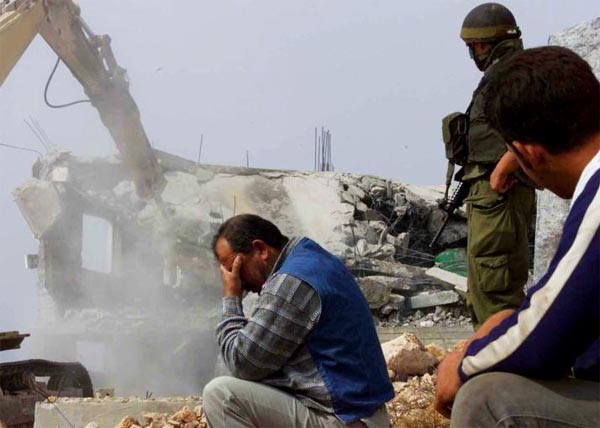
MEMO | September 26, 2013
An international human rights organisation has revealed that one-third of the Palestinian-owned houses in Jerusalem face demolition under the pretext that applications for building permits were incomplete. This, claims Euro-Mid Observer for Human Rights, is a way for the Israeli authorities to continue their demographic war against Palestinians in the Holy City. Israel gives Jerusalemite Palestinians the right to use just 13 per cent of the area of occupied East Jerusalem to meet the needs of their growing population.
A report from Euro-Mid shed some light on the widespread Israeli settlement programme in Jerusalem. It mentioned that the financial committee of the Israeli-controlled Jerusalem municipality decided to support 1,500 new settlement units in the city at the end of August. The human rights group also pointed out that Israel’s bulldozers are still razing Palestinian homes in Al-Tour neighbourhood because the authorities plan to set up the “National Israeli Park”.
According to the UN, poverty is getting worse among Palestinians in Jerusalem. Euro-Mid noted that the unemployment rate rose to 78 per cent in 2012 compared with 64 per cent in 2006. More than 40 per cent of Palestinian Jerusalemites now live below the official poverty line; one of the reasons is the disparity in wage rates between Israeli and Palestinian labourers.
Euro-Mid has called upon Israel to stop its frenzy of settlement construction in the occupied territories and to protect Palestinian sovereignty over East Jerusalem, as the potential capital of a Palestinian state.
Related articles
- Israel levels 7 Palestinian homes in East Jerusalem (worldbulletin.net)
- Jewish settlers occupy Palestinian land in Al-Quds (worldbulletin.net)
- Dozens Injured In Jerusalem, Two Kidnapped (imemc.org)
- Palestinians Attacked By Soldiers In Jerusalem’s Old City (imemc.org)
Netanyahu Orders Court To Allow Settlers Back Into Hebron Home
By Saed Bannoura | IMEMC & Agencies | September 23, 2013
Following the deadly shooting of an Israeli soldier in Hebron city, in the southern part of the occupied West Bank, Israeli Prime Minister, Benjamin Netanyahu, vowed to boost settlement activities, and ordered the Civil Administration, to take all needed measures to allow the return of Israeli settlers into a Palestinian home they previously occupied in Hebron.
The Israeli Civil Administration Office is run by the Israeli military in the occupied West Bank.
Back in April of 2012, a group of settlers was removed from the home, near the Ibrahimi Mosque in Hebron. They allegedly purchased the property but the purchase was deemed invalid, especially since such deals must be first approved by a commander of the Israeli occupation army.
The settlers were removed after the then-Israeli Defense Minister, Ehud Barak, issued an order in this regard following a court ruling.
The decision to allow the settlers to return to the property was made on Sunday night; Netanyahu said that the settlers “must be allowed into the home without any delay”.
After being removed from the property, the settlers filed several court appeals, demanding a recognition of the alleged transaction, while Israeli Defense Minister, Moshe Ya’alon, also vowed to do whatever he can to authorize their “return to the home”.
Netanyahu made his decision hours after a Palestinian sniper shot and killed an Israeli soldier in Hebron, following ongoing tension that led to clashes between the soldiers and dozens of local youths who hurled stones at them.
It is also related to the death of an Israeli soldier who was killed two days ago in the Qalqilia district, in the northern part of the occupied West Bank.
“Anyone who attempts to remove us from Hebron, from the city of our patriarchs, will just achieve the exact opposite”, Netanyahu said according to the Israeli daily Haaretz, “We will boost our settlement activities”.
Netanyahu said that the “return of the settlers to the Hebron home would still have to go through legal means”; yet, he ordered all related government facilities, to do whatever they can to ensure their fast return.
His decision comes despite the fact than an appeals committee, looking into the purchase did not recognize the documents presented by the settlers, but criticized the way this purchase was denied.
Haaretz added that, should the process be finalized, Netanyahu and his Defense Minister could sign off the deal, and authorize the settlers back.
In related news, Israeli Economics Minister, Neftali Bennet, demanded that Netanyahu stop the release of Palestinian political prisoners, as part of peace talks with the Palestinians, and said that the Palestinians “must be punished for the killing of the two Israeli soldiers.”
Bennet, of the Jewish Home Party, who also serves at the Ministerial Council, said that “the release of Palestinian prisoners is based on progress of talks, and our duty should be a war on murderers…” according to the official.
Israel’s Transportation Minister, Yisrael Katz, said that he previously voted against the release of any detainee, and that the release of what he called “terrorists” encourages others to attack Israel.
Following the fatal shooting of the Israeli soldier in Hebron, the army initiated a large campaign and broke into and searched hundreds of homes close to the Ibrahimi Mosque area where the soldier was shot.
Hundreds of Palestinians were kidnapped, and where rounded up in the southern area of the occupied city of Hebron.
The soldiers also occupied rooftops of several homes, using them as monitoring towers, while the army operated in the area.
The military declared Hebron a closed military zone, preventing the Palestinians from entering or leaving it.
Last week, Israeli soldiers shot and killed one Palestinian, and injured four, including three children, in different attacks carried out in the occupied Palestinian territories.
The army carried out 49 invasions into Palestinian communities, and kidnapped at least 41, including 9 children.
Two Palestinians have been killed, dozens have been injured, and hundreds were detained, by Israeli forces since the beginning of the month.
Related articles
EU calls for explanations from Israel over diplomat scuffle
RT | September 22, 2013
European diplomats are holding Israel accountable over an incident where IDF servicemen attacked a EU humanitarian convoy in the West Bank on Friday. So far Tel Aviv has left the scandal in limbo, offering no official explanation for the incident.
Diplomats from several EU countries have spoken out against the shocking incident of harassing a person with diplomatic immunity, clearly awaiting some sort of official reaction from the state of Israel.
After disturbing photos of the French diplomat, Marion Fesneau-Castaing, spread on the ground with IDF soldiers standing around her hit international news, the scandal over hijacked EU aid to homeless Bedouins from demolished villages in the West Bank has gained momentum.
“EU representatives have already contacted the Israeli authorities to demand an explanation and expressed their concern at the incident,” says a statement issued by the spokesmen for EU foreign policy, Catherine Ashton and Humanitarian Aid Commissioner, Kristalina Georgieva.
An EU official described the Israeli actions as “shocking and outrageous”, the BBC reported.
The British Consulate General in Jerusalem is “concerned at reports that the Israeli military authorities have prevented the affected community from receiving humanitarian assistance,” the consulate’s spokesman said.
“We have repeatedly made clear to the Israeli authorities our concerns over such demolitions, which we view as causing unnecessary suffering to ordinary Palestinians, as harmful to the peace process and contrary to international humanitarian law,” the spokesman added.
The Israeli authorities should “live up to their obligations as occupying power to protect those communities under their responsibility,” the UN Humanitarian Coordinator James Rawley said.
‘Illegal diplomatic activity’
The Israeli Foreign Ministry’s spokesperson, Paul Hirschson, has threatened to lodge a complaint over Marion Fesneau-Castaing’s actions, Agence France-Presse reported.
“If she did participate then a formal complaint will be filed because that is not the way diplomats behave,” he said.
On Saturday the EU ambassador in Israel called the Foreign Ministry Deputy Director-General for Europe, Rafi Shutz, demanding explanations regarding the IDF in the West Bank on Friday.
“What was done there by the European diplomats was a provocation,” said Shutz as quoted by the Haaretz.
Mr Shutz claimed that force against the female French diplomat was used because she slapped one of the soldiers. He also announced that the state of Israel is looking into allegations that foreign diplomats “abused their diplomatic privileges”.
Because Palestinian construction at the site of former Khirbet Al-Makhul village was ruled illegal by an Israeli court, the European diplomats were engaging in illegal activity, Shutz stated. He also pointed out that humanitarian aid to Palestinians should be delivered through the proper channels, coordinated with Israel.
The IDF explained the use of stun grenades during the incident, claiming that stones were thrown at security forces. Stun grenades were thrown directly into a group of European diplomats, aid workers and locals who were trying to deliver emergency aid to the residents of a demolished Palestinian village, Reuters reported.
On Friday a truck with EU humanitarian aid for the villagers of the demolished Khirbet Al-Makhul settlement was attacked by IDF personnel, who confiscated the truck and the payload. French diplomat Marion Fesneau-Castaing, who attempted to prevent confiscation of the aid, was pulled out of the truck and forced to the ground. The incident received wide international coverage.
Houses, stables and a kindergarten at Khirbet Al-Makhul village were demolished on Monday after a decision by Israel’s High Court, which ruled that villagers had illegal building permits. The villagers refused to leave the ruins saying they have been living on that land for generations.
The seizure incident of a truck carrying humanitarian aid has become yet another page in the row between Brussels and Tel Aviv. In July the EU announced it is going to stop all financial assistance to Israeli organizations operating in the occupied territories, starting from 2014.
The government of Prime Minister Benjamin Netanyahu reacted angrily, denouncing the move as interference in Israel-Palestine relations and retaliated by blocking EU humanitarian aid to tens of thousands of Palestinians in the West Bank.
Israel and the Palestinian Autonomy remain in fruitless peace talks, with the major stumbling block being the ongoing construction of Jewish settlements in the West Bank and East Jerusalem, occupied since the 1967 Middle East war.
Related article
Israeli soldiers rough up EU diplomat, confiscate aid supplies for Palestinians
Al-Akhbar | September 20, 2013
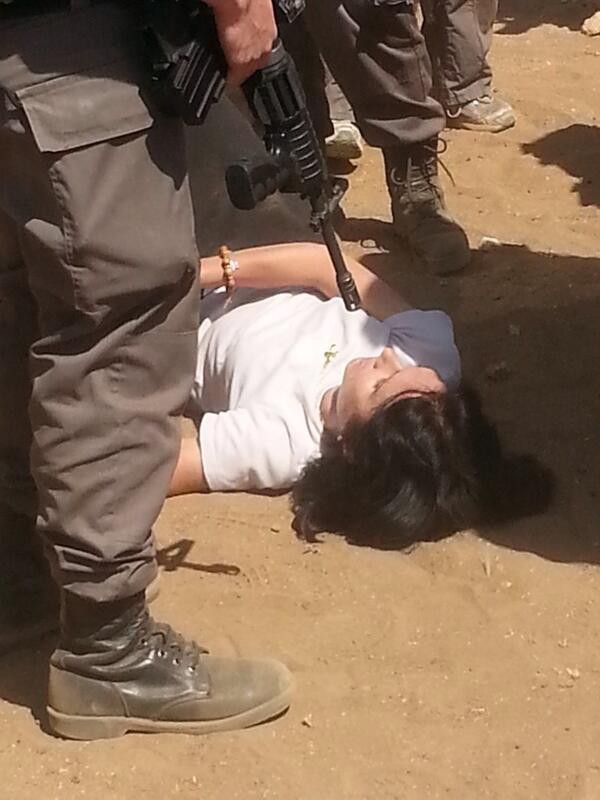 Israeli soldiers manhandled European diplomats on Friday and seized a truck full of tents and emergency aid they had been trying to deliver to Palestinians whose homes were demolished this week.
A Reuters reporter saw soldiers throw sound grenades at a group of diplomats, aid workers and locals in the occupied West Bank, and yank a French diplomat out of the truck before driving away with its contents.
“They dragged me out of the truck and forced me to the ground with no regard for my diplomatic immunity,” French diplomat Marion Castaing said.
“This is how international law is being respected here,” she said, covered with dust.
The Israeli army and police declined to comment.
Locals said Khirbet al-Makhul was home to about 120 people. The army demolished their houses, stables and a kindergarten on Monday after Israel’s high court ruled that they did not have proper building permits.
Despite losing their property, the inhabitants have refused to leave the land, where they say their families have lived for generations along with their flocks of sheep.
Israeli soldiers stopped the International Committee of the Red Cross (ICRC) delivering emergency aid on Tuesday and on Wednesday IRCS staff managed to put up some tents but the army forced them to take the shelters down.
Diplomats from France, Britain, Spain, Ireland, Australia and the European Union’s political office, turned up on Friday with more supplies. As soon as they arrived, about a dozen Israeli army jeeps converged on them, and soldiers told them not to unload their truck.
“It’s shocking and outrageous. We will report these actions to our governments,” said one EU diplomat, who declined to be named because he did not have authorization to talk to the media.
“(Our presence here) is a clear matter of international humanitarian law. By the Geneva Convention, an occupying power needs to see to the needs of people under occupation. These people aren’t being protected,” he said.
In scuffles between soldiers and locals, several villagers were detained and an elderly Palestinian man fainted and was taken for medical treatment.
The UN Office for the Coordination of Humanitarian Affairs (OCHA) said in a statement that Makhul was the third Bedouin community to be demolished by the Israelis in the West Bank and adjacent Jerusalem municipality since August.
Palestinians have accused the Israeli authorities of progressively taking their historical grazing lands, either earmarking it for military use or handing it over to the Israelis whose settlements dot the West Bank.
Israeli forces regularly demolish Palestinian homes, claiming they do not have the proper construction permits. However, the Israeli government regularly announces the expansion of settlements, which are considered illegal under international law.
Israelis and Palestinians resumed direct peace talks last month after a three-year hiatus. Palestinian officials have expressed serious doubts about the prospects of a breakthrough.
“What the Israelis are doing is not helpful to the negotiations. Under any circumstances, talks or not, they’re obligated to respect international law,” the unnamed EU diplomat said.
(Reuters, Al-Akhbar)
Military Training Amid Villages in South Hebron Hills
CPTnet | September 19, 2013
During their most recent weekly visit to villages in the South Hebron Hills, CPTers witnessed a large group of Israeli soldiers in the area and heard an artillery training activity. Every week, Christian Peacemaker Teams, along with other internationals, provides a presence in an area, home to twelve villages, that the Israeli military has designated as Firing Zone 918—a closed military zone for training maneuvers.
On Sunday, 15 September, CPTers witnessed soldiers and a military vehicle near the village of Halaweh and two helicopter flyovers as children studied and played at the school in Al Fakheit. They heard several other helicopters flying nearby during the night. On the morning of 16 September, CPTers heard what seemed to be bomb detonation and machine gun fire. Later in the morning, when they visited the village of Jinba, residents confirmed that the Israeli military had conducted infantry training exercises nearby from about 6:00 to 8:00 a.m. that morning.
During their visit to Jinba village, CPTers learned that the Israeli authorities had stopped employees of World Vision as they were driving from Jinba to Al Fakheit and confiscated their car on 11 September. According to a United Nations employee, soldiers said they would not return the car for at least sixty days.
The area has been relatively quiet since May – with no training activities seen or heard, though helicopter flyovers continued even during this “quiet” time and settler violence and a military raid occurred in July. Here is a video of an Israeli military helicopter harrassing the village of Al Fakheit:
On their way into the area, CPTers also witnessed the digging of a new cistern. The Israeli government issued a stop work order on the cistern saying it is in a “nature reserve” (as well as the firing zone.) Nevertheless, the work continues.
The area is currently the subject of a court case in the Israeli Supreme Court. Eight of the twelve villages, where about 1,000 people live, are under eviction orders. Many structures within those villages also have demolition orders. When the case came to court on 2 September, the judicial panel proposed mediation. The case will again come before the court on 2 October. The military exercises CPTers witnessed were the first since the 2 September court date.
The U.N.’s 2012 Humanitarian Impact of Israeli-declared “Firing Zone” in the West Bank Factsheet reports that in addition to restriction on grazing livestock (the livelihood of many inhabitants of the area),
residents of firing zones face a range of other difficulties including the confiscation of property, settler violence, harassment by soldiers, access and movement restrictions and/or water scarcity. Combined, these conditions contribute to a coercive environment that creates pressure on Palestinian communities to leave these areas… International law also prohibits the destruction or confiscation of private or public property, unless for reasons of military necessity, as well as the forced displacement or transfer of civilians.”
Related articles
- Soldiers Demolish Northern Plains Village (imemc.org)
- Israeli forces seize tents in demolished village (altahrir.wordpress.com)
Featured Video

Deception – Submarines against Olof Palme
or go to
Aletho News Archives – Video-Images
From the Archives
Woolsey Fire started at Santa Susana Field Lab — where “radioactive materials released were never accurately measured”
By John Laforge | CounterPunch | November 30, 2018
In my Nov. 16 column, I reported on potential radiation risks posed by California’s Woolsey wildfire having burned over parts or all of the Santa Susana Field Laboratory—south of Simi Valley, Calif., 30 miles outside Los Angeles—site of at least four partial or total nuclear reactor meltdowns.
The field laboratory operated 10 experimental reactors and conducted rocket engine tests. In his 2014 book Atomic Accidents, researcher James Mahaffey writes, “The cores in four experimental reactors on site … melted.” Reactor core melts always result in the release of large amounts of radioactive gases and particles. Clean up of the deeply contaminated site has not been conducted in spite of a 2010 agreement.
Los Angeles’s KABC-7 TV reported Nov. 13 that the Santa Susana lab site “appears to be the origin of the Woolsey Fire” which has torched over 96,000 acres. Southern Calif. Public Radio said, “According to Cal Fire, the Woolsey Fire started on the afternoon of Thursday, Nov. 8 … on the Santa Susana site.” … continue
Blog Roll
 Aletho News
- Feeling Better, Getting Worse: How Psychiatric Drugs Create the Illusion They Cure
- ‘Nobody Told Me’: Former Mental Health Patient Calls Out Dangerous Side Effects of Psychiatric Drugs
- Dr. Abu-Sitta: Beirut ‘felt like a day in Shifa Hospital’
- Iran Has Won the War, It Will Be Up to the US to Secure the Peace: Mohammad Marandi
- Iran condemns assassination threats against Iranian negotiators amid US talks
- Brussels cannot say where its own pipeline inspectors are as Hungary’s oil lifeline remains shut
- Israel’s Iran War: Myth and Reality
- Between war and industrial breakdown: The US-Israeli attrition crisis
- Pressure builds on Iran to ‘drop’ Lebanon ceasefire demand as Islamabad talks hang in balance
- In another clash report, US denies agreement to release Iran’s assets
- If Americans Knew
- Pro-Israel ‘Thinktanks’ and Individuals who Influence U.S. Foreign Policy
- Mearsheimer reveals how Israel dictates US policies on Iran, Gaza – video
- After killing 350+, Israel still has a “score to settle” with Lebanon before ceasefire – Daily Update
- Military aid to Israel emerges as the latest political litmus test for Democrats
- The only Palestinian children’s rights organization closes following years-long Israeli campaign against it
- ‘I Can’t Forget the Smell’: Lebanese Reel After Israel Kills Over 300 in Single Day
- DNC Shoots Down Resolutions Calling Out AIPAC and Limiting Arms to Israel
- TCN: Is Israel Blackmailing President Trump?
- Israel killed at least 303 Lebanese yesterday – who were they? Daily Update
- Amnesty: Urgent – Protect Lebanese civilians from brutal escalation in Israeli attacks
- No Tricks Zone
- German Expert: Heat Dome Led To Record Temps In Western USA…Warmer In 1934, 1936
- New Study: No Linear Warming Or Glacier Retreat Along Northern Antarctic Peninsula Since 1980s
- An Inconvenient Tree: Uncovered In Alps… Europe Much Warmer Than Today 6000 Years Ago
- New Study Reports A 60% Slowdown In Greenland’s Ice Loss Rate In The Last Decade
- Low Intensity Tornado Wrecks Major Solar Farm, Creating A Potential Toxic Dump
- New Study Finds Warming Saves Lives…Cold Temperatures 12 Times More Deadly Than Excess Heat
- German Science Blog Accuses PIK Climate Institute Of Hallucinating Climate Tipping Points
- Devastating Assessment Of Comirnaty Vaccine By Former Senior Pfizer Europe Toxicologist
- New Study: CO2 Is ‘Effectively Negligible’ As An Explanatory Climate Change Factor Since 2000
- Former Pfizer Toxicologist Dr. Helmut Sterz Tells Bundestag Hearing Pfizer Vaccine Should Have Never Been Approved
 Aletho News