Arrest of Electronic Intifada journalist exposes deep Zionist footprints in Switzerland

Mario Fehr in Zurich 10 October 2023
By David Miller | Press TV | February 20, 2025
Ali Abunimah, the director of the Electronic Intifada, an independent pro-Palestine news website, was recently arrested in Switzerland and later deported.
One man was identified as the proximate cause – the Zurich security minister, Mario Fehr. It was also revealed that Fehr is a fanatical Zionist.
As the Grayzone website reported at a “rally in solidarity with Israel” on Oct. 10, 2023, Fehr openly stated that “the fate of Israel and its inhabitants is close to my heart.”
He also stated that the Gaza-based resistance movement Hamas and the Islamic Republic of Iran have always called for the “destruction of Israel and the Jews.”
“Anyone who rapes women, kills old people, kidnaps children, dehumanizes the dead, takes countless peaceful people hostage is not a negotiating partner – he is a rapist, a murderer, a terrorist,” Fehr was quoted as saying.
“Golda Meir was right: ‘You cannot negotiate peace with somebody who has come to kill you.’ Peace will not be possible with Hamas and its accomplices!”
But, is the influence of Zionism in Switzerland greater than just one corrupt official?
Let’s have a deeper look.
The Zionist movement is led by the World Zionist Organisation based in occupied Jerusalem al-Quds along with three key allied bodies collectively called the “Israeli national institutions.”
In every country where the Zionist movement is organized, there are local branches of these four groups.
Switzerland is no different.
The Swiss Zionist Federation is the local branch of the WZO, which brings together all Swiss Zionist identifying groups.
In addition, there is a branch of the so-called “Jewish National Fund” which is the pre-eminent land theft agency of the Zionist movement.
It has been called a “colonialist agency of ethnic cleansing” by noted Israeli scholar and historian Ilan Pappe. The Swiss branch is called the KKL-JNF Switzerland and it states that it “works closely with the head office in Israel.”
There is also a department of the Jewish Agency the Zionist regime-controlled institution that recruits settlers to come and live on the land stolen by the JNF.
Lastly, there is a branch of the Keren Hayesod known as the Foundation Fund since it raises money to pay for the illegal settlers and their settlements.
The Swiss branch is called the Keren Hajessod Switzerland.
The global Zionist movement is also supported by the World Jewish Congress.
Its Swiss branch is called the Swiss Federation of Jewish Communities. It is given the acronym SIG in German which stands for Schweizerischer Israelitischer Gemeindebund. The federation organizes some 18 regional members.
Other Israel lobby groups include:
- Gesellschaft Schweiz-Israel (GIS) [Switzerland-Israel Society] is an organization that aims to strengthen relations between the Israeli regime and Switzerland. Founded in 1957, with ten local branches throughout the country, the GSI has called on the Federal Council to outlaw Hamas. Its president, ambitious Swiss politician Corina Eichenberger-Walther, is also president of the European Alliance for Israel, formed in 2015. In May 2024 GSI’s partner organization in the occupied Palestinian territories, the Swiss-Israel Society, sent an email to its roughly 2,000 members calling on them to spy on “opponents of Israel.” In the email, Walter L. Blum, the central secretary of the society, called for “opposing actors to be systematically monitored.”
- European Council of Jewish Communities was founded in 1968. It forms a network consisting of over 50 Jewish communities, institutions and organizations from more than 30 countries in Europe including Switzerland.
- The Association of Swiss Jewish Refugee Aid and Welfare Organisations (VSJF) is run by Gabrielle Rosenstein. She is also a Vice-President at the ECJC.
- Foundation for Contemporary Jewish History is an ostensibly academic repository on Jewish history which has, however, been penetrated by Zionist groups such as the SIG.
- Interreligious Dialogue is an interfaith initiative to normalize Zionism. As they themselves admit it is “an effective and sustainable response to insecurity, tensions and, specifically, antisemitism.”
- European Jewish Congress is a European wing of the World Jewish Congress.
- Platform of Liberal Jews in Switzerland was set up in 2003 and now states that it represents around 1,800 members.
- A new group called NAIN (Never Again Is Now) was created in the past year. It claims to “defend Israel against anti-Zionist agendas.” It spread lies about Abunimah’s arrest, reposting a statement calling him “an Islamist Jew-hater”.
No wonder Abunimah, a Palestinian-American journalist who has been a vocal advocate of the Palestinian cause and a fierce critic of the Zionist regime’s genocidal war on the Gaza Strip, was arrested in Switzerland.
Switzerland has also had a long and close historical relationship with the Zionist movement.
The first-ever conference of the Zionist Organisation was held in Basel, Switzerland in August 1897.
In fact, no city outside occupied Palestine has hosted the World Zionist Congress so often. Ten of the gatherings of a total of 22 up until 1946 were held in Basel.
The World Zionist Organisation returned to Basel in 2022 for what it called the ‘most significant Zionist gathering of the decade’. It was celebrating the 125th anniversary of the inaugural Zionist Congress.
There are also other connections between Zionism and Switzerland.
In August 1936, the founding plenary of the World Jewish Congress was held in Geneva. The WJC today is led by Ronald S Lauder, the heir to the Estee Lauder cosmetics fortune.
He led the Jewish National Fund from 1997 to 2007 and has been its board chair ever since. The World Jewish Congress elected Lauder as its president in 2007, a position he continues to occupy.
He was named seventh amongst the 50 most influential Jews in the world by the Jerusalem Post in 2024. Lauder is an extreme Zionist, supporter of the racist Birthright programme.
As Alan McLeod has written, Lauder is a “close confidant and supporter of Benjamin Netanyahu, who was appointed a negotiator for Israel with the government of Syria in 1998.
His presence at a One Jerusalem rally in front of religious extremists in 2001 led to a boycott of the Estée Lauder brand across the Muslim world.”
In 1982, the Lubavitcher Rebbe sent an emissary to Zurich which is home to a significant ultra-orthodox Jewish community. Today the genocidal cult that is Chabad-Lubavitch has nine separate branches in Switzerland.
In recent years there have been efforts to proscribe Hamas as a terrorist group and to cut funding to UNRWA. Amongst other groups, the pressure has been applied by NGO Monitor which attempted to undermine pro-Palestine groups and by the Geneva-based UN Watch which poses as independent but is actually a front group for the American Jewish Committee as was reported by Press TV’s Palestine Declassified show in 2024.
In late 2023 the Members of the Israel-Switzerland Parliamentary Friendship Group conducted an official visit to Bern. The visitors were two members of the Knesset, MK Yosef Taieb and MK Hamad Amar, belonging to the extremist Shas and Yisrael Beiteinu parties respectively.
It is no surprise then to learn that the Federal Council of Switzerland adopted the IHRA working definition in June 2021 and added it to the existing armory for weaponizing antisemitism in the country.
The Zionist movement in Switzerland makes sure to keep up the pressure to maintain the fake definition of antisemitism by inventing a supposed epidemic of racism against the Jews.
There are several groups doing this including Intercommunity Coordination against Anti-Semitism and Defamation (CICAD) which is run by a lifelong Zionist Johanne Gurfinkiel.
Unsurprisingly it deliberately blurs together prejudice against the Jews with pro-Palestine protest.
In addition, the main Israel lobby group the Swiss Federation of Jewish Communities co-published a report in 2023 claiming that antisemitism “nearly tripled” after the launch of al Aqsa Flood.
The SFJC collaborated to produce the report with the Foundation Against Racism and Antisemitism. This group is strongly Zionist and explains anti-Semitism in a way that simply echoes the foreign policy lines developed by the Zionist regime.
Scandalously the lobby groups are financially supported by the Swiss governmental body, the Service for Combatting Racism.
Like many other European countries, the Zionists are firmly embedded in Swiss society.
Uprooting them and consigning Zionism to the dustbin of history will not be easy, but it is a necessary task wherever the racist ideology is found.
David Miller is the producer and co-host of Press TV’s weekly Palestine Declassified show. He was sacked from Bristol University in October 2021 over his Palestine advocacy.
FEMA Allocated $2.6M for “War on Misinformation” Contract in 2023
By Didi Rankovic | Reclaim The Net | February 20, 2025
The Federal Emergency Management Agency (FEMA) – an incorporated agency of the Department of Homeland Security (DHS) – earmarked $2.6 million to fund a “war on misinformation” contract in 2023, according to data on the usaspending.gov website.
The blanket purchase agreement note lists “misinformation, disinformation, and malinformation analysis” as the subjects of the order, with $1.2 million spent, and as much currently listed as the obligated amount.
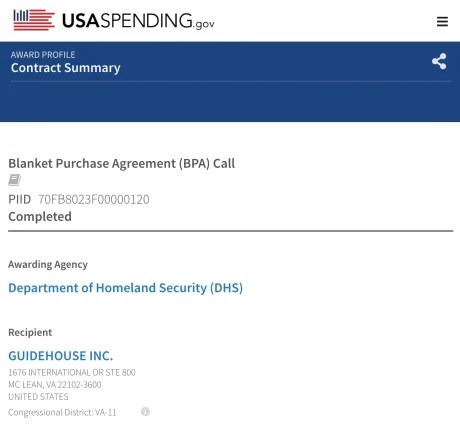
Screenshot of a USAspending.gov contract summary detailing a completed Blanket Purchase Agreement (BPA) Call awarded by the DHS to Guidehouse Inc., located in McLean, VA.
As noticed by Foundation For Freedom Online, the recipient is the consultancy firm Guildehouse, a government contractor owned by Bain Capital. A post on the company’s website that has since been deleted spoke about Guildehouse engaging with social media platforms to report misinformation (including flagging posts for removal).
Guildehouse also “maintained a proprietary internal database” to track content designated as “misinformation,” and a list of “higher risks” sites that might have published such content.
The case looks like another piece in the puzzle that has been the Big Government-Big Tech collusion to suppress speech in the US, unfolding over the last four years.
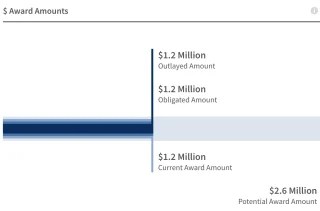
“$ Award Amounts” chart shows $1.2 million as the outlayed amount, $1.2 million as the obligated amount, and $1.2 million as the current award amount, with a potential award amount of $2.6 million.
This one features some recurring, and some new “characters” – but also, sheds more light on what appears to be the former authorities’ painstaking efforts to obfuscate the ties that bound those actors together.
For example, FEMA is not one of the usual entities brought up in Congressional investigations and lawsuits delving deep into that collusion; but it is a sub-agency of the DHS, notorious for things like the failed attempt to set up the Disinformation Governance Board, and even work, in roundabout ways, with the Election Integrity Partnership (EIP).
In 2023, the House Committee on Homeland Security referred to the practice of “delegating” what’s unconstitutional censorship of speech to third parties as, “censorship laundering.”
A group that does often crop up in these probes is the UK-based Center for Countering Digital Hate (CCDH), a pro-censorship group of the “Kill Musk’s Twitter” infamy, which in 2024 organized what reports say was an “exclusive, invite-only” gala.
One of those invited was Erica Mindel – a former member of the Israeli military, a contractor to the US State Department’s envoy monitoring and combating antisemitism – but also, one of Guildehouse’s senior consultants.
Police angry at my writing about ridiculous charges, so add more
By Yves Engler | February 19, 2025
You can’t make this up. Initially the Montreal police accused me of harassing an anti-Palestinian media personality because I posted about Israel’s genocide. Now they are charging me for harassing the police for writing about the charges levelled against me.
At 9:30 AM tomorrow the Montreal police are set to arrest me. Today an officer told me they will detain me overnight or until I’m brought before a judge.
 On Tuesday police investigator Crivello said they were charging me at the behest of anti-Palestinian activist Dahlia Kurtz. The police officer said I had described Kurtz as a “genocide” supporter and “fascist” on Twitter, which is true.
I promptly wrote about the charges and the Canadian Foreign Policy Institute organized an email letter campaign, which saw 2,500 outraged people call on the cops to drop the Kurtz-sponsored charges. Angry at receiving emails and my article — the police were seeking release conditions barring me from discussing the charges levelled against me — the police are now claiming I’m victimizing them. Today a new investigator called to say investigator Crivello feels threatened by my writing about the charges levelled against me. The Montreal police will be charging me with intimidation, harassment, harassing communication and “entrave” (interference) towards Crivello.
The police investigator also announced that they will be holding me overnight out of fear that I may “recidive” (relapse). In other words, I might once again write about the absurd charges levelled against me. Guilty as charged.
Over the past 24 hours I’ve received multiple messages about frivolous cases brought against others for opposing genocide. The abuse of police and legal system to target opponents of genocide is a greater problem than I realized.
I’m trying to make sense of Kurtz’s bizarre bid not to block me on X but claim I am harassing her. Perhaps she is trying to monetize her status as a victim of hate. On her site Kurtz writes: “If you want to help save Canada from hate and extremism please donate by e-transfer to: [email]. After years of working for media outlets, I am now independent, so I can say the truth. This also means my personal security is under constant threat. You can make a difference. My work is funded solely by your support.”
A lawyer is looking into pursuing legal action against Kurtz. But it’s the police that really need to be held accountable. The initial charges were an abuse of state authority and adding new charges for criticizing them is beyond absurd.
The Montreal police apparently have no qualms about acting in service of Israel’s slaughter in Gaza. More than 100,000 have been killed and almost everyone has been displaced. About 70% of buildings are destroyed and most agricultural land damaged.
The police targeting opposition to Israel’s crimes is an embarrassment. The particular charges are ridiculous. The notion that someone can publicly attack Palestinians, repeatedly call Canada’s prime minister an antisemite and a supporter of terror, engage a Conservative Party candidate as a lawyer to convince police to lay charges and authorities go along with it — simply incredible. Then for the police to claim they are being victimized by emails critical of the ridiculous charges — I’m at a loss for words. What parallel universe have we slipped into?
Please email the Montreal police chief and mayor to demand they drop the charges against Yves Engler.
Ukraine’s Zelensky Forgets the First Rule of Crisis Management — If You’re in a Hole, Stop Digging
By Larry C. Johnson | Sonar21 | February 19, 2025

Gotta confess, I did not see this coming. Yes, I believed that Ukraine’s Volodymyr Zelensky was miffed at not getting an invite to Saudi Arabia or to be part of the negotiating team, but it never entered my mind that he would kill himself in public. Suicide ain’t a good look. Zelensky reacted to Trump’s post by going after the Donald. Not a smart move.
While Zelensky did not put a loaded gun to his head and press the trigger, that may have been a better option than what he did — i.e., verbally attack and insult Donald Trump. If Trump truly was the King of the Realm, Zelensky would have arrived hogtied before Trump and the Donald would have cut his tongue out. Such were the pleasantries of the Middle Ages.
Here are a couple of Zelensky’s verbal tirades today criticizing Trump for excluding the Z-man from the negotiations:
Zelensky said Ukraine “did not know anything about” the meeting between Putin and Trump, and said his country will not accept a peace deal brokered without Ukrainian participation.
Zelensky told reporters he “would like Trump’s team to be more truthful” about the war and accused the president of living in a Russian-made “disinformation space.”
If Zelensky thinks that public criticism of Trump is a winning strategy to win over the Donald, he has not paid attention to Trump’s method of handling critics and opponents during the past ten years. While Zelensky enjoys the full support of the Washington neocons and those politicians who have been paid under the table by Ukraine, picking a fight with Trump guarantees that further aid to Ukraine is DOA (i.e., dead on arrival).
Trump has the memory of an elephant. He has not forgotten the role that Zelensky played in Trump’s first impeachment drama. Zelensky could have spoken out in defense of Trump at the time, but he chose to remain silent. Zelensky did not buy himself any good karma with Trump.
Then there is the matter of missing billions of US taxpayer dollars. Elon Musk, as well as some folks outside of DOGE, are auditing the more than $300 billion sent to Ukraine. I know from a close friend that $50 billion already has been tracked to bank accounts in the Caribbean. Sometime within the next month or two, the world will learn some specifics of Zelensky’s theft of some of these funds. When that happens, Zelensky is burnt toast.
Don’t be surprised in a few months when Attorney General Pam Bondi announces criminal indictments against Zelensky for theft of US government property. Assuming that Zelensky is not assassinated or jailed by disgruntled Ukrainian military officers, his chances of finding a safe haven outside of Ukraine will dim dramatically. Zelensky fails to understand that he is nothing more than a pawn in a Western-led game of global chess. He ain’t essential, he’s expendable.
It appears that Trump’s goal in reviving relations with Russia has little to do with Ukraine and its future. As a result of Tuesday’s meeting in Saudi Arabia between the US and Russian delegations, there was agreement on forming six working groups that will address the following issues:
- Group on Strategic Security and Arms Control. Arms control is one of the topics where dialogue between Moscow and Washington continues even in the crisis. The New START Treaty expires in 2026, and the United States is interested in extending it, but will try to impose new restrictions on Russian hypersonic weapons and tactical nuclear forces. Russia, in turn, will seek a revision of the balance of power, taking into account NATO’s non-expansion, and demand restrictions on the deployment of new missile systems in Europe.
- Group on the Review of the Global Security Architecture.
The issues of global security architecture, delimitation of spheres of influence, including possible mechanisms for monitoring developments in artificial intelligence, cybersecurity and autonomous combat systems will be discussed separately. It is likely that this is the area where the contradictions will be most acute. Moreover, other significant powers, including China, will need to be involved in the process. - Group on bilateral diplomatic interaction.
Both sides are interested in the return of the embassies to full operation, within the framework of which mutual restrictions on the work of diplomatic missions will be lifted, and broad channels of communication will be established, including, in part, issues of economic ties. - Energy and Sanctions Group.
Russia is interested in lifting American sanctions, and the Americans will be offered some joint economic projects. However, the American side will try to link any concessions with demands concerning other areas, including Russian-Chinese relations, so a compromise will not be easy. Plus, Trump will be wary of accusations from hawks among the Republicans about the “excessive” easing of the sanctions regime. - Group for the settlement of the conflict in Ukraine.
Within its framework, the parameters of a peace agreement on Ukraine will be agreed upon. There is already agreement on a number of issues. Ukraine is a non-aligned state, the EU will not be an actor influencing the negotiations, elections will be held in Ukraine and then a full-fledged agreement will be concluded, which will be adopted by the UN, there will be no NATO troops on the territory of Ukraine. Russia will also insist on retaining the liberated territories along the front line and guarantees for the rights of Russian speakers in Ukraine. The full scope of the concessions that Washington is ready to make and their price are still unclear. - International Affairs Group (Middle East, Arctic).
The situation in the Middle East requires coordination of efforts by major players, including to prevent the Israeli-Palestinian truce from collapsing, to make a decision on the Syrian case, and others. Russia continues to actively interact with Turkey, Iran, and the Persian Gulf countries, which makes it an important participant in any negotiation processes in the region. Also on the agenda are issues of cooperation in the Arctic, where Russia maintains strategic superiority.
Ending the war in Ukraine is not necessarily a top priority. Trump’s team has made it clear that this is a problem for the Europeans and the Ukrainians to resolve if they are intent on continuing the war. Trump is looking at a bigger picture and keeping Zelensky happy is not part of that vision.
I discussed this today with Danny Davis:
Good Jihadi, bad Jihadi: Al-Qaeda’s Sharaa vs Sinwar’s resistance
The Cradle | February 19, 2025
“Even the pages of the New York Times now include regular accounts distinguishing good from bad Muslims: good Muslims are modern, secular, and Westernized, but bad Muslims are doctrinal, antimodern, and virulent.” – Mahmood Mamdani, Good Muslim, Bad Muslim: America, the Cold War, and the Roots of Terror
In his seminal work, Good Muslim, Bad Muslim: America, the Cold War, and the Roots of Terror, Mahmood Mamdani dissects how the west constructs and weaponizes distinctions between “good” and “bad” Muslims to suit its geopolitical objectives. He argues that these labels are not inherent but imposed, shaped by the shifting demands of western foreign policy.
Nearly two decades after its publication, his thesis remains alarmingly relevant. Nowhere is this clearer than in the stark contrast between the west’s treatment of Yahya Sinwar, the martyred Palestinian resistance leader of Hamas, and Ahmad al-Sharaa, better known as Abu Mohammad al-Julani, the head of Al-Qaeda-linked Hayat Tahrir al-Sham (HTS) in Syria.
A tale of two leaders
While Sinwar has spent the past year in the war-ravaged ruins of Gaza, constantly evading Israeli and NATO surveillance while leading the Palestinian resistance against a brutal Israeli occupation and aggression, Sharaa moved freely through Idlib, and now Damascus, attending public events and meeting western diplomats without significant security measures.
This is despite the fact that the US had placed a $10 million bounty on Sharaa’s head as a so-called terrorist. The incongruence is striking: an internationally recognized Palestinian resistance leader hunted and vilified, while a former Al-Qaeda affiliate leader rebrands himself as a legitimate political actor with western complicity.
Back in 2021, TRT World noted how Sharaa was “remodeling” himself as a peacemaker, enjoying unimpeded mobility even as western coalition forces actively hunted other jihadist leaders linked to ISIS and Al-Qaeda.
Turkish Foreign Minister Hakan Fidan later confirmed that Sharaa had been collaborating with Ankara for years in eliminating those classified by NATO as “terrorists.” The reality, however, is that Sharaa has been part of a western-backed laundering process for years, at least since 2012, but certainly since 2017, when with Qatari backing, he began rebranding his Al-Qaeda-linked Nusra Front as a Syrian liberation force opposing Russian and Iranian influence.
Media whitewashing and political legitimacy
The western media’s embrace of Sharaa was made explicit when The Times described his return to Damascus as that of “‘Polite’ Syrian leader heads home.” This was not an isolated occurrence but part of a broader effort to frame him as a liberator from foreign influence. His past crimes, including war crimes against civilians, enslavement of Yazidi women, and sectarian violence, were conveniently brushed aside.
When Sharaa’s group took control of Damascus last December, the alignment with western interests became clearer. Israeli airstrikes systematically dismantled Syria’s military infrastructure, particularly in and around the capital, yet Sharaa himself moved through the city undisturbed.
While the Israeli Air Force bombed military sites near Umayyad Square, Sharaa was seen casually driving through the same areas. His silence on these attacks was deafening – especially given that his administration’s official stance on Israel marked a complete break from Syria’s historic anti-Zionist policies.
Statements from his government indicated no intention to reclaim the occupied Golan Heights or other lost territories, signaling a de facto truce with Tel Aviv.
The west’s legitimization of Sharaa reached its peak when his Foreign Minister, Asaad al-Shaibani, was invited to attend the World Economic Forum annual meeting in Davos, sharing a stage with figures like former British prime minister Tony Blair.
His rhetoric was tailored for a western audience: peace, counterterrorism, privatization, and economic liberalism – all buzzwords signaling a willingness to operate within the neoliberal world order.
Demonizing resistance: Sinwar’s struggle
Meanwhile, Israel continued its relentless campaign against Yahya Sinwar, branding him a “butcher,” a “war criminal,” and a “child killer” – a narrative eagerly parroted by western media despite its lack of substantiation.
Even as the alleged war crimes attributed to Hamas fighters on 7 October 2023 were later exposed as Israeli propaganda, Sinwar’s image remained demonized. In his final moments, as an Israeli drone executed him in Gaza, Sinwar did not cower. He fought until his last breath, cementing his status as an icon of Palestinian resistance. Yet even in death, the western narrative denied him any form of legitimacy.
Julani’s convenient redemption
Conversely, Sharaa’s past was erased. His involvement with the Islamic State in Iraq, his position as deputy leader of ISIS under Abu Bakr al-Baghdadi, his group’s mass executions, and his forces’ role in the enslavement of women were all conveniently overlooked.
Western journalists competed to polish his image, portraying him as a pragmatic leader rather than the war criminal he is. His forces still operate brutal prisons in Idlib, where opponents disappear indefinitely, yet he remains a media darling.
This contrast illustrates Mamdani’s thesis with unsettling precision: Sharaa is the “good jihadist” because he aligns with western-Israeli interests, while Sinwar is the “bad jihadist” because he defies them.
Sinwar’s crime was not terrorism – it was successfully challenging the occupation’s military, exposing the vulnerabilities of an Israel long perceived as invincible. His resistance resonated across the Arab and Muslim world, cutting across sectarian lines and threatening western interests.
Sharaa, on the other hand, poses no threat to Israel. He remains focused on the sectarian score-settling within Syria, making him a useful pawn rather than an adversary. His group does not challenge Western influence in the region, nor does it resist the ongoing occupation of Palestinian land. This is the fundamental reason why he is embraced rather than demonized.
Sinwar may have fallen, but as the Quran reminds us: “And do not say about those who are killed in the way of Allah, ‘They are dead.’ Rather, they are alive, but you perceive it not.” (Quran 2:154). His legacy endures, living on in the hearts of those who continue his struggle.
Sharaa, despite his crimes, remains alive and politically relevant. In the western geopolitical playbook, obedience is rewarded while defiance is crushed.
Oracle’s TikTok bid under fire for censoring pro-Palestine voices
Al Mayadeen | February 19, 2025
In a new report, The Intercept sheds light on the complex interplay of geopolitics and corporate power in Silicon Valley.
As Oracle, which has secret partnerships with “Israel”, steps into the spotlight in the wake of the US Supreme Court’s decision to uphold a law banning TikTok, the company has emerged as a leading candidate to take over the embattled platform.
However, the tech giant’s unwavering support for “Israel”, particularly in light of the ongoing genocide in Palestine, has raised serious concerns. Questions surrounding Oracle’s political allegiances and their impact on global discourse have never been more urgent.
Pro-Palestine voices in Oracle suppressed
The broader campaign to ban TikTok, driven by US political figures critical of China, has gained added momentum from pro-“Israel” activists.
While the push to ban TikTok has been driven largely by US lawmakers critical of China, pro-“Israel” activists have played a key role in amplifying the campaign, exposing the intersection of technology, politics, and global conflicts in Silicon Valley.
The company’s pro-“Israel” stance, led by CEO Safra Catz, has led to accusations of suppressing pro-Palestinian voices within Oracle.
According to an investigation by The Intercept, Oracle has faced internal backlash from employees who feel their pro-Palestinian views are being repressed. One employee shared that there is a culture of fear, with some workers leaving the company due to its stance. Last year, 68 employees signed an open letter criticizing Oracle’s partnership with “Israel”, and one worker was reportedly fired for creating a pro-Palestinian symbol.
Oracle’s longstanding ties with “Israel” have been pivotal. The company has not only partnered with the Israeli government but also provided technological support to military projects. These collaborations have extended from cloud services to high-profile secretive initiatives like Project Menta, which has worked with the Israeli Air Force. Employees have also expressed concern over Oracle’s involvement in a PR initiative called “Words of Iron” aimed at boosting the Israeli narrative on social media platforms, including TikTok, as per the report.
The company has notably restricted donations to Palestinian causes and banned some charities from its employee donation matching program. Catz, in her statements, referred to pro-Palestinian rights groups as “brainwashing organizations” and dismissed any concerns about Oracle’s involvement with “Israel” during the Gaza conflict. As Yael Har Even, Oracle “Israel’s” deputy CEO, stated, “Safra always says — the U.S. first, the second country is Israel, and after that the whole world.”
The pressure on employees to align with Oracle’s stance has drawn criticism, highlighting the broader influence of political and military alliances in Silicon Valley’s tech giants.
Interview: ‘Not A Far-Off Goal’ — Palestinian Scholar Salman Abu-Sitta on the Right of Return
Pitasanna Shanmugathas | University of Windsor Faculty of Law, CA | January 14, 2025
Dr. Salman H. Abu-Sitta, a Palestinian academic, is renowned for his extensive work documenting Palestine’s land and people, as well as developing a practical return plan for Palestinian refugees. He founded the Palestine Land Society (PLS), accredited by the UN Committee on the Exercise of the Inalienable Rights of the Palestinian People (CEIRPP), and established the Palestine Land Studies Center at the American University of Beirut (AUB), housing over 40 years of his research.
Author of more than 400 articles and several landmark atlases — including the Atlas of Palestine 1948 and the Atlas of Palestine 1871-1877 — he has also created a series of poster maps related to Al Nakba. His memoir, Mapping My Return, offers a personal account of Al Nakba in southern Palestine. A former member of the Palestine National Council, Abu-Sitta has participated in numerous international forums on Palestinian rights and delivered a notable address, A Palestinian Address to Balfour, at the University of Edinburgh in 2022.
Abu-Sitta spoke to JURIST’s Senior Editor for Long Form Content, Pitasanna Shanmugathas, about his childhood in Palestine before the establishment of the state of Israel in 1948 on his land, how he and his family survived the Nakba, his family’s current situation in Gaza, and his detailed proposal for implementing the Palestinian Right of Return.
Pitasanna Shanmugathas: Dr. Abu-Sitta, you were born in Palestine in 1937, in the Beersheba district. Could you describe what life in Palestine was like during your childhood, before the establishment of the state of Israel in 1948?
Dr. Salman Abu-Sitta: I was born in 1937 in al-Ma’in Abu-Sitta, a 6,000-hectare area in the Beersheba district that my family had owned for over 200 years. Al-Ma’in, named after my family, was part of a vibrant agricultural community. We cultivated wheat, barley, grapes, figs, and almonds, and raised sheep, camels, and cattle. My father built a school in 1920, a flour mill, with four silos for our wheat and barley, reflecting our self-sufficient and prosperous ways of life. Education was highly valued in my family — my father built the first school in 1920 at his expense, by the 1930s, my brothers were pursuing high school in Jerusalem and by 1944, four of them were in university in Cairo.
Palestine at that time was a land of established communities, rich culture, and resilience. However, British policies under the Mandate, such as facilitating Jewish immigration and land acquisition, began to destabilize the country. My father and relatives resisted, fighting the British in World War I, including at the Suez Canal, and later during the Arab Revolt of 1936-1939. My brother led the Revolt in the Beersheba district, where we expelled British forces for a year and even established a local government.
This resilience was met with brutal suppression by the British, who bombed Palestinian villages and supported the growing Zionist movement. By 1948, the situation reached a devastating climax. On May 14, 1948, the Zionist militia Haganah attacked our land with 24 armored vehicles, burning our homes, destroying the school my father built, and expelling us from al-Ma’in. That day, coinciding with the declaration of the state of Israel, marked the beginning of my life as a refugee — a status I have endured for over 28,000 days.
I never saw a Jew in my life before. I never knew who they were. As a child, I could not comprehend how strangers could come from distant lands to take what was ours, displacing a people with over 4,000 years of recorded history. This tragedy shaped my life’s mission: to document and preserve Palestinian history and advocate for our right of return. I’ve published several works, including the Atlas of Palestine and the Return Journey Atlas, which chronicle our land’s transformation and provide a blueprint for reclaiming it.
Our history and connection to the land remain deeply ingrained in my identity and my work, as I strive to ensure that the world recognizes the truth of what happened and the injustice that Palestinians continue to seek.
Shanmugathas: Talk about what was Israel’s purpose behind the Nakba.
Abu-Sitta: The Nakba was a deliberate effort to erase all traces of Palestinian existence. Even the roads that connected al-Ma’in to other towns like Beersheba, Gaza, and Rafah were obliterated and replaced with new roads designed to serve the settlers. It was as though they sought to rewrite the geography itself, erasing not just our physical presence but also our history. My family, along with thousands of others, was forced to seek refuge in the Gaza Strip. I was just 10 years old, witnessing the complete destruction of my home and community — a trauma that shaped my identity and my lifelong commitment to documenting and preserving our history.
After finding refuge in the Gaza Strip, not yet Israeli-occupied, my family’s priority was survival and education. My father sent me to Cairo, where my older brothers were already studying. I completed my schooling there and earned a degree in civil engineering. Later, I pursued a PhD in civil engineering at University College London, which shaped my career as a professor and later as an international engineer. Yet, no matter how far my journey took me, I was haunted by questions about what happened to al-Ma’in after we were forced to leave.
When I began investigating, I discovered that settlers had built four kibbutzim on our land — Nirim, Ein Hashlosha, Nir Oz, and Magen. These weren’t organic communities but part of a military strategy. The kibbutzim were constructed on elevated points for strategic advantage and surrounded by trenches, barbed wire, and fortifications. Their goal was clear: to prevent us, the refugees, from returning. They knew that we were just a kilometer away in the Gaza Strip and would always dream of going home.
This militarized transformation of our land starkly contrasted with the organic way our community had developed over centuries. Where our lives had been intertwined with the natural landscape — fields, orchards, and wells — the kibbutzim were built with cold, calculated precision. Aerial photos from the 1950s to the 1970s show how the destruction of our homes and the construction of settlements unfolded step by step. The settlers built huts first, then fortifications, and eventually brought Jewish immigrants from Europe and other places to inhabit them.
Shanmugathas: You mentioned that as a result of the Nakba you and your family became refugees in the Gaza Strip. Do you currently have family in Gaza, and if so, how have they been affected by Israel’s assault on Gaza following the October 7 attacks?
Abu-Sitta: Yes, most of my family still lives in Gaza, and their suffering is indescribable. The ongoing assault on Gaza has turned life into an unimaginable horror. Communication with them is almost impossible — telephones are often down, and when I do manage to speak to someone, the news is always devastating. For instance, in Khan Yunis, their homes have been completely destroyed, leaving them with no choice but to flee to Al Mawasi, a coastal area. There, they are living in makeshift tents, exposed to the elements. The tents are drenched in water from the rain, and with the harsh winter temperatures, the situation has become life-threatening. Seven children have already frozen to death from the cold. Now eight.
Sending them any form of aid is nearly impossible. Banks have been destroyed, making money transfers unfeasible. Even if money could reach them, it would do little, as basic necessities are unavailable or exorbitantly expensive. For example, a kilogram of tomatoes now costs 10 to 20 times its normal price. The scale of suffering is unimaginable. Some 200,000 people in Gaza — 10% of its population — have been killed or injured. To put that into perspective, that would be the equivalent to 34 million Americans being affected in a similar manner.
This is a genocide happening in real-time, visible to the world through the screens of our phones and televisions. It’s not a distant historical event — it’s unfolding now. UN agencies like UNICEF and OCHA have documented the atrocities extensively. The evidence is undeniable. Yet, despite this, the world remains paralyzed. Over 160 member states of the United Nations have called for a ceasefire, but their efforts have been vetoed multiple times by the United States. The U.S., in turn, provides Israel with the bombs, financial resources, and political cover necessary to sustain this assault.
As a historian and someone deeply familiar with global injustices, I find it astonishing that such atrocities can occur with the world watching and yet so little action being taken. No one can claim ignorance. Those who speak out — students, activists, and scholars — are silenced, often with severe repercussions. The question now is how individuals and nations will respond, knowing what is happening and understanding the consequences of inaction.
Shanmugathas: To our readers at JURIST who might be unaware, could you explain the concept of the Palestinian right of return?
Abu-Sitta: The concept of the right of return is, first and foremost, a universal and inalienable right for everyone. You may recall that on December 10, 1948, the Universal Declaration of Human Rights was adopted by the United Nations. Article 13 states that everyone has the right to leave their country and to return to it.
The very next day, on December 11, 1948, the United Nations General Assembly passed the famous Resolution 194, which affirmed that refugees must be allowed to return. This resolution contained three key elements:
- First, refugees must be allowed to return to their homes
- Second, they must receive relief until this happens.
- Third, mechanisms must be created to facilitate their return.
Israel refused to allow the refugees to return but permitted relief efforts, as it was their responsibility to provide for the refugees they had displaced. However, Israel soon abdicated this responsibility, which was then transferred to the United Nations and managed by the United Nations Reliefs and Works Agency (UNRWA). Now, not only does Israel refuse to implement the right of return, but it is also attempting to dismantle UNRWA altogether.
The third element in resolution 194 was the establishment of UNCCP to plan the return of the refugees. It is still in existence but Israel does not allow its action.
Since its passage, Resolution 194 has been reaffirmed by the United Nations 135 times, making it one of the most repeatedly endorsed resolutions in UN history. This repeated affirmation effectively elevates it to the status of customary international law. No other resolution in UN history has been reaffirmed as frequently as this one.
People often ask whether the right of return is both legal and feasible. To address this, I conducted a study to demonstrate how it could be practically implemented.
Shanmugathas: Yes, and I want to get into the specifics of your proposal for the right of return. Before doing so, how would you respond to the argument that the Palestinian right of return is not binding under international law? Critics often claim that UN General Assembly Resolution 194 is merely a recommendation without legally binding force, as only UN Security Council Resolutions have binding authority.
Abu-Sitta: That argument is incorrect for two reasons. First, the right of return is enshrined in the Universal Declaration of Human Rights as an inalienable right. While it is true that UN General Assembly resolutions are non-binding, this case is an exception because Resolution 194 has been reaffirmed by the United Nations 135 times. This repeated affirmation has elevated it to the status of customary international law.
No other resolution in the history of the United Nations has been reaffirmed so frequently. Legal experts, such as John Quigley and Mallison, have extensively argued that Resolution 194 has transcended the usual limitation of General Assembly resolutions and now constitutes customary international law. Moreover, it is important to note that Resolution 194 did not create the right of return; it simply reaffirmed this inalienable right.
Second, it is contrary to the principles of justice to argue otherwise. You cannot justify bringing people via smuggler ships, arming them with foreign support, allowing them to dispossess, kill, and displace an existing population, and then claim that such actions are acceptable. This defies both legal and moral standards.
Shanmugathas: You gained international attention for formulating a proposal to implement the Palestinian right of return without displacing Israel’s existing population. When did you first release this proposal, and how would the right of return work in practice?
 Abu-Sitta: I think I first presented this proposal in 1998 at a conference in London. The essence of my proposal is that Palestinians can return to their homeland without displacing the Israeli population. Many of my European friends, who support the Palestinian cause, argue that the return of Palestinians would lead to displacement of Jews who now live there. They suggest that if Palestinians return, it will create a “Jewish Nakba,” forcing Jews to leave and return to Europe. I challenge this reasoning, as it is both morally and legally flawed.
This argument suggests that we, the displaced Palestinians, have fewer rights to our land than the foreign settlers who arrived with military support, committed atrocities, and took our land. To me, this is not only a racist argument, but an illegal one. The logic is akin to saying that if a burglar enters your home, kills half your family, forces you into a shed, and claims your house as his own, the argument would be that the burglar has the right to remain simply because he has been there for some time. This reasoning is utterly unjustifiable.
Even if we take this argument at face value, the situation is far simpler than many believe. I’ve collaborated with institutions like Forensic Architecture at Goldsmiths College, using aerial photographs, maps, and historical records to trace the process of destruction and rebuilding. What struck me most in my research was the emptiness of the land. In my research, I found that 88% of Israel’s Jewish population resides in only 12% of the land, specifically in three major areas: Tel Aviv, Haifa, and West Jerusalem. The rest of the land is either militarized or occupied by kibbutzim, which were deliberately planted not as organic farming communities, but as fortified military outposts designed to keep Palestinian refugees from returning. These settlements were surrounded by trenches, barbed wire, and machine guns, particularly near Gaza, West Jerusalem, and the Lebanese border. The land outside of these concentrated areas is largely uninhabited, which presents a clear opportunity for the return of Palestinians without displacing anyone.
Despite the portrayal of densely populated Israeli settlements, vast stretches of former Palestinian land are nearly uninhabited. The reality is that most of the land is not occupied in the way people might think.
The key to implementing the right of return lies in the legal status of the land. No Israeli living in what is now called Israel has a title deed to the land they occupy. All the land in Israel is controlled by the Israel Land Administration (ILA), which holds the land of all Palestinian refugees and leases it out to kibbutzim and settlements. These settlers are not landowners — they are renters, leasing the land from the Israeli government, which acts as a landlord. But, for example, if the Israel Land Administration were transformed into the Palestinian Land Administration, Palestinians could return to their land, reclaiming what is legally theirs based on the documentation they hold.
In practical terms, the return of Palestinians could be achieved swiftly. I have mapped out the return routes for each refugee camp, detailing where each person originally came from in Palestine and how they can return. The distances are short — no more than 50 kilometers at most and in some cases, as little as 1 kilometer for those in Gaza. Refugees could easily walk home, and for others, buses could be arranged, with travel times of no longer than 40 minutes. This is not a complicated or far-off goal; the logistics are simple and feasible.
The real barrier to implementing this solution is not logistics, but the political factors that prevent its realization. The international community, particularly the United States and European powers, continues to block any meaningful action to secure the right of return. These countries provide military and political support to Israel, which prevents the United Nations and other international bodies from enforcing international law. The tragedy is that the solution is already clear, yet it is being blocked by powerful interests that prioritize political alliances over justice.
I would also like to point out that our case is actually simpler than many historical examples, such as the situation in Bosnia. When the Serbs attacked Bosnia and took over homes, the situation was far more difficult, as many people had settled into those homes, and there were complex issues of property rights and ownership. In contrast, the case of Palestine is much simpler. The majority of the land is either uninhabited or controlled by the Israeli government, and the rightful Palestinian owners still have legal documentation for their land.
The return of Palestinians to their homes could be done much more easily and quickly, and I am confident that it could be achieved within less than a month if the political will existed.
 Shanmugathas: In your proposal, you divide Israel’s demography into three categories, Area A, Area B and Area C. Your proposal mentions that Area C would have a majority Palestinian population, Area B would be a mixed population, and Area A would remain predominantly Jewish. Currently, there are about 8 to 9 million displaced Palestinian refugees, while Israel’s Jewish population is approximately 7 million. Could you elaborate on the specifics of how these 9 million refugees would be allowed to return without significantly displacing Israel’s existing population?
Abu-Sitta: Drop the idea of A, B, C. I used that framework 15 years ago when it was a very approximate concept. Now, I approach it place by place, kilometer by kilometer. It is much, much simpler than that. The Israeli population occupies only 12% of the area currently called Israel. If you exclude open spaces, roads, and public areas, they actually live on just 2% to 2.5% of Israel, which itself constitutes 78% of historical Palestine.
We have no difficulty identifying where the 9 million displaced Palestinians live today and where they originally came from. Palestine is divided into 1,200 villages and cities, each with clearly defined land areas. We know exactly where the people from each village or city are, as these communities remain intact and connected. They can return to their specific lands without any issue.
The obstacles they would face fall into two groups: the first group is the Israeli army, which, in the future, should no longer exist. I envision — and hope — that the Israeli army will eventually be brought to the Hague, to the International Criminal Court, for its extensive war crimes. There isn’t a single member of the Israeli army who is free from such crimes.
Assuming the Israeli army is removed from the equation and held accountable at the Hague, the remaining obstacle is the kibbutzim. As I’ve explained the kibbutzim were established with the aim of holding refugee lands and preventing Palestinians from returning. If the kibbutz residents want to remain on a small portion of the land where their houses are located, I offer them the option to rent that space. However, they must return the rest of the land to its rightful owners. According to international law, this process would involve restitution and possibly compensation, principles that have been well established over the past 76 years.
It is not my duty to compensate settlers who have caused the disruption of Palestinian lives for 76 years. That duty falls to them — the perpetrators of these crimes. Restitution, whether material or non-material, is their responsibility. International law categorizes several types of restitution. Material restitution includes compensation for the use of land and property over time. The United Nations has already addressed this issue. There is a specific resolution, known as the Refugees’ Revenue Resolution, which obliges Israel to record the benefits it derived from refugee lands. This has already been documented, and we have the figures.
Non-material restitution, on the other hand, pertains to losses such as the deprivation of nationality, the destitution faced by refugees worldwide, the loss of identity, and the disruption of families. These elements are also well established under international law. Both forms of restitution — material and non-material — are essential for justice and the restoration of Palestinian rights.
Shanmugathas: In your proposal, you highlight the economic difficulties faced by the kibbutzim and the limited contribution of agriculture to Israel’s GDP. You suggest that the return of Palestinian refugees could help revitalize these areas and restore agricultural productivity. Could you elaborate on how this would work, how you envision the economic integration of Palestinian refugees into these areas, and how it would contribute economically?
Abu-Sitta: Most Palestinian refugees are rural people, as Palestine in 1948 was 70% rural and 30% urban. For thousands of years, these rural communities thrived and built a rich history. In contrast, Israelis who seized the land were reluctant farmers, resulting in agriculture contributing only 1% to Israel’s GDP.
Today, Israel’s economy relies heavily on technology, with 75% of its income derived from Silicon Valley industries that require minimal land — about 4 to 10 square kilometers could house all Israeli industry without impacting production. If necessary, they could even relocate their operations, perhaps to Cyprus.
The real issue lies with the kibbutzim, which control vast tracts of land and serve as extensions of the Israeli military. These lands are used for aggression, wars, and military camps, which would be unnecessary in the absence of conflict.
Another issue is water. Israel consumes 2,000 million cubic meters of water annually, three-quarters of which is stolen from Arab countries, including Palestine, Syria, and Lebanon. Yet, despite diverting massive amounts of water, agriculture contributes just 1% to the GDP, an egregious misuse of resources.
This inefficient, artificial economy underscores that the right of return is entirely feasible. The obstacles are not logistical but political, driven by the same powers that repeatedly veto international efforts to address these injustices.
Shanmugathas: Your proposal implicitly advocates for a one-state solution, diverging from the longstanding international consensus of a two-state solution. Critics argue that the unconditional return of eight to nine million Palestinian refugees, as you propose, would result in Jews no longer being the majority in the Israeli state and thus is not practically feasible as Israel would perceive it as an existential threat to its survival. Academic Noam Chomsky once asserted that if Israel were ever put in a position where it was forced to accept the right of return, Israel would not hesitate to use nuclear weapons to prevent it from happening. How do you respond to this?
Abu-Sitta: I know your good intentions, otherwise I would not answer this question. I will not justify a crime or ask the victim to accept it. The two-state solution is inherently flawed, and history proves this. Since 1948, dozens of so-called peace plans — designed by the West to legitimize Israel’s actions — have all failed. Why? Because they attempt to normalize the theft of Palestinian land.
What does a two-state solution mean? It means taking land from Palestinians and giving it to settlers from abroad. Imagine telling a Palestinian refugee to remain in a tent while someone from Poland, like Netanyahu, occupies their home and land. For example, Netanyahu lives in Caesarea, [a town in present-day Israel] originally home to the Bushnak family, to which my brother is married. Should my sister-in-law be expected to give up her ancestral home to someone who arrived from Poland?
The answer is clear: no one would accept this. The issue isn’t about coexistence but justice. If any Israeli or Zionist can justify this theft logically or legally, I would willingly concede my land. But they cannot. Justice demands the right of return and the restoration of stolen homes and land.
Shanmugathas: The Geneva Initiative, negotiated in 2003 by former Israeli Minister Yossi Beilin and former Palestinian Authority Minister Yasser Abed Rabbo, presents a detailed two- state solution framework with specific attention to the refugee issue. The Geneva Initiative proposes an international commission to oversee implementation, including a valuation process for property claims using United Nations Conciliation Commission for Palestine (UNCCP) and Custodian for Absentee Property records, with a dual-track system for small and large claims under strict timelines. Refugees must apply for property claims within two years and resolve them within five, with oversight from the UN, UNRWA, Arab host countries, and international donors.
The initiative offers five resettlement options: relocation to a Palestinian state, land swap areas, third-country resettlement, limited return to Israel, or remaining in host countries. By contrast, your proposal focuses on the direct physical return of refugees, emphasizing that 88% of Israel’s Jewish population resides on only 12% of the land. How would you respond to arguments that the Geneva Initiative’s compromise-based approach might be more feasible and politically viable with Israeli leaders and international stakeholders?
Abu-Sitta: The Geneva Initiative is just one of the dozens of so-called peace proposals that have all failed. Where is it now? In the dustbin of history. And where is Yasser Abed Rabbo, one of its architects? Politically irrelevant. These proposals fail because they are built on fundamental injustice, forcing victims to accept their victimhood while ignoring their rights. The Geneva Initiative is no different. It violates basic principles and prioritizes compromise over justice.
Shanmugathas: Many point to the absence of a strong, principled Palestinian leadership as a critical challenge to establishing a just solution to the conflict. The Palestinian Authority (PA) is often criticized for corruption and acting as an enforcer of Israel’s occupation of the West Bank. There is division between political factions like Fatah in the West Bank and Hamas in Gaza. Figures like Marwan Barghouti are seen by some as a potential incorruptible leader. What do you think needs to happen for Palestinians to have principled, effective leadership?
Abu-Sitta: This is a vital question to end on. As a Palestinian, I oppose the PA, which was essentially created by Israeli occupation forces to suppress its own people, akin to Quisling’s role during the Nazi occupation of Denmark. The PA has lost legitimacy, as its leadership has not been re-elected in over 15 years, and it functions as a Western-funded tool to stifle Palestinian resistance.
For decades, I have called for new elections for the Palestinian National Council, representing all 14 million Palestinians globally. Starting with Edward Said in 2000, we pushed for such elections in 2003, 2007, and at international conferences, including one I organized in 2017 in Istanbul with 6000 attendees. Despite our efforts, colonial powers and financial support for the PA have undermined these calls, ensuring a leadership that prioritizes external interests over the Palestinian people’s will.
Elections must be held, allowing Palestinians to freely choose their leaders. Whether it’s Marwan Barghouti, who has shown resilience and principle during his years in Israeli detention, or others, it’s the people’s choice. Personally, I prefer younger leaders—highly qualified, articulate, and in their 30s—who can bring fresh energy and lead for decades. These individuals, many of whom I know from Europe and Arab countries, are well-educated in law, politics, and global affairs.
While elders like me can offer guidance and share experience, it’s time for the next generation to lead.
Israel forcibly removes students and shuts down UNRWA school in occupied Jerusalem
MEMO | February 18, 2025
The Israeli authorities have forcibly removed students and shut down a school run by the UN Relief and Works Agency (UNRWA) in occupied Jerusalem, Wafa news agency has reported.
The Jerusalem governorate reported that Israeli occupation forces stormed the UNRWA-affiliated Jerusalem Boys’ Elementary School in Wadi Al-Joz district, and ordered staff to close the institution after forcibly removing students.
The move follows an order by Israeli Prime Minister Benjamin Netanyahu to enforce the ban on UNRWA operations in the city. Under the new restrictions, UNRWA activity within “areas under Israeli sovereignty” is now prohibited, including the operation of representative offices and providing services. Israelis are also prohibited from having any contact with the agency. Jerusalem was annexed by the occupation state in the 1980s, in a move which is not recognised by the majority of countries as annexation of territory acquired by force of arms is illegal under international law.
In May 2024, the UNRWA management was forced to close the headquarters under the pressure of attacks by illegal settlers, which reached the point of its buildings being set on fire twice in one week. The Israel Lands Authority announced on 10 October last year the seizure of the land on which the UNRWA headquarters is located in the Sheikh Jarrah neighbourhood of occupied East Jerusalem, and the transformation of the site into an illegal settlement outpost containing 1,440 housing units. All of Israel’s settlements and the settlers who live on them are illegal under international law.
The occupation regime also targeted the UNRWA Kalandia Training Centre (KTC), with the Israel Lands Authority issuing a decision on 14 January 2024 demanding that UNRWA vacate it and pay retrospective occupancy fees of 17 million shekels (about $4.76 million), on the pretext of constructing and using buildings without a permit.
UNRWA provides essential services, including humanitarian aid, healthcare and education, to more than 110,000 registered Palestinian refugees in Jerusalem alone. The UN agency operates two refugee camps, Shuafat and Kalandia, in the occupied city.
Less than 7% of pre-conflict water levels available in Gaza, Oxfam warns
MEMO | February 18, 2025
Israel has destroyed 1,675 kilometres of water and sanitation networks in Gaza leaving a “dangerously critical” situation for Palestinians in the enclave, Oxfam warned yesterday.
“In North Gaza and Rafah governorates, which have suffered the most destruction, less than seven per cent of pre-conflict water levels is available to people, heightening the spread of waterborne diseases,” it added.
Warning against a restart of bombing, Oxfam said: “Any renewed violence or disruption to fuel and the already inadequate aid would trigger a full-scale public health disaster.”
Oxfam’s Humanitarian Coordinator in Gaza, Clemence Lagouardat, said: “Now that the bombs have stopped, we have only just begun to grasp the sheer scale of destruction to Gaza’s water and sanitation infrastructure. Most vital water and sanitation networks have been entirely lost or paralyzed, creating catastrophic hygiene and health conditions.”
In the North Gaza governorate, almost all water wells have been destroyed by Israeli occupation forces. Over 700,000 people have returned to find entire neighbourhoods wiped out. For the few whose homes remain standing, water is non-existent due to the destruction of rooftop storage tanks, Oxfam explained.
In Rafah, over 90 per cent of water wells and reservoirs have been partially or completely damaged, and water production is less than five per cent of its capacity before the conflict. Only two out of 35 wells are currently operational.
Oxfam added that “Despite efforts to resume water production since the ceasefire, the destruction of Gaza’s water pipelines means that 60 per cent of water is leaking into the ground rather than reaching people.”
The lack of safe water, combined with untreated sewage overflowing in the streets has triggered an explosion of waterborne and infectious diseases. According to the World Health Organisation (WHO), 88 per cent of environmental samples surveyed across Gaza were found contaminated with polio, signalling an imminent risk of outbreak. Infectious diseases including acute watery diarrhoea and respiratory infections – now the leading causes of death – are also surging, with 46,000 cases, mostly children, being reported each week.
Lagouardat said: “Israel continues to severely impair critical items needed to begin repairing the massive structural damage from its air strikes. This includes desperately needed pipes for repairing water and sanitation networks, equipment like generators to operate wells.”
The charity added that its own water pipes, fittings and water tanks had been held up for over six months, they have now been approved for entry into the enclave, however, they have not entered yet.
Smotrich orders seizure of $90m in Palestinian funds to benefit Israeli settlers
The Cradle | February 18, 2025
Israeli Finance Minister Bezalel Smotrich signed an order on 17 February to seize NIS 320 million ($90 million) in Palestinian tax funds to use as compensation for families of Israelis affected by the war.
“There is no more moral and just signature than to prevent the Palestinian Authority from funding terrorism and to garnish its funds for the benefit of the families of terror victims. This is a necessary step in our national struggle against terrorism and against the Palestinian Authority that encourages it,” Smotrich stated.
In August, the finance minister confiscated NIS 100 million (nearly $27 million) from the Palestinian Authority (PA) in Ramallah, accusing it of supporting “terrorism.”
Israel’s security cabinet was set to meet on Monday to discuss whether to move forward with negotiations on the second phase of the Gaza ceasefire.
If agreed to, the second phase is intended to see Hamas release dozens of remaining captives from Gaza, while Israel would release hundreds more Palestinian prisoners. Israeli forces are supposed to withdraw entirely from Gaza, and a lasting truce should go into effect.
However, Smotrich and other Jewish supremacist ministers have said they would quit Netanyahu’s ruling coalition if the war does not resume.
On Saturday, the Israeli finance minister announced that US President Donald Trump’s plan to expel Palestinians from Gaza will start within weeks, with the displacement starting slowly but accelerating with time.
“Preparations have started amongst our teams, alongside teams of the US President Donald Trump,” Smotrich told reporters, according to Israel’s Channel 12.
He explained that the plan involves two parts. “One is to find countries that can receive people, and two, it’s a huge logistical operation to take such a large number of people out of here.”
Palestinians in Gaza have rejected Trump’s plan to ethnically cleanse them from their homes and lands, while rights groups have said that the plan is illegal under international law.
Trump displacement of Palestinians is unlikely, says former head of Saudi intelligence
MEMO | February 18, 2025
A former head of Saudi Arabian intelligence has ruled out the possibility of US President Donald Trump sending troops to “expel the Palestinians” from Gaza and liquidate the Palestinian cause. Prince Turki Al-Faisal called on people not to be disturbed by Trump’s statements.
He made his comment to Al-Arabiya channel on Sunday, adding that what Trump says is not necessarily what the world will do, because talk is easy, but action has its conditions.
“I doubt that [Trump] will consider sending an army to expel the Palestinians, so there is no need for confusion or chaos surrounding his statements,” said Al-Faisal. He described the comments as being suggestive of Trump’s “arrogance”.
The former Saudi official stressed the importance of a unified Arab position to confront the challenges related to the Palestinian issue. “If the Arabs stand as a group, no one will be able to influence it.”
Al-Faisal touched on this principle applying to the Palestinians as well. “It is better for our Palestinian brothers to leave the differences aside and to be one unit, rather than for things to be scattered as they are now. If there is a difference between the leaders, they must fix what is between them.”
Nevertheless, he insisted that a united Arab position is necessary even if the Palestinians differ. “This does not prevent the Arab world from taking clear, firm and strong positions, and the Arab world is required to stand as one unit.”
The prince described Israeli Prime Minister Benjamin Netanyahu’s statement about establishing a Palestinian state in Saudi Arabia as “disgusting arrogance”, and pointed out that the kingdom has already responded comprehensively to what was said.
Featured Video

WARNING: Delete TikTok Immediately!
or go to
Aletho News Archives – Video-Images
Book Review
Conspiracy Denial
Lies are Unbekoming | January 27, 2026
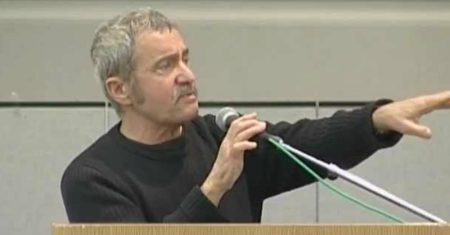
In honour of Michael Parenti (1933–2026), who passed away on 24 January 2026 at the age of 92. He spent his life naming what power prefers to leave unnamed.
In 1837, Abraham Lincoln remarked: “These capitalists generally act harmoniously, and in concert, to fleece the people.”
Today, he would be dismissed as a conspiracy theorist.
That dismissal—reflexive, automatic, requiring no engagement with evidence—is not a mark of sophistication. It is a tell. The question worth asking is not whether conspiracies exist (they are a matter of public record and a recognised concept in law) but why acknowledging their existence provokes such reliable hostility. What work does the label “conspiracy theorist” actually do?
The late political scientist Michael Parenti spent decades answering that question. His conclusion was blunt: “’Conspiracy’ refers to something more than just illegal acts. It serves as a dismissive label applied to any acknowledgment of ruling-class power, both its legal and illegal operations.” The term functions not as a descriptor but as a weapon—a thought-terminating cliché that protects the powerful from scrutiny by pathologising those who scrutinise them.
Conspiracy denial, in Parenti’s analysis, is not skepticism. It is the opposite of skepticism. It is credulity toward power dressed up as critical thinking. As he wrote in Dirty Truths: “Just because some people have fantasies of conspiracies does not mean all conspiracies are imaginary.” … continue
Blog Roll
Recent Comments
eddieb on WEF Calls for ‘Cultural Revolu… loongtip on Trump wanted to play peacemake… Coronistan on EU member to sue bloc over ‘su… loongtip on Vicious loongtip on EU turns to India for defense… Coronistan on Donald Trump Is No Peace … seversonebcfb985d9 on French court jails pro-Palesti… eddieb on Fourteen Incredible Facts Abou… Bill Francis on European leaders’ shift in the… seversonebcfb985d9 on Villains of Judea: Philip Esfo… loongtip on Report warns that ‘Jewish terr… Craig Nelms on New study shows that toxic gas…


 Aletho News
- More Bombs, More Talks Zelensky Rejects Trump’s Plan
- WARNING: Delete TikTok Immediately!
- Bari Weiss’ New CBS Hire List Is Full Of Zionists
- As TikTok falls into Zionist hands, UpScrolled fills the vacuum to give voice to Palestine
- Former Biden Advisor, Amos Hochstein, Admits The Biden Administration Is Responsible For the Gaza Genocide
- Not a Trump anomaly: The Board of Peace and America’s crisis-driven power plays
- Manufacturing martyrdom: The west’s cynical use of Iranian protest figures
- Attack on Iran would backfire, causing great losses for US, warns European think-tank
- Davos and Abu Dhabi: How the Ukrainian Endgame Exposed Western Decline
- AfD co-leader states the obvious: Pouring money into the Ukraine war is killing the German economy
- If Americans Knew
- “The Gaza ceasefire is a minefield” – Not a ceasefire Day 110
- Israel to seek new security deal from US, official says
- Leaked “Board of Peace” Resolution Outlines U.S.-Led Plan to Rule Over Gaza
- Jonathan Greenblatt Rolls Out Plan to Activate Hispanic Evangelical Golems
- Violence against hundreds of Gazan remains to find one Israeli – Not a ceasefire Day 109
- Greenpeace Demonstrator Exposes Folly of Protest Restrictions
- From CBS to TikTok, Pro-Israel Ellison is now in the driver’s seat
- Israel pays for UK advertisements attacking Doctors Without Borders
- Israel accused of extracting billions from Gazan people to pay for their own genocide
- ‘Deliberate Assassination’: 3 Journalists Among 11 Killed by Israeli Forces in Gaza
- No Tricks Zone
- New Study Affirms Rising CO2’s Greening Impact Across India – A Region With No Net Warming In 75 Years
- Germany’s Natural Gas Crisis Escalates … One Storage Site Near Empty …Government Silent
- Polar Colding…Antarctica Saw Its Coldest October In 44 Years!
- New Study: Sea Levels Rose 20 Times The Modern Rate During The Roman Warm Period
- As German Gas Storage Dips Dangerously Low…Shortage Hardly Avoidable
- New Study: Brazil’s Relative Sea Level Was 2+ Meters Higher And SSTs 3-4°C Warmer 6000 Years Ago
- Philosopher Schopenhauer: Climate Science Certainty Stems From Stupidity, Ignorance
- New Study: Species Extinction Rates Declining Since 1980 – ‘Climate Change Is Not An Important Threat’
- Denmark Places Climate Protection Above Animal Welfare, Poisoning And Culling Cows
- New Study: Greenland Was 3-7°C Warmer And Far Less Glaciated Than Today 6000-8000 Years Ago
 Aletho News