Liberal Democrats call peace candidate “alarming”
Waxman abandons America in his blind support for Israeli racism
By Linda Milazzo | LA Progressive | January 11, 2010
At the behest of his congressional ally, Jane Harman (CA-36), Democratic Congressman Henry Waxman (CA-30) has launched a mean-spirited ideological assault on Harman’s Democratic primary challenger, Marcy Winograd, that is garnering disfavor for Waxman and Harman amongst Democratic voters.
In a move characterized by one Harman constituent as desperate, Waxman sent the following letter to Harman’s Jewish supporters, attacking and misquoting Winograd’s position on the issue of Israel/Palestine. Here is the text of Waxman’s letter, distributed on his letterhead:
FROM THE DESK OF CONGRESSMAN HENRY A. WAXMAN
Dear Friend,
Recently, I came across an astounding speech by Marcy Winograd, who is running against our friend Jane Harman in her primary re-election to Congress. Ms. Winograd’s views on Israel I find repugnant in the extreme. And that is why I wanted to write you.
What has prompted my urgent concern is a speech Ms. Winograd gave, entitled, “Call For One State,” at the All Saints Church in Pasadena last year. The complete text is attached, but in it she says:
– “I think it is too late for a two-state solution. Israel has made it all but impossible for two states to exist.”
– “Not only do I think a two-state solution is unrealistic, but also fundamentally wrong…”
– “As a citizen of the United States, I do not want my tax dollars to support institutionalized racism. As a Jew, I do not want my name associated with occupation or extermination.”
– “Let us declare a one-state solution.”
To me, the notion that a Member of Congress could hold these views is alarming. Ms. Winograd is far, far outside the bipartisan mainstream of views that has long insisted that US policy be based upon rock-solid support for our only democratic ally in the Middle East.
In Marcy Winograd’s foreign policy, Israel would cease to exist. In Marcy Winograd’s vision, Jews would be at the mercy of those who do not respect democracy or human rights. These are not trivial issues; they cannot be ignored or overlooked. Jane’s victory will represent a clear repudiation of these views.
In addition to Jane Harman’s expertise and leadership on national security, intelligence and foreign policy, she is my ally on the Energy and Commerce Committee and our fights for health care reform, energy independence and curbing global warming. Jane’s staunch leadership and commitment to Israel are internationally recognized.
I ask you to join me in showing maximum political support for Jane. I have already done so through my federal campaign and PAC.
Sincerely,
Henry A. Waxman
FEC# C00255141
Not printed at taxpayer expense
Paid for by Friends of Jane Harman
I contacted Waxman’s office to ask who the intended recipients of the letters were, who supplied the recipient list, and why the letter wasn’t dated. The Congressman’s representative, David Sadkin, responded with the following:
Rep. Waxman has endorsed Jane Harman for her re-election, and wrote the letter of support for use in her campaign. The letter was prompted by a speech given by Ms. Winograd entitled “A Call for One State.” A copy of that speech is attached.
The letter was originally distributed in November 2009, though Mr. Waxman chose to leave it undated so that the Harman campaign would have the option to use it again at a later date.
The letter was sent both electronically and by mail, and was sent primarily to friends and supporters in the Jewish community. The recipient list was developed by the Harman campaign.
Unlike the substantial Jewish population in Waxman’s affluent 30th Congressional District whom he relies on for financial support, the Jewish population in Harman’s 36th Congressional District is significantly smaller. Issues concerning Israel don’t regularly affect the day to day lives of the majority of its residents who care mostly about jobs, healthcare and housing. 18.3% of the under 65 population of the 36th CD have no health insurance. Over 7,500 home foreclosures took place in 2009 and another 25,000 foreclosures are anticipated over the next four years.

Marcy Winograd
Though Harman stresses Israel as more relevant to her reelection, Winograd bases her election on a platform of policies on issues most relevant to her constituents, which she outlines on her website.
That Waxman and Harman stress Harman’s devotion to Israel as the primary catalyst for Harman’s reelection is illuminating, and underscores to what extent their legislative focus is defined more by the welfare of Israel and Israelis and less by the welfare of America and Americans.
One Jewish resident of the 36th, Frances W. Wells, was so incensed by Waxman’s Israel-based assault on Winograd, that she confronted him in person at his recent Women’s Club speaking engagement in Pacific Palisades.
In that exchange, Wells, who is in her 90s, and who vividly recalls the era of World War II and the pivotal events in the formation of Israel, asked Waxman, a self-described progressive, why he supported blue-dog conservative Harman over Winograd with whom he should share more common ground. Here’s their exchange summed up by Wells:
Wells: You’re supporting Jane Harman instead of Marcy Winograd?
Waxman: Jane’s on important committees.
Wells: Yes, but she never votes the way I want her to.
Waxman: Marcy’s for a one-state solution for Israel.
Waxman then walked away, leaving Wells even further incensed.
Another resident of the 36th, Lillian Laskin, an affiliated Jew [belonging to a synagogue] who lives in the community of Mar Vista, was similarly angered by the Waxman/Harman letter. In an interview Laskin told me, “Harman had Waxman send this letter because she’s desperate Winograd will give her a strong challenge.” Laskin went on to say, “I’m a constituent in the 36th and Israel is a separate issue that shouldn’t be the driving factor in determining our leadership in the district. We need leadership that focuses on the needs of the people – like jobs.”
With his hyperbolic letter, Henry Waxman has stepped into a firestorm of controversy that includes criticism from Harman’s constituents, his own constituents, the blogosphere, and prominent members of the Jewish community. Although Waxman doesn’t face a strong challenge this November, many of his constituents believe this ideologically based letter goes way too far; dwelling too much on Israel and too little on America.
Protests continue to follow Ehud Olmert
By Adam Horowitz | January 12, 2010

Protest against Olmert speech in Chicago, October, 2009. (Photo:Tom Tian)

A few months ago we followed a series of protests that followed Ehud Olmert across the country as he tried to rehabilitate his image on a US speaking tour. He is still at it, and the protests continue to follow. This Thursday, Olmert will speak at Union College in Schenectady, NY and a coalition of local organizations are planning a protest.
In addition, Union faculty have opposed the decision to host Olmert and are circulating the following statement:
A Position Statement from Members of the Union College Community:
Whereas, Union’s Strategic Plan calls for graduating students who are “engaged, innovative, and ethical contributors to an increasingly diverse, global, and technologically complex society;” and
Whereas, former Prime Minister Ehud Olmert has been indicted on serious corruption charges in his own country, has been officially implicated by the United Nations in war crimes and crimes against humanity in Gaza, and has also been implicated in the suppression of dissent:
We, the undersigned, hold that the administration’s decision to allow the Speaker’s Forum to invite Mr. Olmert was mistaken and contradicts the values and ethics of Union College. We reject the argument that Mr. Olmert’s visit is simply that of a “controversial” individual. We reject the logic that validates such a position, and hold it to be irrational and inconsistent with the intellectual climate we hope to create. Mr. Olmert’s appearance at Union does not contribute to the free exchange of ideas. On the contrary, closed to the general public, under the pall of heavy security, and with questions vetted by moderators, this event seems to limit and stifle opposing viewpoints a set of conditions inconsistent with our tradition of academic freedom. Furthermore, we deplore the significant negative impact this event will have on Union’s academic reputation on the local, national, and international levels. We go on record strongly against this decision to invite Mr. Olmert to speak at Union College, and urge that the event be cancelled.
Anyone wishing to sign this statement is invited to contact any of us listed below to be added to the list of supporters. We are compelled by our consciences to circulate this position statement within the Union College community and beyond.
David Ogawa
Eshi Motahar
Tom Lobe
Mazin Tadros
Andy Feffer
Michelle Chilcoat
Valerie Barr
Swine flu: “They Organized the Panic”
Inquiry into the Role of Big Pharma and WHO by Council of Europe
By Bruno Odent | Global Research | January 12, 2010
New Development: The German President of the Health Committee of the Council of Europe, Wolfgang Wodarg, is issuing accusations against the pharmaceutical lobbies and the governments. He has intitiated the start of an investigation by that body concerning the role played by the pharmaceutical industry in the campaign of panic about the virus.
Ex-member of the SPD, Wolfgang Wodarg is a doctor and epidemiologist. His request for a commission of inquiry into the role of pharmaceutical companies in the management of swine flu outbreak by WHO and the nation states was granted unanimously by the members of the Health Committee of the Council of Europe…
What made you suspicious about the influence of pharmaceutical companies had on the decisions being taken in respect of swine flu?
Wolfgang Wodarg. We are facing a major failure of national institutions responsible for warning about risks and responding in case a pandemic occurs. In April when the first alarm came from Mexico I was very surprised at the figures furnished by the World Health Organization (WHO) to justify the declaration of a pandemic. I was immediately suspicious: the numbers were very low and the alarm level very high. They were not even into a thousand patients when there was already talk of the pandemic of the century. And the alert was decreed extreme based on the fact that the virus was new. But the characteristic of influenza disease is to develop very quickly with viruses which take on new forms each time, by dwelling in new hosts, animal, human etc.
There was nothing new in itself to that. Each year a new virus of this “flu” type appears. In reality there was no reason to sound the alarm at this level. This was only possible because in early May the WHO changed its definition of a pandemic. Before that date there had to be not only a disease which had broke out in several countries at once but also one that had very serious consequences with the number of deaths above the usual average. This aspect was removed from the new definition, to retain the rate of spread of disease as the only criteria. And they claimed that the virus was dangerous because people had not been able to develop immunity against it. Which was false for this virus. Because it was observed that people aged over 60 years already had antibodies. That is to say they had already been in contact with similar viruses. That is why also there are virtually no people aged over 60 who have developed the disease. Yet those were the people who were recommended to be vaccinated quickly.
Among the things that aroused my suspicions there was therefore on one side this determination to sound the alarm. And on the other side, some curious facts. Such as, for example, the recommendation by WHO to carry out two injections for vaccines. That had never been done before. There was no scientific justification for this. There was also the recommendation to use only special patented vaccines. There was however no reason for not adding, as it is done every year, specific antiviral particles of this new H1N1 virus, “completing” the vaccine used for seasonal influenza. This was not done because they preferred to use patented vaccine materials that major laboratories had designed and manufactured to be ready in case of a pandemic developing. And by proceeding in this way they did not hesitate to endanger the persons vaccinated.
What danger?
Wolfgang Wodarg. To provide products rapidly, adjuvants were used in some vaccines, whose effects have not been adequately tested. In other words, they wanted absolutely to use these new patented products instead of developing vaccines according to traditional methods of production which are much simpler, more reliable and less costly. There was no medical reason for this. It was only for marketing purposes.
How could anyone justify that?
Wolfgang Wodarg. To understand we must return to the episode of avian influenza from 2005 to 2006. It was then that new international plans were defined for dealing with a pandemic alarm. These plans were officially developed to ensure rapid manufacturing of vaccines in case of an alert. This led to negotiations between pharmaceutical companies and governments. On the one hand the labs committed themselves to keep ready to develop the preparations, on the other hand, states assured them they would buy them all. After this strange deal the pharmaceutical industry took no economic risk by engaging in new fabrications. And it was sure to touch the jack pot in the case of a pandemic outbreak.
Do you disagree with the diagnoses and even the potential severity of influenza A?
Wolfgang Wodarg. Yes, it’s just a normal kind of flu. It does not cause a tenth of deaths caused by the classic seasonal flu. All that mattered and that led to the great campaign of panic which we have seen was that it was a golden opportunity for representatives from labs who knew they would hit the jackpot in the case of a pandemic being declared.
Those are very serious accusations you’re making. How was such a process made possible within the WHO?
Wolfgang Wodarg. A group of people in the WHO is associated very closely with the pharmaceutical industry.
Will the investigation by the Council of Europe also work in this direction?
Wolfgang Wodarg. We want to clarify everything that brought about this massive operation of disinformation. We want to know who made decisions, on the basis of what evidence and precisely how the influence of the pharmaceutical industry came to bear on the decision-making. And the time has come at last for us to make demands on governments. The purpose of the inquiry is so that there are no more false alarms of this type in the future. So that the people may rely on the analysis and the expertise of national and international public institutions. The latter are now discredited, because millions of people have been vaccinated with products with inherent possible health risks. This was not necessary. It has also led to a considerable mismanagement of public money.
Do you have any concrete figures on the extent of this mismanagement?
Wolfgang Wodarg. In Germany it comes to 700 million euros. But it is very difficult to know the exact figures because we are talking on one side about vaccines resold to foreign countries and most firms do not communicate due to the principle of respect for “business secret” regarding the amounts in contracts concluded with States and any indemnification clauses contained therein.
Will the work of “lobbying” by pharma companies on the National Institutes of Health also be dealt with by the investigation of the Council of Europe?
Wolfgang Wodarg. Yes we will examine the attitude of institutions like the Robert Koch Institute in Germany or Pasteur in France who should in fact have advised their governments from a critical standpoint. In some countries certain institutions have done so. In Finland and Poland, for example, critical voices were raised to say: “we do not need that.
Has the tremendous global operation of disinformation also been possible because the pharmaceutical industry had “representatives” even within the governments of the most powerful countries?
Wolfgang Wodarg. As regards the ministries, that seems to me to be obvious. I can not explain how specialists, very smart people who know the problems of the influenza disease by heart, did not notice what was happening.
So what happened?
Wolfgang Wodarg. Without going as far as saying direct corruption, which I am certain does exist, there were many ways for labs to exercise their influence over decisions. A very concrete example, is how Klaus Stöhr, who was the head of the epidemiological department of the WHO at the time of bird flu, and who therefore prepared the plans to cope with a pandemic that I mentioned above, in the meantime had become a top executive of the company Novartis. And similar links between Glaxo and Baxter, etc. and influential members of the WHO. These large firms have “their people” in the cogs and then they pull strings so that the right policy decisions are taken. That is to say, the ones that will allow them to pump as much money from taxpayers.
But if your survey succeeds, will it not be a support for citizens to insist their governments demand accountability from these large groups?
Wolfgang Wodarg. Yes, you’re right, this is one of the major issues related to this investigation. States could indeed take advantage of this to contest contracts drawn up in, let us say, improper conditions. If it can be shown that it was under the influence of firms that the process was initiated then they will have to be push to ask for reimbursement. But that’s just the financial side, there is also the human side, persons who were vaccinated with products that were inadequately tested.
So what kind of risk have these healthy people unknowingly taken by getting vaccinated?
Wolfgang Wodarg. Again, the vaccines were developed too quickly, some adjuvants were insufficiently tested. But there is worse to come. The vaccine developed by Novartis was produced in a bioreactor from cancerous cells. A technique that had never been used until now.
Why, I’m obviously not an expert, but how can one claim to make a vaccine from diseased cells?
Wolfgang Wodarg. Normally one uses chicken eggs on which viruses are grown. We need in fact to work on living cells. Because viruses can only multiply in this way and so do, by definition, the virus preparations that go with it. But this process has a big flaw, it is slow and it takes a lot of eggs. And it is long and complex technically. Another potentially excellent technique is to grow the virus in living cells in bioreactors. This requires cells which grow and divide very quickly. It’s a bit like the method used to culture yogurt, which is also produced in a bio-reactor. but in this context the cell was so upset in its environment and its growth that it grows like a cancer cell. And it is on these rapidly multiplying cells that they grow the virus. But to manufacture the vaccine the virus must be re-extracted from these cells on which they were implanted. And it can therefore happen that during the manufacturing process of the vaccine, residue of cancerous cells remain in the preparation. In the same way as it happens in conventional manufacturing with eggs. Thus we know that in the case of a classic influenza vaccination, side effects can occur in people who are allergic to egg albumin found in egg white. It can not be excluded that proteins, remains of a cancer cell present in a vaccine produced by bio-reactor, may generate a tumour on the person vaccinated. According to a true principle of precaution, before such a product is allowed on the market, there should therefore be 100% certainty that such effects are actually excluded.
And wasn’t this done?
Wolfgang Wodarg. It was not. The EMEA (European Medicines Agency), an institution under the responsibility of the European Commissioner for Economic Affairs, based in London, which gives permission to release vaccines on the market in Europe, gave the green light for commercializing this product arguing, namely, that this mode of manufacture was not a “significant” risk. This was very differently appreciated by many experts here in Germany and by an independent drug institution, which instead sounded the alert and voiced their objections. I took these warnings seriously. I studied the case and intervened in the context of the Bundestag health committee of which I was a member so that the vaccine would not be used in Germany. I made it known that I was certainly not opposed to the development of vaccines with this technique. But first it had to have a total guarantee of innocuousness. The product has therefore not been used in Germany where the government terminated the contract with Novartis.
What is the name of this vaccine?
Wolfgang Wodarg. Obta flu.
But that means that in other European countries like France the product can be marketed without any problem?
Wolfgang Wodarg. Yes, it obtained permission from EMEA and can be used anywhere in the EU.
What alternative do you intend to propose so that further scandals of this type are avoided?
Wolfgang Wodarg. The WHO should be more transparent, so we know clearly who decides and what type of relationship exists between participants in the organization. It should also be flanked by at least one elected chamber, which should be able to react very critically and where everyone can express themselves. This enhanced public scrutiny is essential.
Isn’t the question of another system capable of handling a matter which is in fact a common good for citizens across the planet coming to the surface?
Wolfgang Wodarg. Can we go on allowing the production of vaccines and the conduct of these productions to organizations whose goal is to win as much money as possible? Or is the production of vaccines not something that States must absolutely monitor and implement themselves? That’s why I think we should abandon the system of patents on vaccines. That is to say, the possibility of monopolization of vaccine production by a large group. For this option requires that we sacrifice thousands of lives, simply in the name of respect for these monopoly rights. You’re right, that particular claim has become evident for me.
Interview by Bruno Odent translated into English by Carolyn Dunning.
To read the original article in French click here
Council of Europe’s motion for a recommendation: Faked Pandemics — a threat for health
Up in Smoke
Why Biomass Wood Energy is Not the Answer
By George Wuerthner | January 12, 2010
After the Smurfit-Stone Container Corp.’s linerboard plant in Missoula Montana announced that it was closing permanently, there have been many people including Montana Governor Switzer, Missoula mayor and Senator Jon Tester, among others who advocate turning the mill into a biomass energy plant. Northwestern Energy, a company which has expressed interest in using the plant for energy production has already indicated that it would expect more wood from national forests to make the plant economically viable.
The Smurfit Stone conversion to biomass is not alone. There have been a spate of new proposals for new wood burning biomass energy plants sprouting across the country like mushrooms after a rain. Currently there are plans and/or proposals for new biomass power plants in Maine, Vermont, Pennsylvania, Florida, California, Idaho, Oregon and elsewhere. In every instance, these plants are being promoted as “green” technology.
Part of the reason for this “boom” is that taxpayers are providing substantial financial incentives, including tax breaks, government grants, and loan guarantees. The rationale for these taxpayer subsidies is the presumption that biomass is “green” energy. But like other “quick fixes” there has been very little serious scrutiny of real costs and environmental impacts of biomass. Whether commercial biomass is a viable alternative to traditional fossil fuels can be questioned.
Before I get into this discussion, I want to state right up front, that coal and other fossil fuels that now provide much of our electrical energy need to be reduced and effectively replaced. But biomass energy is not the way to accomplish this end goal.
BIOMASS BURNING IS POLLUTION
First and foremost, biomass burning isn’t green. Burning wood produces huge amounts of pollution. Especially in valleys like Missoula where temperature inversions are common, pollution from a biomass burner will be the source of numerous health ailments. Because of the air pollution and human health concerns, the Oregon Chapter of the American Lung Association, the Massachusetts Medical Society and the Florida Medical Association, have all established policies opposing large-scale biomass plants.
The reason for this medical concern is that even with the best pollution control devises, biomass energy is extremely dirty. For instance, one of the biggest biomass burners now in operation, the McNeil biomass plant in Burlington, Vermont is the number one pollution source in the state, emitting 79 classified pollutants. Biomass releases dioxins, and as much particulates as coal burning, plus carbon monoxide, nitrogen oxide, sulfur dioxide, and contributes to ozone formation. […]
BIOMASS ENERGY IS INEFFICIENT
Wood is not nearly as concentrated a heat source as coal, gas, oil, or any other fossil fuel. Most biomass energy operations are only able to capture 20-25% of the latent energy by burning wood. That means one needs to gather and burn more wood to get the same energy value as a more concentrated fuel like coal. That is not to suggest that coal is a good alternative, rather wood is a worse alternative. Especially when you consider the energy used to gather the rather dispersed source of wood and the energy costs of trucking it to a central energy plant. If the entire carbon footprint of wood is considered, biomass creates far more CO2 with far less energy output than other energy sources.
The McNeil Biomass Plant in Burlington Vermont seldom runs full time because wood, even with all the subsidies (and Vermonters made huge and repeated subsidies to the plant—not counting the “hidden subsidies” like air pollution) wood energy can’t compete with other energy sources, even in the Northeast where energy costs are among the highest in the nation. Even though the plant was also retrofitted so it could burn natural gas to increase its competitiveness with other energy sources, the plant still does not operate competitively. It generally is only used to off- set peak energy loads.
One could argue, of course, that other energy sources like coal are greatly subsidized as well, especially if all environmental costs were considered. But at the very least, all energy sources must be “standardized” so that consumers can make informed decisions about energy—and biomass energy appears to be no more green than other energy sources.
 BIOMASS SANITIZES AND MINES OUR FORESTS
The dispersed nature of wood as a fuel source combined with its low energy value means any sizable energy plant must burn a lot of wood. For instance, the McNeil 50 megawatt biomass plant in Burlington, Vermont would require roughly 32,500 acres of forest each year if running at near full capacity and entirely on wood. Wood for the McNeil Plant is trucked and even shipped on trains from as far away as Massachusetts, New Hampshire, Quebec and Maine.
Biomass proponents often suggest that wood [gathered] as a consequence of forest thinning to improve “forest health” (logging a forest to improve health of a forest ecosystem is an oxymoron) will provide the fuel for plant operations. For instance, one of the assumptions of Senator Tester’s Montana Forest Jobs bill is that thinned forests will provide a ready source of biomass for energy production. But in many cases, there are limits on the economic viability of trucking wood any distance to a central energy plant. Again without huge subsidies, this simply does not make economic sense. Biomass forest harvesting is even worse for forest ecosystems than clear-cutting. Biomass energy tends to utilize the entire tree, including the bole, crown, and branches. This robs a forest of nutrients, and disrupts energy cycles.
Worse yet, such biomass removal ignores the important role of dead trees to sustain the forest ecosystems. Dead trees are not a “wasted” resource. They provide home and food for thousands of species, including 45% of all bird species in the Nation. Dead trees that fall to the ground are used by insects, small mammals, amphibians and reptiles for shelter and even potentially food. Dead trees that fall into streams are important physical components of aquatic ecosystems and provide critical habitat for many fish and other aquatic species. Removal of dead wood is mining the forest. Keep in mind that logging activities are not benign. Logging typically requires some kind of access, often roads which are a major source of sedimentation in streams, and disrupt natural subsurface water flow. Logging can disturb sensitive wildlife like grizzly bear and even elk are known to abandon locations with active logging. Logging can spread weeds. And finally since large amounts of forest carbon are actually tied up in the soils, soil disturbance from logging is especially damaging, often releasing substantial additional amounts of carbon over and above what is released up a smoke stack.
BIOMASS ENERGY USES LARGE AMOUNTS OF WATER
A large-scale biomass plant (50 MW) uses close to a million gallons of water a day for cooling. Most of that water is lost from the watershed since approximately 85% is lost as steam. Water channeled back into a river or stream typically has a pollution cost as well, including higher water temperatures that negatively impact fisheries, especially trout. Since cooling need is greatest in warm weather, removal of water from rivers occurs just when flows are lowest, and fish are most susceptible to temperature stress.
BIOMASS ENERGY SAPS FUNDS FROM OTHER TRULY GREEN ENERGY SOURCES LIKE SOLAR
Since biomass energy is eligible for state renewable portfolio standards (RPS), it has captured the bulk of funding intended to move the country away from fossil fuels. For example, in Vermont, 90% of the RPS is from “smokestack” sources—mostly biomass incineration. This pattern holds throughout many other parts of the country. Biomass energy is thus burning up funds that could and should be going into other energy programs like energy conservation, solar and insulation of buildings.
PUBLIC FORESTS WILL BE LOGGED FOR BIOMASS ENERGY
Many of the climate bills now circulating in Congress, as well as Montana Senator Jon Tester’s Montana Jobs and Wilderness bill target public forests. Some of these proposals even include roadless lands and proposed wilderness as a source for wood biomass. One federal study suggests that 368 million tons of wood could be removed from our national forests every year—of course this study did not include the ecological costs that physical removal of this much would have on forest ecosystems.
The Biomass Crop Assistance Program, or BCAP, which was quietly put into the 2008 farm bill has so far given away more than a half billion dollars in a matching payment program for businesses that cut and collect biomass from national forests and Bureau of Land Management lands. And according to a recent Washington Post story, the Obama administration has already sent $23 million to biomass energy companies, and is poised to send another half billion.
And it is not only federal forests that are in jeopardy. Many states are eying their own state forests for biomass energy. For instance, Maine recently unveiled a new plan known as the Great Maine Forest Initiative which will pay timber companies to grow trees for biomass energy.
JOB LOSSES
Ironically one of the main justifications for biomass energy is the creation of jobs, yet the wood biomass rush is having unintended consequences for other forest products industries. Companies that rely upon surplus wood chips to produce fiberboard, cabinet makers, and furniture are scrambling to find wood fiber for their products. Considering that these industries are secondary producers of products, the biomass rush could threaten more jobs than it may create.
BOTTOM LINE
Large scale wood biomass energy is neither green, nor truly economical. It is also not ecologically sustainable and jeopardizes our forest ecosystems. It is a distraction that funnels funds and attention away from other more truly worthwhile energy options, in particular, the need for a massive energy conservation program, and changes in our lifestyles that will in the end provide truly green alternatives to coal and other fossil fuels.
George Wuerthner is a wildlife biologist and a former Montana hunting guide. His latest book is Plundering Appalachia.
Related articles
- Massachusetts Restricts Dirty Biopower (switchboard.nrdc.org)
- Forest Owners Tell EPA to Avoid Pitfalls in Biomass Review (prweb.com)
- Greens warn biomass plan could reduce food supplies (morningstaronline.co.uk)
- Biggest English Polluter Spends $1 Billion to Burn Wood (bloomberg.com)
- California Proposes Forest Thinning for Biomass Energy, But is it a Good Idea? (kcet.org)
Soldiers Invade Ramallah, Kidnap a Czech Peace Activist
January 11, 2010 22:34 | By Saed Bannoura | IMEMC News
The Israeli Army invaded on Monday at night the center of the West Bank city of Ramallah, and kidnapped a Czech citizen, identified as Eva Nováková, who started her activities as the media coordinator of the International Solidarity Movement (ISM) three weeks ago.
The ISM reported that Israeli forces broke into the home of Nováková in Al Manara Square and kidnapped her. The raid was carried out by the Israeli army and members of the OZ Immigration Police.
Soldiers occupied rooftops of nearby buildings and kidnapped Nováková before taking her to the Givon detention center in preparation to deport her to the Czech Republic.
Her attorney, Omar Shatz, said that the Israeli attack was carried out in a city that is under Palestinian control, and added that Israel and its army have no jurisdiction in Ramallah.
He said that the Israeli immigration police are acting illegally by arresting activists for political purposes.
The ISM reported that this invasion follows an extensive arrest wave targeting grassroots activists and oragnizers throughout the West Bank.
Such raids have been conducted in the villages of Bil’in – where 32 residents have been arrested in the past six month, Ni’ilin – where 94 residents have been arrested in the past 18 months, the cities of Nablus and Ramallah and East Jerusalem. The past three weeks have seen raids on ex-ISM bases in both Bil’in and Ni’lin, near Ramallah.
Among those arrested in this recent campaign are five members of the Bil’in Popular Committee have been arrested in suspicion of incitement, including Adeeb Abu Rahmah, who has already been held in detention for almost six months and Bil’in’s Popular Committee coordinator, Abdallah Abu Rahmah, the ISM added.
Israel continues to hold captive dozens of grassroots activists from several Palestinian areas, especially in Ramallah, Nablus and Jayyous. Some of the prominent activists held by Israel are Wael Al Faqeeh from Nablus, Jamal Juma’ from East Jerusalem, Mohammad Othman from Jayyous and member of the Stop The Wall NGO which is involved in nonviolent resistance against the Wall and divestment from Israel.
No charges were brought against the detained activists as they are being held captive under a so-called ‘secret file’. Israel does not show this ‘secret file’ even to the lawyers of the detainees.
We’re Sailing Again: Join Us!
by Free Gaza Team | 11 January 2010
This spring, the Free Gaza Movement is sending at least six boats to Gaza to break Israel’s illegal blockade on 1.5 million Palestinians. This blockade constitutes an act of collective punishment, a crime prohibited under international humanitarian law. Gaza’s man-made and internationally perpetuated crisis is set to deepen as Egypt builds an Iron wall 30 meters deep on the southern Rafah border, closing off the final route for Palestinians to get basic supplies.
The urgency of breaking the blockade grows by the day, as Palestinians living in this prison are denied their most basic rights.
Our mission will include two boats committed by a Turkish NGO plus a cargo ship purchased with donations from the Malaysian people. This ship will be loaded with cement, water filtration systems and paper – all essential reconstruction materials denied entry to Gaza by Israel.
Free Gaza’s missions were the first to challenge Israel’s hermetic closing of Gaza when we sailed two small boats into Gaza in August 2008. We did not ask permission of Israel or Egypt to travel to Gaza and sailed directly from international waters into the waters of Gaza. Since then, we have been the catalyst for a growing international movement of civilian advocates, including the Gaza Freedom March and Viva Palestina.
Of course we will face Israel’s illegal naval blockade. But we have broken through it before and we will do it again. We are writing to ask you to make sure the mission is funded and publicized.
We sailed four more successful missions to Gaza since August 2008, and we intend to come back this year with a small flotilla, so you still have time to get boats and come with us. We are calling on all NGOs, human rights organizations and communities around the world to join us. If you already have funding for boats, we can provide the logistical and technical advice on how get them ready to join the flotilla. If you want to help in other ways, we have listed five below.
- Fundraise for this trip. Consider organizing a big or small fundraiser in your community. We already have people available to speak at your events. http://www.freegaza.org/speakers. Friends returning from the Gaza Freedom March, or the Viva Palestina convoy can be especially helpful by turning report backs into fundraisers.
- Get your community involved and turn this flotilla into a global effort. Our boats will carry building supplies and school supplies, both banned by Israeli authorities. Contribute by donating paper, ink or books for our Right to Read campaign: http://www.freegaza.org/right-to-read. If you can donate reconstruction supplies, please contact us. Get your children and their schools involved by having them write letters to children in Gaza that we will carry on our boats and deliver.
- Publicize the trip. Once we have announced the date, help us get the message out to the media and to your elected officials to assure the passengers and boats will sail safely.
- Ask your Member of Parliament/Congress to come with us. We already have MPs from South America, South Africa, Malaysia, Turkey and Europe who are going. If you have contacts with other high profile people, please let us know.
- Volunteer as land crew, media or support crew in your countries.
To help, organize a fundraiser, suggest passengers and offer support, please email us at friends@freegaza.org, and we will follow up immediately. We have only two to three months to finish organizing, raise the additional funds, and to set sail.
Join us as we sail together to Gaza this spring!
Strip Search, Arrest and Car Detonation at Reikhan Barta’a Checkpoint, Jenin
January 12, 2010 | By Nathan Stokes – IMEMC News & Agencies
A Palestinian man was subjected to a strip search today at the military checkpoint of Reikhan Barta’a, near Jenin in the North of the West Bank, before having his vehicle detonated by border police.
Ma’an News Agency have reported that the car lurched toward the checkpoint, arousing suspicions, and that after being stopped the driver, Mohammed Abu Jazar, was strip searched in front of a crowd of onlookers before being arrested. Following the arrest, his car was detonated.
Witnesses working close to the checkpoint stated that the vehicle was fired upon by Israeli military before coming to a halt.
Interview: Disabled activist continues struggle in Bilin
Live from Palestine, 11 January 2010
 Rani Bornat (Multaqa.org)
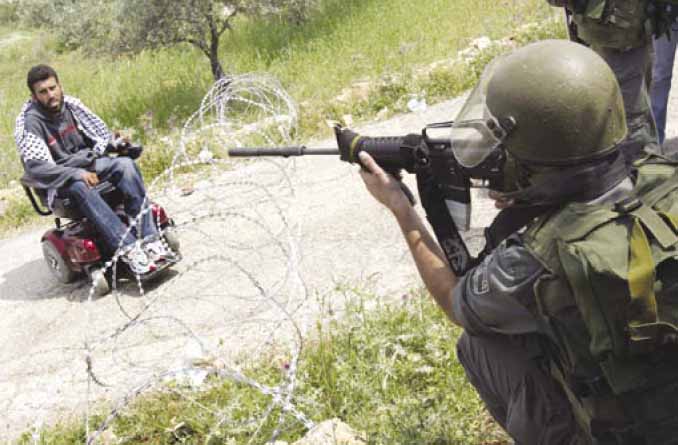
The Electronic Intifada contributor Jody McIntyre recently interviewed Palestinian activist Rani Bornat about his life after being shot by the Israeli army.
Rani Bornat: My name is Rani Abdelfatah Ibrahim Bornat, and I’m 29 years old. I’m from the village of Bilin, west of Ramallah. I was shot in the throat on the first day of the second intifada.
Jody McIntyre: How was your life before you were injured?
RB: Before it happened, my life was like any other young person. I used to study, go horse riding, herd my goats, ride donkeys … do all the things farmers do. My dream was to finish school, but I was deprived of it. I was to become an electronic engineer, and I was also deprived of that. God willing, I will be able to help my children study to become engineers instead.
It was while I was waiting to hear back from universities about continuing my studies, when the al-Aqsa intifada broke out in Palestine …
JM: Tell me about how you were injured.
RB: It was Saturday, 30 September 2000, the first day of the uprising. We marched to one of the checkpoints near Ramallah to protest against Sharon’s entering of the al-Aqsa mosque. It was a nonviolent demonstration, like the ones here in Bilin, with people chanting and holding up posters. But the soldiers didn’t respond with tear gas or rubber bullets, only live ammunition, because it was their aim to kill as many Palestinians as possible.
I wasn’t shot with a normal bullet, but a special “butterfly” bullet, so-called because of the way it spins as it flies through the air. It entered my throat and cut the artery that connects and nourishes my body and brain. Now I have an artificial artery. Because the artery was cut, and I had a blood clot in my brain, they had to tie two ends of the artery together. I had a stroke on my left side, and my right arm was left paralyzed.
It was a very dangerous situation — I was taken to a hospital in Amman, where I stayed for seven months. For the first two months I was in a coma. I was operated on many times … life-threatening operations. Everyday, people were just waiting for the moment I would die. At first, on the news they said I was a martyr; my father heard on the radio that his son had died. Later, they changed the report, and said that I was a “living martyr.”
When I recovered from the coma, I was struggling to speak, I had lost my memory and I couldn’t move my arms or legs.
JM: How did your family and other people from the village react to what had happened?
RB: When the people from the village saw me come home, still alive, they were so happy, because everyone thought that I would die from my injuries. Some of the family were crying with joy! All my friends were coming to visit me and stay with me … sometimes I had to tell them to leave because I was tired and wanted to sleep! I told them to act like before, so that I could continue with my life as normal.
JM: Do you participate in the demonstrations at the wall here in Bilin, or are you too scared after your past experiences?
RB: Firstly, I would like to tell you that I have been shot many times in the demonstrations in Bilin. Secondly, I would like to tell you that the best person to ask is Jody; he will tell you if I’m scared or not!
JM: So you’re a little bit scared?
RB: I’m not scared.
These are peaceful protests; if we don’t fight for our land, then who can? If we don’t fight for the truth, then who can? If we don’t stand side by side and resist this occupation together, then who can? Peaceful demonstrations don’t hurt or kill anybody; they are only there to serve the oppressed. We must tear down this wall, so that we can live with peace … and freedom.
JM: Has your wheelchair ever been broken during a demonstration?
RB: Once, we had a demonstration in Bilin for disabled people, which I organized. Normally, we would protest right up at the wall, but on this occasion, the soldiers started shooting tear gas before we were even within sight. They started to shout that “after today, there will be no more demonstrations in Bilin” … it was because the week before, they had shot an Israeli lawyer who was participating with us. So they wanted to stop the demonstrations because they were afraid of killing Israelis, not Palestinians! But that was a few years ago, so they haven’t done a very good job on the “no more demos” promise …
It was a very powerful symbol of the occupation, to see the Israeli army shooting at the blind and people in wheelchairs. They shot three tear gas canisters at my wheelchair and broke it completely.
JM: Do you think that the Israeli army deal with you differently because you are in a wheelchair?
RB: They treat me exactly the same. They don’t care if I am in a wheelchair or if I’m walking — according to them, I am a threat to the State of Israel, as ridiculous as that may sound.
Maybe they think I want to take revenge for what has happened to me, but I want to tell them that I am a man who wants peace. Even if they destroy my whole life, I only want to make peace.
JM: How do you envision the future?
RB: I am married now, and we have just welcomed three beautiful children, triplets, into the world. I want to start a new life.
Everybody living under the occupation is pessimistic, but I have hope that we can end it. I want to be able to live in freedom, to be able to travel without seeing walls or checkpoints — those are the real things that restrict my movement!
JM: Are you happy to see someone in a wheelchair from London going to demos with you?
RB: When I first saw you, I loved you, because you’re in a wheelchair like me. But it’s not important if you’re in a wheelchair or not … what’s important are the ideas, the resistance, that’s in your mind.
Jody McIntyre is a journalist from the United Kingdom, currently living in the occupied West Bank village of Bilin. Jody has cerebral palsy, and travels in a wheelchair. He writes a blog for Ctrl.Alt.Shift, entitled “Life on Wheels,” which can be found at www.ctrlaltshift.co.uk, where a version of this article was originally published. He can be reached at jody.mcintyre AT gmail DOT com.
The Bogus Flight 253 ‘One-Way Ticket’ Meme: Anatomy Of A Myth
By Justin Elliott | TPM | January 11, 2010
In a remarkable example of how bad information can travel far and wide, dozens of media outlets around the world have said Umar Abdulmutallab was traveling on a one-way ticket to Detroit when he allegedly tried to blow up Flight 253, even though that has never been substantiated and appears to be flat wrong.
Abdulmutallab’s “one-way ticket” has been cited in recent days by the AP, the Wall Street Journal, and the Washington Post, even though the Nigerian government said Dec. 28 that Abdulmutallab had a round-trip ticket, and provided details to back it up.
The “one-way ticket” meme was originally sourced to anonymous U.S. officials and has since been recited as an undisputed fact.
It has been referenced repeatedly by commentators attacking the U.S. government for missing red flags about Abdulmutallab. See for example this Michael Gerson column in the Jan. 6 Post (“Airline attack shows Obama’s listless approach to terrorism”) and this Michael Mukasey Wall Street Journal effort (“The president’s job is not detecting bombs at the airport but neutralizing terrorists before they get there.”)
In a typical case on Dec. 28 — when the accurate information was already available — CNN anchor Erica Hill asked: “So, just how did a guy on a terror watch list with a one-way ticket paid for in cash, with no luggage … manage to board a U.S. airliner and allegedly try to blow it to pieces? Simply put tonight, who screwed up?”
And here’s Rush Limbaugh on Friday: “When a 20-something Muslim male buys a one-way ticket with cash and has no luggage, that’s not a dot. That’s a fire alarm! He may as well have “I’m a terrorist” taped on his T-shirt.”
But published reports on Dec. 28 cited the conclusion of the Nigerian government that Abdulmutallab had a round-trip ticket to Detroit. It had been purchased in Ghana on Dec. 16 for $2,831, according to the AP, citing Civil Aviation Authority director Harold Demuren. His return date was found by the Nigerians to be Jan. 8. (A Dutch government report described by the International Herald Tribune on Dec. 31 also said Abdulmutallab had a round-trip ticket, but it’s not clear whether the Dutch were simply relying on the Nigerians’ conclusion.) A full account of Demuren’s comments can be found in the Nigerian newspaper The Nation here.
While the New York Times published a correction on Dec. 30 saying it had erroneously reported Abdulmutallab’s ticket was one-way, many outlets that have mentioned the one-way ticket haven’t run corrections.
So where did the false meme come from? Anonymous U.S. government sources. And unless there’s classified information suggesting otherwise, those sources were clearly mistaken.
The first citation of a “one-way ticket” we could find is a report on Christmas day by MSNBC (cached version here): “Federal officials identified the man as Umar Farouk Abdulmutallab, 23, of Nigeria, who was traveling one way, without a return ticket.”
Another early reference is in the Dec. 26 edition of the New York Daily News: “Officials said Abdulmutallab was traveling one way, without a return ticket.”
MSNBC’s Pete Williams tells TPMmuckraker: “Though there were federal officials who initially said it was one-way, we’ve [been] saying since that it was round trip, which it clearly was.”
But there are a whole lot of media consumers out there who believe Abdulmutallab came to Detroit on a one-way ticket.
The “one-way ticket” has been cited by CNN, Fox, Time, Newsweek, the AP, the Washington Post, the New York Times, the Boston Globe, Gannett News Service, the Pittsburgh Tribune Review, the Sacramento Bee, the Globe and Mail, the Washington Times, Congressional Quarterly and many other outlets, according to a review by TPMmuckraker.
The Today Show’s Matt Lauer even asked about the one-way ticket in a question to Homeland Security Secretary Janet Napolitano (who did not address the matter in her answer).
The only substantiated reference to a one-way ticket we could find is the statement by a Ghanaian official last week that Abdulmutallab purchased a one-way ticket in cash from Accra, Ghana, to Lagos, Nigeria. That was in addition to the purchase of the ticket from Lagos to Detroit via Amsterdam, according to Deputy Information Minister Samuel Okudzeto-Ablakwa, quoted in the Wall Street Journal. The Journal says Abdulmutallab took Virgin Nigeria flight 804 from Accra to Lagos on Dec. 24, before getting on a plane en route to Amsterdam.
There are few signs that the “one-way” meme will die any time soon.
The AP, which two weeks ago reported the correct information from Nigeria, ran a story Friday (“Experts say terror watch lists have limited uses”) stating that Abdulmutallab purchased a one-way fare.
The BBC’s ‘Conspiracy Files’
By Paul Holme | January 12, 2010
At 16:15 local time Hong Kong and the Philippines, on Saturday, 9 Jan., the BBC World News service broadcast “The Conspiracy Files,” concerning lingering suspicions about 9/11 — specifically the anomalous, sudden, and complete collapse of Building 7, which was not hit by a plane.
This documentary was, as you might expect, as complete a snow job as the weather presently smothering the UK.
It left me with two lasting impressions:
1. That the relatively unprepared viewer — such as I would take the majority to be — would accept its conclusions as ‘the truth.’ The BBC, like CNN and I suppose Fox News, is the modern-day equivalent of the Bible for many who watch it regularly. It is their Authority, an esteemed organ of “objective” reporting, and so they approach it with their critical defenses down — especially in matters where they can’t claim expertise, and the more so when the BBC solemnly quotes such other purveyors of mainstream truth as the National Institute of Standards and Technology (whose graphic simulation of a beam buckling in Building 7 was deemed sufficient to convince us that every real beam and column gave way likewise, and simultaneously).
2. That it is — and has always been — the inevitable, primary function of the mainstream news outlets to create consensus, rather than division, around a core set of values that have evolved over the years, and which represent the status quo. You can’t broadcast everything, so from the start there’s inevitably a massive selection process. What guides the selection process? “Objectivity”? The very nature of the task logically excludes that possibility! What we actually end up seeing and hearing equally inevitably dominates our thinking. How can you think about what never reaches your senses? You can’t. And thus the status quo rolls effortlessly on.
Those of us who find ourselves uncomfortably outside the mainstream on the 9/11 issue believe that we see things “more objectively,” because, from our different perspective, we are acutely aware of the cherry-picking of “facts” that goes on in support of the Official Version. This cherry-picking is (for the most part) an entirely unconscious selection process. What we are probably less aware of is that we cherry-pick our “facts” too, and this selection is as glaring to the gatekeepers of acceptable knowledge as theirs is to us.
What this in turn betrays is our near-universal misunderstanding of what “facts” are and how we arrive at them. It is not that one group is more “objective” than another. That’s prideful, self-serving nonsense. We do not plug into an objective world that some see and others (for some reason) do not. It simply doesn’t work like that. Each person creates (as he must) his own reality from sensory data which he alone experiences, and then — with more or less vigor and conviction, and with whatever tools are currently fashionable — sets about convincing others to his point of view. This social component of reality is inescapable. Without it we would be living in something like the tower of Babel. Communication would not exist, and neither would society.
Insofar as humans are social beings, truth is a popularity contest (and, yes guys, we are social beings!). This conclusion seems like an outright denial of supposed scientific objectivity; but that is actually the way it is, and there’s no escaping it.
Thus it is that islands of popularity grow, like bacteria in a petri dish, around attractive beliefs, while those which cannot sustain interest wither and die. That, in a nutshell, is what the “factual” world is all about, always has been, and always will be. Facts are not hard and fast things “out there.” Facts are agreements, and like all agreements they can change.
In the BBC’s “The Conspiracy Files” architect Richard Gage, the founder and chief spokesman of Architects and Engineers for 9/11 Truth, asserts that the smoke observed on the south side of Building 7 before its sudden collapse was probably sucked there from Buildings 5 and 6. This theory of his is challenged by video evidence of fires burning on the same side, and other experts insisting that fires such as these could have “spread” and “engulfed” the building, destroying the integrity of the structural steel, and leading to “global collapse.”
The combined psychological force of the BBC, and the video footage, and the experts, and the even, reasonable tone of the commentator all pitted against bald Mr. Gage expostulating in his little office, is overwhelming. The unsurprising conclusion is reached by the Beeb that Building 7 collapsed without explosive assistance, as advertised. The gatekeepers are delighted, their worldview is vindicated, the enemy is brought low, and the status quo lumbers on, unshaken.
Facts? The merest suggestion of them is all that’s needed for those in authority (whatever authority that may be) to secure the hearts and minds of the faithful. “The Conspiracy Files” is the necessary force of social cohesion at work, operating through one of the organs which have evolved for this purpose. Strength resides in numbers. Might is right. To turn the tide requires tremendous perseverance, and the constant reintroduction of evidence which refutes the official version of events. This is subversion, and must be undertaken, of course, without the slightest help from where it counts — the mainstream media.
My own view (for what it’s worth) disagrees with that of Mr. Gage, as his naturally does with others. It is that it’s perfectly possible for the south face of Building 7 to have been blanketed in smoke without our jumping to the conclusion either that the smoke all came from elsewhere (Building 7 was on fire!), or that the six or seven windows (out of hundreds) on one floor (out of 47) at which fire could be seen were evidence that the building was about to collapse straight down at freefall speed into its own footprint. In fact this last assertion, seized on by the BBC and its chosen experts alike, strikes me as equally absurd after watching “The Conspiracy Files” as it did before. But then the BBC World News is not my authority, so I am free to question its selection of facts in a way which a gatekeeper to the official version is not.
Related articles
- New Poll Finds a Majority of Canadians Side with Ads Questioning 9/11 (rethink911.org)
- Still Trying to Talk To People About Building 7 (12160.info)
- New Poll Finds Most Americans Open to Alternative 9/11 Theories (fromthetrenchesworldreport.com)
Blackwater/Xe mercs arrive in Somalia, Al-Shabab says
Press TV – January 12, 2010 01:34:41 GMT
At least 18 people have been killed in clashes between rival factions in southern and central Somalia, and there are reports that Blackwater/Xe mercenaries have entered the country.
A battle broke out between the pro-government Ahlu Sunnah militia and Hizbul Islam fighters in the town of Baladwayne on Sunday and went well into Monday, during which at least 13 people lost their lives, witnesses said.
In addition, five people were killed when Hizbul Islam fighters engaged Al-Shabab fighters in the town of Dhobley near the Kenyan border, Reuters reported.
There are also allegations of US-sponsored bomb plots in the capital.
The bombings will be carried out in order to create a pretext to launch a campaign against Al-Shabab, a spokesman of the group, Sheikh Ali Mohammed Rage, told Reuters.
“We have discovered that US agencies are going to launch suicide bombings in public places in Mogadishu,” he told reporters. “They have tried it in Algeria, Pakistan and Afghanistan… We warn of these disasters. They want to target Bakara Market and mosques, then use that to malign us.”
At a meeting with tribal elders in Mogadishu on Monday, the Al-Shabab spokesman said that mercenaries of the Xe private security firm — formerly known as Blackwater — have arrived in the Somali capital, the Press TV correspondent in Mogadishu reported on Monday.
Blackwater/Xe mercenaries plan to carry out bombings in Mogadishu in order to accuse Al-Shabab of being the culprits in the attacks, the Al-Shabab spokesman added.
He went on to say that the Blackwater/Xe mercenaries have already recruited many lackeys to help them carry out bombings targeting prominent individuals and innocent civilians.
The Al-Shabab spokesman also told the tribal elders that a system based on Islam should be established in Somalia.
The use of Palestinian civilians as human shields
Part 15 of a series recounting the findings of South African jurist Richard Goldstone’s UN Fact Finding Mission on the Gaza Conflict.
Bethlehem – Ma’an – At midnight on 10 January 2009, Israeli soldiers violently entered the home of Mahmoud Al-Ajrami, where he and his wife were sheltering underneath the stairs.
Soldiers threw a grenade and entered the house shooting. What Al-Ajrami says transpired over the next 48 hours left him with two fractured vertebrae as a result of beatings, and was one of four cases in which civilians were used as human shields that Richard Goldstone’s UN inquiry investigated.
These civilians were allegedly forced to enter houses at gunpoint in front of or, in one case, instead of soldiers. Two incidents took place east of Jabaliya.
The case of Mahmoud Al-Ajrami
Al-Ajrami, a former foreign minister, testified in Gaza City last June. He resigned when Hamas took over and has not worked since. He, his wife and 15-year-old daughter lived in a house west of Beit Lahiya. His home was directly hit for the first time on 2 or 3 January 2009, according to him by tank shells and by missiles fired by Apache helicopters, which seriously damaged external and internal walls.
“I don’t know why the Israeli army did what it did, especially since I was in a civilian house. There wasn’t one bullet fired from my house or from the neighboring houses,” he recounted. “And I asked this question to one of the officers later … this question still challenges me.”
Tanks that came into the area were initially positioned around 500 meters north of his house. As he told Goldstone, Al-Ajrami had decided not to leave because of his father’s experience of leaving his home in Israel and not being able to return. But he decided that this was proving too difficult for his daughter. He called a taxi and his daughter moved to the house of an uncle in a safer area.
“The soldiers came in while firing and guns shooting. … At one point we were facing them, so I started talking to them in a loud voice, telling them, ‘we are here, we are the owners of this house, we are civilians,’ and my wife was saying more or less the same. …”
An officer ordered Al-Ajrami to lift his robe (he was in nightclothes) and turn around. “I was there with my wife, wearing pajamas and bathrobes, because this was January and you know it’s very cold, and these are the coldest days of the year in Palestine,” he said.
“One of them – actually there were about 20 to 25 soldiers inside the house, and like I said, we were in the corner, although we tried to get closer to them – and one of them yelled at us in broken Arabic and I couldn’t understand him … So when I got closer to him, he pointed his gun at me with the laser beam, of course, pointing at me, so I moved my hands and said, ‘please, just stop, stop, don’t shoot. I don’t understand what you need, what you want.’ …
“His first question was ‘what are you doing here,’ and I said, ‘this is my house, this is my home and it’s quite natural to be at home, and I don’t know, frankly speaking, what are you doing here, because my presence here is natural, your presence is not natural.’ So he insulted me, using extremely crude words and he said, ‘you have to remove your shirt, turn around.’ I did, and he – maybe he expected me to be carrying a bomb … Then he asked me to move ahead. …
They were then taken to a neighboring house where soldiers took his ID card and checked it on a laptop.
“And then he said, ‘well, you’re going to stay with us’ and he started then asking the questions, ‘I’m gonna give you five minutes and then you will have to tell us in detail where is [captured Israeli soldier] Gilad Shalit. Where are the Hamas tunnels located and where are the Hamas militants, where are the rockets’ and so on.”
Al-Ajrami responded that he could not provide that information because he did not know, that he was previously a member of the Fatah administration. “So he said, ‘well, I’ll come back to you.’ … He told me, ‘if you don’t speak we will take you and we will kill you,’ and I remember exactly what he said, ‘if you don’t talk we will take you and shoot you,’ and he repeated the same sentence over and over again. So I said, ‘I don’t have any information. I don’t know what I can tell you.'”
According to Goldstone, the soldier responded: “You are Hamas; Hamas killed all Fatah and others in Gaza, so you must be Hamas.” Al-Ajrami insisted that he was a civilian. The officer told him again that he had five minutes in which to give him information or he would be shot. Five minutes later, Al-Ajrami again responded that he did not know anything about the questions asked.
“So he said, ‘what do you do.’ I said, ‘I work as the assistant of the minister.’ He said ‘which minister,’ I said ‘the foreign minister.’ So he said, ‘then you’re the assistant of Dr Mahmoud Al-Zahar, the [de facto government] foreign affairs minister.’ I said, ‘well, I worked with all of the ministers of foreign affairs.’ We stopped there and then he said ‘you’re a Hamas member’ and I said, ‘no, this is my job as a diplomat at the foreign affairs minister. I don’t belong to any party.’
“Then he said, well, ‘you don’t want to speak,’ and I said, ‘no,’ so he yelled at me and he was extremely angry. He started insulting me, he insulted my mother, using words, extremely offensive words that nobody can imagine. So I said, ‘look, you can take me wherever you want, I can’t do anything about it. You’re an army, you have your forces, your tanks are stationed here …’
Al-Ajlami was handcuffed and blindfolded. Two or three soldiers took him by the shoulders and forced him to walk in front of them. His wife tried to go with him but they pushed her back into the room. It was by now around 2am. “My wife had her hands tied, was hanging to my robe, and she said ‘please take me with him’ and she was screaming and she said, ‘I’m not going to leave him, take me with him.’ One of the soldiers pushed her back, so she fell on the ground and he said, ‘no, you are not to move.’ So I left.
‘I thought they were going to shoot me’
The soldiers took Al-Ajlami up to the second floor of the building and threw him off. He landed on rubble and fainted. When he came to, he had severe pain in his right side and had difficulty breathing. He found out later that he had broken four ribs and he had severe bruising down his right leg.
“I didn’t expect that I was going to be thrown off the second floor, and of course, it goes without saying, I couldn’t do anything about it. …
It was raining and still dark. Four soldiers forced him to stand. He was moaning with the pain but did not want them to hear. “I didn’t want to scream. I tried to hold myself, I tried to restrain myself. They put me up and I had to walk but I was in extreme pain. I realized that I could not walk; that the right side, there were a lot of bruises and I saw them later when I reached the hospital.”
The soldiers pushed him against a wall and walked away. He thought they were going to shoot him. He was still blindfolded. “I tried to look from underneath the blindfold, I saw the soldier’s feet, and I heard [from a witness] later on that when they brought him to join me, he saw them holding their guns and pointing their guns at me and he thought that they were going to shoot me and shoot him also.”
Early the next morning, the soldiers took him and another man (whom he subsequently found out to be his neighbor Abbas Halawa) and forced them to walk in front of them. Al-Ajrami was blindfolded and a gun was held to the back of his head. He thinks that there were around 25 soldiers behind him and the other Palestinian man. Having walked in this way for a while, both he and the other man were forced to enter several houses with the soldiers taking cover behind them. They did not find anyone in any of the houses.
“I had a lot of difficulty walking and it was rough road. It was difficult to walk on that road and my movements were extremely difficult and we were blindfolded, our hands were tied. This is in addition to the acute pain I was feeling. I spoke to one of the Israeli soldiers who was behind me, and of course, we could feel the guns on our heads, also on the broken ribs on my back, and I told him I’m in extreme pain and he insulted me and he said ‘just walk, go, go,’ he said.
“Now, there were both of us, Abbas Halawa and myself and we kept walking, and when we got closer to a house, and because we could still see that, they would just push us ahead, meaning that they were hiding behind us. And on more than six or seven occasions they started shooting. So whenever they heard a strange noise and it was windy, because it was wintertime, they would start shooting. And we went on like this until we reached a a military location where there were a lot of tanks, also machine guns, soldiers.”
After searching several houses, the soldiers, Al-Ajrami, and Halawa walked north toward Dogit, a former settlement. He could hear the movement of tanks and see tank positions. Both men were forced to sit on the ground. They were left there without food, water or blankets. “They threw us on the floor next to each other with Mr Abbas Halawa and we stayed like this until the morning.”
At around 10am, soldiers took Halawa for interrogation. “I kept just writhing and writhing because of the pain, it was extremely cold. I was trembling and shivering. … It was around 11:00am and the soldiers came and took me. I told them don’t touch my right arm because I’m in extreme pain and I could not stand up, so they carried me.”
During that and the following day, Al-Ajrami was interrogated, once by a senior officer. “I realized that I was face to face with an Israeli officer, blond guy, blue eyes, in his 50s. I think he’s a general, I didn’t pay attention to his rank. And I felt, somehow, questioning myself why I was put that way, as if I were a terrorist. … And he said ‘look me in the eyes, I’m an intelligence officer, and I can understand whether you lie or not because we study psychology.’ I said, ‘I also have a PhD in mental health,’ and he just nodded and I think he didn’t feel happy about it, because he replied in a very, very harsh manner.
“And he repeated the same questions, again, and when I gave him the same reply again, he said that Hamas killed everybody and I laughed and he asked me about the whereabouts of Gilad Shalit and the rockets and what have you. … I said, ‘why are you treating me that way.’ He asked me to approach. I said, ‘I can’t.’ He said, ‘why.’ I said, ‘because one of your soldiers [threw] me off the second floor.’ He asked the soldiers to drive me forward where there was a boulder of debris and all soldiers there and tanks were coming and going and rockets were falling from the aircraft and the atmosphere was quite tense.
“And he said, ‘this is your house’ and I looked at the sea, to see that my house was there because it was on a hill. ‘Yes,’ I told him … he said that it was a beautiful house. I said, ‘your soldiers destroyed it,’ and he said, ‘we explicitly did that so as to give you a lesson because you elected the number one enemy of Israel, and I said, what’s my fault, what’s my guilt.’ He said, ‘as long as you are alive, you should know that the IDF is there and it is coming.’
“Then there was another officer who intervened and said ‘take him away’ and they brought me back to the ground, and that interrogation was repeated four or five times through the day and night and I was just in the open without any food or water and without any medication, whatsoever. And the next day the interrogation was repeated with me.”
On the second day, Al-Ajlami was taken to the edge of the camp and told to walk back south into Gaza City. “I walked southward toward my house and it was about 1pm and about 100 meters from that point, one of the soldiers took scissors and he cut the plastic handcuffs and they took away the blindfold and they put it in his pocket and then he asked me to go south, not to my house, and to head toward Jabaliya. I said, well, and at that moment I [thought] I was breathing my last because of thirst. I asked for some water. One of the soldiers gave me a small bottle of water and it had a black thread around it, and he said ‘take it’ and I had some water.
Then I said, ‘where should I go, should I go alone.’ He said, yes, ‘but I’m among your soldiers and this is just like an execution process.’ The other insulted me at least ‘go to hell and get lost;’ this is the least I can say.”
Al-Ajlami was able to reach the outskirts of the city and was helped by a stranger to reach a relative’s home, from where he was taken to Ash-Shifa Hospital. On returning to his house, he found it ransacked and vandalized. Many items of value had been stolen, including jewelry and electronic equipment.
The case of Majdi Abd Rabbo
Majdi Abd Rabbo, a man aged 39 at the time of the incident, is married and the father of five children. He is PA intelligence officer.
Abd Rabbo recounted that, at around 9:30am on 5 January 2009, he heard loud banging on the outer door of the house. He asked who was at the door and someone responded in Arabic, ordering him to open the door. He opened the door and saw in front of him a handcuffed Palestinian man, who was intentionally not identified by name in Goldstone’s report.
A group of around 15 soldiers stood behind the Palestinian man. One of the soldiers was holding a weapon to the man’s head. The soldiers pushed the man to one side and four soldiers pointed their weapons at Abd Rabbo. They ordered him to undress down to his underwear. He was then told to dress again and they pushed him into the house.
The soldiers ordered him to call his children one by one. He started with his eldest son, aged 16, who was ordered by the soldiers to strip naked. The same process was followed with the two other sons, aged nine and eight. He then called his daughter, aged 14, who was told to press her clothes to her body and turn around. His wife, who was holding their baby daughter, was also told to press her clothes to her body, and then to take the baby’s trousers off.
Abd Rabbo stated that the soldiers then forced him to walk in front of them as they searched the house, room by room, holding a firearm to his head. They questioned him about the house behind his. He told them that the house was empty and the owner had been absent for four years working in the Sudan. There was a small gap between the two houses, but they were joined at the roof. The soldiers gave him a sledgehammer, the kind used to break stones, and told him to break a hole through the dividing wall. This took around 15 minutes.
From the roof, the soldiers entered the house, pushing Abd Rabbo ahead of them down the stairs while they watched over his shoulders. They had descended only a few steps, however, when the soldiers apparently detected some movement, started shouting, pulled Abd Rabbo back and rushed back into his house over the roof. He heard some gun shots.
The soldiers ran out into the street, forcing Abd Rabbo and the other man with them while they were shooting. Both were taken into an adjacent mosque, where there were a large number of soldiers with military equipment. They were forced to sit down and then handcuffed.
The soldiers used the raised area of the mosque, from where the imam leads prayers, to fire at Abd Rabbo’s house and the houses next to it. He shouted at the soldiers to stop, as his family was still in the house. A soldier told him to shut up or they would shoot him. The shooting continued for around 30 minutes. After a lull, the soldiers warned that there would be a huge explosion and, indeed, about three minutes later there was a huge explosion. The explosion was followed by intensive gunfire and artillery shells.
In the meantime, he had been forced to break a hole in the wall of the mosque and into the neighboring house. He had then been interrogated about his knowledge of Hamas and the location of tunnels. Subsequently, he was taken and detained together with neighbors, men and women, in another house.
When the shooting stopped, soldiers came to fetch him. He was taken to the road near his house. There were numerous soldiers standing next to it, including some officers. He saw a senior officer talking to the soldiers who raided his house, and the officer then came to speak to him, through an interpreter.
‘This is not my job, I don’t want to die’
The soldier said that they had killed the fighters in the house and told him to go inside and come back with their clothes and weapons. Abd Rabbo protested, saying that he just wanted to find out if his family was safe. The officer told him to obey their orders if he wanted to see his family again. He refused to go, and was kicked and beaten by soldiers with their weapons until he gave in.
He approached the house from the street. The entrance was destroyed and blocked by rubble. He went back to the officer and told him that he could not get in. The officer told him to go through the roof instead. He went into his own house, which he found empty, except for a soldier. This reinforced his anxiety about the fate of his family. At this point, there was no major damage to his house. He crossed the roof and went down the stairs into the other house. He was scared that the fighters would shoot at him and shouted, “I am a Palestinian, a neighbor. I am being forced to come into this house.”
In a room at the bottom of the stairs he found three armed young men wearing military camouflage and headbands of the Al-Qassam Brigades, the military wing of Hamas. They pointed their weapons at him. He told them that the soldiers thought they had been killed and had sent him to check. He said he was helpless as they had taken his wife and children. The men told him they had seen everything, and asked him to go back and tell the soldiers what he had seen.
He went back outside, again crossing over the roof of his house. As he approached the soldiers, they pointed their weapons at him and ordered him to stop, strip naked and turn around. After he dressed again, he told them what he had seen. Initially, the soldiers did not believe him. They asked how he knew that they were Hamas militants and he explained about their headbands. The soldiers asked about their weapons. He replied that they were carrying Kalashnikovs. The officer told him that, if he was lying, he would be shot dead.
He was handcuffed and taken back to the family house for detention. At around 3pm, he heard gunfire for around 30 minutes. The soldiers came back for him and took him to the same officer. This time he noticed different soldiers present with different military equipment. Through the translator, the officer told him that they had killed the militants, and told him to go in and bring back their bodies. Again he refused, saying “this is not my job, I don’t want to die.”
He lied to them, saying that the three militants had told him that if he came back, they would kill him. The officer told him that, as they had already killed the militants, he should not worry. He added that they had fired two missiles into the house, which must have killed the militants. When he still resisted, he was beaten and kicked again, until he went into the house via the roof again.
He found the house very badly damaged. The bottom part of the stairs was missing. He again went in shouting, to alert the militants if they were still alive. He found them in the same room as before. Two were unharmed. The third was badly injured, covered in blood, with wounds to his shoulder and abdomen. They asked him what was going on outside and he told them that the area was fully occupied and the soldiers had taken numerous hostages, including his family.
The wounded man gave him his name and asked him to tell his family what had happened. Abd Rabbo promised to do so if he survived and later did so. Another told him to tell the Israeli officer that, if he was a real man, he would come to them himself.
Abd Rabbo returned to the soldiers, who again forced him to strip naked before they approached him. He told the officer that two of the militants were unharmed. The officer swore at him and accused him of lying. Abd Rabbo then repeated the message from the militant, at which the officer and four other soldiers assaulted him with their weapons and insulted him.
The officer asked for his ID card. He replied that it was in his house but gave him the number. The officer checked it via an electronic device. Three minutes later the officer asked him if it was true that he worked with the head of the PA’s intelligence services, which he confirmed. The officer asked him if he was a supporter of Mahmoud Abbas and a Fatah affiliate. He said he was.
The soldiers brought Abd Rabbo a megaphone and told him to use it to call the fighters. He initially refused but did so under threat. As instructed, he told them to surrender, that the Red Cross was present and they could hand themselves over. There was no response.
By then, night had fallen. Abd Rabbo was again handcuffed and taken back to the house. Thirty to forty minutes later, he heard shooting and a huge explosion. Soldiers came to tell him that they had bombed the house and ordered him to go in again and check on the fighters.
Israeli forces had floodlit the area. Abd Rabbo found both his and the neighbor’s house very badly damaged. He could not use the roof of his house to enter the neighbor’s house, as it had collapsed. He went back to the soldiers, who again made him strip, this time to his underwear. He asked where his family was and said that he could not reach the fighters because of the damage to the houses. He accused the soldiers of destroying his house. The officer said that they had only hit the neighbor’s house. He was then handcuffed.
Until this time, Abd Rabbo had been given no food or water, and it was very cold. After a while, his handcuffs were removed, he was told to dress and taken back to the family house, to the room where he found that other people were being held. All the men and boys in this room were handcuffed and their ankles were tied. A soldier came with some drinking glasses and smashed them at the entrance to the room where they were being held. After smashing the glasses, the soldier left again.
Abd Rabbo had developed a severe headache. Another detainee, who spoke Hebrew, called a soldier to say that he was sick and needed medicine. The soldier told him to keep quiet or he would be shot. A woman tied a scarf around his head to ease the pain.
At around 7am, he was taken back to the soldiers outside. He was questioned about the number of fighters in the house. He confirmed that he had seen three.
Two young Palestinian men from the neighborhood were brought over. A soldier gave them a camera and told them to go into the house and take photos of the fighters. The two tried to refuse, and were beaten and kicked. About 10 minutes later, they came back with photos of the three fighters. Two appeared to be dead, under rubble. The third was also trapped by rubble but appeared to be alive and was still holding his firearm. A soldier showed Abd Rabbo the photos and asked if these were the same people. He confirmed they were.
A soldier took the megaphone and told the fighters that they had 15 minutes to surrender, that the neighborhood was under the control of Israeli forces and that, if they did not surrender, they would hit the house with an airstrike.
Fifteen minutes later, a soldier came with a dog, which had electronic gear attached to its body and what looked like a camera on its head. Another soldier had a small laptop. The handler sent the dog into the house. A few minutes later, shots were heard and the dog came running out. It had been shot and subsequently died.
At around 10:30am on 6 January 2009, a bulldozer arrived and started to level the house, demolishing everything in its way. Abd Rabbo watched it demolish his own house and the neighbor’s house. He and the two young men were told to go back to the family house. They heard shooting.
At around 3pm, Abd Rabbo was taken back close to the site of his and his neighbor’s house. He told the Goldstone mission that he saw the bodies of the three fighters lying on the ground in the rubble of the house.
The soldiers then forced him to enter other houses on the street as they searched them. All were empty. The soldiers forced him to go into a house alone initially and, when he came out, sent in a dog. During the house searches he managed to find some water to drink, the first drink he had had for two days. At midnight, the soldiers took him back to the family house.
On 7 January, all the men and boys were taken from the family house and transferred to the house of a cousin of Abd Rabbo’s in the same neighborhood. There were more than 100 men and boys, including members of his extended family, aged between 15 and 70. The women were being held elsewhere. Abd Rabbo’s immediate family members were not there, and he learnt that no one had seen them. He remained extremely anxious about their safety.
At around 11pm, the men and boys in that house were told that they were going to be released, and that they should all walk west toward Jabaliya, without turning left or right, on threat of being shot. They found Izbat Abd Rabbo Street severely damaged. Abd Rabbo went to his sister’s house in Jabaliya, where he was reunited with his wife and children.
Abd Rabbo told the Goldstone mission that he and his family were traumatized by what had happened to them and did not know what to do now, having lost their home and all their possessions. His children were all suffering psychologically and performing poorly at school. Five months later, Majdi Abd Rabbo was still having nightmares.
Featured Video
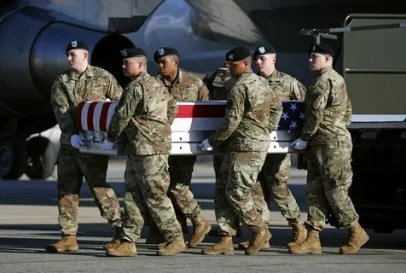
American Military Failure in Afghanistan
or go to
Aletho News Archives – Video-Images
Frlom the Archives
Iran War: United States Military Versus Israel Firsters
By James Petras | November 27, 2007
Why must Jewish organizations be and be seen as the loudest drum-beaters of all? Why can we not bring ourselves to say that military intervention is not on the table at all? Why not stash it under the table, out of sight and mount instead a diplomatic assault? – Leonard Fein, Forward
Introduction
As the White House and Congress escalate their economic sanctions and military threats against Iran, top military commanders and Pentagon officials have launched a counter-offensive, opposing a new Middle East War. While some commentators and journalists, like Chris Hedges (Truthdig, November 13, 2007), privy to this high stakes inter-elite conflict, attribute this to a White House cabal led by Vice President Cheney, a more stringent and accurate assessment puts the Zionist Power Configuration (ZPC) in the center of the Iran war debate.
There is a great deal riding in this conflict – the future of the American empire as well as the balance of power in the Middle East. Equally important is the future of the US military and our already heavily constrained democratic freedoms. The outcome of the continuous and deepening confrontation between top US military officials and the Israel Firsters over US foreign policy in the Middle East has raised fundamental questions over self-determination, colonization, civilian primacy and military political intervention, empire or republic. These and related issues are far from being of academic interest only; they concern the future of the United States. … continue
Blog Roll
 Aletho News
- Trump on Hormuz: “Others must take care of it” after US falters
- Who Is closer to collapse?
- A War that Backfired: Why the US-Israeli Campaign Is Strengthening Iran
- How Zionist Control Is Hurting US Interests
- Iran warns it may target US missile launch sites in UAE cities
- American Military Failure in Afghanistan
- Friendly Skies of Georgia: Are Israeli-Linked Drones Launching False Flags from Georgian Territory?
- The Three Big Lies about Mammography Screening
- Ukrainian Embassy in Beirut sheltering top Mossad agent
- Palestinian family displaced after settlers violently attack them in Humsa, Jordan Valley
- If Americans Knew
- No let-up in attacks on Gaza as Israel takes on Iran, Lebanon – Not a ceasefire Day 155
- ‘Of Course’: IDF Drops Case Against Soldiers Accused of Raping Palestinian Prisoner
- Don’t Fall for the Regime Change Talk. Israel Is ‘Mowing the Lawn’ in Iran
- Will Israel and the US wreck the Gulf States along with Iran?
- US so far burned through ‘years’ of munitions in Iran war: Report
- How the Israeli Tail Wags the American Dog
- Outdated intel likely led to deadly U.S. strike on Iranian elementary school, sources say
- Pentagon insider says high U.S official Douglas Feith reported to Netanyahu
- In fond memory of Walid Khalidi, the historian of Palestine
- 6 more Americans killed, as Israel ‘mows the lawn’ in Iran – Not a ceasefire Day 154
- No Tricks Zone
- Storing Green Energy To Last Germany 10 Days Would Require A 60-Million Tonne Battery
- New Studies: UK Sea Levels Were 4 Meters Higher Than Today During The Mid-Holocene
- Destructive Green New Deal: German Energy And Metal Group Warns Of Drastic Crisis
- New Study Documents A 20-Year Pause In Arctic Sea Ice Decline – Driven By Internal Variability
- Wake-up Call: Survey Shows Majority Of Germans Now Favor Postponing Climate Targets!
- Televised! Leading German Political Candidate Tells Schoolchildren CO2 Makes Sun Hotter!
- New Study: A Century Warming Of 1.1°C Is ‘Commonplace’ And ‘Not Unusual’ During This Interglacial
- New Study: ‘Internal Noise’ And Volcanic Forcing Can Trigger 10-15°C Warming Within Decades
- Glaciers Worldwide Are Suddendly Surging, Experts Blame Warming!
- Surprising Discovery: Sahara Is Greening…Billions Of Trees Where Once Thought To Be Barren
 Aletho News