As Afghan assault looms, many civilians haven’t fled
By Saeed Shah | McClatchy Newspapers | February 9, 2010
KABUL, Afghanistan — As U.S.-led coalition troops prepare for a long-awaited offensive against the Taliban in southern Afghanistan, few civilians have managed to escape the town at the center of the operation, raising the risk of civilian casualties that could undermine the Obama administration’s military strategy for the country.
The U.S.-led force said Tuesday that fewer than 200 families — around 1,200 people — had left the town of Marjah and the surrounding area, which have a population of about 80,000.
“Commanders in the area are reporting no significant increase in persons moving out of Nad-e Ali district in the last month,” the U.S.-led International Security Assistance Force said in a statement. “Despite reports of large numbers of civilians fleeing the area, the facts on the ground do not support these assertions.”
Thousands of U.S., British and Afghan soldiers are poised to push into the area, with preliminary operations reported to have begun late Tuesday. Afghan police will accompany the soldiers in an effort to establish law and order quickly.
The presence of a large number of civilians could make the operation much trickier and provide a test of the new coalition military doctrine of protecting the population. A large media contingent from around the world will accompany the troops, recording their progress.
An estimated 2,000 Taliban fighters are dug in and are believed to have planted roadside bombs and booby-trapped buildings. Residents said the insurgents had dug trenches in a traffic circle and mined the roads out of town. It may be too late for those who haven’t escaped by now.
“If (NATO forces) don’t avoid large scale civilian casualties, given the rhetoric about protecting the population, then no matter how many Taliban are routed, the Marjah mission should be considered a failure,” said Candace Rondeaux, an Afghanistan-based analyst at the International Crisis Group, an independent research and campaigning organization.
Although international forces counted relatively few evacuees, local people told McClatchy that more civilians had evacuated, though still only a fraction of the population. Leaflets dropped over the town had warned townspeople for days of the impending offensive.
“The message to the people of the area is, of course, keep your heads down, stay inside when the operation is going ahead,” Mark Sedwill, the civilian head of NATO in Afghanistan, told reporters in Kabul… Full article
Defamation: In Search of Antisemitism
By Tali Shapiro | Pulse Media | February 11, 2010
Last month, PULSE published Yoav Shamir’s film, Defamation. I’ve finally gotten around to watching it, and just couldn’t help writing as I watched. Aside from the comical Nancy Drew music, I found it at times very hard to watch. Looking in the mirror is never easy.
The Easy Part – The Adults
There’s something pathetic about a grown man living in unsubstantiated fear. Probably the most pathetic statement in the movie is made by the security guy at Crown Heights:
When a black guy sees two people walking down the street, a black person and a jewish person, his choice to attack someone will not be a black person. With a black person, you never know, does he carry a knife, does he carry a gun?..
This pathetic and racist assertion is forwarded by how many atrocities the Jews went through throughout history, as if the blacks never went through hundreds of years of slavery, their countries colonized by whites. Where’s the ADL when you need them?
Speak of the devil. Watching the ADL’s ineptness in the one thing they should be able to do – find defamation cases – is a rather entertaining exercise. While the American and Israeli press and media is full of racism, homophobia, genderphobia, classism and any other exotic blend of ism and phobia you can think of, the self proclaimed Anti Defamation League is struggling to find antisemitism in all of the United States.
In his search for antisemitism, not even the ADL could help Yoav Shamir. To his somewhat childish disappointment and understandable relief, antisemitism- or more accurately- anti Judaism as a broad and prevailing phenomenon, is a thing of the past. Today’s anti-Judaism is no more common than any other racism towards any other minority, and very possibly less common.
Actual Defamation
Defamation does actually get intimate footage of true anti-Judaism. It’s not exactly the Arian Brotherhood, but it’s an important example of how all groups harbor racism when they are separated and don’t know each other on a personal level. A great example is the African American community of the aforementioned Crown Heights neighborhood. When engaged in conversation about their Jewish neighbors, the black residents seem to have a lot of preconceived notions about them, or more precisely, Jews in general. One could go into an “antisemites” tantrum, or realize that in order to solve the root of this problem, the members of both Crown Heights communities need to borrow more sugar.
The Hard Part – The Children
While the ADL is a bit of a laugh, the parts with the teenagers tore my heart out. I could see myself there. Though I have slightly different memories and remember my “roots voyage” as the scratching the surface off of the Zionist illusion, I remember this fear of the boogie antisemite.
Children who want to “Not forget and not forgive” are a cause for concern. A child isn’t born vindictive. Israeli children are vindictive, though many enjoy a comfortable life. The high-schoolers Shamir chose to follow are middle-class-and-up, and they embody the dichotomy that is the Zionist identity: On one hand, they “know” they are hated and seek revenge to different extents; on the other, you can see their blank stares as they are faced with shocking images of what has become known as the holocaust (with a capital H). In their own words, they “don’t feel it” (“it” not being pain, but revenge) which is absolutely normal. What isn’t normal is that they want to feel it. An Israeli child is expected to somehow contain such horrors as if they were their own.
Now, my own dichotomies come into play: On the one hand, I can easily relate to them at that age; on the other, I pity them – their minds abused at such a young age; and on another, they are tomorrow’s soldiers. As I look into their soft faces I wonder: Which of them will be gassing me in Bil’in next week? Which of them will call me a Nazi, as they did last week? In their head they are fighting their own extinction. Fighting for their lives. While in reality they are bigger and stronger than most. Yet another dichotomy that will traumatize them, and ironically, will turn them into exactly what they’re most afraid of.
The Thirst for Holocaust Porn
“The real journey begins now”, says one of the girls as she enters the (unbeknownst to her) partially recreated Majdanek with the Israeli flag in her hand and a white shirt with a blue tie (the national colors of Israel) and a star of david on the back (so many ironies, so little time). She was taught to act like this at a very young age, and school, yet again, provides her with the correct nationalistic props. I can relate, though I chose not to wrap myself in a flag (the trend in my day) for my own reasons. I remember Majdanek very vividly, due to the fact that it’s very…well… vivid. What I don’t remember, however, are the horror stories. Throughout Defamation I can definitely see an escalation in scare tactics. While stories I remember being told sounded more like rumors, something a testimony may sound like- hearsay, the stories these kids are being told take on mythical proportions (the bloodthirsty Lady Godiva is my personal favorite).
I remember, about a year ago, in the midst of a debate (if you can call it that) with a fascist Zionist, who perceives himself as a leftist, he threw the accusation at me that I want another Gaza, so I can wave more dead babies at the UN. The cynicism of such remarks is not what astonishes me, but the relentless displacement disorder that’s so typical of Zionists. As Zionists abuse the horrors of the holocaust for their personal gain, they blame the Palestinians for sanctifying death. “They want martyrs,” is a commonly uttered sentence.
Incredibly enough, this thirst for evidence of anti-Semitism isn’t calculated (at least, not anymore), but engrained so deeply in our education that it becomes an obsession. Maybe I’m having an embarrassing outing right now, thinking there must be more like me, when in fact the room is full of crickets, but after seeing the kids of Defamation, I feel I may have a potential support group, so here goes:
Until I got to Auchwitz, I was obsessed with holocaust porn.
I’m not talking about Nazi sex fantasy pulp fiction. I’m talking about the need to hear more stories and in as much detail as possible. The more gruesome, the better. Naked women run around the camp under the guise of a collective medical examination? Oh yes! Mama had to choose which baby lives and which one dies, burning in an old train cart? Give me more! Babies thrown out of windows and used as target practice plates? That hit the spot! Give me 5 minutes and tell me more!
What are we doing to these kids?
That’s ultimately the question that Defamation deals with. The director, like myself, is taking a hard look in the mirror, trying to understand what has brought him thus far. A personal journey that’s undetachable of social nurture. A personal journey which understands that the past is the past and you can’t undo it, you can only take responsibility for it and try to do better in the future.
Israel Gets Away with Murder .. Again
Not all Israeli assassinations are clandestine operations
By Tammy Obeidallah | February 11, 2010
Amid the glamour of the world’s tallest building, gold bars, man-made islands, casinos and fashion, a man lay dead in his hotel room. Preliminary reports would say he had been suffocated with a pillow; further investigation would determine that he was injected with poison.
Post-mortem photos of Mahmoud Al-Mabhouh, age 50, told a story the media would not tell: the tip of his nose blackened, red blotches covering his cheeks and jaw and a horrific indentation on one side of his nose testified of torture and a cruel execution.
Most news sources subliminally justified Al-Mabhouh’s murder in Dubai on January 20. He was described only as a “senior Hamas militant,” “founding member of Hamas’ military wing” or even “arch-terrorist.” As someone who was allegedly involved in the deaths of two Israeli soldiers in the 1980s and committed numerous other acts of armed resistance against Israel, he was undoubtedly a menace by western standards.
Al-Mabhouh grew up in the squalor of Gaza’s Jabaliya refugee camp, but had lived in exile in Syria since 1989. He had been the target of two previous assassination attempts: a car bombing and a poisoning. The latter took place in Beirut only six months ago and rendered him unconscious for 30 hours.
The Israeli government issued a statement claiming Al-Mabhouh had traveled to Dubai en route to Iran in order to smuggle weapons back to his native Gaza. Israeli defense officials told the Associated Press that these rockets would be capable of reaching Tel Aviv 40 miles away. Evidently, there have been some major technological advances since Israel’s assault on Gaza last year, as retaliatory rockets fired from Gaza ranged only 25 miles.
While Israel has not officially acknowledged involvement in Al-Mabhouh’s murder, Israeli news agency Inyan Merkazi reported that a four-member squad of Shin Bet and Mossad agents interrogated Al-Mabhouh before executing him.
Whitewashed by western media as “extra-judicial assassinations” or “targeted assassinations,” such acts are tantamount to premeditated murder against anyone suspected of resistance against Israel’s 62-year occupation of Palestine. Al-Mabhouh’s death is the latest of numerous executions carried out by the Mossad and other Israeli government agencies throughout the Jewish State’s existence.
In 1972, the Mossad began a series of assassinations in what was supposed to be retribution for the deaths of Israeli athletes during the Munich Olympics. Thirty-five suspects believed to have been involved in the attack were systematically ambushed throughout Europe and Lebanon. Many had ambiguous ties at best to the Munich operation and in a case of mistaken identity Ahmed Bouchiki, a young Moroccan waiter, was gunned down in Norway. Throughout this and other operations, the Mossad used false passports without the issuing government’s knowledge or approval in what has become a trademark of that organization’s modus operandi.
In 1997, Mossad agents traveled with Canadian passports to Amman, Jordan in a botched attempt on the life of Hamas leader Khaled Meshaal. In 2004, New Zealand jailed two Mossad agents for six months and imposed diplomatic sanctions against Israel after the pair illegally applied for passports in that country. Authorities in Dubai investigating the murder of Mahmoud Al-Mabhouh have confirmed that his killers are traveling on Irish passports.
However, not all Israeli assassinations are clandestine operations.
Fateh co-founder Khalil al-Wazir, known as Abu Jihad, was killed in 1998 at his home in Tunis in front of his family. The 2004 Israeli airstrikes that killed Hamas founder and spiritual leader Ahmed Yassin and subsequently his replacement, Abdelaziz Al-Rantissi also killed Rantissi’s son, his bodyguard and eleven bystanders, including a five year-old child.
Not only are the leaders of armed resistance in the crosshairs of Israeli assassins, but political activists who speak out against the occupation of Palestine as well. Cartoonist Naji Al-Ali, whose brutally honest body of work earned him many powerful enemies, was murdered in cold blood in London on the way to his office. Although Al-Ali was critical of Arab governments and the corruption present in the hierarchy of Palestinian resistance groups, a preponderance of evidence points directly to the Mossad being responsible for his death.
Ten months after Al-Ali was killed, Scotland Yard arrested a student named Ismail Suwan, who turned out to be a Mossad agent. Suwan confessed that his superiors knew of the plot to kill Al-Ali. Upon refusing to cooperate further, Great Britain expelled two Israeli diplomats and closed the Mossad’s London base. Despite all this, no one was ever brought to justice for the crime.
In March 2003, a 23 year-old American college student named Rachel Corrie was killed by a bulldozer driven by an Israeli soldier while trying to prevent a home demolition in the Gaza Strip. It was learned through Corrie’s own writings that activists with the International Solidarity Movement (ISM) had come under fire in the weeks prior to her death while trying to retrieve the body of a Palestinian killed by Israeli forces. She told also of how the camp’s water wells were being destroyed by the Israeli military and that members of ISM had slept in front of the wells to deter the attacks.
Clearly the group’s activities were a source of consternation to the Israelis, one of whom took the opportunity to murder a young woman on a clear day in the Rafah refugee camp. Claiming Corrie’s death was “accidental,” he was never punished.
Many have paid the ultimate price for challenging the Israeli juggernaut, no matter what form that challenge has taken. Many individuals who never picked up a weapon have been targeted by the Jewish State. And if Mahmoud Al-Mabhouh was attempting to procure weapons, he was simply guilty of trying to help his people defend themselves against Israeli aggression. Only when the western-dominated court of world opinion is no longer content to let Israel act as judge, jury and executioner, will there be justice for occupied Palestine and all the people who met untimely and brutal deaths in her defense.
UK’s Jewish Chronicle editor says extra-judicial murder is kosher
By Salaheddin Ahmad | February 11, 2010

www.redress.cc
Doubts have begun to resurface regarding the attitude of the Jewish Chronicle, Britain’s top Zionist newspaper and Israeli mouthpiece, towards justice and the rule of law after its editor, Stephen Pollard, publicly condoned extra-judicial murder.
In response to an email in which a reader of the Jewish Chronicle asked whether the newspaper considered “extra-judicial murder by Israel or any other state as acceptable in any way”, Mr Pollard simply replied “yes”.
The Jewish Chronicle is currently spearheading a campaign by Israel’s stooges and agents of influence to change UK law so that suspected Israeli war criminals can travel to Britain without fear of prosecution under universal jurisdiction.
Commenting on Mr Pollard’s support for extra-judicial murder, Chris Doyle, the director of the Council for Arab-British Understanding, said:
“Editors of newspapers have a major responsibility not to promote violations of law and in particular murder. Pollard’s support for murder is a disgrace and calls into serious question his standing as a serious journalist and editor.”
This is not the first time in which Stephen Pollard’s ethics have come under the spotlight. In December 2009, Redress Information & Analysis published an article in which a number of whistleblowers questioned the commitment of some of Britain’s top Jewish institutions, including the Jewish Chronicle, to basic universal principles of human rights and common decency.
The whistleblower from the Jewish Chronicle was especially scathing about Stephen Pollard, questioning his judgement and noting that the Jewish Chronicle editor’s choice of commentators and columnists put his sense of ethics in serious doubt. In an interview with Redress Information & Analysis Editor Nureddin Sabir, the whistleblower said:
Take a look at some of our commentators and columnists. The average British reader would take one glance and say “What a rogues gallery!” You have Tzipi Livni, that broken record Melanie Phillips and, worse of all, Geoffrey Aldeman. For God’ sake, Geoffrey Alderman is one of our regular columnist, believe it or not! For a newspaper that’s struggling to keep its readers, the choice of Geoffrey Alderman is a damn strange one, but that’s Stephen Pollard for you.
In early 2009 Mr Alderman argued that according to Jewish religious law, it was “entirely legitimate to kill” every Palestinian in Gaza who voted for Hamas.
For our whistleblower, the fact that Mr Alderman was still a regular columnist for the newspaper after making these comments was “scandalous and outrageous, morally and politically”. The whistleblower said:
Geoffrey Alderman spits out stuff that not even the British National Party, Combat-18 and the Ku Klux Klan would dare say these days.
Just imagine what would have happened if a British Muslim columnist said that it was fine to kill Israelis who voted for a government that slaughters Palestinian civilians. The whole country, from Westminster to the media, from the tabloids to the so-called “quality papers” to the BBC and ITN, would be up in arms with condemnations day and night, day after day for weeks on end. Politicians and others would be calling for prosecutions, Stephen Pollard would be rushing from one TV studio to another bellowing “anti-Semitism”.
But here we go, Alderman in effect condoning the murder of innocent civilians and he still writes for the Jewish Chronicle. What a way to appeal to the broader public! What morality!
Given Stephen Pollard’s latest public support for extra-judicial murder, the choice of suspected war criminal Tzipi Livni and murder apologist Geoffrey Alderman as Jewish Chromicle columnists does not seem all that strange.
You can contact Stephen Pollard and share with him your thoughts at stephenpollard@thejc.com.
Israel Violates Economic Sanctions Against Iran
By Grant Smith, February 11, 2010
The Obama administration is escalating economic sanctions against Iran. Administered by a secretive unit within the US Treasury Department, they will freeze the assets of Revolutionary Guard Gen. Rostam Qasemi as well as four subsidiaries of a construction firm that he leads. These sanctions build upon existing U.S. unilateral sanctions targeting shippers, financial institutions, and elements of the Guard Corps some believe are promoting Iran’s missile and nuclear programs.
Economic warfare expert R. Thomas Naylor extensively documents that such sanctions create black markets and spread corruption while doing relatively little to deter rogue regimes. Obvious economic dynamics create vast margins for smugglers and traders willing to bust embargoes. Unless the economy of a target country is particularly dependent upon the influence or volume of goods from any single international partner, profiteers quickly step into the breach. Sanctions typically punish legitimate traders while favoring corruption around the world.
That corrupting nature of sanctions reaches far into the US. One example is Marc Rich, indicted in the United States on federal charges of illegal oil deals with Iran during the Iran hostage crisis. Rich broke US embargoes by purchasing Iranian crude under special deals with Ayatollah Khomeini. Rich then sold them at healthy margins to legitimate traders locked out of the market by US sanctions. Forbes ranked the intrepid Rich as the 242nd richest American in 2006 with a net worth of US $1.5 billion.
Rich stayed outside the U.S. until he arranged for an unprecedented pardon from President Bill Clinton on January 20, 2001. Eric Holder, then acting as deputy attorney general, gave Clinton his “neutral, leaning towards favorable” recommendation to pardon the Switzerland-based fugitive financier after a quiet and intense campaign by the Israeli government’s Ehud Barak and Shimon Peres and the US Israel lobby.
But the temptations of sanctions busting aren’t an “elites only” affair. Under the highly problematic US-Israel Free Trade Agreement, US growers should have an advantage in supplying the $20 million Israeli pistachio market. But grower complaints meticulously documented in 2007 to the US Trade Representative reveal that Israel prefers to avoid importing American nuts while violating its own “Trading with the Enemy Act” by purchasing Iranian pistachios through Turkey. Although US growers supplied scientific test data to the US Trade Representative validating these claims, no punitive measures have been taken by Israel or the USTR (an office of the President).
History suggests that Israelis and their US lobby’s financial backers will be first in line to violate so-called “crippling sanctions” against Iran, a country over which the US has relatively little direct economic leverage. This adds insult to injury, since a real US economic sanctions regime — likely to have been highly successful in averting conditions underlying any potential Middle East nuclear arms race — has been suppressed since it was signed into law over three decades ago.
The Foreign Assistance Act of 1961 as amended by the Symington Amendment of 1976 and the Glenn Amendment of 1977 prohibiting US military assistance to countries that acquire or transfer nuclear reprocessing technology outside of international nonproliferation regimes. Israel, unlike Iran, is not a signatory to the Nuclear Non-Proliferation Treaty. The declassified US Army report titled The Joint Operating Environment 2008 identifies Israel as a nuclear weapons power in “a growing arc of nuclear powers running from Israel in the west through an emerging Iran to Pakistan, India, and on to China, North Korea, and Russia in the east.” Jimmy Carter became the first former President to confirm in 2008 that Israel had secretly financed, developed, and deployed an undeclared arsenal of nuclear weapons. Israeli Mordecai Vanunu long ago released his damning photos of Israeli nuclear weapons and facilities for which he served 18 years in prison.
If the President wishes to disburse US taxpayer-funded foreign aid to Israel in compliance with US law, he may do so only by issuing a special waiver, available for public review, as is currently the case with US aid for Pakistan. Yet every president from Ronald Reagan to Barack Obama has violated their oath of office — all refused to either withhold aid or sign the short presidential waiver that would make delivering taxpayer funded US foreign aid to Israel legal under Symington and Glenn.
If US presidents had faithfully executed this US law in order to reign in the Israeli nuclear weapons program since the 1970s, there can be little doubt that the Middle East would be a vastly better place. Israel is fully dependent on access to the US market, diplomatic cover, and vast military aid. Israel would have been motivated to negotiate in good faith a comprehensive peaceful settlement with its near and distant neighbors, none of which would feel pressure to establish a deterrent to Israel’s nuclear weapons. But in terms of political coercion, Israel’s arsenal is pointed squarely at the US. Back in 1960 the CIA estimated [PDF] that “Possession of a nuclear weapon capability, or even the prospect of achieving it, would clearly give Israel a greater sense of security, self-confidence, and assertiveness…Israel would be less inclined than ever to make concessions…”
The presidential history of capitulation to Israeli violators unmasks these new economic sanctions for what they truly are: corrupt “box checking exercises” as Israel’s lobby eagerly drives the US toward yet another needless — but long planned — military conflict which serves no legitimate American interest.
Increase In Attacks on Reporters in West Bank

By Saed Bannoura – IMEMC & Agencies – February 11, 2010
Palestinian reporters, either working for local or international agencies, were repeatedly subjected to attacks by the Israeli army, but recently such attacks witnessed a sharp increase leading to injuries, damage to equipment, and to preventing them from performing their duty.
Two of the reporters, Ata Oweisat and Mahmoud Oleyyan, work for the al Quds newspaper.
Another wounded journalist, Ahmad Gharabely, works for the French Press Agency.
Diala Jweihan, a reporter and camerawoman working for Al Quds Net was hit in her back by a concussion grenade, she lost consciousness and was transported to al Maqassed Hospital in Jerusalem. She was reportedly burned across her back, upper legs and right arm.
CNN cameraman, Karim Khader, was hit by a rubber-coated bullet fired by the army.
Samir Abu Gharbiyya, a reporter working for al-Jazeera English, was hit in the head by a stone thrown by a Palestinian meant for an Israeli soldier.
Israeli soldiers are said to have made attempts to destroy the cameras possessed by the attacked journalists.
Several reporters were also subjected to repeated attacks by Israeli soldiers during invasions targeting Burin and Iraq-Burin village, south of the northern West Bank city of Nablus.
Soldiers violently attacked Ashraft Abu Shaweeh, Hasan Al Ateety, Abdul-Rahim Qosabny, Nidal Eshtiyya, Ala’ Badarna, Rami Sweidan, Ja’far Eshtiyya and Aref Tuffaha.
Another reporter, Nasser Eshtiyya, was hit by a stone thrown by a Palestinian during clashes with Israeli soldiers invading Dir Nitham village.
The Palestinian Journalists Forum condemned the Israeli treatment of reporters, citing the numerous ongoing violations of their rights.
The Palestinian Journalists Forum called upon the International Journalists Forum, human rights and legal groups to intervene and stop the violations and attacks against reporters.
Binyam Mohamed torture evidence must be revealed, judges rule
By Richard Norton-Taylor | The Guardian | February 10, 2010
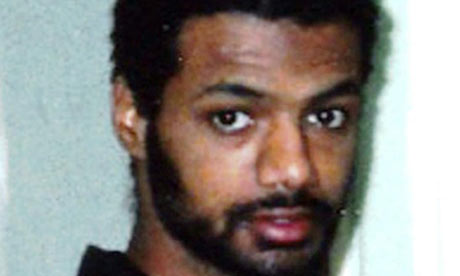
Three of Britain’s most senior judges have ordered the government to reveal evidence of M15 complicity in the torture of British resident Binyman Mohamed- unanimously dismissing objections by David Miliband, the foreign secretary.
In a ruling that will cause deep anxiety among the security and intelligence agencies, they rejected Miliband’s claims, backed by the US government, that disclosure of a seven-paragraph summary of classified CIA information showing what British agents knew of Mohamed’s torture would threaten intelligence sharing between London and Washington, and therefore endanger Britain’s national security.
One of the key paragraphs states that there “could readily be contended to be at the very least cruel, inhuman and degrading treatment of Binyam Mohamed by the United States authorities”.
The judges – Sir Igor Judge, the lord chief justice; Lord Neuberger, the master of the rolls; and Sir Anthony May, president of the Queen’s Bench – shattered the convention that the courts should not question claims by the executive relating to national security.
In damning references to claims made by Miliband and his lawyers, and stressing the importance of the media in supporting the principle of open justice, they said the case raised issues of “fundamental importance”, of “democratic accountability and ultimately the rule of law itself”.
Publication of the material Miliband wanted to suppress was “compelling”, Judge said, since they concerned the involvement of wrongdoing by agents of the state in the “abhorrent practice of torture”. The material helped to “vindicate Mr Mohamed’s assertion that UK authorities had been involved in and facilitated the ill- treatment and torture to which he was subjected while under the control of USA authorities”.
The disputed paragraphs have now been published by the Foreign Office.
Miliband said in a statement: “The government accepts the decision of the court of appeal that in the light of disclosures in the US court, it should publish the seven paragraphs at issue in the case of Binyam Mohamed.
“At the heart of this case was the principle that if a country shares intelligence with another, that country must agree before its intelligence is released.
“This ‘control principle’ is essential to the intelligence relationship between Britain and the US.
“The government fought the case to preserve this principle, and today’s judgment upholds it.
“It agreed that the control principle is integral to intelligence sharing. The court has today ordered the publication of the seven paragraphs because in its view their substance had been put into the public domain by a decision of a US court in another case.
“Without that disclosure, it is clear that the court of appeal would have overturned the divisional court’s decision to publish the material.
“The government has made sustained and successful efforts to ensure Mr Mohamed’s legal counsel had full access to the material in question.
“We remain determined to uphold our very strong commitment against mistreatment of any kind.”
A Foreign Office spokesman said: “Under the terms of the embargo we were permitted by the court to notify a small number of US officials in advance of this judgment. We have done so.
“The foreign secretary spoke last night to Hillary Clinton. He stressed to her that the court had strongly supported the control principle and would have agreed with HMG [her majesty’s government] had it not been for the Kessler judgment in the US court last December, which had effectively disclosed the material in the seven paragraphs.
“The foreign secretary and the secretary of state reaffirmed the importance of the US-UK intelligence relationship.”
Shami Chakrabarti, the director of Liberty, said the ruling and revelations made a public inquiry “inescapable”.
“It has been clear for over a year that the Foreign Office has been more concerned with saving face than exposing torture.
“These embarrassing paragraphs reveal nothing of use to terrorists but they do show something of the UK government’s complicity with the most shameful part of the war on terror.
“The government has gone to extraordinary lengths to cover up kidnap and torture. A full public inquiry is now inescapable.”
Key to the appeal court’s ruling was a recent case in a US court where the judge noted that Mohamed’s “trauma lasted for two long years. During that time he was physically and psychologically tortured. His genitals were mutilated … All the while he was forced to inculpate himself and others in various plots to imperil Americans.”
The US court, which was hearing a case relating to another detainee at Guantanemo Bay, noted that Mohamed was told “that the British government knew of his situation and sanctioned his detention”.
An MI5 officer known only as Witness B is being investigated by the Metropolitan police over his alleged role in questioning Mohamed incommunicado in a Pakistan jail.
The whole basis of Miliband’s case had “fallen away” because of the US court case, said Neuberger, who added: “It is a case which is now logically incoherent and therefore irrational and is not based on any convincing evidence.”
In his ruling , May said: “In principle a real risk of serious damage to national security, of whatever degree, should not automatically trump a public interest in open justice which may concern a degree of facilitation by UK officials of interrogation using unlawful techniques which may amount to torture or cruel, inhuman or degrading treatment.”
In a stinging reference to claims by Jonathan Sumption QC, Miliband’s counsel, that high court judges in earlier rulings were “irresponsible” in saying that CIA intelligence relating to ill treatment and torture and Britain’s knowledge of it should be disclosed, the lord chief justice said: “No advantage is achieved by bandying deprecatory epithets.”
Mohamed was detained in 2002 in Pakistan, where he was questioned incommunicado by an MI5 officer. The US flew him to Morocco, Afghanistan, and Guantánamo Bay, where he says he was tortured with the knowledge of British agencies.
In the high court last year, Lord Justice Thomas and Mr Justice Lloyd Jones ruled that it was clear from the evidence “that the relationship of the United Kingdom government to the United States authorities in connection with Binyam Mohamed was far beyond that of a bystander or witness to the alleged wrongdoing”.
The Netanyahu-Fayyad “economic peace” one year on
By Ziyaad Lunat, The Electronic Intifada, 10 February 2010
Israeli Prime Minister Benjamin Netanyahu was elected on a platform of “economic peace” with Palestinians in the West Bank. He contended that developing the Palestinian economy, by providing Palestinians with jobs and a better living standard, would render the “problems” between Israelis and Palestinians “more accessible for solutions.”
Salam Fayyad, the appointed Palestinian Authority (PA) prime minister in Ramallah and a former International Monetary Fund official, was quick to follow with his own complementary plan last August. His policies recently earned praise from Israeli President Shimon Peres who called Fayyad a Palestinian “Ben Gurionist,” in reference to Israel’s founding prime minister. Economic peace won broad backing from the UN, European leaders as well as the administration of US President Barack Obama — representatives of which form the self-appointed “Quartet” that dictates terms for the “peace process.
Tony Blair, the Quartet envoy for the Middle East peace process, characterized Fayyad as “absolutely first class — professional, courageous, intelligent.” Blair did not hold back praise for Netanyahu either, calling him a “peacemaker.”
A consensus has developed among the political elite, and even among Arab states, that improving Palestinians’ quality of life, even if under military occupation, is the long sought solution for Palestinian misfortunes. Netanyahu assigned Deputy Prime Minister Silvan Shalom to lead the economic peace task force and coordinate with both Blair and the PA.
The Netanyahu-Fayyad plan has been a magnet for foreign capital. The US Congress approved last July a deposit of $200 million into the PA treasury, under Fayyad’s direct control. In September donor countries pledged on the sidelines of the General Assembly $400 million to the PA by the end of 2009. Last month, the European Union transferred 21 million Euros to “help the Palestinian Authority pay the January salaries and pensions of 80,551 Palestinian public service providers and pensioners.”
This “West Bank First” policy of economic development replaced Bush’s failed policy of democracy promotion. In 2006, Palestinians in the West Bank and Gaza Strip elected Hamas but Israel and its western allies boycotted the movement because it did not conform to the demands of the Quartet, much of them at odds with international law.
The Quartet switched strategies towards finding “moderate” partners that can implement their vision of “peace.” One such person is PA President Mahmoud Abbas, whose term in office expired for the second time last month (after being questionably extended for an additional year in early 2009).
Western donors also hand-picked Salam Fayyad for the post of prime minister despite his Third Way party obtaining less than three percent of the popular vote in the 2006 legislative elections. His exclusive control of the Palestinian coffers give him immense power to implement policies to his own credit as speculation — and in some PA circles fear — grows that he is being groomed by the West to replace Abbas.
“Economic peace,” coupled with the “West Bank First” policy of economic development serves too as warning to Palestinians. They either conform to a political program approved by Israel and Western donors or risk sharing the dire fate of Gaza, under a crippling siege since June 2007. Hamas, under intense pressure, is gradually softening its positions, with cautious overtures to Israel and the West with the hope of inclusion in the process and perhaps a slice of the monetary rewards.
The results of the first year of Netanyahu’s economic peace are visible. While there has been no progress on the political front, security and economic cooperation with the PA has never been better. The American-trained security forces have kept a tight grip over West Bank towns squashing dissent and keeping “order.” When the Israeli army invades during the night, Palestinian security forces swiftly retreat. Intelligence sharing has enabled joint campaigns of arrest against members of the resistance.
The Guardian newspaper reported that Palestinians security forces have been working closely with the CIA to torture Palestinian dissenters. When Palestinians killed a settler last December, Abbas’ forces worked “overtime” to find the culprits arresting hundreds in the process. A PA spokesperson described the security situation up to the attack as “nearly perfect,” in reference to the diligent job of Palestinian security forces in preventing attacks against Israelis but ignoring the daily attacks Palestinians are subjected to at the hands of the Israeli military and settlers. Abbas’ clampdown didn’t prevent an Israeli death-squad from invading Nablus and killing in cold blood three Palestinians as an act of revenge.
Israel deems the PA a trusted partner for its diligent efforts to provide security for Israelis including settlers actively engaged in colonizing the West Bank. This perception motivated Netanyahu to order the dismantlement of a few dozen roadblocks and the lifting of strategic checkpoints to ease movement between Palestinian cities. Over 578 “closure obstacles” remain in place inside the West Bank. According to the UN, “while some of these measures have contributed to the easing of movement, they exact a price from Palestinians in terms of land loss, disruption of traditional routes, and deepening fragmentation of West Bank territory.” These “goodwill gestures” help give the impression of improvements nonetheless.
Other policies targeting the 17 percent of the West Bank controlled by the PA, otherwise designated as Area A under the 1993 Oslo accords, include the opening of a shopping center in Jenin and a cinema in Nablus. Netanyahu plans 25 other economic initiatives in the West Bank including more shopping centers, a light industrial zone in the Bethlehem area, a major industrial zone in the Jenin area and an agricultural processing and export zone in Jericho. Each ribbon cutting ceremony Fayyad attends reinforces the normalcy discourse propagated by the PA and Fatah-affiliated media that contrast it to the destruction and despair of Israeli-blockaded, Hamas-controlled Gaza.
There are fears these projects are attracting foreign speculators. “My message is very clear: there is an economic prize before us, there is a double dividend for you as companies” said British Prime Minister Gordon Brown to a conference of investors in Bethlehem. One such “prize” is the creation of a Palestinian equity market. The Palestine Investment Fund (PIF), the body leading such effort, expects to deliver an annual return of 15 percent. PIF plans to use cash deposits in local banks as well as money from investors to encourage growth in consumer spending. “Our banks have cash deposits of $7 billion, and they are saying there are not enough opportunities to invest,” said Mohammad Mustafa, the Fund’s chief executive and a former World Bank official.
Real Estate is the main target for foreign corporate investment. Rawabi, the first Palestinian planned city, is Fayyad’s flagship project. The Washington Post reported that Rawabi “is specifically designed for upwardly mobile families of a sort that in the United States might gravitate to places such as Reston, VA. The developments are also relying on another American import, the home mortgage, including creation of a Fannie Mae-style institution for the West Bank.” USAID, a branch of the American government, is funneling funds through nongovernmental organizations (NGOs) for the promotion of a mortgage culture in Palestine to support these initiatives from bottom-up. One such example is CHF International, a corporate-led development NGO, which is organizing community level focus groups and technical training as part of their “homebuyer education” program.
A year on, the cost of the Netanyahu-Fayyad plan is becoming clear. Low-income Palestinian families and small business are being encouraged to borrow to fuel a high-risk economy. Israel has proven time again that it won’t hesitate to strike a blow against Palestinian infrastructure should they dissent from the current consensus in its favor. Families are risking their possessions as collateral for their debts. Corporations responsible for the global financial collapse are applying their failed models in Palestine. Abraaj Capital, a Dubai-based investment fund that recently sparked fears for debt default, announced a $50 million private equity fund dedicated to “raising standards of living,” mirroring the predatory behavior that led to the collapse of the sub-prime mortgage system in the US.
Investors, Palestinian and internationals, are leading in the efforts for normalization of economic relations with Israel in violation of the boycott, divestment and sanctions (BDS) call of Palestinian civil society. There is concern about the growing power that the emerging Palestinian capitalist class can yield over the political process as the personal stakes rise as their economic relationships with Israel intensify. Abbas is said to have yielded to pressure from economic interests when he forfeited UN discussion of the Goldstone report last October causing popular outrage.
The economic peace model comes with a dose of cultural imperialism. Palestinians do not have basic freedoms but they are being told that they can enjoy the mundane and superfluous in cinemas and shopping centers. This is more vividly seen in wall-encircled Ramallah, the seat of the PA government. High-end clubs are appearing to cater for the western-oriented elite. These spaces draw invisible barriers of class and social status that the majority of people cannot relate to or simply cannot afford. This sort of social stratification inevitably leads to the creation of an individualist and self-interested culture and to contentment for the status quo. The availability of disposable income has even encouraged the presence of Russian chains of prostitution in the city. Fahmi Shabaneh, former head of the PA’s Anti-Corruption Department, was forced to quit from his position last year after uncovering a sex scandal involving one of Abbas’ top aides in Ramallah. As expected, the PA denies the accusations. Shabaneh said that “Abbas has surrounded himself with many of the thieves and officials who were involved in theft of public funds and who became icons of financial corruption.”
There is also a division being fostered between the urban and the rural populations. The Palestinians living in the 60 percent of the West Bank officially controlled by Israel, also known as Area C, are continuously dispossessed of their land and gradually being pushed to PA-controlled enclaves. The almost exclusive focus of Fayyad’s plan on the service sector, while ignoring the farming community, will inadvertently lead to acceleration of desertification of the rural areas as the young are pulled to new jobs in the city. The Bantustanization process is accelerating with the construction of Israel’s apartheid wall. The rural population, represented by the popular committees, is now leading resistance against Israel’s encroachment. They have been left without effective political representation, finding themselves in the front line of Israel’s annexationist policies. These two dichotomous realities, the urban and the rural, have left certain sectors of the population in urban centers like Ramallah to be completely oblivious to these struggles only a few miles away.
Hamas’ election in 2006 showed how vital is the Palestinian Authority’s dependence on foreign donors. It also showed how easily donors can turn off the money tap and cause the near destruction of the Palestinian social fabric as in Gaza. The plan that is being forged in the West Bank is fostering such dependence even more, raising the costs for sustaining the Palestinian struggle for liberation. Should the masses awaken from the current delusion, many of the rich elites would not hesitate to turn against their brethren to protect their status and power. Adding to the current political and territorial separation affecting Palestinians, the emerging economic stratification is yet another challenge in the way of Palestinian unity and liberation.
Ziyaad Lunat is an activist for Palestine.
Saudi Arabia moves to regulate net news
Saudi Arabia is planning to introduce regulations that include licensing internet news sites in a bid to bring them under government control
Carlyle Murphy | The National | February 08. 2010
RIYADH // Saudi Arabia is planning to introduce regulations, including a licensing requirement, for its indigenous internet news sites, which have become a key fixture in the kingdom’s active online community.
The draft regulations, still under study, would require internet-based news sites to request a government licence and to respond to complaints about their content that are received by the ministry of culture and information.
“We want them to feel that they are under our umbrella,” Abdul Rahman al Hazza, spokesman for the ministry, said in a phone interview yesterday.
Mr al Hazza referred to the new rules as “guidelines for the e-press”, and said the idea is to help the electronic media with staffing and financing and give them “somebody to talk to” if they have problems. “It’s going to be simple and easy.”
Asked if the new rules would involve censorship, Mr al Hazza replied: “Not that much.” Mainly, he added, if there are complaints about something written at an online news site, “we just look at it”.
A report last year in the Saudi Gazette said the draft regulations also cover “appointment conditions for editors-in-chief, granting permits to journalists, and invitations to cover news events”.
A 2007 law already subjects online writers to criminal penalties for such things as defamation.
The planned regulations, which Mr al Hazza said are still two to three months away from being finalised by the ministry, are an effort to bring online news sites such as Sabq, Alweeam and A’ajel under government control in much the same way that the country’s traditional daily newspapers are regulated.
It is not clear if news sites like Elaph.com, which is London-based but has a Riyadh office, would also have to get a licence.
Saudi newspapers are licensed by the government and can be temporarily stopped from publishing if they print something upsetting to a government official. But this has been rare in recent years, during which the Saudi print media has been encouraged to report more critically on social and economic problems. There is considerable self-censorship, however, as the media stay away from sensitive issues.
Although the draft regulations under consideration do not apply to bloggers, there are concerns that the government eventually will try to regulate them as well.
“They are not talking about blogs” right now, observed one veteran Saudi blogger, Ahmed Ba-Aboud. “But eventually they will get to us. It is a concern.”
Mr Ba-Aboud, 38, a management consultant in the kingdom’s Eastern Province city of Dhahran, said the government does not understand that online media are attracting readers because they are not controlled like traditional newspapers. “There’s no way I’d send anything I write to the government to censor it,” he said. “That’s not how the internet works.”
Ahmed al Omran, who blogs at http://www.saudijeans.org, was caustic about what he called the ministry’s “dumb idea to regulate so-called electronic media”.
“Ironically, some owners of news websites are actually pushing for this law,” Mr Omran lamented in a posting last month.
“They argue that it would make it easier for them to get funding and make money from advertising. What about their independence and freedom that could be threatened by the new law? Well, apparently these things are not high on their agenda.”
Saudi Arabia’s sprightly blogging community includes both Saudis and foreigners writing in both Arabic and English. It also boasts one of the region’s highest proportion of female bloggers – about 46 per cent, according to a 2009 study by Harvard University’s Berkman Center for Internet and Society. About one-third of the kingdom’s population regularly goes online.
The community’s latest arrival showed up February 2, when Mr Ba-Aboud launched a new English-language blog so that outsiders can learn more about “regular people like myself”.
Most foreigners know certain kinds of Saudis, Mr Ba-Aboud said in an interview, including “extremists like Osama bin Laden”, “rich people” and “people related to the government”.
But the voice of ordinary Saudis “does not reach around the globe in a similar magnitude”, he wrote at the new site, http://alternativesaudivoices.wordpress.com.
It will be a sort of communal blog in that Mr Ba-Aboud has invited anyone to contribute a posting, and as co-ordinator, he will post them on the site. Only those that “call for hate or violence” will be rejected, he added.
In an interview last November, Mr al Hazza, the ministry spokesman, said the new regulations arose partly because ordinary citizens “don’t know where to go” to complain about something written at an online news site.
“The problem we have is that there is no government department to refer to … Nobody to evaluate their job to see if they are doing wrong or right.”
Censorship “is not the idea” behind the new rules, he said. “The idea is to regulate.”
Mr al Hazza said a decision will probably be made in the next couple of weeks about whether the new regulations shall be issued by the minister of culture and information, Abdel Aziz al Khoja, or be sent to the Shoura Council for action.
Meanwhile, anyone wanting to send Mr al Khoja a comment on the new rules can reach him at his personal page at Facebook
Canada: ‘No concrete evidence’ against suspect held for over three years
By Terri Saunders | Ottawa Sun | February 10, 2010
The Canadian government had little concrete evidence when it declared an Ottawa man a national security threat, an intelligence expert suggested Tuesday.
Wesley Wark, an expert in international intelligence and security, told a federal court he believes officials with the Canadian Security Intelligence Service had little to go on when they arrested and jailed Mohamed Harkat in 2002 and kept him in jail for three-and-a-half years on a security certificate.
CSIS officials have already testified they considered Harkat, an Algerian native who came to Canada as a refugee in 1995, a threat to national security based on information Harkat had ties to international terrorist organizations such as an Egyptian Islamic group, Le Groupe Islamique Arme (GIA) and Al-Qaida.
Wark said the CSIS report that forms the basis of the government’s case against Harkat contains “no concrete evidence” Harkat was associated with any known terrorist organizations, pointing out some of their allegations against him are based solely on media reports.
“It’s like trying to grab at thin air,” said Wark. “It’s a paper trail you can’t follow.”
Wark pointed to one source the CSIS report cites to show Harkat’s connection to the Egyptian group known as AGAI — an Italian news article which reported an address book found at a safehouse during an investigation into a French terror cell contained the name Mohamed Adnani, one of the names CSIS claims Harkat used as an alias.
Wark said he found nothing in the report which proved such an allegation.
“There’s no explanation as to why they believe Adnani and Harkat are one and the same person,” said Wark. “Harkat never spent time in Egypt. How he would have become a member of AGAI is not explained.”
Wark also suggested the government’s assertions Harkat was sent to Canada as an Al-Qaida sleeper agent are not supported by evidence. He said there’s no clear link between Harkat and Osama Bin Laden’s core network or any affiliated terrorist groups.
“Very little evidence has come to light in the post-9/11 world that sleeper cells do exist,” said Wark. “The fear they might exist is understandable, but evidence is an entirely different thing. With time, you have to wonder if that fear was reasonable.”
terri.saunders@sunmedia.ca
Israel Demands an Act of War

Netanyahu to EU envoys:
“In the last two days the brutal regime in Tehran has made more outrageous statements, including the implicit call for the extermination of my country. Israel expects all responsible governments, including all those represented here, to forcefully condemn these outrageous statements.”
“But I think what is required is a lot more than words, Iran is racing forward to produce nuclear weapons in brazen defiance of the international community. And the international community must decide if it is serious about neutralizing this threat to Israel, the region and the entire word. I believe that what is required right now is tough action from the international community.”
“This means not moderate sanctions or watered down sanctions, this means crippling sanctions, and these sanctions must be applied right now.” – February 9, 2010
US frees Reuters photographer held for 17 months without charge
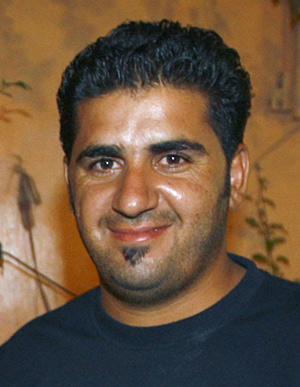
Ibrahim Jassam
BBC | February 10, 2010
American forces in Iraq have released an Iraqi freelance photographer held in detention for 17 months without charge. Ibrahim Jassam Mohammed, who worked for Reuters, was arrested in September 2008 in a dawn raid on his home.
The US said the photographer was a “security threat”, but all evidence against him was classified secret. An Iraqi court had ruled in December 2008 that there was no case against him and that he must be released, but the US military refused.
“How can I describe my feelings? This is like being born again.” Mr Jassam told Reuters.
According to Reuters, the US accusations were based on his “activities with insurgents”.
“The term ‘insurgents’ in Iraq generally refers to Sunni Islamist groups, like al-Qaeda. Jassam is a Shia Muslim,” the news agency said.
The US military has detained a number of Iraqi journalists working for international news organisations, but none have been convicted. It has been criticised by press freedom organisations such as Reporters Without Borders.
Featured Video

Iran Is Not Our Enemy
or go to
Aletho News Archives – Video-Images
Book Excerpt
“Vaccines Do Not Cause Autism!” The Science is Settled. Right?
ICAN urges the IACC to actually study infant vaccines and autism
 By Aaron Siri | Injecting Freedom | March 16, 2026
On behalf of ICAN, we just sent a copy of chapter 11 of Vaccines, Amen to the newly appointed members of the federal Interagency Autism Coordinating Committee (IACC).
If you haven’t already read this chapter, you can read the whole thing in the attached letter. I trust that after you read it, you’ll see why the statement “vaccines do not cause autism” is a belief, not science!

IACC Public Comment Letter
1.53MB ∙ PDF file
Includes chapter 11 of Vaccines, Amen
Blog Roll
 Aletho News
- Iran made ‘unexpectedly substantial’ offer during Geneva talks, US envoys ‘dragged’ Trump into war: Report
- Russia condemns Israel’s attack near Bushehr plant, files complaint
- Russia Strongly Condemns Actions Aimed at Harming Health of Iranian Leadership – Kremlin
- Israeli Journalist Demands Tucker Carlson and Candace Owens Be Placed in WWII-Style Internment Camps
- No Liability, No Studies, No Accountability: The Vaccine System Aaron Siri Exposed in Federal Court
- No time for losers: Why the war meant to save Israel may destroy it
- Top US Counterterrorism Official Resigns in Protest of Operation Against Iran
- Just Get Out! Now!
- Unpacking glaring contradictions in US-Zionist justifications for war against Iran
- Iranian model of warfare bleeds US dry while Persian Gulf states watch and learn: Analyst
- If Americans Knew
- Lebanon death toll exceeds 900, another assassination in Iran, bombing in Gaza – Not a ceasefire Day 159
- Trump’s counterterrorism chief, whose own wife was killed by ISIS, quits over Iran War saying Tehran posed ‘no imminent threat’
- Here’s what US could fund instead of Bibi’s war on Iran
- Israel Killed Over a Dozen Lebanese Paramedics in Three Days, Now Claiming That Ambulances Are “Hezbollah” Targets
- War on Iran: These are the heritage sites devastated by US and Israeli attacks
- Four news stories from Israeli media that illustrate Israeli “justice”
- CIA Prepares Criminal Referral of Tucker Carlson, as Israel and Its Loyalists Demand His Arrest
- Top US counterterror advisor resigns in protest of “war manufactured by Israel” – Not a ceasefire Day 157
- ‘I Liked the House’: When Israeli Soldiers Turn Palestinian Homes into Barracks
- ‘They Were All I Had’: Lebanese Father Buries Parents, 4 Daughters Killed by Israeli Bombing
- No Tricks Zone
- Energy Expert: Germany’s Nuclear Phaseout Was A “500 Billion Euro Mistake”
- New Research: South Australia’s Mid-Holocene Sea Surface Temperatures Were 4°C Warmer Than Today
- Storing Green Energy To Last Germany 10 Days Would Require A 60-Million Tonne Battery
- New Studies: UK Sea Levels Were 4 Meters Higher Than Today During The Mid-Holocene
- Destructive Green New Deal: German Energy And Metal Group Warns Of Drastic Crisis
- New Study Documents A 20-Year Pause In Arctic Sea Ice Decline – Driven By Internal Variability
- Wake-up Call: Survey Shows Majority Of Germans Now Favor Postponing Climate Targets!
- Televised! Leading German Political Candidate Tells Schoolchildren CO2 Makes Sun Hotter!
- New Study: A Century Warming Of 1.1°C Is ‘Commonplace’ And ‘Not Unusual’ During This Interglacial
- New Study: ‘Internal Noise’ And Volcanic Forcing Can Trigger 10-15°C Warming Within Decades
 Aletho News