NY Times’ Jerusalem property makes it protagonist in Palestine conflict
Ali Abunimah, The Electronic Intifada, 2 March 2010
uring an appearance at Vassar College in early February, controversial New York Times Jerusalem bureau chief Ethan Bronner was asked about the ongoing evictions of Palestinian families from homes in East Jerusalem which Israel occupied in 1967. Israeli courts have ruled that Jewish settlers could take over some Palestinian homes on the grounds that Jews held title to the properties before Israel was established in 1948.
Bronner was concerned, but not only about Palestinians being made homeless in Israel’s relentless drive to Judaize their city; he was also worried about properties in his West Jerusalem neighborhood, including the building he lives in, partially owned by The New York Times, that was the home of Palestinians made refugees in 1948. Facts about The New York Times’ acquisition of this property are revealed for the first time in this article.
“One of the things that is most worrying not just the Left but a lot of people in Israel about this decision is if the courts in Israel are going to start recognizing property ownership from before the State [of Israel was founded],” Bronner said according to a transcript made by independent reporter Philip Weiss who maintains the blog Mondoweiss.net.
Bronner added, “I think the Palestinians are going to have a fairly big case. I for example live in West Jerusalem. My entire neighborhood was Palestinian before 1948.”
The New York Times-owned property Bronner occupies in the prestigious Qatamon neighborhood, was once the home of Hasan Karmi, a distinguished BBC Arabic Service broadcaster and scholar (1905-2007). Karmi was forced to flee with his family in 1948 as Zionist militias occupied western Jerusalem’s Arab neighborhoods. His was one of an estimated 10,000 Palestinian homes in West Jerusalem that Jews took over that year.
The New York Times bought the property in 1984 in a transaction overseen by columnist Thomas Friedman who was then just beginning his four-year term as Jerusalem bureau chief.
Hasan Karmi’s daughter, Ghada, a physician and well-known author who lives in the United Kingdom, discovered that The New York Times was in — or rather on top of — her childhood home in 2005, when she was working temporarily in Ramallah. One day Karmi received a call from Steven Erlanger, then The New York Times Jerusalem bureau chief, who had just read her 2002 memoir In Search of Fatima.
Karmi recalled in a 15 May 2008 interview on Democracy Now! that Erlanger told her, “I have read your marvelous memoir, and, do you know, I think I’m living above your old house … From the description in your book it must be the same place” (“Conversation with Palestinian Writer and Doctor Ghada Karmi“).
At Erlanger’s invitation, Karmi visited, but did not find the elegant one-story stone house her family had moved into in 1938, that was typical of the homes middle- and upper-class Arabs began to build in Jerusalem suburbs like Qatamon, Talbiya, Baqa, Romema or Lifta toward the end of the 19th century. The original house was still there, but at some point after 1948 two upper stories had been built.
Erlanger, responding to questions posed by The Electronic Intifada via email, described the residence as “built over the Karmi family house — on its air rights, if you like. The [New York Times] is not in [the Karmi] house.” Erlanger described the building as having an “unbroken” facade but that it consisted of “two residences, two ownerships, two heating systems,” and a separate entrance for the upper levels reached via an external staircase on the side.
Questions The Electronic Intifada sent to Thomas Friedman about the purchase of the property were answered by David E. McCraw, Vice President and Assistant General Counsel for the newspaper, who wrote that the original Karmi house itself “was never owned even partly by The Times. The Times purchased in the 1980s a portion of the building that had been constructed above it in the late 1970s.” The purchase was made from “a Canadian family that had bought them from the original builders of the apartment.”
McCraw acknowledged in a follow-up conversation that as a general principle of property law, the “air rights” of a property — the right to build on top of it or use (and access) the space above it — belong to the owner of the ground.
Exiled from Qatamon
 |
Ghada Karmi standing by the front door of her childhood home in Jerusalem’s Qatamon neighborhood in 2005. (Steven Erlanger) |
Hasan Karmi hailed originally from Tulkarem, in what is now the northern West Bank. In 1938, he moved his family to Jerusalem to take up a job in the education department of the British-run Palestine Mandate government. Ghada — born around November 1939 (the exact date is unknown because her birth certificate along with all the family’s records, photographs, furniture, personal possessions and an extensive library were lost with the house) — has vivid memories of a happy childhood in what was a well-to-do mixed neighborhood of Arab Christians and Muslims, foreigners and a few Jewish families. The neighbors with whom her parents socialized and with whose children the young Ghada and her siblings played included the Tubbeh, Jouzeh, Wahbeh and Khayyat families. There was also a Jewish family called Kramer, whose father belonged to the Haganah, the Zionist militia that became the Israeli army after May 1948.
Karmi describes the house at length in her memoir — but she told The Electronic Intifada her fondest memories were of the tree-filled garden where she spent much time playing with her brother and sister and the family dog Rex. The lemon and olive trees she remembers are still there, Erlanger noted to The Electronic Intifada.
In the mid-1940s, the lively Qatamon social life gave way to terror as the dark clouds of what would come to be known as the Nakba approached. Violence broke out all over Jerusalem after the UN’s devastating recommendation to partition Palestine without giving its people any say in the matter. Spontaneous riots by Arabs were followed by organized violence from Zionist groups and mutual retaliatory attacks that claimed lives from both communities. This climate provided the pretext for the Haganah’s premeditated campaign to seize Jerusalem.
Poorly armed and disorganized Arab irregulars, who had nevertheless succeeded in disrupting Zionist supply convoys to Jerusalem, proved no match for highly-trained and well-armed Zionist militias which, on the orders of David Ben-Gurion, began a well-planned campaign to conquer the western parts of the city. The occupation of western Jerusalem and some 40 villages in its vicinity was executed as part of the Haganah’s “Plan Dalet.” These events are well documented in books including Benny Morris’ The birth of the Palestinian refugee problem, 1947-1949 (1987), Walid Khalidi’s (ed.) All That Remains: The Palestinian Villages Occupied and Depopulated by Israel in 1948 (1992), Salim Tamari’s (ed.) Jerusalem 1948: The Arab Neighborhoods and their Fate in the War (1999) and Ilan Pappe’s The Ethnic Cleansing of Palestine (2006).
Zionist militias used frequent bombings of Arab civilians to terrorize residents into fleeing. These attacks were amplified by posters and warnings broadcast over loudspeakers that those choosing to remain behind would share the fate of those killed in atrocities.
Karmi wrote that one night in November 1947, their neighbor Kramer came to see her father and said, “I have come to tell you at some risk to myself to take your family and leave Jerusalem as soon as possible …. Please believe me, it is not safe here.” Many Qatamon families left after the Zionist bombing of the nearby Semiramis Hotel, which killed 26 civilians including the Spanish consul-general, on the night of 4-5 January 1948.
The Karmis however held on, and Ghada records in her memoir her mother steadfastly saying, “The Jews are not going to drive me out of my house … Others may go if they like, but we’re not giving in.”
Toward the end of April, bombardment by Zionist militias against virtually undefended Arab areas became so heavy, and the terror generated by the Deir Yassin massacre earlier that month so intense, that the Karmis relented and departed by taxi for Damascus, via Amman, with nothing but a few clothes. Their intention was to bring the children to safety at their maternal grandparents’ house while the adults would return home to Jerusalem. A few days after reaching Damascus the elder Karmis tried to return to Jerusalem but were unable to do so. So began the family’s exile that continues to this day.
As Arabs left their homes, Jews were moved in by the Haganah. “While the cleansing of Qatamon went on,” Itzhak Levy, the head of Haganah intelligence in Jerusalem recalled, “pillage and robbery began. Soldiers and citizens took part in it. They broke into the houses and took from them furniture, clothing, electric equipment and food” (quoted in Pappe, p.99). Meron Benvenisti, an Israeli scholar and former deputy mayor of Jerusalem, wrote in his book Sacred Landscape of personally witnessing the “looting of Arab homes in Qatamon” as a boy. Palestinians also lost art work, financial instruments and — like the Karmis — irreplaceable family records, as the fabric of a society and a way of life were destroyed.
Jerusalem return denied
The Karmis’ story is a variation of what happened to tens of thousands of Jerusalem-area Palestinians during the Nakba, in which approximately 750,000 Palestinians were expelled or fled from their homes all over the country and never allowed to return. (In my book One Country I describe the departure under similar circumstances of my mother’s family from Lifta-Romema.)
As of 1997, there were 84,000 living West Jerusalem refugees (23,000 born before 1948), according to Tamari. Half lived in the West Bank, many just miles from their original homes, but thousands of others were spread across Jordan, Lebanon, Syria and the Gaza Strip.
Arab property is well-documented through administrative and UN records, but tracing the fate of an individual house or proving title is extremely difficult if not impossible for Palestinians scattered, exiled and forbidden from returning home. Some, who have foreign passports that allowed them to make brief visits, have attempted to locate their family properties. In recent years a small Israeli group called Zochrot (Remembering) has even joined in — taking some displaced Palestinians back to their original villages and homes, whose traces Israel often made deliberate efforts to conceal or destroy. But such activities are not welcomed by most Israeli Jews still in denial about their state’s genesis.
Ghada Karmi recalls an earlier attempt to revisit her family home in 1998. The residents were unwelcoming and would not give her the phone number of the landlord, though a plaque outside bore the name “Ben-Porat.”
The owner of the original, lower-level house at the time The New York Times bought the upper levels was Yoram Ben-Porat, an economics professor who became president of the Hebrew University and was killed with his wife and young son in a road accident in October 1992. According to Erlanger, the house remained with heirs from the Ben-Porat family who rented it out until it was sold in 2005 to an Israeli couple who did some remodeling. It is unknown when the Ben-Porats acquired the house or if they were the ones who had the upper levels built.
During Karmi’s 2005 visit, Erlanger invited her to see his part of the house and introduced her to the Israeli tenants in the lower level who gave her free access while Erlanger took photographs. For Karmi, revisiting the house was disconcerting. She described to The Electronic Intifada its occupants as “Ashkenazi Jewish Israelis, liberals, nice people who wanted to be nice.” She felt like asking them, “how can you live here knowing this is an Arab house, knowing this was once owned by Arabs, what goes through your mind?” But, she explained, “in the way people have of not wanting to upset people who appear to be nice, I didn’t say anything.”
The New York Times
In the early years after their original residents left, many of the former Arab neighborhoods were run down. But in the 1970s, wealthier Israeli Jews began to gentrify them and acquiring an old Arab house became a status symbol. Today, Israeli real estate agencies list even small apartments in Qatamon for hundreds of thousands of dollars or more, and house prices can run into the millions. In Jerusalem, such homes have become popular especially with wealthy American Jews, according to Pappe. The New York Times did not disclose what it paid for the Qatamon property.
It was a curious decision for The New York Times to have purchased part of what must obviously have been property with — at the very least — a political, moral and legal cloud over its title. Asked whether The New York Times or Friedman had made any effort to learn the history of the property, the newspaper responded, “Neither The Times nor Mr. Friedman knew who owned the original ground floor prior to 1948.”
As Friedman prepared to make the move to Jerusalem from Beirut where he was covering the Lebanon war in the early 1980s, The Times hired an Israeli real estate agent to help him locate a home. According to McCraw, Friedman’s wife Ann went ahead to Jerusalem and looked at properties “and she, working with the agent, made the selection for The Times.” During the process Friedman visited Jerusalem and looked at properties as well, a fact he mentions in his book From Beirut to Jerusalem. By the time the property was selected, Friedman had moved permanently to Jerusalem and oversaw the closing.
The choice of the Qatamon property — over several modern apartments that the real estate agent also showed — makes The New York Times a protagonist and interested party in one of the most difficult aspects of the Palestine conflict: the property and refugee rights of Palestinians that Israel has adamantly denied. It also raises interesting questions about what such choices have on news coverage — with which the newspaper itself has had to grapple.
In 2002, an Electronic Intifada article partly attributed the pervasive underreporting of Israeli violence against Palestinians to “a structural geographic bias” — the fact that “most US news organizations who have reporters on the ground base them in Tel Aviv or west Jerusalem, very far from the places where Palestinians are being killed and bombarded on a daily basis” ( Michael Brown and Ali Abunimah, “Killings of dozens once again called ‘period of calm’ by US media, 20 September 2002).
In 2005, The New York Times’ then Public Editor Daniel Okrent echoed this criticism, writing:
“The Times, like virtually every American news organization, maintains its bureau in West Jerusalem. Its reporters and their families shop in the same markets, walk the same streets and sit in the same cafes that have long been at risk of terrorist attack. Some advocates of the Palestinian cause call this ‘structural geographic bias.'” (“The Hottest Button: How The Times Covers Israel and Palestine,” 24 April 2005).
Okrent recommended that in order to broaden the view of the newspaper’s reporters, it should locate a correspondent in Ramallah or Gaza — where she or he would share the daily experiences, concerns and risks of Palestinians. This advice went unheeded, just as Executive Editor Bill Keller recently publicly rejected the advice of the current public editor that current Jerusalem Bureau Chief Ethan Bronner should be reassigned because of the conflict of interest created by Bronner’s son’s voluntary enlistment in the Israeli army.
Thus, in a sense, Bronner’s structural and personal identification with Israel has become complete: when the younger Bronner joins army attacks in Gaza, fires tear gas canisters or live bullets at nonviolent demonstrators trying to save their land from confiscation in West Bank villages, or conducts night arrest raids in Ramallah or Nablus — as he may well be ordered to do — his father will root for him, worry about him, perhaps hope that his enemies will fall in place of his son, as any Israeli parent would. And on weekends, the elder Bronner will await his soldier-son’s homecoming to a property whose true heirs live every day, like millions of Palestinians, with the unacknowledged trauma, and enduring injustice of dispossession and exile.
Ali Abunimah is co-founder of The Electronic Intifada and author of One Country: A Bold Proposal to End the Israeli-Palestinian Impasse.
Funding Israeli Militarism, Belligerence and Occupation
By Stephen Lendman | February 2, 2010
From birth, Israel was a regional menace until America became its benefactor in the late 1960s. Now it’s a global one, powerful with a large standing army and the latest weapons and technology, nuclear armed and ready to use them. It’s belligerent on the slightest pretext or none at all, and a threat to world peace and security because US administrations since Lyndon Johnson supported a nation of 5.6 million Jews in an area the size of New Jersey, partnering in its worst crimes and abuses.
It’s due largely to the Israeli Lobby’s influence, or as John Mearsheimer and Stephen Walt wrote in their book, “The Israel Lobby and US Foreign Policy,” America’s Middle East policy is driven “almost entirely (by) US domestic politics, and especially (because of) the (Lobby’s) activities….This situation has no equal in American political history.”
In his book, “The Power of Israel in the United States,” James Petras documented its enormous influence, explaining its roots throughout government, the business community, the dominant media, academia, the clergy, and powerful wealthy Jewish families. Broad support comes from thousands of dedicated activists, including doctors, lawyers, accountants, other professionals, philanthropists, and journalists given special prominence and benefits for their unwavering pro-Israeli reporting, suppressing decades of its militarism, belligerence, and illegal occupation while vilifying Israel’s enemies.
As a result, Israel receives enormous benefits, including billions in annual aid, the latest weapons and technology, unrestricted US market access, and free entry of its immigrants. Its imperial wars, illegal occupation, and crimes of war and against humanity are supported. Harmful Security Council resolutions are vetoed and General Assembly ones ignored. As a result, it operates freely, including spying in America by covertly penetrating US military bases, the FBI, CIA, IRS, DHS and many other government agencies, remaining unaccountable for its actions.
Israel is unique as America’s largest aid recipient, on the most favorable terms, and virtually anything more requested, given openly or covertly, in violation of the 1961 US Foreign Assistance Act (as amended), stipulating that no aid be provided to governments that engage:
“in a consistent pattern of gross violations of internationally recognized human rights, including torture or cruel, inhuman, or degrading treatment or punishment, prolonged detention without charges, causing the disappearance of persons by the abduction and clandestine detention of those persons, or other flagrant denial of the right to life, liberty, and the security of person, unless such assistance will directly benefit the needy people in such country.”
In 2004, the amended Act let the president provide aid to treat orphans, other vulnerable children, those with HIV/AIDS, and to set up schools and other supportive programs.
US Aid to Israel
In November 2008, Shirl McArthur of the Washington Report on Middle East Affairs (WRMEA) used Congressional Research Report (CRS) data for a “Conservative Estimate of Total Direct US Aid to Israel” since 1949, saying it’s almost $114 billion, but explaining that determining the exact figure is impossible since parts are buried in various agency budgets, mostly the Defense Department’s (DOD) or in forms not easily quantifiable.
He states:
“It must be emphasized that this analysis is a conservative, defensible accounting of US direct aid to Israel, NOT of Israel’s cost to the US or the American taxpayer, not of the benefits to Israel of US aid. The distinction is important, because the indirect or consequential costs suffered by the US as a result of its blind support for Israel exceed by many times the substantial amount of direct aid” provided.
Besides Afghanistan and other Middle East conflicts, excluded from McArthur’s data, is the mounting Iraq invasion and occupation cost, estimated by Joseph Stiglitz and Linda Bilmes to be $3 trillion in their book titled, “The Three Trillion Dollar War: The True Cost of the Iraq Conflict.”
They include an extra $2 trillion national debt, ad infinitum interest on it, veterans’ healthcare and disability payments, the economic impact of lives lost and jobs interrupted, the higher cost of oil, the long-term economic impact, and numerous intangibles such as global anti-American sentiment, the near universal Arab world view that Washington attacked Iraq for Israel, and the US’s reduced capability to respond to other global crises and address vital homeland needs.
In his June 2003 WRMEA article titled, “The Cost to American Taxpayers of the Israeli-Palestinian Conflict,” Thomas Stauffer conservatively estimated it at around $3 trillion measured in 2002 dollars, nearly four times the amount for the Vietnam war, also in 2002 dollars.
Stauffer said US Israeli aid is way-understated:
“since much is outside of the foreign aid appropriation process or implicit in other programs. It comes to $1.8 trillion, including special trade advantages, preferential contracts, or aid buried in other accounts. In addition to the financial outlay,” about 275,000 US jobs are lost annually.
His estimates include:
— multi-fold oil price increases;
— the effect on US jobs and exports;
— economic and military aid,
— special benefits to Israel, including privileged contracts for Israeli firms, legal and illegal weapons and technology transfers, exemption from US trade protection provisions, discounted “surplus” military equipment sales, low or no-interest loans, and other undisclosed costly benefits, exclusively for Israel.
He concluded that Israeli assistance and Middle East unrest “ha(ve) proven to be very expensive for the US,” much higher than revealed figures. Their total costs “are some six times the official aid” with all related factors included such as the price of oil and burden on other regional states. “All states – not just the US – have borne the burden of conflicts in the Middle East.”
Known US aid includes:
— annual $3 billion direct appropriations;
— undisclosed additional amounts;
— millions annually to resettle immigrants;
— disclosed and unknown billions in loan guarantees;
— since 1981, economic aid in direct cash transfers, and since 1985 military aid the same way;
— Israeli military loans as grants, repayment not required; Israel wants them called loans to avoid US monitoring; according to the Congressional Budget Office (CBO), “Technically, the assistance is called loans, but as a practical matter, the military aid is (given as) grants;”
— economic aid is the same, Israel spending it as it pleases with no required accountability;
— since 1982, Economic Support Fund (ESF) cash transfers come in lump sum form at the beginning of each fiscal year, no strings attached – a benefit afforded no other country, made even greater by investing it in US Treasuries;
— special Foreign Military Sales (FMS) funding is also afforded to purchase American weapons and technology; other countries buy them through the Defense Department (DOD); Israel deals directly with US companies; other countries must comply with minimum purchase amounts; Israel has no such restriction; other countries let DOD disburse funds to suppliers; Israel pays them directly and is reimbursed by the US Treasury; under this arrangement, Israeli officials have committed serious offenses, including embezzlement and improper access to highly classified information on US weapons and technology;
— US weapons suppliers provide offsets by purchasing Israeli products and services;
— Israel may use over 26% of its aid to buy weapons, munitions and other equipment from its own companies; no other nation has this benefit; as a result, its arms industry is one of the world’s largest and most sophisticated; in 2007, it was the 8th largest supplier to developing countries;
— aid finances Israel’s defense industry;
— state-of-the-art weapons and technology are provided; and
— America guarantees Israel’s access to oil and finances its settlements – illegal under international law.
In April 1998, Washington designed Israel a “major non-NATO ally,” qualifying it to receive Excess Defense Articles (EDA) under Section 516 of the Foreign Assistance Act and Section 23(a) of the Arms Export Control Act. As a strategic US ally, it gets unmatched preferential treatment.
In FY 2009, the If Americans Knew web site said America gave Israel $7 million or more daily. Palestinians got nothing, except to police their own people, strengthen Fatah against Hamas and other competing parties, some economic aid benefitting Israel and the West, and spotty amounts through USAID and to UNRWA and US-based NGOs for projects called “humanitarian.”
In their above-mentioned book, Mearsheimer and Walt said:
“Since the October (1973) War, Washington has provided Israel with a level of support dwarfing the amounts (given) any other state. It has been the largest annual recipient of direct US economic and military assistance since 1976 and the largest total recipient since World War II. Total direct US aid to Israel amounts to well over $140 billion in 2003 dollars….In per capita terms, the United States gives each Israeli a direct subsidy worth about $500 per year.”
Over the last 20 years, Washington focused mainly on military aid, increasing it by $150 million annually since FY 2007, plus additional amounts for Israeli incursions, planned jointly with Washington.
Before 1998, Israel annually received military grants of $1.8 billion and economic ones totaling $1.2 billion. Beginning in FY 2009, by mutual agreement, economic aid is being reduced by $120 million and military grants increased by $60 million annually over 10 years. In August 2007, a memorandum of understanding afforded Israel $30 billion in aid for 10 years, plus later discovered undisclosed amounts, totaling billions.
Budgeted amounts go mostly for specific projects, such as Israel’s Merkava tank, its Arrow anti-missile missile, other anti-missile systems, and the cancelled Lavi attack fighter. Grants also go to US – Israeli scientific and business cooperation organizations, the two largest being the BIRD (Binational Research & Development) Foundation and the BARD (Binational Agriculture and Research and Development) Fund.
Congressional Research Service (CRS) Report on US Foreign Aid to Israel – December 4, 2009
Its latest report affirms Israel as “the largest cumulative recipient of US foreign assistance since World War II,” saying it gets nearly $3 billion annually, mainly as military assistance.
In August 2007, the Bush administration incrementally increased it by $6 billion over the next decade. For FY 2010, the Obama administration requested $2.775 billion in Foreign Military Financing (FMF). Congress provided $555 million of Israel’s total FY 2010 FMF in PL (Public Law) 111-32, in the FY 2009 Supplemental Appropriations Act. HR 3081 and S 1434 contain the remaining funds.
On July 9, 2009, HR 3160 was introduced, the Israeli Foreign Assistance Appropriations Act, 2010. The bill was referred to committee and awaits further action.
Recent possible military sales include:
— on September 29, 2008, the F-35 Joint Strike Fighter with associated equipment and training, a deal, if consummated, worth up to $15.2 billion; Israel wants up to 75 depending on the cost; negotiations continue, but reported disagreement was reported over its right to customize aircraft to its needs and the final per plane cost, from $100 – $200 million depending on the degree of customization;
— on September 9, 2008, Patriot Missile Fire Unit upgrades, 1,000 GBU-39 small diameter guided bombs, and 28,000 M72A7 light anti-armor weapons, in total worth about $330 million; Israel already has US-supplied Hawk and Patriot missiles as well as its own defense systems; since 1988, both countries have been developing the Arrow Anti-Missile system, a weapon with theater ballistic missile capability; Arrow became operational in 2000; Arrow II is designed to deter longer-range conventional ballistic missiles, and other systems are under development, including Arrow III;
— on July 30, 2008, nine C-130 J-30 aircraft with associated equipment and training, worth up to $1.9; billion; and
— on July 15, 2008, four Littoral combat ships, worth up to $1.9 billion, and JP-8 aviation jet fuel worth up to $1.3 billion; in 2009, Israel declined to purchase these ships over cost concerns.
American Israeli aid began in 1949 with a $100 million Export-Import Bank loan and continued modestly for the next two decades. In 1962, Israel bought its first advanced weapons system, Hawk anti-aircraft missiles. In 1968, a year after the Six Day War, the Johnson administration assured Israel’s regional military superiority. Since 1970, large-scale aid followed. In 1971, it was $545 million, and by 1974 Israel became America’s largest aid recipient, two-thirds for military purposes.
After the 1979 Camp David Accords and Israel – Egypt Peace Treaty, Washington gave both sides $7.5 billion under the 1979 Special International Security Assistance Act, allocated 3 – 2 favoring Israel. Thereafter, regular and emergency economic and military aid followed. Today, Israeli allocations far exceed amounts given Egypt or any other nation.
In 1985, Congress appropriated special economic assistance of $1.5 billion under terms of a US – Israel Joint Economic Development Group (JEDG), calling for neoliberal reforms and empowering Israel’s Finance Ministry and national Bank.
Washington and Tel Aviv colluded for two goals:
— balancing Israel’s budget; and
— cutting wages, prices, credit, public benefits, pensions, and the currency’s value as well as curbing union power and establishing an exploitable temporary worker market.
It began Israel’s race to the bottom by mass privatizations, welfare and social benefit cuts, and wealth shifted to the top as in America, the result being growing Jewish poverty, hunger and homelessness to the present.
In 1985, all US military aid became grants, what began for economic aid in 1981. Thereafter, generous supplemental aid followed, including after the Gulf and 2003 Iraq wars. The FY 2003 Emergency Supplemental Appropriations Act included $9 billion in loan guarantees over three years and $1 billion in military grants. Other amounts came earlier. They’ve continued ever since, some open, others covert, affording Israel exclusive preferential treatment.
The “special relationship” remains fixed under Obama, what he affirmed at the June 2008 AIPAC meeting that he’s “a true friend of Israel,” felt he was “among friends,” stressed that “the bond between the United States and Israel is unbreakable today, tomorrow and forever,” and, in fact, “as president, I will work with you to ensure that this bond is strengthened.” He hasn’t disappointed.
Stephen Lendman is a Research Associate of the Centre for Research on Globalization. He lives in Chicago and can be reached at lendmanstephen@sbcglobal.net.
UK: Open Wi-Fi ‘outlawed’ by Digital Economy Bill
By David Meyer | ZDNet UK | February 26, 2010
The government will not exempt universities, libraries and small businesses providing open Wi-Fi services from its Digital Economy Bill copyright crackdown, according to official advice released earlier this week.
This would leave many organisations open to the same penalties for copyright infringement as individual subscribers, potentially including disconnection from the internet, leading legal experts to say it will become impossible for small businesses and the like to offer Wi-Fi access.
Lilian Edwards, professor of internet law at Sheffield University, told ZDNet UK on Thursday that the scenario described by the Department for Business, Innovation and Skills (BIS) in an explanatory document would effectively “outlaw open Wi-Fi for small businesses”, and would leave libraries and universities in an uncertain position.
“This is going to be a very unfortunate measure for small businesses, particularly in a recession, many of whom are using open free Wi-Fi very effectively as a way to get the punters in,” Edwards said.
“Even if they password protect, they then have two options — to pay someone like The Cloud to manage it for them, or take responsibility themselves for becoming an ISP effectively, and keep records for everyone they assign connections to, which is an impossible burden for a small café.”
In the explanatory document, Lord Young, a minister at BIS, described common classes of public Wi-Fi access, and explained that none of them could be protected. Libraries, he said, could not be exempted because “this would send entirely the wrong signal and could lead to ‘fake’ organisations being set up, claiming an exemption and becoming a hub for copyright infringement”.
Universities cannot be exempted, Young said, because some universities already have stringent anti-file-sharing rules for their networks, and “it does not seem sensible to force those universities who already have a system providing very effective action against copyright infringement to abandon it and replace it with an alternative”.
Subscriber vs IP
Young added that universities will need to figure out for themselves whether they qualify as an ISP or a subscriber. This is a distinction that carries very different implications under the terms of the bill, which would establish possible account suspension as a sanction against subscribers who repeatedly break copyright law, and force ISPs to store user data and hand it over to rights holders when ordered to do so.
Businesses providing open Wi-Fi networks to customers and clients will also need to decide whether they are ISPs or subscribers, “depending on the type of service and the nature of their relationship with their consumers…although it appears unlikely that few other than possibly the large hotel chains or conference centres might be ISPs”, Young said.
Young added that free or ‘coffee shop’ access tends to be too low-bandwidth to support file-sharing and, under the bill, “such a service is more likely to receive notification letters as a subscriber than as an ISP”. He recommended that they secure their connections and install privacy controls, to “reduce the possibility of infringement with any cases on appeal being considered on their merits”.
The BIS minister also noted that there was scope in the bill’s text — currently being amended in the House of Lords — “to reflect the position of libraries, universities or Wi-Fi providers”, perhaps by letting such organisations have different sets of thresholds that would trigger notification letters from rights holders.
“This would be a matter for the code and we would urge the relevant representative bodies to consider now how best to engage in the [Digital Economy Bill] code development process,” he added.
The bill defines an ‘internet access service’ as an electronic communications service that “is provided to a subscriber, consists entirely or mainly of the provision of access to the internet, and includes the allocation of an IP address or IP addresses to the subscriber to enable that access”.
An ISP is defined as a person who provides an internet access service, and a subscriber is defined as a person who “receives the service under an agreement between the person and the provider of the service, and does not receive it as a communications provider”.
Referring to BIS’s comments about the low bandwidth of coffee-shop connections, Lilian Edwards suggested it was “not correct to draft laws hoping they are difficult to break”.
Edwards also pointed out that BIS’s guidance for universities shows the government admitting “they don’t know themselves how universities fit into the Digital Economy Bill”.
“[Universities] don’t know if they’re subscribers, ISPs or neither,” Edwards said. “If the government is not clear, how on earth are the universities supposed to respond? This seems almost unprecedented to me, for a government document.”
“The Jersey Girls” support AE911Truth efforts!
Editor, Architects and Engineers for 9/11 Truth – February 26, 2010
We’re proud to have the endorsement of The Jersey Girls, who single handedly forced the Bush Administration to convene the 9/11 Commission after one year of inaction following the attacks of September 11
 Architects & Engineers for 9/11 Truth is proud to be working for and on behalf of the 9/11 victims’ family members, in particular The Jersey Girls. We recommend “9/11 Press for Truth”, which is the story of the Jersey Girls and their struggle for the truth.
We are pleased that Patty, Lorie and Monica have signed our petition. We have also received signatures from Josef Princiotta, Manny Badillo, Bob McIlvaine, Ellen Mariani. Let us know if there are any of them we are not listing here!
We have taken a lot of criticism from so called debunkers & unconscious government officials that our work is “upsetting the family members”. Let it be clear that only the truth about the deaths of these innocent people will bring healing to their loved ones. AE911Truth has ever increasing support from them to reveal the truth to the American people.
February 25, 2010
We must applaud Mr. Richard Gage and his colleagues, Architects and Engineers for 9/11 Truth, for their tenacity in seeking to answer lingering questions concerning the total destruction of the World Trade Center complex, in particular buildings 1, 2 and 7.
As with any scientific report, conclusions must be able to be replicated and verified by subsequent public peer reviews. Mr. Gage and his colleagues have attempted to do just that with NIST’s Final Report of the Collapse of the WTC. There seem to be discrepancies and omissions in NIST’s conclusions, which Mr. Gage and his colleagues have brought to light.
With their combined professional training and work experience, this group of professionals is uniquely qualified to address the myriad oddities resulting in the collapse of the WTC high-rise buildings – including WTC 7, which was not hit by an airplane. This chosen course of action by the Architects and Engineers for 9/11 Truth, has often come at a high cost to them personally and professionally making this endeavor all the more admirable.
As family members of 9/11 victims, we have been seeking truth and transparency since 200l. Almost nine years later, in spite of the NIST Investigation and the 9/11 Independent Commission, a vast majority of our questions remain unanswered.
It was always our hope that both of these government investigations would uncover the cause of the WTC destruction and any loopholes or lapses in security protocols that could be remedied to protect us in the future. In this case, it was of utmost importance to determine what actually caused the collapses to ensure the future safety of high-rise buildings. Since the government failed to do that, we applaud Mr. Richard Gage and the many other professionals who are spending their own time attempting to seek the truth.
Sincerely,
Patty Casazza
Lorie Van Auken
Mindy Kleinberg
Monica Gabrielle
Germany’s Top Court Overturns Anti-Terrorism Data Law
By Patrick Donahue – March 2, 2010
Bloomberg — Germany’s highest court overturned a two-year-old anti-terrorism law that requires telecommunications providers such as Deutsche Telekom AG to store Internet and phone data for six months, saying the rules violate privacy.
The law, which came into effect in December 2007 during Chancellor Angela Merkel’s previous government, calls for phone companies to collect data on phone calls, Internet surfing and text messaging for potential use in criminal or terrorist investigations.
The Federal Constitutional Court found that while the storing of communications data isn’t automatically unconstitutional, the law doesn’t sufficiently clarify what the information will be used for or provide for transparency.
The data “must be deleted immediately,” Hans-Juergen Papier, the court’s president, said today as he read out the decision in the western city of Karlsruhe.
Merkel’s government passed the law as part of its efforts to fight crime and terrorism, implementing a European Union directive adopted after the March 2004 bomb attack on Spanish trains that killed 191 people. While prosecutors had access to the data, the law provided limits against storing conversation details or identifying specific Web sites.
Privacy advocates challenged the legislation soon after it came into effect. Some 35,000 complaints were filed to the court, the most in its history, Deutsche Presse-Agentur said.
Strictest Standards
“This blanket data saving must conform to the very strictest constitutional standards in order to be effective,” Justice Minister Sabine Leutheusser-Schnarrenberger told reporters in Berlin. “This is a day to be very happy.”
The court said collected information can only be made available through a court warrant. Investigators also must be limited to use such data to pursue a proven “concrete danger” directed against a person or the security of the state. The data can also be used to prevent a “communal danger.”
The judges in Karlsruhe also said service providers should not be allowed to have “uncontrolled” discretion over how information is stored and secured.
Leutheusser-Schnarrenberger, a member of the Free Democratic Party, Chancellor Angela Merkel’s junior coalition partner, declined to say when the government would begin drafting a new data-storage law.
–Editors: Alan Crawford, Leon Mangasarian
To contact the reporter on this story: Patrick Donahue in Berlin at at pdonahue1@bloomberg.net.
To contact the editor responsible for this story: James Hertling at jhertling@bloomberg.net
Oops, Our Bad!
By Jeff Huber | March 02, 2010
Among the worst Orwellian deceptions being exposed by the Pentagon’s Marjah offensive is the ludicrous notion that we’re fighting a war in Afghanistan in order to protect Afghan civilians. The recent U.S. Special Forces air strike in the Marjah area that killed 27 or more civilians, including four women and a child, is a prime example of a cognitive disconnect that has been endemic in U.S. military operations throughout our misnamed war on terrorism.
The Feb. 21 air strike occurred in an area under Dutch control. The Dutch are durn-burnit het up about that, because the day before, the Dutch government collapsed over an initiative to extend the deployment of the country’s 2,000 troops in Afghanistan. (We could learn something from the Dutch on how to throw a peace movement, couldn’t we?)
A Dutch Defense Ministry spokesmodel, who talked to the press at the Hague on what the New York Times described as “customary anonymity,” said it wasn’t any Dutch boy who called in that air strike. The Dutch Defense Dude wouldn’t say who did call in the air strike, and unidentified NATO officials didn’t say who ordered the strike in either. Sadly, it’s just possible that nobody knows who called in the air strike. If that’s the case, though, the operations types running the show over there are bigger screw-ups than I thought they were, and I already thought they were colossal screw-ups.
The NATO officials did, however, release a statement that said, “After the joint ground force arrived at the scene and found women and children, they transported the wounded to medical treatment facilities.” It’s a good thing the NATO guys made sure everybody knows they took care of the civilians they wounded; otherwise, the Afghans might have gotten mad about all the civilians they killed.
Gen. Stanley McChrystal, head hatter of the Marjah madness, expressed his “sorrow and regret” over the civilian deaths to Afghan President Hamid Karzai. This happened moments after McChrystal won two out of three falls from a crocodile in a crying contest. Dead civilians? Oops, my bad.
McChrystal’s been wearing a bleeding-heart mask ever since his confirmation hearing in June 2009 when he fed the Senate Armed Services Committee that line of coke about how “the measure of effectiveness will not be enemy killed. It will be the number of Afghans shielded from violence.” McChrystal then turned around and, in his first major action as commander in Afghanistan, launched an offensive in Kandahar province designed to kill the enemy.
The Pentagon (i.e., Gen. David Petraeus and his minions) sold McChrystal to the Senate as a counterinsurgency expert. McChrystal was and is nothing of the kind. From 2003 to 2008, he commanded the Joint Special Operations Command, the super secret outfit that reported directly to Dick Cheney and that specialized in targeting, tracking, and assassinating suspected terrorists in Iraq, Pakistan, and Afghanistan.
You can bet a shiny new Missouri quarter that for the five years Stan the Man and his Howling Commandos were running amok in the west end of Asia they whacked a whole lot of mommies and babies more or less by mistake. McChrystal has more blood on his hands than Lady Macbeth. His apology to Karzai for the recent collateral deaths, like his confirmation hearing statement about protecting Afghan civilians, was a talking point crafted for him by the likes of Rear Adm. Gregory “Word” Smith, a career bull-feather merchant who is now McChrystal’s propaganda czar.
Smith no doubt had a lot to do with fabricating the “tactical directive” McChrystal promulgated in June 2009 that ordered a “new operational standard” to “minimize the use of deadly force” as a measure to protect Afghan civilians. Smith briefed the press that not only would McChrystal cut back the air strikes, but ground troops would refrain from “firing on structures where insurgents may have taken refuge among civilians” unless, of course, “Western or allied troops are in imminent danger.”
The assertion made by Smith and other war merchants that we can separate the “enemy from the people” in a scenario like the one we have in Afghanistan is hallucinatory. The Taliban and other militant groups in Afghanistan didn’t invade the country. There may or may not be foreign fighters in theater looking for an opportunity to sock it to Uncle Sam’s infidels, but this insurgency, like pretty much all insurgencies, is a home-based enterprise. What’s more, just about everybody in Afghanistan and Pakistan is related to somebody who totes a gun for the guerillas, so separating the “civilians” from the insurgents would involve splitting genetic material. As one Pentagon planner has aptly noted, “It’s harder to separate the enemy from the people when they are the people.”
Hence, when you bump against insurgents, you bulldoze civilians, and if the insurgents are fighting you, you are bound by the U.S. Standing Rules of Engagement that command you to defend yourself and your unit. And if you’re in danger, which you are the moment you’re in a firefight you can’t withdraw from, you call in an air strike to bail you out of it.
So the June 2009 order to limit air strikes didn’t limit air strikes at all. In fact, at the time the directive was issued, one of McChrystal’s advisers said the order didn’t mean the use of air power would be reduced. It just meant, as the Los Angeles Times related, that the “emphasis” would be on “protecting civilians rather than killing insurgents.”
What kind of air strike emphasizes protecting civilians? The kind that drops leaflets that say “Have a Nice Day” in Pashto? And if the emphasis of an air strike isn’t to kill insurgents, why call it in to begin with?
McChrystal has now issued a new directive that will, as the Boston Globe puts it, “limit night raids on civilians.” What in the wide world of sports are they conducting night raids on civilians for? McChrystal says, “We didn’t understand what a cultural line it was” to burst into civilian Muslims’ homes. We’ve been busting into Muslims’ homes for nearly a decade now to disastrous results. How could McChrystal or anyone not understand what a cultural line it is to cross? How could anyone not understand what a line it is to cross in any culture? Does McChrystal think maybe the Jews in Berlin liked it when the Gestapo kicked their doors in? Will Americans like it when Chinese bill collectors come for their high-definition TVs and bargain barn furniture?
Like the directive on air strikes, the directive on night raids is classified so we can’t see what it actually says, but Lt. Col. Todd Breasseale, a NATO spokesmodel, tells us it “does not limit the ability of troops to operate.” It’s just that the emphasis of raiding civilian’s homes will now be to protect the civilians who live in them, not to kill insurgents.
It’s entirely possible that the personality disorders with life-support systems that run our military truly believe the lies they tell us, but that doesn’t excuse them. It merely makes them pathological liars, along with the other malignant things they are.
Clinton changes tune on timing of Iran sanctions
Press TV – March 2, 2010
US Secretary of State Hillary Clinton says it could take several months to impose new sanctions on Iran over its nuclear program. She made the remarks on Monday while speaking to reporters traveling with her on a tour of South America.
Pundits say she changed her position on sanctions because of reluctance among some other members of the UN Security Council.
Last week, Clinton told the US Senate that the UN Security Council would endorse sanctions in the next 30 to 60 days. But on Monday she stressed that Washington is working “expeditiously and thoroughly” to convince UN Security Council members to impose new sanctions on Iran.
“We are moving expeditiously and thoroughly in the Security Council. I can’t give you an exact date, but I would assume sometime in the next several months,” she said before landing in the Argentine capital Buenos Aires.
Clinton said she would probably discuss the Iranian issue during talks with the presidents of Argentina and Brazil.
Last week, Clinton acknowledged that some key countries like China are opposed to new Iran sanctions.
Both China and Russia are calling for further negotiations to resolve the dispute over Iran’s nuclear program, which Tehran says is being implemented to meet the country’s growing demand for energy.
‘Israeli Apartheid Week’ arrives, and so do attacks
By Alex Kane | March 1, 2010
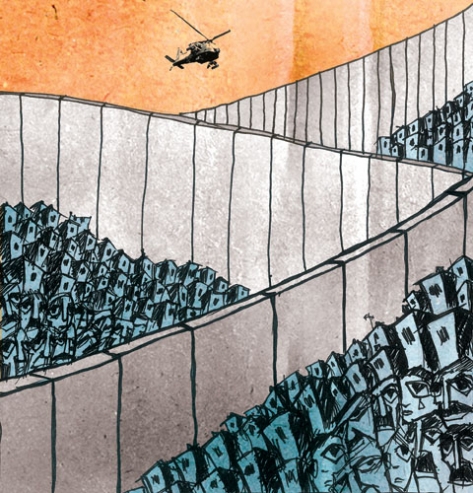 The sixth annual “Israeli Apartheid Week” kicked off today, starting what will be two global weeks of action across the world meant to highlight Israel’s apartheid system and to build the boycott, divestment and sanctions movement. The global event has come under attack, of course, with the usual conflation of criticism of Israel and anti-Semitism.
In Canada, continuing to strengthen the nation’s standing as “the most pro-Israel country in the world” (as Yves Engler in the Electronic Intifada put it), Ontario’s legislature unanimously passed a resolution last week condemning “Israeli Apartheid Week.”
Canadian publication Shalom Life interviewed the author of the motion, Progressive Conservative Peter Shurman:
“If you’re going to label Israel as apartheid, then you are also calling Canada apartheid and you are attacking Canadian values,” said Shurman. “The use of the phrase ‘Israeli Apartheid Week’ is about as close to hate speech as one can get without being arrested, and I’m not certain it doesn’t actually cross over that line.”
Rabble.ca, a progressive Canadian publication, reports that a separate, but similar resolution on the federal level is to be introduced this week.
The Jerusalem Post is also in on the action in a couple of articles.
The Electronic Intifada has a piece today by an “Israeli Apartheid Week” organizer in Toronto that puts the recent attacks in context, and also says that the campaigns against the event only show that the BDS movement is growing in strength:
Over the years, organizers have faced ongoing institutional harassment, including last-minute cancellation of room bookings and the banning of Apartheid Week materials. In fall 2008, for instance, room bookings for an IAW organizing conference in Toronto were cancelled on short notice by the university under pressure of local Zionist groups. Similarly, in March 2009, the University of Pisa, Italy, denied university venues to IAW organizers. In the same year, the poster for the 5th International Israeli Apartheid Week was banned at Carleton University in Ottawa and Trent University in Peterborough.
IAW has also been the object of investigation by the Canadian Parliamentary Coalition to Combat Anti-Semitism (CPCCA), a highly contentious initiative that has been defined by the Canadian Independent Jewish Voices as an “attempt to attack free speech and silence criticism of the Israeli government’s oppressive and illegal policies” and “to label criticism of Israel and its behavior, as well as organized efforts to change them, as anti-Semitic and to criminalize both.”
Attempts at shutting down IAW on campuses are in line with growing efforts of the Israeli government to crush the BDS movement. To the present time, this crackdown has primarily targeted Palestinian grassroots activists within the occupied West Bank, including Mohammad Othman Jamal Juma’ from the Stop the Wall Campaign, recently released from prison.
However, a recent report published by the Reut Institute, an Israeli think tank, and presented at the 10th Herzliya Conference in February 2010 identifies a global campaign of “delegitimization” of Israel — which includes the BDS movement and IAW — as one that “is effective, possesses strategic significance, and may develop into a comprehensive existential threat within a few years.” As such, it also underlines the need for Israel to engage in a substantial diplomatic counter-effort to sabotage the movement.
While this means that organizers will face increasing obstacles in the coming years, it also testifies to the growing strength of the BDS movement, which has reached fundamental targets in the last year.
Palestinians slam City of David as East Jerusalem parking lot caves in
By Nir Hasson – Haaretz – 01/03/2010
A section of an East Jerusalem mosque parking lot collapsed on Monday, in what local Palestinian residents are saying is proof that archeological digs in the area are putting residents’ homes at risk.
The 4-meter deep pit was created near a mosque in the East Jerusalem neighborhood of Silwan, in a parking lot serving worshipers, located near a local kindergarten.
Two months ago, the Supreme Court rejected a petition against the dig directed by Elad, the nonprofit organization that runs the City of David in East Jerusalem and, submitted by Palestinian residents, saying the archeological digs did not jeopardize Silwan houses or local roads.
The City of David is one of the most popular tourist attractions in Israel, and Elad is in charge not only of operating the site, but also of conducting archaeological digs there.
Its leftist critics charge that it exploits archaeology in order to Judaize the neighborhood and embitter the lives of its Palestinian residents.
Elad counters that local Palestinians have also benefited from the City of David’s success as a tourist site.
Further nuclear power subsidies are wrongheaded
By Mark Cooper | 2 December 2009
It is ironic that as the nation continues to suffer from the misallocation of risk by companies in the financial sector, some of the strongest supporters of free markets and critics of government action are urging a massive federal subsidy for nuclear power.
Most recently, the nuclear industry and its supporters want any climate bill that comes out of Congress to include more subsidies for the nuclear industry. Both the House-passed American Clean Energy and Security Act and the Senate energy bill, the American Clean Energy Leadership Act PDF, would potentially allow for billions of dollars to be handed out for the development of new nuclear plants in the United States. The Senate bill would literally give the nuclear industry a limitless blank check. This is in addition to $18.5 billion in loan guarantees and a production tax credit of 1.8 cents per kilowatt-hour that the federal government already has allocated for nuclear energy in the 2005 Energy Policy Act. PDF All the while, the projected cost of nuclear reactor construction has escalated dramatically (almost tripling in less than a decade), demand for electricity has declined, and the cost of natural gas has plummeted.
Considering these challenges, private capital markets, not surprisingly, have refused to extend loans to the nuclear industry. In fact, they have lowered the financial ratings of utilities that are pursuing nuclear projects, which is why the industry is seeking further government support. In particular, the industry would like new rules that allow it to gobble up funds earmarked for clean energy technologies; elimination of conditions that protect taxpayers in the event of loan defaults; dramatic increases in tax and insurance subsidies; and accelerated and assured recovery of construction costs from ratepayers authorized by state regulators.
These direct subsidies would total in the hundreds of billions of dollars. Yet believe it or not, the stakes for consumers would be still higher. Nuclear subsidies would induce utilities to choose high capital-cost nuclear reactors that expand their rate base and forego much lower-cost alternatives, such as greater energy efficiency and renewable energy, imposing excessive costs on consumers that eventually could run into the trillions of dollars. In an attempt to circumvent the sound judgment of capital markets, nuclear advocates erroneously claim that subsidies lower the financing costs for nuclear reactors and are good for consumers. (For a more lengthy analysis of these risks see my full report. PDF)
However, shifting risk does not eliminate it, and subsidies induce utilities and regulators to take greater risks that will cost taxpayers and ratepayers dearly. These risks include:
- When utilities skip over the lower-cost option, such as greater efficiency, wind power, and/or natural gas, costs rise, dramatically in the case of nuclear reactors.
- Subsidies encourage risky behaviors that would leave taxpayers and ratepayers to pay associated costs when and if those unwise projects go bad and are abandoned.
- Pre-approval for loan guarantees and/or construction work in progress reduces scrutiny over cost escalation and overruns.
- Large, high-risk projects, such as nuclear plants, can have adverse impacts on utility financial ratings, which result in high interest charges on utility debt and substantial increases in rates.
The recent efforts by the nuclear industry call to mind the previous U.S. nuclear construction boom that resulted in what Forbes called the “largest managerial failure in business history” in the mid-1980s. In that boom, one-half of all orders for nuclear plants were cancelled, reactors that were completed cost double their original estimates, four-fifths of utilities suffered large financial downgrades, and several firms went bankrupt.
Policy makers should refuse to hand out billions of dollars more to the nuclear power industry for widespread deployment of a costly technology and limit any such subsidies, if they are deemed necessary, for specific and narrow tasks of research, development, and demonstration. To prevent history from repeating itself they should subject any projects that are funded by subsidies to rigorous fiscal, technological, and administrative oversight and make sure that projects are structured with maximum taxpayer protections and transparency built into the conditions of the loan guarantees.
Furthermore, states should reject guarantees (and accelerated recovery) for nuclear construction costs, demand binding fixed-cost contracts before construction begins, and impose strong incentive and penalty mechanisms to control cost overruns.
The financial difficulties facing nuclear power projects are not a market failure, but are a market success–the capital markets correctly understand the grim economic realities of nuclear power. If policy makers override the judgment of the free market and force taxpayers and ratepayers to subsidize new reactors, consumers and the economy will pay a heavy price.
Next Generation Biofuels, from the makers of the A-bomb
Mr. DiFi Cashes in on Crisis
By WILL PARRISH and DARWIN BOND-GRAHAM | March 1, 2010
This past July, following the California State Legislature’s decision to strip $813 million from the University of California’s Fiscal Year 2009-10 budget, the UC’s 26-member Board of Regents voted to declare “a state of financial emergency.” Such a “state of emergency,” the university’s official by-laws state, should accompany an “imminent and substantial deficiency in available university financial resources.”
The Regents also voted to grant special “emergency powers” to UC President Mark G. Yudof. Yudof promptly marshaled his new and vaguely defined authority to lay off hundreds of workers, impose pay cuts and furloughs on remaining university staff, and propose a 32 percent increase in student fees which the Regents approved in November.
At the same meeting, Regents Chairman Russell Gould announced the formation of a new UC Commission on the Future. Its de facto function has been to further the privatization of the university. Notably, Gould is one of California’s most prominent financiers, a man who served as vice chairman of Wachovia Bank during its growth as one of the leading subprime mortgage lenders in the United States. He and Yudof serve as the commission’s co-chairmen. In Gould’s words, the commission’s task is “nothing short of re-imagining” the University of California.
The State of California’s political elites and business leaders routinely use the language of crisis now whenever discussing the University of California. In the past few decades, state funding of the university has suffered steady erosion. The UC now receives more funding than ever from private corporations and the federal government (the latter being in most instances pretty much the same as the former). Its various revenue streams range from student fees to several billion dollars in medical hospital revenue to private grants and donations, to its own hedge fund-like investments portfolio, to atomic bomb dollars from the Department of Energy.
Thus, despite the state budget cuts, the UC’s overall revenue reached an all-time high of $19.42 billion in the 2009-10 academic year, and the Regents’ claim that the UC faces an “imminent and substantial” funding deficit is inaccurate, to say the least. According to both the university’s own financial documents and Moody’s bond rating agency, the university had access to over $8.3 billion in unrestricted investment funds it was holding in reserve at the time.
The university has undergone a neo-liberal-style “structural adjustment” at the behest of the UC Regents, and this transformation has been accelerated during Yudof’s tenure as president. Under the leadership of California’s economic elite, the UC has become the leading prototype for a “disaster capitalist university.”
Since the mid-1990s, administrative salaries have absorbed a dramatically increasing share of the university’s overall budget. According to a study by UC Berkeley Professor Emeritus of Physics Charles Schwartz, the number of UC administrative positions increased by an almost unbelievable 118 percent from 1996 to 2006, as compared with a 34 percent increase in faculty positions and 33 percent increase in students over the same period. As a result, there are currently 3,600 UC employees who make more than $200,000 a year, many of them through administrative positions.
An even more damning revelation was made public this past October when UC Santa Cruz Professor Bob Meister published his scathing analysis of the UC administration’s use of student tuition dollars as collateral for construction bond debts. In addition to his PhD in economics, Meister serves as Chairman of the Council of University Faculties – essentially, a faculty union with representatives on all 10 of the university’s campuses. He knows what he’s talking about. According to the Regents’ own data and policy documents, the primary use of student fee revenue since 2004 has been as collateral for bonds to fund campus construction projects. In this “modified credit swap,” students are forced to take out “subprime” student loans, often charging six percent interest, so the university can borrow money at a reduced rate to construct new facilities like – to take one example — the Blum Center for Developing Economies at UC Berkeley, which UC Regent Richard C. Blum’s own construction company, URS Corporation, was contracted by the university to build.
And those subprime student loans? They’re often owned by big banks like Wachovia and other financial outfits that many of the UC Regents and their business partners are shareholders or executives of. So the whole cycle begins and ends with massive public and student debts, both of which increase as the Regents partake in further undermining the tax base while looting the public sector, again ratcheting up the crisis rhetoric.
UC Los Angeles instructor Bob Samuels has observed that “Moody’s even slipped into its bond rating for the UC system the need for the [UC] to restrain labor costs, increase student fees, diversify revenue streams, feed the money-making sectors, and resist the further unionization of its employees,” Samuels concludes that, “like the International Monetary Fund (IMF) or World Bank, the bond raters tie access to credit to the dismantling of the public sector and the adoption of neo-liberal ideology.”
To understand fully why the University of California’s internal finances are being subjected to “economic shock therapy,” much like a Third World debtor nation under the thumb of the IMF, it’s necessary to know a bit about the history and function of the university’s power structure. Although it is nominally a public institution, the UC is not owned and governed by the State of California. Rather, it is the UC Regents who call all the shots. The Board of Regents is a corporate entity formed in 1879 for the explicit purpose of thwarting a populist social movement of small farmers who demanded that the the university become more responsive to their needs.
“During a tumultuous decade in California history,” historian John Aubrey Douglass has written, “many saw the new University of California as serving the interests of the upper classes, focusing on classical ‘gentlemanly training’ and replicating the Yankee private institutions of the East. The detractors of the university demanded that, as an instrument of social and economic development, the university primarily serve the training and research needs of agriculture and industry, the stated ‘leading objective’ of the institution under statutory law.”
During the California constitutional convention of that year, a clique of mostly San Francisco-based financiers and industrialists managed to defeat the democratic demands of farmers and small business owners. The crowning achievement of this elitist coup was the establishment of the UC Board of Regents, a corporate entity that owns and operates the university. To maintain their power against all opposition the Regents gave themselves twelve-year tenures that are explicitly meant to insulate them from any political pressures. The UC thus became what Douglass calls “a fourth branch of state government.”
Since then, the leading sectors of the California economy have self-appointed individuals who represent their economic interests on the Board. The Regents mold UC policies in broad ways that benefit capital’s leading monopoly sectors. The current going price for an appointment – probably the most prestigious one at the governor’s disposal, it should be noted – seems to be $50,000, bare minimum. Give the Gov. this sum, and you too could be a Regent.
Until relatively recently this meant that Regents would promote policies designed to build cutting edge economic sectors in and around the UC campuses, but they’d make sure to throw some of the university’s gravy to less sexy and profitable sectors of the economy. So for much of the Board’s history they’ve acted as Karl Marx’s idea of government: an executive board of the bourgeoisie, working if not for the interest of every industry, at least most of its monopoly sectors, and taking care not to destroy too many of the smaller fry. In recent years, the Board of Regents has become dominated by financiers, however. As with the economy at large, these wizards of hedge funds, credit markets, venture capital, real estate speculation, and all the other games played with billion dollar pots of money, have begun to run the university itself as a $19 billion dollar speculative bubble with ample opportunities for enormous growth through “volatility.” These new alpha Regents specialize in leveraged buyouts and privatization of publicly traded companies, and they have long practiced this same basic business philosophy on the university.
The most prominent among this cadre has been Richard Blum. As we detailed in our last CounterPunch article, Blum’s five-decade career as a finance capitalist has been distinguished by the levels of skill and panache he has applied to the time-honored task of siphoning off public money into one’s own corporate coffers, as well as those of one’s financial and political allies. Blum, who is married to US Senator Dianne Feinstein, is one of the leading power-brokers in the Democratic Party within both California and the United States.
Notably, it was Blum who virtually hand-picked President Yudof for UC President, having chaired the selection committee that oversaw Yudof’s appointment. At a March 2008 press conference heralding the Yudof hiring, the San Francisco Chronicle noted that Blum seemed “visibly ecstatic.” In April, the Chronicle quoted Blum again, saying of Yudof, “we disagree on almost nothing. If I were giving Mark a grade, I would give him an A-plus.”
Another prime example of the university’s “investors’ club” (the title of an upcoming series by investigative reporter Peter Byrne) is Gerald Parsky, a San Diego venture capitalist who reportedly commutes daily by jet to Los Angeles. As a Republican Party powerhouse, Parsky was so influential during his 1996-2008 tenure on the Regents that the American Federation of State, County, and Municipal Employees (AFSCME) dubbed a particularly influential faction of the Board “The Parsky Clique.” In addition to being president of Los Angeles-based Aurora Capital, recent additions to Parsky’s resume include acting as senior economic advisor to John McCain presidential campaign and as chairman of the Schwarzenegger administration’s Commission on the 21st Century Economy. Just as Parsky helped steer the UC toward ever-greater privatization throughout his tenure as a Regent, his commission issued a series of recommendations on reforming the state’s tax and revenue system in a manner more favorable to big business, even prompting some observers to label the Parsky Commission’s proposals “California’s Shock Doctrine.”
Current Regents Chairman Russell Gould is another financier and California Republican Party heavy. In addition to his role at Wachovia Bank, he served as California Director of Finance in the Pete Wilson administration in the 1990s. After that, he served a stint as assets managers of the $5.5 billion J. Paul Getty Trust Fund, a charitable organization founded with money from the Getty oil fortune. The Gettys are neighbors of one Richard Blum and Dianne Feinstein in San Francisco’s uber-bourgeoise Pacific Heights neighborhood, where Mr. and Mrs. DiFi purchased a $16.5 million palatial estate in 2005.
(As an aside, the Getty Trust was run in those years by one Barry Munitz, former chancellor of the California State University System. From 1984 to 1991, Munitz was vice president of Maxxam Corporation under Charles Hurwitz, as the company clear-cut the lands and livelihoods of California North Coast residents. Munitz has since been a leading force behind shaping the California Business Roundtable’s public education policy agenda, which strongly favors neo-liberal privatization.)
Another Regent, Paul Wachter, acts as Gov. Schwarzengger’s personal financial adviser. Regent George Marcus is a lead organizer of The Real Estate Roundtable, the main political voice of real estate capital in the United States. Regent Judith Hopkinson, whose tenure recently ended, is a retired executive of Ameriquest Capital Corporation, a big mortgage company that is partly responsible for precipitating the current economic crisis: Ameriquest lent billions in sub-prime loans to families across the US knowing full well they would have trouble making payments down the line as rates increased. And the list goes on.
One of the primary enterprises Richard Blum has presided over in recent years is the real estate corporation CB Richard Ellis. With projects in nearly 100 countries, CBRE is the largest brokerage firm on the planet. In a notable example of how Blum’s own particular business interests have become increasingly enmeshed with those of the university, during the course of his tenure as a Regent, CBRE has contracted with at least eight of the UC’s 10 campuses over the past decade. Most often, the company has consulted with these campuses to produce glossy reports highlighting the beneficial economic impacts on the immediate regions that host them, as well as that of California in general. The UC’s San Francisco, Davis, Berkeley, San Diego, and Riverside campuses have all paid CBRE to produce precisely these kinds of economic development treatises.
Each of these CBRE reports marshals a wide range of statistical data to promote a particular vision of the UC’s role in California’s larger economy and society. While paying occasional lip service to the UC’s contributions to “the richness of California culture,” the reports overwhelmingly emphasize the UC’s role in fostering high-tech business enterprise, premised on a decidedly Reagan-esque view of the inherent superiority of top-down economic spending. The core purpose of UC San Diego, according to one CBRE report, is to fuel “the expansion of the skilled labor pool for high-tech businesses and biotech businesses in San Diego.” UC Irvine is “an economic engine powering prosperity” owing to its various big business spin-offs and the high-tech start-up companies founded by its faculty.
The implicit conclusion is that the university’s complete subordination to capital is the primary reason for its existence, and that anything the UC could do for biotech, aerospace, real estate, and finance capital, it should do. In this way, the shift to privatization of the university’s finances, including student fees that are redirected to pay for campus construction projects, goes hand-in-hand with the efforts of state and business elites to render the university a wholesale servant of California’s neo-liberal economic machinery. Under this model, State funding is seen as akin to “local matching funds,” sweetening the overall pot for the real investors, the main purpose being not to make the university affordable for students, but rather to expand the university’s physical footprint and build fancy new research centers that will create all manner of techno-gadgetry to inflate the next bubble.
The UC Regents, in other words, have come to conceive of UC campuses almost entirely as incubators for a constellation of mini-Silicon Valleys: alliances of venture capitalists, real estate speculators, and high-tech entrepreneurs writ large upon large and overlapping swaths of California. It stands to reason that the UC’s leadership would be enamored of the region of the United States that is home to more millionaires per capita than anywhere else in the country, but which has also seen one of the sharpest declines in real wages among its working class. Silicon Valley also leads the way with the most temporary workers per capita, the highest level of economic inequity between genders, and the greatest concentration of toxic Superfund sites in the United States. Neo-liberalism in a nutshell.
Even so, the Regents and UC’s executives have long spoken in excited tones about spreading the model. The UC’s newest campus, UC Merced, was sold entirely on the premise that it would produce a critical mass of biotechnologists, nanotechnologists, engineers, and other wizards of the ruling high-tech religion that mythically creates economic booms that lift all boats. Currently, though, the Central Valley is experiencing some of the greatest levels of unemployment and highest home foreclosure rates in the country. UC Santa Cruz, traditionally the arts and humanities campus of the UC system, was transformed during this era into what some administrators happily called “Silicon Beach.” Much like with the global neo-liberal economy it has done so much to advance, the great majority who don’t already possess ample resources are left under this model to fend for themselves. […]
If the UC is prioritizing various toxic combinations of science and industry at the expense of most students, then what are those projects? Examples abound. In June 2006, the UC announced an agreement with the world’s second largest oil company, British Petroleum, whereby it will receive half a billion dollars per year over 10 years, principally for research into genetically modified elephant grass and other transgenic plants that are candidates to produce alcohol for non-fossil car fuel. The project is housed as a facility on campus called the Energy Biosciences Institute (EBI). In keeping with the “public-private partnership” funding model that currently prevails, the State of California put up “matching funds” in the form of $73 million in construction bonds to help smooth the way for the EBI’s landing on the Berkeley campus.
This is one of UC Berkeley’s largest current applied research programs, and it naturally comes straight from the “crisis” playbook. The project is justified under the pretense of helping to solve two major crises – global climate change and its twin bogeyman, oil depletion. In reality, biofuel monoculture has become perhaps the leading cause of dispossession of small farmers in the Global South, as well as the destruction of important ecosystems such as the Amazon Basin rain forest.
Berkeley’s biofuels institute will only further enable multi-national corporations to penetrate, reorganize, poison and despoil the lands, livelihoods, and psyches of Amazon Basin and other cultures. The net impact of the EBI on the environment – that is, the actually existing ecosystems of South America, Indonesia, et al. – will be decidedly negative. On the day of the contract signing, then-UC President Robert Dynes heralded it as “a great day for Mother Earth.”
Both Dynes and Lawrence Berkeley National Laboratory Director Stephen Chu, now duly installed as the Obama administration’s secretary of energy, referred to this project as a “new manhattan project.” It was a fitting designation, although the original Manhattan Project never quite ended, and it has only gained ground under a president who sold the world on “hope” and “change.” The UC continues to co-manage the Los Alamos and Lawrence Livermore nuclear weapons compounds, which have designed every nuclear weapon in the US arsenal dating from the annihilation of Hiroshima and Nagasaki, as part of for-profit partnerships with the world’s largest construction and engineering firm, Bechtel Corporation. The UC-Bechtel contracts are worth as much as $80 billion in revenue over the course of their 20 year lifespans, a hefty chunk of change when you’re concerned with your bond ratings.
On February 1, the Obama administration unveiled a budget in which both of the UC’s weapons labs would receive a massive funding “surge.” The proposed funding increase of 23 percent at Los Alamos would be the facility’s largest since 1944. Much of that funding is for a new factory to produce plutonium bomb cores, the explosive triggers of modern thermo-nuclear warheads, for the expressed purpose of outfitting the first new nukes to be developed since the end of the Cold War. The investments are sold as the need to “maintain the US nuclear deterrent” in a time of rapidly escalating threats, allegedly, from Iran, North Korea, and potentially even nuclear-armed terrorists.
Again, crisis begets opportunity if you’re properly positioned in the most privileged circles, so it’s fitting that one of the two junior partners in the UC-Bechtel management team should be Richard Blum’s now-former company, URS Corporation. At the time Blum became a Regent, URS already had a $125 million contract to perform construction and engineering at Los Alamos. It was a natural extension of his general business philosophy that Blum would have been eying wholesale ownership of the weapons lab at the time. That in mind, perhaps a little Q & A is in order. Which entities now run the Los Alamos and Lawrence Livermore weapons labs? The University of California, Bechtel, and URS Corporation, along with a couple of other junior partners. Which UC Regent had a lucrative financial partnership with the Bechtel family, via a $3.5 billion medical technology supplies company named Kinetic Concepts, that precedes the UC-Bechtel weapons lab partnership by eight years? Richard Blum. Who was URS Corporation’s primary financier and vice president for three decades? Richard Blum. Which UC Regent was among a select group of policy wonks who participated in a nuclear weapons policy conference in Oslo, Norway, in 2007, organized largely by a long-time Bechtel executive, George Shultz, who has been instrumental to securing the weapons labs’ recent funding increases? We won’t even bother answering that last question – this exercise has become entirely rhetorical. – Full article
Will Parrish is a writer and organizer living in Laytonville, CA.
Darwin Bond-Graham is a sociologist who splits his time between New Orleans, Albuquerque, and Navarro, CA.
Readers can contact Will Parrish at wparrish(a)riseup.net and Darwin Bond-Graham at darwin(a)riseup.net. They originally prepared this series for the Anderson Valley Advertiser, one of the very few real newspapers in America and probably soon the last one left standing.
Iran reminds IAEA of West’s broken promises
Press TV – March 1, 2010
Iran has called on the UN nuclear watchdog to bear in mind the West’s past breaches of atomic fuel exchange deals with Tehran while reviewing Iran’s nuclear program.
In a letter to the UN body, Ali Asghar Soltanieh, Iran’s envoy to the International Atomic Energy Agency (IAEA), cited three instances on which Western countries failed to meet their commitments and provide Iran with nuclear fuel.
The letter referred to the American firm AMF, which was stopped by the US government from supplying fuel for the Tehran research reactor in 1980 despite an agreement between the two countries.
AMF did not refund the $2 million paid in advance by Iran for the nuclear fuel.
The letter also mentioned Germany’s failure to provide the fuel for the Bushehr nuclear plant.
It also points out that Iran has received no enriched uranium from France despite being a 10-percent shareholder in the European Gaseous Diffusion Uranium Enrichment Consortium (Eurodif).
Tehran and Paris have also signed a deal, under which France is obliged to deliver 50 tons of uranium hexafluoride (UF6) to Iran — another obligation France has failed to meet.
The IAEA is to meet for talks on Iran’s nuclear energy program later on Monday.
An IAEA proposal would require Iran to send most of its low-enriched uranium (LEU) to Russia and subsequently France for further enrichment and conversion into metal fuel rods.
Based on the draft, Iran would receive a shipment of the nuclear fuel at a later time, while the Tehran research reactor, which produces medical radioisotopes for cancer treatment, is already running out of fuel.
After the powers ignored Tehran’s concerns over the absence of necessary guarantees, Iran decided to domestically enrich uranium to a level of 20 percent.
Featured Video
Laith Marouf: Hezbollah’s position on US-Iran ceasefire
or go to
Aletho News Archives – Video-Images
From the Archives
The Dirty Little Secret behind the “Global Terrorism Index”
The Omission of Israeli Terrorism in the Occupied Palestinian Territories
By Karin Brothers | Global Research | December 6, 2014
… The Israeli settlements — all of which are illegal – have been identified as a major impediment to peace. The refusal of a major “global” terrorism report to name the Israeli settlers as one of the groups most responsible for terrorism not only misrepresents a major source of regional violence but exposes the Global Terrorism Index as a propaganda tool that supports a U.S. agenda.
In recent years, governments have been attempting to thwart terrorism by blocking supportive fund-raising. When it comes to Israeli settlements, however, the US and Canada actually encourage fund-raising by giving organizations (such as Christian Friends of Israeli Communities (CFOIC) and the Jewish National Fund) financial support in the form of donor tax-deductions.
Charities which provide funds for the Israeli settlements should be regarded as terror-financing organizations. They should not only lose their tax-deductible status, but they should be banned because they support the violation of international humanitarian law. The terror-financing laws that are being strictly enforced for Muslim charities should be applied to Christian and Jewish charities as well. … Read full article
Blog Roll
 Aletho News
- Spain orders reopening of Tehran embassy, condemns Israel’s carpet bombing of Lebanon
- Israel faces ‘unsustainable’ strategic crisis following 40-day war against Iran: Analyst
- Iran restricts Hormuz access to 15 vessels per day under ceasefire terms: Report
- The ‘Opposition Party’ Has Done Nothing to Stop the Iran War and Much to Goad Trump Into Continuing It
- Moscow backs Tehran on status of Lebanon in US-Iran deal
- How UK Regulator Ofcom Quietly Bypassed International Law to Police American Speech
- The Black Cube Files: How Former Mossad Operatives Flipped a Nation
- Laith Marouf: Hezbollah’s position on US-Iran ceasefire: What you’re not being told
- Israel’s priority lies in destroying chances of peace between Iran, US: Ex-UN nuclear chief
- Ceasefire for all or for none: Iran shuts Hormuz over Lebanon attacks
- If Americans Knew
- This is ceasefire? Israel’s biggest massacre yet in Lebanon, another journalist killed in Gaza – Daily Update
- Tucker Carlson on Israel: This Is the Behavior of an Ally? Really?
- Gazans face a triple crisis: severe shortages of water and bread, healthcare in tatters
- NY Times reports how Netanyahu took the US into Iran War
- A sigh of relief over Iran, but Gaza and Lebanon in dire straits – Daily Update
- Thousands dead and neighborhoods razed to the ground: Aid agencies fear southern Lebanon is becoming the new Gaza
- The war the US is fighting for Israel could cost trillions
- ‘Cigarette Burns, Nail Wounds’: Toddler Tortured in Gaza to Coerce Father
- Trump Says US Sent ‘a Lot of Guns’ to Protesters in Iran
- Israeli forces destroy 17 UN peacekeeper cameras in south Lebanon
- No Tricks Zone
- An Inconvenient Tree: Uncovered In Alps… Europe Much Warmer Than Today 6000 Years Ago
- New Study Reports A 60% Slowdown In Greenland’s Ice Loss Rate In The Last Decade
- Low Intensity Tornado Wrecks Major Solar Farm, Creating A Potential Toxic Dump
- New Study Finds Warming Saves Lives…Cold Temperatures 12 Times More Deadly Than Excess Heat
- German Science Blog Accuses PIK Climate Institute Of Hallucinating Climate Tipping Points
- Devastating Assessment Of Comirnaty Vaccine By Former Senior Pfizer Europe Toxicologist
- New Study: CO2 Is ‘Effectively Negligible’ As An Explanatory Climate Change Factor Since 2000
- Former Pfizer Toxicologist Dr. Helmut Sterz Tells Bundestag Hearing Pfizer Vaccine Should Have Never Been Approved
- Energy Expert: Germany’s Nuclear Phaseout Was A “500 Billion Euro Mistake”
- New Research: South Australia’s Mid-Holocene Sea Surface Temperatures Were 4°C Warmer Than Today
 Aletho News