Russell Tribunal aims to hold the international community to account
Frank Barat, The Electronic Intifada, 1 March 2010
Today, the first session of the Russell Tribunal on Palestine (RTP) will be held in Barcelona. The RTP is a peoples’ tribunal focusing not on Israel’s obligations under international humanitarian law (IHL) such as the Fourth Geneva Convention, but on the obligations of the international community of signatory states which sustain and enable Israel’s continuous violations of international law.
Israel has violated more than 60 UN resolutions and countless legal and diplomatic calls to abide by international law in relation to the expansion of illegal settlements, denial of the right of return and the continuing occupation of the West Bank, including East Jerusalem, the Gaza Strip and the Syrian Golan Heights. Dozens of reports, investigations and inquiries have produced evidence of alleged Israeli war crimes and crimes against humanity, including massacres, collective punishment, home demolitions and extrajudicial killings on a cyclical scale over the past 62 years.
In 2004, the International Court of Justice (ICJ) issued an advisory opinion finding Israel’s wall in the West Bank illegal and contrary to international law. The opinion was the key tenet of a 54-page document covering illegal settlements, the appropriation of natural resources and Israel’s violation of the Fourth Geneva Convention over the past 40 years, and reminded that IHL signatory states had an obligation “not to recognize the illegal situation resulting from the construction of the wall and not to render aid or assistance in maintaining the situation created by such construction” and “to ensure compliance by Israel with international humanitarian law as embodied in that Convention.”
The ruling sparked hopes in the Palestinian community and international solidarity movements that finally, not only had Israeli violations been legally judged but that the responsibilities of the states which enable Israeli impunity to continue would be put to the test. Six years and 500 kilometers of wall on, the continued construction of the wall casts a shadow over international law.
Or does it?
The RTP is an independent initiative which intends to generate a public literacy in international law and the possibilities for the rule of law if respected to dismantle and disempower the reproduction of the occupation as a military, cultural and economic movement.
Israel is an international entity, kept afloat not just financially and politically by international state partners and supporters, but “legally” by the continued legitimization of illegal acts and “facts on the ground” by these states. Israel’s most important market is not economic or military — it is the market of legitimacy, the permission it receives to normalize crimes against humanity to its own citizens and the international community. This can only happen with the complicity of non-IHL compliant states. The RTP is a way of publicly pointing the finger at these states and mobilizing public opinion towards holding them accountable for the ongoing human rights violations in Palestine.
The RTP is composed of four sessions. The first in Barcelona from 1-3 March, focuses on establishing whether the European Union as an entity has fulfilled its obligations under international law. At the end of 2010, a London session will scrutinize the complicity of corporations in normalizing and perpetuating Israel’s violations of international law as well as labor rights in Palestine/Israel. In mid-2011, a session in South Africa will examine the applicability of the crime of apartheid in the context of Israel. The final session will be held in the United States in late 2011 and will analyze the role of the US within the United Nations and decision-making processes on issues of violating international law.
The RTP is not a talking shop. For too long Israel has been the focus of international campaigning as if it alone is responsible for the oppression of the Palestinian people, and as if it has been acting alone. The RTP is about making the links between the crimes committed on the ground in Palestine and their international sponsors. If we want to popularize the notion of “normalization” of the occupation as a key obstacle to a just peace, then understanding how this “normalization” operates on an international legal level in the corridors of Washington, Brussels and London, as well as Tel Aviv, is a vital part of challenging it.
As Israeli think tanks and lobby groups bemoan the rise of “delegitimization” of Israel on a popular level within Europe, the actual, pragmatic delegitimization of Israeli criminal policies is still unrealized and unimplemented by countries that have not just the means but the obligations to do this. The RTP contributes to the growing movement for boycott, divestment and sanctions by popularizing the facts behind the arguments for why states have a responsibility to implement sanctions against Israel, and for companies to withdraw from illegal projects and for the public to boycott Israeli institutions, goods and the normalization of apartheid.
The Geneva Conventions were created and agreed upon by the countries of the world in 1949, under popular pressure, as the legal means to ensure that crimes against humanity committed around the world during the Second World War would never happen again. The principles and tenets of these laws are being violated by Israel continuously. These laws stem from liberation struggles and sacrifices of movements in the past, and are on our side, the side of the people. We can use these laws as guides to build the conditions for genuine justice and universal human rights, and a world based on solidarity and equality.
Frank Barat is coordinator of the Russell Tribunal on Palestine (http://www.russelltribunalonpalestine.com). A live streaming of the session can be viewed here: http://www.bcnsolidaria.tv/tv/ and a list of jury members as well as experts and witnesses participating in the tribunal is available for download (PDF)
The New York Times veers neocon
Robert Parry | consortiumnews.com | March 1, 2010
Many American progressives don’t want to recognize how bad the U.S. mainstream news media has become. It’s easier to praise a few exceptions to the rule and to hope that some pendulum will swing than to undertake the challenging task of building a new and honest media infrastructure.
But the hard reality is that the U.S. news media is getting worse, with now both premier national newspapers – the New York Times and the Washington Post – decidedly sliding into the neocon camp, where the likes of the Wall Street Journal have long resided.
For the Post, this may already be an old story, given its enthusiastic cheerleading for the Iraq War. The Times, however, was a somewhat different story. Yes, it did let Judith Miller and other staff writers promote the fictions about Iraq’s WMD, but it hadn’t sunk to the depths of the Post.
That is now changing as the Times – behind executive editor Bill Keller and editorial page editor Andrew Rosenthal – tosses aside all pretense of objectivity in the cause of seeking “regime change” in Iran, today’s top priority for the neoconservatives.
At Consortiumnews.com, we have noted this trend for some months, not only in the New York Times opinion section but in its news columns where Iran’s alleged interest in acquiring a nuclear weapon is trumpeted incessantly (despite its denial of such a desire), while rogue nuclear states in the region (such as Israel, Pakistan and India) are given a pass. [See, for example, “US Media Replays Iraq Fiasco in Iran.”]
This Sunday, the Times’ bias was on display again in the lead editorial entitled, “New Think and Old Weapons,” which purported to examine the state of nuclear weapons in the world.
Fitting with the Times’ deepening neocon tendencies, Iran’s nuclear weapons (even though they don’t exist) were a major topic, while the rogue nuclear states of Israel, Pakistan and India (which have refused to sign the Nuclear Non-Proliferation Treaty) weren’t mentioned.
So, you had formulations like this: “Iran, North Korea and others have seemingly unquenchable nuclear appetites” and the need to “bolster American credibility … to rein in Iran, North Korea and other proliferators.” In all, there were four such references to North Korea and Iran, but no specific references to Israel, Pakistan and India.
The Times also observed that China was “the only major nuclear power adding to its arsenal [which] is estimated to have 100 to 200 warheads.” There was no mention of Israel, which is believed to possess one of the most sophisticated nuclear arsenals in the world, totaling some 200 or more devices.
Ironically, the Times editorial also cited problems of “hypocrisy and double standards” and noted that the Nuclear Non-Proliferation Treaty was “battered.”
The Times did not seem at all embarrassed by its own hypocrisy and double standards. Nor did it bother to note that one of the key reasons this “bedrock” treaty is in trouble is that non-signatories – like Israel, Pakistan and India – have built nukes, often with a wink and a nod from Washington.
As neocon propagandists pursue their goal of riling up the American public against some new foreign threat, that effort requires highlighting certain facts (and even fictions). But the propagandists equally must make sure that many inconvenient truths are conveniently forgotten. Otherwise the alleged threat might not seem all that unusual or threatening.
So, in the world of neocon propaganda, Iran – a treaty signatory that has no nuclear weapons and insists its nuclear program is for peaceful purposes – must be endlessly badgered, but Israel – an undeclared rogue nuclear state with a vast arsenal – must be shielded from similar criticism and pressure.
That the New York Times has now embraced these neocon biases, almost with the ardor of the Washington Post, is a serious development for the U.S. news media and for the nation.
© 2010 Consortium News
Robert Parry broke many of the Iran-Contra stories in the 1980s for the Associated Press and Newsweek.
39 army raids, 28 arrests: Just another day in the West Bank
Amira Hass | Haaretz | March 1, 2010
“The year 2009 was the quietest for Israelis from the security point of view and the most violent for the Palestinians from the point of view of attacks by settlers in the West Bank.” Just as he was saying this – as an example of one of the absurdities that characterize the political situation – Palestinian Agriculture Minister Ismail Daiq received a phone call from the Jenin district to inform him that five artesian wells in the village of Daan had been destroyed that morning. One person was shot and wounded in the abdomen when he tried to lift the pump to save it from damage. This was not an attack by settlers but a raid by the army.
And that wasn’t the only routine event on Wednesday, February 24. The negotiations affairs department of the Palestine Liberation Organization collects information daily from all the districts of the occupied territories (Gaza and the West Bank, as well as Jerusalem) and publishes it in a daily situation report by the Palestinian Monitoring Group. For the sake of convenience, the report categorizes the events and then provides details for each district.
That Wednesday, a total of 212 occupation-related incidents were recorded. Examples include: four physical assaults (which took place in the West Bank, and included civilians being beaten in Nablus and Jerusalem); one injury (a civilian hurt in a clash in Daan); eight military shooting attacks (two of which took place in Gaza, two were in the midst of raids, and one came from a military outpost; 39 army raids (one in Gaza); 28 arrests; and 12 detentions at checkpoints and in residential areas. The items on the checklist include home demolition (none that day), the leveling of agricultural land (one, in Gaza), and construction of the separation wall (at 22 locations).
The report also includes categories for property destruction (seven cases, including the destruction of wells and crops); checkpoint closure (eight cases at five checkpoints, including instances of impeded access); mobile (“flying”) checkpoints (23); permanent closure of village access roads (seven); closure of main roads (40, (including four in Bethlehem and 14 in Hebron, and the village of Jaba east of Ramallah); closure of main crossing points (four, including the permanent blockade of Gaza); disruptions at school (three cases, including the throwing of two tear gas canisters); violence on the part of settlers (one, in Sheikh Jarrah); demonstrations (one, in Hebron). The checklist also includes Palestinian attacks (none on that day).
The philosophy behind the situation report is clear. An “event” is not just a fatality, assault, shooting or demolition. It is something that entails permanent damage, and stems from the policy of imposing closures, building the wall and maintaining the blockade of the Gaza Strip. But even without these occupation-related items, the vast majority of the incidents are not made known to the vast majority of Israelis.
No statistics can express the emotional and social distress that accompanies every event and non-event, such as the incarceration of 1.5 million people inside the Gaza Strip or the fact that tens of thousands still have not been able to reconstruct homes that were damaged during the Israel Defense Forces offensive in the winter of 2008-2009. Even without asking, it is possible to know that the reason for the destruction of the wells in the Jenin district is that they were dug “without a permit.” But the sovereign that destroys is also the one that controls the water resources and decides on an unequal division of water between Palestinians and Israelis. The statistics do not include the practical difficulties that stem from this discrimination or the permanent insult it creates.
In 2009, Israel destroyed 225 Palestinian homes in the West Bank and uprooted 515 Palestinians from their homes, the United Nations Office for the Coordination of Humanitarian Affairs reported. Thousands more in Area C and in Jerusalem live in constant fear that their homes will be destroyed and they will be uprooted from their places of residence.
How does one count fear? Like the fear that was felt in the homes of some 700 minors the IDF arrested in 2009. The Palestinian branch of Defence for Children International represented 218 of these minors. Forty were released, 28 on bail and 12 without conditions. Seven minors were kept in administrative detention – that is, they were detained without a trial. A total of 192 were brought to trial, of whom 23 were aged 12 or 13, and 46 were 14 or 15. The majority – 123 minors – were aged 16 or 17.
Sentences of less than six months were imposed on 121 of those arrested – 63 percent – while 31 of them received sentences of between six months and a year, and 32 were sentenced to between one and three years. Eight of the minors were jailed for more than three years.
The majority (117) were sentenced for throwing stones, 33 for possessing and throwing Molotov cocktails, 11 for being members of a banned organization, eight for conspiring to kill, seven for possessing and hiding explosives, and 16 for possessing and manufacturing weapons.
For the moment, let us not discuss the arrests and trials of the military system, which is said to be a way of maintaining law and order but actually maintains the occupation. Let us put aside, for now, the fact that in military tribunals it is often advisable to admit to offenses the defendant did not commit, since the detention time while the proceedings are underway might end up being longer than the actual sentence for the alleged offense.
But how is it possible to quantify the personal and collective rage expressed by the stones being thrown and created by Israel’s military tribunal system?
Any news item we report that deals with Israeli rule over the Palestinians is misleading. It creates the impression that whatever has been reported is all that has happened on the Palestinian side and that otherwise everything is normal, or even flourishing. Any news item that is published in Israeli papers is a sign of what is missing, what no one wants to know.
Israel effectively pressuring Palestinian Bedouin community to leave the Jordan Valley
B’TSELEM | February 2010
Al-Hadidiyeh – The Jordan Valley is classified as Area C and is, therefore, under complete Israeli control. Israel has imposed harsh restrictions on building and movement there that apply to Palestinians alone, effectively pushing them to leave area.
The Civil Administration does not allow Palestinians to build in Bedouin areas in the valley and systematically demolishes the temporary structures in which they live and raise their flocks. The army limits the movement of Palestinians between the valley and the rest of the West Bank, allowing only Palestinians registered as residents of the valley to enter it in private vehicles. Palestinians from elsewhere in the West Bank are allowed to enter only on foot or by public transportation. The separation of the Jordan Valley from the rest of the West Bank severely infringes the human rights of many Palestinians.
The Bedouin community of al-Hadidiyeh is situated in the north of the Jordan Valley. The settlements Ro’i and Beka’ot were built east of it, partially on its farmland. ‘Abd a-Rahim Bsharat, 60, who has lived in the community his whole life, estimates that there are ten families, a total of 91 persons, now living in it, in three small clusters. The residents, like those of many other small Bedouin communities in the Jordan Valley, gain their livelihood by raising sheep and goats and by working their land.
In the census taken by Israel in 1967, the authorities registered all persons living in the area as residents of the nearby towns of Tammun and Tubas. Therefore, there is no official information on the number of residents who lived in al-Hadidiyeh at the time. Bsharat estimates that before 1967, there were about 2,500 residents, some of whom fled to Jordan after the war.
Since the mid-1970s, Israel has pressured the residents to abandon their land, along with establishing settlements in the area. Bsharat describes how the army fined shepherds who grazed their flocks on land near the settlements, and how, in some instances, soldiers fired at the flocks, killing several sheep and confiscating animals. In recent months, B’Tselem has documented several cases in which residents of al-Hadidiyeh claimed that the security coordinators of Ro’i and Beka’ot assaulted or harassed them while they were grazing their flocks, in an attempt to distance them from the settlements. The testimonies paint a worrisome picture of army and police support for the security coordinators’ harassment of the shepherds.
Three years ago, the Israeli High Court of Justice ordered that the residents of al-Hadidiyeh be removed from their homes, accepting the position of the Civil Administration that the residents were living on land classified as “agricultural” in plans drafted by the British Mandate in the 1940s. The High Court also accepted the state’s position that their living on the site posed a security threat because of its proximity to the Ro’i settlement.
In recent years, the Civil Administration demolished the shacks of the Bsharat family and others in the community four times. Currently, the Civil Administration threatens to demolish all the shacks in the community yet again.
Click here to enlarge map

Map: the small community of al-Hadidiyeh and the settlements built near it.
The harsh restrictions Israel places on movement of Palestinians in the Jordan Valley make life very difficult for the residents of al-Hadidiyeh. In addition to the general restrictions, the army has blocked access from the community to the Alon Road (Route 578), by placing a dirt pile on a connecting dirt road that crosses fields cultivated by Ro’i settlers. To reach the Alon Road, residents of al-Hadidiyeh must cross through part of the Ro’i settlement itself, and when the gate to the settlement is closed, they have to travel a much longer route, which runs between Ro’i and Beka’ot.
Residents of al-Hadidiyeh receive all their services from the towns of Tammun and Tubas, which are situated in Area A. The shortest way to the two towns is along a dirt road leading to Tammun, a trip that takes 15 minutes. The army placed a gate on the road that it opens only twice a week, at set times in the morning and afternoon. Only persons registered with the army as residents of the area, including residents of al-Hadidiyeh, are allowed to pass. At other times, the residents must drive to the Hamra checkpoint, about 30 minutes’ travel south of al-Hadidiyeh, and from there north to Tammun or Tubas, a trip that takes another 30 minutes.
Persons requiring medical treatment also have to use this route. The army does not allow Palestinian ambulances to cross the Hamra checkpoint to go to Palestinian communities in the Jordan Valley, even in emergency cases. The ambulances have to wait at the checkpoint for the patient to be brought to them.
The community has no school, and to get to their schools in Tammun, the children from al-Hadidiyeh have to travel the long way via the Hamra checkpoint. To enable them to attend school regularly, many of the children spend weekday nights with relatives in Tammun.
The residents of al-Hadidiyeh also have trouble marketing their produce throughout the West Bank since it is hard for West Bank merchants to reach al-Hadidiyeh and nearby communities.
Al-Hadidiyeh is not hooked up to the power grid and does not have running water. The nearby settlements, on the other hand, are hooked up to the Israeli power grid and are supplied water by the Beka’ot 1 Pumping Station, which was built by the Israel’s water company, Mekorot. Although the pumping station is adjacent to their land, residents of al-Hadidiyeh have no choice but to buy water from private contractors, who come to the area every few days and charge up to 200 shekels for 10 cubic meters of water, four times the price Mekorot charges in Israel and in the settlements.
Baby Survives 3 Days in Argentina with Bullet Wound in Chest
Latin America Herald Tribune | March 1, 2010
BUENOS AIRES – A 7-month-old baby survived alone for three days with a bullet wound in its chest beside the bodies of its parents and brother, who died in an apparent suicide pact brought on by the couple’s terror of global warming, the Argentine press said Saturday.
The incident, reported by the daily Clarin, occurred in a modest dwelling in the city of Goya in the northeastern province of Corrientes, where Francisco Lotero, 56, and Miriam Coletti, 22, lived with their two small children.
According to sources cited by the Buenos Aires morning paper, the couple’s neighbors smelled Thursday a strong odor coming from the Lotero’s house.
Police entered the home and found a Dantesque scene: the lifeless bodies of the couple, each shot in the chest, and their 2-year-old son, who had been shot in the back.
In another room police found a 7-month-old baby still alive but covered in blood from a bullet wound in the chest. It was taken to hospital immediately and its condition is improving hourly, according to doctors’ reports.
The cops found a letter on the table alluding to the couple’s worry about global warming and their anger at the government’s lack of interest in the matter.
Obama may retain Bush’s nuclear policy
Press TV – March 1, 2010

US President Barack Obama has reportedly rejected proposals to exclude pre-emptive atomic strikes from the country’s new nuclear strategy.
Obama is making his final decisions on America’s new nuclear strategy, called the ‘Nuclear Posture Review’, which is expected to permanently downsize the US nuclear arsenal.
But fears are growing that the president might follow in his predecessor Gorge W. Bush’s tracks.
Citing unnamed senior presidential aides, the daily New York Times said on Monday that the administration has rejected proposals that the United States declare it would resort to nuclear arms only once targeted by such weapons.
This would mean Obama, who has been extremely cautious in distancing himself from the former administration’s policies, may now leave open the possibility for the United States to use nuclear weapons in response to a chemical or biological attack, even against a nation that may not possess a nuclear arsenal at all, the paper noted.
The new document is supposed to commit the United States to developing no new nuclear weapons, including the nuclear bunker-busters advocated by the Bush administration.
This is while Obama has authorized billions of dollars more to be spent on updating America’s weapons laboratories.
According to Times article, the US has been bringing up with its European allies the question of whether to withdraw its Europe-based tactical nuclear weapons.
On Monday, Secretary of Defense Robert Gates was to present Obama with several options in line with a shift in US military strategy towards the use of broader missile systems, mostly arrayed within striking distance of the Persian Gulf states.
Obama’s recently published Quadrennial Defense Review also includes support for a new class of non-nuclear missiles, namely “Prompt Global Strike,” which enable the United States to hit a target anywhere in less than an hour, the Times said.
Featured Video
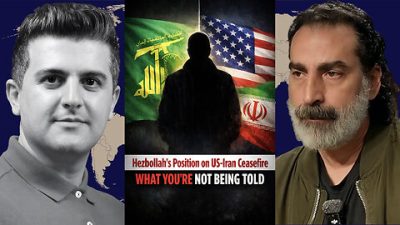
Laith Marouf: Hezbollah’s position on US-Iran ceasefire
or go to
Aletho News Archives – Video-Images
From the Archives
The Dirty Little Secret behind the “Global Terrorism Index”
The Omission of Israeli Terrorism in the Occupied Palestinian Territories
By Karin Brothers | Global Research | December 6, 2014
… The Israeli settlements — all of which are illegal – have been identified as a major impediment to peace. The refusal of a major “global” terrorism report to name the Israeli settlers as one of the groups most responsible for terrorism not only misrepresents a major source of regional violence but exposes the Global Terrorism Index as a propaganda tool that supports a U.S. agenda.
In recent years, governments have been attempting to thwart terrorism by blocking supportive fund-raising. When it comes to Israeli settlements, however, the US and Canada actually encourage fund-raising by giving organizations (such as Christian Friends of Israeli Communities (CFOIC) and the Jewish National Fund) financial support in the form of donor tax-deductions.
Charities which provide funds for the Israeli settlements should be regarded as terror-financing organizations. They should not only lose their tax-deductible status, but they should be banned because they support the violation of international humanitarian law. The terror-financing laws that are being strictly enforced for Muslim charities should be applied to Christian and Jewish charities as well. … Read full article
Blog Roll
 Aletho News
- Trump Administration Moves To Automate U.S. Military Draft Registration
- Spain orders reopening of Tehran embassy, condemns Israel’s carpet bombing of Lebanon
- Israel faces ‘unsustainable’ strategic crisis following 40-day war against Iran: Analyst
- Iran restricts Hormuz access to 15 vessels per day under ceasefire terms: Report
- The ‘Opposition Party’ Has Done Nothing to Stop the Iran War and Much to Goad Trump Into Continuing It
- Moscow backs Tehran on status of Lebanon in US-Iran deal
- How UK Regulator Ofcom Quietly Bypassed International Law to Police American Speech
- The Black Cube Files: How Former Mossad Operatives Flipped a Nation
- Laith Marouf: Hezbollah’s position on US-Iran ceasefire: What you’re not being told
- Israel’s priority lies in destroying chances of peace between Iran, US: Ex-UN nuclear chief
- If Americans Knew
- The gallows law: Israel moves toward executing Palestinian children
- Tucker Carlson: The Path to Peace requires ending ‘special alliance’ with Israel
- This is ceasefire? Israel’s biggest massacre yet in Lebanon, another journalist killed in Gaza – Daily Update
- Tucker Carlson on Israel: This Is the Behavior of an Ally? Really?
- Gazans face a triple crisis: severe shortages of water and bread, healthcare in tatters
- NY Times reports how Netanyahu took the US into Iran War
- A sigh of relief over Iran, but Gaza and Lebanon in dire straits – Daily Update
- Thousands dead and neighborhoods razed to the ground: Aid agencies fear southern Lebanon is becoming the new Gaza
- The war the US is fighting for Israel could cost trillions
- ‘Cigarette Burns, Nail Wounds’: Toddler Tortured in Gaza to Coerce Father
- No Tricks Zone
- An Inconvenient Tree: Uncovered In Alps… Europe Much Warmer Than Today 6000 Years Ago
- New Study Reports A 60% Slowdown In Greenland’s Ice Loss Rate In The Last Decade
- Low Intensity Tornado Wrecks Major Solar Farm, Creating A Potential Toxic Dump
- New Study Finds Warming Saves Lives…Cold Temperatures 12 Times More Deadly Than Excess Heat
- German Science Blog Accuses PIK Climate Institute Of Hallucinating Climate Tipping Points
- Devastating Assessment Of Comirnaty Vaccine By Former Senior Pfizer Europe Toxicologist
- New Study: CO2 Is ‘Effectively Negligible’ As An Explanatory Climate Change Factor Since 2000
- Former Pfizer Toxicologist Dr. Helmut Sterz Tells Bundestag Hearing Pfizer Vaccine Should Have Never Been Approved
- Energy Expert: Germany’s Nuclear Phaseout Was A “500 Billion Euro Mistake”
- New Research: South Australia’s Mid-Holocene Sea Surface Temperatures Were 4°C Warmer Than Today
 Aletho News