Stunning pictures of Al Gore’s new $9 million mansion that the media totally ignored
By Noel Sheppard – NewsBusters.org – 05/03/2010
Nobel Laureate Al Gore purchased a $9 million mansion in the luxurious hills of Montecito, California, recently, and with the exception of the Los Angeles Times and Fox News, America’s media couldn’t care less.
You think it might be because the Gore-loving press wouldn’t want people to consider the possibility that all of his global warming hysteria was really about lining his wallet and not saving the planet?
Formulate a response to that question as you look at what all that money the former Vice President is making off of spreading this myth can buy [1]):
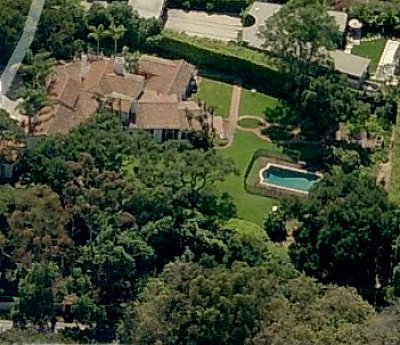
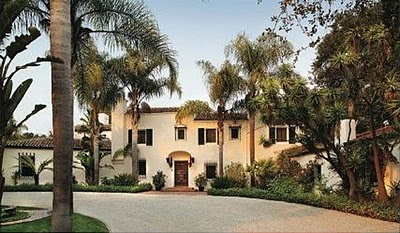

Sweet, wouldn’t you say? (Readers are encouraged to view more pictures of this fabulous estate here [2].)
Certainly not bad for a guy who supposedly [3] was worth between one and two million dollars in 2000.
Were the “Always Fascinated by the Lifestyles of the Rich and Famous” press interested?
Heck no.
According to LexisNexis, apart from the Los Angeles Times that broke [4] this story last Wednesday, and Fox News’s Sean Hannity who spoke about this on consecutive nights last week, America’s media were totally mum.
Why might that be?
You think Gore’s adoring press don’t want folks to know how much money he’s making off this scam?
Before you answer THAT question, consider what the Nobel Laureate told [4] Congress last year as the House was deliberating cap-and-trade legislation:
AL GORE: Every penny that I have made, I have put right into a non-profit deal, Alliance For Climate Protection, to spread awareness of why we have to take on this challenge. And Congresswomen, if your, if, if you believe that the reason I have been working on this issue for 30 years is because of greed, you do not know me.
Now, imagine for a moment there were actually journalists still in America and not advocates pretending to be journalists.
A former Vice President who last year told a House committee he was putting all of his earnings into a non-profit company to “spread awareness of why we have to take on” global warming a year later buys a $9 million mansion with six fireplaces, five bedrooms, and nine bathrooms for him and his wife.
Don’t you think SOMEBODY should have reported it other than Fox News, the LA Times, and conservative bloggers?
Where’d the money come from? Was this purchased by his non-profit corporation, and if so, how does he get away with that?
Did he sell some of his Google or Apple stock?
And how about some questions about how green the house is? Are there solar panels and windmills to power this facility? If not, what are their plans?
Forgetting all of that, if the Clintons, Bushes, or Cheneys bought such a place, do you think the media would cover it, at least as a human interest story?
For over three years, Gore’s adoring press have followed virtually every move he’s made since becoming the voice of global warming.
He buys a STUNNING villa as the unemployment rate stands at almost 10 percent and Americans are struggling to regain their footing after 2008’s financial crisis, and the media are suddenly disinterested in him?
On exactly which planet, be it cooling or warming, does THAT make any sense?
More reading concerning Gore’s investments:
- Media Ignore Al Gore’s Financial Ties To Global Warming [4]
- Al Gore Getting Rich Selling Global Warming Hysteria With Media’s Help [4]
- Gore Admits Financial ‘Stake’ In Advancing Global Warming Hysteria [4]
- Investment Group Puts Millions In Green Companies Gore Has Stake In [4]
Links:
[1] http://directorblue.blogspot.com/2010/05/exclusive-estimate-carbon-footprint-of.html
[2] http://directorblue.blogspot.com/2010/05/exclusive-estimate-carbon-footprint-of.html
[3] http://www.fastcompany.com/magazine/117/features-gore.html
[4] http://articles.latimes.com/2010/apr/28/home/la-hm-hotprop-gore-20100428
Related video
The sadistic logic behind Israel’s siege of Gaza
By Paul Woodward on May 3, 2010
The Israeli human rights group, Gisha, has taken the Israeli government to court in an effort to force Israel to reveal information on the import controls through which Gaza is being held under siege.
Rules that allow the importation of cinnamon but not coriander might seem arbitrary and it’s unlikely that further documentation from the Israelis will show otherwise. But there does appear to be a sadistic logic at work here. Nothing more effectively reinforces a sense of powerlessness in a population than for the minutiae of everyday life to be under the constant, arbitrary and callous control of an invisible and inaccessible power. This is the logic and practice of subjugation. It is an exercise in the crushing of human will.
Gisha’s director, Sari Bashi, says she is no security expert, “but preventing children from receiving toys, preventing manufacturers from getting raw materials – I don’t see how that’s responsive to Israeli security needs.”
And she says that some of the prohibitions appear to be absurdly arbitrary: “I certainly don’t understand why cinnamon is permitted, but coriander is forbidden. Is there something more dangerous about coriander? Is coriander more critical to Gaza’s economy than cinnamon? This is a policy that appears to make no sense.”
She argues that if there is a logic behind such decisions, the military should reveal what it is.Now, after several months’ waiting, the state has given its response to the court, in a written submission, seen by the BBC.
It throws a small pool of light on the process behind the blockade.
The overall rationale is set out, in bold type: “The limitation on the transfer of goods is a central pillar in the means at the disposal of the State of Israel in the armed conflict between it and Hamas.”
The Israeli authorities also confirm the existence of four documents related to how the blockade works: how they process requests for imports into Gaza, how they monitor the shortages within Gaza, their approved list of what is allowed in, and a document entitled “Food Consumption in the Gaza Strip – Red Lines” which sets out the minimum calorie intake needed by Gaza’s million and a half inhabitants, according to their age and sex.
This paper was however, the state insists, just a draft power-point presentation, used for “internal planning work”, which “never served as a basis for the policy of the authority”.
But while the first three documents promise a great deal of detail, that detail is not delivered.
In each case, the state argues that disclosure of what is allowed in and why would, in their words, “damage national security and harm foreign relations”.
There were righteous Afrikaners, too
By James North on May 4, 2010
I have tremendous admiration for John Mearsheimer’s intellectual courage, but I think he is mistaken to use the expression “new Afrikaners” to describe the people who will excuse anything Israel does.
During my years in southern Africa, I met plenty of Afrikaners who opposed apartheid, people like the great cleric Rev. Beyers Naude and the novelist Andre Brink. The poet Breyten Breytenbach spent 7 years in the apartheid prisons for trying to organize an underground resistance. Mearsheimer’s expression suggests a tribal unity among Afrikaners that never completely existed, and disregards the contributions of these remarkable people and others.
Also, equating apartheid with Afrikaners lets a lot of other people off the hook. Many among the English-speaking 40 percent of the white population were careful to distance themselves from the regime’s worst excesses, but they made little real effort to change a system that gave them the highest standard of living in the world. Further up the chain of command were the large mining houses, such as Anglo-American and DeBeers, who said they favored change but in fact did nothing.
And, elsewhere, the CEOs of the big Western banks and corporations continued to lend and invest in apartheid all the while claiming they had nothing to do with the system’s more unsavory features. It was not until resistance inside the country grew, along with Boycott Divestment Sanctions in the rest of the world, that the regime and its supporters realized they had to negotiate.
John Mearsheimer has quite rightly identified a group of people who will go through strenuous intellectual contortions to justify Israel’s land-grabbing and violence. I just wish he would find a different name for them — maybe “the Israel Apologists”?
Israeli forces fire at deportees approaching Gaza crossing
Ma’an – 04/05/2010
Gaza – Israeli forces reportedly opened fire at two recently deported Palestinians attempting to transit through the Erez crossing, in northern Gaza on Tuesday.
The pair said they were attempting to return to the West Bank after having been deported last week in accordance with an Israeli military order defining them as “infiltrators.”
Ahmad Auda Abu Shallouf said he was trying to reunite with his wife and four children. “I am ready to stand trial in an Israeli court. Let them try to prove that I represent a threat to Israel’s security but if they fail, let them shoot me dead and send me back to my children,” he said. The second deportee, Muhammad Sha’ban, said his family “desperately” needed him and he wished to return to them.
An Israeli military spokeswoman told Ma’an that Israeli forces “identified a number of suspects” approaching near the Erez crossing and “acted in order to distance [them].” The representative said warning shots were fired, and that the army is not aware of any damage or injury caused during the incident.
Israel maintains a buffer zone along the Gaza border, to which Palestinian access is forbidden. The no-go zone is the site of weekly protests against the confiscation of an estimated 30 percent of arable land.
Both deportees are married to Palestinian women with Israeli citizenship.
On 13 April, Israel’s expanded definition of an “infiltrator” took effect under military order number 1650. The new order defines any and all persons residing in the West Bank without Israeli permission as “infiltrators” who can be removed without court proceedings. Since the order was implemented, four Palestinians with identity cards registered in Gaza were taken from their homes, the streets, or hospitals, and expelled to the Gaza Strip.
At least one man successfully appealed the move and was returned to his family in the Palestinian town of Yaffa, inside Israel’s Tel Aviv. A Beersheba man and a freed prisoner from Tulkarem were also expelled.
The Hamas government has refused entry of the men into Gaza, saying deportation is not an option, and that they should be returned to their families.
International solidarity activists accuse Israeli military of break-in
By Saed Bannoura – IMEMC News – May 04, 2010
When their apartment in Hebron was broken into on Saturday May 1st, the international solidarity activists stationed there said they have strong evidence that it was the Israeli military that carried out the illegal robbery.
They say that they were suspicious that this was not a regular robbery because laptops, video cameras, and flash drives were stolen – but not cash and credit cards that were left in the apartment. Similar items were taken by the Israeli military when they twice raided the International Solidarity Movement (ISM)’s office in Ramallah in February of this year.
ISM activist Beatrice Smith said, “It seems likely that this was Shin Bet [the Israeli Intelligence Service]. Our neighbours have told us twice in the past week or so that soldiers have been coming up to our apartment when we’re out and they’ve been looking through the windows. If it was a normal robber, why would they have left cash and credit cards, but taken USB sticks and memory cards? This person wanted information, not money”.
The robbery follows a recently released affidavit from Shin Bet to the Israeli High Court of Justice. In it, they admit that they have been keeping close surveillance on ISM activist Bridget Chappell, seemingly for the past several months.
Smith says, “It is clear from the surveillance and arrest of our activists, from the previous raids on our office in Ramallah, and now from the break-in here in Hebron that the Israeli authorities are determined to do all they can to stop us working here. They know that we’re non-violent, but they are scared because they don’t want the outside world to know what they are doing here. Anybody who comes here to bear witness to the occupation is a threat to them”.
Residents object to proposed Edmonton Islamic Centre
IQra | May 3, 2010

Residents in the Edmonton area neighbourhood of Lessard are opposing a plan by Muslims to convert a failed strip mall into an Islamic school and mosque.
The Muslim Association of Canada (MAC) paid $5.2 million earlier this year for the two-story, 160 unit Lessard Mall and plans to renovate the building for a variety of uses, including a school, mosque, day care, youth centre and retail businesses.
The facility is rundown and mostly vacant, with only three small businesses in the two-storey structure.
However, some Lessard residents think that MAC’s plans for the site will lead to traffic congestions and insists that is the reason they are opposing the proposal.
“The issue was never, ever, about faith or about certain beliefs. Not at all. The issue is purely civic and neighbourly,” said Safwat Girgis, the author of the petition told CBC news.
MAC spokesperson, Ali Assaf, told the Edmonton Journal that his group chose the location because there was a need for an Islamic centre and school in that part of the west end.
He acknowledges the project will bring in more traffic to the neighborhood but disputed residents’ estimates that 700 vehicles could show up at one time.
“I think it will accommodate that many with the parking lot we have,” Assaf told the Journal.
“Any time a school goes up anywhere there is always concern no matter who is doing it. People don’t like traffic and that around their homes.”
Secret Erik Prince/Blackwater Tape Exposed
By Jeremy Scahill | Rebel Reports | May 3, 2010
Erik Prince, the reclusive owner of the Blackwater empire, rarely gives public speeches and when he does he attempts to ban journalists from attending and forbids recording or videotaping of his remarks. On May 5, that is exactly what Prince is trying to do when he speaks at DeVos Fieldhouse as the keynote speaker for the “Tulip Time Festival” in his hometown of Holland, Michigan. He told the event’s organizers no news reporting could be done on his speech and they consented to the ban. Journalists and media associations in Michigan are protesting this attempt to bar reporting on his remarks.
Despite Prince’s attempts to shield his speeches from public scrutiny, The Nation magazine has obtained an audio recording of a recent, private speech delivered by Prince to a friendly audience. The speech, which Prince attempted to keep from public consumption, provides a stunning glimpse into his views and future plans and reveals details of previously undisclosed activities of Blackwater. The people of the United States have a right to media coverage of events featuring the owner of a company that generates 90% of its revenue from the United States government.
In the speech, Prince proposed that the US government deploy armed private contractors to fight “terrorists” in Nigeria, Yemen, Somalia and Saudi Arabia, specifically to target Iranian influence. He expressed disdain for the Geneva Convention and described Blackwater’s secretive operations at four Forward Operating Bases he controls in Afghanistan. He called those fighting the US in Afghanistan, Iraq and Pakistan “barbarians” who “crawled out of the sewer.” Prince also revealed details of a July 2009 operation he claims Blackwater forces coordinated in Afghanistan to take down a narcotrafficking facility, saying that Blackwater “call[ed] in multiple air strikes,” blowing up the facility. Prince boasted that his forces had carried out the “largest hashish bust in counter-narcotics history.” He characterized the work of some NATO countries’ forces in Afghanistan as ineffectual, suggesting that some coalition nations “should just pack it in and go home.” Prince spoke of Blackwater working in Pakistan, which appears to contradict the official, public Blackwater and US government line that Blackwater is not in Pakistan.
Prince also claimed that a Blackwater operative took down the Iraqi journalist who threw his shoes at President George W Bush in Baghdad and criticized the Secret Service for being “flat-footed.” He bragged that Blackwater forces “beat the Louisiana National Guard to the scene” during Katrina and claimed that lawsuits, “tens of millions of dollars in lawyer bills” and political attacks prevented him from deploying a humanitarian ship that could have responded to the earthquake in Haiti or the tsunami that hit Indonesia.
Several times during the speech, Prince appeared to demean Afghans his company is training in Afghanistan, saying Blackwater had to teach them “Intro to Toilet Use” and to do jumping jacks. At the same time, he bragged that US generals told him the Afghans Blackwater trains “are the most effective fighting force in Afghanistan.” Prince also revealed that he is writing a book, scheduled to be released this fall.
The speech was delivered January 14 at the University of Michigan in front of an audience of entrepreneurs, ROTC commanders and cadets, businesspeople and military veterans. The speech was titled “Overcoming Adversity: Leadership at the Tip of the Spear” and was sponsored by the Young Presidents’ Association (YPO), a business networking association primarily made up of corporate executives. “Ripped from the headlines and described by Vanity Fair magazine, as a Tycoon, Contractor, Soldier and Spy, Erik Prince brings all that and more to our exclusive YPO speaking engagement,” read the event’s program, also obtained by The Nation. It proclaimed that Prince’s speech was an “amazing don’t miss opportunity from a man who has ‘been there and done that’ with a group of Cadets and Midshipmen who are months away from serving on the ‘tip of the spear.’” Here are some of the highlights from Erik Prince’s speech:
Send the Mercs into Somalia, Yemen, Saudi Arabia and Nigeria
Prince painted a global picture in which Iran is “at the absolute dead center… of badness.” The Iranians, he said, “want that nuke so that it is again a Persian Gulf and they very much have an attitude of when Darius ran most of the Middle East back in 1000 BC. That’s very much what the Iranians are after.” [NOTE: Darius of Persia actually ruled from 522 BC–486 BC]. Iran, Prince charged, has a “master plan to stir up and organize a Shia revolt through the whole region.” Prince proposed that armed private soldiers from companies like Blackwater be deployed in countries throughout the region to target Iranian influence, specifically in Yemen, Somalia and Saudi Arabia. “The Iranians have a very sinister hand in these places,” Prince said. “You’re not going to solve it by putting a lot of uniformed soldiers in all these countries. It’s way too politically sensitive. The private sector can operate there with a very, very small, very light footprint.” In addition to concerns of political expediency, Prince suggested that using private contractors to conduct such operations would be cost-effective. “The overall defense budget is going to have to be cut and they’re going to look for ways, they’re going to have to have ways to become more efficient,” he said. “And there’s a lot of ways that the private sector can operate with a much smaller, much lighter footprint.”
Prince also proposed using private armed contractors in the oil-rich African nation of Nigeria. Prince said that guerilla groups in the country are dramatically slowing oil production and extraction and stealing oil. “There’s more than a half million barrels a day stolen there, which is stolen and organized by very large criminal syndicates. There’s even some evidence it’s going to fund terrorist organizations,” Prince alleged. “These guerilla groups attack the pipeline, attack the pump house to knock it offline, which makes the pressure of the pipeline go soft. they cut that pipeline and they weld in their own patch with their own valves and they back a barge up into it. Ten thousand barrels at a time, take that oil, drive that 10,000 barrels out to sea and at $80 a barrel, that’s $800,000. That’s not a bad take for organized crime.” Prince made no mention of the nonviolent indigenous opposition to oil extraction and pollution, nor did he mention the notorious human rights abuses connected to multinational oil corporations in Nigeria that have sparked much of the resistance.
Blackwater and the Geneva Convention
Prince scornfully dismissed the debate on whether armed individuals working for Blackwater could be classified as “unlawful combatants” who are ineligible for protection under the Geneva Convention. “You know, people ask me that all the time, ‘Aren’t you concerned that you folks aren’t covered under the Geneva Convention in [operating] in the likes of Iraq or Afghanistan or Pakistan? And I say, ‘Absolutely not,’ because these people, they crawled out of the sewer and they have a 1200 AD mentality. They’re barbarians. They don’t know where Geneva is, let alone that there was a convention there.”
It is significant that Prince mentioned his company operating in Pakistan given that Blackwater, the US government and the Pakistan government have all denied Blackwater works in Pakistan.
Taking Down the Iraqi Shoe Thrower for the ‘Flat-Footed’ Secret Service
Prince noted several high-profile attacks on world leaders in the past year, specifically a woman pushing the Pope at Christmas mass and the attack on Italian Prime Minister Silvio Berlusconi, saying there has been a pattern of “some pretty questionable security lately.” He then proceeded to describe the feats of his Blackwater forces in protecting dignitaries and diplomats, claiming that one of his men took down the Iraqi journalist, Muntadhar al-Zaidi, who threw his shoes at President Bush in Baghdad in December 2008. Prince referred to al-Zaidi as the “shoe bomber:”
“A little known fact, you know when the shoe bomber in Iraq was throwing his shoes at President Bush, in December 08, we provided diplomatic security, but we had no responsibility for the president’s security—that’s always the Secret Service that does that. We happened to have a guy in the back of the room and he saw that first shoe go and he drew his weapon, got a sight picture, saw that it was only a shoe, he re-holstered, went forward and took that guy down while the Secret Service was still standing there flat-footed. I have a picture of that—I’m publishing a book, so watch for that later this fall—in which you’ll see all the reporters looking, there’s my guy taking the shoe thrower down. He didn’t shoot him, he just tackled him, even though the guy was committing assault and battery on the president of the United States. I asked a friend of mine who used to run the Secret Service if they had a written report of that and he said the debrief was so bad they did not put it in writing.”
While the Secret Service was widely criticized at the time for its apparent inaction during the incident, video of the event clearly showed another Iraqi journalist, not security guards, initially pulling al-Zaidi to the floor. Almost instantly thereafter, al-Zaidi was swarmed by a gang of various, unidentified security agents.
Blackwater’s ‘Forward Operating Bases
Prince went into detail about his company’s operations in Afghanistan. Blackwater has been in the country since at least April 2002, when the company was hired by the CIA on a covert contract to provide the Agency with security. Since then, Blackwater has won hundreds of millions of dollars in security, counter-narcotics and training contracts for the State Department, Defense Department and the CIA. The company protects US Ambassador Karl Eikenberry and other senior US officials, guards CIA personnel and trains the Afghan border police. “We built four bases and we staffed them and we run them,” Prince said, referring to them as Forward Operating Bases (FOBs). He described them as being in the north, south, east and west of Afghanistan. “Spin Boldak in the south, which is the major drug trans-shipment area, in the east at a place called FOB Lonestar, which is right at the foothills of Tora Bora mountain. In fact if you ski off Tora Bora mountain, you can ski down to our firebase,” Prince said, adding that Blackwater also has a base near Herat and another location. FOB Lonestar is approximately 15 miles from the Pakistan border. “Who else has built a [Forward Operating Base] along the main infiltration route for the Taliban and the last known location for Osama bin Laden?” Prince said earlier this year.
Blackwater’s War on Drugs
Prince described a Narcotics Interdiction Unit Blackwater started in Afghanistan five years ago that remains active. “It is about a 200 person strike force to go after the big narcotics traffickers, the big cache sites,” Prince said. “That unit’s had great success. They’ve taken more than $3.5 billion worth of heroin out of circulation. We’re not going after the farmers, but we’re going after the traffickers.” He described an operation in July 2009 where Blackwater forces actually called in NATO air strikes on a target during a mission:
“A year ago, July, they did the largest hashish bust in counter-narcotics history, down in the south-east. They went down, they hit five targets that our intel guys put together and they wound up with about 12,000 pounds of heroin. While they were down there, they said, ‘You know, these other three sites look good, we should go check them out.’ Sure enough they did and they found a cache—262,000 kilograms of hash, which equates to more than a billion dollars street value. And it was an industrialized hash operation, it was much of the hash crop in Helmand province. It was palletized, they’d dug ditches out in the desert, covered it with tarps and the bags of powder were big bags with a brand name on it for the hash brand, palletized, ready to go into containers down to Karachi [Pakistan] and then out to Europe or elsewhere in the world. That raid alone took about $60 million out of the Taliban’s coffers. So, those were good days. When the guys found it, they didn’t have enough ammo, enough explosives, to blow it, they couldn’t burn it all, so they had to call in multiple air strikes. Of course, you know, each of the NATO countries that came and did the air strikes took credit for finding and destroying the cache.”
December 30, 2009 CIA Bombing in Khost
Prince also addressed the deadly suicide bombing on December 30 at the CIA station at Forward Operating Base Chapman in Khost, Afghanistan. Eight CIA personnel, including two Blackwater operatives, were killed in the bombing, which was carried out by a Jordanian double-agent. Prince was asked by an audience member about the “failure” to prevent that attack. The questioner did not mention that Blackwater was responsible for the security of the CIA officials that day, nor did Prince discuss Blackwater’s role that day. Here is what Prince said:
“You know what? It is a tragedy that those guys were killed but if you put it in perspective, the CIA has lost extremely few people since 9/11. We’ve lost two or three in Afghanistan, before that two or three in Iraq and, I believe, one guy in Somalia—a landmine. So when you compare what Bill Donovan and the OSS did to the Germans and the Japanese, the Italians during World War II—and they lost hundreds and hundreds of people doing very difficult, very dangerous work—it is a tragedy when you lose people, but it is a cost of doing that work. It is essential, you’ve got to take risks. In that case, they had what appeared to be a very hot asset who had very relevant, very actionable intelligence and he turned out to be a bad guy… That’s what the intelligence business is, you can’t be assured success all the time. You’ve got to be willing to take risks. Those are calculated risks but sometimes it goes badly. I hope the Agency doesn’t draw back and say, ‘Oh, we have to retrench and not do that anymore,’ all the rest. No. We need you to double down, go after them harder. That is a cost of doing business. They are there to kill us.”
Prince to Some NATO Countries in Afghanistan: ‘Go Home’
Prince spoke disparagingly of some unnamed NATO countries with troops in Afghanistan, saying they do not have the will for the fight. “Some of them do and a lot of them don’t,” he said. “It is such a patchwork of different international commitments as to what some can do and what some can’t. A lot of them should just pack it in and go home.” Canada, however, received praise from Prince. “The Canadians have lost per capita more than America has in Afghanistan. They are fighting and they are doing it and so if you see a Canadian thank them for that. The politicians at home take heavies for doing that,” Prince said. He did not mention the fact that his company was hired by the Canadian government to train its forces.
Prince also described how his private air force (which he recently sold) bailed out a US military unit in trouble in Afghanistan. According to Prince, the unit was fighting the Taliban and was running out of ammo and needed an emergency re-supply. “Because of, probably some procedure written by a lawyer back in Washington, the Air Force was not permitted to drop in an uncertified drop zone… even to the unit that was running out of ammo,” Prince said. “So they called and asked if our guys would do it and, of course, they said, ‘Yes.’ And the cool part of the story is the Army guys put their DZ mark in the drop zone, a big orange panel, on the hood of their hummer and our guys put the first bundle on the hood of that hummer. We don’t always get that close, but that time a little too close.”
Blackwater: Teaching Afghans to Use Toilets
Prince said his forces train 1300 Afghans every six weeks and described his pride in attending “graduations” of Blackwater-trained Afghans, saying that in six weeks they radically transform the trainees. “You take these officers, these Afghans and it’s the first time in their life they’ve ever been part of something that’s first class, that works. The instructors know what they’re talking about, they’re fed, the water works, there’s ammunition for their guns. Everything works,” Prince said. “The first few days of training, we have to do ‘Intro to Toilet Use’ because a lot of these guys have never even seen a flushed toilet before.” Prince boasted: “We manage to take folks with a tribal mentality and, just like the Marine Corps does more effectively than anyone else, they take kids from disparate lifestyles across the United States and you throw them into Paris Island and you make them Marines. We try that same mentality there by pushing these guys very hard and, it’s funny, I wish I had video to show you of the hilarious jumping jacks. If you take someone that’s 25 years old and they’ve never done a jumping jack in their life—some of the convoluted motions they do it’s comical. But the transformation from day one to the end of that program, they’re very proud and they’re very capable.” Prince said that when he was in Afghanistan late last year, “I met with a bunch of generals and they said the Afghans that we train are the most effective fighting force in Afghanistan.”
Prince also discussed the Afghan women he says work with Blackwater. “Some of the women we’ve had, it’s amazing,” Prince said. “They come in in the morning and they have the burqa on and they transition to their cammies (camouflage uniforms) and I think they enjoy the baton work,” he said, adding, “They’ve been hand-cuffing a little too much on the men.”
Hurricane Katrina and Humanitarian Mercenaries
Erik Prince spoke at length about Blackwater’s deployment in 2005 in New Orleans during Hurricane Katrina, bragging that his forces “rescued 128 people, sent thousands of meals in there and it worked.” Prince boasted of his company’s rapid response, saying, “We surged 145 guys in 36 hours from our facility five states away and we beat the Louisiana National Guard to the scene.” What Prince failed to mention was that at the time of the disaster, at least 35% of the Louisiana National Guard was deployed in Iraq. One National Guard soldier in New Orleans at the time spoke to Reuters, saying, “They (the Bush administration) care more about Iraq and Afghanistan than here… We are doing the best we can with the resources we have, but almost all of our guys are in Iraq.” Much of the National Guard’s equipment was in Iraq at the time, including high water vehicles, Humvees, refuelers and generators.
Prince also said that he had a plan to create a massive humanitarian vessel that, with the generous support of major corporations, could have responded to natural disasters, such as earthquakes and tsunamis across the globe. “I thought, man, the military has perfected how to move men and equipment into combat, why can’t we do that for the humanitarian side?” Prince said. The ship Prince wanted to use for these missions was an 800 foot container vessel capable of shipping “1700 containers, which would have lined up six and a half miles of humanitarian assistance with another 250 vehicles” onboard. “We could have gotten almost all those boxes donated. It would have been boxes that would have had generator sets from Caterpillar, grain from ADM [Archer Daniels Midland], anti-biotics from pharmaceutical companies, all the stuff you need to do massive humanitarian assistance,” Prince said, adding that it “would have had turnkey fuel support, food, surgical, portable surgical hospitals, beds cots, blankets, all the above.” Prince says he was going to do the work for free, “on spec,” but “instead we got attacked politically and ended up paying tens of millions of dollars in lawyer bills the last few years. It’s an unfortunate misuse of resources because a boat like that sure would have been handy for the Haitian people right now.”
Outing Erik Prince
Prince also addressed what he described as his outing as a CIA asset working on sensitive US government programs. He has previously blamed Congressional Democrats and the news media for naming him as working on the US assassination program. The US intelligence apparatus “depends heavily on Americans that are not employed by the government to facilitate greater success and access for the intelligence community,” Prince said. “It’s unprecedented to have people outed by name, especially ones that were running highly classified programs. And as much as the left got animated about Valerie Plame, outing people by name for other very very sensitive programs was unprecedented and definitely threw me under the bus.”
Obama Renews Sanctions on Syria for a Year
Al-Manar TV – 04/05/2010
President Barack Obama Monday renewed US sanctions on Syria for a year, accusing Damascus of supporting what he called “terrorist” groups and pursuing missile programs and weapons of mass destruction.
There had been no expectation that Obama would lift the measures, but the renewal came at an especially sensitive time in often tense US-Syria relations, despite efforts by the administration to return an ambassador to Damascus.
The United States has also recently accused Syria and Iran of arming Hezbollah with increasingly sophisticated rockets and missiles, which it says are undermining stability in the region.
Obama said in a message to Congress renewing the sanctions imposed by former US president George W. Bush in 2004, that the Syrian government had made “some progress” in suppressing the infiltration of foreign fighters bound for Iraq. But he added that its “continuing support for terrorist organizations and pursuit of weapons of mass destruction and missile programs, continue to pose an unusual and extraordinary threat to the national security, foreign policy, and economy of the United States.”
Obama also called on Syria to demonstrate “progress” in the areas that Washington says justify sanctions, to allow them to be lifted in future.
US Secretary of State Hillary Clinton last week warned Syrian President Bashar al-Assad against the risk of sparking a regional war if he supplies long-range Scud missiles to Hezbollah. “President Assad is making decisions that could mean war or peace for the region,” she told a pro-Israel group. Her remarks followed claims by Israeli President Shimon Peres in April that Syria was supplying Hezbollah with Scud missiles. But Syria has dismissed the accusations and warned Washington against taking Israel’s claims seriously.
Some US lawmakers have seized upon the accusations to argue against any rapprochement between Washington and Damascus.
In February, Obama nominated career diplomat Robert Ford as the country’s first ambassador to Syria in five years, but his appointment has yet to be confirmed by the Senate.
Bush declared a national emergency regarding Syria on May 11, 2004, and imposed economic sanctions over charges it was a state sponsor of terrorism. They were extended in 2006, tightened in 2007 and renewed the following year.
Monday’s action marked the second renewal of the sanctions regime by Obama.
Israel’s Stasi watch over Imams
By Jonathan Cook in Jaffa | The National | May 4, 2010
Job interviews for the position of imam at mosques in Israel are conducted not by senior clerics but by the Shin Bet, Israel’s secret police, a labour tribunal has revealed.
Sheikh Ahmed Abu Ajwa, 36, is fighting the Shin Bet’s refusal to approve his appointment as an imam in a case that has lifted the lid on Israel’s secret surveillance of the country’s Islamic leaders.
At a hearing last month, a senior government official admitted that 60 undercover inspectors were employed effectively as spies to collect information on Muslim clerics, reporting on political opinions they expressed in sermons and relaying gossip about their private lives.
Sheikh Abu Ajwa took his case to the tribunal after the Shin Bet rejected him three years ago as the imam of a mosque in Jaffa, next to Tel Aviv, despite his being the sole candidate. He was told after a security clearance interview that his views were “extremist” and too critical of Israel, even though an imam is not officially defined as a security-related position.
“During one interview with the Shin Bet, they told me they had been collecting information on me since I was 15,” Sheikh Abu Ajwa said.
“I am the first imam ever to challenge the Shin Bet’s role in our appointments. It’s important to win a precedent-setting ruling from the courts to stop this kind of interference.”
Michael Sfard, a human rights lawyer representing Sheikh Abu Ajwa, said that, as far as it could be determined, no similar vetting of rabbis took place before their hiring.
“This sort of surveillance relating to a non-security position like an imam comes straight out of the era of the Stasi police in East Germany or the McCarthy period in the United States,” he said.
The traditional independence of the local Islamic authorities was removed at Israel’s creation in 1948, when the government confiscated almost all waqf property — endowments of land and property used for the benefit of the Palestinian Muslim community — removing the main source of income for clerics, the Islamic courts and charitable services.
According to experts, as much as a fifth of Palestine’s cultivated land was waqf property before 1948. Israel passed most of it to Zionist organisations like the Jewish National Fund or sold it to developers.
Responsibility for hundreds of mosques, cemeteries and other holy sites, meanwhile, was handed either to the religious affairs ministry or to Islamic boards of trustees appointed by the government.
Today, most imams and all Islamic judges must submit to a security clearance interview before being awarded a state salary.
Israel’s Arab minority, one fifth of the population, have long charged that many of its Muslim leaders are little more than government placemen, whose Islamic learning takes second place to their co-operation with the authorities.
Sabri Jiryis, a historian of Israel’s early years, has noted that the boards of trustees repeatedly rubber-stamped government decisions to sell off Islamic property to developers. Most notoriously Jaffa’s board approved in 1971 selling an Islamic cemetery in Tel Aviv on which the Hilton hotel was built.
Sheikh Abu Ajwa said: “In Jaffa, the government appointed many clerics because they had proved their loyalty, though not to other Muslims. They sold off our property — but you can’t sell what belongs to Allah.”
Jaffa, which was once the commercial capital of Palestine, today has a population of nearly 50,000 residents, of which two thirds are Jewish and the rest Muslim.
The sheikh has been preaching at the seafront Jabalya mosque, one of six in the town, since he was 19, making him reportedly the youngest person to serve as an imam in Israel’s history. He qualified as an imam at an Islamic college in the Israeli Arab city of Umm al Fahm in 1998.
The local community universally backed him as the new imam when his predecessor retired three years ago, but he cannot be officially recognised, and is ineligible for a salary, without the interior ministry’s approval.
As part of his application, he was interviewed by a Shin Bet officer named “Dror” who, he said, waved at him a folder of confidential information collected by undercover inspectors. “We will decide who is the next imam,” Dror told him, according to Sheikh Abu Ajwa. The sheikh was asked mainly about his political opinions and demonstrations he had attended.
The Shin Bet’s assessment, revealed to the tribunal, was that Sheikh Abu Ajwa’s appointment “may jeopardise security and peace in Jaffa”. In addition, the agency told the Haaretz newspaper that the sheikh “has had a long involvement in hostile activity, which manifested itself in incitement against the state and its Jewish citizens”.
Sheikh Abu Ajwa said this was a reference to his position as the leader in Jaffa of the popular northern wing of the Islamic Movement. Its leader, Sheikh Raed Salah, has raised the hackles of Jewish officials both by running a campaign warning of Israel’s intentions to take over the Al Aqsa mosque compound in Jerusalem and by promoting a boycott of parliamentary elections.
The head of the Shin Bet, Yuval Diskin, warned in 2007 that his agency’s role was to prevent any activities, including democratic ones, that worked against the interests of a Jewish state.
Yaakov Salameh, the head of the religious minorities department at the interior ministry, told the tribunal last month that his inspectors collected information on Muslim religious leaders, including rumours about their private lives, such as whether they had had an affair or beat their children. The information was then handed to the Shin Bet, which assessed whether they were suitable to be appointed.
Mr Sfard said it was an “extraordinary” admission, given that under Israeli law the criminal records of candidates for religious appointments could only be considered if the applicant agreed to the information being handed over.
David Baker, a spokesman for the prime minister’s office, which is responsible for the Shin Bet, refused to comment on whether the appointment of rabbis followed the same procedures as those for imams.
Sheikh Abu Ajwa observed that many rabbis, particularly those in the settlements, said “very extreme things but no one spies on them. In fact, they have full government support.”
He admitted he was outspoken in his sermons, but said he had never broken any laws and never advocated violence. “I talk about our Palestinian identity and criticise the policies of the state in its treatment of us as a minority,” he said. “These are very sensitive things that they want to prevent us from talking about.”
During one Shin Bet interview, he said, he had been told: “We know everything about you, we are always watching you.”
The goal of such interviews was often to recruit Muslim clerics to become informers themselves, he added.
Soldiers Level Mosque Near Rafah, Settlers Torch Mosque Near Nablus
By Saed Bannoura – IMEMC & Agencies – May 04, 2010
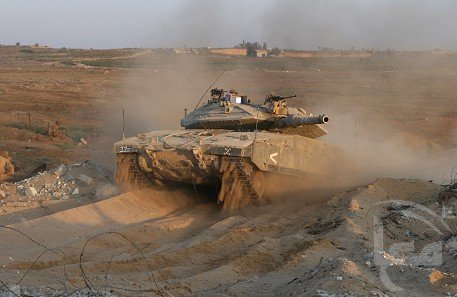 Israeli soldiers invaded an area in Rafah, in the southern part of the Gaza Strip, leveled the Al Dahniyya mosque and uprooted farmlands on Tuesday at dawn. Local sources reported that the mosque was leveled to the ground after several armored military vehicles and bulldozers invaded Rafah.
Also in Rafah, soldiers uprooted farmlands near the Yasser Arafat Airport east of Rafah. Several military bulldozers and armored vehicles bulldozed farmlands and opened fire at random in Al Dahniyya area. The vehicles, originally stationed at the Karem Abu Salem (Kerem Shalom) military post, advanced 800 meters into the area and placed sand hills.
Also on Tuesday at dawn, a group of fundamentalist settlers torched the main mosque of the Al Lubban Al Shariyya village, south of the northern West Bank city of Nablus. The settlers attacked the mosque approximately at 3 A.M., rounded up several copies of the Holy Koran in one place and set them ablaze. The fire caused excessive damage to the property of the mosque, including its ceiling, its fans and walls. Its 450 square meters of carpet and eight air conditioners were burnt also.
This is the third mosque to be torched by the settlers this year as the settlers torched a mosque in Yasuf village near Salfit and another mosque in Huwwara town, near Nablus.
Photo credit Maan Images/Wissam Nassar
###
Al-Manar TV

… According to the town’s mayor, Jamal Daragma, this is not the first time the village was targeted by settlers: “In the past they also smashed windows, uprooted olive trees, damaged houses and property. At least once a week settlers come in, riot and harm the village.”
The town is located next to three Israeli settlements: Shilo, Ma’ale Levona, and Eli. Contacted by AFP, the Israeli occupation army could not immediately confirm or deny the report.
On April 14, a mosque in Huwara near Nablus was desecrated by settlers who scrawled Hebrew graffiti and a Star of David over the walls. Two cars were also torched during the incident.
In December, settlers vandalized another mosque in the northern West Bank village of Yasuf, torching Muslim holy books and spraying hate messages in Hebrew. The incident triggered clashes between villagers and Israeli occupation troops. Israeli police arrested youths from the settlement of Yitzhar, but no one was charged.
Featured Video

No Threat Can Force Iran’s Surrender /Trita Parsi & Lt Cl Daniel Davis
or go to
Aletho News Archives – Video-Images
From the Archives
An Expert Military Analysis of War with China
Actually, None is Necessary
By Fred Reed • Unz Review • December 13, 2020
The Correlation of Armed Forces: U.S. goods and services trade with China totaled an estimated $634.8 billion in 2019. Exports were $163.0 billion; imports were $471.8 billion. The U.S. goods and services trade deficit with China was $308.8 billion in 2019. Trade in services with China (exports and imports) totaled an estimated $76.7 billion in 2019. Services exports were $56.5 billion; services imports were $20.1 billion. The U.S. services trade surplus with China was $36.4 billion in 2019.
There is talk within the Washingtoniat of a possible war with China. Steve Bannon, who apparently was dropped on his head as a child, actually favors such a war. We hear the usual shoo-the-boobs alarm about how the Chinese are doing something terrible and we must gird our loins and American values and show them what for, bow wow, woof. The danger is that the current game of who-blinks-first in Asian waters might actually provoke a shooting war. You know the kind of thing: One warship refuses to get out of the way of another, a collision ensues, some retard lieutenant who signed up on waivers opens fire, and we’re off and running. It is not a good idea to let children play with matches.
The said war is discussed either in emotional terms by idiots or in purely naval terms by those familiar with such things, so we hear of the First Island Chain and the Second Island Chain and whose missiles against the other’s missiles and so on. This would be appropriate if we were fighting World War Two again. Which we aren’t. Let’s take a quick-and-dirty look at how such a war might go.
To begin the war, America would overestimate itself and underestimate China. This is doctrine in the Pentagon. … continue
Blog Roll
 Aletho News
- Iran To Target Military Industrial-Tech Complex That Facilitated Gaza Genocide
- Collapsing Empire: The Resistance Disarms ‘Israel’
- Suicide Should Not Be a Government Service
- Rethinking America’s greatest threat: Iran vs. Israel-Firsters
- Iran accuses adversaries of false flags to strain Turkey ties
- Poland rules out sending Patriot missiles to US/Israel amid war on Iran
- Tehran approves new Hormuz plan with major restrictions
- No Threat Can Force Iran’s Surrender /Trita Parsi & Lt Cl Daniel Davis
- UK’s New Pandemic Plan Would Turn Big Tech Into a Mass Location Tracking Network
- Growing insecurity, soaring prices fuel protests in north as regime bans evacuation: Sources
- If Americans Knew
- Ann Coulter Rips Into Fox News for Iran War Coverage, Compares to False Rigged 2020 Election Reporting
- Joe Kent Urges Americans To Call White House and Congress To Object To Sending Troops Into Iran
- DNC Resolution to Reject AIPAC Funding Puts Democratic Leaders in the Hot Seat
- Swedish foundation to build 400 schools as over 650,000 Gaza children remain without education for 2 years
- Israeli army admits photshopping image of slain Lebanese journalist
- This is how Israel is systematically killing health workers under the cover of war in Lebanon
- Carrying life under fire: Israeli invasion of Lebanon leaves pregnant women facing deadly risks
- Champagne all around for the new death penalty (for Palestinians) law – Not a ceasefire Day 172
- Why are Palestinian books struggling to be seen on Amazon?
- The Line Between Affinity and Conspiracy
- No Tricks Zone
- New Study Finds Warming Saves Lives…Cold Temperatures 12 Times More Deadly Than Excess Heat
- German Science Blog Accuses PIK Climate Institute Of Hallucinating Climate Tipping Points
- Devastating Assessment Of Comirnaty Vaccine By Former Senior Pfizer Europe Toxicologist
- New Study: CO2 Is ‘Effectively Negligible’ As An Explanatory Climate Change Factor Since 2000
- Former Pfizer Toxicologist Dr. Helmut Sterz Tells Bundestag Hearing Pfizer Vaccine Should Have Never Been Approved
- Energy Expert: Germany’s Nuclear Phaseout Was A “500 Billion Euro Mistake”
- New Research: South Australia’s Mid-Holocene Sea Surface Temperatures Were 4°C Warmer Than Today
- Storing Green Energy To Last Germany 10 Days Would Require A 60-Million Tonne Battery
- New Studies: UK Sea Levels Were 4 Meters Higher Than Today During The Mid-Holocene
- Destructive Green New Deal: German Energy And Metal Group Warns Of Drastic Crisis
 Aletho News