Jews are eight times over-represented in UK parliament
At that rate Muslims would have 200 seats
By Stuart Littlewood | 21 May 2010
“Proportional Representation” is a big buzz-word in the UK these days. It implies fairer voting and fairer government. It is claimed to give minorities a better chance of being heard and therefore, they say, it should be incorporated into the “new politics” our shiny new coalition government has promised us.
But one minority group needs no help in that direction.
The Jewish Chronicle has published a list of Jewish MPs in Britain’s parliament. It names 24 – Conservatives 12, Labour 10 and Liberal Democrats two.
I thought it was more. But let us for the sake of argument accept the Jewish Chronicle’s figures.
The Jewish population in the UK is 280,000 or 0.46 per cent. There are 650 seats in the House of Commons so, as a proportion, Jewish entitlement is only three seats.
With 24 seats they are eight times over-represented. Which means, of course, that other groups must be under-represented, including Muslims.
The UK’s Muslim population is 2.4 million or 3.93 per cent. Their proportional entitlement is 25 seats but they have only eight – a serious shortfall. If Muslims were over-represented to the same extent as the Jews (i.e. eight times) they’d have 200 seats.
All hell would break loose.
Yes sir, in the name of fairness there’s plenty of work here for proportional representation. Bring it on!
Meanwhile two Jews – the Miliband brothers – are battling for the leadership of the beaten Labour Party. Ed Miliband (former energy secretary) is 40 and David Miliband (former foreign secretary) 44, both far too young to lead this country, especially when neither has achieved anything worthwhile in the real world outside politics.
It’s a reflection of the generally poor calibre of MP talent when such people, although academically gifted, can rise to the top. And indulging the young has had disastrous results. Think of Blair and the cult of arrogant youth he brought onto the political scene. Men of 40, especially politicians, think they know everything. They know nothing, as David Miliband (who backed the Iraq war) demonstrated in his blundering approach to the Middle East in Gordon Brown’s government.
Jewish over-representation is only part of our problem. An even bigger worry is the huge number of non-Jew Zionists that have stealthily infiltrated every level of political and institutional life. They swell the pro-Israel lobby to such a phenomenal extent that it accounts for an enormous 80 per cent of the Conservative Party, which is now in power with the Liberal Democrats in tow as their junior coalition partner.
Too many pro-Israel MPs speak and act as if they would rather wave the Israeli flag than the Union Jack. These “Israel-firsters” refuse to condemn the illegal occupation, the racist policies and the war crimes. As Israel’s interest often clashes with Britain’s, their defence of the indefensible inevitably raises questions about loyalty, a deadly serious issue given the number of Zionists in public life.
And still we are cursed with the cult of youth. Cameron, 43, had no significant achievement under his belt but was able to manoeuvre himself, with the help of Jewish backers, into Britain’s prime minister slot. He is also a self-declared Zionist and voted for the war in Iraq, so how can he be trusted?
William Hague, who has been a member of Conservative Friends of Israel since he was 15, is the new foreign secretary. Alistair Burt, an officer of the Parliamentary group of Conservative Friends of Israel, has been appointed Foreign Office minister for the Middle East, and David Lidington is now the Foreign Office minister for Europe. He has spoken of being a “staunch defender” of the State of Israel. So the stooges are safely installed and activated.
Nick Clegg, Cameron’s Liberal Democrat coalition partner, is also 43. He at least had a useful career before becoming an MP, as did his right-hand man Vince Cable, a person of more mature years and far greater stature than the two coalition leaders put together.
In their “programme for government” our new coalition has precious little to say about the stolen Holy Land except “We will push for peace in the Middle East, with a secure and universally recognized Israel living alongside a sovereign and viable Palestinian state”. Note it’s a secure Israel and only a viable Palestinian state, not the other way round or even equal status. And there’s no mention of action to end the Gaza blockade which Clegg called for in the Guardian last December.
So, stooging for Israel has made the transition from Labour to the Conservative-led coalition with seamless smoothness. It is business as usual between Britain and the rogue state’s amoral thugs, as Sir Gerald Kaufman calls them.
Stuart Littlewood is author of the book Radio Free Palestine, which tells the plight of the Palestinians under occupation.
When it comes to war with Iran, says Perle, Netanyahu outranks American generals
By Scott McConnell on May 19, 2010
What’s the smoothest path to get the United States into a war with Iran— the nightmare scenario for most people in the military and foreign policy establishment? Iraq war impresario Richard Perle gave an answer while on a panel at the Nixon Center early this week.
Perle was debating Flynt Leverett, and devoting most of his effort to debunk Leverett’s argument that a productive deal could be worked out with the current Teheran government, as useful and strategically necessary as Nixon’s opening to China. But Perle’s main focus is “regime change”—doing to Teheran what we did to Baghdad.
Perle talked much about sanctions. But honestly, it’s hard to conceive that “biting sanctions” backed by no other powers in the world besides Israel and the United States Congress would have much chance of fomenting “regime change” in Tehran. So the real option is military. Perle can’t count on a single American general to talk this up as a desirable idea. But here’s the trick: Israel can get the ball in motion. A former ambassador asked Perle what the United States could do if we became convinced that Israel was about to launch an attack on Iran.
His answer is revealing: “I would hope that if we became persuaded that the Israelis were about to act, whatever we thought of the wisdom of that action, we would consider that the worst of all possible outcomes would be a failed Israeli action. And we would therefore do what we could to see that it didn’t fail. You can change policy very quickly. . . you did not want it to happen, but now it’s gonna happen and suddenly you recalibrate. At least I hope you recalibrate and in the event we might reconsider whether our opposition, carried forward, is helpful or harmful.”
You have to respect Perle for making this all sound wonkish and practical. But it really is kind of breathtaking. The United States should abrogate its own powers of decision-making in an area with tremendous implications for its own physical and economic security and cede them to the current government of Israel—a far right government which includes fascist ministers in key posts. Failure to do so— behaving like Eisenhower for example and telling the Israelis to get the hell out of Suez or their allowance would be cut off– would be “the worst of all possible outcomes.”
Perle is more or less mouthing the lines of Professor Groeteschele in the movie Fail-Safe: “our morals would never have permitted us to launch a first strike, but now that one is in motion, we must take advantage and launch a full scale attack.” But in this case, Bibi Netanhayu gets to play the role of the electronic malfunction that gave the mistaken first strike orders to a bomber command and decide for himself whether to plunge the United States into war. Why? Well of course because “the worst of all outcomes” would be an Israeli attack which doesn’t achieve its goals!
ADM’s New Frontiers: Palm Oil Deforestation and Child Labor
By Charlie Cray | CorpWatch | May 18th, 2010
ADM used to be known as the country’s corporate welfare king, and its top executives drew headlines as they perp-walked to prison. That was then, when the company ran elaborate price-fixing schemes in the lysine and other global commodity markets. This is now: For the second year in a row, ADM topped Fortune magazine’s list of most admired food production companies.
But underneath its improved public image, ADM’s major forays into new markets, including cocoa and palm oil, are raising concerns. This time they center on the impacts of the global food conglomerate’s supply chain, and on charges of complicity in forced child labor and massive deforestation.
The Palm Oil Food Chain of Destruction
About 40 million tons of palm oil worth $20 billion is produced each year – 85 percent of it by Indonesia and Malaysia, where giant oil palm plantations account for the highest rates of deforestation in the world. As of 2009, more than seven million hectares of palm oil plantations had been planted where forests super-rich in diversity once stood. Within a couple of decades, the deforestation is projected to triple to more than 20 million hectares.
While most palm oil is processed for cooking oil, biofuels and other uses in China and Southeast Asia, U.S. consumption has tripled in the past five years, making North America the fastest-growing market. Most palm oil exported to the United States – one million tons in 2008/2009 – is extracted from the hard kernel at the center of the fruit, and processed into a variety of ingredients for food products, including vitamins.
U.S. consumers might be shocked to learn that an estimated 10 percent of common grocery goods – including chips and crackers, ice cream, margarine, instant noodles, chocolate, cereals, canned vegetables, soaps, shampoos, cosmetics and detergents – already contain some kind of palm oil ingredient. They might be doubly shocked to learn that palm oil is implicated in the same health problems that are driving trans fats out of the market. Merely replacing trans fatty acids with other artery-clogging saturated vegetable fats not only does little to bring down the incidence of heart attacks and strokes (still the top killers in America for public health), but it is also fueling deforestation and social injustice halfway across the planet.
 Rather than replace palm oils and trans fats with healthier soy, corn, sunflower and peanut oils grown closer to home on land long used for agriculture, food producers are destroying virgin habitat while giving consumers no notification and little choice.
Vast areas of Indonesian rainforest have already been lost to palm oil monoculture, which has wiped out the habitats of precious Indonesian species, including orangutans, rhinos, Asian tigers, elephants, the Queen Alexandra’s Birdwing (the largest butterfly in the world), and the slow lori – a primate described as one of the cutest mammals on the planet.
The industry’s rapid expansion has also driven many small landholders and indigenous communities from ancestral lands, leaving them bereft of their traditional livelihoods and food security.
“Oil palm plantations have violated many local communities’ rights,” says Nordin, a leader of the Indonesian NGO Sawit Watch. “Their land has been wrestled away from them, their community members imprisoned, and their environment destroyed.” … Full article
An Interview With Joseph Stiglitz — Regulation and the Euro Zone
“Big Banks are the real threat to our economy and to our society”
By Lia Petridis Maiello | May 16, 2010
Nobel Prize winner and Professor for Economy at Columbia University, Joseph Stiglitz, just returned from a book tour in Europe where he introduced his widely acclaimed analysis of the Financial Crisis, called Free Fall. In an interview he explains the future of the Euro Zone, how it was possible to create a moral vacuum on Wall Street, why US citizens do not take their anger to the streets and how the US should follow Greece and start regulating now.
Lia Petridis Maiello: During the Financial Crisis I was surprised by the moral vacuum that has been created on Wall Street. When the case Bernie Madoff took place I heard people on Wall Street wondering in Admiration how he was able “to pull this off”. Last week I saw that John Paulson was motivating Americans on Marketwatch to buy houses again and I was thinking that he had forfeit somewhat of his credibility with what has happened related to the Goldman Sachs scandal. What is your explanation?
Joseph Stiglitz: The problem on Wall Street is that we had bought into the idea that money is everything, and that the metric of whether you are doing well for the economy is how much money you were making for yourself. To me there were two very serious moral failings. One is that so much energy went into exploiting the poorest Americans; selling them houses they knew were beyond their ability to pay, with mortgages that were exploitive. There were people who called themselves mortgage brokers supposedly looking for the best mortgage, but in fact were looking for the worst mortgage. The whole hosts of mortgages that are designed to maximize fees basically rob the poorest people of all their life savings. The irony was that the financial markets were hoisted on their own petard, as I point out in my book. That is to me, one of the most serious moral failings on the part of the financial markets. The second is while Bernie Madoff represented a pyramid scheme engaging in illegal activity, much of what the financial markets were doing was perhaps legal, but clearly unethical, or borderline. That the financial markets did not seem to see much distinction is a severe criticism. A good example is what Goldman Sachs did; how they sold products that they knew were bad, so bad that they were actually selling them short, betting on the fact that they would lose money. The whole debate in their mind is whether what they did was legal or not. The unanimity that it was immoral that they did not disclose to the buyers that they thought these were so crappy that they were going to lose money on them and the fact that they see nothing wrong with that suggests that they live in a parallel universe, a different world, a different moral compass than the rest of society.
LPM: I read repeatedly now, not only in your book, that it would have made sense to nationalize the banks for a while, sort out the bad assets and then privatize them again. That idea created back then a big outcry on Wall Street. Why the hysteria?
JS: It’s hard to understand. I think it was the banks that perhaps stirred it up, because they didn’t want the normal rules of capitalism to be followed. The normal rules of capitalism say that when a bank can not pay what it owes it is going to be placed under conservatorship, the bond holders become the new share holders. If the bondholders don’t have enough to meet the obligations, the government fills in the gap because of its insurance of deposits. But this is not nationalization, this is simply a financial restructuring facilitated by government because of its role in insuring depositors. What we wound up with is an aberration from market economics, “ersatz capitalism,” where you socialize losses and privatize gains. Not only is it inequitable, it’s actually distortionary because it leads to incentives that are perverse, excessive risk taking, and it undermines faith in the market economy.
LPM: Regarding the economical situation in Europe right now, do you think that that crisis could lead to another crisis of the financial markets with further write-offs?
JS: “Yes it can, and one can view what Europe is doing as a valiant attempt to prevent that. It has finally dawned on some of the leaders that were reluctant to act, that if they didn’t intervene, Greece and perhaps other countries might have to default. If that happened the banks that hold large amounts of those bonds would be in an even weaker position. Many of the European banks are highly leveraged so that a relatively small change in the value of their assets could wipe out significant amounts of their net worth, leaving them to be undercapitalized. From the perspective of many this was not so much a bailout of Greece or Spain as it was of the banks to protect them
from the consequences.”
LPM: Do you think Greece’s bankruptcy is still an option?
JS: “There is no reason why Greece needs to go bankrupt. Greece has the capability of paying the loans that are due provided markets have confidence in Greece. Even at a 120 percent debt-to-GDP ratio, if interest rates were low, at 3 percent, that’s only 3.6 percent of GDP, a small enough number that it could clearly service that debt. On the other hand, if markets don’t have confidence and interest rates soar, then even a country with a much lower debt-to-GDP ratio, like Spain,
will face difficulties. It is a situation that economists refer to as a multiple-equilibrium. If the markets lose confidence, interest rates will go high, and the market’s beliefs will become self-fulfilling. The hope is that by Europe coming to the rescue, Greece won’t have to turn to the markets for rolling over its debt and financing its new deficits. Greece will be able to meet its debt obligations, markets will calm down, and then in fact it won’t cost Europe anything. They will get repaid.”
LPM: In that context how do you feel about European Central Banks starting to buy government bonds of threatened countries like Greece and Spain?
JS: “It’s a very normal course for Central Banks to buy bonds of the country for which they serve as the Central Bank. The problem is that when the EU was created, in particular the Euro, there wasn’t sufficient attention to the institutional structure that would be necessary to make the Euro work. Of course as long as things were going well, the Euro would work fine. The question is what would happen if a country like Spain or Greece had an aftershock. The Euro took away two of the critical instruments of adjustment, the exchange rate and interest rate. It didn’t put anything in its place. In the absence of an adjustment mechanism, there is a problem. A very severe problem. My hope is that Europe, having finally realized that there was this institutional deficiency, will now repair it. But what is needed is a more permanent institutional framework.”
LPM: What sort of framework do you mean in particular? Is there a global scheme of market regulation you could think of?
JS: “There are two things that need to be put on the table. The first is a better regulatory system. What is clear is that the financial markets did not perform the social functions for which they are well rewarded. There was a massive market failure. The United States and Europe are now engaged in extensive discussions of how to fix the regulatory framework. The big banks are pushing back. They are doing everything they can, they made big investments in political capital. They have already gotten high returns in the deregulation that occurred in the 90’s, the bailouts that occurred in recent years, and they hope to continue to reap dividends from their investments in political capital, by stopping the regulatory process.
I’m hopeful though that the anger is so great, the anger among the American people, people in Europe and all over the world, that something significant will happen and it appears that that will be the case. The second issue is not the question of how to make the financial sector work well, but how to make the Euro system work well, and that is where I think there need to be better systems of fiscal coordination and fiscal assistance. When the EU was created they created solidarity funds to help new entrants, but they didn’t create any solidarity funds to help a country that is facing an aftershock. That was a very big gap and I hope they will do something to fill that gap. What worries me about the rescue package that has been put together is that it is accompanied by severe austerity measures that are likely to lead to a weaker European economy. A weaker European economy is going to increase the deficit so that in fact the deficit reduction that people hope for will not fully be realized. There may be some, but it will be limited.
The risk is that Europe goes into the kind of death spiral that Argentina went in when it had a fixed exchange rate with the United States. It did not want to abandon that fixed exchange rate, there was no assistance of a substantial kind coming. Eventually concretionary measures were imposed and the deficit reduction was not what they had hoped. Finally it abandoned the currency, the fixed exchange rate, and it defaulted on the debt.”
LPM: Lets talk about ratings agencies, briefly. One obvious danger is that they have a strong commercial interest, to rate those corporations favorably that are paying them at the time. Now the Europeans are planning to register rating agencies. Do you think that will solve the problem?
JS: “No, the problem is obviously far deeper than that. We know the mailing address of S&P and Moody’s. It’s not a question of whether they are registered or not, the problem is that they have flawed incentives and they have flawed models. Their ratings of mortgages, mortgage bonds, and CDOs was abysmal. That facilitated the crisis to a very great extent. They had incentives to give excessively good ratings. Correcting the problem is not so easy. There are a few things that clearly have to be done. One of them is to change the incentive structures. A second thing is pension funds. Governments should not rely on these rating agencies delegating their oversight responsibility to a group of people that clearly have demonstrated incompetence. It is striking they maintain their role after their proven incompetence. In some cases they cause bubbles as in the case of the housing crisis, and in some they lead to crises as they did in Thailand and in Greece.”
LPM: Europe is also considering the idea to create a European Rating Agency to create a balance between the European and the Anglo World. What do you think of that idea?
JS: “I think diversity is a good thing, but if they use the same flawed model, if they have the same flawed incentive structures, if they resort again to delegate responsibility for oversight through private parties with distorted incentives and limited competence, they are going to have the same problem. The evidence is that in many ways competition among the Rating Agencies was a race to the bottom. So that one should not think that just having more Rating Agencies by itself will solve the problem.”
LPM: Do you think that the “Financial Transaction Tax” to curtail speculation might help?
JS: “Yes, I think it would help. I think that it would help in two ways. First, the Financial Sector has gotten bloated. It has been subsidized massively and repeatedly by the rest of the economy. We bailed out the banks over and over again. And we forget that. In the United States we had the S&L bailout, globally we have had the “Mexican Bailout.” That was not a bailout of Mexico, but of American financial institutions that made bad credit assessments. Again the same thing is true of Indonesia, Korea, Thailand, Russia, Brazil and I could go on. Each of these were instances of the financial markets failing to do their jobs in assessing credit worthiness and then being bailed out by governments. So we have a bloated financial sector that failed to perform its societal functions. Secondly, a well-designed Financial Transaction Tax could be useful in providing incentives to make the market work better. The basic principle on taxation is you should tax bad things, not good things. We want encourage work, we want encourage savings, we want to discourage speculation, we want to discourage pollution. And that is what the Financial Transaction Tax is intended to do. America’s financial sector polluted the entire world with its toxic mortgages. Every economist believes that we ought to tax toxic waste, we ought to tax the producers of this kind of toxicity as well.”
LPM: Germany is also debating to introduce some kind of a “bank fee” where banks are paying into a fund to provide for their next bail out. Does that make sense to you?
JS: “I very strongly support this! It seems to me that is part of banking, evidently, that they continue to make bad mistakes and it is part of the cost of running the financial system that ought to be borne by the financial system, not by the rest of the economy. If you don’t do that, you will get an over-bloated financial sector. If it’s well designed, it can improve the efficiency of the financial markets, for instance, the real risk is associated with the “too big to fail” banks. In the United States last year we had a 140 small banks go bankrupt. The cost for the tax payer was very limited. It is the big banks that represent the real threat to our economy and to our society.
If you had a tax that was related to the risk, the risk associated with size, the risk associated with flawed incentive structures, the risk associated with leverage, the risk associated with excessive risk taking. That kind of levy on the banks would in fact discourage the bad behaviour, and at the same time would raise revenues that would provide a kitty for the times in which its needed.”
LPM:You were talking about the anger of US citizens before. Why do you think there is no social movement resulting from the Financial Crisis?
JS: “Part of the problem in America is unfortunately the passivity. What they have seen is the banks destroy our economy, the rescue of the banks putting the fiscal health of the United States and Europe in a precarious position, but these same banks then speculating against the countries the governments that rescued them, biting the hand that fed them, the bank officers receiving huge bonuses even in the years in which there were massive losses. Resisting regulations that would prevent this from recurring, and then going on with practices that include exploiting credit card users, pushing for bankruptcy reform that encourages borrowing beyond people’s means, they can not get out from under the burdon of the debt that has been created.”
LPM: Where is 14 trillion US dollars of debt leaving the United States these days? Is the US that much more stable then Europe?
JS: “The United States is perhaps in a better position then Europe, because most of the debt is in dollars, and we can print dollars. There is no real question of our ability to meet our obligations, if only in a phony way. But I think that the worry, the recognition is that we, like Greece, are in a situation that is probably unsustainable. Greece has already started to take measures. We haven’t done that, at least not fully. The magnitude of the problem is illustrated by the fact it is estimated that in the not too distant future, the debt-to-GDP ratio in the United States will be a hundred percent, which is not that different from Greece. Its interest rate is five percent. That means five percent of GDP will be required every year to service the debt. The interest rate could even be higher, but federal tax revenues have only been about eighteen percent. We would be devoting almost a third of our total tax revenues to just servicing the debt, but when you look at the problems posed by the aging of the population, even without this we will face a massive shortfall. There are some answers, for example cutting back on weapons that don’t work against enemies that don’t exist, our bloated military. Also imposing taxes of the kind we talked about, a financial transaction tax, and bank levies, but these are not easy measures in the United States. The military industrial complex has been pushing for a larger and larger military. Yet, the opposition to any tax is so great while people demand the services the government provides. It is an impossible situation something will have to give! It’s just a matter of time, but making things more difficult is that timing is critical and if we start cutting back now we could go into a double dip recession. I have advocated that this is not the time to cut back spending, but this is a time to refocus spending on investments that yield high returns. If we do that we can actually lower the long term national debt, even if we have higher short term deficit.”
U.S. Says Only Reason for Talks with Iran Is Enrichment Halt
By Gareth Porter* | IPS | May 19, 2010
WASHINGTON – The agreement on draft Security Council resolution sanctions against Iran has grabbed the headlines on the Barack Obama administration’s response to Iran’s nuclear swap proposal brokered by Turkey and Brazil. But the more consequential response is the acknowledgement by the U.S. State Department Monday that the administration is not willing to hold talks with Iran unless it agrees to a complete halt in uranium enrichment.
That announcement was accompanied by the revelation that the objective of the original swap proposal last autumn was to get Iran to agree to eventually to suspend its enrichment programme.
The Obama administration had not previously declared publicly that it was demanding an end to all enrichment by Iran, and had suggested directly and indirectly that it wanted a broader diplomatic engagement with Iran covering issues of concern to both states.
The new hard line ruling out broader diplomatic engagement with Iran and the new light on the strategy behind last year’s swap proposal confirms what has long been suspected – that the debate within the Obama administration last year over whether to abandon the demand for an end to Iranian uranium enrichment as unrealistic had been won by proponents of the zero enrichment demand by late summer 2009.
U.S. State Department spokesman P. J. Crowley said Monday the United States would not negotiate with Iran on its proposal to send 1,200 kilogrammes of low enriched uranium to Turkey to be replaced with 120 kilogrammes of fuel rods for its Tehran Research Reactor, unless the Iranians agree to take up the broader subject of their nuclear programme – and specifically an end to their uranium enrichment programme.
Responding to a question about the U.S. willingness to meet with Iran on the new proposal, Crowley said, “[I]f it’s willing to engage the P5+1, “then it has to commit that it’s willing to engage the P5+1 on its nuclear programme.”
The P5+1 groups the five permanent members of the Security Council plus Germany.
Crowley noted that Iran had offered to have discussions with “the international community” but not about its nuclear programme. “[I]n our view, the only reason to have that discussion,” Crowley said, “first and foremost, would be to address our core concerns in the – with regard to Iran’s nuclear programme.”
Crowley revealed for the first time that the original proposal for Iran to swap 1,200 kilogrammes of low enriched uranium for 120 kilogrammes of uranium enriched to nearly 20 percent roughly a year later “was meant as a means to a larger end, which was to get Iran to fundamentally address its – concerns the international community has”.
He went on to explain that “the fact that Iran…continues to enrich uranium and has failed to suspend its uranium enrichment programme, as has been called for in the U.N. Security Council resolutions: that’s our core concern.”
Crowley was clearly suggesting that the talks which were supposed to follow Iran’s acceptance of the deal would be focused on ending its nuclear enrichment programme rather than on addressing the sources of conflict between the United States and Iran.
Last October, the swap proposal was presented as a “confidence building measure” that would gain enough time for a broader diplomatic dialogue between Iran and the United States to take place. It would allow the Obama administration to argue with Israel that Iran had temporarily given up its “breakout capability” by transferring most of its low enriched uranium abroad.
Mohammed ElBaradei, the lame duck director general of the International Atomic Energy Agency (IAEA), declared on Oct. 21 that the swap agreement “could pave the way for a complete normalisation of relations between Iran and the international community”.
President Mahmoud Ahmadinejad publicly argued, moreover, that the swap proposal implicitly accepted Iran’s right to enrich uranium, although nothing in the proposal addressed that issue.
The history of the swap proposal shows, however, that its origins were intertwined with the objective of halting Iranian uranium enrichment.
Gary Samore, Obama’s chief adviser on nuclear proliferation, devised the swap deal. He had published a paper in December 2008 with co-author Bruce Reidel of the Brookings Institution proposing that the new administration demand that Iran’s LEU be exported to Russia to be converted into fuel rods for the Bushehr reactor in order take away Iran’s nuclear “break-out capability”.
Ironically, it was Ahmadinejad’s public suggestion of interest in a straight commercial deal under which Iran would send LEU to any country that would enrich it to 20 percent for the Tehran Research Reactor that led to the formulation of the swap proposal.
Samore simply shifted the focus of that proposal from Bushehr to the Tehran Research Reactor, and it quickly became a P5+1 initiative to temporarily strip Iran of nearly 80 percent of its low enriched uranium.
Samore was known to be a strong proponent of demanding that Iran end its uranium enrichment programme, who privately expressed certainty that Iran intends to manufacture nuclear weapons. He had publicly expressed pessimism that Iran would accept any proposal demanding an end to enrichment without a credible military threat, whether by the United States or Israel.
Before entering the administration Samore had advocated offering a lifting of economic sanctions, assurances against regime change and even normalisation of relations as inducements to accept that demand.
No Iranian regime could have accepted a complete end to enrichment as part of a deal with the United States, however, because of popular support for the nuclear programme as a symbol of Iran’s technological advancement.
Proponents of the zero enrichment option were confident enough to leak to the press the fact that the aim of broader talks with Iran would be to end enrichment entirely. The Washington Post reported Oct. 22, 2009 that U.S. officials commenting on the proposed uranium swap “stressed that the deal would be only the first step in a difficult process to persuade Iran to suspend its uranium enrichment activities and that suspension remains the primary goal”.
Now the administration has given up whatever flexibility it had previously retained to adjust its position in the face of a firm Iranian rejection of the zero enrichment demand. That position portends a continuation of high and possibly rising tensions between the United States and Iran for the remainder of Obama’s administration.
*Gareth Porter is an investigative historian and journalist specialising in U.S. national security policy. The paperback edition of his latest book, “Perils of Dominance: Imbalance of Power and the Road to War in Vietnam”, was published in 2006.
Israel Obstructs Entry Of Medicine, Medical Equipment To Gaza
By Saed Bannoura – IMEMC & Agencies – May 20, 2010
Despite Israeli guarantees to the International Community, the Israeli Authorities are still obstructing the entry of medicine and medical equipment to the besieged Gaza Strip. The last time medicine was allowed into Gaza was mid October 2009.
Raed Fattouh, who heads a committee in charge of the entry of good into the Gaza Strip, stated that since mid October 2009 until this day, Israel has been obstructing the entry of all medical equipment and medications transferred from the West Bank to Gaza.
Some of the urgently needed equipment are CT scan machines, incubators and their equipment, heart machines, dialysis machines and other urgently needed equipment.
Fattouh held Israel responsible for the lives of the patients in the Gaza Strip as the siege has already led to the death of hundreds of patients, including children and infants.
Israel claims that the equipment and the medicines are undergoing “security check” as they “can be used in a counterproductive way.”
Fattouh said that the Palestinian Authority asked the World Health Organization and other international groups to intervene and pressure Israel into allowing the needed medical equipment.
Featured Video
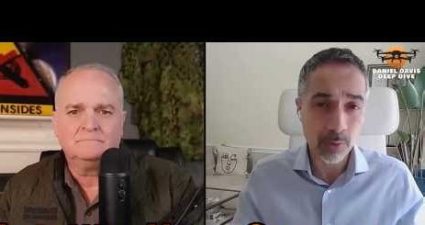
No Threat Can Force Iran’s Surrender /Trita Parsi & Lt Cl Daniel Davis
or go to
Aletho News Archives – Video-Images
From the Archives
An Expert Military Analysis of War with China
Actually, None is Necessary
By Fred Reed • Unz Review • December 13, 2020
The Correlation of Armed Forces: U.S. goods and services trade with China totaled an estimated $634.8 billion in 2019. Exports were $163.0 billion; imports were $471.8 billion. The U.S. goods and services trade deficit with China was $308.8 billion in 2019. Trade in services with China (exports and imports) totaled an estimated $76.7 billion in 2019. Services exports were $56.5 billion; services imports were $20.1 billion. The U.S. services trade surplus with China was $36.4 billion in 2019.
There is talk within the Washingtoniat of a possible war with China. Steve Bannon, who apparently was dropped on his head as a child, actually favors such a war. We hear the usual shoo-the-boobs alarm about how the Chinese are doing something terrible and we must gird our loins and American values and show them what for, bow wow, woof. The danger is that the current game of who-blinks-first in Asian waters might actually provoke a shooting war. You know the kind of thing: One warship refuses to get out of the way of another, a collision ensues, some retard lieutenant who signed up on waivers opens fire, and we’re off and running. It is not a good idea to let children play with matches.
The said war is discussed either in emotional terms by idiots or in purely naval terms by those familiar with such things, so we hear of the First Island Chain and the Second Island Chain and whose missiles against the other’s missiles and so on. This would be appropriate if we were fighting World War Two again. Which we aren’t. Let’s take a quick-and-dirty look at how such a war might go.
To begin the war, America would overestimate itself and underestimate China. This is doctrine in the Pentagon. … continue
Blog Roll
 Aletho News
- Iran To Target Military Industrial-Tech Complex That Facilitated Gaza Genocide
- Collapsing Empire: The Resistance Disarms ‘Israel’
- Suicide Should Not Be a Government Service
- Rethinking America’s greatest threat: Iran vs. Israel-Firsters
- Iran accuses adversaries of false flags to strain Turkey ties
- Poland rules out sending Patriot missiles to US/Israel amid war on Iran
- Tehran approves new Hormuz plan with major restrictions
- No Threat Can Force Iran’s Surrender /Trita Parsi & Lt Cl Daniel Davis
- UK’s New Pandemic Plan Would Turn Big Tech Into a Mass Location Tracking Network
- Growing insecurity, soaring prices fuel protests in north as regime bans evacuation: Sources
- If Americans Knew
- Ann Coulter Rips Into Fox News for Iran War Coverage, Compares to False Rigged 2020 Election Reporting
- Joe Kent Urges Americans To Call White House and Congress To Object To Sending Troops Into Iran
- DNC Resolution to Reject AIPAC Funding Puts Democratic Leaders in the Hot Seat
- Swedish foundation to build 400 schools as over 650,000 Gaza children remain without education for 2 years
- Israeli army admits photshopping image of slain Lebanese journalist
- This is how Israel is systematically killing health workers under the cover of war in Lebanon
- Carrying life under fire: Israeli invasion of Lebanon leaves pregnant women facing deadly risks
- Champagne all around for the new death penalty (for Palestinians) law – Not a ceasefire Day 172
- Why are Palestinian books struggling to be seen on Amazon?
- The Line Between Affinity and Conspiracy
- No Tricks Zone
- New Study Finds Warming Saves Lives…Cold Temperatures 12 Times More Deadly Than Excess Heat
- German Science Blog Accuses PIK Climate Institute Of Hallucinating Climate Tipping Points
- Devastating Assessment Of Comirnaty Vaccine By Former Senior Pfizer Europe Toxicologist
- New Study: CO2 Is ‘Effectively Negligible’ As An Explanatory Climate Change Factor Since 2000
- Former Pfizer Toxicologist Dr. Helmut Sterz Tells Bundestag Hearing Pfizer Vaccine Should Have Never Been Approved
- Energy Expert: Germany’s Nuclear Phaseout Was A “500 Billion Euro Mistake”
- New Research: South Australia’s Mid-Holocene Sea Surface Temperatures Were 4°C Warmer Than Today
- Storing Green Energy To Last Germany 10 Days Would Require A 60-Million Tonne Battery
- New Studies: UK Sea Levels Were 4 Meters Higher Than Today During The Mid-Holocene
- Destructive Green New Deal: German Energy And Metal Group Warns Of Drastic Crisis
 Aletho News