Erdogan eyes better ties with Greece
Al-Jazeera | May 13, 2010
Recep Tayyip Erdogan, the Turkish prime minister, is set to travel to Greece for talks in an effort to improve historically tense relations between the two countries.
Erdogan, accompanied by almost a dozen cabinet ministers and more than 100 Turkish businessmen, arrives in Athens on Friday for the start of a two-day visit.
Dimitris Droutsas, Greece’s alternate foreign minister, said the visit would allow Greek officials to discuss investments and business opportunities.
“Business activity in Turkey has displayed impressive growth, and I think this is a very good opportunity, particularly in the economic situation Greece is going through,” he said.
EU accession
George Papandreou, the Greek prime minister, said his talks with Erdogan will include discussion of Turkey’s bid to join the European Union. Greece supports Turkish accession, which has been delayed for years.
Turkey went through a banking crisis in 2001, so Erdogan may offer advice to his Greek counterpart, currently implementing a series of tough austerity measures to address a debt crisis.
Education will be another issue on the agenda with Turkish officials having reportedly promised to change passages in textbooks which portray Greece as a threat to Turkish sovereignty.
Turkey and Greece are both NATO member states, but they have been rivals for decades, particularly over Cyprus.
The island has been split since Turkey occupied its northern third in 1974, a response to an Athens-engineered Greek-Cypriot coup aimed at uniting the island with Greece. The two countries also disagree on sovereignty in some areas of the Aegean.
Turkish fighter planes routinely fly in airspace claimed by Athens, leading to regular mock dogfights with Greek jets. Though the dogfights are usually harmless, a Greek pilot died in 2006 in a mid-air collision.
Erdogan’s last official visit to Athens came in 2004. He canceled a scheduled trip last year for health reasons.
Turkey Installs Anti-Aircraft Batteries Near Syrian Border
By Saed Bannoura – IMEMC & Agencies – May 13, 2010
Turkey has installed Anti-Aircraft Hawk Missiles at a village close to the Syrian border in an attempt to prevent Israeli war jets from violating Turkish Airspace in case of an attack against Iran or Syria.
A Turkish paper reported that Turkey will not allow Israel to use its airspace to attack Iran, Syria or any other country, and will act against any such violations.
The anti-aircraft batteries were installed in the village of Kayeel, south of Turkey and located close to the Syrian border.
Speaking on condition of anonymity, a Turkish military official stated that the batteries are meant to protect Turkey and its airspace against any violations, including American or Israeli war jets should Israel or the United States decide to attack Iran or Syria.
Installing the batteries is more of a message than a military act as Turkey is not interested in any military combat but at the same time will not allow its airspace to be used in attacking neighboring countries, the official stated.
New target of rights erosions: U.S. citizens
By Glenn Greenwald | May 13, 2010
A primary reason Bush and Cheney succeeded in their radical erosion of core liberties is because they focused their assault on non-citizens with foreign-sounding names, casting the appearance that none of what they were doing would ever affect the average American. There were several exceptions to that tactic — the due-process-free imprisonment of Americans Yaser Hamdi and Jose Padilla, the abuse of the “material witness” statute to detain American Muslims, the eavesdropping on Americans’ communications without warrants — but the vast bulk of the abuses were aimed at non-citizens. That is now clearly changing.
The most recent liberty-abridging, Terrorism-justified controversies have focused on diluting the legal rights of American citizens (in part because the rights of non-citizens are largely gone already and there are none left to attack). A bipartisan group from Congress sponsors legislation to strip Americans of their citizenship based on Terrorism accusations. Barack Obama claims the right to assassinate Americans far from any battlefield and with no due process of any kind. The Obama administration begins covertly abandoning long-standing Miranda protections for American suspects by vastly expanding what had long been a very narrow “public safety” exception, and now Eric Holder explicitly advocates legislation to codify that erosion. John McCain and Joe Lieberman introduce legislation to bar all Terrorism suspects, including Americans arrested on U.S. soil, from being tried in civilian courts, and former Bush officials Bill Burck and Dana Perino — while noting (correctly) that Holder’s Miranda proposal constitutes a concession to the right-wing claim that Miranda is too restrictive — today demand that U.S. citizens accused of Terrorism and arrested on U.S. soil be treated as enemy combatants and thus denied even the most basic legal protections (including the right to be charged and have access to a lawyer).
This shift in focus from non-citizens to citizens is as glaring as it is dangerous. As Digby put it last week:
The frighting reality is that not even Dick Cheney thought of stripping Americans of their citizenship so that you could torture and imprison them forever — even right after 9/11 when the whole country was petrified and he could have gotten away with anything. You’ll recall even John Walker Lindh, who was literally captured on the battlefield fighting with the Taliban, was tried in civilian court. They even read him his rights.
I think this says something fairly alarming about the current state of our politics.
There is, of course, no moral difference between subjecting citizens and non-citizens to abusive or tyrannical treatment. But as a practical matter, the dangers intensify when the denial of rights is aimed at a government’s own population. The ultimate check on any government is its own citizenry; vesting political leaders with oppressive domestic authority uniquely empowers them to avoid accountability and deter dissent. It’s one thing for a government to spy on other countries (as virtually every nation does); it’s another thing entirely for them to direct its surveillance apparatus inward and spy on its own citizens. Alarming assaults on basic rights become all the more alarming when the focus shifts to the domestic arena.
It is not hyperbole to observe that all of the above-cited recent examples are designed to formally exempt a certain class of American citizens — those accused of being Terrorists and arrested on U.S. soil — from the most basic legal protections. They’re all intended, in the name of Scary Terrorists, to rewrite the core rules of our justice system in order to increase the already-vast detention powers of the U.S. Government and further minimize the remaining safeguards against abuse. The most disgraceful episodes in American history have been about exempting classes of Americans from core rights, and that is exactly what these recent, Terrorism-justified proposals do as well. Anyone who believes that these sorts of abusive powers will be exercised only in narrow and magnanimous ways should just read a little bit of history, or just look at what has happened with the always-expanding police powers vested in the name of the never-ending War on Drugs, the precursor to the never-ending War on Terrorism in so many ways.
What’s most amazing about all of this is that even 9 years after the 9/11 attacks and even after the radical reduction of basic rights during the Bush/Cheney years, the reaction is still exactly the same to every Terrorist attack, whether a success or failure, large- or small-scale. Apparently, 8 years of the Bush assault on basic liberties was insufficient; there are still many remaining rights in need of severe abridgment. Even now, every new attempted attack causes the Government to devise a new proposal for increasing its own powers still further and reducing rights even more, while the media cheer it on. It never goes in the other direction. Apparently, as “extremist” as the Bush administration was, there are still new rights to erode each time the word Terrorism is uttered. Each new incident, no matter how minor, prompts new, exotic proposals which the “Constitution-shredding” Bush/Cheney team neglected to pursue: an assassination program aimed at U.S. citizens, formal codification of Miranda dilutions, citizenship-stripping laws, a statute to deny all legal rights to Americans arrested on U.S. soil.
The U.S. already has one of the most pro-government criminal justice systems in the world. That (along with our indescribably insane drug laws) is why we have the world’s largest prison population and the highest percentage of our citizenry incarcerated of any country in the Western world. It is hard to imagine a worse fate than being a defendant in the American justice system accused of Terrorism-related crimes. Conviction and a very long prison sentence are virtual certainties. Particularly in the wake of 9/11 and the Patriot Act era, the rules have been repeatedly rewritten to provide the Government with every conceivable advantage. The very idea that the Government is hamstrung in its ability to prosecute and imprison Terrorists is absurd on its face. Decades of pro-government laws in general, and post-9/11 changes in particular, have created a justice system that strangles the rights of those accused of Terrorism. Despite that, every new incident becomes a pretext for a fresh wave of fear-mongering and still new ways to erode core Constitutional protections even further… Full article
Settlers Torch Olive Orchard In Silwan
By Saed Bannoura – IMEMC & Agencies – May 13, 2010
A group of fundamentalist Israeli settlers torched, Wednesday night, an 11-Dunam olive orchard in al-Rababa valley, in Silwan, south of the Old City of Jerusalem.
The Maan news Agency reported that three olive trees, over 300 years old, were burnt down while dozens of trees were partially burnt. The attack took place while thousands of Jewish settlers held a provocative procession in Silwan under extensive Israeli police presence. Yet, the police did not prevent the settlers from torching the orchard.
On Tuesday at dawn, May 4, a group of fundamentalist settlers torched the main mosque of the al-Lubban al-Sharqiyya village, south of the northern West Bank city of Nablus. The settlers attacked the mosque approximately at 3 a.m., rounded up several copies of the Holy Koran in one place and set them ablaze.
The fire caused excessive damage to the property of the mosque, including its ceiling, its ceiling fans and walls. Its 450 square meters of carpet and eight air conditioners were burnt also.
This is the third mosque to be torched by the settlers this year as the settlers torched a mosque in Yasuf village near Salfit, and another mosque in Huwwara town, near Nablus.
In April, settlers torched three Palestinian vehicles in Huwwara town, near the northern West Bank city of Nablus and sprayed “price tag” graffiti on a local mosque.
Two days after the attack in Huwwara, the settlers torched two Palestinian cars in Jinsafut village, near the northern West Bank city of Qalqilia. The settlers also sprayed the star of David on a building in the same village.
In December of last year, a group of settlers torched a mosque in Yasuf village, near the central West Bank city of Salfit, and also sprayed “price tag” on its walls.
Russia Warns US against Unilateral Iran Sanctions
Al-Manar TV – May 13, 2010

Russian Foreign Minister Sergei Lavrov warned the United States and other Western nations on Thursday against imposing unilateral sanctions on Iran over its nuclear program, Interfax news agency reported Thursday.
Countries facing Security Council sanctions “cannot under any circumstances be the subject of one-sided sanctions imposed by one or other government bypassing the Security Council”, Lavrov was quoted as saying by Interfax. “The position of the United States today does not display understanding of this absolutely clear truth.”
Russia is in talks with the United States and other UN Security Council members on a fourth round of sanctions. Moscow has indicated it could support broader sanctions but has stressed they must not harm the Iranian people. Russia’s position suggests that its may not agree to new tougher sanction on Iran at the UNSC.
Lavrov, speaking to deputies from Russia’s upper house of parliament, said the United States tended not to see international law as having pre-eminence over national laws. “We are now confronted with this problem during discussion of a new UN Security Council resolution on Iran.”
Permanent Security Council member China has joined Russia in opposing Washington’s plans to impose tough, wide-ranging sanctions on the Islamic Republic.
Lavrov’s warning came just before the arrival in Russia on Thursday of President Luiz Inacio Lula da Silva of Brazil, a non-permanent member of the Security Council that is also opposed to further sanctions against Iran. Lula was expected to meet senior Russian officials on Friday to discuss how to revive a stalled nuclear fuel swap deal meant to minimize the risk of Tehran using enrichment for military purposes. Lula will travel on to Iran on Sunday.
Russia, Turkey call for Hamas inclusion
Press TV – May 13, 2010

Russia and Turkey have called for the inclusion of the democratically elected Palestinian government of Hamas in Middle East peace talks.
“Unfortunately Palestinians have been split into two… In order to reunite them, you have to speak to both sides. Hamas won elections in Gaza and cannot be ignored,” Turkish President Abdullah Gul said during a joint press conference with his Russian counterpart Dmitry Medvedev in Ankara on Wednesday.
“Undoubtedly, all parties to this problem should be included more actively (in the process) in order to reach a solution. The process should not exclude anyone,” he added.
Medvedev agreed with the idea that no group should be excluded from the peace process. The Russian president urged the United States to work actively with other nations in the efforts to establish peace in the Middle East. He also stated that a divided Palestinian administration could not help resolve the conflict.
Medvedev said the division “causes the Palestinians to regress.” He also warned that Gaza was “facing a human tragedy.”
Earlier on Tuesday, Medvedev was in Syria, where he met with Hamas leader Khaled Meshaal and Syrian President Bashar al-Assad. Medvedev’s meeting with Meshaal and his later comments in Turkey received an angry response from the Israeli foreign ministry.
“The foreign ministry vehemently rejects the call from the presidents of Russia and Turkey to include Hamas in the peace process and expresses deep disappointment over the meeting between the president of Russia and Khaled Meshaal in Damascus,” it said in a statement issued on Wednesday. However, that was not the only thing about Medvedev’s visits that upset Tel Aviv. In a phone conversation before Medvedev left for Syria, Israeli President Shimon Peres had asked him to convey a message to Assad. But according to Russian Foreign Minister Sergei Lavrov, Medvedev did not agree because it contradicted Moscow’s stance.
“We did not have a special need to implement this message because this is our position — to live in peace and solve issues on the basis of the international legal framework adopted by everyone and which should now be implemented by everyone,” Lavrov told AFP.
Elena Kagan and the Supreme Court: A Barnyard Smell in Chicago, Harvard and Washington
By James Petras | May 13, 2010
President Obama has nominated Elena Kagan for Justice of the United States Supreme Court on the basis of an academic publication record, which might give her a fighting chance for tenure at a first rate correspondence law school in the Texas Panhandle.
A review of her published scholarship after almost two decades in and out of academia turns up four law review articles, two brief pieces and several book reviews and in memoriam. There is nothing even remotely resembling a major legal text or research publication.
Her lack-luster academic publication record is only surpassed by her total lack of any practical experience as a judge: zero years in adjudication, unless one accepts the line of her exuberant advocates, who point to Kagan’s superb ability in adjudicating among the squabbling faculty at Harvard Law School when she served as Dean. No doubt Kagan had been very busy as the greatest fundraising Law School Dean in Harvard’s history ($400 million), which may account for the fact that she never found time to write a single academic article during her nine year tenure (2001-2009).
The criteria for her appointment to the Supreme Court have little to do with academic performance as it is understood today in all major universities. Nor does her total inexperience as a judicial advocate compensate for academic mediocrity.
The evidence points to a purely political appointment based, in part, on social networks and certainly not on her lack of affinity for the agenda of the liberal wing of the Democratic Party. Kagan’s approval of indefinite detention of suspects squares with the extremist restrictions on constitutional freedoms first articulated during the Bush Administration and subsequently upheld by President Obama’s Attorney General Eric Holder. It is no coincidence that Kagan appointed a notorious Bush torture advocate, the genial Jack Goldsmith, to the Harvard Law faculty.
Elena Kagan’s appointment certainly was not based on “diversity”. She will be the third Jew on the Supreme Court and, together with the six Roman Catholics, will decide the most critical cases with far-reaching and profound impact on citizens’ rights and protections. For the first time in US history the nation’s largest demographic group, the Protestants (of any hue or gender), will have no representative on the Court, thereby excluding the descendents, like retiring Justice Stevens, of the brilliant, strongly secular judicial heritage that formulated the US Constitution, the Bill of Rights and its amendments.
Kagan’s nomination to the US Supreme Court is not exceptional if we consider many of Bush and now Obama’s choices of advisers and officials in top policymaking posts. Many of these officials combined their diplomas from Ivy League universities with their absolutely disastrous performances in public office, which no amount of mass media puff pieces could obscure. These Ivy League mediocrities include the foreign policy advocates for the destructive and unending wars in the Middle East and Afghanistan and the leading economic advisers and officials responsible for the current financial debacles. The names are familiar enough: Wolfowitz, Feith, Abrams, Levey, Greenspan, Axelrod, Emmanuel, Indyk, Ross, Summers, Rubin, et al: Prestigious credentials with mediocre, or worse, performances. What is the basis of their rise? What explains their ascent to the most influential positions in the US power structure?
One hypothesis is nepotism . . . of a certain kind. Elena Kagan got tenure at the august halls of the University of Chicago in 1995 on the basis of one substantive article and one brief piece, neither outstanding. With this underwhelming record of legal scholarship, she became visiting professorship at the Harvard Law School, published only two more articles (one in Harvard Law Review) and received tenure. Prima facie evidence strongly suggests that Kagan’s ties to the staunchly Zionist faculty at both Chicago and Harvard Law Schools (and not her intellectual prowess) account for her meteoric promotions to tenure, deanship and now the US Supreme Court, over the heads of hundreds of other highly qualified candidates with far superior academic publication records and broader practical judicial experience.
The public utterances and political writings of innumerable Harvard, Princeton, Chicago, Yale, John Hopkins professors, whether it be on the speculative economy, Israel’s Middle East wars, preventative detention, broad presidential powers and constitutional freedoms are marked by a singular mediocrity, mendacity and an excess of hot air reeking of the barnyard.
If you do not qualify on the basis of excellent scholarship or broad-based practical experience, your ethnic tribesmen will wax ecstatic over you as a “wonder colleague”, a “superb teacher”, a “brilliant consensus builder” and a “world champion fund raiser”. In other words, if you have the right ethnic connections and political ambitions, they can adjust the criteria for tenure at the University of Chicago, the deanship at Harvard Law School and a lifetime appointment to the US Supreme Court.
Elena Kagan joins a long list of key Obama appointees who have long-standing ties to the pro-Israel power configuration. Like Barack Obama, Elena Kagan started her legal apprenticeship with the Chicago Judge Abner Mitva, an ardent Zionist, who hailed the newly elected President Obama as “America’s first Jewish President”, probably his soundest judgment.
The issue of the composition of the US Supreme Court is increasingly crucial for all Americans, who are horrified by Israel’s devastation of Gaza, its threats to launch a nuclear attack on Iran and its Fifth Column’s efforts to drag us into a third war in ten years. With the Presidents of the Major American Jewish Organizations pressing the compliant US Congress to declare “anti-Zionism” as a form of “anti-Semitism” and “opposition to Israel’s policies” as amounting to “support for terrorism”, thus criminalizing Americans critical of Israel, another active pro-Zionist advocate on the Court will provide a legal cover for the advance of Zionist-dictated authoritarianism over the American people.
Yes, Kagan would be another woman on the Supreme Court. Yes, she would probably adjudicate conflicts among the judges and strengthen Obama’s police powers. And yes, she would likely favor your indefinite detention if you support the right of Palestinians to struggle (“terrorism”) against the Israeli occupation . . . especially if you defend America against Israel’s Fifth Column.
But remember when you apply for Ivy League law school appointment or a top judicial post and your CV lacks the requisite publications or work experience, just ask Judge Abner Mikva or Larry Summers or Rahm Emmanuel for a recommendation. With such support you will shoot ahead of the competition. . . because you have the right ethnic connections.
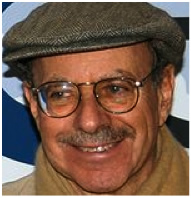
James Petras is a Bartle Professor (Emeritus) of Sociology at Binghamton University, New York. He is the author of 64 books published in 29 languages, and over 560 articles in professional journals, including the American Sociological Review, British Journal of Sociology, Social Research, Journal of Contemporary Asia, and Journal of Peasant Studies. He has published over 2000 articles.
Shin Bet blackmails Jerusalem medical students
Press TV – May 12, 2010
The Shin Bet is reportedly trying to entice Palestinian medical students to join the Israeli intelligence service by promising entry permits to al-Quds (Jerusalem).
The spying agency allegedly tried to blackmail two fifth-year medical students at al-Quds University who are pursuing internships in Palestinian university hospitals in the city, Israel’s English-language Haaretz newspaper said on its website on Wednesday.
A “Captain Biran” who introduced himself as the Shin Bet agent responsible for monitoring the university told the two to report on other students and their activities as a condition for renewing their entry permits, Haaretz reported.
The medical faculty of the university — located in the village of Abu Dis near East al-Quds — is affiliated with some of the oldest and largest hospitals in al-Quds and have up to 200 students of medicine, nursing and physiotherapy who need entry permits to enter the occupied city.
Hospital officials file requests to authorities of the al-Quds Civil Administration in the settlement of Beit El who at the discretion of the Shin Bet issue permits valid for between three and six months.
One of the two Palestinians in question encountered the recruitment request in mid 2009 after his entry permit into al-Quds was not renewed following his pilgrimage to Mecca. He was then told by the Civil Administration to meet with a Shin Bet coordinator.
In his meeting with Biran, the agent allegedly threatened the student that the Shin Bet could “interfere with your ability to finish your studies,” but that if he acceded to “help” him monitor other students, the agency would even grant him entry to the prestigious Hadassah medical center.
The other student met Biran in March, days after his entry permit to al-Quds was confiscated at Zeitim checkpoint outside East al-Quds. He was told that his entry permit had been seized because “some illegal things were found in your bag” and was similarly instructed to report to the Shin Bet about students traveling abroad.
The Palestinian students said they were effectively prevented from choosing a residency specialty and continuing their medical training when they both refused to spy on their peers.
The Shin Bet said in response that the entry permits for the two students had not been renewed for security reasons, but did not comment on the blackmail claims.
Jewish settlers attack Palestinian villagers in Ramallah
Palestine Information Center – 12/05/2010

RAMALLAH — Hundreds of armed Israeli settlers, without prior warning, raided the villages of East Farm and Sinjil, east of Ramallah city, which caused fierce clashes at noon Tuesday.
Eyewitnesses said that hand-to-hand fighting erupted between the Palestinian villagers and the Israeli assailants who used their guns in the attack.
The settler-related incidents are rarely reported in these two villages and such sudden barbaric attack means that the settlers expanded their area of violence against the Palestinians.
The Israeli Aasor military post, which is the largest base in the West Bank and located near the East Farm village, was the staging point from which the settlers waged their attack.
In another incident in Nablus, other violent Israeli settlers appropriated Palestinians’ agricultural lands in the village of Jalud and forcibly prevented the owners from entering them before bulldozing them.
Local sources in the village said that the settlers bulldozed 30 dunums of plowed fields as a prelude to seizing them.
In another context, Al-Ahrar center for prisoners’ studies and human rights said that the Israeli occupation forces stormed and ransacked the home of prisoner Ayed Dodeen in the village of Dura in Al-Khalil causing panic and terror among the children.
Director of the center Fouad Al-Khafsh explained that in conjunction with the election of Dodeen as the head of Hamas detainees in the Negev prison, a large military force barbarically broke into his house terrorizing his wife and children and destroying everything in its way without giving any reason for the raid.
Khafsh said that Dodeen, 43, is a father of six children and has spent 13 years in administrative detention except for few months he spent with his family.
His wife appealed through a telephone call with Al-Ahrar center to international human rights organizations to swiftly intervene to get her husband released from Israeli jails.
NPR report on West Bank expulsion order turns horror into a he-said/she-said debating point
By Susie Kneedler on May 12, 2010
Lourdes Garcia-Navarro and NPR have at last reported on the month-old Israeli “military order” that allows the IDF to deport any Palestinian inhabitant of the West Bank it defines as an “infiltrator,” simply for lacking the paperwork that the Israeli government itself refuses to issue. Garcia-Navarro details the suffering of the Palestinian people more fully than any recent NPR reporter, but her “report” perfectly embodies the failure of “she said–she said journalism,” in which oppression becomes merely a matter of perspective.
Garcia-Navarro does document the horrific fear that Israeli government policies inflict on one woman and her family. We hear the anguish in Palestinian Umm Qusay’s voice beneath the translation; and the broadcast closes with a line deleted from the online article: “Qusay says the wider implications don’t matter to her. After waiting ten years to join her husband and children, she just wants to stay here.”
But Garcia-Navarro allows an Israeli military spokeswoman, Lt. Col. Avital Leibovich, to assure us that, “The amendments to this law actually help the Palestininans or the other illegal residents that are here.” We hear Leibovich declare in sunny tones that, “There is a committee of judges which is reviewing the material and deciding whether to begin with the process of repatriation or not” [Leibovich’s emphasis]. Garcia-Navarro does not challenge the fairness of Israeli judges, let alone that of military courts, to Palestinian plaintiffs or defendants.
The “wider” ramifications may not matter to Qusay in her desperation to care for her children, but they determine whether listeners are informed or given only the false equivalence of those cliched “competing narratives.” Even Garcia-Navarro’s description of Qusay’s husband as merely a “resident”—not a native –of the West Bank minimizes how Israel wrongs the family.
Where is the research that would sort out rival claims, the obligation of a journalist to check facts? Four whole weeks have dragged on between what Garcia-Navarro calls the “new Israeli army order” and today’s story –plenty of time for investigation. Lourdes Garcia-Navarro should read the Geneva Conventions, the Oslo Accords, and other agreements to verify that, “the new military order contravenes international law and previous agreements between Israel and the Palestinians.” She could ascertain roughly how many people are marooned in hiding. She might look into the harm to “civil society.” Instead, she leaves all questions open.
In sum, nowhere does Garcia-Navarro grapple with the terrible inhumanity of a regime that has kept other people stateless for 60 years, depriving them not just of civil but human rights. A military occupation that arbitrarily defines the legitimate owners of a land as “infiltrators” is unspeakable. Why is “our” U.S. government paying for the illegal expulsions?
Stephen Zunes and the Zionist Tinderbox
“[A]nti Zionism may be a ‘fool’s anti-imperialism,’ where Jewish nationalism itself is erroneously seen as the problem rather than the alliance its leaders have made with exploitative Western interests.” – Stephen Zunes, 2006.1
By Michael Barker | Pulse Media | May 12, 2010
Who is Stephen Zunes? Well according to his web-site, he is a Professor of Politics and International Studies at the University of San Francisco, who in 2002 won recognition from the Peace and Justice Studies Association as Peace Scholar of the Year. Although Zunes describes himself as a committed peace loving, anti-imperialist activist, by reviewing just one of his books this article will demonstrate that in actual fact his scholarly actions belie such intent. The book in question is Tinderbox: U.S. Middle East Policy and the Roots of Terrorism (Zed Books, 2003), a popular text that received glowing accolades from Noam Chomsky, Howard Zinn, Richard Falk, and Saul Landau (amongst others). This essay will illustrate how Zunes’ proclivity for defending Zionism ultimately leads hims to promote a “fool’s anti-imperialism.”
That is not to say that Zunes is uncritical of U.S. foreign policy, far from it, just that his work serves as a smokescreen for understanding the real drivers of U.S. foreign policy vis-a-vis the Middle East.
For example, on the antagonist relationship between U.S. elite interests and human rights, he recognizes that:
- Human rights violations by foreign governments and their lack of democratic institutions generally get the most attention in the United States when a given administration has called attention to them in order to mobilize domestic and international opinion against a regime the U.S. government opposes. (p.10)
However, Zunes continues, “since at least the 1970s” U.S. administrations — or should we say regimes — have “to some degree” been forced to respond to “public and Congressional pressure regarding the lack of democracy and human rights in allied countries.” Typical responses often “constitute little more than lip service and damage control,” but significantly, “the very region that receives the largest amount of American arms and aid has been notably absent from the public debate: the Middle East.” Indeed, with regard the U.S.’s special commitment to Israel, U.S. aid “has generally increased as the government’s repression in the occupied territories has worsened.”2 Moreover, Zunes points out, this relationship…
- … is unlike any other in the world, or indeed, like any in history. In sheer volume, it is the most generous foreign aid program ever between two countries, totaling over $100 billion. No country has ever received as much Congressionally mandated aid as has Israel. What is perhaps even more unusual is that Israel, like its benefactor, is an advanced, industrialized, technologically sophisticated country, as well as a major arms exporter. (p.109)
So how might we come to understand the existence of this enduring toxic relationship? Well according to Zunes, such aid actually runs counter to the best interests — that is, “legitimate defence needs” — of both Israel and the United States. Therefore, as neither State profits from this situation U.S.-based arms manufacturers must be largely to blame, as he says, they are the people who profit most from this insecurity. To support this point Zunes draws upon the words of Matti Peled, the late Israeli major general (and Knesset member), who in the early 1990s “argued that he and other Israeli military leaders saw the [$1.8 billion Israeli military] aid package as little more than a U.S. government subsidy for American arms manufacturers.”3
Zunes does not seriously consider the possibility that an alternative explanation for this state of affairs is that neither the U.S. nor Israel are intent on pursuing peace in the Middle East. Indeed it seems fairly obvious that Israel has no interest in promoting what Zunes considers to be its “legitimate defence needs,” as leading Zionist elites are quite happy escalating tension in the region to facilitate the ethnic cleansing of Palestinians. This might explain why “it appears that the priority of both the executive branch and Congress in recent decades has not been Israeli security, but maintaining the flow of American arms exports.”4 Yet, Zunes is convinced that the root of the problem lies not with Zionism but with the arms manufacturers, thus he writes:
- Much attention has been given to the clout of pro-Israel Politcal Action Committee (PACs) and their alleged role in convincing members of Congress to support these taxpayer-funded arms transfers to Israel. However, contributions by PACs affiliated with military contractors far surpass the pro-Israel PACs. For example, during the 1999-2000 election cycle, just slightly over $2 million in campaign contributions came from the pro-Israel PACs, while PACs affiliated with the arms industry came close to $5 million.5
This gross underestimation of the power of the Israel lobby is almost identical to Noam Chomsky’s arguments which have already been thoroughly rebutted elsewhere. Thus it is fitting that Zunes, like Chomsky, plays the oil card, and says that the “primary reason” why the U.S. supports Israel is because of their need to control oil supplies, which is facilitated by Israel’s ability to prevent “victories by radical nationalist movements” in the Middle East.6 As before, this is an erroneous, unsupported statement that has been convincingly debunked.
Either way if one follows Zunes’ assertion that aid to Israel threatens their national security, “should U.S. policy,” Zunes asks, “then, really be considered ‘pro-Israel?’” He argues not: such aid is counterproductive, as it endangers Israel by encouraging militaristic elements within Israel’s ruling class.7 This inelegant mislogic is used to bolster his case that U.S. support for Israel must be predominantly driven by arms manufacturers and big oil; no need for hard evidence though.
Now that Zunes has cajoled his readers into accepting his fallacious arguments, he provides other “evidence” to help understand what “motivates the strong American bias against the Palestinians.” Thus in addition to the military and oil lobbies, Zunes identifies four other contributing factors to explain this bias: these are (1) a mixture of sentimental attachment combined with guilt (driven by the history of Western anti-Semitism), “friendships with Jewish Americans who identify strongly with Israel, and fear of inadvertently encouraging anti-Semitism,” (2) the rising power of the Christian Right in the United States, which interprets the Israeli-Palestine conflict as “simply a continuation of the Biblical battles between the Israelites and the Philistines,” (3) the “failure of progressive movements in the United States,” and (4) the Israel lobby. No doubt the first three points are all relevant to some degree, but their contemporary significance have all been amplified, and in some cases driven, by the far-reaching influence of the Israel lobby.8
On point four however — that is, the Israel lobby — Zunes suggests that caution must be heeded, because Jews are generally peaceful and only make up a small percentage of the U.S. population (“less than 4 percent”): moreover, “[m]any of the most outspoken members of Congress supportive of Israel’s occupation policies are from states or districts with very small Jewish populations.”9 Yet here Zunes’ argument is nonsensical (again), as the number of active Zionists is insignificant, as ultimately it is the power they exert, not their numbers, that matters most. Furthermore, no one is arguing that all Jews are Zionists, indeed it is only the small but extremely influential Jewish population residing in the American ruling class — along with their non-Jewish Zionist recruits — who give the Israel lobby its tremendous clout. Here as an example of the influence of the Israel lobby we might look to Stephen Green’s book, Taking Sides, America’s Secret Relations with Militant Israel (William Morrow, 1984), which Jeffrey Blankfort observes …
- … was the first examination of State Department archives concerning US-Israel relations. Since the Eisenhower administration, wrote Green in 1984, “Israel, and friends of Israel in America, have determined the broad outlines of US policy in the region. It has been left to American Presidents to implement that policy, with varying degrees of enthusiasm, and to deal with the tactical issues.”
Although Blankfort admits that this is a “slight exaggeration, perhaps,” it is ironic that Zunes refers to Green’s book to support his contention that Israel helps U.S. foreign policy elites, not vice versa.10 But irrespective of contrary evidence, Zunes asks that we put aside our critical faculties because “the strength of the lobby is often greatly exaggerated.”11 Furthermore, to ensure his readers are less likely to believe that the Israel lobby has a significant impact on guiding U.S. foreign policy, Zunes caricatures proponents of this point of view as belonging to the radical Right. No mention is made of Leftists who have long warned of the power of the lobby, like Edward Herman, Alexander Cockburn, and Jeffrey Blankfort; instead, Zunes points to anti-Semitic conservatives, like the politician Patrick Buchanan.12 Lest we forget, oil is the “primary issue.” Thus following Zunes’ example of using Zionists to back his unconvincing case for the overwhelming power of the U.S. arms industry, we could just as easily cite such Zionist sources to undermine his oil argument. For example, in the early 1980s, Morris Amitay, the former executive director of AIPAC, said: “We rarely see them [oil corporations] lobbying on foreign policy issues… In a sense, we have the field to ourselves.”
As this essay has demonstrated, being a progressive scholar does not necessarily guarantee that your analyses will effectively challenge the status quo. Thus while Zunes self-identifies as an anti-imperialist activist, he is a liberal Zionist at heart, and he is certainly not comfortable with advocating the type of systemic social change that we need to eradicate capitalism: by way of a contrast even the moderate civil rights leader, Martin Luther King, recognized that “the evils of capitalism are as real as the evils of militarism and the evils of racism” (King’s words). This explains why Zunes counsels U.S. citizens that “bringing about a more enlightened foreign policy is necessary for national security.”13
Instead of problematising the obvious contradictions between democracy and capitalism, Zunes suggests that the United States political system is simply being misused. He writes that “there is a growing sense that the Bush Administration is cynically manipulating the country’s genuine need for security for the sake of its rigid ideological constructs and its wealthy financial supporters.”14 Unbeknown to Zunes, cynical manipulation is nothing new, it is simply part and parcel of the misnomer that is capitalist democracy. Such shallow thinking necessarily leads Zunes to observe that one of the key problems of America’s counter-terrorism policies is that they confront “the symptoms rather than the cause.” But this will always be the case under capitalism: one would hardly expect the ruling class to attempt to address the root cause of injustice — that is for us to do. A capitalist elite would have lost its marbles if it ever traced universal exploitation back to capitalism itself.
Finally, it is critical to recognize that Zunes’ failure to differentiate between polyarchy (or low-intensity democracy) and more popular understandings of democracy, enables him to suggest with no sense of irony that “worldwide trends [have been] toward democracy and greater individual freedom throughout the world”. Furthermore, he is naïve enough to believe that the popularity of the United States “can be restored, but only if the United States shifts its policies to become more consistent with support for human rights, international law, sustainable economic development and demilitarization.” What Zunes fails to recognize is that the U.S. is already the foremost promoter of human rights — along with Israel — but only a neutered, low-intensity form of rights better known as humanitarian imperialism (see “The Project for A New American Humanitarianism”). Zunes, however, closes his eyes to such suggestions, which he refers to as “conspiracy theories,” and instead argues that what the world needs is just a more benign form of capitalism. “Foreign aid,” he writes, “should be directed toward poorer countries and in support of grassroots development initiatives and away from support for the wealthier countries and/or corrupt and autocratic governments.”15 But here he misses the point, the real solution is not capitalist foreign aid, the real solution is grassroots organizing unhindered by the manipulative funding regimes of U.S. foreign policy elites. This is why Zunes, like capitalism and Zionism, fails to provide the radical theory necessary to eradicate both capitalism and Zionism.
Michael Barker is an independent researcher who is currently based in the UK. His web site is http://michaeljamesbarker.wordpress.com. The author submitted this piece to PULSE.
– Notes –
- Stephen Zunes, “Defending Israel While Challenging its Policies,” in Alan Dershowitz (ed.) What Israel Means to Me (John Wiley & Sons, 2006), p.359. Zunes’ contribution to this book by the notorious Alan Dershowitz speaks volumes of the manner by which Zunes is willing to lend his anti-imperial writings to support Zionism. This is similar in many respects to Zunes’ service as the chair (since 2006) of the academic advisory board of the misnamed International Center for Nonviolent Conflict, and his willingness to help run a “Middle East Orientation Course” for the U.S. Air Force Special Operations School (Hurlburt Field, March 15-16, 2007) — a fact advertised nonchalantly on his current CV (pdf).
- Zunes, Tinderbox, p.13. For example, in October 2000, “after a series of scathing human rights reports from reputable non-governmental organizations criticizing Israeli actions, Congress approved a foreign aid allocation of $2.82 billion to Israel, which critics charged was essentially rewarding the government for its repression.” (p.26) The reputable groups referred to here include Amnesty International and Human Rights Watch.Likewise on May 2, 2002, the U.S. Senate, in a 94-2 vote, passed a resolution which referred to “the Israeli assault on Palestinian towns and refugee camps as ‘necessary steps to provide security to its people by dismantling the terrorist infrastructure in the Palestinian areas.’” Such actions are obviously interpreted by “observers in the Arab and Islamic world as an act of racism”; indeed, “the majority of liberal Democrats — most of whom were on record in support of human rights in Guatemala, East Timor, Colombia, Tibet, and elsewhere — had decided, in a situation where the victims of human rights abuses were Arabs, to instead throw their support to the perpetrator of the human rights abuses. In fact, one of the two sponsors of the House resolution was California Democrat Tom Lantos, who is the long-time chairman of the Human Rights Caucus.” (p.30) Although not mentioned by Zunes, the late Tom Lantos, “the only Holocaust survivor ever elected to Congress,” was a well known Zionist.
- Zunes, Tinderbox, p.40
- Zunes, Tinderbox, p.40 Zunes later adds: “The irony of U.S. policy in the Persian Gulf is that is has little strategic justification given the costs.” He continues, that their policies “actually endangers the security of both the United States and its Gulf allies.” Yet to Zunes this imperialist foreign policy should be deemed some sort of mistake, “a kind of foreign policy by catharis rather than based on any rational strategic calculation.” (p.104) If only Zunes would read such foreign policy blueprints like those of the Project for a New American Century, it would become apparent that U.S. foreign policy is based on very rational criteria, but of course not criteria that is in the rational best interests of either the U.S. or global populous. Zunes observes that: “The worst single terrorist atrocities in the Middle East in recent decades were committed by Christians: the Phalangists, a Lebanese Maronie militia, were responsible for the massacres of thousands of Palestinians at the Tal al-Zataar refugee camp in June 1976 and the Sabra and Shatila refugee camps in September 1982.” (p.171) Later Zunes fills in more details on the background of this group, writing: “The ‘Muslim’ side of the Lebanese civil war in the mid-1970s was actually a largely secular grouping known as the Lebanese National Movement (LNM)… Seeking to block the LNM’s demands for constitutional reform to create a more representative political system that would likely enact policies less sympathetic with the West, the United States clandestinely supported the Phalangist militia, a neo-fascist grouping based in the country’s Maronite Christian community.” (p.184) On a related matter, “the most serious single terrorist bombing against a civilian target in Middle East history was the March 1985 blast in a suburban Beirut neigbourhood that killed 80 people and wounded 200 others.” As Zunes relates, this attack “was ordered by CIA director William Casey and approved by President Reagan as part of an unsuccessful effort to assassinate an anti-American Lebanese cleric.” (p.200)
- Zunes, Tinderbox, p.41. Zunes reference for this point is wwww.politicalmoneyline.com On the previous page of his book to support the same point he refers to Alan Kronstadt et al, Hostile Takeover: How the Aerospace Industries Association Gain Control of American Foreign Policy and Doubl e Arms Transfers to Dictators (Project on Demilitarization and Democracy, 1995).
- Zunes, Tinderbox, p.161. Zunes say that this policeman service is supplemented by Israel’s role in allowing “battlefield testing of American arms,” in exporting homegrown munitions to U.S. allies, and in funneling U.S. arms to groups “too unpopular in the United States for openly granting direct military assistance”. (p.161)
- Zunes, Tinderbox, p.154. “The rise of the rightist Likud Bloc in Israel and the right-ward drift in the Labor Party since 1967 is in large part due to this large-scale American support. Rightist Israeli political leaders such as Menachem Begin, Yitzhak Shamir, Benyamin Netanyahu and Ariel Sharon would certainly have existed without U.S. backing, but they would have likely been part of a small right-wing minority in the Knesset and would have never become prime ministers.” Zunes, Tinderbox, p.155.
- Zunes, Tinderbox, pp.157-8. With respect to the peace movement, Zunes writes: “For many years, most mainstream peace and human rights groups avoided the issue, not wanting to alienate many of their Jewish and other liberal constituents supportive of the Israeli government.” (p.158)
- Zunes, Tinderbox, p.158, p.159.
- Zunes, Tinderbox, p.162 (footnote 110)
- Zunes, Tinderbox, p.159. “For an elaboration of this argument,” Zunes points us to his article, “The Roots of the U.S.-Israeli Relationship,” New Political Science, Nos 21-22, Spring-Summer 1992. He also points to A.F.K. Organski’s, The $36 Billion Bargain: Strategy and Politics in U.S. Assistance to Israel (Columbia University Press, 1990).
- Zunes adds that: “In a classic case of exactly this type of anti-Semitic scapegoating, members of Congress and their aides will claim — always off the record — that they or their boss has to take pro-militarist and anti-human rights positions towards the Israeli-Palestinian conflict because of the need for Jewish campaign contributions. Similarly, as a means of diverting Arab criticism from U.S. policy makers, American diplomats routinely tell representatives of Arab governments that wealth Jews essentially dictate U.S. Middle East policy. The senior President Bush made it clear that such scapegoating is acceptable when — during the debate on the proposed $10 billion loan guarantees to Israel in 1992 — he claimed that he was just ‘one lonely little guy’ standing up to ‘a thousand lobbyists’ swarming on Capitol Hill.” (p.164)
- Zunes, Tinderbox, p.217.
- Zunes, Tinderbox, p.221. Ironically, the majority of the U.S. governments “wealth financial supporters” happen to be Jewish.
- Zunes, Tinderbox, p.14, p.225, p.226. Zunes later adds that: “There is nothing inherently wrong with the United States or other countries supporting democratic opposition movement against autocratic regimes”; although he counsels that in the case of Iraq this would be counterproductive owing to the United States’ damaged credibility in the region. However, he adds that before the United States can work in such a manner it must first “encourage greater freedom in countries it considers it allies, such as Saudi Arabia”. (p.229)
Featured Video
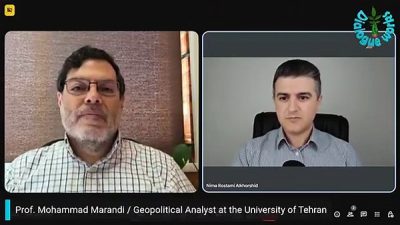
Seyed M. Marandi: U.S. Military DIVIDED? Iran’s Secret Defense EXPOSED
or go to
Aletho News Archives – Video-Images
From the Archives
‘Israel sees Iran as obstacle to its policies’
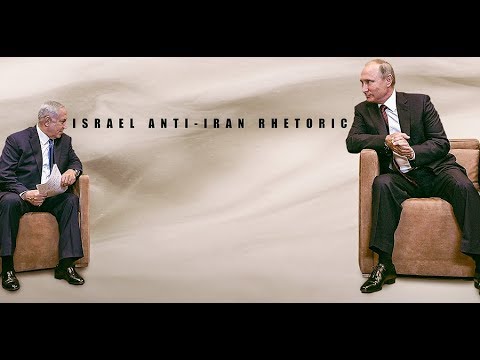
Press TV – August 25, 2017
Prime Minister Benjamin Netanyahu has said that Israel felt threatened by Iran’s growing influence in the Middle East. Netanyahu expressed his Iranophobic view in a meeting with Russian President Vladimir Putin in Russia’s Black Sea resort of Sochi on Wednesday. Press TV has asked Scott Rickard, former American intelligence linguist from Tampa, Florida, and Brent Budowsky, a columnist at The Hill from Washington, to give their thoughts on the issue.
Rickard said Tel Aviv is concerned about the fact that the regime could not carry out its old project to spread sectarian divisions and pave the way for dismemberment of the countries in the Middle East region because of the Iranian-led resistance against Israeli policies, not only in the occupied territories of Palestine but also in the whole region.
“Iran is not a threat to Israel whatsoever. The threat that Israel sees is the fact that their Oded Yinon Plan is being put to a hold by Iran,” the intelligence linguist said on Thursday night.
“They (the Israelis) look at Iran as a threat only because they have no influence on their governments and Iran is autonomous and is not under the Zionist influence,” he added.
Since the victory of the Islamic Republic of Iran in 1979, Tehran has been critical of Israel’s policies in the region, whereas “no leaders [of other states] even dared to speak out against Zionism,” Rickard argued. … continue
Blog Roll
 Aletho News
- Striking Iran’s Infrastructure Would Have Little Military Impact – Report
- What’s Behind U.S./Israeli Strikes On Iranian Pistachio Factories?
- Seyed M. Marandi: U.S. Military DIVIDED? Iran’s Secret Defense EXPOSED
- How I fell foul of the BBC thought police
- The End of NATO
- 37 days of war on Iran cost US staggering $42bln, tracker shows
- Baghdad tells Asian refiners, traders to begin loading Iraqi crude amid Iranian exemption
- Under fire, Moscow and Tehran close ranks
- Iran, US receive Pakistan-mediated plan for ceasefire then final deal
- Iran submits demands for end to war as mediators scramble ahead of Trump deadline
- If Americans Knew
- U.N. experts demand Israel release prominent Gaza doctor after reports of ‘severe torture’
- Israel’s Latest Genocide Is Against the Shias of Lebanon. Why Is the World Silent?
- How Eliot Cohen’s influence over U.S. war-making paved the way for Trump’s war crimes in Iran
- Israelis don’t pay for the weapons we ‘sell’ to them — US taxpayers do
- While Distancing from AIPAC, Most 2028 Democratic Hopefuls Are Still Embracing Israel
- A brief history of the Israeli nuclear program, the open secret at the heart of the Iran war
- Israeli Settlers Killed a Palestinian Farmer on His Own Land, in Front of His Father. Yes, Again
- The US-Israeli War on Science is an Assault on our Future
- 100+ International Law Experts Say US Strikes on Iran Violate UN Charter, Could Be War Crimes
- ‘Vile, Horrifying, Evil’: Trump Threatens to Bomb Nation of 90 Million People ‘Back to the Stone Ages’
- No Tricks Zone
- An Inconvenient Tree: Uncovered In Alps… Europe Much Warmer Than Today 6000 Years Ago
- New Study Reports A 60% Slowdown In Greenland’s Ice Loss Rate In The Last Decade
- Low Intensity Tornado Wrecks Major Solar Farm, Creating A Potential Toxic Dump
- New Study Finds Warming Saves Lives…Cold Temperatures 12 Times More Deadly Than Excess Heat
- German Science Blog Accuses PIK Climate Institute Of Hallucinating Climate Tipping Points
- Devastating Assessment Of Comirnaty Vaccine By Former Senior Pfizer Europe Toxicologist
- New Study: CO2 Is ‘Effectively Negligible’ As An Explanatory Climate Change Factor Since 2000
- Former Pfizer Toxicologist Dr. Helmut Sterz Tells Bundestag Hearing Pfizer Vaccine Should Have Never Been Approved
- Energy Expert: Germany’s Nuclear Phaseout Was A “500 Billion Euro Mistake”
- New Research: South Australia’s Mid-Holocene Sea Surface Temperatures Were 4°C Warmer Than Today
 Aletho News