Jerusalem checkpoint victim shot at point blank range
Ma’an – 12/06/2010
Jerusalem – A report conducted by a Jerusalem rights center following the shooting death of a Palestinian man in East Jerusalem on Friday by Israeli border guards suggests he was shot at point blank.
Ziad Al-Julani, 38, was shot and killed after he allegedly failed to stop at a checkpoint in the Wadi Joz neighborhood in the occupied part of the city.
According to testimony compiled by the Jerusalem Center for Social and Economic Rights, an initial shot knocked Al-Julani to the floor, after which Israeli Special Forces “fired shots in the face and abdomen at close range.”
Witnesses said Friday he was in serious condition as he was taken to hospital, with Israeli news sites reporting that the man died en route.
Israeli media reports said the man drove toward border guards setting up in the neighborhood, crashed his pickup truck and fled on foot, at which point he was shot dead.
Sa’d Hamed As-Silwadi, from Silwan and the father of a child injured during the shooting, told the center he parked his car beside a butcher shop and saw Al-Julani driving toward the Al-Hadmi neighborhood in Wadi Joz, where he was killed.
He said he saw Al-Julani get out of his vehicle when he was first shot by Israeli forces. A relative of Al-Julani tried to help him, As-Silwadi said, but was kicked by Israeli forces. As-Silwadi returned to his vehicle to find his five-year-old child with a rubber bullet wound to the neck and head, and rushed him the Maqased Hospital on the Mount of Olives.
Ahmad Qutteneh told the center he saw Al-Julani running from four members of Israel’s Special Forces, approaching him and opening fire at close range. “Then I saw one of them come near him and shoot him in the face and body,” Qutteneh told the center.
Mahmud Othman Al-Julani, 34, his cousin, told the center that he was home when the incident happened, near the site of Al-Julani’s death, he said. “I went out of the house to see him laid on the floor, 15 meters away from me. When I tried to help him they [Israeli forces] beat me with sticks,” the center quoted him as saying.
Others told the center the shooter was seen “dancing beside the body singing and cheering ‘I killed an Arab, I killed an Arab’.”
The center called on Israeli authorities to investigate Al-Julani’s death.
A spokesman for Israel’s border guards did not immediately return calls seeking comment on the Jerusalem center’s report on Saturday.
On Friday, other testimony has the man speeding toward the hospital with an injured man in his truck. Two border guards were reportedly injured in the incident.
Following the shooting, clashes erupted in the area, with Palestinian residents angered at what they said was a day of oppression and violence enforced by Israeli soldiers.
Two women, a man, a senior citizen, and a child in a nearby car were said to have been injured in the shouting that erupted after the initial shooting, with Israeli forces using rubber-coated bullets against the crowd. The four were transferred to the Al-Maqasid Hospital for treatment.
Israeli forces sealed off the area as clashes continued.
Al-Julani was a father of four, and a tradesman living in East Jerusalem’s Shu’fat neighborhood.
It is unclear why Israeli border guards set up the checkpoint in Wadi Joz, however, some residents suggested the military installation was erected ahead of potential clashes at the Al-Aqsa Mosque compound in the Old City of East Jerusalem following Friday prayers, as Israel hosts a light show in the occupied part of the city.
Saudi Arabia: We will not give Israel air corridor for Iran strike
Haaretz | June 12, 2010
Saudi Arabia would not allow Israeli bombers to pass through its airspace en route to a possible strike of Iran’s nuclear facilities, a member of the Saudi royal family said Saturday, denying an earlier Times of London report.
Earlier Saturday, the Times reported that Saudi Arabia has practiced standing down its anti-aircraft systems to allow Israeli warplanes passage on their way to attack Iran’s nuclear installations, adding that the Saudis have allocated a narrow corridor of airspace in the north of the country.
Prince Mohammed bin Nawaf, the Saudi envoy to the U.K. speaking to the London-based Arab daily Asharq al-Awsat, denied that report, saying such a move “would be against the policy adopted and followed by the Kingdom.”
According to Asharq al-Awsat report, bin Nawaf reiterated the Saudi Arabia’s rejection of any violation of its territories or airspace, adding that it would be “illogical to allow the Israeli occupying force, with whom Saudi Arabia has no relations whatsoever, to use its land and airspace.”
Earlier, the Times quoted an unnamed U.S. defense source as saying that “the Saudis have given their permission for the Israelis to pass over and they will look the other way.
“They have already done tests to make sure their own jets aren’t scrambled and no one gets shot down. This has all been done with the agreement of the [U.S.] State Department.”
Once the Israelis had passed, the kingdom’s air defenses would return to full alert, the Times said.
Despite tensions between them, Israel and Saudi Arabia share a mutual hostility to Iran.
“We all know this. We will let them [the Israelis] through and see nothing,” the Times quoted a Saudi government source as saying.
According to the report, the four main targets for an Israeli raid on Iran would be uranium enrichment facilities at Natanz and Qom, a gas storage development at Isfahan and a heavy-water reactor at Arak.
Secondary targets may include a Russian-built light water reactor at Bushehr, which could produce weapons-grade plutonium when complete.
Even with midair refueling, the targets would be as the far edge of Israeli bombers’ range at a distance of some 2,250km. An attack would likely involve several waves of aircraft, possibly crossing Jordan, northern Saudi Arabia and Iraq.
Aircraft attacking Bushehr, on the Gulf coast, could swing beneath Kuwait to strike from the southwest, the Times said.
Passing over Iraq would require at least tacit consent to the raid from the United States, whose troops are occupying the country. So far, the Obama Administration has refused this.
On Wednesday the United Nations passed a fourth round of sanctions against Iran in an attempt to force it to stop enriching uranium. But immediately after the UN vote, Iranian President Mahmoud Ahmadinejad vowed the nuclear program would continue.
Israel hailed the vote – but said sanctions were not enough and Prime Minister Benjamin Netanyahu has refused to rule out a raid.
Netanyahu’s predecessor, Ehud Olmert, is believed to have held secret meetings with high-ranking Saudi officials over Iran.
Dubliners boycott Israeli produce
Aletho News | June 12, 2010
Irish activists, in solidarity with Gazans under siege, have begun a campaign to rid supermarkets of Israeli produce. Leafleting of customers was conducted while carts were filled with the offending goods. Organizer Jim Roche made the following comments to the Independent:
“We had a good reaction from shoppers and even from some of the workers in the stores – the campaign is gaining ground, we need to keep the pressure on because what happened with the flotilla was an outrage.
“We’re calling on the Irish Government to impose sanctions on Israel, expel the Israeli ambassador and break off all economic ties with Israel.”
Israeli wanted over Dubai killing ‘held in Poland’
BBC | June 12, 2010
Polish authorities have reportedly arrested a suspected Israeli agent in connection with the murder of a Hamas operative in Dubai in January.
 German prosecutors say the agent was arrested in early June. Media reports named him as Uri Brodsky.
Germany is seeking his extradition over a forged German passport used by one of the killers, the prosecutors say.
Mahmoud al-Mabhouh, one of the founders of Hamas’s military wing, was found dead in a Dubai hotel on 20 January.
Dubai police have said they are 99% sure Israeli agents were involved, but Israel says there is no proof.
On Saturday, German prosecutors said the agent had been arrested on a warrant issued by Germany, as he arrived in Poland.
“It’s now up to the Poles to decide if they are going to hand him over,” a spokesman for the federal German prosecutor’s office told AP news agency.
There have been no comments so far from the Polish or Israeli authorities.
Forged passports from Britain, the Irish Republic, France, Australia, and Germany were used in the Dubai operation, leading to diplomatic rows between those countries and Israel.
The UK and Australia have expelled Israeli nationals over the forgeries.
Recasting the Gaza blockade as a humanitarian project
By David Samel on June 11, 2010
Israel’s efforts to control the narrative of the flotilla raid that left at least nine dead and dozens wounded have come under increasing scrutiny, with more and more contradictory evidence coming to light. Less attention has been focused on Israel’s equally ambitious campaign to recast the nature of the blockade itself.
Anyone paying even slight attention over the past few years knows that Israel implemented the policy to deprive a million and a half civilians of adequate supplies of the necessities of life, such as food, water, medicine, cooking fuel, clothing, even children’s toys. The Israelis have been allowing in enough goods that they calculate are necessary to keep people from dying of starvation. The Israelis consider anything in excess to be “luxuries” that must be kept from the Gazans until they overthrow Hamas, recognize Israel’s right to exist as a Jewish State, free Gilad Shalit, or whatever is the cause du jour. Since the object of the siege was to compel a change of leadership, it had to be rigorous enough to cause severe pain to a large majority of the civilian population; mere inconvenience or annoyance would not do. Gazans had to experience real hardship and struggle for the Israeli policy to have even a remote chance of success. (It recalls Ariel Sharon’s phrase “moderate physical pressure” used to describe garden-variety torture, as if “moderate” suffering could persuade unwilling victims to reveal secrets.)
For years, Israel made no secret of its motives. Dov Weissglas, top aide to then-Prime Minister Ariel Sharon, famously said: “It’s like an appointment with a dietician. The Palestinians will get a lot thinner, but won’t die.” In February, 2009, Senator John Kerry learned that many truckloads of pasta were denied entry because only rice, not pasta, fit the Israeli definition of humanitarian aid. Apparently, the Israelis were at least temporarily shamed into reversing this position. As recently as March, 2010, it was announced that Israel would allow in the first shipment of clothes and shoes in more than two years.
All that has changed, however, in recent weeks, as Israel and its supporters began to recast the siege as designed to prevent the importation of weapons to be used against Israeli civilians. Of course, Israel always had a policy of interdicting such arms importations. Had it merely continued that policy, there would have been virtually no controversy and no attempts to break the siege. Inspect the pasta truck and let it through.
The true (and undisputed) nature of Israel’s cruelty toward Gaza presented a potential public relations nightmare for Israel.
With unprecedented world attention drawn to the flotilla even before the lethal attack on its passengers, Israel naturally preferred to defend its position by creating an alternative reality. Rather than continue to admit that it was defending its “right” to keep purely civilian goods out of Gaza, the blockade was misrepresented as the only means to prevent the bad guys from importing weapons to be used against Israeli citizens.
Look how prominent Israelis and their supporters have changed the discourse. From the chief himself: “Mr. Netanyahu argues that the naval blockade is essential to prevent the smuggling of weapons into Gaza by Hamas, which is sworn to Israel’s destruction. But, he said Sunday: ‘We have no desire to make things difficult for the civilian population in Gaza. We would like for goods that are neither war matériel nor contraband to enter Gaza.’” This from the head of the government that has openly “desired to make things difficult for the civilian population in Gaza” by preventing the entry of “goods that are neither war matériel nor contraband.”
For sheer chutzpah, this is hard to beat. But that hasn’t stopped others from trying.
On June 3, the New York Times published two op-eds on the flotilla covering the gamut of opinion from A to B. Ambassador Michael Oren, who has expertly assumed the job requirement of designated liar, wrote: “There is little doubt as to the real purpose of the Mavi Marmara’s voyage — not to deliver humanitarian aid to the people of Gaza, but to create a provocation that would put international pressure on Israel to drop the Gaza embargo, and thus allow the flow of seaborne military supplies to Hamas. Just as Hamas gunmen hide behind civilians in Gaza, so, too, do their sponsors cower behind shipments of seemingly innocent aid.”
And Daniel Gordis of Israel’s Shalem Center, chimed in: “Life in Gaza is unquestionably oppressive; no one in his right mind would choose to live there. But there is no humanitarian crisis in Gaza; if anyone goes without food, shelter or medicine, that is by the choice of the Hamas government, which puts garnering international sympathy above taking care of its citizens. Israel has readily agreed to send into Gaza all the food and humanitarian supplies on the boats after they had been inspected for weapons.”
Then there is the comment submitted by the comically named Anti-Defamation League in response to a Huffington Post article by Josh Ruebner that compared Leon Klinghoffer to Furkan Dogan, the 19-year old Turkish-American killed on the flotilla. The ADL defamed Dogan as a terrorist, and added the following: “Israel is blockading Gaza because Hamas seeks weapons to attack Israel to fulfill its stated goal to eliminate the Jewish state. Israel stops weapons from going into Gaza; it allows basic necessities to go through after inspection. There is no humanitarian crisis in Gaza.”
Of course, one can always rely on the creativity of Alan Dershowitz to present the most imaginatively dishonest version of the events: “Israel responded to the rockets by declaring a blockade, the purpose of which was to assure that no rockets, or other material that could be used for making war against Israeli civilians, was permitted into Gaza. Israel allowed humanitarian aid through its checkpoints. Egypt as well participated in the blockade. There was never a humanitarian crisis in Gaza, merely a shortage of certain goods that would end if the rocket attacks ended.”
Wait a minute, Alan. If the purpose of the blockade was to assure that no offensive military material entered Gaza, how did that result in a shortage of certain (civilian) goods?
Which brings us to the curious use of the word “humanitarian.” In Israeli parlance, the meager scraps allowed the Gazans, theoretically enough to sustain life, are described as “humanitarian aid,” thereby allowing the Israelis to impose collective punishment on a civilian population yet still perversely claim the mantle of being “humanitarian.” If Gazans are not actually dying of starvation, and show no signs of extended bellies, there is no “humanitarian crisis” because Israel has ensured that “humanitarian supplies” enter the area. The Israeli siege of Gaza, which has at times prevented toys, clothing, and pasta from importation, has become a “humanitarian” effort to provide necessities to a people victimized by their own oppressive rulers, who would prefer that they starve to embarrass the Israelis as a means for acquiring weapons.
“Humanitarian” has become confused with “human experimentation,” which is precisely what the Israelis have been conducting in a grotesque effort to determine just how many calories are needed to keep a population alive.
Did this public relations effort really fool anyone?
Of course. Those who want to be fooled. Those who believed Israeli claims in December 2008 that an aid ship had deliberately rammed Israel’s naval vessel rather than the other way around. Those who believe that Israel has the right to sadistically deprive Gaza civilians of everyday goods, while screaming about Elvis Costello cancelling his Israel gig and other monstrous deprivations resulting from the BDS movement.
How does one make a silk purse out of a sow’s ear? I have no idea, but if you are interested, I suggest you contact the Israeli public relations machine. Piece of cake for them.
Secret Israeli plans to Judaize Buraq square
Palestine Information Center – 12/06/2010

OCCUPIED JERUSALEM — Al-Quds newspaper revealed Friday secret documents indicating that the Israeli municipal council in occupied Jerusalem and the interior ministry’s planning and construction committee assigned a committee to Judaize the whole Al-Buraq square (wailing wall).
The newspaper said that the committee was composed of head of the municipal council Nir Barakat, his deputy, the head of the planning and construction committee, the rabbi in charge of the Buraq wall, and representatives of Zionist companies.
This committee met three times between November 2009 and January 2010 and approved plans to construct new buildings in the Buraq square and expand Jewish structures already built illegally in the area.
These plans include a three-story building, a museum for the Jewish religion, and the expansion of Davidson center located in the so-called archaeological park, south of the Buraq wall.
In later meetings, the committee will discuss other plans to build new buildings in the Buraq wall, according to the newspaper.
Lawyer Qais Nasser, a specialist in settlement affairs, told the newspaper that the work of this committee is not legal at all because it lays plans in compliance with the Judaization goals of the Israeli government and the interests of the Zionist companies that want to turn the Buraq wall and the area around the Aqsa Mosque into a shrine for the Jewish people.
He noted that the committee did not tell the Jordanian and Palestinian sides about these plans and ignored the UNESCO which classified Jerusalem as a world heritage property that must be protected according to its charter issued in 1972.
Israel: Strategic Ally or Liability?
By Stephen Sniegoski | My Catbird Seat | June 12, 2010
The claim that Israel serves as a valuable ally for the United States is made by both pro-Zionists and much of the anti-war and anti-Zionist Left that is influenced by Noam Chomsky. As a result of the Gaza flotilla massacre, which has caused a world-wide uproar against Israel, the value of Israel to the United States is being publicly questioned in more mainstream foreign policy forums.
Writing shortly before the massacre, the always astute Philip Giraldi critically analyzed the claim of Israel’s value to the United States in “The Strategic Ally Myth,” which focuses on a recent article by Israel Firster Mort Zuckerman entitled, “Israel Is a Key Ally and Deserves U.S. Support.”
Zuckerman is a real estate billionaire and editor-in-chief of U.S. News & World Report, and his article came out in that magazine. (He is also publisher/owner of the New York Daily News). Zuckerman’s writing for his own publications has credentialed him for other media outlets, and he regularly appears on MSNBC and The McLaughlin Group. Between 2001 and 2003, Zuckerman was the chairman of the Conference of Presidents of Major American Jewish Organizations. Giraldi underscores Zuckerman’s pro-Israel orientation: “Zuckerman is frequently spotted on the television talking head circuit where he dispenses analysis of international events that could have been crafted in Tel Aviv or Herzliya, where the Israeli intelligence service Mossad has its headquarters.” Zuckerman’s immense wealth and media influence exemplifies why Israel has been able to gain the reputation as a valuable ally to the United States.
Giraldi, however, points out that the United States is not technically an ally of Israel’s. Giraldi writes that “to be an ally requires an agreement in writing that spells out the conditions and reciprocity of the relationship. Israel has never been an ally of any country because it would force it to restrain its aggressive behavior, requiring consultation with its ally before attacking other nations. It is also unable to define its own borders, which have been expanding ever since it was founded in 1948. Without defined borders it is impossible to enter into an alliance because most alliances are established so that one country will come to the aid of another if it is attacked, which normally means having its territorial integrity violated. Since Israel intends to continue expanding its borders it cannot commit to an alliance with anyone and has, in fact, rebuffed several bids by Washington to enter into some kind of formal arrangement.”
Zuckerman maintains that there are no drawbacks to America’s support for Israel, explicitly denying the allegation that American support for Israel causes anti-American hostility in the Islamic countries. Instead, Zuckerman maintains that the Muslims “are fighting America because they see the whole West and its culture, values, and belief in democracy as antithetical to their own beliefs.” Giraldi correctly points out that this is ridiculous—a higher-IQ version of Bush’s “they hate us for our freedom.”
It would seem almost self-evident that support for the Arabs’ fundamental enemy would lead to the hostility of Arab states or, should a particular regime remain friendly to the United States, cause groups within the state to threaten its stability. During the Cold War, US/Israeli ties caused some Arab states to turn to the Soviet Union, especially since the Soviets were willing to provide them with weapons, which they could not obtain from the US because of the opposition from Israel and the Israel lobby. American support for Israel during the 1973 Yom Kippur war led to the Arab oil embargo against the United States in 1973.
… Certainly, the Gaza flotilla massacre has heightened Arab and Islamic animosity to the United States, which has been recognized even by mainstream media commentators. Because of the power of the Israel Lobby the United States cannot offer harsh criticism of Israel and must work to prevent any form of United Nations sanctions against it, thus complicating its relationship with the entire Arab/Islamic world. While it must be acknowledged that hostility to the United States has also been accentuated by its wars in Iraq and Afghanistan, the American military involvement has been caused in large part by the influence of the Israel lobby.
M. Shahid Alam points out in his excellent book, “Israeli Exceptionalism: The Destabilizing Logic of Zionism,” that much of the anti-Americanism in the Middle East was initially triggered by Israel. This anti-Americanism has in turn, enabled Israel to present itself as America’s only reliable friend in the Middle East. In essence, “Israel had manufactured the threats that would make it look like a strategic asset” (p. 218), writes Alam. “Without Israel,” Alam maintains, “there was little chance that any of the Arab regimes would turn away from their dependence on the West” (p. 171).
The realization that Israel is not really a strategic ally of the United States is now being expressed by individuals far more sympathetic to Israel than Alam. Anthony H. Cordesman of the Center for Strategic and International Studies, for example, makes such a argument in his article, “Israel as a Strategic Liability.”
Cordesman served as national security assistant to the pro-Israel Senator John McCain, though he is considered a centrist. In denying that the United States supports Israel for strategic reasons, Cordesman writes that “the real motives behind America’s commitment to Israel are moral and ethical. They are a reaction to the horrors of the Holocaust, to the entire history of Western anti-Semitism, and to the United States’ failure to help German and European Jews during the period before it entered World War II. They are a product of the fact that Israel is a democracy that shares virtually all of the same values as the United States.”
I would simply point out that this belief in Israel’s moral superiority is not some objective notion that is determined by an objective weighing of all the evidence, but exists primarily in United States because of the power of the pro-Zionist media and political lobby. If somehow the wealth and power conditions of American Jews and Arab Americans were reversed, and all mainstream media information coming to the American public was filtered through a pro-Arab/Palestinian slant, it is inconceivable that America would support Israel over the Palestinians. It is hard to believe that someone as sharp as Cordesman does not recognize the power of the Israel lobby in American domestic politics, and he undoubtedly does, but he is also keen enough to know that people who openly express such a view do not hold cushy positions in leading think tanks. However, so as not to go too far off track, the issue here is whether Israel is a strategic asset to the United States, not whether the US should support Israel for moral reasons, and concerning the issue at hand Cordesman comes down against the strategic asset argument.
Jim Lobe alludes to the career ramifications of speaking the truth regarding Israel when he quotes Stephen Walt, the co-author of the bombshell book, “The Israel Lobby and U.S. Foreign Policy,” who states: “The fact that Cordesman would say this publicly is a sign that attitudes and discourse are changing . . . . Lots of people in the national security establishment—and especially the Pentagon and intelligence services—have understood that Israel wasn’t an asset, but nobody wanted to say so because they knew it might hurt their careers.”
Intriguingly, Lobe points out that head of the Mossad, Israel’s foremost spy agency, also recently made reference to Israel’s liability to the United States. Mossad chief Meir Dagan told members of the Israeli parliament’s Foreign Affairs and Defense Committee that “Israel is gradually turning from an asset to the United States to a burden.” In reality, it is highly questionable whether Israel has ever been a net asset to the United States.
Zuckerman tries to illustrate what assistance Israel provides the US—a good strategic location in the Middle East, a place to stockpile American weapons, and beneficial intelligence. Giraldi rebuts these alleged benefits, maintaining that “the notion that Israel is some kind of strategic asset for the United States is nonsense, a complete fabrication.” He points out that the United States cannot utilize Israeli territory to project its power throughout the region. “The US has numerous bases in Arab countries,” Giraldi notes, “but is not allowed to use any military base in Israel. Washington’s own carrier groups and other forces in place all over the Middle East, including the Red Sea, have capabilities that far exceed those of the Israel Defense Forces.” It should also be added, as John Mearsheimer and Stephen Walt bring out in their book, “The Israel Lobby and U.S. Foreign Policy” (p. 56), that Israel does not help the United States in its key military objective in the Middle East: maintaining access to Gulf oil.
Giraldi points out that the stockpiles of US equipment in Israel are basically for Israel. “The supplies are, in fact, regularly looted by the Israelis, leaving largely unusable or picked over equipment for US forces if it should ever be needed.”
Regarding Zuckerman’s reference to the provision of “good intelligence,” Giraldi observes that “The intelligence provided by Israel that Zuckerman praises is generally fabricated and completely self serving, intended to shape a narrative about the Middle East that makes the Israelis look good and virtually everyone else look bad.” For some specific examples of actually misleading intelligence, it should be recalled that Israel was providing some of the spurious intelligence on Iraq’s alleged formidable WMD during the build-up to the 2003 US invasion (the Knesset investigated this issue) and, for the past decade, has been issuing alarmist warnings that Iran is on the verge of developing nuclear weaponry. In short, the intelligence Israel provides to the United States is intended to induce it to take actions to advance Israel’s interests, which can run counter to the interests of the United States.
The idea of Israel as a strategic asset is especially significant because, as mentioned earlier, it is expressed not only by Israel Firsters but also by Noam Chomsky and his epigones, and thus is a view that looms large in the anti-war camp. Stephen Zunes, a prominent member of the Chomsky group, even implies that Israel is but the passive instrument of American policymakers (See my article: “Israel-lobby denial: The bankruptcy of the mainstream Left as illustrated by Stephen Zunes”). This approach, of course, provides psychological satisfaction to those on the left who want to believe in the ultimate evil of gentile capitalism and the perpetual victimization of Jews, but is counterproductive in actually dealing with the problem of American military intervention in the Middle East.
Actually the case of billionaire Mort Zuckerman should serve as an example to undermine the Chomskyist interpretation. The Chomskyist position is based on the idea that overriding wealth determines American foreign policy; while not strictly Marxist, it has strong similarities to Marxism. But, of course, pro-Zionist Mort Zuckerman is an individual of great wealth, and he would seem to have considerable clout in the media. And Zuckerman is far from being an aberration. A huge disproportion of the super-wealthy are Jewish. A recent analysis determined that at least 139 of the richest 400 Americans listed by Forbes are Jewish.
Since many wealthy Jews publicly promote Zionism, it stands to reason that their view should be able to shape American foreign policy especially in areas where their interest is far greater than that of other wealthy Americans. We are frequently told that the oil interests control American Middle East policy. But one would think that the combined wealth of super-wealthy pro-Zionists far exceeds the wealth of the oil barons with interests in Middle East oil. A cursory look at the list of America’s 400 wealthiest individuals showed about 20 or so of the 400 were, at least, to some extent involved in oil/energy. Those specializing in Middle East oil would be somewhat fewer, I would think.
Actually these figures provide a rough view of how wealth shapes the American foreign policy. Pro-Zionist money can sway the area where its concern is the greatest and where that of the oil interests is less so—the Israel/Palestine issue. The issue of overall Middle East policy directly involving the flow of Gulf oil, however, would be of fundamental concern to the oil industry, as well as the wealthy as a whole, since the flow of oil affects the economies of the entire industrial world. Thus, with respect to the current question of whether the US should attack Iran, hardline Zionists would seem to identify fully with the interest of Israel to eliminate an enemy, no matter what the impact on the global economy. However, those wealthy individuals whose fundamental concerns involve oil and economic matters in general are fearful of the possible negative economic effects resulting from such an attack. This explains why the United States has not yet attacked Iran.
Cordesman, who eschews any mention of Zionist influence in the United States, maintains that while the United States will defend, and presumably ought to defend, Israel for moral reasons, it should not provide Israel a blank check. It did “not mean that the United States should extend support to an Israeli government when that government fails to credibly pursue peace with its neighbors.” In short, Israel cannot simply do anything it wants and receive the support of the United States. “It is time Israel realized that it has obligations to the United States, as well as the United States to Israel, and that it become far more careful about the extent to which it tests the limits of U.S. patience and exploits the support of American Jews. This does not mean taking a single action that undercuts Israeli security, but it does mean realizing that Israel should show enough discretion to reflect the fact that it is a tertiary U.S. strategic interest in a complex and demanding world.” Cordesman seems to believe that Israel can alter its policies to establish much improved relations with the Palestinians and its neighboring countries so that American interests would not be harmed. In short, Cordesman does not say that Israel could become a strategic asset, but that, by following conciliatory policies towards its current enemies, it could become much less of a liability to the United States.
The problem with Cordesman’s position, however, is that the Israeli leadership, and the Zionist establishment in the United States, really believe that Israel has to do what it does to preserve the existence of Israel, i.e., the exclusivist Jewish state. As an exclusivist Jewish state, Israel is threatened by peaceful demographics as well as by terrorism and warfare. To stave off this danger, Israel will not allow for any significant Palestinian return to Israel or any viable Palestinian state, which is exactly what the Palestinians and the Arab and Islamic countries supporting them demand. In short, the positions of Israel and the Palestinians and their backers are antithetical. The United States cannot support Israel without antagonizing the Arab and Islamic states, and vice versa. Since it is widely recognized that friendly relations with the oil-producing Middle Eastern states are vital to U.S. national security, America’s unwavering backing of Israel can only harm its strategic interests. […]
Finally, automatic support for Israel completely undermines the United States’ advocacy of a world governed by international law, a goal which President Obama has addressed on a number of occasions. As Scott Wilson writes in the article, “Obama’s agenda, Israel’s ambitions often at odds,” in the “Washington Post” (June 5) : “Since its creation more than six decades ago, the state of Israel has been at times a vexing ally to the United States. But it poses a special challenge for President Obama, whose foreign policy emphasizes the importance of international rules and organizations that successive Israeli governments have clashed with and often ignored.”
As President Obama stated in his Nobel Prize acceptance speech: “I am convinced that adhering to standards, international standards, strengthens those who do, and isolates and weakens those who don’t.” Then, in an implicit swipe at the Bush administration, he continued: “Furthermore, America—in fact, no nation—can insist that others follow the rules of the road if we refuse to follow them ourselves.” This admonition could also apply to America’s tacit support for Israel’s policies.
America’s concern about international legality did not begin with Obama—Woodrow Wilson was a major proponent of the League of Nations and Franklin Roosevelt of the UN—even though America’s unwillingness to join the League of Nations resulted from its devotion to national sovereignty and opposition to permanent alliances that could force the country into unwanted wars. America’s continued support for international legality during the interwar period (while the US was outside the League of Nations) was especially illustrated by the involvement of American peace advocates and Secretary of State Frank B. Kellogg in framing what became known as the Kellogg-Briand Pact of 1928, which was a multilateral treaty outlawing war except for purpose of self-defense. It was signed by all major countries (eventually 62 signatories), except for Soviet Russia. Although sometimes ridiculed as a meaningless utopian gesture, the treaty served as the basis to judge the Nazi high command at Nuremberg in 1945-46, and was incorporated and expanded in the UN Charter.
America’s verbal support for international law is not based simply on morality, nor does it represent high-sounding but empty rhetoric. As a wealthy, powerful nation the United States has a vested interest in maintaining the international status quo in the same way as the preservation of the status quo was sought by the victors of the Napoleonic Wars and World War I. (The Congress of Vienna, of course, was far more effective than the Paris Peace Conference in establishing a long-lasting peace.) International stability not only preserves America’s power position, but also provides the optimal environment for the international trade and investment that benefits the American economy.
Obviously, as Obama pointed out, when the United States seeks to use international agreements to restrain the actions of other countries, it cannot expect other countries to obey these rules if does not do so itself. And it acts in this manner when it ignores, or supports, Israel’s violations of international law and prevents UN-sponsored actions against Israel that would be undertaken if any other country in the world engaged in comparable activities.
In conclusion, it is apparent that Washington’s support for Israel interferes with a number of the United States’ basic international goals. It can only be said that Israel is a liability rather than an asset.
Egypt rejects Algerian aid into Gaza
Press TV – June 12, 2010
Egyptian authorities have refused to allow an Algerian humanitarian aid convoy to enter into the Gaza Strip which has been under a crippling three-year Israeli blockade. The ship, carrying seven tons of medicine and two tons of powder milk, docked in Egypt’s Al-Arish sea port on Friday.
Fifteen people onboard the ship including Algerian lawmakers, businessmen and peace activists were seeking to break the Gaza siege by organizing the convoy.
Algerian daily Al-Khabar said that the convoy was prevented from entering Gaza despite a prior agreement signed between the Algerian Foreign Ministry and Egypt in this regard. The daily added that the Egyptian officials only allowed three Algerian lawmakers to visit Gaza though the Rafah border crossing for a few hours.
The move came two weeks after the Israeli military attacked the Gaza Freedom Flotilla in international waters in the Mediterranean Sea, killing at least 20 peace activists including nine Turkish citizens on board the M.V. Mavi Marmara and injuring about 50 other people who were part of the team on the six-ship convoy.
Israel imposed the blockade on Gaza after the Palestinian resistance movement, Hamas, won parliamentary elections in June 2007.
Some 1.5 million people in the coastal strip are being denied their basic rights, including freedom of movement, and their rights to appropriate living conditions, work, health and education. Poverty and unemployment rates stand at approximately 80 percent and 60 percent respectively in the Gaza Strip.
Egypt has joined Israel in imposing a three-year-long blockade on Gaza, sealing its borders with the strip and effectively cutting off all links to the coastal sliver.
Featured Video
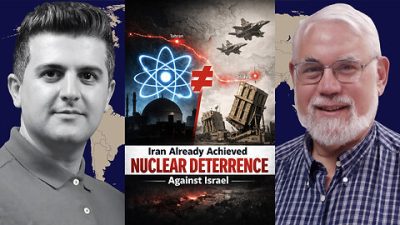
Prof. Ted Postol: Iran Already Achieved Nuclear Deterrence Against Israel
or go to
Aletho News Archives – Video-Images
From the Archives
How the occupied mentality syndrome works
Saudi Arabia on the American chessboard – Part 3
By B. J. Sabri | American Herald Tribune | June 27, 2016
Read part 2: “The occupied mentality Syndrome“
Previously I argued whether Saudi Arabia’s repeated involvements in U.S. interventions and wars stem from free national will or in response to a specific condition. For starters, in Saudi Arabia there is no national will. In Saudi Arabia, the national will is the will of the Al Saud clan. Still, when a major Arab state allies itself with a superpower that committed unspeakable crimes against humanity in almost every Arab country, then something is wrong. This fact alone should compel us to examine the U.S.-Saudi relation for one exceptional reason. As a result of the U.S.-Saudi wars, hundreds of thousands of people in Afghanistan, Iraq, Iran, Libya, Syria, Yemen, and Somalia have lost their lives. Millions became displaced in their own homelands. And millions more rendered refugees.
Attributing the Saudi policies to the bonds of “partnership” with the U.S. is frivolous. There are no bonds between these two thugs except those of business, military deals, secret plots, and wars. Proving this point, bonds such as these have no space for the American and Saudi peoples to share significant cultural or societal exchanges. If partnership is not the reason for the Saudi contribution to the U.S. strategy of empire and imperialism, then another reason must exist.
This leads to three possibilities. … continue
Blog Roll
 Aletho News
- REWRITING THE RISK? INSIDE THE GOVERNMENT’S VACCINE SAFETY MESSAGING
- “Davos Can Really Replace the UN”
- NIAID/NIH and USDA Fund Bioengineered Chimeric Influenza Viruses Built Using Pandemic H1N1 Components: Journal ‘Science Advances’
- Hezbollah hits Israeli warship off Lebanon’s coast, sets it aflame
- Iran slams US strikes on B1 bridge, Mahshahr petrochemical plants as ‘blatant acts of state terrorism’
- In letter to UN chief, Araghchi warns of dire consequences of US-Israeli attacks on Iran’s nuclear facilities
- Why the CIA conspiracy to invade Iran with Kurdish militias failed
- Why Are Upbeat US Claims About Mission to Rescue Pilot ‘Highly Questionable’?
- Aircraft destroyed during US ‘rescue’ of downed F-15 pilot cost more than $100 million each
- Washington University removes professor who condemned US-Israeli war on Iran
- If Americans Knew
- In Iran, Israel-US take aim at “reason, research, and freedom of thought” – Daily Update
- US loses planes over Iran, Israel downgrades Lebanon war goals – Daily Update
- Israel Is Blocking Palestinians from Easter at Church Where Jesus Resurrected
- Plot to assassinate Palestinian activist follows harassment campaign promoted by Zionist groups and elected officials
- Prominent New York synagogue hosts presentation on why U.S. Jews should support the ethnic cleansing of Gaza
- Tapper vs. Piker: Is the CNN Anchor Auditioning for David Ellison?
- Shouldn’t Democrats Be Able to Condemn Genocide?
- Israel-US kill negotiators, destroy civilian structures, but Iran’s military capabilities still largely intact – Daily Update
- ‘War crime’: Global condemnation as Israeli ministers celebrate death penalty law targeting Palestinian prisoners
- 7 Ways Israel Is Turning Lebanon Into Gaza
- No Tricks Zone
- An Inconvenient Tree: Uncovered In Alps… Europe Much Warmer Than Today 6000 Years Ago
- New Study Reports A 60% Slowdown In Greenland’s Ice Loss Rate In The Last Decade
- Low Intensity Tornado Wrecks Major Solar Farm, Creating A Potential Toxic Dump
- New Study Finds Warming Saves Lives…Cold Temperatures 12 Times More Deadly Than Excess Heat
- German Science Blog Accuses PIK Climate Institute Of Hallucinating Climate Tipping Points
- Devastating Assessment Of Comirnaty Vaccine By Former Senior Pfizer Europe Toxicologist
- New Study: CO2 Is ‘Effectively Negligible’ As An Explanatory Climate Change Factor Since 2000
- Former Pfizer Toxicologist Dr. Helmut Sterz Tells Bundestag Hearing Pfizer Vaccine Should Have Never Been Approved
- Energy Expert: Germany’s Nuclear Phaseout Was A “500 Billion Euro Mistake”
- New Research: South Australia’s Mid-Holocene Sea Surface Temperatures Were 4°C Warmer Than Today
 Aletho News