Beatings, arrests, nighttime raids and dubious indictments
Amira Hass – Haaretz – 18 June 2010

M., a Haaretz reader from Zichron Yaakov, was disturbed by reports about the manner in which Palestinian children are arrested in the West Bank and East Jerusalem. They are being detained held in the middle of the night, held in conditions of fear and pain before their interrogations, and then finally interrogated without the presence of their parents or a lawyer.
On March 14, M. wrote the following to attorney Yuri Gai-Ron, the head of the Israel Bar Association: “I am appealing to you to use all of your authority to intervene and put an end to the abusive behavior and violation of the law with regard to children and youths… Any decent citizen silent – and even more so the body you have headed over the past few years – cannot remain silent in the face of the frivolity with which children are kept in detention, interrogated and even condemned.”
On April 22, attorney Linda Shafir, the director general of the bar association, sent a letter to Attorney General Yehuda Weinstein and State Prosecutor Moshe Lador. Copies were also sent to Defense Minister Ehud Barak, the commander of the Israel Defense Forces in the West Bank (whose name she did not mention ), and the Military Advocate General Avichai Mendelblit, as well as to M.
Among other things, Shafir wrote: “In her appeal, Ms. M. mentions that Palestinian children and youngsters from areas of the West Bank are detained under inappropriate circumstances and are held in inappropriate conditions.
It goes without saying that the Israel Bar Association considers the holding of detainees in appropriate conditions to be of supreme importance, from both the legal point of view and on the level of human rights. I should be grateful if the appeal is transferred to all concerned parties, so that possible means of dealing with the situation are examined with a view to eradicating the phenomenon.”
Broken camera
Another Palestinian detainee, though not a child, is Imad Bornat of Bil’in, a photographer and film director. He was arrested in October 2006 by Border Policemen while photographing the weekly demonstration against the separation fence in his village. After being detained for 21 days, he was then kept under house arrest outside his village for a month and a half. Bornat’s trial, during which he was accused of throwing stones and attacking Border Policemen, dragged on for some three years.
This became a routine method of deterring demonstrators in the villages fighting against the separation fence – beatings and arrests, nighttime raids, and indictments based on dubious testimonies.
In April 2009, Bornat was acquitted of all the charges; no trace of anything. He never hit anyone, he never threw any stones. But despite his acquittal, from the police perspective the criminal file remains open, alongside a police order forbidding him to enter Israel (which is five kilometers from his village ). When he required medical treatment, he received some limited exit permits only thanks to the intervention of his lawyer, Gabi Lasky.
Last month Bornat was invited to participate in an event in Tel Aviv organized by CoPro, an Israeli foundation for marketing documentary films. They planned to screen part of the movie he and his partner, Israeli cinematographer Guy Davidi, are busy editing – “Five Broken Cameras.” Haaretz published a short item reporting that Bornat had been prevented from participating in the event.
On the same day, May 26, the Civil Administration issued him a permit in a particularly accelerated move, despite the police’s position. His file remains open, however, in the police computers. Lasky was told last week that she must send the court verdict, evincing Bornat’s acquittal, to the Binyamin police station, which she has already done at least four times.
‘A different aspect of Israel’
On May 27, yours truly received a letter from Amir Merom, the spokesman for the Sheba Medical Center at Tel Hashomer, in which he wrote: “Your efforts on behalf of upholding human rights, which have been a guiding principle of your work as a journalist over the years, are not supposed to hold back from your readers at Haaretz journalistic facts which are not in line with one organized doctrine or another.
“We read your May 26 article about the photographer from Bil’in, and were left with the impression that your attempt to present the saga vis-a-vis the military authorities and the police was paramount, from your point of view, to the need to add objective factual parameters that would widen the scope of the story for the reader’s benefit and offer a broader spectrum of reference on an already loaded subject.
“Besides the lengthy paragraphs describing, in minute detail, the conduct between the various bodies – which attempt to present Israel in an unflattering light – you mentioned in one general sentence that ‘in November 2008, Bornat was seriously injured in a car accident and required medical treatment in Israel.’ It is most surprising to me that you chose so strange a way to mention the fact that the patient arrived on the threshold of death at Sheba Medical Center, the leading government hospital in the State of Israel, and that his life was saved thanks to the dedicated treatment he received there…
“In addition, I am certain that your readers, who possess varied points of view, will be glad to be exposed to a different aspect of Israel from that described in your article – an aspect of love for human beings, of humanity and compassion.
“As the spokesman for a hospital where Arabs, Jews and members of all faiths are treated alongside one another with the same degree of professionalism and love, I would expect that you would be wise enough to use the abovementioned facts in your upcoming articles on the subject.”
Bornat paid for his hospital treatment.
Waiting for a letter
No reader wrote a letter about the fate of Adib Abu Rahma – a resident of the same village as Bornat, a regular participant in the demonstrations against the separation fence, a 40-year-old taxi driver and a father of nine. He was arrested on July 10, 2009 on the basis of a photograph showing him holding an onion, to be used against tear gas, which a prosecution witness somehow interpreted as a megaphone.
On the basis of incriminations conducted with minors from Bil’in, who had been arrested in the dark of night and held in frightening circumstances, Abu Rahma was charged with incitement, disturbing the public order and entering a military area. Many of the “facts” illicited through these interrogations later turned out to be false.
Abu Rahma has been in jail for 333 days already. on Sunday a military judge found him guilty, as was expected.
The Red Cross and Israeli MPs prevented from knowing location of secret prison
Middle East Monitor | 18 June 2010
It now seems clear that the Red Cross and, indeed, members of Israel’s parliament, are being stopped by Israeli intelligence services from finding out the location of what has been called a “secret prison”. The MP for the Democratic Front for Peace and Equality, Dr. Dov Hanin, has filed an enquiry to the Israeli Internal Security Minister, Yitzhak Aheronovic, regarding an unidentified prisoner at Ayalon Prison, Department 15. The prisoner, whose details were referred to on the Ynet website, and then quickly removed, has been held in total isolation and prevented from having visits or giving any information about himself to the officers who guard him. Nobody claims any knowledge of the reasons for the said prisoner to be in this situation.
Dr. Hanin wondered, in his enquiry to the minister, about the identity of the prisoner and the reason for the total information blackout and his complete isolation from the outside world. He also asked about the lack of access to rights which are guaranteed for any prisoner under Israeli law, including whether this prisoner’s family has been informed of his whereabouts. The MP refused to accept the concept of the state holding a prisoner of unknown identity.
The enquiries being made about this particular prisoner are reminiscent of recent calls in the media for a disclosure of information about “secret” prisons in Israel the existence of which has long been denied by the government, which has also sought to hide them from international observers such as the Red Cross. The calls for more transparency were made following the publication of a report by the UN Committee against Torture.
Yediot Aharonot newspaper published what looked like a prisoner identification card for “1391 secret prison”, which was a base used as an investigation office at military unit 504 associated with the Intelligence Department of the Israeli army. The task of the unit is to recruit and investigate terrorists and soldiers of hostile armies captured by the Israel Defence Forces. According to Yediot Aharonot, the secret prison was set up in an investigation section in Unit 504 in Gdera city in the south of the country. For many years, the department was a centre for investigating the perpetrators of the famous coast operation and the Palestinians who tried to blow up an El Al aircraft at Nairobi airport. In the 1980s, the secret prison was transferred to a building built for this purpose near another base for high-security intelligence operations. The newspaper said that the prison has rooms deep underground and soldiers from the military police provide all the logistics services at this facility, such as the transfer of detainees to and from the prison and from their cells to the interrogation rooms.
The most prominent case linked to this secret prison, according to the report, was the interrogation of the Lebanese former prisoner, Mustafa Dirani. Mr. Dirani was tortured severely during the interrogation, when he was beaten, forced to walk wearing an adult “nappy” and forced to swallow triangular objects; he was also anally raped. The army was forced to investigate this case as a result of which the chief investigator, a man known as George, was dismissed.
According to the newspaper report, the secret facility has another function, which is training Israeli soldiers who wish to join some specialist military units, such as CERT Mtkal, and Cedlag Haitt 13, which carried out the attack on the Freedom Flotilla. They undergo interrogation as part of their training in case they are ever captured during an operation. The officers of unit 504 expose the soldiers to serious torture to the extent that medical personnel and psychologists have joined the process to monitor such methods to ensure that no serious harm is done to the trainees.
A human rights organization known as the Centre for Defence of the Rights of Individuals has submitted a petition to the Israeli Supreme Court against those responsible for perpetrating torture at the secret prison, and has asked for checks to be made to see if the Israeli authorities have in detention in unit 504 those Palestinians who have simply disappeared since their capture by the Israel army. The Prosecutor General Representative has refused to consider the petition, claiming that the detention unit is in a secret military base and therefore cannot be investigated or revealed. In this way, the prosecutor sought to prevent the issue of a warrant for the disclosure of the detention centre thus opening its doors to legislators who want to visit and find out what is happening inside.
The government claims that the prison has been closed but the petitioners say it cannot verify this claim because of the ban on visits. The petitioners say that detainees in the secret prison know nothing about their location of what happens outside. When they ask the guards where they are, they are told, “on the moon” or “in a spacecraft”.
The Director of the Centre which has submitted the petition, Dalia Christine, said the prison is a blatant violation of international law. The petition included sworn testimonies by former Palestinian prisoners who believe that they were detained in this prison; the rooms, they claim, had no windows, the walls were painted black and the “toilet” was a bucket placed in the corner. The ex-prisoners also claim that they did not see anyone for the length of their detention apart from the investigators and military judges. They talked about the torture they suffered in the prison, including sleep deprivation, shackling in uncomfortable positions and beating.
Following a discussion in camera at the Supreme Court, the judges rejected the petition.
Israel has arrested 468 Palestinians in Hebron since the beginning of the year
Middle East Monitor | 17 June 2010
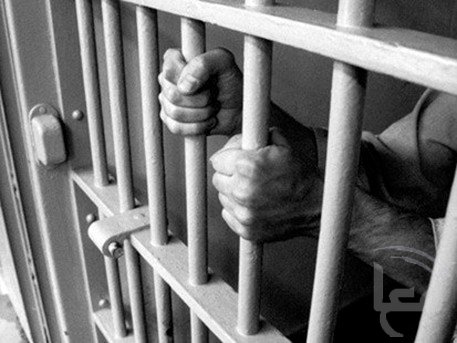
A human rights report published by the Palestinian ‘Prisoner’s Forum’ has reported that since the beginning of 2010, Israeli Occupation Forces have ‘detained approximately 468 Palestinian citizens from the governorate of Hebron in the southern West Bank.
The report highlighted the fact that during the first half of this year, the Israeli forces launched a widespread campaign of arrests in various regions of Hebron. The campaign resulted in the detention of 468 individuals including 90 children, 110 students and 58 ill individuals.
The Prisoner’s Forum confirmed that the Israeli authorities had transferred 33 prisoners to administrative detention and sent 70 others to Ashkelon Central Prison. Additionally, another 50 detainees were transferred to al-Maskubiyya, al-Jamlah and Petah Tikva prisons.
The report also drew attention to the fact that Israeli military checkpoints “play a significant role in the process of targeting and detaining Palestinian citizens as they move around” and highlighted the fact that a large number of prisoners and detainees were arrested near these barriers.
Turkey warns EU against Iran sanctions
Press TV – June 19, 2010
A top Turkish official warns the European Union against its recent decision to tighten the screws on Iran over its nuclear program, saying the sanctions will affect the interests of the European bloc.
Speaking to reporters on Friday at the St. Petersburg International Economic Forum in Russia, Turkish Energy Minister Taner Yildiz criticized the idea of imposing additional sanctions on Iran, saying the EU was ignoring commercial realities.
Yildiz argued that the energy sanctions on Iran were not commercially sensible as they would “ignore the world’s second-largest natural gas reserves.”
The Turkish minister went on to warn EU countries about the decision, saying the bloc is more likely to be affected by the recent sanctions than Turkey.
Yildiz also stated that the EU would likely reconsider the decision in the near future.
In addition to a resolution passed by the 15-member UN Security Council on June 9 which imposed a fourth round of sanctions on Iran over its nuclear program, EU foreign ministers have akso agreed to adopt tougher measures against Tehran.
The new EU sanctions, which could come into effect within weeks, include the financial, transport, and banking sectors as well as investments in or sale of equipment to Iranian oil and gas companies.
The EU decision comes as Tehran rejects Western accusations of seeking to develop nuclear weapons, arguing that the International Atomic Energy Agency in numerous reports has confirmed the non-diversion of nuclear material in the country.
Israel Closes Gaza Trade Crossings
By Saed Bannoura – IMEMC & Agencies – June 19, 2010
Despite Israel’s Thursday decision to “ease restrictions on Gaza”, the Israeli Authorities closed all trade crossings leading to the coastal region. The closure, unless extended, will last until Sunday.
Fattouh of the Border Crossings Authority in Gaza, said that Israel declared the crossings open on Thursday and shut them down Friday, and added that Israel allowed the entry of 200 sorts of goods in recent weeks, while most goods allowed into Gaza are food products in addition to wood, aluminum and glass.
Fattouh added that the allowed goods do not fill the real need in the Gaza Strip as construction materials are still not allowed into Gaza, in addition to materials needed for factories and other basic supplies.
Israel recently agreed to allow the entry of stationary supplies for students, cooking tools, toys for children and some types of furniture.
UN: 70 percent of the refugees around the world are Muslim
10,792,095 displaced around the world originate from Muslim countries
Islamic Human Rights Commission – 17 June 2009
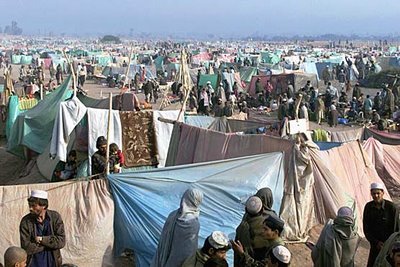
United Nations High Commissioner for Refugees (UNHCR) 2009 annual report revealed shocking figures about the world refuge community. According to the figures revealed on 16 June 2010, the total refugee population around the world reached 15.2 million which is the highest since the mid 1990s. Around 70 percent of all refugees, which amounts to 10,792,095, around the world originated from Muslim countries.
The recent figures revealed by the UNHCR have reminded the international community that the overwhelming majority of oppressed people in the world are Muslim. According to the latest report of the UNHCR, there were 15.2 million refugees worldwide and around 70 percent of them, which amounts to 10,462,095, originated from Muslim countries. With their long-lived plight, 4.8 million Palestinians were the largest refugee community in the world. Since the Palestinian refugees are under the responsibility of United Nations Relief and Works Agency (UNRWA) their statistic were not included in the report.
There UNHCR listed 2.9 million Afghani refugees scattered around the world with the majority fleeing to Pakistan. Iraqis also made up a substantial amount of the total refugee population with 1.8 million, predominantly based in the Middle East. Somalis made up the third largest refugee group with 678,000 persons and finally 368,200 Sudanese refugees, the vast majority of them from the Darfur region.
The figures show the US and its allies have turned the Muslim territories into a massive conflict zone and Muslims have become the largest single religious refugee group. Muslim refugees have been deprived of their basic rights and are going through immeasurable difficulties.
IHRC is an NGO in Special Consultative Status with the Economic and Social Council of the United Nations.
Islamic Human Rights Commission
PO Box 598
Wembley
HA9 7XH
United Kingdom
Telephone (+44) 20 8904 4222
Fax (+44) 20 8904 5183
Email: info@ihrc.org This e-mail address is being protected from spambots. You need JavaScript enabled to view it
Web: http://www.ihrc.org
Masked Attack
Palestine Monitor | 17 June 2010
On Saturday morning, 30 to 35 masked Israeli settlers stormed the village of At-Tuwani in the South Hebron Hills. Armed with metal clubs, slingshots, knives, and stones, the attackers targeted the house closest to the edge of the woods. International observers stationed in the village arrived in time to witness and document the final phases of the assault. Michael Carpenter investigated for Palestine Monitor.

Photo: Operation Dove
The rolling hills south of Hebron are home to some of the poorest Palestinian communities in the West Bank, and in recent years, some of the most radical Israeli settlers have come here. At-Tuwani is a small traditional village of about 250 residents and a focal point of the region’s tensions. At the south tip of the village, near the edge of a densely wooded hill, is Beit Juma, the large home of the Rabai extended family. At 10:45 AM, not long after Juma and one of his brothers had gone to a neighbouring village, the attack came from the trees without warning.
“There were problems before,” explains one of the younger brothers, present at the time of the attack. “But nothing like this. This is something new. First came stones, hitting the wall and flying over the house into the yard where the children were playing. Then came the settlers, 30 or 35, with faces covered, with iron sticks, smashing windows and fence. Some came this way around the house, and the others came that way. They tried to come inside, to force their way, but we pushed them back.” The brothers admit they wounded two of the settlers, knocking them to the ground and kicking them. “At that time, it’s impossible to think. Of course we fight. They are coming into our home.”

Right: Beit Juma, home of Rabai family, with woods in background, where the settler attack came from.
Photo: Michael Carpenter
The Rabais say that up to ten people from their family and village suffered minor injuries from stones or beating. One woman, four months pregnant, was hurt in a fall as she fled the violence. She was taken to the hospital and returned in good condition.

A pregnant woman is taken to hospital after minor injuries. Photo: Operation Dove.
The initial onslaught lasted only a couple minutes before the international observers and many others from the village were on the scene. “We saw the last part of the fighting around the house,” says Sirio, a member of the Italian non-violent peace corps Operation Dove. “Then the settlers—I counted at least 26—ran back to the woods. But that was not the end. They continued to throw stones from the trees for the next 20 minutes or so before disappearing deeper in the woods.”

After the initial assault, masked settlers continued to throw and launch stones from the edge of the woods. Photo: Operation Dove
Shortly after, by about 11:30, police, army, and border patrol arrived, taking statements, photos, and collecting evidence, including multiple large knives. Later in the afternoon, some of the Rabai family, accompanied by members of Operation Dove, filed an official complaint at the police station in Kiryat Arba (the Israeli settlement in Hebron). “The first thing they asked my brother,” says Musab Rabai incredulously, “was ‘Who beat the settlers?’” He laughs. “Not, ‘Why were settlers in the home?’” The residents of At-Tuwani are not confident the attackers will be prosecuted.
Although the weekend marked a dramatic escalation of Israeli settler hostility, the events were just the latest in the troubled history of the besieged village. Every year, the growing settlement of Ma’on (established 1981 on a neighbouring hill) de facto annexes more and more of the village’s pastureland. In the last several years, shepherds, school children, and international observers have been beaten, the drinking well and grazing land have been poisoned, animals have been killed, and property has been vandalised. Scores of incidents have been documented in photos and videos by international monitors such as Operation Dove.

A well that was poisoned, with the Rabai home (left) and the woods of the illegal settlement (right). Photo: Michael Carpenter.
The Italian peace corps, along with Christian Peacemaker Team (CPT), have maintained a constant presence in the village since they were invited by the Palestinians in 2004. The local community had already committed to peaceful resistance in co-operation Hafez Huraini and the South Hebron Hills Committee for popular non-violent resistance.

The illegal outpost of Havat Ma’on, Hill 833, viewed from the south west.
Photo: Michael Carpenter
Concealed in the trees, about a hundred meters from the south edge of the village, is the settler outpost known as Hill 833, or Havat Ma’on. Under international law, all Israeli settlements in the West Bank are illegal, but this outpost is also illegal under Israeli law. First established in 1999, just south-west of the woods, the outpost was quickly dismantled by Israeli authorities, but by the end of the year, the renegade settlers had relocated inside the woods. Since then, they have entrenched themselves, continued building within the trees, and continued to harass the local population, all with apparent impunity from the Israeli authorities. Equally disturbing, settlers from this outpost, including Yosef Ben Barach and its founder Yehoshefat Tor, have ties to the radical group Kach, which is a designated terrorist organisation by both the United States and Israel for inciting violence and attempting to bomb Palestinian schools in Jerusalem.
Paranoid or prescient, the Rabai brothers believe the settlers intended far worse. “They came here to kill. They tried to kill with knives, some guys, and they tried to move into the home. I’m sure they saw us when we left here, and they thought no men were here, just the women and the kids. They thought if they threw stones first, all of them will run, but when they threw stones, three brothers came out. They tried to do like they do in other villages, to take the homes.”
Whatever the settlers’ intentions, the Rabai family is deeply concerned and expects more attacks soon. They spend many nights on their rooftops, peering vigilantly into the dark woods. This is the effect of daily terror. “We try to continue the non-violent resistance with these guys,” says Juma Rabai. “But I don’t know about the future. The future is dark for a long time, so black. But now, maybe more dark.”
Written by Michael Carpenter for Palestine Monitor
Gaza convoy activists claim Israeli soldiers using debit cards stolen in raid
By Haroon Siddique | The Guardian | June 18, 2010
Israeli troops have been accused of stealing from activists arrested in the assault on the Gaza flotilla after confiscated debit cards belonging to activists were subsequently used.
In their raid of 31 May, the Israeli army stormed the boats on the flotilla and, as well as money and goods destined for the Palestinian relief effort in Gaza, the bulk of which have yet to be returned, took away most of the personal possessions of the activists when taking them into custody.
Individual soldiers appear to have used confiscated debit cards to buy items such as iPod accessories, while mobile phones seized from activists have also been used for calls.
Ebrahim Musaji, 23, of Gloucester, has a bank statement showing his debit card was used in an Israeli vending machine for a purchase costing him 82p on 9 June.
It was then used on a Dutch website, http://www.thisipod.com, twice on 10 June: once for amounts equivalent to £42.42 and then for £37.83. And a Californian activist, Kathy Sheetz, has alleged that she has been charged more than $1,000 in transactions from vending machines in Israel since 6 June.
Musaji and Sheetz were on board two separate boats – one the Mavi Marmara, on which nine Turkish activists were killed, the other on the Challenger 1. Both activists only entered Israel when arrested, and were in custody for their entire time on Israeli soil.
“They’ve obviously taken my card and used it,” Musaji told the Guardian.
“When they take things like people’s videos and debit cards and use them, and their mobile phones, it becomes a bit of a joke.
“We were held hostage, we were attacked, and now there’s been theft. If the police confiscate your goods in the UK, they’re not going to use your goods and think they can get away with it.”
Musaji cancelled his card on 7 June, the day after he returned to Britain, where he is a support worker for adults with learning difficulties. His bank has agreed to treat the transactions as fraudulent and he will not be charged for them. His mobile phone was also used for two short calls in Israel after it had been confiscated.
Another American activist, David Schermerhorn, 80, from Washington state, claims his iPhone was used, while Manolo Luppichini, an Italian journalist, said his card was debited with the equivalent of €54 after it was confiscated.
Activists say Israel still has possession of at least £1m of goods and cash, comprising aid and personal possessions, including laptops and cameras.
Some passports, three of them belonging to British citizens, have still not been returned. On Thursday, delegations in 12 countries, including the UK, held meetings with their respective governments to exert pressure on Israeli to return the seized property.
A spokeswoman for the Israeli embassy in London advised Musaji to register a formal complaint.
“We regard any misconduct as described in Mr Musaji’s allegations to be utterly unacceptable and intolerable, and suggest waiting until this subject matter is clarified,” she said. “As had happened previously, an Israeli soldier was found guilty of illegal use of a credit card for which he was indicted and sentenced to seven months’ imprisonment.”
Police postpone CCTV scheme targeting British Muslims
By David Sapsted | The National | June 17. 2010
LONDON // The introduction of a network of more than 200 CCTV cameras giving blanket coverage of two predominantly Muslim areas of Birmingham is to be postponed after furious protests.
Muslim, civil rights and community groups were enraged after it emerged earlier this month that the cameras were not primarily for crime prevention and detection, but were paid for by the police for anti-terrorism surveillance.
It led to accusations that, because of the concentration of Muslim families in the Washwood Heath and Sparkbrook districts of the city, the police had stigmatised the area as a terrorist ghetto.
The Safer Birmingham Partnership, the joint city council/police organisation that installed the cameras, backed down yesterday after mounting protests and a parliamentary motion condemning the move, and announced that the 218 cameras would not be switched on in August as planned.
About 60 of the cameras are hidden in buildings or trees. Another 150 are on roadside poles and monitor every vehicle entering the two districts. When the cameras first started going up in April, the Safer Birmingham Partnership said it had received a £3 million (Dh16m) grant from the Home Office to improve community safety and reduce crime.
However, The Guardian newspaper revealed earlier this month that the cameras were actually financed through the Association of Chief Police Officers’ fund for terrorism. The stated objective of the fund is to finance projects that “deter or prevent terrorism or help to prosecute those responsible”. Amid mounting anger in the two communities, civil rights lawyers threatened legal action, Roger Godsiff, the Labour MP for the area, tabled a motion condemning the move as a “grave infringement of civil liberties” and, after several public meetings, a petition was started calling on Chris Sims, the chief constable of the West Midlands, to resign.
Mr Godsiff said yesterday: “I put down an early day motion in the House of Commons expressing my concern about the way it had been handled and saying that there should be proper public consultation before the cameras are activated.
“If that’s what the police have now decided to do, I applaud them for doing so.”
The total of 150 number plate recognition cameras in the two areas is more than three times the total in the rest of Birmingham, which has a population of just over a million, about 15 per cent of them Muslims.
Announcing the postponement of the switching on of the network pending consultation with the two communities, the Safer Birmingham Partnership said in a statement: “We apologise for these mistakes, which regrettably may have undermined public confidence in the police and the council.
“Although the counter terrorism unit was responsible for identifying and securing central government funds and has overseen the technical aspects of the installation, the camera sites were chosen on the basis of general crime data, not just counter-terrorism intelligence.”
However, city councillors, including the deputy leader of the council, Paul Tilsley, and Ayoub Khan, the councillor in charge of community safety programmes, said they had not been involved in the decision to install the cameras and that it had purely been in the hands of police.
Mr Khan yesterday welcomed the move to defer the deployment of the cameras and called on the police to physically cover them up to reassure residents that they were not being used, otherwise many residents “will not believe they are inactive”.
He said that the failure to consult earlier had left a bitter taste. “All communities felt offended by the manner in which number plate recognition cameras were placed, not just the Muslim community,” he told the Birmingham Mail. “I am not against [number plate recognition cameras] and CCTV technology. In many areas it is welcome because it creates a feeling of safety. Unfortunately, with this particular scheme it is obvious that the local communities were not consulted. I was never informed at any stage in relation to the intensity or the geographical coverage of such a system. Counter terrorism was mentioned at a meeting, but it was as a bolt-on extra not the main thrust.”
Tanveer Choudhry, a local councillor, said: “The area has been stigmatised as a terrorist ghetto. The police should remove the cameras until they have fully consulted with local communities.”
Mr Choudhry said that some in the community were sceptical about the belated consultation and that, eventually, the cameras would go live regardless of local opinion.
Birmingham is not regarded as one of the hotbeds of Muslim extremism in Britain, although five young men were convicted in 2008 of a plot to capture and behead a soldier to protest against the UK’s involvement in Afghanistan.
Steve Jolly, the organiser of a grassroots campaign against the cameras, said: “Birmingham is one of the most successfully integrated cities in the country. Coming together to oppose the scheme has united the Muslim community and what you might call the white, middle-class community. We’re speaking with one voice.”
WHO: Medical equipment still banned from Gaza
Ma’an – 18/06/2010
Bethlehem: Spare medical parts and replacements are, in practice, barred from entry into Gaza, or only arrive “after great delays,” a World Health Organization spokesman told Ma’an on Friday.
Following the release of a report from the WHO on Gaza City’s Ash-Shifa Hospital, the spokesman emphasized that beyond the impeded access to parts, engineers are unable to enter Gaza to service the equipment. “Life saving equipment worth hundreds of thousands of dollars has been held up in Ramallah for over six months,” the statement said.
In the WHO’s profile, it says that most of the medical diagnostic equipment in Ash-Shifa hospital, a 560-bed facility in Gaza City, remains out of order. The CT scan, MRI, mammography, endoscope and gastroscope, a statement said, have all been waiting for service or spare parts for months, in some cases years.
The blockade Israel has imposed on the territory for the past three years is affecting the functioning of medical equipment threefold, the report found, with prohibitions, delays, and lack of qualified service personnel and power cuts/surges damaging delicate machines.
The CT scanner, used to diagnose cancers, cardiovascular disease, appendicitis, and dozens of other conditions, has only been running from parts borrowed from other facilities, and, the WHO said, its “radiation levels are above international norms. Without an alternative, however, it is used about 15 times a day for emergencies.”
According to the WHO report, a replacement machine is available in a warehouse in Ramallah, only “80 kilometres from Gaza city as the crow flies,” the report noted, adding “it has been lying there for over six months,” but has yet to receive clearance from Israeli crossings officials.
WHO officials say “patients with chronic diseases are particularly hard hit by the lack of appropriate equipment,” particularly the 200 odd dialysis patients served three times every week. A lack of dialysis machines means patients receive only half their necessary treatment, exposing them to severe health risks, while others are asked to come in for treatment during the late hours of the night and early morning, the statement reported.
Turkey Freezes Defense Deals with Israel in Wake of Gaza Flotilla Raid
Al-Manar TV – 17/06/2010
Turkey has frozen billions of dollars worth of defense deals with Israel in the wake of the Israeli Navy’s deadly raid on a humanitarian bound flotilla to the Gaza Strip, according to Turkish media.
Some of the 16 scrapped projects include a $5 billion deal in which Ankara was to receive 1,000 Merkava Mark III tanks from Israel, a $50 million plan to upgrade Turkish M-60 tanks, and a $800 million agreement to buy two Israeli patrol aircrafts and an Airborne Warning and Control System aircraft.
Turkey has also abandoned a $632.5 million deal for 54 F-4 Phantom, and a $75 million program for 48 F-5 fighter bombers.
Bilateral corporate deals in the private sector would continue as usual unless so decided by the companies, according to Today’s Zaman.
The decision regarding the defense sector was made due to Israel’s refusal to apologize or offer concessions for the deaths of the nine Turkish citizens it killed aboard the Mavi Marmara on May 31, said Zaman.
Turkey said it does not know if or when it would decide to send its ambassador back to the Zionist entity, according to the newspaper, though such a move would depend on Israel’s agreement to send a representative to a United Nations investigatory commission into the raid.
Turkey will refuse to recognize Israel’s internal inquiry into the incident at all levels, according to Zaman. “An apology is Israel’s exit if it really wants to normalize relations with Turkey, and we are firm in our demand for an apology,” Zaman quoted a diplomat as saying.
“Destroying such ties is easier than establishing them. But we are ready to face the negative impact of cutting these ties in an eventual absence of an apology from the Israeli side,” said the diplomat.
Turkey is considering downgrading its ties with Israel to a “charge d’affairs” level, as they were in the 1980s, according to Zaman.
Irish Singer’s Concert In Israel Canceled
By Malak Behrouznami – Palestine News Network – June 17, 2010
Legendary songwriter, performer and peace activist, Tommy Sands’s scheduled performance at the “Festival Bloomsday Concert ” Sunday June 20 has been canceled.
The appearance was canceled after Sands refused to be censored during his performance. Sands was asked by the organizers of the events, the Israeli- Ireland Friendship League, in association with the Municipality of Ramat Hasharon, to not perform “Peace on the Shores of Gaza,” the song he had written as the anthem for the MV Rachel Corrie that set sail from Ireland to Gaza.
This comes shortly after Ireland’s recent decision to expel an Israeli diplomat after an investigation over the assassination of Hamas official Mahmoud al-Mabhouh in Dubai earlier this year. The investigation proved that the eight Irish passports used by suspects in the assassination, an operation supposedly under Israeli intelligence, had been forged.
Despite the recent increase of artists boycotting Israel by canceling their performances, Sands has taken an alternative approach to the boycott, by performing in Israel, Palestine and Gaza during his tour. Sands recalls friends and colleagues in Ireland urging him not to come after the Flotilla crisis, fearing for his safety as a peace activist.
However, Sands thought it was important to come, “I realized that even though Ireland was seeing Israel in a dehumanizing way, I realized that there are many activists here who may need solidarity from the outside.”
During his performance last week at the Yellow Submarine in Jerusalem, Tommy received an invitation to play at the weekly Sheikh Jerrah demonstration in East Jerusalem this Friday. Sands accepted the invitation despite the fact that it was not a planned venue for the tour.
Sands is known for his involvement by actively speaking out about the conflict between Northern and Southern Ireland through his music. When asked about his role as a peace activist musician he responded, “Trust me, it would be a lot easier to stay home and make records, but we have a duty to contribute to the betterment of society.”
Featured Video

Michael von der Schulenburg: Europe’s Self-Defeating Iran War Policy
or go to
Aletho News Archives – Video-Images
Frlom the Archives
Provoking a Path to Persia
The Saban Center’s prescient paper on war with Iran
By Maidhc Ó Cathail | October 20, 2011
In June 2009, the Saban Center for Middle East Policy published “Which Path to Persia?—Options for a New American Strategy toward Iran.” Writing in a tone strikingly reminiscent of the Project for a New American Century’s infamous pre-9/11 paper “Rebuilding America’s Defenses,” the six co-authors noted that, “It seems highly unlikely that the United States would mount an invasion without any provocation or other buildup.” For a think tank specifically established by media mogul Haim Saban to protect Israel, this could prove to be a formidable obstacle impeding their desired march—of U.S. troops—to Tehran.
“In fact, if the United States were to decide that to garner greater international support, galvanize U.S. domestic support, and/or provide a legal justification for an invasion, it would be best to wait for an Iranian provocation, then the time frame for an invasion might stretch out indefinitely,” Saban’s think-tankers ruefully observed.
“With only one real exception, since the 1978 revolution, the Islamic Republic has never willingly provoked an American military response, although it certainly has taken actions that could have done so if Washington had been looking for a fight. Thus it is not impossible that Tehran might take some action that would justify an American invasion. And it is certainly the case that if Washington sought such a provocation, it could take actions that might make it more likely that Tehran would do so (although being too obvious about this could nullify the provocation). However, since it would be up to Iran to make the provocative move, which Iran has been wary of doing most times in the past, the United States would never know for sure when it would get the requisite Iranian provocation. In fact, it might never come at all.”
Seemingly undeterred by Iran’s frustrating unwillingness to provide the requisite provocation, the analysts continued to examine this option… continue
Blog Roll
 Aletho News
- Is there even an off ramp?
- Michael von der Schulenburg: Europe’s Self-Defeating Iran War Policy
- Sorry, The New Republic, Climate Change Isn’t Causing Somali Migration. Blame Civil Strife and Poverty.
- Expert Guts Claims That HPV Vaccine Reduces Cancer Risk
- No evidence Russia sabotaged Baltic cables – Finnish intel
- The Strategic Folly of a (Serious) US Ground Invasion of Iran
- US-Israeli war of aggression on Iran meant to reshape region: Omani FM
- Iran Does Not Consider Israel Party to Talks to Need Mediators With It – Ambassador
- Macron’s aircraft carrier and warplanes to the Persian Gulf is a dangerous vanity project
- Meet The Ellisons: Zionists, Technocrats, Moguls
- If Americans Knew
- Are we on the precipice of World War III?
- ‘Catastrophic,’ Says UNICEF: 1,100+ Children Killed or Wounded in Mideast Since US-Israel Launched Iran War
- The Unbelievable Madness of Our War With Iran
- World Council of Churches calls on govts to hold Israel accountable for violations of intl law
- How to end the war on Iran that costs US taxpayers $1M per minute – Not a ceasefire Day 153
- Israeli strategic plans to “remake the Middle East” from the 1950s and since
- Honoring Gaza’s women who refused to let the world look away
- 97% of victims of war on Iran are Iranian, 98% of victims in war on Gaza are Gazans – Not a ceasefire Day 152
- Early Iran strikes cost $5.6 billion in munitions, Pentagon estimates
- Israel Decided the War, But Trump’s America Fights and Pays the Bill
- No Tricks Zone
- New Studies: UK Sea Levels Were 4 Meters Higher Than Today During The Mid-Holocene
- Destructive Green New Deal: German Energy And Metal Group Warns Of Drastic Crisis
- New Study Documents A 20-Year Pause In Arctic Sea Ice Decline – Driven By Internal Variability
- Wake-up Call: Survey Shows Majority Of Germans Now Favor Postponing Climate Targets!
- Televised! Leading German Political Candidate Tells Schoolchildren CO2 Makes Sun Hotter!
- New Study: A Century Warming Of 1.1°C Is ‘Commonplace’ And ‘Not Unusual’ During This Interglacial
- New Study: ‘Internal Noise’ And Volcanic Forcing Can Trigger 10-15°C Warming Within Decades
- Glaciers Worldwide Are Suddendly Surging, Experts Blame Warming!
- Surprising Discovery: Sahara Is Greening…Billions Of Trees Where Once Thought To Be Barren
- New Research Reaffirms Clouds, Aerosols, And Surface Solar Radiation Are ‘Driving The Climate System’
 Aletho News