The war Israel can’t win
By Paul Woodward on July 6, 2010
At The Daily Beast, historian Thaddeus Russell writes:
When Israeli Prime Minister Benjamin Netanyahu visits the White House Tuesday, President Obama will have the chance to be the first American president since the founding of Israel to ask The Question.
The Question is never addressed by Israel’s supporters and rarely raised by Israel’s detractors. But for those of us who are taxpayers in a nation that has been the state of Israel’s chief benefactor for 42 years — or those of us with Jewish ancestry — it is becoming the only question to ask. It is simple, self-interested, and fundamental: Does the existence of Israel make Americans and Jews safer?
And here is the paradox: Though support for Israel among Americans, and especially Jewish Americans, remains high according to recent Gallup polls, historical evidence says the answer to The Question is “no.”
The history of Israel and its relationship with the U.S. is infinitely complex, but there’s one damning fact that’s ignored as often as The Question: There was not a single act of Arab terrorism against Americans before 1968, when the U.S. became the chief supplier of military equipment and economic aid to Israel. In light of this fact, it’s difficult to credibly sustain the argument that Arab terrorism is spawned by Islam’s alleged promotion of violence and antipathy toward American culture or by a “natural” Arab anti-Semitism. It also suggests that no matter what policies Israel enacts to protect itself — even a withdrawal from the occupied territories or a two-state “solution” — it must be a perpetual wartime state.
Very few Americans today are aware that the question of American and Jewish self-interest was first raised at the time of Israel’s founding by officials in the highest levels of the U.S. government. In 1948, several members of Harry Truman’s Cabinet predicted that the creation of a Jewish state in the Middle East would spur Arab violence against Jews and Americans, advising the president to shun Israel.
These included Secretary of State George Marshall, Defense Secretary James Forrestal, and George Kennan, then the leading policy strategist in the State Department. They argued that if the United States helped to set up an independent Jewish nation it would provoke terrorist attacks on Americans and inaugurate an endless war between Arabs and Jews. “There are 30 million Arabs on one side and about 600,000 Jews on the other,” Forrestal told those in the administration who favored recognizing Israel. “Why don’t you face up to the realities?”
Israel apologists will plead that Thaddeus Russell’s commentary is one more instance among international efforts — rapidly gaining steam — to delegitimize Israel.
Strangely, in response to what is perceived as a campaign of degitimization, there is, as far as I’ve seen, no Israel legitimization campaign. Those mounting a defense, do nothing more than attack their critics — and usually do so with an unbridled viscousness.
For instance, Robin Shepherd, writing in the Jerusalem Post about a decision last week by the Methodist Church of Britain to launch a boycott against goods emanating from settlements in the West Bank and East Jerusalem, says:
Overall, a church that behaves in the manner of the Methodists has buried its credibility under a gigantic dunghill of intransigence, pedantry, lies and distortions.
But let us not allow this matter to rest with a mere recognition of whom and what they have chosen to become.
If the Methodist Church is to launch a boycott of Israel, let Israel respond in kind: Ban their officials from entering; deport their missionaries; block their funds; close down their offices; and tax their churches.
If it’s war, it’s war. The aggressor must pay a price.
While it’s often said that attack is the best form of defense, that principle does not hold in the art of persuasion (and rarely for that matter in national security). The ranks cheering an attack such as Shepherd’s are small and shrinking. Indeed, the more venomous Israel and its supporters become, the less sympathy the Jewish state will evoke and the closer we will move to a critical juncture: where the world has given up on Israel and Israel has given up on the world. At that point, Israel’s isolation becomes the world’s nuclear peril.
Greening the desert; Eritrea’s Manzanar Mangrove miracle
By Thomas C. Mountain | Online Journal | July 6, 2010
ASMARA, Eritrea — Along the nearly barren desert shoreline of the Red Sea there can be found a miracle of green forest stretching over six miles (10 kilometers), the Manzanar Mangrove Project.
Started some 15 years ago on the shoreline of Zula Bay, once home to Africa’s lost civilization of Punt, a lush, green mangrove forest has been reestablished in the middle of thousands of miles of desert and is now providing an estuary for fish and shrimp as well as food for animals. Mangrove leaves and seeds provide almost the complete nutritional needs for goats, sheep and camels, thus providing the people of the area with milk and meat, which along with fish has been their sustenance of life from time immemorial.
All of this is the work of a Japanese American, Dr. Gordon Sato who took his personal fortune obtained through his medical inventions and used it to transform formerly barren sandy silt beaches into an emerald green jungle, 20 feet high, using salt water. That’s right, salt water can be used to reforest arid coastlines. .
All it takes is a little nitrogen and phosphorus fertilizer wrapped in plastic with two punctures to allow a time release of the fertilizer. Bury this about two feet under the sand and mangroves can once again grow where they used to flourish, converting a desolate, sand blown coastline into a green miracle of sea life estuary and life sustaining forest.
The lowly mangrove, so often reviled as the source of fetid, insect and disease-ridden swamps, holds the key to fighting drought, coastal desertification, coastal erosion and a host of other problems being experienced by the world’s oceans. Mangroves ordinarily only grow where there is enough nutrients such as nitrogen and phosphorus not present in salt water that have been brought by fresh water runoff. With the thousands of years long desertification of much of the East and West African as well as West and South Asian coastline, once thriving mangrove forests are now gone, and mangroves are only found in a few isolated spots.
But all of that is changing, though one can only wonder why with all the talk about climate change, Dr. Sato is not the recipient of hundreds of millions of dollars in grants to help him spread his miracle throughout the world.
Today, with his personal fortune spent, even though he has received environmental awards from the Rolex Foundation and the Asahi Foundation, funding has dried up and Dr. Sato’s work has reached its limit.
And the reason why may be explained by the three contradictory ideas, Manzanar, mangrove and miracle. First is the name, the Manzanar Project, named after the crime against humanity committed in the USA under the signature of two of the most famous “liberals” in 20th century USA history, Franklin Roosevelt and Earl Warren. Hundreds of thousands of Japanese Americans were victims of ethnic cleansing carried out under the orders of President Franklin Roosevelt, and the governor of California, and later chief justice of the Supreme Court, Earl Warren, at the outbreak of WW2. Arrested, thrown in jail with all their property and possessions stolen from them and eventually imprisoned in concentrations camps, most often in the middle of some pretty nasty deserts, all done by leaders proclaimed as leading lights of liberalism in the USA. One of these camps was named Manzanar and, as a small boy, Dr. Sato found himself and his family imprisoned there, convicted of no crime yet treated as criminals, all for being guilty of having the wrong color skin.
Dr. Sato’s naming his mangrove project after such a crime is sure to anger the powers that be in the USA dominated aid agencies. On top of this mangroves and miracles are two words that are not used together, almost contradictory in concept in the minds of most in the so-called “First World.” Manzanar, mangroves and miracles, three very different concepts to say the least. You put them together inside Eritrea and you have another example of how news of another environmental breakthrough with global importance is being suppressed by those in power in the Western world, both official and non-governmental.
Stay tuned to the Online Journal for more news that the so-called free press in the West refuses to cover.
Thomas C. Mountain was, in a former life, an educator, activist and alternative medicine practitioner in the USA. Email thomascmountain at yahoo.com.
Copyright © Online Journal
By Hook and By Crook: Israel’s Settlement Policy in the West Bank
B’Tselem | July 2010
Some half a million Israelis are now living over the Green Line: more than 300,000 in 121 settlements and about one hundred outposts, which control 42 percent of the land area of the West Bank, and the rest in twelve neighborhoods that Israel established on land it annexed to the Jerusalem Municipality. The report analyzes the means employed by Israel to gain control of land for building the settlements. In preparing the report, B’Tselem relied on official state data and documents, among them Attorney Talia Sasson’s report on the outposts, the database produced by Brigadier General Baruch Spiegel, reports of the state comptroller, and maps of the Civil Administration.
The settlement enterprise has been characterized, since its inception, by an instrumental, cynical, and even criminal approach to international law, local legislation, Israeli military orders, and Israeli law, which has enabled the continuous pilfering of land from Palestinians in the West Bank.
The principal means Israel used for this purpose was declaration of “state land,” a mechanism that resulted in the seizure of more than 900,000 dunams of land (sixteen percent of the West Bank), with most of the declarations being made in 1979-1992. The interpretation that the State Attorney’s Office gave to the concept “state land” in the Ottoman Land Law contradicted explicit statutory provisions and judgments of the Mandatory Supreme Court. Without this distorted interpretation, Israel would not have been able to allocate such extensive areas of land for the settlements.
In addition, the settlements seized control of private Palestinian land. By cross-checking data of the Civil Administration, the settlements’ jurisdictional area, and aerial photos of the settlements taken in 2009, B’Tselem found that 21 percent of the built-up area of the settlements is land that Israel recognizes as private property, owned by Palestinians.
To encourage Israelis to move to the settlements, Israel created a mechanism for providing benefits and incentives to settlements and settlers, regardless of their economic condition, which often was financially secure. Most of the settlements in the West Bank hold the status of National Priority Area A, which entitles them to a number of benefits: in housing, by enabling settlers to purchase quality, inexpensive apartments, with an automatic grant of a subsidized mortgage; wide-ranging benefits in education, such as free education from age three, extended school days, free transportation to schools, and higher teachers’ salaries; for industry and agriculture, by grants and subsidies, and indemnification for the taxes imposed on their produce by the European Union; in taxation, by imposing taxes significantly lower than in communities inside the Green Line, and by providing larger balancing grants to the settlements, to aid in covering deficits.
Establishment of the settlements violates international humanitarian law. Israel has ignored the relevant rules of law, adopting its own interpretation, which is not accepted by almost all leading jurists around the world and by the international community.
The settlement enterprise has caused continuing, cumulative infringement of the Palestinians’ human rights, as follows:
- the right of property, by seizing control of extensive stretches of West Bank land in favor of the settlements;
- the right to equality and due process, by establishing separate legal systems, in which the person’s rights are based on his national origin, the settlers being subject to Israel’s legal system, which is based on human rights and democratic values, while the Palestinians are subject to the military legal system, which systematically deprives them of their rights;
- the right to an adequate standard of living, since the settlements were intentionally established in a way that prevents urban development of Palestinian communities, and Israel’s control of the water sources prevents the development of Palestinian agriculture;
- the right to freedom of movement, by means of the checkpoints and other obstructions on Palestinian movement in the West Bank, which are intended to protect the settlements and the settler’s traffic arteries;
- the right to self-determination, by severing Palestinian territorial contiguity and creating dozens of enclaves that prevent the establishment of an independent and viable Palestinian state.
The cloak of legality that Israel has sought to give to the settlement enterprise is aimed at covering the ongoing theft of West Bank land, thereby removing the basic values of legality and justice from Israel’s system of law enforcement in the West Bank. The report exposes the system Israel has adopted as a tool to advance political objectives, enabling the systematic infringement of the Palestinians’ human rights.
The extensive geographic-spatial changes that Israel has made in the landscape of the West Bank undermine the negotiations that Israel has conducted for eighteen years with the Palestinians and breach its international obligations. The settlement enterprise, being based on discrimination against the Palestinians living in the West Bank, also weakens the pillars of the State of Israel as a democratic country and diminishes its status among the nations of the world.
Recalling the ‘successful’ counterinsurgency
July 6, 2010 – Kuala Lumpur
Do we not care about the massacres of our lifetime?
December 1948 was just six months into a 12-year campaign to crush communists, who were trying to drive British occupiers out of the Malay Peninsula.
From 1874 to mid 1950s, the British struggled to suppress resistance to occupation. The brutality of some British forces in the Malay Peninsula drove many ethnic Chinese to communism. People who supported communists were literally fenced in. People who opposed communism were co-opted and their communities offered food, medicine and protection. The guerrillas were starved out in the jungle with the gorillas.
Survivors recall
“Did the soldiers bring you outside all at once or in groups?”
“I cannot remember, I fainted. The spirits pushed me. They shot us.”
He was not well in his 70s. He went to the spot where he fainted and fell from British bullets that killed 24 of his fellow workers 55 years before. The rubber trees these deceased tapped were felled long ago. Only stumps remain of the “rumah kongsi” that was once their communal home. His wife had throat cancer. She could eat only un-spiced fish and vegetables. She remembered the brutalities. She was 16 then, a fiance to the man. Another survivor, in her 80s, could recall seeing her husband, the estate supervisor, led out and shot in cold blood with the others.
“The British said that the man who had a receipt for fruit was supplying communists with food. ” “They shot him.” “I wanted to stay and die with them.”
“So cruel those British, so cruel.”
The British soldiers came in trucks and accused the villagers of helping communists. The men and women of the village were separated. The women were loaded onto trucks to be taken away. The younger woman asked where the men were. The soldiers said the men would have to be shot. She remembered watching as the men were led out in groups of four and five, told to turn around by the waiting troops and shot in the back. After two days, she returned to look for her fiance. The bodies had been mutilated, heads hacked off and genitals smashed.
This was 8 months after the massacre of 250 Palestinians on 9th April, 1948 in the village of Deir Yassin in the district of Jerusalem in British-occupied Palestine. The soldiers who made Batang Kali into a killing field in December 1948 were not illegal illegitimate immigrant thugs of the Haganah, Vladimir Jabutinsky’s Irgon, Abraham Stern’s the Stern gang, Palmach and Golani supported and funded by Anglo-American Zionists in the premeditated and systematic ethnic cleansing of Palestinians. They were British Scots Guards struggling to hold on to imperialism, colonialism and may be even Zionism in the face of widespread resentment and resistance. This killing field in the Malay Peninsular as brutal as the Sharpeville massacre of 69 young demonstrators in apartheid South Africa in March 1960 was not unlike so many killing fields made by Americans up north in late 1960s. It was worse with the massacre of 150 unarmed Vietnamese at My Lai on 16th March 1968. It was so much worse with the massacre of at least 1000 unarmed Palestinian refugees in September 1982 at Sabra and Shatila camps in Lebanon ordered by Ariel Sharon as Israeli defense minister conspiring with Elie Hobeike’s Lebanese Forces militia, and another Israeli proxy, Major Saad Haddad’s South Lebanon Army after the American-backed invasion of West Beirut.
Justice was never seen to have been done about these massacres and many more. The killers are still at it in Palestine, Afghanistan, Iraq and Sudan.
Are we not weaklings held to account for indifference or inaction?
These, our deceased, had the right of resistance; they might be labeled communists or terrorists, but they were our people, dead or alive; anytime anywhere they were braver than those people who shot them in the back.
General Petraeus’s leaked emails about Israel
Blogger Philip Weiss has them, and they’re not pretty
By Mehdi Hasan – New Statesman – 05 July 2010
I’ve written the cover story for this week’s New Statesman, on the rise and rise of David Petraeus and America’s “cult of the generals”.
Here’s an extract:
Twelve of the 43 men who have served as US president have been former generals – including the very first occupant of the Oval Office, George Washington. Nonetheless, there has not been a general in the White House since Dwight D Eisenhower, the former Supreme Allied Commander in the Second World War and architect of the D-Day landings, left office in 1961 (excoriating the “military-industrial complex” on his way out). But the rise of the generals in recent years, exemplified by the hallowed status of Petraeus, has altered the dynamic. If a general is elected to the White House in 2012 or 2016, the grip of this cult on the US polity will once again have been demonstrated.
Interestingly, in an unrelated story on the supposedly declining power of the Israel lobby in today’s Guardian, the paper’s Washington correspondent Chris McGreal writes:
Senior figures in the American military, including General David Petraeus who has commanded US forces in both wars, have identified Israel’s continued occupation of Palestinian land as an obstacle to resolving those conflicts.
McGreal is referring to the general’s official “posture” statement on US Central Command – which Petraeus was in charge of, before being redeployed by President Obama to Afghanistan a fortnight ago – in which it says:
The [Israel-Palestine] conflict foments anti-American sentiment, due to a perception of U.S. favoritism for Israel. Arab anger over the Palestinian question limits the strength and depth of U.S. partnerships with governments and peoples in the AOR [Centcom’s Area of Responsibility] and weakens the legitimacy of moderate regimes in the Arab world. Meanwhile, al-Qaeda and other militant groups exploit that anger to mobilize support. The conflict also gives Iran influence in the Arab world through its clients, Lebanese Hizballah and Hamas.
Petraeus’s prepared statement caused uproar in pro-Israeli circles back in March, when it was published, and some on the right and the left automatically assumed he must be a private supporter of the Palestinians and that he had suddenly and bravely decided to stand up to to the Israel lobby inside the United States.
But guess what? In a gaffe which hasn’t yet attracted the same amount of press as Stanley McChrystal’s bizarre interview with Rolling Stone, Petraeus accidentally leaked an email exchange of his – with the belligerent, neoconservative, pro-Israeli columnist Max Boot – to an activist named James Morris, who then passed it onto blogger Philip Weiss:
Last March General David Petraeus, then head of Central Command, sought to undercut his own testimony before the Senate Armed Services Committee that was critical of Israel by intriguing with a rightwing writer to put out a different story, in emails obtained by Mondoweiss.
The emails show Petraeus encouraging Max Boot of Commentary to write a story– and offering the neoconservative writer choice details about his views on the Holocaust:
“Does it help if folks know that I hosted Elie Wiesel and his wife at our quarters last Sun night?! And that I will be the speaker at the 65th anniversary of the liberation of the concentration camps in mid-Apr at the Capitol Dome…”
Petraeus passed the emails along himself through carelessness last March. He pasted a Boot column from Commentary’s blog into in an “FYI” email he sent to an activist who is highly critical of the U.S.’s special relationship with Israel. Some of the general’s emails to Boot were attached to the bottom of the story. The activist, James Morris, shared the emails with me.
You can read the full details here.
Meanwhile, here’s a taster of Clayton Swisher’s amusing response on the Al Jazeera blog:
It’s not clear what miracles Holocaust survivor and Nobel laureate Elie Wiesel can work for General Petraeus now that he’s the top officer in Kabul.
Based on these emails Petraeus apparently authored, subsequently leaked to blogger Philip Weiss, it seems the former Central Commander thought a private dinner with Weisel and a Holocaust Museum stint might boost his pro-Israel bonafides (“some of my best friends are Jewish!”).
I guess the good general is keener on being the next US president, and not upsetting the Israel lobby in the meantime, than some had assumed.
US sanctions on Iran a threat to India’s energy security: Rao
By Iftikhar Gilani | Daily Times | July 6, 2010
NEW DELHI: India on Monday reached out to Iran to seek help in Afghanistan, and even expressed its concerns over the fresh US-led sanctions.
Addressing experts at the India-Iran strategic dialogue, Foreign Secretary Nirupama Rao said the deepening Afghan conundrum could have a deleterious impact on both countries, fearing the return of the forces of extremism and obscurantism.
“Our cooperation and information sharing on counter-terrorism must be the subject of more intensive focus and attention in the future,” she added. Rao also expressed the need for a structured, systematic and regular consultation with Iran on the situation in Afghanistan.
The Indian foreign secretary further expressed concern at the unilateral sanctions imposed by ‘’individual’’ nations on investment by third countries in Iran’s energy sector.
‘’We are justifiably concerned that the extra-territorial nature of certain unilateral sanctions recently imposed by individual countries, with their restrictions on investment by third countries in Iran’s energy sector, could have a direct and adverse impact on Indian companies and more importantly, on our energy security and our attempts to meet the development needs of our people,’’ Rao said.
Calling for a flexible approach for a comprehensive solution to all issues, the foreign secretary said the International Atomic Energy Agency (IAEA) continued to provide the best framework for addressing technical issues related to the Iranian nuclear programme.
No UK ban on refueling Iran planes
Press TV – July 6, 2010
No ban has been imposed on refueling Iranian planes in British airports, an informed source in Iran Air’s Britain and Ireland office says.
“No limitation has been placed on the refueling of Iranian passenger planes in Britain so far. The Iranian flights to London are being conducted regularly and on a daily basis and Iran National Airlines Company conducts three direct flights to Tehran and one direct flight to Shiraz (from London) each week,” the informed source told IRNA on Monday.
“No unusual behavior by the companies providing fuel for Iranian planes has been observed so far. Iran Air Lines Company, however, is fully ready to encounter any likely limitations in this regard,” the source added.
The remarks came in reaction to some media reports indicating that the airports in the Untied Arab Emirates (UAE), Germany and Britain have refused to refuel Iranian planes following the ratification of unilateral US sanctions against Iran.
The Emirati and German airport officials, however, dismissed the reports on Monday, saying they continue refueling Iranian planes with no limitations.
“The countries, which are keen to counter the Islamic Republic, have spared no efforts over the past 30 years to impede Iran’s air transportation. Following the Islamic Revolution, we have been constantly entangled by limitations and setbacks, but fortunately these hampering efforts have been to no avail as the enemies had expected,” the source continued.
According to some media reports, the United States has violated international laws by exerting pressure on some companies in Germany, Kuwait and the UAE so that they would not provide Iranian passenger planes with fuel.
‘Climategate’ was ‘a game-changer’ in science reporting, say climatologists
By Fred Pearce | The Guardian | July 4, 2010
Science has been changed forever by the so-called “climategate” saga, leading researchers have said ahead of publication of an inquiry into the affair – and mostly it has been changed for the better.
This Wednesday sees the publication of the Muir Russell report into the conduct of scientists from the University of East Anglia’s Climatic Research Unit (CRU), whose emails caused a furore in November after they were hacked into and published online.
Critics say the emails reveal evasion of freedom of information law, secret deals done during the writing of reports for the UN’s Intergovernmental Panel on Climate Change (IPCC), a cover-up of uncertainties in key research findings and the misuse of scientific peer review to silence critics.
But whatever Sir Muir Russell, the chairman of the Judicial Appointments Board for Scotland, concludes on these charges, senior climate scientists say their world has been dramatically changed by the affair.
“The release of the emails was a turning point, a game-changer,” said Mike Hulme, professor of climate change at the University of East Anglia. “The community has been brought up short by the row over their science. Already there is a new tone. Researchers are more upfront, open and explicit about their uncertainties, for instance.”
And there will be other changes, said Hulme. The emails made him reflect how “astonishing” it was that it had been left to individual researchers to police access to the archive of global temperature data collected over the past 160 years. “The primary data should have been properly curated as an archive open to all.” He believes that will now happen.
Bob Watson, a former chair of the IPCC and now chief environment scientist for the British government, agreed. “It is clear that the scientific community will have to respond by being more open and transparent in allowing access to raw data in order that their scientific findings can be checked.”
In addition, Bob Ward, policy director of the Grantham Research Institute on Climate Change at the London School of Economics, said: “Researchers have to accept that it won’t just be their science that is judged but also their motives, professionalism, integrity and all those other qualities that are considered important in public life.”
Researchers outside Britain say a row that began in Norwich now has important implications for the wider scientific community round the world.
“Trust has been damaged,” said Hans von Storch of the KGSS Research Centre in Geesthacht, Germany. “People now find it conceivable that scientists cheat and manipulate, and understand that scientists need societal supervision as any other societal institution.”
The climate scientist most associated with efforts to reconciling warring factions, Judith Curry of the Georgia Institute of Technology, said the idea of IPCC scientists as “self-appointed oracles, enhanced by the Nobel Prize, is now in tatters”. The outside world now sees that “the science of climate is more complex and uncertain than they have been led to believe”.
Some IPCC scientists are in denial on this issue, she said, arguing that they would like to see the CRU incident as “an irrelevant blip” and to blame their problems on “a monolithic denial machine”, but that won’t wash.
Roger Pielke Jr of the University of Colorado agreed that “the climate science community, or at least its most visible and activist wing, appeared to want to go back to waging an all-out war on its perceived political opponents”.
He added: “Such a strategy will simply exacerbate the pathological politicisation of the climate science community.” In reality, he said, “There is no going back to the pre-November 2009 era.”
Curry exempted from this criticism Phil Jones, CRU director and the man at the centre of the furore. Put through the fire, “Jones seems genuinely repentant, and has been completely open and honest about what has been done and why… speaking with humility about the uncertainty in the data sets,” she said.
The affair “has pointed out the seamy side of peer review and consensus building in the IPCC assessment reports,” she said. “A host of issues need to be addressed.”
The veteran Oxford science philosopher Jerome Ravetz says the role of the blogosphere in revealing the important issues buried in the emails means it will assume an increasing role in scientific discourse. “The radical implications of the blogosphere need to be better understood.” Curry too applauds the rise of the “citizen scientist” triggered by climategate, and urges scientists to embrace them.
But greater openness and engagement with their critics will not ensure that climate scientists have an easier time in future, warns Hulme. Back in the lab, a new generation of more sophisticated computer models is failing to reduce the uncertainties in predicting future climate, he says – rather, the reverse. “This is not what the public and politicians expect, so handling and explaining this will be difficult.”
Two decades after Chernobyl, Scottish sheep get all-clear
By Rob Edwards | The Herald | 4 July 2010
NEARLY a quarter of a century after the nuclear reactor at Chernobyl in the Ukraine exploded and spewed radioactivity across the world, it has finally stopped making Scottish sheep too “hot” to eat.
For the first time since the accident, levels of radioactive contamination in sheep on all Scottish farms dropped below safety limits last month, enabling the Food Standards Agency (FSA) to lift restrictions. Controls on the movement and sale of sheep have been in force since after the explosion in 1986.
The Chernobyl reactor near Kiev scattered a massive cloud of radioactivity over Europe after it overheated, caught fire and ripped apart because of errors made by control room staff.
It was the world’s worst nuclear accident, and has been blamed for causing tens of thousands of deaths from cancers.
Peat and grass in upland areas of Scotland were polluted with radioactive caesium-137 released by the reactor, blown across Europe and brought to ground by rain.
This grass was eaten and recycled by sheep, and has persisted in the environment far longer than originally anticipated.
In 1987, the restrictions covered 73 farms across southwest and central Scotland. Animals that contained more than 1,000 becquerels of radioactivity per kilo were banned from being slaughtered for food.
In April 2009, there were still 3,000 sheep at five farms in Stirling and Ayrshire under restrictions. But now, according to an announcement from the FSA, there are none.
An FSA spokesperson said: “Since the early 1990s an annual post-Chernobyl sheep monitoring programme has been carried out on restricted areas in Scotland.
“Over time, radioactivity levels have continued to decline, and, as of February 2010, only two areas in Scotland remained under restrictions. Of these, one area has been taken out of agricultural use, so is no longer being used to farm sheep, and the other area was removed from restrictions on 21 June 2010.”
Dr Richard Dixon, the director of environmental charity WWF Scotland, pointed out that a whole generation had been born and grown up since the Chernobyl disaster.
“It has taken nearly 25 years for the contamination of Scottish soils to decay to officially safe levels – and we’re 1,400 miles away,” he said. “This is a timely reminder of the folly of the UK government’s enthusiasm for a new generation of nuclear reactors.
New Chinese study disputes the hockey stick conclusions
July 4, 2010 by Anthony Watts
China’s 2,000 Year Temperature History

While Mann claims his hockey stick science to be “vindicated”, we have this from World Climate Report, a new peer reviewed study that illustrates that the current warm period we live in is neither unique nor unprecedented. They also manage to point out the key issue, the uncertainty of proxies such as used by Mann et al. – Anthony
We constantly hear that the warmest years on record have all occurred in the most recent decades, and of course, we are led to believe this must be a result of the ongoing buildup of greenhouse gases. In most places, we have approximately 100 years of reliable temperature records, and we wonder if the warmth of the most recent decades is unusual, part of some cyclical behavior of the climate system, or a warm-up on the heels of a cold period at the beginning of the record. A recent article in Geophysical Research Letters has an intriguing title suggesting a 2,000 year temperature record now exists for China – we definitely wanted to see these results of this one.
The article was authored by six scientists with the Chinese Academy of Sciences in Beijing, the State University of New York at Albany, and Germany’s Justus-Liebig University in Giessen; the research was funded by the Chinese Academy of Sciences, National Natural Science Foundation of China, and the United States Department of Energy. In their abstract, Ge et al. tell us “The analysis also indicates that the warming during the 10–14th centuries in some regions might be comparable in magnitude to the warming of the last few decades of the 20th century.” From the outset, we knew we would welcome the results from any long-term reconstruction of regional temperatures.
The authors begin noting that “The knowledge of past climate can improve our understanding of natural climate variability and also help address the question of whether modern climate change is unprecedented in a long-term context.” We agree! Ge et al. explain that:
“Over the recent past, regional proxy temperature series with lengths of 500–2000 years from China have been reconstructed using tree rings with 1–3 year temporal resolution, annually resolved stalagmites, decadally resolved ice-core information, historical documents with temporal resolution of 10–30 years, and lake sediments resolving decadal to century time scales.”
However, the authors caution “these published proxy-based reconstructions are subject to uncertainties mainly due to dating, proxy interpretation to climatic parameters, spatial representation, calibration of proxy data during the reconstruction procedure, and available sample numbers.”
Ge et al. used a series of multivariate statistical techniques to combine information from the various proxy methods, and the results included the reconstruction of regional temperatures and an estimate of uncertainty for any given year. They also analyzed temperature records from throughout China over the 1961 to 2007 period and established five major climate divisions in the country (Figure 1).

Figure 1. Types, lengths, and locations of proxy temperature series and observation used in the Ge et al. study. The five climate regions were based on a “factor analysis” of the 1961–2007 instrumental measurements. Grey shading indicates elevation (from Ge et al., 2010).
The bottom line for this one can be found in our Figure 2 that shows the centennially-smoothed temperature reconstruction for the five regions of China. With respect to the Northeast, Ge et al. comment “During the last 500 years, apparent climate fluctuations were experienced, including two cold phases from the 1470s to the 1710s and the 1790s to the 1860s, two warm phases from the 1720s to the 1780s, and after the 1870s. The temperature variations prior to the 1500s show two anomalous warm peaks, around 300 and between approximately 1100 and 1200, that exceed the warm level of the last decades of the 20th century.” The plot for the Northeast shows warming in the 20th century, but it appears largely to be somewhat of a recovery from an unusually cold period from 1800 to 1870. Furthermore, the plot shows that the recent warming is less than warming that has occurred in the past.

Figure 2. Five regionally coherent temperature reconstructions with 100-year resolution; the dashed line is the part with fewer series used; and the solid line is the mean value. The shaded areas are the two coldest periods, during the 1620s–1710s and 1800s–1860s (from Ge et al., 2010).
The Central East region also has a 2,000 year reconstruction and Ge et al. state “The 500-year regional coherent temperature series shows temperature amplitude between the coldest and warmest decade of 1.8°C. Three extended warm periods were prevalent in 1470s–1610s, 1700s–1780s, and after 1900s. It is evident that the late 20th century warming stands out during the past 500 years. Considering the past 2000 years, the winter half-year temperature series indicate that the three warm peaks (690s–710s, 1080s–1100s and 1230s–1250s), have comparable high temperatures to the last decades of the 20th century.” No kidding – the plot for the Central East region shows that the warmth of the late 20th century was exceeded several times in the past.
Commenting on the Tibet reconstruction, Ge et al. state “The warming period of twenty decadal time steps between the 600s and 800s is comparable to the late 20th century.” In the Northwest, they note “Comparable warm conditions in the late of 20th century are also found around the decade 1100s.” Unfortunately, no long-term reconstruction was possible for the Southeast region.
In summarizing their work, Ge et al. report :
From Figure 3 [our Figure 2 –eds.] , the warming level in the last decades of the 20th century is
unprecedented compared with the recent 500 years. However, comparing with the temperature variation over the past 2000 years, the warming during the last decades of the 20th century is only apparent in the TB region, where no other comparable warming peak occurred. For the regions of NE and CE, the warming peaks during 900s–1300s are higher than that of the late 20th century, though connected with relatively large uncertainties.
We get the message – the recent warming in at least several regions in China has likely been exceeded in the past millennium or two, the rate of recent warming was not unusual, and the observed warming of the 20th century comes after an exceptionally cold period in the 1800s.
Declaring that anthropogenic greenhouse gas emissions have pushed modern temperature beyond their historical counterparts disregards the lessons of 2,000 years of Chinese temperatures.
Reference:
Ge, Q.-S., J.Y. Zheng, Z.-X. Hao, X.-M. Shao, W.-C. Wang, and J. Luterbacher. 2010. Temperature variation through 2000 years in China: An uncertainty analysis of reconstruction and regional difference. Geophysical Research Letters, 37, L03703, doi:10.1029/2009GL041281.
IKEA furnishing the occupation
Adri Nieuwhof, The Electronic Intifada, 5 July 2010
Swedish Radio reported on 23 June that home furnishings retail giant IKEA in Israel discriminately ships to Israel’s illegal settlements but not Palestinian cities in the occupied West Bank.
Swedish Radio’s correspondent in Israel, Cecilia Udden, explained that she was moving to the Palestinian city of Ramallah in the occupied West Bank and asked the staff at IKEA Israel if her furniture could be delivered there. She reported that behind the store’s counter was a huge map of Israel that showed no boundaries for the occupied West Bank, Gaza Strip, or the Syrian Golan Heights. Although IKEA’s cost of transport is calculated according to distance, to Udden’s surprise, transport to Ramallah was not possible. However, the store did inform her that furniture could be delivered to various Israeli settlements throughout the occupied West Bank.
Ove Bring, a professor of international law, explained to Swedish online magazine Stockholm News that IKEA’s policies discriminate against Palestinians. In addition, the shipping policies violate the company’s code of conduct, which is published on its website (“IWAY Standard” [PDF]).
IKEA stated in Udden’s report that because it relies on local transport companies for deliveries it is bound by local rules. However, Bring challenged the company’s assertion and stated that IKEA must examine whether the transport companies are truly unable to deliver to all customers who request the products. Indeed, when Udden insisted on an answer from the transportation company about why her furniture could not be delivered to Ramallah, she was informed that the Israeli military prohibits the deliveries to customers in Palestinian communities in the occupied West Bank.
In its historic 2004 advisory opinion, the International Court of Justice emphasized the illegality of activity that normalizes Israel’s illegal settlements in the occupied West Bank. Indeed, Rabbi Abraham Cooper of the Wiesenthal Center — which is building a Museum of Tolerance on a historic Muslim cemetery in Jerusalem — told the California-based Jewish weekly J. that the opening of an IKEA store in Israel “will be another chink in the attempts that are still out there to boycott Israel” (““IKEA’s 1st Israeli store to open in spring,” 12 January 2001).
Ironically, before the opening of an IKEA store in Israel in 2001, the retailer was threatened with boycott by the Wiesenthal Center because the company’s founder, Ingvar Kamprad, was a member of the fascist New Swedish Movement in the 1940s. The Wiesenthal Center also suspected IKEA of complying with the Arab League boycott of Israel because it appeared to avoid commercial involvement in Israel despite possible opportunities. In a December 1994 letter to the Wiesenthal Center, IKEA President Anders Moberg stated that IKEA had not participated in the Arab League boycott and that the company was in the process of investigating the possibility of opening an IKEA store in Israel.
Today IKEA’s empire boasts 300 stores in 35 countries, including two stores in Israel; the company intends to open a third store in Haifa in 2012. The IKEA brand survived the revelations of its founder’s links to fascism during his youth and the company demonstrated its sensitivity to a possible consumer boycott.
In yet another irony, the boycott, divestment and sanctions of Israel movement is already mobilizing in Sweden. At the end of June, the Swedish Dockworkers Union began a week-long blockade of goods to and from Israel. The action by the SDU was in response to a call by Palestinian trade unionists in the context of Israel’s three-year blockade of the Gaza Strip and its attack on the Mavi Marmara aid ship on 31 May. In this context, it remains to be seen whether IKEA will rectify the racist policies of its store in Israel before such practices inspire a new consumer boycott threat.
Adri Nieuwhof is a consultant and human rights advocate based in Switzerland.
Turkey Pulls Out of US-Israeli Navy Exercise
Al-Manar – 05/07/2010
In another sign of the deteriorating ties between Israel and Turkey, the Turkish Defense Ministry informed the Israeli occupation army over the weekend that it has decided not to participate in a naval search-and-rescue exercise planned for next month.
Called Reliant Mermaid, the annual exercise began 10 years ago and included the Israeli, Turkish and American navies. The objective of the exercise is to practice search-and-rescue operations and to familiarize each navy with international partners who also operate in the Mediterranean Sea.
The exercise was held last summer despite the rift that erupted in Turkish-Israeli relations following Operation Cast Lead in the Gaza Strip. But defense officials told The Jerusalem Post on Sunday that the Israeli army had expected Turkey would cancel the planned drill following the raid on the Gaza-bound flotilla on May 31 that ended with nine dead Turkish nationals.
The officials said that the Israeli and American navies will still conduct the drill.
This is not the first time that the Turks have canceled joint drills with the Israeli occupation army. Last year, Israel was removed from the Anatolian Eagle air force exercise, days before it was scheduled to begin. As a result, the US Air Force also dropped out.
Until Operation Cast Lead, the IAF frequently flew in Turkish air space and participated in several annual exercises with its Turkish counterpart.
Featured Video
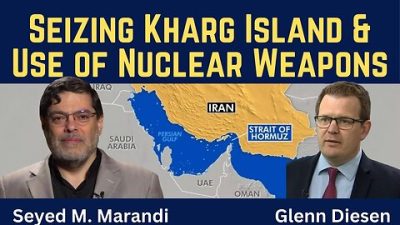
Marandi: Threat of Seizing Kharg Island & the Use of Nuclear Weapons
or go to
Aletho News Archives – Video-Images
Frlom the Archives
Provoking a Path to Persia
The Saban Center’s prescient paper on war with Iran
By Maidhc Ó Cathail | October 20, 2011
In June 2009, the Saban Center for Middle East Policy published “Which Path to Persia?—Options for a New American Strategy toward Iran.” Writing in a tone strikingly reminiscent of the Project for a New American Century’s infamous pre-9/11 paper “Rebuilding America’s Defenses,” the six co-authors noted that, “It seems highly unlikely that the United States would mount an invasion without any provocation or other buildup.” For a think tank specifically established by media mogul Haim Saban to protect Israel, this could prove to be a formidable obstacle impeding their desired march—of U.S. troops—to Tehran.
“In fact, if the United States were to decide that to garner greater international support, galvanize U.S. domestic support, and/or provide a legal justification for an invasion, it would be best to wait for an Iranian provocation, then the time frame for an invasion might stretch out indefinitely,” Saban’s think-tankers ruefully observed.
“With only one real exception, since the 1978 revolution, the Islamic Republic has never willingly provoked an American military response, although it certainly has taken actions that could have done so if Washington had been looking for a fight. Thus it is not impossible that Tehran might take some action that would justify an American invasion. And it is certainly the case that if Washington sought such a provocation, it could take actions that might make it more likely that Tehran would do so (although being too obvious about this could nullify the provocation). However, since it would be up to Iran to make the provocative move, which Iran has been wary of doing most times in the past, the United States would never know for sure when it would get the requisite Iranian provocation. In fact, it might never come at all.”
Seemingly undeterred by Iran’s frustrating unwillingness to provide the requisite provocation, the analysts continued to examine this option… continue
Blog Roll
 Aletho News
- Ukrainian Embassy in Beirut sheltering top Mossad agent
- Palestinian family displaced after settlers violently attack them in Humsa, Jordan Valley
- The EU never learns – except for the wrong lessons
- Iran attacks on UAE leaves RSF militia high and dry
- Hosting Washington’s war: Bahrain faces the consequences
- The US fell for its own Iran propaganda
- Seyed M. Marandi: Threat of Seizing Kharg Island & the Use of Nuclear Weapons
- Is there even an off ramp?
- Michael von der Schulenburg: Europe’s Self-Defeating Iran War Policy
- Sorry, The New Republic, Climate Change Isn’t Causing Somali Migration. Blame Civil Strife and Poverty.
- If Americans Knew
- ‘Of Course’: IDF Drops Case Against Soldiers Accused of Raping Palestinian Prisoner
- Don’t Fall for the Regime Change Talk. Israel Is ‘Mowing the Lawn’ in Iran
- Will Israel and the US wreck the Gulf States along with Iran?
- US so far burned through ‘years’ of munitions in Iran war: Report
- How the Israeli Tail Wags the American Dog
- Outdated intel likely led to deadly U.S. strike on Iranian elementary school, sources say
- Pentagon insider says high U.S official Douglas Feith reported to Netanyahu
- In fond memory of Walid Khalidi, the historian of Palestine
- 6 more Americans killed, as Israel ‘mows the lawn’ in Iran – Not a ceasefire Day 154
- Are we on the precipice of World War III?
- No Tricks Zone
- New Studies: UK Sea Levels Were 4 Meters Higher Than Today During The Mid-Holocene
- Destructive Green New Deal: German Energy And Metal Group Warns Of Drastic Crisis
- New Study Documents A 20-Year Pause In Arctic Sea Ice Decline – Driven By Internal Variability
- Wake-up Call: Survey Shows Majority Of Germans Now Favor Postponing Climate Targets!
- Televised! Leading German Political Candidate Tells Schoolchildren CO2 Makes Sun Hotter!
- New Study: A Century Warming Of 1.1°C Is ‘Commonplace’ And ‘Not Unusual’ During This Interglacial
- New Study: ‘Internal Noise’ And Volcanic Forcing Can Trigger 10-15°C Warming Within Decades
- Glaciers Worldwide Are Suddendly Surging, Experts Blame Warming!
- Surprising Discovery: Sahara Is Greening…Billions Of Trees Where Once Thought To Be Barren
- New Research Reaffirms Clouds, Aerosols, And Surface Solar Radiation Are ‘Driving The Climate System’
 Aletho News