When Settlers Attack vs. When Settlers Are Attacked
By Yousef Munayyer | Permission to Narrate | September 1, 2010
This afternoon news began to break about the killing of 4 Israeli settlers near the Palestinian town of Hebron. Surely, the killing of any unarmed civilians, whether their presence in a particular area is legal or not, is condemnable and many have been swift to condemn today’s act of violence and put it into perspective as an attempt to derail peace talks (as if these talks needed any help to fail).
Within minutes many major news outlets began reporting about this event. Here is Isabel Kershner’s coverage in the NYT:
Four Israelis, including a pregnant woman, were killed when their car was fired on in the West Bank on Tuesday evening, in the deadliest attack on Israelis in more than two years.
The killings appeared to be an effort by Palestinian militants to upset peace talks due to start in Washington on Thursday. Hamas claimed responsibility for the shootings, the Associated Press reported.
….
In July, Israeli security officials said they had arrested several members of the military wing of Hamas, the Islamic group, who were responsible for the fatal shooting of an Israeli police officer south of Hebron in June.
In March 2008, a Palestinian gunman from East Jerusalem killed eight students, mostly teenagers, at a religious seminary in the city.
As I am in the midst of analyzing data on settler violence it struck me how much this coverage chose to ignore about the dynamics of violence around settlements in the West Bank when it mentioned only Palestinian acts of violence going back to 2008 but didn’t waste a word on mentioning settler violence. Settler violence, often perpetrated with the knowledge, or assistance of the IDF, is just as likely to jeopardize the ‘peace process’ yet we rarely hear of it.
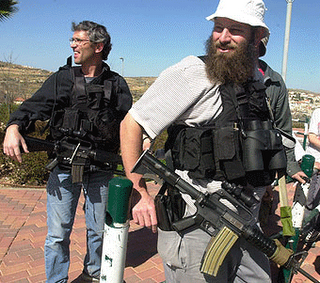 A quick query of the data, covering over 1000+ events, tells us the NYT story skipped over a lot, including over 260 acts of settler violence in the Hebron governorate alone since 2009. These include 56 instances of assault, 53 instances of stone throwing, 28 attacks on houses and attempted house seizures, 11 acts of arson and many more.
These acts of settler violence, again, in this one part of the West Bank in only the last 20 months has left 1 dead and 93 injured among Palestinians as well as incalculable amounts of property damage (the totals for the entire West Bank are much higher). Attacks perpetrated against Palestinians over this time period in the Hebron governorate were launched from the settlements of Adorah, Bat Ayin, Bat Hadassah, Hagai, Harsi, Karmei Tzur, Karmiel, Kfar Etzion, Kiryat Arba, Maon, Mount Joher, Negohot, Shani, Shima and Sosia.
This is the kind of information that Kershner forgot to mention, but it is also the kind of information that will be discussed in great detail, looking at all parts of the West Bank and trends over time, at our upcoming Palestine Center briefing on settler violence. If you can’t make to it DC, you can watch the live streaming webcast of the event at our website. Maybe Kershner can follow the live stream from Jerusalem and give settler violence the attention it deserves.
“Solidarity with the entire Palestinian people”
Adri Nieuwhof, The Electronic Intifada, 2 September 2010
 |
Ingrid Jaradat Gassner |
The BADIL Resource Center for Palestinian Residency and Refugee Rights recently published Rights in Principle — Rights in Practice, which examines a rights-based approach to crafting durable solutions for Palestinian refugees. The Electronic Intifada contributor Adri Nieuwhof interviews BADIL director Ingrid Jaradat Gassner on the organization’s work and the new book.
Adri Nieuwhof: Can you introduce BADIL and yourself?
Ingrid Jaradat Gassner: BADIL is a Palestinian nongovernmental organization (NGO) based in Bethlehem, and was established in 1998. Our mandate is to support the Palestinian people, in particular displaced people, to defend their rights, in particular their right of return. I am a founding member of BADIL and I have been its director since the beginning.
AN: What was the idea behind the foundation of BADIL?
IJG: The initiative came to a large extent from a series of popular conferences in the West Bank, the Gaza Strip as well as a conference of Palestinians in Israel in the mid-1990s, following the Oslo peace process, which in a very clear way sidelined Palestinian refugees and internally displaced persons. It was unclear how the peace process and the negotiations would deal with this. A strong campaign was necessary so that Palestinian negotiators would take a firm stand against a peace deal that would violate the rights of the refugees. One of the recommendations of the conferences was that there should be a Palestinian civil organization that specializes in this, because this did not exist. There was a group of people working in NGOs who were familiar with the topic and they participated in setting up BADIL, as well as some of the organizers of the popular conferences, among which were many members of the refugee communities.
AN: Can you give a brief overview of Rights in Principle – Rights in Practice?
IJG: It is a special book for BADIL, because it sums up several years of our work. In the first years we had to try to get involved in the peace process, because it could have a huge impact on the position of refugees. We had to engage in this existing peace effort. One way was to work with community organizations, to make sure the voice of the refugees was heard and respected by the Palestinian negotiators. We made a quite sustained effort to engage our international activities on the rights of Palestinians more in the context of the negotiations. Slowly we started to realize that we were the black sheep in these forums — always making the claims on the right of return and restitution for Palestinian refugees. We decided we should create our own forum, because we were no longer willing to participate in these non-rights based forums. In 2003 and 2004 we held seminars on the role of international law, housing, land and property restitution, international protection, and putting rights into practice. At the same time we organized study visits for Palestinian refugees to other places where refugee crises were being or had been resolved in order to see how states and the international community tackle and resolve refugee situations in other contexts. Refugees from the occupied [Palestinian] territory, Lebanon, North America, Europe and internally displaced Palestinians from Israel participated in these visits to Bosnia and Herzegovina, South Africa and Cyprus. Those who could do so, also participated in “return visits” to their places of origin now located in Israel, in order to assess possibilities for return and reconstruction.
The idea of the book came about when we realized around 2004/2005 that the situation is not one where we could expect a substantial peace process would emerge again. We felt we had learned what states and civil society could do, but there was no longer a context to push for a rights-based process. At some point there will be negotiations. We felt it is important not to lose the knowledge we collected, so that our expertise can be used later.
It is a closing chapter book. At the end of the book we look back and show the lines where we are going from there, which is very different from the technical in-depth debate of the rights-based approach.
AN: How do you analyze the current situation?
IJG: The 2004 advisory opinion of the International Court of Justice (ICJ) on the construction of the wall in the occupied West Bank was a kind of turning point. It made very clear that there was no political will to implement international law, or to be clear about what is right and what is wrong. How could we expect that Israel and other states would respect their obligations, if they can even ignore the highest opinion of the ICJ? We understood that it is basically civil society that creates the political will. We can change the thinking of decision makers, this absolute no-response of states. Many of us realized this in 2004/05. Organizations engaged in collective discussions on how we analyze the situation.
It was clear that this regime [Israel] does not respect international law, but continues to commit violations over and over again. We debated what is needed to change this. At this time civil society organizations in Palestine started to discuss what is today the boycott, divestment and sanctions campaign to isolate Israel and to build pressure on other governments to take a position against Israel’s violations of international law.
We also analyzed the character of the regime which oppresses the Palestinian people. We got some help from independent human rights experts. Professor John Dugard helped us understand how colonization, apartheid and occupation can go together in one regime. In 2008 we had extensive, broad discussions and how the Israeli regime combined the three. It has become common to talk about Israeli apartheid today, although it is not yet clear for everybody what this means. Our challenge is to explain exactly why we say it is apartheid, what are the main characteristics of apartheid.
At the same time, we again found a situation where governments and UN institutions and bodies, people in the UN absolutely refuse to recognize that Israel is a colonial apartheid regime. They have the information — there is an unwillingness to engage. Until we reach a situation where powerful actors recognize that we live in a situation of colonialism, apartheid and occupation, not much can be done here. All the international interventions will not protect the rights of Palestinians, because they miss the root causes. All efforts of constructive engagement with Israel, like for example that of the European Union, will not work. What works is to treat Israel like apartheid South Africa was treated. Put pressure on Israel, isolate Israel until it understands there are certain rules they have to comply with.
Right now, [Israel is] building bantustans in the [West Bank], and there is displacement, the blockade of the Gaza Strip. We are moving farther away from a peace scenario. We are deep in a colonial apartheid scenario.
AN: You explained that we are in the post-peace process stage and you have explained that the Israeli regime combines colonialism, apartheid and the occupation. What are the implications for BADIL’s strategy? Or the Palestinian strategy?
IJG: Well, I think the main strategy is to build the boycott, divestment and sanctions campaign as broad and as strong as possible. This is number one. It has proven to be very effective and there is potential for a bigger impact. Secondly, we have to raise awareness about this Israeli apartheid regime, even among our friends and campaigners we work with. Apartheid seems to be a bad word. We are convinced we can make a legal argument that apartheid is a crime under international law and that it applies to our situation. Thirdly, as BADIL we have to put effort at the same time into showing that positive scenarios can be developed. While we are struggling against the oppression, we have to develop a vision and show that our vision is practical and achievable.
AN: What type of support is needed in this fight phase from international organizations, citizens and social movements?
IJG: I think maximal activism and involvement in the boycott, divestment and sanctions campaign is the most important. We would also like to see more emphasis, campaigning, raising awareness on the discrimination of Palestinian citizens in Israel and the Palestinian refugees. There is a tendency to focus on the campaign against the occupation. These other two sectors of the Palestinian people are also very much affected by this colonial, apartheid regime. We want to have solidarity with the entire Palestinian people.
Adri Nieuwhof is a consultant and human rights advocate based in Switzerland.
Egypt seizes load of bricks bound for Gaza
Ma’an – September 2, 2010
GAZA CITY – Egyptian security forces in Rafah took control of two tunnels near Rafah they said were used for smuggling goods into Gaza, security sources told Ma’an on Wednesday.
Forces went looking for the tunnels following a tip they received around plans for smugglers to bring a load of bricks into the Gaza Strip.
With a continued ban on the entrance of construction goods for private building projects, materials like bricks and cement are unavailable to the public, restricted to the use of international aid agencies.
Egyptian security said the tunnels were located in the Al-Brazil neighborhood of Egyptian Rafah. They added that the bricks were seized and taken to a warehouse in Egypt.
Mitchell’s Quick-fix Fake Peace
By Stuart Littlewood | September 2, 2010
On the eve of the silliest peace talks in history, the big question is this. What makes Obama’s envoy George Mitchell, a negotiator of high repute, say there is ‘no role’ for Hamas?
The talks are silly because they seek to overturn what the United Nations has already decided for resolving the Israel-Palestine conflict and drive a bulldozer through the building blocks of justice.
It might be music to Zionist ears, but to people of good will it’s a cruel, futile and immensely damaging ploy.
The talks are also silly because they bring together two people who by no stretch of the imagination could qualify as partners for peace. And they sit down under the auspices of a third party with an appalling track record in the Middle East and whom no-one trusts to act fairly.
So Mitchell has been dealt a terrible hand. The former US senator, we’re told, has had an illustrious career in politics. Honours have been heaped upon him for his part in the Northern Ireland ‘Good Friday’ agreement.
Accepting one of those awards – the Liberty Medal in 1998 – Mitchell said: “I believe there’s no such thing as a conflict that can’t be ended… No matter how ancient the conflict, no matter how hateful, no matter how hurtful, peace can prevail. But only if those who stand for peace and justice are supported and encouraged, while those who do not are opposed and condemned. Seeking an end to conflict is not for the timid or the tentative. There must be a clear and determined policy not to yield to the men of violence…”
How about that? Conflict can be ended only by supporting those who stand for peace and condemning those who don’t. But does he know – has he really taken the trouble to find out – who actually stands for peace and justice in the ever-escalating obscenity of the Israeli occupation of Palestine? And is he absolutely clear who “the men of violence” are? Get it wrong and matters are made worse.
Mitchell is such an awesome peace-monger that he has become a visiting Professor at Britain’s Leeds Metropolitan University’s School of Applied Global Ethics, and the University is developing a new Centre for Peace and Conflict Resolution bearing his name.
If Mitchell is so clued up you have to wonder why he took the job – a veritable poisoned chalice. And you’d think a person with his vast experience would stick to accepted rules of engagement for conflict resolution and peace-making. I’ll mention just three:
• Talk directly with the people who are concerned or with whom there are concerns.
• Attack the issues, not the people with whom there is disagreement.
• No issue can be ‘off limits’.
There is no-one more concerned than Hamas. As the democratically elected authority they are the principle stakeholder on the Palestinian side. Obviously they must be allowed to represent the Palestinian case. It matters not one jot or tittle that the White House has “identified” Hamas as a terrorist organization. They have legitimacy. Besides, millions outside the White House can point to Israel’s much worse terror crimes.
Mitchell, besides barring Hamas, bends even further to Israeli prime minister Netanyahu’s demands and has ruled there must be no pre-conditions. Which means that Israel’s criminal conduct such as settlement construction, dispossession, ethnic cleansing, the land and sea blockade of Gaza, the occupation, the strangulation of the economy and their taste for piracy and extra-judicial killing, and their trampling of human rights including those of self-determination, are allowed to continue while the hapless Palestinians face them across the table.
And never mind that Netanyahu is permitted to enter these talks with his own pre-conditions, saying that the return of Palestinian refugees to the homes they were forced to flee, and the continuing occupation of East Jerusalem including the Old City, are not for discussion, and threatening to resume the (temporarily suspended) illegal settlement building.
If Mitchell is truly a person of integrity and a champion of “global ethics” how could he show such favour to one side?
What, I wonder, will he be saying to the Israeli team about UN Resolution 181 of 1947, which deals declares that “the City of Jerusalem shall be established as a corpus separatum“ administered by the United Nations?
What will he say to them about Resolution 242 (1967) by the Security Council and therefore fully binding? This insists on:
(i) withdrawal of Israeli armed forces from territories occupied in the recent conflict;
(ii) termination of all claims or states of belligerency, and respect for and acknowledgement of the sovereignty, territorial integrity and political independence of every State in the area and their right to live in peace within secure and recognized boundaries free from threats or acts of force.
242 also emphasizes the need for:
(a) guaranteeing freedom of navigation through international waterways in the area;
(b) achieving a just settlement of the refugee problem;
(c) guaranteeing the territorial inviolability and political independence of every State in the area, through measures including the establishment of demilitarized zones.
Will Mitchell bang the table to demand long overdue action on Security Council Resolution 338 (1973), which called on the parties concerned to start immediate implementation of Security Council Resolution 242?
Security Council Resolution 446 (1979) leaves absolutely no wriggle room. It “determines that the policy and practices of Israel in establishing settlements in the Palestinian and other Arab territories occupied since 1967 have no legal validity and constitute a serious obstruction to achieving a comprehensive, just and lasting peace… Calls once more upon Israel, as the occupying Power, to abide scrupulously by the 1949 Fourth Geneva Convention, to rescind its previous measures and to desist from taking any action which would result in changing the legal status and geographical nature and materially affecting the demographic composition of the Arab territories occupied since 1967, including Jerusalem, and, in particular, not to transfer parts of its own civilian population into the occupied Arab territories.”
It’s all there, Mr Mitchell, in black and white. The UN has set it out. The world is waiting for the UN to implement it.
Israeli foreign policy is driven by manifesto promises like:
• “The Palestinians can run their lives freely in the framework of self-rule, but not as an independent and sovereign state.”
• “Jerusalem is the eternal, united capital of the State of Israel and only of Israel.”
• The claim to a national and historic right to the Land of Israel “in its entirety” and the pledge to keep Jerusalem and the settlements.
Netanyahu’s belligerent coalition government probably won’t survive unless he uses all means to achieve these unlawful and hugely provocative aims and resists demands to give back Israel’s ill-gotten gains. A thief is clearly no partner for peace.
Neither is the PLO’s Abbas, who dances to America’s tune and whose authority is in question. Any agreement he makes will be open to challenge by his own people.
Obama is US president courtesy of the pro-Israel lobby. He is like putty in their hands. And he’s so ill-informed that he told AIPAC it’s OK for Israel to grab the hallowed City of Jerusalem and turn it into the permanent headquarters of the Zionist regime. Jerusalem “will remain the capital of Israel and it must remain undivided,” he blurted. When it dawned on him that he’d made a monumental blunder he tried to wriggle out: “Well, obviously, it’s going to be up to the parties to negotiate a range of these issues. And Jerusalem will be part of those negotiations… And I think that it is smart for us to work through a system in which everybody has access to the extraordinary religious sites in Old Jerusalem, but that Israel has a legitimate claim on that city.”
A legitimate claim? Who says? And negotiate what? Has the President forgotten that the UN decided long ago that Jerusalem, along with Bethlehem, was to become an international zone?
And how can it be right for weak, unarmed and impoverished Palestinians to have to negotiate with a brutal, lawless military regime for their universal rights and freedoms, which are supposed to be guaranteed by the international community but have been denied them for decades?
Obama is clearly no genuine peace-broker.
And George Mitchell, despite his awesome reputation elsewhere, has so far failed in the Holy Land. He and his boss are getting desperate. Staging farcical, lopsided talks in order to achieve a fake, temporary peace will no doubt save a few worthless political skins for the time being. But they benefit no-one else. And they don’t do an envoy of Mitchell’s calibre any credit. He would be better employed banging heads together at the United Nations, to finish the unfinished business there and ensure all the resolutions they have passed and all the other solemn declarations they have endorsed are implemented. No need for conflict resolution, judgment has already been handed down.
Then peace talks can begin, if genuine partners and an honest broker can be found.
It’s called justice, Mr Mitchell. There’ll be no real peace until justice is delivered.
No West Bank Study for Gaza Students
Ma’an – September 2, 2010
GAZA CITY — Gaza university students remain unable to access classrooms in the West Bank, a report fro the Al-Mezan Center for Human rights said on Tuesday.
“After a decade or more of de-development in Gaza,” the rights group said, residents of the Strip need all possible skills to ameliorate the humanitarian situation and advance development.
Students from Gaza City once were able to travel to the University of Birzeit by car in one hour, the report said, explaining that for students seeking post-graduate study degrees in medicine, dentistry, veterinary studies, radiology, medical environment protection, law and democracy, and human rights cannot find degree-granting institutions in Gaza, and historically looked to the West Bank for opportunities.
A blanket ban, the center said, has been imposed on Palestinian students from the Gaza Strip, preventing them enrolling at Palestinian universities in the West Bank to continue their education.
“This ban is not based on security needs – which if certain conditions are met can be legitimate in the context of belligerent occupation and armed conflict– but rather on belonging to a specific ‘category’ of persons. That is, students are prevented from accessing the West Bank
because they are students,” the report said.
In the last year, Al-Mezan reported, “all applications from students in Gaza who wish to study in the West Bank are rejected by the Israeli authorities.”
Chicago Climate Exchange drops 50%, new record low
The only lower price than today’s closing price on a ton of carbon is ZERO
August 31, 2010 by Anthony Watts


Perhaps reacting to the news yesterday about the IPCC getting taken to the woodshed, the growing number of stories in the MSM about the IPCC failure, and the recent layoffs at CCX, carbon trading has once again been devalued by the market. Amazingly, it lost 50% of it’s value for 2006, 2007, and 2008 “carbon instruments” today. Unless CCX starts making adjustments in single cents, the next downward adjustment is zero. The latest CCX advisory says they will be closed for labor day, and will reopen for trading September 7th. One wonders.
Here’s the CCX front page graph at closing today:

The CCX end of day table really says it all, 50% off, from a dime to a nickel in a day:
CCX end of day, August 31, 2010

Abbas is a Man in Exile, Even Among His Own
By Omar Karmi | The National | August 30, 2010
RAMALLAH: Mahmoud Abbas, the Palestinian president, faces a crisis of credibility among his own people as he heads into direct talks with Israel in Washington this week.
Perhaps nothing better illustrates this than a rather awkward security crackdown Thursday in Ramallah, when leftist factions convened a meeting to protest against Mr Abbas’s decision to accept the US invitation to the talks. Security officials justified the actions of dozens of plainclothes security officers, who disrupted the meeting and prevented a press conference from being held, as a legal measure against an “illegal rally”.
But privately, Palestinian Authority officials expressed their dismay at what looked to most like an effort by security services to stifle dissent.
And dissent there is.
All Palestinian political factions, bar one, have denounced the direct talks, some in harsher language than others.
Only Fatah, Mr Abbas’s own group, supports direct talks. Even among its members, though, there are plenty of disapproving voices.
Ordinary Palestinians, as well as the political factions, feel they have little influence on the Palestinian leadership’s decisions. The Palestinian polity is broken. There is no functioning parliament. The Gaza Strip and the West Bank are divided under the leaderships of rival factions. The PA government under Salam Fayyad was appointed by presidential decree and elections – presidential, parliamentary and municipal – have all been postponed indefinitely.
Even the Palestine Liberation Organization (PLO), which is chaired by Mr Abbas and represents Palestinian interests in international forums, including negotiations with Israel, was not properly consulted about the decision to go to direct talks. The US invitation to the talks was accepted, without a quorum as normally required by the PLO’s rules, at an emergency meeting of its executive committee.
At the heart of the discontent is the decision to agree to go to direct talks absent any of what Israel defines as “preconditions”: a complete settlement construction freeze and clear terms of reference for negotiations that would frame the talks along international resolutions.
The Palestinian side had hoped the statement of the Quartet on the Middle East – the United Nations, the United States, Russia and the European Union – on August 20, which described the negotiations as an effort to “end the occupation that started in 1967”, would form the basis of the invitation. But neither Hillary Clinton, the US secretary of state, nor George Mitchell, the US special envoy, made any reference to that statement in their invitation to talks, issued that day.
Instead, as US officials have made clear over the past week, the agenda and terms of reference will be set in the first months of direct negotiations. While Washington asked both sides not to take “provocative measures”, an apparent reference to Israel’s temporary and partial settlement construction freeze due to end on September 26, it was scant consolation.
The Palestinian leadership’s subsequent attempts to justify their decision to go to talks have also been clumsy.
“I understand people’s frustrations,” Saeb Erekat, the PLO’s chief negotiator, said at a press conference on August 23. Yet he went on to say the PLO saw the Quartet statement as the “turning point”, ignoring the fact that the invitation itself made no reference to that statement.
It was a point not lost on those at the press conference, who were also not impressed by Mr Erekat’s statement that the Palestinian delegation would walk out of the talks should settlement construction anywhere in occupied territory “including East Jerusalem” continue.
The problem, as one local reporter commented after the press conference, is that no one believes it.
“There is a real leadership crisis in the Palestinian arena,” said Diana Buttu, a Palestinian analyst and a former legal adviser to the PLO, adding that it “is not responsive to the people it represents or even the factions it represents”.
“We know that come September 26, Erekat will have to back down on what he said about settlement construction,” Ms Buttu said. “Even if the settlement construction freeze is extended, it is still a partial construction freeze and not one that includes East Jerusalem, as he stipulated.”
Ms Buttu said she understood that the Palestinian leadership had come under “enormous international pressure” to accept the invitation to talks. But, she suggested, it would be better served if it were more forthcoming. Instead, “the leadership lies, directly, to its own people, and that’s why its credibility is so low”.
In this respect, the lack of functioning political institutions works in the leadership’s favour, said George Giacaman, the co-founder and a board member of Muwatin, the Palestinian Institute for the Study of Democracy.
“Without functioning institutions, there is no real way for dissenting voices to make their opposition felt,” Mr Giacaman said. And while this lack of accountability mattered to Palestinian leaders, “the leadership is weighing international pressure against popular pressure and it seems the former takes priority”.
With little credibility and no diplomatic breakthrough, the situation could conflagrate.
“The direct talks will lead to direct failure,” Ms Buttu said. “Failure could lead to another intifada, but not necessarily one against Israel. This one might well be directed against the Palestinian Authority.”
Lifta’s legacy under threat
Antoine Raffoul, The Electronic Intifada, 1 September 2010
 |
Lifta village (Aisha Mershani) |
There are few villages in historic Palestine which invoke the memories of the Nakba (the 1948 dispossession of the Palestinian people) as does Lifta. Beautifully built and dressed in crafted Jerusalem stone, Lifta hugs the slopes straddling the highway leading from west Jerusalem to Tel Aviv. Its remaining houses look like jewels of a necklace, neglected by time and polished by the wind of history.
However, Lifta’s architectural legacy is under threat as Israel moves to Judaize the formerly pluralistic Palestinian village.
Lifta dates back about 4,000 years, and overlooks Wadi Salman and Wadi al-Shami which, in their heyday, provided it with its main water supply essential for its agricultural produce. Believed to have been built on the site of Mey Neftoach, a source of water near Jerusalem, Lifta is still blessed today by a running creek and a small peaceful pond in its midst.
Back in 1596, Lifta had a population of 396 residents which by 1945 increased to 2,550 Palestinians the majority of whom were Muslims owning 7,780 dunums (one dunum is approximately 1,000 square meters). Official records indicate that in 1931, the number of houses stood at 410, most of which were built by Lifta’s Palestinian residents using the famous Jerusalem stone from nearby quarries. Some of these houses stand at two and three stories high and display the cubist forms against the rolling hillside. They represent today some of the finest examples of Palestinian craftsmanship and architectural design.
During the 1940s and leading up to the end of the British Mandate in Palestine in 1948, Lifta expanded markedly eastward and northward linking with the buildings of the Rumayma neighborhood just west of Jerusalem. Its economic ties with Jerusalem became strong as nearly half of Lifta’s cultivated land was planted with cereal, wheat, barley, olives and various fruits.
Prior to the tragic events of 1948, Lifta’s ethnic mix was made up predominantly of the Muslims with a colored mix of Christian and Jewish minorities. This resulted in a strong sense of community life with a well-knit social bonding which was particular to Lifta. Documents describe some of the grand houses in Lifta as being shared by Jewish and Muslim families who, on occasions, would exchange local produce such as cheese and milk in addition to other products which would be sold in the local market. Also, the children of Lifta families from different backgrounds frequented the same village schools and enjoyed their time out in the same playgrounds. Lifta enjoyed an intricate web of woven streets, bustling with markets, coffee houses, a bakery and a pharmacy. Lifta residents had free access to the neighboring Jewish eye hospital. Community life in Lifta was, therefore, inclusive rather than exclusive.
It is also known that Lifta residents celebrated their religious festivities together in the main square. Local mosques became the hub centers for discussions of social and cultural issues of the day.
The ethnic cleansing of Lifta
Lifta’s tranquility and social harmony were tragically ended when, on the heels of UN Resolution 181 of November 1947, and as part of the Zionist Plan Dalet for the ethnic cleansing of Palestine, the Jewish armed militia Stern Gang entered Lifta on 28 December 1947, made their way to the local coffee house in the center of the village and gunned down six residents and injured seven others. Within 10 days, Lifta was turned into a ghost town with all 2,960 terrorized inhabitants being driven out and trucked to East Jerusalem where most of them remained. Quite a number of the village houses and the two elementary schools were demolished. Only after last desperate pleas by local dignitaries were most of the houses standing today saved from total destruction.
The uprooting of Lifta was a tragedy for all its mutli-ethnic population. The Nakba of Lifta was a catastrophe for Muslims, Christians and Jews. It has been told that the Jewish Hilo tribe which lived in the upper hills of Lifta were given the option by the advancing Jewish militia, the Stern Gang, to remain in Lifta, but they decided to join the Liftawis in their exodus, and left.
In the years since their expulsion, most of the Lifta refugees and their descendants ended up in Jerusalem, Ramallah, the rest of the West Bank, Jordan and the US where they formed a tightly-knit and active community in Chicago, Illinois.
Lifta’s architectural legacy
Until recently, the remaining houses of Lifta attracted an inquisitive number of locals and professionals mesmerized by the haunting elegance of their design, their original forms and the majesty of their setting. Tourists from abroad would arrive on organized tours led by one of Lifta’s original residents, Yacoub Odeh, who would painfully yet proudly narrate to them the village history and its eventual demise pointing in particular to the house where his family lived and which he himself as a child helped to construct. Until recently, some Liftawis would arrive from Jerusalem to venture down the winding rubble path to the main open square of the village. They would sit by the pool and fill their bottles with the pure spring water while exchanging memorable stories with those willing to listen. Until recently, the magnificent Lifta houses displayed one of the most beautiful forms of Arabic architecture: the dome. The cubic forms of the houses contrasted beautifully with the elegant curves of the domed roofs.
It is told that all the builders of Lifta did not use mortar or cement to bond their stones together. The dry construction process was made possible through the exacting techniques employed by the local stonemasons. They chiseled pristine and fine forms in stone to build their arches, square angles, external corners, quadrants, double and stepped arches. Most of the windows in these houses were sheltered by these fine arches and displayed perfect and well-proportioned rectangles of the type only modern architects can produce on their computers.
Until recently, Lifta’s heart was beating and its heartbeat was sustained by the visits of its original inhabitants. However, extremist Jewish settlers began to move in, while the original Liftawi visitors were blocked out. In a last attempt at architectural rape, and to ensure that the remaining Lifta houses would never be inhabited again, the settlers began to demolish some of the elegant domes thus exposing the living spaces below them to the external elements. Slowly, the tourists stopped coming down the hillside to visit Lifta and their tour guides had to be content with looking down at the village from the main roadside higher up the slopes. Then more Jewish settlers arrived and became the new hippie “squatters.” Occasional “religious seminars” were initiated by them to give their activity a sense of legitimacy.
Lifta today remains a ghost town suspended in time. Yet its elegance remains defiant and a symbol of the destruction of the Palestinian village during the Zionist military sweep in 1948. Lifta has become a symbol of the Palestinian Nakba. In its present state, it shouts at us for recognition and for attention.
Israel’s plans for Lifta
In June 2004, the Jerusalem Municipality Planning Committee, with the help of two architectural offices, G. Kartas/S Grueg and S Ahronson (in collaboration with Ze’ev Temkin of TIK Projects), produced a redevelopment project (Plan No. 6036) to turn Lifta into an exclusively Jewish luxury residential/commercial neighborhood. This plan, originally launched in April 1984 under the name “Plan 2351” but never implemented, had the intriguing title of “The Spring of National.” It was later approved by a regional planning committee. Under the misleading cover title of a preservation project, the plan called for the building of some 245 luxury housing units, a big shopping mall, a tourist resort, a museum and a luxury 120-room hotel. Most of the existing Lifta houses would be destroyed to erase any lingering memory of a once thriving Palestinian community. Even the Palestinian cemetery nearby does not figure in the new plan. Not only have the present Liftawis not been featured or consulted, but the memory and physical presence of their dead ancestors would now be erased.
This attempt at architectural and cultural erasure in the Israeli proposals for reshaping Lifta has its equivalent in the present day work by the Los Angeles-based Simon Wiesenthal Center to build a Museum of Tolerance over part of the Muslim Cemetery in Mamilla not far from Lifta. In a shameful acknowledgment of the existing fabric of the village, the redevelopment project for Lifta attempts to “preserve” a few houses which would be renovated but only for use by rich Jews from the Diaspora. A few existing trees would be left and some existing landscaping elements such as the spring and the terracing would be given a makeover in a gesture full of pastiche and borrowed imagery.
The history of the Palestinian community that flourished in Lifta does not feature in the new renovation plans. There is no record of Lifta’s Palestinian history as would normally be required of any renovation/preservation project, to link the present with the past. Even Lifta’s original mosque would be destined for removal to be replaced by a synagogue. If the plan is carried out, it would be nothing but a flagrant attempt to Judaize Lifta.
Saving Lifta
Lifta must be preserved and rebuilt by/for its original owners to raise awareness about the history of 1948. Lifta, in its new image, should pave the way for establishing a determined campaign for truth and reconciliation between two historic peoples. Lifta, in our view, represents the traceable genealogy which gives insight into the origins of the conflict. Peeling the layers of conflict would lead to an acknowledgment of the tragedy and an understanding of its implication on people’s identity.
Placing Lifta on the international architectural agenda has been the first objective and the primary aim of one of the most active professional groups involved on behalf of Lifta. This group is The Foundation for Achieving Seamless Territories (FAST), an architectural and planning group based in Amsterdam. Together with Zochrot (“remembering”), a body of Israeli professionals based in Tel Aviv working to raise awareness of the Nakba, they have argued passionately against the renovation plans submitted by the State of Israel, and have called, like FAST, for the right of return of the Liftawis to their homes. It is crucial that this campaign should lead to a change in the Israeli planning policies which are presently based on segregation and discrimination, and to opt for an alternative vision to achieve equality and long-term sustainability. A vision which promotes the idea of a place for Lifta, a sense of belonging for the Liftawis and reconciliation for the region.
Supplementing this campaign, we, at 1948.Lest.We.Forget, launched last year on our website (www.1948.org.uk) a Petition To Save Lifta which attracted more than 2,400 international signatures by people from all walks of life including high profile personalities in academia, architecture and literature. This petition has now closed and will be included as part of our application to the World Monuments Watch to declare Lifta a place of special character.
Moreover, as we believe that Lifta remains a symbol of reconciliation and hope in a region of continued conflict and tragedy, it is our intention to launch an International Architectural Competition with an open-ended brief, and to invite registered planners and architects from all over the world to contribute ideas and to produce schemes for one of the Lifta houses still standing.
The competition results will be exhibited in major capitals of the world, the first of which will be London where, over a period of four weeks, seminars, films, audio-visual presentations and debates will be held.
Antoine Raffoul is a Palestinian-born chartered architect living and working in London. He is also the coordinator of]the group 1948: Lest We Forget.
Meshal: Most Palestinians, from elites to regular people, reject the talks
August 31, 2010
Excerpted from an interview by Shamine Narwani of Hamas leader Khaled Meshal in Damascus:
KM: These negotiations are taking place for American and Israeli considerations, calculations and interests only. There are no interests at all for us as Palestinians or Arabs. That’s why the negotiations can only be conducted under American orders, threats and pressure exerted on the PA and some Arab countries.
The negotiations are neither supported nationally nor are they perceived as legitimate by the authoritative Palestinian institutions. They are rejected by most of the Palestinian factions, powers, personalities, elites, and regular people — that is why these “peace talks” are destined for failure.
This represents a perfect example of how the US administration deals with the Arab-Israeli conflict — how American policy appears to be based on temporary troubleshooting instead of working toward finding a real and lasting solution.
Consecutive US administrations have adopted this same policy of “managing conflict” instead of “resolving conflict.” This can be useful for American tactical and short-term purposes, but it is very dangerous on the long-term and the strategic levels. This approach will ultimately prove catastrophic for the region.
SN: There is debate about whether Hamas accepts the premise of a two-state solution — your language seems often vague and heavily nuanced. I want to ask if you could clarify, but I am also curious as to whether it is even worth accepting a two-state solution today when there has been so much land confiscation and settlement activity by Israel in the West Bank and East Jerusalem?
KM: Hamas does accept a Palestinian state on the lines of 1967 — and does not accept the two-state solution.
SN: What is the difference between the two?
KM: There is big difference between these two. I am a Palestinian. I am a Palestinian leader. I am concerned with accomplishing what the Palestinian people are looking for — which is to get rid of the occupation, attain liberation and freedom, and establish the Palestinian state on the lines of 1967. Talking about Israel is not relevant to me — I am not concerned about it. It is an occupying state, and I am the victim. I am the victim of the occupation; I am not concerned with giving legitimacy to this occupying country. The international community can deal with this (Israeli) state; I am concerned with the Palestinian people. I am as a Palestinian concerned with establishing the Palestinian state only.
SN: Can you clarify further? As a Palestinian leader of the Resistance you have to give people an idea of what you aspire to — and how you expect to attain it?
KM: For us, the 20 years of experience with these peace negotiations — and the failure of it — very much convinces us today that the legitimate rights of Palestinians will be only be gained by snatching them, not by being gifted with them at the negotiating table. Neither Netanyahu nor any other Israeli leader will ever simply gift us a Palestinian state. The Palestinian Authority has watered down all its demands and is merely asking for a frame of reference to the 1967 borders in negotiations, but Netanyahu has repeatedly refused to accept even this most basic premise for peace. Nor will America or the international community gift us with a state — we have to depend on ourselves and help ourselves.
As a Palestinian leader, I tell my people that the Palestinian state and Palestinian rights will not be accomplished through this peace process — but it will be accomplished by force, and it will be accomplished by resistance. I tell them that through this bitter experience of long negotiations with the Israelis, we got nothing — we could not even get the 1967 solution. I tell them the only option in front of us today is to take this by force and by resistance. And the Palestinian people today realize this — yes, it has a steep price, but there is no other option for the Palestinian people. The Palestinian people tried the peace process option but the result was nothing.
Claim for Native Title Threatens Jewish State
 Half the Negev’s Bedouin population live in unrecognised communities
By Jonathan Cook – Hura, the Negev – September 1, 2010
Nuri al Uqbi’s small cinderblock home in a ramshackle neighbourhood of Hura, a Bedouin town in Israel’s Negev desert, hardly looks like the epicentre of a legal struggle that some observers say threatens Israel’s Jewish character.
Inside, the 68-year-old Bedouin activist has stacks of bulging folders of tattered and browning documents, many older than the state of Israel itself, that he hopes will overturn decades of harsh government policy towards the Negev’s 180,000 Bedouin.
For the past few months, Mr al Uqbi has been in court pursuing a case that has pitted his own expert witnesses against those of the state.
Mr al Uqbi claims the right to return to a patch of 82 hectares in the Negev, close to the regional capital, Beersheva, that he says has belonged to his family for generations. But as both the government and the judge in the case, Sarah Dovrat, seem to appreciate, much more is at stake.
Should Mr al Uqbi win his case, tens of thousands of Bedouin, who long ago had their properties confiscated, could be entitled to repossess their agricultural lands or seek enormous sums in compensation.
Theoretically, it might also open the door to claims by millions of Palestinian refugees scattered across the Middle East.
The Negev, constituting nearly two-thirds of Israel’s territory, has been almost entirely nationalised by the state, with the land held in trust for world Jewry. But the Bedouin have outstanding legal claims on nearly 80,000 hectares of ancestral property.
Tom Segev, an Israeli historian, observed that the historical documents presented by Mr al Uqbi “raise a fundamental question: Who does this country belong to?”
The lawyers and witnesses in the case, Mr Segev added, were not just “arguing over a plot of land. They are arguing over the justness of Zionism”.
Such high stakes may explain why over the past few weeks, as Ms Dovrat has been considering her verdict, the authorities have sped up plans to plant over Mr al Uqbi’s land a “peace forest”, paid for by an international Zionist charity called the Jewish National Fund (JNF).
Until now the main obstacle in their way has been a small village, Al Araqib, re-established a decade ago by several Bedouin families who, rather than pursue Mr al Uqbi’s legal route, have simply reoccupied the land.
Last week, about 300 Bedouin were again evicted when the police destroyed the village’s 40 homes for the fourth time in less than a month.
Mr al Uqbi, a father of eight, said that five years ago – after years of challenging the land confiscation with protests and appeals to the authorities – he launched the lengthy legal process that has finally reached the Beersheva court.
“I realised that the authorities were simply waiting for me to die. When all the old people are gone, who will be left to come and testify?”
Mr al Uqbi said his father, Sheikh Suleiman al Uqbi, and the other villagers were “tricked” by the authorities in 1951. They were told that they would have to relocate “temporarily” while military exercises were carried out in the area.
Mr al-Uqbi, who was nine at the time, remembers the tribe being forcibly moved to a new site, next to Hura, where they have lived ever since, although their neighbourhood has never been recognised by the state.
All these years later, Mr al Uqbi’s home, like his neighbours’, is still illegal, and they are all denied water, electricity and other services.
The only option they had been offered to make their lives legal again, Mr al Uqbi said, was to move to one of seven government “townships” set up in the 1970s. All are sunk at the very bottom of Israel’s social and economic tables.
The families have refused, protesting that they would also have to renounce both their claim to their ancestral lands and a pastoral and agricultural way of life known by the Bedouin for centuries. The Uqbi tribe’s fate is far from unique. Tens of thousands of other Bedouin were also moved by the army and have been faced with a similar, stark choice.
Today, 90,000 Bedouin, or half the Negev’s Bedouin population, live in unrecognised communities, according to a human rights group.
Mr al Uqbi’s court case has set two noted Israeli geography professors in sharp opposition.
The state’s position is represented by Ruth Kark, of Hebrew University in Jerusalem, who claims that the Negev Bedouin were nomads with no ties to the land. Instead, she argues, most of the Negev was considered “mawat”, or dead, and its ownership passed to Israel in 1948 as the new sovereign ruler.
On these grounds, the state has long classified the Bedouin as “trespassers” and “invaders”.
But Mr al Uqbi’s expert, Oren Yiftachel, of Ben Gurion University in Beersheva, has countered that there was a well-established system of Bedouin land ownership and crop cultivation in the Negev long before Israel’s creation.
He says Bedouin deeds – though never formally recorded – were recognised by the Ottomans, the British and even early Zionist organisations such as the JNF, which bought land from the Bedouin.
A 1921 document from the public records office in London unearthed by Mr Yiftachel shows that Winston Churchill, the colonies minister, signed an agreement with Bedouin in the Beersheva area that exempted them from registering their lands and set up a special tribal court to settle land disputes.
Mr al Uqbi has kept a large store of documents passed on to him, showing that his father cultivated crops on the land and paid regular tithes on the profits to the Ottoman and British authorities.
He also has a copy of the treaty signed in 1948 between 16 Bedouin tribes, including the Uqbi, and the new Israeli army, pledging loyalty in return for a guarantee that they could continue living on their lands.
Mr Yiftachel said the legal battles of the Bedouin should be compared to those waged by other indigenous peoples in countries such as Australia, Canada, South Africa, India and Brazil. “Like them, they are fighting for recognition of ‘native title’,” he said.
– Jonathan Cook is a writer and journalist based in Nazareth, Israel. His latest books are “Israel and the Clash of Civilisations: Iraq, Iran and the Plan to Remake the Middle East” (Pluto Press) and “Disappearing Palestine: Israel’s Experiments in Human Despair” (Zed Books).
Smear campaign targets pro-Palestinian Brooklyn College professor; alum suspends ’significant bequest’
By Zoe Zenowich and Alex Kane on August 31, 2010
A campaign reminiscent of past academic battles over Israel is afoot, this time targeting Brooklyn College professor Moustafa Bayoumi, who edited the newly released book titled Midnight on the Mavi Marmara: The Attack on the Gaza Freedom Flotilla and How it Changed the Course of the Israel/Palestine Conflict.
Critics of Bayoumi say it is inappropriate for the college to assign his book, How Does It Feel to be a Problem? Being Young and Arab in America, to the approximately 1,500 incoming freshmen, a longstanding tradition meant to engage students in collective dialogue through writing. Critics are accusing Bayoumi’s book of seeking to “inculcate students with a political viewpoint,” claiming the decision lacks “balance.” But upon closer examination of the concocted controversy, it becomes clear that the targeting of Bayoumi is principally for his advocacy for Palestinian human rights. His adversaries are using the college’s decision to have his book read by freshmen as a tool to raise questions about his stance on Israel/Palestine.
Assigning the book to incoming freshmen is meant to “humanize a population that’s being increasingly dehumanized,” Bayoumi told a group of Brooklyn College students today in an afternoon meet-the-author session where students had the opportunity to ask questions.
Bayoumi has been labeled a “radical pro-Palestinian” professor by Brooklyn College alumni Bruce Kesler, who recently wrote that the college will no longer be receiving a “significant bequest” from him. Kesler, a contributing editor to the right-wing group Family Security Matters, a project of the Center for Security Policy, whose members include former Vice President Dick Cheney and neoconservatives like Elliot Abrams, has brought the most attention to Bayoumi, with an article citing him appearing in the New York Daily News.
Kesler is not the only person to join in on the smear campaign. The Jewish Week has joined in the fray, citing anonymous professors from the college as saying that Bayoumi’s book will “indoctrinate” students.
Professor of Judaic Studies at Brooklyn College, Jonathan Helfand, told Ashley Thorne of the National Association of Scholars, a conservative group that opposes “racial, gender, and other group preferences,” that the book on the flotilla “is at best biased, at worst vile propaganda.” The NAS also opposes the use of Bayoumi’s book, referring to it as “polemical,” and the decision to assign it as “troubling.”
Abigail Rosenthal, Professor Emeritus of Philosophy at Brooklyn College, called Bayoumi the “author of a blatantly one-sided collection on the Gaza flotilla” whose book on Arabs and Muslims in the U.S. “will intimidate incoming students who have a different point of view.”
And Campus Watch, an organization dedicated to suppressing criticism of Israel on campus, has highlighted an article on Pajamas Media about Bayoumi.
One of the criticisms directed at How Does It Feel to be a Problem? is the claim that the book draws a parallel between “the horrible and pervasive discrimination and injustices that Blacks were subjected to a century ago and Arab-Americans today,” which Kesler labels “ridiculous.” But in their zeal to make it look like Bayoumi’s book on young Arabs in America is their real problem, as opposed to his advocacy for Palestinians, the critics don’t seem to have read the book. The first footnote in Bayoumi’s book, whose title comes from a famous W.E.B. DuBois line, explains that by making a link between blacks and Arabs in the U.S., he means to “draw attention to how difference operates in American society, but this certainly does not mean that Arab-American life since September 11, 2001, is in any way equivalent to the ravages of slavery and segregation.”
Bayoumi’s How Does It Feel to Be a Problem? has also been used at other colleges, like Johnson State College in Vermont.
So far, Brooklyn College has stood its ground. In a statement given to the Daily News, the college says that it is “regrettable that Mr. Bruce Kesler misunderstands the intentions of the Common Reader experience and the broader context of this selection.”
However, there’s bound to be sympathy among pro-Israel Brooklyn College and City University of New York donors with regard to those sentiments expressed by Kesler and others. Jeffrey Wiesenfeld, for one, who sits on the board that governs the city’s public college system, is a prominent supporter of Israel, and was a key player in the witch hunt against the Khalil Gibran International Academy.
The smears against Bayoumi bring to mind similar campaigns, like the one that undid Norman Finkelstein’s tenure bid at DePaul University and the failed attempt to deny Joseph Massad, a professor at Columbia University, tenure.
Those campaigns may be a harbinger of things to come for Bayoumi, who is not tenured at Brooklyn College.
Zoe Zenowich is a Senior in the Scholars Program at Brooklyn College, where she is the managing editor of the Excelsior, a student newspaper. She is currently interning for the Brennan Center for Justice at NYU School of Law, and has interned for the Nation and the Economist.
Alex Kane is a college student, journalist and blogger based in New York City. He is a reporter for the Indypendent, and a frequent contributor to this site. His articles have also appeared in Common Dreams, Electronic Intifada, Extra! and Palestine Chronicle. He blogs at alexbkane.wordpress.com. Follow him on Twitter here.
In search of a Palestinian partner for Mark Regev
By Belén Fernández | Pulse Media | September 1, 2010
Following yesterday’s fatal attack on 4 Israeli settlers in the West Bank, responsibility for which was claimed by the military wing of Hamas, Israeli government spokesman Mark Regev informed Al Jazeera that this episode was evidence of how all Israelis are now considered equally valid targets—with no mention of course that Israelis not located on illegal settlements have in recent years generally been targeted by Hamas only following Israeli breakage of ceasefires, and that such targeting during the Gaza War of 2008-09 resulted in the deaths of 3 Israeli civilians compared to over 1200 Palestinian civilians. The latter figure did not prevent Regev from claiming at the time that Israel had “made every possible effort to target enemy combatants only”.
As for whether Regev’s audition for the position of Israeli government spokesman had consisted of reciting such things as “The guinea pig initiated violence against the boa constrictor” and “The armadillo attacked the wheel of the car” with a straight face, further evidence in support of this possibility was found in his response to the Gaza flotilla massacre of May 31, 2010, in which IDF commandos who boarded humanitarian aid boats in international waters and murdered 9 activists were determined to have been on the receiving end of violence.
Were Hamas allowed access to the same logic as Israeli spokesmen, the organization may well have excused yesterday’s attack by publishing outdated photographs of assorted household items on Flickr and claiming that these were weapons found in the vicinity of the 4 settlers. The fact that Israel continues to qualify its bellicose endeavors with claims of a commitment to conflict resolution meanwhile suggests that Palestinian time may be more efficiently spent searching for a partner for Mark Regev rather than a partner for peace.
Featured Video

Iran Is Not Our Enemy
or go to
Aletho News Archives – Video-Images
Book Excerpt
“Vaccines Do Not Cause Autism!” The Science is Settled. Right?
ICAN urges the IACC to actually study infant vaccines and autism
 By Aaron Siri | Injecting Freedom | March 16, 2026
On behalf of ICAN, we just sent a copy of chapter 11 of Vaccines, Amen to the newly appointed members of the federal Interagency Autism Coordinating Committee (IACC).
If you haven’t already read this chapter, you can read the whole thing in the attached letter. I trust that after you read it, you’ll see why the statement “vaccines do not cause autism” is a belief, not science!

IACC Public Comment Letter
1.53MB ∙ PDF file
Includes chapter 11 of Vaccines, Amen
Blog Roll
 Aletho News
- Iran made ‘unexpectedly substantial’ offer during Geneva talks, US envoys ‘dragged’ Trump into war: Report
- Russia condemns Israel’s attack near Bushehr plant, files complaint
- Russia Strongly Condemns Actions Aimed at Harming Health of Iranian Leadership – Kremlin
- Israeli Journalist Demands Tucker Carlson and Candace Owens Be Placed in WWII-Style Internment Camps
- No Liability, No Studies, No Accountability: The Vaccine System Aaron Siri Exposed in Federal Court
- No time for losers: Why the war meant to save Israel may destroy it
- Top US Counterterrorism Official Resigns in Protest of Operation Against Iran
- Just Get Out! Now!
- Unpacking glaring contradictions in US-Zionist justifications for war against Iran
- Iranian model of warfare bleeds US dry while Persian Gulf states watch and learn: Analyst
- If Americans Knew
- Lebanon death toll exceeds 900, another assassination in Iran, bombing in Gaza – Not a ceasefire Day 159
- Trump’s counterterrorism chief, whose own wife was killed by ISIS, quits over Iran War saying Tehran posed ‘no imminent threat’
- Here’s what US could fund instead of Bibi’s war on Iran
- Israel Killed Over a Dozen Lebanese Paramedics in Three Days, Now Claiming That Ambulances Are “Hezbollah” Targets
- War on Iran: These are the heritage sites devastated by US and Israeli attacks
- Four news stories from Israeli media that illustrate Israeli “justice”
- CIA Prepares Criminal Referral of Tucker Carlson, as Israel and Its Loyalists Demand His Arrest
- Top US counterterror advisor resigns in protest of “war manufactured by Israel” – Not a ceasefire Day 157
- ‘I Liked the House’: When Israeli Soldiers Turn Palestinian Homes into Barracks
- ‘They Were All I Had’: Lebanese Father Buries Parents, 4 Daughters Killed by Israeli Bombing
- No Tricks Zone
- Energy Expert: Germany’s Nuclear Phaseout Was A “500 Billion Euro Mistake”
- New Research: South Australia’s Mid-Holocene Sea Surface Temperatures Were 4°C Warmer Than Today
- Storing Green Energy To Last Germany 10 Days Would Require A 60-Million Tonne Battery
- New Studies: UK Sea Levels Were 4 Meters Higher Than Today During The Mid-Holocene
- Destructive Green New Deal: German Energy And Metal Group Warns Of Drastic Crisis
- New Study Documents A 20-Year Pause In Arctic Sea Ice Decline – Driven By Internal Variability
- Wake-up Call: Survey Shows Majority Of Germans Now Favor Postponing Climate Targets!
- Televised! Leading German Political Candidate Tells Schoolchildren CO2 Makes Sun Hotter!
- New Study: A Century Warming Of 1.1°C Is ‘Commonplace’ And ‘Not Unusual’ During This Interglacial
- New Study: ‘Internal Noise’ And Volcanic Forcing Can Trigger 10-15°C Warming Within Decades
 Aletho News