Gaza deaths protest comes under heavy live fire from Israeli snipers
15 September 2010 | ISM Gaza
Over 100 rounds of live ammunition were fired at peaceful protesters in a Tuesday demonstration in the Gaza strip. The protest at the Erez border area near Beit Hanoun yesterday included Palestinian activists from the Local Initiative group, local residents and 4 members of the International Solidarity Movement who marched into the site of the recent fatal Israeli incursion. The demonstrators had a view of the area where only a few days earlier, a Grandfather Ibrahim Abu Sayed and his 17 year-old grandson were killed by Israeli tank shelling.
The peaceful demonstration was joined by several young Palestinians, who were also protesting their right to their land, much of which is now lost or out of bounds by the Israeli imposed “buffer-zone.” This buffer-zone is 300 metres wide and stretches along the entire border fence on the frontier with Israel. According to the recent United Nations Report “Between the Fence and a Hard Place” the violence used to restrict Palestinians from accessing their land covers areas up to 1500m from the border fence, meaning that over 35% of Gaza’s most agricultural land is in a high risk area causing severe losses of food production and livelihoods.
On a previous demonstration, the activists had managed to partly remove a barbed wire fence, which had prevented them from entering their own farm land. This was met by an Israeli incursion days later, in which tanks and bulldozers unearthed a huge trench in front of the fence, about one kilometre long, three meters deep and two meters wide.
Having marched to the wire fence, 100 metres from the border wall, the demonstrators chanted and waved flags, planting one Palestinian flag beyond the wire fence. They had brought shovels and begun to refill the trench, when the Israel army suddenly opened fire around them. Under heavy shooting with live ammunition, the participants stood their ground, communicating through a megaphone, some crouching low for cover amidst the gunfire that came within 5 metres.
“We attend these demonstration because of the huge border area that takes Palestinian land”, eighteen year-old Hussam told us. “We don’t want it to be separated from our own land, it’s farmland and people are killed for trying to harvest it. Because of that we came to make them feel secure again.”
The shooting created an atmosphere of terror and fear among the demonstrators, as they had no safe cover in the forcibly neglected area… Full article
Israeli Troops Kill Palestinians With Impunity
Palestine Monitor | 14 September 2010

Soldiers who kill Palestinians in the Occupied Territories are almost never held accountable, even if the circumstances raise a grave suspicion that they acted criminally. This is the conclusion arising from B’Tselem’s report, which analyzes the policy of the Judge Advocate General’s Office over the past four years. The main reason for this dismal situation is that the army refrains, as a rule, from conducting a Military Police investigation in cases in which soldiers kill Palestinian civilians. In addition, the research shows that the Judge Advocate Generals’ Office routinely procrastinates in making decisions on files for many months, even years.
The report, Void of Responsibility: Israel Military Policy not to investigate Killings of Palestinians by Soldiers, issued today (Tuesday, 14 Sept) deals with events in the years 2006 to 2009 in which soldiers killed Palestinian civilians who were not taking part in hostilities (not including Operation Cast Lead). During this period, B’Tselem wrote to the Judge Advocate General’s Office (JAG), demanding a Military Police Investigation Unit (MPIU) investigation into 148 cases in which 288 Palestinians were killed in those circumstances. In these years, soldiers killed 1,510 Palestinians, 617 of whom were not taking part in hostilities (the figures do not include Operation Cast Lead).
In only 23 of the cases B’Tselem sent to the JAG, around fifteen percent, was an MPIU investigation opened, and in 41 of the cases, the JAG’s Office decided not to order an MPIU investigation. In the majority of the cases (84 cases), no decision has been made yet.
In the rare cases in which a decision is made to open an MPIU investigation, the decision is reached after great delay, which impairs the effectiveness of the investigation. In about one-third of the cases in which an MPIU investigation was ordered, the decision was made a year or more after the incident. When the investigation has ended, and the file was returned to the Judge Advocate General’s Office for decision on whether to file an indictment, it delays its decision for months, sometimes years. Eight of the 23 cases have ended with a decision to close the file without prosecution. In four cases, the MPIU has not completed its investigation, and in three other cases, the file was returned to MPIU for further investigation. In eight cases, no decision has been made whether to file an indictment, or B’Tselem has not been informed of the decision that was made. None of the cases in which B’Tselem referred to the JAG’s office led to criminal charges.
The fact that most of the complaints to the JAG’s Office still await decision makes it difficult to determine the reasoning it employs. However, analysis of a number of cases that B’Tselem handled in which a decision was made not to open an MPIU investigation shows that investigations are not opened even where there is a grave suspicion that the law has been broken. Also, analysis of the files shows that the authorities’ interpretation of the events is based solely on the results of an operational inquiry and the statements of the soldiers, without any reliance on the eyewitness testimony of other persons and on other evidence that contradicts the soldiers’ position.
The army’s policy not to open an MPIU investigation is based on the determination that the legal situation in the Occupied Territories is one of “armed conflict,” and on an incorrect interpretation of international law, which shirks the obligation of investigation imposed also in the situation of armed conflict. B’Tselem warns that this policy grants immunity to soldiers and officers, and that the army is failing in its obligation to take all feasible measures to reduce injury to Palestinian civilians. This policy permits soldiers and officers to act in violation of the law, encourages a trigger-happy attitude, and shows a flagrant disregard for human live. The petition that B’Tselem and the Association for Civil Rights in Israel (ACRI) filed on this subject in 2003 is still pending.
“Since the beginning of the intifada, we have opposed the sweeping decision not to investigate the killing of Palestinians,” B’Tselem’s executive director Jessica Montell said. “This is even truer now, when it is impossible to view the situation in the West Bank as armed conflict. The legal status must reflect the reality in the field, as well as express the value given to human life and the obligation to protect civilians.”
The report offers recommendations to the defense establishment, the foremost being a change in the legal definition of the situation in the West Bank, eliminating its classification as one of “armed conflict.” In addition, B’Tselem calls on the Judge Advocate Generals’ Office to adopt the guidelines recently submitted by Israel’s attorney general regarding the proper timeframes for handling files.
Background
From the beginning of the first intifada, in December 1987, to the outbreak of the second intifada, in September 2000, the Military Police Investigation Unit (MPIU) investigated almost every case in which a Palestinian not taking part in hostilities was killed. At the beginning of the second intifada, the Judge Advocate General’s Office (JAG) announced that it classified the situation in the Occupied Territories an “armed conflict,” and that an MPIU investigation would be opened only in exceptional cases, in which there was a suspicion that a criminal offense had been committed. This policy, which led to a significant drop in MPIU investigations of homicide cases, ignored the changing character of the army’s actions in the Occupied Territories, and treated every act carried out by soldiers as a combat action, also in cases in which the act had the clear markings of a policing action.
The primary tool used to determine whether to open an MPIU investigation is the operational inquiry, whose principal purpose is to learn lessons to improve operational activity in the future, and not to identify persons responsible for past misdeeds. In November 2005, in the framework of a hearing on a petition filed by B’Tselem and the Association for Civil Rights in Israel objecting to the policy of not opening MPIU investigations, the army instituted a procedure calling for preliminary investigation, within a limited period of time, of cases in which Palestinians not taking part in hostilities were killed. However, the procedure did not set a time framework for making decisions whether to order an MPIU investigation or to prosecute alleged offenders. As a result, these decisions may be delayed months, even years, thus preventing effective handling of suspected criminal acts within a reasonable time from the day that the incident occurred. The establishment, in 2007, of the office of the judge advocate for operational matters, which was intended to improve the efficiency in handling complaints and reduce the handling time, did not bring about significant change.
“They don’t want our boys educated”
Jody McIntyre writing from Beit Ommar, occupied West Bank, Live from Palestine, 13 September 2010
Located just north of Hebron in the occupied West Bank, the entrance to the Palestinian village of Beit Ommar is also the site of an Israeli military post. A large yellow gate is opened and closed at the will of the Israeli army, which can cut off the inhabitants of the town from the rest of the West Bank at any time. Beit Ommar has been resisting since 1948, when the town’s inhabitants fought the original settler population of Gush Etzion and today many continue to suffer the impact of the many surrounding settlements. Jody McIntyre interviews Beit Ommar resident Amal al-Montallab for The Electronic Intifada.
Jody McIntyre: Please introduce yourself.
Amal Abed al-Montallab: My name is Amal Abed al-Montallab, 45 years old, and I have six children — three daughters and three sons. We live in the Thahr al-Burrahesh area of Beit Ommar. My oldest son, Ammar, is 17 and in jail. The rest of my kids are young and still at school, so only my husband works, but he can’t work inside Israel because he’s been imprisoned twice before, so his wages are low. But we know that our story is not unique; there are many more families here with the same story.
JM: Can you tell me about the time the Israeli military came to arrest Ammar?
AM: It was just over two months ago. They army invaded and occupied the neighborhood, and started asking where they could find the house of Mohammed Abdul Hameed Abu Maria, my husband, but the neighbors told them that they’d never heard of such a house. Someone must have given the army inaccurate information, because they were looking for someone called Omar, not Ammar.
A week later they came back, but this time they were sure about his name and the location of our house. It was 2am. Ten soldiers invaded our home and were very violent with our children. They asked my husband where his son was, and he told them that he was working in Jericho. Then, they forced him into a separate room, and asked our children the same question, one-by-one, but they all gave the same answer: “Our brother works in Jericho.” They tried to trick my husband by telling him that one of the kids had informed them that Ammar was in the village, but he replied, “I know that none of my children said that to you, and it is simply from your mind.” Finally, the army left.
We shut the door, intending to get some sleep, but five minutes later the same soldiers invaded our house again, this time from the back door, and stayed for another two hours. The military commander came and took our phone numbers; he told us that he knew Ammar was sleeping at his uncle’s house, but he didn’t want to go there because it would make problems. They gave us a paper ordering us to take Ammar in for questioning at a nearby military base, situated in the settlement of Gush Etzion, but I refused because I knew that Ammar still had his final exams to study for. The commander said, “If you don’t bring him, tomorrow we will shoot him dead.”
The next day, they phoned us and said that we had ten minutes to take Ammar to them, otherwise they would arrest him themselves, and shoot him in front of our eyes.
We were worried because we knew that someone in the neighborhood could quite easily work with the Israeli army and make problems for Ammar. We were also worried that they might arrest Ammar at school, in front of all the students, which would inevitably result in clashes and many further arrests.
My husband told the commander that we would take Ammar to them after he had finished exams, and offered to pay money or even be arrested himself until then, but they refused.
Ammar is still in prison now; it’s been two months so far, and the lawyer thinks he will stay there for between five to seven months overall. The army says that our son threw stones, and he could’ve killed someone, but they have not one shred of evidence.
JM: Why do you think they arrested Ammar?
AM: They wanted Ammar because he’s studying for his final exams. The army does this every year, they arrest boys when they are preparing for the final exam so they aren’t educated. Because they arrested him at the start of the exams, he automatically loses one year of his education.
There was one kid in the neighborhood who was arrested three years in a row. Each year, they arrested him right before the final exams, and then two months later released him.
If the soldiers are scared of the kids throwing stones, they should know that we are suffering a much deeper fear. But we are patient, and when he is free again, he will go back to school.
Jody McIntyre is a journalist from the United Kingdom. He writes a blog entitled “Life on Wheels” which can be found at jodymcintyre.wordpress.com. He can be reached at jody [dot] mcintyre [at] gmail [dot] com.
Quartet lobbying enriched Abbas’ family
Blair abuses his post as envoy, brokers business deals
Ma’an – 13/09/2010
LONDON — Middle East Quartet envoy to Jerusalem Tony Blair’s lobbying in favor of a Palestinian telecommunications company enriched the family of President Mahmoud Abbas, a UK tabloid reported Sunday.
A special investigation published in The Daily Mail’s weekly edition on Blair’s financial gains from lobbying on behalf of Wataniya includes allegations that Abbas’ son made a fortune through the former British prime minister’s actions.
According to the report, Blair mounted an intense political lobbying campaign to rescue the struggling mobile-phone business owned by a client of the bank that pays him millions of dollars annually. Wataniya almost collapsed before launching its service, jeopardizing a multimillion-dollar investment, because Israel’s government was refusing to let it use the frequencies it needed to operate.
Acting in his capacity as the international Middle East peace envoy, Blair helped to save the company by spending months putting pressure on Israel’s prime minister and his colleagues in a bid to change their minds, pointing out the need to help the Palestinians’ economy.
What Blair never mentioned is that JP Morgan, the American investment bank that employs him as a consultant, has a financial stake in Wataniya through Wataniya’s owner, the Qatari firm Qtel, which is an important client of JP Morgan. Blair’s spokesman told the tabloid he had no knowledge of any connection between JP Morgan and Qtel. He repeated the denials to the Israeli press.
Still, the allegations also call into question some of the gains by the Ramallah-based Palestinian president’s son, Tarek Abbas, whose firm has reportedly secured a lucrative contract to provide advertising for Wataniya.
In July 2008, Blair brokered what Wataniya thought was a cast-iron deal with Israel to make the frequencies it needed available. In order to provide a modern 3G service to include mobile internet, Wataniya had been seeking a bandwidth of 4.8 megahertz. On the strength of this agreement, it continued to build mobile-phone masts, switching centers and other installations it needed to operate.
Wataniya managed to secure special additional loans from a US government program that had been set up to help Palestinian farmers and small businesses — despite the backing it had from Qtel and, indirectly, banks such as JP Morgan.
Academic research collaboration emboldens Israeli apartheid
Diane Shammas, The Electronic Intifada, 14 September 2010
 |
Israeli universities play no small role in the state’s military strategy. (Keren Manor/ActiveStills) |
In July, Donna Shalala, the president of the University of Miami and former United States Secretary of Health and Human Services during the Clinton administration, joined a 13-member delegation of American university presidents to Israel. The delegation’s main objective was to discuss opportunities for academic collaboration with Israeli universities and reciprocal exchange programs for student and faculty. The majority of these Israeli universities, if not all, have been implicated in war crimes and other human rights violations against Palestinian and Lebanese civilians (“Academic boycott against Israel? Umberto Eco misses the point,” Palestinian Campaign for the Academic and Cultural Boycott of Israel, 10 July 2010).
Prior to the delegates’ arrival in Israel, they drafted and sent individual letters to their executive counterparts at the Israeli universities, stating that they “clearly denounce[d] the boycott of Israeli academics” (“Shalala among delegation of university presidents to visit Israel,” University of Miami news release, 2 July 2010).
The karmic twist to Shalala’s visit to Israel was that in spite of her obsequious endorsement of the anti-boycott stance, she was not spared from a three-hour, humiliating interrogation and detainment upon her departure from the Ben Gurion Airport. Israel’s Ynet News reported that she was detained because of her Arabic surname (“American VIP humiliated at airport,” 6 August 2010). When later interviewed by the Miami Herald, Shalala dismissed the inconvenience of her detention as purely security protocol to ensure traveler safety. Leaving aside all speculations as to why Shalala, an Arab-American, did not speak out against the indignity of her treatment at the airport, the larger conversation should be the strategic marketing and funding of research partnerships between American and Israeli universities.
Research and development collaboration between higher education institutions amount to billions of dollars annually. In 2008, the federal government alone funded $31 billion for academic research and development expenditures of which $1.6 billion were passed through to other university sub-recipients, domestic and foreign (National Science Foundation). Apart from the steady growth of research collaborations with “Asian 8” countries, such as South Korea and Taiwan, the research partnerships between American and Israel universities have been consistently strong and significant.
Large corporate donors, like Coca-Cola Company and Quaker Oats, a division of Pepsi-Cola, subsidize many of these collaborative research projects between US and Israeli universities, due principally to their robust ties with the American-Israel Chamber of Commerce (“American Israeli Chamber of Commerce promotes academic and research exchanges between University of Minnesota and Israeli educational and research institutions,” American-Israel Chamber of Commerce press release, 10 August 1998).
While the actual number of US-Israeli research partnerships is not readily available, a proxy indicator is the annual percentage of collaborative science and engineering articles between the two countries. Israel has the third-highest percentage of co-authored articles, 52 percent, with American researchers, after South Korea (54 percent) and Taiwan (53 percent). It is important to point out here if the percentage of co-authorship for Israel appears inflated, it is because their co-authorship output with the US is greater than their considerably smaller educational infrastructure. Therefore, the National Science Foundation has corrected for the infrastructural disparities by placing Israel’s rate of co-authorship with US at 1.21, qualitatively speaking, “higher than expected,” along with similar rankings for South Korea and Taiwan. Shalala’s delegation specifically expressed an interest in collaborating with Israeli universities on the application of technological research to the manufacturing of marketable products.
Israel aggressively courts research partnerships with American universities by hosting academic delegations. For example, Project Interchange, an educational organization of the American Jewish Committee, sponsored Shalala’s delegation to participate in their week-long program. A brief portrait of Project Interchange will illustrate that these academic delegations are political-educational junkets, which subliminally promote a Zionist ideology along with coordinating potential partnerships with Israeli universities.
Project Interchange regularly sponsors academic delegations and conducts programs in a seminar format. According to their website, Project Interchange customizes the theme of the seminar to each group’s interest, but all seminars are framed within the broader discourse of Israeli culture, society and politics — with a predominant focus on Israeli foreign policy.
Project Interchange identifies itself as “non-partisan,” “apolitical” and [an] “educational organization.” If one carefully deconstructs the language that Project Interchange uses on its website to describe its seminars — “challenging and promoting dialogue” and “offering multiple perspectives on complex issues” — it feigns a non-partisan and apolitical agenda by reducing the Palestinian struggle against occupation and dispossession to mere differences of opinion among ostensibly rival equals — Palestinians and Israelis. The message conveyed, therefore, is deceptive, because it completely denies the existence of the relationship between the colonizer — Israel — and the colonized, the indigenous population. The subordinate reference to “also meeting with Israeli Arabs and Palestinians” blatantly exposes Israel’s relegation of the indigenous population to second class citizens.
Another component of Project Interchange’s seminar program is coordinated site visits to the Israeli and Arab/Palestinian communities. In July, The Chronicle of Higher Education published an account of one site visit by a member of Shalala’s delegation, a president from an elite East coast university, who lauds the multi-cultural efforts of the Jerusalem International YMCA Peace pre-school:
“‘Boker tov!’ ‘Sabaah al-khayr!’ ‘Good morning!’ The excited voices of the kindergarten students and their tri-lingual teachers make us all smile as our group of American academic leaders visit the International Jerusalem YMCA peace pre-school … In the preschool, which serves an equal number of Arab (Christians and Muslims) and Jewish students, young people don’t seem to know they’re from different backgrounds and they are supposed to hate each other but they are friends” (“What we can learn from Children,” 16 July 2010).
Even though the delegate acknowledges the preschool’s diversity, his latter remark about the surprising amity among Arab and Jewish children and declaration that “they do not seem to know that they’re from different backgrounds” demonstrates his racial and religious blindness. He blissfully dismisses this purported hatred between Jews and Palestinian Arabs as if it originates from a historical rivalry on equal footing rather than a deep-rooted power imbalance between occupier and occupied.
Moreover, what is astonishingly naive about his comment is that, as a university president, he is (or should be) cognizant of the racial tensions among minority student populations, and yet, he seems to be taken in by the artificial democratic setting of the Israeli preschool, which is precisely the falsely egalitarian image of Israel that Project Interchange is endeavoring to promote by their site visits.
In the final analysis, Project Interchange’s objective is to transform a research collaboration initiative into a commodified, politicized and hegemonic project that is an extension of the Israeli state apparatus. To this end, American universities’ collaboration with Israel’s educational institutions is complicit in the occupation.
The portrait of Project Interchange lends insight into how a United States-Israeli global network intercedes on behalf of US academic leaders to establish strategic research partnerships with Israeli universities. Because Israeli universities mirror the racist institutional structure of the Israeli government and the US enables the Israeli occupation, it is highly unlikely in the present political environment that any research collaboration between American and Israeli universities would comply with the guidelines outlined by the Palestinian Campaign for the Academic and Cultural Boycott of Israel (PACBI).
In recent months, global boycott, divestment and sanctions have made enormous strides and have reported several victories in the areas of economic and cultural boycotts. To that end, American and Israeli university partnerships merit closer scrutiny in particular, as well as the intermediary organizations and the large corporate and private donors and binational foundations that annually fund billions of dollars to them (e.g., Binational Industrial Research and Development Foundation (BIRD), Binational Science Foundation (BSF) and Binational Agricultural Research and Development Fund (BARD)).
Diane Shammas is of Lebanese/Arab American heritage, and holds a Ph.D in International and Urban Education and Policy, with a specialization in Arab American Studies. She currently teaches a course on social construction of race and citizenship. She recently lived in Gaza City for three months, taught at Al Azhar University (Gaza), and passed through the West Bank on her return to the United States.
Israeli occupation forces fire at peaceful march
Palestine Information Center – 14/09/2010
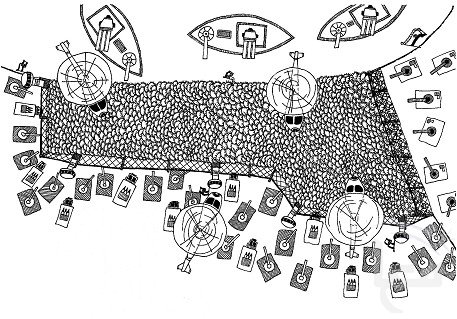
GAZA — Israeli occupation forces (IOF) opened fire on Tuesday at a peaceful march in northern Gaza Strip that was protesting the security fence and buffer zone, eyewitnesses reported.
They said that tens of demonstrators including foreign solidarity activists took part in the march that headed to the Beit Hanun (Erez) crossing.
They said that as soon as the marchers, who were hoisting Palestinian flags, approached the crossing the IOF soldiers got out of one of the trenches and opened indiscriminate machinegun fire at them.
For its part, Al-Mizan center for human rights asked the world community to swiftly provide protection for Palestinian civilians.
It said in a statement on Tuesday that the world should bridle Israel’s intention to establish a buffer zone in northern and eastern Gaza, which would entail catastrophic results on the Gaza inhabitants in general, and the inhabitants and farmers working in those areas in particular.
Mizan castigated the IOF troops for opening fire at the peaceful march earlier on Tuesday morning, noting that the march is weekly organized by the Beit Hanun residents to protest the buffer zone.
The center also condemned the IOF for opening artillery fire at farmers in Beit Hanun on Sunday killing three of them including a 91-year-old citizen and his grandson in addition to 25 heads of sheep.
Chavez to open popular tourist scheme using fugitive banker’s yachts
By Patrick J. O’Donoghue | VHeadline | September 13, 2010

Last weekend, President Chavez announced that he would be setting up a tourist scheme from mainland Vargas State to the Orchila island using yachts belonging to a fugitive Banco Federal banker, Nelson Mezerhane.
The yachts, he suggested, will also be used to transport tourists from popular areas and barrios to the Los Roques archipelago.
The President said it was only right that people from popular areas have the chance to visit the islands and he has requested Executive Vice President Elias Jaua to speed up the purchase of a ferry that Venezuela was purchasing from Portugal.
Chavez admitted delays in acquiring the ferry.
People should be able to relax healthily, Chavez mused, stressing that it was difficult for poor people to fly by plane to Margarita island and for that reason he wanted to create a popular tourism company.
When they shout: “we strongly condemn …”
By Dr. Bouthaina Shaaban | ASHARQ ALAWSAT | September 9, 2010
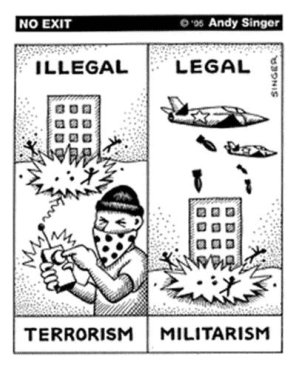
On August 29, 2010, Martin Indyk wrote an op-ed in The New York Times entitled “For once, hope in the Middle East”. When I read it, I felt I should respond with an article that sheds light on the issues which Mr, Indyk has chosen to ignore. One of the premises he based his analysis on was that violence has receded in the Middle East in the past two years compared with the 1990s. Here, like most Western officials and journalists, Indyk ignores daily and persistent Israeli violence against Palestinians for the past sixty years which has risen to record levels in terms of the number and ferocity of Israeli crimes against Palestinian civilians in the past two years, particularly in the city of Hebron. How could Indyk ignore the ‘violence’ which Israel has been using for years against civilians in Gaza in terms of blockade and artillery, missile and warplane attacks? I would not have guessed that that the paradox, on this particular point, would become so stark on the international scene after four Israeli settlers were killed in a village near Hebron.
Jewish settlers, as everyone knows, have been killing Palestinian farmers, burning mosques, running over children with their cars, desecrating cemeteries, demolishing houses and whole villages. The lack of Western reaction towards this rise in the number of crimes against Palestinians reflects the conviction in the West that ‘violence has receded in the Middle East’, as if killing the Arabs is not ‘violence’, while killing these settlers is the only ‘violence’ in the Middle East! The US President hastened to condemn this ‘absurd killing’ while he kept silent regarding the killing of four thousand civilians, including women and children in Gaza. His Secretary of State also condemned the ‘brutal violence’, while she never condemned the Israelis for killing any Palestinian. The United Nations representative considered killing the Israelis a ‘mean’ attempt at undermining the negotiations, while his organization has done nothing to stop Israeli daily killing of Palestinians for the past sixty years. As usual, the European Union, and Japan too, condemned killing the Israelis, while they turn absolutely deaf when Israelis kill Palestinian civilians in their thousands. Even the Palestinian Authority condemned the killing of the four settlers without reminding the world of the crimes committed daily against the Palestinians, particularly in Hebron, which have never been ‘condemned’ or even mentioned be any American or European official. For them, that is ‘natural violence’, because Palestinian lives do not mean anything to the West. Only when an Israeli is killed, ‘civilized’ Westerners hasten to ‘denounce’ and ‘condemn’ violence.
In this article, I would just remind readers of some of the ‘acts of violence’, ‘ugly crimes’, ‘absurd killings’ and ‘brutal violence’ committed by the Israeli settlers in the West Bank, particularly in villages of the Hebron region, against unarmed Palestinians simply trying to live on their land with freedom and dignity and away from the killing and oppression practiced against them by Israeli settlers on a daily basis. Such acts and crimes have never been condemned by Obama, Clinton, the European Union, the United States, or even Japan.
Since March 2010, Israeli occupation forces killed in cold blood Mohammad Ibrahim Abdul Qader Qadus on March 16, 2010 in Southern Nablus; and on March 21, child Mohammad al-Qanbar was run twice over by a settler’s car before he was detained in Ras al-Amoud. On April 3, an Israeli settler ran over Samar Saif Radwan, 17, in eastern Hebron. On April 5, 2010, the settlers of Kriat Shmona burned a Palestinian to death. On the same day, three settlers poured hot water on the body and face of Munjed Bsharat, 26, who sustained serious burns and wounds. On April 11, an Israeli settler ran over a Palestinian child in the village of Laban West of Ramallah. On April 27, occupation forces assassinated young man Ali Sweiti, maimed his dead body and blocked out his eyes. On May 10, a Palestinian child died of the tear gas he inhaled. On the same day, occupation forces beat child Abdullah Isa to death. On May 16, an Israeli settler ran over a mother and her two daughters Rowa, 2, and Nagham, 5, at the entrance of their village, Jabaa south of Bethlehem. On June 11, an Israeli military jeep ran over and killed Mazen Naem al-Jamal, 48, in Hebron. On July 19, an Israeli settler ran over and killed Abdullah Hasan al-Muhtaseb, 12 in Hebron.
Thus, Israeli settlers and occupation forces killed during the first months of 2010 fourteen Palestinians. No country in the world condemned the killing of these people. And this is only the tip of the iceberg in terms of the brutal crimes committed by settlers on a daily basis against innocent children, women and young people in Hebron and other West Bank cities and villages. What would the Palestinians do if no country in the world condemned killing them? No Western media outlet even keeps a record of the crimes committed against them on a daily basis. Palestinian anger reaches unbearable levels not only because of the settler violence committed against them, but also because of the silence and complicity of Western powers.
A quick review of the racist Western perspective of what is happening in occupied Palestine explains the failure of all previous attempts to reach real solutions and just and comprehensive peace. It is because such a peace should be based on fair and balanced solutions.
For negotiations to succeed, the sponsors of the process should be convinced that the life of the Palestinians is at least equal to the life of a criminal settler living on a land not his own in order to steal this land and kill the people living on it. Only then, there might be some hope of achieving peace based on justice and not on killing one party and giving the occupying killing party everything it wants. When Obama, Clinton and the European Union condemn killing the Palestinians with the same strength they condemn the killing of settlers, there might be hope of a real peace in our region.
Why we love to hate conspiracy theories: 911 Truth as threat to the intelligentsia
By Denis G. Rancourt | Activist Teacher | September 12, 2010

Especially left and liberal professionals and service intellectuals but also right-wing members of the intelligentsia vehemently attack and ridicule “conspiracy theories” such as the present 911 Truth movement.
Why?
It’s as though power did not covertly orchestrate its predation of us? Is that not the modus operandi of power?
Is it so difficult to believe that the complex and highly successful military attack on US soil that was 911 (levelling three gigantic sky scrapers, blasting a hole into the Pentagon, and destroying four commercial jets and their passengers) was not orchestrated by a religious zealot from a cave in Afghanistan and executed by failed Cessna pilot trainees with box cutters? Or that those who measurably benefited in the trillions had nothing to do with it?
What the hell? Not even (admittedly rare) authoritative mainstream reports seem to matter [1].
What ever happened to “war is a racket” and “follow the money”?
In rigorous compliance with the true meanings of “academic freedom” [2] and “freedom of the press” virtually no academics or mainstream journalists have made it their research to find truth or to radically (at the root) question the establishment version.
Indeed, all the major and considered-radical academic pundits such as Noam Chomsky and Ward Churchill, have actively avoided the possibility that the 911 attacks could have been known or aided from within the finance-corporate-military complex.
What keeps them from crossing that line? What makes them demean attempts to cross that line? [3]
Similarly, even outspoken dissident parliamentary politicians such as George Galloway have ridiculed the concerns of 911 truthers (at his last public talk in Ottawa).
Is such self and projected censorship by star intellectuals only the result of the fear of being mobbed by ridicule? Is asking these questions in public fora so dangerous?
When barred and suppressed Afghan Member of Parliament Malalai Joya was asked about 911 by a truther in Ottawa last year she replied that those who sought answers in this matter should address their questions to the occupiers of the White House. To this writer’s knowledge, this is the furthest that any politician has gone in this direction, coming from “the bravest woman in Afghanistan” no less.
But what shocked the present writer more is the derision to which was subjected the truther at the Malalai Joya Ottawa event, at the hands of an “activist” and “progressive” crowd.
INTELLIGENTSIA SELF-DEFENCE
The intelligentsia appears to be addicted to the illusion that it has a monopoly on valid analysis and understanding. In order to preserve this illusion and to protect its standing in providing interpretations of the World, the intelligentsia must limit the scope of all investigations to domains that fall within its self-established interpretational paradigms (right-left, power politics, geopolitical chess board, corporate motives, etc.) and self-established research protocols.
Those paradigms and protocols, in turn, and the rigorously followed discipline of not supposing the worst in one’s research stance, were established in academia at the time when “academic freedom” was being defined by the cornerstone nineteenth century US battles for professional independence in academia. The academics and society lost that battle [2]:
“[T]he economists were the first professional analysts to be “broken in,” in a battle that defined the limits of academic freedom in universities. The academic system would from that point on impose a strict operational separation between inquiry and theorizing as acceptable and social reform as unacceptable.
Any academic wishing to preserve her position understood what this meant. As a side product, academics became virtuosos at nurturing a self-image of importance despite this fatal limitation on their societal relevance, with verbiage such as: The truth is our most powerful weapon, the pen is mightier than the sword, a good idea can change the world, reason will take us out of darkness, etc.”
Academics and “radical professors” train the intelligentsia…
And power owns the media.
TRUTH ABOUT TRUTH
But much more importantly power owns us, owns our jobs, owns students at school and owns the homeless on the street, the First Peoples on the reserves and the prisoners in the jails. As long as we are owned, information about abuse of power is irrelevant for social change.
This is the sociological fact that the 911 Truth movement has failed to recognize [4]. Truth will not set us free. Truth and information do not lead to action. It’s not a question of how many folks know the truth.
It’s only a question of what the truth means in real terms to however few individuals and will these individuals rebel, actually rebel and individually take back power over their lives.
Contrary to the mantra of our left academic idols, truth and research are not threatening to power in a culture of subservience and obedience. In such a culture, radical-in-thought academics only stabilize the system by neutralizing the more action-minded youth. [5]
In such a culture, the only truth that is threatening to power is one that it perceives as an attack on its self-image [6]. And, in such a culture, psychological self-image arising from power’s connection to the broader society is the only force that can move power to constrain itself [6]. In this measure, in the present culture, 911 Truth could have an impact. In this way, some of the low-level actual perpetrators and facilitators of 911 could eventually be sacrificed in show trials or in mainstream smear campaigns.
In conclusion, the intelligentsia works at protecting itself (and by extension the system) and therefore will be a visceral opponent of 911 Truth until it can integrate 911 Truth and participate in neutralizing 911 Truth in order for power to save face. Or, some citizens might actually rebel? The extent and projection/potential of such pockets of rebellion is the only force capable of leveraging real concessions from power [7][8][9].
Endnotes
[1] “Major media articles on 9-11 raise questions” by Fred Burks, 2010, Want to Know.
[2] “Some big lies of science” by Denis G. Rancourt, 2010.
[3] “Questioning Foundations: An Interview with Denis Rancourt” by Michael Barker, 2010, Dissident Voice.
[4] “911 Truth” by Denis G. Rancourt, 2010.
[5] “Against Chomsky” by Denis G. Rancourt, 2008.
[6] “Psycho-biological basis for image leverage and the case of Israel” by Denis G. Rancourt, 2010.
[7] “On the racism and pathology of left progressive First-World activism” by Denis G. Rancourt, 2010.
[8] “Roundabout as conflict-avoidance versus Malcolm X’s psychology of liberation” by Denis G. Rancourt, 2010.
[9] “Murder and genocide are natural, therefore rebel!” by Denis G. Rancourt, 2010.
corbettreport.com: 9/11 Truth is Still the Issue
TheRealNews: 9/11 Questions Remain Unanswered
Denis G. Rancourt was a tenured and full professor of physics at the University of Ottawa in Canada. He practiced several areas of science which were funded by a national agency and ran an internationally recognized laboratory. He published over 100 articles in leading scientific journals. He developed popular activism courses and was an outspoken critic of the university administration and a defender of student and Palestinian rights. He was fired for his dissidence in 2009 by a president who is a staunch supporter of Israeli policy. [See rancourt.academicfreedom.ca]
PA to renew Israeli talks without settlement freeze
Press TV – September 13, 2010
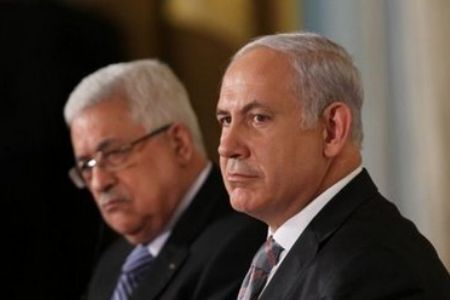
Despite Israel’s refusal to extend its settlement freeze, the Palestinian Authority (PA) will still resume the second round of direct talks with Tel Aviv. The upcoming meeting will be held at Egypt’s Red Sea resort of Sharm el-Sheikh on Tuesday.
Israeli Prime Minister Benjamin Netanyahu and acting PA Chief Mahmoud Abbas held the first round of negotiations in Washington on September 2.
Following the first meeting, Abbas warned that he would leave the negotiations should Israel resume its illegal settlement activities.
US Secretary of State Hillary Clinton and US Middle East Envoy George Mitchell will also travel to Egypt to attend the meeting. The four officials will then move to al-Quds (Jerusalem) for a second day of talks on Wednesday.
Meanwhile, US President Barack Obama will meet with Abbas and Netanyahu in New York next week during the UN General Assembly meeting.
The second round of Israeli-PA talks comes after Israel on Monday approved the construction of more than 13,000 new settler units in the occupied West Bank.
In November, the Israeli premier announced a 10-month freeze on illegal settlement expansion projects in the occupied West Bank. But Tel Aviv has repeatedly violated the freeze, which expires on September 26, by continuing to construct more settlement units.
Israel shells Gaza again: 3 farm workers killed including a 91 year old and his grandson
International Solidarity Movement | September 13, 2010
When 91 year old Ibrahim Abu Sayed left his home near Beit Hanoun in northern Gaza, yesterday morning, in order to check on his land and his animals which graze next to the remains of his former home, he took with him his 17-year-old grandson Hossam and the young boy’s friend and neighbour, 16-year-old Ismail Abu Oda. His son, Hossam’s father, didn’t want to come because it was the final day of Eid ul-Fitr, the Muslim festival that follows the holy month of Ramadan.

Ibrahim Abu Sayed, the 91 year old killed, his face mutilated by shrapnel
Despite his age, Ibrahim Abu Sayed was still mobile enough to regularly check his 3 dunums of land, as he had done for decades. The last decade had been the hardest as his house was destroyed in 2000 by Israeli bulldozers and his rebuilt house destroyed in the 3-week Israeli war on Gaza over the New Year of 2009.
But early Saturday evening would be the last time Ibrahim, Hossam and Ismail would work their land. Seven hundred metres away from their land – north of Sharab Street – at the border with Israel, tanks made an incursion into Gaza. The old man, his grandson and the friend did not stand a chance when the tanks fired shells directly at them.
ISM activists met the family members at the hospital. The wife of Ibrahim was devastated, screaming in horror at the fate that had befallen her family.
“I was there half an hour before it happened”, said Mohammed Abu Oda, another relative. “I saw them by their sheep. I heard the shells from the Israeli tanks, the shells we learned soon afterwards had killed our relatives.”

The dead body of 17 year old Hossam Abu Sayed
They were killed instantly, and were dead on arrival at Beit Hanoun hospital, according to the doctor who examined them. Ibrahim suffered severe shrapnel injuries to his face, chest and stomach and his grandson Hossam had the back of his head blown away. ISM activists verified this immediately as they saw and photographed the mutilated bodies in the morgue. Ismail, Hossam’s friend, had arrived at the hospital 30 minutes after the others but had been buried before ISM arrived at the hospital; according to doctors much of his head was shot away.
The boys had been close friends, studying in the 9th and 10th grade respectively, and had expected to return to school after the end of Eid, the following day. But yesterday they still were on holidays, so they went to help Ibrahim, as they often would. Despite the struggle they endured after their house was destroyed and their land bulldozed, the family, who are Bedouins, had no other job except farming. Although they were obliged to farm their land close to the border, it was still far enough away to be outside the Israeli imposed “buffer zone”.
“Israel claims that there’s a 300 meter buffer zone, but they were 700 meters away from the border”, said one of Ismail’s uncles, Majdy Abu Oda.
“The people there are farmers who’ve been living there for years. We, the people here, were never dangerous for the Israelis. They have photos of the people who live and work here, the area is full of observation cameras. So they knew them.”
Because of this the family considered themselves to be relatively safe, even though there were tanks at the border. It turned out they were mistaken to feel even slightly secure. While all the inhabitants of Gaza are victims of Israel’s ‘collective punishment’, a crime against humanity according to article 33 of the Geneva Convention (of which Israel is a signatory), they are the latest to be subjected to its worst manifestation and murdered with complete impunity.
If a 91 year old man, his grandson and young boy were killed while tending to their livestock on their own farm, 700 metres from a border, somewhere else in the world, there would likely be outcry. Where is the international outrage? Where is the clamour for justice? If equal standards were applied the media uproar should at least be comparable to the condemnation over the Israeli settlers shot two week ago – people who were living illegally on stolen land according to international law. Israeli armed forces have continued to wage a war against civilians in Gaza, long after the Israeli air and ground assault in the winter of 2008/2009 ended, yet condemnation of this state terrorism and its innocent civilian victims is rarely heard.
The family clearly posed no threat; they were known as long term residents of the area. But Israeli soldiers knew they could kill these three men with impunity, having previously almost entirely destroyed their livelihood.
Saber Zaneen, General Coordinator of the Beit Hanoun solidarity group, ‘Local Initiative’, released a statement following the killings, calling for justice.
“Today the occupation committed a new crime which will be added to its black list. Three martyrs now rest in heaven after the shelling and again we call on the international community and civil society to pressure the occupation forces to stop such crimes against Palestinian civilians and to start working on giving some protection to the local people in the Gaza strip,” he said.
They have also announced that tomorrow (Tuesday) morning at 10AM there will be a demonstration against the killings involving a march towards the fence, next to the Erez border. Four International Solidarity Movement activists will be there to accompany the protestors and document the likely violent repression which it may be subjected to – at the last non-violent demonstration in the area, live ammunition was used by Israeli border soldiers.
Featured Video
Prof. Ted Postol: Iran Already Achieved Nuclear Deterrence Against Israel
or go to
Aletho News Archives – Video-Images
From the Archives
How the occupied mentality syndrome works
Saudi Arabia on the American chessboard – Part 3
By B. J. Sabri | American Herald Tribune | June 27, 2016
Read part 2: “The occupied mentality Syndrome“
Previously I argued whether Saudi Arabia’s repeated involvements in U.S. interventions and wars stem from free national will or in response to a specific condition. For starters, in Saudi Arabia there is no national will. In Saudi Arabia, the national will is the will of the Al Saud clan. Still, when a major Arab state allies itself with a superpower that committed unspeakable crimes against humanity in almost every Arab country, then something is wrong. This fact alone should compel us to examine the U.S.-Saudi relation for one exceptional reason. As a result of the U.S.-Saudi wars, hundreds of thousands of people in Afghanistan, Iraq, Iran, Libya, Syria, Yemen, and Somalia have lost their lives. Millions became displaced in their own homelands. And millions more rendered refugees.
Attributing the Saudi policies to the bonds of “partnership” with the U.S. is frivolous. There are no bonds between these two thugs except those of business, military deals, secret plots, and wars. Proving this point, bonds such as these have no space for the American and Saudi peoples to share significant cultural or societal exchanges. If partnership is not the reason for the Saudi contribution to the U.S. strategy of empire and imperialism, then another reason must exist.
This leads to three possibilities. … continue
Blog Roll
 Aletho News
- “Davos Can Really Replace the UN”
- NIAID/NIH and USDA Fund Bioengineered Chimeric Influenza Viruses Built Using Pandemic H1N1 Components: Journal ‘Science Advances’
- Hezbollah hits Israeli warship off Lebanon’s coast, sets it aflame
- Iran slams US strikes on B1 bridge, Mahshahr petrochemical plants as ‘blatant acts of state terrorism’
- In letter to UN chief, Araghchi warns of dire consequences of US-Israeli attacks on Iran’s nuclear facilities
- Why the CIA conspiracy to invade Iran with Kurdish militias failed
- Why Are Upbeat US Claims About Mission to Rescue Pilot ‘Highly Questionable’?
- Aircraft destroyed during US ‘rescue’ of downed F-15 pilot cost more than $100 million each
- Washington University removes professor who condemned US-Israeli war on Iran
- Russia Warns of Retaliation as UK Authorizes Seizure of Vessels
- If Americans Knew
- In Iran, Israel-US take aim at “reason, research, and freedom of thought” – Daily Update
- US loses planes over Iran, Israel downgrades Lebanon war goals – Daily Update
- Israel Is Blocking Palestinians from Easter at Church Where Jesus Resurrected
- Plot to assassinate Palestinian activist follows harassment campaign promoted by Zionist groups and elected officials
- Prominent New York synagogue hosts presentation on why U.S. Jews should support the ethnic cleansing of Gaza
- Tapper vs. Piker: Is the CNN Anchor Auditioning for David Ellison?
- Shouldn’t Democrats Be Able to Condemn Genocide?
- Israel-US kill negotiators, destroy civilian structures, but Iran’s military capabilities still largely intact – Daily Update
- ‘War crime’: Global condemnation as Israeli ministers celebrate death penalty law targeting Palestinian prisoners
- 7 Ways Israel Is Turning Lebanon Into Gaza
- No Tricks Zone
- An Inconvenient Tree: Uncovered In Alps… Europe Much Warmer Than Today 6000 Years Ago
- New Study Reports A 60% Slowdown In Greenland’s Ice Loss Rate In The Last Decade
- Low Intensity Tornado Wrecks Major Solar Farm, Creating A Potential Toxic Dump
- New Study Finds Warming Saves Lives…Cold Temperatures 12 Times More Deadly Than Excess Heat
- German Science Blog Accuses PIK Climate Institute Of Hallucinating Climate Tipping Points
- Devastating Assessment Of Comirnaty Vaccine By Former Senior Pfizer Europe Toxicologist
- New Study: CO2 Is ‘Effectively Negligible’ As An Explanatory Climate Change Factor Since 2000
- Former Pfizer Toxicologist Dr. Helmut Sterz Tells Bundestag Hearing Pfizer Vaccine Should Have Never Been Approved
- Energy Expert: Germany’s Nuclear Phaseout Was A “500 Billion Euro Mistake”
- New Research: South Australia’s Mid-Holocene Sea Surface Temperatures Were 4°C Warmer Than Today
 Aletho News