Self-fulfilling prophecy: Dennis Ross Doesn’t Think Anything Can Get Accomplished
By Ali Gharib | Lobe Log | January 19th, 2011
I was struck by an article by Nathan Guttman in the legendary Jewish Daily Forward about Dennis Ross and George Mitchell jockeying for the position of Obama Administration’s point-person in the Middle East peace process. The whole thing is a fascinating read, but this line really jumped out at me:
Others have also described Ross as more skeptical [than Mitchell] about the chances of peace, based on his decades-long experience with trying to bring together the parties.
I don’t want to get all new-agey, but if you think something is difficult or impossible to do, the chances of being able to do it are greatly diminished from the get-go.
So why does this Ross guy keep getting jobs that he doesn’t think are possible? I picked up Ross’ book off of my shelf here in D.C., and it amazed me how many times he says you cannot make any kind of deal with the Iranians. Then, Obama put him in charge of making a deal with the Iranians. Ross, we now learn, doubts that a peace deal can be reached in Israel-Palestine, and Obama gives him a job making peace in Israel-Palestine.
On the Middle Eastern conflict, Ross’s credentials for the job are impeccable. After all, he’s been involved in decades — decades! — of failed peace processes. Ross has worked at the Washington Institute (WINEP), an AIPAC-formed think tank, and also chaired the Jewish People Policy Institute (JPPI), an Israeli organization dedicated to “ensure the thriving of the Jewish People and the Jewish civilization.” (The organization seems to oppose intermarriage with racist-sounding statements like “cultural collectivity cannot survive in the long term without primary biological foundations of family and children.”)
Ross was thought responsible for crafting Obama’s presidential campaign AIPAC speech — yes, the one with the line about an “undivided” Jerusalem that would spike a peace deal if implemented. Ross later reiterated the notion of an undivided Jerusalem as a “fact” in an interview with the Jerusalem Post.
Ross was recently in the news following a secret but not-so-secret visit to the Middle East, which was fleshed out on Politico by Laura Rozen. Rozen was the reporter who carried a rather shocking anonymous allegation about Ross:
“[Ross] seems to be far more sensitive to [Israeli Prime Minister Benjamin] Netanyahu’s coalition politics than to U.S. interests,” one U.S. official told POLITICO Saturday. “And he doesn’t seem to understand that this has become bigger than Jerusalem but is rather about the credibility of this administration.”
In an update, Rozen carried NSC CoS Denis McDonough’s defense of Ross:
“The assertion is as false as it is offensive,” McDonough said Sunday by e-mail. ”Whoever said it has no idea what they are talking about. Dennis Ross’s many decades of service speak volumes about his commitment to this country and to our vital interests, and he is a critical part of the president’s team.”
But the new Forward article, as MJ Rosenberg points out, backs up the notion that Ross was extremely concerned with “advocat[ing]” for Israel. The source is none other than Israel-advocate extraordinaire Abe Foxman (who doesn’t negotiate on behalf of the U.S. government):
“Dennis is the closest thing you’ll find to a melitz yosher, as far as Israel is concerned,” said the Anti-Defamation League’s national director, Abraham Foxman, who used the ancient Hebrew term for ‘advocate.’”
Do you get the feeling that Ross advocated for Iran? Or, as the Forward article put it (with my strikethrough), has “strong ties to Israel” Iran? Guttman writes that Ross is considered to have a “reputation of being pro-Israeli.” As for Iran? Not quite: Ross’s Iran experience seems to boil down to heading United Against Nuclear Iran (UANI), a group that pushes for harsher, broad-based sanctions against Iran (despite a stated goal to not hurt ordinary Iranians) and that has criticized Obama’s policy of engagement. Ross left the gig, as with JPPI, when he took the job with the administration.
The group also launched an error-filled fear-mongering video (while Ross was still there; he appears in the video) and a campaign to get New York hotels to refuse to host Iranian president Mahmoud Ahmadinejad when he comes to town each year for the U.N. General Assembly, which hardly lays the groundwork for good diplomacy.
Oh, and about the Iran engagement designed by Ross: The administration’s approach has been questioned by several leading Iran experts. “It is unlikely that the resources and dedication needed for success was given to a policy that the administration expected to fail,” National Iranian American Council (NIAC) president Trita Parsi observed. In December, Ross publicly defended the administration against charges that engagement was less than sincere from the U.S. side. But it is Ross himself who has apparently long held a pessimistic outlook on engagement.
Ross’s 2007 book, “Statecraft: And How to Restore America’s Standing in the World“, is fascinating in light of where Ross has come from, and where he’s taken Iran policy. I was struck at a five-page section of the first chapter called “Neoconservatism vs. Neoliberalism,” in which Ross writes, “[Neoconservatism’s] current standard-bearers — such as Richard Perle, David Frum, William Kristol, and Robert Kagan — are serious thinkers with a clear worldview,” (with my links).
Later, in several long sections about the run-up to George W. Bush’s Iraq war, Ross notes that Paul Wolfowitz was highly focused on Iraq before and after 9/11. He also mentions “political difficulties” in the push for war: “Once [Bush] realized there might be a domestic problem in acting against Iraq, his administration focused a great deal of energy and effort on mobilizing domestic support for military action.”
But Ross never acknowledges that some of his neoconservative “serious thinkers” — such as Kristol and his Weekly Standard magazine — were involved in the concerted campaign to mislead Americans in an effort to push the war… just as the same figures are pushing for an attack on Iran. Frum, who does seem capable of serious thinking, was the author of the “axis of evil” phrasing of Bush’s 2002 State of the Union address. The moniker included both Iraq and Iran, despite the fact that the latter was, until the speech, considered a potential ally in the fight against Al Qaeda. (Marsha Cohen chronicled an Israeli effort to squash the alliance, culminating in Frum’s contribution to the Bush speech.)
Ross never mentions that neocon Douglas Feith, a political appointee in the Pentagon’s Office of Special Plans (OSP), was responsible for cherry-picking intelligence about Iraq within the administration, and whose office was feeding cooked information to the public via Scooter Libby in Vice President Dick Cheney’s office. Through Libby, the distorted information made its way into the hands of the Standard and sympathetic journalists like ideologue Judith Miller at the New York Times. In August of 2003, Jim Lobe wrote (with my links):
[K]ey personnel who worked in both NESA [the Pentagon’s Near East and South Asia bureau] and OSP were part of a broader network of neo-conservative ideologues and activists who worked with other Bush political appointees scattered around the national-security bureaucracy to move the country to war, according to retired Lt Col Karen Kwiatkowski, who was assigned to NESA from May 2002 through February 2003. …
Other appointees who worked with… both offices included Michael Rubin, a Middle East specialist previously with the neo-conservative American Enterprise Institute (AEI); David Schenker, previously with the Washington Institute for Near East Policy (WINEP); Michael Makovsky; an expert on neo-con icon Winston Churchill and the younger brother of David Makovsky, a senior WINEP fellow and former executive editor of pro-Likud ‘Jerusalem Post’; and Chris Lehman, the brother of the John Lehman, a prominent neo-conservative who served as secretary of the navy under Ronald Reagan, according to Kwiatkowski.
Ross has personal experience with many OSP veterans, working with them at WINEP and signing hawkish reports on Iran authored by them.
During the 2008 presidential campaign, Ross was a member of a task force that delivered a hawkish report apparently co-authored by two veterans of OSP, Rubin and Michael Makovsky. (Ross reportedly recused himself as the presidential campaign came into full swing.) Lobe, noting Ross’s curious involvement, called the report a “roadmap to war with Iran,” and added, a year later, that the group that put out the report was accelerating the plan, calling for a military build-up and a naval blockade against Iran.
After taking his position within the Obama administration, Ross released a book, co-authored with David Makovsky, that was skeptical of the notion that engagement could work. Nathan Guttman, in a review of the book for the Forward, wrote:
The success of diplomatic engagement, according to Ross, is not guaranteed and could be unlikely. Still, he and Makovsky believe that negotiations will serve a purpose even if results are not satisfying. “By not trying, the U.S. and its refusal to talk become the issue,” said Makovsky in a June 1 interview with the Forward. “What we are saying is that if the U.S. chooses engagement, even if it fails, every other option will be more legitimate.”
The attitude of Ross and Makovsky seems closer to that of the Israeli government then to that of the Obama administration.
OSP, Feith, the Makovsky brothers, and Rubin are not listed in the index of “Statecraft,” nor have they appeared in the many sections that I’ve read in full.
In his book, Ross does have many revealing passages about concepts that have been worked into the Obama administration’s Iran policy. One such ploy, which has not been acknowledged or revealed publicly, is using Israel as the crazy ‘bad cop’ — a potentially dangerous game. Ross also writes that international pressure (through sanctions) must be made in order to cause Iran “pain.” Only then, thinks Ross, can concessions such as “economic, technological and security benefits” from the U.S. be offered:
Orchestrating this combination of sticks and carrots requires at this point some obviously adverse consequences for the Iranians first.
This view does not comport with the Obama plan for a simultaneous dual-track policy toward Iran — which holds that engagement and pressure should occur simultaneously — and serves to bolster critics who say that engagement has not been serious because meaningful concessions have not been offered. But it does hint at another tactic that Ross references at least twice in the book: the difference between “style” and “substance.” With regard to Iran, he presents this dichotomy in relation to public professions about the “military option” — a euphemism for launching a war. But publicly suppressing rhetoric is only used as a way to build international support for pressure — not also, as one might expect, a way to assuage the security fears of Iran.
But those aren’t the only ideas from the 2007 book that seem to have made their way into U.S. policy toward Iran. In “Statecraft,” Ross endorses the use of “more overt and inherently deniable alternatives to the use of force” for slowing Iran’s nuclear progress. In particular, he mentions the “fragility of centrifuges,” which is exactly what is being targeted by the Stuxnet virus, a powerful computer worm thought to be created by a state, likely Israel, and perhaps with help from the U.S., according to the latest revelations.
Some critics of this website complain that the level of attention given to neoconservatives is too great, but they should consider this: Look at Dennis Ross. He works extensively with this clique, and no doubt has the occasional drink or meeting with them. And, most importantly, he writes approvingly about neoconservatives, noting that their viewpoint affects political considerations of “any political leader.” Because of these neocon “considerations,” he writes, this is how we should view the Islamic Republic: “With Iran, there is a profound mistrust of the mullahs, and of their perceived deceit, their support for terror, and their enduring hostility to America and its friends in the Middle East. … No one will be keen to be portrayed as soft on the Iranian mullahs.”
This from the man that formulated a policy that has offered “adverse consequences” but so far no “carrots.” Ross’s predictions are a self-fulfilling prophecy — and since he gets the big appointments, he gets to fulfill them. Taking reviews of his book with Makovsky, the Bipartisan Policy Committee report, and “Statecraft” as a whole, I’m not at all surprised that little progress has been made with Iran.
But, at least, that was his first try. He’s a three-time-loser on Israeli-Palestinian peace-making. With Iran, I had to put the pieces together, whereas with the Israeli-Palestinian issue, his record is right there for all to see. Putting Ross in charge of peace-making between the two seems to perfectly fit Einstein’s definition of insanity.
See Also:
March 8, 2009
Gaza Strip runs out of cooking gas
Palestine Information Center – 19/01/2011

GAZA — No trace of cooking gas was to be found in Gaza Tuesday, fuel companies warned, as the Israeli blockade limits supply and solutions appear unpromising.
Mahmud al-Shawa, head of the fuel companies assembly, warned of a humanitarian disaster as the strip’s stations run out of fuel and accumulate thousands of empty gas cylinders.
The answer to the crisis will require a daily supply of 300 tons of gas over no less than three straight months, Shawa said.
“The Gas crisis goes more than two months back. No gas has been supplied to Gaza for the past two days,” Shawa said.
With a daily requirement of 250 tons, only 130 tons reached the Gaza Strip daily last week.
Shawa accused Israel of rationing Gaza’s cooking gas as a means of tightening its four year economic siege of the region. Even though gas is not a commodity that should be subject to restrictions according to the blockade’s intent.
As all other border crossings are blocked, no more than 200 tons pass through the Karam Abu Salim Crossing on its best day. The crossing operates only five days weekly from 9am to 3pm.
Presbyterian Groups Call on U.S. Department of Justice to End Subpoenas on Dissenting Activists
Religion News Service | January 19, 2011
NEW YORK—The Israel Palestine Mission Network* (IPMN) of the Presbyterian Church (USA), The Presbyterian Peace Fellowship (PPF) and the National Middle East Presbyterian Caucus (NMEPC) oppose the misuse of the grand jury process by the United States Department of Justice (DOJ) and the accompanying FBI raids. The DOJ served a total of nine federal grand jury subpoenas to Chicago area Palestinian solidarity activists in the month of December alone, raising the total subpoenas served to 23. These Presbyterian groups call upon their own denominational leadership, as well as Churches for Middle East Peace, the National Council of Churches and all concerned Christian denominations to join them in denouncing the DOJ’s bold attempts to suppress peaceful dissent on the part of those working for an end to the illegal Israeli occupation of the Occupied Palestinian Territories (OPT).
Jeff Story, a Chicago attorney and member of the IPMN, points out “the time for all Americans to speak up about these encroachments on our constitutional right to dissent is now. We must not wait until Presbyterians who are Palestinian solidarity peacemakers receive the ‘knock on the door’.” Story, who is also a member of the National Lawyers Guild Free Palestine Subcommittee, adds that Christians, to our discredit, did not adequately “raise the alarm when the DOJ politically prosecuted Muslim charities and mosques in the recent past” and that “our present response is long overdue.”
The Supreme Court’s ruling from last June on “material support” for terrorism has enabled the DOJ to conduct these raids, armed with an extremely broad definition of what constitutes “material support.” Parallels can be drawn to Schenck v. United States, a 1919 Supreme Court decision that upheld the overbroad definition of espionage and sedition. The DOJ subpoenas from Chicago U.S. Attorney Patrick Fitzgerald are an infringement on the First Amendment, which upholds the right of free speech, protest and free assembly—one of our most basic rights as Americans.
At its General Assembly in Minneapolis in July 2010, the Presbyterian Church (USA) called upon the United States government, “to exercise strategically its international influence, including making U.S. aid to Israel contingent upon Israel’s compliance with international law and peacemaking efforts.” Rev. Jeffrey DeYoe, Advocacy Chairperson for the IPMN, adds: “As the Presbyterian Church (USA) and other denominations begin to take courageous stands against U.S. military support of violations of human rights in the OPT, all Christians should be concerned about judicial efforts to silence fellow citizens opposing unjust policy.”
Of special concern are DOJ demands that activists in the U.S. be forced to reveal names of those who seek peaceful change in Palestine. This process has been described as a “fishing expedition” in which the DOJ looks for ways to prosecute activists without legal grounds.
The IPMN, the PPF and the NMEPC are deeply concerned that solidarity activists, through this misuse of the grand jury process, may soon be facing imprisonment for refusing to allow themselves to be compelled to name names of fellow activists here at home, and in the OPT. If this process is carried forward and church workers are similarly subpoenaed, this could threaten partnerships between American churches and Palestinian Christians striving for justice.
These Presbyterian groups call upon all concerned Christian bodies to act with peace, love and courage to affirm our nation’s higher good, as well as God’s highest law.
*The General Assembly of PC(USA) mandated IPMN, who speaks TO the Church not FOR the Church.
Contact:
Rev. Dr. Jeff DeYoe—info@theIPMN.org
Boycott the Israel Philharmonic Orchestra on its US Tour!
PACBI | 16 January 2011
The Palestinian Campaign for the Academic and Cultural Boycott of Israel appeals to BDS activists in the United States to boycott the US tour of the Israel Philharmonic Orchestra (IPO) in February and March 2011, due to its complicity in whitewashing Israel’s persistent violations of international law and human rights. The IPO is scheduled to perform in Palm Beach, New York, Seattle, San Francisco, and Los Angeles [1]. We urge activists to continue the principled tradition of activists in New York and Los Angeles in 2007, when they protested the IPO’s appearance in their cities. [2]
The IPO is one of the flagship institutions of the Israeli state, tracing its history to the 1930’s under the British Mandate. The IPO Foundation describes the orchestra as “Israel’s musical ambassador,” [3] while the American Friends of the IPO says this about it:
Often said to have more heart than other orchestras, the IPO is Israel’s finest cultural emissary and travels throughout the world, particularly to countries where there is little or no Israeli representation. In some cases, performances of the IPO are the only example of Israel’s existence. The goodwill created by these tours, which have included historic visits to Japan, Argentina, Poland, Hungary, Russia, China and India, is of enormous value to the State of Israel. As a result, the Israel Philharmonic Orchestra maintains its position at the forefront of cultural diplomacy and the international music scene [4]
As befits an institution that identifies with the Israeli state, the IPO proudly announces its partnership with the army under a scheme whereby special concerts for Israeli soldiers are organized at their army outposts [5].
The orchestra has lent itself to the official Israeli propaganda campaign titled Brand Israel, which aims to divert attention from Israel’s violations of international law and Palestinian rights to its artistic and scientific achievements. [6]
Given the orchestra’s strong association with the Israeli state and other Zionist organizations involved in “brand-Israel” activities [7], PACBI calls upon all BDS activists in the United States to organize activities to protest and boycott the orchestra’s concerts. As long as it continues to partner with the state in planning, implementing, and whitewashing war crimes and international law violations, the Israeli cultural establishment cannot expect to be exempted from the growing boycott movement.
PACBI’s appeal is made within the framework of the Palestinian civil society call for BDS [8], its own appeal for the boycott of all Israeli academic and cultural institutions, particularly those serving the state’s propaganda efforts [9], and in accordance with the guidelines for the cultural boycott of Israel [10]. We believe that the time has come to apply pressure on Israel in the form of boycotts, divestment initiatives and sanctions, as was done successfully in the struggle against the apartheid regime in South Africa. Israel must not be allowed to flout international law and precepts of international humanitarian law with impunity. It must be held accountable for its war crimes and crimes against humanity. Israel’s cultural ambassadors must be treated likewise.
[1] http://www.ipo.co.il/eng/Series/IPOtours/.aspx
[2] http://washington-report.com/archives/April_2007/0704053.html and
http://palsolidarity.org/2007/02/1927 and http://palsolidarity.org/2007/01/1903
[3] http://www.ipo.co.il/eng/Fund/AboutUs/Articles,58.aspx
[4] http://www.afipo.org/ipo; emphasis added.
[5] http://www.ipo.co.il/eng/About/Profile/.aspx
[6] For more on the Brand Israel campaign, see:
http://www.forward.com/articles/2070
http://www.nytimes.com/2009/03/19/world/middleeast/19israel.html
http://www.haaretz.com/misc/article-print-page/about-face-1.170267?trailingPath=2.169%2C2.225%2C2.239%2C
[7] One such organization is the America-Israel Cultural Foundation, whose mission includes “[d]epict[ing] the State of Israel as a thriving cultural environment that stimulates creativity and artistic life.” See http://www.aicf.org/about/mission . The organization takes credit for having supported and promoted all major cultural institutions in Israel, such as the Israel Philharmonic Orchestra and the Israel Museum. See: http://www.aicf.org/about/impact/institutions
[8] http://www.bdsmovement.net/?q=node/52
[9] http://www.pacbi.org/etemplate.php?id=869
[10] http://www.pacbi.org/etemplate.php?id=1047
Court Rules Government Can Continue To Suppress Detainee Statements Describing Torture And Abuse
ACLU | January 18, 2011
WASHINGTON – A federal appeals court today ruled that the government can continue suppressing transcripts in which former CIA prisoners now held at Guantánamo Bay describe abuse and torture they suffered in CIA custody. The ruling came in an ACLU Freedom of Information Act (FOIA) lawsuit to obtain uncensored transcripts from Combatant Status Review Tribunals (CSRTs) used to determine if Guantánamo detainees qualify as “enemy combatants.”
“The American people have a right to know what the government has done in their name, and these transcripts, which include the direct testimony of the victims themselves, are essential to a full understanding of the Bush administration’s torture program,” said Ben Wizner, Litigation Director of the ACLU National Security Project, who argued the appeal for the ACLU. “The court’s decision undermines the Freedom of Information Act and condones a cover-up. These transcripts are being suppressed not to protect national security, but to shield former government officials from accountability.”
The ACLU lawsuit sought transcripts of statements made by Guantánamo prisoners concerning the abuse they allegedly suffered while in U.S. custody. While the CIA released heavily-redacted versions of the documents in June 2009, it continues to suppress major portions of the documents, including detainees’ allegations of torture.
Since the ACLU first filed its FOIA request for release of the transcripts, several developments have undermined the government’s claims that it can continue to withhold the documents: in January 2009, President Obama issued an executive order prohibiting the coercive interrogation techniques described in the suppressed transcripts and ordered the closure of the CIA’s overseas prisons; in April 2009, the government declassified four Justice Department memos that purported to authorize the brutal interrogation techniques to which the detainees were subjected; also in April 2009, the New York Review of Books published a detailed report by the International Committee of the Red Cross based on firsthand accounts of these detainees about their abuse in CIA custody; and in August 2009, the government declassified large portions of a report by the CIA’s Inspector General and other CIA and Justice Department documents that provide additional details about the interrogation methods to which the detainees were subjected.
Despite these developments, in October 2009 the U.S. District Court for the District of Columbia granted the government’s motion to dismiss the case without even reviewing the documents in question in order to determine if they were properly withheld. Today’s appellate court ruling allows the government to continue withholding the documents.
“The notion that the CIA can classify torture victims’ descriptions of their own first-hand experiences is dangerous and far-reaching,” said Wizner. “No court has ever held that unconfirmed allegations offered by detainees concerning the treatment to which they themselves were subjected could be classified and suppressed.”
Attorneys on the case, ACLU, et al. v. DOD, et al., are Wizner and Jameel Jaffer of the ACLU National Security Project, Lee Gelernt of the ACLU Immigrants’ Rights Project and Arthur B. Spitzer of the ACLU of the National Capital Area.
Today’s ruling is available online at: www.aclu.org/national-security/american-civil-liberties-union-et-al-v-department-defense-et-al-dc-circuit-court-0
More about the ACLU’s CSRT FOIA is at: www.aclu.org/safefree/torture/csrtfoia.html
Iran warns West of meddling in Tunisia
 Iran’s President Mahmoud Ahmadinejad addresses crowds of people in the central Iranian city of Yazd, January 19, 2011.
Press TV – January 19, 2011
Iran’s President Mahmoud Ahmadinejad has warned the United States, Israel and some Western states not to interfere in Tunisia and Lebanon’s internal affairs.
Addressing crowds of people in the central Iranian city of Yazd on Wednesday, President Ahmadinejad emphasized that Western countries aim to deprive the Tunisians of their rights through psychological warfare.
Massive riots and protests have rocked Tunisia this past month. The Riots broke out in Tunisia following the self-immolation of a 26-year-old fruit vendor, identified as Muhammad Bouazizi, who set himself on fire after police confiscated his merchandise.
President Ahmadinejad urged Tunisian politicians to exercise vigilance in face of foreign interference and pay due attention to the needs and choices of their people, adding that Tunisians want an Islamic government.
Elsewhere in his speech, the Iranian president slammed the Western-backed UN tribunal investigating the assassination of former Lebanese Prime Minister Rafiq Hariri.
President Ahmadinejad called on the US and its European allies to stop meddling in Lebanon, which he said is at a critical juncture.
Lebanon is in a political standoff after Prime Minister Saad Hariri’s government collapsed on Wednesday when 11 Hezbollah-affiliated ministers resigned in a dispute over the US-backed Special Tribunal for Lebanon (STL), probing the assassination of former Lebanese Premier Rafiq Hariri in 2005.
The US-sponsored tribunal is reportedly about to indict some Hezbollah members in the Hariri murder case — an allegation which has been vehemently rejected by the Lebanese resistance movement.
The Iranian chief executive also called for the promotion of unity among all Lebanese factions.
Pointing to the “Iranian nation’s achievements” over the past 32 years, the Iranian president said,” Today the Iranian nation is shining in the world and has brought its enemies to their knees.”
Democratic for Jews, Jewish for everyone else
By Joseph Dana | January 18, 2011
Despite the hysteria of the past week, Israeli democracy is in perfect health. Well, for the Jewish citizens of the country anyway. Avigdor Lieberman’s push to investigate leftist NGO’s is a political trick which lacks significant power to change the situation on the ground. Lieberman’s trick was designed to cast the Israeli left as reactionary and quick to cry wolf. It largely achieved its goals. The incredible mobilization to ’save Israeli democracy’ reinforces the notion that democracy for Jews is in perfect health. The left was attacked, people took to the streets and the system worked. If Lieberman’s desire to investigate leftist NGO’s reaches the next level in the parliament, concerned Jewish citizens will surly take the proper recourse under Israeli law.
Democracy for non-Jews in Israel is another story all together. Palestinian, Bedouin and Druze citizens face institutionalized discrimination in all sectors of life from education to building permits. This everyday denial of rights does not spark nearly the same reaction in the general public. In fact , it is seldom discussed on the nightly news and hardly ever do twenty thousand people march through Tel Aviv in support of minority rights. It is only when Jews are threatened does the population respond with calls that Israeli democracy is under attack.
Hours after the democracy march in Tel Aviv on Saturday evening, Israel began destroying the Bedouin village of al-Arakib for the 9th time. The village is home to Israeli citizens many of whom have served in the army. The citizens are Bedouins and their village, which has been in the same place for the last eighty years, was targeted by the Jewish National Fund (JNF) for destruction in order to make way for a forest. Through the selective enforcement of law and the denial of justice to the villagers, Israel has given itself the necessary permits to destroy the village time after time. In other words, had the residents of al-Arakib been Jewish citizens of Israel, the village would not have been destroyed.
It is reckless to judge the health of Israeli democracy by analyzing the democratic rights of the Jewish population. A democracy should be judged by how it treats its minority. Far from the parliamentary investigation committee which causes twenty thousand to march, the events that took place in al-Arakib represent a real threat to Israeli democracy. With the collapse of the Labor party and the with the current aggressive right wing government, the Israeli left should transform its feelings of perceived persecution and begin to fight against the real persecution of Israel’s minorities. Can we imagine, twenty thousand people marching in Tel Aviv tonight in favor of the democratic rights of the people in al-Arakib? Sadly, the answer is no and there is the problem of Israeli understandings of democracy in the Jewish state.
MK Ahmed Tibi once told me that Israel is ‘democratic to Jews and Jewish to everyone else.” In order to save Israeli democracy this statement must become irrelevant. The Israeli left has an opportunity to one up Lieberman’s political tricks and focus on the democratic rights of the non-Jewish minority in Israel. If this happens an honest discussion of the health of Israeli democracy will begin. Perhaps then the foundations of Israel’s democracy will begin a process of repair and Israel will then really become the Middle East’s only democracy.
The Special Tribunal for Lebanon
By MIKE WHITNEY | CounterPunch | January 18, 2011
In August 2010, Hezbollah Secretary General Hassan Nasrallah presented “intercepted Israeli reconnaissance footage” and “the recorded confessions of Israeli spies” at news conference in Beirut to support his claim that Israel was responsible for the assassination of former Lebanese prime minister Rafik Hariri. The aerial footage, taken by Israeli unmanned drones, showed the same route taken by Hariri’s motorcade on the day of the assassination, suggesting that the ex-PM was being pursued.
Nasrallah’s revelations were compelling but, unfortunately, they were ignored by the western media except for the Christian Scientist Monitor which compiled the information in an article titled “Is Hezbollah right that Israel assassinated Lebanon’s Rafik Hariri?”
Here’s an excerpt from the CSM:
“Israel has the capability to carry out this type of operation, such as Hariri’s assassination and the other assassinations that targeted Lebanon during the past few years,” said Sheikh Hassan Nasrallah, adding that Israel’s motive was to cast the blame on its enemies, Syria and Hezbollah. (“Is Hezbollah right that Israel assassinated Lebanon’s Rafik Hariri?”, Christian Scientist Monitor)
Nasrallah’s damning evidence is especially important now that the prosecutor for the Special Tribunal for Lebanon (STL) has issued his draft indictments. (On Monday) For now, the contents are being kept secret, but it’s widely expected that members of Hezbollah will be charged in Hariri’s murder. Nasrallah has warned that he won’t allow members of his militia to be arrested, so if warrants are issued, fighting will surely break out. Already, many schools in Beirut have been closed and Lebanese security forces have been put on high alert.
At the same time, the Obama administration has been working behind the scenes to influence key members in Lebanon’s government to support the US-Israeli position. In fact, Lebanon’s Foreign Ministry summoned US Ambassador Maura Connelly to explain why she had met with Lebanese lawmaker Nicolas Fattouch over the weekend. It appears as though the US is meddling in the country’s internal affairs in an effort to discredit Hezbollah. Connelly has not yet explained what she was up to.
The Special Tribunal for Lebanon is supposed to be an “independent” investigation into the assassination of Rafik Hariri, but that doesn’t seem to be the case. Nasrallah has dismissed the STL as an “American and Israeli project” designed to label Hezbollah as a terrorist organisation. The STL has culled all information that does not comply with its primary objectives. Thus, the fact that more than 100 people in Lebanon have been arrested in the last year “on charges of collaborating with the Mossad… including one who said his Israeli handlers instructed him to delude the late prime minister into thinking Hezbollah was out to kill him (Hariri) and so allow the agent to alter the route Hariri’s motorcade would take that fateful February day”, or that Lebanon’s “telecommunications network had been infiltrated by Israel, compromising all its communications” (“The Hariri Assassination: All Eyes on Lebanon”, Ranni Amiri, CounterPunch) will undoubtedly be omitted from the investigation’s final report.
Here’s more from Ranni Amiri’s article:
“According to the Lebanese daily As-Safir, Qazzi confessed to installing computer programs and planting electronic chips in Alfa transmitters. These could then be used by Israeli intelligence to monitor communications, locate and target individuals for assassination, and potentially deploy viruses capable of erasing recorded information in the contact lines. Qazzi’s collaboration with Israel reportedly dates back 14 years. (Note–Charbel Qazzi was head of transmission and broadcasting at Alfa, one of Lebanon ‘s two state-owned mobile service providers.” (“The Hariri Assassination: The Role Of Israel?” Rannie Amiri, CounterPunch)
So, the question arises: Who had the communications systems, aerial drones and explosives capable of killing Hariri? Who knew the route of his motorcade? Who had the motive?
And why is Israel’s chief of staff, General Gabi Ashkenazi, making predictions that the political situation in Lebanon will progressively deteriorate following the STL’s indictments? Here’s a clip from the political theatrics website:
“The Israeli Chief of Staff told the Knesset’s Foreign Committee that “with lots of wishes and a little bit of information” the situation in Lebanon will probably deteriorate following the issuance of an indictment by the Special Tribunal for Lebanon (STL)…
Although the date of issuing the indictment has not been set yet, Ashkenazi predicted it will be in September and insinuated that it will implicate Hezbollah. The Israeli general’s comments were seen as momentous particularly that he made them in front of a committee involved in Israel’s strategic policies.” (“Merlin” Ashkenazi Wishfully Predicts Deterioration In Lebanon In September”, politicaltheatrics.net)
So, why is Ashkenazi speculating on the STL indictments way back in July 2010, and why would he bring it up at a meeting devoted to “Israel’s strategic policies”? Does this explain why there are reports of increased military activity on Israel’s northern border? Is there a broader strategy to use the indictments to resume hostilities between Israel and Lebanon?
And why is Secretary of State Hillary Clinton so deeply involved in the activities of a so called “independent” tribunal? Clinton put the kibosh on a Syria-Saudi team that was trying to find a resolution between the rival factions in Lebanon’s ruling body. Why? And why did she preemptively torpedo the S-S negotiations and tell “Saudi King Abdullah and Lebanese Prime Minister Saad Hariri that the U.S. would reject any settlement at the expense of the UN tribunal.” Saad Hariri has reluctantly acquiesced to Clinton’s demands, but what does that mean? Should we assume that Clinton cares more about finding out who killed Rafik Hariri than his own son?
The loose ends and unanswered questions abound. The case that’s being made by the STL may seem convincing, but there is an equally cogent narrative that supports Hezbollah’s position. Here’s how British politician George Galloway summed it up in a speech in Edmonton in November 2010:
“I believe, and I don’t know anybody who is objective in this matter who does not believe, that Hezbollah are absolutely innocent of this crime, and it is time that the tribunal looked to the people who benefited from this crime…..in Israel.
“Any law student here knows, the first thing you do when confronted with a crime is ask the question, cui bono, who benefited?
“Did Syria benefit from the killing of the Sunni leader in Lebanon? Syria lost everything.
“Did Hezbollah benefit? Would Hezbollah benefit from destroying forever the respect and admiration that the Sunni Muslim population, not just in Lebanon but throughout the Arab and Muslim world, had towards them? No! They would lose everything.
“But Israel gained everything from this crime. It deepened the schism between Sunni and Shia in Lebanon. It deepened the schism between Sunni and Shia throughout the Muslim world. They plunged Lebanon into absolute chaos, and may do so again in the next few days and months.
“If this tribunal issues this indictment and anyone seeks to implement it, there will be war in Lebanon and there will be war almost certainly between Israel and Lebanon, and all of us will be dragged into it one way or another.” (“Galloway unedited: ‘Special Tribunal for Lebanon’ should have asked ‘who benefited?'”, rabble.ca)
Is that the goal, another war in Lebanon to create the “New Middle East” that Bush and Condi used to opine about? It’s too soon to say, but it’s not looking good.
Mike Whitney can be reached at: fergiewhitney@msn.com.
Israel Acting to Destroy Bedouin Communities, Way of Life
Tania Kepler for the Alternative Information Center | January 17, 2011
The Bedouin village of El Araqib in the Negev desert was destroyed by Israeli forces early Sunday morning.

This is ninth time in the past six months that the Jewish National Fund and the Israeli military have destroyed the village, and it will certainly not be the last. Israel has for decades been attempting to “urbanize” the Bedouin, taking them from their land, with a final plan of Judaizing their indigenous area.
More than 150,000 Bedouin, the indigenous inhabitants of the Negev region, live in informal shanty towns, or “unrecognized villages,” in the south of Israel. They account for around 12% of the Palestinian population of the country, and yet discriminatory land and planning policies have made it virtually impossible for Bedouin to build legally where they live.[i]
The unrecognized villages do not appear on Israeli maps, there are no road signs to mark them, and their locations do not appear on the Israeli ID cards the residents carry. Residents do not have state education or health services and because the government does not recognize the villages, they are off the water and electricity grids as well.
What’s more, Israel implements forced evictions, home demolitions, and other actions to prevent the nomadic, indigenous people from continuing their historical way of life.
The Israel Land Authority and particularly the Jewish National Fund are at the heart of the demolitions. The ILA is the branch of the Israel government responsible for managing the 93% of the land in Israel which the country considers public domain, though much of the land is actually unrecognized Arab villages and land.
In recent months the JNF and the Israel Land Authority (ILA) have been working to “encourage” the remaining nomadic Bedouin communities to settle in cities and stay off the land. The encouragement has come in the form of regular demolitions of Bedouin villages.
This philosophy towards the Bedouin has been policy for years. In 1963, Moshe Dayan, the famed Israeli military leader and politician, shared the country’s then unofficial plan for the Bedouin with the news daily Haaretz: “We should transform the Bedouins into an urban proletariat. Indeed, this will be a radical move, which means that the Bedouin would not live on his land with his herds, but would become an urban person.”
“His children would be accustomed to a father who wears trousers, does not carry a Shabaria [the traditional Bedouin knife] and does not search for vermin in public. This would be a revolution, but it may be fixed within two generations. Without coercion but with governmental direction, this phenomenon of the Bedouins will disappear,” Dayan told Haaretz in an interview on 31 July 1963.
Since the late 1960s, the government of Israel has carried out an urbanization policy of resettling the Bedouin community of the Negev in towns. “This policy was problematic from its inception, firstly because the entire process was imposed from the outside. The Bedouin had no share in decision-making and were not participants in shaping the program or designing the new communities. The stiff price of the failure of this policy, unfortunately, is being paid mainly by the new towns’ Bedouin residents themselves,” according to Ismael Abu-Sa’ad, of Ben Gurion University of the Negev. [ii]
Israeli authorities have demolished thousands of Bedouin homes in unrecognized villages since the 1970s, many of them comprising no more than tents or shacks. In 2010 alone Israeli officials demolished hundreds of Bedouin structures. The government’s goal is that people will move from rural areas to new Bedouin cities.
One such city is Rahat, located in the Negev and founded in 1972. The city currently has a population around 52,000, but numbers are growing as the Jewish National Fund, the Israeli Land Administration, and the government increase harsh treatment of the villagers nearby.
The ILA has a history of uprooting olive trees in Palestinian villages and is trying to plant forests as part of a plan to “green” the Negev desert, while making the nomadic lifestyle of the Bedouin impossible and pushing them to cities like Rahat, where employment is low and their traditional way of life impossible.
The JNF also has plans for the area, with a “major initiative to revitalize Israel’s southern region is called Blueprint Negev – a name that describes the far-reaching and visionary plan to increase the area’s population and improve living conditions for all of its inhabitants,” the group’s website says.
Their plan to “improve living conditions for all” seems to exclude the Bedouin community. While the JNF acknowledges that there are currently 160,000 Bedouin residing in the Negev, half of those in villages unrecognized by Israel, the group claims on its website that Bedouin’s “nomadic existence ceased in the 1950s.”
In November 2005, the Israeli government adopted the “Negev 2015” plan, a $3.6 billion 10-year scheme aimed at increasing the Jewish population of the Negev by 200,000 by developing upscale residential neighborhoods, fast transportation networks for commuters, high tech establishments, and better educational facilities[iii], for recognized residents only of course.
In 2010, Israel’s Defense Ministry announced a request for 20-30 billion Israeli shekels in order to relocate its intelligence, computers and logistical units from the center of the country to the Negev.
The move would supposedly strengthen the Israeli population in the Negev and create jobs in an area the country and the JNF are working to populate.
Israel’s strategic targeting of the Bedouin must be stopped. According to the United Nations Human Rights Council’s Draft Declaration on the Rights of Indigenous Peoples, indigenous peoples, that includes the Bedouin, have the right to “own, develop, control and use the lands… which they have traditionally owned or otherwise occupied or used” as well as “the right to the full recognition of their laws, traditions and customs, land-tenure systems and institutions for the development and management of resources and the right to effective measures by States to prevent any interference with, alienation of, or encroachment upon these rights.”
As Philip Luther, Amnesty International’s Deputy Director for the Middle East and North Africa, said following the destruction of the village of El Araqib in November: “The Israeli government must stop its policy of home demolitions both in communities inside Israel, such as al-‘Araqib in the Negev, and also in the occupied West Bank including East Jerusalem.”
Israel must recognize that the Bedouin have a right to their traditional way of life, that they have been on the land since before the existence of the State of Israel, and that the psychological tactics of destruction and non-recognition cannot continue.
[i] “Off the Map: Land and Housing Rights Violations in Israel’s Unrecognized Bedouin Villages”; Human Rights Watch, March 2008 Volume 20, No. 5(E)
[ii] Ismael Abu Sa’ad. BEDOUIN TOWNS IN ISRAEL AT THE START OF THE 21st CENTURY: The Negev Bedouin And The Failure Of The Urban Resettlement Program” Ben-Gurion University of the Negev, 2000
[iii] “Off the Map: Land and Housing Rights Violations in Israel’s Unrecognized Bedouin Villages”; Human Rights Watch, March 2008 Volume 20, No. 5(E)
Featured Video
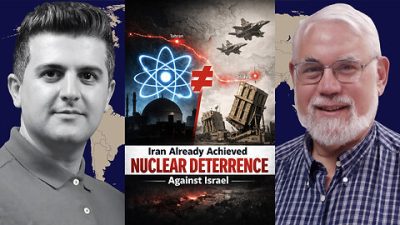
Prof. Ted Postol: Iran Already Achieved Nuclear Deterrence Against Israel
or go to
Aletho News Archives – Video-Images
From the Archives
How the occupied mentality syndrome works
Saudi Arabia on the American chessboard – Part 3
By B. J. Sabri | American Herald Tribune | June 27, 2016
Read part 2: “The occupied mentality Syndrome“
Previously I argued whether Saudi Arabia’s repeated involvements in U.S. interventions and wars stem from free national will or in response to a specific condition. For starters, in Saudi Arabia there is no national will. In Saudi Arabia, the national will is the will of the Al Saud clan. Still, when a major Arab state allies itself with a superpower that committed unspeakable crimes against humanity in almost every Arab country, then something is wrong. This fact alone should compel us to examine the U.S.-Saudi relation for one exceptional reason. As a result of the U.S.-Saudi wars, hundreds of thousands of people in Afghanistan, Iraq, Iran, Libya, Syria, Yemen, and Somalia have lost their lives. Millions became displaced in their own homelands. And millions more rendered refugees.
Attributing the Saudi policies to the bonds of “partnership” with the U.S. is frivolous. There are no bonds between these two thugs except those of business, military deals, secret plots, and wars. Proving this point, bonds such as these have no space for the American and Saudi peoples to share significant cultural or societal exchanges. If partnership is not the reason for the Saudi contribution to the U.S. strategy of empire and imperialism, then another reason must exist.
This leads to three possibilities. … continue
Blog Roll
 Aletho News
- In letter to UN chief, Araghchi warns of dire consequences of US-Israeli attacks on Iran’s nuclear facilities
- Why the CIA conspiracy to invade Iran with Kurdish militias failed
- Why Are Upbeat US Claims About Mission to Rescue Pilot ‘Highly Questionable’?
- Aircraft destroyed during US ‘rescue’ of downed F-15 pilot cost more than $100 million each
- Washington University removes professor who condemned US-Israeli war on Iran
- Russia Warns of Retaliation as UK Authorizes Seizure of Vessels
- Serbia thwarts plot to bomb Russia-Hungary gas pipeline – Vucic
- Al Mayadeen voices solidarity with Dr. Marandi amid death threats
- US dismantling international law in its war against Iran while claiming ‘false’ victory: Legal scholar
- One martyr, 5 injuries in US attack on Iraqi border crossing with Iran
- If Americans Knew
- US loses planes over Iran, Israel downgrades Lebanon war goals – Daily Update
- Israel Is Blocking Palestinians from Easter at Church Where Jesus Resurrected
- Plot to assassinate Palestinian activist follows harassment campaign promoted by Zionist groups and elected officials
- Prominent New York synagogue hosts presentation on why U.S. Jews should support the ethnic cleansing of Gaza
- Tapper vs. Piker: Is the CNN Anchor Auditioning for David Ellison?
- Shouldn’t Democrats Be Able to Condemn Genocide?
- Israel-US kill negotiators, destroy civilian structures, but Iran’s military capabilities still largely intact – Daily Update
- ‘War crime’: Global condemnation as Israeli ministers celebrate death penalty law targeting Palestinian prisoners
- 7 Ways Israel Is Turning Lebanon Into Gaza
- World’s Leading Football Bodies Under Fire Over Israel Policies
- No Tricks Zone
- An Inconvenient Tree: Uncovered In Alps… Europe Much Warmer Than Today 6000 Years Ago
- New Study Reports A 60% Slowdown In Greenland’s Ice Loss Rate In The Last Decade
- Low Intensity Tornado Wrecks Major Solar Farm, Creating A Potential Toxic Dump
- New Study Finds Warming Saves Lives…Cold Temperatures 12 Times More Deadly Than Excess Heat
- German Science Blog Accuses PIK Climate Institute Of Hallucinating Climate Tipping Points
- Devastating Assessment Of Comirnaty Vaccine By Former Senior Pfizer Europe Toxicologist
- New Study: CO2 Is ‘Effectively Negligible’ As An Explanatory Climate Change Factor Since 2000
- Former Pfizer Toxicologist Dr. Helmut Sterz Tells Bundestag Hearing Pfizer Vaccine Should Have Never Been Approved
- Energy Expert: Germany’s Nuclear Phaseout Was A “500 Billion Euro Mistake”
- New Research: South Australia’s Mid-Holocene Sea Surface Temperatures Were 4°C Warmer Than Today
 Aletho News