Bedouins Barricaded in Cemetery as Israel Demolishes Village for 17th Time, Injuring Children
By Tania Kepler for the Alternative Information Center | 16 February 2011
The residents of the Bedouin village Al Araqib were forced from their land for the 17th time Wednesday (16/2) and barricaded inside the village cemetery, as Israel continues its ethnic cleansing efforts in the Negev.
Israeli forces arrived in the early hours of the morning and immediately began shooting rubber bullets at the residents. When the first round of shooting subsided, the Special Forces pushed people from their homes and began demolishing the village for the 17th time.
When residents of Al Araqib protested, the Israeli authorities again shot them with rubber bullets, resulting in injuries. Three children were taken by ambulance to the hospital, according to Awad Abu Frieh, the village spokesperson.
The Jewish National Fund, an active participant in forcing Bedouin from their land, bulldozed the property and began working the land for the planting of a peace forest.
Israeli forces used such excessive violence Wednesday morning that residents fled their homes and entered the adjacent cemetery. JNF bulldozers then approached the cemetery in an attempt to also destroy the Bedouin burial place.
The residents of the village are currently barricaded inside the cemetery, watching as their homes are once more destroyed and hoping the cemetery is not next. All of the exits have been closed, and the bulldozers are circling the site.
One week ago (10/2), women and children of the Bedouin village of Al Araqib were beaten and gassed by Israel forces, in an attempt to halt the 16th demolition of their homes and property.
Three residents were also arrested, including a sixteen year old, and they have been in jail since. There was a court hearing for them Wednesday (16/2) morning in Beer Sheva, and their detention was extended for at least another day.
Another resident was arrested in the village Tuesday night (15/2), and is currently being held by the Israeli police, though the reason for his arrest is unclear.
Israeli forces and Jewish National Fund workers entered the Bedouin village and again destroyed the residents homes, and continued preparing the land for the planting of a “peace forest”.
Following last week’s demolition, six residents, four women and two children, were hospitalized at the Soroka hospital in Beer Sheva.
“The police harshly beat the women and children who were standing in quiet protest, they simply beat women and children…I stood alongside a woman who was beaten by four police officers, actual fists in her face, ears and neck, in addition to kicks until she almost lost consciousness…people are sitting on the ground, in the rain, and not moving, women and children. The police shot stun grenades and foam bullets directly at the women, at point blank,” reported Tamar, an activist who was present in the village.
Israel Launches New PR Campaign on North American Campuses: Faces of Israel
Connie Hackbarth | Alternative Information Center | February 16, 2011
A delegation of young Israelis will embark next week on a singular public relations campaign on North American campuses. Entitled Faces of Israel, the delegation includes Arabs and Jews, representatives of the LGBT community and Ethiopian immigrants who are meant to show the “real face” of Israeli society.
Yuli Edelstein, the Minister of Public Diplomacy and Diaspora Affairs and the initiator of Faces of Israel, said that “We believe this is the appropriate answer to the campaign of delegitimisation occurring against Israel throughout the world. This campaign will bring local students face to face with Israeli students just like them. The delegation will be divided into groups and go to various universities, where they will participate in panels and direct encounters on campus.”
According to Israel’s Artuz 7 news outlet, delegation members were “carefully selected with the goal of representing Israeli society as a colourful and diverse society which protects equality and human rights, and thus refute attempts to present Israel as an apartheid state.”
During events, a memory stick with information entitled “Invented in Israel” will be distributed to participants.
Although Minister Edelstein notes that “this is a new strategy that puts the human face of Israel in the front stage…through regular people from the grassroots,” Israeli attempts to whitewash its colonial polices and occupation of the Palestinian territory are not new. Israel’s Foreign Ministry doubled its embassies’ public relations budgets for 2011 has been working for several years now on professional public relations campaigns that present Israel as a liberal, innovative and hip society and vacation destination. The packaging of Tel Aviv as a gay-friendly city, for example, is an important component of this official reality distortion.
The actual “representativeness” of this delegation, members of which underwent 40 hours of training through the Ministry of Public Diplomacy and Diaspora Affairs, was even questioned by the settler-affiliated Arutz 7 media outlet. Arutz 7 noted that the delegation included no (Jewish) religious, orthodox or members who live in the West Bank settlements. In response, the Ministry noted “we found it appropriate to have other representatives” and that Minister Edelstein himself resides in Neve Daniel, a settlement near Bethlehem, and that he would be accompanying the delegation.
The Alternative Information Center (AIC) is still searching for details of the delegation’s public engagements in North American universities. What is known to date is that all delegation members will meet for a “main event” in New York on Sunday 6 March that will include presentations by Edelstein on the importance of fighting the campaign against Israel; Knesset Member Dalia Itzhik (Kadima) on women’s rights in Israel; Knesset Member Majallie Whbee (Kadima), a Druze-Palestinian on equal opportunities in Israel; and Malcolm Hoenlein, the Executive Vice Chairman of the Conference of Presidents of Major Jewish American Organisations. There will also be “Zionist hip-hop” with the Israeli group Dag Nahash.
The Alternative Information Center calls on Palestinian Solidarity and other activists groups to mobilize against Faces of Israel as part of preparations for the Israel Apartheid Week in March.
Egypt: Social Movements, the CIA and the Mossad

By James Petras | Palestine Chronicle | February 16, 2011
The mass movements which forced the removal of Mubarak reveal both the strength and weaknesses of spontaneous uprisings. On the one hand, the social movements demonstrated their capacity to mobilize hundreds of thousands, if not millions, in a successful sustained struggle culminating in the overthrow of the dictator in a way that pre-existent opposition parties and personalities were unable or unwilling to do.
On the other hand, lacking any national political leadership, the movements were not able to take political power and realize their demands, allowing the Mubarak military high command to seize power and define the “post-Mubarak” process, ensuring the continuation of Egypt’s subordination to the US, the protection of the illicit wealth of the Mubarak clan ($70 billion), and the military elite’s numerous corporations and the protection of the upper class. The millions mobilized by the social movements to overthrow the dictatorship were effectively excluded by the new self-styled “revolutionary” military junta in defining the political institutions and policies, let alone the socio-economic reforms needed to address the basic needs of the population (40% live on less than $2 USD a day, youth unemployment runs over 30%). Egypt, as in the case of the student and popular social movements against the dictatorships of South Korea, Taiwan, Philippines and Indonesia, demonstrates that the lack of a national political organization allows neo-liberal and conservative “opposition” personalities and parties to replace the regime. They proceed to set up an electoral regime which continues to serve imperial interests and to depend on and defend the existing state apparatus. In some cases they replace old crony capitalists with new ones. It is no accident that the mass media praise the ‘spontaneous’ nature of the struggles (not the socio-economic demands) and put a favorable spin on the role of military (slighting its 30 years as a bulwark of the dictatorship). The masses are praised for their “heroism”, the youth for their “idealism”, but are never proposed as central political actors in the new regime. Once the dictatorship fell, the military and the opposition electoralists “celebrated” the success of the revolution and moved swiftly to demobilize and dismantle the spontaneous movement, in order to make way for negotiations between the liberal electoral politicians, Washington and the ruling military elite.
While the White House may tolerate or even promote social movements in ousting (“sacrificing”) dictatorships, they have every intention of preserving the state. In the case of Egypt the main strategic ally of US imperialism was not Mubarak, it is the military, with whom Washington was in constant collaboration before, during and after the ouster of Mubarak, ensuring that the “transition” to democracy (sic) guarantees the continued subordination of Egypt to US and Israeli Middle East policy and interests.
The Arab revolt demonstrates once again several strategic failures in the much vaunted secret police, special forces and intelligence agencies of the US and Israeli state apparatus none of which anticipated, let along intervened, to preclude successful mobilization and influence their government’s policy toward the client rulers under attack.
The images which most writers, academics and journalists project of the invincibility of the Israeli Mossad and of the omnipotent CIA have been severely tested by their admitted failure to recognize the scope, depth and intensity of the multi-million member movement to oust the Mubarak dictatorship. The Mossad, pride and joy of Hollywood producers, presented as a ‘model of efficiency’ by their organized Zionist colleagues, were not able to detect the growth of a mass movement in a country right next door. The Israeli Prime Minister Netanyahu was shocked (and dismayed) by the precarious situation of Mubarak and the collapse of his most prominent Arab client – because of Mossad’s faulty intelligence. Likewise, Washington was totally unprepared by the 27 US intelligence agencies and the Pentagon, with their hundreds of thousands of paid operatives and multi-billion dollar budgets, of the forthcoming massive popular uprisings and emerging movements.
Several theoretical observations are in order. The notion that highly repressive rulers receiving billions of dollars of US military aid and with close to a million police, military and paramilitary forces are the best guarantors of imperial hegemony has been demonstrated to be false. The assumption that large scale, long term links with such dictatorial rulers, safeguards US imperial interests has been disproven.
Israeli arrogance and presumption of Jewish organizational, strategic and political superiority over “the Arabs”, has been severely deflated. The Israeli state, its experts, undercover operatives and Ivy League academics were blind to the unfolding realities, ignorant of the depth of disaffection and impotent to prevent the mass opposition to their most valued client. Israel’s publicists in the US, who scarcely resist the opportunity to promote the “brilliance” of Israel’s security forces, whether it’s assassinating an Arab leader in Lebanon or Dubai, or bombing a military facility in Syria, were temporarily speechless.
The fall of Mubarak and the possible emergence of an independent and democratic government would mean that Israel could lose its major ‘cop on the beat’. A democratic public will not cooperate with Israel in maintaining the blockade of Gaza – starving Palestinians to break their will to resist. Israel will not be able to count on a democratic government, to back its violent land seizures in the West Bank and its stooge Palestinian regime. Nor can the US count on a democratic Egypt to back its intrigues in Lebanon, its wars in Iraq and Afghanistan, its sanctions against Iran. Moreover, the Egyptian uprising has served as an example for popular movements against other US client dictatorships in Jordan, Yemen and Saudi Arabia. For all these reasons, Washington backed the military takeover in order to shape a political transition according to its liking and imperial interests.
The weakening of the principle pillar of US imperial and Israeli colonial power in North Africa and the Middle East reveals the essential role of imperial collaborator regimes. The dictatorial character of these regimes is a direct result of the role they play in upholding imperial interests. And the major military aid packages which corrupt and enrich the ruling elites are the rewards for being willing collaborators of imperial and colonial states. Given the strategic importance of the Egyptian dictatorship, how do we explain the failure of the US and Israeli intelligence agencies to anticipate the uprisings?
Both the CIA and the Mossad worked closely with the Egyptian intelligence agencies and relied on them for their information, confiding in their self-serving reports that “everything was under control”: the opposition parties were weak, decimated by repression and infiltration, their militants languishing in jail, or suffering fatal “heart attacks” because of harsh “interrogation techniques”. The elections were rigged to elect US and Israeli clients – no democratic surprises in the immediate or medium term horizon.
Egyptian intelligence agencies are trained and financed by Israeli and US operatives and are amenable to pursuing their master’s will. They were so compliant in turning in reports which pleased their mentors, that they ignored any accounts of growing popular unrest or of internet agitation. The CIA and Mossad were so embedded in Mubarak’s vast security apparatus that they were incapable of securing any other information from the grassroots, decentralized, burgeoning movements which were independent of the “controlled” traditional electoral opposition.
When the extra-parliamentary mass movements burst forward, the Mossad and the CIA counted on the Mubarak state apparatus to take control via the typical carrot and stick operation: transient token concessions and calling out the army, police and death squads. As the movement grew from tens of thousands to hundreds of thousands, to millions, the Mossad and leading US Congressional backers of Israel urged Mubarak to “hold on”. The CIA was reduced to presenting the White House with political profiles of reliable military officials and pliable “transitional” political personages, willing to follow in Mubarak’s footsteps. Once again the CIA and Mossad demonstrated their dependence on the Mubarak apparatus for intelligence of who might be a “viable” (pro-US/Israel) alternative, ignoring the elementary demands of the masses. The attempt to co-opt the old guard electoralist Muslim Brotherhood via negotiations with Vice-President Suleiman failed, in part because the Brotherhood was not in control of the movement and because Israel and their US backers objected. Moreover, the youth wing of the Brotherhood pressured them to withdraw from the negotiations.
The intelligence failure complicated Washington and Tel Aviv’s efforts to sacrifice the dictatorial regime to save the state: the CIA and MOSSAD did not develop ties to any of the new emerging leaders. The Israeli’s could not find any ‘new face’ with a popular following willing to serve as a crass collaborator to colonial oppression. The CIA had been entirely engaged in using the Egyptian secret police for torturing terror suspects (“exceptional rendition”) and in policing neighboring Arab countries. As a result both Washington and Israel looked to and promoted the military takeover to preempt further radicalization.
Ultimately the failure of the CIA and MOSSAD to detect and prevent the rise of the popular democratic movement reveals the precarious bases of imperial and colonial power. Over the long-run it is not arms, billions of dollars, secret police and torture chambers that decide history. Democratic revolutions occur when the vast majority of a people arise and say “enough”, take the streets, paralyze the economy, dismantle the authoritarian state and demand freedom and democratic institutions without imperial tutelage and colonial subservience.
– James Petras’ most recent books are: What’s Left in Latin America?, coauthored with Henry Veltmeyer (Ashgate Press, 2009), and Global Depression and Regional Wars (Clarity Press, 2009).
Arab MK calls on police to release murder victim’s body to family
Palestine Information Center – 16/02/2011
NAZARETH — Arab MK Jamal Zahalka called on the Israeli police to release the body of Hossam al-Rawaidi to his family to be buried alongside their deceased in Jerusalem.
Israeli authorities not only persecute the living in Jerusalem, but also persecute the dead, he said in a letter to the Ministry of Homeland Security on Tuesday.
”What right do Israeli forces have to impose the burial site of the deceased? Burial according to all races and religions is the right of the family and no one has the right to impose on them a place they don’t want or deny them burial at the site it deems.”
”It is unreasonable that the body remains without being buried for six days. This is a crime over the crime of murder committed by extremist Jews in Jerusalem.”
Rawaidi was brutally murdered last Thursday when a band of Jewish settlers intercepted him on his way home from work and proceeded to use abusive language against him and another man. One of the assailants used a Japanese sword in a deep laceration to Ruwaidi’s ear that stretched to his neck killing him. The second victim was assaulted after trying to block the attack.
Police have placed tough conditions before releasing Ruwaidi’s body to his family, denying permission for his burial before 10:00pm and with the help of more than ten people. They later became more stringent and ordered that he be buried outside of Jerusalem claiming a Jerusalem burial would lead to clashes.
The Ruwaidi’s have refused to bury him outside of Jerusalem and insist on receiving his body to be buried in the holy city and prayed over in the Aqsa Mosque.
Obama allocates $44 billion for Homeland Security to purchase more naked body scanners
By Ethan A. Huff | NaturalNews | February 16, 2011
The Obama administration recently announced its $3.73 trillion dollar budget plan for the 2012 fiscal year beginning on October 1. The new budget includes a more than $44 billion allocation for the U.S. Department of Homeland Security (DHS) to purchase 275 more naked body scanners to be installed at U.S. airports, despite continued outcry from health experts and the public about the machines’ safety hazards, threats to personal privacy, and complete ineffectiveness.
Up three percent from last year’s budget, the DHS allocation is just the start of the Obama administration’s efforts to have 1,275 naked body scanners installed in airports by the end of 2012. The plan disregards the numerous testimonies from security experts who have dubbed the machines “useless,” and say they fail to detect explosive materials any better than conventional scanners.
“I don’t know why everybody is running to buy these expensive and useless machines,” said Rafi Sela, former chief of security at the Israel Airport Authority and expert in airport security. “I can overcome the body scanners with enough explosives to bring down a Boeing 747. That’s why we haven’t put them in our airport.”
The machines are also a huge health threat, as they bombard travelers with low intensity radiation in a way that spreads it across the skin of the entire body. This full-body radioactive blast has not been fully investigated and nobody knows for sure what the long-term consequences of exposure will be.
“It concerns me a great deal,” said University of California – San Francisco (UCSF) professor Robert Stroud in an interview with CBS 5 San Francisco, concerning the machines. “We simply don’t know enough about low intensity radiation. Skin is where a lot of this particular radiation probably will be the most damaging.”
Egyptian Revolution in Israeli Eyes
By Seraj Assi | Palestine Chronicle | February 14, 2011
The Arab World is suffering and in its suffering it threatens Israel. ‘Israeli citizens are frightened,’ said Israeli opposition leader Tzipi Livni in a moment of deep confession. In fact, what Livni was saying, to paraphrase Franz Fanon, is this: “Mama America, see the Arab! I’m frightened! Frightened! Frightened!”
This is a typical colonial scene where the “frightening victims” are captured in a game that involves dehumanization and empowering and rendered silent and dangerous subjects at the same time. Never can they escape this colonial capacity to invite and contain contradictions and opposites.
Yet in the Israeli case the irony is far more acute. For not only does Israel see its victim as dangerous and potentially evil, but has itself become the victim. It is within this irony that the ritual of victimization came to dominate the master narrative of Israel’s colonial discourse and foreign policy. Not only has Israel become a country whose entire existence is dependent on the suppression of all Arab and Muslim peoples, but it has relentlessly contributed to their suppression.
According to Israel’s imperial logic, it is only reasonable to suppress the lives of three hundred million people for the “security” of a few million Israeli Jews, no matter how fictitious this security claim is. The irony is while Israel continues to bill Egyptian revolution as a threat to its national security, its Palestinian citizens- for decades Israel’s internal “dangerous victims”- are taking to the streets to celebrate the victory of their Egyptian brothers. Motivated by human and national solidarity, they have never felt as secure as they do now.
Israel’s security is fundamentally the security of vision. And since the vision of Arab and Muslim despotism is the only guarantee for Israel’s cultural narcissism and ethnic superiority in the region, it must be preserved by any means, and precisely by brutal force for “Arabs only understand force”, as Zionists believe.
Yet Israel’s fear has a performative colonial function. Its obsessive insistence to remain “the only democracy in the Middle East” is not merely a representational fantasy, but an effective colonial strategy. It is precisely this vision that gives Israel’s colonial policies in the region its moral justification and authentic validity. Its “civilizing mission” in the region is completely dependent on its vision of Arab and Muslim undemocratic spirit.
It is Israel’s cultivated vision on Arab despotism that permits its former Prime Minister Ehud Barak to boast that “Israel is a villa in a jungle” and its President Shimon Perez to contrast democracy with peace: “Mubarak is a great man committed to peace, but Egyptian youth want democracy.” And when Israeli Prime Minister Benjamin Netanyahu issued his paternalistic warning to Egypt from “becoming another Iran” he was operating into the same imperial logic.
Here Israel’s ambition to reorder the world by the brutal force of Zionist propaganda reaches its extreme absurdity. Indeed, it is in Israel where suppression is equivalent to stability. It is there where Egypt, its people, history and culture are all reduced to one word: Camp David. And it is in Israel where international sympathy for Egyptian struggle for freedom and dignity is violently placed under what an Israeli journalist has recently called “the betrayal of the West.”
Even when the moment has arrived to contradict these proclamations, Israel continues to see itself as the civilization custodian surrounded by uncivilized enemies and unruly protestors. There is no doubt then that Israel’s fear of any prospective democracy in the Arab world is steeped in racism. For Arab democracy simply threatens Israel’s undisputed vision of Arabs that maintained itself regardless of any historical evidence disputing it. And since the evidence this time is too visible to be denied, it becomes too intimidating for the Israeli observer. As the vision is now defeated by the narrative, as it is yielding to the pressure of history, Israel’s fear turns into collective phobia and racist hysteria. The scene of an Arab getting out of the iron cage fashioned by the Israeli observer to violate the serenity of history is precisely what frightens Israel.
On February 02, 2011, an article published in Haaretz opened with the following:
“Edward Said was right. We are all infected with Orientalism, not to mention racism. For the site of an entire people shaking off the yoke of tyranny and bravely demanding free elections – instead of uplifting our spirits, fills us with fear, just because they are Arabs.”
This clearly illustrates how, by a strange change of fortune, Israel came to inherit Western Orientalist racism and produce its own “Orientals”. Indeed, it is in Israel where, to steal a line from Naomi Klein, “Jews made the shift from victims to victimizers with terrifying ease.” This ironic legacy of Western Orientalism now produced by the Zionist racist machinery is precisely what enables Binyamin Fuad Ben-Eliezer, himself an Arab Jew born in Basra in Iraq, to lament Mubarak’s departure by claiming that “Arabs are not ready for democracy.”
Yet Israeli Jews are not alone to inherit the ironic legacy of Western Orientalism in the region. Just a week after the Egyptian revolution broke up Mubarak too introduced his version of Orientalism. Not so different from Livni’s was his message to President Obama on ABC that “you don’t understand Egyptian culture and what would happen if I step down now”. One might wonder what was left of Egyptian culture under Mubarak regime but a bunch of corrupt muftis and semi-intellectuals. In fact, one does not need a revolution to discover that Mubarak is the last one in Egypt to understand what Egyptian culture is.
Perhaps the most hilarious scene of Mubarak’s Orientalist doctrine was his “camelization” of the demonstrations in Egypt. By unleashing his thugs riding in on camels and horses to crush and terrorize peaceful civilian protestors on the streets Mubarak was sending a clear message to his friends in the West. That is Egyptians, when left to their devices, are nothing but a bunch of unruly savages unsuited to democracy and civilization. His barbaric response to one of the most civilized revolutions in the region shows how deeply he believes in what he says and does.
Mubarak’s response is an extraordinary example of how local dictators act as colonial agents towards their people and how they too feed on the irony of “dangerous victims.” Victimization in Mubarak’s version depends on the same logic of radical inversion. That is by presenting Egyptian protestors as collaborators and foreign agents Mubarak is following the Arab proverb: “He hit me and cried, he raced me to complain.” Yet Mubarak certainly knows, as well as his Israeli and Western interlocutors, that one of the motivations behind the revolution was precisely his scandalous collaborative role in the region.
It is in this context that the revolution against Mubarak regime becomes an anti-colonial struggle. His dehumanization of his people tied with his brutal violence against peaceful civilians is an unmistakably colonial symptom. Here the recent events in Tunisia and Egypt should not make us forget how Western violence was exported to the Arab world from the dawn of colonialism up to the present day, how it was brought home by ruling elites whose links to neo-colonial and post-colonial metropolises are maintained through multiple forms of agency, and how authoritarian Arab regimes continue to feed on Western hypocrisy in regard to democracy and liberty, the same slogans that have provided the foot-hold for Western expansion in the region.
Nor should we forget that Western political stability in comparison to the Arab world should be interpreted against the background of its exploitation of the region which provided it with the wealth to support its relatively decorous life. To make no mistake about it, the obsessive emphasis in Arab and Western media on formal U.S. announcements and responses to events in Egypt and Tunisia can only show how deeply neocolonialism is steeped in the region.
Isn’t it then a bitter irony to expect the United State to liberate Egyptians from the very conditions that make it function in the region? Wasn’t this very same discourse on the liberation of Arabs what allowed its imperial venture to take place in the region? Don’t all kinds of critique of Israel’s support for Mubarak’s regime seem absurd given the fact that by supporting Mubarak Israel behaves in accordance with its colonial interests in the region and any critique of it must begin with its colonial foundations instead of its contemporary political hypocrisy?
– Seraj Assi is a PhD student in Arabic and Islamic Studies at Georgetown University, Washington DC.
The Fed’s policy of creating inflation: A massive wealth transfer
By Rodrigue Tremblay | Intrepid Report | February 16, 2011
“If once [the people] become inattentive to the public affairs, you and I, and Congress and Assemblies, Judges and Governors, shall all become wolves. It seems to be the law of our general nature, in spite of individual exceptions.”—Thomas Jefferson (1743–1826), 3rd US President
“If the American people ever allow private banks to control the issuance of their currency, first by inflation and then by deflation, the banks and corporations that will grow up around them will deprive the people of all their property until their children will wake up homeless on the continent their fathers conquered.”—Thomas Jefferson (1743–1826), 3rd US President
[Corruption in high places would follow as] “all wealth is aggregated in a few hands and the Republic is destroyed.”—Abraham Lincoln (1809–1865), American 16th US President (1861–65)
“When plunder becomes a way of life for a group of men living together in society, they create for themselves, in the course of time, a legal system that authorizes it and a moral code that glorifies it.”—Frederic Bastiat (1801–1850), French economist
“Inflation made here in the United States is very, very low.”—Ben Bernanke, Fed Chairman, Thursday, February 10, 2011
Let us begin with some macroeconomic indicators of reference.
In October 2010, the world value of total production (all Gross Domestic Products or GDPs) was estimated to be $61.96 trillion U.S. dollars at current nominal prices. The U.S.GDP was estimated at $16.11 trillion or 26 % of world GDP.
The two largest financial markets in terms of trading values are the global foreign exchange market (all currency markets) that has an average daily turnover in global foreign exchange transactions of about $4 trillion per day, and the privately-traded and mostly unregulated world derivatives market (all the derivatives markets) whose total world outstanding contracts has been estimated by the Bank for International Settlements in Switzerland to have a notional or face value of about $791 trillion in 2010.
In terms of real wealth, however, the two most important financial markets are the world bond market and the world stock market. In 2009, for example, the global bond market had an outstanding value of $US 91 trillion, with the U.S. bond market, at a value of $US 35.5 trillion, being the largest domestic bond market.–In mid-2010, the global equity market capitalization on regulated exchanges was estimated at $US 54.9 trillion, with the U.S. stock market having a value of some $US 19.8 trillion.
With such a large amount of financial assets, it is understandable that shifts in prices and interest rates have important effects on each market. If long-term interest rates go up, the nominal value of bonds goes down, and conversely, when interest rates decline, bond prices go up. As for stocks, many factors, such as company earnings, future profit prospects and inflation expectations, as well as political and taxation considerations, can influence their value. However, in general, they tend to fare better when short-term interest rates are low rather than high.
Sometimes, these two important financial markets move up together, especially in an environment of general disinflation, when interest rates tend to decline. They also tend to decline in tandem when real interest rates are on the rise, both bond prices and stock prices are then falling.
Sometimes, however, they can move in different directions, especially in the early phase of an inflationary period, such unexpected inflation being good for the stock market but bad for the bond market. Since last fall, this has been case, with the bond market falling and the stock market rising. The question is how long this decoupling can last.
And how does the Fed’s monetary policy fit into such an environment of oncoming inflation, and what should the Fed do?
Last November 3rd, the day after the 2010 mid-term elections, the Bernanke Fed announced that it will be embarking on a second round of quantitative easing (QE2), a fancy word for printing new money in exchange for government bonds—in other words, monetizing the public debt. It seems that Chairman Bernanke and the Fed board felt that months of lending to the large American banks trillions of dollars at close to zero interest rate, while paying them 0.25 percent to keep their excess reserves on its books, was not enough. They announced that the Fed would buy $600 billion-worth of additional Treasury bonds until June 2011, while reinvesting some $300 billion of principal payments from its portfolio holdings of mortgage-backed securities.
In doing so, the Fed professed to follow two somewhat interrelated objectives; 1- to lower long-term real interest rates in order to stimulate economic activity and create employment; and 2- to simultaneously raise inflation expectations in order to avoid the effect of deflation on the U.S. debt-leveraged economy. It should be remembered that from 1913 to 1977, the Fed had only one objective to pursue, i.e. price stability. Currently, however, the Fed has officially a double mandate. As a matter of fact, since 1977, the amended Federal Reserve Act of 1913 stipulates that the U.S. central bank should set its monetary policy in order to promote employment while maintaining price stability. It says that the Fed should promote “maximum employment, stable prices, and moderate long-term interest rates.”
Of course, a central bank in a fiat currency system can always create inflation through monetary policy and its printing press, but, in a market economy, it has little direct influence on job creation and on long-term interest rates. Employment depends on investments, innovation and market opportunities at home and abroad, while long-term interest rates depend on the amount of savings available, on investment demand and on long-term inflation expectations, all factors that are more or less out of the reach of a central bank. It is easy to delude oneself into thinking otherwise, but that’s the reality.
What the Fed can do with certainty, however, is to create inflation by expanding the monetary base and the money supply; it can also reign in inflation by draining liquidity from the system. If it goes overboard one way or the other, it can also create asset price bubbles by maintaining its managed short-run interest rates too low for too long, or it can create a credit crunch by putting the brakes too hard on credit creation, usually in a haste to correct its previous mistake.
These short-term gyrations in monetary policy are very destabilizing to the real economy, sometimes creating a temporary boom; sometimes precipitating an economic downturn. They are also accompanied by massive shifts of wealth between creditors and debtors.
In the first instance, when the Fed (or any central bank for that matter) creates too much money by buying financial assets and writing checks on itself, inflation and inflation expectations ensue. This pushes short-term interest rates down and long-term interest rates up (a steepening of the yield curve) and the price of long bonds goes down, with the effect of imposing an inflation tax on all the holders of fiat dollars. This inflation tax results in a transfer of wealth between unsuspecting dollar holders and bond holders who see the real value of their holdings go down, while net debtors and stock owners see their real debt load being reduced by inflation and the value of most shares in the stock market going up.
In the second instance, the reverse can happen if the economy is starved of liquidity: the yield curve inverts with short-run interest rates moving way up as compared to long-term interest rates. A stock market crash and an economic recession generally follow.
—That’s pretty much what the Fed has been doing over its nearly 100 years of existence, keeping short-run interest rates too low for too long, creating unsustainable asset bubbles, and then applying the monetary brakes to kill inflation expectations that it has created on its own. Sometimes, the Fed has maintained price stability and the value of the U.S. dollar; but at other times, it has willingly acted to destroy the purchasing power of the dollar by printing too much of it.
As a general principle, if inflation expectations increase faster than nominal long-term interest rates, real interest rates, i.e. the real cost of capital for investors and home buyers, would decline and this would, hopefully, stimulate economic activity and employment.
Unfortunately for the Fed, its Nov. 3rd announcement translated into an important loss of confidence in its ability to design and pursue an appropriate monetary policy and was immediately decried by other central banks and by America’s biggest creditor, China, as a blatant attempt to generate and export inflation. Bond prices began immediately to fall and bond yields to rise. It seems that bondholders began selling longer-term Treasuries at a faster rate than the Fed could buy them.
Chairman Ben Bernanke and his board seem to have forgotten that the United States is now a debtor nation, not a creditor nation. A creditor nation could get away with an outspoken policy of creating inflation—but not a debtor nation. In 2010 alone, the U.S. registered another half a trillion-dollar trade deficit with the rest of the world. This has to be financed, and it is done with foreign borrowings. To a large extent, foreign creditors now decide the final outcome of American monetary policy.
The 10-year Treasury yield, which hit a low at 2.40 percent in October 2010, was at 2.63 percent the day before the Fed’s announcement on November 2, 2010. As it turned out, it closed at 3.64 on Friday February 11, after hitting a high of 3.75 percent on February 8. The same is true of the 30-year Treasury yield that hit a high of 4.76 percent on February 8, thus approaching the dangerous threshold of 4.90 percent. The latter stood at 3.93 percent on Nov. 2, 2010.
Obviously, the Fed’s ultra loose monetary policy has backfired. Its intended policy of printing money in excess of what the economy demands has resulted in raising real long-term interest rates, not lowering them. Indeed, with long-term nominal rates on the rise while inflation will take many months to surface, the immediate effect of the Fed’s November announcement was to raise real long-term Treasury rates, not to lower them. Mortgage rates are also on the rise, threatening to postpone the long anticipated recovery in the housing market.
It is certainly possible that we are entering a period when the already observed rise in real interest rates can derail the stock market rally that has been in force since early March 2009. Later on, however, a slowdown in the economy coupled with fiscal compressions can be expected to push long-term rates down again. Such a roller-coaster path for interest rates is not very helpful.
The current Fed board seems to believe that the Fed is more than a central bank, that it is a sort of a government unto itself that can both control monetary conditions and solve the structural problems in the real economy at the same time, irrespective of what the rest of the world thinks. This would seem to be most unrealistic. Perhaps a dose of humility would be salutary at this time, before irreparable damage is done.
~
Rodrigue Tremblay is professor emeritus of economics at the University of Montreal and can be reached at rodrigue.tremblay@yahoo.com. He is the author of the book “The Code for Global Ethics.”
Featured Video
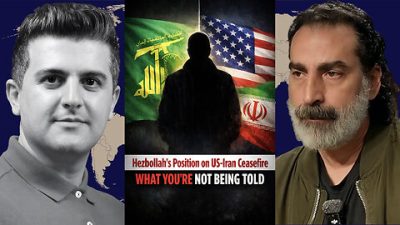
Laith Marouf: Hezbollah’s position on US-Iran ceasefire
or go to
Aletho News Archives – Video-Images
From the Archives
The Dirty Little Secret behind the “Global Terrorism Index”
The Omission of Israeli Terrorism in the Occupied Palestinian Territories
By Karin Brothers | Global Research | December 6, 2014
… The Israeli settlements — all of which are illegal – have been identified as a major impediment to peace. The refusal of a major “global” terrorism report to name the Israeli settlers as one of the groups most responsible for terrorism not only misrepresents a major source of regional violence but exposes the Global Terrorism Index as a propaganda tool that supports a U.S. agenda.
In recent years, governments have been attempting to thwart terrorism by blocking supportive fund-raising. When it comes to Israeli settlements, however, the US and Canada actually encourage fund-raising by giving organizations (such as Christian Friends of Israeli Communities (CFOIC) and the Jewish National Fund) financial support in the form of donor tax-deductions.
Charities which provide funds for the Israeli settlements should be regarded as terror-financing organizations. They should not only lose their tax-deductible status, but they should be banned because they support the violation of international humanitarian law. The terror-financing laws that are being strictly enforced for Muslim charities should be applied to Christian and Jewish charities as well. … Read full article
Blog Roll
 Aletho News
- The Black Cube Files: How Former Mossad Operatives Flipped a Nation
- Laith Marouf: Hezbollah’s position on US-Iran ceasefire: What you’re not being told
- Israel’s priority lies in destroying chances of peace between Iran, US: Ex-UN nuclear chief
- Ceasefire for all or for none: Iran shuts Hormuz over Lebanon attacks
- Strait of Hormuz is Iran’s ‘nuclear weapon’ that forced US retreat: Medvedev
- Energy crisis will last for months – Kremlin envoy
- Europe’s quiet role in the war on Iran
- Forty days that shook the Empire: How Iran turned the tables on US and prevailed
- Netanyahu unilaterally declares Lebanon outside of ceasefire deal
- Israeli leaders: ‘Not a single goal’ achieved in war with Iran
- If Americans Knew
- Gazans face a triple crisis: severe shortages of water and bread, healthcare in tatters
- NY Times reports how Netanyahu took the US into Iran War
- A sigh of relief over Iran, but Gaza and Lebanon in dire straits – Daily Update
- Thousands dead and neighborhoods razed to the ground: Aid agencies fear southern Lebanon is becoming the new Gaza
- The war the US is fighting for Israel could cost trillions
- ‘Cigarette Burns, Nail Wounds’: Toddler Tortured in Gaza to Coerce Father
- Trump Says US Sent ‘a Lot of Guns’ to Protesters in Iran
- Israeli forces destroy 17 UN peacekeeper cameras in south Lebanon
- US-Israeli strikes ‘completely destroy’ synagogue in Tehran
- Archbishop for US Military Says Iran War Is Unjust Under Catholic Teaching
- No Tricks Zone
- An Inconvenient Tree: Uncovered In Alps… Europe Much Warmer Than Today 6000 Years Ago
- New Study Reports A 60% Slowdown In Greenland’s Ice Loss Rate In The Last Decade
- Low Intensity Tornado Wrecks Major Solar Farm, Creating A Potential Toxic Dump
- New Study Finds Warming Saves Lives…Cold Temperatures 12 Times More Deadly Than Excess Heat
- German Science Blog Accuses PIK Climate Institute Of Hallucinating Climate Tipping Points
- Devastating Assessment Of Comirnaty Vaccine By Former Senior Pfizer Europe Toxicologist
- New Study: CO2 Is ‘Effectively Negligible’ As An Explanatory Climate Change Factor Since 2000
- Former Pfizer Toxicologist Dr. Helmut Sterz Tells Bundestag Hearing Pfizer Vaccine Should Have Never Been Approved
- Energy Expert: Germany’s Nuclear Phaseout Was A “500 Billion Euro Mistake”
- New Research: South Australia’s Mid-Holocene Sea Surface Temperatures Were 4°C Warmer Than Today
 Aletho News