Egyptians call for release of prisoners
Press TV – February 14, 2011
Egyptian protesters have called on the new military rulers to release hundreds of people who were arrested in the recent popular revolution that toppled the Mubarak regime.
The military has promised to enforce the will of the people following President Hosni Mubarak’s ouster, but the people say their demands have not been met yet, a Press TV correspondent reported.
Protesters, who are gathering in Liberation Square for the 21st consecutive day, have called on the army to fulfill its promises following its takeover of power.
One of their demands is the release of all political prisoners.
At least 500 people were arrested in the recent popular protests that toppled the ruling regime.
But an estimated 17,000 political prisoners were already locked up in Egyptian prisons — notorious for the use of torture.
Egypt has also been the US destination of choice for its extraordinary rendition program — the practice of taking terror suspects to a country where torture is used in an attempt to extract confessions.
For years, former intelligence chief and current Vice President Omar Suleiman has been the CIA’s point-man in Egypt for extraordinary renditions.
Protesters have been cordoned off by police and military soldiers. Protesters say they are now discussing their next move.
They are demanding a clear timetable for the transfer of power to a civilian government.
Activists have demanded the release of political prisoners, the lifting of a 30-year-old state of emergency and the disbandment of military court. They say demonstrations will continue until the army accepts the reforms.
Egypt’s revolution and Israel: “Bad for the Jews”
Ilan Pappe, The Electronic Intifada, 14 February 2011
 |
Is Arab democracy bad for Israel? (Matthew Cassel) |
The view from Israel is that if they indeed succeed, the Tunisian and Egyptian revolutions are bad, very bad. Educated Arabs — not all of them dressed as “Islamists,” quite a few of them speaking perfect English whose wish for democracy is articulated without resorting to “anti-Western” rhetoric — are bad for Israel.
Arab armies that do not shoot at these demonstrators are as bad as are many other images that moved and enthused so many people around the world, even in the West. This world reaction is also bad, very bad. It makes the Israeli occupation in the West Bank and Gaza Strip and its apartheid policies inside the state look like the acts of a typical “Arab” regime.
For a while you could not tell what official Israel thought. In his first ever commonsensical message to his colleagues, Prime Minister Benjamin Netanyahu asked his ministers, generals and politicians not to comment in public on the events in Egypt. For a brief moment one thought that Israel turned from the neighborhood’s thug to what it always was: a visitor or permanent resident.
It seems Netanyahu was particularly embarrassed by the unfortunate remarks on the situation uttered publicly by General Aviv Kochavi, the head of Israeli military intelligence. This top Israeli expert on Arab affairs stated confidently two weeks ago in the Knesset that the Mubarak regime is as solid and resilient as ever. But Netanyahu could not keep his mouth shut for that long. And when the boss talked all the others followed. And when they all responded, their commentary made Fox News’ commentators look like a bunch of peaceniks and free-loving hippies from the 1960s.
The gist of the Israeli narrative is simple: this is an Iranian-like revolution helped by Al Jazeera and stupidly allowed by US President Barack Obama, who is a new Jimmy Carter, and a stupefied world. Spearheading the Israeli interpretation are the former Israeli ambassadors to Egypt. All their frustration from being locked in an apartment in a Cairean high-rise is now erupting like an unstoppable volcano. Their tirade can be summarized in the words of one of them, Zvi Mazael who told Israeli television’s Channel One on 28 January, “this is bad for the Jews; very bad.”
In Israel of course when you say “bad for the Jews,” you mean the Israelis — but you also mean that whatever is bad for Israel is bad for the Jews all around the world (despite the evidence to the contrary since the foundation of the state).
But what is really bad for Israel is the comparison. Regardless of how all this would end, it exposes the fallacies and pretense of Israel like never before. Egypt is experiencing a peaceful Intifada with the deadly violence coming from the side of the regime. The army did not shoot at the demonstrators; and even before the departure of Mubarak, already seven days into the protests, the minister of interior who directed his thugs to violently crash the demonstrations had been sacked and will probably be brought to justice.
Yes, this was done in order to win time and try to persuade the demonstrators to go home. But even this scene, by now forgotten, can never happen in Israel. Israel is a place where all the generals who ordered the shootings of Palestinian and Jewish anti-occupation demonstrators now compete for the highest post of Chief of the General Staff.
One of them is Yair Naveh, who gave orders in 2008 to kill Palestinian suspects even if they could be peacefully arrested. He is not going to jail; but the young woman, Anat Kamm, who exposed these orders is now facing nine years in jail for leaking them to Israeli daily Haaretz. Not one Israeli general or politician has or is going to spend one day in jail for ordering the troops to shoot at unarmed demonstrators, innocent civilians, women, old men and children. The light radiating from Egypt and Tunisia is so strong that it also illuminates the darker spaces of the “only democracy in the Middle East.”
Nonviolent, democratic (be they religious or not) Arabs are bad for Israel. But maybe these Arabs were there all along, not only in Egypt, but also in Palestine. The insistence of Israeli commentators that the most important issue at stake — the Israeli peace treaty with Egypt — is a diversion, and has very little relevance to the powerful impulse that is shaking the Arab world as a whole.
The peace treaties with Israel are the symptoms of moral corruption not the disease itself — this is why Syrian President Bashar Asad, undoubtedly an anti-Israeli leader, is not immune from this wave of change. No, what is at stake here is the pretense that Israel is a stable, civilized, western island in a rough sea of Islamic barbarism and Arab fanaticism. The “danger” for Israel is that the cartography would be the same but the geography would change. It would still be an island but of barbarism and fanaticism in a sea of newly formed egalitarian and democratic states.
In the eyes of large sections of Western civil society the democratic image of Israel has long ago vanished; but it may now be dimmed and tarnished in the eyes of others who are in power and politics. How important is the old, positive image of Israel for maintaining its special relationship with the United States? Only time will tell.
But one way or another the cry rising from Cairo’s Tahrir Square is a warning that fake mythologies of the “only democracy in the Middle East,” hardcore Christian fundamentalism (far more sinister and corrupt than that of the Muslim Brotherhood), cynical military-industrial corporate profiteering, neo-conservatism and brutal lobbying will not guarantee the sustainability of the special relationship between Israel and the United States forever.
And even if the special relationship perseveres for a while, it is now based on even shakier foundations. The diametrically-opposed case studies of the so far resilient anti-American regional powers of Iran and Syria, and to some extent Turkey, on the one hand, and the fallen ultimate pro-American tyrants, on the other are indicative: even if it is sustained, American support may not be enough in future to maintain an ethnic and racist “Jewish state” in the heart of a changing Arab world.
This could be good news for the Jews, even for the Jews in Israel in the long run. To be surrounded by peoples who cherish freedom, social justice and spirituality and navigating sometimes safely and sometimes roughly between tradition and modernity, nationalism and humanity, aggressive capitalist globalization and daily survival, is not going to be easy.
Yet it has a horizon, and it carries hope of triggering similar changes in Palestine. It can bring a closure to more than a century of Zionist colonization and dispossession, to be replaced by more equitable reconciliation between the Palestinian victims of these criminal policies wherever they are and the Jewish community. This reconciliation would be built on the basis of the Palestinian right of return and on all the other rights the people of Egypt so bravely fought for in the last twenty days.
But trust the Israelis not to miss an opportunity to miss peace. They would cry wolf. They would demand, and receive, more funds from the American taxpayer due to the new “developments.” They would interfere clandestinely and destructively to undermine any transition to democracy (remember what force and viciousness characterized their reaction to democratization in Palestinian society?), and they would elevate the Islamophobic campaign to new and unprecedented heights.
But who knows, maybe the American taxpayer would not budge this time. And maybe the European politicians would follow the general sentiment of their public and allow not only Egypt to be dramatically transformed, but also welcome a similar change in Israel and Palestine. In such a scenario the Jews of Israel have a chance to become part of the real Middle East and not an alien and aggressive member of a Middle East which was the figment of the hallucinatory Zionist imagination.
Ilan Pappe is Professor of History and Director of the European Centre for Palestine Studies at the University of Exeter. His most recent book is Out of the Frame: The Struggle for Academic Freedom in Israel (Pluto Press, 2010).
Germans protest nuclear waste transport
Press TV – February 13, 2011
Thousands of anti-nuclear activists protest along the route of a nuclear waste train in Germany, demanding an end to the transportation of radioactive waste.
Various anti-nuclear protests took place across Germany on Sunday. In Greifswald, 1,500 citizens marched through the streets peacefully, in disagreement with the continued nuclear waste transports taking place where they live.
The protests come ahead of the transport of waste from a nuclear plant in Karlsruhe to Lubmin in the north of Germany, scheduled to arrive on Tuesday.
“Tons of waste containing highly radioactive substances is transferred to a temporary storage unit which is not safe,” Deputy Head of the Local Union Office Annett Beitz told Press TV.
Protesters say there are no contingency plans to stop likely accidents from happening during the transport.
The speaker for the Environment Protection Charity told Press TV that containers had a forty-year guaranty and that it was not yet known what would happen afterwards. Health hazards like contamination could happen if anything leaks out into underwater currents.
“It’s a big problem because many people actually are not aware of all these dangers because normally you cannot read about these in the newspapers, or anywhere… So this is very important for us to tell the people and tell them about all these dangers,” Nadia Tegtmeyer of the Anti-Nuclear Alliance told Press TV.
Despite the protests, the government has voted in favor of maintaining nuclear power plants for another 10 to 15 years. This move has been heavily criticized by the opposition.
Activists told Press TV that the movement was gaining momentum in the country and that they plan to hinder all types of atomic waste transports from running smoothly. Road and railway blocks are scheduled to take place during the next transport on Tuesday night.
Israeli commander refuses to allow murder victim funeral
Ma’an – 13/02/2011
JERUSALEM — Israeli authorities told the family of murder victim Husam Rweidi that his body would not be returned unless they agreed to a set of conditions, relatives said.
Husam Rweidi, 24, was stabbed to death Friday by a mob of Ultra-Orthodox Jews in Jerusalem’s city center.
The victim’s cousin Firas Baydoun said Israeli authorities stipulated that his burial must take place at midnight, and that a maximum of 10 mourners could attend the funeral.
Baydoun told Ma’an that Rweidi’s body was being kept in the mortuary of Israel’s Greenberg National Institute of Forensic Medicine in Tel Aviv.
An Israeli central commander said the family could not take Rweidi’s body to the Al-Aqsa Mosque for funeral prayers and Islamic rituals, Baydoun said.
“The body must be carried to the Al-Rahma cemetery directly,” the commander told the family.
Rweidi’s father refused the demands, and the Israeli commander eventually agreed that the funeral could be held at 8 p.m. But the commander insisted the body must not be taken to the Al-Aqsa Mosque.
The family is considering taking on legal council to challenge the conditions, and to ensure Rweidi is given a decent funeral, Baydoun said.
Following Visit, UNHCHR Criticises Israel for International Law Violations
By Tania Kepler for the Alternative Information Center | 13 February 2011
The United Nations High Commissioner for Human Rights Navi Pillay, who just completed a six-day visit to Israel and the occupied Palestinian territory, strongly criticized Israel for its treatment of Palestinians and violations of international law.
“All state actions in support of the establishment and maintenance of the settlements, including incentives to create them and the establishment of infrastructure to support them, are illegal under international law,” Pillay said at a press conference on Jerusalem Friday (11/2) marking the end of her visit.
“I have been struck by the complacency with which the entirely-avoidable predicament of Palestinians affected by the wall and settlements is treated by Israeli authorities with whom I have discussed these issues,” Pillay said.
“They tend to be brushed aside as if they are minor matters. They are not. They are clear-cut violations of human rights on a very large scale,” she said.
During her visit Pillay called for a halt on all settlement-related activities in East Jerusalem, as well as home evictions, demolitions, displacements and the cancellation of residency permits on a discriminatory basis.
On Monday, 7 February, the Jerusalem Municipal Planning and Construction Committee approved a plan for 13 new housing units for Jewish settlers in the East Jerusalem neighborhood Sheikh Jarrah.
The settler housing units will be built in two buildings, and will require the demolition of several Palestinian residences, leaving even more Sheikh Jarrah families homeless.
“East Jerusalem is being steadily drained of its Palestinian inhabitants, in clear-cut defiance of Security Council resolutions,” Pillay remarked during her visit.
“It’s only when you hear the testimonies that you begin to understand the true horror of the policies which are stifling their social, cultural and economic prospects and crippling their morale,” she said.
French Foreign Ministry spokesman Bernard Valero also spoke out against building plans in East Jerusalem.
“The plans violate international law,” Valero said after the announcement of the new Sheikh Jarrah complex. “The settlements must end, in the West Bank as well as east Jerusalem.”
A U.S. State Department official also denounced Israel’s continued construction in East Jerusalem, saying Israeli actions “in Sheikh Jarrah and previously in Beit Orot, work against efforts to resume direct negotiations and contradict the logic of a reasonable and necessary agreement between the parties on the status of Jerusalem.”
In closing her visit, Pillay said, “The politics of conflict, peace and security are constantly leading to the downgrading, or setting aside, of the importance of binding international human rights and humanitarian law,” which she described as “not negotiable.”
Israeli forces shoot 3 Gaza workers
Ma’an – 13/02/2011
GAZA CITY — Israeli forces shot and injured three Palestinian workers Saturday in the northern Gaza Strip, medics said.
A 19-year-old man was moderately injured, a Gaza medical spokesman said.
Earlier, Marhan Tanboura, 24, and Ashour Shukheidim, 29, were shot in the leg, medics said.
An Israeli military spokeswoman said soldiers fired at Palestinians who approached the border and did not heed orders to stop. Forces identified hitting two men in the lower body, she said.
The men were collecting rubble from evacuated settlements near the Gaza border to sell as cement aggregates, medics said.
Cement is in demand to rebuild thousands of homes destroyed in Israel’s last offensive on the coastal enclave. Under Israel’s siege policy, most construction materials are banned from the Gaza Strip.
Israel declared a buffer zone along the border zone inside Gaza, which reaches deep into the coastal enclave, and Israeli forces regularly shoot at Palestinians who enter the area. Defense for Children International has reported that teenagers have been shot as far as 800 meters from the border.
But, with unemployment standing at 45.4 percent in the Strip according to a UN estimate, workers continue to risk entering the exclusion zone.
MUBARAK’S GONE, BUT… SO WHAT? THE ARMY’S NOW RUNNING THINGS AND ALL THE EGYPTIANS HAVE ARE PROMISES.
By Damian Lataan | February 13, 2011
Two weeks ago, shortly after the protests in Egypt started, the Israelis allowed some 800 Egyptian soldiers into the Sinai. They went to Sharm el-Sheik down on the southern tip of the Sinai Peninsula on the Red Sea where the Israelis said they may be based. While the Israelis had allowed Egyptian police and security into the Sinai, this is the first time in thirty years that a contingent of the Egyptian army had been allowed in.
Two weeks later, Mubarak is ousted from power and he leaves Cairo and heads off, not overseas into exile as one might expect of a ruthless dictator ousted by popular revolution, but to Sharm el-Sheik – where the 800 Egyptian troops are now based.
While Mubarak has handed over power to the chiefs of the army ostensibly to oversee the transition to a democratic civilian government, one cannot blame the Egyptian people being more that bit wary of what is actually going on and maintaining their vigil in Tahrir Square.
The simple reality is this; apart from getting Mubarak to step down, nothing at all has really changed for the Egyptian people. They are no better off today in terms of having power for themselves than they were the before Mubarak left. All the people have are promises. Nothing else.
Before the protests, Mubarak the military man ran things. Now military men that worked for Mubarak – and are now, it seems, protecting him at his retreat at Sharm el-Sheik – are running things.
Given that Egyptian troops went to the Sinai right at the beginning of the protests and long before Mubarak left Cairo himself to go to the Sinai, one has to wonder if there was some collusion going on between the Israelis and the Egyptian government whereby the aging Mubarak at the first signs of serious discontent among the people would be eased out into comfortable retirement to live out his days at Sharm el-Sheik.
If that was the case, one then needs to ask; what were the contingency plans for the transition of power from the militarist president to the military and, far more importantly, what are the military’s plans for the future?
The workers, middle class, military junta and the permanent revolution
By Hossam el-Hamalawy | 3Arabawy | February 12th, 2011

Since yesterday, and actually earlier, middle class activists have been urging Egyptians to suspend the protests and return to work, in the name of patriotism, singing some of the most ridiculous lullabies about “let’s build new Egypt,” “Let’s work harder than even before,” etc… In case you didn’t know, actually Egyptians are among the hardest working people in the globe already..
Those activists want us to trust Mubarak’s generals with the transition to democracy–the same junta that has provided the backbone of his dictatorship over the past 30 years. And while I believe the Supreme Council of the Armed Forces, who receive $1.3 billion annually from the US, will eventually engineer the transition to a “civilian” government, I have no doubt it will be a government that will guarantee the continuation of a system that will never touch the army’s privileges, keep the armed forces as the institution that will have the final say in politics (like for example Turkey), guarantee Egypt will continue to follow the US foreign policy whether it’s the undesired peace with the Apartheid State of Israel, safe passage for the US navy in the Suez Canal, the continuation of the Gaza siege and exports of natural gas to Israel at subsidized rates. The “civilian” government is not about cabinet members who do not wear military uniforms. A civilian government means a government that fully represents the Egyptian people’s demands and desires without any intervention from the brass. And I see this as hard to be accomplished or allowed by the junta.
The military has been the ruling institution in this country since 1952. Its leaders are part of the establishment. And while the young officers and soldiers are our allies, we cannot for one second lend our trust and confidence to the generals. Moreover, those army leaders need to be investigated. I want to know more about their involvement in the business sector.
All classes in Egypt took part in the uprising. In Tahrir Square you found sons and daughters of the Egyptian elite, together with the workers, middle class citizens, and the urban poor. Mubarak has managed to alienate all social classes in society including wide section of the bourgeoisie. But remember that it’s only when the mass strikes started three days ago that the regime started crumbling and the army had to force Mubarak to resign because the system was about to collapse.
Some have been surprised that the workers started striking. I really don’t know what to say. This is completely idiotic. The workers have been staging the longest and most sustained strike wave in Egypt’s history since 1946, triggered by the Mahalla strike in December 2006. It’s not the workers’ fault that you were not paying attention to their news. Every single day over the past three years there was a strike in some factory whether it’s in Cairo or the provinces. These strikes were not just economic, they were also political in nature.
From day 1 of our uprising, the working class has been taking part in the protests. Who do you think were the protesters in Mahalla, Suez and Kafr el-Dawwar for example? However, the workers were taking part as “demonstrators” and not necessarily as “workers”– meaning, they were not moving independently. The govt had brought the economy to halt, not the protesters by its curfew, shutting down of banks and business. It was a capitalist strike, aiming at terrorizing the Egyptian people. Only when the govt tried to bring the country back to “normal” on Sunday that workers returned to their factories, discussed the current situation, and started to organize en masse, moving as a block.
The strikes waged by the workers this week were both economic and political fused together. In some of the locations the workers did not list the regime’s fall among their demands, but they used the same slogans as those protesting in Tahrir and in many cases, at least those I managed to learn about and I’m sure there are others, the workers put forward a list of political demands in solidarity with the revolution.
These workers are not going home anytime soon. They started strikes because they couldn’t feed their families anymore. They have been emboldened by Mubarak’s overthrow, and cannot go back to their children and tell them the army has promised to bring them food and their rights in I don’t know how many months. Many of the strikers have already started raising additional demands of establishing free trade unions away from the corrupt, state backed Egyptian Federation of Trade Unions.
Today, I’ve already started receiving news that thousands of Public Transport workers are staging protests in el-Gabal el-Ahmar. The temporary workers at Helwan Steel Mills are also protesting. The Railway technicians continue to bring trains to halt. Thousands at el-Hawamdiya Sugar Factory are protesting and oil workers will start a strike tomorrow over economic demands and also to impeach Minister Sameh Fahmy and halt gas exports to Israel. And more reports are coming from other industrial centers.
At this point, the Tahrir Square occupation is likely to be suspended. But we have to take Tahrir to the factories now. As the revolution proceeds, an inevitable class polarization is to happen. We have to be vigilant. We shouldn’t stop here… We hold the keys to the liberation of the entire region, not just Egypt… Onwards with a permanent revolution that will empower the people of this country with direct democracy from below…
Featured Video
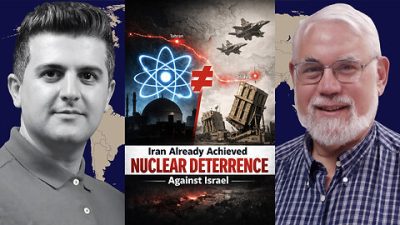
Prof. Ted Postol: Iran Already Achieved Nuclear Deterrence Against Israel
or go to
Aletho News Archives – Video-Images
From the Archives
How the occupied mentality syndrome works
Saudi Arabia on the American chessboard – Part 3
By B. J. Sabri | American Herald Tribune | June 27, 2016
Read part 2: “The occupied mentality Syndrome“
Previously I argued whether Saudi Arabia’s repeated involvements in U.S. interventions and wars stem from free national will or in response to a specific condition. For starters, in Saudi Arabia there is no national will. In Saudi Arabia, the national will is the will of the Al Saud clan. Still, when a major Arab state allies itself with a superpower that committed unspeakable crimes against humanity in almost every Arab country, then something is wrong. This fact alone should compel us to examine the U.S.-Saudi relation for one exceptional reason. As a result of the U.S.-Saudi wars, hundreds of thousands of people in Afghanistan, Iraq, Iran, Libya, Syria, Yemen, and Somalia have lost their lives. Millions became displaced in their own homelands. And millions more rendered refugees.
Attributing the Saudi policies to the bonds of “partnership” with the U.S. is frivolous. There are no bonds between these two thugs except those of business, military deals, secret plots, and wars. Proving this point, bonds such as these have no space for the American and Saudi peoples to share significant cultural or societal exchanges. If partnership is not the reason for the Saudi contribution to the U.S. strategy of empire and imperialism, then another reason must exist.
This leads to three possibilities. … continue
Blog Roll
 Aletho News
- NIAID/NIH and USDA Fund Bioengineered Chimeric Influenza Viruses Built Using Pandemic H1N1 Components: Journal ‘Science Advances’
- Hezbollah hits Israeli warship off Lebanon’s coast, sets it aflame
- Iran slams US strikes on B1 bridge, Mahshahr petrochemical plants as ‘blatant acts of state terrorism’
- In letter to UN chief, Araghchi warns of dire consequences of US-Israeli attacks on Iran’s nuclear facilities
- Why the CIA conspiracy to invade Iran with Kurdish militias failed
- Why Are Upbeat US Claims About Mission to Rescue Pilot ‘Highly Questionable’?
- Aircraft destroyed during US ‘rescue’ of downed F-15 pilot cost more than $100 million each
- Washington University removes professor who condemned US-Israeli war on Iran
- Russia Warns of Retaliation as UK Authorizes Seizure of Vessels
- Serbia thwarts plot to bomb Russia-Hungary gas pipeline – Vucic
- If Americans Knew
- In Iran, Israel-US take aim at “reason, research, and freedom of thought” – Daily Update
- US loses planes over Iran, Israel downgrades Lebanon war goals – Daily Update
- Israel Is Blocking Palestinians from Easter at Church Where Jesus Resurrected
- Plot to assassinate Palestinian activist follows harassment campaign promoted by Zionist groups and elected officials
- Prominent New York synagogue hosts presentation on why U.S. Jews should support the ethnic cleansing of Gaza
- Tapper vs. Piker: Is the CNN Anchor Auditioning for David Ellison?
- Shouldn’t Democrats Be Able to Condemn Genocide?
- Israel-US kill negotiators, destroy civilian structures, but Iran’s military capabilities still largely intact – Daily Update
- ‘War crime’: Global condemnation as Israeli ministers celebrate death penalty law targeting Palestinian prisoners
- 7 Ways Israel Is Turning Lebanon Into Gaza
- No Tricks Zone
- An Inconvenient Tree: Uncovered In Alps… Europe Much Warmer Than Today 6000 Years Ago
- New Study Reports A 60% Slowdown In Greenland’s Ice Loss Rate In The Last Decade
- Low Intensity Tornado Wrecks Major Solar Farm, Creating A Potential Toxic Dump
- New Study Finds Warming Saves Lives…Cold Temperatures 12 Times More Deadly Than Excess Heat
- German Science Blog Accuses PIK Climate Institute Of Hallucinating Climate Tipping Points
- Devastating Assessment Of Comirnaty Vaccine By Former Senior Pfizer Europe Toxicologist
- New Study: CO2 Is ‘Effectively Negligible’ As An Explanatory Climate Change Factor Since 2000
- Former Pfizer Toxicologist Dr. Helmut Sterz Tells Bundestag Hearing Pfizer Vaccine Should Have Never Been Approved
- Energy Expert: Germany’s Nuclear Phaseout Was A “500 Billion Euro Mistake”
- New Research: South Australia’s Mid-Holocene Sea Surface Temperatures Were 4°C Warmer Than Today
 Aletho News