Israel extends administrative detention of Ayed Dudein for twelfth time
Palestine Information Center – 12/02/2011

NABLUS — Israeli intelligence has extended the period of detention of the longest running Palestinian administrative detainee Ayed Dudein for the twelfth consecutive time since his arrest, the Ahrar center for prisoners studies said.
The Israeli Supreme Court denied appeals submitted by Dudein’s lawyer requesting his release, claiming a ”secret file” was prepared against him and his release was a security concern for Israel, Ahrar center director Fouad Al-Khafsh said.
He has so far not received a fair trial.
In administrative detention since October 2009, Dudein, a father of six who works as assistant director of the Al-Khalil emergency department, has been in and out of Israeli prisons over the past 13 years. He has refused bargains by the Israeli Supreme Court that would have him exiled.
Dudein’s wife Umm Hamza contacted the Ahrar center complaining of years of instability since her husband’s arrest and frequent raids on their home.
Dudein is a prominent figure among Palestinian detainees and is respected by the country’s factions. One of his brothers serving a life sentence has been detained since 1992. His mother passed away two months back, but his detention kept him from bidding her farewell.
Nativity Church deportees appeal to UN commissioner
Ma’an – February 12, 2011
GAZA CITY — Palestinians deported from Bethlehem to the Gaza Strip in 2002 after Israeli forces besieged the Nativity Church appealed to the United Nations High Commissioner for Human Rights.
A spokesman for the group Fahmi Kan’an said the local committee of national and Islamist forces handed Navi Pillay a letter from the deportees during her visit to the Gaza Strip.
Kan’an said the letter explained the dire conditions of the Nativity Church deportees both in Gaza and European countries as they entered their 10th year in exile.
On May 10 2002, Israeli forces surrounded the Church of the Nativity in Bethlehem, where Palestinian operatives had taken shelter. The church was placed under siege for 40 days until an agreement was reached in which 26 would be deported to Gaza, and 13 others to six different European countries.
The letter highlighted that Israel had reneged on the agreement, which Kan’an said stipulated that the deportees could return home after two years. The deal was struck between Israel and the Palestinian Authority under European and American supervision.
The deportees also wrote that they had not seen their families for over eight years, and their wives and children were not allowed to join them. Many of their family members had passed away and they had not been able to bid them farewell, they added.
In Wake of Fourth Demolition, Tana Villagers Vow to Rebuild
PNN – 10.02.11
Nablus – On Wednesday, Israeli army bulldozers demolished all but the mosque in the tiny village of Tana, east of Nablus, because it did not have the required permits. On Thursday afternoon, the villagers began to rebuild. This is their fourth time.

A villager from Tana carries away part of his demolished home (PNN Images).
Thirty-five buildings in all were destroyed, most of them makeshift houses constructed of metal siding, pipes, and blue tarp. Now most of the roughly 200 villagers made homeless by the demolitions must move to nearby caves as winter winds and rain buffet this mountainous region of the West Bank. Livestock sheds were destroyed, so five thousand sheep are shivering.
Nobody, however, is leaving Tana.
“This is my life,” said one man, who did not want to be named for fear of reprisals. “I was born here and I have my children here. I won’t leave.”
Many residents even laugh at the idea, saying if they wanted to leave they would have gone when the village was first demolished in 2005. Since then Israeli bulldozers have come back three times, most recently in December, when they destroyed the Tana schoolhouse, forcing villagers’ children to make the seven kilometer walk to the village of Beit Furik. Each time the reason is the same: the structures in Tana, which falls in the West Bank’s Israeli-controlled Area C, are unlicensed.
“Of course my house doesn’t have a permit,” said Radi Mahmoud Hamali, 64, the remains of whose house lie close to the small stone mosque, the only structure left untouched. “I cannot get a permit. It’s impossible. They just [demolished Tana] to take the land for the settlers.”

Radi Hamali prepares tea in a cave near his demolished home (PNN Images).
Two illegal Jewish settlements, Yitzhar and Makhoura, stand atop nearby hills. Both have been named as the sources of violent attacks on local Palestinian shepherds in the past. On January 27, Yitzhar settlers were suspected, but not arrested, in the shooting death of 18-year-old Adi Qaddous from the village of Iraq Burin. Residents in Tana suspect that the Israeli army—commonly seen as a powerful enabler—demolished the village to clear the land for further settlement.
At least on Thursday, however, Tana was not without friends. An Italian NGO has pledged to pay for and build a new schoolhouse. In the afternoon a convoy of UN and Fatah party vehicles stopped on the dirt road that runs through the village. Ghassan Douglass, the Palestinian Authority (PA) official in charge of filing settler attacks in the West Bank, spoke at the mosque and promised that both Fatah and the PA would help rebuild the village.
“We in the Fatah movement are all standing in support of these citizens,” said Douglass. He pointed to the caves in which the Tana villagers will have to live for the time being. “There are no hotels here, unfortunately.” The convoy moved on after about twenty minutes.
Down the hillside, Radi Hamali’s son and neighbor helped clear away the wreckage of pipes, twisted metal, and chicken wire that was his home. Hamali reckoned it will take him two days to set it up again. But there are other problems: the Israeli soldiers knocked over the water barrels and feeding troughs he used for his 150 sheep. One sheep is pregnant and sick. His wife is sick, he’s sick, and he’s sleeping in a cave.

Radi Hamali, 64, says he will stay on his land, “if God wills, until death.” (PNN Images)
“I say to Barack Obama, come and look at this!” he said. “This is my land, this is the land of my father, of my grandfather. I call on all Europeans to come help me, everyone in the West, everyone in the [Palestinian] Authority, all people and journalists. I will stay on our land, if God wills, until death.”
Boycott roundup: international day of action called for Land Day
Report, The Electronic Intifada, 11 February 2011
As part of a regular feature, The Electronic Intifada reports on the latest developments of the Palestinian-led global boycott, divestment and sanctions (BDS) movement against Israeli violations of human rights and policies of apartheid.
BDS campaigners scored a significant victory this month as the London Borough of Tower Hamlets voted to exclude Veolia, a French firm that has provided services to the Israeli occupation in the West Bank, from receiving any contracts with the municipality. Activists have also staged protests and launched campaigns in Ireland, Belgium, Palestine. Meanwhile, the Boycott, Divestment and Sanctions National Committee (BNC) announced the third annual global day of action to be held on 30 March 2011.
Ireland
Activists with the Ireland Palestine Solidarity Campaign (IPSC) are calling for a global boycott against Israeli “blood diamonds” on Valentine’s Day, 14 February.
In a statement on the campaign’s website, IPSC activists are urging consumers to make conscious choices in buying jewelry gifts for their loved ones.
“This Valentine’s Day, don’t let dazzling diamonds blind you to the plight of those whose misery and suffering is funded by revenue from the Israeli diamond industry,” IPSC stated (“Global Call to Action – Flashy Stones and Broken Bones,” January 2011).
IPSC has campaigned against the Israeli diamond industry for more than a year, petitioning Irish jewelry associations to stop carrying Israeli gemstones.
Sean Clinton, chairman of the Limerick branch of IPSC, wrote last year for The Electronic Intifada that “The diamond industry is a major pillar of the Israeli economy … No other developed country is so heavily dependent on a single luxury commodity and the goodwill of individual consumers globally.”
Clinton added that Israel holds a “dominant position” in the diamond industry, and the state currently chairs the Kimberly Process Certification Scheme, an international regulation and certification program that is tasked with eliminating “blood diamonds” from the industry. Blood diamonds are gemstones mined from areas in the world — mostly in the African and Asian continents — that are involved in, or directly finance, ongoing human rights violations, violence and war.
In its campaign statement, the IPSC added: “[diamonds] are the currency of broken bones and bombed out homes in Gaza. The burning glow of the white phosphorous that rained down on Gaza doesn’t come cheap, but the $1 billion the Israeli military derives from revenue from the Israeli diamond industry each year helps to fill the coffers of the criminal military regime.”
IPSC stated: “Every time someone buys a diamond processed in Israel some of the money goes to funding the Israeli war machine that stands accused of war crimes. Israeli diamonds are blood diamonds.”
United Kingdom
The Palestine Solidarity Campaign in the UK is intensifying its efforts to urge local authorities to exclude French urban services corporation Veolia from major public contracts. This comes on the heels of the recent findings of the Russell Tribunal on Palestine that Veolia is liable for serious violations of international human rights and humanitarian law because of its numerous contracts with the Israeli government’s settlement industry in the occupied West Bank (“The Boycott VEOLIA Campaign-A Fortnight of Actions In February,” February 2011).
Campaigners around the UK are planning a series of actions, including sit-in protests at two London borough council meetings to protest possible city contracts with Veolia for waste management systems. On 1 February, the group organized a protest at Veolia’s UK headquarters in Islington, North London.
On 2 February, Tower Hamlets, one of the London Borough councils, passed a motion to formally exclude Veolia from its urban waste management contracts, citing that the corporation has “clearly committed acts of grave misconduct in relation to the Palestinian people and the maintenance of illegal settlements …” (“Full text of the Council meeting,”2 February 2011 [PDF]).
Additionally, the council voted to support the boycott, divestment and sanctions campaign “against the pariah state of Israel,” and stated that “urgent steps should be taken to review all contracts with Veolia and not to place any further contracts with the company.”
The council also passed a motion to urge the Mayor of London to write to Veolia to communicate the council’s “determination to terminate any relationship” to the company.
The action by Tower Hamlets is reminiscent of similar actions by many UK local authorities during the 1980s campaigns against apartheid in South Africa.
After the Russell Tribunal, Veolia Environmental Services UK spread the news that the company had pulled out of the operation of the Tovlan landfill site in the Jordan Valley in the occupied West Bank. The landfill serves mainly illegal Israeli settlements in the West Bank and municipalities in Israel. Meanwhile, Who Profits? (www.whoprofits.org) — a project of the Israeli Coalition of Women for Peace — verified the information against facts on the ground. The Israeli environmental protection authority of the settlements in the West Bank told Who Profits? in early February that Veolia is still operating the Tovlan landfill.
Belgium
Solidarity activists staged a protest inside an international tourism industry exhibition in Brussels on 5 February, encouraging attendees to boycott the Israeli exhibit. Wearing matching T-shirts emblazoned with “Free Palestine” and “Palestine Vivra” (Palestine will live), with “Boycott Israel” on the back, activists formed a human chain around the Israeli tourism tent and chanted in support of boycott.
The protest, organized by European solidarity group Generation-Palestine (generation-palestine.org), was captured on video and uploaded to YouTube.
Palestine
Palestine-based activists with the Palestinian Campaign for the Academic and Cultural Boycott of Israel (PACBI) continued to put pressure on American singer Macy Gray, who has stated she will perform in Tel Aviv despite repeated protests by Palestinian, Israeli and international boycott campaigners.
In its statement on 9 February, PACBI expressed “great dismay” at Gray’s decision to keep her Tel Aviv performance date, and warned her that she would be “electing to serve directly the interests of the [public relations] campaign to Brand Israel” (“Open letter to Macy Gray,” 9 February 2011)
“This is a campaign that has been launched by the Israeli government and promoted by institutions throughout the country and abroad in order to whitewash Israel’s violations of international law and project a false image of normalcy,” PACBI added.
PACBI stated that Gray has promoted this campaign already, by playing at the opening of the Israeli consulate offices in Los Angeles and, more recently, releasing a statement declaring her support for Israel at the request of Israeli diplomats in California.
After Gray announced that she would proceed with her planned performance, she said she would visit Ramallah, the West Bank city where the US-supported Palestinian Authority is based, during her visit, a move which PACBI said is a “a patronizing attempt to dictate the terms of the Palestinian people’s struggle — by wanting to visit Palestinian schools or play a show in Ramallah, as though the Palestinian people need your pity.”
PACBI added: “We have asked, as an occupied people, for the minimum act of solidarity by not playing in Tel Aviv. We have been answered with your dismissal of our struggle in favor of your own way of helping, as though you know better. While we acknowledge there are many ways to help, we ask that people who do so are not directly delegitimizing the popular will of the Palestinian people. By playing in Tel Aviv you will do this and more. Your action will imply support of the occupation and the colonial Israeli state, denial of the right of Palestinian refugees to return to their homes, and dismissal of a system of apartheid.”
Global boycott, divestment and sanctions day of action
The Boycott, Divestment and Sanctions National Committee (BNC) announced the third annual global day of action to be held on 30 March 2011, in a call to intensify boycott actions around the world while commemorating an historic day in the Palestinian anti-colonialist movement (“Commemorate Land Day 2011 by Joining the Global BDS Day of Action“).
“Inspired and buoyed by the popular uprisings in Egypt and Tunisia and their unique manifestation of courage, dignity, civility and determination, we stand resolutely with worldwide struggles for self-determination, freedom, democracy, social justice and equality, and we call for intensifying BDS actions globally as the main form of solidarity with Palestinian rights,” the BNC stated.
The BNC said it is calling on people of conscience all over the world to join the global boycott, divestment and sanctions movement by launching and supporting local, national and international divestment initiatives; by taking part in consumer boycotts; to pursue legal action against Israeli war criminals and violations of international law by corporations complicit in Israeli military policies; and more.
The date of the global day of action, 30 March, is the annual commemoration of Land Day. In 1976 the Israeli military shot and killed six young Palestinian citizens of Israel during a massive uprising in protest of the Israeli government’s plan to build new Jewish-only colonies and expand existing Jewish cities.
“Today, Land Day symbolizes Palestinian resistance to Israel’s ongoing land expropriation, colonization, occupation and apartheid,” the BNC wrote in its statement.
The first Global BDS Day of Action was announced by Palestinian civil society with overwhelming support at the World Social Forum in 2009.
Concocting elections to regain lost legitimacy
By Khalid Amayreh | Palestine Information Center | February 11, 2011
Frustrated by the utter lack of progress in the manifestly futile peace process with Israel, the American-backed Palestinian Authority (PA) has once again designated a date for holding general elections in the occupied territories of the West Bank, Gaza Strip and East Jerusalem.
But the organization of elections hedges to a large extent on Israeli consent. The Israeli occupation army, after all, still controls every nook and cranny of the West Bank, and it would be unimaginable to hold elections if the Israeli occupiers said “No.”
Hamas has also objected to the unilateral announcement in Ramallah, arguing that the holding of elections in the absence of basic civil liberties such as freedom of speech and expression would be a foolish and irresponsible act.
Hamas is correct. The West Bank is languishing under a police-state apparatus, with a nearly total absence of the rule of law as well as basic liberties, without which the organization of true elections would be meaningless.
The organization of elections would require the availability of basic rights and freedoms, including the freedom to hold rallies, meetings, do campaigning and electioneering without being suppressed and harassed by the police and other security agencies.
Needless to say, these rights and freedoms don’t exist in the West Bank today. Mendacious claims to the contrary don’t really warrant a refutation. The people and human rights organizations operating in the region know the truth too well.
Indeed, if a small child is caught raising a small green flag, bearing the Islamic article of faith, there is no god, but one God, and Muhammed is His Messenger, the child will be arrested, beaten and his family will be held accountable for the “crime” of raising Hamas’s banner aloft.
Some Palestinian officials might claim that for the duration of the elections and the immediate period preceding them, candidates and electoral lists would be able to do electioneering rather freely and that the elections themselves would be monitored by international observers.
However, that is not enough. We all know that in order to hold true representative elections, equal opportunities must be given to all contenders, a condition that is conspicuously absent in the West Bank.
More to the point, we all know that most of the Islamist people who might contest the elections are already behind bars, either in PA or Israeli jails, and held without charge or trial, mostly on concocted and frivolous charge that have nothing to do with any genuine violation.
Indeed, in any other country that respects itself, the lengthy incarceration of people because of their ideology would be considered a taboo.
In addition to hounding and imprisoning people because of their thoughts, the PA has taken over or deliberately ruined hundreds of Islamic institutions, including Zakat committees, schools, orphanages, social and athletic clubs as well as health institutions.
In some instances, the PA has totally illegally seized businesses and workshops, thus depriving entire families of their source of livelihood.
Hence, one might wonder how genuine elections could be held under the existing abnormal conditions, this is unless the PA is planning to rig the elections by hook or by crook in order to compensate and avenge its electoral defeat of 2006.
The PA says it will be willing to allow international observers to monitor the elections. However, the presence of international observers by itself wouldn’t create an ideal atmosphere for transparent elections.
I am talking about pre-election preparations, such as campaigning and holding rallies in a free environment.
True, the PA might allow one or two weeks of free and unfettered campaigning, but this short period would be utterly insufficient to make the transition from a police-state atmosphere to freedom where all political groups and parties, including Hamas, are given an equal opportunity.
Obviously, the PA decision to hold elections has been taken under pressure from a few leftist and liberal parties with little weight in the Palestinian streets. These parties hope that in the absence of Hamas’s participation in the elections, they would be able to obtain a significant chunk of the people’s vote.
The rationale of these parties is that people disgruntled and disillusioned with the Fatah rule, and they are certainly many, would give their votes to these parties.
Unfortunately, considerations having to do with national Palestinian interest seem to come a distant second after the above-mentioned parties’ short-sighted expediency.
The PA decision to hold elections is in no way an expression of a commitment to democracy. In fact, Fatah, the political and security backbone of the PA, has never showed a genuine commitment to democracy, neither under the late Palestinian leader Yasser Arafat nor under the current leader Mahmoud Abbas.
In fact, Fatah and democracy have always seemed an eternal oxymoron. Arafat, for example, held all the reins, controlled all the money and took all the decisions. His successor, Abu Mazen, allowed the Fatah-dominated security agencies to take over and dissolve democratically-elected institutions all over the West Bank.
It is widely believed that the election decision is related to two important developments that really shook and shocked Fatah to the core, prompting the movement to try rather desperately to enhance its public standing:
First, the recent revelation by al-Jazeera TV network of documents showing the extent of concessions to Israel by Palestinian negotiators. The revelations infuriated and embarrassed the PA, prompting PA leaders to accuse the pan-Arab network of waging an all-out war on the Ramallah regime in cahoots with Israel.
The so-called Palestinian Papers showed Palestinian leaders as “liars” who tell their people one thing with regard to Palestinian national constants on such paramount issues as Jerusalem and the right of return for the refugees, but tell their Israeli counterparts an entirely different thing.
This scandalous exposition of the true stands of PA negotiators seems to have seriously undermined the public standing of the PA leadership. Hence, the quest to seek a renewed popularity.
The other factor contributing to the election decision has to do with ground-shaking events in Egypt, which are also shaking the PLO regime to the core. The tyrannical regime of Hosni Mubarak has always been viewed as the PLO leadership’s ultimate insurance policy in the Arab world. Its possible disappearance therefore and especially the emergence of a new regime in Cairo in which the pro-Hamas Muslim Brotherhood plays a certain role is a real nightmare for Fatah, the PA and PLO combined.
Hence, the decision to hold elections in the hope of neutralizing any possible ramifications of the Egyptian revolution, e.g. strengthening Hamas and enhancing its bargaining position vis-à-vis Fatah.
There is no doubt that holding elections is a positive thing to do in ordinary circumstances. However, when holding election obscures and hinders greater national goals, such as freedom from a foreign occupation, it becomes an impeder rather than a facilitator of true nation-building.
Egypt’s Dignity Revolution
By SALWA ISMAIL | CounterPunch | February 10, 2011
In commenting on the unfolding Egyptian revolution, media and analysts have emphasised the role of social media in building up networks of dissidents and facilitating the organisation of protests. Some have credited the ‘Facebook generation’ with lighting the spark of collective action. Undoubtedly, social media activists, in calling for ‘the day of anger’, put the tools of virtual communication to remarkable use. However these ‘days of anger’ can only be understood if we look at what the vast majority of Egyptians have experienced over the last three decades under Mubarak’s rule.
Successive waves of protests by wide segments of the population, particularly over the last decade, have also given a clear indication of growing opposition to the regime’s economic and social policies and its instruments of government and control. Prior to the recent protests, there were numerous massive strikes by textile workers demanding better pay, week-long street occupation by tax collectors protesting their low wages, and various sit-ins by university professors, doctors and lawyers calling for policy change.
Under Mubarak, the Egyptian state abandoned its welfare responsibilities and left citizens to fend for themselves. The so called free market became dominated by monopolies and oligopolies, with party elites and regime cronies controlling entire markets in basic and strategic commodities such as iron and steel, cement, and wood. The ruling clique and its business partners appropriated the country’s lands converting publicly-owned property into gated communities and turning entire coastal areas into exclusive resorts for the super rich. Built on vast areas of privatised state land, enclaves like Qatamiyya Heights and Mirage City catered to multi-million dollar palaces for the very privileged few. The scale of the land grab has threatened to deprive future generations of any chance of descent housing and a share of the country’s resources and wealth.
At the same time, masked and not-so-masked privatisation of education and health robbed citizens of the few citizenship rights gained in the country’s post-independence period. Social disparities have grown at extraordinary rates as state offices turned into personal fiefdoms in order to maintain the regime and its clients and to implement the neo-liberal agenda of economic reform.
To try and prevent growing resistance to these economic and social policies, Egypt and the Egyptians became subject to a police government. The Egyptian police departments govern vast areas of social life. They have responsibilities over security and public order, but also have jurisdiction over the regulation of, among other things, outdoor markets, the use of public utilities such as electricity, and the implementation of municipal building codes. With regular outdoor market raids and campaigns to monitor citizens’ use of these utilities, the police intruded into the daily life of ordinary citizens. Endowed with the arbitrary powers of emergency laws, the police engaged in practices of extortion, and used violence to intimidate and silence any questioning of their powers.
Security checks and roadblocks on the streets of Cairo and many other cities were part of Egyptian citizens’ daily reality. Drivers and pedestrians were randomly stopped, arrested and subjected to arbitrary investigation. Young men, feared by the regime for their potential for activism and resistance, were the main target of these practices. The everyday experience of humiliation at the hands of the police fuelled the youth’s opposition and rejection of the regime and its coercive arm, the police.
It was befitting that the revolution had its spectacular beginning on Police Day and that the youth would take the lead in breaking down the barrier of fear that the police have erected over a long period of time. Egypt’s youth have bravely put themselves forward along with vast segments of society to reassert their right to dignity and freedom. They have taken the first steps towards reclaiming their rights and towards exercising fully the responsibilities of citizenship. It is in reference to these objectives that the protesters’ main and most powerful slogan “the people want to bring down the system” should be understood. The desired change is nothing short of an overhaul of the institutions and structures of government.
~
Salwa Ismail is Professor of Politics with reference to the Middle East at the School of Oriental and African Studies (SOAS).
New Gaza factory, jobs destroyed in Israeli attack
Rami Almeghari, The Electronic Intifada, 10 February 2011
 |
What remains of a plastics factory after it was bombed by Israel earlier this week. (Rami Almeghari) |
“I still cannot believe my eyes as I see the machines of our new factory, scattered to all corners,” said Rabah al-Hatto as he surveyed the rubble of his recently-established plastic water tank factory in northeast Gaza, which was bombed by Israeli warplanes early yesterday. “What have I and the twenty workers here done to find ourselves jobless?” al-Hatto told The Electronic Intifada.
The factory was due to start distributing its products in the local market in two weeks. “I am completely shocked,” the trim-bearded al-Hatto said. “I never imagined that the factory in which I and my partners invested all our money and energy, would become rubble.” As he spoke, al-Hatto was surrounded by workers, friends, reporters and a field worker from a human rights group.
“Yesterday [Tuesday] afternoon, we left the factory to go home. Just before 1am on Wednesday morning I heard Israeli warplanes bombing the area, but I did not imagine it was the factory. Later in the morning, I came to work to find our machines and the ceiling torn apart,” Bashar al-Wehaidi, a technician in the factory, told The Electronic Intifada. “Everything in this 1,200 square meter building was hit.”
Israeli air strikes early Wednesday hit a number of sites in northern Gaza, injuring eight persons, according to medical sources. Three men, three women and two children were hit by debris and shrapnel that struck area homes. The Israeli attacks also destroyed a medical storage building and damaged a school.
Near to where owner Rabah al-Hatto was seated on a chair at his factory site, there was a large truck badly damaged by the Israeli bombing and a heap of aluminum and iron bars on the ground.
“Please look! Please look! A modern truck has been struck before it even traveled the streets of Gaza to distribute our products. Why?” al-Hatto asked. Commenting on Israeli claims that the attack was in retaliation for several rockets fired from Gaza at Israel, al-Hatto said, “Oh my God! What kind of a response is this!”
Now in his early forties, al-Hatto told The Electronic Intifada the story behind his factory. “A year ago, my brother, other partners and I decided to build this factory,” he said. “I used to work as a steelworker, but with the lack of steel due to the Israeli blockade, I decided to invest all my savings in manufacturing plastic water tanks.”
Al-Hatto estimates the losses to him and his partners from the Israeli attack to be $300,000, as well as the incomes for the twenty now jobless workers and their families.
Bashar al-Wehaidi, the now unemployed technician, said that the attack was a complete injustice by Israel. “We have been working tirelessly over the past year in order for this important facility to see the light. May God compensate us such a great loss,” he said.
In the vicinity of the factory, which is located in the al-Qerem neighborhood in the northeast of the Gaza Strip, there are a number of other facilities hit in the Israeli attack. Among them are a large medical storage building, a primary school for 600 students, as well private homes. The school’s ceiling and windows were damaged, forcing the administration to suspend classes until further notice.
According to the Gaza-based health ministry, the al-Qerem medical storage facility was hit by a missile fired from an F-16 fighter jet, causing enormous damage.
“The attack on this store constitutes a flagrant Israeli occupation violation of the Fourth Geneva Convention for the protection of civilian persons in time of war, as well as other relevant world health conventions,” Dr. Munir al-Bursh, chief of Gaza’s medical stores with the Gaza health ministry, told The Electronic Intifada at his office in Gaza City on Wednesday.
The bombed facility is one of nine storage sites run by the Gaza health ministry according to al-Bursh, who estimates the losses from the Israeli attack at $400,000.
“This is a great loss, in light of the four-year-long Israeli blockade,” Dr. al-Bursh said. “Recently we have listed 183 drugs that our stores are lacking as Israel continues to delay deliveries through the crossings into Gaza.”
Israeli army sources said on Wednesday that their latest air strikes on Gaza were in response to five homemade rockets that landed in southern Israel causing no injuries and minor property damage.
Rami Almeghari is a journalist and university lecturer based in the Gaza Strip.
Featured Video
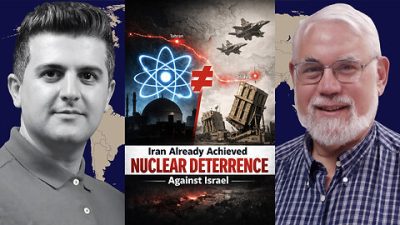
Prof. Ted Postol: Iran Already Achieved Nuclear Deterrence Against Israel
or go to
Aletho News Archives – Video-Images
From the Archives
How the occupied mentality syndrome works
Saudi Arabia on the American chessboard – Part 3
By B. J. Sabri | American Herald Tribune | June 27, 2016
Read part 2: “The occupied mentality Syndrome“
Previously I argued whether Saudi Arabia’s repeated involvements in U.S. interventions and wars stem from free national will or in response to a specific condition. For starters, in Saudi Arabia there is no national will. In Saudi Arabia, the national will is the will of the Al Saud clan. Still, when a major Arab state allies itself with a superpower that committed unspeakable crimes against humanity in almost every Arab country, then something is wrong. This fact alone should compel us to examine the U.S.-Saudi relation for one exceptional reason. As a result of the U.S.-Saudi wars, hundreds of thousands of people in Afghanistan, Iraq, Iran, Libya, Syria, Yemen, and Somalia have lost their lives. Millions became displaced in their own homelands. And millions more rendered refugees.
Attributing the Saudi policies to the bonds of “partnership” with the U.S. is frivolous. There are no bonds between these two thugs except those of business, military deals, secret plots, and wars. Proving this point, bonds such as these have no space for the American and Saudi peoples to share significant cultural or societal exchanges. If partnership is not the reason for the Saudi contribution to the U.S. strategy of empire and imperialism, then another reason must exist.
This leads to three possibilities. … continue
Blog Roll
 Aletho News
- “Davos Can Really Replace the UN”
- NIAID/NIH and USDA Fund Bioengineered Chimeric Influenza Viruses Built Using Pandemic H1N1 Components: Journal ‘Science Advances’
- Hezbollah hits Israeli warship off Lebanon’s coast, sets it aflame
- Iran slams US strikes on B1 bridge, Mahshahr petrochemical plants as ‘blatant acts of state terrorism’
- In letter to UN chief, Araghchi warns of dire consequences of US-Israeli attacks on Iran’s nuclear facilities
- Why the CIA conspiracy to invade Iran with Kurdish militias failed
- Why Are Upbeat US Claims About Mission to Rescue Pilot ‘Highly Questionable’?
- Aircraft destroyed during US ‘rescue’ of downed F-15 pilot cost more than $100 million each
- Washington University removes professor who condemned US-Israeli war on Iran
- Russia Warns of Retaliation as UK Authorizes Seizure of Vessels
- If Americans Knew
- In Iran, Israel-US take aim at “reason, research, and freedom of thought” – Daily Update
- US loses planes over Iran, Israel downgrades Lebanon war goals – Daily Update
- Israel Is Blocking Palestinians from Easter at Church Where Jesus Resurrected
- Plot to assassinate Palestinian activist follows harassment campaign promoted by Zionist groups and elected officials
- Prominent New York synagogue hosts presentation on why U.S. Jews should support the ethnic cleansing of Gaza
- Tapper vs. Piker: Is the CNN Anchor Auditioning for David Ellison?
- Shouldn’t Democrats Be Able to Condemn Genocide?
- Israel-US kill negotiators, destroy civilian structures, but Iran’s military capabilities still largely intact – Daily Update
- ‘War crime’: Global condemnation as Israeli ministers celebrate death penalty law targeting Palestinian prisoners
- 7 Ways Israel Is Turning Lebanon Into Gaza
- No Tricks Zone
- An Inconvenient Tree: Uncovered In Alps… Europe Much Warmer Than Today 6000 Years Ago
- New Study Reports A 60% Slowdown In Greenland’s Ice Loss Rate In The Last Decade
- Low Intensity Tornado Wrecks Major Solar Farm, Creating A Potential Toxic Dump
- New Study Finds Warming Saves Lives…Cold Temperatures 12 Times More Deadly Than Excess Heat
- German Science Blog Accuses PIK Climate Institute Of Hallucinating Climate Tipping Points
- Devastating Assessment Of Comirnaty Vaccine By Former Senior Pfizer Europe Toxicologist
- New Study: CO2 Is ‘Effectively Negligible’ As An Explanatory Climate Change Factor Since 2000
- Former Pfizer Toxicologist Dr. Helmut Sterz Tells Bundestag Hearing Pfizer Vaccine Should Have Never Been Approved
- Energy Expert: Germany’s Nuclear Phaseout Was A “500 Billion Euro Mistake”
- New Research: South Australia’s Mid-Holocene Sea Surface Temperatures Were 4°C Warmer Than Today
 Aletho News