The Disinherited: Syria’s 130,000 Golan Height refugees
Israeli Occupation Archive (IOA) – 30 July 2010
What happened to the 130,000 Syrian citizens living in the Golan Heights in June 1967? According to the Israeli narrative, they all fled to Syria, but official documents and testimonies tell a different story.
Israeli eyewitness: “[W]e saw a big group of Syrian civilians, a few hundred people, gathered in front of tables with soldiers sitting behind them. We stopped and asked a soldier what they were doing. He answered they were doing pre-expulsion registration. I’m not a softhearted person, but I immediately had the feeling that something here wasn’t right. I still remember what a bad impression this sight left on me. But it was, de facto, like it was [with the Arab populations] in Lod, Ramle and other places in the War of Independence.”
IOA Editor: As in 1948, the “Israeli narrative” tries to sweep Israel’s ethnic cleansing crimes under the rug. As in 1948, official Israel lied about the fate of the local population during and after the war and so did Israeli historians, as this story reveals.
Note: As is often the case, the original Haaretz story, in Hebrew, is longer and more detailed than the English version presented below.
Among the parts left out of the English version: Rehavam Ze’evi, then a general at the IDF General Command under then IDF chief of staff Yitzhak Rabin, in a War Room meeting on 9 June 1967, stated
“The [Golan] Height does not have a large population and it needs to be received [delivered] clean of its residents.”
To which the Haaretz writer adds
“The IDF did not receive the Height empty, as Ze’evi wanted, but it took care that it will become that.”
Twenty years later, Ze’evi — by then an extreme right-wing politician — wrote in a Yediot Ahronot article defending his Transfer [of all Palestinians out of Palestine] idea:
“Palmach member David Elazar [IDF General in charge of the Northern Command which lead the conquest of the Golan] removed all the Arab villagers from the Golan Height after the Six-Day-War, and he did so with the approval of Rabin the chief of staff, Dayan the defense minister and Eshkol the prime minister,”
all regarded as moderate Zionists, therefore justifying Ze’evi’s Transfer idea, which was considered “extreme” in most Israeli political circles.
Indeed, Ze’evi had a point: Historically, while right-wing Zionism (“Lehi,” or the “Stern-Gang” and the “Irgun” were associated with the war crimes of Deir Yassin, the ethnic cleansing of Palestine which followed was largely the responsibility of the “Yishuv,” the broad, mainstream Jewish community of Palestine, which was dominated by labor movement elements, not the right-wing.
This is still very important today: Ehud Barak and Tzipi Livni — representing the current generation that came out of the school of David Ben-Gurion, Levi Eshkol, Golda Meir, and Yitzhak Rabin, all considered “moderate” — offer a political vision that is no different than that of Benjamin Netanyahu, who follows the the school of Ze’ev Zabotinsky and Menachem Begin, both considered “extreme”. … Full article
Bahrain to try 400 peaceful protesters
Press TV – June 10, 2011

Bahrain’s opposition party al-Wefaq says the Manama regime is to put nearly 400 people on trial over their alleged roles in peaceful anti-regime protests.
The party said that up to 50 people have already been sentenced, with penalties ranging from a short prison term to execution, Reuters reported on Thursday.
A Bahraini government official, who demanded anonymity, rejected the opposition’s statement saying al-Wefaq’s trial data was exaggerated.
“It’s much less than that,” he said, but did not specify any number. … Full article
Bahraini activist: Military courts illegal
Press TV – June 10, 2011
A Bahraini political activist says the regime’s decision to put on trial nearly 400 people in military courts for taking part in anti-regime peaceful protests is illegal.
“How can one hold military trials without the martial law, which has already been lifted,” Saeed al-Shehabi, leader of the Bahrain Freedom Movement, told Press TV in an interview Thursday night.
“These courts are trying civilian people while they should be tried only in civilian courts as per law,” he said.
“I know many people are being tried for taking part in peaceful demonstrations,” al-Shehabi stated. “So these trials will backfire.”
When asked about a UN report that said Bahrain has accepted a UN mission in the country to examine reports of human rights violations during protests, Shehabi said that the UN has failed in its test and it has so far done nothing despite several complaints from international human rights organizations of violations committed by the ruling regime.
The UN High Commissioner for Human Rights, Navi Pillay, has been urged by Bahraini activists to send a commission to Bahrain, but nothing has happened, the activist said. … Full article
Stop Scabbing for Apartheid — Withdraw From Israel Bonds “Celebration”
Labor for Palestine (US) – June 7, 2011
“[All of Palestinian labor] calls on trade unions around the world to actively show solidarity with the Palestinian people by. . . . divesting from Israel Bonds and all Israeli and international companies and institutions complicit in Israel’s occupation, colonization and apartheid.”Palestinian Trade Union Coalition for BDS (PTUC-BDS), May 4, 2011[1]
The undersigned labor, anti-apartheid and human rights activists call on you — Dennis Hughes (President of the New York State AFL-CIO) and Stuart Appelbaum (President of the Retail, Wholesale and Department Store Union and head of the Jewish Labor Committee) — to respect the above call from Palestinian labor by withdrawing as “Honoree” and “Chair,” respectively, of the “State of Israel Bonds” fundraiser in New York City on June 13, 2011.[2]
For decades, top U.S. labor officials have effectively scabbed on Palestinian workers by investing billions — the exact amount has not been made public — from union members’ pension funds in State of Israel Bonds, a pillar of apartheid that enjoys tax-exempt status from the U.S. government.
Whitewashing this betrayal is the Histadrut, the Zionist labor federation[3], and its “progressive” U.S. mouthpiece, the Jewish Labor Committee.[4]
Obscenely, the Israel Bonds “celebration” on June 13 follows the May 15 Israeli massacre of unarmed Palestinian refugees exercising their right to return, the first anniversary of the deadly May 31, 2010 Israeli attack on the Gaza Freedom Flotilla, and Israeli prime minister Netanyahu’s arrogant U.S. tour.
Meanwhile, the world is inspired by mass, democratic revolutions in the Middle East that challenge U.S./Israeli-backed neoliberalism, dictatorship and oppression. At the heart of this revolution, Palestinian labor has reiterated its longstanding appeal for unions everywhere to support the growing movement for Boycott, Divestment and Sanctions (BDS).
The BDS campaign demands that Israel acknowledge the Palestinian people’s inalienable right to self-determination, and fully complies with international law by:
* Ending its occupation and colonization of all Arab lands occupied since 1967 (including East Jerusalem), as well as dismantling of the illegal wall and colonies;
* Recognizing the fundamental right of the Palestinian citizens of Israel to full equality, as well as ending the system of racial discrimination against them; and
* Respecting, protecting and supporting the rights of Palestinian refugees to return to their homes and properties as stipulated in UN Resolution 194.
BDS has been endorsed by labor bodies around the world, including the trade union congresses of South Africa, Brazil, Ireland, Scotland and the UK, and labor bodies in Australia, France, Canada, Norway, Catalunya, Italy, Spain and Turkey.
The Congress of South African Trade Unions (COSATU), which plays a leading role in the BDS movement, hasn’t forgotten Israel was apartheid South Africa’s closest ally. And as veteran South African freedom fighters have observed, Israel’s treatment of Palestinians is “worse than apartheid.”
US workers have particularly strong reasons to support the movement against apartheid Israel. In the past ten years alone, the US government — with overwhelming bipartisan support — has given Israel $17 billion in military aid; over the next decade, it will give another $30 billion.
As a result, Palestinian workers are killed by US-supplied naval vessels, jet fighters, Apache helicopters, white phosphorous and other weapons. In 2008/2009 alone, such weapons killed 1400 people in Gaza, most of them civilians — a massacre condemned by the UN, Amnesty International, Human Rights Watch and other human rights organizations, including those that are Israeli.
Meanwhile, amidst spiraling economic crisis, workers in this country pay a staggering human and financial price for US-Israeli war and occupation from Palestine to Afghanistan, Iraq and Pakistan.
Thus, following the May 31, 2010 Israeli attack on the Gaza Freedom Flotilla, members of ILWU Local 10 in Oakland courageously followed the South African dockers’ example by refusing to handle Israeli cargo.
Their solidarity stands in the proud tradition of West Coast dock-workers who refused to handle cargo for Nazi Germany (1934) and fascist Italy (1935); those in Denmark and Sweden (1963), the San Francisco Bay Area (1984) and Liverpool (1988), who refused shipping for apartheid South Africa; those in Oakland who refused to load bombs for the Pinochet dictatorship in Chile (1978); and those at all twenty-nine West Coast ports who held a May Day strike against the wars in Iraq and Afghanistan (2008).
Respecting the BDS call is a matter of basic labor solidarity. Indeed, just as trade unionists fight “replacement” of striking workers, we stand against the dispossession, occupation and inequality inflicted on millions of Palestinian working people and their descendants for more than six decades.
Rather than being used to secretly finance racism, ethnic cleansing, apartheid and colonialism, union members’ funds should be transparently invested in justice for all workers.
An essential first step is labor divestment from “State of Israel Bonds.”
Notes
[1] http://www.bdsmovement.net/2011/ptuc-bds-formed-6912
[3] http://www.laborforpalestine.net/wp/wp-content/uploads/2010/06/Histadrut-Briefing.pdf
[4] http://www.laborforpalestine.net/wp/wp-content/uploads/2010/06/JLC-Briefing-Paper.pdf
Signers (List in formation — ALL UNION BODIES LISTED FOR IDENTIFICATION ONLY.)
Endorse this statement:
Monadel Herzallah, Arab American Union Members Council, San Francisco, CA
Larry Adams, Former President, NPMHU L. 300; Co-Convener, New York City Labor Against the War; People’s Organization for Progress
Michael Letwin, Labor for Palestine; Former President, Association of Legal Aid Attorneys/UAW Local 2325
Brenda Stokely, Former President, AFSCME DC 1707; Co-Convener, New York City Labor Against the War; Co-Chair, Million Worker March Movement
Mohammad Jawabreh, Palestinian Progressive Labor Action Front, Ramallah, Palestine
Progressive Labor Action Front – Palestine
Sameer Matar, Union of Agricultural Engineers, Jenin, Palestine
Sam Weinstein, Utility Workers Union of America (UWUA), Washington DC
Marty Goodman, Transport Workers Union Local 100, former Executive Board member, New York, NY
Stanley Heller, 40 year AFT member West Haven, CT, now AFT 933 Retired; New Haven, CT
Joe Iosbaker, SEIU Local 73, Executive Board Member, Chicago, IL
Azalia Torres, Former Executive Bd. Member, ALAA/UAW L. 2325, Brooklyn, NY
Lee Sustar, NWU/UAW L. 1981; Chicago, IL
Steve Zeltzer, Producer, Labor Video Project
Noha Momtaz Tahrir Arafa, Association of Legal Aid Attorneys/UAW 2325, Brooklyn, NY
Steve Terry, ALAA/UAW L. 2325, Brooklyn, NY
Steve Gillis, Vice President, USW Local 8751, The Boston School Bus Drivers’ Union
Sherna Berger Gluck, former vice-president, CFA/SEIU 1983
Roger Dittmann, Ph.D., Former Secretary, United Professors of California, Member, SEIU
Jeff Klein, President (retired), SEIU/NAGE Local R1-168
Joe Lombardo, CSEA and Troy Area Labor Council
Bill Preston, President of American Federation of Government Employees, Local 17, Washington, DC
Bill Bateman, Coordinator, RI Unemployed Council
Burnis E. Tuck, AFL-CIO, AFGE, Local 3172, retired, IWW (International Workers of the World), current member
Mike Gimbel, Retired member of Local 375, AFSCME exective Board
Joe Balkis, Teamsters Local 705
Nathaniel Miller, IWW International Solidarity Commission
Howard B. Lenow, Union Attorney, Wayland, MA
Anthony Arnove, National Writers Union
Frank Couget, Shop Steward, National Association of Letter Carriers, AFL-CIO
Martha Grevatt, Former Chair, Civil and Human Rights Committee, UAW Local 122
Carl Gentile, National Representative, American Federation of Government Employees (AFGE) AFL-CIO
Jim Holstun, UUP Buffalo Center Chapter, NYSUT, AFT
Mary Scully, IUE-CWA Local 201 (retired)
Mark Clinton, Massachusetts Community College Council, Massachusetts Teachers Association, National Education Association
Marvin Cohen, American Federation of Teachers (retired)
Patrick J, Finn, Ph. D., UUP United University Professions SUNY Buffalo, Buffalo, NY
Mary E. Finn, Ph. D., UUP United University Professions SUNY Buffalo, Buffalo, NY
Manzar Foroohar, Delegate Assembly, California Faculty Association (CFA), Former Chapter President, CFA, Cal Poly, San Luis Obispo, Former State-wide Membership Committee Chair and member of the state-wide bargaining team, CFA
Mark Richey, retired member, United Teachers of Richmond, California
Leslie Cohen, former SEIU Local 285 member
Dave Slaney, former President, USWA Local 2431 (retired)
Dr. Sue Blackwell, member of National Executive Committee, University and College Union, UK
Mike Treen, National Director, Unite Union, Auckland, NZ
Brian Kelly, Belfast Branch Committee UCU (N. Ireland: personal capacity); formerly IUMSWA L 25 (Boston), Carpenters L 33 (Boston)
Andre Powell, Delegate, Baltimore MD Metro AFL-CIO Central Labor Council, AFSCME
Amy Hines, Labor Relations Representative/Organizer, AEU, Concord, CA
John Penetra, Technician, CWA Local 1118, Albany, NY
Dennis Kortheuer, California Faculty Association, Long Beach, CA
Denise Hammond, President, CUPE 1281, Toronto, ON, Canada
Hanspeter Gysin, Unia (Tradeunion Building, Industry, Services), Switzerland
Sid Shniad, Research Director, Telecommunications Workers Union, Vancouver, BC, Canada
Barbara Foley, AAUP, Rutgers University – Newark, NJ
Janice Rothstein, AFSCME 3299, San Francisco, CA
Paul Pryse, Teaching Assistants’ Association, University of Wisconsin – Madison
Steve Leigh, steward, SEIU local 925, Seattle, WA
Glenn Shelton, NPMHU, Detroit, MI
Janet Hudgins, CUPE (retired), Vancouver, BC, Canada
Dennis Laumann, United Campus Workers-Communication Workers Local 3865 of America, Memphis, TN
Edward Stiel, IBEW Local 302, San Francisco, CA
David Laibman, Professional Staff Congress (AFT Local 4331), Brooklyn, NY
Stephen Cheng, Brandworkers International
John Dudley, SEIU, Branford, CT
Richard Krushnic, Steward, Bargaining Committee Member, SEIU 888, Cambridge, MA
Paul Field, Unite the Union, UK
Powell DeGange, organizer, UNITE HERE, San Francisco, CA
Jim Harris, former member, SEIU 535, Richmond, CA
Dr. Russell Dale, PSC CUNY, New York, NY
David Heap, UWO Faculty Association, London, ON, Canada
Bob McCubbin, California Teachers Association, San Diego, CA
Susan Stout, CAW (retired), North Vancouver, BC, Canada
David Klein, California Faculty Association (CFA), Los Angeles, CA
Gregory A. Butler, shop steward, Carpenters Local 157, New York, NY
B. Ross Ashley, former shop steward, former executive council member, local 204, SEIU (retired), Toronto, ON, Canada
Keith Sadler, UAW Local 12, Toledo, OH, USA
US universities in Africa ‘land grab’
Institutions including Harvard and Vanderbilt reportedly use hedge funds to buy land in deals that may force farmers out
John Vidal and Claire Provost | The Guardian | June 8, 2011
Harvard and other major American universities are working through British hedge funds and European financial speculators to buy or lease vast areas of African farmland in deals, some of which may force many thousands of people off their land, according to a new study.
Researchers say foreign investors are profiting from “land grabs” that often fail to deliver the promised benefits of jobs and economic development, and can lead to environmental and social problems in the poorest countries in the world.
The new report on land acquisitions in seven African countries suggests that Harvard, Vanderbilt and many other US colleges with large endowment funds have invested heavily in African land in the past few years. Much of the money is said to be channelled through London-based Emergent asset management, which runs one of Africa’s largest land acquisition funds, run by former JP Morgan and Goldman Sachs currency dealers.
Researchers at the California-based Oakland Institute think that Emergent’s clients in the US may have invested up to $500m in some of the most fertile land in the expectation of making 25% returns.
Emergent said the deals were handled responsibly. “Yes, university endowment funds and pension funds are long-term investors,” a spokesman said. “We are investing in African agriculture and setting up businesses and employing people. We are doing it in a responsible way … The amounts are large. They can be hundreds of millions of dollars. This is not landgrabbing. We want to make the land more valuable. Being big makes an impact, economies of scale can be more productive.”
Chinese and Middle Eastern firms have previously been identified as “grabbing” large tracts of land in developing countries to grow cheap food for home populations, but western funds are behind many of the biggest deals, says the Oakland institute, an advocacy research group.
The company that manages Harvard’s investment funds declined to comment. “It is Harvard management company policy not to discuss investments or investment strategy and therefore I cannot confirm the report,” said a spokesman. Vanderbilt also declined to comment.
Oakland said investors overstated the benefits of the deals for the communities involved. “Companies have been able to create complex layers of companies and subsidiaries to avert the gaze of weak regulatory authorities. Analysis of the contracts reveal that many of the deals will provide few jobs and will force many thousands of people off the land,” said Anuradha Mittal, Oakland’s director.
In Tanzania, the memorandum of understanding between the local government and US-based farm development corporation AgriSol Energy, which is working with Iowa University, stipulates that the two main locations – Katumba and Mishamo – for their project are refugee settlements holding as many as 162,000 people that will have to be closed before the $700m project can start. The refugees have been farming this land for 40 years.
In Ethiopia, a process of “villagisation” by the government is moving tens of thousands of people from traditional lands into new centres while big land deals are being struck with international companies.
The largest land deal in South Sudan, where as much as 9% of the land is said by Norwegian analysts to have been bought in the last few years, was negotiated between a Texas-based firm, Nile Trading and Development and a local co-operative run by absent chiefs. The 49-year lease of 400,000 hectares of central Equatoria for around $25,000 (£15,000) allows the company to exploit all natural resources including oil and timber. The company, headed by former US Ambassador Howard Eugene Douglas, says it intends to apply for UN-backed carbon credits that could provide it with millions of pounds a year in revenues.
In Mozambique, where up to 7m hectares of land is potentially available for investors, western hedge funds are said in the report to be working with South Africans businesses to buy vast tracts of forest and farmland for investors in Europe and the US. The contracts show the government will waive taxes for up to 25 years, but few jobs will be created. … Full article
Preface Nuclear Toxicity Syndrome
Dr. Sircus’ Blog | 09 June 2011
Arnie Gundersen, widely-regarded to be the best nuclear analyst covering Japan’s Fukushima disaster, indicates that the situation on the ground at the crippled reactors remains precarious and at a minimum it will be years before it can be hoped to be truly contained. “I have said it’s worse than Chernobyl and I’ll stand by that. There was an enormous amount of radiation given out in the first two to three weeks of the event. And add the wind blowing inland, it could very well have brought the nation of Japan to its knees. I mean, there is so much contamination that luckily wound up in the Pacific Ocean rather than across the nation of Japan—it could have cut Japan in half. But now the winds have turned, so they are heading to the south toward Tokyo and now my concern and my advice to friends is, if there is a severe aftershock and the unit four building collapses, leave. We are well beyond where any science has ever gone at that point and nuclear fuel lying on the ground and getting hot is not a condition that anyone has ever analyzed.”
As the crippled reactors in Japan continue to emit radiation into the environment it will appear in greater and greater concentrations in our food. Radiation has already been detected in trace amounts in milk across the U.S., and in strawberries, kale and other vegetables in California.
Tokyo Electric Power Co. (TEPCO) sent a robot into the building of reactor one on the 3rd of June and detected up to 4,000 millisieverts per hour at the southeast corner of the building. That means staying in that area for four minutes exposes a worker to the maximum annual limit of 250 millisieverts per year.
In Europe they are feeling the fallout and it is scaring the wits out of them because after Chernobyl they learned what nuclear hardship and sickness is all about. First Germany and now the Swiss government have deciding to exit nuclear energy, each phasing out their country’s existing nuclear plants and seeking alternative energy sources to meet their energy needs, following widespread security concerns in the wake of the Fukushima nuclear disaster in Japan.
The emerging reality of the ongoing nuclear reactor crisis in Fukushima, Japan—now in its third month after a devastating earthquake and tsunami caused nuclear explosions at the plant 150 miles north of Tokyo—is that it is not under control at all. Three of the six reactors are in meltdown. The crippled reactors are acting like a huge dirty bomb, emitting significant quantities of radioactive isotopes that are, in fact, contaminating our air, water, soil and food in a steady stream that will continue for a long time to come.
Arnie Gundersen says, “I am telling friends in Tokyo to keep their eyes on unit four. If there is an earthquake and unit four topples, don’t believe the authorities. You are well beyond where science has ever imagined and it is time to get on a flight and get out of there.” If unit four goes down it’s not just Tokyo; the entire northern hemisphere will be in for increasing radiation showers.
Since the accident on March 11, radioactive fallout from Fukushima has been spreading to the U.S. and across the northern hemisphere. Elevated levels of radiation caused by the meltdowns in Japan have been detected in drinking water across the United States, in rainwater, in soil, and in food grown on U.S. farms. The below video presents an early warning of what the Japanese and perhaps people all over the northern hemisphere and eventually the south will have to deal with.
Highly toxic radioactive iodine, cesium, strontium, plutonium and other toxic man-made radionuclides have leaked unabated since March 12 into the ocean and atmosphere. The radiation is contaminating large areas of Japan. Monitoring the ocean around the Fukushima plant, Greenpeace reported on May 26 that the contamination is spreading over a wide area and accumulating in sea life, rather than simply dispersing like the Japanese authorities claimed would happen.
Radiation continues to blow in a steady stream across the Pacific Ocean toward North America, following the course of the jet stream in the atmosphere and major currents in the ocean that flow from Japan to America. It took less than a month for radioactive iodine and cesium from the Fukushima nuclear accident to first show up in U.S. milk, and it continues to be detected in trace amounts in milk produced in California, one of the only states conducting any kind of testing for radiation in food.
The mainstream media is not reporting on this. Since the initial weeks of the accident, there has been a disturbing silence. Fukushima has faded from the news even though the site has not become any less dangerous. And the site is unprepared for another earthquake or tsunami, and unprepared for any typhoon activity. In the 53 years from 1951 to 2004, Japan averaged 2.6 typhoons making landfall each year. The place is a danger to us all.
West Coast Contamination
All radioactive exposures are cumulative for each human, animal and plant.
People on the west coast of the United States and Canada, Hawaii and Alaska are bearing some of the worst of the radiation and people are not taking evasive action. Gunderson said in an exclusive interview with Chris Martenson that, “I am in touch with some scientists now who have been monitoring the air on the West Coast and in Seattle for instance, in April, the average person in Seattle breathed in 10 hot particles a day. The average human being breathes about 10 meters a day of air, cubic meters of air. And the air out in the Seattle area, [they] are detecting when they pull 10 cubic meters through them, this is in April now, so we are in the end of May so it is a better situation now. That air filter will have 10 hot particles on it. And that was before the unit four issue. What I am advising is keep your windows closed. I would definitely wear some sort of a filter if I was outside.”
He is speaking about further worst-case scenarios saying, “I certainly wouldn’t run and exercise until I was sure the plume had dissipated. This isn’t now. This is, as you were saying, this is worst case. If unit four were to topple, I would close my windows, turn the air conditioner on, replace the filters frequently, damp mop, put a HEPA filter in the house and try to avoid as much of the hot particles as possible.”
Radioactivity is all over the Northern Hemisphere and each and every one is already contaminated.
The Japanese are not buying the spin about the dangers of the radiation that continue to flood Japan. A poll showed in early June that more than 80 percent of Japanese voters do not trust government information about the country’s nuclear crisis. Eighty-one percent of respondents to the survey said they did not trust government information about the crisis, Fuji TV said. Seventy-eight percent said Prime Minister Naoto Kan lacked leadership in handling the disasters.
If you feel like your life and your children’s lives are expendable then there is no need to pay attention to what is going on—no need to take evasive medical action and no reason to read my upcoming book Nuclear Toxicity Syndrome.
Fukushima Equals 3,000 Billion Lethal Doses
Dr. Michio Kaku pointed out on CNN March 18, 2011, Chernobyl involved one reactor and only 57.6 Tons of the reactor core went into the atmosphere. In dramatic contrast, the Fukushima Daiichi disaster immediately involved six reactors and IAEA (International Atomic Energy Agency, a UN Agency) documented 2,800 Tons of highly radioactive old reactor cores.
Looking at the current Japanese meltdown as more than 50 Chernobyls is one way some people are beginning to estimate the disaster. Simple division tells us there are at least 48.6 Chernobyls in the burning old reactor cores pumping fiery isotopes into the Earth’s atmosphere. Some are calculating that this all adds up to three thousand billion (3,000,000,000,000) Lethal Doses of Radiation means there are 429 Lethal Doses chasing each and every one of us on the planet, to put it in a nutshell.
“Those who deny or deceptively play down the catastrophic threats to public health from all phases of the nuclear power cycle, from mining to the lack of any proven solution to permanent and safe disposal of very long-term deadly spent nuclear fuel, recklessly ignore the medical/scientific lessons we should have learned from current and previous nuclear accidents,” writes Rudi H. Nussbaum who is a Professor emeritus of Physics and Environmental Sciences at Portland State University.
Afghanistan: Why Civilians are Killed
By James Petras / Dissident Voice / June 9th, 2011
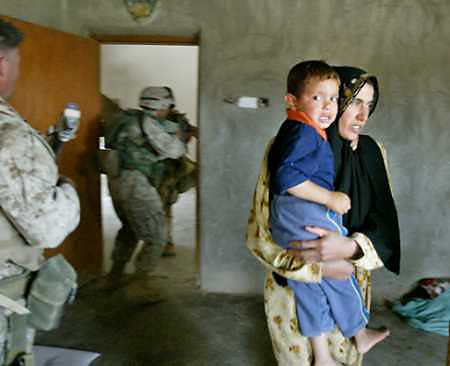
The recent rash of civilian killings by NATO forces in occupied Afghanistan raises several basic questions: Why do US-NATO air and ground forces kill so many civilians, so persistently, over such long stretches of time, in regions throughout the country? Why have the number of civilians killed increased in the course of the conflict? Why do NATO-US airplanes continue to bomb civilian housing and village gatherings and ground troops indiscriminately assault homes and workshops? Why are the pleas of NATO collaborator President Karzai to desist in home bombings going unheeded? Finally, knowing that the killing of civilians, entire families including children, mothers and the elderly alienates the local population and breeds widespread and profound hostility, why do the NATO-US military refuse to alter their tactics and strategy?
Explanations and Excuses for Civilian Killings
Apologists for the NATO killings of civilians are as abundant as their explanations are lacking in substance. Pentagon spokespeople speak of “accidents”, “errors of war”, “collateral damage”; media pundits blame the guerrilla fighters for engaging in warfare in areas populated by civilians; neo-conservative academics and their “think tank” colleagues blame Islamic fundamentalism for converting villagers to their cause and “forcing” NATO to kill civilians in order to create martyrs and to use their deaths as a recruiting device.
These patently superficial explanations raise more questions than answers, or in some cases, inadvertently refute the justification for the entire war. The “error of war” argument begs a more basic question: what kind of war is NATO-US engaged in that constantly finds the guerrillas ‘melting’ into the population, while the occupation breaks down doors and perceives each and every household as a possible sanctuary, or outpost of the resistance? What kind of military relies on high altitude fighter planes and pilotless planes directed from distant command posts to attack population centers, in which commerce, farming and household economies engage the population? Clearly only an army of occupation, an imperial army, is willing to repeatedly sacrifice a multitude of civilians to kill a single or a few suspected combatants. Only a military operating in a hostile civilian environment is going to assume that lodged behind every door of every home there is an “enemy”; that every family is sheltering a combatant; that it is better to “go in shooting” than to risk a bullet in the gut. ‘Accidents of war’ do not ‘just happen’ for an entire decade, covering an entire country. The killing of civilians is a result of a war of imperial conquest against an entire people who resist the occupation in whatever form is appropriate to their circumstance. The pilots and ground troops recognize that they are a hostile alien force, whose presence is commanded from above by Generals and politicians dealing with abstract schemes of ‘terrorists-linked to Al Qaeda’ that have no relation to the dense web of personal bonds of solidarity between resistance fighters and civilians on the ground in Afghanistan.
Working from these abstract categories, the strategists label extended family compounds as ‘hideouts’; family gatherings as ‘terrorist meetings’; trade caravans as ‘guerilla smugglers’. The conflicting interests of the imperial politicians, generals, strategists and military officers on the one hand and the civilian population and resistance form an immense gap. The greater the number of civilian/combatants killed the faster the career advances for imperial officers –eager for promotions and prized pensions. “Success”, according to the imperial world view is measured internationally by the number of client rulers; nationally by the number of flags pinned to the war maps denoting ‘secure cities’; and locally by the body counts of massacred families.
On the ground, among the millions in intimate family and clan circles, where sorrow and anger co-exist, resistance in all of its manifold forms unfolds: Sacred vows and the profane pledges to ‘fight on’ grow out of the millions of daily humiliations affecting young and old, wives and husbands, in homes, markets, roads and by-ways. The hostile stare of a mother sheltering an infant from soldiers breaking into a bedroom is as telling as the crackle of gunfire of a sniper hidden in a mountain crevice.
A People’s War: Not a War on Terror
The killing of civilians is not “accidental”. The fundamental reason that so many civilians are killed, everyday, in every region for over a decade, is because the civilians and the combatants are indistinguishable. The image of the Afghan combatants as some kind of footloose professional bomb throwing terrorist is completely off the mark. Most Afghan fighters have families, cultivate farmland and tend herds; they raise families and attend mosque; they are ‘part-time civilians’ and part-time fighters. Only in the schematic minds of the “great strategists of war” in the Pentagon and NATO headquarters do such distinctions exist. Their deadly military mission to ‘save the people from terrorist fundamentalists’, a self-serving self-deception, is, in fact, a ladder up the military-political hierarchy. Each step up depends on waging a ‘just war’ to a successful conclusion.
The civilian-combatants are a mass popular phenomenon. How else can we explain their capacity to sustain armed resistance for over a decade, indeed, advancing with the passing of time? How can we explain their military success against the armed forces and advisers from 40 countries, including the US, Europe and a clutch of Afro-Asian-Latin American mercenaries? How can we explain the growing resistance despite suffering from military occupation, backed by the most advanced technological instruments of war? How can we explain the ebb of popular support for the war in the ‘Conqueror’s country and the growing number of recruits for the Resistance? The combatants have the loyalty of the Afghan people; they do not have to spend billions to buy the spurious ‘loyalties’ of mercenaries who can and have at any moment ‘turned their guns the other way’.
Weddings are bombed because combatants attend weddings – along with hundreds of relatives and friends. Villages are bombed because peasants cultivate crops, which contribute to the resistance. Civilian shelters become military sanctuaries. Afghanistan is polarized: the US military versus a people in arms. Faced with this reality, the real policy of NATO-Pentagon is to rule or/and ruin. Each bomb killing dozens of civilians in search of one sharpshooter deepens the isolation and discredit of the puppet ruler. “President” Karzai has seen his mission of building a ‘civilian base’ to reconstruct the country utterly discredited. His impotent complaints to NATO to cease bombing civilian targets fall on deaf ears; because the NATO command knows very well that ‘the civilians’ are the ‘deep resistance’ – the vast reserve of support for the combatants; their eyes and ears far excel all the electronic intelligence devices of the Occupier. Just as Karzai cannot convince the civilians to turn against the combatants so he cannot convince the imperial armies to stop bombing civilian homes and gatherings.
Washington knows that with each withdrawal (or retreat), the terrain, the towns and villages are occupied by resistance fighters who emerge from everywhere. The best that the US-NATO politicians can negotiate is a safe orderly departure. The best that they can hope is that their local collaborators do not defect or flee abroad prematurely turning over billions of dollars in military ordinance to the resistance. The best the collaborators can hope is that they will secure an exit route, a visa, an overseas account and a comfortable second home abroad. What is absolutely clear is that the US, NATO and its collaborators will have no role to play in the newly independent Afghanistan.
~
James Petras, a former Professor of Sociology at Binghamton University, New York, owns a 50-year membership in the class struggle, is an adviser to the landless and jobless in Brazil and Argentina, and is co-author of Globalization Unmasked (Zed Books). Petras’ most recent book is The Arab Revolt and the Imperialist Counterattack. (Clear Day Books – A subsidiary of Clarity Books). He can be reached at: jpetras@binghamton.edu. Read other articles by James, or visit James’s website.
IAEA votes to report Syria to UN
Press TV – June 9, 2011
Amid a whole host of abstentions and ‘no’ votes by Russia and China, the UN nuclear regulator votes to report Syria to the world body as what it describes as a former harborer of an undeclared nuclear reactor.
The motion was approved by the International Atomic Energy Agency (IAEA)’s board of governors in New York on Thursday with 17 members endorsing the move and 11 holding back their vote, AFP reported.
The body will therefore refer Syria to the UN Security Council over allegations that it built a nuclear reactor that was destroyed in 2007 by Israeli bombs.
The vote came a few days after IAEA’s Director General Yukiya Amano slammed the Israeli regime for the arbitrary attack on what Tel Aviv had called ‘a Syrian nuclear facility.’
Amano expressed regret that the bombing had been carried out “without the agency having been given an opportunity to perform its verification role.”
In September 2007, at least four Israeli fighter planes crossed into the Syrian airspace and launched an attack on what turned out to be a research center that belonged to the regional grouping of the Arab League in the city of Deir ez-Zor in the northeast of the country.
The assault caused a significant rise in tension between the two sides, which are technically at war due to Tel Aviv’s 1967 occupation and annexation of the Golan Heights in southwestern Syria.
“Rather than force being used, the case should have been reported to the IAEA,” Amano had said.
Damascus denies harboring a nuclear weapons program. It opened up the attacked site to IAEA inspectors in 2008 and has pledged to fully cooperate with the agency regarding the issue.
Tel Aviv has neither confirmed nor denied bombing the site. Former US President George W. Bush has, however, written in his memoire, published last year, that the attack took place after he resisted former Israeli Prime Minister Ehud Olmert’s request for Washington to undertake the strike.
The developments come amid Tel Aviv’s continued refusal to declare its nuclear arsenal and its insistence on not joining the Nuclear Non-Proliferation Treaty (NPT).
Since 1958, when Tel Aviv began building its Dimona plutonium- and uranium-processing facility in the Negev desert in southern Israel, it has secretly manufactured numerous nuclear warheads, thus becoming the sole owner of such weapons in the Middle East.
Former US President Jimmy Carter has attested to the existence of the arsenal, which he has said includes between 200 to 300 nuclear warheads.
Israel has, however, neither confirmed nor denied possessing nuclear arms under a deliberate policy of ‘nuclear ambiguity.’
Uncivilized Relations: Israel Confronts its Neighbours
By Brenda Heard / Dissident Voice / June 9th, 2011

Photo credit – Amelia Opalinska
The turmoil that has beleaguered the Middle East for decades has been described many ways. On the 5th of June, however, the terminology turned vulgar. This enduring conflict was publicly characterized as a ‘war between the civilized man and the savage’. Boldly announced with a plea to ‘support Israel/defeat Jihad’, the full page advertisement ran in the New York Post’s special section covering the city’s ‘Celebrate Israel’ parade.
Declaring the Muslim people ‘savage’ is, of course, just a school-yard taunt from Islamaphobe Pamela Geller, who gleefully takes credit for the advertisement. Had her rant been limited to her own blog, we might easily dismiss it. The problem lies in its acceptance into mainstream discourse. The Post may be tabloid journalism, but its paper edition remains the seventh most popular paper in America. And this sort of crude advertisement for a political cause panders to a public comfortable with the mind-set of ‘don’t bore me with the details’.
But the details are critical if we are to consider a conflict that has taken thousands of lives. How can we, for instance, reconcile the concept of ‘civilized’ with the reality of shooting unarmed protesters? The advertisement asks us to accept Israel as ‘civilized’; yet as these very words were first read, Israeli soldiers were shooting into a crowd of Syrian-Palestinians, killing 24 and injuring another 350.
Even if we were to set aside troublesome issues of borderlines and occupation zones, lethal violence hardly qualifies as a civilized response to what was unmistakeably only a symbolic demonstration. It had been loudly announced in advance. Had the protesters indeed posed a physical threat, then they might have been easily overpowered and arrested by the Israeli military on hand. But that would have been a sensible—a civilized—means of containing the situation.
The deadly violence chosen by the Israeli forces on the 5th of June mirrors the same used just three weeks prior, during the Nakba demonstrations. And these echo hundreds and hundreds of instances when Israeli forces have brazenly attempted to destroy anything and anyone deemed inconvenient. Perhaps the most egregious example, though, happened 29 years ago during the first week of June 1982.
In a defiant escalation of the Zionist occupation of Southern Lebanon in place since March 1978, the Israeli government and military flagrantly snubbed the ruling of the United Nations. Using brute force, the Israeli forces intensified efforts to gain territory and to obliterate any resistance to their project. Despite the presence of the United Nations Interim Force in Lebanon (UNIFIL) as international peacekeepers, the Israelis insisted on their own form of deadly control.
On 4 June 1982 Israel conducted air raids in and around Beirut.* Together with its mercenary militia, Israeli ground forces also engaged in intense artillery fire in Southern Lebanon. Both the Secretary General of UNIFIL and the President of the UN Security Council issued urgent appeals to ‘adhere strictly to the cease-fire that had been in effect since July 1981 and to refrain immediately from any hostile act likely to provoke an aggravation of the situation’.
By way of answer, the next day Israeli forces amplified their intent. They multiplied air strikes. They increased artillery fire on the ground with added naval artillery power. Again, UNIFIL reiterated its call for a simultaneous cessation of hostilities. The UN Security Council passed Resolution 508, calling for all parties ‘to cease immediately and simultaneously all military activities within Lebanon and across the Lebanese-Israeli border’.
The Palestine Liberation Organisation (PLO) agreed. The Israeli Representative, however, stated the Resolution would have to be brought before the Israeli Cabinet.
Despite UNIFIL’s continued efforts throughout the night of 5 June, Israeli air strikes resumed shortly after 0600, the morning of 6 June—precisely the deadline given in Resolution 508 to cease fire.
The Chairman of the PLO informed UNIFIL that ‘in spite of heavy Israeli air-strikes after the scheduled time of the cease-fire, he had given orders to all PLO units to withhold fire for a further, unspecified period’. When UNIFIL then met later that morning with the chief of the Israeli military forces, the agenda was the implementation of Resolution 508.
Instead, UNIFIL was informed that Israel was launching a military operation into Lebanon within half an hour. UNIFIL was warned to stay out of the way. UNIFIL protested, to no avail:
Israeli ground forces, including a very large number of tanks and armoured personnel carriers, moved into Lebanese territory in strength. . . . UNIFIL troops attempted to prevent the entry and advance of the Israeli forces. On the coastal road, for example, Dutch soldiers planted obstacles before advancing Israeli tank column; one tank was damaged; the obstacles, however, were pushed aside, as was the Dutch guardhouse. Tank barrels were pointed at UNIFIL soldiers during the entire encounter, likewise, in the other battalion areas, obstacles were forcibly removed and bulldozed. At Khardala Bridge, a small Nepalese position stood its ground for two days, despite harassments and threats. On the morning of 8 June, their position was partially destroyed/and some 100 Israeli tanks began to cross the bridge. Despite the efforts of UNIFIL, from the start of the invasion, the overwhelming strength and weight of the Israeli forces precluded the possibility of stopping them, and UNIFIL positions in the line of the invasion were thus overrun or by-passed.
Later that day, the UN Security Council met again and unanimously adopted Resolution 509, demanding the withdrawal of Israeli military forces and cessation of all military activities.
Contrary to the Resolution, on 7 June, Israeli forces—comprising more than two mechanized divisions, with full air and naval support—expanded their positions northward and waged intense fighting.
On 8 June, the Security Council met again, but no resolution was adopted, because of the negative vote from the US. At the same time, Israeli forces resumed their pattern of blocking movement of UNIFIL forces and took prisoner 62 Lebanese Army soldiers who were serving under the operational command of UNIFIL. When UNIFIL demanded their return, the Israeli military released them to its mercenary militia instead. This common ruse was vigorously protested. Again to no avail.
And so this pattern of lawlessness continued, bringing years of violent rampage through Lebanon. There was nothing civilized about it. Just as there was nothing civilized in the recent shooting of protesters in Lebanon and Syria. When advertisement-maker Pamela Geller suggests otherwise, the facts fail to substantiate her claim.
In her review of the Celebrate Israel parade, she refers several times to the event in religious terms. God was smiling on the paraders, she tells us, providing them with sunshine for their pro-Jewish rally. Syrians and Palestinians, on the other hand, she classifies as interchangeable Muslims, Jew-haters, Nazis upon whose Nakba bund rallies God frowned upon with torrential rains. The celebration, it seems, had little to do with a political entity, and much to do with being a so-called chosen people. A so-called civilized people.
But in civilized society, we might counter, we co-exist not by the rule of force, but by the rule of law. In civilized society, God—whether we accept ‘God’ as a concept or as a reality—represents justice and righteousness. It is a gross distortion of civilized thought to imagine God laying down bets on his favourite football club and then fixing the game for a good laugh. No, in a civilized society, we take responsibility for our actions.
*The details of the events of June 1982 are documented in the ‘Report of the Secretary-General on the United Nations Interim Force in Lebanon’, S/15194/Add.1, 11 June 1982, http://unispal.un.org/UNISPAL.NSF/0/7264B57A6DD3E85B8525701B0072A4F5
~
Brenda Heard is the founder and director of Friends of Lebanon, London. She can be contacted at: mail@friendsoflebanon.org.
The AfPak Tanker War
Moon of Alabama | June 9, 2011
The campaign against tankers trucking fuel for NATO from Karachi to Afghanistan is back in full force after a lull earlier this year.
While now only some 50% of the fuel needed in Afghanistan is coming through Pakistan, the total fuel need has nearly doubled over the last year due to the “surge”, the buildup of Afghan forces and an increased operations. It would be impossible to fight this war if that line-of-communication gets interrupted.
Here is a, likely incomplete, list of recent attacks on NATO tankers. The losses are significant:
Explosion destroys Nato tanker in Khyber, June 9
PESHAWAR: A Nato oil tanker was destroyed following an explosion in the Khyber tribal region on Thursday, DawnNews quoted security sources as saying.
Eight Nato supply tankers torched, June 8
KHYBER AGENCY – As many as eight Nato oil supply tankers were torched on Tuesday here in Torkham, political administration and Khasadar sources said.
Five Nato tankers burn in explosion, June 7
PESHAWAR: A Pakistani government official says five Nato oil tankers burned after an explosion at the Afghan border.
Two Nato tankers gutted, June 6
QUETTA – Two tankers carrying supplies for the Nato forces stationed in Afghanistan were torched in two separate incidents in Bolan and Khuzdar districts of Balochistan on Sunday.
Miscreants set NATO supply oil tanker on fire, June 5
According to details, an oil tanker was carrying oil for the NATO forces percent in Afghanistan from Karachi through Sibi, three unknown miscreants targeted this oil tanker near Konbari Bridge in Bolan.
Two NATO oil tankers torched in Nasirabad, June 1
QUETTA: The driver of a NATO oil tanker was injured while two tankers were torched in Mastung and Wadh areas, respectively, on Tuesday.
Two NATO tankers torched in Pakistan, May 31
The attack took place on Tuesday morning, when unknown gunmen opened fire on the oil tankers in Khuzdar district of the volatile Balochistan province, local police told Press TV.
3 NATO Tankers destroyed in separate incidents: One killed , May 31
QUETTA: Three NATO Tankers were destroyed and a person was killed in two separate incidents in Mastong and Khuzdar hereon Tuesday.
Driver killed, 4 injured in 3 NATO oil tankers collision, May 26
NOWSHERA: Driver was killed and four were injured when three NATO oil tankers collided with each other on Nowshera-Peshawar G.T. Road while overtaking from the wrong side hereon Thursday.
…
Two of the tankers were completely destroyed and thousands liters of oil spilled over the G.T. Road.
15 dead in NATO tanker fire in Pakistan: officials, May 20
PESHAWAR, Pakistan — A bomb attack Saturday on a NATO fuel tanker headed to Afghanistan sparked a huge fire that killed 15 people who had rushed to collect petrol leaking from the bombed-out vehicle.
…
Earlier, 11 other NATO supply vehicles, “most of them oil tankers” were destroyed at a terminal in nearby Torkham town, another administration official, Iqbal Khattak, said, but there were no casualties.
19 Nato tankers torched near Torkham, May 15
LANDIKOTAL: The number of Nato oil tankers that were burnt in bomb blast near Afghan border Friday night reached 19, as 14 more tankers caught fire early Saturday, official sources said.
Israel approves oxymoronic ‘tolerance’ museum on Muslim cemetery
Palestine Information Center – 09/06/2011
OCCUPIED JERUSALEM — The Israeli occupation’s Jerusalem municipality planning committee has approved a plan to build a so-called ”tolerance museum” in the city’s center.
But the oxymoronic Jewish museum of ”tolerance” is planned to be built on the historic Muslim Ma’manullah cemetery and would require the removal of hundreds of ancient skeletons of Muslims dating back to Medieval times.
According to Israeli media, the project was designed by the Simon Wiesenthal Center, the self-proclaimed Nazi hunter that works to stop anti-Judaism.
The Jerusalem municipality delayed approval of the project for the last two years in order for changes to be made on the architectural plan.
Ma’manullah cemetery, located west of Jerusalem’s Old City 2 km away from Al-Aqsa Mosque’s Al-Khalil gate, is the largest Islamic cemetery in Jerusalem, with an area of some 200 dunums.
Featured Video

Marandi: US attacked world’s largest gas field & Iran declares economic war
or go to
Aletho News Archives – Video-Images
Book Excerpt
US Axis of Aggression in Gulf
By Finian Cunningham | Strategic Culture Foundation | August 15, 2019
When Washington announced a few weeks ago the formation of a maritime “international coalition” to “protect shipping” in the Persian Gulf, many observers were skeptical. Now skepticism has rightly turned to alarm, as the proposed US-led “coalition” transpires to comprise a grand total of just three nations: the US, Britain and Israel.
The term “coalition” has always been a weasel word used by Washington to give its military operations around the world a veneer of international consensus and moral authority. If the US goes ahead with deploying forces in the Persian Gulf the guise of “coalition” is threadbare. It will be seen for what it is: naked aggression.
Iran promptly warned that if the US, Britain and Israel move on their intention to deploy in the Persian Gulf, it will not hesitate to defend itself from a “clear threat”. … continue
Blog Roll
 Aletho News
- FBI Resumes Buying Americans’ Location Data Without Warrants
- IDF threatens ‘elimination’ for Russian leaders who ‘wish Israel ill’
- Attacks on enemy energy facilities not over yet, strikes ongoing: Iran
- US dragged by Israel into ‘unlawful war’ with Iran – Gulf state
- Israel’s War on Iran’s Grid: How the South Pars Strike Turned Energy into a Weapon
- War on Iran to impose trillion-dollar ‘Israel First Tax’ on US citizens: Araghchi
- The State Is Socializing the Cost Of the Iran War
- Seyed M. Marandi: U.S. Attacked World’s Largest Gas Field & Iran Declares Economic War
- Washington’s War on Cuba Is Older Than You Think
- Daniel Davis: U.S. Military Options & War Narrative Collapse
- If Americans Knew
- Trump: Israel attacked Iranian gas field without US knowledge. No more such attacks!
- America’s friends must help extricate it from an unlawful war
- Democratic Nat’l Committee’s Kneejerk Backing of Israel Is Political and Moral Failure
- Major revelations from former counterterrorism chief Joe Kent’s extensive interview
- More than half of Palestinian child detainees have no charges
- Grieving Parents in Iran Spend Every Night at the Graves of Their Children, Killed by U.S. Strike
- War on Iran spins out of control, Palestine struggles – Not a ceasefire Day 160
- How ignorance, misunderstanding and obfuscation ended Iran nuclear talks
- Israeli media reports grotesque settler attack in West Bank
- UK security adviser attended US-Iran talks and judged deal was within reach
- No Tricks Zone
- Energy Expert: Germany’s Nuclear Phaseout Was A “500 Billion Euro Mistake”
- New Research: South Australia’s Mid-Holocene Sea Surface Temperatures Were 4°C Warmer Than Today
- Storing Green Energy To Last Germany 10 Days Would Require A 60-Million Tonne Battery
- New Studies: UK Sea Levels Were 4 Meters Higher Than Today During The Mid-Holocene
- Destructive Green New Deal: German Energy And Metal Group Warns Of Drastic Crisis
- New Study Documents A 20-Year Pause In Arctic Sea Ice Decline – Driven By Internal Variability
- Wake-up Call: Survey Shows Majority Of Germans Now Favor Postponing Climate Targets!
- Televised! Leading German Political Candidate Tells Schoolchildren CO2 Makes Sun Hotter!
- New Study: A Century Warming Of 1.1°C Is ‘Commonplace’ And ‘Not Unusual’ During This Interglacial
- New Study: ‘Internal Noise’ And Volcanic Forcing Can Trigger 10-15°C Warming Within Decades
 Aletho News