US universities in Africa ‘land grab’
Institutions including Harvard and Vanderbilt reportedly use hedge funds to buy land in deals that may force farmers out
John Vidal and Claire Provost | The Guardian | June 8, 2011
Harvard and other major American universities are working through British hedge funds and European financial speculators to buy or lease vast areas of African farmland in deals, some of which may force many thousands of people off their land, according to a new study.
Researchers say foreign investors are profiting from “land grabs” that often fail to deliver the promised benefits of jobs and economic development, and can lead to environmental and social problems in the poorest countries in the world.
The new report on land acquisitions in seven African countries suggests that Harvard, Vanderbilt and many other US colleges with large endowment funds have invested heavily in African land in the past few years. Much of the money is said to be channelled through London-based Emergent asset management, which runs one of Africa’s largest land acquisition funds, run by former JP Morgan and Goldman Sachs currency dealers.
Researchers at the California-based Oakland Institute think that Emergent’s clients in the US may have invested up to $500m in some of the most fertile land in the expectation of making 25% returns.
Emergent said the deals were handled responsibly. “Yes, university endowment funds and pension funds are long-term investors,” a spokesman said. “We are investing in African agriculture and setting up businesses and employing people. We are doing it in a responsible way … The amounts are large. They can be hundreds of millions of dollars. This is not landgrabbing. We want to make the land more valuable. Being big makes an impact, economies of scale can be more productive.”
Chinese and Middle Eastern firms have previously been identified as “grabbing” large tracts of land in developing countries to grow cheap food for home populations, but western funds are behind many of the biggest deals, says the Oakland institute, an advocacy research group.
The company that manages Harvard’s investment funds declined to comment. “It is Harvard management company policy not to discuss investments or investment strategy and therefore I cannot confirm the report,” said a spokesman. Vanderbilt also declined to comment.
Oakland said investors overstated the benefits of the deals for the communities involved. “Companies have been able to create complex layers of companies and subsidiaries to avert the gaze of weak regulatory authorities. Analysis of the contracts reveal that many of the deals will provide few jobs and will force many thousands of people off the land,” said Anuradha Mittal, Oakland’s director.
In Tanzania, the memorandum of understanding between the local government and US-based farm development corporation AgriSol Energy, which is working with Iowa University, stipulates that the two main locations – Katumba and Mishamo – for their project are refugee settlements holding as many as 162,000 people that will have to be closed before the $700m project can start. The refugees have been farming this land for 40 years.
In Ethiopia, a process of “villagisation” by the government is moving tens of thousands of people from traditional lands into new centres while big land deals are being struck with international companies.
The largest land deal in South Sudan, where as much as 9% of the land is said by Norwegian analysts to have been bought in the last few years, was negotiated between a Texas-based firm, Nile Trading and Development and a local co-operative run by absent chiefs. The 49-year lease of 400,000 hectares of central Equatoria for around $25,000 (£15,000) allows the company to exploit all natural resources including oil and timber. The company, headed by former US Ambassador Howard Eugene Douglas, says it intends to apply for UN-backed carbon credits that could provide it with millions of pounds a year in revenues.
In Mozambique, where up to 7m hectares of land is potentially available for investors, western hedge funds are said in the report to be working with South Africans businesses to buy vast tracts of forest and farmland for investors in Europe and the US. The contracts show the government will waive taxes for up to 25 years, but few jobs will be created. … Full article
No comments yet.
Featured Video
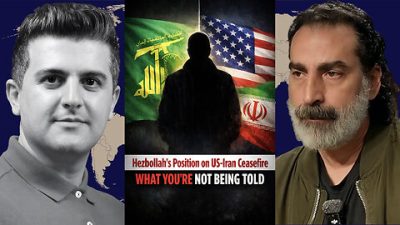
Laith Marouf: Hezbollah’s position on US-Iran ceasefire
or go to
Aletho News Archives – Video-Images
From the Archives
The Dirty Little Secret behind the “Global Terrorism Index”
The Omission of Israeli Terrorism in the Occupied Palestinian Territories
By Karin Brothers | Global Research | December 6, 2014
… The Israeli settlements — all of which are illegal – have been identified as a major impediment to peace. The refusal of a major “global” terrorism report to name the Israeli settlers as one of the groups most responsible for terrorism not only misrepresents a major source of regional violence but exposes the Global Terrorism Index as a propaganda tool that supports a U.S. agenda.
In recent years, governments have been attempting to thwart terrorism by blocking supportive fund-raising. When it comes to Israeli settlements, however, the US and Canada actually encourage fund-raising by giving organizations (such as Christian Friends of Israeli Communities (CFOIC) and the Jewish National Fund) financial support in the form of donor tax-deductions.
Charities which provide funds for the Israeli settlements should be regarded as terror-financing organizations. They should not only lose their tax-deductible status, but they should be banned because they support the violation of international humanitarian law. The terror-financing laws that are being strictly enforced for Muslim charities should be applied to Christian and Jewish charities as well. … Read full article
Blog Roll
 Aletho News
- How UK Regulator Ofcom Quietly Bypassed International Law to Police American Speech
- The Black Cube Files: How Former Mossad Operatives Flipped a Nation
- Laith Marouf: Hezbollah’s position on US-Iran ceasefire: What you’re not being told
- Israel’s priority lies in destroying chances of peace between Iran, US: Ex-UN nuclear chief
- Ceasefire for all or for none: Iran shuts Hormuz over Lebanon attacks
- Strait of Hormuz is Iran’s ‘nuclear weapon’ that forced US retreat: Medvedev
- Energy crisis will last for months – Kremlin envoy
- Europe’s quiet role in the war on Iran
- Forty days that shook the Empire: How Iran turned the tables on US and prevailed
- Netanyahu unilaterally declares Lebanon outside of ceasefire deal
- If Americans Knew
- Gazans face a triple crisis: severe shortages of water and bread, healthcare in tatters
- NY Times reports how Netanyahu took the US into Iran War
- A sigh of relief over Iran, but Gaza and Lebanon in dire straits – Daily Update
- Thousands dead and neighborhoods razed to the ground: Aid agencies fear southern Lebanon is becoming the new Gaza
- The war the US is fighting for Israel could cost trillions
- ‘Cigarette Burns, Nail Wounds’: Toddler Tortured in Gaza to Coerce Father
- Trump Says US Sent ‘a Lot of Guns’ to Protesters in Iran
- Israeli forces destroy 17 UN peacekeeper cameras in south Lebanon
- US-Israeli strikes ‘completely destroy’ synagogue in Tehran
- Archbishop for US Military Says Iran War Is Unjust Under Catholic Teaching
- No Tricks Zone
- An Inconvenient Tree: Uncovered In Alps… Europe Much Warmer Than Today 6000 Years Ago
- New Study Reports A 60% Slowdown In Greenland’s Ice Loss Rate In The Last Decade
- Low Intensity Tornado Wrecks Major Solar Farm, Creating A Potential Toxic Dump
- New Study Finds Warming Saves Lives…Cold Temperatures 12 Times More Deadly Than Excess Heat
- German Science Blog Accuses PIK Climate Institute Of Hallucinating Climate Tipping Points
- Devastating Assessment Of Comirnaty Vaccine By Former Senior Pfizer Europe Toxicologist
- New Study: CO2 Is ‘Effectively Negligible’ As An Explanatory Climate Change Factor Since 2000
- Former Pfizer Toxicologist Dr. Helmut Sterz Tells Bundestag Hearing Pfizer Vaccine Should Have Never Been Approved
- Energy Expert: Germany’s Nuclear Phaseout Was A “500 Billion Euro Mistake”
- New Research: South Australia’s Mid-Holocene Sea Surface Temperatures Were 4°C Warmer Than Today
 Aletho News
Leave a comment