Preface Nuclear Toxicity Syndrome
Dr. Sircus’ Blog | 09 June 2011
Arnie Gundersen, widely-regarded to be the best nuclear analyst covering Japan’s Fukushima disaster, indicates that the situation on the ground at the crippled reactors remains precarious and at a minimum it will be years before it can be hoped to be truly contained. “I have said it’s worse than Chernobyl and I’ll stand by that. There was an enormous amount of radiation given out in the first two to three weeks of the event. And add the wind blowing inland, it could very well have brought the nation of Japan to its knees. I mean, there is so much contamination that luckily wound up in the Pacific Ocean rather than across the nation of Japan—it could have cut Japan in half. But now the winds have turned, so they are heading to the south toward Tokyo and now my concern and my advice to friends is, if there is a severe aftershock and the unit four building collapses, leave. We are well beyond where any science has ever gone at that point and nuclear fuel lying on the ground and getting hot is not a condition that anyone has ever analyzed.”
As the crippled reactors in Japan continue to emit radiation into the environment it will appear in greater and greater concentrations in our food. Radiation has already been detected in trace amounts in milk across the U.S., and in strawberries, kale and other vegetables in California.
Tokyo Electric Power Co. (TEPCO) sent a robot into the building of reactor one on the 3rd of June and detected up to 4,000 millisieverts per hour at the southeast corner of the building. That means staying in that area for four minutes exposes a worker to the maximum annual limit of 250 millisieverts per year.
In Europe they are feeling the fallout and it is scaring the wits out of them because after Chernobyl they learned what nuclear hardship and sickness is all about. First Germany and now the Swiss government have deciding to exit nuclear energy, each phasing out their country’s existing nuclear plants and seeking alternative energy sources to meet their energy needs, following widespread security concerns in the wake of the Fukushima nuclear disaster in Japan.
The emerging reality of the ongoing nuclear reactor crisis in Fukushima, Japan—now in its third month after a devastating earthquake and tsunami caused nuclear explosions at the plant 150 miles north of Tokyo—is that it is not under control at all. Three of the six reactors are in meltdown. The crippled reactors are acting like a huge dirty bomb, emitting significant quantities of radioactive isotopes that are, in fact, contaminating our air, water, soil and food in a steady stream that will continue for a long time to come.
Arnie Gundersen says, “I am telling friends in Tokyo to keep their eyes on unit four. If there is an earthquake and unit four topples, don’t believe the authorities. You are well beyond where science has ever imagined and it is time to get on a flight and get out of there.” If unit four goes down it’s not just Tokyo; the entire northern hemisphere will be in for increasing radiation showers.
Since the accident on March 11, radioactive fallout from Fukushima has been spreading to the U.S. and across the northern hemisphere. Elevated levels of radiation caused by the meltdowns in Japan have been detected in drinking water across the United States, in rainwater, in soil, and in food grown on U.S. farms. The below video presents an early warning of what the Japanese and perhaps people all over the northern hemisphere and eventually the south will have to deal with.
Highly toxic radioactive iodine, cesium, strontium, plutonium and other toxic man-made radionuclides have leaked unabated since March 12 into the ocean and atmosphere. The radiation is contaminating large areas of Japan. Monitoring the ocean around the Fukushima plant, Greenpeace reported on May 26 that the contamination is spreading over a wide area and accumulating in sea life, rather than simply dispersing like the Japanese authorities claimed would happen.
Radiation continues to blow in a steady stream across the Pacific Ocean toward North America, following the course of the jet stream in the atmosphere and major currents in the ocean that flow from Japan to America. It took less than a month for radioactive iodine and cesium from the Fukushima nuclear accident to first show up in U.S. milk, and it continues to be detected in trace amounts in milk produced in California, one of the only states conducting any kind of testing for radiation in food.
The mainstream media is not reporting on this. Since the initial weeks of the accident, there has been a disturbing silence. Fukushima has faded from the news even though the site has not become any less dangerous. And the site is unprepared for another earthquake or tsunami, and unprepared for any typhoon activity. In the 53 years from 1951 to 2004, Japan averaged 2.6 typhoons making landfall each year. The place is a danger to us all.
West Coast Contamination
All radioactive exposures are cumulative for each human, animal and plant.
People on the west coast of the United States and Canada, Hawaii and Alaska are bearing some of the worst of the radiation and people are not taking evasive action. Gunderson said in an exclusive interview with Chris Martenson that, “I am in touch with some scientists now who have been monitoring the air on the West Coast and in Seattle for instance, in April, the average person in Seattle breathed in 10 hot particles a day. The average human being breathes about 10 meters a day of air, cubic meters of air. And the air out in the Seattle area, [they] are detecting when they pull 10 cubic meters through them, this is in April now, so we are in the end of May so it is a better situation now. That air filter will have 10 hot particles on it. And that was before the unit four issue. What I am advising is keep your windows closed. I would definitely wear some sort of a filter if I was outside.”
He is speaking about further worst-case scenarios saying, “I certainly wouldn’t run and exercise until I was sure the plume had dissipated. This isn’t now. This is, as you were saying, this is worst case. If unit four were to topple, I would close my windows, turn the air conditioner on, replace the filters frequently, damp mop, put a HEPA filter in the house and try to avoid as much of the hot particles as possible.”
Radioactivity is all over the Northern Hemisphere and each and every one is already contaminated.
The Japanese are not buying the spin about the dangers of the radiation that continue to flood Japan. A poll showed in early June that more than 80 percent of Japanese voters do not trust government information about the country’s nuclear crisis. Eighty-one percent of respondents to the survey said they did not trust government information about the crisis, Fuji TV said. Seventy-eight percent said Prime Minister Naoto Kan lacked leadership in handling the disasters.
If you feel like your life and your children’s lives are expendable then there is no need to pay attention to what is going on—no need to take evasive medical action and no reason to read my upcoming book Nuclear Toxicity Syndrome.
Fukushima Equals 3,000 Billion Lethal Doses
Dr. Michio Kaku pointed out on CNN March 18, 2011, Chernobyl involved one reactor and only 57.6 Tons of the reactor core went into the atmosphere. In dramatic contrast, the Fukushima Daiichi disaster immediately involved six reactors and IAEA (International Atomic Energy Agency, a UN Agency) documented 2,800 Tons of highly radioactive old reactor cores.
Looking at the current Japanese meltdown as more than 50 Chernobyls is one way some people are beginning to estimate the disaster. Simple division tells us there are at least 48.6 Chernobyls in the burning old reactor cores pumping fiery isotopes into the Earth’s atmosphere. Some are calculating that this all adds up to three thousand billion (3,000,000,000,000) Lethal Doses of Radiation means there are 429 Lethal Doses chasing each and every one of us on the planet, to put it in a nutshell.
“Those who deny or deceptively play down the catastrophic threats to public health from all phases of the nuclear power cycle, from mining to the lack of any proven solution to permanent and safe disposal of very long-term deadly spent nuclear fuel, recklessly ignore the medical/scientific lessons we should have learned from current and previous nuclear accidents,” writes Rudi H. Nussbaum who is a Professor emeritus of Physics and Environmental Sciences at Portland State University.
Afghanistan: Why Civilians are Killed
By James Petras / Dissident Voice / June 9th, 2011
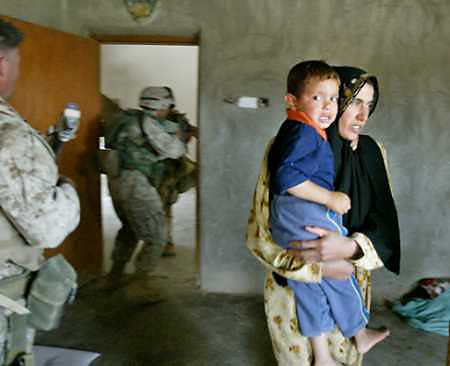
The recent rash of civilian killings by NATO forces in occupied Afghanistan raises several basic questions: Why do US-NATO air and ground forces kill so many civilians, so persistently, over such long stretches of time, in regions throughout the country? Why have the number of civilians killed increased in the course of the conflict? Why do NATO-US airplanes continue to bomb civilian housing and village gatherings and ground troops indiscriminately assault homes and workshops? Why are the pleas of NATO collaborator President Karzai to desist in home bombings going unheeded? Finally, knowing that the killing of civilians, entire families including children, mothers and the elderly alienates the local population and breeds widespread and profound hostility, why do the NATO-US military refuse to alter their tactics and strategy?
Explanations and Excuses for Civilian Killings
Apologists for the NATO killings of civilians are as abundant as their explanations are lacking in substance. Pentagon spokespeople speak of “accidents”, “errors of war”, “collateral damage”; media pundits blame the guerrilla fighters for engaging in warfare in areas populated by civilians; neo-conservative academics and their “think tank” colleagues blame Islamic fundamentalism for converting villagers to their cause and “forcing” NATO to kill civilians in order to create martyrs and to use their deaths as a recruiting device.
These patently superficial explanations raise more questions than answers, or in some cases, inadvertently refute the justification for the entire war. The “error of war” argument begs a more basic question: what kind of war is NATO-US engaged in that constantly finds the guerrillas ‘melting’ into the population, while the occupation breaks down doors and perceives each and every household as a possible sanctuary, or outpost of the resistance? What kind of military relies on high altitude fighter planes and pilotless planes directed from distant command posts to attack population centers, in which commerce, farming and household economies engage the population? Clearly only an army of occupation, an imperial army, is willing to repeatedly sacrifice a multitude of civilians to kill a single or a few suspected combatants. Only a military operating in a hostile civilian environment is going to assume that lodged behind every door of every home there is an “enemy”; that every family is sheltering a combatant; that it is better to “go in shooting” than to risk a bullet in the gut. ‘Accidents of war’ do not ‘just happen’ for an entire decade, covering an entire country. The killing of civilians is a result of a war of imperial conquest against an entire people who resist the occupation in whatever form is appropriate to their circumstance. The pilots and ground troops recognize that they are a hostile alien force, whose presence is commanded from above by Generals and politicians dealing with abstract schemes of ‘terrorists-linked to Al Qaeda’ that have no relation to the dense web of personal bonds of solidarity between resistance fighters and civilians on the ground in Afghanistan.
Working from these abstract categories, the strategists label extended family compounds as ‘hideouts’; family gatherings as ‘terrorist meetings’; trade caravans as ‘guerilla smugglers’. The conflicting interests of the imperial politicians, generals, strategists and military officers on the one hand and the civilian population and resistance form an immense gap. The greater the number of civilian/combatants killed the faster the career advances for imperial officers –eager for promotions and prized pensions. “Success”, according to the imperial world view is measured internationally by the number of client rulers; nationally by the number of flags pinned to the war maps denoting ‘secure cities’; and locally by the body counts of massacred families.
On the ground, among the millions in intimate family and clan circles, where sorrow and anger co-exist, resistance in all of its manifold forms unfolds: Sacred vows and the profane pledges to ‘fight on’ grow out of the millions of daily humiliations affecting young and old, wives and husbands, in homes, markets, roads and by-ways. The hostile stare of a mother sheltering an infant from soldiers breaking into a bedroom is as telling as the crackle of gunfire of a sniper hidden in a mountain crevice.
A People’s War: Not a War on Terror
The killing of civilians is not “accidental”. The fundamental reason that so many civilians are killed, everyday, in every region for over a decade, is because the civilians and the combatants are indistinguishable. The image of the Afghan combatants as some kind of footloose professional bomb throwing terrorist is completely off the mark. Most Afghan fighters have families, cultivate farmland and tend herds; they raise families and attend mosque; they are ‘part-time civilians’ and part-time fighters. Only in the schematic minds of the “great strategists of war” in the Pentagon and NATO headquarters do such distinctions exist. Their deadly military mission to ‘save the people from terrorist fundamentalists’, a self-serving self-deception, is, in fact, a ladder up the military-political hierarchy. Each step up depends on waging a ‘just war’ to a successful conclusion.
The civilian-combatants are a mass popular phenomenon. How else can we explain their capacity to sustain armed resistance for over a decade, indeed, advancing with the passing of time? How can we explain their military success against the armed forces and advisers from 40 countries, including the US, Europe and a clutch of Afro-Asian-Latin American mercenaries? How can we explain the growing resistance despite suffering from military occupation, backed by the most advanced technological instruments of war? How can we explain the ebb of popular support for the war in the ‘Conqueror’s country and the growing number of recruits for the Resistance? The combatants have the loyalty of the Afghan people; they do not have to spend billions to buy the spurious ‘loyalties’ of mercenaries who can and have at any moment ‘turned their guns the other way’.
Weddings are bombed because combatants attend weddings – along with hundreds of relatives and friends. Villages are bombed because peasants cultivate crops, which contribute to the resistance. Civilian shelters become military sanctuaries. Afghanistan is polarized: the US military versus a people in arms. Faced with this reality, the real policy of NATO-Pentagon is to rule or/and ruin. Each bomb killing dozens of civilians in search of one sharpshooter deepens the isolation and discredit of the puppet ruler. “President” Karzai has seen his mission of building a ‘civilian base’ to reconstruct the country utterly discredited. His impotent complaints to NATO to cease bombing civilian targets fall on deaf ears; because the NATO command knows very well that ‘the civilians’ are the ‘deep resistance’ – the vast reserve of support for the combatants; their eyes and ears far excel all the electronic intelligence devices of the Occupier. Just as Karzai cannot convince the civilians to turn against the combatants so he cannot convince the imperial armies to stop bombing civilian homes and gatherings.
Washington knows that with each withdrawal (or retreat), the terrain, the towns and villages are occupied by resistance fighters who emerge from everywhere. The best that the US-NATO politicians can negotiate is a safe orderly departure. The best that they can hope is that their local collaborators do not defect or flee abroad prematurely turning over billions of dollars in military ordinance to the resistance. The best the collaborators can hope is that they will secure an exit route, a visa, an overseas account and a comfortable second home abroad. What is absolutely clear is that the US, NATO and its collaborators will have no role to play in the newly independent Afghanistan.
~
James Petras, a former Professor of Sociology at Binghamton University, New York, owns a 50-year membership in the class struggle, is an adviser to the landless and jobless in Brazil and Argentina, and is co-author of Globalization Unmasked (Zed Books). Petras’ most recent book is The Arab Revolt and the Imperialist Counterattack. (Clear Day Books – A subsidiary of Clarity Books). He can be reached at: jpetras@binghamton.edu. Read other articles by James, or visit James’s website.
IAEA votes to report Syria to UN
Press TV – June 9, 2011
Amid a whole host of abstentions and ‘no’ votes by Russia and China, the UN nuclear regulator votes to report Syria to the world body as what it describes as a former harborer of an undeclared nuclear reactor.
The motion was approved by the International Atomic Energy Agency (IAEA)’s board of governors in New York on Thursday with 17 members endorsing the move and 11 holding back their vote, AFP reported.
The body will therefore refer Syria to the UN Security Council over allegations that it built a nuclear reactor that was destroyed in 2007 by Israeli bombs.
The vote came a few days after IAEA’s Director General Yukiya Amano slammed the Israeli regime for the arbitrary attack on what Tel Aviv had called ‘a Syrian nuclear facility.’
Amano expressed regret that the bombing had been carried out “without the agency having been given an opportunity to perform its verification role.”
In September 2007, at least four Israeli fighter planes crossed into the Syrian airspace and launched an attack on what turned out to be a research center that belonged to the regional grouping of the Arab League in the city of Deir ez-Zor in the northeast of the country.
The assault caused a significant rise in tension between the two sides, which are technically at war due to Tel Aviv’s 1967 occupation and annexation of the Golan Heights in southwestern Syria.
“Rather than force being used, the case should have been reported to the IAEA,” Amano had said.
Damascus denies harboring a nuclear weapons program. It opened up the attacked site to IAEA inspectors in 2008 and has pledged to fully cooperate with the agency regarding the issue.
Tel Aviv has neither confirmed nor denied bombing the site. Former US President George W. Bush has, however, written in his memoire, published last year, that the attack took place after he resisted former Israeli Prime Minister Ehud Olmert’s request for Washington to undertake the strike.
The developments come amid Tel Aviv’s continued refusal to declare its nuclear arsenal and its insistence on not joining the Nuclear Non-Proliferation Treaty (NPT).
Since 1958, when Tel Aviv began building its Dimona plutonium- and uranium-processing facility in the Negev desert in southern Israel, it has secretly manufactured numerous nuclear warheads, thus becoming the sole owner of such weapons in the Middle East.
Former US President Jimmy Carter has attested to the existence of the arsenal, which he has said includes between 200 to 300 nuclear warheads.
Israel has, however, neither confirmed nor denied possessing nuclear arms under a deliberate policy of ‘nuclear ambiguity.’
Uncivilized Relations: Israel Confronts its Neighbours
By Brenda Heard / Dissident Voice / June 9th, 2011

Photo credit – Amelia Opalinska
The turmoil that has beleaguered the Middle East for decades has been described many ways. On the 5th of June, however, the terminology turned vulgar. This enduring conflict was publicly characterized as a ‘war between the civilized man and the savage’. Boldly announced with a plea to ‘support Israel/defeat Jihad’, the full page advertisement ran in the New York Post’s special section covering the city’s ‘Celebrate Israel’ parade.
Declaring the Muslim people ‘savage’ is, of course, just a school-yard taunt from Islamaphobe Pamela Geller, who gleefully takes credit for the advertisement. Had her rant been limited to her own blog, we might easily dismiss it. The problem lies in its acceptance into mainstream discourse. The Post may be tabloid journalism, but its paper edition remains the seventh most popular paper in America. And this sort of crude advertisement for a political cause panders to a public comfortable with the mind-set of ‘don’t bore me with the details’.
But the details are critical if we are to consider a conflict that has taken thousands of lives. How can we, for instance, reconcile the concept of ‘civilized’ with the reality of shooting unarmed protesters? The advertisement asks us to accept Israel as ‘civilized’; yet as these very words were first read, Israeli soldiers were shooting into a crowd of Syrian-Palestinians, killing 24 and injuring another 350.
Even if we were to set aside troublesome issues of borderlines and occupation zones, lethal violence hardly qualifies as a civilized response to what was unmistakeably only a symbolic demonstration. It had been loudly announced in advance. Had the protesters indeed posed a physical threat, then they might have been easily overpowered and arrested by the Israeli military on hand. But that would have been a sensible—a civilized—means of containing the situation.
The deadly violence chosen by the Israeli forces on the 5th of June mirrors the same used just three weeks prior, during the Nakba demonstrations. And these echo hundreds and hundreds of instances when Israeli forces have brazenly attempted to destroy anything and anyone deemed inconvenient. Perhaps the most egregious example, though, happened 29 years ago during the first week of June 1982.
In a defiant escalation of the Zionist occupation of Southern Lebanon in place since March 1978, the Israeli government and military flagrantly snubbed the ruling of the United Nations. Using brute force, the Israeli forces intensified efforts to gain territory and to obliterate any resistance to their project. Despite the presence of the United Nations Interim Force in Lebanon (UNIFIL) as international peacekeepers, the Israelis insisted on their own form of deadly control.
On 4 June 1982 Israel conducted air raids in and around Beirut.* Together with its mercenary militia, Israeli ground forces also engaged in intense artillery fire in Southern Lebanon. Both the Secretary General of UNIFIL and the President of the UN Security Council issued urgent appeals to ‘adhere strictly to the cease-fire that had been in effect since July 1981 and to refrain immediately from any hostile act likely to provoke an aggravation of the situation’.
By way of answer, the next day Israeli forces amplified their intent. They multiplied air strikes. They increased artillery fire on the ground with added naval artillery power. Again, UNIFIL reiterated its call for a simultaneous cessation of hostilities. The UN Security Council passed Resolution 508, calling for all parties ‘to cease immediately and simultaneously all military activities within Lebanon and across the Lebanese-Israeli border’.
The Palestine Liberation Organisation (PLO) agreed. The Israeli Representative, however, stated the Resolution would have to be brought before the Israeli Cabinet.
Despite UNIFIL’s continued efforts throughout the night of 5 June, Israeli air strikes resumed shortly after 0600, the morning of 6 June—precisely the deadline given in Resolution 508 to cease fire.
The Chairman of the PLO informed UNIFIL that ‘in spite of heavy Israeli air-strikes after the scheduled time of the cease-fire, he had given orders to all PLO units to withhold fire for a further, unspecified period’. When UNIFIL then met later that morning with the chief of the Israeli military forces, the agenda was the implementation of Resolution 508.
Instead, UNIFIL was informed that Israel was launching a military operation into Lebanon within half an hour. UNIFIL was warned to stay out of the way. UNIFIL protested, to no avail:
Israeli ground forces, including a very large number of tanks and armoured personnel carriers, moved into Lebanese territory in strength. . . . UNIFIL troops attempted to prevent the entry and advance of the Israeli forces. On the coastal road, for example, Dutch soldiers planted obstacles before advancing Israeli tank column; one tank was damaged; the obstacles, however, were pushed aside, as was the Dutch guardhouse. Tank barrels were pointed at UNIFIL soldiers during the entire encounter, likewise, in the other battalion areas, obstacles were forcibly removed and bulldozed. At Khardala Bridge, a small Nepalese position stood its ground for two days, despite harassments and threats. On the morning of 8 June, their position was partially destroyed/and some 100 Israeli tanks began to cross the bridge. Despite the efforts of UNIFIL, from the start of the invasion, the overwhelming strength and weight of the Israeli forces precluded the possibility of stopping them, and UNIFIL positions in the line of the invasion were thus overrun or by-passed.
Later that day, the UN Security Council met again and unanimously adopted Resolution 509, demanding the withdrawal of Israeli military forces and cessation of all military activities.
Contrary to the Resolution, on 7 June, Israeli forces—comprising more than two mechanized divisions, with full air and naval support—expanded their positions northward and waged intense fighting.
On 8 June, the Security Council met again, but no resolution was adopted, because of the negative vote from the US. At the same time, Israeli forces resumed their pattern of blocking movement of UNIFIL forces and took prisoner 62 Lebanese Army soldiers who were serving under the operational command of UNIFIL. When UNIFIL demanded their return, the Israeli military released them to its mercenary militia instead. This common ruse was vigorously protested. Again to no avail.
And so this pattern of lawlessness continued, bringing years of violent rampage through Lebanon. There was nothing civilized about it. Just as there was nothing civilized in the recent shooting of protesters in Lebanon and Syria. When advertisement-maker Pamela Geller suggests otherwise, the facts fail to substantiate her claim.
In her review of the Celebrate Israel parade, she refers several times to the event in religious terms. God was smiling on the paraders, she tells us, providing them with sunshine for their pro-Jewish rally. Syrians and Palestinians, on the other hand, she classifies as interchangeable Muslims, Jew-haters, Nazis upon whose Nakba bund rallies God frowned upon with torrential rains. The celebration, it seems, had little to do with a political entity, and much to do with being a so-called chosen people. A so-called civilized people.
But in civilized society, we might counter, we co-exist not by the rule of force, but by the rule of law. In civilized society, God—whether we accept ‘God’ as a concept or as a reality—represents justice and righteousness. It is a gross distortion of civilized thought to imagine God laying down bets on his favourite football club and then fixing the game for a good laugh. No, in a civilized society, we take responsibility for our actions.
*The details of the events of June 1982 are documented in the ‘Report of the Secretary-General on the United Nations Interim Force in Lebanon’, S/15194/Add.1, 11 June 1982, http://unispal.un.org/UNISPAL.NSF/0/7264B57A6DD3E85B8525701B0072A4F5
~
Brenda Heard is the founder and director of Friends of Lebanon, London. She can be contacted at: mail@friendsoflebanon.org.
The AfPak Tanker War
Moon of Alabama | June 9, 2011
The campaign against tankers trucking fuel for NATO from Karachi to Afghanistan is back in full force after a lull earlier this year.
While now only some 50% of the fuel needed in Afghanistan is coming through Pakistan, the total fuel need has nearly doubled over the last year due to the “surge”, the buildup of Afghan forces and an increased operations. It would be impossible to fight this war if that line-of-communication gets interrupted.
Here is a, likely incomplete, list of recent attacks on NATO tankers. The losses are significant:
Explosion destroys Nato tanker in Khyber, June 9
PESHAWAR: A Nato oil tanker was destroyed following an explosion in the Khyber tribal region on Thursday, DawnNews quoted security sources as saying.
Eight Nato supply tankers torched, June 8
KHYBER AGENCY – As many as eight Nato oil supply tankers were torched on Tuesday here in Torkham, political administration and Khasadar sources said.
Five Nato tankers burn in explosion, June 7
PESHAWAR: A Pakistani government official says five Nato oil tankers burned after an explosion at the Afghan border.
Two Nato tankers gutted, June 6
QUETTA – Two tankers carrying supplies for the Nato forces stationed in Afghanistan were torched in two separate incidents in Bolan and Khuzdar districts of Balochistan on Sunday.
Miscreants set NATO supply oil tanker on fire, June 5
According to details, an oil tanker was carrying oil for the NATO forces percent in Afghanistan from Karachi through Sibi, three unknown miscreants targeted this oil tanker near Konbari Bridge in Bolan.
Two NATO oil tankers torched in Nasirabad, June 1
QUETTA: The driver of a NATO oil tanker was injured while two tankers were torched in Mastung and Wadh areas, respectively, on Tuesday.
Two NATO tankers torched in Pakistan, May 31
The attack took place on Tuesday morning, when unknown gunmen opened fire on the oil tankers in Khuzdar district of the volatile Balochistan province, local police told Press TV.
3 NATO Tankers destroyed in separate incidents: One killed , May 31
QUETTA: Three NATO Tankers were destroyed and a person was killed in two separate incidents in Mastong and Khuzdar hereon Tuesday.
Driver killed, 4 injured in 3 NATO oil tankers collision, May 26
NOWSHERA: Driver was killed and four were injured when three NATO oil tankers collided with each other on Nowshera-Peshawar G.T. Road while overtaking from the wrong side hereon Thursday.
…
Two of the tankers were completely destroyed and thousands liters of oil spilled over the G.T. Road.
15 dead in NATO tanker fire in Pakistan: officials, May 20
PESHAWAR, Pakistan — A bomb attack Saturday on a NATO fuel tanker headed to Afghanistan sparked a huge fire that killed 15 people who had rushed to collect petrol leaking from the bombed-out vehicle.
…
Earlier, 11 other NATO supply vehicles, “most of them oil tankers” were destroyed at a terminal in nearby Torkham town, another administration official, Iqbal Khattak, said, but there were no casualties.
19 Nato tankers torched near Torkham, May 15
LANDIKOTAL: The number of Nato oil tankers that were burnt in bomb blast near Afghan border Friday night reached 19, as 14 more tankers caught fire early Saturday, official sources said.
Israel approves oxymoronic ‘tolerance’ museum on Muslim cemetery
Palestine Information Center – 09/06/2011
OCCUPIED JERUSALEM — The Israeli occupation’s Jerusalem municipality planning committee has approved a plan to build a so-called ”tolerance museum” in the city’s center.
But the oxymoronic Jewish museum of ”tolerance” is planned to be built on the historic Muslim Ma’manullah cemetery and would require the removal of hundreds of ancient skeletons of Muslims dating back to Medieval times.
According to Israeli media, the project was designed by the Simon Wiesenthal Center, the self-proclaimed Nazi hunter that works to stop anti-Judaism.
The Jerusalem municipality delayed approval of the project for the last two years in order for changes to be made on the architectural plan.
Ma’manullah cemetery, located west of Jerusalem’s Old City 2 km away from Al-Aqsa Mosque’s Al-Khalil gate, is the largest Islamic cemetery in Jerusalem, with an area of some 200 dunums.
Interview: Antony Loewenstein on Palestine’s struggle in Australia
Sarah Irving | The Electronic Intifada | 8 June 2011
Antony Loewenstein (antonyloewenstein.com) is a writer and journalist based in Sydney, Australia and a founder of Independent Australian Jewish Voices. His first book, My Israel Question, was an Australian best-seller and was short-listed for the 2007 New South Wales Premier’s Literary Award; an updated third edition was published in 2009. His second book, The Blogging Revolution, about the Internet in repressive regimes, was released in 2008 and an updated second edition will be out later this year.
Loewenstein has written widely about the recent furor over the vote by Marrickville Council in Sydney to observe a full boycott, divestment & sanctions (BDS) strategy on Israeli products. After vitriolic attacks in the Australian press, especially Murdoch-owned newspapers such as The Australian, and hostile statements by federal and state-level politicians, a second council vote rescinded the BDS motion, while affirming the council’s support for the aims of the BDS movement. The Green Party mayor of Marrickville, Fiona Byrne, who had backed BDS, lost the ensuing state election to Australian Labor Party candidate Carmel Tebbutt, although she did achieve a large swing to the Greens.
In articles for Australian publications such as New Matilda and Crikey, Loewenstein has accused the mainstream press of “misrepresentations and outright falsehoods” in its reporting of the Marrickville affair, noting that “there have been dozens of articles in the Australian recently calling the Greens ‘extremists,’ implying the party is anti-Semitic, claiming BDS is akin to genocide, extensively quoting the Labor and Liberal parties (who unsurprisingly both condemn BDS) and the Zionist lobby (who again oppose it) (“Where are the Arab voices in Aussie BDS debate?,” 15 April 2011).
Sarah Irving interviewed Antony Loewenstein for The Electronic Intifada.
Sarah Irving: One of the odd things about the Marrickville episode is that there was very little media coverage of the actual decision by the council to observe the BDS call. The press storm suddenly erupted about six weeks later, when the campaign for the New South Wales state elections really kicked off. Although the focus was on the boycott of Israel, was this really an Australian political issue?
Antony Loewenstein: I think that analysis is probably pretty true. When the BDS motion was announced in December it almost went unnoticed. I think what changed was three things. First, a state election was coming in March. Second, the Green Party in Australia in the last nine months or so has gone from being an important third player to very important third player.
They partly assist in the federal balance of power — there are independents as well — and there was, predictably, from the Australian Labor Party, the [right-wing] Liberal Party and from the Murdoch press, a sense that the Greens need to be “cut down to size.” A federal Labor minister, Anthony Albanese, got involved, saying that the Greens were being extreme and so on. His wife, Carmel Tebbutt, was running against Fiona Byrne, the Green mayor of Marrickville, for the state legislature. Albanese didn’t mention this rather important detail when the press covered the issue, that his wife was running, which almost smacks of dishonesty, and the fact that the Murdoch press didn’t mention it either shows how dishonest they are.
So it was almost like there was a federal intervention in the debate and it was seen as a perfect way to try and divide and conquer the Greens. You had senior federal ministers, Kevin Rudd, the former prime minister and now foreign minister, and Barry O’Farrell, then the state opposition leader and now Liberal state premier, former Prime Minister Bob Hawke — this litany of hacks who had spent most of their professional lives demonizing Arabs and who were now asked to speak on the Arab-Palestinian question. Arabs and Palestinians were largely ignored.
I suppose it was seen as a potentially effective way to divide and conquer the Greens and to show anybody who seriously thought about speaking up for Palestinians that this is what happens to you. You will be punished and attacked and defamed and often given no right of reply. That’s the message, and a lot of people I’ve spoken to in the last few months who might once have spoken out now won’t, or didn’t, because they’ve been scared off. That includes trade unions who supported BDS. Many of the unions in the country last year came out in support of BDS — it was partial BDS, more often the settlement boycott, but it’s a start. There were attempts to get them to say something, to speak out in support of Marrickville Council. But there was deadly silence. Not least, in my guess, because of their connections to the Labor Party.
Sarah Irving: Was the rabid reaction to the Marrickville boycott vote by much of the mainstream press, whether Rupert Murdoch-owned or not, in keeping with their usual stance on Israel and the Palestinians?
Antony Loewenstein: The Murdoch press is obviously known in Britain and America — it’s not confined to Australia — for being pretty antagonistic towards Arabs and Muslims. It’s very much signed up to the whole “War on Terror” rhetoric and all which that means. The “War on Terror” has been wonderful for the Murdoch empire’s business, as we’ve seen most recently with Bin Laden’s death.
We also have a situation in Australia which is not unique to us, where the vast majority of politicians and an awful lot of journalists and editors are sent on trips by the Zionist lobby to Israel. They go there semi-regularly, they spend five or six days there, they will spend maybe five minutes in Ramallah [in the occupied West Bank] if they’re lucky. But most of their time will be in Israel hearing about the great threat from the Arabs, the Iranian threat, peace is a long way off — blah blah blah.
They’ll then come back and talk about a two-state solution and the glories of peace. It reflects badly on the hundreds of journalists and editors who’ve been flown to Israel by the lobby and who have not said, “can I do my own thing?”
The idea of simply having your hand held like that is incomprehensible to me. You are a sycophant. They are often people who have critical faculties on other issues, but they go to Israel and they are almost guaranteed to be publishing propaganda when they return. The last trip went late last year, about ten people went, including some good journalists from the Sydney Morning Herald, and before they went I said on my website that we can guarantee one thing: when they get back, they’ll be talking about Iran, [that] Iran’s a threat. And that’s what they wrote. They admit that “sure, there’s an issue with Palestine, but Iran is the problem.” It’s almost like there is an unspoken obligation to your host for having wined and dined you for a week.
So most of the media has “form” in one way or another. I wouldn’t say that the reaction to Marrickville was more extreme than usual but I would say that there was little or no context about why BDS is not an idea put forward by neo-Nazis, which is the impression you’d have got by reading the press, and that it has growing support. But the latter is in some ways the Achilles’ heel — that the boycott is getting international support, which is exactly why there was this attempt to crush it here. The people who follow this issue know what’s happening in parts of Europe and Britain and even some parts of the US. This was a perfect opportunity, so they thought, to crush it here before it really took off. A local Sydney council was a perfect way to do it, and the fact that there was a Green mayor, even better.
SI: The extreme press response is being widely seen amongst Australian activists as having been a tactic to scare other public bodies, such as universities or councils, away from considering BDS policies. Has it worked for the moment?
AL: Put it this way: those unions which signed up last year have not rescinded their BDS motions. But they haven’t said much about it publicly either. I did notice, though, that the Maritime Union of Australia put out a statement supporting partial BDS, which is the first one I’ve seen for a while. Essentially it was saying that “Palestine’s got a problem, we support BDS, bring it on.” It didn’t mention Marrickville specifically. And while the Maritime Union is not one of the top unions in the country it does have a sizable membership. The other unions have been conspicuous by their silence, and I think that’s probably because they want to remain a bit quiet because of the Australian Labor Party, which goes to show how morally bankrupt the ALP has become.
SI: Was the mainstream press and political reaction to the Marrickville vote part of a wider systemic attitude towards BDS in Australia?
AL: Yes. I don’t necessarily see it as part of a coordinated campaign against BDS. By that I mean I don’t think there was a meeting in a room between the Israel lobby, the Murdoch press and and Labor Party. They don’t even need to do that. It doesn’t need to happen that way.
There’s a sense that the Palestine debate in Australia is one that’s largely about excluding the voice of Palestinians. There are recent exceptions, not least because of a handful of pro-Palestinian groups who’ve been pro-active in lobbying the mainstream media to get some representation. But there is an ingrained racism in the corporate press in Australia. Very few non-Anglo figures appear in the papers or on TV regularly. You hear very few Arab voices in general; it’s not just about Palestinians. I think there is a deliberate exclusion. As in many countries, the media is largely run by old white men.
In some ways what happened in the Arab revolutions should have given them, you would think, unique opportunities to have people speaking in their own voice from Tunisia and Libya. There have been Tunisians and dissident Libyans and Egyptians in our media, but largely it is still white journalists going to country X to write about it. When was the last time the Australian media had a major Egyptian, Libyan or Tunisian activist or nongovernmental organization writing in our papers, in their words? It’s happened, but very rarely.
The Palestinian issue is very similar. The idea of even suggesting that journalists should include Arab voices within the Marrickville story barely occurred. Sure it was about local politics as well, but the idea that you’d write about Palestine and not even think, “Gee, what does an Arab think?” It’s almost like the worst example of what happens in the New York Post or on FOX — and it wasn’t all in the Murdoch media, I might add.
The Palestinian question here is also about US foreign policy and Australian policy, which is that we are essentially a client state of the US and proud of being so. The Australian government talks about being independent but is quite the opposite. Australia has framed its world-view around receiving protection from America. There’s an unspoken idea that if we get invaded by Indonesia or China or some other other “Asian” country, who’s gonna protect us? America, allegedly.
So in order to stay in line with US policy, the Palestinian question here seems to be based around deliberately ignoring what Israel is doing in Palestine. So when you have pro-BDS types, whether Palestinians or Jews, saying BDS is necessary because of how Israel behaves, because there is a lack of legality, because there is impunity for occupation crimes, a lot of people in the media often say “that’s just ridiculous.” They’ll come out with the usual lines about Israel being a democracy. There is a line of ignoring what occupation means; it’s barely used as a word. It’s a “territorial dispute” and we’re engaged in a “peace process” and Abbas is “talking to the Americans” and so on.
SI: Even in the left-of-center, “alternative” media — online publications such as New Matilda and Crikey — there was only some coverage of Marrickville, BDS and the press response, and much of it was coming from you, Antony. Would they have covered the story if you hadn’t pitched it to them?
AL: There’s really a couple of issues here. Within many activist groups it seems like there’s an element of either naivete or of defeatism — they think “well they wouldn’t publish this anyway, so why bother?”
I’m not saying everyone thinks like that, but I’m not the only person who could be writing about this. I’m not Arab or Palestinian. Obviously I’m Jewish and I’m engaged because of that issue, feeling that “my people” are committing crimes in “my name,” which is a pretty awful feeling. But I do know a number of cases where Palestinians tried to get in those publications and didn’t succeed. I don’t know about the facts behind that. I can’t speak for those publications. I also think that even in some “alternative” publications here there is a degree of wariness about the issue. It’s seen as two rabid sides and that we need some “moderation.”
I would also like some other Jewish voices, younger Jewish voices, to be speaking out. There are some, but so few. You don’t hear in Australia, as you do in the UK and America, those Jewish dissident voices. I think it reflects badly on how unimportant real human rights are for the majority of Jewish people in Australia. Some of them might campaign about refugees or indigenous issues, which are important, but for me the real test of someone’s conscience is how they deal with issues that are close to home. I’m not saying that other issues don’t matter, but it’s how you deal with an issue which affects you, which is close to your family. That’s the real test of someone’s personality and sadly the majority of Jews here are failing by ignoring the issue, or campaigning against it, or staying silent. It’s disappointing and frustrating.
Sarah Irving is a freelance writer. She worked with the International Solidarity Movement in the occupied West Bank in 2001-02 and with Olive Co-op, promoting fair trade Palestinian products and solidarity visits, in 2004-06. Her first book, Gaza: Beneath the Bombs, co-authored with Sharyn Lock, was published in January 2010. Her new edition of the Bradt Guide to Palestine is out in November 2011, and her biography of Leila Khaled in spring 2012.
Antony Loewenstein’s website can be found at antonyloewenstein.com.
‘Fayyadism’ revealed: UN report throws cold water on the economic mirage in the West Bank
By Adam Horowitz | Mondoweiss | June 8, 2011
In recent years it has become popular among liberal commentators in the US to celebrate Salam Fayyad and his plan for Palestine. Despite evidence of widespread human rights abuses under his watch, or more accurately at his and US Lieutenant General Keith Dayton’s command, Fayyad’s state building plan has been lauded, mainly because it prioritizes building the Palestinian economy over securing Palestinian rights. In the words of the New York Times‘ Roger Cohen “he’s getting things done, improving people’s lives, and Palestinians are tired of going nowhere.”
This perspective has been best summarized by none other than Thomas Friedman, who has dubbed the phenomena “Fayyadism.” Here Friedman describes Fayyadism as only he can:
The Israeli-Palestinian conflict is to the wider Middle East what off-Broadway is to Broadway. It is where all good and bad ideas get tested out first. Well, the Palestinian prime minister, Salam Fayyad, a former I.M.F. economist, is testing out the most exciting new idea in Arab governance ever. I call it “Fayyadism.”
Fayyadism is based on the simple but all-too-rare notion that an Arab leader’s legitimacy should be based not on slogans or rejectionism or personality cults or security services, but on delivering transparent, accountable administration and services.
Fayyad, a former finance minister who became prime minister after Hamas seized power in Gaza in June 2007, is unlike any Arab leader today. He is an ardent Palestinian nationalist, but his whole strategy is to say: the more we build our state with quality institutions — finance, police, social services — the sooner we will secure our right to independence. I see this as a challenge to “Arafatism,” which focused on Palestinian rights first, state institutions later, if ever, and produced neither.
Things are truly getting better in the West Bank, thanks to a combination of Fayyadism, improved Palestinian security and a lifting of checkpoints by Israel. In all of 2008, about 1,200 new companies registered for licenses here. In the first six months of this year, almost 900 have registered. According to the I.M.F., the West Bank economy should grow by 7 percent this year.
The last point is the most common one raised by Fayyad’s supporters. This economic growth is supposed to prove Palestinians worthiness for a state in international eyes, and was even been seized upon by Benjamin Netanyahu in his recent address to Congress as a sign that the occupation is not a hinderance to Palestinian aspirations. After giving Fayyad props for leading the charge, Netanyahu also took credit for the Palestinian’s economic growth
We’ve helped, on our side, we’ve helped the Palestinian economic growth by removing hundreds of barriers and roadblocks to the free flow of goods and people, and the results have been nothing short of remarkable. The Palestinian economy is booming. It’s growing by more than 10 percent a year. And Palestinian cities — they look very different today than what they looked just few — a few years ago. They have shopping malls, movie theaters, restaurants, banks. They even have e-businesses, but you can’t see that when you visit them.
It all sounds wonderful, but it isn’t true.
I’m not saying that there aren’t restaurants or banks, and it is even possible that the Palestinian economy grew 7% by some measure in the West Bank during the last year, but a new UN report released today reveals the truth behind the sloganeering. The report issued by UNRWA shows that unemployment in the West Bank stands near 24%, and is even higher for refugees, while the “West Bank miracle” is based almost entirely on international aid. From Reuters:
The report by the agency UNRWA shows that unemployment in the second half of 2010 grew much faster than employment, and average purchasing power continued to decline.
Of six major private sector activities, only two recorded employment gains during the second half of last year. Overall, one in four Palestinians in the workforce was unemployed.
“While there was modest employment growth, such growth was on the wane in 2010 while the number of unemployed accelerated in the second half of the year,” said author Salem Ajluni.
The report’s findings challenge assertions that the Palestinian economy is growing, helped by the removal of Israeli roadblocks and other movement restrictions. Prime Minister Benjamin Netanyahu said in a speech to the U.S. Congress last month that the Palestinian economy was booming.
Palestinian policymakers have projected growth of 7 percent in 2011 for both the West Bank and Gaza, though they point out that high growth rates in recent years have largely been dependent on international aid for the Palestinians.
The UNRWA report said: “The average broad refugee unemployment rate rose by more than a percentage point to 27.9 percent relative to first-half 2009 as compared to 24.1 per cent rate for non-refugees.”
A UNRWA spokesman goes on to say, “The occupation and its related infrastructure such as settlements and settler-only roads that encroach on and divide Palestinian land, settler violence and the West Bank barrier have diminished prospects for Palestinians in general and especially for refugees.”
This really shouldn’t have come as a surprise. Last year around this time Save the Children UK released a report saying that poverty was worse in parts of the West Bank than in Gaza. Still, I imagine it might come as a shock to some on the Times editorial page. Although international aid has made some enclaves in the occupied territories, especially parts of Ramallah, feel as though they’re booming, this money has flowed mostly through the Palestinian Authority patronage system and enriched a few. This story would have been more obvious if reporters had traveled a bit off the beaten path, but I guess that’s a bit too far off Broadway.
Caught red-handed: British assassins in the Horn of Africa
By Thomas C. Mountain | Intrepid Report | June 8, 2011
ASMARA, Eritrea—In early February of this year, a six-man squad of British mercenaries were caught red-handed in the midst of preparing an attempt to assassinate the top leadership of the Eritrean government in the port city of Massawa on the Red Sea.
Of the six, four were apprehended and two managed to escape, abandoning their mates while blazing out of Massawa Bay into the Red Sea in an inflatable speedboat, never to be seen again by Eritrean eyes.
A search of the vessel they arrived on uncovered a cache of tools of the assassins’ trade. Included was a small arsenal of automatic weapons, a sophisticated satellite communications system, state of the art electronic target range finders, and most damning, several sniper rifles.
All of those arrested have since been confirmed as employees of a British “security” firm akin to the notorious US company Blackwater/Xe. At least two of the four are former British Special Forces. As in the case of Richard Davis, the CIA killer caught in the act in Pakistan, the British Foreign Office has been claiming Vienna Convention protections for these gun thugs all but confirming their being on an official mission for the British Government.
Their arrest took place just a few hundred yards from our Red Sea home in Massawa, and happened while we were there. In the weeks and months that followed, each time I have driven by that spot I have felt a sick feeling in my stomach for the salt embankment they were hiding behind has an unobstructed view of the site where just a few days later all the top leadership of the Eritrean government would be gathering for the annual outdoor celebration of the 1990 capture of the Port of Massawa by Eritrean liberation fighters.
These professional killers were discovered almost by accident by a woman, taking a short cut home through an adjacent out of service salt flat, who noticed, as all good Eritreans should, that sa’ada, white people, were taking photos (with telephoto lenses) somewhere they were not allowed. These Brit “diplomats” took their sweet time scoping out their firing points and parameters of their potential killing field for their discoverer had to walk almost a mile to the nearest police station to report this and then the police had to drive the roundabout route to the spot in question.
But for the vigilance of one Eritrean woman Eritrea might have experienced an unthinkable disaster, the loss of Eritrea’s president and only god knows how many of Eritrea’s top leaders.
This is not the first time I have written about an attempt to assassinate Eritrea’s leadership. In 2002 and 2003, I wrote of how during the Western backed Ethiopian invasion of Eritrea in 2000 a series of long range artillery attacks destroyed Eritrean front line command centers within minutes of President/Commander-in-Chief Issias Aferworki departure. In one case, there is strong evidence that a missile caused the destruction, and if this is true, it is almost certain to have been launched by a US fighter aircraft at high altitude.
Again, the question must be asked, why would the West want to kill Eritrea’s leaders?
Maybe its because Eritrea’s economy is once again about to don the mantle of the fastest growing economy in Africa, and this without significant Western aid projects or predatory loans from the IMF and World Bank.
More likely it’s the fact Eritrea has long been a thorn in the side of Western attempts to dominate the Horn of Africa, one of the most strategically important regions in the world. With some 40 percent of the world maritime traffic passing Eritrean shores everyday, including much of the world’s oil and the entire trade between China, Japan and India with the EU, the Horn of Africa may not be of concern to the average Westerner, but those in power in Western capitals know better.
The policy of the USA and its Western allies is one of “crisis management” here in Africa. The West creates a crisis and then manages, or exploits the war and chaos that follows, to divide and conquer, the better to loot and plunder the natural and human resources of a region.
Eritrea has been the main obstacle to the Western implementation of this policy in the Horn of Africa, and this explains this desperate attempt to assassinate Eritrea’s leadership.
The saying is “that all roads to peace in the Horn of Africa run through Asmara [Eritrea]” and I have witnessed firsthand its truth. Peace in Sudan was born and nurtured here in Asmara, first in Eastern Sudan, then with the South and now the ongoing Darfur peace efforts.
A grand attempt was made here in Asmara to reconstitute a new government in Somalia, though this was sabotaged by the West and its Ethiopian enforcers.
The denizens of the intelligence offices in the West responsible for Africa remember all too well how a short two decades ago it was a rag-tag, Afro coiffed army of Eritrean guerilla fighters driving captured Ethiopian tanks that smashed their way across northern Ethiopia, drove the dictator Mengistu from power and brought peace to Ethiopia for the first time in 30 years.
This past year I have witnessed a disparate collection of leaders of far-flung ethnic-based Ethiopian guerilla fighters gathering here in Asmara, beginning to build a consensus on how to construct a new, national unity government to help keep the peace in Ethiopia once the Meles Zenawi regime is driven from power.
All of this is the main threat to the West’s implementing its policy of “crisis management” in the Horn of Africa.
With its empire in decline, suffering defeat after defeat, unable even to drive Muammar Gaddafi from power, despite the combined airpower of most of NATO’s European members, one would be wise to expect ever more desperate measures from the Western regimes.
The Western elite may loudly preach about the rule of law but reality is that international law is the law of the jungle where only the strong survive. Eritrea is not only surviving but ever so slowly growing stronger and more influential every day, which should help explain why British mercenaries brought their assassins’ tools to Eritrean shores.
Note; Some of the information in this article comes from the independent.co.uk, including the employment confirmation of the British mercenaries, their background and the British Foreign Office claims of Vienna Convention protections for them. Firsthand interviews with Eritreans directly involved are the basis for the rest of the story.
Thomas C. Mountain is the only independent Western journalist in the Horn of Africa, living and reporting from Eritrea since 2006.
See also:
US Air Force C17 transport caught smuggling arms and drugs into Argentina
Gaza activists: Monitoring boat to sail Wednesday
Ma’an – 08/06/2011
BETHLEHEM — The first monitoring boat in Gaza waters crewed by international citizens will set sail on Wednesday morning, activists said.
The vessel, named Oliva, will leave from Gaza City fishing port with crew from Spain, the US, Sweden and the UK, and accompany Gaza fisherman in the waters, organizers said in a statement released Tuesday.
“Violations of international law will be monitored, documented, and disseminated,” the release from the Civil Peace Service said.
The organization said the initiative is in cooperation with local groups including the Palestinian Center for Human Rights, the Popular Struggle Coordination Committees, the Union of Agriculture Committees and Fishing and Marine Sports Association.
Israeli military vessels monitor the Gaza coast and enforcing a fishing limit of three nautical miles and blockade of the Gaza Strip, with fishermen reporting fire, boat confiscations and detentions by the navy.
Last Wednesday, fishermen said one skiff was hit by an Israeli ship and sunk, injuring a fisherman, off the southern Gaza coast.
Featured Video
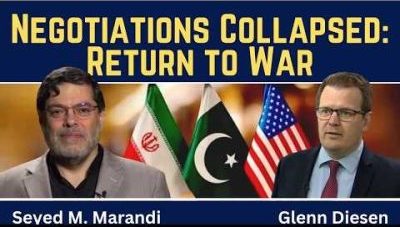
Seyed M. Marandi: Negotiations Collapsed – Return to War
or go to
Aletho News Archives – Video-Images
From the Archives
The US-Iran Scenario That Most Scares Israel
By Ali Haydar | Al-Akhbar | October 9, 2013
Israeli Prime Minister Benjamin Netanyahu issued a series of threats toward Iran and its interlocutors in the West, including the US, as serious negotiations on Iran’s nuclear program seem more plausible.
As a possible rapprochement looms between the US and Iran, Netanyahu has attempted to impose impossible Israeli conditions on the negotiators, such as the full dismantling of Iran’s nuclear program, not to mention threatening military force.
Whatever the deal that could materialize between Iran and the West, Israel is going to find itself before an open-ended path. One can foresee three possible scenarios… continue
Blog Roll
 Aletho News
- EU Defense Agency head says compulsory military service could be necessary
- France To Vote On Bill That Would Criminalize Criticism Of Israel
- There are No Ceasefires with Israel, Only Opportunities for Later Attacks
- China to Ignore Trump’s Blockade: The Strait Remains Open to Us
- Trump’s desperate bombasts amount to war crimes
- Most Israelis oppose Iran ceasefire, reject talks: Poll
- Iran to charge ships from ‘hostile’ nations to cross Hormuz – security chief
- UK, Spain reject Trump’s new scheme to blockade Hormuz Strait
- Russian frigate ‘resurfaces’, chases off NATO pirates days after Kiev ‘sank’ it
- Ukraine Targets Russian Merchant Fleet With NATO Intel Support – Presidential Aide
- If Americans Knew
- Emergency waivers move arms for Israel, UAE to speed lane
- Caitlin Johnstone: Nobody’s “Obsessed” With Israel — It’s Just A Uniquely Horrible Country
- Israel’s Ben Gvir says he feels like the ‘owner’ of Al-Aqsa Mosque
- History of flotilla campaigns to end Israel’s siege of Gaza
- Humanitarian Scorecard: Six Months In, Gaza Ceasefire is Failing
- Mark Levin Seems Upset We Haven’t Nuked Iran
- Israeli prison authorities are blocking hundreds of solidarity postcards being sent to female Palestinian prisoners
- ‘I wished for death’: Sexual violence in Israel’s prisons is an ‘organized state policy’
- Israeli army shoots, kills 9-year-old girl in her Gaza classroom
- Israel is attacking Lebanon to sabotage the Iran ceasefire, but the media is hiding its true motivation
- No Tricks Zone
- Cave Discovery Reveals Today’s Desert Climates Were Recently Far Warmer, Wetter, Teeming With Life
- German Expert: Heat Dome Led To Record Temps In Western USA…Warmer In 1934, 1936
- New Study: No Linear Warming Or Glacier Retreat Along Northern Antarctic Peninsula Since 1980s
- An Inconvenient Tree: Uncovered In Alps… Europe Much Warmer Than Today 6000 Years Ago
- New Study Reports A 60% Slowdown In Greenland’s Ice Loss Rate In The Last Decade
- Low Intensity Tornado Wrecks Major Solar Farm, Creating A Potential Toxic Dump
- New Study Finds Warming Saves Lives…Cold Temperatures 12 Times More Deadly Than Excess Heat
- German Science Blog Accuses PIK Climate Institute Of Hallucinating Climate Tipping Points
- Devastating Assessment Of Comirnaty Vaccine By Former Senior Pfizer Europe Toxicologist
- New Study: CO2 Is ‘Effectively Negligible’ As An Explanatory Climate Change Factor Since 2000
 Aletho News