Nuclear waste train brought to a stop
Morning Star | 24 November 2011
Militant anti-nuclear activists forced French authorities to halt a trainload of reprocessed nuclear waste near the German border today.
The train, en route from a nuclear waste processing site on the English Channel to a storage site in northern Germany, ground to a halt at Remilly junction.
Nuclear privateer Areva, French state rail firm SNCF and police are now deciding how to get the radioactive waste to its destination, given that thousands of activists are expected to try to stop it once it crosses the border.
The train loaded with uranium has been harassed by hundreds of activists since it set off from a depot in Valognes on Wednesday.
Riot police confronted 300 protesters in fields in Lieusaint village outside Valognes and fired tear gas at people waving banners reading: “Stop this radioactive train.”
It was not immediately clear if there were injuries.
Israel Passes Bill To Increase “Libel” Compensation
Peace Now Slams The Bill As Anti-Free speech Legislation
By Saed Bannoura | IMEMC & Agencies | November 24, 2011
Israeli sources reported, that the Israeli Knesset passed, in the first reading, a controversial bill dubbed as “libel law” aiming at increasing compensation paid for “libel violations” to NIS 300,000. Israeli Peace Now Movement stated that the bill is a legislation targeting Free Speech in Israel.
The bill is considered an amendment to the Israeli Libel Law, and was passed in the first reading, by 42 to 31 votes by the Israeli Knesset, Israeli Ynet News reported.
Ynet added that Israeli Prime Minister, Benjamin Netanyahu, Defense Minister, Ehud Barak, Member of Knesset (MK), Meir Sheetrit of Kadima party, Trade and Labor Minister, Shalom Simhon, MK Yariv Levin (Likud) and Zevulun Orlev of the Jewish Home Party, voted for the bill.
The Ynet stated that the law calls for increasing the maximum amount of compensation paid by those convicted of “libel violations” by paying the subject of “slander” 300,000 New Israeli Shekels, which at current conversion rates amounts to approximately $80,000. The amount is six times the current amount of libel compensation allowed by current libel laws in Israel.
Also, the bill states that when it comes to statements that are considered libel, released internationally, without giving the subject/s of the claims the chance to defend themselves and to be able to respond to the claims, the offenders can be sued and could be ordered to pay damages that can be as high as 1.5 Million New Israeli Shekels, or approximately $400,000.
MK Zevulun Orlev of the Jewish Home Party, one of the initiators of this bill, stated that he might vote against it in the second reading if it was not revised, explaining that people convicted of murder in Israel are not subject to such high fines.
Orlev said that the way the bill is worded shows a lack of balance when it comes to the protection of free speech and independent media agencies.
Meanwhile, MK Uri Orbach, also from the Jewish Home Party, opposed the bill and stated that it will be an issue of personal profit to MK’s, ministers and officials.
He added that with the high fines, this bill is calling for a person to “prefer to kill than to slander”.
Furthermore, Hadash Party member, MK Dov Hanin, strongly denounced the bill for being “an extreme punishment for publishing a statement that did no harm”.
Hanin added that “this law is suggesting that Israel does what regimes that are barbaric do to punish libel by cutting the tongue of the offender”, the Ynet reported.
Israeli Peace Now Movement stated that the bill is “another crazy anti free speech legislation passed by the Israeli Knesset”.
Peace Now added that “This time the ‘Libel Law’ will completely destroy investigative reporting and exposure of wrong doings by those in power and those with powerful means in Israel”.
Back to Tahrir Square
By ESAM AL-AMIN | CounterPunch | November 24, 2011
When former Vice President (and intelligence chief) Omar Suleiman announced on state television last February 11the transfer of power from Hosni Mubarak to the Supreme Council of the Armed Forces (SCAF), millions of Egyptians began celebrating in the streets the culmination of their revolution that rid them of their dictator. The demonstrators’ chant then was “the people and the army are one.” Indeed, the role of SCAF in refusing to crack down on protestors and forcing the resignation of Mubarak proved decisive in the three-week revolt.
Nine months later, hundreds of thousands of Egyptians are back in Tahrir Square and streets across the country. Ironically, their chant is now “The police and the army are one,” in a clear rejection of the violent tactics employed by the police against the demonstrators. In three days of confrontation since November 20 at least forty people were killed and more than 2,000 injured at the hands of the security forces. But this time the Egyptian youth will not pack up and go home. They are determined to reclaim their revolution and force the transfer of power from the military to a real civilian government.
But how did we get from there to here?
Shortly after Mubarak was deposed, SCAF promised to stay in power no longer than six months. It subsequently called for a popular referendum on March 19 that called for parliamentary elections, followed by writing a new constitution, and then presidential elections. Championed by the Muslim Brotherhood (MB) and other Islamic factions, the public approved the referendum with an overwhelming majority of 77 per cent, although secular parties wanted to first draft the constitution for the fear that Islamic parties would have an edge over them after the elections.
During this brief campaign it became clear to all political trends that the Islamically oriented parties, led by the MB, are better organized, well financed, and have the abilities and skills to mobilize the public to their cause. This fact prompted fear and panic not only from the secular, leftist, and liberal parties within Egypt but also from other Western powers led by the United States.
Furthermore, the traditional secular and liberal parties expressed their concern that if the elections were held soon, the Islamists were poised to win a large share of seats and dictate a new constitution that might curtail some freedoms or favor the application of Islamic laws. Despite the pronouncement by most Islamic parties, including the Freedom and Justice Party, the political arm of the MB, that the constitution writing committee would include all political parties and trends, most secular parties did not believe such assurances.
Throughout the summer most secular and liberal parties pressured SCAF to issue a decree that would impose supra-constitutional principles and thus foist them on the future parliament. The opponents of this argued that, on its face, this practice is undemocratic, usurps the rights of the people, and tramples upon their right to express their free will. They also argue that it is unnecessary since all parties have agreed on the nature of the state, namely to be a democratic and civil one.
Nevertheless, the proponents of this approach pushed hard to impose their vision. Consequently, Deputy Prime Minister Ali Al-Silmi, backed by SCAF, called for a conference of all political parties to approve his plan for the future constitution. But remarkably this document also called for a special constitutional privilege for the military, effectively according it a sovereign status. In effect, it called for its budget to be outside the purview of parliament and for a veto power over any strategic decision by the government. In short, it was similar to the role that the Turkish military played in the country since the military coup of 1960 until Prime Minister Erdogan’s Justice and Development Party was elected in 2002.
The rejection of Al-Silmi’s proposed document was swift and sweeping not only in principle by the Islamic parties, but also from other nationalist and secular parties because of its tilt towards the military. It was a disguised effort to keep the military outside the control and supervision of the future democratic institutions of the state.
But this was the latest episode of SCAF’s many attempts to manipulate the future course of Egypt. Since the very beginning it has been laggard in implementing the objectives of the revolution. The despised emergency laws were never repealed. While changing the name of the security apparatus, much of its senior personnel and tactics were retained. Over 12,000 civilians were charged and tried swiftly in military trials facing harsh sentences, while the most corrupt leaders of the Mubarak regime – including the deposed president and his sons- have been tried grudgingly in slow civilian courts.
Moreover, none of the reforms announced by SCAF came out of its own initiative. It either reluctantly adhered to final court rulings by the judiciary, or yielded to the demands of the people, built up over many weeks, eventually culminating in large demonstrations and sit-ins. To wit:
The sacking of Mubarak’s cabinet in favor of a new government supported by the people. The banning of Mubarak’s corrupt party and confiscating its assets. The dismissal of thousands of corrupt officials from local councils. The trial of senior leaders and ministers of the deposed regime. The opening of the Rafah crossing to ease the blockade on Gaza. Setting definite election dates after many delays. Changing elections laws to include parties’ list as well as individual candidates. Allowing expatriate citizens to vote outside of Egypt. Pointedly, none of these demands, as well as many others, were met without taking the matter to the streets. Often times, their decisions were too little too late, or with ineffective or inconsequential results.
For instance, all political parties have been calling for the activation of a law that bans from politics all individuals who were previously engaged in political corruption- effectively excluding all Mubarak’s Nationalist Democratic Party (NDP) officials. But SCAF dragged its feet for months while hundreds of those same NDP officials filed to contest the elections next week either as independents or as part of the lists of six new parties tied to the old regime. Ultimately, this past Monday, just one week before the elections, SCAF issued the Political Corruption Law that would make it almost impossible to impeach any candidate since they have to be disqualified only through the slow Egyptian judiciary.
Meanwhile, SCAF has been vulnerable to the tremendous pressures applied by foreign governments for different motives. Some Arab governments led by Saudi Arabia, Kuwait, and the U.A.E. used their financial leverage to bail out the deposed president by halting or slowing down his trial because of their strong ties to him. In addition, the U.S. and other Western countries insisted that SCAF give specific assurances regarding Western and Israeli interests, as well as secure certain concessions from the political Islamic parties. For example, under U.S. prodding, SCAF demanded and received assurance from the MB in late April that the group would not contest future presidential elections.
By June, SCAF was demanding that the group not advance one of its own to the position of Prime Minister, even if it won the elections. In August, the MB was told yet again that in any future government it should not push for senior posts such as foreign or interior ministries so as not to antagonize the West. While the group reluctantly agreed not to contest the posts of head of state or government, it was extremely dismayed and refused to adhere to further restrictions on its participation in politics.
Last July, the U.S. House Appropriations Committee earmarked $1.55 billion to Egypt on the condition that such aid should in part be used for “border security programs and activities in the Sinai” in order to insure Israel’s security concerns. It also directed that Secretary of State Hillary Clinton certifies the humiliating demand that the Government of Egypt (supposedly democratically elected) “is not controlled by a foreign terrorist organization, or its affiliates or supporters, is implementing the Egypt-Israel Peace Treaty, and is taking steps to detect and destroy the smuggling network and tunnels between Egypt and the Gaza strip.” Thus, when the Egyptian authorities acceded in late May to the demand by the Egyptian public to open the Rafah crossing and ease the blockade on Gaza, the crossing was closed again within just three days, due to U.S. and Israeli pressure. The status of the Rafah crossing is not currently very different from the Mubarak era.
By late September, SCAF finally set the parliamentary elections date for November 28. But it called for a staggered elections process to be implemented over three stages for the lower house as well as two stages for the upper house, effectively ending the elections process in March 2012. Many political parties and pro-democracy movements voiced their concerns that within such a system (with the banning of international elections monitors), the elections could be manipulated, especially when the same interior ministry (packed by Mubarak’s appointees) would supervise major parts of the electoral process.
To secure free and fair elections, SCAF started tacitly requesting concessions from the major political parties, especially the MB and other Islamically oriented parties. In return for their support of Al-Silmi’s supra-constitutional principles, SCAF pledged to guarantee free and fair parliamentary elections. But the MB and other Salafist parties refused even to show up to discuss the document. Meanwhile, other pro-democracy liberal and youth groups were extremely concerned about the extra constitutional powers given to the military in that document. Fearing the attempted power grab, most political parties and movements were actually united in their rejection, and called for a million-man demonstration in Tahrir square on Friday, November 18, insisting on the restoration of the objectives of the revolution. Recalling the early days of the revolution, hundreds of thousands of people gathered that afternoon not only in Tahrir, but also in other major cities including Alexandria, Suez, and across the Nile Delta.
After the impressive showing by all political factions: Islamic, secular, liberal, leftist, and youth groups, SCAF had no option but to withdraw the document. By Saturday, a few thousand activists from the youth movements that actually ignited the revolution last January, decided to stay in Tahrir square and stage a sit-in to demand the dismissal of the ineffective SCAF-controlled government, headed by Dr. Esam Sharaf since March, and call for the end of military rule.
That evening, for reasons that remain unclear, the security forces decided to evacuate the few thousand demonstrators by force. In doing so, they employed all the Mubarak-era tactics: teargas, rubber bullets, clubs, beatings, mass arrests, pepper spray, and physical and verbal humiliations. But the demonstrators refused to evacuate, fought back, and called for reinforcements after suffering many casualties. Within hours, Tahrir was again filled with tens of thousands of people raising their demands yet again.
If there was a lesson to be learned from the ousting of Mubarak, it was that when the people’s demands are denied, the ceiling of their demands are raised. By the third day of this manufactured confrontation, most political groups, with the exception of the MB, were not only protesting in Tahrir Square, but also across Egypt. The angry demonstrators now demanded the complete dismissal of the government, and the ouster of the military council to be replaced with an interim civilian presidential council.
The MB announced that although it supported the demands of the people it would not participate so as not to escalate the dangerous situation with the security forces. In its pragmatic calculation, the MB saw this latest episode as a deliberate attempt by the military to use the induced violence to postpone yet again the elections, which many believed the party would win. Similar to the agreement the MB struck with Suleiman in the days before Mubarak’s ouster, once again the MB thought of its immediate gains rather than the national consensus to force the end of military rule. As it reversed its decision last February within two days due to pressure from the streets, many of its members and supporters in the streets are openly demanding that they participate alongside the other young revolutionaries.
By Tuesday, November 22, SCAF head Field Marshal Hussein Tantawi and Chief-of-Staff Gen. Sami Anan, met with all political parties and prospective presidential candidates. After a five-hour marathon meeting, SCAF capitulated, and agreed to all the demands: To declare an immediate cease-fire; to release thousands of protesters that have been detained since Saturday; to treat all the injured and provide compensations to the families of the deceased; and to bring to justice all those responsible for the violence. On the political demands they further agreed to dismiss the government of Dr. Sharaf and appoint a national-unity government; to hold the elections on time starting next week; to guarantee free and fair elections; and to give a definite date for the transfer to civilian rule by holding presidential elections no later than June 30, 2012.
When Tantawi delivered his speech that evening by promising a new government, keeping the elections date intact, and the end of military rule by next June, people in Tahrir were no longer satisfied. They kept shouting, “You leave, we’re staying,” the same chant that eventually caught up with Mubarak.
The immediate problem now is the total lack of trust between the people in the streets and the military council. The people are tired of the cat and mouse game played by SCAF, where every major demand is only conceded through much struggle. Although it is true that SCAF was instrumental in accelerating the ouster of Mubarak, it is also now quite clear to the revolutionaries that SCAF has had a different agenda that oftentimes conflicts with the objectives of their revolution.
Now the revolutionaries have vowed to stay in Tahrir until SCAF cedes effective power long before next year to a new civilian national-unity government empowered to supervise the elections, supervise the writing of the constitution, and implement all their objectives without any interference or dictation by the military.
Esam Al-Amin can be reached at alamin1919@gmail.com
Syria: It’s Not Too Late for a Historic Reconciliation
By Ibrahim al-Amin | Al-Akhbar | November 23, 2011
It is worth going back over the Arab press archive of the past six months. Not to compare what everyone has been saying. But to illustrate that the political and media narrative on Syria has been controlled by three groups.
The first group despises all things Syrian – people, government, and institutions. From the day the protests broke out, its members began talking of the “rolling revolution,” the “long-awaited spring,” and the “death-throes of the regime.” They stressed it was all purely peaceful and in the spirit of national unity. Accounts of armed attacks, or of sectarian discrimination and abuses, were dismissed as fabrications.
This group will forever be writing about Syria being sick – not until the country is cured, but until their own dying days. These are the cheerleaders for foreign intervention. They are uninterested in any solution through dialogue. They don’t want anyone to talk to anyone else. They want chaos, blood, bullets, and fire, and spare no thought for the consequences. These characters are either low-level operatives, receiving pay and perks from intelligence agencies in Europe and America, or work as intellectual rent-a-pen for various sheikhs from the oil monarchies. They do not recognize any Syrian opposition group or figure that does not enjoy the sponsorship of France, the approval of the White House, or the blessing of the House of Saud. They only confer legitimacy on those who declare their willingness to see Syria destroyed to put an end to the regime.
For the second group, all is pure darkness. They refuse to admit that there is any problem with the Syrian regime, or accept that it has any genuine opponents. For them, the protests were merely the product of conspiracies hatched during the Tunisian and Egyptian uprisings. The poor of Deraa, Idlib, and the Hama countryside, and the local activists of Damascus, Homs, Latakia, Riqqa, and Deir al-Zour, were simply misled youth who didn’t know what was good for the country and had no right to do what they were doing. No right to object to the presidency staying in the same family for 40 years; or the corruption rife in every public and private institution; or security men who live by humiliating and blackmailing people; or the relentless suppression of anyone who speaks out or differs.
This group argued that the regime wants reform, and therefore deserves support. But it never questioned the regime about how, with whom, and when this reform could be brought about. In practice, this group did not oppose the repression unleashed against protesters and citizens. It made no distinction between them and gangsters in the pay of foreign powers intent on destroying the country.
But there is also a third group that can see the difference. They understand that a legitimate struggle has been underway, which compels the regime to begin a transition to an inclusive order (one governed by law rather than connections); which puts on trial those who have spewed corruption for decades; kicks doors and windows open to let out the stifling stench of suppression; closes down the political penitentiaries; enables the people to participate effectively in rebuilding state and society; and stops illegal fortunes being accumulated through fraud, embezzlement and influence-peddling.
Nobody but those engaged in such a struggle can grant or deny it legitimacy. The people in the street can tell who is genuine, just as they can tell who is a crook, opportunist, or foreign agent. Similarly, they can differentiate between the sincere people in the state who want true reform, and the spooks, contortionists, and chameleons.
From day one, this group noted that Syria is unlike any other country, and that Bashar Assad resembles neither Hosni Mubarak, Zine el Abidine Ben Ali, and Muammar Gaddafi, nor the kings of Bahrain and the House of Saud, the emirs of Qatar or Kuwait, or the sons of Zayed. This group said Syria was different, not only because of its internal dynamics and sectarian, ethnic, and political diversity, but also because of what it represents. For decades, Syria has been the linchpin of the Arab-Israeli conflict.
For the past decade, it has been the hub of the struggle against the new Western colonization of our countries. Since the June 2006 war, it has been the decisive player in an ongoing confrontation with Israel which is approaching a critical phase, whether Israel’s allies want that or not. Most importantly, Syria today is key to the changes anticipated after the unravelling of American plans in the region – with the US forced to withdraw its troops from Iraq, reorganize its entire military presence in the Gulf, and prepare to beat a safe retreat from Afghanistan too. This is a moment when regional rulers allied to the US can sense the approach of payback-time – to their peoples, this time, and not just the American colonizer. And Israel, most of all, can appreciate the implications of a strong and cohesive axis stretching from Iran, via Iraq, Syria, and Lebanon, to Palestine.
From day one, this group cautioned the regime and its opponents not to be arrogant, and that all-out confrontation on the streets would mean heading toward civil war. This warning was sounded many times. But the regime’s enemies have taken to trumpeting it, now that it has turned into a threat by the West – which seeks civil war as an alternative to a foreign war on the regime in Damascus.
From day one, this group appealed for ways to be found to bring about a historic reconciliation, which would allow the honest opposition – and a big section of the public throughout the country – to say that the protests have begun producing results. These would include alterations to the structure of the regime, leading to free elections that set in motion a real and determined process of change, unstoppable by either security or corruption. Such a reconciliation would enable the regime to help itself by ditching the problematic part of the legacy with which it was burdened. It could thus preserve the components of strength that Syria has developed over the years, while ushering in a new era of political, economic, and cultural development, thus laying solid foundations for Syria to chart its course, unmoved by American threats or Israeli wars.
Syria’s Arab and Western detractors have suffered a significant setback of late. By marching the Syrian opposition through a minefield, scattering and dismembering it, they have prevented it from developing into a national opposition. They have been hijacked by the West. They can no longer proclaim their commitment to independence. Their conferences, activities and statements are now funded by external parties that seek to forcibly colonize them. This section of the opposition does not go in much for reflection or self-criticism about its role in the 1980s. Rather, they think the time has come for revenge. And they see bloodshed as the only route to achieving their objective – exclusive power, to be attained by wiping out the other.
An attempt is currently being made to plunge Syria into a roving civil war. The chosen means are to inflame sectarian, confessional, and political tensions (while accusing the regime of seeking to raise them); to prohibit any contact, dialogue, or national reconciliation; and to ensure continued bloodshed by all available methods. The aim is to exhaust Syria, to make it easy prey should any external predator opt to move in for the kill.
This endeavour is being led by a collection of governments, states, and groups that have no other goal than getting rid of the regime. They will stop at nothing, whether disabling the state and starving the people, setting every corner of the entire country ablaze, attempting to assassinate the regime’s people, or stoking sectarian and confessional strife by whatever infernal means.
On the other side, the Syrian regime needs to build walls around its country, rather than itself. An historic government initiative is long overdue at this difficult and complicated juncture, to make it possible for the well-intentioned people to be called off the streets, to confound Syria’s external foes, and to isolate their clients inside and outside the country. The fact that the world has come to appreciate the scale of the conspiracy against Syria does not prevent if from seeing the internal problem that exists. The regime should be thinking full-time about how best to launch such an initiative. It will never be too late.
Ibrahim al-Amin is editor-in-chief of al-Akhbar.
US to keep hundreds of ‘trainers’ in Iraq
Press TV – November 24, 2011
The United States plans to retain more than 700 American forces in Iraq after the US withdrawal from the country by the end of December 2011.
According to Iraqi officials, Baghdad had reached an agreement with Washington to allow 740 so-called US trainers stay in the country after the December withdrawal deadline, Lebanon’s Daily Star newspaper reported on its website on Wednesday.
The news comes despite weeks of gestures by Iraqi officials who vowed no agreement could ever be reached to keep US troops in the country.
The agreement comes after President Barack Obama announced in October that the US military presence in Iraq would end at the timetable agreed by Baghdad and his predecessor Gorge W. Bush’s administration.
“There are no talks any more about this issue and the final total number of US trainers is 740,” said a senior Iraqi security official referring to months of informal talks between Iraq and US officials on the issue.
“Most of them are civilian weapons contractors, and just a few are military officers.”
Talks between Baghdad and Washington ran aground over legal immunity for US troops if they stayed on as trainers, which many Iraqi officials opposed as politically implausible.
A US military official had earlier said about 700 civilian trainers were to remain, together with 157 military personnel and a force of up to 25 marine guards at the massive US embassy in the heavily fortified Green Zone in Baghdad.
The US State Department will also have a massive “private army” of thousands of military contractors.
The US trainers will be stationed in Baghdad, Tikrit, Kirkuk, Basra, Nassiriya, Besmaya, Taji and Arbil, according to Iraqi officials.
The US troops do not enjoy immunity, but they will be considered as part of the US embassy delegation in Iraq, they noted.
Bernard-Henri Levy declares war on Syria
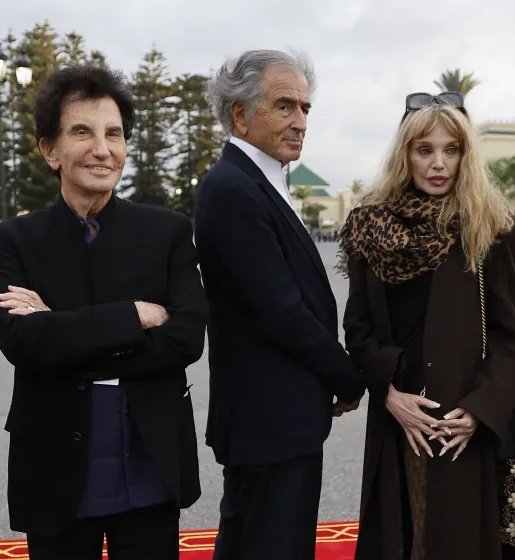
By Othman Tazghart | Al-Ahkbar | November 23, 2011
Influential French Zionist Bernard-Henri Levy, who played a key role in NATO’s intervention in Libya, is now hoping to repeat the same scenario in Syria.
In a revealing installment of his weekly column Le Point magazine titled “Endgame in Syria,” French philosopher Bernard-Henri Levy claims that Syrian opposition figures he’s in touch with are increasingly coming around to the view that military intervention, Libya-style, may be the only way to get rid of the regime in Damascus.
He ends his article with a quasi-official declaration of war on Syrian President Bashar Assad.
Levy, who bragged in his last book about the strong influence he has over French President Nicolas Sarkozy, confessed that the two conspired together to marginalize the French foreign ministry so that it would not impede NATO’s intervention in Libya.
In his recent column, Levy reveals secret efforts he has undertaken in the past few months to convince Syrian opposition figures to support him in what he calls the “Gaddafi theory.”
He argues that NATO intervention to overthrow the Libyan dictator has set a “precedent” in the 21st century for developing a new doctrine for toppling authoritarian regimes that shoot at their own people.
Levy goes on to affirm that the Syrian regime will be toppled along the lines of the Libyan scenario, adding that all that is left in Syria is “the final scene which has not been completely written yet.”
Levy, who is well-known for his Zionist views, revealed that his behind-the-scenes endeavor began six months ago with a meeting in London with former Syrian vice president Rifaat Assad.
Perhaps this explains Rifaat’s surprise appearance in Paris last week to call on the Assad family to step down, and for the Syrian people to take up arms against the regime.
Levy also confirms in his column that a number of Syrian opposition figures and military officers who have defected have told him in meetings and discussions he has held with them during the course of the uprising that they support “international intervention.”
On the other hand, Levy says that “a nascent regional power called Qatar” is behind the latest Arab League initiative on Syria, which is part of a plan inspired by the “Libyan precedent.”
Levy goes on to say: “As in Libya? Yes, as in Libya. It is the ‘Libyan precedent’ all over again. The same force, nay, the same forces producing the same effect. How do those involved not see it? What autism prevents Bashar Assad from understanding that the same coalition which toppled Gaddafi is coming together again to topple him?”
The most interesting piece of information revealed in Levy’s article is how a number of Syrian opposition figures he talked to shifted their position towards supporting “international intervention.”
“That had been a taboo until now. ‘Intervention’ was a word that ought not to be uttered. There were, even in France, Syrian opposition figures whom I met while preparing for a rally in solidarity with Syrian civilians this past summer who told me at the time that they would prefer to die than say the word ‘intervention’ or ‘international intervention’,” Levy wrote.
“This is the reason why we did not do in Syria what we did in Libya. Not because of double standards. This ‘moral scandal’ has many reasons and justifications, first among them is that Syrian opposition figures, unlike their Libyan counterparts, not only did not ask for intervention, but often opposed it. Their views however are beginning to change. And this is the reason why the regime in Damascus is doomed,” he continued.
“The war has been declared on Assad.”
Family of 12 faces eviction in East Jerusalem
Nadia Walid Somrein | The Electronic Intifada| 23 November 2011
In the Silwan neighborhood of occupied East Jerusalem, another house is about to bite the dust. The odds are certainly stacked against the Somrein family, which has received eviction orders and a series of bills amounting to more than two million shekels (over $500,000) worth of “back rent.” Back rent for what? For living in the family house, on family land, in Silwan.
The house and land in question is located in Wadi Hilweh, Silwan, just two hundred yards from al-Aqsa Mosque on the southern side of the Old City walls. The property belonged to Musa Abdullah Somrein, a Jerusalem ID holder. Hajj Musa, as he was known, passed away in 1983 and was buried in Jerusalem, while his burial certificate was issued by the Israeli Ministry of Interior.
Today, Hajj Musa’s nephew, Mohammed Somrein, lives there with 11 other members of the Somrein family. Mohammed has lived in this house, with his uncle while he was alive, since he was five years old. The years since have not been kind to Mohammed. He is diabetic and requires dialysis treatment on a regular basis. He is also unemployed. And now, he has been hit with an eviction order and a huge fine he cannot possibly pay.
“Absentee property”
Somehow, despite Mohammed’s 48 years of residence in this house, and despite the fact there are legal documents clearly stating that the land is owned by the Somrein family, the land has been declared absentee property and thus subject to confiscation. The property has been defined as such because Hajj Musa’s direct descendants — his children and grandchildren — live in the United States, the United Arab Emirates and Jordan. Mohammed’s status as Hajj Musa’s nephew has been completely overlooked, and his lifetime residence on the property, with the consent of the children of Hajj Musa, disregarded.
Though this could never happen in any normal country, under Israeli rule, all absurd things seem possible for Palestinians. After Hajj Musa’s death, the land was transferred to the Custodian of Absentee Property. He went on to transfer custody of the land to the Israel Development Authority, which transferred the land to the Jewish National Fund (JNF).
The JNF, in turn, transferred the property to a subsidiary company called Himnuta. While this bizarre series of events was unfolding, Mohammed and his family continued to live in the house, unaware that they were about to receive a very distressing shock (“Palestinian family given two weeks to vacate East Jerusalem home,” Haaretz, 15 November 2011).
In 1991, Himnuta lodged a complaint against the Somrein family in Israeli courts, demanding their eviction. They also started “billing” Mohammed for living on the property. Mohammed fought the order, arguing that Hajj Musa was a Jerusalem resident, who died in Jerusalem, was never “absent” from his property, and that his family continue to reside there.
Himnuta, according to the Somrein family lawyer, is just another of the many faces of Elad, an extreme right-wing Jewish settler organization. Also known as the Ir David Foundation, Elad has the backing of the Israeli prime minister’s office, the Israeli-controlled Jerusalem municipality, and the Israel Antiquities Authority (which Elad helps finance). Elad’s aim was best expressed in a 2007 interview with then Elad development director Doron Speilman. During the interview, he gestured toward Silwan and said: “Our goal is to turn all this land you see behind you into Jewish hands” (Tim McGirk, “Archaeology in Jerusalem: Digging Up Trouble,” Time Magazine, 8 February 2010).
Indeed, most of the 30 dunums (about 7.4 acres) included in the land swap were apparently leased to settlers without tender (“Palestinian family at immediate risk of eviction in Silwan,” Settlement Watch East Jerusalem, 16 November 2011).
The question remains, how will Mohammed Somrein and his family fight a well-financed and invidious organization such as Elad in an Israeli court already biased in Elad’s favor? For that matter, how do the many other families in Silwan succeed in regaining the land and homes that have been snatched by Elad? How do others protect themselves from similar fates?
Since the Wadi Hilweh Information Center came into being in 2009, it has reported that 15 eviction notices have been issued to families in Silwan alone. Meanwhile, according to a study by the Jerusalem-based human rights organization Al-Maqdese for Society Development, Silwan has had 36 buildings housing 245 people demolished by Israeli authorities between 2000 and 2010 (“House demolitions in Silwan,” Al-Maqdese for Society Development, July 2010 [PDF]). Furthermore, plans announced by the Jerusalem municipality in 2009 to demolish 88 homes in the Bustan area of Silwan have not been cancelled (“An update on Bustan,” Wadi Hilweh Information Center, 25 May 2011) .
And just last week, the Committee for the Defense of Silwan issued a statement announcing that the Jerusalem municipality seized a piece of land belonging to a Palestinian Orthodox monastery in the neighborhood of al-Thawri in west Silwan. According to the statement, these 850 square meters of land are to be turned into a Talmudic garden (for students of Jewish law and ethics) and a parking lot (“Israeli municipality seizes land in Silwan,” Wafa, 16 November 2011).
Of immediate concern, however, are the twelve Somreins who are to be evicted next week, unless a court order declares that the case has not yet reached its conclusion. If the family is evicted, they will have nowhere else to go.
Nadia Somrein lives and works in East Jerusalem and is a relation of the family about to be evicted.
Netanyahu Rejects U.S. Call To Release Palestinian Money
Ma’an | November 23, 2011
RAMALLAH — The Palestinian Authority cabinet on Tuesday condemned Israel’s ongoing refusal to hand over Palestinian tax revenue.
Israel froze the transfer of funds owed to the West Bank government, amounting to around $100 million a month, after the UN cultural agency UNESCO voted to admit Palestine as a member.
During a weekly meeting in Ramallah, ministers said the Israeli government aimed “to punish the Palestinian people and weaken the Palestinian Authority,” a cabinet statement said.
The cabinet urged the international community to pressure Israel to release the funds, noting that by withholding the money Israel was violating signed agreements.
“Israel’s continued halt of the transfer would influence the Palestinian Authority’s various financial commitments, and delimit its ability to continue with its development and building programs,” the statement added.
UN Middle East peace envoy Robert Serry on Monday warned the Security Council that by freezing the transfer of tax revenue, Israel undermined the PA’s state-building gains and the development of the security forces upholding law and order in the West Bank.
“Withholding this level of funding would cripple any government, let alone an authority under occupation,” Serry noted.
He added: “Israel should heed the calls of the Secretary-General and other international leaders to unfreeze transfers to the Palestinian Authority immediately in accordance with existing agreements.”
Propagandized America
By Margaret Kimberley | Black Agenda Report | November 23, 2011
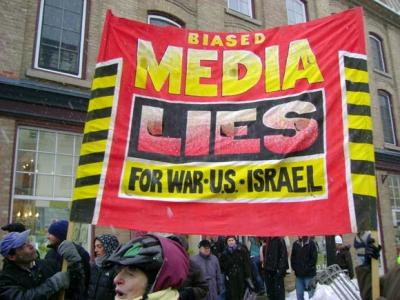
When Americans think of propagandized people they think of the now defunct Soviet Union or Nazi Germany or perhaps a banana republic dictatorship of the sort supported by their government. Very few of them would think of themselves as being under the sway of a government and corporations who work hand in glove to tell outright falsehoods or hide important information that is inconvenient for them.
In this country, not only are we victims of a government intent upon keeping us misinformed or silent in the face of its wrong doing, but they work hand in hand with a media almost entirely owned by corporations. The interests of the people are rarely in sync with the interests of these corporations, and that results in a media which works with the government which consciously works to misdirect our attention or have us believe outright lies.
Almost every major news story gives us an example of this terrible phenomenon. We may be told that Iran is on the verge of acquiring nuclear weapons capability, but we are not told that it has the right to do so as a signatory of the Non Proliferation Treaty. To add insult to injury, there isn’t any proof that Iran has even acquired this capability.
But Israel is chomping at the bit to attack Iran, and its lackey state, the United States of America, will not stand in its way. The corporate media never tell us that Israel, a country which is not a signatory of the NPT, has an arsenal of an unknown number of nuclear weapons.
A simple and easily provable fact, that the nation which casts itself as the victim of a potential nuclear power is itself nuclear, is rarely mentioned. One might read the New York Times and Washington Post every day and watch one of the broadcast or cable news networks at night, and not be aware of this information.
“Government sources say,” are the buzz words for falsehoods told in the name of the state. So-called prestigious publications will print the most outrageous information without attribution, investigation or proof of very serious charges. The Washington Post prints a story, quoting an anonymous source, claiming that Gaddafi’s Libya not only was in possession of a mustard gas stockpile, but also that it was supplied by Iran.
When Israel and/or the United States attack Iran none of the highly paid anchor men or women or reporters who have access to the administration will stray far from the official party line. That is why one president is as dangerous as any other. The system rewarded the liars who drove America to war against Iraq. The anti-Iranian warmongers will probably fare equally well.
Foreign policy has long been the domain of the big lie, but reporting or the lack of reporting on important domestic issues is either twisted in favor of the powerful or ignored altogether. The sins of omission are as dangerous as the sins of the bald faced lie. Did any major newspaper report on the week-long Georgia prison strike which took place one year ago? This phenomenal story of incarcerated Bloods and Crips working hand in hand with members of Aryan nation should have been front page news. But it was ignored, and the country lost an opportunity to be informed that their nation has the largest prison system on the planet and that it profits quite literally from their slave labor.
The court scribes who tell us that a statistical blip is proof of economic recovery or that the president had no choice but to accept the “Satan sandwich” budget deal are no better than propagandists in dictatorial states. The press corps in Libya, who actively assisted NATO in destroying that nation, committed international war crimes in the process. They will never reveal their own evil doing nor will they be called to account by a public that doesn’t even realize the magnitude of their crimes.
Anyone who is resistant to the notion that this country is awash in propaganda need look no further than the case of Anwar al-Awlaki. The president ordered the killing of an American citizen who was never charged with a crime. He then directed his minions to reveal to the New York Times the existence of a secret, extra legal memo which justifies his actions. The Times no doubt celebrated their role as court favorites and ignored the role that a newspaper ought to play in reporting a story that should have resulted in a presidential impeachment.
Americans love to say that they live in the greatest country in the world. Such a nation will be hard pressed to admit that they can trust little of the information they get. The nexus of a corrupt governmental structure and a corporate media results in nonsense on a good day and disinformation on a bad one. Our country is not great, it is just powerful and very, very dangerous.
Margaret Kimberley’s Freedom Rider column appears weekly in BAR. She maintains a frequently updated blog as well at http://freedomrider.blogspot.com. Ms. Kimberley lives in New York City, and can be reached via e-Mail at Margaret.Kimberley(at)BlackAgandaReport.com.
Featured Video
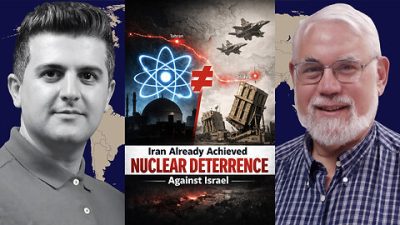
Prof. Ted Postol: Iran Already Achieved Nuclear Deterrence Against Israel
or go to
Aletho News Archives – Video-Images
From the Archives
How the occupied mentality syndrome works
Saudi Arabia on the American chessboard – Part 3
By B. J. Sabri | American Herald Tribune | June 27, 2016
Read part 2: “The occupied mentality Syndrome“
Previously I argued whether Saudi Arabia’s repeated involvements in U.S. interventions and wars stem from free national will or in response to a specific condition. For starters, in Saudi Arabia there is no national will. In Saudi Arabia, the national will is the will of the Al Saud clan. Still, when a major Arab state allies itself with a superpower that committed unspeakable crimes against humanity in almost every Arab country, then something is wrong. This fact alone should compel us to examine the U.S.-Saudi relation for one exceptional reason. As a result of the U.S.-Saudi wars, hundreds of thousands of people in Afghanistan, Iraq, Iran, Libya, Syria, Yemen, and Somalia have lost their lives. Millions became displaced in their own homelands. And millions more rendered refugees.
Attributing the Saudi policies to the bonds of “partnership” with the U.S. is frivolous. There are no bonds between these two thugs except those of business, military deals, secret plots, and wars. Proving this point, bonds such as these have no space for the American and Saudi peoples to share significant cultural or societal exchanges. If partnership is not the reason for the Saudi contribution to the U.S. strategy of empire and imperialism, then another reason must exist.
This leads to three possibilities. … continue
Blog Roll
 Aletho News
- Hezbollah hits Israeli warship off Lebanon’s coast, sets it aflame
- Iran slams US strikes on B1 bridge, Mahshahr petrochemical plants as ‘blatant acts of state terrorism’
- In letter to UN chief, Araghchi warns of dire consequences of US-Israeli attacks on Iran’s nuclear facilities
- Why the CIA conspiracy to invade Iran with Kurdish militias failed
- Why Are Upbeat US Claims About Mission to Rescue Pilot ‘Highly Questionable’?
- Aircraft destroyed during US ‘rescue’ of downed F-15 pilot cost more than $100 million each
- Washington University removes professor who condemned US-Israeli war on Iran
- Russia Warns of Retaliation as UK Authorizes Seizure of Vessels
- Serbia thwarts plot to bomb Russia-Hungary gas pipeline – Vucic
- Al Mayadeen voices solidarity with Dr. Marandi amid death threats
- If Americans Knew
- In Iran, Israel-US take aim at “reason, research, and freedom of thought” – Daily Update
- US loses planes over Iran, Israel downgrades Lebanon war goals – Daily Update
- Israel Is Blocking Palestinians from Easter at Church Where Jesus Resurrected
- Plot to assassinate Palestinian activist follows harassment campaign promoted by Zionist groups and elected officials
- Prominent New York synagogue hosts presentation on why U.S. Jews should support the ethnic cleansing of Gaza
- Tapper vs. Piker: Is the CNN Anchor Auditioning for David Ellison?
- Shouldn’t Democrats Be Able to Condemn Genocide?
- Israel-US kill negotiators, destroy civilian structures, but Iran’s military capabilities still largely intact – Daily Update
- ‘War crime’: Global condemnation as Israeli ministers celebrate death penalty law targeting Palestinian prisoners
- 7 Ways Israel Is Turning Lebanon Into Gaza
- No Tricks Zone
- An Inconvenient Tree: Uncovered In Alps… Europe Much Warmer Than Today 6000 Years Ago
- New Study Reports A 60% Slowdown In Greenland’s Ice Loss Rate In The Last Decade
- Low Intensity Tornado Wrecks Major Solar Farm, Creating A Potential Toxic Dump
- New Study Finds Warming Saves Lives…Cold Temperatures 12 Times More Deadly Than Excess Heat
- German Science Blog Accuses PIK Climate Institute Of Hallucinating Climate Tipping Points
- Devastating Assessment Of Comirnaty Vaccine By Former Senior Pfizer Europe Toxicologist
- New Study: CO2 Is ‘Effectively Negligible’ As An Explanatory Climate Change Factor Since 2000
- Former Pfizer Toxicologist Dr. Helmut Sterz Tells Bundestag Hearing Pfizer Vaccine Should Have Never Been Approved
- Energy Expert: Germany’s Nuclear Phaseout Was A “500 Billion Euro Mistake”
- New Research: South Australia’s Mid-Holocene Sea Surface Temperatures Were 4°C Warmer Than Today
 Aletho News