The Slow Death of Adham Baroud: Welcome to Gaza

Adham Baroud was the latest casualty. (Oxfam Gaza)

By Mahmoud El-Yousseph | The Palestine Chronicle | January 6, 2011
A baby fighting for his life.
Parents are panic stricken.
Doctors desperate for help.
Permission to get medical help denied.
Welcome to Gaza!
The world’s largest open air prison in the world, with a population of 1.7 million Palestinians, 50% of which are children under the age of 18 years old. 80% of the population living on less than $2 per day with unemployment at 45%. Desperately needed medical supplies not being allowed in. Thanks to Tel Aviv and Cairo, Gazans are denied to get in or out of the strip, not even the mail.
The illegal Israeli siege on Gaza continues to take innocent lives daily. Adham Baroud was the latest casualty. A seven month old baby who died on December 26th in a slow and painful death from renal failure when he could be easily treated.
On December 1, Adham was referred to Israel for emergency treatment by his doctors in Gaza after his condition became terminal following a catheter inserted four months earlier in a previous operation in Israel gets infected. Adham never made it.
Julia Hurley, a New York City area human rights advocate, lecturer, and blogger has posted Adham’s tragic story on her blog, (see here) with this comment:
“This story in particular broke my heart because it was completely avoidable. This is dangerous. This is inhumane. There is NO excuse for denying medical treatment to ANYONE. This, right here, is collective punishment. It cannot, and should not, be tolerated.”
Adding salt to the injury, Israel has, according to a December 28, 2011 issue of the British Guardian, ‘upped’ the ante for those wishing to exercise their right to freedom of movement by requiring them to become informants:
“Palestinian patients and business people hoping to leave the Gaza Strip are being asked to collaborate with Israel in exchange for an exit permit, a leading Israeli human rights organization claims. Physicians for Human Rights (PHR) say that 172 people, mostly men aged 18 to 40, were called for interrogation by the Shabak, Israel’s internal intelligence agency, last month. Some who attended interviews were granted exit permits.”
The Guardian story revealed more stunning information about Israel’s typically- ruthless and inhumane method of taking advantage of Palestinians who are seeking medical treatment in Israel. Case in point is the story of Ahmad Hamada, a 20-years-old who has suffered serious head injuries, including memory loss. His father Emad, arranged for him to receive treatment in Israel. He had worked there as a laborer for years and was stunned when a week before the appointment, his son was summoned for an interview with the Shabak on September 19. He was led to an interrogation room deep beneath the Erez crossing terminal north of Gaza where an Israeli officer introduced himself in Arabic. Littering his conversation with Gaza slang, he asked briefly about his medical condition.
“I know everything,” he warned him. “You didn’t fall off a wall did you? Why are all those tubes inside you? Tell me the truth. Is your father Hamas? Who is Hamas in the port? Who in your neighborhood?”
“He became very angry when I kept answering that I didn’t know,” Hamada recalled. “I explained I couldn’t remember much since my fall. I was in pain and I just wanted to go home.”
After an hour of questioning, Ahmad was left alone in a locked interview room. The entire process had lasted four hours and he needed the toilet. As his knocks and calls went unanswered, he was forced to pee on the carpet.
Ahmad was eventually sent home and told he would be called for a second interview. He has not heard from them again but says he will refuse to go if they call. He now has a referral for treatment in Egypt but hasn’t gone due to the turmoil there.
The simple truth is, Israel wanting to continue punishing the people of Gaza for voting for Hamas in democratic elections that took place years ago is inhumane and barbaric. The siege on Gaza is one of the greatest moral travesties of our time and we all have a role we can play in bringing the siege to an end. We have to wake up and educate ourselves and others about this crisis.
If we leave it to the mainstream media and to politicians who take their marching orders from Tel Aviv, this bully of the Middle East will continue oppressing the innocent people of Palestine and defy the rules of civilized nations and those of human decency. In other words, we will continue to read and hear more about needless death and tragic stories similar to those of Adham Baroud and Ahmad Hamada of Gaza, Palestine.
– Mahmoud El-Yousseph is a retired USAF Veteran.
UK’s student body endorses divestment
By Ben White – The Electronic Intifada – 01/06/2012
In a historic move, the National Union of Students (NUS) in the UK has thrown its weight behind campaigns targeting companies complicit in Israel’s occupation and breaches of international law.
A new page on the NUS website that went online today calls on students to campaign against the campus presence of Eden Springs and Veolia. In the preamble, NUS notes:
In a similar move to the South African Anti-Apartheid movement, activists in Palestine – from Students’ Unions to LGBTQ organisations – have asked international supporters to refrain from supporting companies and institutions that profit from or maintain the occupation.
For both Eden Springs and Veolia, NUS acknowledges the work already done on a number of campuses, and offers “resources and support” to any students wishing to organise their own campaign.
This comes soon after the NUS’ National Executive Committee voted to condemn a collaboration between King’s College London (KCL) and Ahava, an Israeli company located in an illegal West Bank settlement. In fact, NUS President’s subsequent letter to KCL’s Principal is also featured in the ‘Global Justice’ section of the website.
James Haywood, member of NUS’ NEC, commented: “NUS has historically been good on global issues – with the exception of Palestine. This is an encouraging step that Palestinians are being treated as equals in their demand for basic rights and protection from breaches of international law.”
Hezbollah blames US, Brotherhood lashes regime for Syria bombing
Al-Akhbar, Al-Manar, AFP | January 6, 2012
Lebanon’s powerful Hezbollah condemned the deadly Damascus suicide bombing that killed at least 25 people on Friday, accusing the United States and its regional allies of perpetrating the attack.
This attack “is the second round of the evil American power and its submissive powers’ scheme in our region, and is aimed at punishing Syria for its firm supportive stance to the resistance forces against the Zionist enemy and its supporters in the West,” a statement released from Hezbollah’s press office read.
Hezbollah said the attack was aimed at undermining attempts to resolve the Syrian uprising, and were carried out by those intending to internationalize the crisis.
“It is also evidence that these forces’ [reject] any reformatory measures that could save the Syrian people from being dragged towards bloodshed,” it said.
Meanwhile, Syria’s Muslim Brotherhood – a staunch opponent of President Bashar Assad – accused the regime of orchestrating the attack, and called for an international probe into the blast.
“We hold the regime, its agents and its gangs fully responsible for this crime… they are legally responsible for every drop of blood that falls in Syria,” the Brotherhood said, adding that the “regime, its agents, its gangs and its shabiha [militias] are the only ones to benefit from this explosion.”
“They are the only ones who have the tools and are capable of doing it,” a statement from the banned Muslim Brotherhood said.
“We in the Muslim Brotherhood in Syria call for an international probe and an Arab probe into this explosion before the criminal hides the evidence of his crime,” it said.
Syria’s Muslim Brotherhood has long been a nemesis of the Assad regime, having waged an armed insurrection against Bashar’s late father, former President Hafez Assad, during the 1970s and 1980s, before government forces crushed the Islamists in Hama in 1982, killing thousands.
The Brotherhood, long dormant following the crackdown in the 1980s, resurfaced when popular anti-regime protests erupted last year in March.
The Islamists have steered opposition efforts within the Syrian National Council (SNC) in an effort to topple the regime.
Hezbollah, however, has voiced support for its long-time ally Assad throughout the crisis.
Hamas: Israel detains party leader, son
Ma’an – January 5, 2012
JENIN – Israeli forces detained a Hamas leader and his son in the northern West Bank on Wednesday evening, party officials said.
Ali Abdulllah Khalil Abu Al-Rab, 50, and his 20-year-old son were returning from Ramallah to their home in Qabatiya, near Nablus, when they were apprehended by forces at the Zaatara crossing, the officials said.
Abu Al-Rab was jailed in Israel for 19 years before his release last year. His son is a student at the Arab American University in Jenin.
An Israeli army spokeswoman said she was looking into the report. She said eight people were detained across the West Bank overnight Wednesday.
National-Security Assassination of Americans in 1973
By Jacob G. Hornberger | January 4, 2011
A Chilean judge has indicted a retired U.S. Naval officer, Capt. Ray E. Davis, in the murder of two American citizens in Chile during the U.S.-supported Pinochet coup in 1973. The indictment indicates that the U.S. military and the CIA may have been responsible for the national-security assassination of two Americans several decades before the start of the war on terrorism.
The two Americans were journalists — 31-year-old Charles Horman and 24-year-old Frank Teruggi. During the Pinochet coup in 1973, both men were taken captive and executed in cold blood.
For decades, the CIA, playing the innocent, denied any involvement in the murders.
Then, in 1999 a declassified State Department document revealed that the CIA had, in fact, played some unidentified role in at least Horman’s murder.
What role? We don’t know. Ever since the revelation of that State Department document, the CIA has remained mum on the case, obviously taking the position that secrecy and cover-up is the best policy.
By the same token, despite the fact that the State Department document clearly furnished sufficient cause to impanel a federal grand jury to investigate the CIA’s role in the murders, the Justice Department under both Republican and Democratic regimes has steadfastly failed and refused to do so.
At the same time, Congress has failed and refused to open an investigation into the murders, in the process subpoenaing CIA officials to testify what exactly the CIA’s role was in the murders, the identity of the CIA officials who participated in the murders, and whether President Richard Nixon or other high U.S. officials ordered the hit to be made on the two Americans.
Horman’s murder was the subject of the movie “Missing,” starring Jack Lemmon and Sissy Spacek.
The Chilean indictment of a retired U.S. military officer brings a new dimension to the case — the confluence of the two branches of the U.S. national security state — the military and the CIA — to allegedly bring about the murder of two American journalists, on grounds of national security.
What did Horman and Teruggi supposedly do to justify being taken out? The allegation is that during the coup, Horman acquired evidence documenting the U.S. government’s complicity in the coup. Therefore, the argument goes, by acquiring such information Horman became an immediate threat to the national security of the United States.
Moreover, the fact that Horman and Teruggi were leftists, liberals, or socialists who were supporting the socialist regime of Salvador Allende might have also constituted evidence of their being a grave threat to the national security of the United States during the Cold War.
The Chilean indictment of Davis alleges that he gave Horman a ride from the U.S. military installation in Valparaiso, where Horman allegedly acquired the information showing U.S. complicity in the coup, to Horman’s apartment in Santiago.
After that, Horman was picked up by Pinochet’s national-security goons, taken away, and executed.
While no one except the CIA, and possibly the U.S. military, knows exactly what the CIA role was in the murder, the allegation is that the CIA and the military signaled Pinochet that they wanted Horman (and possibly Teruggi) executed but without any evidence pointing to U.S. complicity in the murders.
One ironic twist to this saga involves the murder of a Chilean citizen by the Pinochet regime, on grounds of national security. During his brutal dictatorship, Pinochet sent a national-security hit team to Washington, D.C., where it murdered Orlando Letelier, who had served in the Allende government, on the streets of Washington, D.C. Even though the person who orchestrated the murder, a man named Michael Townley, ultimately got a sweetheart plea deal, no doubt because he had been an agent of the CIA, at least the Justice Department treated the hit as a murder rather than a legitimate assassination by the Pinochet regime to protect Chile’s national security.
On the other hand, however, the U.S. government has never treated the executions of Charles Horman and Michael Teruggi in the same way. Apparently, the notion has been that once the U.S. national security state decides that someone is a threat to national security, including an American, it has the legal authority to eliminate such a threat through assassination.
Equally important, the presumption seems to be that the final judge of what constitutes a sufficient threat to national security to justify an assassination of an American or anyone else lies with the national-security state itself, either through the CIA making the determination itself or by following orders of the president.
All of this, of course, is sheer nonsense. There is clear evidence indicating that two Americans have been murdered by agents of the U.S. national security state. This is not a case where the victims are alleged to have played an “operational role” in attacking the United States or even releasing classified information embarrassing to the U.S. government. The very worst thing Horman and Teruggi allegedly did was acquire information from military sources indicating U.S. government complicity in a regime-change operation in a foreign country and of being liberals, leftists, or socialists.
Since when do such things justify the national-security assassination of American citizens by either the U.S. military or the CIA?
There is no statue of limitations on murder. The U.S. government, including the Justice Department and the Congress, owe it to the American people, including the families of Charles Horman and Frank Teruggi, to open official investigations into the murders of these two young men and to bring to justice every U.S. official who participated in such murders.
If Chileans aren’t scared to confront the truth, why should Americans be?
Delegitimizing discrimination: struggle of Palestinians in Israel focus of new book
By Rod Such – The Electronic Intifada – 4 January 2012
 Palestinians in Israel: Segregation, Discrimination, and Democracy by British investigative journalist and The Electronic Intifada contributor Ben White links the struggle of Palestinians within Israel, who make up 20 percent of the country’s population, with those in the occupied West Bank, Gaza and the global diaspora.
With a foreword by Haneen Zoabi, a Palestinian member of the Knesset (Israel’s parliament), the book provides current and well-documented information on the systematic discrimination facing Palestinian citizens of Israel, the increasingly repressive measures being taken against both Palestinian and Jewish dissenters in Israel, and the ongoing Judaization within Israel, particularly in Galilee and the Negev (Naqab) desert, that is intended to further segregate and isolate Palestinians from Israeli Jews.
But perhaps the book’s greatest contribution is its dissection of political Zionism, providing a framework to understand why a state that defines itself as Jewish cannot be democratic. A state that defines itself as belonging to one ethnic group, White shows, is inherently wedded to discrimination and inequality, combining elements of both an ethnocracy and a theocracy, but not the kind of pluralistic democracy that guarantees equal rights for all and protections for national minorities.
In her foreword, Zoabi seizes on this very message, noting that the Israeli-Palestinian conflict needs to be viewed not through “the lens” of Israel’s illegal military occupation of the West Bank and Gaza, but rather through the lens of equal rights.
“The argument that the relationship between Israel and the Palestinians is one of a conflict with a racist settler project that was founded on notions of ethnic purity,” Zoabi writes, “is understood implicitly by all Palestinians. We Palestinians were quick to comprehend the relationship between ourselves – as indigenous inhabitants of this land – and those who came to take our place (in every sense) without even considering a common life with or alongside us, and without acknowledging that which had gone before them.”
Zoabi herself is part of the movement within Israel to redefine the state as a “state for all its citizens.” She notes that the dominant Zionist political parties within Israel diametrically oppose this notion and thus expose their project as essentially antidemocratic.
“The ‘state of all its citizens’ project has forced the ‘Jewish state’ to admit the primacy that it grants to Jewish-Zionist values over democratic values,” she writes, “and to recognize the impossibility of coexistence between the two … After all, what is the recent ‘legislation’ pertaining to the Jewishness of the state, and the escalation of the process of Judaization from the level of policy, if not a direct acknowledgment of the conflict between democracy and Zionism, and the privileging of the latter over the former?”
For White, the insistence of the Zionist parties on the recognition of Israel as a Jewish state is not a tactic merely to block negotiations with the Palestinian Authority, nor is it solely about the Palestinians within Israel. Instead, as he succinctly puts it, “Israel’s definition as ‘Jewish and democratic’ is the contradiction at the heart of the conflict.” He devotes the first chapter, “Jewish and Democratic?,” to framing the discussion that will follow, showing how this definition of a state inherently results in the privileging of Jews at the expense of non-Jewish citizens of Israel.
Discriminatory patterns
White then carefully documents the discriminatory patterns resulting from this definition. For example, in the chapter titled “The Land Regime,” he notes that the Palestinian population within Israel is six times greater than it was in 1948, yet land privately owned by Palestinians has declined to a mere 3.5 percent of total available land. Furthermore, successive Israeli governments have helped finance and support the creation of more than 700 new Jewish communities since 1948, as compared with none for the Palestinian minority “except for seven townships in the Negev intended to ‘concentrate’ the Bedouin population.”
For this reviewer, White’s chapters on “Judaization and the Demographic Threat” and “Systematic Discrimination” were among the strongest, providing extensive background information on topics that are rarely mentioned in mainstream media coverage in the United States.
White reveals that among Israeli officials there is a preoccupation with the “demographic threat” posed by Palestinian citizens of Israel, a preoccupation that might best be described as the secret discontent underlying every supremacist regime. It has led Israeli governments to colonize largely Palestinian areas within Israel itself — including by demolishing Palestinian homes, a practice that takes place not just in the occupied West Bank and Gaza, but also within Israel itself. Part of countering the “demographic threat” is to make sure there is a Jewish presence in every part of Israel, which White refers to as the “Judaization of space.”
A case in point is Nazareth and Upper Nazareth in the Galilee. White explains that after 1948 the remaining Palestinians within Israel — who numbered slightly more than 100,000 out of a previous population of more than 850,000 — were concentrated largely within the Galilee and the Negev (Naqab). The city of Nazareth was almost entirely Palestinian and was the largest Palestinian city controlled by Israel before it occupied the West Bank and Gaza in 1967.
To “‘assert a Jewish presence in the area,’ in the words of Israel’s first prime minister, David Ben-Gurion, the Israeli government created Upper Nazareth as a Jewish settlement. This settlement was allowed to expand and flourish, eventually growing to 50,000 residents and occupying 42,000 dunams [a dunam is a quarter of an acre], whereas in Nazareth, 70,000 Palestinians were “forced into just 14,000 dunams: four times as crowded.” The mayor of Upper Nazareth still regards Palestinians as a “demographic threat” and announced in June 2009 the creation of a new ultra-Orthodox neighborhood “‘to counter Arabs moving in.’”
A spate of recent books has documented the impact of discrimination against Palestinians within Israel, among them Saree Makdisi’s Palestine Inside Out: An Everyday Occupation, Ilan Pappe’s The Forgotten Palestinians: A History of the Palestinians in Israel, and Israel’s Palestinians: The Conflict Within by Ilan Peleg and Dov Waxman. All provide valuable information on inequalities and discrimination.
However, White’s figures are among the most current available. For example, he notes that in 2010, Palestinian citizens accounted for a third of all poor people in Israel and of the 30 communities with the highest unemployment, 27 of them were Arab. Whole sectors of employment are off limits to Palestinians. Israeli government data from 2011 showed that of the more than 2.3 million people employed by 170,000 Jewish-owned businesses, less than 86,000, or only 3.7 percent, were Palestinian citizens. A survey of almost 200 industrial firms in 2010 showed that 41 percent did not “‘employ any Arab college graduates.’”
Discrimination in education
On the topic of education, this reviewer wished that White had provided more background information to explain Israel’s de facto system of segregated education from kindergarten through the 12th grade. White acknowledges that Israel does not have a legally-segregated K-12 school system.
Nevertheless, the system of de facto segregation in education resulted from a deliberate policy. Military rule fenced off Palestinian rural villages from Jewish settlements and rigidly controlled Palestinians’ ability to move freely with a permit system not unlike apartheid South Africa’s notorious passbooks. Military rule ensured a system of segregated schools in rural areas. What is often not appreciated is what happened in the so-called “mixed cities” where Palestinians and Jews lived together, such as Haifa.
There, in 1948, the Haganah (an armed Zionist organization) forcibly removed Palestinians from the Carmel Ridge and “German Colony” areas to concentrate them in a single neighborhood, the Wadi Nisnas, despite objections from Palestinian members of the Knesset (MKs) who noted that the purpose was to create a “ghetto.” As one MK put it at the time, “It’s described as a military action. But in fact it’s a political one. It’s racism!”
Despite the MKs’ objections, the Haganah commander who implemented the forcible creation of a ghetto noted that he wasn’t interested in their views. They were simply to do as they were told, as recounted in the Israeli historian Tom Segev’s 1949: The First Israelis.
Of course, so-called “separate but equal” school systems are anything but. White documents a study conducted in association with the Israeli Central Bureau of Statistics which found that for each Jewish student, schools have a budget of around $1,100 a year, compared with a figure of just $191 for each Palestinian student, almost six times less.
Rethinking our approach to Israel
In his concluding chapter, White returns to his theme of why the political Zionist dream of a Jewish state is central to the conflict. “There is an urgent need to rethink our approach to Israel, consistent with the reality on the ground in the West Bank, the reasons for the failure of the ‘peace process,’ and the situation for the Palestinian minority in a Jewish state. It means moving beyond the ‘occupation’ discourse that limits the conflict to policies and phenomena specific to the territories conquered by Israel in 1967. It is time to re-integrate the different elements of the historic conflict, and see the ‘Question of Palestine’ holistically.”
He adds, “it is necessary to see how, as a result of Israeli policies and legislation, one in seven Palestinians is a second-class citizen, a third are under military rule without citizenship, and half of all Palestinians are outside the borders, dispossessed and forbidden from returning. This latter reality is central to the contradiction of the ‘Jewish and democratic’ state, an identification that was only established and can only be maintained, by the expulsion and forcible exclusion of half the Palestinian people.”
By placing the emphasis on human rights and equality, White argues that the struggle must be redirected toward genuine “democratization and de-colonization, based upon the recognition of both Palestinian and Jewish rights.
“Freed from the imperative of maintaining an exclusivist ethno-religious state, issues like water rights or the status of Jerusalem are transformed from the stumbling blocks of tortuous negotiations into opportunities for celebratory affirmations of a common homeland and the mutual protection of both communities’ rights.”
This perspective surely must be taken up by those engaged in the boycott, divestment and sanctions movement, a global nonviolent movement confronting Israeli apartheid. The great theorist of nonviolence, Gene Sharp, argued that its effectiveness lies in the “delegitimization” of the policies of oppression. Its power comes not from pressuring the powerful or from disrupting the status quo but from making the policies of oppression illegitimate in the eyes of the nation’s citizens and the world.
Thus, the Birmingham, Alabama civil rights protesters who were water-hosed by Bull Connor’s firemen, as seen on nationwide TV, were part of the process of delegitimizing the US South’s system of segregation. Once that occurred, the resulting victories in civil rights legislation became inevitable. So, it is not Israel itself that is being made illegitimate, but rather the policies of privileging one ethnic group over another as summed up in the phrase “the Jewish state.”
Rod Such is a freelance writer and former editor for World Book and Encarta encyclopedias. He is a member of the Seattle Mideast Awareness Campaign and Americans United for Palestinian Human Rights.
Iran shrugs EU oil ban, looks to Asia
Al Akhbar, Reuters, AFP | January 5, 2012
Iran shrugged off the impact of new European and American sanctions targeting its oil sector a day after EU governments agreed to move ahead with an oil embargo on Tehran.
The National Iranian Oil Company said demand was so high for Iranian oil that it would have no trouble selling it elsewhere.
“We hope that Iran’s oil is not sanctioned officially but if so we have taken the needed arrangements,” the company’s director of international affairs, Mohsen Qamsari, was quoted as saying in a report on Iran’s oil ministry website.
The 27-nation European Union struck “an agreement in principle” to ban Iranian oil imports on Wednesday, according to an EU diplomat in Brussels.
Negotiations were ongoing to determine when the ban should start, though France is pushing for an announcement at an EU foreign ministers’ meeting at the end of January.
Objections to an EU oil embargo on Iran were reportedly dropped, most notably by Greece, which relies heavily on Iranian oil imports and fears repercussions on its debt-ridden economy.
Details of reassurances that won Greece’s support for the sanctions were not disclosed.
Washington welcomed the EU’s decision to press ahead with new sanctions on Iran.
“These (EU measures) are the kinds of steps that we would like to see not just from our close allies and partners in places like Europe but from countries around the world,” US State Department spokeswoman Victoria Nuland said.
“We do believe that this is consistent with tightening the noose on Iran economically,” she said. “We think that the place to get Iran’s attention is with regard to its oil sector.”
Iran exports about 18 percent of its oil to the European Union, making the bloc the second-biggest destination after China. Oil revenues make up 80 percent of Iran’s foreign currency earnings.
But four of Iran’s top five oil export destinations are in Asia, giving weight to claims by Iran’s leaders and its oil company that it can easily offset an EU ban by simply shifting exports to Asia.
Japan and Turkey are seeking US waivers that would still enable them to import oil from OPEC’s second largest oil producer.
To that end, US Treasury Secretary Timothy Geithner will travel to China and Japan next week to discuss sanctions “coordination,” but a deal with Tokyo is unlikely to be achieved, a Japanese government source speaking on condition of anonymity told Reuters.
Beijing on Wednesday said it opposed “unilateral sanctions” against Iran. But Washington is hoping that, at the very least, China will extract deep discounts if it continues to buy Iranian oil. … Full article
Nuclear Agency Squabbling Throws Smokescreen Over Safety Lapses
By LINDA PENTZ GUNTER | CounterPunch | January 5, 2012
Four of the five commissioners at the US Nuclear Regulatory Commission have charged their boss, Chairman Gregory Jaczko, with “causing serious damage to this institution.” That is tough talk coming from an agency where mismanagement under previous chairmanships actually did serious damage, not only to the regulatory integrity of the institution, but to safety integrity at nuclear reactors.
For example, in April 2000, the Commission had photographic evidence of extensive corrosive leakage that put the Davis-Besse reactor near Toledo, Ohio within a hair’s breadth of a meltdown. Yet, despite lava-like formations of rust roiling off the top of the reactor pressure vessel, the NRC allowed the reactor to restart, giving it the green light for two more years of operation. The NRC clearly needed a top to bottom safety shakeup. That’s when Chairman Jaczko showed up.
The grumbling over Jaczko is a convenient smokescreen to draw attention away from the fact that, for the first time in decades, the NRC actually has a Chairman who, in his own words, is “a very passionate person about safety” at the country’s 104 operating nuclear reactors. That shows up the other four, who, much of the time, adhere to an old culture of capitulation to the demands of the nuclear power industry, a practice which almost invariably diminishes safety.
Although he has by no means a perfect record, Jazcko has on several important occasions put his vote where it counts to reinforce safety at the country’s nuclear power plants.
Last June, Chairman Jazcko was alone on the Commission in calling for the end to handing out more “Get out of Jail Free” cards for fire code violations potentially affecting the safe shutdown of reactors during a fire. For decades, the nuclear industry has been in violation of federal fire safety laws, yet the Commission consistently shields the nuclear industry from potentially costly fixes by negating enforcement of its own regulations.
Jaczko wisely carried out President Obama’s decision to cancel the licensing of the scientifically unsound proposed radioactive waste repository at Yucca Mountain, NV. Jaczko’s was also the only dissenting voice in the September 2005 NRC vote that approved a “parking lot” dumpsite for 40,000 tons of high-level radioactive waste targeted for the tiny Skull Valley Goshute Indian Reservation in Utah. (The project was later canceled). He was again the sole opposing vote in April 2009 when the NRC approved a 20-year license extension for the dangerous and decrepit Oyster Creek reactor in New Jersey, the country’s oldest.
The commissioners appear to be using their spat with Jaczko to shroud their own collective inaction despite the lessons that should have been learned from the still unfolding nuclear disaster in Fukushima, Japan. During the early weeks of the accident, it was Chairman Jaczko who urged Americans in Japan to evacuate to 50 miles away from the Fukushima disaster (although US standards still only require 10 miles, a regulation Jaczko should now push to change.) He also created the Near- and Long-Term Fukushima Task Force to examine the implications for a similar crisis on US soil. That shows a concern for public safety that should be central to the commissioners’ mandate.
Congress, to whom the NRC is answerable, should be paying attention to job performance at the agency. But rather than wrangle with the trivialities of alleged workplace tantrums, our elected officials need to scrutinize the NRC’s long history of failure to enforce its own safety regulations.
During the BP Deep Water Horizon debacle, revelations that the now hastily renamed Minerals Management Service was too cozy with the oil industry and disastrously derelict in its duty to enforce safety regulations, made waves. Yet, despite the fact that the NRC is literally playing with fire – and radioactivity – no similar scrutiny has been applied.
Congress could better spend its time looking deeper into lax safety oversight at NRC and tell its commissioners to stop favoring the nuclear industry’s financial priorities over public safety.
Featured Video
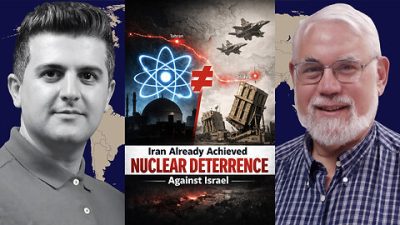
Prof. Ted Postol: Iran Already Achieved Nuclear Deterrence Against Israel
or go to
Aletho News Archives – Video-Images
From the Archives
How the occupied mentality syndrome works
Saudi Arabia on the American chessboard – Part 3
By B. J. Sabri | American Herald Tribune | June 27, 2016
Read part 2: “The occupied mentality Syndrome“
Previously I argued whether Saudi Arabia’s repeated involvements in U.S. interventions and wars stem from free national will or in response to a specific condition. For starters, in Saudi Arabia there is no national will. In Saudi Arabia, the national will is the will of the Al Saud clan. Still, when a major Arab state allies itself with a superpower that committed unspeakable crimes against humanity in almost every Arab country, then something is wrong. This fact alone should compel us to examine the U.S.-Saudi relation for one exceptional reason. As a result of the U.S.-Saudi wars, hundreds of thousands of people in Afghanistan, Iraq, Iran, Libya, Syria, Yemen, and Somalia have lost their lives. Millions became displaced in their own homelands. And millions more rendered refugees.
Attributing the Saudi policies to the bonds of “partnership” with the U.S. is frivolous. There are no bonds between these two thugs except those of business, military deals, secret plots, and wars. Proving this point, bonds such as these have no space for the American and Saudi peoples to share significant cultural or societal exchanges. If partnership is not the reason for the Saudi contribution to the U.S. strategy of empire and imperialism, then another reason must exist.
This leads to three possibilities. … continue
Blog Roll
 Aletho News
- Hezbollah hits Israeli warship off Lebanon’s coast, sets it aflame
- Iran slams US strikes on B1 bridge, Mahshahr petrochemical plants as ‘blatant acts of state terrorism’
- In letter to UN chief, Araghchi warns of dire consequences of US-Israeli attacks on Iran’s nuclear facilities
- Why the CIA conspiracy to invade Iran with Kurdish militias failed
- Why Are Upbeat US Claims About Mission to Rescue Pilot ‘Highly Questionable’?
- Aircraft destroyed during US ‘rescue’ of downed F-15 pilot cost more than $100 million each
- Washington University removes professor who condemned US-Israeli war on Iran
- Russia Warns of Retaliation as UK Authorizes Seizure of Vessels
- Serbia thwarts plot to bomb Russia-Hungary gas pipeline – Vucic
- Al Mayadeen voices solidarity with Dr. Marandi amid death threats
- If Americans Knew
- In Iran, Israel-US take aim at “reason, research, and freedom of thought” – Daily Update
- US loses planes over Iran, Israel downgrades Lebanon war goals – Daily Update
- Israel Is Blocking Palestinians from Easter at Church Where Jesus Resurrected
- Plot to assassinate Palestinian activist follows harassment campaign promoted by Zionist groups and elected officials
- Prominent New York synagogue hosts presentation on why U.S. Jews should support the ethnic cleansing of Gaza
- Tapper vs. Piker: Is the CNN Anchor Auditioning for David Ellison?
- Shouldn’t Democrats Be Able to Condemn Genocide?
- Israel-US kill negotiators, destroy civilian structures, but Iran’s military capabilities still largely intact – Daily Update
- ‘War crime’: Global condemnation as Israeli ministers celebrate death penalty law targeting Palestinian prisoners
- 7 Ways Israel Is Turning Lebanon Into Gaza
- No Tricks Zone
- An Inconvenient Tree: Uncovered In Alps… Europe Much Warmer Than Today 6000 Years Ago
- New Study Reports A 60% Slowdown In Greenland’s Ice Loss Rate In The Last Decade
- Low Intensity Tornado Wrecks Major Solar Farm, Creating A Potential Toxic Dump
- New Study Finds Warming Saves Lives…Cold Temperatures 12 Times More Deadly Than Excess Heat
- German Science Blog Accuses PIK Climate Institute Of Hallucinating Climate Tipping Points
- Devastating Assessment Of Comirnaty Vaccine By Former Senior Pfizer Europe Toxicologist
- New Study: CO2 Is ‘Effectively Negligible’ As An Explanatory Climate Change Factor Since 2000
- Former Pfizer Toxicologist Dr. Helmut Sterz Tells Bundestag Hearing Pfizer Vaccine Should Have Never Been Approved
- Energy Expert: Germany’s Nuclear Phaseout Was A “500 Billion Euro Mistake”
- New Research: South Australia’s Mid-Holocene Sea Surface Temperatures Were 4°C Warmer Than Today
 Aletho News