Syria and the Annan Plan: The Devil in the Details
By Nicolas Nassif | Al Akhbar | March 27, 2012
While the Syrian regime was pleased with last week’s UN Security Council Presidential Statement on Syria, the Syrian National Council (SNC) was not. It registered its objections, and saw it as providing another chance to President Bashar Assad. Damascus welcomed both the statement and the plan which the UN and Arab envoy to Syria, Kofi Annan, devised after gaining the approval of the international community.
Sources who got to meet high-ranking Syrian officials over the weekend sensed the extent to which the presidential statement was welcomed by Damascus. They also provided some insight into the level of cooperation between Damascus and Moscow on the substance of Annan’s initiative, and their commitment to making a success of it.
While the Syrian leadership supports the general principles of Annan’s plan, it has taken a cautious view of the mechanisms and measures which will need to be taken to implement it.
This stems from a conviction that the devil will lie in details if they are left vague, especially when the time comes for a ceasefire and political dialogue. Accordingly, while Annan completes his talks in Russia and China and prepares to begin implementing his plan, Damascus’ approach will be based on a number of considerations:
1. The initiative must be implemented through the “Syrian state” at all stages: starting with the proposed ceasefire and restoration of calm, extending to the delivery of humanitarian aid, and culminating in a national political dialogue. None of this will occur unless the process for implementing this initiative is approved by the regime and conforms with what it is describes as the “principles of sovereignty.”
Damascus’ position is that it is waiting to see how this initiative will be implemented, while affirming its endorsement of the plan. But the regime insists that any political dialogue about the future of Syria – the end-goal of the initiative – must be held under the auspices of the “Syrian state.”
2. Damascus is greatly satisfied and encouraged by the fact that the presidential statement did not reiterate the demand that the Arab League, France, the US, and Turkey had been insisting on. Namely, that the Syrian president step down and immediately transfer power so a political settlement can be concluded in isolation from him. The regime sees this tacit re-acknowledgement of its authority as a chance to open up dialogue again.
The high-ranking officials insisted to their visitors, however, that Syrian leaders had at no stage been fixated on or alarmed by this demand. They were never under any illusion that, in current international conditions, it was within the capacity of any party, domestic or foreign, to force Assad to step down.
This applies equally to the Syrian opposition, to the many declarations made by US Secretary of State Hillary Clinton and her French counterpart Alain Juppe, the Arab League in its second initiative on January 2, and Qatari, Saudi, and Turkish leaders. Damascus never commented on any of their statements. It declined to get into an argument with them about whether Assad should leave office.
The view put forward by Damascus in defense of its position is that the new Syrian constitution furnishes a mechanism for the transfer or rotation of power. But decapitating the regime – the argument Moscow has also been stressing – would be a recipe for chaos. As the regime sees it, the president stands for the integrity and cohesion of the army and the unity of the country. This position was matched by the similar stand taken by Russia and China against any external foreign military intervention to compel Assad to step down or depose him by force. Also this is why they opposed arming the opposition.
As a result, the international picture has changed significantly since the two countries blocked the attempt to issue a Security Council resolution on Syria on February 4. The threat to force Assad out has been practically dropped – though Arab and Western states may still speak of not just the president’s days, but the regime’s, being numbered – and everybody has opted for a political settlement to be brought about under him.
This approach was reinforced at Russian Foreign Minister Sergei Lavrov’s March 10 meeting with the committee of Arab foreign ministers dealing with Syria. It was confirmed in the appointment of Annan as envoy, and again in the proposals he has put forward, and the Security Council’s endorsement of it last Wednesday.
3. Damascus believes that the real gain it made from the presidential statement was the UN’s acknowledgement that there are two sides to the violence in the Syrian crisis.
This dispensed with the pretext with which the Arabs and the West had armed themselves until Lavrov’s visit to Cairo – namely, that the violence was one-sided, indiscriminate, and practised exclusively by the regime. The existence of armed anti-regime groups was either denied outright, or justified as self-defense.
But the presidential statement, by calling for a ceasefire and end to fighting, conceded that there is another party engaged in violence, and that an armed confrontation is underway. While it did not identify that other party – composed of a combination of Salafis, Muslim Brothers, and deserters – it recognized its existence. This reinforced the regime’s rationale for using decisive military force to try to eliminate members of the armed opposition in Homs, Idlib, and Deir al-Zour, so as to pre-empt any attempt to create buffer zones or similar enclaves in border areas.
Damascus is indebted to Russia and China for supporting its viewpoint and steering the Security Council in the opposite direction to which the Arab League had intended. It had insisted, without hesitation, that the violence was from one side only. The Arab League ignored the report by the chief of its own observer mission, General Mohammed Ahmed Mustafa al-Dabi, and transferred the Syria dossier to the Security Council.
But once there, it did not take long for Moscow’s view to converge with Washington’s over the issue of arming the Syrian opposition. The Americans are wary of Al-Qaeda infiltration of Syrian rebel groups, and fear their weapons could end up reaching the terrorist organization.
4. Damascus believes Annan fully understands the many difficulties involved in his task of bringing about a political settlement. Two sets of these stand out in particular: those connected to convening the proposed national dialogue, and those related to halting the violence on the streets.
Defining the party that will sit opposite the regime at the national dialogue table will be an early obstacle. It is not just that the political opposition, both at home and in exile, is deeply divided. So is the armed component of the opposition, which includes Salafi organizations, the Free Syrian Army (FSA), and the Muslim Brotherhood. The latter are part of the SNC, which has set up its own military bureau and is at odds with the FSA. That in turn is divided between followers of Colonel Riyadh al-Asaad and Brigadier Mustafa Ahmad al-Sheikh.
The political dialogue cannot include the non-SNC armed opposition when it has not yet said who speaks for it. Annan does not know who to talk to in this regard, at least not yet. In the meantime, the political dialogue stands to be between a known actor, the regime, and an undetermined interlocutor, half of which is clandestine, and the other half of which is at odds with itself.
A second obstacle lies in the measures to be taken on the ground to bring about an end to fighting, the withdrawal of gunmen and the army, and the delivery of humanitarian aid to residents of affected areas. Syrian leaders see potential problems in the plans that Annan and his aides devised for arranging these measures and deploying international observers to monitor them.
The Syrian authorities are not simply waiting to see what Annan comes up with in this regard. They have been stressing an issue of extreme sensitivity, which the Syrian leadership considers an absolute necessity for the restoration of normal life to the country: there must be no consolidation of dividing lines between army- and rebel-controlled areas, either in towns or the countryside. Also they have stressed that there must be no deployment of international observers on such lines, which would effectively enforce a fait accompli ahead of political talks.
Damascus has informed all concerned parties that it will not agree to measures which recreate the kind of “confrontation lines” that were established during the Lebanese Civil War, which entrenched the positions of the opposing parties and fuelled the conflict.
It has stressed that a ceasefire must not entail the drawing of such lines inside Syria. Rather, it should result in the disappearance of gunmen and their weapons from the streets, an end to all illegal armed activity, and the reconnection of different parts of the country with each other. Only that would justify ordering the army back to barracks.
Similarly, the task of international observers must not be to monitor a ceasefire, police ceasefire lines, or separate two warring parties, but to monitor the restoration of normalcy in the country. Damascus sees this is as a key point in the Annan initiative which all sides must respect.
Nicolas Nassif is a political analyst at Al-Akhbar.
Related articles
- UN – Arab League envoy hails Syria’s plan acceptance (alethonews.wordpress.com)
- Syrian govt accepts Annan’s 6-point peace plan (rt.com)
Left Takes ObamaCare To Court – Supreme Court
By John V. Walsh | Dissident Voice | March 27th, 2012
The struggle over the Affordable Care Act (aka, Obamacare) is facilely cast as a battle between Left and Right. Nothing could be farther from the truth. A tussle between the dominant factions of the Democratic and Republican Parties it certainly is in a superficial and temporary way, until the kabuki politics of the presidential campaign is over. But a battle between Left and Right, it most assuredly is not. Obamacare is opposed by the Left, which has long sought Single-Payer (Medicare for All) as a proven way to universal and egalitarian coverage. But many Leftists have been too cowed by Democratic operatives or by Obama loyalists in their midst to speak their convictions. Now that silence has been shattered.
Recently 50 physicians, all strong supporters of Single-Payer, along with the Left wing non-profits, Single Payer Action and It’s Our Economy, have joined conservative and libertarian opposition to Obamacare. They have submitted to the Supreme Court an amicus brief which is a dagger aimed at the noxious heart of Obamacare, the individual mandate which codifies in law the domination of the health care system by the insurance companies. The brief states:
Amici thus submit this brief for the purpose of disputing the primary tenet of the Government’s position, that Congress cannot regulate the national healthcare market effectively unless it has power to require that citizens purchase insurance from private insurance companies. On the contrary, as set forth herein, Congress has already demonstrated that it can regulate healthcare markets effectively by implementing a single payer system such as Medicare or the VHA (Veterans Health Administration).
And in case the dagger failed to pierce its mark with that, the brief plunges deeper:
Government contends that the provision is not only “reasonable” but also “necessary” to its broader regulation of the national healthcare market. In particular, the Government contends that the individual mandate is “key to the viability of the Act’s guaranteed-issue and community-rating provisions.” But while it might be true that these provisions will adversely impact private insurers’ profits, and that the individual mandate offsets this adverse impact by guaranteeing the private insurers a large stream of new customers who are required by law to purchase insurance, that is not sufficient to render the individual mandate constitutional. If it were, Congress could “reform” any private industry – whether it be automobiles, coal, pharmaceuticals or any other – by enacting legislation requiring that every American purchase the industry’s goods or services in exchange for some perceived public good the industry provides. Yet Congress has never before enacted such a mandate.
The amicus brief makes no argument against other features of Obamacare, for example, regulation of insurance companies and coverage of those with pre-existing conditions. Such “severability” has been advocated by many, most recently by Columbia law professors, Abbe Gluck and Michael Graetz in a New York Times Op-ed on March 23. But the Obama administration has resisted this separation and many Left groups have been pushed into silence for fear that they will be seen as opposing the “good” features of Obamacare. Severability, never mentioned by Obama loyalists, provides a simple way to oppose the nefarious features of Obamacare and yet allow the other features to go forward.
Much of the rest of the brief is devoted to describing the superiority of single-payer systems, most notably affordability and equality of care. The simplest argument for Single-Payer is that it works as advertised, as can be seen readily in Canada or France, for example.
It is a grave misperception to regard Obamacare as a stepping stone to Single-Payer, as promoted by Obama loyalists. It is not. In fact, it is a massive obstacle. Once in place it will create the impression that universal coverage with cost controls has been achieved, postponing genuine change to another day. And until that day there will be much needless suffering, even as we spend ever more on health care.
Quite simply, Obamacare is the preferred option for both the Republican and Democratic establishments and their backers in the financial sector. Romneycare, its older, Republican twin, has failed to deliver on the promise of cost control and decent care for all. Instead it has delivered a captive population up to the tender mercies of the insurers. Obamacare is more of the same. The coinage Obomneycare says it all.
The real struggle is not between Left and Right but between the top, which favors Obomneycare, and the bottom, the 99% in the parlance of the moment. Hence it is no surprise to see groups of diverse political philosophies, even divergent ones at first sight, rise from among the vast majority to oppose this latest scheme to make money from human illness in the guise of health care reform.
Related articles
- Real Health Care Advocates Should Support Repeal of the Insurance Mandate (alethonews.wordpress.com)
PA, Egypt sign gas deal to end Gaza crisis
Ma’an – 27/03/2012
CAIRO – The Palestine Electricity Company on Tuesday announced a deal with Egypt to provide gas to the Gaza Strip.
Palestine Electricity Company director in Gaza Walid Saad Sayil signed the agreement with the Egyptian General Petroleum Corporation in Cairo on behalf of the Ramallah-based Palestinian Authority.
Sayil told reporters that Egyptian technicians have been instructed to conduct geographical surveys to find the best route for a network of pipelines to transport gas from Sheikh Zweid to the Rafah crossing on Gaza’s border.
Meanwhile, technicians in Gaza will prepare to install a 30-kilometer pipeline from Rafah to the power plant in Gaza City, he said.
Sayil send the new agreement will increase the plant’s capacity from 40 to 180 Megawatts. The power station currently runs on diesel but generators will be converted to use gas, he added.
The sole power plant in Gaza has shut down four times since February due to chronic fuel shortages, causing rolling power outages of up to 18 hours a day.
Ambulances and firetrucks have been taken out of service and bakeries were forced to reduce their hours as petrol pumps ran dry across Gaza.
The latest crisis began after Egypt cracked down on tunnels smuggling fuel into Gaza. Egypt, which is also experiencing fuel shortages, urged Hamas to import fuel across its border with Israel.
Hamas refused, citing concerns that Israel would then have the power to block supplies. Meanwhile, Cairo was reluctant to transfer fuel through the Rafah crossing over fears it would exempt Israel from its responsibilities as an occupying power.
Related articles
- Egypt’s Muslim Brotherhood pushing for end to Gaza siege (alethonews.wordpress.com)
- Gaza to be connected to Egypt’s power grid: Egyptian envoy (alethonews.wordpress.com)
Hebron teen ‘shot by Israeli settler’
Ma’an – 27/03/2012
HEBRON — An Israeli settler shot an 18-year-old Palestinian in Hebron’s Old City on Tuesday morning, leaving him moderately injured, locals said.
Medics at Al-Ahli Hospital in Hebron said Muhammad Hisham Abu Aker was shot in his right leg and is undergoing surgery.
On Saturday, a Palestinian man was moderately injured when armed settlers stormed Burqa village east of Ramallah and attempted to vandalize property, witnesses said. Hassan Muatan, 40, was shot in the abdomen, they said.
Settler violence is on the rise. In 2011, the UN Office for the Coordination of Humanitarian Affairs reported that settler attacks had increased by 50 percent over the previous year.
Around 800 Jewish settlers live in Hebron’s Old City, among 30,000 Palestinians in the parts of the ancient city that are under Israeli control.
Related articles
- Settlers Attack Two Towns Near Hebron (alethonews.wordpress.com)
- Settlers Install New Outpost Near Hebron (alethonews.wordpress.com)
- International Solidarity Movement volunteers encounter settler attack and sexual harassment in Hebron (alethonews.wordpress.com)
- Settler Violence: Broken Glass on Shuhada Street (alethonews.wordpress.com)
- Demanding justice for Yousef, a quiet boy killed by Israeli settlers (alethonews.wordpress.com)
- Israeli Settlers Attack Palestinian Boys in Hebron (altahrir.wordpress.com)
- The massacre of 1929 and the War of Narratives (alethonews.wordpress.com)
UN – Arab League envoy hails Syria’s plan acceptance
Press TV – March 27, 2012
UN-Arab League envoy Kofi Annan has praised the Syrian government for accepting his six-point plan to end the unrest in the country.
“I indicated that I had received a response from the Syrian government and will be making it public today, which is positive, and we hope to work with them to translate it into action,” Annan told reporters after meeting Chinese Premier Wen Jiabao.
In a Tuesday statement, Annan’s spokesman Ahmad Fawzi confirmed that Damascus has written to the Joint Special Envoy Kofi Annan accepting his six-point plan, endorsed by the United Nations Security Council.
Fawzi added that Annan views this as an important initial step that could create an environment conducive to a political dialogue that would fulfill the legitimate aspirations of the Syrian people.
Annan’s proposal includes a ceasefire, access for humanitarian aid agencies as well as political dialog between Damascus and the opposition.
Earlier, the Chinese premier expressed his support for Annan’s efforts for a peaceful end to the crisis.
Meanwhile, Russian President Dmitry Medvedev has said Western calls on President Bashar al-Assad to step down are short-sighted, adding that Assad’s departure will not end the conflict in Syria.
Syria has been experiencing unrest since mid-March 2011.
Related articles
- Syrian govt accepts Annan’s 6-point peace plan (rt.com)
- Syria’s future ‘matter for Syrians’ – Annan (laaska.wordpress.com)
Real Health Care Advocates Should Support Repeal of the Insurance Mandate
By Kevin Zeese | Dissident Voice | March 26th, 2012
It’s Our Economy, the organization I co-direct with Margaret Flowers, MD, Single Payer Action and 50 doctors filed an amicus brief in HHS v. Florida, the challenge to the Affordable Care Act being heard in the Supreme Court this week.
We support health care reform but oppose the insurance mandate. Merely removing two words from existing law will achieve the President’s stated goals of universal, affordable and guaranteed health care. By removing the words “over 65” from the Medicare law, every American will have health care based on a proven public health care model that has been in existence since 1965. This will control costs and immediately provide health care to everyone in the United States.
Forcing Americans to buy insurance is both unconstitutional and bad policy. Even the most favorable estimates of the Affordable Care Act predict that tens of millions of Americans will not have health insurance when it is fully implemented in 2019. The number of employers offering health benefits will decline under the ACA pushing employees into the individual insurance market where coverage is skimpier and more expensive. The cost of premiums continues to rise and insurance coverage continues to shrink, putting patients at risk of personal bankruptcy when they suffer a serious accident or illness.
The United States already spends enough to provide health care to all. As the amicus brief states:
Studies conducted by the nonpartisan General Accounting Office and the nonpartisan Congressional Budget Office have consistently concluded that if a national single payer system were implemented in the United States, administrative cost-savings alone would be enough to guarantee universal coverage without increasing overall healthcare spending.
In addition, improved Medicare for all will slow the growth in the cost of health care. The cost of health care under Medicare is growing more slowly than private insurance-based health care, despite the fact that it deals with America’s elderly and disabled populations, groups that generally need more health care services. Unlike private insurance, under Medicare the increased cost is not due to administrative costs and bureaucracy. Medicare’s administrative costs have been consistently about 2% while private insurance is 16% administrative costs.
Instead, the ACA builds and expands the system of private insurance. This system is among the least efficient of any healthcare system currently operating in developed nations. The brief states: “In 2009, 28 healthcare expenditures accounted for 17.4 percent of GDP in the United States, compared with only 9.6 percent in the average OECD [The Organization for Economic Co-operation and Development] nation” and “measured per capita, healthcare expenditures in the United States ‘are by far the highest among OECD countries.’”
Medicare provides health services that people like, as the brief points out: “In addition to achieving universal coverage for Americans aged 65 and older and maintaining consistently low administrative costs, Medicare is also highly rated by senior citizens who are its primary beneficiaries – 51 percent of whom give their health insurance an ‘excellent” rating.’”
If the US Congress had considered an evidence-based approach to health reform instead of writing a bill that funnels more wealth to insurance companies that deny and restrict care, it would have been a no brainer to adopt improved Medicare for all. All the data points to a single payer system as the only way to accomplish universal health care and control health care costs.
It is also bad precedent to allow the federal government to mandate all Americans buy a corporate product. This takes corporate welfare to new levels of extreme. If this is upheld, will a future president facing an economic crisis require Americans to buy cars made in the USA – of course, with a government subsidy? Or, will the pension crisis in the United States be ‘solved’ by setting up a pension exchange of JP Morgan, Bank of America, Well Fargo, Chase and Citibank and require Americans to buy a federally subsidized pension from Wall Street?
Finally, an improved Medicare for all system will give everyone in the United States the greatest control of their own healthcare. The insurance industry will be removed from between doctors and patients. Doctors will not have to convince an insurance, profit-minded, bureaucrat to pay for a treatment. And, people will no longer be threatened with increased premiums, decreased coverage and financial ruin caused by an insurance industry that puts profits before people.
We filed the amicus brief because forcing people to purchase a flawed product, private health insurance, is not necessary and will not achieve the goals of universal, guaranteed and affordable health care. There is a health care model in the US already that will achieve these goals – that’s improved Medicare for all. Medicare for all is constitutional and simple to attain – just drop a few words from existing law and we will be on the path to joining the rest of the civilized world when it comes to health care.
Kevin Zeese is executive director of Voters for Peace.
India: The World’s Biggest Arms Recipient
By Sajjad Shaukat | News Center PK | March 24, 2012
In its report, the Stockholm International Peace Research Institute (SIPRI) disclosed on March 20 this year that volume of international transfers of major weapons was 24 percent higher in the period 2007-11 compared to the 2002-06 period. While indicating the purchases of arms and weapons by various countries, the report pointed out, “India is the world’s largest recipient of arms… India’s imports of major weapons increased by 38 percent between 2002-06 and 2007-11.”
It is of particular attention that under the pretext of military build up by China and Pakistan, India on March 16 this year, boosted military spending by 17 percent to $40 billion. In this regard, announcing the 2012-13 budget, Finance Minister Pranab Mukherjee told the parliament, the government is engaged in a massive programme to upgrade the country’s ageing military hardware, increasing defence spending to $40 billion for the financial year to March 31, 2013.
Now, India is the biggest importer of arms in the world. New Delhi’s military is acquiring a slew of new equipment from combat aircraft to submarines and artillery. It is currently finalising a deal with France’s Dassault Aviation to buy 126 Rafale fighter jets in a contract worth an estimated $12 billion.
Despite a series of political setbacks which exposed vulnerability of India’s beleaguered regime, it avoided bold reforms in its annual budget to shore up growth and modest targets to rein in a bloated deficit. The government reflects investors’ disappointment with Mukherjee’s half-hearted attack on the worst deficit among the emerging-markets.
However, on November 2 last year, the United States agreed to sell India the most expensive—the new F-35 fighter jets. In a report to the US Congress, the Pentagon said, “We believe US aircraft such as the Joint Strike Fighter (JSF)… to be the best in the world”, referring to the radar-evading F-35 jet. The Pentagon indicated that the programme faces rising costs, with a price tag of nearly $150 million each. It also noted that India is working with Russia on developing a fifth-generation fighter aircraft.
Notably, on November 3, 2011, CNN TV channel pointed out, “The Pentagon is portraying India as a major customer for US military arsenal… India also decided a major purchase of US F-16 and F-18 fighters…is a reminder of the vast sums in play.”
James Hardy, Asia Pacific Editor of Jane’s Defence Weekly stated, “With a potential contract price of US$9 billion to US$14 billion, this is the single biggest competition in the global defence aviation industry.”
While the Pentagon’s government-to-government program of foreign military sales to India have included C-17 and C-130 aircraft, Northrop Grumman E-2D, the latest version of the E-2 Hawkeye, aircraft radar systems, Harpoon weapons and specialised tactical equipments. It will cost 232 million dollars. Besides, America signed a deal of civil energy technology with India in 2008, which lifted sanctions on New Delhi in order to import nuclear technology.
In recent years, India has bought reconnaissance aircraft from US aerospace major Boeing worth 2.1 billion-dollars, medium range missiles for 1.4 billion dollars from Israeli Aerospace Industries, and signed a contract with the Russian Aircraft Corporation to upgrade its MiG 29 squadrons for 965 million dollars. Several deals are planned for the near future including one of the largest arms contracts of recent times—an 11-billion-dollar project to acquire 126 multi-role combat aircraft.
As regards New Delhi’s purchases from Israel, India’s The Tribune wrote, “Tel Aviv “agreed to share its expertise with India in various fields such as surveillance satellites and space exploration.” With the support of Israel, New Delhi has been acquiring an element of strategic depth by setting up logistical bases in the Indian Ocean for its navy.
Nevertheless, Indian defence expenditures have no bounds. In the past decade, India has spent billions of dollars on purchases of arms, planes, radars and ships from the US, Russia, Britain, Germany, Israel and France including other western countries.
Over the next 12 years, India is set to spend a whopping US$200 billion on defence acquisitions to replace its outdated inventory. In this respect, on February 15, 2010, a report of the Indian strategic defense magazine (India Strategic’s DefExpo) had pointed out that 70 per cent of the inventory of the Indian armed forces is 20-plus years old, and needs to be replaced with the modern technology. It explained that nearly half of this funding ($100b) will go to the Indian Air Force (IAF), which would need to replace more than half of its combat jet fleet as well as the entire transport aircraft and helicopter fleet. The army needs new guns, tanks, rocket launchers, multi-terrain vehicles, while the navy needs ships, aircraft carriers and a new range of nuclear submarines.
It is noteworthy that from 1994 to 1997 India’s defence budget was increased from 20 percent to 24.4 percent. In 2009, New Delhi increased its defense budget by a whopping 28.2 percent or Rs 130,000.00 million. Some experts estimate that military spending will increase further, totaling as much as 200 billion dollars over the period to 2022.
While exposing India’s ambitious defence policy, Washington-based Center for Strategic & International Studies (CSIS) has revealed in its report of April 2011, “India’s defence budget has roughly quadrupled (in real terms) since 2001—reaching $36.3 billion in the 2011–2012 budget—and enabled the implementation of long-term acquisition plans. Of the total defence budget, approximately 40 percent (some $14.5 billion) is allocated to the defence capital outlay budget.”
In fact, currently, more than half of India’s budget is allocated for armed forces, but its major portion is being expended on defence purchases and debt servicing, which leaves less than half for everything else including infrastructure development projects, education, healthcare, poverty alleviation, and various human services. New Delhi’s latest arms purchases will leave even less for what India needs most to lift hundreds of millions of its citizens from abject poverty, hunger, illiteracy and disease.
Indian defence analyst Ravinder Pal Singh, while calling New Delhi’s unending defence spending at the cost of poverty-alleviation—with security requirements competing with socio-economic concerns for money calls it a guns-versus-butter question.
In this context, a report of the United Nations pointed out that India ranks 134th of 182 countries on the United Nations Development Programme’s Human Development Index. It estimated that 50 per cent of the world’s undernourished population lives in India. Nearly 31 per cent of the billion-plus Indians earn less than a dollar a day.
Secretary General of the Control Arms Foundation of India Binalakshmi Nepram remarks, “When people are dying of poverty and bad sanitation, what protection will arms provide them?”
Indian civil society organisations, while complaining of excessive defence spending on buying, indicated that the defence budget is rapidly increasing every year because of India’s unending defence imports.
While, the world is rapidly moving towards the idea of one world as in the cyber age, states prefer welfare of their people at the cost of undue defence expenditures. Europe which learnt a drastic lesson from the two world wars, presents an ideal model by integrating the continent through the European Union. On the other side, despite criticism from various circles, the Indian government’s unlimited defence purchases are in full swing.
Ignoring regional problems and resolution of Indo-Pak issues-especially the thorny dispute of Kashmir, Indian rulers claim that they do not have any aggressive designs. But it becomes a big joke of the 21st century, reminding a maxim, “armed to the teeth, but no enemy”, if we take cognisance of India’s unlimited defence imports, raising India as the biggest arms recipient of the world.
~
Sajjad Shaukat writes on international affairs and is author of the book: US vs Islamic Militants, Invisible Balance of Power: Dangerous Shift in International Relations
Email: sajjad_logic@yahoo.com
Related articles
- Indian demand drives growth in arms trade (smh.com.au)
Eight children from Beit Ummar facing suspension from their village of residence
International Solidarity Movement, West Bank | March 26, 2012
Eight children between the ages of 14 to 17 years old were arrested in Beit Ummar during night raids from 6th to 11th of March conducted by the Israeli occupation forces following a nonviolent solidarity demonstration for the hungerstriker Khader Adnan on the 21st of February.
On Tuesday 20th of March the youth went to court at the Israeli military court at Ofer and faced a sentence of being banned from Beit Ummar, where they live with their families, for a period of 6 months. The youth are being accused of throwing stones at Israeli military installations. The detainees are Ayesh Khalid Sabri Awad (17 years), Basil Khalid Hassan Abu Hashim (15 years), Zain Hisham Khalil Abu Maria (15 years) Sami Amer Ahmed Abo Joudeh (16 years), Emad Mohammed Saed Solaiby (16 years), Mohab Jawdat Adi (14 years), Bilal Mahmud Awad Ayyad (16 years), and Ahmed Ali Mahmoud Solaiby (16 years).
The announcement of the sentence aroused opposition on the part of family members of the accused, leading to removal of the family members from the court and adjournment until the 25th of March. Issa Solaiby, father of Ahmed, says his son was also beaten by 4 soldiers in the court.
Hisham Abu Maria, father of Zain, claims that the children are being pressured to agree to false accusations. He said, “They made him (Zain) say he threw rocks at the soldiers even though there were no soldiers” present at the time noted in the charges.
The village of Beit ummar has around 17,000 inhabitants and is surrounded by illegal, Zionist settlements. According to Issa Solaiby a member of the local Popular Committee, Beit Ummar used to consist of 33,000 dunams of land. The building of the separation wall by Israel and a road that is closed off to Palestinians took 13,000 dunams of the village land.
Since then an additional 3,000 dunams have been stolen by settlers living in illegal Israeli settlements. The inhabitants of Beit Ummar suffer from violence from the settlers living in the surrounding settlements. Issa Solaiby also complains that the settlers prevent the farmers from access to their own land and destroy olive trees and grape vines.
In March the settlers living in the illegal Beit Ain settlement destroyed 14 olive trees, 21 grape vine plants, and 2 citrus trees from the village in an act of incitement.
According to Issa the settlers also enter the village with soldiers and guns to make the villagers aware of their aggressive presence. One year ago 17-year-old Yousef Ikhlayl was shot and killed by Israeli settlers as he was farming with his father. His killers remain unpunished.
Many of the villagers have been arrested and gone to jail. Imprisonment is a problem especially with young people. According to Muhannad Abu Awwad 10,000 villagers have gone to jail and at present 30 inhabitants, most of them under 16, are serving time in Israeli occupation prisoners.
Muhannad himself went to jail for two years from the age 21 until 23 and is now studying law.
Related articles
- Israeli settlers ‘put new homes on Beit Ummar land’ (altahrir.wordpress.com)
- Settlers Install New Outpost Near Hebron (alethonews.wordpress.com)
- Official: Israeli settlers tour Beit Ummar (altahrir.wordpress.com)
- Confined Cruelty: Israeli Treatment of Palestinian Minors (alethonews.wordpress.com)
- Four injured as Beit Ommar marks anniversary of Yousef Ikhlayl’s murder (alethonews.wordpress.com)
Israeli occupation authority demolished 20 Palestinian homes in West Bank last week
Palestine Information Center – 25/03/2012
RAMALLAH — The Israeli occupation authority (IOA) has demolished 20 Palestinian homes in the West Bank over the past week, a report by the UN Office for the Coordination of Humanitarian Affairs in the occupied Palestinian land said on Sunday.
The report said that the demolition streak took place in the Jordan Valley and displaced 60 people including 26 children.
It said that IOA bulldozers damaged 100 dunums in Salfit’s Kufr Al-Deek village and uprooted 100 olive saplings in Beit Dajan village in Nablus at the pretext they were planted in a military area.
OCHA pointed out that 29 Palestinians were wounded in Israeli occupation forces’ crackdown on a peaceful demonstration in Kufr Qadum to the north of Qalqilia last week.
The report also said that a 14-year-old boy was badly injured when Israeli army ordnance exploded near him in the Jordan Valley.
Related articles
- Israeli occupation authority to raze hundreds of Palestinian homes, keep illegal outposts (alethonews.wordpress.com)
- US public radio journalist fired after calling Israeli occupation ‘brutal’ (alethonews.wordpress.com)
- Israel excitedly rejects cooperation with UN over settlements (alethonews.wordpress.com)
- Israeli occupation authority destroys Spanish-financed power station in Al-Khalil village (alethonews.wordpress.com)
Featured Video
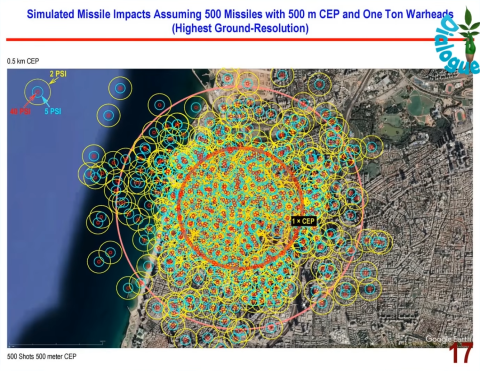
Prof. Ted Postol: US–Iran War? Israel’s Fatal Gamble
or go to
Aletho News Archives – Video-Images
From the Archives
Neocon Max Boot: Legal and illegal aliens need to enlist in the US army and die for Israel

By Jonas E. Alexis | Veterans Today | October 16, 2107
In 1973 Irving Kristol, the godfather of the Neoconservative movement, made a stunning statement which is still relevant to understanding the Israeli influence in US foreign policy. Kristol said:
“Senator McGovern is very sincere when he says that he will try to cut the military budget by 30%. And this is to drive a knife in the heart of Israel… Jews don’t like big military budgets. But it is now an interest of the Jews to have a large and powerful military establishment in the United States…
“American Jews who care about the survival of the state of Israel have to say, no, we don’t want to cut the military budget, it is important to keep that military budget big, so that we can defend Israel.”
Read the statement again very carefully. A big military budget, said Kristol, is only good for Israel, not America or much of the Western World. In other words, precious American soldiers who go to the Middle East to fight so-called terrorism are just working for Israel, not for America.
So, whenever the Neocons use words such as “democracy” or “freedom,” they are essentially conning decent Americans to support Israel’s perpetual wars. … continue
Blog Roll
 Aletho News
- Friedrich Merz’s Push to End Online Anonymity Has a Troubling Subtext
- Macron: French citizens fighting for Israel cannot be labeled ‘genociders’
- US eyes Gaza security force drawn from armed gangs
- The Only Motive Behind The ‘Imminent’ U.S. War With Iran Is The Zionist Lobby
- Trump eyes 350-acre US military base housing 5,000 troops in Gaza
- Israel Pushing US Toward a Big and Damaging War With Iran – Ex-Pentagon Analyst
- Meet The Liberal Zionist And Ukraine War Supporter Advising AOC On Foreign Policy
- Buck Dancing for Zion: Kenya’s and Nigeria’s Growing Love Affair With Israel
- Israel installed, oversaw security system at Barak-Epstein residence in New York: Report
- ‘Britain’s Index of Repression’ documents 964 incidents of anti-Palestinian crackdown
- If Americans Knew
- Tucker Carlson interrogated in Israel, has passport seized after interviewing US ambassador
- 6,000 Amputees in Gaza Face Impossible Recovery amid Israeli War Ultimatum
- The Lancet: Gaza death toll far higher than reported – Not a ceasefire Day 132
- Compliant aid: Who are the Israel-approved NGOs scaling up in Gaza?
- Why won’t Trump’s “Board of Peace” bring peace? – Not a ceasefire Day 131
- Help end the injustice against Shadi
- Israel’s Favorite American President
- Israel’s “Yellow Line” Is a Death Trap for Palestinians. We Drove Into It.
- Why Israel’s expanding occupation in Syria presents a critical legal test
- Gaza is not a natural disaster. It is the victim of genocide enabled by global inaction
- No Tricks Zone
- Coal Power Back In Trend As Globe Tries To Keep Pace With Growing Demand For Power
- New Study: A 4°C Warmer Beaufort Sea Had ‘No Sea Ice’ 11,700 – 8200 Years Ago
- Unfudging The Data: Dutch Meteorological Institute Reinstates Early 20th Centruy Heat Waves It Had Erased Earlier
- German Gas Crisis…Chancellor Merz Allegedly Bans Gas Debate Ahead of Elections!
- Pollen Reconstructions Show The Last Glacial’s Warming Events Were Global, 10x Greater Than Modern
- Germany’s Natural Gas Storage Level Dwindles To Just 28%… Increasingly Critical
- New Study Rebuts The Assumption That Anthropogenic CO2 Molecules Have ‘Special’ Properties
- Climate Scientist Who Predicted End Of “Heavy Frost And Snow” Now Refuses Media Inquiries
- Polar Bear Numbers Rising And Health Improving In Areas With The Most Rapid Sea Ice Decline
- One Reason Only For Germany’s Heating Gas Crisis: Its Hardcore-Dumbass Energy Policy
 Aletho News