Israeli military armored vehicle rams Palestinian bus injuring at least 19 passengers
Palestine Information Center | March 19, 2012
 QALQILIYA – 19 Palestinian workmen sustained moderate to serious injuries when the bus they were aboard was deliberately hit by an Israeli military armored vehicle near Qalqiliya city.
The bus, en route to the 1948 occupied lands, overturned as a result of the impact while the Israeli soldiers drove away after committing their crime.
The injured workmen were rushed to hospitals in Qalqiliya city.
A similar earlier incident a month ago had resulted in the killing of 10 Palestinian school children and the injury of 42 others when a heavy truck directly hit their bus at the junction of Jaba between Ramallah and Jerusalem.
UNDER THE THREAT OF WAR, IRANIANS AFFIRM THEIR SUPPORT FOR THE ISLAMIC REPUBLIC
By Flynt Leverett and Hillary Mann Leverett | The Race for Iran | March 18, 2012

Iranians vote in Teheran
As we have discussed in multiple posts, major Western media outlets brought an agenda-driven and intellectually sloppy approach to their coverage of the Islamic Republic’s 2009 presidential election. From their coverage of the Islamic Republic’s recent parliamentary elections, it would seem that there has not been much of a learning curve.
One all-too-typical example is The New York Times’ main “analytic” piece about the parliamentary elections, see here; the article, entitled “Elections in Iran Favors Ayatollah’s Allies, Dealing Blow to President and his Office,” was filed by Neil Macfarquhar from Beirut. This specimen of bad journalism cites a former reformist parliamentary now living in the United States, an editor for the opposition Rooz online, and the Washington commentator Karim Sadjadpour (who favors the Islamic Republic’s overthrow), to assert that the elections were carefully stage managed (by Ayatollah Khamenei’s son, Mojtaba, working on behalf of his father) as part of an ever increasing dictatorship to abolish the presidency and turn the Islamic Republic into a parliamentary-based, prime ministerial system. One can find these themes in many other Western media stories about the elections.
To re-introduce a note of terrestrial reality into international discussion of Iran’s parliamentary elections, we asked our colleague, Seyed Mohammad Marandi of the University of Tehran, to offer his observations. We are pleased to present Mohammad’s article below.
**********
UNDER THE THREAT OF WAR, IRANIANS AFFIRM THEIR SUPPORT FOR THE ISLAMIC REPUBLIC
By Seyed Mohammad Marandi
Most of the Western so-called reporting on the Islamic Republic’s recent parliamentary election displayed very limited direct knowledge about Iran and often, as its authors’ acknowledged, derived its their information primarily from Western-backed opponents of the Islamic Republic. As long as this goes on, Western countries will continue to miscalculate about the Islamic Republic’s internal politics and foreign policy—and then be left wondering, again and again, why they always get things wrong.
Five points of fact illustrate the shortcomings in this approach to “understanding” Iranian politics. First of all, contrary to unsubstantiated “green” propaganda intended to damage the Supreme Leader, Ayatollah Khamenei’s son Mojtaba is not an important political figure. Claims of this sort that are recycled in the Western media have little effect inside Iran. Regardless of what they think about his policies and beliefs, Ayatollah Khamenei is recognized even by his opponents (like Ataollah Mohajerani) as super clean. Moreover, people recognize that, if Mojtaba had such an important role, he would be seen regularly involved in politics and high-level decision-making processes and institutions. He isn’t.
Second, changing the structure of government by removing the presidency would require a change in the Constitution, a process that has little to do with this year’s parliamentary elections. It would require a referendum—not a decree from Parliament. The current parliament has had somewhat poor relations with the incumbent President; if the parliament to be formed out of this year’s elections also turns out to be critical of the President, this will neither be new nor have anything to do with changing the Constitution. And, in any case, Ayatollah Khamenei never spoke about any imminent change in the Constitution. A few months ago, in a question-and-answer session with students and academics, he said in response to a question that there could be changes in the constitution in the distant future if it were concluded that a different governmental structure would work more effectively. He then gave the example of the current presidential system.
It is also inaccurate to suggest that eliminating the presidency would make the elected branches of government weaker. If Iran were to have a prime minister it would make the parliament even more powerful. Either way, it would have no effect on the combined scope of authority of the executive and legislative branches.
Third, the turnout was very high in the recent parliamentary election, around 65 percent. In fact, the turnout in Iran was much higher than in analogous off-year congressional elections in the United States (for example, turnout was just under 38 percent in the 2010 American congressional elections), and higher even than in U.S. presidential elections (turnout was just under 57 percent in the last American presidential election, in 2008).
The decisions of former Presidents Khatami and Rafsanjani to participate, along with other reformists like Majeed Ansari, Seyed Mehdi Emam Jamarani, Kazam Mousavi Bojnourdi, and Ayatollah Khomeini’s grandson Hassan Khomeini, reflect this. If turnout had been low, why would they vote and increase the “legitimacy” of the voting process and of the election results? (This assumes, of course, that they are opposed to the current political order as implied by much of the Western media, for which there is no evidence and which I don’t agree.) If turnout had been low, why would they want to be seen standing apart from the majority who did not vote?
In fact, they knew that turnout was going to be high; they also recognized that such high turnout shows that the public trusts the voting process, that people feel their votes count, and that they are deeply committed to the Islamic Republic. By casting their ballots these reformist leaders have stated that they accept the accuracy, validity, and legitimacy of the voting process and that they have no link to the “greens.” If they believed the results were unreliable, why would they vote, thereby strengthening a “corrupt” system? Instead, they have effectively stated that they do not accept claims that the 2009 presidential election or any previous presidential election was fraudulent, even though the voting process has not changed. Merely through their participation, they have given the voting process a clear vote of confidence.
Other major reformists who campaigned to win seats had different calculations. People like Mostafa Kavakebian (who lost), Mohammad Reza Khabaz (who lost), Masoud Pezeshkian (who won), and Mohammad Reza Tabesh (who won) wanted a high turnout from the very start. While they are Reformists, they wanted a display of unity and strength among Iranians against what is widely seen in Iran as Western acts of war against ordinary Iranians through embargos and sanctions. Indeed, there is evidence from polls and follow-up panels that the publication on election day in Iran of President Barack Obama’s interview, in which he proclaimed “I don’t bluff” in the context of a military attack on the Islamic Republic, may have driven up turnout, at least in Tehran, among those who might otherwise have stayed home.
Fourth, the fact that Ahmadinejad’s sister participated and lost (by a small margin), that many independents won seats, that reformist candidates stood for seats, and that there were numerous “principlist” coalitions taking part in the elections (e.g., Jebheye Motahed, Jebheye Paydari, Jebheye Eestadegi, Sedaye Edalat, each with a different list of candidates) and that many independents won seats shows that the elections were meaningful. There was a broad choice of candidates and the counting process is trusted and reliable.
Fifth, I do not know who will be the next speaker of parliament. But, contrary to uninformed Western speculation, Ayatollah Khamenei never involves himself in such issues. If, as many Western analysts and reporters claim, the Leader is out to have a subordinated parliament under the speakership of Gholam Haddad-Adel, then based on this logic he would have told Ali Larijani four years ago not to stand against then-parliament speaker Haddad-Adel and, as Mr. Larijani is an ally of the Leader, he would have acceded. In fact, the reason why the majority of parliamentarians voted to make Mr. Larijani their speaker four years ago was their perception that he would be more critical of President Ahmadinejad. If, as Western pundits now commonly assert, the Leader wants to weaken Ahmadinejad, he should support Mr. Larijani’s continuation as speaker. The logic underlying such speculation is clearly flawed—in no small part because it is based on information produced in the imaginary world of Western-based and funded greens and anti-government commentators.
Despite sanctions and other forms of international pressure, the Islamic Republic has the strong support of the public. In contrast to many countries allied to the West, it has meaningful elections that include candidates with very different political views. In my view, there is no doubt that the Islamic Republic is here to stay and that it will outlast the dying dictatorial regimes on the other side of the Persian Gulf.
In Europe, 69% express opposition to banning Iran’s oil
Press TV – March 18, 2012
Majority of respondents to a public survey conducted in eight European countries have expressed opposition to banning Iranian oil imports.
European Union foreign ministers agreed on January 23 to ban oil imports from Iran and to freeze the assets of the Iranian Central Bank across the EU.
The sanctions will become fully effective on July 1, 2012 in efforts to give EU member states sufficient timing leverage to adjust to new conditions emerging from the cutoff of Iran’s oil and find alternative crude supplies.
German Marshall Fund carried out a phone survey between January 25-28 by using a sample of more than 3,000 adults from Austria, Britain, France, Germany, Italy, Poland, Sweden and Spain.
According to the survey, 69 percent of respondents were opposed to imposing sanctions on Iran’s oil exports, while 30 percent said they agreed with the latest measures by the EU.
Global oil prices have continually climbed this year following Iran’s retaliatory measure in halting oil sales to British and French firms reacting to EU’s anti-Iran embargos.
Iran announced on February 21 that it will only continue its oil exports to the European Union if the member states make guaranteed payments and commit to medium- and long-term oil purchase contracts.
Tehran has also announced that it may further halt its oil exports to other European countries.
Related articles
- Iran oil ban to hit 10 main crude importers hardest (alethonews.wordpress.com)
- Iran cuts oil exports to British, French firms (alethonews.wordpress.com)
- India, South Korea increase oil purchases from Iran: IEA (alethonews.wordpress.com)
- Greece wants ‘eased’ ban on Iran oil (alethonews.wordpress.com)
- SWIFT cuts financial ties with Iran over EU sanctions (alethonews.wordpress.com)
- Iran shrugs EU oil ban, looks to Asia (alethonews.wordpress.com)
‘Iran-Pakistan trade rises despite US sanctions’
Press TV – March 17, 2012
A Pakistani minister says trade levels with Iran have increased over the past few years despite US sanctions imposed against the Islamic Republic over its nuclear energy program.
“The balance of trade USD 410.438 million remained in favor of Iran [in 2010-2011]. During the last few years there has generally been a positive trend in trade relations between Pakistan and Iran,” Pakistani Federal Minister for Commerce Makhdoom Amin Fahim said.
Islamabad exports to Tehran stood at USD 161.941 million in 2010-11, whereas imports from Iran accounted for USD 572.379 million, Pakistan’s biggest financial daily Business Recorder reported on Saturday.
Amin Fahim said Pakistan’s major exports to Iran in 2010-11 include rice, fruit, chemical material and products, cotton fabric, and manufactures of non-ferrous metals.
Pakistan’s major imports from Iran during the same period were petroleum, chemical compounds, chemical material and products, machinery and its parts, and ores and concentrates of iron, he said.
Earlier in January, Pakistani President Asif Ali Zardari said Islamabad would not limit trade relations with Iran “because of the political whims of any outside power.”
Pakistan has no choice but to seek greater ties with its neighbors – Iran, China, India and Afghanistan – “because the economies of the West are in trouble and not in a position to help us,” Zardari added.
Related articles
- Pakistan, India to ink 3 trade deals (nation.com.pk)
- You: Tunisia, Algeria for expanding trade with Pakistan (nation.com.pk)
- Pakistan allies with Iran against US (rt.com)
- Pakistan ignores US threats and courts Iran (smh.com.au)
Vermont Yankee future in question again
NRC asked to investigate recent pattern of failures
By Lucas W Hixson | Enformable | March 16, 2012

The Vermont Yankee nuclear power plant is operating at reduced power due to problems with the condenser tubes, which are reported to be leaking. Most nuclear power plants replace their condenser at between 20 and 30 years of continued operation, while Vermont Yankee’s condenser has been in operation over 39-years.
Condenser leaks adversely affect reliability and the water quality of the water that is used inside the nuclear plant as the primary reactor coolant. Cooling for the plant’s steam condenser is provided from the adjacent Connecticut river. At the beginning of February, nuclear engineers at the plant discovered that the condenser was not operating efficiently. There have been a string of outages in recent months that Yankee has had to reduce power because of problems with the condenser.
Condensers have been known to fail catastrophically, as occurred at Entergy’s Grand Gulf Plant, shutting down the plant for several months. Thus failure of the Condenser would have a tremendous impact upon Vermont Yankee’s ability to operate within cost-effective margins. The condenser has thousands of small tubes, that are made out of admiralty metal, copper, stainless steel, or titanium. The Condenser has two major functions:
- Condense and recover the steam that passes through the turbine (Condensers are used in all power plants that use steam as the driving force)
- Maintain a vacuum to optimize the efficiency of the turbine.
A regional spokesman for the NRC said the plastic coating Entergy used on the condenser tubes has caused the system to run less efficiently. If the epoxy is the source of the issue, the plant will have to run at 50 percent power levels while workers strip epoxy off of the tubing in each of the sections of the condenser. Vermont Yankee spokesman said the condenser has been upgraded over time and the tubes were “re-sleeved” several years ago.
The cause of the “reduced performance” of the condenser isn’t clear at this point. Last week the back pressure level went up to 4.5 pounds per square inch. The maximum level for the plant is 5 psi, according to Sarah Hofmann, deputy commissioner of the Department of Public Service. At 7 psi, the plant is designed to SCRAM.
The state says Yankee technicians made a mistake and left a metal plate inside the component as they were trying to troubleshoot the issue last week. The plate was a piece of metal large enough for workers to stand on. Neil Sheehan is a spokesman for the Nuclear Regulatory Commission said the agency is aware of the incident, adding, “ It’s an issue that’s affected not only Vermont Yankee but numerous other plants over the years where there’s foreign material that’s left behind when a job is completed. We don’t think that’s acceptable and we certainly had that discussion with them and our inspectors will certainly be addressing that in an upcoming inspection report.”
Entergy is unlikely to replace the condenser until a decision is made in its favor to extend the plants current operating license in Vermont, which expires on March 21st, 2012, but the NRC issued a new operating license last year allowing the plant to continue operating until 2032.
In testimony, Fairewinds Associates noted that rather than invest $200,000,000 (in 2016 dollars) in a new condenser, Entergy may choose instead to shut down the plant as it would be difficult to recoup such a large investment during the final years of the plants life. Especially if Entergy is losing more than it is profiting for extended periods, which may then cause the licensee to make drastic economic decisions in the face of mounting pressure to block the extension of the plants operating license. Entergy has admitted Vermont Yankee is a minimal profit producer and additional costs may prove too expensive, especially with the added costs of post-Fukushima upgrades, and conditions imposed after the NRC issued its 20-year extended license.
The NRC recently released an annual report on Yankee that cited a number of what it called non-safety issues at the plant. Since Louisiana-based Entergy Corporation purchased Vermont Yankee from state utility companies in 2002, the plant has had a string of physical plant problems including a water tower collapse in 2007 and a transformer fire. In January 2010, the company revealed that underground pipes at the plant were leaking tritium into soil on the compound, which is located on the banks of the Connecticut River.
The recent incident prompted the Shumlin Administration to ask federal regulators about a recent series of human errors at the plant. Public Service Commissioner Elizabeth Miller wrote Thursday to the head of the NRC’s Northeast region to say she’s concerned about what she called a pattern of human errors at the Vernon reactor during the past 15 months.
Commissioner Miller says the most recent incident of the metal plate left inside the condenser raised questions about whether Yankee was experiencing a pattern of human errors. “In looking at the reports I had a concern that there had been a number of incidents and felt it was appropriate to ask the NRC to explain why that pattern of incidents didn’t deserve further attention or further action by the NRC and so that’s why we sent the letter.”
Miller lists five errors, ranging from failure to remove a plastic cover from a pump before it was installed to inaccurately measuring the dose rate from a shipment of radioactive waste. Miller’s letter to the NRC cites other mistakes, including a case last fall when Yankee technicians misread a work order and shut down a breaker which resulted in a brief loss of the shutdown cooling system, and another case in December when workers mistakenly tripped the wrong diesel back-up generator.
The NRC labeled all five incidents as minor, but Miller is questioning why they aren’t being considered as part of a pattern. Yankee spokesman Larry Smith said he could not comment on Miller’s letter. The NRC said it would review it. In addition to conducting two reviews in 2012 — at mid-cycle and end-of-cycle — the NRC will also review Yankee’s implementation of an industry initiative meant to control degradation of underground piping.
In 2009, the Vermont Senate voted to deny permission for Entergy to obtain a certificate of public good from the Public Service Board for re-licensure of the plant. In February 2010, the Vermont Senate voted 26 to 4 against re-licensing of the Vermont Yankee Nuclear Plant after 2012, citing radioactive tritium leaks, misstatements in testimony by plant officials, and other documented on-site events. Entergy sued the state over several statutes, including one that gives Vermont jurisdiction over the continued operation of the plant past the 40-year deadline and a say in the long-term storage of nuclear waste on site.
A state law that prevents the plant from storing spent fuel at Vermont Yankee after that date without approval from the Public Service Board. Last week the board questioned whether it had the ability to let Vermont Yankee keep producing spent fuel and pushed Entergy attorneys on why they hadn’t addressed the impending issue earlier. Federal district court Judge J. Garvan Murtha ruled the Atomic Energy Act pre-empted the two state laws, but his decision left the Public Service Board’s discretion intact. The Public Service Board held a status conference March 9 at which they would not guarantee that the plant would keep operating, and briefs are due Friday.
When the board reopened the proceeding and asked whether the plant could continue to operate, Entergy fired off an immediate request to the court asking it to let the plant operate after March 21, implying it might continue operating, even if the board says it should not.
“[O]n March 9, 2012, the PSB made clear that it does not necessarily agree with the AG’s and the DPS’s view. In the event that the PSB ultimately disagrees, Plaintiffs will be forced either to cease operating or, if they defy the PSB by continuing to operate, to face the prospect of a diminished credit rating, a loss of crucial employees, and a demerit in the PSB’s consideration of Plaintiffs’ petition for a new CPG.”
Entergy has a track record of deferring maintenance, exampled by the 2007 collapse of the cooling towers, was found to be caused by corrosion in steel bolts and rotting of lumber. Some still think that a corporation that buys an aged nuclear plant fully aware of the pending decommissioning agreement with the state, ought to be bound to decommission it. However, right in the middle of the Fukushima disaster the NRC grants another 20 years to an old, trouble ridden plant, doesn’t that just beat all…
Related articles
- Vermont Appeals Vermont Yankee Decision (jeceblog.com)
- Court to Vermont: “Drop Dead” (alethonews.wordpress.com)
- NRC finds Entergy Safety Commitment Track Record Lacking (enformable.com)
- Vermont Yankee Power Reduced Due to Lubrication Issues With B Turbine Pilot Valve (enformable.com)
- Former Vermont Governor Rips NRC and Vermont Yankee Safety Record (enformable.com)
- Entergy must change the way they do business (enformable.com)
Featured Video
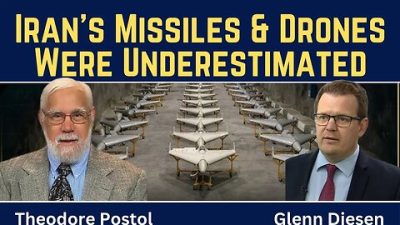
Theodore Postol: Iran’s Missiles & Drones Were Underestimated
or go to
Aletho News Archives – Video-Images
From the Archives
What is the Israeli Lobby in Australia Doing in Interfaith Dialogue?
By Ali Kazak | Dissident Voice | October 11, 2015
For years Israel and its lobby around the world have been trying to normalise their relations with Arabs and Muslims without solving the Palestine Question.
One of the methods they resorted to in the last few years is using human rights and community organizations such as interfaith dialogue and Multiculturalism to achieve this objective and to: isolate the Palestinians, marginalise the Palestine question, end Israel’s isolation, and prevent criticism of Israel, knowing that these organisations will be the first to stand against Israel’s violations, racial and religious discrimination.
The group responsible for this task in Australia is The Australia/Israel & Jewish Affairs Council (AIJAC); its Director of International & Community Affairs, Jeremy Jones is in charge of lobbying religious community organizations, specifically Muslims and Christians. Consequently he convened the Faith Communities for Reconciliation, founding participant in the Australian Partnership of Religious Organisations and the Australian National Dialogue of Christians, Muslims & Jews.
AIJAC is a private political propaganda group. It is recognised as the main Israeli lobby in Australia. It coordinates its activities and works intimately with the Israeli embassy in Canberra and different institutions in Israel. It is privately funded by some Jewish businessmen. It monitors closely Australian politicians, the media, ethnic and religious groups, (especially Arabs and Muslims), unions and academics on their stands towards Israel and the Palestine question. … continue
Blog Roll
 Aletho News
- The killing of three Indonesian soldiers in Lebanon should remind Jakarta that Israel does not want peace
- Defeated and delusional: Netanyahu’s remarks reveal $80bn war failure, says analyst
- Iran’s friends are about to make life much more difficult for Israel and the US
- The war of liberation of the Arab and Islamic peoples expands across the Gulf
- Envoy warns UN on Trump’s threat to ‘obliterate’ Iran’s civilian infrastructure
- The Larak Corridor: Iran’s Rial Gate With No US, No Israel, and No Way Around
- ‘Economic terrorism’: Steel facilities hit again in US-Israeli strike
- ‘War Crime’: Iran condemns attacks on Arak, Ardakan nuclear sites
- Two-thirds of Americans want quick end to Iran war even if goals unmet
- Trump to Give “Important Update on Iran” Wednesday in Prime-Time Speech
- If Americans Knew
- Gaza families reunite years after babies evacuated amid Israel’s war
- International Rescue Committee warns Gaza’s children face grave protection risks
- Iran’s Alleged 47-Year War on America: Debunking the 1,050 American Deaths Canard
- Israel wants US to bomb more of Iran’s civilian structures (113,000 is not enough) – Not a ceasefire Day 173
- Ann Coulter Rips Into Fox News for Iran War Coverage
- Joe Kent Urges Americans To Call White House and Congress To Object To Sending Troops Into Iran
- DNC Resolution to Reject AIPAC Funding Puts Democratic Leaders in the Hot Seat
- Swedish foundation to build 400 schools as over 650,000 Gaza children remain without education for 2 years
- Israeli army admits photshopping image of slain Lebanese journalist
- This is how Israel is systematically killing health workers under the cover of war in Lebanon
- No Tricks Zone
- New Study Finds Warming Saves Lives…Cold Temperatures 12 Times More Deadly Than Excess Heat
- German Science Blog Accuses PIK Climate Institute Of Hallucinating Climate Tipping Points
- Devastating Assessment Of Comirnaty Vaccine By Former Senior Pfizer Europe Toxicologist
- New Study: CO2 Is ‘Effectively Negligible’ As An Explanatory Climate Change Factor Since 2000
- Former Pfizer Toxicologist Dr. Helmut Sterz Tells Bundestag Hearing Pfizer Vaccine Should Have Never Been Approved
- Energy Expert: Germany’s Nuclear Phaseout Was A “500 Billion Euro Mistake”
- New Research: South Australia’s Mid-Holocene Sea Surface Temperatures Were 4°C Warmer Than Today
- Storing Green Energy To Last Germany 10 Days Would Require A 60-Million Tonne Battery
- New Studies: UK Sea Levels Were 4 Meters Higher Than Today During The Mid-Holocene
- Destructive Green New Deal: German Energy And Metal Group Warns Of Drastic Crisis
 Aletho News