Israel, threat to world peace: Nobel laureate Gunter Grass
Press TV – April 4, 2012
German Nobel literature laureate Gunter Grass has called Israel a threat to world peace, slamming the West’s hypocrisy over Tel Aviv’s nuclear arsenal.
In a controversial poem titled “What Must Be Said” which was published in Germany’s Suddeutsche Zeitung newspaper on Wednesday, Grass expressed concern over the consequences of Israel’s plan to attack Iran.
“Why do I say only now … that the nuclear power Israel endangers an already fragile world peace? Because that must be said which may already be too late to say tomorrow,” Grass wrote.
“We could be suppliers to a crime that can be foreseen, which is why none of the usual excuses would erase it,” Grass writes, referring to Germany’s plan to sell Israel a sixth nuclear-capable Dolphin-class submarine that can carry nuclear warheads.
“I will be silent no longer, because I am weary of the West’s hypocrisy,” Grass added.
Three earlier-model Dolphin submarines had been delivered to Israel between 1998 and 2000. In 2006, Tel Aviv placed its fourth and fifth orders for two more advanced subs.
The fourth one is scheduled for delivery by 2013. The fifth and the sixth orders are due for delivery in 2014 and 2016 respectively.
Israel is the only possessor of nuclear weapons in the Middle East and it has never allowed inspections of its nuclear facilities nor has it joined the Non-Proliferation Treaty (NPT) based on its policy of nuclear ambiguity.
According to a survey conducted in 2011 by the Berlin-based Friedrich Ebert Foundation, more than 50 percent of the European people believe Israel is the most serious threat to global security.
Related articles
- The Real Nuclear Outlaws (alethonews.wordpress.com)
- Demanding Intrusive Inspections While Threatening (alethonews.wordpress.com)
Worse than SOPA? CISPA to censor Web in name of cybersecurity
RT | April 4, 2012
As congressmen in Washington consider how to handle the ongoing issue of cyberattacks, some legislators have lent their support to a new act that, if passed, would let the government pry into the personal correspondence of anyone of their choosing.
H.R. 3523, a piece of legislation dubbed the Cyber Intelligence Sharing and Protection Act (or CISPA for short), has been created under the guise of being a necessary implement in America’s war against cyberattacks. But the vague verbiage contained within the pages of the paper could allow Congress to circumvent existing exemptions to online privacy laws and essentially monitor, censor and stop any online communication that it considers disruptive to the government or private parties. Critics have already come after CISPA for the capabilities that it will give to seemingly any federal entity that claims it is threatened by online interactions, but unlike the Stop Online Privacy Act and the Protect IP Acts that were discarded on the Capitol Building floor after incredibly successful online campaigns to crush them, widespread recognition of what the latest would-be law will do has yet to surface to the same degree.
Kendall Burman of the Center for Democracy and Technology tells RT that Congress is currently considering a number of cybersecurity bills that could eventually be voted into law, but for the group that largely advocates an open Internet, she warns that provisions within CISPA are reason to worry over what the realities could be if it ends up on the desk of President Barack Obama. So far CISPA has been introduced, referred and reported by the House Permanent Select Committee on Intelligence and expects to go before a vote in the first half of Congress within the coming weeks.
“We have a number of concerns with something like this bill that creates sort of a vast hole in the privacy law to allow government to receive these kinds of information,” explains Burman, who acknowledges that the bill, as written, allows the US government to involve itself into any online correspondence, current exemptions notwithstanding, if it believes there is reason to suspect cyber crime. As with other authoritarian attempts at censorship that have come through Congress in recent times, of course, the wording within the CISPA allows for the government to interpret the law in such a number of degrees that any online communication or interaction could be suspect and thus unknowingly monitored.
In a press release penned last month by the CDT, the group warned then that CISPA allows Internet Service Providers to “funnel private communications and related information back to the government without adequate privacy protections and controls.
The bill does not specify which agencies ISPs could disclose customer data to, but the structure and incentives in the bill raise a very real possibility that the National Security Agency or the DOD’s Cybercommand would be the primary recipient,” reads the warning.
The Electronic Frontier Foundation, another online advocacy group, has also sharply condemned CISPA for what it means for the future of the Internet. “It effectively creates a ‘cybersecurity’’ exemption to all existing laws,” explains the EFF, who add in a statement of their own that “There are almost no restrictions on what can be collected and how it can be used, provided a company can claim it was motivated by ‘cybersecurity purposes.’”
What does that mean? Both the EFF and CDT say an awfully lot. Some of the biggest corporations in the country, including service providers such as Google, Facebook, Twitter or AT&T, could copy confidential information and send them off to the Pentagon if pressured, as long as the government believes they have reason to suspect wrongdoing. In a summation of their own, the Congressional Research Service, a nonpartisan arm of the Library of Congress, explains that “efforts to degrade, disrupt or destroy” either “a system or network of a government or private entity” is reason enough for Washington to reach in and read any online communiqué of their choice.
The authors of CISPA say the bill has been made “To provide for the sharing of certain cyber threat intelligence and cyber threat information between the intelligence community and cybersecurity entities,” but not before noting that the legislation could be used “and for other purposes,” as well — which, of course, are not defined.
Related articles
ACLU calls for closure of Tamms supermax facility
By Rachel Myers, ACLU | April 4, 2012
David Fathi, director of the ACLU National Prison Project, testified today in favor of closing Tamms Correctional Center at a hearing before the Illinois Commission on Government Forecasting and Accountability in Ullin, Illinois. Tamms is a supermax prison where prisoners are held in long-term solitary confinement, often for a decade or longer.
The following is an excerpt from the ACLU’s testimony:
Tamms is a supermax facility in which prisoners — many of them mentally ill — are held in solitary confinement, sometimes for years on end. A 2009 study by the Belleville News-Democrat found that 54 Tamms prisoners had been in continuous solitary confinement for more than ten years.
The shattering effects of solitary confinement on the human psyche have long been well known.
In 1890, the United States Supreme Court described the devastating effects of solitary confinement as practiced in the nation’s early days:
A considerable number of the prisoners fell, after even a short confinement, into a semi-fatuous condition, from which it was next to impossible to arouse them, and others became violently insane; others, still, committed suicide; while those who stood the ordeal better were not generally reformed, and in most cases did not recover sufficient mental activity to be of any subsequent service to the community.
Half a century later, the Court referred to solitary confinement as one of the techniques of “physical and mental torture” that have been used by governments to coerce confessions.
More recently, the Chicago-based U.S. Court of Appeals for the Seventh Circuit observed that “the record shows, what anyway seems pretty obvious, that isolating a human being from other human beings year after year or even month after month can cause substantial psychological damage, even if the isolation is not total.” The court recognized that “there is plenty of medical and psychological literature concerning the ill effects of solitary confinement (of which segregation is a variant)[.]”
And in 2010, an Illinois federal court found that “Tamms imposes drastic limitations on human contact, so much so as to inflict lasting psychological and emotional harm on inmates confined there for long periods.”
A number of states have dramatically reduced their use of solitary confinement, preserving prison and public safety and saving millions of dollars in the process. None of these states have experienced any adverse effect on prison or public safety as a result of reducing their use of solitary confinement. This is not surprising, as evidence shows that prisoners released from solitary confinement have higher recidivism rates than comparable prisoners released from general population.
Because of the profoundly damaging effects of solitary confinement, particularly on prisoners with mental illness, a number of federal courts have ruled that conditions in supermax prisons like Tamms cause such extreme suffering that they violate the Constitution’s prohibition on cruel and unusual punishments.
A federal court in California characterized housing prisoners with mental illness in a supermax unit as “the mental equivalent of putting an asthmatic in a place with little air to breathe.” And a federal court in Wisconsin ordered prison officials to remove prisoners with mental illness from the state’s Supermax Correctional Institution.
Conditions at Tamms are also inconsistent with international human rights principles. In a global study on solitary confinement, presented last year to the United Nations General Assembly, the U.N. Special Rapporteur on Torture called on all countries to ban the practice, except in very exceptional circumstances, as a last resort, and for as short a time as possible. The Special Rapporteur concluded that solitary confinement can amount to cruel, inhuman or degrading treatment or punishment and in some cases even torture. He recommended a ban on solitary confinement exceeding 15 days, and the abolition of solitary confinement for juveniles and mentally disabled persons.
The U.N. Committee Against Torture, the official body established pursuant to the Convention Against Torture — a treaty ratified by the United States — has also recommended that the practice of long-term solitary confinement be abolished altogether.
Because it is inconsistent with international human rights norms, the use of supermax prisons like Tamms threatens the ability of the United States to secure the extradition of criminal suspects from other nations. The European Court of Human Rights has temporarily blocked the extradition of three terrorism suspects to the United States on the ground that if convicted, their eventual confinement in a U.S. supermax prison might violate the European Convention on Human Rights.
Closing Tamms will advance human rights, preserve public safety, and save Illinois taxpayers tens of millions of dollars. The ACLU respectfully urges the Commission to take this long overdue step.
The full text of the written testimony submitted to the Commission by the ACLU and the ACLU of Illinois is available here. You can also listen to a new podcast with former Tamms prisoner Brian Nelson (pictured above), who spent 23 years in solitary confinement.
Related articles
- Supermaxed Out: Adios to an Isolation Facility (montanacorruption.org)
- California prisoners ask U.N. to probe solitary confinement (latimesblogs.latimes.com)
- Amnesty International accuses Arizona of abuse in prisons (aboriginalpress.wordpress.com)
EU Adds Venezuela’s State Airline to its List of Banned Airlines
By Tamara Pearson | Venezuelanalysis.com | April 3rd 2012
Mérida – The Venezuelan government rejected the European Union’s announcement today that it is adding Venezuela’s state-owned airline Conviasa to its list of carriers banned from its airspace.
The Venezuelan government created Conviasa in 2004 to replace the private airline Viasa, which was liquidated in 1997. Conviasa flies numerous national and Latin American routes, as well as to Spain, Ecuador, and Syria, at affordable prices. The government has also used it to deliver humanitarian aid to countries in need such as Japan and Haiti.
In June last year, U.S. politicians, during a hearing in the House of Representatives, requested that a number of measures be taken against the Venezuelan government, including sanctions against Conviasa for “supporting terrorism” because of its flights to Syria.
According to the European Commission press statement released today, the ban is due to “numerous safety concerns arising from accidents and the results of ramp checks at EU airports.” The decision, it says, is “based on the unanimous opinion of the Air Safety Committee, composed of representatives of the 27 Members States of the EU, Croatia, Norway, Iceland, Switzerland and the European Aviation Safety Agency (EASA)”.
“The safety performance of two other Venezuelan air carriers, Estellar Latinoamerica and Aerotuy, was also reviewed in depth; however, measures were not considered necessary at this stage. Nonetheless, these two air carriers remain subject to increased monitoring,” read the statement.
The Venezuelan government has expressed its “firm rejection” of the measure in an official statement today.
The decision is “completely disproportionate and contrary to the conclusions of the International Civil Aviation Organization (ICAO) regarding [Conviasa’s] safety performance,” said the Venezuelan government.
“The government of the Bolivarian Republic of Venezuela is evaluating reciprocal and proportionate actions to protect its fundamental interests and safeguard the prestige of the state-run airline for the Venezuelan people and the international community,” the statement concluded.
The European Union first wrote its blacklist in March 2006, and has since updated it four times a year. It is apparently based on deficiencies found during checks at European airports.
According to Bloomberg, “In addition to imposing an operational ban in Europe, the blacklist can act as a guide for travellers worldwide and influence safety policies in non-EU countries”.
All airlines from Afghanistan, Angola, Benin, the Democratic Republic of Congo, the Republic of Congo, Djibouti, Equatorial Guinea, Gabon, Indonesia, Kazakhstan, Kyrgyzstan, Liberia, Mauritania, Mozambique, Philippines, Sao Tome and Principe, Sierra Leone, Sudan, Swaziland, and Zambia, are banned from EU airspace. People wishing to travel between those countries must use European airlines or airlines from other countries.
In other cases, only specific airlines are banned, such as Air Madagascar, Air Koryo of North Korea, Iran Air, and Jordan Aviation. In Latin America, only Conviasa of Venezuela and Rollins Air of Honduras are now banned.
Related articles
Capriles and Chavez Neck and Neck, and Pigs Might Fly, or Conduct a Poll
By Rachael Boothroyd – Venezuelanalysis.com – April 3rd 2012
According to Latin American polling companies such as Datanalisis and Consultores 21, this year’s presidential elections in Venezuela will be a close-knit affair, with Consultores 21 claiming that there is currently a “technical draw” between the country’s support for incumbent President Chavez and his opponent, Capriles Radonski, and Datanalisis claiming that Chavez leads his rival by just 13 points (44% to 31%). According to other polls, however, Chavez is expected to sweep the elections, with polling companies such as IVAD, confirming that 57 .6% of voters would vote for the president and just 26.6% for Capriles.
Despite the almost disorientating levels of differences between poll results, the international press and in fact, Capriles himself, have decided to cherry pick the Datanalysis and Consultores 21 statistics, and it’s not hard to see why. Part of the opposition’s strategy in the run up to this year’s elections has been to emphasise its unity and its position of strength in relation to the sick/ailing Chavez – for instance, by claiming that over 3 million people had voted in this year’s Roundtable of Democratic Unity (MUD) coalition primary elections, when this is almost certainly a physical impossibility, if not a verifiable one, given that the opposition burnt all the ballot books before an investigation could be conducted.
This could all just be political showmanship in the face of past failures, but it is also possible that this forms part of a broader strategy to contest this year’s election results in October; when it is entirely likely that a sick Chavez will beat the opposition hands down yet again. Notably, the opposition coalition, unlike Chavez, has still not publically confirmed that they will accept the election results no matter what their outcome might be.
Tellingly, whilst Capriles has stated that he does not recognise the results of the other polling companies; he has made an exception for Consultores 21, stating: “personally, I believe in Consultores. I’ve been looking at Consultores’ polls for many years”.
Despite this being exceptionally convenient; it is also a foolhardy thing to say, because Consultores has made some disastrously bad predictions over the past few years. In the 2004 presidential recall, Consultores predicted that there would be a tie between those wanting Chavez to stay in office and those wanting him out, just before Chavez was then ratified as president by 60% of the population. And this wasn’t just a one-off glitch. In 2006 during the presidential run-off between Chavez and opposition candidate Manuel Rosales, Consultores maintained that Chavez had just a 13% lead over his opponent. The president then went on to take the presidential elections with almost a 30% advantage over Rosales (65.8% to 36.9%).
But Consultores is not alone in Neverland, with Datanalisis also possessing a penchant for pie in the sky polling. In 2009, in the run-up to the referendum on whether to eliminate presidential term limits, the polling company consistently predicted that the electorate would vote against the changes in a victory for the opposition – right up until releasing their final poll results, which suddenly showed that 51.5% would vote in favour of eliminating term limits, whilst 48.1% would vote against. Not only was this a dramatic change that was never explained by the company, but it also underestimated the pro-government vote and inflated the opposition’s support. The actual figures demonstrated almost a 10% margin in favour of the reforms, which were passed with 54.5% in favour and 45.15% against.
Of course, in an interview with Globovision last week, Datanalisis’ Director, Luis Vicente Leon, was quick to rectify that the company’s recently released figures are subject to change, given the “unpredictability of polls” – a somewhat surprising statement given that at least three other polls have consistently shown that Chavez’s support has remained stably around the 57% mark for the past 6 months.
These rather serious blunders, which at best could be interpreted as poor polling methodology and at worst, deliberate attempts to manipulate the electorate, are not the only thing which discredits these companies. In fact, both directors of these pollsters have direct relationships to the opposition and the U.S. government, with Leon in particular featuring frequently in Wikileaks’ Cablegates giving advice to U.S. officials at the embassy in Caracas.
Equally, Datanalisis’ surveys are funded by the somewhat ambiguously named private and international “clients,” and despite the company’s alleged commitment to “transparency” on its webpage, there is absolutely no information regarding who the donors and financers of this poll are and in what ways they contributed; with the “Clients” section of their webpage simply featuring a rather ambiguous road sign.
According to Mayor of the Libertador district in Caracas, however, Jorge Rodriguez, one of the company’s principal clients is the Democratic Action party, one of Venezuela’s traditional parties which maintained a rotating democracy with the Christian Democrat Party during the Fourth Republic (1958-1998) and which incidentally forms part of the MUD with Capriles.
Whilst they dismiss other polling companies as state “propaganda,” the media neglects to mention the very obvious links between these polling companies and the opposition, as well as the fact that even pollsters such as Hinterlaces, which are sympathetic to the opposition, are currently putting President Chavez well ahead of Capriles at 52% versus 34%. And although Leon has described these surveys as not “serious”, it is true that pollsters such as IVAD, which despite consistently underestimating the pro-Chavez vote, have evidently been much more effective in predicting the outcome of electoral processes than Datanalisis; including in predicting the public’s rejection of the 2007 constitutional reforms.
Despite this, both companies remain almost exclusively the mainstream press’ sources of choice when hypothesising over the elections. Anyone living in the U.S. or Europe would be forgiven for thinking that Capriles is the “man who would beat Hugo Chavez,” as Reuters UK reports.
However, the media’s fixation on the Datanalisis poll in particular is illuminating for another aspect, and that is because the poll revealed two important political factors which fundamentally contradict the usual representation of the Venezuelan process and which the media have decided to totally ignore.
Firstly, as opposed to the usual claims in the mainstream press that the Chavez ranks are made up of a die-hard Chavista core, the poll found that Chavez’s support was strongest, and indeed growing, amongst the country’s youth, who, according to Jorge Rodriguez, “feel more identified…with the proposal for the future which President Chavez’s presidency represents”. Interestingly, the poll also revealed that whilst 46% of the electorate would vote for Chavez, 40% of those would vote for another member of the PSUV, including Chavez’s brother Adnan or Vice-president Elias Jaua.
What we can glean from this is that a decent majority of government supporters vote for a party and a program, and not simply for Chavez’s “personality cult,” as is usually inferred. A reality which was confirmed when I did a number of interviews outside a rally for the president’s health in February, where every interviewee informed me that they would vote for another PSUV candidate in the event that Chavez were unable to stand; but never for the opposition, which one woman told me would be like “going backwards”.
Given the rather suspect source of these figures, it would be unwise to take them as given. However, they are in fact backed up by other polls conducted by GISXXI and IVAD, which also confirm that over 50% of Venezuela’s youth support Chavez. Similarly, the results of a poll released in February this year by IVAD also reveal that whilst 42.8% of participants belonged to the PSUV party (United Socialist Party of Venezuela), only 3.7% belonged to Justice First (Capriles party), 3.6% to Democratic Action, 3.4% to a New Time, 2.5% to Project Venezuela, with the membership of other parties falling to below 2%. With this in mind, the suggestion that Capriles is currently running neck and neck with Chavez seems about as likely as pigs developing the ability to speak Spanish, sprouting a pair of opposable thumbs and setting about conducting their own set of polls.
The most salient characteristic of all these polls, no matter which one you look at and no matter from what angle; is that after 13 years in government, with a financial crisis, a sick Chavez, and an endless string of destabilisation attempts under its belt, the government still manages to maintain incredible levels of support, and this continues to both baffle and infuriate the opposition; who for all the funding they receive and for all their control of the country’s media, have once again failed to present an alternative to the revolution which is capable of resonating with the Venezuelan people.
Related articles
- New poll shows tight race in Venezuela (local10.com)
- Chavez rival touts poll results showing close race (sacbee.com)
Venezuela is the Fifth Happiest Country in the World
AVN / Press Office – March 30, 2012
On Friday, the Washington Post highlighted a global happiness survey released last year by the polling firm Gallup, which found that Venezuela is the fifth happiest country in the world. According to the poll, 64 percent of Venezuelan respondents said their well-being was thriving.
The poll measured how people in 124 countries rated their lives at the current time and their expectations for the next five years.
Topping the list were Denmark (72 percent), Sweden (69 percent), Canada (69 percent), and Australia (65 percent). Finland is tied with Venezuela, sharing the fifth spot.
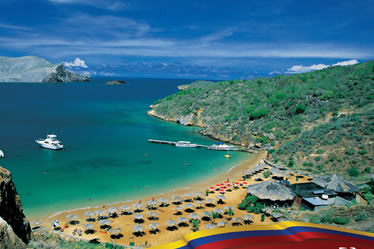 Venezuela is the Latin American country with the highest wellbeing, followed by Panama (11), Costa Rica (14), Brazil (15) and Mexico (19).
The classifications according to which respondents rated their wellbeing included “thriving,” “struggling,” or “suffering.” People who considered themselves to be thriving rated their lives a 7 or higher on a scale from 0 to 10.
According to the Post, the poll showed that the respondents with highest wellbeing also reported fewer health problems, less stress and sadness, and more happiness, respect and enjoyment.
Out of the 124 countries polled in 2010, the majority of residents in only 19 countries (mostly in Europe and the Americas) rated their lives “thriving.”
An article published on the Gallup website states that the list “is largely dominated by more developed and wealthier nations, as expected given the links between wellbeing and GDP.”
Nevertheless, it states: “Global wellbeing improved little between 2009 and 2010, remaining relatively steady when Gallup groups all these countries into four major global regions: Asia, Africa, the Americas, and Europe.”
Results have 95 percent confidence rate with a maximum margin of error of ±1.7 to ±5.7 percentage points.
Click here to see the poll results.
Related articles
- New Venezuelan Social Network Takes Off (alethonews.wordpress.com)
Thirty Palestinians killed by Israel in March, 300 imprisoned
MEMO | April 2, 2012
A human rights organisation has reported that the Israeli occupation forces have stepped up what it calls their “racist and aggressive practices” against the Palestinian people over the past month, during which Israel carried out dozens of operations and military incursions in the occupied Palestinian territories. “Thirty Palestinians were killed by Israel in March,” said the International Solidarity Foundation for Human Rights, “most of them in the besieged Gaza Strip.”
The Foundation said that three children under the age of eighteen were martyred in the West Bank. Two of the children – named as Hamza Zayed Jaradat and Zayed Jomah Jaradat, both age 12 ‑ from the area of Wadi Al Reem, near Hebron, were killed when a suspicious object left in the area by the Israeli occupation army exploded. The third minor was Zakaria Jamal Abu Arram, age 17 from the town of Yatta, near Hebron, who was killed during a confrontation with Israeli soldiers when local Palestinians tried to stop the security forces from re-arresting one of the detainees released in the last prisoner exchange deal.
According to the Foundation, Israel’s arrests of Palestinians have also increased in the past month. “More than 300 Palestinians, including 56 children and seven women, and many ex-detainees who have already spent many years in prison, were taken into detention by the Israelis,” it said in its statement.
Related articles
- Israeli Brutality: Violent arrests of Palestinians in Hebron and disappearance of Dutch volunteer (alethonews.wordpress.com)
- One Killed, 37 Injured, by Israeli troops Gunfire in Gaza Land Day Protests (alethonews.wordpress.com)
- Israeli Troops Kill a Palestinian Youth; Injures and Arrest Another (alethonews.wordpress.com)
Brits to pay $3 bln to be spied upon on web, emails, texts
RT | 03 April, 2012
UK taxpayers will have to pay billions of dollars to have their web surfing, email exchange, text messaging, and even Skype calls, monitored. In addition to the hefty price-tag, innocent Brits risk being misidentified as terrorists.
The shocking data comes ahead of the plan announcement in the Queen’s speech, which is scheduled for May. Meanwhile, the Home Office, Britain’s interior ministry, said ministers were preparing to legislate “as soon as parliamentary time allows”.
More than $3 billion over the first decade alone is the extraordinary sum the British taxpayer will have to pay to be legally spied upon, reports the Daily Mail. In addition, annual running costs of roughly $320 million – $610 a minute – to store the data gathered from private communication.
Moreover, the above figures are based on 2009 estimates, which means the actual price, if it were estimated now, would be higher still.
British security agencies are pushing for a law, which would allow police to gain access to who you call, what sites you surf and how you play video games.
The government wants details about text messages, phone calls, email, visited websites, Facebook and Twitter exchanges and even online game chats.
The bill is aimed at finding potential terrorists and criminals in the name of protecting British citizens. However, Brits themselves might need protection from the side-effects caused by the new policy. According to the Information Commissioner’s Office – an independent watchdog upholding information rights in the public interest – once implemented, the bill may lead to innocents being wrongly identified as criminals. Or worse still – terrorists.
According to ICO internal documents uncovered by Tory MP Dominic Raab, this misidentification may lead to regular people being barred from flying along with terrorist suspects and criminals alike.
“Individuals may be wrongly identified, subject to identity fraud or there may just be a mistake. How do they put this right? Intelligence can be used to put people on no-fly lists, limit incomes or asset grabs by government agencies,” the documents read.
Rights activists fear potential abuse of the surveillance, as well as hacker threats to the database storing the personal details collected. It will be a responsibility of providers to store the data for two years. ICO documents cover this sensitive subject too, warning of the potential for abuse by service providers.
These revelations have caused an upheaval among British politicians, with both Tories and Liberal Democrats standing their ground as opponents of the policy, which was first suggested by the Labour government back in 2006. Six years on, MPs are raising their brows at the estimated cost of the project, in the wake of financial hardships that push UK government to make cuts elsewhere.
The plan is said to have been prepared by the Home Office in collaboration with home security service MI5, the foreign intelligence service MI6 and the Government Communications Headquarters (GCHQ), the body responsible for signals intelligence and information assurance for UK’s government and armed forces.
The plan is expected to be announced in May in the Queen’s Speech. It is a rewrite of a similar plan, which was developed by the Labour Party, but had been shelved in November 2009 due to lack of public support. Then in opposition the Conservatives criticized Labour’s “reckless” record on privacy.
Iranian Diplomat Says IAEA Undermined Recent Talks to Satisfy Israel and West
TheRealNews | April 3, 2012
Gareth Porter: IAEA demanded to see Parchin on recent visit ahead of schedule to make Iran look uncooperative
Related articles
Bad Losers’ Conference: Syrians Pay the Price
By Jeremy Salt | Palestine Chronicle | April 3, 2012
Ankara – The ‘Friends of Syria’ conference in Istanbul ended with a pledge of qualified support for the Annan plan while agreeing on concrete measures to undermine it. Saudi Arabia and other gulf states are going to stump up the money to turn the so-called Free Syrian Army into a fully-fledged mercenary army. Saudi Arabia and Qatar had previously said that they intended to spend millions of dollars arming the ‘rebels’ and at the ‘Friends of Syria’ conference, the US, Britain and the gulf states agreed to spend millions more on providing the armed groups with unspecified ‘humanitarian’ assistance and ‘communications equipment’. The gulf states are also hoping their money will lure Syrian soldiers into defecting.
Saudi Arabia and Qatar operate on the basis of human cupidity and greed. They must be surprised on those occasions when they discover that not everyone has a price. Late last year the Qatari Prime Minister, Hamad bin Jasim al Thani, was reported to have offered Syrian Foreign Minister Walid al Muallim $100 million and permanent residence in Qatar if he would defect. The occasion was a meeting of the Organisation of the Islamic Conference in Jeddah. Muallim declined, asking in return, rhetorically of course, how much money Qatar had spent so far internationally and regionally to deepen the crisis in Syria. This follows on from the money Qatar spent on the destruction of the Libyan government.
In February eight million Syrians voted for political reform that will usher in a multi-party political system and will remove the Baath party as the central pillar of state and society. The armed gangs have been chased out of the cities where they had dug themselves in. Human rights groups and the media are finally drawing attention to what they have wilfully ignored for months, the extreme violence of the FSA and other groups of armed men, directed against soldiers and civilians. Recently Der Spiegel, rightwing and openly hostile to the Assad government, ran an article on the executioners of Homs, the men who were taking the captives of the FSA to a burial ground and cutting their throats. Interesting that none of the correspondents smuggled across the border into Homs seem to have picked this up before.
If there is a role for any outside party surely it should be to help wind down the conflict in Syria, not wind it up, yet this is precisely what the ‘Friends of Syria’ are doing. Will Ban Ki-Moon or Kofi Annan have anything to say about this? They have a peace plan which cannot possibly work as long as its ostensible supporters are working to undermine it. Syria has accepted the Annan plan but has made the obvious point that it cannot pull its soldiers and tanks off the streets unless the armed gangs lay down their weapons. Here we have Saudi Arabia and Qatar shelling out money to ensure they keep fighting, with the backing of the other ‘Friends of Syria’. We can see what this is intended to produce, a situation in which every time the Syrian army is involved in conflict with armed groups it will be blamed for violating the Annan plan. All the ‘rebels’ have to do is keep shooting. This is exactly what their peace-loving supporters meeting in Istanbul want them to do.
If there is a proper name for the group that met in Istanbul it should be the Bad Losers’ Conference. These people have thrown everything into the struggle to bring down the Syrian government. They have plotted and conspired. They have used their media and they have thrown money and weapons at the ‘rebels’ but they have failed. Assad – abused and insulted by them – is still there and more on top of the situation than he was a little while ago. It should be ‘game over’ but Saudi Arabia and Qatar, in particular, are determined to play on irrespective of the cost in human lives and destruction to Syria and its people.
Hillary Clinton or her public relations machine tried to give the impression that she was in Saudi Arabia to talk the Saudis out of doing anything rash. More likely she was there to frame how the next steps would be taken, with Saudi Arabia stepping out in front and the US appearing to follow on behind. There is no point in saying anything about Clinton. She is what she is and no comment is needed. The Saudis are driven by their own agenda, which is to set up a Sunni Muslim wall against Iran and Shi’ism across the Middle East. Does anyone seriously think they have the best interests of the Syrian people at heart?
As for Turkey, its relationships with near neighbors have been transformed in the space of a year from good to bad. Insofar as Syria is concerned, the Turkish Prime Minister and his Foreign Minister have burnt their bridges. It is either them or Assad from now on. Certainly there can be no resumption of good relations as long as he or they remain in government. Someone has to go and they are determined it is going to be him. Alienating Syria has meant alienating Iran and raising the suspicions of the Shia-dominated government in Iraq, which has strongly opposed Turkey’s line on Syria. In January the two countries exchanged harsh words over the warrant for arrest issued against Iraqi Vice President Tariq al Hashimi, a Sunni Muslim accused of organising death squads used against Shia Muslims. Fleeing to Kurdistan, Mr Hashimi has now turned up as a guest of the ruler of Qatar. He denies being ‘part of Turkey’s geopolitical project’ but admits to receiving ‘advice’ from Turkey and has stated that he feels ‘indebted’ to the Turkish Prime Minister, Recep Tayyip Erdogan, for ‘making statements on my case’.
These amounted to the view that Mr Hashimi was being pursued because he was a Sunni Muslim. At a party meeting in Ankara, the Turkish Prime Minister, responding to Iraqi accusations of meddling, said that ‘Mr Maliki [Iraqi Prime Minister Nuri al Maliki, a Shia] should know very well that if you initiate a period of clashes in Iraq based on sectarian strife it is impossible for us to remain silent’. The refusal of the Kurdish governorate to hand Mr Hashemi over to the government in Baghdad deepens the divide between these two centres of power in Iraq. The warm welcome Mr Hashimi was given in Qatar is further evidence of the broader divide that is taking shape in the Middle East, with the US, the EU, the Gulf states and Turkey standing on one side and Iran, Syria, Lebanon, Iraq, Russia and China on the other.
After the meeting of the ‘Friends of Syria’ in Istanbul, Nuri al Maliki strongly condemned the decision of Saudi Arabia and Qatar to give further support to the armed groups in Syria. ‘We reject any arming [of Syrian rebels] and the process to overthrow the regime because this will leave a greater crisis in the region. The stance of these two states is very strange. They are calling for sending arms instead of working to put out the fire and they will hear our voice, that we are against arming and against foreign interference. We are against the interference of some countries in Syria’s internal affairs and those countries that are interfering in Syria’s internal affairs will interfere in the internal affairs of any country’.
His position is shared by Egypt, whose Foreign Minister, Muhammad Kamal Amr said after the Istanbul meeting that ‘arming the Syrian opposition, as Egypt sees it, will increase the rate of killings and will transform the situation in Syria as a whole to full-scale civil war’. Egypt’s misgivings are certain to be shared by other Arab governments, suggesting that in their single-minded pursuit of the Syrian government and their continued support for armed ‘resistance’ the gulf states and Turkey are very much in a regional minority.
In confronting Syria, Turkey inevitably alienated Iran and further exacerbated relations by agreeing to give the US the right to install an anti-missile radar station on its soil. Its only possible use could be to forestall missile retaliation in the event of an attack on Iran by the US or Israel (or both). Turkey has tried to placate Iran but insofar as Syria is concerned Iran is standing firm. It knows full well that it is next on the chopping block.
A perceptible nervousness about the actions of the government is beginning to appear in the Turkish media. In confronting Syria in such a belligerent manner and giving support to an armed group carrying out attacks in a neighboring state, the government has opened a new chapter in Turkey’s foreign policy. The legal dimensions of this policy are now coming up for scrutiny. Writing in Hurriyet Daily News, Yusuf Kanli made the following observation: ‘In the absence of a declaration of war or authorisation by parliament, it is a crime under Turkish law to allow Turkish territory to be used for hostile purposes against any neighboring country. Turkey is hosting scores of rebel commanders and there are serious claims that the rebel forces are receiving arms through Turkish territory. With almost 50 per cent electoral support, the current Turkish government can escape all kinds of accountability but as electoral support cannot last forever, tomorrow may be bleak, particularly if the effort to change the Syrian regime fails’.
Well, up till now it has failed and the continued attempt to drive Bashar al Assad out of office is going to cost more lives than the thousands who have died so far. As Syria is not just the will of one man, contrary to the image projected by the media, what would this achieve anyway? Rather than back off and throw their weight behind a peaceful solution, the ‘Friends of Syria’ decided to continue their campaign of support for the armed men at the precise moment Kofi Annan is calling on everyone to lay down their arms. The logic is Macbeth’s. They have gone so far in this venture that ‘returning were as tedious as go o’er’ but it is Syria and Syrians who will have to pay the price for their decision to keep going.
– Jeremy Salt is an associate professor of Middle Eastern history and politics at Bilkent University in Ankara, Turkey.
Related articles
- The belligerent “friends” of Syria in Istanbul (alethonews.wordpress.com)
- Saudi Arabia to recognize, fund Syrian National Council; Russia rejects Syria resolution (alethonews.wordpress.com)
- Syria blames terrorist gangs for massacre in Homs (alethonews.wordpress.com)
Featured Video

Michael von der Schulenburg: Europe’s Self-Defeating Iran War Policy
or go to
Aletho News Archives – Video-Images
Frlom the Archives
Provoking a Path to Persia
The Saban Center’s prescient paper on war with Iran
By Maidhc Ó Cathail | October 20, 2011
In June 2009, the Saban Center for Middle East Policy published “Which Path to Persia?—Options for a New American Strategy toward Iran.” Writing in a tone strikingly reminiscent of the Project for a New American Century’s infamous pre-9/11 paper “Rebuilding America’s Defenses,” the six co-authors noted that, “It seems highly unlikely that the United States would mount an invasion without any provocation or other buildup.” For a think tank specifically established by media mogul Haim Saban to protect Israel, this could prove to be a formidable obstacle impeding their desired march—of U.S. troops—to Tehran.
“In fact, if the United States were to decide that to garner greater international support, galvanize U.S. domestic support, and/or provide a legal justification for an invasion, it would be best to wait for an Iranian provocation, then the time frame for an invasion might stretch out indefinitely,” Saban’s think-tankers ruefully observed.
“With only one real exception, since the 1978 revolution, the Islamic Republic has never willingly provoked an American military response, although it certainly has taken actions that could have done so if Washington had been looking for a fight. Thus it is not impossible that Tehran might take some action that would justify an American invasion. And it is certainly the case that if Washington sought such a provocation, it could take actions that might make it more likely that Tehran would do so (although being too obvious about this could nullify the provocation). However, since it would be up to Iran to make the provocative move, which Iran has been wary of doing most times in the past, the United States would never know for sure when it would get the requisite Iranian provocation. In fact, it might never come at all.”
Seemingly undeterred by Iran’s frustrating unwillingness to provide the requisite provocation, the analysts continued to examine this option… continue
Blog Roll
 Aletho News
- The EU never learns – except for the wrong lessons
- Iran attacks on UAE leaves RSF militia high and dry
- Hosting Washington’s war: Bahrain faces the consequences
- The US fell for its own Iran propaganda
- Seyed M. Marandi: Threat of Seizing Kharg Island & the Use of Nuclear Weapons
- Is there even an off ramp?
- Michael von der Schulenburg: Europe’s Self-Defeating Iran War Policy
- Sorry, The New Republic, Climate Change Isn’t Causing Somali Migration. Blame Civil Strife and Poverty.
- Expert Guts Claims That HPV Vaccine Reduces Cancer Risk
- No evidence Russia sabotaged Baltic cables – Finnish intel
- If Americans Knew
- 6 more Americans killed, as Israel ‘mows the lawn’ in Iran – Not a ceasefire Day 154
- Are we on the precipice of World War III?
- ‘Catastrophic,’ Says UNICEF: 1,100+ Children Killed or Wounded in Mideast Since US-Israel Launched Iran War
- The Unbelievable Madness of Our War With Iran
- World Council of Churches calls on govts to hold Israel accountable for violations of intl law
- How to end the war on Iran that costs US taxpayers $1M per minute – Not a ceasefire Day 153
- Israeli strategic plans to “remake the Middle East” from the 1950s and since
- Honoring Gaza’s women who refused to let the world look away
- 97% of victims of war on Iran are Iranian, 98% of victims in war on Gaza are Gazans – Not a ceasefire Day 152
- Early Iran strikes cost $5.6 billion in munitions, Pentagon estimates
- No Tricks Zone
- New Studies: UK Sea Levels Were 4 Meters Higher Than Today During The Mid-Holocene
- Destructive Green New Deal: German Energy And Metal Group Warns Of Drastic Crisis
- New Study Documents A 20-Year Pause In Arctic Sea Ice Decline – Driven By Internal Variability
- Wake-up Call: Survey Shows Majority Of Germans Now Favor Postponing Climate Targets!
- Televised! Leading German Political Candidate Tells Schoolchildren CO2 Makes Sun Hotter!
- New Study: A Century Warming Of 1.1°C Is ‘Commonplace’ And ‘Not Unusual’ During This Interglacial
- New Study: ‘Internal Noise’ And Volcanic Forcing Can Trigger 10-15°C Warming Within Decades
- Glaciers Worldwide Are Suddendly Surging, Experts Blame Warming!
- Surprising Discovery: Sahara Is Greening…Billions Of Trees Where Once Thought To Be Barren
- New Research Reaffirms Clouds, Aerosols, And Surface Solar Radiation Are ‘Driving The Climate System’
 Aletho News