US official visits Israel to discuss future ‘pressure’ on Iran

US Treasury Undersecretary for Terrorism and Financial Intelligence David Cohen
Press TV – June 4, 2012
The US Treasury undersecretary for terrorism and financial intelligence has traveled to Israel ahead of the upcoming talks between Iran and the P5+1 to discuss future “pressures” on Tehran.
“If we don’t get a breakthrough in Moscow, there is no question we will continue to ratchet up the pressure,” Reuters quoted David Cohen as saying during his visit to Israel.
Iran and the P5+1 (Britain, China, France, Russia, and the United States plus Germany) wrapped up their latest round of talks in Iraqi capital, Baghdad, on May 24. The two sides agreed to hold another round of talks in Moscow on June 18-19.
“We have today and over the past years had very close cooperation with the Israeli government across a range of our sanctions programs,” Cohen said.
“We will continue to consult with the Israelis,” he added.
Over the past months, Israel has constantly called for tougher sanctions against Iran over the country’s nuclear energy program.
On May 25, Israeli Prime Minister Benjamin Netanyahu said Iran must be forced to halt its nuclear energy program through tougher sanctions and stiffer demands.
The Israeli news service Ynet reported on March 1 that an Israeli official has urged the West to impose “suffocating sanctions” against Tehran, which “could lead to a grave economic situation in Iran and to a shortage of food.”
The United States, Israel and some of their allies accuse Tehran of pursuing military objectives in its nuclear energy program.
Iran has on numerous occasions refuted the allegations. In addition, the International Atomic Energy Agency, in its numerous inspections in Iran, has never found any evidence indicating that Tehran’s civilian nuclear program has been diverted towards nuclear weapons production.
Related articles
- Russia: US anti-Iran sanctions against international law (alethonews.wordpress.com)
- Deal or no deal, Iran may be bombed – Israeli minister (alethonews.wordpress.com)
Israeli forces detain Hebron journalist
Ma’an – 03/06/2012

Sharif Rajoub works as a reporter for al-Aqsa radio station.
HEBRON – Israeli forces detained a local journalist in Hebron early Sunday, relatives said.
Soldiers raided the home of Sharif Rajoub in the village of Dura and took him to an unknown destination, his brother Mahmoud told Ma’an.
Rajoub works as a reporter for Al-Aqsa radio station. He was preparing for his wedding, which was set to take place next week, his brother added.
An Israeli army spokeswoman said that a man had been arrested in Dura overnight Saturday, but could not provide further details about his identity.
Another man was arrested in Ramallah overnight, she added.
Israeli forces have raided several Palestinian news outlets in recent months.
In late February, Israeli forces raided the university institute’s Al-Quds Educational TV in Ramallah-district Al-Bireh and confiscated its broadcasting equipment, claiming it was interrupting legal broadcasting.
The same day, Israeli forces also raided Watan TV’s newsroom in Ramallah and seized transmitters.
In May, Israeli forces arrested the director of a Jenin-based satellite channel after raiding his home. Soldiers confiscated Al-Asir TV station’s broadcasting equipment, the director told Ma’an.
Related articles
- Israeli forces shut down media launch in Jerusalem (alethonews.wordpress.com)
- Israel ‘arrests TV director, confiscates equipment’ (alethonews.wordpress.com)
- Rawabi: Israeli Model for “Neo-Palestinian” City (alethonews.wordpress.com)
Italy may also launch drone attacks on Pak-Afghan border area
By Akhtar Jamal | Pakistan Observer | June 3, 2012
Islamabad—According to Airforce-technology.com the United States is now planning to arm Italy’s fleet of MQ-9 Reaper unmanned aircraft systems (UAS) with missiles and bombs, in a bid to “protect Italian armed forces from enemy threats” in Afghanistan.
Until now the United States and Britain had been using drones against “enemy elements” but almost all drone attacks carried out along Pak-Afghan borders areas had been carried out by American CIA.
The website claimed that the Obama administration was likely to announce the deal within two weeks, following which the US-built drones, operated by Italian air forces, will be equipped with weapons such as laser-guided bombs and Hellfire missiles.
The publication quoted Pentagon spokesman, George Little, as saying: “Italy is one of our strongest partners and Nato allies, and it’s important for us, for a variety of reasons, to share technologies and capabilities with them for purposes of burden sharing and to enable them to better protect themselves and, by extension, to protect the United States and our other allies.”
The American CIA carries out drone attacks citing “threats from unidentified enemies” and there are fears that if armed with missiles the Italian drones may also hit “possible enemies” considered a “threat to NATO forces”.
The report added that “Italy currently operates surveillance drones to protect its troops deployed to Afghanistan and it is likely that around six of them will be armed.”
The proposed sale may also assist the US in reallocating the global military operations burden, especially at a time when the Pentagon’s budget is facing deficit-reduction by requirements, report added.
According to the report the MQ-9 Reaper is a medium-to-high altitude UAV primarily designed for reconnaissance and surveillance and uses several kinds of sensors, including a thermal camera, and has six stores pylons that can carry a maximum of 4,600lb of weapons and external fuel tanks.
Related articles
- Hot Drone-On-Drone Action (wariscrime.com)
MSNBC: No Time for Obama’s Kill List?
By Peter Hart | FAIR | June 1, 2012
The New York Times‘ lengthy report (5/29/12) on Barack Obama’s drone “kill list” should provoke serious questions: Is such a program legal? How does it square with Obama’s criticism of the Bush administration’s “war on terror” policies? What does it tell us about how the administration identifies “militants” who are targeted for assassination?
But those questions have been raised only in fits and starts–and are basically absent from the liberal cable news channel MSNBC. In fact, a far more interesting discussion of these questions can be heard on Fox News Channel.
It’s not all good on Fox, naturally. Host Bill O’Reilly and guest Dennis Miller (5/29/12) joked about whether they were on the kill lists . Geraldo Rivera defended the program on Fox & Friends (6/1/12). Fox “liberal” Bob Beckel did the same on Fox‘s The Five (5/29/12):
To even suggest that somehow there is something wrong with a kill list, for you to suggest that shows you how rabidly anti-Obama you are.
Part of that discussion focused on what the reaction would be if we were reading about George W. Bush’s drone kill list–a contrast that was raised on other Fox shows, and a legitimate one.
It wasn’t just that angle that Fox covered, though. On Special Report (5/30/12), James Rosen looked at the White House’s “fuzzy math” at counting civilian deaths from drone strikes. A Special Report panel (5/29/12) used a soundbite from the ACLU to illustrate criticism from the left.
But what about the channel that would seem the natural place for some of that left-leaning analysis? MSNBC has been mostly quiet. A search of the Nexis news database turns up nothing on Obama’s kill list. The program Morning Joe had one discussion (5/29/12) where the panelists mostly supported the program, though host Joe Scarborough expressed some reservations.
What was more newsworthy? MSNBC‘s prime time shows seemed to have plenty of coverage of “birther” Donald Trump.
And it is worth noting one left-leaning TV host who did present a critical take on the Obama drone program was Current host Cenk Uygur (5/29/12). Some might remember that he briefly hosted a show on MSNBC but left amidst disputes over whether management wanted him to tone it down. Draw your own conclusions.
*Also: Kevin Gosztola has a good piece about drones and media coverage at FireDogLake (6/1/12). And it should be noted that ABC correspondent Jake Tapper (5/29/12) asked some strong questions to White House press secretary Jay Carney, particularly about civilian deaths and how the administration was defining “militants.” As best I can tell, Tapper’s exchange with Carney was not included in any ABC broadcasts, but can be viewed at the link above (starting around the 13:00 mark)
Jewish teens ‘tied up and beat’ man shot by settlers
Ma’an – 03/06/2012
TEL AVIV, Israel – Initial findings from an Israeli army inquiry into a Nablus settler attack in May have found that teenagers tied up and assaulted a man shot during clashes, Israeli media reported Sunday.
Najeh al-Safadi, 22, was shot in the stomach by a guard from the illegal settlement of Yitzhar, relatives said, after wheat fields and an olive grove belonging to the village of Orif were set on fire by settlers on May 26.
The Israeli army said at the time of the attack that it would investigate the incident.
On Saturday, a senior army official told Haaretz that a group of teenage settlers rushed towards al-Safadi after seeing he had been shot, tied his hands together, and began beating him, the officer added.
Members of the Yitzhar settlement security team “operated against orders and regulations,” the officer added.
No arrests have been made.
The Israeli military said it is also investigating a similar incident from early May in which a video distributed by a peace group showed a settler shooting and wounding a Palestinian during a confrontation with rock-throwing Palestinians, as soldiers stood by.
Related articles
- Daglas: Settlers have formed special teams to attack the Palestinians (occupiedpalestine.wordpress.com)
- Bethlehem: 18 year old Palestinian stabbed (alethonews.wordpress.com)
- Jewish settlers shoot Palestinians as Israeli soldiers stand idle (altahrir.wordpress.com)
Sergei’s Law — Revenge of the Oligarchs
By Maidhc Ó Cathail | The Passionate Attachment | June 3, 2012
In the Brave New World of digital activism, government legislation often comes with its own promotional video. In response to a seemingly ingenuous question by ABC’s Jake Tapper about whether a “remarkable viral video” had anything to do with the decision to send U.S. special forces to Central Africa, White House Press Secretary Jay Carney intimated that “Kony 2012” was most likely on President Obama’s mind as he signed the Lord’s Resistance Army Disarmament and Northern Uganda Recovery Act. And if the president one day signs the Sergei Magnitsky Rule of Law Accountability Act, don’t be surprised if some “pushy” reporter like Tapper asks if anyone in the White House has seen “Sergei’s Law.”
According to film’s website, the seven-minute video is the work of “a group of Russian and American students pushing for justice” in the case of Sergei Magnitsky, a Russian lawyer “tortured to death in 2009 for exposing a $230 million heist … [whose] killers got away clean.” Visitors to the site are invited to watch the video and “make a difference” by signing its petition — Pass the Magnitsky Act! A click on the “About Us” section, however, reveals that this is no ordinary group of students:
The College-100 (C-100) is a network of student presidents from elite schools (including the Ivies, Stanford, MIT, Caltech, Oxford, Cambridge, McGill, top liberal arts schools, and flagship state schools); Rhodes, Truman, and Gates scholars; Olympians; and other distinguished young people.
Moreover, this elite student network has benefited from the counsel of some rather extraordinary mentors:
The C-100′s advisors include Ambassadors Ed Perkins, Stape Roy and Tom Pickering; US senators; Governor Bill Richardson; and other distinguished national figures.
Edward J. Perkins has served as Director of the U.S. State Department’s Diplomatic Corps, a position that would have required a close working relationship with America’s intelligence services. J. Stapleton Roy was Assistant Secretary of State for intelligence and research from 1999 to 2000 and is currently Vice Chairman of Kissinger Associates, Inc. Thomas R. Pickering served as U.S. Ambassador to the UN, Russia, India, Israel, Jordan, Nigeria, and El Salvador — a posting that led to the dubious distinction of being called “a Reagan point man in Central America’s dirty wars.” Pickering currently chairs the Board of Trustees of the International Crisis Group, an NGO financed by George Soros, who could hardly be described as a disinterested party in the “push for justice” in Russia.
To be continued…
Related articles
- Israel partisans stoke “human rights” crisis in U.S.-Russia relations (alethonews.wordpress.com)
- President Obama must stand up for Russia’s dissidents (blogs.telegraph.co.uk)
Living Land: Population Transfer and the Mewat Pretext in the Naqab
By Salman Abu Sitta | Badil Resource Center | Spring-Summer 2012

Al-Araqib village in the Naqab (© Photo: Rich Wiles/BADIL, 2011)

Father: This land was Arab land before you were born. The fields and villages were theirs. But you do not see many of them now. There are only flourishing Jewish colonies where they used to be… because a great miracle happened to us…
Daughter: How can one take land which belongs to someone else, cultivating that land and living off it?
Father: There is nothing difficult about that. All you need is force. Once you have power you can.
Daughter: But is there no law? Are there no courts in Israel?
Father: Of course there are. But they only held up matters very briefly. The Arabs did go to our courts and asked for their land back from those who stole it. And the judges decided that yes, the Arabs are the legal owners of the fields they have tilled for generations.
Daughter: Well then, if that is the decision of the judges… we are a law-abiding nation.
Father: No, my dear, it is not quite like that. If the law decides against the thief, and the thief is very powerful, then he makes another law supporting his view.
–The father was Maariv founder and first editor, Dr. Israel Carlebach. This exchange was published in Ma’ariv, 25th December 1953.
Since December 1947, the Zionist movement has carried out the largest, planned and comprehensive ethnic cleansing operation in modern history: the ongoing Nakba. Between that month and April of 1949, 675 Palestinian towns and villages were totally depopulated. Their inhabitants are still homeless and are refugees to this day. Israel was declared on 78 percent of the Mandate territory of Palestine, 93 percent of which is Palestinian-owned land.2 In the southern half of Mandate Palestine, the Naqab (Negev), Jewish possession did not exceed 60,000 dunams; amounting to less than 0.5 percent of the 12,577,000 dunams of the Beer Sheba district. This negligible Jewish presence was augmented by force through the military occupation of the district in 1948 (the town of Beer Sheba was occupied on October 21, 1948), massacres and forced displacement of the indigenous population leading to the almost complete ethnic cleansing of the district. The majority of the more than 100,000 native Palestinians of the district were expelled to the Gaza Strip, Al Khalil (Hebron) district, Jordan, and the Sinai.
After declaring its independence, Israel applied martial law to those Palestinians who had not been displaced beyond the borders of the new state. In the Beer Sheba district, it took the drastic measure of rounding up all those Palestinians who remained, 12 percent of the original population of the district, and concentrated them in a reserve to the north and north east of the town of Beer Sheba. This area, known as the siyag (“fenced off area”), makes up 7 percent of the district. In 1952, Israel confiscated a further 1,225,000 dunams of the land owned by the internally displaced southern Palestinians who had become its citizens; reclassifying them as Present Absentees. Then in 1965, it passed the Planning and Construction Law which rendered around forty of the Palestinian villages in the siyag (as well as a further dozen villages in the Galilee) unrecognized, meaning they were not to receive any government services (such as water, electricity, education, roads, waste collection and healthcare) and that all construction in these areas became illegal.
Beginning in 1968, Israel planned seven townships—the so-called “recognized villages” of Rahat, Tel Sheva, Kessifa, Ar’ara, Shegib, Hura, Laqiya—on a total land area of 57,778 dunams. The combined purpose and effect of the recognized and unrecognized communities is to confiscate what remains of Palestinian land in the Naqab, and concentrate the Palestinian population in residential dormitories to provide cheap labor for Jewish industries while detaching them from their land and depriving them of their pastoral and agricultural livelihoods. By 2002, about 50 percent of the 130,000 Palestinians in the district had been concentrated in the planned townships, while the other half had managed to resist displacement and remain in the squalid conditions of the unrecognized villages.
Various aspects of displacement and land confiscation in the Naqab—including such practices as the terrorism perpetrated by the “Green Patrols;” ongoing house, school and clinic demolitions; the environmental and health impact of industrial zones and the dumping of toxic wastes; and the aerial spraying of poisonous pesticides on Palestinian crops and communities—have been discussed elsewhere.3 What I examine in what follows is one particular aspect of the Naqab’s ongoing Nakba: Israel’s use of the Ottoman “mewat” classification of land as legal justification for the ongoing confiscation of Palestinian land in the Naqab.
The Mewat Pretext
Israel considers itself a successor state. If this assumption refers to its military conquest outside the limits of the Partition Plan, then the inadmissibility of conquest and the Fourth Geneva Convention safeguard the sanctity of the property of the subjugated people. International law stipulates that, upon extending a new sovereignty on a territory, people and land go together, both stay protected. Expelling people and confiscating their land is not permissible. On the other hand, if this assumption refers to the UN Partition Plan resolution No. 181, which was the basis of Israel’s declaration of independence in 1948, this resolution clearly stipulates that Arabs in the Jewish-majority state (and vice versa) shall enjoy full civil and political rights, including ownership, without discrimination on any grounds and of course without expulsion.
As such, Israeli authorities had to find ways of inventing legal justifications for the confiscation of Palestinian lands. In the Naqab, the main justification has been that Palestinians did not have rights to their land under the regime’s that preceded Israel, and the title to these lands should thus revert to the state. The Head of the Land Title Settlement Unit in the Southern District, Havatzeler Yahel, gave a summary of the standard Israeli position in this regard when he boldly stated that “neither the Ottoman Empire nor the British Mandate recognized the ownership of nomadic Bedouin over land in the Negev… Israeli Law… is based on earlier Ottoman and British Legislation.”4 The Goldberg Report follows the same contention, based as it is on the claims that the Ottomans never recognized the Bedouin ownership in Beer Sheba and that the Palestinian population of the Naqab are “nomads.”5 In examining the legal arguments surrounding these claims, we find that the main Israeli justification is that the lands of the Naqab were classified as mewat lands under Ottoman law, and that this classification continued under the British Mandate.
According to Ottoman Law, mewat land is that which is dead, uncultivated, or vacant. Article 103 of the 1858 Ottoman Land Code specifies mewat land as (1) vacant (2) grazing land not possessed by anybody (3) not assigned ab antiquo to the use of inhabitants and (4) land where no human voice can be heard from the edge of habitation, a distance estimated to be 1.5 miles (2.85 km). The latter is a distance travelled on a horse in about 40 minutes, in wilderness where no human being lives ordinarily. The text of Article 103 reads as follows:
The empty (Khali) places, such as rocky or stony areas, or lands where cultivable soil is scarce or grazing land not held by anyone with tapu or not assigned ab antiquo to the use of towns and villages or far from towns and villages such that a clear loud cry would not be heard from the edge of cultivation, is mewat land. Any one in need of a tract from this land can, free of charge, break up or dig a place with permission and make it a field on condition that its raqaba belongs to Beit el Mal. All the applicable legal rules of other agricultural areas will then apply to this land fully. But if the person who had permission to dig [and cultivate] a place did not do so for 3 years without a good reason, the place is given to someone else. If someone digs one of these lands without permission and made it into a field, he will be charged bedl mithl (equivalent price) and the land will be allocated to him and he will be granted title deed (tapu).6
It is clear that the objective of the Ottoman law was to encourage cultivation for the good of the community and not to restrict it. In 1969, the Israeli Knesset passed a law stating that “all mewat land is state land,” and that long-time possession does not confer ownership rights.7 By claiming that Naqab lands were classified as mewat and then passing legislation transferring mewat lands to state control, Israel seemingly got around the international legal protection of Palestinians and their properties in the Naqab. The main problem, as I show in the next section, is that at no point in the centuries of Ottoman rule, or the decades of British occupation, were the lands of the Naqab ever classified as mewat. On the contrary, Palestinians’ ownership of these lands was recognized in both the Ottoman and Mandate periods.
Ottoman Period
Ownership of land in Islam rests ultimately with the umma (Islamic nation), as God’s trustee. The Ottomans adopted and developed the same Islamic principle into a refined set of state laws. In the words of Halil Inalcik, an authority on Ottoman history, “the underlying argument always was that such lands belonged to God, or to the imam as His trustee, who represented the Islamic community, it was his duty to see that such lands were administered in the way that would best serve the interests of the community and Islamic state.”8 The principle was applied in a two-tier system: (1) rakaba, ownership rested with the Caliph, imam, Sultan or state, (2) tasarruf, manfa’a, usufruct. While the first was always held by the state, the second was granted to a member(s) of the community, ra’iya, in a manner close to independent ownership in that the land in question may be inherited. Over 90 percent of arable land in the Ottoman empire, was considered state land (miri). The rest had been removed from this domain by a special dispensation from the Sultan. The underlying aim was to put all land for the use of the community as cultivators of the land and a source of income tax for the general benefit of the umma. Accordingly, foreigners were not allowed to own land. Late in the nineteenth century, under intense European pressure, the Ottoman laws restricting the sale of land to non-Muslims were relaxed. But these sales were insignificant.
For over fourteen centuries, the land was cultivated under Islamic rules, and Beer Sheba land was no exception. It was cultivated where possible according to rainfall and taxes were paid. There was no question that such land was not mewat. We have one of the earliest Ottoman documents to prove this. The Dafteri Mufassel of 1596, one of the earliest Ottoman Tax Registers, gives information on sites in the Beer Sheba Sub-District which grew wheat, barley and summer crops (e.g. maize, melon) and paid taxes accordingly. Remarkably, the names of these sites remained the same until the 1948 ethnic cleansing of Palestine.
At no time, whether before the promulgation of the Ottoman Land Code of 1858 or after, did the Turks challenge the land ownership of Palestinians in Beer Sheba. Three hundred years after the Dafteri Mufassel, at about the end of the nineteenth century, we have further confirmation that the Turkish authorities recognized the land ownership in Beer Sheba. On May 4, 1891, upon orders from the Ministry of Interior in Istanbul, the Gaza District Council (which the British split into two sub-districts: Gaza and Beer Sheba for the same region: Bilad Gazzeh) decided to “register these lands in the Gaza District of Jerusalem Mutassarefiyat and cultivated by ‘urban (tribes) at the Land Registry (tapu) since absence of this registration may cause conflict and inter-fighting.”9
The council sent a five-member committee of notables together with official surveyors “to delimit and record the lands of each tribe. The officials sent by the Mutassarefiyat delineated 5 million dunams out of lands exceeding 10 million dunams [of the District] among its ancient holders with the approval of the Special Military Committee. Then the approval of the sheikhs was obtained.” The Turkish document goes on to state that three survey officers were needed to plot demarcation points on a “proper basis.”10
The boundaries of individual ownership of the land in most of Palestine, including Beer Sheba, was known and acknowledged by Custom Law (al-‘urf wa al-‘ada). In other words, it is an observed legal practice and the relevant actors consider it to be law. On this basis tracts of land were bought, sold, inherited and taxes paid for. The town site of Beer Sheba itself was “purchased”, not confiscated, from al-Mohamadiyeen, Azazema, in 1900. If the land was mewat or state land, this would not be needed. A proof of this may be found in two documents registered at the Shari’a Court in Jerusalem, in the period 1906-1910. The first of these two documents deals with appointing a power of attorney to carry out the transaction of the ownership of a tract of land in Abu Sdeir “whose borders are known, requiring no description or delimitation as well-known to all,”11 and the second in Khirbet Muleih “judged by District Council to be the property of Sheikh Ismail.”12 These locations are deep into Beer Sheba district and roughly correspond to sites in the 1596 Tax Register.
Thus it may be concluded that during the Ottoman period (1517 – 1917), land ownership in Beer Sheba was recognized, its boundaries were defined through customary law; land was purchased and sold by individual owners; and citizens paid taxes. There is no evidence whatsoever that land in the Beer Sheba district was at any point classified as mewat.
The Period of the British Mandate
Arab scholars have written about Palestinian clans since the tenth century, and particularly through the description of Dar al Haj al-Masri and al-Shami. European accounts of Naqab lands and tribes began with the Napoleon Description de l’Egypte, and continued through the writings of European missionaries, travelers and spies such as W. M. Thompson, Edward Hull, Victor Guérin, Alois Musil, Max von Oppenheim, T.E. Lawrence, C. Leonard Woolley and Britain’s Royal Geographic Society.13 Each of these records, taken on its own, would be sufficient to dispel the Zionist mythologies that have been used to justify the confiscation of Beer Sheba land on the pretext that this land had no owners and that it was barren. Taken together, the Zionist myth of a “land without a people” appears for what it is: a pure forgery and outright mendacity.
Beer Sheba Sub-District, as delineated by the Mandate government of Palestine, is the largest district of Palestine, at 12,577,000 dunams, or 62 percent of Israel today. Apart from grazing, its southern half is rich in minerals and archeological sites dating back to the fourth century A.D, while the northern half is fertile and was the home of 95 percent of the district’s population who used to live and cultivate their land, with only 5 percent living on grazing. The total population of Beer Sheba district was about 100,000 in 1948. Israeli population estimates are considerably lower because they erroneously use the 1931 census figures, which do not correct for underestimation of females or absence of figures for some tribes.
The British Mandate government listed 77 official clans (ashiras) grouped into seven major tribes, in addition to Beer Sheba town and about a dozen settlements around police stations. As illustrated earlier, the land ownership has always been held by Custom Law, on which basis individual plots were sold, inherited, mortgaged, rented, divided or taxes paid. This customary ownership of land was recognized by the British government in the person of Colonial Secretary Winston Churchill, and Herbert Samuel, the first High Commissioner of Palestine.14 In March 1921, Churchill met with leading Beer Sheba sheikhs, Sheikh Hussein Abu Sitta and Sheikh Freih Abu Middain, and assured them that their land ownership and Custom Law are respected.15 Indeed, Article 45 of the Palestine Order in Council confirmed that legal jurisdiction in Beer Sheba district would be governed by tribal custom. The government waived the Land Registry fees to facilitate the acquisition of title deeds, but the clans did not take up the offer as they saw no need for confirming land ownership on paper. Their response was “with this (pointing to their swords), we register”, meaning they could defend their land against aggressors.
During the British military administration (1917-1920), the Zionists took steps for the eventual takeover of territory in Palestine. Chaim Weizmann headed the newly formed Zionist Commission for Palestine and appointed Herbert Samuel, the Jewish future High Commissioner for Palestine, as the head of its Advisory Committee.16 Weizmann urged the British to close Land Registry books to prevent rise in land prices and called for the formation of a Land Commission to examine land status in Palestine. The most urgent task was to possess as much land as possible, particularly ‘state land, waste land’, ‘abandoned’ and uncultivated land, whose definition was left to interpretation.17 When Samuel took his post as High Commissioner of Palestine under the Mandate, his bias was clearly in favor of Zionist interests. During his tenure (1920-1925) he issued dozens of ordinances changing or modifying land laws in order to enable Zionist acquisition of land. As a prelude he engineered the formation of the Land Commission to evaluate available land for Jewish settlement.
Contrary to general practice in which country surveys begin with topographical maps, there was great rush to produce cadastral maps. A survey department was hastily established using the services of highly experienced British colonial officials, particularly from Egypt. The aim, as Weizmann demanded, was to undertake “legal examination of the validity of all land title deeds in Palestine.”18 Thus, the extent and ownership of private land, if proven beyond doubt, would be determined. All else would be subject to interpretation as ‘state or waste land’, open for Jewish settlement.
The Zionist pressure on the British Mandate to start immediately land survey pertaining to ownership of land, rather than the basic topographical mapping, caused confusion and delayed the surveying project for almost eight years. The necessary ordinance (“the Land Settlement Ordinance”) was finally promulgated in 1928 using the Australian Torrens system. The British started applying this system, and by the end of 1946, the initial triangulation was completed for Palestine from Khalasa in the south to el Khalisa in the north. The emphasis was always on the coastal plain and water resources and, in particular, on areas with Jewish land ownership or interest.
The British, however, left Palestine in a hurry in May 1948 leaving the armed Zionists to deal with the defenseless Palestinians. As such, the map of completed Land Settlement (of title), up to 1947, which covered only 20% of Palestine (5,243,042 dunams as of 30 April 1947) corresponds very closely to the area in Palestine proposed to be the northern part of a Jewish state under the Partition Plan of 1947. In this area lies the Jewish-held land during the Mandate, which was about 5% of Palestine. During the Mandate, the British saw no urgent need to complete Land Settlement in the Galilee, West Bank and Naqab because it was predominantly Arab. After 1948, Israel used this accidental fact to show that no title existed for Arab owners in these areas. Thus, Israeli legislation created new criteria for settlement of title to deny Arab ownership and confiscate land, and were particularly applied to Palestinian properties in Beer Sheba.
When Britain decided to abandon its obligations in Palestine after WWII, without completing the Land Settlement, the British Mandate, by way of compensation, undertook an aerial survey in 1945-1946. Over 5000 aerial photos were taken mostly at a scale of 1:15,000, yet again with emphasis on the coastal areas with Jewish concentration, and less emphasis on the West Bank, Jordan River and Beer Sheba district. The populated northern half of Beer Sheba district was covered by this aerial survey. The photographs show intensive and close cultivation everywhere, which belies the Israeli myth that it was barren. This is further proof that cultivation and land ownership have been maintained and recognized, at least since 1596.
Further proof can be found in British policies and practices regarding mewat land under the Mandate. Herbert Samuel and his legal secretary Norman Bentwich, known for their Zionist sympathies, reformulated Art 103 of the Ottoman Land Code that was intended to revive mewat land (as described above), to do the opposite by punishing those carrying out such cultivation. Instead of recognizing the title (tapu) of a person who cultivated mewat and paid its value (Bedl Misl) to the state, Bentwich’s Mewat Land Ordinance of 1921 provides that a person who breaks up mewat without authorization has no legal right to title over the land and is also committing a wrongful act and would be treated as a trespasser. In spite of this Ordinance, a more lenient view was later taken by the British administration, and the practice during the Mandate was to make tapu grants on payment of Bedl Misl to persons who could show cultivation and revival of mewat lands even if they had no authorization to do so.19 The practice of not enforcing this Ordinance, was confirmed by the last official report by the Government of Palestine, prepared for the Anglo-American Committee of Enquiry in 1947, which stated that “it is frequently difficult to assume that there was in the past no grant, and consequently it is not safe to assume that all the empty lands south of Beersheba or east of Hebron, for instance, are mewat… [indeed] it is possible that there may be private claims to over 2000 square kilometers which are cultivated from time to time. The remainder may be considered to be either mewat or empty miri.20
The British retracted some of their Zionist policies and instituted in 1940 a law restricting the alienation of Arab land to Jews. Zionist attempts to avoid the application of the 1940 Transfer Regulations by fraud or deceit had been rebuffed by the Mandate authorities. For example, much of land claimed by Zionists in Beer Sheba was not legally registered. The fortnightly reports of the Beer Sheba District Commissioners to the High Commissioner in Jerusalem, forwarded to London, are replete with examples of such fraud and illegal land dealings, particularly in the 1940s. A case in point is this excerpt from the Gaza Fortnightly Report No. 161, of 1-15 October 1945 from District Commissioner (Gaza) to Chief Secretary, Jerusalem:
para 209: Protests have been raised at attempted ploughing by Jews of land in Asluj to which they have an extremely doubtful title. I am hearing a case under the Land Dispute (Possession) Ordinance, pending a decision by the Land Court. There are large areas in Beer Sheba sub-district which the Jews claim to have bought before the date of the Land Transfer Regulations but which are not registered in the Land Registry.21
In order not to be exposed, the Jews submitted to the following court session an undertaking to the District Commissioner not to plough the land in question. Otherwise the Court would have clearly ruled against them. The land was never registered in the Land Registry. Yet it appeared as ‘Jewish’ in maps prepared by the Jewish National Fund’s Yosef Weitz, and settler colonies were built on it after 1948.
The British Mandate never considered lands in Beer Sheba district as State Land or State Domain. Indeed, maps showing State Land (Domain) in Palestine in 1947, just before the end of the Mandate clearly do not include the land of Beer Sheba. To conclude, the British did not even enforce their own 1921 mewat ordinance created by Herbert Samuel. More importantly, like the Ottoman authorities before them, the British Mandate authorities recognized Palestinians’ individual and customary ownership in Beer Sheba. They did not consider this land to be mewat or State land.
The Absurdity of the Mewat Pretext
In two excellent papers, Ronen Shamir and Sandy Kedar have analyzed the anomalies of the Israeli claim that Beer Sheba land is mewat.22 They have summarized the Israeli courts’ arguments for a mewat classification of Beer Sheba lands as follows:
1. The voice criterion is not acceptable. What was needed is a “modern” or “objective” criterion.
2. The distance to mewat land should be greater than 1.5 miles (2.5 km). The distance is the criterion.
3. The distance is to be measured from a town or village.
4. Cultivated (miri) tract of land is not an acceptable point of measurement, as a town or village would be.
5. Similarly, a movable abode such as tents is not an acceptable reference, even if this cluster of tents includes a school or cemetery.
6. Also unacceptable is an inhabited area with amenities, houses and some cultivation around a government centre such as police or railway station.
7. Also unacceptable are measurements from an isolated house at the edge of a village.
8. An Arab tribe abode should prove existence before 1858, otherwise all cultivated land after 1858 will be classified mewat (the case of Arab Suead).
9. To prove that an area is not mewat, cultivation must cover at least 50% of the land.
10. Tax records are not proof of ownership.
11. RAF aerial photography (1945) is acceptable if it shows more than 50% cultivation, as certified by the government expert, provided that the holder possessed and cultivated the land for 20 years. That is, if land was cultivated in 1945 as shown on aerial photos, it should be held and cultivated till 1965. (All Palestinian lands were confiscated according to Land Acquisition (Validation of Acts and Compensation) law, 1953. This makes this condition impossible to fulfill.)
12. The onus of proof of ownership lies with the holder – that is, he has no ownership rights unless he proves the opposite. His long history before the arrival of the Jewish immigrants does not count.
In short, the Israeli judiciary has made it absolutely impossible for Palestinians to argue that their land is not mewat land, thereby “legalizing” the state confiscation of these lands. Of course, Israeli law is the law of the conqueror, a tool to deprive the vanquished of their rights. Thus, mirroring the conversation between father and daughter quoted at the beginning of this essay, not only does the Israeli legal system offer no redress for Palestinians, it has been one of the primary means through which Zionist injustices have been committed.
The failure of the Zionist cultivation policies
The often-touted slogan, stated in Israel’s declaration of independence, that Israel made the desert bloom, has met with abject failure. With very limited means and capital, depending on rain only, Palestinians before 1948 were able to cultivate anywhere between 2 to 5 million dunams. Israelis, with their massive capital wealth, have only been able to irrigate around 880,000 dunams. Their agricultural produce hardly competes with the produce of the limited agricultural land in Gaza with its salty water.
Another indicator of this failure was the dismal performance of the so-called “development towns.” Jews from Arab countries, who were brought in on the assumption that they were used to hot arid climate, failed to flourish in the Naqab. The Ashkenazi Kibbutzim have fared no better. There are no new recruits, their population is aged, the remnants of the 1948 conquest. Although Jewish settlements of the Beer Sheba district consume about half of the irrigation water, the value of their produce is negligible.
Jewish immigrants have tended to congregate near urban centers. Only 73,000 of the Jewish Israelis in the Beer Sheba district have moved in to the rural Kibbutzim and Moshavim in the vast area of 12,000 sq. km. That is 10 percent of Palestinian population of Beer Sheba had they not been ethnically cleansed in 1948. The remaining 800,000 Jewish Israelis in the district live in three cities and a number of dysfunctional “development towns.” Of those, over 200,000 are recent Russian immigrants and twice as many are Arab Jews lower down on the socio-economic ladder.
On the other side of this, the Palestinians from Beer Sheba number about three quarters of a million. About 15 percent of them have managed to remain in Israel and the rest are refugees. Most of these refugees are in the occupied and blockaded Gaza Strip, crammed at a density of 5000 persons/sq. km while those who dispossessed them roam their land at a density of 6 Jewish Israelis/sq. km. Those Palestinians who managed to remain have fared little better, they are denied the right to their property, their houses are continually demolished, their crops destroyed, and their villages remain unrecognized. Israeli practices have led to the confiscation of most of their lands, leaving them in very poor economic, social and educational conditions. For example, the largest Palestinian town in Beer Sheba, Rahat, is the poorest in Israel. In terms of education, the percentage of those students who complete secondary education is 10 percent, compared to 47 percent for Jewish students and, significantly, 44 percent for Palestinian refugees students. In other words, Palestinian refugees facing severe economic and political hardships, achieve levels of education comparable to Jewish students, while Palestinian citizens of ‘democratic Israel’ fare far worse.
Postscript
I have shown above that the main legal pretext for Israel’s continuing confiscation of Palestinian land in the Naqab, and the displacement of those Palestinians who have remained upon it, is based on a series of fictions and lies. This legal pretext is nothing more than a flimsy veil for an outright colonial policy of land theft. A reminder of how this policy has continued came on Sunday March 18, 2012. On that day, a Beer Sheba court rejected the case of the Uqbi family for the ownership of their land in the Naqab village of Araqib on which the family has lived for hundreds of years. The Israeli court accepted the testimony of an Israeli government “expert;” a professor of Polish ancestry who does not know Arabic and who testified, contrary to research that he himself had published earlier, that the Palestinians of Araqib were merely shepherds who came from Saudi Arabia with their sheep and then left. By claiming that Palestine is a land without people and that Palestinians do not exist, and by actually expelling Palestinians and confiscating their land, Israel converted this myth into a constant war crime.
Endnotes:
1. This article is based on a much more comprehensive report submitted to the International Fact Finding Mission Initiated by the Regional Council of Unrecognized Villages by the author on behalf of the Palestine Land Society. The report is titled “The Denied Inheritance: Palestinian Land Ownership in Beer Sheba,” and can be downloaded from: http://www.plands.org/store/pdf/BS%20Cte%20Paper.pdf.
2. Salman Abu Sitta, The Atlas of Palestine 1917- 1966, London: Palestine Land Society, 2010.
3. See for example, By All Means Possible: A Report on the Destruction by the State of Crops of Bedouin Citizens in the Naqab by Aerial Spraying with Chemicals. Nazareth: Arab Association of Human Rights, July 2004, website: http://www.arabhra.org/NaqabReport_English.pdf; Off the Map: Land and Housing Rights Violations in Israel’s Unrecognized Bedouin Villages, Human Rights Watch March 2008, Vol. 20, No. 5 (E); Alexandre (Sandy) Kedar, “The Legal Transformation of Ethnic Geography: Israel; Law and the Palestinian Landholder 1948, 1967,” International Law and Politics, Vol. 33, pp. 923-1000; Ronen Shamir, “Suspended in Space: Bedouins under the Law of Israel,” Law and Society Review, Vol. 30, Number 2 (1996), pp. 231-257; Sabri Jiryis, The Arabs in Israel, New York and London: Monthly Review Press, 1976; David Kretzmer, The Legal Status of the Arabs in Israel, Jerusalem: The Institute of Israeli – Arab Studies, 2002 (in Arabic); Hazem Jamjoum, “Al-Naqab: The Ongoing Displacement of Palestine’s Southern Bedouin,” al-Majdal, Issue 39-40, Winter 2009, pp.27-31.
4. Havatzelet Yahel, “Land Disputes Between the Negev Bedouin and Israel,” Israel Studies, Vol. II, No. 2, 2006, pp. 1-21
5. The Recommendation of the Goldberg Commission, Jerusalem, Dec. 2008 (Arabic Translation).
6. From the original Turkish and Arabic: Ottoman Land Law, Beirut: Jesuit Fathers Press, 1873.
7. Land Law, 5729-1969; see also Badil and COHRE, Ruling Palestine: A History of the Legally Sanctioned Jewish-Israeli Seizure of Land and Housing in Palestine, Bethlehem & Geneva: Badil & COHRE, 2005, pp. 46-52.
8. Halil Inalcik with Donald Quataert (ed.), An Economic and Social History of the Ottoman Empire 1300-1914. Cambridge: Cambridge University Press, 1994, p. 104.
9. Turkish Document on the Registration of Beer Sheba Land to its Holders, IMMS. 122/5229 dated 4 May 1891.
10. Ibid.
11. PGR 121-078
12. PGR 116 – 078
13. See: W. M. Thompson, The Land and the Book. London: Thomas Nelson, 1911, p. 556; Edward Hull, Mount Seir; Sinai and Western Palestine. London: Richard Bentley and Son, 1885, p. 139; Victor Guérin, Description de la Palestine. 7 Volumes. Amsterdam: Oriental Press, 1969. See Vol. II, pp. 178-290; Alois Musil, Arabia Petraea. 3 Volumes. Vienna: Kaiserliche Akademie der Wissenschaften, 1908. Max von Oppenheim, Die Beduinen. Zurich: Georg Olms Verlag, 1983; T.E. Lawrence and C. Leonard Woolley, Wilderness of Zin, London: Stacey International, 2003; The Survey of Western Palestine, 1882-1888, 10 vols. and maps, London: PEF and The Royal Geographical Society, reprinted by Archive Editions with PEF, 1998.
14. Public Records Office CO 733/2/21698/folio 77, 29 March 1921; McDonnell, Law Reports of Palestine, 1920-1923, p. 458.
15. Taped interview with Sheikh Abu Sitta, July 1969, Amman
16. Don Gavish, A Survey of Palestine under the British Mandate, 1920-1948, Oxford: Routledge–Curzon, 2005, p. 33
17. Ibid.
18 Ibid.
19. F.M Goadby and Moses Dukhan, The Land Law of Palestine, Tel Aviv, Palestine, 1935, p. 64.
20. Survey of Palestine, Vol. I, Chapter VIII, para 77, 82, pp. 256-257
21. Political Diaries of the Arab World – Palestine and Jordan, 1945-1946, Vol. 8, Archive Editions, Reading, UK, 2001, p. 228.
22. See: Kedar, “The Legal Transformation of Ethnic Geography: Israel; Law and the Palestinian Landholder 1948, 1967” and Shamir, “Suspended in Space: Bedouins under the Law of Israel.”
Related articles
- Israel’s right or not to exist – The facts and truth (alethonews.wordpress.com)
- Rawabi: Israeli Model for “Neo-Palestinian” City (alethonews.wordpress.com)
- Top 10 Facts You Probably Didn’t Know About the #Nakba (alethonews.wordpress.com)
- Symbols of Nakba, Visions of Return: Al Majdal Special Issue on the Nakba and Resistance (jadaliyya.com)
Settlers set fire to ancient tree in Hebron
Ma’an – 02/06/2012
HEBRON – Israeli settlers set fire to an 1,000-year-old olive tree in central Hebron overnight Friday, witnesses said.
Local activist Issa Amro said the group then hurled stones at a community center in the Tel Rumeida neighborhood on Saturday morning.
Settlers tried to remove the Palestinian flag from the ‘steadfastness and challenge’ center, while Israeli soldiers looked on, he said.
Several days ago a group of Israeli settlers stole the building’s flag, which activists had since replaced with a new one, Amro added.
Tel Rumeida lies in the Israeli-military controlled H2 zone of the southern West Bank city, after a 1997 agreement split Hebron into areas of Palestinian and Israeli control. The zone includes the ancient Old City, home of the revered Ibrahimi Mosque — also split into a synagogue referred to as the Tomb of the Patriarchs.
Around 800 Jewish settlers live in Hebron’s Old City, among 30,000 Palestinians in the parts of the city that are under Israeli control.
Related articles
- Hebron: Israeli settlers occupy Palestinian home (alethonews.wordpress.com)
- Hebron teen ‘shot by Israeli settler’ (alethonews.wordpress.com)
- Israeli Soldiers Invade Homes In Hebron, Jewish Settlers Attack Young Man (alethonews.wordpress.com)
- Settlers Raise Israel’s Flag On Top Of Ibrahimi Mosque (alethonews.wordpress.com)
- Settlers Set Fire to Palestinian Agricultural Land in Hebron (altahrir.wordpress.com)
- Israeli settlers storm into Palestinian home, occupy residence (alethonews.wordpress.com)
- Settlers Attack Two Towns Near Hebron (alethonews.wordpress.com)
Featured Video
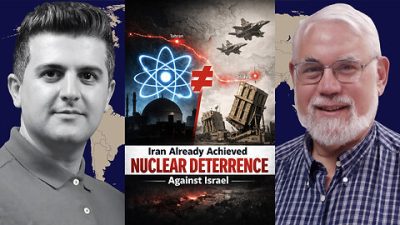
Prof. Ted Postol: Iran Already Achieved Nuclear Deterrence Against Israel
or go to
Aletho News Archives – Video-Images
From the Archives
How the occupied mentality syndrome works
Saudi Arabia on the American chessboard – Part 3
By B. J. Sabri | American Herald Tribune | June 27, 2016
Read part 2: “The occupied mentality Syndrome“
Previously I argued whether Saudi Arabia’s repeated involvements in U.S. interventions and wars stem from free national will or in response to a specific condition. For starters, in Saudi Arabia there is no national will. In Saudi Arabia, the national will is the will of the Al Saud clan. Still, when a major Arab state allies itself with a superpower that committed unspeakable crimes against humanity in almost every Arab country, then something is wrong. This fact alone should compel us to examine the U.S.-Saudi relation for one exceptional reason. As a result of the U.S.-Saudi wars, hundreds of thousands of people in Afghanistan, Iraq, Iran, Libya, Syria, Yemen, and Somalia have lost their lives. Millions became displaced in their own homelands. And millions more rendered refugees.
Attributing the Saudi policies to the bonds of “partnership” with the U.S. is frivolous. There are no bonds between these two thugs except those of business, military deals, secret plots, and wars. Proving this point, bonds such as these have no space for the American and Saudi peoples to share significant cultural or societal exchanges. If partnership is not the reason for the Saudi contribution to the U.S. strategy of empire and imperialism, then another reason must exist.
This leads to three possibilities. … continue
Blog Roll
 Aletho News
- REWRITING THE RISK? INSIDE THE GOVERNMENT’S VACCINE SAFETY MESSAGING
- “Davos Can Really Replace the UN”
- NIAID/NIH and USDA Fund Bioengineered Chimeric Influenza Viruses Built Using Pandemic H1N1 Components: Journal ‘Science Advances’
- Hezbollah hits Israeli warship off Lebanon’s coast, sets it aflame
- Iran slams US strikes on B1 bridge, Mahshahr petrochemical plants as ‘blatant acts of state terrorism’
- In letter to UN chief, Araghchi warns of dire consequences of US-Israeli attacks on Iran’s nuclear facilities
- Why the CIA conspiracy to invade Iran with Kurdish militias failed
- Why Are Upbeat US Claims About Mission to Rescue Pilot ‘Highly Questionable’?
- Aircraft destroyed during US ‘rescue’ of downed F-15 pilot cost more than $100 million each
- Washington University removes professor who condemned US-Israeli war on Iran
- If Americans Knew
- In Iran, Israel-US take aim at “reason, research, and freedom of thought” – Daily Update
- US loses planes over Iran, Israel downgrades Lebanon war goals – Daily Update
- Israel Is Blocking Palestinians from Easter at Church Where Jesus Resurrected
- Plot to assassinate Palestinian activist follows harassment campaign promoted by Zionist groups and elected officials
- Prominent New York synagogue hosts presentation on why U.S. Jews should support the ethnic cleansing of Gaza
- Tapper vs. Piker: Is the CNN Anchor Auditioning for David Ellison?
- Shouldn’t Democrats Be Able to Condemn Genocide?
- Israel-US kill negotiators, destroy civilian structures, but Iran’s military capabilities still largely intact – Daily Update
- ‘War crime’: Global condemnation as Israeli ministers celebrate death penalty law targeting Palestinian prisoners
- 7 Ways Israel Is Turning Lebanon Into Gaza
- No Tricks Zone
- An Inconvenient Tree: Uncovered In Alps… Europe Much Warmer Than Today 6000 Years Ago
- New Study Reports A 60% Slowdown In Greenland’s Ice Loss Rate In The Last Decade
- Low Intensity Tornado Wrecks Major Solar Farm, Creating A Potential Toxic Dump
- New Study Finds Warming Saves Lives…Cold Temperatures 12 Times More Deadly Than Excess Heat
- German Science Blog Accuses PIK Climate Institute Of Hallucinating Climate Tipping Points
- Devastating Assessment Of Comirnaty Vaccine By Former Senior Pfizer Europe Toxicologist
- New Study: CO2 Is ‘Effectively Negligible’ As An Explanatory Climate Change Factor Since 2000
- Former Pfizer Toxicologist Dr. Helmut Sterz Tells Bundestag Hearing Pfizer Vaccine Should Have Never Been Approved
- Energy Expert: Germany’s Nuclear Phaseout Was A “500 Billion Euro Mistake”
- New Research: South Australia’s Mid-Holocene Sea Surface Temperatures Were 4°C Warmer Than Today
 Aletho News