Palestinians aren’t getting “one cent,” says Israel
Al Akhbar | December 12, 2012
Israel says Palestinians will not get tax revenues before at least March, after having already confiscated the Palestinian Authority’s December funds. The decision comes as part of Palestine’s “punishment” for last month’s United Nations bid.
“The Palestinians can forget about getting even one cent in the coming four months, and in four months’ time we will decide how to proceed,” Foreign Minister Avigdor Lieberman said in a peremptory speech on Tuesday night.
Under the current peace deal, Israel collects US$100 million each month in duties on the PA’s behalf in occupied West Bank. These funds are generally used to pay public sector salaries.
Israel has responded viciously to the PA’s UN upgrade to non-member statehood, accusing the PA of sidestepping stalled negotiations, through a UN bid.
“Israel is not prepared to accept unilateral steps by the Palestinian side, and anyone who thinks they will achieve concessions and gains this way is wrong,” he said.
Before confiscating funds in December, Israel announced settlement plans in the E1 sensitive area that would destroy all possibility for a two-state solution, inciting international condemnation.
While making it clear that these steps are a form of retribution, an Israeli iron-fist response meant to instil fear in those that make decisions without permission – “unilateral steps” – Israelis mentioned that Palestinians have debts to pay off with Israel Electric Corporation and the Israel Water Authority.
The European Union criticized Israel Monday, saying, “Contractual obligations … regarding full, timely, predictable and transparent transfer of tax and custom revenues have to be respected.”
French Foreign Minister Laurent Fabius said Tuesday that Paris will host a donors’ conference early next year to raise funds for the government of Palestinian President Mahmoud Abbas.
(Al-Akhbar, Ma’an)
North Korea hails rocket launch as a success
Press TV – December 12, 2012
North Korea says it has test-fired a long-range rocket and has successfully placed a satellite into orbit.
“The launch of the second version of our Kwangmyongsong-3 satellite from the Sohae Space Center… on December 12 was successful,” the official Korean Central News Agency said on Wednesday.
The agency added that the satellite has entered the orbit “as planned.”
The (North) Korean Committee of Space Technology had originally announced that Pyongyang would launch its Unha-3 rocket between December 10 and 22, but on Monday, it extended the date by a week due to a “technical deficiency.”
A previous launch in April failed when the rocket disintegrated in the air soon after blastoff and fell into the ocean.
Meanwhile according to an unnamed Western diplomat, the UN Security Council is scheduled to meet at the request of the US and Japan later on Wednesday to discuss the launch of the rocket.
“The Japanese and the Americans have requested a Security Council meeting, which will take place late Wednesday morning” around 11:00 a.m. (1700 GMT), the diplomat stated.
Reports say Tokyo, Washington and Seoul have agreed to request the UN Security Council to reinforce Pyongyang’s embargoes.
On December 3, Russia and China urged North Korea not to go ahead with the plan.
Russia said North Korea had been warned not to ignore a UN Security Council resolution which “unambiguously prohibits (it) from launching rockets using ballistic technology.”
On December 4, UN Secretary General Ban Ki-moon said he was “seriously concerned” about the launch and asked North Korea to “reconsider its decision and to suspend all activities related to its ballistic missile program.”
LAPD in court for abusing journalist
RT | December 12, 2012
A long-time journalist is suing the Los Angeles Police Department over the alleged manhandling he says he was subjected to while covering an Occupy protest in LA last year.
Reporter Calvin Milam of Los Angeles’ City News Service says police officers with the LAPD tackled him to the ground, restrained him in dangerously tight handcuffs and detained him for hours without charge, all while he was just doing his job as a journalist one evening in late 2011.
Milam has insisted he displayed his press credentials to the LAPD during an Occupy LA rally outside City Hall on November 30, 2011 immediately before he was brought down by the cops.
In the aftermath of the incident, police spokespersons described the scene by portraying Milam as drunk and disorderly during his arrest. The video footage that has surfaced seems to contradict that take, however, and also clearly shows that Milam was acting as a member of the media.
“At some point, the Los Angeles police officers, in full riot gear, began to restrict the egress of those exercising their First Amendment rights and blocked access to leave the premises,” the recently filed complaint reads.
Milam’s attorney, Mark Geragos, tells the Courthouse News Service that the only reason his client wasn’t prosecuted was because video was found “which completely puts lie to what the cops said.”
When Geragos first became aware of the footage in the weeks after the arrest, he told LA Weekly that the footage was “completely at odds” with the accounts offered orally from both the LAPD and the City Attorney’s Office.
“They patently lied about the whole thing. It’s clear to me. I was told the exact same thing. It’s fortunate there’s a video which shows what really happened,” he said last December. “They have now told you two things that are demonstrably false. One, that he didn’t show his press credential. And two, that he was drunk. This guy hasn’t touched a drink in 20 years.”
“It’s astonishing to see that video and then see what was alleged: that he didn’t identify himself, show press credentials and that he was resisting,” Geragos now tells Courthouse News.
LAPD officer Victor Johnson charged Mr. Milam with unlawful assembly during the Nov. 30 incident, but the charges were quickly dropped. He was one of three journalists arrested that night during an event that ended with around 300 being put into cuffs.
Patrick Meighan, a writer for the animated show Family Guy, was one of the hundreds of persons who was arrested during the non-violent protest last year. Recounting the experience in a personal blog post, Meighan wrote that LAPD’s actions that evening were “horrible to watch, and apparently designed to terrorize” anyone who could catch a glimpse.
“It was super violent, it hurt really really bad and he was doing it on purpose,” is how he described his brutal arrest last year.
“What does it say about our country that nonviolent protesters are given the bottom of a police boot while those who steal hundreds of billions, do trillions worth of damage to our economy and shatter our social fabric for a generation are not only spared the zipcuffs but showered with rewards?”
The City of Los Angeles has yet to respond to Mr. Milam’s suit and litigation is “at a very early stage,” Courthouse News reports.
Related articles
- LAPD refuses to release video of fatal encounter with mother (latimesblogs.latimes.com)
- After violent in-custody death, family of Alesia Thomas sues LAPD for video (tv.msnbc.com)
They can hear you: US buses fitted with eavesdropping equipment
RT | December 11, 2012
Cities across America are equipping their public transport systems with audio recording devices, potentially storing every word spoken by passengers onboard. Rights activists say the surveillance plan by far exceeds what is necessary for security.
The multimillion dollar upgrade is underway in several US cities, including San Francisco, Eugene, Traverse City, Columbus, Baltimore, Hartford and Athens, reports The Daily, which obtained documents detailing the purchases.
The money partially comes from the federal government. San Francisco, for example, has approved a $5.9 million contract to install the eavesdropping systems on 357 modern buses and historic trolley cars over the next four years, with the Department Homeland Security footing the entire bill. The interception of audio communication will apparently be conducted without search warrants or court supervision, the report says.
The systems would be able to record audio and video from several locations in a bus for simultaneous playback. In Eugene transit officials explicitly demanded microphones capable of distilling clear conversation from the background noise. The recordings would generally be retained for 30 days. One of the systems produced for transport monitoring supports up to 12 high definition cameras, each with a dedicated microphone.
The system may potentially have additional capabilities added like timing the recording with GPS data from an onboard navigator, using facial recognition technology to identify people recorded or connecting wirelessly to a central post for real-time monitoring.
“This technology is sadly indicative of a trend in increased surveillance by commercial and law enforcement entities, under the guise of improved safety,” Ashkan Soltani, an independent security consultant whom the online newspaper asked to review specifications of equipment marketed for transit agencies, told The Daily.
Transport authorities gave various explanations for beefing up surveillance. A San Francisco contractor says the system will “increase passenger safety and improve reliability and maintainability of the system”. An Arkansas transit agency official said it is needed to deflect false complaints from passengers, describing it as “a lifesaver for the drivers”. Maryland officials openly called it a tool for law enforcement.
In some cases the systems are being installed despite resistance of civil liberties activists and lawmakers. In Maryland a legislative committee rejected a bill that would allow the local transport agency to proceed with its plan over concerns that it would violate wiretapping laws. The state’s attorney general advised the transportation agency to use signs warning passengers of the surveillance to help the system withstand a court challenge.
Privacy law experts say audio surveillance systems on buses pushes the boundaries of what is necessary to protect the law.
“It’s one thing to post cops, it’s quite another to say we will have police officers in every seat next to you, listening to everything you say,” said Neil Richards, a professor at Washington University School of Law.
With the microphones, he said, “you have a policeman in every seat with a photographic memory who can spit back everything that was said.”
Public transport is not the only place where citizens are worried about being constantly monitored by keen-eared recording devices. Similar systems combining audio and video recording with wireless connectivity are being installed in lampposts across the US.
Related articles
- Big Brother’s Listening (thedaily.com)
- Baltimore bus passengers now subject to secretive eavesdropping (rt.com)
Mexico: Evidence mounts of unprovoked police attacks and agents provocateurs on December 1rst
Weekly News Update on the Americas | December 11, 2012
On December 9th Mexican authorities released 56 of the 69 people who had been in detention for more than a week on suspicion of “attacking public peace” during protests in Mexico City against the inauguration of President Enrique Peña Nieto. A total of 106 people were reportedly arrested on a day which included violent confrontations between police and protesters and widespread destruction of property [see Update #1154], but 28 were quickly released. Judge María del Carmen Mora Brito of the Federal District (DF, Mexico City) court system ordered the December 9th releases after “analyzing videos, testimonies and expert witnesses’ reports,” the DF Superior Court of Justice announced in a communiqué. (Europa Press 12/10/12)
The judge’s action followed a week of demonstrations against police repression and charges that agents had repeatedly attacked, beaten and arrested peaceful protesters and bystanders while failing to arrest the people who had been engaged in vandalism. There were also accusations that agents provocateurs had infiltrated the protests. Complaints about the police seemed to be supported by videos that circulated widely on the internet. One, a compilation by the student video collective Imágenes En Rebeldía, appears to show unprovoked police attacks, arrests of nonviolent protesters, and men dressed in civilian clothes and armed with crowbars and chains standing and walking among uniformed federal police agents behind metal barriers around the Chamber of Deputies building.
On December 6th the DF Human Rights Commission (CDHDF) reported that the DF police had arrested at least 22 people arbitrarily and that four people showed signs of having been tortured. A total of 88 people claimed to have been arrested without justification, the governmental commission said; 15 youths were charged with taking part in vandalism on Juárez Avenue even though the vandalism occurred after the time of their arrests. Among the people arrested on December 1rst was Mircea Topolenau, a Romanian photographer covering the events for a magazine. CDHDF president Luis González Placencia noted that his organization was only reporting actions by the DF police and that it was up to the National Human Rights Commission (CNDH) to investigate alleged abuses by the federal police. (La Jornada (Mexico) 12/7/12)
Two protesters were seriously injured during the December 1rst protests. Drama teacher Francisco Kuykendall Leal was hit by a tear gas canister and was hospitalized with cranial injuries. He is an active supporter of The Other Campaign, a political movement inspired by the rebel Zapatista National Liberation Army (EZLN) [see Update #832]. Uriel Sandoval Díaz, a student at the Autonomous University of Mexico City (UACM), lost an eye and suffered fractures when he was hit by a rubber bullet. “This struggle won’t end until poverty ends,” Uriel said from a wheelchair as he was being released from the General Hospital on December 6th. “An eye is nothing [when] every day thousands of human beings have nothing to eat.” (Kaos en la Red 12/4/12 from Desinformémonos; Milenio (Mexico) 12/7/12)
In related news, an online petition has been started calling on Harvard University president Drew Gilpin Faust to withdraw the offer of a fellowship at the university’s John F. Kennedy School of Government to outgoing president Felipe Calderón Hinojosa (2006-2012). Tens of thousands of Mexicans have died in the militarized “war on drugs” Calderón initiated soon after he took office in December 2006. The petition is at http://www.change.org/petitions/harvard-university-president-faust-deny-outgoing-mexican-president-felipe-calderon-employment-at-harvard
Related articles
- Mexico: Peña Nieto Takes Office as Youths Riot (alethonews.wordpress.com)
Egypt and Argentina: The Right-Left alliance
By Prof. James Petras | The People’s Voice | December 10, 2012
Once again world public opinion faces a most bizarre political event: an alliance between political forces on the extreme Right and the Left, including collaboration between NATO regimes and Marxist sects. The apparent ‘unity of opposites’ is a response to alleged policy and institutional changes made by center-left and center-right regimes, which adversely affect both economic and political elites as well as the popular sectors.
The circumstances, under which this unholy alliance takes place, vary according to the type of regime, its policies and the class orientation of the opposition. The best way to analyze the left-right alliance is to examine the cases of Egypt and Argentina.
Egypt: The Alliance between Mubarak-Appointed Judges, Secular Liberals, Leftist Intellectuals and Disenchanted Workers
To understand the alliance between the corrupt remnants of the Mubarak state apparatus and their former political victims from the center-left and secular-right, it is essential to examine the political context, which has evolved since the overthrow of the Mubarak dictatorship in February 2011.
While Islamist and secular democratic forces played a major role in mobilizing millions of Egyptians in ousting the hated US-Israeli client, Hosni Mubarak, it was the Muslim Brotherhood (MB) and their fundamentalist rivals, the Salafis, who won the majority of votes in the subsequent elections and formed the first democratically-elected government in Egypt.[i] In the beginning, the Muslim Brotherhood was forced to share power with the ‘transitional military junta’, which had seized power immediately after the ouster of Mubarak. Subsequently President Mohamed Morsi, from the Muslim Brotherhood, convoked elections to a constituent assembly and nominated a commission to write a new constitution. This was backed by a majority of the newly-elected Egyptian parliament. Reflecting the Muslim Brotherhood’s electoral victory, the constitutional commission was dominated by its supporters. Many secular liberals and leftists rejected their minority status in the process.
Aside from his work on the constitutional front, Morsi negotiated a financial loan package of $4.5 billion with the IMF, $5 billion from the EU and an additional one billion dollars in US aid. These aid agreements were conditional on President Morsi implementing ‘free market’ policies, including an ‘open-door’ to foreign investment, ending food and fuel price subsidies to the poor and maintaining the humiliating Mubarak-era treaty with Israel, which included Egypt’s participation in the brutal blockade of Gaza.
While the despised US-Israel-backed dictator Hosni Mubarak may have been ousted from power and a new democratically-elected legislature had taken office (temporarily) along with President Morsi, Mubarak supporters continued to dominate key positions in the ministries, the entire judiciary, military and police. Thus powerfully ensconced, the Mubarak elite strove in every way to undermine emerging democratic institutions and processes. The Minister of Defense, Mohamed Hussein Tantawi, shielded the police officials and paramilitary forces responsible for the jailing, torture and murder of thousands of pro-democracy demonstrators. Mubarak-appointed judges arbitrarily disqualified legislative and presidential candidates, invalidated democratic elections and even ordered the closing of parliament. They then moved to outlaw the elected constituent assembly and the commission set-up to draft the new Egyptian constitution.
In other words, Mubarakites, embedded in the state apparatus, were engaged in an institutional coup d’etat to retain power, destabilize and paralyze the democratically-elected Morsi regime and create political disorder, propitious for a return to their dictatorial rule.
It was the Mubarak-appointed judges’ power-grab that eliminated the separation of powers by imposing arbitrary judicial decisions and powers over and above the hard-won electoral rights of Egyptian citizens and their elected legislature. The judges’ self-proclaimed assumption of legislative and executive supremacy was a direct assault on the integrity of the emerging democratic process.
When President Morsi finally moved to counter the Mubarak-allied judges’ dismissal of legitimately-elected bodies by assuming temporary emergency powers, these judges and their cheerleaders in the Western media accused him of subverting democracy and violating the ‘independence’ of the judiciary. The Western ‘liberal’ outcry at Morsi’s so-called ‘power grab’ is laughable given the fact that they ignored the naked ‘power grab’ of the judges when they dismissed Egypt’s parliament, its free elections and the writing of its new constitution under the leadership of Egypt’s new president. These cries of ‘democracy’ ring hollow from a judiciary, which had shamelessly legalized countless murders, tortures and dictatorial acts committed by Mubarak for over 30 years.
The judges’ democratic posturing and cries of injustice were accompanied by theatrical walkouts and protests aimed at mobilizing public opinion. Apart from a few thousand die-hard Mubarak holdovers, these judges managed to attract very little support, until secular liberals, leftists, trade unionists and sectors of the unemployed decided to intervene and try to win in the streets what they lost at the ballot box.
The popular protests, in contrast to the judges’ defense of Mubarak-era privilege and their blatant power grab, was based on Morsi’s failure to tackle the problems of growing unemployment and plummeting income, as well as his acceptance of IMF demands to end public subsidies for the poor. The secular-liberals joined forces with Mubarak-era judges in their clamor against ‘authoritarianism’ and pushed their own secular agenda against the Islamist tendencies in the regime and in the drawing up of the constitution. Pro-democracy youth sought to exploit the legislative vacuum created when the right-wing judges dismissed the parliament and put forward a vague notion of ‘alternative democracy’ … presumably one which would exclude the votes of the Islamist majority. The trade unions, which had led numerous strikes after the fall of Mubarak and remain a force among factory workers, joined the protests against Morsi, rejecting his embrace of the corporate elite. Even some Islamist groups, disgusted with Morsi’s accommodation with Israel and the US, also joined and took to the streets.
The US and the EU took advantage of the judges’ protest to step in and warn Morsi to abide to a ‘power sharing’ agreement with the Mubarak officials and the military or lose financial aid.
Washington has been playing a clever ‘two track policy’: They support Morsi when he implements a neo-liberal ‘free market’ domestic agenda using the Muslim Brotherhood networks to contain and limit popular protest among Egypt’s poor while threatening US aid if he vacillates on Mubarak-era agreements with Israel to starve Gaza. The White House insists that Morsi continue supplying cheap gas to Tel Aviv, as well as backing ongoing and future NATO wars against Syria and Iran. But the US and EU also want to keep the old reliable Mubarak power centers in place as a check and veto on Morsi in case a powerful anti-Zionist, populist urban movement pressures his regime to backtrack on the IMF program and the hated treaty with Israel.
The constitution, presented by the commission, is a compromise between Islamists, neo-liberals and democratic electoralists. This constitution undermines the judges’ power grab and allows the Morsi government to prosecute or fire the corrupt Mubarak-era officials; it guarantees the primacy of private, including foreign, property; it privileges Islamic law and provides ‘space’ and possibilities for Islamist leaders to restrict the rights of Egyptian women and religious minorities, notably the Coptic Christians.
A democratic vote on the constitutional referendum will test the strength of the pro and anti-government forces. A boycott by secular, liberal and populist-democratic forces will only demonstrate their weakness and strengthen the reactionary coup-makers embedded among the Mubarak-era officials in judiciary, police, military and civilian bureaucracy.
The Left and democratic-secular movements and leaders have formed an opportunistic, de-facto alliance with the Mubarak elite: a marriage of ‘the police club’ with its former victims, ‘the clubbed democrats’ of the recent past. The progressives overlook the danger of the judges’ creeping coup, in their blind effort to undermine the Muslim Brotherhood and the Morsi regime: It’s one thing to oppose Morsi’s reactionary agenda and the anti-popular votes of a reactionary legislature; it’s something totally different to promote the ouster of a democratically-elected legislature by hold-over judges pushing for the return of despotism. Undermining the democratic process will not only adversely affect President Morsi and the Muslim Brotherhood but also the democratic opposition. The prime beneficiaries will be the right-wing forces encrusted in the State.
The anti-Muslim Brotherhood demonstrators, who are the clear losers in democratic elections and a minority in the country, burned and trashed the offices and meeting places of the Brotherhood and assaulted their supporters in the worst traditions of the Mubarak era. The self-styled ‘pro-democracy’ activists’ assaults on the Presidential palace and their rejection of Morsi’s call for dialogue has opened the way for the return of military rule. The military command’s thinly veiled threat was evident in their pronouncement that they would intervene with force to maintain order and protect the public if violence continues. The coincidence of prolonged street disorder and assaults on electoral politics with military overtures to take power have a distinct smell of a barnyard confabulation. The right-left alliance makes it difficult to decipher whether the violence is a staged provocation to bring the military back to power or an expression of leftist rage at their electoral impotence.
For strategic, pragmatic and principled reasons, the Left should have denounced the Mubarak-appointed judges the moment they outlawed the elected legislature. The Left should have demanded the ouster of these judges and military leaders and combined their demands with a campaign against Morsi’s ties with the imperial West and Israel and a repudiation of the IMF program. By backing these corrupt judges, progressives gained the short-term support of the Western media and governments while strengthening their strategic enemy.
Argentina: The Right-Left Alliance
President Cristina Fernandez is representative of the center-left regimes, which predominate in Latin America today. Her recent resounding electoral victory[ii] is a product of the popular uprisings (2001-2003), the social reforms and independent foreign policy pursued by her predecessor (and husband) Nestor Kirchner (2003-2007) and several popular reforms implemented under her Presidency.
But like all center-left regimes, President Fernandez (2008-2012) has combined conservative, neo-liberal and populist progressive policies. On the one hand, Fernandez has encouraged foreign mining companies to exploit the Argentina’s great mineral resources, charging very low royalty payments and imposing very few environmental restraints, while, on the other hand, she nationalized the abusive Spanish multinational oil company, Repsol, for non-compliance with its contract.
The government has substantially increased the minimum wage, including for farm workers, while opening up the country to overseas land speculators and investors to buy millions of acres of farmland. The government has allowed highly toxic-chemicals to be sprayed on fields next to rural communities while increasing corporate taxes and controls over agro-export earnings. The government passed legislation to restrict monopoly ownership of the mass media promising to expand media licensing to local communities and diverse social groups, while doing little to limit the power of big agro-export firms. President Fernandez has supported Latin American integration (excluding the US) and welcomed radical President Chavez as a valuable partner in trade and investment and diversified markets. At the same time Argentina has grown increasingly dependent on a narrow range of agro-mineral (‘primary goods’) exports to the detriment of domestic manufacturing. Presidents Fernandez and Kirchner encouraged trade union activity and, until recently, supported hefty increases in wage, pension and medical benefits, drastically reducing poverty levels – but they did so while maintaining the wealth, land, profits and dividends of the capitalist class.
The Argentine President was able to support both the economic elites and the working class as long as commodity prices and international demand remained high. However, with the economic slowdown in Asia and decline in commodity prices and therefore state revenue, the President is being squeezed from both sides. By the end of the first decade of the 21st century, the elite attacked the government more ferociously, led by the big and medium-size landowners and exporters. They demanded the government revoke its increase in export taxes and currency controls. The upper-middle and the affluent middle class of Buenos Aires, backed by supporters of the previous military dictatorship, organized mass marches and demonstrations to protest a medley of government policies, including limits on dollar purchases, inflation and inaction amidst rising crime rates.
Around the same time, conservative and radical leftist trade unionists organized a general strike – ostensibly because wage increases had failed to keep up with ‘real’ rates of inflation (double the ‘official rate’ – so they claimed). The major media monopoly, Clarin, organized a virulent systematic propaganda campaign trumpeting the demands of the economic elite, fabricating stories of government corruption and refusing to comply with the new government legislation in hopes of staving off the dismantling of its huge media monopoly.
The US and EU increased pressure on Argentina by excluding it from international capital markets, questioning its credibility, downgrading its ratings and promoting a virulently hostile anti-Fernandez mass media campaign in the financial press.
The destabilization campaign has been orchestrated by the same economic elites who supported the brutal seven-year military dictatorship during which an estimated 30,000 Argentines were murdered by the juntas. Elite opposition is rooted in reactionary social and economic demands, i.e. lower taxes on exports, deregulation of the dollar market, their monopoly of the mass media and a reversal of popular social legislation.
The ‘left opposition’ includes a variety of movements including Marxist grouplets and trade unions who demand salary increases commensurate with ‘real inflation’ as well as environmentalists demanding tighter controls over agro-chemical pollution, GM seeds and destructive mining operations. Many of these demands have legitimacy, however some of the Marxist and leftist groups have been participating in protests and strikes convoked by the right-wing parties and economic elites designed to destabilize and overthrow the government. Few if any have joined with the government to denounce the blatant US-EU credit squeeze and imperial offensive against Fernandez.
This de-facto Right-Left alliance on the streets is led by the most rancid, authoritarian and neo-liberal elites who ultimately will be the prime beneficiary if the Fernandez regime is destabilized and toppled. By joining general strikes organized by the far-Right, the left claims to be ‘furthering the interests of the workers’ and ‘acting independently’ of the economic elite. However, their activities take place at the same time and same location as the hordes of wealthy upper middle class protestors clamoring for the ouster of the democratically elected center-left regime. The left grouplets maintain that they are in favor of building a ‘workers state’ as they march abreast with the rich and militarists. Objectively, their capacity to catalyze a revolution is nil and the real outcome of their ‘opportunism’ will be a victory for the agro-export elite – mass media monopolies – US-EU alliance. The ‘leftist’ workers protest is mere window dressing for the destabilization of a social-liberal democracy and will help return a far-right regime to power!
The majority of the workers, pensioners and trade unionists reject any participation in the bosses’ general strikes – even as they voice their legitimate demands for better pay and the indexing of wage rates to the real inflation rate. However they join with the government in rejecting the international creditor demands and US judicial rulings favoring Wall Street speculators over Argentina’s social interests. Nevertheless, the left-right protest resonates with many rank and file employees, especially when export revenues decline and the Fernandez regime lacks the funds to maintain the social spending of the past decade.
The political challenge for the consequential Left is to defend democracy against this opportunist ‘Left’-Right onslaught while defending workers’ interests in the face of a decaying center-left regime bent on pursuing its contradictory program.
Conclusion: The Dilemmas of Capitalist Democracies
The capitalist democracies of Egypt and Argentina face similar Left-Right alliances, even though they differ sharply in their socio-economic trajectory and social bases of support. Both Argentina and Egypt have emerged from brutal dictatorships in recent years: Argentine democracy is nearly 30 years old while Egyptian democracy is less than a year old. Argentine democracy, like Egypt’s, has been confronting powerful authoritarian institutions leftover from the dictatorial period. These are entrenched especially in three areas: the military and police, the judiciary and among sectors of the capitalist class. They all benefited from the special privileges granted by the dictators.
In Argentina, over the past decade, Presidents Kirchner and Fernandez succeeded in purging the state apparatus of criminals, murderers and torturers among the military, police and judiciary. In Egypt, the Morsi regime, in its short time in office, hesitated at first, but then moved forward replacing some Mubarak military commanders and promising to investigate and prosecute those Mubarak-appointed officials involved in the killing and torture of pro-democracy demonstrators. The Egyptian reactionaries struck back: Mubarak-appointed judges denied the legality of the democratically elected legislature and constituent assembly. In Argentina, powerful agrarian interests and the right-wing mass media conglomerate, which had backed the dictatorships, struck back as the government moved to end the corporate media monopoly and tax concessions to the agro-export elite. The conflict between the dictatorial right and the democratic center-left in Argentina and the conflict between the Mubarak judiciary and the Islamist neo-liberal elected regime is partially obscured by the active involvement of leftists, secular liberals and other ostensibly ‘pro-democracy’ forces on the side of the Right.
Why has ‘the left’ crossed the line, joining forces with the anti-democratic right?
Their opportunism arises primarily from the fact that they did so poorly in the elections and do not see any role for themselves as an electoral opposition. By joining with the right-wing protests, the left and secular liberals mistakenly imagine they can revive their faltering support.
Secondly, the Left senses the economic and social vulnerability of the elected regimes because of the global and local crises, exacerbated by declining export revenues. They hope to attach their political demands to those of the upper and middle class protestors who have been mobilized by the Far Right.
Thirdly, by joining forces with the Right, allied with the US and EU, the leftist protestors hope to gain international (imperial) support, recognition, respectability and legitimacy … temporarily. Of course if the Right succeeds, the Left will be marginalized and discarded as ‘useful idiots’.
The imperial threats to cut off credits, loans and markets to both regimes should logically have led to a united front – a tactical alliance – between the Left and the embattled regime, especially in the case of Argentina. In the case of Egypt, secular liberals and leftists should have joined with the Morsi regime to oust the remnants of the brutal Mubarak regime. They should have supported the elected legislature, even while challenging Morsi’s pacts with the IMF, the US, EU and Israel. Instead, secular liberals appear to agree with the regime in its reactionary socio-economic policies. Worse, by joining with the reactionary judges in totally rejecting the referendum vote on the new constitution, the Left missed an opportunity to mobilize and challenge the regime and educate the public about its specific reactionary clauses.
By opposing the progressive democratic process as well as the regime, the Left has opened the door for the Right to return. By forcing incumbent presidents to ‘make a deal’ or compromise with the elite, the left is further isolating themselves. Both Morsi and Fernandez are vulnerable to leftist pressure and, over time, popular and class-based movements could find themselves in a position to pose a real alternative…. if they clearly and honestly reject the authoritarian and imperialist right. By joining in opportunist alliances to score some small victories today, they foreclose any possible role in the near future of forming progressive democratic leftist governments. By burning government offices and destroying the electoral offices of the Muslim Brotherhood, the self-styled ‘democrats’ are creating the basis for the seizure of state power by the military.
Notes
[i] In the parliamentary elections the two major Islamist parties polled over 27 million votes (18 million for the Muslim Brotherhood and Morsi), the liberal-left opposition received approximately 7.5 million votes and the Mubarac-era parties got 2 million. The Islamist parties totaled about two-thirds of the electorate, which translated into the same proportion of elected legislators (358 out of 508). The liberal-left parties received slightly over 26% of the vote and the Mubarak parties got about 8%. The anti-Morsi rioters are a clear and decisive minority and their violent assault on the governing regime is, by any measure, an attempt to impose minority rule, denying and marginalizing the nearly 18 million voters who elected the Morsi Government and Muslim Brotherhood-dominated Congress.
[ii] Cristina Fernandez was first elected in October 2007 with 45.3% of the vote, a 22% lead over her nearest rival. In the most recent elections in October 2011, she was re-elected with 54.1% of the vote, a 37.3% margin over her nearest competitor.
-###-
James Petras is a Bartle Professor (Emeritus) of Sociology at Binghamton University, New York. He is the author of 64 books published in 29 languages, and over 560 articles in professional journals, including the American Sociological Review, British Journal of Sociology, Social Research, Journal of Contemporary Asia, and Journal of Peasant Studies. He has published over 2000 articles in nonprofessional journals such as the New York Times, the Guardian, the Nation, Christian Science Monitor, Foreign Policy, New Left Review, Partisan Review, Temps Moderne, Le Monde Diplomatique, and his commentary is widely carried on the internet. His most recent books are: The Arab Revolt and the Imperialist Counterattack
Israeli authorities ‘to demolish West Bank road’
Ma’an – 10/12/2012
SALFIT – Israeli authorities on Monday notified Palestinian farmers in a northern West Bank village that a road connecting them to their fields will be demolished, locals told Ma’an.
Residents of Qarawat Bani Hassan, near Salfit, said Israeli planning officers told them the al-Hurriya (Freedom) road will be demolished in two weeks.
Farmers were told to avoid agricultural work in the area.
The same street was dug up by Israeli bulldozers on March 24, 2011. The local municipality, with support from the Palestinian prime minister and donor organizations, later rehabilitated the road.
Palestinian Authority premier Salam Fayyad joined the road’s original inauguration two years ago.
Related articles
- Israeli military demolishes West Bank mosque (bikyamasr.com)
Featured Video
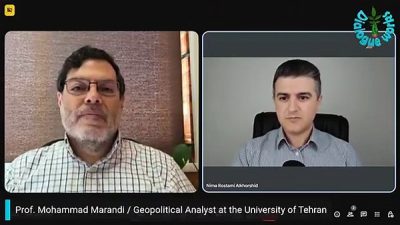
Seyed M. Marandi: U.S. Military DIVIDED? Iran’s Secret Defense EXPOSED
or go to
Aletho News Archives – Video-Images
From the Archives
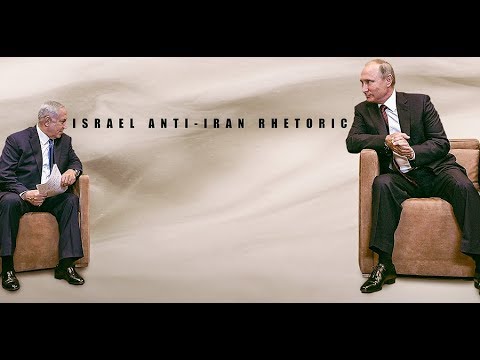
‘Israel sees Iran as obstacle to its policies’
Press TV – August 25, 2017
Prime Minister Benjamin Netanyahu has said that Israel felt threatened by Iran’s growing influence in the Middle East. Netanyahu expressed his Iranophobic view in a meeting with Russian President Vladimir Putin in Russia’s Black Sea resort of Sochi on Wednesday. Press TV has asked Scott Rickard, former American intelligence linguist from Tampa, Florida, and Brent Budowsky, a columnist at The Hill from Washington, to give their thoughts on the issue.
Rickard said Tel Aviv is concerned about the fact that the regime could not carry out its old project to spread sectarian divisions and pave the way for dismemberment of the countries in the Middle East region because of the Iranian-led resistance against Israeli policies, not only in the occupied territories of Palestine but also in the whole region.
“Iran is not a threat to Israel whatsoever. The threat that Israel sees is the fact that their Oded Yinon Plan is being put to a hold by Iran,” the intelligence linguist said on Thursday night.
“They (the Israelis) look at Iran as a threat only because they have no influence on their governments and Iran is autonomous and is not under the Zionist influence,” he added.
Since the victory of the Islamic Republic of Iran in 1979, Tehran has been critical of Israel’s policies in the region, whereas “no leaders [of other states] even dared to speak out against Zionism,” Rickard argued. … continue
Blog Roll
 Aletho News
- Iran declares ‘historic victory’ over US, says enemy forced to accept its proposal
- Trump Claims Ceasefire, Reopening of Strait of Hormuz Agreement with Iran
- Israeli tank fire killed UN peacekeeper in Lebanon, UNIFIL investigation finds
- Russia, China block Bahrain-sponsored UN resolution on Strait of Hormuz
- The US-Israeli War on Science is an Assault on our Future
- Trump’s Promise to Bomb Iran ‘Like Never Before’ Faces Brutal Logistics — Expert
- Germany seeks to restrict stays abroad for men of fighting age – Berliner Zeitung
- Evidence points to Ukraine being behind TurkStream attempted sabotage, but that should come as no surprise
- Sri Lanka secures supplies of Russia oil – minister
- Nations across Asia strike direct deals with Iran for Hormuz passage
- If Americans Knew
- Thousands dead and neighborhoods razed to the ground: Aid agencies fear southern Lebanon is becoming the new Gaza
- The war the US is fighting for Israel could cost trillions
- ‘Cigarette Burns, Nail Wounds’: Toddler Tortured in Gaza to Coerce Father
- Trump Says US Sent ‘a Lot of Guns’ to Protesters in Iran
- Israeli forces destroy 17 UN peacekeeper cameras in south Lebanon
- US-Israeli strikes ‘completely destroy’ synagogue in Tehran
- Archbishop for US Military Says Iran War Is Unjust Under Catholic Teaching
- Iranian leaders’ Open Letters to the American People
- Trump says Iranians appreciate bombs, WHO warns of nuclear risks – Daily Update
- U.N. experts demand Israel release prominent Gaza doctor after reports of ‘severe torture’
- No Tricks Zone
- An Inconvenient Tree: Uncovered In Alps… Europe Much Warmer Than Today 6000 Years Ago
- New Study Reports A 60% Slowdown In Greenland’s Ice Loss Rate In The Last Decade
- Low Intensity Tornado Wrecks Major Solar Farm, Creating A Potential Toxic Dump
- New Study Finds Warming Saves Lives…Cold Temperatures 12 Times More Deadly Than Excess Heat
- German Science Blog Accuses PIK Climate Institute Of Hallucinating Climate Tipping Points
- Devastating Assessment Of Comirnaty Vaccine By Former Senior Pfizer Europe Toxicologist
- New Study: CO2 Is ‘Effectively Negligible’ As An Explanatory Climate Change Factor Since 2000
- Former Pfizer Toxicologist Dr. Helmut Sterz Tells Bundestag Hearing Pfizer Vaccine Should Have Never Been Approved
- Energy Expert: Germany’s Nuclear Phaseout Was A “500 Billion Euro Mistake”
- New Research: South Australia’s Mid-Holocene Sea Surface Temperatures Were 4°C Warmer Than Today
 Aletho News