Terrorists and criminals: Documents prove FBI monitored OWS
RT | December 24, 2012
Newly obtained documents confirm that the Federal Bureau of Investigation was monitoring peaceful protesters with the Occupy Wall Street movement before the first OWS demonstrations even began.
Files uncovered this week by the Partnership for Civil Justice Fund (PCJF) through a Freedom of Information Act request reveals that the FBI was actively keeping an eye on activists across the United States since Occupy Wall Street was still in its preliminary planning stages.
Documents, only published over the weekend, show inner-office communiqué that confirms investigators were considering Occupy demonstrators in some instances as criminals and domestic terrorists.
Mara Verheyden-Hilliard, the executive director of the PCJF, writes in a statement this week that the initial 100-plus pages obtained through the FOIA request are “just the tip of the iceberg” of what’s expected to be a substantial trove of data proving that the FBI was actively monitoring activists.
The list of documents, says Verheyden-Hilliard, “is a window into the nationwide scope of the FBI’s surveillance, monitoring, and reporting on peaceful protestors organizing with the Occupy movement.”
“These documents show that the FBI and the Department of Homeland Security are treating protests against the corporate and banking structure of America as potential criminal and terrorist activity,” she writes. “These documents also show these federal agencies functioning as a de facto intelligence arm of Wall Street and Corporate America.”
Canada’s Adbusters magazine first published a call-for-action in June 2011 addressing what would become known months later as Occupy Wall Street. On September 12 of that year, activists from around the United States began to descend on Zuccotti Square in Lower Manhattan, and soon the movement spread across the rest of the United States and the world. Even before the first occupiers erected tents and organized actions against corporate greed and criminal police activity, though, the FBI was well involved in investigating the group.
“As early as August 19, 2011, the FBI in New York was meeting with the New York Stock Exchange to discuss the Occupy Wall Street protests that wouldn’t start for another month,” the PCJF writes. “By September, prior to the start of the OWS, the FBI was notifying businesses that they might be the focus of an OWS protest.”
In another document, the Indianapolis, Indiana division of the FBI released a “Potential Criminal Activity Alert” about the protests two days before they even started in New York, let alone spread to the Midwest.
In other locales across the country, the FBI alerted authorities to potential criminal and terrorism activity from the protesters and asked them to monitor the movement of the group.
The trove of information received through the FOIA requests is perhaps the most substantial proof so far that the FBI was thoroughly vested in treating Occupy Wall Street as a form of terrorism. It isn’t, however, the first evidence used to prove that peaceful protesters aligned with OWS were on the FBI’s radar: in September, the American Civil Liberties Union received documents obtained through their own FOIA request showing that Occupy activists in Northern California were routinely targeted by federal agents.
“Why does a political protest amount to a national security threat?” ACLU attorney Linda Lye asked at the time.
Military intervention in Mali in 1st half of 2013: France
Press TV – December 24, 2012
French Defense Minister Jean-Yves Le Drian says an African-led military intervention in Mali will be carried out in the first six months of 2013.
“The military intervention would be over the first half next year… For the moment, there is no political solution,” Le Drian said on Monday.
He also stated that France would only give “logistical aid” and that no French troopers will be deployed in Mali.
The remarks came four days after the United Nations Security Council approved foreign military intervention in Mali to help its government in the battle against militants controlling the northern part of the West African country.
The Security Council authorized an initial one-year-long deployment of African Union forces in Mali on December 20.
The resolution was drafted by France, and it also authorized all European Union member states to help rebuild Mali’s security forces.
In November, the Economic Community of West African States (ECOWAS) agreed to send 3,300 troops, mostly from Nigeria, Niger, and Burkina Faso, to help Mali’s government regain control of the north.
However, on November 29, UN Secretary General Ban Ki-moon warned against a hasty military intervention in northern Mali, saying it could lead to a humanitarian crisis.
Chaos broke out in the African country after Malian President Amadou Toumani Toure was toppled in a military coup on March 22. The coup leaders said the move was in response to the government’s inability to contain the two-month-old Tuareg rebellion in the north of the country.
However, the Tuareg rebels took control of the entire northern desert region in the wake of the coup, but the Ansar Dine extremists pushed them aside and wrested control of the region.
First Sale Under Siege: If You Bought It, You Should Own It
By Corynne McSherry | EFF | December 23, 2012
The “first sale” doctrine expresses one of the most important limitations on the reach of copyright law. The idea, set out in Section 109 of the Copyright Act, is simple: once you’ve acquired a lawfully-made CD or book or DVD, you can lend, sell, or give it away without having to get permission from the copyright owner. In simpler terms, “you bought it, you own it” (and because first sale also applies to gifts, “they gave it to you, you own it” is also true).
Seems obvious, right? After all, without the “first sale” doctrine, libraries would be illegal, as would used bookstores, used record stores, etc.
But the copyright industries have never liked first sale, since it creates competition for their titles (you could borrow the book from a friend, pick it up at a library, or buy it from a used book seller on Amazon). It also reduces their ability to impose restrictions on how you use the work after it is sold.
Two legal cases now pending could determine the future of the doctrine. The first is Kirtsaeng v. Wiley & Sons. In that case, a textbook publisher is trying to undercut first sale by claiming the law only covers goods made in the United States. That would mean anything that is made in a foreign country and contains copies of copyrighted material – from the textbooks at issue in the Kirtsaeng case to shampoo bottles with copyrighted labels – could be blocked from resale, lending, or gifting without the permission of the copyright owner. That would create a nightmare for consumers and businesses, upending used goods markets and undermining what it really means to “buy” and “own” physical goods. The ruling also creates a perverse incentive for U.S. businesses to move their manufacturing operations abroad. It is difficult for us to imagine this is the outcome Congress intended.
The second is Capitol v. Redigi. Redigi is a service that allows music fans to store and resell music they buy from iTunes. Here’s how it works: customers download Redigi software and designate files they want to resell. Redigi’s software checks to make sure the files came from iTunes (so it knows they were lawfully purchased), pulls the data files from the reseller’s computer to cloud storage, and deletes them from the reseller’s hard drive. Once the music is in the cloud, other Redigi users can buy it. When a purchase is made, Redigi transfers ownership of the file and the seller can no longer access it. At last, a way for users to exercise their traditional right to resell music they no longer want.
No way, says Capitol Records. According to Capitol, the first sale doctrine simply doesn’t apply to digital goods, because there is no way to “transfer” them without making copies. When users upload their music to the cloud, they are making a copy of that music, whether or not they subsequently (or simultaneously) delete it from their own computers, and the first sale doctrine doesn’t protect copying.
A win for Capitol would be profoundly dangerous for consumers. Many of us “buy” music, movies, books, games etc. in purely digital form, and this is likely to be increasingly true going forward. But if Capitol has its way, the laws we count on to protect our right to dispose of that content will be as obsolete as the VHS tape.
The Redigi case also highlights another growing problem. Not only does big content deny that first sale doctrine applies to digital goods, but they are also trying to undermine the first sale rights we do have by forcing users to license items they would rather buy. The copyright industry wants you to “license” all your music, your movies, your games — and lose your rights to sell them or modify them as you see fit. These “end user license agreements” reinforce the short-sighted policies that prevent us from lending ebooks to friends, re-selling software packages, or using text-to-speech to read ebooks aloud.
We have been worried about the future of first sale for a long time, but it seems we are reaching a new crisis point. We need to be prepared to tell elected lawmakers that we stand up for first sale, whether the threat comes from arcane import regulations, dangerous legal interpretations, or onerous End User License Agreements. EFF has joined Demand Progress and the Free Software Foundation in giving you a platform to contact your legislators to urge them to stand up for first sale.
Click here to read other blog posts in this series.
Related articles
- Your Right to Own, Under Threat (eff.org)
HRW Double Standards: Gaza Rockets at Zionist Entity Violate War Laws
Al-Manar | December 24, 2012
Palestinian militants in the Gaza Strip “violated the laws of war” by firing rockets at populated areas in the Zionist Entity during the eight-day war last month, Human Rights Watch said on Monday.
Citing Zionist army figures, HRW said that approximately “1,500 rockets were fired at Israel between November 14 and 21,” of which “at least 800 struck Israel, including 60 that hit populated areas.”
These attacks “killed three Israelis, wounded at least 38, several seriously, and destroyed civilian property,” HRW said, noting that there were also rockets fired from Gaza “that fell short of their intended targets in Israel apparently killed at least two Palestinians”.
“Palestinian armed groups made clear in their statements that harming civilians was their aim,” Sarah Leah Whitson, Middle East director at Human Rights Watch, said in a statement.
HRW rejected claims by the armed wings of Hamas, Islamic Jihad and Popular Resistance Committee that their targeting of Israeli civilians was a legitimate “reprisal for Israeli attacks that killed civilians in Gaza”.
Last week, HRW said that the Zionist Entity’s attacks on media facilities and journalists in Gaza also violated the laws of war. But the organization didn’t mention the bombing of the Palestinian civil infrastructure and houses in Gaza.
191 Palestinians and six Israelis were killed during that fighting. Most of the Palestinian fatalities were civilians, although Israel says 30 senior militants were among the dead. Four of the Israelis killed by rocket strikes were civilians, and two were soldiers.
HRW said that under the laws of war, “civilians and civilian structures may not be subject to deliberate attacks or attacks that do not discriminate between civilians and military targets.”
The Real Obstacles to Successful Nuclear Diplomacy with Iran Lie in Washington, Not Tehran
By Flynt Leverett and Hillary Mann Leverett | Race for Iran | December 23rd, 2012
We are just back from another visit to the Islamic Republic and see even more clearly that the real obstacles to successful nuclear diplomacy with Iran lie in Washington, not Tehran. Prior to our visit, we outlined several of the reasons for this in an extended interview on Ian Masters’ Background Briefing about our forthcoming Going to Tehran; click here to listen.
We open by taking issue with the conventional wisdom that the upcoming talks between the P5+1 and Iran will be the “last chance” to reach a nuclear deal with Tehran before the Islamic Republic gears up for its presidential election next year. On this point, Flynt notes that the only reason nuclear talks over the next few months would be a “last chance” is
“because of arbitrary deadlines and frameworks that the United States and some of its partners have imposed on these negotiations. In the end, the Iranian nuclear problem is actually quite simple: if the United States was prepared to accept Iran’s right to enrich uranium, under safeguards, on its own territory, you could have a deal in fairly short order… You could probably get limits on Iran’s 20-percent enrichment, you could get much more intrusive verification on its nuclear activities. But you would have to accept the Islamic Republic as kind of a normal state, with legitimate interests and rights.”
The Obama administration, of course, has shown no willingness to approach nuclear talks with Iran on such a basis. Instead, it has imposed the arbitrary deadlines and frameworks highlighted by Flynt. The dysfunctionality of this approach is reinforced by deeply flawed—and self-deluding—assessments of Iranian decision-making. As Hillary explains,
“The anxiety here, or the urgency, is because it’s put out that, if we don’t do something now, if we don’t try to make a deal now, the Iranian elections will come… and that will somehow derail any possibility for talks. This is something that, time and time again, permeates the American debate—that somehow the problem with negotiating with Iran is in Iran, is in Tehran… It’s either the “mad mullahs” are so crazy, so irrational that we can’t count on them to negotiate like a rational state, or various things are going to come up in their calendar, particularly elections (which in itself should make us question this idea that there are “mad mullahs” there)…
The whole debate here is that something is wrong in Iran, something is wrong in Tehran that is going to derail talks. There’s never any examination of what drives American politics to demonize countries like the Islamic Republic of Iran… The issue is something here; it’s about domestic politics here.
If President Obama cannot get a negotiation going with the Iranians in the next few months, he has a problem domestically here, because domestic constituencies here—and the Israeli government—will say, ‘Time is up. You’ve had enough time. We can’t let the Iranians continue to progress in their nuclear program. You have to take even more coercive action, either more coercive sanctions or military action.’ It’s a domestic problem here. It’s not because of something going on in the decision-making or some irrational craziness among Iranian clerics or Iranian lay leaders.”
On Israel’s role—and its motives for constantly pushing an alarmist view of the Islamic Republic, Flynt says,
“The Israelis are perpetually concerned—I think that their concern is exaggerated—but they are perpetually concerned that the Obama administration is going to try, in a serious way, to pursue a deal. Because the Israelis know that the only kind of deal you could really get out of this process that would have any meaning for both sides would be a deal that actually recognized Iran’s right to enrich—again, under safeguards, not building a nuclear weapon, but they do have a right to enrich… That’s what the Israelis are out to stop. They do not want the United States, other Western powers, to accept this basic fact of international law and international life—that the Iranians have this right, and they are not going to be bullied into giving it up.
This is something that I think the United States really has to come to terms with. For its own interests, it needs to get a nuclear deal with Iran; it needs to start realigning its relations with this important country in the Middle East. And we need to be able to separate Israeli preferences—that have more to do with [Israel’s] own commitment to military dominance in the Middle East—and Israeli security. Iran enriching uranium under safeguards doesn’t affect Israeli security at all. But we need to be able to sort out what our real interests are.”
Against the stereotypes of Iranian “irrationality” and internal political divisions that render effective diplomatic engagement with Tehran impossible, Hillary outlines some important realities about the Islamic Republic’s foreign policy and national security strategy:
“There is consensus [among Iranian policymakers] that Iran should and can engage with almost any country in the world, if [engagement] is to protect its own interests. Where it draws the line is anywhere that Iran would be asked to or expected to cede any of its sovereign rights. Iran is not going to agree to that kind of negotiation… In terms of what Iran should push for, what kind of deal Iran could make in the end, there is certainly discussion and debate—vociferous debate—in Iran about those kinds of tactics. But the strategy—that Iran is a strong country, that it can and should negotiate and deal with other countries in its own interests—is something that is really put forward by the Supreme Leader, by Ayatollah Khamenei. And it’s something, I think, that every senior official follows…
You hear in Washington, especially, periodic discussion… some days it’s Ahmadinejad is the hardliner and he would never be able to deal with the United States. And then someone points out, ‘Well, he actually wrote a 20-page letter to Bush. He actually wrote a congratulatory letter to President Obama on his first election.’ Then people say, ‘Well, maybe the issue is really the speaker of the parliament, or maybe it’s this person or that person.’ There’s a constant attempt in the United States, particularly in Washington, to read the tea leaves, as if [the Islamic Republic is] a very opaque system. These kinds of critics analogize it to the Soviet system.
But it’s not really opaque. If you listen, read, talk to [Iranian] officials, talk to a range of people in their political class, on their political spectrum, and take what they have to say seriously… you can really understand their strategy. You can understand where they’re coming from, and their strategic determination to be a very strong, independent country. The problem, I think, on our side—why we try always to see where there’s some daylight, where this person is competing with that person—is that we’re very reluctant to accept that Iran could be a strong, independent, not secular, not liberal, but still legitimate political entity…
We document rather exhaustively in our book the number of times that the Iranians have engaged with the United States… [In one of these episodes, I] worked personally with them as an official in the State Department and in the White House, with a small team of American officials, to deal with Afghanistan and the problem we were facing there after 9/11 with Al-Qa’ida… [The Iranians] were not paralyzed by internal conflict. The internal conflict was here. It’s the opposition that I had when I was in the White House, from my superiors or people who worked for Vice President Cheney, trying to undermine what Ryan Crocker and I were trying to do with the Iranians.”
Looking ahead, Flynt underscores that, notwithstanding recurrent debate among American political and policy elites over Tehran’s willingness to talk directly, on a bilateral basis, with Washington, “the Iranian position on dealing with the United States has been pretty clear and consistent for a long time, for years. They are open to improved relations, they are open to dialogue and diplomacy to facilitate serious improvement in relations. But they want to know, upfront at this point, that the United States is really prepared to accept the Islamic Republic as a legitimate political order representing legitimate national interests. And they want to know upfront that the United States is really serious about realigning relations with them.
They are not interested in having negotiations just for the sake of having negotiations. They are not interested in having negotiations if they think that the United States is just going to keep piling sanctions on them. They want to know upfront that the United States is serious.
So they will go the P-5+1 talks; they certainly are not refusing to participate in the P-5+1 process. And if, as part of that, the United States makes it clear that it really is interested in a different sort of relationship—that it really does accept the Islamic Republic and wants to come to terms with it as an important player in the Middle East—at that point the Iranians would be very open, very receptive to bilateral dialogue.”
In the interview, we also discuss the 2003 non-paper sent to Washington by Iran via Swiss intermediaries and why incremental, step-by-step cooperation between the United States and the Islamic Republic doesn’t work to improve the overall relationship (mainly because Washington won’t allow it to do so).
Related articles
- Senators urge Obama to take more steps against Iran (thehindu.com)
Iran slams British foreign minister for human rights remarks
Press TV – December 23, 2012
Iran’s Foreign Ministry Spokesman Ramin Mehmanparast has slammed recent remarks by British Foreign Secretary William Hague about the human rights situation in Iran.
“These false remarks are yet another attempt by British government officials to exploit human rights issues,” Mehmanparast said on Sunday.
He stressed that Britain does not have the right to meddle in the internal affairs of other countries using the pretext of human rights allegations, considering its long history of colonialism and countless rights abuses.
Mehmanparast’s remarks came in response to Hague’s comments on Thursday, December 20, after the UN General Assembly voted on a Canadian-sponsored resolution on alleged human rights violations in Iran. The 193-member body passed the measure 86-32 with 65 abstentions.
Hague accused the Iranian government of denying human rights to its citizen, claiming that “the promotion and protection of human rights is at the heart of UK foreign policy.”
The British foreign secretary described the death in custody of Iranian blogger, Sattar Beheshti, as “one tragic example” of human rights violations.
Beheshti was charged with and arrested for cyber crimes and later passed away in prison in early November. Iranian Judiciary Chief Ayatollah Sadeq Amoli Larijani ordered an investigation into his death.
On November 11, Majlis National Security and Foreign Policy Committee formed a subcommittee headed by the Iranian lawmaker Mehdi Davatgari to probe the case.
Following the investigations, Davatgari said on November 26 that, “The Judiciary’s measure for arresting Sattar Beheshti was legal, but the violation by cyber police in this case is indisputable.”
In a decree issued on December 1, Iran Police Chief Brigadier General Esmaeil Ahmadi-Moqaddam dismissed the country’s cyber police chief, Mohammad Hassan Shokrian, due to “negligence and insufficient supervision over the conduct of his subordinates” who handled the case of the deceased blogger.
Related articles
Turkey Okays approval of Israel’s status in NATO: Report
Press TV – December 23, 2012
NATO has reportedly agreed to increase Israel’s participation in its activities in 2013 after Ankara eased its opposition to the move following the alliance’s approval of the deployment of Patriot missiles to Turkey.
Citing Israeli officials, the Jerusalem Post reported on Sunday that “the approval had come as Turkey’s request that NATO station Patriot missile batteries along its border with Syria was granted, leading them to assess that NATO was using the deployment as leverage to induce Ankara to thaw its relations with Israel.”
Israel, a NATO partner participating in seminars, exercises and training courses, has been requesting to increase its role in the military alliance but it was met with an objection from Turkey, a full NATO member.
“At the last minute – and I think it was dependent on the Patriots – it was approved,” said one Israeli official on condition of anonymity.
The Israeli official also said that Israel’s approval for participation in the 2013 work plan and other traditional NATO activities “is not a total solution” to tensions between Israel and Turkey.
The report added that Israel is seeking to improve its status in NATO, but Tel Aviv’s fears about the opposition of Turkey which enjoys veto power over decision-making in the alliance which is conducted by consensus.
NATO officials have been pushing to improve the Israel-Turkey ties that were soured after the Mavi Marmara flotilla incident in 2010, according to Post.
“We would like the issue to be resolved sooner rather than later,” a NATO official said on condition of anonymity. “For the time being we’re trying to find ways to keep the conversation going with Israel.”
NATO has approved of Turkey’s request for the deployment of Patriot surface-to-air missiles in its territory.
The agreement emerged from a meeting of NATO foreign ministers in Brussels on December 4th despite strong opposition from Russia, Syria and Iran.
On December 14th, US Defense Secretary Leon Panetta signed orders to authorize the plan to deploy Patriot missile batteries and about 400 troops to Turkey following the announcement of a similar move by Germany.
Related articles
- this is just a confused way of saying that turkey’s anti-zionism is all fake (niqnaq.wordpress.com)
- Turkish students say no to NATO Patriot missiles on Syria border (realisticbird.wordpress.com)
Zionist lobbies seek to restrict Press TV activities in US: Analyst
PressTVGlobalNews | December 22, 2012
United States Zionist lobby groups seek to limit the activities of Press TV in America over fears of losing the propaganda war, a human rights activist tells Press TV. This is while the US House of Representatives has recently approved a ‘defense bill’ that includes new anti-Iran sanctions on broadcasting, another almost USD500 million for the Israeli regime’s missile systems and approximately USD89 billion for its war in Afghanistan.
To further discuss this, Press TV’s News Analysis program has conducted an interview with William Spring, a human rights activist from London, Danny Schechter, editor with the mediachannel.org, from New York, and Omar Nashabi, Al-Akhbar Newspaper, from Beirut.
Follow our Facebook on: https://www.facebook.com/presstvchannel
Follow our Twitter on: http://twitter.com/presstv
Follow our Tumblr on: http://presstvchannel.tumblr.com

Related article
- Hispasat orders Overon to take Press TV, Hispan TV off air (alethonews.wordpress.com)
How to watch Press TV in the Americas
Following a recent move by the European satellite provider Hispasat to take Iranian channels, Press TV and Hispan TV, off the air in a flagrant violation of freedom of speech, the news networks’ viewers in the Americas can continue to watch the Iranian channels on the following frequency:
Hispasat (1E)
12092
27500
3/4
H
Optus D2 (152E)
12706
22500
3/4
V
IntelSat 20 (68.5E)
12562
26657
1/2
H
Intelsat 902 (62E)
11555
27500
3/4
V
NSS 12 (Encryption) (57E)
11605
45000
4/5
H
Express AM22 (53E)
12582
24000
2/3
V
Badr 5 (26E)
11881
27500
5/6
H
Badr 5 (26E)
12303
27500
3/4
H
Badr 4 (26E)
12054
27500
3/4
V
Eutelsat Hot Bird 13b (13E)
12015
27500
3/4
H
Eutelsat 7West A (7W)
11227
27500
3/4
V
Galaxy 19 (97W)
12053
22000
3/4
Featured Video
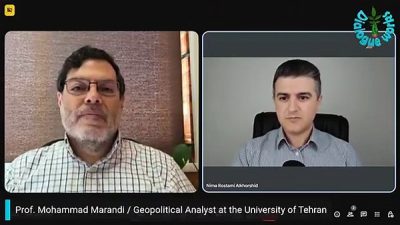
Seyed M. Marandi: U.S. Military DIVIDED? Iran’s Secret Defense EXPOSED
or go to
Aletho News Archives – Video-Images
From the Archives
‘Israel sees Iran as obstacle to its policies’
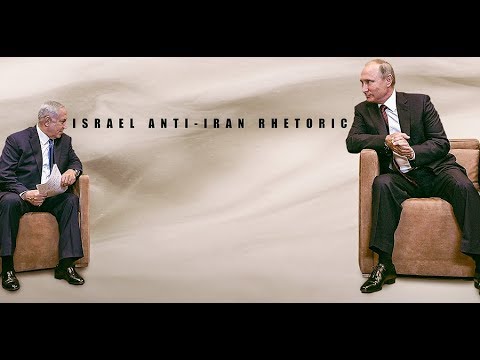
Press TV – August 25, 2017
Prime Minister Benjamin Netanyahu has said that Israel felt threatened by Iran’s growing influence in the Middle East. Netanyahu expressed his Iranophobic view in a meeting with Russian President Vladimir Putin in Russia’s Black Sea resort of Sochi on Wednesday. Press TV has asked Scott Rickard, former American intelligence linguist from Tampa, Florida, and Brent Budowsky, a columnist at The Hill from Washington, to give their thoughts on the issue.
Rickard said Tel Aviv is concerned about the fact that the regime could not carry out its old project to spread sectarian divisions and pave the way for dismemberment of the countries in the Middle East region because of the Iranian-led resistance against Israeli policies, not only in the occupied territories of Palestine but also in the whole region.
“Iran is not a threat to Israel whatsoever. The threat that Israel sees is the fact that their Oded Yinon Plan is being put to a hold by Iran,” the intelligence linguist said on Thursday night.
“They (the Israelis) look at Iran as a threat only because they have no influence on their governments and Iran is autonomous and is not under the Zionist influence,” he added.
Since the victory of the Islamic Republic of Iran in 1979, Tehran has been critical of Israel’s policies in the region, whereas “no leaders [of other states] even dared to speak out against Zionism,” Rickard argued. … continue
Blog Roll
 Aletho News
- Evidence points to Ukraine being behind TurkStream attempted sabotage, but that should come as no surprise
- Sri Lanka secures supplies of Russia oil – minister
- Nations across Asia strike direct deals with Iran for Hormuz passage
- IRGC commander declares ‘new phase’ of reprisal attacks against aggressors
- Israel’s air defenses overwhelmed by cluster-warhead Iranian missiles: Reports
- Striking Iran’s Infrastructure Would Have Little Military Impact – Report
- What’s Behind U.S./Israeli Strikes On Iranian Pistachio Factories?
- Seyed M. Marandi: U.S. Military DIVIDED? Iran’s Secret Defense EXPOSED
- How I fell foul of the BBC thought police
- The End of NATO
- If Americans Knew
- Trump says Iranians appreciate bombs, WHO warns of nuclear risks – Daily Update
- U.N. experts demand Israel release prominent Gaza doctor after reports of ‘severe torture’
- Israel’s Latest Genocide Is Against the Shias of Lebanon. Why Is the World Silent?
- How Eliot Cohen’s influence over U.S. war-making paved the way for Trump’s war crimes in Iran
- Israelis don’t pay for the weapons we ‘sell’ to them — US taxpayers do
- While Distancing from AIPAC, Most 2028 Democratic Hopefuls Are Still Embracing Israel
- A brief history of the Israeli nuclear program, the open secret at the heart of the Iran war
- Israeli Settlers Killed a Palestinian Farmer on His Own Land, in Front of His Father. Yes, Again
- The US-Israeli War on Science is an Assault on our Future
- 100+ International Law Experts Say US Strikes on Iran Violate UN Charter, Could Be War Crimes
- No Tricks Zone
- An Inconvenient Tree: Uncovered In Alps… Europe Much Warmer Than Today 6000 Years Ago
- New Study Reports A 60% Slowdown In Greenland’s Ice Loss Rate In The Last Decade
- Low Intensity Tornado Wrecks Major Solar Farm, Creating A Potential Toxic Dump
- New Study Finds Warming Saves Lives…Cold Temperatures 12 Times More Deadly Than Excess Heat
- German Science Blog Accuses PIK Climate Institute Of Hallucinating Climate Tipping Points
- Devastating Assessment Of Comirnaty Vaccine By Former Senior Pfizer Europe Toxicologist
- New Study: CO2 Is ‘Effectively Negligible’ As An Explanatory Climate Change Factor Since 2000
- Former Pfizer Toxicologist Dr. Helmut Sterz Tells Bundestag Hearing Pfizer Vaccine Should Have Never Been Approved
- Energy Expert: Germany’s Nuclear Phaseout Was A “500 Billion Euro Mistake”
- New Research: South Australia’s Mid-Holocene Sea Surface Temperatures Were 4°C Warmer Than Today
 Aletho News