Obama’s Playbook: Still Killing Outside the Lines
By Matthew Harwood, ACLU | January 30, 2013
To hear the Obama administration tell it, through anonymous leaks to the press of course, the United States’ “targeted killing” program will soon be bound by clear and “more stringent” rules before a drone strike gets the green light. This counterterrorism “playbook,” so says the administration, will institutionalize the process for the remote-controlled killing program and keep it within the rule of law.
But that isn’t true for three reasons, Chris Anders, a senior legislative counsel at the ACLU, explained to PBS’s NewsHour on Wednesday night. First, secret rules are inconsistent with the rule of law, which is predicated on everyone knowing the rules. Second, the Obama administration’s playbook rules will not apply to CIA drone strikes in Pakistan for at least a year if not more, according to the Post. Third, and most importantly, the rules undergirding the program, secret or not, violate the Constitution and international law.
Anders noted the Kafkaesque nature of the secrecy during the program. “To say we follow the rule of law, but we don’t even know what the rules are, and then the rules don’t apply to the biggest player is a little bit of a joke.”
Drone strikes occur frequently inside Pakistan, the only country in which the CIA is exempt from the secret rules. And contrary to the claims of CIA Director nominee John Brennan, arguably the most important cog in the remote-controlled killing machine, drone strikes do kill civilian bystanders, including children. In total, about 3,000 people, including 176 children, have been killed by over 300 drone strikes in Pakistan, according to the Bureau of Investigative Journalism.
Although we’re not at war with Pakistan, Pakistanis feel under attack from the United States. “Drones hover twenty-four hours a day over communities in northwest Pakistan, striking homes, vehicles, and public spaces without warning,” a recent report, Living Under Drones, explained. “Their presence terrorizes men, women, and children, giving rise to anxiety and psychological trauma among civilian communities.” The impact as well as the legality of these kinds of drone attacks, and the larger “targeted killing” toolkit, is now the focus of a U.N. investigation.
Nevertheless, President Obama frequently makes reference to the importance of the rule of law in guiding our national security decisions.
“We will defend our people, and uphold our values through strength of arms, and the rule of law,” he said during his inaugural speech on Monday. “We will show the courage to try and resolve our differences with other nations peacefully. Not because we are naive about the dangers we face, but because engagement can more durably lift suspicion and fear.”
Obama’s remote-controlled killing program, however, continues to instill suspicion and fear rather than lift it. It’s a dangerous legacy for a program that has become an illegal hallmark of his administration.
Related article
- New U.S. Counterterrorism Playbook to Exclude Pakistan from Drone “Kill” Rules (alethonews.wordpress.com)
In Mali, Forces Backed by UN, France, and Obama Slaughter Civilians
By Alex Newman | New American | January 28, 2013
Summary executions and mass human rights abuses targeting innocent civilians in Mali are being perpetrated by soldiers loyal to the dubious Malian regime in a campaign supported by the United Nations, the new socialist French government, and the Obama administration. According to human rights groups and witnesses on the ground, the atrocities are increasing as the number of murdered victims continues to rise — eerily reminiscent of similar tragic interventions in Libya, Syria, and the Ivory Coast.
The regime ruling southern Mali out of the capital city of Bamako, which seized power in a military coup last year led by a U.S. government-trained officer, is currently attempting to recapture the northern regions of the country. The vast swath of territory in the north was declared independent last year by a group of historically oppressed nomadic Tuareg rebels armed with weapons obtained from the recent Western-backed war on Libya.
Islamic fighters with various loyalties joined the fight against the corrupt central government, too — providing a half-baked excuse for the UN, the French government, Obama, and various African despots to enter the fray on behalf of the illegitimate regime in the south. After the UN Security Council purported to “authorize” an international invasion on behalf of the coup-installed regime, forces from France openly began their military campaign earlier this month under the guise of fighting “Islamic extremism.”
Obama, the U.K. government, and a motley assortment of African tyrants — most of whom continue to be propped up with Western taxpayer money — quickly joined the battle as well. But within days of the military operation to crush rebels in the north, disturbing reports of gross human rights violations perpetrated by Western-backed forces began to emerge from across the region.
“This series of grave abuses confirms the concerns that we have been expressing for several weeks,” said President Souhayr Belhassen with the International Federation for Human Rights (FIDH), a Paris-based umbrella group representing more than 160 organizations around the world. “These acts of revenge together with the extreme tensions that exists between the communities constitute an explosive cocktail leading us to fear that the worst could happen, especially in the context of the reconquering the North.”
According to FIDH, which said it is “very alarmed by the increasing number of summary executions and other human rights violations committed by Malian soldiers,” an immediate investigation is needed. The umbrella organization said an independent commission should be established to assess the scope of the crimes and bring the perpetrators to justice. The group said it had already confirmed dozens of reports of extrajudicial murders in various towns, and that other reported atrocities were still being investigated.
Even in Bamako, where the corrupt regime styling itself the “government” of Mali is based, ethnic Tuaregs who have nothing to do with the secession movement in the north are being brutalized. According to reports, their homes are being invaded and plundered. Simply failing to produce valid identification documents is apparently justification enough to brutalize or even murder the victims.
“These abuses undermine the legitimacy of the operation to restore territorial integrity and must be prosecuted by the national justice, and if required, by the International Criminal Court which opened an investigation on the situation in Mali on 16 January,” FIDH Honorary President Sidiki Kaba said in a statement, urging French and Malian authorities to investigate the lawlessness and criminal terrorization of victims. […]
While the press has been largely barred from conflict areas by the French government, even establishment journalists have documented the slaughter by UN-backed forces. A Reuters reporter, for example, “saw at least six bodies in two areas of the Walirdi district of Sevare. Three of them were lying, partly covered in sand, near a bus station and showed signs of having been burned. Three more had been thrown into a nearby well.”
Witnesses who spoke to the Associated Press but asked to remain anonymous gave vivid accounts of the atrocities being perpetrated by the Malian regime, which, again, has the full force of the Obama administration, the UN, and the socialist government in France behind it. According to the sources, Malian soldiers were massacring anyone suspected of having ties to the rebels in the north.
“They gathered all the people who didn’t have national identity cards and the people they suspected of being close to the Islamists to execute them and put them in two different wells near the bus station,” one of the witnesses was quoted as saying by the AP. After being dumped in the wells, Malian troops poured gasoline on the bodies and set them ablaze, probably to conceal the evidence of their crimes.
The coup regime in Bamako has denied the accusations, saying it ordered its officers to “respect human rights.” However, French Defense Minister Jean-Yves Le Drian, when asked about whether he knew of the abuses being perpetrated by the “government” his forces are supporting in Mali, said: “There’s a risk” that the atrocities are occurring, but that it was up to the Malian regime to stop it. … Full article
Israel boycotts UN forum, first state in history to ignore human rights review
RT | January, 2013
Israel has boycotted the UN human rights forum over fears of scrutiny of its treatment of residents of the occupied territories. Israel is now the first state in history to win a deferment of the periodical review of its human rights record.
Tel Aviv has refused to send a delegation on Tuesday to the United Nations Human Rights Council in Geneva for the Universal Periodic Review procedure where UN member states have their human rights record evaluated every four years.
Israel’s cooperation with the council stopped last March after the UN set up a committee to inspect the effects of the Israeli settlements on Palestinians.
Israel which earlier accused the United Nations of anti-Israel bias reiterated its stance, recalling that the council has passed more resolutions against Israel than all other countries combined.
“After a series of votes and statements and incidents we have decided to suspend our working relations with that body,” Yigal Palmor, Israeli foreign ministry spokesman, told the Financial Times. “I can confirm that there is no change in that policy.”
“There have been more resolutions condemning Israel than the rest of the world put together,” an Israeli government official said on Tuesday. “It’s not a fair game – it’s not even a game.”
Following the Israeli decision, the council has decided to postpone its review until no later than November.
The Council president has also called on the body to adopt a draft response to an unprecedented move by Israel.
Egypt’s representative meanwhile has warned that a “soft” approach would create a dangerous precedent and leave “a wide-open door for more cases of non-cooperation,” the AFP quoted.
Activist groups have lashed out against Israel’s disregard for international law.
“By not participating in its own review, Israel is setting a dangerous precedent,” Eilis Ni Chaithnia, an advocacy officer with al-Haq, a human rights organisation based in Ramallah has told the FT. “This is the first time any country has made a determined effort not to attend.”
Others thought that the council’s decision to delay gives Tel Aviv the opportunity to make amends. Eight Israeli human rights organizations issued a statement saying, “Israel now has a golden opportunity to reverse its decision not to participate,” adding “it is legitimate for Israel to express criticism of the work of the Council and its recommendations, but Israel should do so through engagement with the Universal Periodic Review, as it has done in previous sessions,” JTA quotes.
The investigation into Israel’s Human Rights record began in 2007, but last year the UN started to pay particular attention to Israel’s activities in the West Bank.
The probe at the time prompted an angry response from the country’s leader.
“This is a hypocritical council with an automatic majority against Israel,” Prime Minister Benjamin Netanyahu said.
Senior Israeli officials announced last month that Israel does not intend to cancel plans to accelerate settlement construction.
Netanyahu himself said in an interview with Israeli Channel 2 last month that the … area “is not occupied territory” and that he “does not care” what the UN thinks about it.
Around 500,000 Israelis and 2.4 million Palestinians live in the West Bank and in East Jerusalem, areas that, along with Gaza, the Palestinians want for a future state.
The United Nations regards all Israeli settlements in the West Bank as illegal. Tel Aviv last attended the human rights review in 2008. Israel is not a member of the Council, which is comprised of 47 UN member states.
Related article
- Israel plans boycott of UN human rights review (alethonews.wordpress.com)
Top Executives at Bailed-Out Companies Keep Getting the Big Bucks, with a Wink from Treasury Dept.
By Noel Brinkerhoff | AllGov | January 30, 2013
Executives of corporations bailed out by the U.S. government received more than $6 million in raises last year, despite guidelines by the Department of the Treasury that are supposed to limit such salaries.
The Special Inspector General for the Troubled Assets Relief Program (SIGTAR) accused Treasury officials of ignoring the guidelines and approving raises sought by the companies.
An extra $6.2 million was awarded to just 18 employees at General Motors (GM), Ally Financial and American International Group (AIG), which received a total of more than $250 billion in bailout funds. This included a $1 million raise for the chief executive of an AIG division, Chartis, and $200,000 for an employee of Ally’s Residential Capital—which filed for bankruptcy only weeks later.
In 2012, the Office of the Special Master for TARP Executive Compensation approved pay packages of $3 million or more for 54% of the 69 top executives of AIG, GM and Ally.
Christy Romero, special inspector general for TARP, criticized the Treasury Department for not holding the line on executive compensation. “Treasury cannot look out for taxpayers’ interests if it continues to rely to a great extent on the pay proposed by companies that have historically pushed back on pay limits,” Romero said in her report (pdf).
She also accused Treasury of not making “meaningful reform to its processes.”
“Lacking criteria and an effective decision-making process, Treasury risks continuing to award executives of bailed-out companies excessive cash compensation without good cause,” she added.
Patricia Geoghegan, Treasury’s acting special master for compensation, rejected Romero’s conclusions, saying the audit was filled with inaccuracies and mischaracterizations of data provided to the inspector general.
Related article
End the Nuclear Lobby
By PETER G. COHEN | CounterPunch | January 30, 2013
For decades the peace movement has been satisfied with scraps from the table of nuclear weapons and their beneficiaries. Even the New START Treaty was offset by the Obama administration promise to spend $185 billion in this decade on modernization of nuclear weapons and delivery systems.
The vulnerable point in the complex of nuclear weapons corporations, their lobbies, their campaign recipients in Congress and the resulting ongoing budget for these weapons and facilities, is the delivery of corporate money by lobbyists to the key members of Congress.
“In the 2012 election cycle, the top 14 nuclear weapons contractors gave a total of $2.9 million to key members of Congress with decision making power over nuclear weapons spending. These firms have donated $18.7 million to these same members of Congress over the course of their careers.” –Bombs Versus Budgets: Inside the Nuclear Weapons Lobby, By Hartung and Anderson at the Center for International Policy, June 6, 2012, –( a MUST read!)
There is ample evidence that nuclear weapons are useless in our national defense, that they and their delivery systems are extremely expensive and that their possession and modernization by the United States prevents any progress toward abolition by the other nuclear powers. Above all, we now know that any use, accident, or hacking of these weapons, anywhere, endangers the people of the world and all complex forms of Life on Earth.
Therefore, when we protest nuclear weapons we are defending the future of Life on Earth. And when corporations bribe our Representatives to preserve their contracts and profits, regardless of actual need, they risk the future of that life.
We must interfere with this lobbying (bribing) process. We must stand in the way. The children of the world demand that they not live under this “sword of Damocles” for the profits of the nuclear corporations, such as Lockheed Martin, Northrop Grumman, General Dynamics and Boeing. The current situation of nuclear weapons is sick and beyond the moral compass of all religions.
It is urgent that the peace movement bring this truth to the attention of the American people. The methods of the last decades have been insufficient. The harsh reality of thousands of weapons on quick response demands a new approach. we must go beyond past experience, to learn from the methods of others who have had long, hard battles to change our society. Symbolically or actually, we must stand between the K Street lobbyists with their campaign contributions and the leaders of these House Committees. The public must be aroused to the insanity of our ongoing weapons and delivery systems preparations.
We must act now to preserve the wonder of Life on Earth. There is no nobler cause or greater meaning for our lives. We must venture forth with greater energy, imagination and determination to stop the insanity of investing in our extinction.
Peter G. Cohen, Santa Barbara, CA, is the author of www.nukefreeworld.com
Related article
- NAM slams nuclear meeting cancellation, urges Israel to join NPT (alethonews.wordpress.com)
The Economics of the Cuban Embargo
By SAUL LANDAU and NELSON P. VALDES | CounterPunch | January 29, 2013
The time has come and almost gone for Washington to repair its broken relations with Cuba. For 53 years the White House has maintained a punishing embargo on trade with Cuba. Its proponents, with the goal of removing Cuba’s revolutionary government, still plead: “give it time.”
In 2001 President George W. Bush allowed for an exception permitting US companies to sell agricultural products to Cuba for immediate payment, although imports from Cuba remained off limits. Other economic sectors received no benefits.
Cuban Americans particularly from south Florida now export goods and remittances to relatives and friends while importing profits from sales made to fellow Cubans in Cuba, giving them an advantage denied to the rest of the country.
Washington pundits attribute superhuman strength to the anti-Castro lobby; thus no President would attempt to lift the trade and travel embargoes on the island. Yet, Cuban Americans trade with and travel to Cuba freely on a daily basis. The “embargo” applies to everyone except Cuban Americans.
This growing international trade, disguised as sending goods to needy family members in Cuba, now includes filling the hulls on 10 or more daily charter flights from US cities to Cuba. Cuban Americans send goods, often with “mules,” to provide family members in Cuba, needing supplies for their businesses. The “mules” return with cash, derived from sales of these goods. Some of the new Cuban stores and restaurants supplied by Miami-based Cubans make substantial profits, some of which get spent in Cuba, and ends up in Cuba’s central bank.
Miami, the United States’ poorest large city, derives income because it provides jobs involved in buying and selling the goods sent to Cuba. Jobs also arise from routine tasks created around the daily charter flights to and from Cuba, and the fees collected from take offs and landings. Add to this, the work for accountants, book-keepers and others.
Some unemployed Cuban Americans get jobs as mules transporting the goods and money from one country to the other. Miami banks also benefit.
In Cuba, this trade also creates jobs and wealth. Mercedes runs a paladar [private restaurant]in Havana’s Vedado neighborhood, “because we draw tourists who like good food, which I serve at my paladar.”
Some paladar customers flew to Havana from Miami. These Cuban Americans come to visit relatives and maybe check on their new investments in Havana family-run businesses. “Relatives in Florida supply me with food I can’t get easily in Cuba,” Mercedes said, “like some spices, and packaged goods. I send them money for these products. They make a profit, and so do I. The government makes money from taxes I pay, and jobs grow in Cuba’s tourist industry.”
US-based charter flights have full hulls, even those with few passengers. One charter flight company manager told us: “Passengers don’t matter that much. The hull is totally full.”
Much of the Cuba trade flows through the Miami International Airport, meaning capital moves from the US to Cuba; most of the luggage contents, however, remain in Cuba. The boon to Miami airport services means jobs, fees and taxes, which remain as capital in south Florida. The goods purchased in south Florida by Cubans (relatives, mules, etc) benefit local businesses.
This trade multiplies jobs throughout the area — as well as it does for Cuba: In Miami sales emanate from stores and lead to jobs in transportation, parking, hotel facilities, restaurants, and luggage-handling. Count the businesses providing services to the people traveling to Cuba and sending goods there. Don’t omit the expanded police force, and extra officials required in immigration, and customs; nor fail to consider jobs servicing air planes, and their jetways, and additional personnel needed for landings and take offs, and extra jobs in airport administration and maintenance created by expanded travel. Think of Miami’s increased tax revenues.
South Florida represents a Cuban settler state within the United States. It counters its interests against those of the dominant society, with the society’s ignorant acquiescence. The Miami-based Cuban Americans and their Cuba-based families have used US-Cuba policy, the embargo representing the power of the nation for their own self-interest, and in order to attain a comparative advantage vis a vis the rest of the American population.
Since 1960, commitment to overthrow of the Cuban government has functioned as US foreign policy on Cuba, a policy now controlled informally by south Florida Cuban-Americans. The Cuban American ethnic enclave assumed the political power needed to turn south Florida into an autonomous Cuban settler state inside US boundaries, so that the embargo does not get applied to the Cuban American enclave. The enclave barons use the embargo to secure, for themselves, a protection of the Cuba trade monopoly. This challenges stated US national interests.
Camouflaged by ubiquitous anti-Castro rhetoric, the Cuban American entrepreneurs have manufactured a lucrative business with the island, regulated by the very government they pretend to hate. The rightwing congressional representatives pretend to fight for every law to punish the “Castro regime” while in practice turn a dead eye to the growing trade that helps Florida’s and Cuba’s economy. Preserve the embargo, but make an exception for Cuban Americans.
By recognizing the facts about this trade, the White House might become inspired to lift the embargo – a move to benefit all Americans. US government revenue would grow from opening trade and travel with Cuba. In the process we might also regain a missing piece of US sovereignty!
Saul Landau, Professor Emeritus, California State University, Pomona, produced FIDEL and WILL THE REAL TERRORIST PLEASE STAND UP, available on dvd.
Nelson P. Valdes is Professor Emeritus, University of New Mexico.
The 9th Annual Israeli Apartheid Week 2013
Announcing 9th Annual Israeli Apartheid Week (Feb-March 2013)
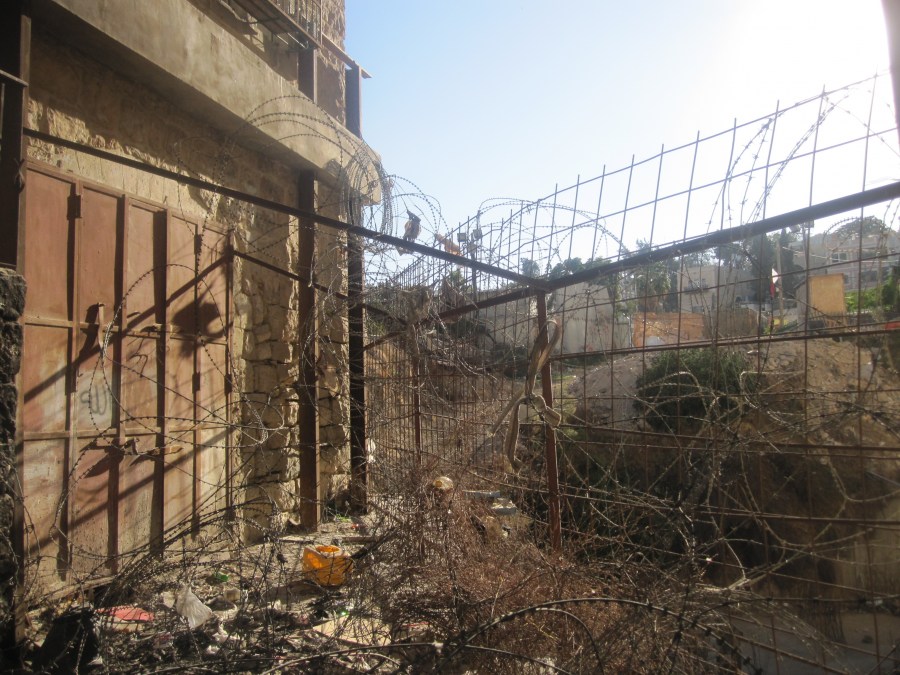 We are excited to announce the upcoming 9th annual Israeli Apartheid Week (IAW) starting late February in Europe and moving to various countries through the month of March.
Israeli Apartheid Week (IAW) is an annual international series of events (including rallies, lectures, cultural performances, film screenings, multimedia displays and boycott of Israel actions) held in cities and campuses across the globe. Last year’s IAW was incredibly successful with over 215 cities participating worldwide.
IAW seeks to raise awareness about Israel’s apartheid policies towards the Palestinians and to build support for the growing Boycott, Divestment, and Sanctions (BDS) against Israel campaign.
To accommodate various university schedules and cities from around the world, IAW will take place in slightly different weeks but all in the months of February and March. Here is a list of dates for regions confirmed so far:
Europe: February 25 – March 10
Palestine: 8-15 March
United States: March 4 – 8
Canada: March 4 – 8
South Africa: March 11 – 17
If you would like to organize and be part of Israeli Apartheid Week on your campus or in your city please get in touch with us at iawinfo@apartheidweek.org. Also find us on Facebook and Twitter.
HOW YOU CAN GET INVOLVED DURING IAW
IAW offers ordinary people around the world an opportunity to partake in something truly global. If you would like to get involved and organize your own IAW event or action let us know so that we can share with you the IAW Basis of Unity and organizing principles. Here are some ways that you can actively get involved:
1. Organize a film screening
Consider hosting a film. For more info or for suggestions contact us at iawinfo@apartheidweek.org
2. Arrange a lecture, workshop, rally or protest
There are many speakers ranging from academics, politicians, trade unionists and cultural activists that we can suggest for you to host. Be in touch with us and we can put you in contact.
3. Organize a BDS action
Organize with others a practical boycott of Israel action or have a BDS motion tabled at your relevant student council, municipality etc.
4. Join us online
Help us spread the word online about Israeli Apartheid Week
5. Be creative
Be creative! Draw attention to Israeli apartheid with a Mock Israeli Apartheid Wall or Checkpoint, a flash mob, a concert or poetry reading, street theater, protest etc.
Related articles
IAEA Dismisses Reports of Explosion at Iran’s Fordo
Al-Manar | January 30, 2013
The International Atomic Energy Agency has dismissed Israeli and Western media reports claiming there had been an explosion at the Fordo uranium enrichment facility and stated that it had seen no sign of such an event at the Iranian nuclear site.
On Tuesday, IAEA spokeswoman Gill Tudor told The Associated Press that Iran’s denial of “an incident” at the Fordo plant is “consistent with our observations.”
On Monday, Iran categorically rejected the reports about an explosion at the Fordow nuclear facility.
MP Alaeddin Boroujerdi, who is the chairman of the Majlis (parliament) National Security and Foreign Policy Committee, described the news stories as Western propaganda designed to influence the upcoming round of talks between Iran and the P5+1 group (Britain, China, France, Russia, the United States, and Germany).
Mahmoud Sarsak – Palestinian International Footballer
Free Gaza Scotland | January 29, 2013
On Wednesday 23rd of January I with other members of our group had the pleasure and honour to meet Mahmoud Sarsak in our appartment. He is a slight, quietly spoken young man, with a gentle manner and his good humour and patience with our questioning betray none of the pain he has suffered over the last 3 and a half years. When he begins to speak about his experience of imprisonment he tells his story with a matter of fact, quiet sincerity that is striking and makes the horror of his experience all the more shocking.
 Mahmoud was 21 years old, at the start of a playing career which had already seen him being recognised as one of the best young prospects in Palestine, already a regular for the Palestinian National side. He had an invitation to play for a football team in Nablus in the West Bank. This meant that he had to ask for permission from the Israelis to cross from Gaza through Erez crossing into Israel in order to travel on to the West Bank. This did not worry him as it was a trip he had already done twice before and when he recieved his permission he went to the crossing looking forward to the opportunity of playing in Nablus. However when he got to Erez at 9am on the 22nd July 2009 his whole world changed, instead of being allowed to cross he was arrested and taken to a Police Station, from here his family were called and informed that he was being taken to Ashkelon Jail.
He was made to take off his clothes and change into overalls, an ‘under investigation uniform’. He describes how for the first 18 days he was tied to a chair with his eyes covered, the only times he was untied was when he was given food and they untied his hands or when he was allowed to go to the toilet when his legs were untied. He explains that during this time he was kept awake, not fed properly and questioned daily, every 4 days he was taken to a court where a judge gave permission for him to be held for a further 4 days. This treatment he says ‘wasn’t so bad’ in comparison with what was to come although I think that most people would call it torture.
At the end of that 18 days he was taken to a Military Jail in the South where he was kept for 6 days and his treatment became much worse. He was beaten regularly and was put in what he described as a fridge, he also had very hot and very cold water put under his feet. During all of this time in both places he was questioned, his interrogators were wanting him to say that he had been involved in ‘activities against Israel’. He didn’t understand what they meant by this, he was a footballer, he had not been involved in anything else and so refused to make things up to make his interrogators happy. He had no idea why he had been arrested.
At the end of these 6 days he was taken back to a civilian jail for another 11 days where suddenly things got much better. He was fed and allowed to sleep properly, his captors became very friendly offering him his freedom, a new house, a salary, a car, access to proper training facilities to help his playing career and foreign travel. All he had to do was become a collaborator. He refused, which provoked many serious threats from his Israeli interrogators. They told him that they would burn his family home down, attack his family and kill his brothers. Despite the pressures upon him and his ordeal so far, he continued to refuse to collaborate.
Except for short visits to court when his lawyer was present, during this initial 35 days of incarceration he had absolutely no contact with anyone but his jailors and interrogators. His lawyer told him that he was going to be all right, the court had said he was going to be released. Instead he was told by a Military Officer that he was now being held under ‘The Law of An Illegal Fighter’ and that they no longer needed to go to court to ask permission to keep him. He was then taken to Kitseot Jail near Bersheva where at least he could see other prisoners and his time of interrogation was over. He asked the other prisoners what this ‘Law of an Illegal Fighter’ meant but none of them had ever heard of it. When he was finally allowed access to his lawyer and was able to ask him he was told that it was a law that the Israeli authorities use when they have nothing against you but they want to hold onto you. He then asked his lawyer what rights he had under this law and was told that he had none, he could now be held in jail for as long as the Israeli Military wanted to keep him.
Mahmoud was the first Palestinian who had been held under this law, the only other people he knows of who had previously been held under it were 2 Hizbollah members from Lebanon who were arrested in 1982. He thinks that because he had no rights he was put in a cell which was 2m x 1m for his time in Kitseot, this cell had only a matress and toilet in it and he developed chest, skin and back problems while there. He was not taken to a hospital while there, and was only seen briefly by a prison doctor for these problems. He was allowed out of his cell for 1 hour a day for exercise with his fellow prisoners when he played football with them.
On the 22nd of February 2010 Mahmoud was taken to Tel Aviv for a court hearing to extend his imprisonment and then to another court hearing for the decision in Jerusalem two weeks later. The journey to court and between jails is in what the prisoners call a ‘post bus’ which is metal bus with steel compartments in which you are jostled and hit off the steel walls. He knew before he was taken to the second hearing that he was going to be held for another six months. After this hearing he was also barred from playing football with his fellow prisoners for that precious hour in the mornings and was told that this was due to his back being too bad. At this time they also started to move him between prisons every 2 months and he was still taken to court every 6 months in order to have his stay in prison extended.
On the 23rd of August 2011 he was told that he was going to be released, he was happy and said goodbye to the other prisoners. He was taken by ‘post bus’ to Erez, his hands and legs were not tied as they usually were, the window was open and when he got there they opened the door of the prison van and the guards moved away talking among themselves. He stayed where he was as he didn’t know what was happening and he didn’t want to be shot if they thought he was trying to escape. He called to the guards to ask what was happening and they told him they were taking him back to jail, he wasn’t being released. He was taken to a different jail for 2 weeks with only the clothes he had on when they took him to Erez. He said that he was later told about another prisoner who had been taken to Erez and left in an open ‘post bus’ with his legs untied in the same way. He had gone to the door to look out and been instantly shot in the leg and accused of trying to escape. After this 2 week period he was taken back to the jail he had originally been in when first imprisoned, here his other clothes and small number of belongings were finally brought to him.
When he was taken to this jail he was given another 6 months but his lawyer was promised that he would be released when this time ended on the 23rd of February 2012. The 23rd of February came and went, 10 days after this he was taken back to court, he had decided that this time if he wasn’t released he would go on hunger strike and stay on hunger strike until they promised in writing that he would be released. So when he was told that he was going to be imprisoned for another 6 months he prepared himself for 10 days, eating less each day and gradually reducing his physical activity. On the 15th of March 2012 he started his hunger strike. He only took water and sometimes a little salt in order to prevent his stomach from beginning to rot.
7 days after he started they began to move him from jail to jail before putting him in Nafha Jail which meant he was put in with the Israeli criminal population. Then he was put into isolation for a spell followed by hospital in Bersheva for 2 days tied to his bed then back to Nafha. From here he was sent to Eshel jail where he was put in isolation again and became very sick. This time they wouldn’t take him to hospital but would only allow him to see the Doctor in Eshel. After 35 days of this the Doctor in Eshel refused to continue to be responsible for him and he was taken to the Prison hospital in Ramle jail where he was with another 5 Palestinian prisoners who were also on hunger strike. He refused treatment here and was put back into isolation, this time his isolation cell had no windows so he was in darkness. After 47 days on hunger strike he bagan to have serious problems with his stomach, he couldn’t even drink water without vomiting. First white then black then brown vomit. They took him back to Ramle Prison hospital then and gave him antibiotics.
Along with the other hunger strikers he was asked regularly to break his hunger strike, on the 15th of May he was told that if he would break his hunger strike he would be released on the 23rd of August and the other hunger strikers were also told that they would have their demands met if they broke theirs. 3 of them accepted but along with 1 of the others Akram Al Rihawy he refused, he had heard promises of release before and he insisted that he have the promise in writing signed by a senior Judge and a Minister from the Israeli Ministry of the Interior. He was also told that he would not be allowed to return to Gaza, he had to choose between Germany, France or Norway which he also refused to accept. At this time he finally began to get International Committee of the Red Cross visits twice a week and he was asked daily to break his hunger strike, he continued to refuse until he got it in writing that he would be released back to Gaza and that he would be properly monitored by a committee of doctors when he started eating again.
Eventually on the 18th of June 2012 on the 96th day of his hunger strike a Minister from the Israeli Ministry of the Interior came to see him with the signed paper that he had been asking for stating in writing that he would be released on the 20th of July 2012. The Minister asked him if he would now please give up his hunger strike and he agreed. The Minister asked him to drink a glass of milk in front of him so that he could confirm and report that he had indeed broken his hunger strike which he did alathough he immediately vomited this back up. His stomach couldn’t cope even with milk after such a long time with no more than water going into it. He said that even though his stomach rejected this cup of milk his whole body felt as though it had drunk and felt relieved.
For 14 days he had to build up to eating again with first intravenous vitamins and nutrition, followed by nutritional drinks, before finally eating his first bit of bread after this 14 day period, which he still vomited back up. During the time of his hunger strike he was only allowed 2 visits from his lawyer, on the 40th day and on the last day. I asked if he was allowed any visits from his family during his time in jail. He replied that because he was given no rights under the ‘Law of An Illegal fighter’ he was not only denied visits from family but was not even allowed the 6 monthly letters delivered to his fellow prisoners by the Red Cross. He wasn’t able to write to them either, not even one short note.
At no time during Mahmoud’s entire incarceration was he actually accused of anything other than being asked to admit to the vague term ‘activities against Israel’ and he was never charged with anything. He was very clear that he had no idea why he was arrested. He was a footballer. The court appearances he attended were simply formalities under Military Law which say that every 6 months any detention order must be renewed.
All Palestinians from the West Bank and Gaza who are arrested by Israel are dealt with under Military Law not Israeli Criminal Law and therefore it is not necessary for Israel to ever bring charges against them. Many who are prosecuted are those who have signed false confessions under torture and are not able to retract them afterwards. Mahmoud’s case was slightly worse than normal Military law, under which there are a few rights which at least give some protection in prison. Mahmoud had none of these rights under this so called ‘Law of an Illegal Fighter’ by which he was held.
I asked Mahmoud if he was back in training for football and if he thought that it would be possible for him to return to his playing career. He said that finally he had managed to attend 3 training sessions and was hoping to be able to return to the team at some point in the future once he was back to full fitness. I sincerely wish him luck with this and hope that he will reach that stage very soon.
This has to be one of the clearest examples of why the BDS (Boycott Divestment and Sanctions) campaign should be supported by everyone and why Israel should be barred from participating in International Sporting events. Currently the 2013 UEFA U-21 Championship is scheduled to be played in Israel. How can this be allowed when they can treat a Palestinian International Player like this? Not to mention that they bombed the only 2 football pitches in Gaza during Operation Pillar of Cloud as well as destroying many local playing areas in the West Bank over the years. I saw several during my visit there in 2004 including one in Ramallah which had been bulldozed.
Mahmoud told us that the other prisoner who had stayed on hunger strike with him, Akram Al Rihawy, had spent his whole sentence in hospital due to his medical problems. His reason for being on hunger strike was not for release but for proper medical treatment. He stopped his hunger strike after being told that he was going to be released on Wednesday the 23rd of January 2013. Yesterday, on the 25th of January 2013 we were told that he was not released as promised and that he is now back on hunger strike.
To join the campaign against Israel hosting the 2013 UEFA U-21 Championship go to the following link and get involved: http://redcardapartheid.weebly.com/
Related articles
- Former mayor put in administrative detention (alethonews.wordpress.com)
- Genocide by Proxy: Palestinian patient Salah Salluha dies at Erez due to prolonged security measures (occupiedpalestine.wordpress.com)
- Hundreds of Palestinians detained without evidence (occupiedpalestine.wordpress.com)
- Palestine: Documenting the torture of a boy in occupation jails, two wounded by shooting & East of Gaza flooded by Israelis (realisticbird.wordpress.com)
Data Privacy Day 2013: Twitter reveals US government makes 80% of info requests
RT | January 29, 2013
Twitter has released its second transparency report, which demonstrated a frightening increase in requests for user data by the US government and ignited serious concerns over privacy and free expression.
The list disclosed data requests from over 30 nations, and revealed that the US government was responsible for 815 of the 1,009 information requests in the second half of 2012 – just over 80 percent of all inquiries.
Twenty percent of all US requests were ‘under seal,’ meaning that users were not notified that their information was accessed.
The overall number of requests worldwide also steadily increased last year, rising from 849 in the January to June 2012 period to 1009 in the July to December 2012 period.
Twitter’s legal policy manager Jeremy Kessel blogged that, “it is vital for us (and other Internet services) to be transparent about government requests for user information.”
“These growing inquiries can have a serious chilling effect on free expression – and real privacy implications,” he wrote.
He went on to express hopes that the publication of the transparency data would be helpful in two ways – “to raise public awareness about these invasive requests,” and “to enable policy makers to make more informed decisions.”
The majority of US requests were subpoenas, which comprised 60 percent of government demands for information. Subpoenas usually seek user information such as email addresses affiliated with accounts and IP logs. A user’s whereabouts can generally be located by the IP address they are using.
Twitter complied with US government requests 69 percent of the time, according to the report.
Twitter released its transparency report on January 28, dubbed ‘Data Privacy Day.’ The US National Cyber Security alliance said it founded the day to “empower people to protect their privacy.”
According to Twitter’s report, several other governments made over 10 requests each for personal information, including Brazil, Canada, France, Japan and the UK. Japan ranked the second-highest on the list after the US; however, the US made 753 more demands for information than Japan.
Google released a statement marking the occasion, saying that the company “[doesn’t] want our services to be used in harmful ways,” and that it is “important that laws protect you against overly broad requests for your personal information.”
Earlier this month, France ruled that Twitter must disclose to authorities the identities of people writing anti-Semitic tweets using the hashtags #UnBonJuif [A Good Jew] and #UnJuifMort [A Dead Jew]. The social networking platform will be fined 1,000 euros a day until it complies.
The publication of the survey came shortly after Google published its own transparency report, which showed a similarly disturbing 25 percent rise in data requests from government authorities. The report also revealed that the US had made the most requests for private information to Google of any government: Over 8,438 in the second half of 2012.
UK-based rights group Privacy International later commented that “Google, Facebook and Twitter are highly vulnerable to government intrusion.”
“I am alarmed by the number of government requests and concerned that so many are done with merely a subpoena,” said John Simpson, a consumer advocate with the California-based group Consumer Watchdog. “A warrant should be required.”
Related articles
- Twitter Transparency Report v2 (twitter.com)
- Twitter: Government user data requests have risen 20 percent (sott.net)
Audio feed cut during 9/11 trial hearing, prompting suspicions of external censorship
RT | January 29, 2013
The first day of a pretrial hearing for five men accused of plotting the September 11 attacks was swirling with intrigue on Monday after the audio feed at a Guantanamo war crimes court was abruptly cut off.
The incident prompted the military judge to ask whether someone outside the courtroom was censoring the hearing.
Observers were listening to the trial behind a glass window when the feed was suddenly cut. The audio went silent when David Nevin, a lawyer for Khalid Sheik Mohammed – the alleged mastermind of the 9/11 attacks – asked if the lawyers and judges needed to meet in closed session before considering a request by the defense.
In previous hearings for alleged Al-Qaeda operatives sentenced to CIA prisons, a court security officer controlled a button which muffled audio to spectators when secret information was disclosed. During the censoring process, a red light flashes and observers hear nothing but static.
But that wasn’t the case this time around, as the judge’s reaction made clear once the sound was restored moments later.
“If some external body is turning things off, if someone is turning the commissions off under their own views of what things ought to be, with no reason or explanation, then we are going to have a little meeting about who turns that light on or off,” Army Colonel James Pohl told the courtroom.
Pohl seemed to be addressing the prosecution team, saying that Nevin had only referred to the caption of an unclassified document asking the judge to preserve as evidence the secret CIA prisons where the defendants say they were tortured, Reuters reported.
Nevin and the other defense attorneys said they wanted to know whether there was a third party monitoring the proceedings, and whether that entity could be listening to private communications between the lawyers and their clients, the Washington Post reported.
Justice Department lawyer Joanna Baltes said she could explain the reason behind the audio cut – but not in public. Pohl said he would meet in closed session with the lawyers and reopen the public part of the hearing on Tuesday. If the reason behind the cut could be explained to the public, he would do so then.
Mohammed and his four co-defendants are accused of training and aiding the hijackers who flew commercial airliners into the World Trade Center in New York, the Pentagon and a Pennsylvania field on September 11, 2001.
They could be sentenced to death if convicted on charges including terrorism, attacking civilians and murdering 2,976 people.
The men were among the suspected Al-Qaeda captives who were moved across borders without judicial review, and held and interrogated in secret CIA prisons overseas during the presidency of George W. Bush.
The CIA has acknowledged that Mohammed was subjected to the controversial interrogation practice known as waterboarding. The defendants also claimed they were subjected to threats, sleep deprivation and being chained in painful positions.
The defense lawyers have argued that the CIA’s treatment of the defendants constituted illegal pretrial punishment, and “outrageous government misconduct” that could justify dismissal of the charges, or at the very least spare the defendants from execution if convicted.
There are currently 166 detainees at Guantanamo Bay detention camp, including Mohammed. In 2009, US President Barack Obama ordered the prison to be shut within a year. However, it is still open and operational.
Guantanamo remaining open is yet another example of Congress overpowering the president – the prison was bundled together with the National Defense Authorization Act, which serves as the overall US defense budget. Obama has the power to veto the entire act, but not to individually challenge the administration of Guantanamo Bay.
Obama has threatened such a veto several times, but backed down on every occasion.
Featured Video
No Threat Can Force Iran’s Surrender /Trita Parsi & Lt Cl Daniel Davis
or go to
Aletho News Archives – Video-Images
From the Archives
An Expert Military Analysis of War with China
Actually, None is Necessary
By Fred Reed • Unz Review • December 13, 2020
The Correlation of Armed Forces: U.S. goods and services trade with China totaled an estimated $634.8 billion in 2019. Exports were $163.0 billion; imports were $471.8 billion. The U.S. goods and services trade deficit with China was $308.8 billion in 2019. Trade in services with China (exports and imports) totaled an estimated $76.7 billion in 2019. Services exports were $56.5 billion; services imports were $20.1 billion. The U.S. services trade surplus with China was $36.4 billion in 2019.
There is talk within the Washingtoniat of a possible war with China. Steve Bannon, who apparently was dropped on his head as a child, actually favors such a war. We hear the usual shoo-the-boobs alarm about how the Chinese are doing something terrible and we must gird our loins and American values and show them what for, bow wow, woof. The danger is that the current game of who-blinks-first in Asian waters might actually provoke a shooting war. You know the kind of thing: One warship refuses to get out of the way of another, a collision ensues, some retard lieutenant who signed up on waivers opens fire, and we’re off and running. It is not a good idea to let children play with matches.
The said war is discussed either in emotional terms by idiots or in purely naval terms by those familiar with such things, so we hear of the First Island Chain and the Second Island Chain and whose missiles against the other’s missiles and so on. This would be appropriate if we were fighting World War Two again. Which we aren’t. Let’s take a quick-and-dirty look at how such a war might go.
To begin the war, America would overestimate itself and underestimate China. This is doctrine in the Pentagon. … continue
Blog Roll
 Aletho News
- Theodore Postol: Iran’s Missiles & Drones Were Underestimated
- Iran To Target Military Industrial-Tech Complex That Facilitated Gaza Genocide
- Collapsing Empire: The Resistance Disarms ‘Israel’
- Suicide Should Not Be a Government Service
- Rethinking America’s greatest threat: Iran vs. Israel-Firsters
- Iran accuses adversaries of false flags to strain Turkey ties
- Poland rules out sending Patriot missiles to US/Israel amid war on Iran
- Tehran approves new Hormuz plan with major restrictions
- No Threat Can Force Iran’s Surrender /Trita Parsi & Lt Cl Daniel Davis
- UK’s New Pandemic Plan Would Turn Big Tech Into a Mass Location Tracking Network
- If Americans Knew
- Ann Coulter Rips Into Fox News for Iran War Coverage, Compares to False Rigged 2020 Election Reporting
- Joe Kent Urges Americans To Call White House and Congress To Object To Sending Troops Into Iran
- DNC Resolution to Reject AIPAC Funding Puts Democratic Leaders in the Hot Seat
- Swedish foundation to build 400 schools as over 650,000 Gaza children remain without education for 2 years
- Israeli army admits photshopping image of slain Lebanese journalist
- This is how Israel is systematically killing health workers under the cover of war in Lebanon
- Carrying life under fire: Israeli invasion of Lebanon leaves pregnant women facing deadly risks
- Champagne all around for the new death penalty (for Palestinians) law – Not a ceasefire Day 172
- Why are Palestinian books struggling to be seen on Amazon?
- The Line Between Affinity and Conspiracy
- No Tricks Zone
- New Study Finds Warming Saves Lives…Cold Temperatures 12 Times More Deadly Than Excess Heat
- German Science Blog Accuses PIK Climate Institute Of Hallucinating Climate Tipping Points
- Devastating Assessment Of Comirnaty Vaccine By Former Senior Pfizer Europe Toxicologist
- New Study: CO2 Is ‘Effectively Negligible’ As An Explanatory Climate Change Factor Since 2000
- Former Pfizer Toxicologist Dr. Helmut Sterz Tells Bundestag Hearing Pfizer Vaccine Should Have Never Been Approved
- Energy Expert: Germany’s Nuclear Phaseout Was A “500 Billion Euro Mistake”
- New Research: South Australia’s Mid-Holocene Sea Surface Temperatures Were 4°C Warmer Than Today
- Storing Green Energy To Last Germany 10 Days Would Require A 60-Million Tonne Battery
- New Studies: UK Sea Levels Were 4 Meters Higher Than Today During The Mid-Holocene
- Destructive Green New Deal: German Energy And Metal Group Warns Of Drastic Crisis
 Aletho News