Pretty in Pink: The Parchin Preoccupation Paradox
By Professor Yousaf Butt | Arms Control Law | January 22, 2013
The Stockholm International Peace Research Institute (SIPRI) has just released an important new expert report on Iran’s nuclear program, specifically on the Parchin site of much recent interest to the IAEA. The report is a must-read for a number of reasons, not the least of which is the expertise of the author, Robert Kelley. Kelley is a nuclear engineer and a veteran of over 35 years in the US Department of Energy’s nuclear weapons complex, most recently at Los Alamos. He managed the centrifuge and plutonium metallurgy programs at Lawrence Livermore National Laboratory, and was seconded by the US DOE to the IAEA where he served twice as Director of the nuclear inspections in Iraq, in 1992 and 2001.
Rarely, if ever, has such a technically qualified person spoken publicly on this important topic.
The SIPRI report dramatically revises the standard narrative in the mainstream western press about what is known about the Parchin site, and what – if anything — needs to be done about it. It also perfectly contextualizes the relative (un)importance of the IAEA gaining access to the site, and what the IAEA — and P5+1 countries — stands to gain or lose in the process of making a mountain out of a molehill on this issue. As Kelley states, “a careful review of the evidence available to date suggests that less has been going on at the site of interest than meets the eye.”
The dispute centers on “the IAEA’s request to visit a large military production complex located at Parchin, near Tehran. The request is part of the agency’s efforts to resolve questions about whether alleged Iranian nuclear activities have what IAEA Director General Yukiya Amano has called ‘possible military dimensions’.” Note the “possible” there. Specifically, the IAEA says it has secret information (which it will not share, even with Iran) from a member state’s intelligence agency indicating that Iran may have constructed a large steel chamber in one of the buildings for conducting conventional high explosives experiments—some of which may have involved natural (not enriched) uranium—which could be associated with a secret program to do research on nuclear bombs. As Kelley explains in the SIPRI report the whole scenario is a bit of a stretch from a technical standpoint.
“A chamber such as the one claimed to be in the building is neither necessary nor particularly useful for developing a first-generation nuclear weapon. Such development tests have normally been done outdoors for decades.”
And:
“There are a range of experiments involving explosives and uranium that a country presumably would conduct as part of a nuclear weapon development programme. Most of these are better done in the open or in a tunnel. They include basic research on neutron initiators using very small amounts of explosive and grams of uranium and on the very precise timing of a neutron initiator using a full-scale conventional explosion system and many kilograms of uranium. The alleged chamber at Parchin is too large for the initiator tests and too small for a full-scale explosion. If it exists at all, it is a white elephant.”
And if someone is going to build a chamber like the one alleged in the secret evidence passed to the IAEA, they will want to do experiments and make measurements. They will want to measure things with, for example:
· very high speed optical cameras
· flash X-ray systems (like an X-ray strobe light which gives you one x-ray of implosion in a very short time)
· neutron detectors
· Various electric timing and pressure detectors.
The collar that is shown in the alleged graphic of the chamber gets in the way of the optical, X-ray and neutron measurements. So it would be better not to have it there at all. The collar of the alleged chamber also means that when the chamber is used up to its design capacity it could well fail on the ends, the entrance door or the windows and cable ports for the measurements.
But before highlighting more of the take-aways from the SIPRI report, let me first briefly mention what other former senior IAEA officials have said about how the IAEA is handling the Parchin issue more broadly.
Firstly, let’s recall that the IAEA has already visited Parchin twice in 2005 and found nothing – although they did not go to the specific area they are now interested in. However, the IAEA could have gone to that area even in 2005 – they simply chose to go to other sites on the military base. As the IAEA report at the time summarized:
“The Agency was given free access to those buildings and their surroundings and was allowed to take environmental samples, the results of which did not indicate the presence of nuclear material, nor did the Agency see any relevant dual use equipment or materials in the locations visited.”
When the IAEA last went to Parchin, Olli Heinonen was head of IAEA safeguards and led the inspections – the methodology for choosing which buildings to inspect is described in an excellent Christian Science Monitor article which is worth reading in its entirety, but I quote the relevant bits:
“At the time, it[Parchin] was divided into four geographical sectors by the Iranians. Using satellite and other data, inspectors were allowed by the Iranians to choose any sector, and then to visit any building inside that sector. Those 2005 inspections included more than five buildings each, and soil and environmental sampling. They yielded nothing suspicious, but did not include the building now of interest to the IAEA.
“The selection [of target buildings] did not take place in advance, it took place just when we arrived, so all of Parchin was available,” recalls Heinonen, who led those past inspections. “When we drove there and arrived, we told them which building.”
Would the Iranians really have risked exposing some nefarious nuclear weapons-related work at Parchin by making all of Parchin available to the IAEA in 2005?
In the same article Heinonen also explains why the current IAEA approach is deeply, logically flawed:
“Also unusual is how open and specific the IAEA has been about what exactly it wants to see, which could yield doubts about the credibility of any eventual inspection.
“I’m puzzled that the IAEA wants to in this case specify the building in advance, because you end up with this awkward situation,” says Olli Heinonen, the IAEA’s head of safeguards until mid-2010.
“First of all, if it gets delayed it can be sanitized. And it’s not very good for Iran. Let’s assume [inspectors] finally get there and they find nothing. People will say, ‘Oh, it’s because Iran has sanitized it,’” says Mr. Heinonen, who is now at Harvard University in Cambridge, Mass. “But in reality it may have not been sanitized. Iran is also a loser in that case. I don’t know why [the IAEA] approach it this way, which was not a standard practice…”
As for the typically tendentious reporting on this topic, which almost always casts Iran in a negative light, the words of Hans Blix, former head of the IAEA, bear repeating:
“Hans Blix, former chief of the IAEA and later of UN weapons inspectors in Iraq, has also expressed surprise at the focus on Parchin, as a military base that inspectors had been to before.
“Any country, I think, would be rather reluctant to let international inspectors to go anywhere in a military site,” Mr. Blix told Al Jazeera English… “In a way, the Iranians have been more open than most other countries would be.”
One of the reasons that Mr. Blix says that is because normally the IAEA does not have the legal authority to inspect undeclared non-nuclear-materials related facilities, in a nation – like Iran — that has not ratified the Additional Protocol. The IAEA can call for “special inspections” but they have not done so. They can also choose arbitration, as specified in the Comprehensive Safeguards Agreement, but again they have not done that.
In fact, the Comprehensive Safeguards Agreement between Iran and the IAEA states quite clearly that its “exclusive purpose” is to verify that nuclear material “is not diverted to nuclear weapons or other nuclear explosive devices.” Nothing else – that is it exclusive purpose. It does not cover conventional explosives testing, as suspected at Parchin (according to secret information given by a third-part intelligence agency). The IAEA itself has admitted that “absent some nexus to nuclear material the Agency’s legal authority to pursue the verification of possible nuclear weapons related activity is limited.”
Regarding the secret information from an unidentified intelligence agency, it is useful to keep in mind that in the past, forgeries have been passed along to the IAEA. (And, if recent leaks that the IAEA is using mathematically flawed graphs in its case against Iran are to be believed, the IAEA’s case is further weakened.)
So as Hans Blix stated, Iran has been more cooperative than other countries would be in the same situation, and indeed more cooperative than it legally needs to be. It has shown great goodwill by allowing the IAEA a visit to Parchin in 2005. And let’s not forget that in 2004, Brazilian authorities refused to give IAEA inspectors full access to the Resende uranium enrichment facility with nary a peep out of the “world community”.
But coming back to the SIPRI report, a couple more of the highlights:
“The IAEA says that Iran did very complex experiments involving explosives and many fibre-optic detectors and possibly uranium. However, the IAEA says these experiments were not done at Parchin but rather 500 km away at Marivan. In any case, the experiments at Marivan described in great detail by the IAEA would not use uranium.”
And has Iran demolished the building at Parchin that the IAEA wants to visit as some “experts” have claimed?
“No. Some reports implied that Iran had destroyed the building, but this is incorrect. The IAEA claims that five buildings on this site have been demolished but this cannot be seen in satellite imagery. Iran did demolish a small outbuilding on the same site that appears to have been a garage. It was probably demolished to make way for a new road that is being built at the Parchin complex. Another small structure, probably a garage or material store was reported destroyed but is still in place in the latest satellite imagery…The building of interest for the IAEA remains standing.”
Regarding reports (e.g. from the ISIS group ) that Iran may be sanitizing the site, perhaps to prevent the IAEA from detecting uranium contamination, Kelley states:
“Iran has engaged in large-scale bulldozing operations on about 25 hectares near the Parchin building. This includes the bulldozing of old dirt piles to level a field 500 metres north of the building of interest. However, there has been no such activity in the area west of the building, except for removing some parking pads within about 10 m of it. The fact that the building’s immediate vicinity has been largely untouched on the west side strongly suggests that the purpose of the earth-moving operations was for construction and renovation work and not for ‘sanitizing’ the site by covering up contamination.”
What about the pink tarps mentioned by ISIS, supposedly to prevent satellites from viewing the inside of the buildings ?
“In the summer of 2012 Iran began major renovations at the site. Workers decreased perimeter security by tearing down fences, demolished one outbuilding and began renovation of two buildings. They covered both buildings with pink styrofoam insulation…One building is completely covered with insulation and the other is about 60 per cent covered. Raw materials can be seen on the ground nearby. The buildings were then reroofed and are at different stages of renovation even today.”
A picture of the pink insulation is shown in the report.
Kelley concludes, “The impasse over the Parchin visit has taken on a symbolic importance that is distracting attention from the IAEA’s efforts to address a range of questions about the scope and nature of Iran’s nuclear programme… The IAEA is stretching its mandate to the limit in asking for access to a military site based on tenuous evidence.”
And, of course, let’s keep in mind that these allegations, suspicions and “concerns” (as opposed to actual legal issues) that the IAEA has about Parchin date from about a decade or more ago – if they are true at all. And that they relate to conventional explosives testing.
As for any current worries about nuclear weapons work in Iran, James Clapper, the director of national intelligence, has confirmed that he has “a high level of confidence” that no such work is going on now. Defense Secretary Leon Panetta has also weighed in: “Are they [Iranians] trying to develop a nuclear weapon? No.” And Mohamed ElBaradei, the Nobel Peace Prize laureate who spent more than a decade as the director of the IAEA, said that he had not “seen a shred of evidence” that Iran was pursuing the bomb. Adding, “I don’t believe Iran is a clear and present danger. All I see is the hype about the threat posed by Iran.”
There are a number of other problems in the IAEA reports on Iran: For example, the agency keeps saying in its reports that it cannot “provide credible assurance about the absence of undeclared nuclear material and activities in Iran” nor that “all nuclear material in Iran is in peaceful activities.” But the agency cannot be expected to do this – that is not its job. Pierre Goldschmidt, the former deputy director of Safeguards at the IAEA summed it up well: “The Department of Safeguards doesn’t have the legal authority it needs to fulfill its mandate and to provide the assurances the international community is expecting.”
In fact, not only is it legally problematic to fulfill such a verification, it is a logical impossibility: The agency cannot prove the absence of something. There can always be somewhere in Iran where the IAEA has not looked. In fact, no one can reasonably task the IAEA to prove a negative in any country, whether it be in Brazil, Argentina, or the 49 other nations for which it is still evaluating the absence of undeclared nuclear activity.
The only real concern with Iran at the moment is that it is stockpiling 20% enriched uranium and that it could — if it decided to weaponize in the future — further enrich it to weapons grade. This is a worry about a future potential, not something that is happening now. Brazil and Argentina could do similar things. Japan could leave the NPT and breakout also. This breakout potential is a well known and inherent flaw (or a “feature”, depending on one’s perspective) of the NPT. If the P5+1 countries (all nuclear-armed, aside from Germany) would like to close this loophole, they should consider a bold new “NPT 2.0” Treaty, such as the one I outlined in an article for Foreign Policy.
Despite the generally alarmist reporting on Iran, it is not at all an eminent threat. For 30 years it has been claimed that Iran is just about to weaponize, when in fact none of those claims have ever panned out. For example, in 1984, Jane’s Defence Weekly quoted West German intelligence sources as saying that Iran’s bomb production “is entering its final stages”. In 1992, Bibi Netanyahu said Iran is 3-5 years from a bomb. He is just as wrong now, as he was then.
What about the claims that Iran’s allegedly covert enrichment plant at Fordow indicates a sinister weaponization intent? Not necessarily — Iran’s perspective on its national security environment is likely different than the view in Washington or Jerusalem. The Iranians may see this location as a defensive measure to protect its legitimate nuclear program. They have surely heeded the lesson from Israel’s bombing of Iraq’s civilian Osirak reactor in 1981: There is no guarantee of safety when it comes to nuclear facilities in the Middle East, not even civilian ones. It’s a rough neighborhood. What is viewed with suspicion in the West may simply be seen as a defensive no-brainer in Tehran.
And, of course, Iran’s nuclear enrichment program was not covert by initial design. Iran’s nuclear program was kicked off in the 1950s with the full encouragement and support of the United States, under the auspices of president Dwight D. Eisenhower’s Atoms for Peace program. In 1983, after the Islamic revolution, Iran went – in an overt way – to the IAEA to get help in setting up a pilot uranium enrichment facility. And the IAEA was then very receptive to the idea. According to an authoritative Nuclear Fuel article by the renowned Mark Hibbs, “IAEA officials were keen to assist Iran in reactivating a research program to learn how to process U3O8 into UO2 pellets and then set up a pilot plant to produce UF6, according to IAEA documents obtained by Nuclear Fuel.” But, according to Hibbs, “when in 1983 the recommendations of an IAEA mission to Iran were passed on to the IAEA’s technical cooperation program, the U.S. government then ‘directly intervened’ to discourage the IAEA from assisting Iran in production of UO2 and UF6. ‘We stopped that in its tracks,’ said a former U.S. official.”
So, yes, when Iran’s overt attempt was stymied politically, they obtained more covert means to set-up their enrichment facility. Enrichment facilities by their nature can be dual-use, of course, but they are certainly not disallowed under the NPT. And Iran’s allegedly “covert” or “sneaky” behavior may be largely a response to past politicization at the IAEA, and a lesson-learned from Israel’s bombing of Iraq’s civilian nuclear facility at Osirak in 1981. Unfortunately, the politicization has evidently only gotten worse since the 1980s. As representatives of the Non-Aligned Movement (NAM) at an IAEA board of governors meeting in 2010 already noted: “NAM notes with concern, the possible implications of the continued departure from standard verification language in the summary of the report of the director general [Yukio Amano].” (NAM represents over 100 nations, a clear majority of the world community).
Regarding how intrusive IAEA inspectors are supposed to be, the model safeguards agreement (INFCIRC-153), is quite clear:
“The Agency shall require only the minimum amount of information and data consistent with carrying out its responsibilities under the Agreement. Information pertaining to facilities shall be the minimum necessary for safeguarding nuclear material subject to safeguards under the Agreement.”
This completely validates Mr. Hans Blix statement that Iran has already exceeded the typical level of cooperation required of it by letting the IAEA visit Parchin twice: “Any country, I think, would be rather reluctant to let international inspectors to go anywhere in a military site…in a way, the Iranians have been more open than most other countries would be.”
So, back to current events: Iran is known to be converting part of its 20% enriched UF6 gas to metallic form making a “breakout” that much harder. And Tehran has signaled that it is willing to suspend 20% uranium enrichment if some sanctions are removed: so if the P5+1 countries are serious about their concern about a — completely legal — possible future potential Iranian breakout capability using its 20% enriched uranium stockpile, and they would like Iran to foreclose that option then they should take Iran up on its offer to suspend 20% enrichment by lifting some sanctions. What is definitely not constructive is making a mountain out of the Parchin molehill – a molehill that the IAEA has visited twice before and found exactly nothing at.
~
Professor Yousaf Butt is a nuclear physicist, and is currently professor and scientist-in-residence at the James Martin Center for Nonproliferation Studies at the Monterey Institute of International Studies. The views expressed here are his own, and do not reflect institutional views of CNS or MIIS.Yousaf has a piece just out in Foreign Policy today on how the Parchin obsession may be obstructing progress on the larger Iran issue.
Related article
- When Fact Becomes Opinion: Half-Truths, Non-Truths & the Phony Objectivity of the Associated Press (alethonews.wordpress.com)
Iran self-sufficient in building gas turbo-compressors: Official
Press TV – January 24, 2013
An Iranian energy official says the Islamic Republic has become self-sufficient in building gas turbo-compressors and is now among six countries which manufacture the equipment.
Director for Research and Technology at the National Iranian Gas Company (NIGC) Saeed Pakseresht said gas turbo-compressors are high-tech equipment whose design and manufacture technology is monopolized by a handful of European and American companies.
He added that domestic manufacturers can now design and manufacture indigenous turbo-compressors for gas projects across Iran.
Prior to such achievement, Pakseresht pointed out, Iranian companies made certain parts of gas turbines by transferring technology from foreign companies, but they are currently capable of both designing and building the whole assembly in the country.
The NIGC official noted that the Iranian Oil Ministry signed an agreement with a domestic research center in March 2012, commissioning the center to indigenize and develop the technology necessary for design and manufacture of gas turbines with capacities ranging from 25 to 30 megawatts.
Related article
- Iran: We are self-sufficient in nanotechnology (nanowerk.com)
The broken truce
International Solidarity Movement | January 21, 2013
Beit Lahiya, Gaza Strip, Occupied Palestine – A ceasefire was announced on 21st November, ending eight days of horrific bloodshed in Gaza. Has the delicate truce held over the past two months? It depends who you ask. Israelis or Gazans, each going about their daily lives on opposite sides of a border fence.
There has not been a single report of a rocket fired out of Gaza since 21st November. In contrast, four Palestinians have lost their lives and over 80 have been injured by Israeli forces since then. Yet these violations have received little or no coverage in the mainstream media. Palestinian civilians, whose only crime is to live in the border areas, are terrorized on a daily basis by the Israeli army. This is what everyday life under the ceasefire has meant for them.
Beit Lahiya, in the far north of the Gaza Strip is one such place. A week ago it saw the brutal murder of 20 year-old Mustafa Abu Jarad. Today, it was the site of another Israeli violation. Abdullah Marouf, 18, was in the west of Beit Lahiya, near the coast, when he was shot in the right leg by Israeli forces, fracturing both his tibia and fibula.
 Abdullah Marouf in hospital. (Photo by Desde Palestina)

At about 9.00 on the morning of 21st January, Abdullah was in an area approximately 250 metres from the border fence, catching birds with his two brothers. A group of five or six Palestinians they were unaquainted with were also in the vicinity, closer to the fence than they were. Abdullah had been under the impression that he would be safe, however he noticed an Israeli soldier in a watchtower on the border and others on the ground. The soldiers began firing live ammunition towards them and Abdullah was shot.
Two local farmers brought him to Kamal Adwan hospital where surgeons performed percutaneous pinning of his lower leg which had sustained damage from an entry wound and a significantly larger exit wound. He requires subsequent surgery in a couple of months to fit internal wires. His recovery is estimated to take at least 12 months.
Abdullah, who is engaged to be married, had been working with his two brothers selling scrap metal. Now they will have to support a family of nine without his help. It is unsurprising that he expressed a lack of faith in the ceasefire agreement.
One can only expect that the Palestinian resistance has also lost faith and is fast losing patience. If a response is provoked it will appear to be in a vacuum – despite this being far from the case – due to the shameful silence maintained by the international community throughout the ongoing Israeli atrocities. It is for people of conscience to protest this injustice and prevent a further escalation of Israel’s attacks on Gaza.
Google Releases Transparency Report Showing US Surveillance Requests Up 33% in the Last Year
Two Out of Every Three US Demands to Google Come Without A Warrant
By Trevor Timm | Electronic Frontier Foundation | January 23, 2013
This morning, Google released their semi-annual transparency report, and once again, it revealed a troubling trend: Internet surveillance around the world continues to rise, with the United States leading the way in demands for user data.
Google received over 21,000 requests for data on over 33,000 users in the last six months from governments around the world, a 70% increase since Google started releasing numbers in 2010. The United States accounted for almost 40% the total requests (8,438) and the number of users (14,791). The total numbers in the US for 2012 amounted to a 33% increase from 2011. And while Google only complied with two-thirds of the total requests globally, they complied with 88% of the requests in the United States.
Admirably, Google expanded their transparency report this time around, providing more detailed information about what kind of requests they get from the US government—specifically the type of requests they get under the main email privacy law in the US, the Electronic Communications Privacy Act (ECPA).
EFF has long criticized ECPA for not providing email with the same warrant protection as the Fourth Amendment gives to physical letters and phone calls. The Justice Department believes that it doesn’t need a warrant for emails over 180 days. Google’s lawyers, to their credit, have criticized the law as well, saying just this week, “our view is that [ECPA] is out of compliance with the Fourth Amendment because the government can call for the production of your data without a search warrant.”
Related article
Racism Pervades Israeli Electoral Campaign
By Yusuf Fernandez | Al-Manar | January 24, 2013
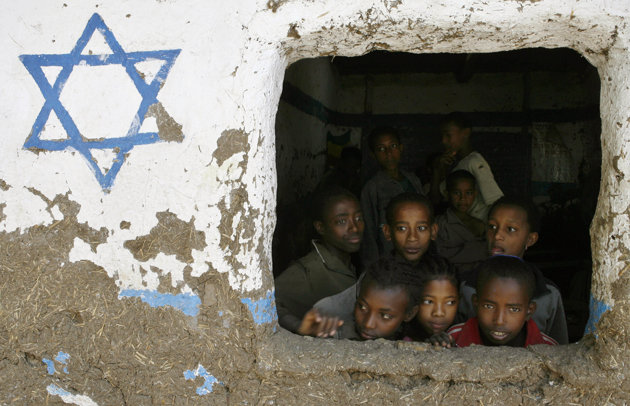
The last electoral campaign in Israel has been dominated by racism. It is not just racism against Arabs, which is as old as the existence of the Zionist entity, but also racism against Black people, whose life is becoming more and more miserable in Israel. According to the statistics, there are currently about 60,000 African immigrants in the Zionist entity. Most of them come from South Sudan, Eritrea, Ivory Coast, Congo and other countries.
The situation of Africans in Israel, both Jews and non-Jews, is actually desperate. Some thousands have low-quality jobs where they are unscrupulously exploited by Israeli employers. Others are homeless and are begging on the streets of Israeli cities to survive. In spite of claims of rampant crime in the suburbs of South Tel Aviv where most Africans live, a senior police commander, David Gez, was quoted as saying the level of crime among this population was actually relatively low.
The last episode of anti-Black racism was a recent video made by the religious Shas party – which represents Sephardi Jews, who ironically have also been historically subjected to discrimination by Jews of European-origin (Ashkenazis). The five-minute video sought to fuel fear of Africans and increase support for the Shas´s anti-immigration platform ahead the January 22 parliamentary elections.
The message of the video was that only the leader of the Shas party, Eli Yishai, who is also currently interior minister, can successfully fight against the “threat” allegedly posed by African immigrants, whom Yishai and other Israeli politicians repeatedly refer to as “infiltrators.” In an interview with Ynet, Yishai said the “the threat from infiltrators is no less severe than the Iranian nuclear threat.”
In May, Yishaid told Maariv that in the previous months dozens of Israeli women had been raped by “infiltrators” in South Tel Aviv but they had decided not to report the attacks so that people would not think they had “contracted AIDS”.
The content of the video was not different to other similar ones made by far-right European parties. There were in it remarks by local residents who express their fear for their safety and anger over a housing shortage — all allegedly due to the African immigrants. According to the Times of Israel, one woman says that “it is their fault that there are no apartments. It is their fault that housing is very expensive.” A man complains that “tomorrow the Sudanese will keep on walking around here, continue to beat (people) up, continue to stab and continue to rape our women.”
The narrator says that the black “infiltrators” “control neighbourhoods in south Tel Aviv, Eilat, Ashdod, and other cities,” and pose a “social, religious and security threat.” He goes on to assert that the “greatest threat of all is the demographic threat.” The video also claims that the majority of African migrants are Muslim, and that they therefore “do not believe in the State of Israel´s right to exist.”
Ironically, the Shas has also denounced the racial bias of the other Israeli parties. Recently, Aryeh Deri, the number three of the party, accused the Likud-Yisraeli Beitenu party of “being a party of Russians and whites” and having ostensible bias against Sephardi Jews, who have been considered a second-class citizens in the Zionist entity, where the power has been traditionally in the hands of Ashkenazi Jews, who mostly came from Eastern Europe.
For his part, Prime Minister Benjamin Netanyahu has announced that he wants to expel tens of thousands of African undocumented immigrants and that the inflow into Israel from Egypt has been brought to a halt due to the new barrier. “Our aim is to repatriate tens of thousands of infiltrators now in Israel to their countries of origin,” he said, adding Israel was in contact with some governments from Africa “to solve this problem”.
On May 23, Likud leading members took part in a demonstration in Tel Aviv’s impoverished suburb of Hatikva to protest against the presence of Africans in Israel. Miri Regev of Likud addressed the rally to which more than 1,000 people attended. There, she described the Africans as a “cancer in our body” and pledged to do everything she could “in order to bring them back to where they belong”. She attacked human rights and “left-wing” groups aiding the immigrants.
Danny Danon, another leader of Likud, said that the only solution to the issue of the “infiltrators” would be to “start to talk about their expulsion”. “We must expel the infiltrators from Israel. We should not be afraid to say the words “expulsion now”,” he said. He went on saying that Africans had set up an “enemy state”, whose capital was Tel Aviv.
Violent attacks
Shortly after the speeches, violent incidents broke out. Demonstrators smashed shops, properties and cars belonging to the African immigrants and beat up men and women while chanting “Blacks out”.
In April, apartments where Africans lived as well as at a kindergarten were attacked with Molotov cocktails in Shapira in south Tel Aviv.
On July 12, an Eritrean man was badly burned and his pregnant wife suffered smoke inhalation after attackers tried to burn down their apartment in central Jerusalem (Al Quds). The incident, the second arson attack on African immigrants in the city within six weeks, took place near the city’s Mahane Yehuda market, AFP quoted a police source as saying.
The Israeli government has refused to condemn these attacks on African immigrants and instead used them as an excuse to promote its anti-migrant agenda, which included a new law allowing the authorities to keep undocumented Africans imprisoned for three years and jail those who help them for up to 15 years. According to recent polls, one in three Israelis support those attacks.
Even “left-leaning” parties, such as the Labor, support racist policies. The Labor leader, Shelly Yachimovich, accused recently the the government of “having failed… and let the slums be flooded by migrant workers and refugees, thereby helping to kindle wild passions” and claimed the need to “protect the country from facing a huge mass of migrant workers”.
In March, Israel started to build a huge prison camp, the world´s largest, in the Negev desert. Such a facility is situated near the Ketziot prison, where thousands of Palestinian prisoners have been jailed. The camp will be run by the prison service and thousands of Africans will be locked up there. A spokesperson for the Israeli Ministry of Interior confirmed that Yishai wanted to eventually jail all of the thousands of undocumented African immigrants currently in the Zionist entity.
Other immigrants have already started to be expelled. On June 10th, the immigration police began a mass roundup operation, which was initially focused on South Sudanese nationals but was then expanded to include those from the Ivory Coast. Hundreds of these Africans were detained and around 240 were sent to Juba, capital of South Sudan.
There is no doubt that racism and xenophobia are being fueled by the current Israeli government and nearly all the Zionist parties. Their main goal is to divert growing outrage over the decline of living standards and rising social problems by promoting racist claims and demands to preserve the “Jewish identity” of the Zionist entity at a time when the latter is getting weaker and more internationally isolated due to its settlement policies.
New U.S. Counterterrorism Playbook to Exclude Pakistan from Drone “Kill” Rules
By Noel Brinkerhoff | AllGov | January 23, 2013
The Central Intelligence Agency’s (CIA) drone campaign in Pakistan will not be bound by new counterterrorism rules that the Obama administration is finalizing.
The rules, referred to as the “playbook” by officials, are supposed to establish parameters for killing overseas threats. Once completed, the playbook will detail how names are added to assassination lists, which legal principles justify the killing of U.S. citizens, and what offices must sign off before drone strikes are carried out.
But the CIA will be exempted from the rules for at least a year. Agency leaders objected to being bound by the playbook, citing the pressing need to continue bombing Taliban and al-Qaeda targets in Pakistan before the U.S. withdraws from neighboring Afghanistan, where the drones are based.
Greg Miller of The Washington Post wrote that the drafting of “the playbook was nearly derailed late last year by disagreements among the State Department, the CIA and the Pentagon on the criteria for lethal strikes and other issues. Granting the CIA a temporary exemption for its Pakistan operations was described as a compromise that allowed officials to move forward with other parts of the playbook.”
Critics of the government assassination program view the playbook as indicative of the institutionalization of the U.S. killing policy. It is “a step in exactly the wrong direction,” Hina Shamsi, director of the American Civil Liberty Union’s National Security Project, told the Post. She called it “a further bureaucratization of the CIA’s paramilitary killing program.”
More than One Million Schoolchildren in U.S. are Homeless
By Noel Brinkerhoff | AllGov | January 23, 2013
Homelessness among schoolchildren has reached record levels in the United States, with more than one million without a home.
During the 2010-2011 school year, there were 1,065,794 homeless students in preschools and K-12 schools, according to the National Law Center on Homelessness & Poverty.
This marked the first time in history that public schools reported more than one million homeless children and youth.
Nationally, the total of homeless students increased 13% from the previous year (2009-2010). In 15 states, the increase was 20% or higher. Kentucky and Utah experienced a 47% jump, Michigan and West Virginia 38%, and Mississippi 35%.
The National Law Center on Homelessness & Poverty said the number of homeless children attending public schools has soared 57% since the beginning of the recession (2006-2007 school year).
To Learn More:
One Million U.S. Students Homeless, New Data Show (National Law Center on Homelessness & Poverty)
Related article
Teenager dies following shooting in Bethlehem
International Solidarity Movement | January 23, 2013
Bethlehem, Occupied Palestine – On Friday January 18th at approximately 3.20 pm, fifteen year old Saleh Elamareen was shot in the head by an Israeli soldier in Aida refugee camp, Bethlehem. Today Wednesday 23 January he was pronounced dead.
Salah Elamareen was outside the Lajee Refugee Centre when he was shot through the left forehead. The Centre lies some distance from the wall itself. At the time of the shooting eyewitnesses have said that protests were not happening, and that the people of Aida were simply watching the soldiers from afar. This is supported by video documentation of the incident, which shows a group of youth carrying Elamareen after he was shot.
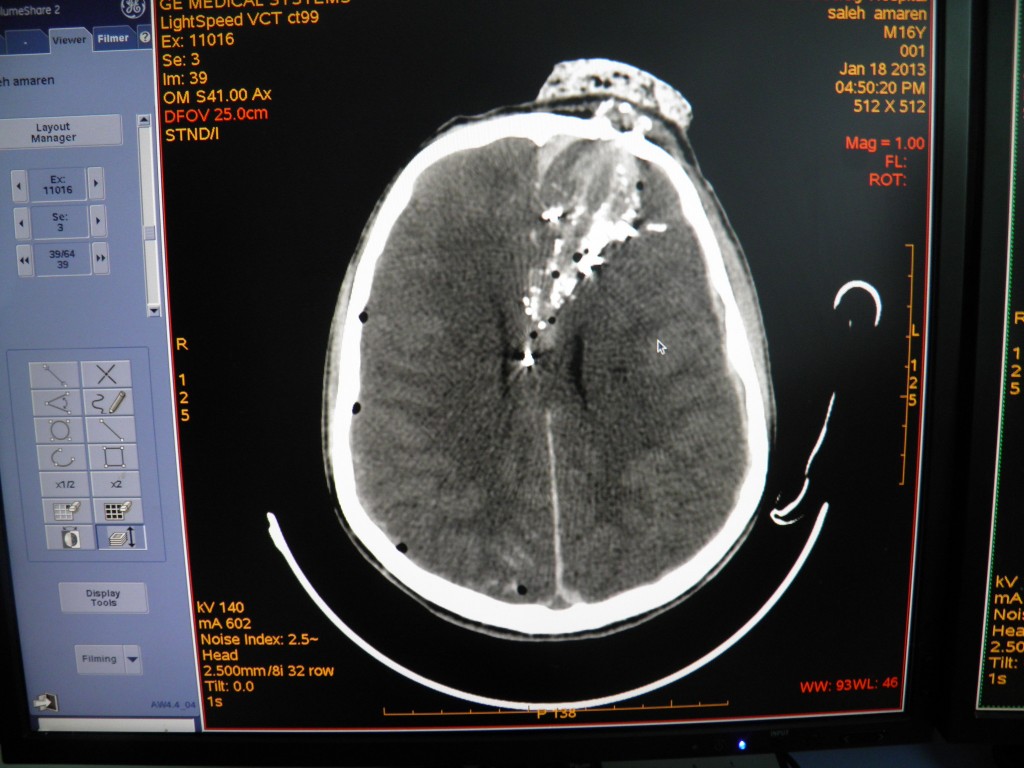
Two of the doctors who treated Elamareen did not rule out previous rumours that he was shot with a dumdum bullet, due to the fragmentation of the bullet within his head. Another doctor has claimed it was definitely a dumdum bullet in his opinion.
Dumdum bullets expand after impact and are designed to cause maximum damage and pain. Due to the brutality of these bullets they are illegal under international law. Article 8 at the Review Conference of the Rome Statute in Kampala made the use of expanding bullets in non-international armed conflict a war crime. The Hague Convention also prohibits there use in international warfare. If the doctors are correct and a dumdum bullet was in-fact used, this would be another serious violation of international laws and standards by Israel.
The head of the department under which he was treated at the government hospital said he was hit with the bullet in the left frontal section of the head, around the eye, causing large intracranial hemorrhaging. A number of doctors who looked at the patient concluded that the bullet exploded in the brain. The CT scan shows the shrapnel inside his skull. The entry wound shows significant impact to the skull, and there is no exit wound.
Featured Video

No Threat Can Force Iran’s Surrender /Trita Parsi & Lt Cl Daniel Davis
or go to
Aletho News Archives – Video-Images
From the Archives
What is the Israeli Lobby in Australia Doing in Interfaith Dialogue?
By Ali Kazak | Dissident Voice | October 11, 2015
For years Israel and its lobby around the world have been trying to normalise their relations with Arabs and Muslims without solving the Palestine Question.
One of the methods they resorted to in the last few years is using human rights and community organizations such as interfaith dialogue and Multiculturalism to achieve this objective and to: isolate the Palestinians, marginalise the Palestine question, end Israel’s isolation, and prevent criticism of Israel, knowing that these organisations will be the first to stand against Israel’s violations, racial and religious discrimination.
The group responsible for this task in Australia is The Australia/Israel & Jewish Affairs Council (AIJAC); its Director of International & Community Affairs, Jeremy Jones is in charge of lobbying religious community organizations, specifically Muslims and Christians. Consequently he convened the Faith Communities for Reconciliation, founding participant in the Australian Partnership of Religious Organisations and the Australian National Dialogue of Christians, Muslims & Jews.
AIJAC is a private political propaganda group. It is recognised as the main Israeli lobby in Australia. It coordinates its activities and works intimately with the Israeli embassy in Canberra and different institutions in Israel. It is privately funded by some Jewish businessmen. It monitors closely Australian politicians, the media, ethnic and religious groups, (especially Arabs and Muslims), unions and academics on their stands towards Israel and the Palestine question. … continue
Blog Roll
 Aletho News
- Envoy warns UN on Trump’s threat to ‘obliterate’ Iran’s civilian infrastructure
- The Larak Corridor: Iran’s Rial Gate With No US, No Israel, and No Way Around
- ‘Economic terrorism’: Steel facilities hit again in US-Israeli strike
- ‘War Crime’: Iran condemns attacks on Arak, Ardakan nuclear sites
- Two-thirds of Americans want quick end to Iran war even if goals unmet
- Trump to Give “Important Update on Iran” Wednesday in Prime-Time Speech
- Theodore Postol: Iran’s Missiles & Drones Were Underestimated
- Iran To Target Military Industrial-Tech Complex That Facilitated Gaza Genocide
- Collapsing Empire: The Resistance Disarms ‘Israel’
- Suicide Should Not Be a Government Service
- If Americans Knew
- Israel wants US to bomb more of Iran’s civilian structures (113,000 is not enough) – Not a ceasefire Day 173
- Ann Coulter Rips Into Fox News for Iran War Coverage
- Joe Kent Urges Americans To Call White House and Congress To Object To Sending Troops Into Iran
- DNC Resolution to Reject AIPAC Funding Puts Democratic Leaders in the Hot Seat
- Swedish foundation to build 400 schools as over 650,000 Gaza children remain without education for 2 years
- Israeli army admits photshopping image of slain Lebanese journalist
- This is how Israel is systematically killing health workers under the cover of war in Lebanon
- Carrying life under fire: Israeli invasion of Lebanon leaves pregnant women facing deadly risks
- Champagne all around for the new death penalty (for Palestinians) law – Not a ceasefire Day 172
- Why are Palestinian books struggling to be seen on Amazon?
- No Tricks Zone
- New Study Finds Warming Saves Lives…Cold Temperatures 12 Times More Deadly Than Excess Heat
- German Science Blog Accuses PIK Climate Institute Of Hallucinating Climate Tipping Points
- Devastating Assessment Of Comirnaty Vaccine By Former Senior Pfizer Europe Toxicologist
- New Study: CO2 Is ‘Effectively Negligible’ As An Explanatory Climate Change Factor Since 2000
- Former Pfizer Toxicologist Dr. Helmut Sterz Tells Bundestag Hearing Pfizer Vaccine Should Have Never Been Approved
- Energy Expert: Germany’s Nuclear Phaseout Was A “500 Billion Euro Mistake”
- New Research: South Australia’s Mid-Holocene Sea Surface Temperatures Were 4°C Warmer Than Today
- Storing Green Energy To Last Germany 10 Days Would Require A 60-Million Tonne Battery
- New Studies: UK Sea Levels Were 4 Meters Higher Than Today During The Mid-Holocene
- Destructive Green New Deal: German Energy And Metal Group Warns Of Drastic Crisis
 Aletho News