Before I launch into criticising neocons for their hypocrisy and double standards regarding targeted assassinations, I should point out that I am against any type of targeted assassination regardless of who is killing who.
Today in Commentary magazine, Jonathan Tobin, the magazines most prolific neoconservative propagandist, wrote an article criticising the honouring in France of the Palestinian fighter Majdi Rimawi who is imprisoned in Israel for assassinating Rehavam Ze’evi, who at the time of his assassination was Israel’s Minister of Tourism.
Tobin writes:
Bezons, [a suburb of Paris] which is not far from the city of light, is not exactly a tourist attraction. But it has now garnered some international attention due to an event held at the municipality last month that honored and granted honorary citizenship to Majdi Rimawi, a Palestinian who is currently imprisoned in Israel. According to Bezons Mayor Dominique Lesparre, a member of the French Communist Party, Rimawi’s only crime is to resist Israeli oppression. However, the ceremony omitted the salient fact that Rimawi was jailed for his role in planning the assassination of Rehavam Ze’evi, Israel’s Minister of Tourism in 2001.
Omitted by Tobin, however, is the salient fact that Ze’evi was much more than just a Minister of Tourism; he was an ultra-right wing Zionist general who planned many attacks against Palestinian fighters during the time when he was running the Sayeret Kharuv, an Israeli so called ‘anti-terrorist’ group within the IDF and was, therefore, a legitimate target for assassination even by Israel’s own standards.
If the IDF are able to assassinate Palestinians who the IDF believe are planning, or have planned, acts of violence against Israelis, then why should neocons have a problem with Palestinians assassinating Israelis who have planned acts of violence against Palestinians?
Hypocrisy and arrogance; the values that ‘they’ hate about ‘us’.
March 12, 2013
Posted by aletho |
Timeless or most popular, War Crimes | Israel, Jonathan Tobin, Rehavam Ze'evi |
Leave a comment
The US State Department has threatened Islamabad with sanctions if the country goes through with a joint multi-billion-dollar gas pipeline project with Iran.
“We have serious concerns, if this project actually goes forward, that the Iran Sanctions Act would be triggered,” State Department spokeswoman Victoria Nuland said on Monday.
“We’ve been straight up with the Pakistanis about these concerns,” Nuland added.
The 1996 Iran Sanctions Act allows the US government to ban imports from any non-American company that invests more than USD 20 million a year in the Iranian oil and natural gas sector.
Nuland said the US was “supporting large-scale energy projects in Pakistan that will add some 900 megawatts to the power grid by the end of 2013.”
The threats came on the same day as the inauguration of the final construction phase of the multi-billion-dollar Iran-Pakistan (IP) gas pipeline, intended to carry natural gas from Iran to its eastern neighbor.
Iran’s President Mahmoud Ahmadinejad and his Pakistani counterpart Asif Ali Zardari attended the ceremony on the Iran-Pakistan border on Monday.
The pipeline is designed to help Pakistan overcome its growing energy needs at a time when the country of 180 million is grappling with serious energy shortages.
Meanwhile, Iranian Deputy Oil Minister Javad Owji said on Monday that Pakistan has raised its demand for natural gas imports from Iran to 30 million cubic meters (mcm) per day from a previous 21.5 mcm.
Owji added that Iran has hitherto spent USD 2 billion to build the section of the pipeline that lies on the Iranian side of the border and that the Pakistani section would need USD 3 billion.
On March 2, Zardari said that Islamabad would not stop the pipeline project at any cost.
The Pakistani president stressed that his government would continue to pursue the construction of the gas pipeline despite threats and pressure from the US.
March 12, 2013
Posted by aletho |
Economics, War Crimes | Iran, Pakistan, United States, Victoria Nuland |
Leave a comment
BETHLEHEM – Israeli closures and restrictions are causing lasting damage to the competitiveness of the Palestinian economy, the World Bank said Tuesday.
Israeli-imposed economic restrictions continue to constrain sustainable economic growth, a situation that is unlikely to change without political progress, according to the World Bank’s latest report.
The economic monitoring report warns that the Palestinian economy is in danger of losing its capacity in the global market.
Since the late 1990s, the productivity of the agriculture sector has halved and the manufacturing sector has largely stagnated, the report found.
Exports dropped to 7 percent in 2011, one of the lowest rates in the world. Exports are concentrated in low value-added goods and services and mostly sold to Israel, according to the World Bank.
Water and transport infrastructure is deteriorating, damaging economic productivity, particularly in Gaza which has been under an Israeli blockade since 2007.
Meanwhile, “alarmingly high” levels of unemployment mean many Palestinians do not have the chance to develop on-the-job skills, the report notes. Increased employment in the public sector has provided short-term relief but is unsustainable and does not prepare workers for private sector roles.
“The worrisome implication of these phenomena is that the long term employability prospects for the Palestinian labor force are being eroded. In addition to the economic implications, protracted unemployment, especially among youth, tends to weaken social cohesion,” the report says.
“Continued financial support by the donor community, and increased reform efforts by the PA to manage the current fiscal challenges must remain a high priority,” said Mariam Sherman, World Bank country director for the West Bank and Gaza, in a statement.
“However, much bolder efforts to create the basis for a viable economy need to be made to prevent the continued deterioration that will have lasting and costly implications for economic competitiveness and social cohesion,” Sherman added.
March 12, 2013
Posted by aletho |
Economics, Ethnic Cleansing, Racism, Zionism, Illegal Occupation, Timeless or most popular | Israel, Palestine, Zionism |
Leave a comment
Israeli activists caught on film an attack by an Israeli settlement security guard on a Palestinian shepherd Monday, near the Palestinian village of Susya in the southern West Bank on Monday.
The shepherd was identified as Na’al Abu Aram, but the Israeli security guard, apparently from the Israeli illegal outpost called ‘Avigail’ that was built on stolen Palestinian land, was not identified.
The guard beat, punched, kicked and shoved the shepherd, then ran after his flock of sheep to scare them. Two Israeli soldiers were present at the time of the beating, but they did not intervene.
Avigail was established on stolen land by former Israeli soldiers in 2001. The soldiers entered the land, which belongs to local Palestinians, and installed trailers. They moved in, heavily armed, and began to harass the local villagers and shepherds. No attempt has been made by the Israeli government to remove the trespassing Israelis from the land that they illegally seized by force.
In Monday’s incident, the security guard told reporters with Ynetnews, which obtained and published the video of the incident, that he was being unfairly slandered, and that it was the shepherd who attacked him.
He claimed that the local residents were being accompanied by ‘anarchist activists’ who try to ‘incite provocations’. The guard was apparently referring to Israeli human rights workers who arrived on the scene to try to document abuses reported to them by local Palestinian residents.
March 12, 2013
Posted by aletho |
Ethnic Cleansing, Racism, Zionism, Subjugation - Torture | Avigail, Human rights, Palestine, Susya, West Bank, Zionism |
Leave a comment
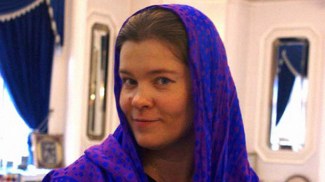 After five months of captivity in fear of execution, Ukrainian journalist Anhar Kochneva has safely escaped from Syrian rebels, Kochneva’s ex-husband told RT.
Relatives and friends of the journalist said Kochneva managed to escape the building she was kept in, and hid from the pursuers in the mountains. She then had to walk about 15km before reaching Syrian army forces, and is now travelling to Damascus in safety.
Kochneva ironically wrote she’s “back from the Wonderland” in a short LiveJournal post, promising some further details later.
She also confirmed the details of her escape in two brief media interviews, saying the captors mistreated her, and she decided to run away for the fear that they would kill her and blame government forces for another death. Kochneva said she had to live in a cold room with a broken window, leaving her health in a terrible state.
Despite this, the journalist vowed to remain in Syria and continue to highlight the ongoing conflict.
“The world is just blind… I will definitely do everything for the people to discover, what is really going on here,” Kochneva told Business FM, saying Syria is “a friend in need”.
Anhar Kochneva, who had reported critically about the Syrian rebels for Russian and Ukrainian news outlets, was captured in the beginning of October 2012 near the city of Homs. The city, seen as the cradle of the Syrian revolution, has recently been going through frequent fighting outbursts, which Kochneva was following at the time of her capture.
The kidnappers, members of the Free Syrian Army, had repeatedly threatened to kill the journalist in December, if a US$50 million ransom was not paid. They later lowered the sum to reportedly $300,000, and announced they had “spared” Kochneva for the time being.
Kochneva’s relatives said they had been unaware of her fate since New Year, and accused the Ukrainian Foreign Ministry of being “inactive” and “ignoring the negotiation process.”
Syrian rebels, who had been in contact with the journalist’s former husband, also claimed that Ukrainian authorities were doing nothing. The rebels uploaded several videos of Kochneva last year, in which she admitted to having participated in the fighting, and of working as a military interpreter with Syrian and Russian officers.
International groups like the Committee to Protect Journalists, ARTICLE 19, the International Press Institute and Reporters Without Borders have questioned the objectivity of these videos, saying the journalist appeared to be speaking under pressure.
The groups urged the Free Syrian Army and the Syrian Opposition Coalition to ensure that the journalist is safe and set free, and called for world governments to assist in her release.
The Foreign Ministry of Ukraine has said that it was taking all necessary measures to free the journalist and urged Damascus for “concrete results” in attempts to release her.
The ministry has confirmed on Monday that Kochneva is free, without elaborating on the circumstances of her escape.
March 11, 2013
Posted by aletho |
Full Spectrum Dominance, War Crimes | Free Syrian Army, Kochneva, LiveJournal, Ministry of Foreign Affairs (Ukraine), Syria |
Leave a comment
“Zionism is much more than settler colonialism; its fundamental opposition is between Jew and gentile everywhere.”
What is to be done?
Worldwide, it is Israel Apartheid Week, 2013, a worthy expression of solidarity with the Palestinians suffering under Israel’s occupation of the territories it conquered in the June, 1967 war. However, the leading lights of the anti-apartheid struggle said a decade and more ago that Israel’s regime is much worse than South African apartheid. After 46 years, “the occupation” is clearly not temporary and transient as the word implies. It is egregiously wrong to use this language, which privileges the oppressors and further oppresses the victims. This language is universal and long-standing, reflecting habits of thought and action long overdue for replacement.
The following was written as notes for a discussion, about 2000 words, divided into 5 headings: Classical Liberal Views of Zionism; Zionism; Zionism in the US; Zionism on the Left; Strategy and Tactics.
Classical Liberal Views of Zionism
The Enlightenment and emancipation ended the subjugation of west European Jews to Judaic authorities, and to gentile regulation. Jews were admitted, gradually but inevitably, to liberal citizenship. The US was created on a modern, liberal basis, with no trace of pre-modern Jewish status.
Reform Judaism modernized traditional Judaism and allowed religious worship with the social status of Christianity. Many Jews abandoned religion for secularism, after Spinoza. Jews contributed disproportionately to modern liberal culture and left and liberal politics.
Zionism was dismissed as reactionary and atavistic. American Reform Judaism in 1885 expressly disavowed it. The Marxism of the Second International period viewed nationalism as reactionary and Zionism as a tool of imperialism. The Yiddish labor movements in the Russian Empire and their immigrant offshoots also opposed Zionism.
Zionism was a marginal, declining cult until World War I, which led to the Balfour Declaration, the British conquest of Palestine, and growth of the “Jewish national home.” Even then Zionism was a minority current, until the rise of Nazism. Yet classical anti-Zionism survived all the changes of World War II.
Elmer Berger, an American Reform rabbi, led a rearguard action against Zionism in the 1940s, and remained an avowed critic of Israel until his death in 1996. Isaac Deutscher and Maxime Rodinson, raised in Marxist internationalism, remained critics of Zionism and Israel until their deaths (Deutscher in August, 1967, Rodinson in 2004)
The Israeli Socialist Organization (Matzpen) attempted to reconstruct internationalism in the 1960s. Israel Shahak cited what he called the “modern, secular Jewish tradition,” which he traced from Spinoza, against Zionism. Shahak and Matzpen put the atrocities of Israel’s occupation on the map from the Israeli side. Shahak died in 2001; some senior Matzpen alumni are still active.
Obviously, these currents have different social bases, and different politics, aside from their rejection of Zionism. Yet they constitute the basis of modernity and any critique of Zionism must derive from them. The people cited were well to the left of what the US has produced since 1967, precisely because the US left has ignored classical sources.
Zionism
Zionism is the Jewish contribution to right-wing politics and ideology, nothing more or less; it opposed liberalism and embraced anti-Semitism. Zionism agreed that “the Jews comprise a distinctive element among the nations… and as such can neither assimilate nor be readily digested by any nation.” “The only solution is in the creation of a Jewish nationality, of a people living upon its own soil, the auto- emancipation of the Jews; their return to the ranks of the nations by the acquisition of a Jewish homeland.” (Pinsker, Autoemancipation) This was the view of bourgeois Jewish society in the Pale of Settlement, not the impoverished masses, who left by the million for the US.
Zionist “Jewish nationality” was not nationalism; it rejected the actually existing Yiddish nation in eastern Europe, including the Yiddish language, in anti-Semitic terms. Modern Israeli Hebrew was not “revived” but largely invented; modern Hebrew culture is inextricably Zionist, bound up with its conquest and dispossession. The alleged unitary history and historiography of the Jewish people have, unsurprisingly, been demolished by authors like Shlomo Sand, archaeologists Israel Finkelstein and Neil Silberman, linguist Paul Wexler, and others.
Racialism in Zionism dates to the proto-Zionism of Moses Hess; the chauvinism of Heinrich Graetz contributed to German anti-Semitism; German Zionism was Jewish Romantic nationalism, embracing Jewish Blut und Boden. Herzl was steeped in the racism of European colonialism. Zionism was a fraternal twin of anti-Semitism, and cooperated with it practically, down to the Nazi regime itself.
Elmer Berger co-authored the UN resolution on Zionism as a form of racism, and wrote on that theme. Noel Ignatiev called the Zionist “Jewish people” idea Jewish race doctrine. “Jewish genetics” tries to build a biological basis for Zionism. Zionism is much more than settler colonialism; its fundamental opposition is between Jew and gentile everywhere.
Zionism was an elite project of national renewal, concerned with “the problems of Judaism, not the problems of Jewry,” in Ahad Ha’am’s lofty phrase. It always placed its designs ahead of the fate of European Jewry. Hitler might have conquered the Near East; the Judeocide happened because of Nazi Germany, not because there was no Jewish state.
“Cultural Zionism,” “binationalism” and “socialism” were simply Zionism by other means. The culture of Zionist Jewish nationality was racialism. The binationalists wanted Jewish immigration leading to demographic parity and eventually majority, when Jews were a minority. The kibbutz was a means of Jewish settlement and was inspired by 19th c. German settlement plans to counter a Polish “demographic threat” in the eastern Reich.
Today the state of Israel is waging a race war, as fanatical as Nazi Germany, against the enemies of the Jewish people. This potential was inherent in Zionism from the start, though obviously many contingencies have enabled its fruition. Israeli Hebrew nationality is the replacement for Zionist Jewish nationality, secular and open to all, as Boas Evron argued in Jewish State or Israeli Nation.
Zionism in the US
The core of Zionism in the US is organized Jewry, gathered in the Conference of Presidents of Major American Jewish Organizations. Many of these groups arose to meet the needs of the Russian Jewish migration before 1914. By the 1930s, this organized Jewish culture inspired the idea of “Judaism as a religious civilization,” and in the postwar period was called a “Jewish polity.”
The polity, and the Jewish public, supported Jewish statehood in the 1940s, but were still mainly concerned with integration and acceptance in American life. In the early 1960s, as this was achieved, liberalism was seen as threatening “Jewish continuity,” just as it was feared by the bourgeoisie in the Pale who founded Zionism. This chauvinism was fatally supercharged by Israel’s dramatic victory in June 1967.
The Jewish polity is the core of US support for Israel, which includes institutions and individuals throughout US culture; the “Israel lobby” is an inadequate term; “Zionocracy,” after the 19th c. “Slaveocracy” that wielded immense power in national politics until the Civil War, better describes it.
The Zionocracy has exercised quasi-sovereign power from the 1940s, when it overturned US diplomatic and military opposition to US support for a Jewish state in Palestine. The US did not create Israel, and does not commission its deeds, for its own purposes. Rather it has adapted to Zionist faits accompli in western Asia and in the US, and pursued its interests in their light.
Since the end of the Cold War Zionism has been the chief driver of US militarism at home and abroad. The Zionocracy influenced the Congressional vote for the Gulf War in 1990, the closest since the War of 1812. The crippling sanctions on Iraq and the “dual containment” of Iran and Iraq in the 1990s were largely by and for the Zionocracy, against substantial business opposition. The 9/11 terrorist attacks, with all their momentous consequences, were chiefly a strike against US patronage of Israel. The 2003 invasion of Iraq would not have happened without the neoconservatives. Only the Zionized left sees “oil” as necessarily and obviously requiring the US to invade Iraq, which has led to the present dissolution of Syria. The end of centuries of Sunni rule in Iraq and the Shia ascendancy there brought the Gulf states, led by Saudi Arabia, to oppose actively the “Shia axis” from Hizbollah to Alawite Syria to Iraq to Iran. The Gulf states are the chief patrons of the armed rebellion in Syria..
Zionism has turned western Asia into the eastern front of the US empire, like the eastern front of the Third Reich, site of its most depraved deeds and ideologies—the annihilation of Arab and Muslim societies, and the Islamophobic “clash of civilizations” and “war on terror.” Disputes over Middle East policy between the miltarists (gentile radicals, and Jewish neoconservatives) and the realists, are like the differences between Nazis and non-Nazi conservatives in Germany.
Zionism on the Left
In the early 1960s the Jewish members of the New Left were universalist, had little interest in “Jewish identity” and identity politics. After the June, 1967 war, there appeared a “Jewish left,” which combined Jewish affirmation with criticism of “the occupation” and support for “Palestinian rights.” This has produced a truncated, minimal critique: “anti-occupation” rhetoric, but no critique of Zionism; “solutions” discourse, of maps and treaties, and false Zionist precedents, rather than overcoming Zionism; ahistorical “law and rights” discourse; the “strategic asset” view of the US-Israel relationship, with little attention to US Zionism; anti-anti-Semitism, but no critique of Jewish chauvinism. With variations, this outlook is hegemonic on the white bread left, including the US Campaign to End the Occupation. It has even absorbed and neutered the “Israel lobby” critique. Phyllis Bennis, long-time “strategic asset” proponent, now dominates Code Pink’s annual anti-AIPAC program, while excluding knowledgeable people like Jeff Blankfort, Janet McMahon, Grant Smith, Stephen Sniegoski, and Alison Weir.
This Orthodox Critique is a form of Zionism. Limiting criticism to “law and rights” trivializes the crimes and diminishes the victims, like calling Nazi aggression and the Judeocide a violation of collective security and minority rights. Referring to Israel’s “occupation,” after nearly 46 years, and to “Israeli apartheid,” when Israel’s regime is much worse than apartheid, is lying. Such apologetics about Zionism, clearest in the “strategic asset” dogma, are Jewish privilege and anti-gentilism, comparable to anti-Semitic essentialism about Jews. The Orthodox Critique replaces a universalist critique from classical sources, which would reject Zionism in its entirety, in Israel, and in the US Zionocracy, and affirm the values of Spinoza, Luxemburg, Berger, et al. against it. Zionism threatens all of us.
Identity can empower the oppressed, but identitarian struggles succeed on broader terrain. The Risorgimento succeeded because national rights were seen as legitimate. The struggles of women and minorities have succeeded because the sphere of rights was broadened. Identity categories are not political, because people have different politics, beyond their universal rights. Past a certain limited point identity politics is chauvinism. Garibaldi recognized the limited progressive value of nationalism. Compare Judith Butler’s attempt to derive liberal obligations from “diasporic Jewish identity,” in the Brooklyn College BDS event, to David Landy’s critique of “diasporic identity” in Jewish Identity and Palestinian Rights.
Strategy and Tactics
The Orthodox Critique has deprived us of the most basic vocabulary and analysis. We are missing decades of literature on Zionism as reaction and racialism, on Zionist radicalization of the US, and on the universalist antipodes, and political organizing on those lines. Meanwhile, Zionism has become ever stronger and more destructive. This is the greatest disaster on the left since the German Communist Party misread Nazism.
The chief concern of US citizens must be the special role of the United States, the indispensable economic, military and political support it provides Israel. To the extent BDS sanctions the state of Israel directly, by boycotting its products, or its institutions, it at least stigmatizes Israel, and raises questions about US policy. BDS directed against “companies profiting from the occupation” implies that corporate profits drive US policies and diverts attention from the real actors.
The Zionocracy is not appeased by such limited terms, which Israeli diplomats and organized Jewry oppose fiercely. We can only gain by calling for Israel to be sanctioned, and by opposing Zionism forthrightly as the chief source of Islamophobia, our Middle East wars, 9/11, and our domestic police state. We should consider “Anti-Zionism Week”.
BDS in the US can be educational, but Europe is the chief market for Israeli products, and BDS is most effective there. Zionist domination of US politics must be our highest concern. Zionism is not a tool of the US, but a quasi-sovereign power in the US, which has activated the worst potentialities of US society. The classical anti-Zionists saw Zionism obviously as an attack on liberal modernity, to be rejected categorically. Liberal traditions allow us—obligate us—to reject Zionism and all its works, and also obligate us to distinguish adherents of Jewish people ideology from Jewish liberal citizens and their rights. They also obligate the latter to join unequivocally a common struggle against Zionism, which threatens us all.
March 11, 2013
Posted by aletho |
Ethnic Cleansing, Racism, Zionism, Solidarity and Activism, Timeless or most popular, Wars for Israel | Antisemitism, Hebrew language, Israel, Judaism, Palestine, Zionism |
Leave a comment
The Post has a nice piece pointing out the disparities in life expectancy by income. As a result of these differences, proposals to raise the age of Social Security eligibility would disproportionately hit lower income workers.
At one point the piece tells readers:
“Advocates of raising the retirement age say only a relative handful of older workers would be harmed and that the vulnerable could be protected by enacting hardship exemptions.”
It would have been worth noting that this practice of creating “hardship exemptions” was one of the policies that won Greece much ridicule in recent years. Its social security system allowed workers in many occupations to retire at younger ages. For example hairdressers were allowed to start collecting benefits at age 50, ostensibly because they worked with hazardous chemicals.
Most countries have been moving away from policies that vary retirement ages by occupation in favor of uniform retirement age. It is striking that we have people in policy positions in the United States that are advocating the old Greek model.
March 11, 2013
Posted by aletho |
Economics, Timeless or most popular | Greece, Life expectancy, Medicare, Retirement, Social Security, United States |
Leave a comment
Adrienne Gnandé sells rice in the bustling Gouro market in Abidjan, Côte d’Ivoire’s commercial centre. The rice she’s selling comes from the west of the country, where she herself is a farmer. “This is ‘made in Côte d’Ivoire’, cheaper and better tasting,” she tells people walking past her stall.1
Competition with cheap imports means that the margins are thin for Ivorian rice farmers and small traders like Gnandé. Côte d’Ivoire was self-sufficient in rice in the mid 1970s, but under pressure from international donors, the national rice company was privatised, public support for production was dismantled and the market was opened up to imports. Within two decades, two thirds of the rice consumed in the country came from Asia.
These imports generated immense profits for the handful of international grain traders and powerful local businessmen who dominate the market. Yet they’ve been deadly for local production. Only the hard work and ingenuity of the country’s farmers and small traders have kept local rice production alive.
Today the situation is changing. International prices for rice spiked in 2008, and have not come down to previous levels. Local rice now costs 15 percent less than imports, and demand is growing along with production and sales.2 Women rice traders have recently formed several cooperatives and have even created brands for local rice.
This has not escaped the attention of the big rice traders. The same grouping of government, donors and corporations that demolished Côte d’Ivoire’s domestic rice sector is now conspiring to take control of it – from farm to market.
New Alliance for Food Security and Corporate Control
Details of this plan are found in a 2012 agreement between the government of Côte d’Ivoire, the G8 countries represented by the EU, and a grouping of multinational and national companies involved in the rice trade. Known as a Cooperation Framework, the agreement is part of the New Alliance for Food Security and Nutrition – a partnership between the G8, a number of African governments, transnational corporations and some domestic companies.3
Under its Cooperation Framework, Côte d’Ivoire promises to reform its land laws and make other policy changes to facilitate private investment in agriculture. In exchange, it gets hundreds of millions of dollars in donor assistance and promises from eight foreign companies and their local partners to invest nearly US$ 800 million in the development of massive rice farms (see Table 1).
One of these companies, Groupe Mimran of France, wants an initial 60,000 ha, and plans to eventually expand its holdings to 182,000 ha. Another, the Algerian company Cevital, is reported to be seeking 300,000 ha.4 On January 31, 2013, the CEO of the French grain trader Louis Dreyfus, the biggest importer of rice in Côte d’Ivoire, signed an agreement with the country’s ministry of agriculture, giving it access to between 100,000-200,000 ha for rice production.5 These three projects alone will displace tens of thousands of peasant rice farmers and destroy the livelihoods of thousands of small traders – the very people that the G8 claims will be the “primary beneficiaries” of its New Alliance.6
Smells like structural adjustment
The New Alliance is phase two of the G8’s coordinated response to the global food crisis. The first was the L’Aquila Food Security Initiative, launched by G8 leaders in 2009. They committed to mobilise $22 billion in donor funding to support national agricultural plans in developing countries.
Both initiatives have been spearheaded by the US government.
“The L’Aquila initiative was more than just about money,” says US Deputy National Security Advisor for International Economic Affairs Mike Froman. “In that initiative leaders agreed to put their money behind country plans that had been developed and that were owned by the developing countries themselves.”7
For Africa, the G8 funds were to be aligned with the country agriculture plans developed through the African Union’s Comprehensive Africa Agriculture Development Programme (CAADP).
The New Alliance, which carries forward the funding commitments of the L’Aquila Initiative, is supposed to do the same: align donor funds with the CAADP national plans. But this is not what is happening.
The G8 has signed Cooperation Frameworks with six countries since the New Alliance was launched in May 2012: Burkina Faso, Côte d’Ivoire, Ethiopia, Ghana, Mozambique and Tanzania.8 The Frameworks involve a set of 15 or so different policy measures that each African government commits to implement within clearly defined deadlines.
But few of these policy commitments are found in the CAADP plans that these countries developed through national consultations.9 And, while the national plans are extensive documents covering a wide range of issues, the frameworks zero in on only a small number of measures. almost exclusively aimed at increasing corporate investment in agricultural lands and input markets (see Annex).
So where do these specific policy commitments come from? “The policy commitments in the Cooperation Frameworks were identified through a consultative process between the respective African governments and the private sector,” says USAID in a written response to GRAIN.10
Such behind-the-scenes consultations between African officials and corporate executives are being facilitated by the World Economic Forum’s Grow Africa Partnership. The partnership’s mandate is to bring business executives from companies like Monsanto and Yara together with African governments to convert the CAADP national plans “into increased flows of private sector investment.”
The G8 tasked Grow Africa to identify the private sector investments that are included in the Cooperation Frameworks. Many of these investments and the government policy commitments in the frameworks target the specific geographic areas for farmland investment that Grow Africa is focussing on, such as the Southern Agricultural Growth Corridor in Tanzania and Burkina Faso’s Bagré Growth Pole for private investment.
The involvement of the G8 gives a boost to the wish lists drawn up by Grow Africa’s members with African governments behind closed doors, because it ties their implementation to donor funding. The “performance” of African governments in implementing the policy measures they have committed to under the Cooperation Frameworks will be regularly reviewed by a joint Leadership Council of the G8 and Grow Africa, which USAID describes as a “high-level accountability mechanism to drive implementation.”11
On the eve of the G8 leaders summit in 2012, Mamadou Cissokho, Honorary President of the Network of Farmers’ and Agricultural Producers’ Organisations of West Africa (ROPPA), sent a letter to the President of the African Union on behalf of African civil society networks and farmers’ organisations expressing his concerns over how the G8 was dictating agricultural policy in Africa.
“At the moment when the President of the United States, acting in good faith I am sure, has decided to organise a Symposium on Food Security in Washington on 18-19 May 2012, on the eve of the G8 meeting at Camp David, I address myself to you, the President of the African Union – and through you to all African Heads of State – to ask what leads you to believe that Africa’s food security and food sovereignty could be achieved by international cooperation and outside the policy frameworks formulated in inclusive fashion with the peasants and producers of the continent…
The G8 and G20 can in no way be considered appropriate places for such decisions.”12
Straight through the heart
One of the main corporate partners of the G8’s New Alliance is US-based Cargill, the world’s largest grain trader. In a rare interview, the vice chairman of this secretive, family-owned company, Paul Conway, told Al Jazeera that the key to resolving the current global food crisis is “to make better use of the land in Africa and, at the very heart of that, is better property rights.”13
Land is a top priority for Cargill and the other agribusiness corporations targeting Africa. This is why it figures so prominently in the Cooperation Frameworks of the G8’s New Alliance.14
Each Cooperation Framework contains a set of policy commitments by African governments that are designed to make it easier for companies to identify, negotiate for and acquire lands in key agricultural areas of the continent. Ghana will create a database of suitable land for investors, simplify procedures for them to acquire lands, and establish pilot model 5,000 ha lease agreements by 2015.15 Tanzania will map the fertile and densely populated lands of Kilombero District to make it easier for outside investors to find and acquire the lands they want. Burkina Faso promises to fast forward a resettlement policy, and Mozambique commits to develop and approve highly controversial “regulations and procedures that authorise communities to engage in partnerships through leases or sub-leases (cessao de exploração)” by June 2013.16
Ethiopia, for its part, will extend protections for commercial farms and establish a one-window service for investors to cut through the red tape involved in acquiring land. The Ethiopian government has already allocated more than three million hectares of land to corporate investors under an agricultural development plan linked to gross human rights violations. It has only three policy indicators to live up to in its Cooperation Framework with the G8: “improved score on Doing Business Index,” “increased dollar value of new private-sector investment in the agricultural sector,” and “percentage increase in private investment in commercial production and sale of seeds.”17
There are no policy commitments in the framework for Ethiopia – or any of the other countries involved – to protect peasants and pastoralists from the growing number of land grabs taking place.
The New Alliance instead promotes a voluntary approach to regulate the corporate investment in land that it encourages. Within each framework, the New Alliance partners confirm their “intentions” to “take account” of both the Voluntary Guidelines on the Responsible Governance of Tenure of Land, Fisheries and Forests and the Principles for Responsible Agricultural Investment (PRAI).18
The PRAI, which were initiated by the World Bank in 2009, have been fiercely rejected by civil society organisations for legitimising land grabs. And while the principles have been endorsed by both the G8 and the G20, the FAO-hosted Committee on World Food Security (CFS) refused to do so.
The Voluntary Guidelines, on the other hand, were adopted by the CFS in May 2012, after a three-year process of bottom-up consultation and are acclaimed for putting emphasis on the rights and needs of women, indigenous peoples and the poor. The effectiveness of these guidelines will depend entirely on how they are implemented, and this is being fiercely contested.19 Social movements and NGOs in the CFS want the Voluntary Guidelines translated into binding national laws; corporations want them to remain voluntary.
The New Alliance is posing as a programme for the implementation of both the Voluntary Guidelines and the PRAI. Both will be implemented through “pilot implementation programs” that the New Alliance partners – i.e. the very actors doing the land grabbing (governments and companies) – commit to develop together under each Cooperation Framework.
Louis Dreyfus will thus “take account” of the Voluntary Guidelines and the PRAI as it takes over 100,000-200,000 ha of farmlands in Côte d’Ivoire to produce rice. So will the Japanese trading house, Itochu, as it works with the Japanese government and Brazilian farming companies to establish large-scale soybean and maize farms in Northern Mozambique.20 These will serve as models for how to responsibly handle the transfer of African farmlands to corporations.
At the next G8 meeting, in the UK in June 2013, the British government will propose an initiative to encourage companies and developing countries to disclose basic information on large scale land acquisitions. The proposed Global Land Transparency Initiative is intended to demonstrate concrete and effective implementation of the Voluntary Guidelines. But it will remain voluntary and would provide only rudimentary information about land deals.
The UK’s Department for International Development is organising an invitation-only session to discuss the initiative on the sidelines of the World Bank’s Annual Conference on Land and Poverty in April 2013.
Holding the G8 to account
In the five years since the global food crisis began and investors started to turn their attention to African farmland, there have been hundreds of conflicts – some of them violent – between marginalised peasant communities and powerful foreign companies over access to Africa’s lands and water for agriculture.
By using their influence as donors to push African governments to enact policies that make it easier for transnational companies to acquire farmlands in Africa, the G8 governments are taking sides. They are contributing directly to the displacement of peasants and pastoralists to make way for foreign agribusiness.
Going further
The Cooperation Frameworks for Burkina Faso, Côte d’Ivoire, Ethiopia, Ghana, Mozambique and Tanzania are available here: http://feedthefuture.gov/article/unga2012
The national agriculture and investment plans that have been published by Burkina Faso, Côte d’Ivoire, Ethiopia, Ghana, Mozambique and Tanzania are available here: http://www.grain.org/e/4662
GRAIN, “Responsible farmland investing? Current efforts to regulate land grabs will make things worse,” August 2012: http://www.grain.org/e/4564
~~~
1 Fulgence Zamblé, “Les femmes rurales et l’autosuffisance alimentaire en riz,” IPS, 16 juillet 2009
2 “COTE D’IVOIRE: Traders resist rice price rules,” IRIN, 22 May 2012
3 The G8 countries are: Canada, France, Germany, Italy, Japan, Russia, UK, US and the EU.
4 “Cevital, 1ère entreprise privée algérienne, choisit la Côte d’Ivoire pour sa 1ère implantation à l’étranger,” 20 minutes, 11 juin 2012:
5 “Côte d’Ivoire : Louis Dreyfus investira 60 millions de dollars dans le riz,” Jeune Afrique, 31 janvier 2013
6Food security: EU supports G8 initiative for a “New Alliance” with partner countries, donors and the private sector, Letter from African Civil Society Critical of Foreign Investment in African Agriculture at G8 Summit
7 Press Briefing by Senior Administration Officials on Food Security, 18 May 2012
8 According to USAID: “These African countries [participating in the New Alliance] have committed to major policy changes that open doors to more private sector trade and investment, such as strengthening property rights, supporting seed investments, and opening trade opportunities. G8 members identified development assistance funding aligned behind these nations’ own country investment plans for agriculture, and private sector firms from within these countries and from around the world have laid out investment plans in the agricultural sectors of these countries.” Personal communication from USAID, 8 February 2013.
9 The Cooperation Frameworks reference both the national agriculture plans and the national agricultural investment plans, which involved varying degrees of national consultation in their formulation. In Mozambique, for instance, the national peasants union was involved in the formulation of national agriculture plan but not the investment plan.
10 Personal communication from USAID, 8 February 2013.
11 Personal communication from USAID, 8 February 2013.
12 Letter from African Civil Society Critical of Foreign Investment in African Agriculture at G8 Summit, 15 May 2012
13 “Counting the cost: Food for thought“, Al-Jazeera, 16 September 2012
14 Seeds and fertilisers are another major area of focus for transnational agribusinesses like Monsanto and Yara that are also part of the New Alliance, and there are several policy commitments dealing with both of these as well. Tanzania, for instance, commits to approve a new seeds act based on UPOV 91, while Mozambique will “systematically cease distribution of free and unimproved seeds.”
15 These policy commitments are also found in a separate project with the World Bank and USAID, called the Ghana Commercial Agriculture Project, that was initiated in 2012.
16 The exact same policy commitment is found in a Development Policy Operation (DPO) that Mozambique is negotiating with the World Bank.
17 Figures on land come from the 2011 Oakland Institute report on Ethiopia. For information on land grabs and human rights violations in Ethiopia, see the 2012 report by Human Rights Watch, “Waiting Here for Death”; and, “Ethiopia’s resettlement scheme leaves lives shattered and UK facing questions,” Guardian, 22 January 2013, which points the involvement of the UK government.
18 Principles for Responsible Agricultural Investment (PRAI)
19 Both the B20, the business lobby that reports to the G20, and Via Campesina, the largest global peasant movement, have called on governments to adopt the voluntary guidelines.
20 UNAC, Via Campesina Africa, GRAIN, “Brazilian agribusiness invades Africa,” 30 November 2012; ASA-IM – Special Report – US Soybean Export Council (pdf)
March 11, 2013
Posted by aletho |
Deception, Economics, Ethnic Cleansing, Racism, Zionism, Timeless or most popular | Abidjan, Africa, Côte d'Ivoire, Cevital, France, Goodluck Jonathan, Ivory Coast, Nigeria |
Leave a comment
NEW YORK – The American Civil Liberties Union and the Center for Constitutional Rights issued the following statement in response to The New York Times article today detailing the U.S. government’s killings of three U.S. citizens:
“In anonymous assertions to The New York Times, current and former Obama administration officials seek to justify the killings of three U.S. citizens even as the administration fights hard to prevent any transparency or accountability for those killings in court. This is the latest in a series of one-sided, selective disclosures that prevent meaningful public debate and legal or even political accountability for the government’s killing program, including its use against citizens.
“Government officials have made serious allegations against Anwar al-Aulaqi, but allegations are not evidence, and the whole point of the Constitution’s due process clause is that a court must distinguish between the two. If the government has evidence that Al-Aulaqi posed an imminent threat at the time it killed him, it should present that evidence to a court. Officials now also anonymously assert that Samir Khan’s killing was unintended and that the killing of 16-year-old Abdulrahman al-Aulaqi was a mistake, even though in court filings the Obama administration refuses to acknowledge any role in those killings. In court filings made just last week, the government in essence argued, wrongly, that it has the authority to kill these three Americans without ever having to justify its actions under the Constitution in any courtroom.”
The ACLU and CCR are challenging the legality of the drone strike that killed Al-Aulaqi and Khan, as well as the separate strike that killed Al-Aulaqi’s 16-year-old son, Abdulrahman, in Yemen in September and October 2011.
The ACLU is also seeking disclosure of the legal memoranda written by the Department of Justice Office of Legal Counsel that provided justifications for the targeted killing of Al-Aulaqi, as well as records describing the factual basis for the killings of all three Americans, in a separate Freedom of Information Act lawsuit.
More information is at: www.aclu.org/targetedkilling and http://ccrjustice.org/targetedkillings
March 11, 2013
Posted by aletho |
Civil Liberties, Progressive Hypocrite, Timeless or most popular, War Crimes | Abdulrahman al-Aulaqi, Al-Aulaqi, American Civil Liberties Union, Anwar al-Aulaqi, New York Times, Samir Khan, United States |
Leave a comment
The funeral for Venezuelan president, Hugo Rafaél Chávez Frías, was held the morning of Friday March 8th, at the Military Academy in Caracas, Venezuela. 55 countries sent delegations to the funeral. 33 of them were headed by presidents or heads of government. In a strong show of unity and support, every single one of Latin America’s presidents, and most of the Caribbean’s heads of state were present at Chávez’s funeral (though the presidents of Brazil and Argentina left early).
This is a turnout with few precedents. The death of U.S. President John F. Kennedy in 1963 brought together a total of 19 heads of state. The funeral of President Ronald Reagan in 2004 gathered 36 former and current heads of state. The death of Hugo Chávez brought together at least 38 former and current heads of state.
The governments of Spain, France, Portugal, Lebanon, Finland, Sri Lanka, Vietnam, Australia, Syria, Greece, Ukraine, Croatia, Jordan, Slovenia, Turkey, Gambia, China, and Russia sent fairly high level delegations to represent their governments at the funeral. Spain’s royal heir, the prince of Asturias, attended, as did the General Secretary of the Organization of American States José Miguel Insulza, the Reverend Jesse Jackson –who spoke at the funeral, actor Sean Penn, and the much celebrated Venezuelan orchestra director Gustavo Dudamel, who missed one of his shows at the Los Angeles Philharmonic to direct the Simón Bolívar Symphonic Orchestra at the funeral.
Though much of the major media has ignored this international show of recognition for the government of Hugo Chávez, these responses to his death are a clear affirmation of respect and acknowledgement for his legacy, from Latin America and around the world.
Again in contrast with the rest of the region, the United States sent no representative of the Obama administration to the funeral. James Derham, an official from the U.S. embassy in Venezuela attended the ceremony along with Congressman Gregory Meeks (D-NY) and former Congressman William Delahunt (D-MA). The morning of Chávez’s death, Vice President Nicolás Maduro expelled two U.S. embassy officials that he accused of violating diplomatic protocol, possibly contributing to the U.S.’s reluctance to send any administration official from Washington to the funeral.
Instead of giving the public a sense of the broad and historic show of international recognition of Chávez from so many countries, much of the major media focused on the attendance of U.S. “foe” President Mahmoud Ahmadinejad of Iran. For an interesting, balanced analysis of the relations between Iran and Venezuela this blog post by David Smilde is worth a read.
Days of Mourning
In another unprecedented show of acknowledgment for the legacy of Hugo Chávez, an astonishing number of countries – a total of 14 – decreed official days of mourning in response to President Chávez’s death. Nine Latin American countries declared three days of mourning (Argentina, Brazil, Chile, Cuba, the Dominican Republic, Ecuador, Haiti, Peru and Uruguay), while two more, Bolivia and Nicaragua, like Venezuela, declared seven days each. From other regions of the world, Belarus, Nigeria and Iran declared three, seven and one day of mourning, respectively.
The Response from the Venezuelan Public
In addition to the strong reaction from around the world, the response from Chávez supporters in Venezuela was also unprecedented. From Thursday, when Chávez’s casket was put on display for public viewing until the time of the funeral, reportedly 2 million people had already paid their respects and bade farewell to their president, many of them waiting up to 12 hours in line for the opportunity to pass by his coffin. An 8 kilometer-long march, with hundreds of thousands of Chávez’s supporters, dressed in red, and pouring onto the streets, accompanied the procession of Chávez’s coffin from the hospital to the Military Academy where the funeral was held. Multitudes then viewed the funeral from outside of its location, watching on large screens as they waited for another opportunity to bid their president farewell.
March 11, 2013
Posted by aletho |
Progressive Hypocrite, Solidarity and Activism, Timeless or most popular | Hugo Chávez, Latin America, Nicolás Maduro, Obama, United States, Venezuela |
Leave a comment
Efforts to determine the health and environmental risks of depleted uranium (DU) weaponry in Iraq have been hampered by the Obama administration. DU, which makes shell and bullet casings harder and more capable of piercing armor, can contaminate the environment and contribute to health problems, including cancer and birth defects.
The Dutch peace group IKV Pax Christi complained in a new report that “Coalition Forces” (read: the United States) have refused to provide information on when and where invading forces fired DU weaponry.
Due to a “lack of transparency” by the U.S., “there is an absence of crucial information on firing coordinates, the quantities and types of DU munitions used; data gaps relating to the efforts undertaken to clean up contaminated sites and material are hindering efforts to assess risks and implement remediation work,” the report reads.
There are reportedly more than 300 sites in Iraq that were contaminated by DU weapons, many of them located in populated areas.
It is estimated that 400 tons of DU ammunition were fired in Iraq, mostly by American units, during the Gulf War and the 2003 invasion. Although the United States continues to use depleted uranium munitions, the report notes that “over the last couple of years the US Army has invested in research into replacing DU rounds in the A-10 with tungsten alloy based munitions, as well as non-DU 105 and 120mm munitions for the M1A2 Abrams tank, referring in their rationale for this move to DU’s potential environmental impact.”
To Learn More:
In a State of Uncertainty: Impact and Implications of the Use of Depleted Uranium in Iraq (IKV Pax Christi) (pdf)
March 10, 2013
Posted by aletho |
Deception, Militarism, Progressive Hypocrite, War Crimes | Depleted uranium, Gulf War, Iraq, Iraq War, Obama, Pax Christi, United States |
Leave a comment
President Hugo Chavez, who died on March 5, 2013 of cancer at age 58, marked forever the history of Venezuela and Latin America.
1. Never in the history of Latin America, has a political leader had such incontestable democratic legitimacy. Since coming to power in 1999, there were 16 elections in Venezuela. Hugo Chavez won 15, the last on October 7, 2012. He defeated his rivals with a margin of 10-20 percentage points.
2. All international bodies, from the European Union to the Organization of American States, to the Union of South American Nations and the Carter Center, were unanimous in recognizing the transparency of the vote counts.
3. James Carter, former U.S. President, declared that Venezuela’s electoral system was “the best in the world.”
4. Universal access to education introduced in 1998 had exceptional results. About 1.5 million Venezuelans learned to read and write thanks to the literacy campaign called Mission Robinson I.
5. In December 2005, UNESCO said that Venezuela had eradicated illiteracy.
6. The number of children attending school increased from 6 million in 1998 to 13 million in 2011 and the enrollment rate is now 93.2%.
7. Mission Robinson II was launched to bring the entire population up to secondary level. Thus, the rate of secondary school enrollment rose from 53.6% in 2000 to 73.3% in 2011.
8. Missions Ribas and Sucre allowed tens of thousands of young adults to undertake university studies. Thus, the number of tertiary students increased from 895,000 in 2000 to 2.3 million in 2011, assisted by the creation of new universities.
9. With regard to health, they created the National Public System to ensure free access to health care for all Venezuelans. Between 2005 and 2012, 7873 new medical centers were created in Venezuela.
10. The number of doctors increased from 20 per 100,000 population in 1999 to 80 per 100,000 in 2010, or an increase of 400%.
11. Mission Barrio Adentro I provided 534 million medical consultations. About 17 million people were attended, while in 1998 less than 3 million people had regular access to health. 1.7 million lives were saved, between 2003 and 2011.
12. The infant mortality rate fell from 19.1 per thousand in 1999 to 10 per thousand in 2012, a reduction of 49%.
13. Average life expectancy increased from 72.2 years in 1999 to 74.3 years in 2011.
14. Thanks to Operation Miracle, launched in 2004, 1.5 million Venezuelans who were victims of cataracts or other eye diseases, regained their sight.
15. From 1999 to 2011, the poverty rate decreased from 42.8% to 26.5% and the rate of extreme poverty fell from 16.6% in 1999 to 7% in 2011.
16. In the rankings of the Human Development Index (HDI) of the United Nations Program for Development (UNDP), Venezuela jumped from 83 in 2000 (0.656) at position 73 in 2011 (0.735), and entered into the category Nations with ‘High HDI’.
17. The GINI coefficient, which allows calculation of inequality in a country, fell from 0.46 in 1999 to 0.39 in 2011.
18. According to the UNDP, Venezuela holds the lowest recorded Gini coefficient in Latin America, that is, Venezuela is the country in the region with the least inequality.
19. Child malnutrition was reduced by 40% since 1999.
20. In 1999, 82% of the population had access to safe drinking water. Now it is 95%.
21. Under President Chavez social expenditures increased by 60.6%.
22. Before 1999, only 387,000 elderly people received a pension. Now the figure is 2.1 million.
23. Since 1999, 700,000 homes have been built in Venezuela.
24. Since 1999, the government provided / returned more than one million hectares of land to Aboriginal people.
25. Land reform enabled tens of thousands of farmers to own their land. In total, Venezuela distributed more than 3 million hectares.
26. In 1999, Venezuela was producing 51% of food consumed. In 2012, production was 71%, while food consumption increased by 81% since 1999. If consumption of 2012 was similar to that of 1999, Venezuela produced 140% of the food it consumed.
27. Since 1999, the average calories consumed by Venezuelans increased by 50% thanks to the Food Mission that created a chain of 22,000 food stores (MERCAL, Houses Food, Red PDVAL), where products are subsidized up to 30%. Meat consumption increased by 75% since 1999.
28. Five million children now receive free meals through the School Feeding Programme. The figure was 250,000 in 1999.
29. The malnutrition rate fell from 21% in 1998 to less than 3% in 2012.
30. According to the FAO, Venezuela is the most advanced country in Latin America and the Caribbean in the erradication of hunger.
31. The nationalization of the oil company PDVSA in 2003 allowed Venezuela to regain its energy sovereignty.
32. The nationalization of the electrical and telecommunications sectors (CANTV and Electricidad de Caracas) allowed the end of private monopolies and guaranteed universal access to these services.
33. Since 1999, more than 50,000 cooperatives have been created in all sectors of the economy.
34. The unemployment rate fell from 15.2% in 1998 to 6.4% in 2012, with the creation of more than 4 million jobs.
35. The minimum wage increased from 100 bolivars/month ($ 16) in 1998 to 2047.52 bolivars ($ 330) in 2012, ie an increase of over 2,000%. This is the highest minimum wage in Latin America.
36. In 1999, 65% of the workforce earned the minimum wage. In 2012 only 21.1% of workers have only this level of pay.
37. Adults at a certain age who have never worked still get an income equivalent to 60% of the minimum wage.
38. Women without income and disabled people receive a pension equivalent to 80% of the minimum wage.
39. Working hours were reduced to 6 hours a day and 36 hours per week, without loss of pay.
40. Public debt fell from 45% of GDP in 1998 to 20% in 2011. Venezuela withdrew from the International Monetary Fund and World Bank, after early repayment of all its debts.
41. In 2012, the growth rate was 5.5% in Venezuela, one of the highest in the world.
42. GDP per capita rose from $ 4,100 in 1999 to $ 10,810 in 2011.
43. According to the annual World Happiness 2012, Venezuela is the second happiest country in Latin America, behind Costa Rica, and the nineteenth worldwide, ahead of Germany and Spain.
44. Venezuela offers more direct support to the American continent than the United States. In 2007, Chávez spent more than 8,800 million dollars in grants, loans and energy aid as against 3,000 million from the Bush administration.
45. For the first time in its history, Venezuela has its own satellites (Bolivar and Miranda) and is now sovereign in the field of space technology. The entire country has internet and telecommunications coverage.
46. The creation of Petrocaribe in 2005 allows 18 countries in Latin America and the Caribbean, or 90 million people, secure energy supply, by oil subsidies of between 40% to 60%.
47. Venezuela also provides assistance to disadvantaged communities in the United States by providing fuel at subsidized rates.
48. The creation of the Bolivarian Alliance for the Peoples of Our America (ALBA) in 2004 between Cuba and Venezuela laid the foundations of an inclusive alliance based on cooperation and reciprocity. It now comprises eight member countries which places the human being in the center of the social project, with the aim of combating poverty and social exclusion.
49. Hugo Chavez was at the heart of the creation in 2011 of the Community of Latin American and Caribbean States (CELAC) which brings together for the first time the 33 nations of the region, emancipated from the tutelage of the United States and Canada.
50. Hugo Chavez played a key role in the peace process in Colombia. According to President Juan Manuel Santos, “if we go into a solid peace project, with clear and concrete progress, progress achieved ever before with the FARC, is also due to the dedication and commitment of Chavez and the government of Venezuela.”
Translation by Tim Anderson
March 10, 2013
Posted by aletho |
Economics, Timeless or most popular | Hugo Chávez, Latin America, Union of South American Nations, Venezuela |
Leave a comment
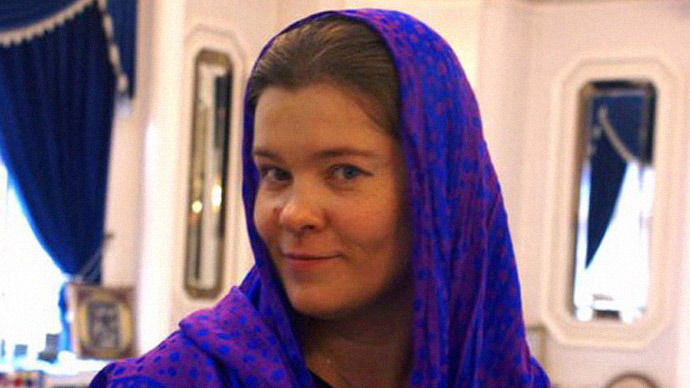 After five months of captivity in fear of execution, Ukrainian journalist Anhar Kochneva has safely escaped from Syrian rebels, Kochneva’s ex-husband told RT.
 Aletho News
 Aletho News