President Hugo Chavez has Died
Venezuelanalysis | March 5th 2013
 Merida – After two years of battling cancer, President Hugo Chavez has died today at 4.25 pm.
Vice-president Nicolas Maduro made the announcement on public television shortly after, speaking from the Military Hospital in Caracas, where Chavez was being treated.
Military and Bolivarian police have been sent out into the street to protect the people and maintain the peace. For now, things are calm here, with some people celebrating by honking their car horns, and many others quietly mourning in their homes.
Maduro made the announcement just a few hours after addressing the nation for an hour, accusing the opposition of taking advantage of the current situation to cause destabilization.
“Those who die for life, can’t be called dead,” Maduro concluded.
In Caracas, thousands of people have gathered in Plaza Bolivar and are said to be heading to the Miraflores Palace. Those gathered are shouting that “Chavez lives, the struggle continues,” “the people united will never be defeated,” as well as swearing that the Venezuelan bourgeoisie “will never return” to the Miraflores Palace.
Chavez supporters are also gathering in central squares across the country to rally together and mourn the death of their president.
Describing the scene in Caracas, Andromaco Martinez, stated that he was on the metro when he found out about the president’s death, “people began running everywhere”.
In Plaza Bolivar, “no-one is crying or praying,” he said, emphasizing that the Venezuelan people would defiantly defend the revolution.
“The struggle has already been ignited,” he added.
US Embassy Officials Expelled from Venezuela, Government Warns of “Conspiracy Plans”
By Tamara Pearson | Venezuelanalysis | March 5th 2013
Merida – Vice-president Nicolas Maduro today denounced destabilisation plans by the international and Venezuelan right wing, announcing the expulsion of two US officials for threatening military security. He also implied that Chavez’s cancer was “caused by enemies of Venezuela”.
Right-wing destabilisation plans
Maduro made the announcement today just after midday, following a meeting this morning with Venezuela’s political military leadership.
Maduro pronounced the expulsion of diplomat David del Monaco, and Air Attaché Deblin Costal of the US embassy in Caracas for being implicated in “conspiracy plans”.
“They have 24 hours to pack their bags and leave,” Maduro said.
He explained that Monaco had, for the last few weeks, been contacting members of the Venezuelan military in order to bring about a destabilisation plan in Venezuela.
“This official has been given the task of looking for active military members in Venezuela in order to propose destabilisation projects to the Armed Forces.”
“We want to denounce that we have certain clues of elements that make up this poisonous picture, which seek to disrupt the social life of our country and give it a beating,” he added.
“The enemies of the country, who aim to destroy democracy, have decided to go ahead with plans to destabilise Venezuela and damage the crux of a democracy…they have intensified the attacks against the economy and against goods and services,” Maduro said, referring to the scarcity of certain food and hygiene products that the country is currently experiencing.
Maduro argued that the “national and international right wing” were taking advantage of the “difficult circumstances” Venezuela is going through as a result of the “delicate state of health of President Chavez”.
Doubt over the cause of Chavez’s cancer
Further, he said, “We don’t have any doubts that the historical enemies of the country have searched for a way to damage the health of President Chavez… that he was attacked with this illness,” alluding to the possibility of a “scientific attack”.
“Just like what happened to Yasser Arafat… Eventually there will be a scientific investigation into President Chavez’s illness,” he said.
There are different theories as to the cause of the former President of the Palestinian National Authority, Yasser Arafat’s death in 2004. Last July Al Jazeera reported that traces of polonium-210, a rare and highly radioactive element, were found on Arafat’s belongings.
Other experts however claimed that polonium’s half life means it would be impossible to discover it now if it had been used for poisoning eight years ago, and that it must have been planted later. In 2005 the Palestinian ambassador to Sri Lanka, Attalah Quiba also alleged that Arafat had been poisoned by “high technology” such as a “high-tech laser”.
Continue fighting and working
Maduro concluded his public announcement by saying, “Men and women loyal to Chavez, we’re going to continue with our duties, so that no single program for the people is held back”.
“Venezuela’s political and military leadership is united, we call on the people to close ranks, to unite forces, and to pray for our comandante,” he said.
Referring to mainstream media lies and distortions about Chavez’s health and the situation in Venezuela, Maduro also expressed his appreciation to Venezuela for its “strength that there has been to face the psychological and dirty war against our people”.
The vice-president called for “respect for Chavez, for his family in these difficult times, respect for the pain and worry of our people”.
Related articles
Intelligence Committees Get Additional Targeted Killing Memos, But Not the Public
ACLU | March 5, 2013
WASHINGTON – In a win for congressional oversight over the government’s vast killing program, the Obama administration has shown an additional but undisclosed number of Office of Legal Counsel memos justifying the program to the Senate and House Intelligence Committees, but has continued to withhold some of its legal opinions from the Intelligence Committees and has not provided any of the legal opinions to the rest of Congress or to the American public. The legal opinions focused on non-citizens continue to be hidden from the Intelligence Committees.
“This is an important first baby step towards restoring the checks and balances between Congress and the president, but it isn’t enough. Amazingly, the Obama administration continues to hide at least some of its legal opinions, even from the intelligence committees. The intelligence committees should have been given all of the legal opinions years ago, particularly when the Obama administration has claimed broad authority to kill people, including American citizens, far from any battlefield,” said Senior Legislative Counsel Christopher Anders. “The legal opinions also shouldn’t stay hidden with the few dozen members of the intelligence committees, but should be available to all members of Congress and minimally redacted copies should be made public. It makes a mockery of the rule of law when the government hides the rules, or makes them up as they go along. It is time to come clean with Congress and the American people.”
Previously, only four memos were briefly shown to the Senate and House Intelligence Committees, which prompted some Senate committee members to stall the confirmation of John Brennan—the architect of the targeted-killing program and President Obama’s choice to run the Central Intelligence Agency. In response, the government sent additional materials to the Intelligence Committees, but has not shown the committees all 11 legal opinions sought by several committee members, and also has not provided the legal opinions to other senators or made them public. This afternoon, the Senate Intelligence Committee will vote on whether to send John Brennan’s nomination to the full Senate.
More information on the ACLU’s work on targeted killing can be found here: www.aclu.org/national-security/targeted-killings
Oral Argument on DNA Searches Provides Scary Glimpse Into the Future of Privacy
By Hanni Fakhoury | EFF | March 4, 2013
The Supreme Court recently heard oral argument in Maryland v. King, a case considering the constitutionality of warrantless DNA collection from arrestees. We’ve long warned about the privacy problems with the rise of cheap, easy and fast blanket DNA collection, and filed an amicus brief with the Court urging it to hold the government can only obtain this sensitive genetic material with a search warrant. While it can be fruitless trying to read the tea leaves of oral argument, one specific idea — that technological advances making DNA analysis faster means warrantless collection may be OK — should leave you worried about the fate of privacy going forward in the digital age.
One of the main disagreements surrounding the issue of DNA collection is whether the state is collecting DNA from arrestees for immediate identification — to figure out if they’ve arrested the right person and learn who that person is for purposes of making a bail determination — or for past and future investigation — to solve cold cases and to store DNA for future searches. The state has long claimed they used DNA for both, while we’ve argued the government simply isn’t able to use DNA collection for immediate identification purposes since there’s currently a delay in analyzing DNA ranging from several days up to a few months. But with the rise of rapid DNA analyzers which can analyze DNA in 90 minutes, law enforcement is chomping at the bit to purchase and install these devices at police stations across the country. When the lawyer challenging the blanket DNA collection argued that law enforcement’s interest in using DNA for immediate identification was simply not possible because of the lengthy delays in DNA analysis, Chief Justice Roberts interrupted to note (PDF):
Now, your brief says, well, the only interest here is the law enforcement interest. And I found that persuasive because of the concern that it’s going to take months to get the DNA back anyway, so they are going to have to release him or not before they know it. But if we are in a position where it now takes 90 minutes or will soon take 90 minutes to get the information back, I think that’s entirely different…
Other members of the court echoed this idea, hinting that if DNA analysis was done faster, than there could be a legitimate identification — as opposed to investigative — need for the practice. And if that was the case, then DNA collection was no different than fingerprinting, and the police could swab and collect DNA without a search warrant. This would be a dangerous Fourth Amendment precedent.
The reasonableness of a search under the Fourth Amendment has always depended on whether the search is reasonably related in scope to the circumstances that justify the search in the first place. But that determination shouldn’t hinge on how long it takes to do the search, but rather what the search reveals. And with DNA searches, an enormous amount of sensitive information is being revealed to the government: a person’s entire genome. Ignoring the breadth of this intrusion by focusing on the ease of collection — implicitly believing the easier it is to intrude into a private place, the less protected it is — elevates form over substance to the detriment of the right of privacy enshrined in the Fourth Amendment.
This dangerous thinking extends beyond DNA collection. We’ve already warned about the problems with warrantless home video surveillance and stingrays, or fake cell phone towers which the government has been very secretive about. As technological advances like these allow the government to easily collect and catalog greater amounts of information, courts run the risk of allowing broader and more intrusive searches to pass Fourth Amendment scrutiny simply because of the possibility of exposure. Instead, courts should be focusing on the actual intrusion and people’s expectation that private information will not be exposed, regardless of how technological advances can make government access easier or faster.
The fact the government can do something now it couldn’t do before doesn’t make it constitutional. In fact, it should be the opposite. As it becomes easier for the government to seize and analyze, institutional checks — like a search warrant — on the government’s power is necessary to protect privacy before it becomes a casualty to technological advances.
Related article
No Cuts! Tax the Rich!
By MARK VORPAHL | CounterPunch | March 5, 2013
It’s no secret that most cities, counties, states and school districts in the U.S. are facing big deficits. What is less understood is the extent to which austerity cuts have become politicians’ bi-partisan response to the situation. The dramatic measures being implemented in Portland, Oregon are no exception.
By “austerity” is meant a bag of policies intent on “reforming,” that is, reducing spending by cutting jobs and public services, tearing up social contracts that workers have benefited from, and, in general, making workers and the poor do all the sacrificing to close budgetary imbalances. These austerity measures range from potential cuts to Social Security and Medicare to cuts on a local level that go after our schools, social services, parks, and infrastructure.
While this “sacrificing” is imposed on the vast majority of citizens, obscenely low tax rates for big business and the wealthy are being left in place as their profits swell and their dominance over the political system increases. To appreciate the scope of this trend, one need merely note The New York Times report that there are “nearly $1.1 trillion in annual deductions, credits and other tax breaks that flow disproportionately to the highest income Americans and that cost more, each year, than Medicare and Medicaid combined.”
The Case in Portland
Portland’s newly elected Democratic Mayor Charlie Hales has announced that there is a $25 – $40 million hole in the city’s budget. In response, he is demanding that all 27 city bureaus submit budget proposals with 10 percent cuts. This latest round follows several consecutive years of budget cuts.
The cuts already put into effect have resulted in lost jobs, underfunded services and a decline in Portland’s livability. While it is not clear yet how Hales will wield his cleaver, he is signaling that his cuts will be the deepest yet. The programs that he has already targeted — at-risk teen summer internships, job-training efforts and youth bus passes, among others — will have an immediate impact on great numbers of households, shifting the costs of these publicly funded programs onto the shoulders of families that can least take the burden.
The majority of Portland’s residents can ill afford the costs of trying to close the deficit without damaging the regional economy further. Portland’s unemployment rate is 7.9 percent. According to the Business Journal, 8.3 percent of Portland families live below the poverty level; for families with children the number is 12.9 percent, and 27.4 percent for single, divorced and separated women. If he gets his way, Mayor Hales’ austerity axe will continue to swing at the city’s most vulnerable citizens.
Portland’s top companies make hundreds of millions, if not billions, every year. In Oregon the share of total state income collected by the wealthiest 1 percent increased by 70 percent from 1979 to 2009. In contrast, during that same period, the bottom 80 percent of Oregonians saw their income decline.
In 2009 the highest effective state tax rate for corporations with profits over $10 million was less than 1 percent. For a middle income Oregon household, the average effective rate of payment was 4.1 percent.
If corporations paid the same rate of state and city income taxes that is expected of most citizens, there would be no deficit, no crisis, no need for cuts. Given the vast amount of untouched revenue tucked away in these corporate coffers, Hales’ call for public “sacrifice” to balance the city’s budget amounts to a shell game to distract people from asking, “Where is the money?”
Portland is not broke. The problem is that those with the money are being let off the hook.
Special Arrangements
In addition, Portland’s city budget is far from transparent. It is divided into a General Fund, which is where the so-called deficit is located, as well as Internal Service Funds (ISF). ISFs are unrestricted net assets of the city. They can be used for any purpose. The amount of money in this part of the budget has been steadily increasing. In 2010-2011, the ISF balance was $120.6 million.
But rather than using this money to benefit Portland’s working class communities, the City Council keeps it stashed away for pet projects to lure wealthy investors to the city. Since the ISF lacks transparency and accountability, it is difficult to determine how the money in these funds is used; we only know that it isn’t available when the tax paying public needs it.
Another way Portland’s politicians stash away huge sums to benefit big business is through the use of Urban Renewal (UR). UR requires that money be spent on development projects in a certain area. The revenue created by this development, including property taxes, remains locked up in the area for decades — from 20 to 50 years.
UR taxes in 2010-2011 amounted to $35 million for the city of Portland alone. These funds can only be spent in the UR areas from which they were collected. Consequently, while the posh UR area of Portland’s Pearl District enjoys more public funds than it needs, elsewhere in Portland school closures are looming, streets remain unpaved and infrastructure and park maintenance is done on the cheap, if at all.
Put simply, UR is a means of enriching developers and other corporate interests — like big contributors to politicians’ campaign funds — to the detriment of Portland’s working class communities. The fact that this model, which results in widening inequality, continues to be pursued by those advocating cuts to public programs could not make more clear where these politicians’ allegiances lie.
While Mayor Hales is blaming the city’s deficit on several factors, the math does not add up. When low corporate tax rates, the millions kept in shady city funds, and the revenue drain of development programs such as UR are taken into account, it becomes clear that Portland’s deficit hawks are manufacturing a crisis in order to continue arrangements where workers are left to pay for big business’ greed.
Our Priorities, Our Budget
In addition to the “I feel your pain” displays by Mayor Hales towards those affected by his cuts, he will also employ the tactic of divide and conquer. Those threatened by these cuts will be told the lie that raising revenue by taxing big business and the wealthy is off the table. “The pie is only so big,” promoters of the cuts moan, “you must decide your own priorities.” And in this way they hope to set different communities and unions against one another.
It should be clear, for reasons already discussed, how false this storyline is. While there is likely more than a little padding in upper management that can be cut, and plenty of taxes that remain uncollected, the truth is that a real solution to Portland’s deficit won’t emerge until these priorities are confronted and turned around.
What would a budget that prioritizes peoples’ needs look like? Rather than job cutting, it would fund job creation. Instead of slashing social programs, it would build a thriving and accountable public sector. And corporate interests would take second place behind the health of working class communities. A people’s budget could easily be funded if the 1 percent paid their fair share in taxes and were not given the driver’s seat in determining Portland’s development and political policies.
To change business as usual in Portland will require mobilizing an independent grassroots social force to oppose Hales’ cuts and the corporate interests behind them. It will take a unified Labor and community movement capable of expanding its goals towards winning a people’s budget.
The demands to unite such a movement must be those that the greatest numbers are willing to mobilize behind. “No Cuts! Tax the Rich!” would be a good place to start. While each union and community group has its own priorities, highlighting those which build the broadest unity in mass campaigns and rallies is the best way to bring these organizations’ specific concerns and struggles to the greatest number.
With his austerity cuts, Mayor Hales has issued a challenge to the grassroots. A unified fightback is necessary to meet it. With such a movement it will be possible to shift the political dialogue towards measures that serve the vast majority of citizens. Without it, Portland will be left with Hales’ cuts and worse.
At the same time, a big fight is gearing up as Oregon’s democratic governor has threatened cuts to public workers’ jobs and retirement benefits, on the tail of passing emergency legislation to lock in Nike’s absurdly low tax rate for 30 years. In building a citywide response, Labor and community groups will be strengthening their capacity to take on austerity at a statewide level as well.
Every city, county and statewide struggle against the corporate austerity attacks can set an example for and strengthen our ability to resist cuts to Medicare, Social Security and other socially needed federal programs. From this resistance a movement can develop with the ability not only to resist attacks — but to fight for and implement policies that benefit all working people.
Mark Vorpahl is a union steward, social justice activist and a writer for Workers Action and Occupy.com. He can be reached at Portland@workerscompass.org
DARPA scientists want to create database of all conversations
RT | March 4, 2013
Your digital footprint could be getting a whole lot bigger: Pentagon scientists are searching for a way to transcribe every real-world conversation that happens into computer-readable files.
Robert Beckhusen of Wired’s Danger Room says it wouldn’t be unlike a real-life Twitter feed or an “email archive for everyday speak.”
“Imagine living in a world where every errant utterance you make is preserved together,” Beckhusen writes in an article this week that explores a Defense Department project that’s been undertaken by its Darpa laboratories and is now in the hands of a University of Texas computer scientist named Matt Lease.
Least has received a few hundred thousand dollars from Darpa — the US military’s Defense Advanced Research Projects Agency — to help find a way to take cell phone conversations, board room meetings and every miniscule real world back-and-forth and have them digitized.
The project is being called “Blending Crowdsourcing with Automation for Fast, Cheap and Accurate Analysis of Spontaneous Speech,” and Lease will receive $300,000 in all from the government to work on it after winning a 2012 Young Faculty Award from Darpa last year.
Lease has previously worked with the Pentagon scientists on another project, Effective Affordable Reusable Speech-to-text, or EARS, which had him trying to find a better way to transcribe dialogue into text. Now after winning the respect of Darpa, he’s putting that research to work in hopes of finding a way to streamline all real world conversations into digital transcriptions. And by strategically crowd-sourcing the information, he thinks he might be able to do just that.
“Like other AI [artificial intelligence], it can only go so far, which is based on what the state-of-the-art methodology can do,” Lease tells Wired. “So what was exciting to me is thinking about going back to some of that work and now taking advantage of crowdsourcing and applying that into the mix.”
Lease says he saw both the “need and opportunity to really make conversational speech more accessible, more part of our permanent record instead of being so ephemeral, and really trying to imagine what this world would look like if we really could capture all these conversations and make use of them effectively going forward,” Lease adds.
Wired reports that the end result could mean that conversations and events could be transcribed and edited through crowdsourcing, then eventually and easily be shared with friends, family and colleagues. Once digitized, those dialogues could also be perused for general search purposes. By uploading everything, though, some concerns are quickly showing up. For one, there’s the matter of possible privacy violations brought on by the seemingly constant collection of data. Then, of course, there’s the matter of what is being done with it.
According to a 2003 memo from the Congressional Research Service, the EARS project that first got Lease involved in the Pentagon was being considered for a rather particular kind of use. That report said that dialogue could be inputted into the system by way of telephone conversations so that “the military, intelligence and law enforcement communities” could “extract clues about the identity of speakers.”
For now, Lease won’t even speculate as to why the Pentagon wants him to develop his crowdsourcing project. He agrees, however, that there is an issue with “respecting the privacy rights of multiple people involved.”
Related article
Venezuelan Indigenous Yukpa Leader Sabino Romero Assassinated
By Ewan Robertson | Venezuelanalysis | March 4, 2013

Mérida – Indigenous Yupka chief and land rights activist Sabino Romero has been assassinated in an act which has generated public repudiation from social movements and the Venezuelan government alike. A high profile investigation into the killing has been launched.
Romero was a chief of the indigenous Yupka people of the Sierra de Perijá in western Venezuela. He was assassinated on Sunday night as he made his way to vote in an indigenous election, in circumstances which are still unknown.
Romero was a leader in the struggle for ancestral Yupka lands in the Sierra de Perijá, lands held by cattle ranchers, but many of which have been formally granted to the Yupka by the Chavez government.
Last November, Romero travelled to Caracas with some 60 Yupka to demand that the government act against violence on the part of cattle ranchers who were refusing to give up their lands, as well as to protest against government inaction and public media silence over the conflict.
Several Yupka have already been killed in the land rights dispute, including Romero’s own father, and activists say that local judicial impunity has prevented the murderers from being brought to justice.
The Venezuelan government today condemned Romero’s assassination as a “terrible act”, and announced that a high-profile investigation into the killing had already been launched. The government, in a statement, said it suspects that the Yukpa chief was murdered for his role in the land rights conflict with cattle ranchers.
“We can’t get ahead of ourselves on a hypothesis about this act, which is condemnable and must be repudiated from all points of view, but in general the just struggle for the fair distribution of land is on the table [as a possible motive],” said communication minister Ernesto Villegas.
Indigenous groups and social movements held a protest today outside the Public Attorney’s office in Caracas to demand that those responsible for Romero’s assassination be brought to justice.
Featured Video
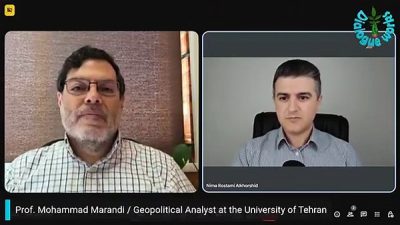
Seyed M. Marandi: U.S. Military DIVIDED? Iran’s Secret Defense EXPOSED
or go to
Aletho News Archives – Video-Images
From the Archives
‘Israel sees Iran as obstacle to its policies’

Press TV – August 25, 2017
Prime Minister Benjamin Netanyahu has said that Israel felt threatened by Iran’s growing influence in the Middle East. Netanyahu expressed his Iranophobic view in a meeting with Russian President Vladimir Putin in Russia’s Black Sea resort of Sochi on Wednesday. Press TV has asked Scott Rickard, former American intelligence linguist from Tampa, Florida, and Brent Budowsky, a columnist at The Hill from Washington, to give their thoughts on the issue.
Rickard said Tel Aviv is concerned about the fact that the regime could not carry out its old project to spread sectarian divisions and pave the way for dismemberment of the countries in the Middle East region because of the Iranian-led resistance against Israeli policies, not only in the occupied territories of Palestine but also in the whole region.
“Iran is not a threat to Israel whatsoever. The threat that Israel sees is the fact that their Oded Yinon Plan is being put to a hold by Iran,” the intelligence linguist said on Thursday night.
“They (the Israelis) look at Iran as a threat only because they have no influence on their governments and Iran is autonomous and is not under the Zionist influence,” he added.
Since the victory of the Islamic Republic of Iran in 1979, Tehran has been critical of Israel’s policies in the region, whereas “no leaders [of other states] even dared to speak out against Zionism,” Rickard argued. … continue
Blog Roll
 Aletho News
- IRGC commander declares ‘new phase’ of reprisal attacks against aggressors
- Israel’s air defenses overwhelmed by cluster-warhead Iranian missiles: Reports
- Striking Iran’s Infrastructure Would Have Little Military Impact – Report
- What’s Behind U.S./Israeli Strikes On Iranian Pistachio Factories?
- Seyed M. Marandi: U.S. Military DIVIDED? Iran’s Secret Defense EXPOSED
- How I fell foul of the BBC thought police
- The End of NATO
- 37 days of war on Iran cost US staggering $42bln, tracker shows
- Baghdad tells Asian refiners, traders to begin loading Iraqi crude amid Iranian exemption
- Under fire, Moscow and Tehran close ranks
- If Americans Knew
- Trump says Iranians appreciate bombs, WHO warns of nuclear risks – Daily Update
- U.N. experts demand Israel release prominent Gaza doctor after reports of ‘severe torture’
- Israel’s Latest Genocide Is Against the Shias of Lebanon. Why Is the World Silent?
- How Eliot Cohen’s influence over U.S. war-making paved the way for Trump’s war crimes in Iran
- Israelis don’t pay for the weapons we ‘sell’ to them — US taxpayers do
- While Distancing from AIPAC, Most 2028 Democratic Hopefuls Are Still Embracing Israel
- A brief history of the Israeli nuclear program, the open secret at the heart of the Iran war
- Israeli Settlers Killed a Palestinian Farmer on His Own Land, in Front of His Father. Yes, Again
- The US-Israeli War on Science is an Assault on our Future
- 100+ International Law Experts Say US Strikes on Iran Violate UN Charter, Could Be War Crimes
- No Tricks Zone
- An Inconvenient Tree: Uncovered In Alps… Europe Much Warmer Than Today 6000 Years Ago
- New Study Reports A 60% Slowdown In Greenland’s Ice Loss Rate In The Last Decade
- Low Intensity Tornado Wrecks Major Solar Farm, Creating A Potential Toxic Dump
- New Study Finds Warming Saves Lives…Cold Temperatures 12 Times More Deadly Than Excess Heat
- German Science Blog Accuses PIK Climate Institute Of Hallucinating Climate Tipping Points
- Devastating Assessment Of Comirnaty Vaccine By Former Senior Pfizer Europe Toxicologist
- New Study: CO2 Is ‘Effectively Negligible’ As An Explanatory Climate Change Factor Since 2000
- Former Pfizer Toxicologist Dr. Helmut Sterz Tells Bundestag Hearing Pfizer Vaccine Should Have Never Been Approved
- Energy Expert: Germany’s Nuclear Phaseout Was A “500 Billion Euro Mistake”
- New Research: South Australia’s Mid-Holocene Sea Surface Temperatures Were 4°C Warmer Than Today
 Aletho News
