The Full Story on Why Obama Backed Down on Syria
By Ibrahim al-Amin | Al-Akhbar | September 2, 2013
Commentators in the West will surely declare that it was their democratic systems of government that forced US President Barack Obama to back down on attacking Syria. But the events that led up to Washington’s de-escalation suggest there were other factors at play.
When Obama stepped out into the White House Rose Garden to declare that, though still intent on attacking Syria, he wanted to get Congress’ approval first, the Pentagon must have breathed a sigh of relief, knowing full well that a military strike against Damascus could spark a major confrontation in the Middle East for which they were not adequately prepared.
The story starts shortly before the Israeli-Saudi intelligence operation that engineered the chemical attack near the Syrian capital. The Americans and Europeans had begun negotiating with the Russians and the Iranians for a political settlement, after having failed to remove the regime by force. The West’s only condition was that Bashar al-Assad would not be part of the solution, even proposing to Moscow that they would be willing to allow the Syrian president to pick a successor of his own choosing.
When the Russians – after extensive discussions with their allies – told Washington that it was difficult to accept such a condition, the West turned to Plan B, which was to raise the level of military support for the opposition and reorganize the armed groups fighting against the regime, allowing Saudi Arabia to take the lead in mobilizing them to up the ante on Damascus.
The goal was to squeeze Assad by launching major offensives from both the north and the south of the country, in addition to wreaking havoc on Hezbollah on its home ground and providing more appealing incentives for Syrian army officers to defect.
In the meantime, the regime and its allies were already in the process of consolidating military gains on a number of fronts by expanding the area under government control, particularly in the area around Damascus. One such operation was to be launched on the eve of the chemical attack on August 20 against opposition forces to the south and east of the capital.
After the opposition was quickly routed in the north as it tried to sweep through the coastal Latakia region, many of their regional and international backers understood that the only way to bring about a qualitative change on the ground was by drawing the West into a direct foreign military intervention in Syria – but a justification was necessary to prompt Washington to act.
It was for this reason that the “chemical massacre” in the Ghouta area around Damascus was carried out, most likely at the hands of the Saudi and Israeli intelligence. Barely an hour had passed before the orchestrated media campaign to get Assad was in full swing, followed by condemnations and threats from Western capitals.
Washington rushed to cash in on what they insisted was an imminent military attack by sending envoys to both Russia and Iran, giving the two countries a last opportunity to stand down before unleashing their missiles on Syria. But all the sabre-rattling was not enough to force any political concessions – even Assad informed his allies that he had chosen to take a stand.
The Americans tried to respond to this by showing that they were serious about a strike, moving additional naval vessels into the eastern Mediterranean, as well as increasing the number of fighter planes in bases around Syria. But again, Russia and Iran were unmoved, refusing to give Washington any guarantees that its limited strike would not turn into a broader, prolonged war, with devastating consequences for the region as a whole.
They backed their words with action, as Russia, Iran, Syria, and Hezbollah put their forces on high alert, ordering them to make preparations for a military confrontation. Most notably, Hezbollah directed its fighters to return to their bases, as it set up an operations room in coordination with Damascus to make effective use of their combined arsenal of rockets.
The first to buckle was that old hand at such affairs, the United Kingdom, whose parliament gave Prime Minister James Cameron a way out, putting their ally Washington in the uncomfortable position of going it alone. Suddenly, Obama, too, felt the need to consult the American public and seek the approval of their representatives in Congress.
Nevertheless, Obama – having lost the initiative – has but two choices before him: He either retreats and seeks out a political settlement, or enters into a military adventure, whose outcome he cannot control. The results of round one of this global confrontation in Syria provide yet another indicator that the days when the US can call the shots, without regard for the rest of the world, are on their way to becoming a relic of history.
Students campaign to expel Dahlan from UAE

MEMO | September 2, 2013
Hundreds of students in the United Arab Emirates have signed-up to a Twitter campaign to expel one-time Fatah strongman Mohammed Dahlan from the country. The students insist that Dahlan has “betrayed” the Palestinian cause for Israel’s benefit and are asking the Emirates government why they allow “Israel’s number one client” to stay in the UAE.
Under the theme “Expel Dahlan from the country”, the activists have stressed their belief that Dahlan’s “nasty streak” in spreading “misleading” ideas about Palestine has already started to be reflected in public attitudes towards the issue. They accuse the government of supporting a “criminal” whose work has led to the deaths of his own people as well as promoted the Israelis at the expense of Islamists. The campaign is pushing for the UAE government to be more discerning about allowing such “criminals” into the country: “Those who are being valued by the Emirati authorities,” they allege, “sell their own land and kill their own people.”
Previous reports suggest that Dahlan, a former leader in the Palestinian Fatah movement who occupied a senior security position with the Palestinian Authority, is the instigator of a number of acts of sabotage against the Egyptian army and police in Sinai, near the Gaza Strip. These, it is claimed, have been coordinated with parties in Egypt in order to blame Hamas and incite distrust and hatred among Egyptians against the Islamic Resistance Movement and the Palestinians in Gaza.
Related article
- Fatah security officer loyal to Dahlan captured in the Sinai (altahrir.wordpress.com)
Egypt coup enters second phase: the overthrow of Hamas
MEMO | September 2, 2013
The military coup in Egypt is believed to have entered its second phase. The security forces affiliated with General Abdel Fattah al-Sisi, commander-in-chief of the Egyptian armed forces, have begun gradual attacks to topple the Hamas movement in the Gaza Strip, supported by incitement from the pro-Sisi media. A few obscure activists, meanwhile, have organised protests against the government in the Strip. The activists are believed to have received financial aid from the United Arab Emirates.
The news site, Secrets of Arabia, has observed signs of an orchestrated campaign, initiated by Egypt, to attack Hamas and overthrow its government in Gaza. Meanwhile, other sources have claimed that the UAE has been orchestrating the campaign in collaboration with Palestinian, former Fatah leader, Mohammed Dahlan, who works as a consultant for Abu Dhabi Crown Prince, Mohammed bin Zayed. Dahlan was expelled from Gaza following a failed attempt to topple the democratically elected Hamas-led government.
Over the past few weeks, Egyptian troops have launched an extensive campaign against the smuggling tunnels. The tunnels are used to transport essential goods to Gazans, who are suffering from the tight Israeli blockade. News was also leaked of an order by Egyptian security forces to demolish more than 500 houses near the Gaza Strip border and 500 meters deep into the Egyptian territories.
The operation to demolish Palestinian houses, on the border with Gaza, is considered a first of its kind in the history of the Egyptian-Palestinian relations. The operation has raised concerns in the region, of a possible Egyptian military action against Hamas and the tunnels. According to Egyptians residents of the area the Egyptian community believe that the operation is designed to strengthen the siege on Gaza.
Campaign of incitement
The Egyptian military’s actions are supported by an unprecedented campaign by the Egyptian pro-military coup media which calls on Palestinians to revolt against Hamas, in a clear, blatant and unprecedented intervention in the internal affairs of Palestine. Meanwhile, the same media channels have criticised non-Egyptians who interfere in the political affairs of Cairo.
The controversial Egyptian media personality, Tawfiq Okasha, surprised his viewers on Saturday evening with an unprecedented instigation against the Palestinians in Gaza. Okasha said the Palestinians must rise up against Hamas and that the Egyptian army would support them militarily to eliminate the movement.
Okasha is close to the General Sisi regime and is a prominent defender of the military coup. It is widely believed among Egyptians that Okasha reflects the official position of the army. He receives his instructions from the department of moral and military intelligence, which funds his al Faraein TV channel.
Gaza Rebellion
Meanwhile a new movement in Gaza has emerged under the name of Tamarod Gaza or Gaza Rebellion. The movement called on Palestinians in the Gaza Strip to voice their protests against the rule of Hamas on November 11th. The movement has stirred controversy on the Palestinian street.
The majority of the Palestinian residents in Gaza believe that members of the Gaza Rebellion movement are an extension of a counter-revolution led by the United Arab Emirates to topple the Arabs revolutions and Islamist rule in the Arab world. The movement is similar to Egypt’s Tamarod movement led by Egyptian, Mahmoud Badr. Badr is known as Mahmoud Cannabis due to claims of his previous involvement in the cannabis business. Badr built a deep relationship with the United Arab Emirates and was allowed to meet UAE Foreign Minister, Sheikh Abdullah bin Zayed Al Nahyan.
The Palestinians also believe that Mohammed Dahlan has been provoking problems in the Egyptian Sinai to drag the Egyptian army into confrontation with Gaza. Dahlan is also believed to be a supporter of the Gaza Rebellion which aspires to oust the Hamas government in Gaza, as the Muslim Brotherhood were ousted in Egypt.
Related articles
Egypt creates a buffer zone with Gaza
MEMO | September 2, 2013
The Egyptian army is working to create a buffer zone on the Egyptian border with the Gaza Strip in a purported effort to undermine weapon smuggling and chaos caused by militants in the Sinai Peninsula.
The military envisions that the ten kilometres long and 500 metre wide buffer zone is to be a building free area without trees. The area stretches from the Rafah Crossing through to the Mediterranean Sea.
Witnesses said that the Egyptian military bulldozers had started uprooting trees in the area and that 13 Egyptian houses had been destroyed in the al-Sarsouriya neighbourhood on Saturday.
At the time of writing this report, Egyptian military bulldozers were working fast razing sand-hills and trees in the area.
A military source, speaking anonymously, told the AP that homes had been knocked down over the last 10 days as a test of the buffer zone idea.
The interim Egyptian government said that this was a part of its “war on terrorism” campaign. The government and Egyptian mass media have been claiming that the tunnels between Egypt and Gaza have been used to smuggle weapons and Palestinian militants in to Egypt.
Egyptian residents in the neighbourhoods in the planned buffer zone took to the streets on Saturday, torching car tires and hurling stones at the Egyptian army in an effort to delay the demolition of their homes.
Witnesses said that the army called for residents to leave their houses through the loudspeakers of nearby mosques. The army bulldozers then immediately started damaging the houses.
“They did not give residents eviction notices and did not even give them enough time to collect their properties,” a tribal leader told AP.
In an interview with the Egyptian TV, CBC, Egyptian interior minister, Mohamed Ibrahim, claimed that the tunnels were the main cause of the uncertainty in Egypt. He insisted that prominent leaders of the Muslim Brotherhood had used the tunnels to enter and hide in Gaza.
Meanwhile, Hamas spokesman, Sami Abu-Zuhri, denied that the tunnels had been used to smuggle weapons and militants to Egypt or to smuggle Muslim Brotherhood leaders in to Gaza.
“Once they said that Osama Yassin was in Gaza, and two days later, they arrested him in Cairo,” Abu-Zuhri said in an example of the misinformation being reported on Gaza’s involvement in the Egyptian issue and the misuse of tunnels.
Since the end of the Israeli war on Gaza in 2008/2009, the tunnels have been used to smuggle goods, commodities and medicines. Numerous Palestinian, Egyptian and international journalists have observed the work of the tunnels.
They have reported that the tunnels have been used for humanitarian purposes in the light of the strict Israeli blockade on Gaza since 2006.
Report: NSA targeted Brazil, Mexico leaders
By Ian Swanson – The Hill – 09/02/13
The NSA monitored communications of the leaders of Brazil and Mexico, Guardian journalist Glenn Greenwald said in an interview on Brazilian television, according to the Associated Press.
The revelations come days before President Obama is to travel to Russia for a meeting of the G20.
Greenwald told the Brazilian television program “Fantastico” that he has a document indicating Mexican President Enrique Pena Nieto’s emails were being read. The document is dated from June 2012, a month before Nieto was elected.
National Security Agency leaker Edward Snowden has leaked thousands of documents related to the U.S. surveillance programs to Greenwald.
The document from June 2012 shows who Nieto was considering for appointments to key government posts, according to the AP report.
While Greenwald said that document shows “specific intercepted messages” in the case of Nieto, the tracking of Brazilian President Dilma Rousseff was done through a program known as DNI Presenter that allows the NSA to open and read emails and online chats, the AP report said.
It said the U.S. targeting mapped out the aides with whom Rousseff communicated and tracked patterns of how those aides communicated with one another.
The NSA programs seem likely to come up in some of Obama’s meetings at the G20 in St. Petersburg. Brazil and Mexico are both members of the G20, and Snowden has been granted asylum by Russia.
Related articles
- NSA spied on Brazil, Mexico presidents – Greenwald (rt.com)
- Greenwald claims up to 20,000 Snowden documents are in his possession (alethonews.wordpress.com)
- Brazil may reject US fighter jet deal over NSA spying scandal (alethonews.wordpress.com)
- Greenwald Testifies to Brazilian Senate about NSA Espionage Targeting Brazil and Latin America (alethonews.wordpress.com)
NSA spied on French Foreign Ministry: Report
Press TV – | September 2, 2013
Top secret documents have shown that the US National Security Agency targeted France’s Foreign Ministry for spying.
Documents seen by Germany’s Der Spiegel weekly show that the US spy agency spied on the electronic communications of the French Foreign Ministry by breaking into the ministry’s computer network.
The internal documents also show NSA agents installed bugs in French diplomatic offices in Washington and at the United Nations in New York.
According to the “top secret” document, dated June 2010, the NSA infiltrated computers used by French diplomats to communicate with the Foreign Ministry’s Paris headquarters through a virtual private network (VPN).
France’s “foreign policy objectives, especially the weapons trade” were of primary interest to the NSA, Spiegel reported.
Moreover, the German weekly said that the Qatari-funded broadcaster Al Jazeera had been another target of spying for the US government’s premier spy agency because the channel broadcast audio and video messages from al-Qaeda leaders for more than a decade.
Documents leaked by former intelligence contractor Edward Snowden have shed light on the scope and scale of US spying practices across the globe.
The documents have blown the lid on several US spying programs like PRISM and GENIE.
Under PRISM, US technology companies hand over user data pertaining to all people around the world after they receive orders from the Foreign Intelligence Surveillance Court.
GENIE is also a $652 million spying project under which US computer specialists infiltrate foreign networks in order to bring them under secret US control.
According to NSA budget documents obtained by the Washington Post, US spy agencies have also conducted 231 cyber attacks in 2011.
The latest revelations about the NSA’s spying on the French Foreign Ministry come as the Paris prosecutor’s office has launched a preliminary investigation into the NSA’s illegal access to personal email and phone communications of French citizens through its PRISM program.
The results of the preliminary investigation determine whether a formal investigation will be launched into the allegations that the NSA has violated data protection and privacy rules in France.
Syria Calls on UN to Stop US Strike, “Prevent Absurd Use of Force”
Al-Manar | September 2, 2013
Syria asked the UN to prevent “any aggression” against Syria following a call over the weekend by US President Barack Obama for punitive strikes against the Syrian military for last month’s chemical weapons attack.
US military action will be put to a vote in Congress, which ends its summer recess on September 9.
In a letter to UN chief Ban Ki-moon and President of the Security Council Maria Cristina Perceval, Syrian UN envoy Ambassador Bashar Ja’afari called on “the UN Secretary General to shoulder his responsibilities for preventing any aggression on Syria and pushing forward reaching a political solution to the crisis in Syria”, state news agency SANA said on Monday.
He called on the Security Council to “maintain its role as a safety valve to prevent the absurd use of force out of the frame of international legitimacy”.
Ja’afari said the United States should “play its role, as a peace sponsor and as a partner to Russia in the preparation for the international conference on Syria and not as a state that uses force against whoever opposes its policies”.
Related article
Egyptian navy attacks Palestinian fishermen
MEMO | September 1, 2013
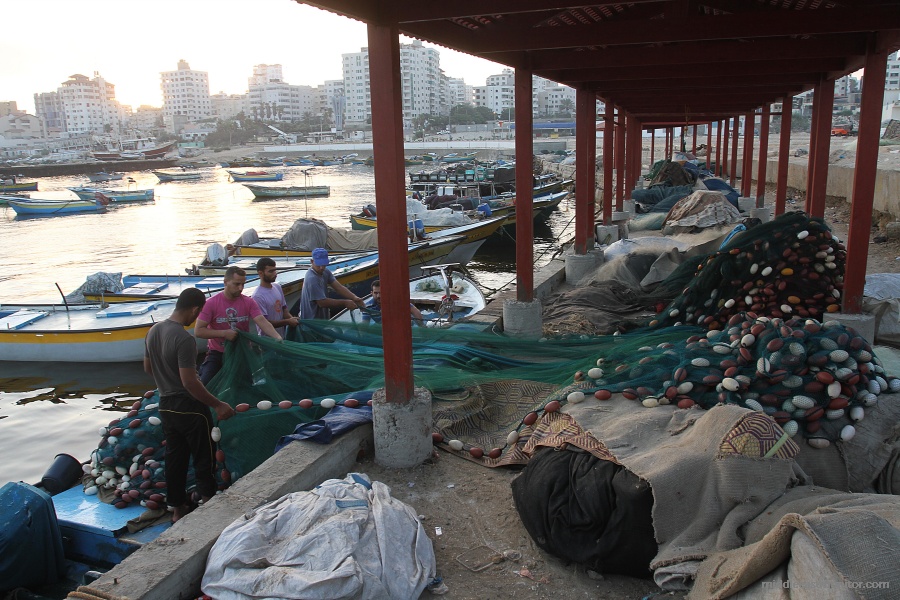
Egyptian navy vessels have attacked Palestinian fishermen going about their work off the coast of Rafah. Five fishermen were arrested and two were shot when their boats were confiscated by the Egyptians.
Local sources say that Ibrahim Abdullah al-Najjar, 19, and his colleague Ismail Wael al-Bardawil, 21, were both shot in the hands during the attack. The men were taken to Abu Yousef al-Najjar Hospital in Rafah for treatment. Shooting fishermen in the hands is a tactic used by the Israeli Navy as it makes it difficult for them to get back to work.
Following the overthrow of President Mohamed Morsi by the army, the coup authorities have warned the Palestinians that the navy will arrest anyone who crosses into Egypt’s territorial waters.
The fishermen expressed deep disappointment at the Egyptian move. It resembles the attacks on them by the Israeli navy, they said.
A spokesman for the Interior Ministry of the Palestinian government in Gaza, Ihab Ghussein, said that he has asked for a formal explanation from Egypt about the attack on the unarmed fishermen.
Will Congress Endorse Obama’s War Plans? Does it Matter?
By Ron Paul | September 1, 2013
President Obama announced this weekend that he has decided to use military force against Syria and would seek authorization from Congress when it returned from its August break. Every Member ought to vote against this reckless and immoral use of the US military. But even if every single Member and Senator votes for another war, it will not make this terrible idea any better because some sort of nod is given to the Constitution along the way.
Besides, the president made it clear that Congressional authorization is superfluous, asserting falsely that he has the authority to act on his own with or without Congress. That Congress allows itself to be treated as window dressing by the imperial president is just astonishing.
The President on Saturday claimed that the alleged chemical attack in Syria on August 21 presented “a serious danger to our national security.” I disagree with the idea that every conflict, every dictator, and every insurgency everywhere in the world is somehow critical to our national security. That is the thinking of an empire, not a republic. It is the kind of thinking that this president shares with his predecessor and it is bankrupting us and destroying our liberties here at home.
According to recent media reports, the military does not have enough money to attack Syria and would have to go to Congress for a supplemental appropriation to carry out the strikes. It seems our empire is at the end of its financial rope. The limited strikes that the president has called for in Syria would cost the US in the hundreds of millions of dollars. Joint Chiefs Chairman Gen. Martin Dempsey wrote to Congress last month that just the training of Syrian rebels and “limited” missile and air strikes would cost “in the billions” of dollars. We should clearly understand what another war will do to the US economy, not to mention the effects of additional unknown costs such as a spike in fuel costs as oil skyrockets.
I agree that any chemical attack, particularly one that kills civilians, is horrible and horrendous. All deaths in war and violence are terrible and should be condemned. But why are a few hundred killed by chemical attack any worse or more deserving of US bombs than the 100,000 already killed in the conflict? Why do these few hundred allegedly killed by Assad count any more than the estimated 1,000 Christians in Syria killed by US allies on the other side? Why is it any worse to be killed by poison gas than to have your head chopped off by the US allied radical Islamists, as has happened to a number of Christian priests and bishops in Syria?
For that matter, why are the few hundred civilians killed in Syria by a chemical weapon any worse than the 2000-3000 who have been killed by Obama’s drone strikes in Pakistan? Does it really make a difference whether a civilian is killed by poison gas or by drone missile or dull knife?
In “The Sociology of Imperialism,” Joseph Schumpeter wrote of the Roman Empire’s suicidal interventionism:
“There was no corner of the known world where some interest was not alleged to be in danger or under actual attack. If the interests were not Roman, they were those of Rome’s allies; and if Rome had no allies, then allies would be invented. When it was utterly impossible to contrive an interest – why, then it was the national honour that had been insulted.”
Sadly, this sounds like a summary of Obama’s speech over the weekend. We are rapidly headed for the same collapse as the Roman Empire if we continue down the president’s war path. What we desperately need is an overwhelming Congressional rejection of the president’s war authorization. Even a favorable vote, however, cannot change the fact that this is a self-destructive and immoral policy.
Related article
- France to await US congressional decision on Syria (tribtoday.com)
Four young boys arrested and beaten in Hebron
International Solidarity Movement | September 1, 2013
Hebron, Occupied Palestine – On Friday 30th August, Israeli soldiers arrested four Palestinian boys and held and abused them in a military base for around four hours.
Ashaq (15), Ali (15), Anwar (14) and Ahmed (10) were walking down the Shilal Street in the Old City of Hebron at around 6.30pm, when soldiers near Bab Al-Baladia violently grabbed them and accused them of throwing stones. Anwar’s shirt was torn by a soldier as they arrested him. They took the four boys through the yellow gate into Beit Romano military base. All four were blindfolded, and Ashaq was slapped in the face by a soldier. The soldiers also ate seeds in front of the boys and then spat the shells at them. The boys were held in the military base for nearly four hours. International activists who went to the military base to demand information on whether the boys were being held inside and why they had been arrested, were told by soldiers “we don’t know”, and were asked to leave. As they were waiting outside the military base, they were insulted and threatened by a settler. Subsequently the army forced them to leave Shuhada Street and threatened one international with arrest if she tried to return.
At around 10.15pm, Youth Against Settlements (YAS, a Palestinian activist group which seeks to end Israeli colonization and settlement activities in Palestine through non-violent popular struggle and civil disobedience) received a call by worried residents who had seen twelve soldiers taking the four blindfolded boys up into the cemetery opposite the military base. The youngest, Ahmed, had a bag put over his head. Members of YAS rushed to the scene, and when the soldiers saw them they seemed scared, released the boys and left quickly.
This incident stands out from other child arrests which are almost a daily occurrence in occupied Hebron due to the forced movement of the boys into the cemetery. This worrying act highlights the arbitrary nature of the occupation as well as the virtual impunity with which the soldiers are allowed to act.
Related articles
Featured Video
The Source of America’s Wars – Kristol Clear
or go to
Aletho News Archives – Video-Images
From the Archives
Is Israel to blame for the Iraq War?
American Goy | March 10, 2008
I am so tired of this old canard that “Israel had nothing to do with USA’s war with Iraq – in fact, it officially advised America against it”.
Bullshit. … continue
Blog Roll
 Aletho News
- Strait of Hormuz is Iran’s ‘nuclear weapon’ that forced US retreat: Medvedev
- Energy crisis will last for months – Kremlin envoy
- Europe’s quiet role in the war on Iran
- Forty days that shook the Empire: How Iran turned the tables on US and prevailed
- Netanyahu unilaterally declares Lebanon outside of ceasefire deal
- Israeli leaders: ‘Not a single goal’ achieved in war with Iran
- What on earth just happened? Trump, Iran, and the unlikely ceasefire
- Alberta Bill Would Fine Political Deepfakes $10,000 Without Satire Exemptions
- Iran declares ‘historic victory’ over US, says enemy forced to accept its proposal
- Trump Claims Ceasefire, Reopening of Strait of Hormuz Agreement with Iran
- If Americans Knew
- A sigh of relief over Iran, but Gaza and Lebanon in dire straits – Daily Update
- Thousands dead and neighborhoods razed to the ground: Aid agencies fear southern Lebanon is becoming the new Gaza
- The war the US is fighting for Israel could cost trillions
- ‘Cigarette Burns, Nail Wounds’: Toddler Tortured in Gaza to Coerce Father
- Trump Says US Sent ‘a Lot of Guns’ to Protesters in Iran
- Israeli forces destroy 17 UN peacekeeper cameras in south Lebanon
- US-Israeli strikes ‘completely destroy’ synagogue in Tehran
- Archbishop for US Military Says Iran War Is Unjust Under Catholic Teaching
- Iranian leaders’ Open Letters to the American People
- Trump says Iranians appreciate bombs, WHO warns of nuclear risks – Daily Update
- No Tricks Zone
- An Inconvenient Tree: Uncovered In Alps… Europe Much Warmer Than Today 6000 Years Ago
- New Study Reports A 60% Slowdown In Greenland’s Ice Loss Rate In The Last Decade
- Low Intensity Tornado Wrecks Major Solar Farm, Creating A Potential Toxic Dump
- New Study Finds Warming Saves Lives…Cold Temperatures 12 Times More Deadly Than Excess Heat
- German Science Blog Accuses PIK Climate Institute Of Hallucinating Climate Tipping Points
- Devastating Assessment Of Comirnaty Vaccine By Former Senior Pfizer Europe Toxicologist
- New Study: CO2 Is ‘Effectively Negligible’ As An Explanatory Climate Change Factor Since 2000
- Former Pfizer Toxicologist Dr. Helmut Sterz Tells Bundestag Hearing Pfizer Vaccine Should Have Never Been Approved
- Energy Expert: Germany’s Nuclear Phaseout Was A “500 Billion Euro Mistake”
- New Research: South Australia’s Mid-Holocene Sea Surface Temperatures Were 4°C Warmer Than Today
 Aletho News