TSA Runs Background Checks of U.S. Passengers before They Arrive at the Airport
By Noel Brinkerhoff and Danny Biederman | AllGov | October 23, 2013
The Transportation Security Administration (TSA) has broadened its screening of passengers before they arrive at the airport by using government and private databases revealing personal information.
The expanded screening, which used to apply only to people entering the United States, now affects domestic travelers, and can include TSA agents reviewing car registrations and employment information.
“It is unclear precisely what information the agency is relying upon to make these risk assessments, given the extensive range of records it can access, including tax identification number, past travel itineraries, property records, physical characteristics, and law enforcement or intelligence information,” Susan Stellin wrote for The New York Times.
TSA claims that the purpose of the expanded passenger data scans is to identify low-risk passengers in order to lighten their security screening at the airport and thus make actual searches more targeted. The agency’s goal is to be able to do that with 25% of all passengers by the end of 2014. Those designated low-risk travelers will get to move through a separate line and be able to keep their shoes and jackets on.
Privacy groups expressed concern over the TSA’s widening reach into people’s personal records.
Previously, the air travel background checks, called Secure Flight, only involved a comparison of a passenger’s name, gender and date of birth to terrorist watch list data. Now it is clearly much more.
“I think the best way to look at it is as a pre-crime assessment every time you fly,” Edward Hasbrouck, a consultant to the Identity Project, one of the groups that oppose the prescreening initiatives, told the Times. “The default will be the highest, most intrusive level of search, and anything less will be conditioned on providing some additional information in some fashion.”
TSA has not announced details of the program, but it reportedly has already been launched.
To Learn More:
Security Check Now Starts Long Before You Fly (by Susan Stellin, New York Times)
As TSA Expands beyond Airports, Concerns are Raised over Warrantless Searches (by Noel Brinkerhoff and Danny Biederman, AllGov)
TSA Spreads to Trains, Subways, Bus Terminals and Ferries (by Noel Brinkerhoff and David Wallechinsky, AllGov)
Tennessee First State to Allow TSA Highway Random Search Program (by David Wallechinsky and Noel Brinkerhoff, AllGov)
Clerical Blunder Reveals TSA Considers Airport Terrorist Attack Unlikely
By JACK BOUBOUSHIAN | Courthouse News | October 22, 2013
Classified TSA documents revealed by clerical error show that the agency does not think terrorists are plotting to attack airplanes, suggesting that nude body scans are unnecessary to protect passengers.
After Rapiscan developed “backscatter” body scanners using Advanced Imaging Technology in 2007, Jonathan Corbett sued the Transportation Security Administration three years later.
He claimed that the TSA procedures violated the Fourth Amendment’s prohibition against unreasonable searches in requiring agents to touch the passengers’ private areas and let them see clear images of the passengers’ nude bodies.
Corbett claimed that the “the abstract risk[s] of terrorism without a credible, specific threat” does not justify the unreasonable screening procedures, which are performed without probable cause or a search warrant.
“The nude body scanners serve to palpate every inch of skin, this time with electromagnetic radiation rather than fingers,” he wrote in a recent brief. “Every crevice, fold, and bump is turned into a picture of the traveler’s nude body. It is, essentially, the high-tech version of an invasive pat-down.”
After a federal judge found in 2011 that only federal courts of appeals can hear challenges to TSA orders, Corbett’s case is now pending before the 11th Circuit.
In the course of discovery, the TSA gave Corbett classified documents, which he incorporated into the brief that he filed under seal.
A clerk at the 11th Circuit somehow neglected to place the document under seal, however, allowing the public to see the redacted information.
This mistake revealed the TSA’s apparent admission that terrorists are unlikely to target airports in a subsequent attack.
“As of mid-2011, terrorist threat groups present in the Homeland are not known to be actively plotting against civil aviation targets or airports; instead, their focus is on fundraising, recruiting, and propagandizing,” the TSA said.
In addition, the brief states that “the government concedes that it would be difficult to have a repeat of 9/11 due to hardened cockpit doors and the willingness of passengers to challenge hijackers rather than assume a hijacking merely means a diversion to Cuba. The government also credits updated pre-flight security for that difficulty assessment, but the assessment was written before the en masse deployment of body scanners and before the update to the pat-down procedure. Further, the government admits that there have been no attempted domestic hijackings of any kind in the 12 years since 9/11.”
The nude body scanners are not very good at detecting explosives, and almost everything caught by the machine, such as guns, could be found using a traditional metal detector, Corbett says.
The only thing the scanners allegedly excel at over a metal detector is finding illegal drugs, which do not threaten the safety of passengers.
Because less intrusive, but equally effective, search methods exist, the TSA’s use of nude scanners and full pat-downs is unnecessary and unconstitutional, according to the brief Corbett filed pro se.
“The limited support that the TSA has for the nude body scanners and pat-down procedures in Congress, in the eyes of the public, and in the courts so far is a direct result of the TSA’s insistence that these devices are necessary to mitigate the threat of non-metallic explosives,” it states. “When given the choice between sacrificing some of their privacy or risk being blown up, many people – especially politicians who would not want to have the finger pointed at them for being ‘responsible’ for allowing the next terrorist attack to happen – choose the former.
“However, this is a false choice, and the TSA has deliberately misled the public, Congress, and the courts into concluding that no less invasive alternatives can ‘do the job.’ At least three other technologies are available to the TSA for the purpose of screening travelers for explosives, and a review of the administrative record shows that the TSA’s decision to use nude body scanners and pat-downs over these other technologies was arbitrary and capricious.”
Related article
NSA spied on 125bn phone calls in one month
Press TV – October 24, 2013
The US National Security Agency monitored nearly 125 billion phone calls from around the world in just one month, including around 3 billion calls from US soil, according to documents released by whistleblower Edward J. Snowden.
The sheer extent of the NSA’s data collection effort was compiled from multiple sources and organized on Wednesday by members of intelligence website Cryptome, which regularly publishes government documents and other information.
The majority of calls monitored by the NSA originated from Afghanistan and Pakistan, where 13.76 billion and 21.98 billion calls were respectively collected during January 2013, according to the Boundless Informant “heat map” revealed by the Guardian.
Billions of phone calls were also recorded from countries in the Middle East, including Iraq, Saudi Arabia, Egypt, Iran and Jordan.
Additionally, some 6.28 billion calls from India were collected. An estimated 3 billion US phone communications were also tapped by the NSA.
Perhaps the most controversial element of the NSA spying program is the effort to collect phone data from Western nations that have friendly relations with the US.
Germany, France and several other countries have expressed concerns about US spying after Snowden, former NSA contractor, revealed classified information about US surveillance programs.
The chairman of the US Joint Chiefs of Staff, Gen. Martin Dempsey, admitted in July that Snowden’s exposés have seriously damaged US ties with other countries. “There has been damage. I don’t think we actually have been able to determine the depth of that damage.”
Related articles
- NSA Spies on 500 Million Germany Data Connections Monthly (leaksource.wordpress.com)
- US spied on French diplomats- report (worldbulletin.net)
- Angela Merkel Calls Obama, Enquires Why Her Phone Was Spied On (eteknix.com)
EU votes to suspend deal with US over spying scandal
Press TV – October 24, 2013
Members of the European Parliament (EP) have voted to suspend a security agreement with the United States, amid growing concerns over US spying activities against Europe.
“The EU should suspend its Terrorist Finance Tracking Program (TFTP) agreement with the US in response to the US National Security Agency’s alleged tapping of EU citizens’ bank data held by the Belgian company SWIFT,” read a resolution passed by the EP on Wednesday by 280 votes to 254 and 30 abstentions.
While the resolution is non-binding, the EP stressed that it “will take account of the European Commission’s response to this demand when considering whether to give its consent to future international agreements.”
In 2010, the European Union and the United States agreed on the TFTP, which allowed the US limited access to the global financial database SWIFT as part of an anti-terrorism campaign.
The Wednesday vote came, however, after revelations by former American intelligence contractor Edward Snowden that the United States was using the access to spy on Europe instead of using it for counterterrorism purposes.
The European lawmakers also called on EU member states to launch an investigation into the reports on the US espionage involving SWIFT.
Revelations of massive spying operations by the United States have triggered condemnations across Europe and Latin America.
In a latest revelation, Snowden said Washington has spied on the phone conversations of German chancellor Angela Merkel. The disclosure prompted the German chancellor to call US President Barack Obama to seek reassurance that her phone calls were no more targeted by US spying.
On October 21, the French newspaper Le Monde disclosed massive surveillance by the US on French citizens and diplomats. The news angered French President Francois Hollande, who expressed “extreme reprobation” for the reported collection by the US of 70 million digital communications between December 10, 2012 and January 8, 2013.
Charlotte police refuse to release video of shooting unarmed man
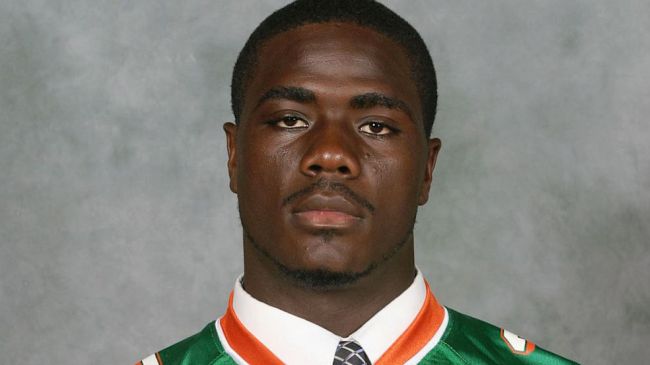
Jonathan Ferrell was shot to death by North Carolina police in September
Press TV – October 23, 2013
The lawyer for the family of an unarmed African-American man who was fatally shot by a white North Carolina police officer says the police’s refusal to release the video of the shooting has raised questions.
“We want the facts out in the public domain. Not part of them, all of them,” said Chris Chestnut, the lawyer representing Jonathan Ferrell’s family.
24-year-old Jonathan Ferrell was killed in September after Charlotte-Mecklenburg Police Officer Randal Kerrick fired ten shots at him.
Police officers were responding to a 911 call and they arrived at a woman’s home where Ferrell had apparently gone to seek help.
Ferrell had wrecked his car about half a mile away from the house and had likely knocked on the woman’s door looking for help.
An audiotape of the 911 call released by the police shows the woman had thought Ferrell was trying to break in.
After the police arrived on the scene, unarmed Ferrell ran toward them and the officers, who say they could not stop him with a Taser, shot him ten times.
Chestnut, who has seen the video of the shooting recorded by the police car’s dashboard camera, says the footage could suggest that Ferrell did not act aggressively toward the police.
“You can’t just release the facts that are favorable perhaps to the officer but not to Mr. Ferrell,” Chestnut said. “We’re beginning to get concerned about the integrity and the efficiency and, quite frankly, the speed of this investigation.”
Court Holds Wisconsin Officials In Contempt For Enforcing Scott Walker’s Anti-Union Law
By Ian Millhiser | Think Progress | October 22, 2013
A Wisconsin judge who declared Wisconsin Gov. Scott Walker’s (R) union-busting law unconstitutional more than a year ago held the Wisconsin Employment Relations Commission in contempt of court on Monday for continuing to enforce that law against school and municipal workers.
Walker’s law includes a one-two punch that dramatically weakens the ability of unions to improve workers’ wages while simultaneously encouraging those workers to drop the union. First, the law only permits public workers to collectively bargain for raises limited to the rate of inflation, thus curtailing one of the primary benefits of unionization — increased wages. It then requires unionized public workers to vote every year on whether they want to still be represented by a union.
Judge Juan Colas’ 2012 order blocks these restrictions from going into effect against city, county and school district workers, although state workers remain largely subject to Walker’s law. His order on Monday clarifies that the order applies statewide, and not just to the narrow group of plaintiffs before his court.
Yet, while Colas’ most recent decision is a victory for public workers in Wisconsin, this victory is likely to be temporary. His original 2012 ruling is pending before the very conservative Wisconsin Supreme Court. And the conservatives on that court already reinstated Walker’s law once after it was blocked (on a different legal grounds) by a lower court.
Review of September 11—The New Pearl Harbor
By David Ray Griffin
There have been several good films and videos about 9/11. But the new film by award-winning film-maker Massimo Mazzucco is in a class by itself.
For those of us who have been working on 9/11 for a long time, this is the film we have been waiting for.
Whereas there are excellent films treating the falsity of particular parts of the official account, such as the Twin Towers or WTC 7, Mazzucco has given us a comprehensive documentary treatment of 9/11, dealing with virtually all of the issues.
There have, of course, been films that treated the fictional official story as true. And there are films that use fictional stories to portray people’s struggles after starting to suspect the official story to be false.
But there is no fiction in Mazzucco’s film – except in the sense that it clearly and relentlessly exposes every part of the official account as fictional.
Because of his intent at completeness, Mazzucco has given us a 5-hour film. It is so fascinating and fast-paced that many will want to watch it in one sitting. But this is not necessary, as the film, which fills 3 DVDs, consists of 7 parts, each of which is divided into many short chapters.
These 7 parts treat Air Defence, The Hijackers, The Airplanes, The Pentagon, Flight 93, The Twin Towers, and Building 7. In each part, after presenting facts that contradict the official story, Mazzucco deals with the claims of the debunkers (meaning those who try to debunk the evidence provided by the 9/11 research community).
The Introduction, reflecting the film’s title, deals with 12 uncanny parallels between Pearl Harbor and September 11.
The film can educate people who know nothing about 9/11 (beyond the official story), those with a moderate amount of knowledge about the various problems with the official story, and even by experts. (I myself learned many things.)
Mazzucco points out that his film covers 12 years of public debate about 9/11. People who have been promoting 9/11 truth for many of these years will see that their labors have been well-rewarded: There is now a high-quality, carefully-documented film that dramatically shows the official story about 9/11 to be a fabrication through and through.
This is truly the film we have been waiting for.
Click here for full movie and bonus video including Noam Chomsky
Federal Appeals Court Rules Warrant Required for GPS Tracking
By Nathan Freed Wessler | ACLU | October 23, 2013
Today the Third Circuit Court of Appeals ruled that law enforcement agents must obtain a warrant based on probable cause to attach a GPS device to a car and track its movements. The case, United States v. Katzin, is the first in which a federal appeals court has explicitly held that a warrant is required for GPS tracking by police. The ACLU submitted an amicus brief in the case (joined by the ACLU of Pennsylvania, Electronic Frontier Foundation, and National Association of Criminal Defense Lawyers) and presented oral argument to the court in March.
In this case, police suspected three brothers, Harry, Mark, and Michael Katzin, of robbing several pharmacies. Without getting a warrant from a judge, FBI agents attached a GPS tracking device to Harry Katzin’s car in order to follow its movements. The government used the GPS device to track the Katzins as they drove to and from another pharmacy, and arrested them as they drove away. Before trial, the Katzins argued that police had violated their Fourth Amendment rights by using the GPS tracker without a warrant, and the district court agreed. Today’s ruling affirms that decision.
Last year, in United States v. Jones, the Supreme Court unanimously held that attaching a GPS tracker to a car to follow its movements is a search under the Fourth Amendment. The Court did not decide whether police need a warrant to conduct such a search, however, and the government argued in this case that an exception to the usual requirement of a warrant should apply. The Third Circuit rejected the government’s arguments, explaining that GPS tracking is a “vastly broader endeavor” than the kinds of limited searches that courts have allowed without warrants. In particular, the court held that the “automobile exception” to the warrant requirement does not apply to GPS tracking. The exception is designed to permit warrantless searches of cars to reveal contraband before the cars can drive away. But, as the court explained, that narrow exception does not “permit [police] to leave behind an ever-watchful electronic sentinel in order to collect future evidence” without judicial oversight.
The court also rejected a second argument made by the government: that the so-called “good faith” exception should permit use of evidence derived from the GPS tracking, even if it violated the Fourth Amendment. Because the GPS tracker was attached to the Katzins’ car before the Supreme Court decided Jones, and before the Third Circuit had addressed the issue, the government argued that FBI agents couldn’t have known that using a GPS device might raise questions under the Fourth Amendment, and therefore they acted in good faith by choosing not to seek a warrant. The court explained that this does not excuse police from the requirement of getting a warrant:
Where an officer decides to take the Fourth Amendment inquiry into his own hands, rather than to seek a warrant from a neutral magistrate — particularly where the law is as far from settled as it was in this case — he acts in a constitutionally reckless fashion. Here, law enforcement personnel made a deliberate decision to forego securing a warrant before attaching a GPS device directly to a target vehicle in the absence of binding Fourth Amendment precedent authorizing such a practice. . . . Excluding the evidence here will incentivize the police to err on the side of constitutional behavior and help prevent future Fourth Amendment violations.
Today’s opinion offers a full-throated defense of the Fourth Amendment, and installs an important safeguard against unjustified government surveillance. As courts around the country consider challenges to warrantless location tracking by police (whether using GPS devices or cell phone signals), they would do well to follow the Third Circuit’s lead.
NSA’s Italy op exposed: ‘Millions’ of private communications intercepted with govt awareness
RT | October 23, 2013
Everyday communications of Italians are also on the watch list of the US National Security Agency, a new report has revealed. While an Italian parliamentary committee seeks clarification of NSA activities, local security sources defend the snooping.
Italy’s spy watchdog COPASIR has recently learned details of large-scale monitoring of Italians by the US intelligence agency NSA, according to a report published by Corriere della Sera.
COPASIR stands for Parliamentary Committee for the Intelligence and Security Services and for State Secret Control, and is tasked with overseeing the activities of Italy’s own spy agencies. The body has free access to intelligence agencies’ offices and documents and has the authority to overcome judicial and banking secrecy.
In order to confirm the snooping on Italians, the committee members had to go to the United States and meet with US intelligence agency directors, as well as with congressional committee chairs.
A delegation of parliamentarians from the COPASIR confirmed their concerns regarding the extent of the NSA’s PRISM surveillance program during an official visit to the US three weeks ago, the media said. As part of the program, phone calls and computer communications of “millions of Italians” are reportedly being gathered.
Moreover, Corriere della Sera added that the implications extended to “a monitoring network that started years ago and is still active,” of which the Italian government and spy agencies might have been well aware of.
Such discoveries have prompted uneasy questions to officials, with leading members of COPASIR now seeking clarification from the government, and reportedly awaiting the junior minister for the intelligence services, Marco Minniti, to visit the committee’s offices on Wednesday afternoon.
Meanwhile, Italian intelligence sources quoted in the report rushed to justify the surveillance activities of their partners.
The acquisition of the sensitive private information “has as its sole aim the fight against terrorism,” one source was quoted as saying, while another denied that the NSA’s spying ever breached Italy’s sovereignty.
“We have never had any evidence that this kind of monitoring might have involved political spying on Italian public figures. All our investigations into any such eventuality have proved negative,” the source maintained.
However, such explanations did not satisfy COPASIR, nor did the NSA deputy director’s promise of “a complete overview of communications to and from the United States.”
According to the Italian media, the committee member Claudio Fava from Left Ecology Freedom (SEL) party, was “openly perplexed” as he commented on such statements.
“It’s a data trawling system based on various sensors. US intelligence experts explained that their main concern was to comply with American data protection laws and intervene to safeguard national security. Whether this conflicts with other countries’ laws is of no concern to them but it should be to us,” Fava was quoted as saying.
Another COPASIR member, Felice Casson of the Democratic Party (PD), said that the replies the committee received from top Italian intelligence officials were “far from reassuring.”
“It is clear that the United States has acquired information on individuals and institutions across Europe. What concrete elements exist to rule out that this has happened to politicians and institutions in Italy?” Casson questioned.
Leading Democratic Party (PD) politician Ettore Rosato also demanded an explanation from the government, saying that “a few months ago, when the first [NSA whistleblower Edward Snowden’s] revelations emerged, both the prime minister, Enrico Letta, and the foreign minister, Emma Bonino, professed astonishment at what came out.”
So far, the documents obtained by various world media from the former NSA contractor Snowden have revealed that the Italian embassy in Washington was subject to spying along with the diplomatic missions of other countries. Italian intelligence sources have been careful to deny the claims only “off the record,” Corriere della Sera says.
Right before the NSA scandal emerged, the collaboration between Italian and American intelligence services was “at its peak,” and, according to the media, included sharing of communications through the SIGINT interception system. However, such cooperation appeared to have been justified by the ongoing allied wars in Iraq and Afghanistan and the search for western hostages there, the media adds.
But in the wake of recent revelations on the US spying activities in France, which triggered a media frenzy and public outrage, the media speculates Italy may find it difficult to maintain the same “stance” towards the NSA programs.
NSA Spy Revelations Show Need to Recast US-Mexico Security Programs
By Laura Carlsen | CIP Americas Program | October 21, 2013
The latest analysis of Snowden leaks from the German magazine Der Spiegel is a bombshell for Mexico.
“The NSA has been systematically eavesdropping on the Mexican government for years,” reads the opening line in the Oct. 20 issue.
The article goes on to detail three major programs that together constitute a massive espionage operation against Mexico. No one seems to have been immune from its intrusions, including two presidents.
The presidential computer network was infiltrated since 2010 when Felipe Calderon was still president. The ever-zealous National Security Agency (NSA) was apparently very proud of itself for hacking the private communications of the leader and cabinet members of an allied nation.
In a “top secret” report, its “Tailored Access Operations” division (TAO) crows:
“TAO successfully exploited a key mail server in the Mexican Presidencia domain within the Mexican Presidential network to gain first-ever access to President Felipe Calderon’s public email account”, calling it a “lucrative source” to gauge Mexican “political system and internal stability”. The leaked operation was code named “Flatliquid”.
Mexicans first found out that their nation, along with Brazil and other Latin American countries, was a major target back in September, when Brazil’s O Globo published an article by Glenn Greenwald, Roberto Kaz and Jose Casado on tapping Brazilian President Dilma Rousseff’s phone and other communications. The article noted that the NSA had Mexico in its sights too.
A specially designed NSA program spied on then-presidential candidate Enrique Peña Nieto to find out who he was planning to appoint to his cabinet and how he’d handle the volatile drug war—the cornerstone of US policy in Mexico.
That caused a stir and the Peña Nieto administration sent a diplomatic note and demanded a U.S. investigation.
Sunday’s revelations add details to the previous information and show a far vaster and more insidious operation than was first imagined. Text messages from Peña Nieto’s cell phone—85,489 to be exact, according to the Der Speigel-Snowden report– were harvested and organized into data bases, identifying nine close associates for surveillance and analysis.
A third program called “White Tamale” dates back to 2009, when the NSA managed to hack into the emails of high-level officials in the now-defunct Public Security Ministry.
“In the space of a single year, according to the internal documents, this operation produced 260 classified reports that allowed US politicians to conduct successful talks on political issues and to plan international investments.”
The documents note that the spy operation allowed the NSA to gain access to “diplomatic talking points”.
What does this mean? Wouldn’t using ill-begotten private communications in negotiations be something akin to blackmail?
In any case, it seems to have fulfilled its purpose because during the subsequent period U.S. intelligence, military, police and drug enforcement agencies achieved an unprecedented margin to operate in-country, effectively breaking down any remaining resistance to their activities on Mexican soil.
The Der Speigel article states that in spy operations in Mexico, “the drug trade” was given top priority level, while the country’s “political leadership”, “economic stability” and “international investment relations” received number-three priority rankings on a scale of five.
This latter category gives credence to charges from Brazilian President Dilma Rousseff that the NSA used its apparatus for industrial spying, seeking advantages. Her charges are borne out by documents that show that Brazilian oil company, PETROBRAS, was a target of U.S. espionage. The Mexico revelations were more general but also indicate economic espionage.
The NSA, as reflected in its own documents, seems to have no sense of boundaries—it qualifies its invasions as unqualified “successes”. Der Spiegel quotes another document that reads,
“These TAO accesses into several Mexican government agencies are just the beginning — we intend to go much further against this important target.”
It goes on to state that the divisions responsible for this surveillance are “poised for future successes.”
Mexico’s Muted Response
The response from NSA to questions was predictable,
“We are not going to comment publicly on every specific alleged intelligence activity, and as a matter of policy we have made clear that the United States gathers foreign intelligence of the type gathered by all nations.”
So far, no enterprising journalists have asked the Mexican government if it has 85 thousand text messages off of Obama’s phone.
Since September the Mexican government has known it was massively spied on by the United States. After the revelations regarding Peña Nieto’s communications and contacts with US diplomats, Mexico says President Obama agreed to carry out an investigation.
But what exactly does the Mexican government expect of this investigation? No one has questioned the authenticity of the documents. Everyone knows Snowden has them, otherwise why would the U.S. be trying to force his extradition and threatening countries offering asylum. And it seems that asking the U.S. government to investigate NSA be an exercise in futility, especially since the Der Speigel article states explicitly that the programs had presidential authorization.
Not surprisingly, Mexico’s response was widely considered weak.
So far, the response to this latest round of revelations hasn’t shown much more backbone. The foreign relations ministry called the practice “unacceptable, illegitimate and against the law”—and said it would be sending another diplomatic note.
“In a relationship between neighbors and partners, there is no room for the practices alleged to have taken place,” the ministry said.
When Der Speigel asked for a comment from Felipe Calderon, Harvard University, apparently the spokesperson for the beleaguered ex-president since it took him under its ivied wings as a Global Leaders Fellow at the Kennedy School, said it would give him the message.
A senior U.S. State Department official told CNN that the Mexican government reached out about the report, and that the two governments will be discussing it via diplomatic channels.
Peña Nieto has to react now. Brazil is taking specific steps to protect privacy from the long ear of the NSA. Rousseff has been outspoken in its indignation, taking it to the floor of the United Nations General Assembly and cancelling a state visit to Washington.
Mexico’s economic dependence on the United States under NAFTA puts the Peña administration in a tougher bind. Big business will put pressure on Peña to let it slide. The PRI is likely to be seriously annoyed, but it also knows an important part of its power base rests on its relationship with the U.S. government and economic elite, almost a tautology, as shown again in the fact that taxpayer-supported NSA spying was directed at industrial spying to give U.S. companies an edge in bidding, investing and competing.
Whatever the response, the revelations are a blow to a somewhat shaky relationship. Peña Nieto has made it clear it will not allow the same carte-blanche treatment U.S. agencies were given under former president Calderon, but he has also continued security integration and U.S. expansion under the guise of the war on drugs.
Calling into question the terms of the bi-national security relationship should not necessarily be viewed negatively. Demands for a more transparent and less military-oriented relationship between the U.S. and Mexico have been growing. The NSA documents reveal a global security doctrine that has spun dangerously out of control, with what Greenwald calls “the construction of a worldwide, ubiquitous electronic surveillance apparatus” that apparently has no qualms regarding the right to privacy or national sovereignty. Neither the Mexican nor the U.S. Congress has sufficient knowledge of what’s going on to provide reasonable oversight, and the Mexican government apparently has little knowledge of the realm of shadowy U.S. intelligence activity in its own country.
When you add in the private contractors hired under the $2 billion-dollar Merida aid package, it makes for a vast and murky world of post-Cold War conniving.
That can’t be good for diplomacy, or democracy.
Laura Carlsen is director of the Mexico City-based CIP Americas Program.
Related article
Featured Video

No Threat Can Force Iran’s Surrender /Trita Parsi & Lt Cl Daniel Davis
or go to
Aletho News Archives – Video-Images
From the Archives
An Expert Military Analysis of War with China
Actually, None is Necessary
By Fred Reed • Unz Review • December 13, 2020
The Correlation of Armed Forces: U.S. goods and services trade with China totaled an estimated $634.8 billion in 2019. Exports were $163.0 billion; imports were $471.8 billion. The U.S. goods and services trade deficit with China was $308.8 billion in 2019. Trade in services with China (exports and imports) totaled an estimated $76.7 billion in 2019. Services exports were $56.5 billion; services imports were $20.1 billion. The U.S. services trade surplus with China was $36.4 billion in 2019.
There is talk within the Washingtoniat of a possible war with China. Steve Bannon, who apparently was dropped on his head as a child, actually favors such a war. We hear the usual shoo-the-boobs alarm about how the Chinese are doing something terrible and we must gird our loins and American values and show them what for, bow wow, woof. The danger is that the current game of who-blinks-first in Asian waters might actually provoke a shooting war. You know the kind of thing: One warship refuses to get out of the way of another, a collision ensues, some retard lieutenant who signed up on waivers opens fire, and we’re off and running. It is not a good idea to let children play with matches.
The said war is discussed either in emotional terms by idiots or in purely naval terms by those familiar with such things, so we hear of the First Island Chain and the Second Island Chain and whose missiles against the other’s missiles and so on. This would be appropriate if we were fighting World War Two again. Which we aren’t. Let’s take a quick-and-dirty look at how such a war might go.
To begin the war, America would overestimate itself and underestimate China. This is doctrine in the Pentagon. … continue
Blog Roll
 Aletho News
- Suicide Should Not Be a Government Service
- Rethinking America’s greatest threat: Iran vs. Israel-Firsters
- Iran accuses adversaries of false flags to strain Turkey ties
- Poland rules out sending Patriot missiles to US/Israel amid war on Iran
- Tehran approves new Hormuz plan with major restrictions
- No Threat Can Force Iran’s Surrender /Trita Parsi & Lt Cl Daniel Davis
- UK’s New Pandemic Plan Would Turn Big Tech Into a Mass Location Tracking Network
- Growing insecurity, soaring prices fuel protests in north as regime bans evacuation: Sources
- Iran denies responsibility for ‘depraved’ attack on Kuwait desalination plant
- Bring The Troops Back. End This War Now!
- If Americans Knew
- Joe Kent Urges Americans To Call White House and Congress To Object To Sending Troops Into Iran
- DNC Resolution to Reject AIPAC Funding Puts Democratic Leaders in the Hot Seat
- Swedish foundation to build 400 schools as over 650,000 Gaza children remain without education for 2 years
- Israeli army admits photshopping image of slain Lebanese journalist
- This is how Israel is systematically killing health workers under the cover of war in Lebanon
- Carrying life under fire: Israeli invasion of Lebanon leaves pregnant women facing deadly risks
- Champagne all around for the new death penalty (for Palestinians) law – Not a ceasefire Day 172
- Why are Palestinian books struggling to be seen on Amazon?
- The Line Between Affinity and Conspiracy
- As Iran targets US military bases, will they be relocated to Israel? Not a ceasefire Day 171
- No Tricks Zone
- New Study Finds Warming Saves Lives…Cold Temperatures 12 Times More Deadly Than Excess Heat
- German Science Blog Accuses PIK Climate Institute Of Hallucinating Climate Tipping Points
- Devastating Assessment Of Comirnaty Vaccine By Former Senior Pfizer Europe Toxicologist
- New Study: CO2 Is ‘Effectively Negligible’ As An Explanatory Climate Change Factor Since 2000
- Former Pfizer Toxicologist Dr. Helmut Sterz Tells Bundestag Hearing Pfizer Vaccine Should Have Never Been Approved
- Energy Expert: Germany’s Nuclear Phaseout Was A “500 Billion Euro Mistake”
- New Research: South Australia’s Mid-Holocene Sea Surface Temperatures Were 4°C Warmer Than Today
- Storing Green Energy To Last Germany 10 Days Would Require A 60-Million Tonne Battery
- New Studies: UK Sea Levels Were 4 Meters Higher Than Today During The Mid-Holocene
- Destructive Green New Deal: German Energy And Metal Group Warns Of Drastic Crisis
 Aletho News