The Pentagon has begun a surge of spending in Africa through expanding its main base on the continent and making investments in various fields there.
The Pentagon is currently increasing investments in air facilities, flight services, telecommunications and electrical upgrades in the African continent, The Tribune Washington Bureau (MCT) reports.
According to unclassified federal documents, hundreds of millions of dollars are flowing into Africa, indicating the importance the US is attaching to the continent.
Camp Lemonnier in Djibouti, on the cost of Gulf of Aden north of Somalia, is the place where the Pentagon is expanding its activities the most.
The camp has been the Pentagon’s main facility in the continent for nearly 10 years now. It currently houses approximately 4,000 US military personnel and civilian contractors.
The Pentagon views the base as the constellation center of US military sites across Africa, including facilities in Manda Bay, Kenya; Entebbe, Uganda; and the West African nation of Burkina Faso.
Last month, $200 million was awarded in contracts to revamp the power plants at the base and construct a multistory operations center, an aircraft hangar, living quarters, gyms and other facilities.
The project is just part of $1.2 billion which is projected to be spent there for improvement purposes during the next 25 year.
The US is also training regional militaries in the continent, increasing air strikes and conducting drone surveillance.
Thousands of US soldiers are now gearing up for missions in Africa as part of a new Pentagon strategy to train and advise indigenous forces, the New York Times reports.
In addition to training African militaries, the US has been launching a massive build-up of troops into Italy, putting 13,000 troops in the nation to be able to launch raids into Africa, particularly northern Africa, at a moment’s notice.
There is also a growing constellation of small US drone outposts in countries like Niger, Ethiopia, and Djibouti, strategically placed on the Gulf of Aden.
France has called for an explanation for the “unacceptable” and “shocking” reports of NSA spying on French citizens. Leaked documents revealed the spy agency records millions of phone calls and monitors politicians and high-profile business people.
The US Ambassador to France Charles Rivkin was summoned by the French Foreign Ministry to account for the espionage allegations on Monday morning.
“I have immediately summoned the US ambassador and he will be received this morning at the Quai d’Orsay [the French Foreign Ministry],” French Foreign Minister Laurent Fabius told press. He added that “we must quickly assure that these practices aren’t repeated.”
In addition, citing the report on French publication Le Monde, Interior Minister Manuel Valls spoke out on national television against US spy practices.
“The revelations in Le Monde are shocking and demand adequate explanations from the American authorities in the coming hours,” said Valls on television channel Europe 1.
He went on to say that it is totally unacceptable for an allied country to spy on France.
Ambassador Rivkin refrained from commenting on the spy allegations on Monday morning and told Reuters that French-US ties are the “best they have been for a generation.”
Le Monde revealed in a report based on the security leaks of former CIA worker Edward Snowden that the NSA recorded 70.3 million phone calls between December 10, 2012, and January 8, 2013.
The NSA reportedly carries out its espionage in France using a program called ‘US-985D’ which is able to listen in on specific telephone calls and pick up on text messages according to key words used.
Moreover, Le Monde also wrote that it had reason to believe that the spying was not just limited to citizens suspected of being involved in terrorism. According to the data released by Snowden the NSA also eavesdropped on politicians and prominent business figures.
The newspaper did not give any indications as to the identity of the high-profile people.
France is not the only EU nation to be targeted by NSA surveillance. Germany took issue with the US government after it was revealed the NSA was tapping phone lines and recording electronic data in the country.
The EU will take steps to curtail US data mining on Monday in a vote to change data protection rules. The European Parliament’s Committee on Civil Liberties is expected to decide on the issue that would authorize fines for violation of EU data protection.
‘Investment benefits’
The US maintains that its spying activities are in the interests of national security and protect against terrorism. However, Snowden leaks released by Guardian reporter Glenn Greenwald showed the NSA had monitored Brazilian state-owned oil giant Petrobras and infiltrated the electronic communications of the Brazilian and Mexican presidents.
Mexico has also demanded an explanation for reports released by Der Spiegel on extensive spying on Mexican top officials and politicians.
Der Spiegal revealed that former President Felipe Calderon had also been a target for NSA espionage. Citing a classified internal report, it said the US monitors “diplomatic, economic and leadership communications which continue to provide insight into Mexico’s political system and internal stability.”
US electronic surveillance in Mexico reportedly targeted top officials, including both current and previous presidents. Intelligence produced by the NSA helped Americans get an upper hand in diplomatic talks and find good investment opportunities.
The US National Security Agency was apparently very happy with its successes in America’s southern neighbor, according to classified documents leaked by Edwards Snowden and analyzed by the German magazine, Der Spiegel. It reports on new details of the spying on the Mexican government, which dates back at least several years.
The fact that Mexican President Peña Nieto is of interest to the NSA was revealed earlier by Brazilian TV Globo, which also had access to the documents provided by Snowden. Spiegel says his predecessor Felipe Calderon was a target too, and the Americans hacked into his public email back in May 2010.
The access to Calderon electronic exchanges gave the US spies “diplomatic, economic and leadership communications which continue to provide insight into Mexico’s political system and internal stability,” the magazine cites an NSA top secret internal report as saying. The operation to hack into the presidential email account was dubbed “Flatliquid” by the American e-spooks.
The bitter irony of the situation is that Calderon during his term in office worked more closely with Washington than any other Mexican president before him. In 2007 he even authorized the creation of a secret facility for electronic surveillance, according to a July publication in the Mexican newspaper, Excelsior.
The surveillance on President Nieto started when he was campaigning for office in the early summer of 2012, the report goes on. The NSA targeted his phone and the phones of nine of his close associates to build a map of their regular contacts. From then it closely monitored those individuals’ phones as well, intercepting 85,489 text messages, including those sent by Nieto.
After the Globo TV report, which mentioned spying on Mexico only in passing, Nieto stated that US President Barack Obama had promised him that he would investigate the accusations and punish those responsible of any misconduct. The reaction was far milder than that from Brazilian President Dilma Rouseff, another target of NSA’s intensive interest, who has since canceled a planned trip to the US and delivered a withering speech at the UN General Assembly, which condemned American electronic surveillance.
Another NSA operation in Mexico dubbed “Whitetamale” allowed the agency to gain access to emails of high-ranking officials in country’s Public Security Secretariat, a law enforcement body that combats drug cartels and human trafficking rings. The hacking, which happened in August 2009, gave the US information about Mexican crime fighting, but also provided access to “diplomatic talking-points,” an internal NSA document says.
In a single year, this operation produced 260 classified reports that facilitated talks on political issues and helped the Americans plan international investments.
“These TAO [Tailored Access Operations – an NSA division that handles missions like hacking presidential emails] accesses into several Mexican government agencies are just the beginning – we intend to go much further against this important target,” the document reads. It praises the operation as a “tremendous success” and states that the divisions responsible for this surveillance are “poised for future successes.”
Economic espionage is a motive for NSA spying, which the agency vocally denied, but which appears in the previous leaks. The agency had spied on the Brazilian oil giant, Petrobras, according to earlier revelations. This combined with reports that the NSA hacked into the email of Brazilian President Dilma Rouseff, triggered a serious deterioration of relations between the two countries.
While the NSA declined comment to the German magazine, the Mexican Foreign Ministry replied with an email, which condemned any form of espionage on Mexican citizens. The NSA presumably could read that email at the same time as the journalists, Der Spiegel joked.
Can the world’s biggest corporations act with impunity? When it comes to General Electric (GE) — the eighth-largest U.S. corporation, with $146.9 billion in sales and $13.6 billion in profits in 2012 — the answer appears to be “yes.”
Let us begin with a small-scale case in upstate New York, where in late September 2013 GE announced that it would close its electrical capacitor plant in the town of Fort Edward. Some two hundred workers will lose their jobs and, thereafter, will have little opportunity to obtain comparable wages, pensions, or even employment in this economically distressed region. Ironically, the plant has been highly profitable. Earlier in the year, the local management threw a party to celebrate a record-breaking quarter. But the high-level financial dealings of a vast multinational operation like GE are mysterious, and the company merely announced that the Fort Edward plant was “non-competitive.” The United Electrical Workers (UE), the union that has represented the workers there for the past seventy years, has already begun a vigorous campaign of resistance to the plant closing, but it is sure to be an uphill battle.
If we dig deeper into the record, a broader pattern of corporate misbehavior emerges. Indeed, the Fort Edward factory is one of two GE plants that polluted the communities at Fort Edward and nearby Hudson Falls, as well as a 197-mile stretch of the Hudson River, with 1.3 million pounds of cancer-causing PCBs for several decades. Worried about the dangers of PCBs, workers asked managers about them, and were told that these toxins were perfectly safe — in fact, that the workers should rub the PCBs on their heads to combat baldness! When the extent of this environmental disaster began to be revealed in the 1970s, GE began a lengthy campaign to deny it and, later, a multimillion dollar public relations campaign to prevent remedial action by the Environmental Protection Administration. GE lost this battle, for the EPA insisted upon the dredging of the Hudson River and ordered GE to pay for it. Thus, the Hudson Valley became the largest Superfund cleanup site in the United States, with a project that will take decades to complete.
GE has produced other environmental disasters, as well. Three GE nuclear reactors at the Fukushima Daiichi nuclear power site in Japan melted down on March 31, 2011. This was the world’s worst nuclear accident in three decades, and quickly spread radioactive contamination nearly one hundred fifty miles. Indeed, the stricken reactors are still sending three hundred tons a day of radioactive water flooding into the Pacific Ocean. Dr. Helen Caldicott, who has studied nuclear power for decades, has estimated that up to 3.5 million people could eventually die from cancer thanks to the Fukushima radiation release. In the late 1960s and early 1970s, when these boiling water nuclear reactors were installed, GE’s engineers and management knew that their design was flawed. But the company kept selling them to unsuspecting utilities around the world, including many in the United States. As a result, there are still thirty-five GE boiling water reactors operating in this country, most of them located near population centers east of the Mississippi River. Currently, in fact, more than 58 million Americans live within fifty miles of a GE nuclear reactor.
Another important product produced by GE is the export of jobs. According to an extensive New York Timesreport on GE in March 2011: “Since 2002, the company has eliminated a fifth of its work force in the United States while increasing overseas employment.” By the end of 2010, another study found, 54 percent of GE’s 287,000 employees worked abroad. Not surprisingly, the company’s overseas operations in that year provided most of its total revenue. Responding to GE’s claim that it had created thousands of new jobs in the United States during the Obama administration, Chris Townsend, the political action director of the UE, produced a list of 40 U.S. plants the company closed in the country during the same period.
Townsend also noted that, even when GE kept its operations going in the United States, it slashed wages, sometimes by as much as 45 percent at a time. For example, the work of the Fort Edward plant will be moved to Clearwater, Florida, a non-union site where GE pays many workers $12 an hour and hires others through a temp agency at $8 an hour — little more than the minimum wage.
Although technically a U.S. corporation, GE — with operations in 130 nations — apparently feels little loyalty to the United States. Jack Welch, a former GE CEO, once remarked: “Ideally, you’d have every plant you own on a barge to move with currencies and changes in the economy.” According to a Bloomberg analysis, to avoid paying U.S. taxes, GE keeps more of its profits overseas than any other U.S. company — $108 billion by the end of 2012. Most of these profits, GE declared, would be invested in its foreign business enterprises. Thanks to this tax dodge and others, GE reportedly paid an average annual U.S. corporate income tax rate of only 1.8 percent between 2002 and 2011. In 2010, when GE reported worldwide profits of $14.2 billion, it paid no U.S. corporate income tax at all. Instead, it claimed a tax benefit of $3.2 billion. This is a sweet deal for that giant corporation, for the official corporate tax rate is 35 percent.
Despite this appalling record, the U.S. government has been very generous to GE. During the financial crisis of 2008-2009, the federal government’s Temporary Liquidity Guarantee Program loaned approximately $85 billion to GE Capital, the company’s huge finance arm that accounts for roughly half of GE’s profits. GE needed the bailout because, among other reasons, GE Capital was marketing subprime mortgages, making GE the tenth-largest subprime lender in the United States. The Federal Reserve also bought $16.1 billion worth of short-term corporate i.o.u.’s from GE in late 2008, when the public market for this kind of debt had nearly frozen, and GE became one of the largest beneficiaries of this federal program. In yet a further indication of GE’s influence, President Obama appointed Jeffrey Immelt, GE’s CEO, as chair of his Council on Jobs and Competitiveness, which strategizes about how to revive America’s manufacturing base. One of Immelt’s favorite panaceas is to end taxes on the overseas profits of corporations.
Thus, it might seem that those two hundred embattled workers at Fort Edward have no possibility at all of effectively challenging a corporation this wealthy and influential. But stranger things have happened in the United States — especially when Americans have had their fill of corporate arrogance.
The famous Israeli analyst of Arab affairs, Ehud Yaari, is urging Israel to take advantage of the historical situation that the Arab region is going through to “defeat” Hamas with the help of Egypt.
Yaari, a commentator on Israeli television’s Channel Two, also said in an interview with Maariv newspaper that Al-Sisi’s actions are “excessive” and have not only affected the Islamists, but also figures of the liberal opposition.
For example, Ehud noted that a large group of the liberal opposition’s senior leaders have now left Egypt, citing Ayman Nour, who went to Lebanon, and Mohamed El-Baradei, who went back to his home in Vienna.
In regards to the Gaza Strip and Hamas, he stressed that there is now a golden opportunity to topple Hamas in Gaza. He called on Israel to take advantage of this and said, “Today we can clearly see a mutual interest between Israel and Egypt.”
The Associated Press ran an alarming news piece on 9/6/13: Climate Change Threatens Caribbean’s Water Supply
It was picked up and echoed around the world, from Time Magazine’s Space and Science section in the US to CBC Canada to ABC Australia to ZeeNews India. The headline was everywhere, repeated at the Huffington Post as ‘Caribbean water supplies severely threatened by climate change.” The AP story reported on contemporary expert warnings at an August 2013 UN conference in St. Lucia. The lead AP paragraph is quite clear:
“Experts are sounding a new alarm about the effects of climate change for parts of the Caribbean—the depletion of already strained drinking water throughout much of the region.”
Experts like Avril Alexander, Caribbean coordinator of Global Water Partnership:
“When you look at the projected impact of climate change, a lot of the impact is going to be felt through water.”
Experts like Lystra Fletcher-Paul, Caribbean land/water officer for the UN FAO:
“Inaction is not an option. The water resources will not be available.”
Yet another anthropogenic global warming alarm, and just in time for IPCC AR5, whose newly released WG1 chapters 7 and 11 say there is high confidence that dry regions will get drier, wet regions will get wetter, and storms will get stormier. “But there is only low confidence in the magnitude.” These Caribbean experts are much more certain—Caribbean water resources will not be available.
Little in this MSM AP news is what it seems. Paragraph 2 starts out saying rising sea levels could contaminate Caribbean fresh water supplies. What a curious assertion. Less dense fresh water floats on top of salt water no matter the sea level. Excessive groundwater draw-down can cause saltwater intrusion from below. That is already a problem in urbanized Broward County, Florida despite proximity to the Everglades. And on the Tuvalu atolls in the Pacific, where government owned tourist hotels have strained its very limited groundwater capacity. Tuvalu is another urban development problem, not AGW. It was caused by Tuvalu’s government itself, eager to develop ecotourism (diving) after their new Funafuti runway was built with World Bank financing.
Saltwater intrusion doesn’t apply much to Caribbean island groundwater. The islands are mountainous. Pico Duarte in the DR is 3098m. Pic la Selle in Haiti is 2680m. Jamaica’s Blue Mountain is 2256m. Cuba’s Pico Turquina is 1974m. Antigua’s ‘Boggy Peak’ is 402m. St. Croix’ ‘Mount Eagle’ is 355m. Barbados is only hilly, with a maximum elevation of ‘just’ 343m. Barbados:
Rising sea levels will not contaminate Caribbean fresh water supplies.
The AP reported that Jason Johnson, head of the Caribbean Water and Wastewater Association, said the real issue is groundwater replenishment.
“Many Caribbean nations rely exclusively on underground water for their needs, a vulnerable source that would be hit hard by climate change effects. That’s the greatest concern. Those weather patterns may change, and there may not necessarily be the means for those water supplies to be replenished at the pace that they have historically been replenished.”
The AP noted some of the islands experienced an unusual dry spell in 2012. That’s weather. But Cedric Van Meerbeck, climatologist with the Caribbean Institute for Meteorology & Hydrology, made the inevitable AGW connection:
“There are a number of indications that the total amount of rainfall in much of the Caribbean would be decreasing by the end of the century.”
Since 2012 was dry, and AR5 WG1 Chapter 7 executive summary says dry will get dryer, perhaps IPCC pronouncements are the indications. But regionally down-scaled GCMs cannot make such predictions on multi-decadal time scales. [1]
Intense rains fully ameliorated the unusual 2012 dry spell early in the usual 2013 Caribbean tropical storm season. AR5 WG1 7.6.2 also says wet will get wetter and storms stormier. That worries Barnard Ettinoffe, President of the Caribbean Water and Sewerage Association:
“Heavy rains mean there’s not enough time for water to soak into the ground as it quickly runs off.”
Climate change causes dry to get drier and wet to get wetter according to AR5 WG1 11.3.2.3.1. It threatens Caribbean island water supply both ways!
What is actually going on was clued in the lead AP paragraph above—depletion of already strained water supplies throughout much of the region.
Much of the region is not correct. The AP story cites a 2012 study from British investment risk firm Maplecroft [2] saying Barbados is most at risk, but Cuba and the Dominican Republic also have high water security risk. On the large island of Hispaniola, the Dominican Republic has 2069m3 of renewable water per capita according the World Bank.[3] Cuba has 3381m3. The UK (another island for comparison sake) has 2311m3 but is not a water risk. The only way Cuba and the Dominican Republic could have a high water security risk rating (when the UK doesn’t) is through some illogic unrelated to water.
Barbados (although verdant, as the above picture proves) does have the least per capita renewable water in the Caribbean, only 284m3. That is because Barbados water consumption has doubled over the past 50 years [4] as its population has grown from ≈232K to ≈280K while its per capita GDP tripled from ≈$4k to ≈$12k. Water has become a major problem, and Barbados doesn’t have the oil wealth to import food (virtual water) or desalinate seawater like Saudi Arabia (86m3). Barbados’ water problem is anthropogenic, but not AGW. It is about unsustainable population growth and economic development on a smallish dryish island–just like on Tuvalu.
Another Caribbean country with current water problems is Antigua/Barbuda, at 590m3. Neither indigenous Caribbean tribes nor Spanish conquistadors settled those islands because of insufficient fresh water. The British did later. The country’s population has almost doubled from ≈54k in 1960 to ≈90k today. That always eventually causes finite resource problems. And now has in naturally dry Antigua/Barbuda.
Climate change does not threaten Caribbean water supplies. Population growth and economic development already do on some of the smaller islands. And they are using climate change to ‘extort’ financial aid (e.g. for desalination) from the usual rich ‘guilty’ AGW culprits.
The UN Framework Convention on Climate Change organized this regional conference (at St. Lucia’s luxurious Bay Gardens Hotel/Resort) for Caribbean environment ministers and politicians. The UN organizer’s locally televised purpose was to give “these less developed country ministers and politicians the information and tools to know what to ask for in the negotiations leading up to the new world agreements of 2015”. That starts at COP19 in Warsaw in November 2013.
It is no coincidence the conference was held on St. Lucia. Its minister presently heads the Alliance of Small Island States (AOSIS). AOSIS says its 44 member states comprise 30% of developing countries, 20% of UN member states, and 5% of world population. The AOSIS agenda for COP19 is clear from its PR after being disappointed at June 2013 Bonn meetings:
At the closing of the latest round of U.N. climate talks, the Alliance of Small Island States (AOSIS), a group of 44 low-lying and coastal countries that are highly vulnerable to the impacts of climate change, released the following statement:
“After losing two weeks to needless procedural wrangling, it is worth recalling the scale of the challenge we face and the precious little time remaining to meet it… Therefore an international mechanism to address the permanent injury our islands are experiencing [emphasis added] must be established this year at the Warsaw conference.”
Tuvalu is the AOSIS member most aggressively agitating for UN ‘climate change aid’, having experienced saltwater intrusion caused by government tourist hotel development. Hence the AP story’s odd second paragraph, which is unrelated to the Caribbean but right in the AOSIS (Tuvalu) lobbying sweet spot.
Hey mon, its Babylon politricks. (H/T to Bob Marley and Jamaica, a Caribbean island of 2.7 million people enjoying 2473m3 renewable water per capita and fantastic reggae music.)
[1] Pielke Sr., Regional Climate Downscaling: What’s the Point, EOS 93: 52-53 (2012)
[2] Maplecroft Global Risk Analytics, info@maplecroft.com
[3] Available at data.worldbank.org/indicator/ER.H2O.INTR.PC
[4] Barbados Free Press editorial on water rationing 2/28/10
Yesterday, Hillary Clinton offered a rousing endorsement of “longtime family friend” Terry McAuliffe in his second run for Governor of Virginia. McAuliffe certainly has been a good friend to the Clintons, having once made them a $1.35 million gift which, after becoming a scandal, turned into a loan. But the most interesting parts of McAuliffe’s history often go unnoticed, including his links to the security upgrades at the World Trade Center (WTC) in the late 1990s.
One of the primary companies involved in the security upgrades for the WTC was Ensec International, founded by Charles Finkel. Ensec’s Florida subsidiary had an office on the 33rd floor of the North Tower. At the same time, Finkel was an export sales executive for a company called Engesa, a manufacturer of tanks and other military vehicles for Operation Desert Storm. Engesa was a Saudi-approved supplier.
Ensec’s responsibility at the WTC involved setting up a new system for securing the basement levels, particularly in the parking garages. It was reported that the access control system used was manufactured and installed by Ensec. The system included proprietary software, proximity card readers and vehicle identification tags for all registered vehicles. The system also included cameras, located “in critical locations within the complex, such as machine rooms, computer areas, visitor areas and other sensitive locations.”
Lockheed Martin subcontracted the PANYNJ work to Ensec in November of 1996. This was the same time that Carlyle Group employee and Iran-Contra suspect Barry McDaniel was hired to run operations for the highly suspicious WTC security contractor Stratesec. And just as Ensec obtained the contract to work alongside McDaniel and Stratesec, it added Terry McAullife as a director.
Before joining Ensec, McAuliffe had been involved in a number of suspicious business dealings. For example, he was linked to Teamster related corruption. And he was also involved in a lawsuit regarding Loral Space, a company investigated for collaborating with and giving secrets to the Chinese for use in satellite and intercontinental ballistic missile programs.
The charges against McAuliffe in the Loral Space scandal were that he agreed “to participate in this scheme to sell seats on taxpayer-financed foreign trade missions and other government services in exchange for campaign contributions to the Democratic National Committee (DNC).” McAuliffe also “played a central role in selecting trade mission participants and, on information and belief, securing other favorable treatment from the Clinton Administration for Defendant Loral” It was also reported that McAuliffe “prominently figured among those selected for participating in the high-profile Commerce Department trade mission to China was Defendant Schwartz, who would go on to become the single largest contributor to the DNC.” Bernard Schwartz was the billionaire CEO of Loral.
The CEOs of Hughes Aircraft, Loral, and Lockheed co-wrote a letter to President Clinton, in October 1995, asking the president to “transfer all responsibility for commercial satellite export licensing to the Commerce Department.” Hughes was run by James Abrahamson at the time. Abrahamson would go on to be a director at Stratesec and later, with James Clapper, at satellite spy company GeoEye. Hughes, Loral, and Lockheed ended up paying enormous fines for illegal exports of advanced missile technology to China, and Hughes was charged with 123 counts of national security violations. But in 1996, Clinton did move oversight of the satellite exports to the Department of Commerce and the three CEOs thanked him publicly.
McAuliffe was linked to another company that was mired in scandal―Global Crossing. It was reported that McAuliffe purchased $100,000 in Global Crossing stock before the company went public and cashed out several years later for $18 million (some reports put it at a mere $8 million). Richard Perle was a lobbyist for Global Crossing, which was a partner in several deals with the Chinese company Hutchison Whampoa, called an “arm of the PLA [People’s Liberation Army].” Li Ka-Shing was the Chinese billionaire owner of Hutchison who invested in firms owned by Winston Partners and employed Winston cofounder Marvin Bush’s brother, Neil Bush, as a consultant.
In 2001, McAuliffe became Chairman of the DNC. Between that role and his later job as campaign chairman for Hillary Clinton’s Presidential run, McAuliffe worked as Vice-Chairman of Carret investments. McAuliffe was hired at Carret by Alan Quasha, who once “bailed out George W. Bush’s failing oil company in 1986, folding Bush into his company, Harken Energy, thus setting him on the path to a lucrative and high-profile position as an owner of the Texas Rangers baseball team, and the presidency.”
Alan Quasha had owned Carret since 2003. But he was previously known for his leadership of Harken Energy, and thereby, his connection to the many suspicious organizations related to Harken, including BCCI. At Carret and Harken, Quasha had a partner named Hassan Nemazee. An investor in Harken and the founder of the Iranian-American PAC, Nemazee was also associated with the RAND Corporation. Nemazee was later charged with running a $292 million ponzi scheme.
In any case, Ensec International and its leaders should have been investigated for possible security breaches at the WTC. The management structure at Ensec, including its arms dealer founder Charles Finkel and director Terry McAuliffe, should have led the 9/11 Commission and NIST to consider the problems that might have resulted from this company having rebuilt the access systems for the WTC basement levels. Additionally, the fact that Lockheed Martin had subcontracted the PANYNJ work to Ensec was one indicator that these companies might have benefited from the attacks.
The official U.S. investigations into 9/11 are over but people should keep in mind that certain political figures remain from the glory days of the Bush and Clinton administrations. McAuliffe is one of those political figures and he has a suspicious background that includes unbelievable strokes of financial fortune and work for some apparently very powerful, international operators. Virginia residents might wonder what favors he might do as Governor for those old friends in high places.
The number of human smuggling victims in the UK has topped record levels with a girl specifically trafficked to have her organs harvested, it has emerged.
A government report exposed the case of a Somali girl trafficked into Britain, where human smugglers intended to remove her organs and sell them on the black market, the Daily Telegraph reported.
The report claims that the case is a first, but child protection charities say it is unlikely to be an isolated incident since human traffickers were likely to have smuggled a group of children into the country.
The number of victims trafficked into Britain last year spiked by more than 50 percent compared to the previous year, of whom 371 children were either used as slaves or sexually abused, said the report.
The countries from where children were trafficked included Vietnam, Nigeria, China, Bangladesh and Romania, the report said.
Child protection charities have warned that the demand for organ transplants in Britain is being exploited by criminal gangs, who snatch children from target countries and smuggle them into the UK to have their organs harvested.
“Traffickers are exploiting the demand for organs and the vulnerability of children. It’s unlikely that a trafficker is going to take this risk and bring just one child into the UK. It is likely there was a group”, said Bharti Patel, the chief executive of Ecpat UK, a child protection charity.
This comes as the World Health Organization estimates that as many as 7,000 kidneys are illegally obtained by traffickers each year around the world.
Among other organs being sold on the black market, kidneys are the most sought-after because one can be removed from a patient without any ill effects.
Millions of food stamp recipients in the United States will see their benefits cut from the beginning of next month as the program is fully paid through October.
The Supplemental Nutrition Assistance Program (SNAP) will be cut because a temporary measure to increase food stamps expires Oct. 31.
The country’s weak economy and the high rate of unemployment have caused a growing number of people to rely on the SNAP program. Some 48 million Americans are using food stamps each month, half of them children and teenagers.
According to the US Department of Agriculture, the average benefit is currently about $275 per household per month and a family of four with no changes in circumstance will receive $36 less per month.
The change means that the average benefit will go from about $1.50 per person, per meal each month to about $1.40.
“For those of us who spend $1.70 a day on a latte this doesn’t seem like a big change, but it does kind of really highlight the millions of families living on an extremely modest food budget,” Stacy Dean, vice president for food assistance policy at the Center on Budget and Policy Priorities, said.
“Every week is a struggle as it is,” said Heidi Leno, who lives in Concord with her husband, 9-year-old daughter and twin 5-year-olds. “We hate living paycheck to paycheck and you have to decide what gets paid.”
Jennifer Donald, a mother of three in Philadelphia, said she counts on the family’s $460 monthly benefit to put food on the table.
“I was mad and devastated and a little bit confused because we need our benefits,” Donald said. “This is the way we eat right now. Live a day in our life before you can cut our benefits.”
This is while lawmakers are considering slashing billions of dollars to the overall program.
Last month, the House of Representatives voted to cut food stamps funding by $39 billion over the next decade. The Congressional Budget Office estimated that such a level of cuts would cause up to 3.8 million people to lose food stamp benefits in 2014.
The US Senate had previously voted to cut $4 billion from the program.
“September 11 – The New Pearl Harbor” is a 5 hour documentary that summarizes 12 years of public debate on 9/11. While aimed primarily at a general, uninformed audience, the film also contains some new findings that may be of interest to advanced researchers.
This film is intended as an educational, non-profit operation, and must remain so in order to fulfill all the requirements for the usage of copyrighted material. As such, the entire film is made available online for free from day one. Any purchase of the actual DVD will be considered as a form of donation to the author, in recognition of the time spent to put together this material. Free duplication and distribution of all DVDs is encouraged.
At the bottom of the page you will find more information related to this film, including the links to order the DVD, and the TRAILER.
Index for DVD One
INTRODUCTION
0.01:02 – 12 parallels between Pearl
Harbor and September 11
0.14:10 – The debate: main issues
PART 1 – AIR DEFENSE
0.14:55 – Where are the interceptors?
0.16:12 – The “incompetence theory”
(radars, transponders)
0.22:00 – The military drills
0.29:40 – Specific warnings
0.33:08 – The chain of command
0.38:10 – Promotions, not punishments
0.39:50 – The Mineta case
0.47:38 – Debunkers: “Mineta was mistaken”
0.53:18 – The Mineta case – A summary
PART 2 – THE HIJACKERS
0.57:15 – “Piss-poor student pilots”
0.59:38 – Marwan al-Sheikki (UA175)
1.01:52 – Ziad Jarrah (UA93)
1.03:06 – Hani Hanjour (AA77)
1.04:00 – The debunkers’ positions
1.06:00 – 2 simulations of the Pentagon attack
1.13:10 – Someone knew?
1.16:40 – Airport security cameras
1.20.15 – The missing black boxes
PART 3 – THE AIRPLANES
1.26:50 – Passenger planes or military drones?
1.28:20 – Impossible speeds
1.37:30 – What happened to the passengers?
1.38:35 – The cellphone calls
1.48:30 – The debunkers’ position
1.50:38 – If not from the planes, from where?
Index for DVD Two
PART 4 – THE PENTAGON
0.02:35 – Downed light poles
0.03:30 – The missing plane
0.04:30 – The official version
0.05:24 – Problems with the official version
(wing, ailerons, tail, engines)
0.13:09 – The mystery hole
0.14:10 – The debunkers’ explanations
0.16:20 – Conclusions on damage analysis
0.17:00 – The missing tapes
0.18:30 – Security video analysis
0.23.40 – Pentagon summary
PART 5 – FLIGHT 93
0.24.15 – The empty hole
0.28.00 – The debunkers’ explanations
0.33:00 – Plane crash or bomb explosion?
0.34:50 – The debris field
0.37.20 – The shootdown hypothesis
0.38:50 – The small white plane
0.41:40 – “Let’s roll”
0.44:25 – Summary of Flight 93
PART 6 – THE TWIN TOWERS
0.45:10 – Introduction
0.47:45 – The Towers’ small dirty secret
0.53:10 – Larry Silverstein
0.56:15 – NIST vs. Architects & Engineers
0.58:00 – Robust or fragile buildings?
1.04:45 – The initial collapse – Explanation #1
1.05:45 – The initial collapse – Explanation #2
1.07:35 – Problems with the official explanation
1.18:00 – The full collapse – No official explanation
1.18:50 – Law of physics violated
1.20:50 – The Twin Towers and freefall
1.27:50 – Debunkers’ response to A&E
Index for DVD Three
(Twin Towers continued)
0.00:20 – The hypothesis of controlled demolitions
0.01:08 – Debunkers: “Impossible to place explosives”
0.07:34 – Explosions in the Twin Towers (witnesses)
0.15:00 – “Fuel in elevators shafts” theory
0.23:25 – Debunkers: “Explosions not recorded by tv cameras”
0.30:26 – Squibs
0.33:00 – Explosive force (montage)
0.35:00 – Ejecta
0.38:00 – Diagonal cuts
0.40:15 – What happened to the hat trusses?
0.42:20 – Extreme temperatures
0.45:30 – Debunkers’ explanations
0.46:45 – Twisted and mangled beams
0.47:40 – Molten steel
0.51:05 – Molten concrete
0.53:50 – Pulverization
0.57:40 – Victims vaporized
1.02:20 – Conclusion on the Twin Towers
PART 7 – BUILDING 7
1.05:10 – Introduction
1.06:35 – Official version by NIST
1.09:36 – Collapse computer simulation
1.11:00 – Fire computer simulation
1.12:20 – Debunkers: “Building 7 weaker”
1.14:25 – Preknowledge
1.19:00 – Symmetry
1.20:00 – Freefall
EPILOGUE
1.22:30 – John McCain
1.24:35 – The last word
General Information
CONTACT: redazione[AT]luogocomune.net (replace [AT] with symbol).
SOURCE FILES: Here you can download the “Pentagon video analysis” by digital expert P.P. Murru (in Italian). All other sources used in the film are easily retrievable online.
OTHER LANGUAGES: You can access the Italian version of the film here, and the French version of the film here.
PUBLIC SCREENINGS: A 3 hour version of the film is in the works. It will be made available as soon as ready to those who wish to organize a public screening.Please contact me for details.
COMMENTS: Serious, constructive criticism is always welcome, from both sides of the fence. I don’t have a forum in English, but you can always send your comments to my address above. The comments deemed of general interest will be published here, together with my answers.
ERRORS & OMISSION: I have tried my best to acknowledge every source I have used in the film. Should I have missed someone, please let me know. Errors & omissions will be listed here as soon as they are reported.
ORDER DVD – You can order the 3-DVD set of “September 11 – The New Pearl Harbor” from Amazon (US residents) or from luogocomune (rest of the world). Other films by Massimo Mazzucco are also available.
UK service company Serco has its fingers in numerous government pies, running British services from transport to prisons while staying invisible to the ‘man on the street.’ The global giant now faces investigation for fraud as it seeks new contracts.
Towards the end of September, the company was alleged in a government report to have charged for the service of tagging criminals who were dead, in prison, or were never tagged at all.
Serco and private security giant G4S overcharged the government by tens of millions of pounds for the practice, which, according to Big Four accountancy firm PricewaterhouseCoopers, could date back as far as 1999.
The expose prompted Britain’s Serious Fraud Office to confirm that they are assessing information on Serco provided by the Ministry of Justice.
“We are clear that new business can only be awarded where the integrity of the contracts and the conduct of suppliers can be assured,” the Ministry of Justice stated.
This could lead to an official investigation, and has thrown the company’s leadership into the spotlight as the global giant seeks new defense contracts.
On Friday, it emerged that Serco had been one of three main bidders filing proposals with the UK Ministry of Defence for the role of running a £400 million ($646 million) contract. While it can still bid, it cannot be chosen until present issues are resolved. The deal would run for ten years.
Serco, Telereal Trillium, and Capita-led groups submitted initial proposals in June, while the new bids were executed this week. The contract winner is expected to be chosen by the end of the year.
“Are they competent? Do they have the expertise? Can they really effectively manage the service? I think the answer is becoming clear that no they can’t,” Jane Lethbridge from Public Services International Research Unit told RT.
Meanwhile, Serco has apparently been attempting to rejuvenate its public image, particularly in Britain where its headquarters are based. Some 25 percent of its £4.9 billion ($7.9 billion) annual revenue is acquired through work with the UK government. Around 45 percent of its total revenue comes from the British public sector.
“We will embed quickly and effectively any changes needed into the way we do business, and we expect Serco to emerge stronger as a result,” the company stated.
On Thursday, the Financial Times reported that Serco is predicted to be purging its senior UK management as part of the drive to improve its governmental relationship following its tumultuous year. However, the news left critics doubting whether a mere change in personnel could reform an entire company culture.
“You can’t change a culture in three months,” Andre Spicer, professor of organizational behavior at Cass Business School, told the paper. “The only times that might be possible is if there’s a severe external threat or emergency but I don’t think Serco is in that position at the moment.”
Lethbridge appeared to agree. “Their practices and their publicity are two different things,” she said.
Further commentators have urged caution on the part of Serco. “One of the reasons that these public service markets often go wrong is because the pace and scale of reform is causing significant problems. In the rush to develop public service markets, avoidable errors have been made in design and oversight,” Nechal Panchamia, a researcher at the Institute for Government, told RT.
“What we would urge the government is to slow down, learn quickly from mistakes, and correct them out of the system before another mistake grabs the headline,” she said.
The incident marks the latest in a long line of controversies surrounding the company.
In August, the City of London police were called in by UK Justice Secretary Chris Grayling to probe alleged fraud by the company’s staff working on a £285 million ($460 million) prisoner escorting contract.
“It has become very clear there has been a culture within parts of Serco that has been totally unacceptable,” Grayling said upon launching the investigation.
Early in September, Serco was booted off the FTSE 100. Following the September fraud allegations, Serco’s shares dropped 8p (13 cents) – nearly 1.5 percent – to 543p (942 cents) over the course of a day.
The fraud-related claims follow a list of allegations of detainees facing sexual abuse at Serco-run UK immigration center Yarl’s Wood in September. The reports were corroborated later in the month by further detainees, according to the Guardian.
Although companies like Serco, Capita, and G4S are behind public bicycle rental schemes, speed cameras, military and nuclear weapons contracts, ambulances, and the government’s work program for the jobless, it is apparent that the nation’s general public still remain relatively oblivious to the major role they play in modern society. An RT survey conducted on the streets of London indicated that the average ‘man on the street’ recognized very few of the company names mentioned.
[Note: Since the lifting of the federal court gag order on October 2, Ladar Levison and his company, Lavabit, have been getting some media attention (including a somewhat snide and incomplete story on page one of the New York Times). What follows in an effort to reconstruct at least the outline of a personal nightmare inflicted by our government on a small business owner who had done no wrong, even in the government’s eyes – at least until he started taking his constitutional rights seriously.]
The Fourth Amendment of the U. S. Constitution is anti-police-state
“The right of the people to be secure in their persons, houses, papers, and effects, against unreasonable searches and seizures, shall not be violated, and no Warrants shall issue, but upon probable cause, supported by Oath or affirmation, and particularly describing the place to be searched, and the persons or things to be seized.” [emphasis added]
The founding document of the United States is inherently suspicious of a government’s willingness to abuse its powers, a suspicion rooted in centuries of tyranny around the world. Even the U.S. government, as well as state and local governments, have abused their powers from time to time since the country’s beginning. The drift toward an American police state intensified under the guise of anti-Communism, but that was mostly a convenient cover for state intrusion into people’s lives. The Soviet Union collapsed, but the nascent American police state kept growing. The Patriot Act of 2001, a massive assault on personal and political liberty, was largely written before 9/11 and passed, largely unexamined, in the hysterical atmosphere and raw panic of that over-hyped “new Pearl Harbor.”
Now we have a police state apparatus of almost unimagined dimension, most of which is kept secret and remains unknown, despite the efforts of a few reporters and whistle blowers, who tell the truth at their personal peril.
The “American police state” is likely an abstraction in the minds of many people, and as long as they remain unknowing and passive, it’s likely to leave them alone. But even law-abiding innocence is not a sure protection of a person’s right to be secure. And when the police state comes after you in one of its hydra-headed forms, the assault can be devastating.
For starters, the state won’t always tell you when it begins
The intrusion of the police state into your life can shatter your world even before you realize it’s begun. Fight it, or surrender to it, the cost is huge. Recovery may be possible, eventually, if it’s ever allowed, but it will be hard, and it will take time.
In May 2013, Ladar Levison was 32 when the police state first came after him. The dreaded “knock on the door” was actually only an FBI business card on his door at home. And Levison’s initial interactions with the FBI were reportedly mild and civil, at first by email and later in person. The FBI was interested in Levision because he owned and operated a secure email service called Lavabit. From the FBI point of view, Lavabit was too secure, because the NSA and the rest of the security state couldn’t get into it.
Right out of college, Levison had started Lavabit as a sole proprietorship in April 2004 (the same month Google launched Gmail at a much greater scale). Having grown up in San Francisco, Levison studied computer science at Southern Methodist University in Dallas, where he still lives. While working on his start-up, he supported himself mostly with internet security projects for financial services. He also worked as a consultant on website development for clients such as Dr Pepper, Nokia, and Adidas.
What Lavabit was selling was secure email, much more secure than anything Google, Microsoft, or most other email providers were offering. The demand was not that great at first. It took six years for Lavabit to gather enough paying subscribers to allow Levison to devote himself to the business full time in 2010. Even when the FBI became interested in Lavabit in May 2013, it was still a small company, with two employees and about 400,000 subscribers. But one of those subscribers was another American about Levison’s age, 30-year old Edward Snowden, the whistleblower whose leaked documents have added so much to our understanding of the dimensions and activities of the American police state. Snowden opened his moc.tibaval@nedwonsde email account in 2010.
Political repression may not be the government’s overt intent, but it works
At this point, there’s no indication that Levison and Lavabit ever had anything but a commercial relationship with Snowden. It’s even possible that Snowden had nothing to do with the FBI’s initial interest in Lavabit. It may be that Lavabit’s effective security was sufficient offense to the surveillance forces to make it an object of attack for its own sake. In May 2013, Levison says he had the impression the FBI agents who talked to him didn’t even know who or what was the subject of their investigation. The FBI hasn’t said.
Levison is not an obviously political person, he hasn’t been revealed to be involved in party politics or political causes. “Until last summer, Mr. Levison, a Republican of libertarian leanings, had not been active in politics,” according to the New York Times October 9. He seems to be the person he seems to be: a thoughtful, hardworking, physically fit, computer business guy who has had a dog named Princess since January 2010 and who spends a lot of his spare time keeping in shape playing beach volleyball.
Princess has her own album on his Facebook page, where the dominant theme by far is Levison’s competition in beach volleyball (with albums for Sunday Night, as well as Monday, Tuesday, Wednesday, and Thursday Nights) and there is one picture of Levison with Rep. Ron Paul. Levison’s page shows membership in just one Facebook group, “OCCUPY (Support) EDWARD SNOWDEN and All Other Whistleblowers,” to which someone else added him about two months ago. Among his 43 “Likes,” Levison lists two Interests (programming and computers), lots of volleyball Activities, and six books, including William Gibson’s Neuromancer, George Orwell’s 1984, and Dostoevski’s Crime and Punishment.
From another perspective, Levison is as political as the Fourth Amendment, which is as profoundly political as it gets. It was the Patriot Act’s assault on the Fourth Amendment, Levison says, that contributed to his decision to start Lavabit in 2004, when the act was up for renewal and much in the news. Among the many objections to the act was that it gave to federal agents excessive authority to, in effect, write their own search warrants on no other authority but their own. In the Orwellian language of the act, these personal searched warrants are known as “national security letters.” Levison designed the security architecture of the Lavabit email and storage services to be beyond the reach of unwarranted searches, even in national security letters. As Levison recalled on Democracy Now! in August:
“And as I was designing and developing the custom platform, it was right around when the PATRIOT Act came out. And that’s really what colored my opinion and my philosophy, and why I chose to take the extra effort and build in the secure storage features and sort of focus on the privacy niche and the security focus niche…. [for] people who want email but don’t necessarily want it lumped in and profiled along with their searches or their browsing history or any of their other Internet activities.”
You can’t reveal what you don’t know – and that provides more security
During May 2013, Levison met for “a couple hours” with FBI agents at his office, where he explained how his security system and his business operated. As Levison told Democracy NOW! the service included his personal pledge of security:
“I’ve always liked to say my service was by geeks, for geeks. It’s grown up over the last 10 years, it’s sort of settled itself into serving those that are very privacy-conscious and security-focused. We offered secure access via high-grade encryption. And at least for our paid users, not for our free accounts—I think that’s an important distinction—we offered secure storage, where incoming emails were stored in such a way that they could only be accessed with the user’s password, so that, you know, even myself couldn’t retrieve those emails.
“And that’s what we meant by encrypted email. That’s a term that’s sort of been thrown around because there are so many different standards for encryption, but in our case it was encrypted in secure storage, because, as a third party, you know, I didn’t want to be put in a situation where I had to turn over private information. I just didn’t have it. I didn’t have access to it.”
Over the years, Lavabit has received and complied with “at least two dozen subpoenas” from the local sheriff’s office to the federal courts, Levison says, “I’ve always complied with the law.” Each of those subpoenas targeted a specific individual and appeared to Levison to be consistent with the Fourth Amendment. As recently as June 2013, he complied with an unrelated subpoena seeking information on one of his subscribers accused of violating child pornography law.
A secret subpoena from the American police state is different
On June 6, 2013, the Guardian began publishing surveillance state revelations based on documents from Edward Snowden, the Lavabit.com email subscriber. On June 9, Snowden revealed that he was the whistlblower who leaked documents to the Guardian and others. The first secret court order against Lavabit came the next day.
On or about June 10, the Justice Dept., on behalf of the FBI, went to federal court to compel Lavabit to provide information “relevant and material to an ongoing criminal investigation” involving someone with a single Lavabit email account. The FBI has not identified the subject of this investigation, but it is widely believed to be Snowden.
The United States District Court for the Eastern District of Virginia (the Fourth Circuit) granted the FBI’s request and issued the disclosure order against Lavabit that same day. A one-page, single-spaced attachment to the order listed the categories of information to be disclosed, including names, addresses, phone records, other subscriber identities, billing records, activity records, and “information about each communication” – in other words, everything about the email account “not including the contents of communications.” The order did not mention encryption keys, SSL keys, or the like. These are closely guarded secrets in a security business like Lavabit.
The U.S. Magistrate Judge who signed the initial order gave Lavabit 10 days to comply. He also sealed the court records from public view and further ordered that Lavabit “shall not disclose the existence of the application of the United States, or the existence of this order” to anyone except “an attorney for Lavabit.” In other words, Levison was subject to a gag order before he ever found out the FBI was definitely coming after him.
In the meantime, on June 14, the Justice Dept. filed a sealed criminal complaint against Snowden, who was then in Hong Kong. The government accused him of three offenses – theft of government property and two forms of “unauthorized communication” the Espionage Act of 1917. The criminal complaint, which was made public a week later, gave the government 60 days to file a formal indictment.
Getting unsatisfying compliance, the FBI decided to raise the stakes
According to a later Justice Dept. filing: “Mr. Levison received that order on June 11, 2013. Mr. Levison responded by mail, which was not received by the government until June 27, 2013. Mr. Levison provided very little of the information sought….” [emphasis added]
On June 28, the day after getting Levison’s belated response to the June 10 order, the Justice Dept. went back to the Fourth Circuit Court in Alexandria seeking an order “authorizing the installation and use of a pen register/trap device on an electronic mail account” – an FBI wiretap on email. Levison had no notice of the government motion and no opportunity to contest it. A new judge on the case, Magistrate Judge Theresa Buchanan, promptly ordered the wiretap installed on the basis that the government “has certified that the information likely to be obtained by such installation and use is relevant to an ongoing criminal investigation….” Like the first order, this order did not mention encryption keys, SSL keys, or the like.
FBI special agents met with Levison in Dallas the same day to discuss the new order, which Levison had not yet received, as well as a prior summons to appear before a grand jury. The agents presumably explained to Levison that the court had issued a secret order based on a secret motion, itself based on secret evidence (or none at all) and that Levison was not only compelled to comply but was also still under court order to keep the whole secret process a secret, this time with no exception even for his attorney.
According to a later government filing, “Mr. Levison told the agents that he would not comply with the pen register order and wanted to speak to an attorney. It was unclear whether Mr. Levison would not comply with the order because it was technically not feasible or difficult or was not consistent with his business practice of providing secure, encrypted email service for his customers.”
As Levison months later explained to reporters about Lavabit: “We’re wholly focused on secure email. Without it, we have no business.” In Levison’s view, breaking Lavabit’s security without the right to tell his customers would have been to commit commercial fraud.
Judge Buchanan keeps the pressure on Levison and Lavabit
Following this meeting, the Justice Dept. immediately went before Judge Buchanan seeking an order to compel Lavabit to comply with the other Magistrate’s earlier order and install the FBI wiretap and to “furnish agents from the Federal Bureau of Investigation, forthwith, all information, facilities, and technical assistance necessary to accomplish the installation and use of the pen/trap device…” as ordered pursuant to federal law [U.S. Code, Title 18, sec. 3123].
Judge Buchanan immediately granted the “Order Compelling Compliance Forthwith,” based in part on her findings that “Lavabit informed the Federral Bureau of Investigation that the user of the account had enabled Lavabit’s encryption services and thus the pen/trap device would not collect the relevant information” and that “Lavabit informed the FBI that it had the technological capability to obtain the information but did not want to ‘defeat [its] own system’…”
Judge Buchanan ordered Lavabit to provide “unencrypted data pursuant to the Order.” Noting that failure to comply “forthwith” would subject Lavabit to “any penalty within the power of the court,” Judge Buchanan added in her own handwriting, “including the possibility of criminal contempt of court.” This order was issued under seal.
Previously, Levison faced the possibility of being fined for civil contempt if he failed to comply. Now he also faced going to jail. And the court’s most recent orders, in their plain language, prevented Levison from discussing his situation with anyone, not even an attorney.
According to the FBI, agents “made numerous attempts, without success, to speak and meet directly with Mr. Levison” during the next ten days. On July 9, the Justice Dept. returned to the Fourth Circuit court seeking an order for Lavabit to show cause why it “has failed to comply with the orders entered June 29” by Magistrate Buchanan, and why Lavabit should not be held in contempt of court for its failure to comply.
Judge Hilton decides a hearing with the parties present might help
Judge Claude Hilton issued the show cause order the same day, including a summons for Lavabit to appear at a hearing a week later. Judge Hilton is a secrecy case veteran, having served on the secretive FISA (Foreign Intelligence Surveillance Act) court from 2000 to 2007. The Judge continued to keep the Lavabit case under seal, but reinstated Lavabit’s exception to the gag rule when consulting with an attorney.
The next day, Levison went to the FBI field office in Dallas for a meeting/conference call that included prosecutors and FBI agents in Washington and his attorney in San Francisco, convened “to discuss Mr. Levison’s questions and concerns… [that] focused primarily on how the pen register device would be installed on the Lavabit LLC system, what data would be captured by the device, what data would be viewed and preserved by the government… [and] whether Mr. Levison would be able to provide ‘keys’ for encrypted information.”
The parties did not reach an agreement at the meeting and the next day, July 11, Levison’s attorney informed the FBI that she no longer represented Levison or Lavabit. The same day, Levison “indicated that he would not come to court [for the July 16 show cause hearing] unless the government paid for his travel,” according to a government filing.
Rather than engage in a dispute over travel expenses, the FBI served Levison with a subpoena to appear before a Fourth Circuit grand jury, also on July 16. The government is responsible for the travel arrangements of grand jury witnesses, and the FBI so advised Levison by email. The grand jury subpoena left little wriggle room in its effort to force Lavabit to surrender the encryption keys that were essential to its business:
“In addition to your personal appearance, you are directed to bring to the grand jury the public and private encryption keys used by lavabit.com in any SSL (Secure Socket Layer) or TLS (Transport Security Layer) sessions, including HTTPS sessions with clients using lavabit.com website and encrypted SMTP communications (or Internet communications using other protocols) with mail servers;
“Any other information necessary to accomplish the installation and use of the pen/trap device ordered by Judge Buchanan on June 28….”
“I don’t trust you, but you should trust me” and vice-versa
Levison responded on July 13 with an email to the U.S. Attorney’s office, offering an alternative to the FBI-operated wiretap. Levison proposed that he would collect the court-designated data himself. While he didn’t state it in the email, this would address one of Levison’s primary concerns, that there was no effective oversight to prevent the FBI from gathering more data than the court had allowed. Levison proposed to design and implement the solution, gather the data manually, and provide it to the FBI at the end of the 60-day court order – for a price of $2,000. For another $1,500, he offered to provide data “more frequently,” which would require implementing an automated system.
The U.S. Attorney chose not to explore the offer. In a brusque and internally contradictory reply email the same day, an assistant U.S. Attorney explained “that the proposal was inadequate because, among other things, it did not provide for real-time transmission of results, and it was not clear that Mr. Levison’s request for money constituted the ‘reasonable expenses’ authorized by the statute.” The government later admitted to the court that it was “unclear” as to precise details of the proposal. The clear implication of Levison’s proposal is a willingness to provide real-time transmission for reasonable compensation. But that would leave Levison in control. The government didn’t consider that a useful compromise.
On July 15, Levison flew to Washington for his show cause hearing at 10 the next morning, although he thought it was set for 10:30 and arrived late. He was appearing pro se, representing himself without an attorney.
Even a federal court hearing can be a comedy of errors
The government goal for the July 16 hearing remained unchanged: “Lavabit LLC may comply with the pen register order by simply allowing the FBI to install the pen register devise and provide the FBI with the encryption keys.” Lacking compliance, the government asked the court to impose a civil contempt sanction of $1,000 a day until Lavabit complied.
The government also requested a search warrant for the encryption keys. Judge Hilton granted the search warrant before the hearing began.
As it turned out, the 20-minute hearing resulted in no change in the legal standing of the parties, but did produce a transcript with moments of unintentional hilarity.
Present in the courtroom were Judge Hilton and the court staff. U.S. Attorney James Trump represented the government, along with three other lawyers and an FBI agent. Levison was alone.
The U.S. Attorney wanted to know if Levison was going to comply with the wiretap order, but Judge Hilton wouldn’t ask and Levison wouldn’t say. Or rather, Levison said he had always been ready and willing to comply with installation of the wiretap, but he was reluctant to give up the encryption codes, which would give the FBI access to all 400,000 of his subscribers even though the court order named only one. “There was never an explicit demand that I turn over those keys,” Levison said.
The U.S. Attorney argued that Judge Buchanan had effectively if not specifically ordered Levison to turn over the encryption keys. Judge Hilton wasn’t touching that: “I’m not sure I ought to be enforcing Judge Buchanan’s order.” Judge Hilton said that his order was to install the wiretap and Levison had said he’d do that, so – “You’re trying to get me to deal with a contempt before there’s any contempt, and I have a problem with that.”
Levison moved to unseal all but the sensitive information in the proceedings. Judge Holton denied the motion, based on the underlying criminal investigation. Levison asked the judge to order “some sort of external audit to ensure that your oders are followed to the letter” as to FBI data collection. The judge refused. Levison moved to continue the hearing to allow him to retain counsel. Judge Hilton granted the continuance.
Levison and Lavabit get legal representation from a Virginia firm
Levison’s new attorney is Jesse Binnall of Bronley & Binnall PLLC in Fairfax, Virginia. Binnall, 34, was a communication major at George Mason University and graduated from the Law School there in 2009. Binnall and Levison would later be among the first guests on the New Ron Paul Channel in mid-August.
On July 25, Binnall filed under seal a “Motion to quash” the outstanding grand jury subpoena and the search warrant against Lavabit. The motion requested “that this Court direct that Lavabit does not have to produce its Master Key. Alternatively, Lavabit and Mr. Levinson request that they be given an opportunity to revoke the. current encryption key and reissue a new encryption key at the Government’s expense. Lastly, Lavabit and Mr. Levinson request that, if they are required to produce the Master Key, that they be reimbursed for its costs which were directly incurred in producing the Master Key….”
In support of his motion, Binnall made a number of arguments against the actions of the government, which had not faced serious legal opposition up to this point.
Binnall pointed out that giving the government access to Lavabit’s Master Key is tantamount to giving the government access to all of Lavabit’s 400,000 users. That amounts to a general warrant that is unconstitutional, Binnall wrote, and:
“It is axiomatic that the Fourth Amendment prohibits general warrants [with Supreme Court cases cited]…. The Fourth Amendment’s particularity requirement is meant to ‘prevent the seizure of one thing under a warrant describing another’ [citation omitted]. This is precisely the concern with the Lavabit Subpoena and Warrant and, in this circumstance, the particularity requirement will not protect Lavabit. By turning over the Master Key, the Government will have the ability to search each and every ‘place,’ ‘person [and] thing’ on Lavabit’s network…. Additionally, the Government has no probable cause to gain access to the other users accounts.”
The government seemed unconcerned about Levison’s business survival
Bindall also argued that the court should quash the subpoena and search warrant as creating an “undue burden” on Lavabit as defined by law [U.S. Code Title 18, sec. 2703]:
“Not only has Lavabit expended a great deal of time and money in attempting to cooperate with the Government thus far, but, Lavabit will pay the ultimate price –the loss of its customers’ trust and business – should the Court require that the Master Key be turned over. Lavabit’s business, which is founded on the preservation of electronic privacy, could be destroyed if it is required to produce its Master Key.”
Also on July 25, Binnall filed a motion to unseal court records and to lift the gag order on his client, since the “gag order infringes upon freedom of speech under the First Amendment, and should he subjected to constitutional case law. “
Unsurprisingly, the U.S. Attorney filed a motion in opposition.
At the motion hearing on August 1, Judge Hilton engaged in lengthy colloquy with attorney Binnall. Before the 25-minute hearing was half over, the judge had denied both motions and the U.S. Attorney had said little more than “Good morning.” Judge Hilton gave Levison and Lavabit until 5 p.m. Dallas time on August 2 to comply.
Levison’s compliance took an unexpected form
The next day in Dallas, at about 1:30 p.m., Levison provided information that purported to be full compliance with the court’s orders. Whether it was actual compliance remains uncertain. The government was not happy and engaged with attorney Binnall to achieve satisfactory compliance, without success. On August 5 the government filed a motion for sanctions against Levison, calling his apparent compliance “unworkable” and describing it as follows:
“Mr. Levison gave the FBI a printout of what he represented to be the encryption keys needed to operate the pen register. This printout, in what appears to be 4-point type, consists of 11 pages of largely illegible characters. See Attachment A. (The attachment was created by scanning the document provided by Mr. Levison; the original document was described by the Dal!as FBI agents as slightly clearer than the scanned copy but nevertheless illegible.) Moreover, each of the five encryption keys contains 512 individual characters — or a total of 2560 characters. To make use of these keys, the FBI would have to manually input all 2560 characters, and one incorrect keystroke in this laborious process would render the FBI collection system incapable of collecting decrypted data.”
When this compliance effort became public two months later, TechCrunch called it “an epic troll.” At the time, the government was not amused and called for the court to sanction Levison $5,000 a day, beginning at noon August 5. The court promptly granted the motion, while reminding the parties that all aspects of the matter remained under seal. Known only to the participants and some court employees, the case was still unknown to the public.
Levison makes a tantalizing public announcement
That secrecy ended on August 8, when Ladar Levison shut down Lavabit, posting a short notice on the Lavabit.com website, together with a link to the Lavabit Legal Defense Fund. As Levison explained:
“I have been forced to make a difficult decision: to become complicit in crimes against the American people or walk away from nearly ten years of hard work by shutting down Lavabit. After significant soul searching, I have decided to suspend operations. I wish that I could legally share with you the events that led to my decision. I cannot. I feel you deserve to know what’s going on – the first amendment is supposed to guarantee me the freedom to speak out in situations like this. Unfortunately, Congress has passed laws that say otherwise. As things currently stand, I cannot share my experiences over the last six weeks, even though I have twice made the appropriate requests.
“What’s going to happen now? We’ve already started preparing the paperwork needed to continue to fight for the Constitution in the Fourth Circuit Court of Appeals. A favorable decision would allow me resurrect Lavabit as an American company.
“This experience has taught me one very important lesson: without congressional action or a strong judicial precedent, I would _strongly_ recommend against anyone trusting their private data to a company with physical ties to the United States.”
Also on August 8, Levison fully complied with the Fourth Circuit courts orders, turning over the encryption keys to a now defunct service. He had incurred 2 days of sanctions – owing the government $10,000 – which remains pending.
The next day, Silent Circle, a global encrypted communications service, stayed in business but preemptively wiped out its email service (about 5 per cent of its customers) in anticipation of a government request that the company wouldn’t want to have to obey. “Meanwhile, Silent Circle is working on replacing its defunct e-mail service with a system that doesn’t rely on traditional e-mail protocols and keeps no messages or metadata within the company’s grasp. It is based on a protocol often used for instant messages and other applications. [CEO Mike] Janke says the goal is for this to not be e-mail, but ‘for all intents and purposes it looks, feels, and acts like e-mail,’” according to MIT Technology Review.
Lavabit’s closing drew some news coverage over the next week, but any story was hampered by the gag order that severely limited what Levison and Binnall could safely say. As Levison told Forbes the day after shutting down Lavabit:
“This is about protecting all of our users, not just one in particular. It’s not my place to decide whether an investigation is just, but the government has the legal authority to force you to do things you’re uncomfortable with….The fact that I can’t talk about this is as big a problem as what they asked me to do…. The methods being used to conduct those investigations should not be secret.”
The FBI and the Justice Dept. Have not commented publicly about the Lavabit case beyond their court filings.
Being secret, federal court appeal gets no news coverage
On August 15, Lavabit attorney Binnall filed notice – under seal – that he was appealing the federal district court’s rulings of August 1 and August 5 to the United States Court of Appeals for the Fourth Circuit. In other words, the government can not only keep the public ignorant of what it’s doing, it can also prevent the public from knowing that anyone objects to the government’s actions as unconstitutional.
In the Lavabit case, at least, this changed abruptly on October 2, when Judge Claude Hilton ordered a censored version of 23 documents (162 pages) made public. The redactions in these documents appear, from context, to be intended mostly to conceal details of the criminal investigation into Snowden or some other lavabit.com user. Since the unsealing of the court documents, news coverage had expansed, and Levison and Binnall have appeared in public across the country to argue their cause. As Levison put it on his Facebook page October 2:
“If the Obama administration feels compelled to continue violating the privacy rights of the masses just so they can conduct surveillance on the few then he should at least ask Congress for laws providing that authority instead of using the courts to force businesses into secretly becoming complicit in crimes against the American people.”
In 2005, a U.S. Senator addressed a similar concern, when Congress was about to pass a law creating the “national security letter,” a secret government process much more intense and unforgiving than what Levison went through last summer:
“This is legislation that puts our own Justice Department above the law. When national security letters are issued, they allow federal agents to conduct any search on any American, no matter how extensive, how wide-ranging, without ever going before a judge to prove that the search is necessary. All that is needed is a sign-off from a local FBI agent. That’s it.
“Once a business or a person receives notification that they will be searched, they are prohibited from telling anyone about it, and they’re even prohibited from challenging this automatic gag order in court. Even though judges have already found that similar restrictions violate the First Amendment, this conference report disregards the case law and the right to challenge the gag order.
“If you do decide to consult an attorney for legal advice, hold on. You will have to tell the FBI that you’ve done so. Think about that. You want to talk to a lawyer about whether or not your actions are going to be causing you to get into trouble. You’ve got to tell the FBI that you’re consulting a lawyer. This is unheard of. There is no such requirement in any other area of the law. I see no reason why it’s justified here.
“And if someone wants to know why their own government has decided to go on a fishing expedition through every personal record or private document, through the library books that you read, the phone calls that you’ve made, the emails that you’ve sent, this legislation gives people no rights to appeal the need for such a search in a court of law. No judge will hear your plea; no jury will hear your case. This is just plain wrong.”
The question is: how much of a police state do we have already?
That Senator was concerned eight years ago, and that Senator was Barack Obama. Today, national security letters are part of the law of the land, the Obama administration uses them, and if you get one, talking about it is against the law. In that context, since Ladar Levison apparently did not get a national security letter, he was lucky. The country, not so much.
On October 10, in the United States Court of Appeals for the Fourth Circuit, Lavabit filed the opening brief of its appeal of the lower court’s orders. The United States has until November 4 to file its answer. This will take awhile, it will take effort to follow, but it matters.
The Correlation of Armed Forces: U.S. goods and services trade with China totaled an estimated $634.8 billion in 2019. Exports were $163.0 billion; imports were $471.8 billion. The U.S. goods and services trade deficit with China was $308.8 billion in 2019. Trade in services with China (exports and imports) totaled an estimated $76.7 billion in 2019. Services exports were $56.5 billion; services imports were $20.1 billion. The U.S. services trade surplus with China was $36.4 billion in 2019.
There is talk within the Washingtoniat of a possible war with China. Steve Bannon, who apparently was dropped on his head as a child, actually favors such a war. We hear the usual shoo-the-boobs alarm about how the Chinese are doing something terrible and we must gird our loins and American values and show them what for, bow wow, woof. The danger is that the current game of who-blinks-first in Asian waters might actually provoke a shooting war. You know the kind of thing: One warship refuses to get out of the way of another, a collision ensues, some retard lieutenant who signed up on waivers opens fire, and we’re off and running. It is not a good idea to let children play with matches.
The said war is discussed either in emotional terms by idiots or in purely naval terms by those familiar with such things, so we hear of the First Island Chain and the Second Island Chain and whose missiles against the other’s missiles and so on. This would be appropriate if we were fighting World War Two again. Which we aren’t. Let’s take a quick-and-dirty look at how such a war might go.
To begin the war, America would overestimate itself and underestimate China. This is doctrine in the Pentagon. … continue
This site is provided as a research and reference tool. Although we make every reasonable effort to ensure that the information and data provided at this site are useful, accurate, and current, we cannot guarantee that the information and data provided here will be error-free. By using this site, you assume all responsibility for and risk arising from your use of and reliance upon the contents of this site.
This site and the information available through it do not, and are not intended to constitute legal advice. Should you require legal advice, you should consult your own attorney.
Nothing within this site or linked to by this site constitutes investment advice or medical advice.
Materials accessible from or added to this site by third parties, such as comments posted, are strictly the responsibility of the third party who added such materials or made them accessible and we neither endorse nor undertake to control, monitor, edit or assume responsibility for any such third-party material.
The posting of stories, commentaries, reports, documents and links (embedded or otherwise) on this site does not in any way, shape or form, implied or otherwise, necessarily express or suggest endorsement or support of any of such posted material or parts therein.
The word “alleged” is deemed to occur before the word “fraud.” Since the rule of law still applies. To peasants, at least.
Fair Use
This site contains copyrighted material the use of which has not always been specifically authorized by the copyright owner. We are making such material available in our efforts to advance understanding of environmental, political, human rights, economic, democracy, scientific, and social justice issues, etc. We believe this constitutes a ‘fair use’ of any such copyrighted material as provided for in section 107 of the US Copyright Law. In accordance with Title 17 U.S.C. Section 107, the material on this site is distributed without profit to those who have expressed a prior interest in receiving the included information for research and educational purposes. For more info go to: http://www.law.cornell.edu/uscode/17/107.shtml. If you wish to use copyrighted material from this site for purposes of your own that go beyond ‘fair use’, you must obtain permission from the copyright owner.
DMCA Contact
This is information for anyone that wishes to challenge our “fair use” of copyrighted material.
If you are a legal copyright holder or a designated agent for such and you believe that content residing on or accessible through our website infringes a copyright and falls outside the boundaries of “Fair Use”, please send a notice of infringement by contacting atheonews@gmail.com.
We will respond and take necessary action immediately.
If notice is given of an alleged copyright violation we will act expeditiously to remove or disable access to the material(s) in question.
All 3rd party material posted on this website is copyright the respective owners / authors. Aletho News makes no claim of copyright on such material.
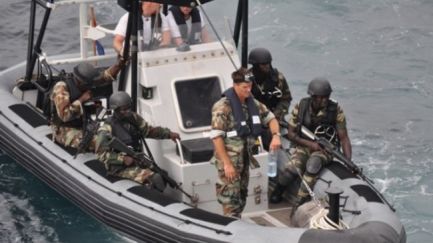
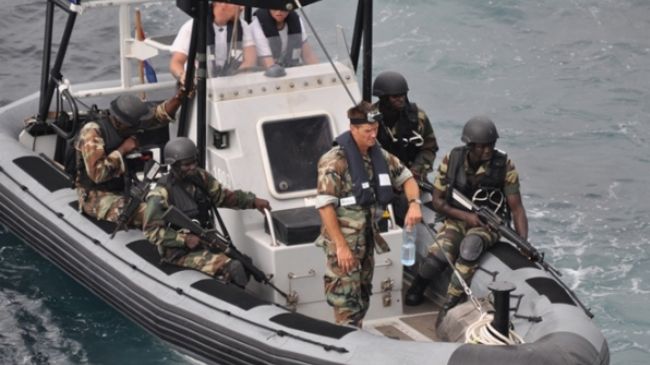


 Aletho News
 Aletho News